EP3108476B1 - Procédé de détection d'au moins deux informations à détecter, comportant un contenu informationnel à combiner, à l'aide d'un moyen de dialogue vocal, moyen de dialogue vocal et véhicule automobile - Google Patents
Procédé de détection d'au moins deux informations à détecter, comportant un contenu informationnel à combiner, à l'aide d'un moyen de dialogue vocal, moyen de dialogue vocal et véhicule automobile Download PDFInfo
- Publication number
- EP3108476B1 EP3108476B1 EP15703453.9A EP15703453A EP3108476B1 EP 3108476 B1 EP3108476 B1 EP 3108476B1 EP 15703453 A EP15703453 A EP 15703453A EP 3108476 B1 EP3108476 B1 EP 3108476B1
- Authority
- EP
- European Patent Office
- Prior art keywords
- information
- speech
- output
- detected
- condition
- Prior art date
- Legal status (The legal status is an assumption and is not a legal conclusion. Google has not performed a legal analysis and makes no representation as to the accuracy of the status listed.)
- Active
Links
Images

Classifications
-
- G—PHYSICS
- G10—MUSICAL INSTRUMENTS; ACOUSTICS
- G10L—SPEECH ANALYSIS TECHNIQUES OR SPEECH SYNTHESIS; SPEECH RECOGNITION; SPEECH OR VOICE PROCESSING TECHNIQUES; SPEECH OR AUDIO CODING OR DECODING
- G10L15/00—Speech recognition
- G10L15/22—Procedures used during a speech recognition process, e.g. man-machine dialogue
- G10L15/222—Barge in, i.e. overridable guidance for interrupting prompts
-
- G—PHYSICS
- G10—MUSICAL INSTRUMENTS; ACOUSTICS
- G10L—SPEECH ANALYSIS TECHNIQUES OR SPEECH SYNTHESIS; SPEECH RECOGNITION; SPEECH OR VOICE PROCESSING TECHNIQUES; SPEECH OR AUDIO CODING OR DECODING
- G10L15/00—Speech recognition
- G10L15/22—Procedures used during a speech recognition process, e.g. man-machine dialogue
-
- B—PERFORMING OPERATIONS; TRANSPORTING
- B60—VEHICLES IN GENERAL
- B60R—VEHICLES, VEHICLE FITTINGS, OR VEHICLE PARTS, NOT OTHERWISE PROVIDED FOR
- B60R16/00—Electric or fluid circuits specially adapted for vehicles and not otherwise provided for; Arrangement of elements of electric or fluid circuits specially adapted for vehicles and not otherwise provided for
- B60R16/02—Electric or fluid circuits specially adapted for vehicles and not otherwise provided for; Arrangement of elements of electric or fluid circuits specially adapted for vehicles and not otherwise provided for electric constitutive elements
- B60R16/037—Electric or fluid circuits specially adapted for vehicles and not otherwise provided for; Arrangement of elements of electric or fluid circuits specially adapted for vehicles and not otherwise provided for electric constitutive elements for occupant comfort, e.g. for automatic adjustment of appliances according to personal settings, e.g. seats, mirrors, steering wheel
- B60R16/0373—Voice control
-
- G—PHYSICS
- G10—MUSICAL INSTRUMENTS; ACOUSTICS
- G10L—SPEECH ANALYSIS TECHNIQUES OR SPEECH SYNTHESIS; SPEECH RECOGNITION; SPEECH OR VOICE PROCESSING TECHNIQUES; SPEECH OR AUDIO CODING OR DECODING
- G10L13/00—Speech synthesis; Text to speech systems
-
- G—PHYSICS
- G10—MUSICAL INSTRUMENTS; ACOUSTICS
- G10L—SPEECH ANALYSIS TECHNIQUES OR SPEECH SYNTHESIS; SPEECH RECOGNITION; SPEECH OR VOICE PROCESSING TECHNIQUES; SPEECH OR AUDIO CODING OR DECODING
- G10L15/00—Speech recognition
- G10L15/08—Speech classification or search
- G10L15/18—Speech classification or search using natural language modelling
-
- G—PHYSICS
- G10—MUSICAL INSTRUMENTS; ACOUSTICS
- G10L—SPEECH ANALYSIS TECHNIQUES OR SPEECH SYNTHESIS; SPEECH RECOGNITION; SPEECH OR VOICE PROCESSING TECHNIQUES; SPEECH OR AUDIO CODING OR DECODING
- G10L15/00—Speech recognition
- G10L15/22—Procedures used during a speech recognition process, e.g. man-machine dialogue
- G10L2015/221—Announcement of recognition results
-
- G—PHYSICS
- G10—MUSICAL INSTRUMENTS; ACOUSTICS
- G10L—SPEECH ANALYSIS TECHNIQUES OR SPEECH SYNTHESIS; SPEECH RECOGNITION; SPEECH OR VOICE PROCESSING TECHNIQUES; SPEECH OR AUDIO CODING OR DECODING
- G10L15/00—Speech recognition
- G10L15/22—Procedures used during a speech recognition process, e.g. man-machine dialogue
- G10L2015/223—Execution procedure of a spoken command
-
- G—PHYSICS
- G10—MUSICAL INSTRUMENTS; ACOUSTICS
- G10L—SPEECH ANALYSIS TECHNIQUES OR SPEECH SYNTHESIS; SPEECH RECOGNITION; SPEECH OR VOICE PROCESSING TECHNIQUES; SPEECH OR AUDIO CODING OR DECODING
- G10L15/00—Speech recognition
- G10L15/22—Procedures used during a speech recognition process, e.g. man-machine dialogue
- G10L2015/225—Feedback of the input speech
-
- G—PHYSICS
- G10—MUSICAL INSTRUMENTS; ACOUSTICS
- G10L—SPEECH ANALYSIS TECHNIQUES OR SPEECH SYNTHESIS; SPEECH RECOGNITION; SPEECH OR VOICE PROCESSING TECHNIQUES; SPEECH OR AUDIO CODING OR DECODING
- G10L15/00—Speech recognition
- G10L15/22—Procedures used during a speech recognition process, e.g. man-machine dialogue
- G10L2015/226—Procedures used during a speech recognition process, e.g. man-machine dialogue using non-speech characteristics
- G10L2015/228—Procedures used during a speech recognition process, e.g. man-machine dialogue using non-speech characteristics of application context
Definitions
- the invention relates to a method for detecting at least two information to be acquired with information content to be linked by a speech dialogue device, wherein between the detection of the information in each case a voice output by the Quick Distialog Hughes, the information in each case by detection of natural language voice input data and extraction of the respective information the voice input data are detected by a voice recognition algorithm.
- voice dialogues are used to capture operator input from technical devices.
- Such a voice control is particularly useful when a user performs another activity at the time of voice input, which at least partially claimed its attention, since when using a voice input to control a device or to input information no concentration on additional manual controls is necessary.
- voice controls are often used, especially in motor vehicles. For example, navigation systems, communication systems and multimedia devices in motor vehicles can be controlled by voice input.
- information with information content to be linked is to be understood as meaning information that is in a context of meaning, that is to say linked in terms of content. So, when typing in a navigation system the information containing information to be linked, for example, the name of a city, the name of a street, and a house number and, in addition, the information that a route should be planned to the location described by the other three pieces of information.
- a song selection in a multimedia system may include, for example, the name of the artist as well as the name of the song to be played or the name of an album comprising the song and an associated song number as information to be linked with information content.
- a user can provide all these individual information with information content to be linked to a voice dialogue device within the scope of a single voice input. Often, however, it is desirable to collect this information individually, or the user may not have the information required to perform the task in the user's voice input, which is why demand may be provided by the system.
- the invention is therefore an object of the invention to provide a method of the type mentioned, according to the invention in fulfillment of a Repeat condition is generated by the speech dialog box a natural language summary output and output as a voice output, which includes a natural linguistic representation of at least one already acquired information or part of this information or information derived from this information.
- the publication WO 2004/051191 A1 discloses a driving assistance system in which control operations, including voice input dialogs, are automatically interrupted or deactivated when there is a corresponding traffic situation.
- the invention is based on the idea of giving a user, under certain conditions, a summary of the dialog state during a dialog for acquiring the information to be linked with information in order to connect it with the details of the dialogue or the point of the dialogue in which he is located. to remember. In this case, the user should be reminded in particular of previous input within the dialog. Therefore, a natural linguistic summary output is generated, which according to the invention comprises at least one already acquired information or part of this information or information derived from this information.
- the addressed function ie whether a song to be played is to be selected for a multimedia system or an appointment is to be entered in a diary, was often also detected by the speech dialogue device and therefore also one of the information to be linked with information content represents.
- This information which describes the addressed function, can thereby form a kind of bracket or frame for the further information, and this information can be used in particular to determine which further information is to be captured and in what manner its information content is linked.
- the nature of the information to be recorded and the way in which the information content is to be linked may also be predetermined otherwise, for example if the method is carried out in a motor vehicle and another method actively starts a voice dialogue with a user.
- a meaning of the respective information in connection with the further information is thus defined for each of the information, ie a semantics.
- the information in an ontology-based Data structure are detected, that is, the information is associated with a context that sets each of the information in relation to the other information and / or assigns the information a concrete meaning.
- the assignment of the meaning can take place in that, depending on a specification or a first information that describes the type of dialogue, a specific data structure is selected in which the individual information is stored at predetermined positions.
- the data structure may also include metadata describing the relationship between the acquired information and / or an associated meaning for the respective information.
- one or more information as well as a meaning assigned to the information or a relationship associated with the information can thus be present in the speech dialog device.
- Such a presence of the data allows a particularly flexible generation of the summary output.
- the procedure will be explained by way of example for the use of metadata, which assign a type identifier to each of the acquired information, which describes a meaning of the respective information.
- Such an assignment of type identifiers to information is known for example from the "extensible markup language" (XML).
- XML "extensible markup language”
- the procedure described can also be used for a large number of other forms of storing the information.
- an addressed function can typically be determined from the first speech input.
- a function may be, for example, the entry of a navigation destination, the selection of a radio station, the storage of contact data or appointments, or the like.
- the addressed function specifies, on the one hand, the further course of the dialog, wherein the further dialog can also be of a tree-shaped design, that is to say that the following voice outputs of the voice dialog device and the type of information to be acquired can be adapted depending on further information.
- the concrete structure of the summary output may depend on which of the information is already recorded and in particular of other parameters, in particular the verbosity of the summary output, ie in particular the length of the summary output or the Amount of information collected that includes them.
- the structure of the summary output can indicate which of the information is output, where in the summary output this information is output, in which format each of the information is output, in which format the respective information is output, whether the information itself or one of these Information derived or part of this information is output and / or which other components comprises the summary output.
- An appointment should be described by the information day, time, duration and name of the appointment.
- a user has already entered by previous voice input that an appointment should be created, that it should be created on 01.01.2015 at 15:00 clock and that the duration of the appointment is one hour.
- the speech dialogue system are thus as data the function, namely scheduling, a date, namely the 01.01.2015, a time, namely 15:00 clock and a duration, namely an hour ago.
- the voice dialogue device Since no voice input of the user is detected for a long time, the voice dialogue device detects a fulfillment condition of the repeat condition, generates a summary output, and outputs it. From the stored information and the metadata about the stored information, the speech dialog device determines that the function of the interrupted dialogue is scheduling and that information about a date, There is a time and a duration. Based on this information, the speech dialogor selects a structure for a summary output from a list of several possible structures of summary outputs.
- a structure of the summary output is selected, which is the introductory words "We were just about to make a new appointment", the indication of the day of the week, the date, the word "at”, the time, and the further expression "to create.” includes.
- the entire summary output, which is output after being generated as a voice output, is thus "We were just about to make an appointment for Thursday, 01.01.2015 at 15:00 clock.”.
- a voice output can be issued to ask for the name of the appointment.
- the verbosity of the summary output can be adjusted by further parameters. For example, the duration of the appointment was not considered in the described summary edition.
- the phrase "at 3:00 pm” could be replaced by the phrase "3:00 pm to 4:00 pm".
- derived information namely the end of the appointment, would be formed from two acquired information, namely the time of day and the duration, and reproduced as part of the summary output.
- individual information could not be reproduced or only partial information can be reproduced. For example, instead of the date 01/01/2015, only 01.01. be reproduced.
- a necessary condition for meeting the retry condition is that an initially met interrupt condition, during which fulfillment the detection of the information is interrupted, is no longer satisfied.
- the interruption condition can be fulfilled in particular by signals of further electronic systems which are connected to the voice-dialing device.
- a communication device can signal an incoming telephone call or the acceptance of a telephone call
- a radio can signal the beginning of a traffic announcement
- a navigation device can signal the output of a navigation instruction or a driver assistance system that evaluates a traffic situation, can transmit an interruption signal when a traffic situation that meets a predetermined condition occurs.
- other situations may also be detected that lead to the fulfillment of the interruption condition.
- the voice dialing device can be detected if another vehicle occupant speaks to the driver or the driver speaks in such a way that obviously no interaction with the voice dialing device is desired, which can be detected, for example, if no voice output, in particular questions, the Speech dialog device matching answers.
- both the speech acquisition and the speech output can be interrupted. If the interruption condition is no longer fulfilled and, in particular, no further interruption conditions are met, an automatic resumption of a previously interrupted dialog between the speech dialog device and the user may be provided. As explained above, it is particularly advantageous after such interruptions to inform the user about the dialog state, which is done according to the invention by issuing a natural language summary output.
- the repetition condition may additionally evaluate the number of information already acquired and / or the already acquired information itself and / or the period of time for which the interruption condition exists can be detected by the voice dialogue device, after which the repetition condition can additionally evaluate this time duration.
- a complexity value can be determined or recorded which is a measure of the user's exposure to the interruption-related event, after which the repetition condition can additionally evaluate this complexity value.
- a summary output can only be generated and output if several pieces of information have already been collected, because with a small amount of already collected information, it is often easier to redo the dialog or the few pieces of information are still present to the user and therefore need not be repeated.
- An evaluation of the already acquired information in the context of repetition condition is particularly advantageous if this information determine the addressed function and / or it is the dialogue is a branched dialogue in which the dialogue, ie the choice of voice output by the voice dialogue device and the nature and / or purity of the collected information is dependent on already collected information.
- the repetition condition can in particular evaluate whether the time duration exceeds a limit value.
- a user's level of exposure can be estimated. If the driver is heavily burdened by the event causing the interruption and, for example, has to carry out complex activities, then it is assumed that the dialog state is no longer known to him, which is why it would be advantageous to generate and output a summary output.
- a low load during an interruption it is likely that a user, even after a somewhat longer period of time, will be reminded of a dialog state, that is, at least the information given so far.
- the period of time for which the interruption condition exists can be detected by the speech dialogue device, after which the repetition parameter is determined as a function of this time duration and / or a complexity value can be determined and recorded by the speech dialog device upon fulfillment of the interruption condition is the load of a user due to the interrupt conditional event, after which the retry parameter is determined in dependence on that complexity value.
- the repetition parameter can be determined as a function of the complexity of the dialog, in particular as a function of the number of information to be acquired. In doing so, after lengthy breaks, it may be advantageous to generate detailed summary outputs that include multiple of the collected information and, after shorter breaks, generate less detailed summary outputs that include only one or a few of the collected information. Accordingly, a greater burden on the user during the interruption or greater complexity of the user's operation during the interruption may increase the verbosity of the summary output, in particular the amount of information included in the summary output.
- the complexity value can be influenced by a variety of factors.
- the interruption condition it is possible for the interruption condition to evaluate a signal of a device connected to the voice dialing device, wherein the connected device additionally transmits a device complexity value in dependence of which the complexity value is determined.
- the connected device may be, for example, a driver assistance system of a motor vehicle, which is a traffic situation evaluates. This driver assistance system can be used to determine how complex intervention by the driver is required during the fulfillment of the interruption condition.
- the driver assistance system can determine a device complexity value and transmit it to the voice dialog device.
- the interruption condition evaluates signals of a plurality of devices connected to the voice dialing device, wherein the complexity value is determined in dependence on the connected device or devices which gives the signal or which give the signal to perform the interrupt condition. For example, it is to be expected that after issuing a navigation instruction by a navigation system, a driver is less distracted from a preceding dialogue than after a telephone call. Thus, for example, a higher complexity value can be determined when a communication device transmits an interrupt signal than when a navigation system transmits an interrupt signal.
- the complexity value can also be determined depending on the dialogue itself.
- the complexity value can be determined as a function of the information to be acquired and / or at least one of the already acquired information. It can be evaluated in particular, which system should be controlled by the dialogue, or whether several times similar information, such as the phone numbers of several people or the like should be specified.
- the invention relates to a voice dialogue device for a motor vehicle, which is designed for carrying out the method according to the invention and which comprises a voice input device for detecting the voice input data and a voice output device for voice output.
- the invention relates to a motor vehicle comprising a voice dialogue device according to the invention.
- the motor vehicle may comprise at least one vehicle system which, upon fulfillment of a signal condition, gives an interrupt signal to the voice dialing device, wherein when the interrupt signal is given, the interruption condition is met.
- a plurality of vehicle systems may be provided which can transmit corresponding interrupt signals.
- each of the vehicle systems can be assigned a complexity value, as a function of which the verbosity of the summary output, ie in particular which of the captured information this includes, and the decision as to whether a summary output is generated and output are adapted when resuming the dialog.
- the further vehicle system may in particular be a communication device, a radio, a driver assistance system evaluating a traffic situation or a navigation system.
- a driver assistance system evaluating a traffic situation can be designed to additionally determine a device complexity value as a function of the traffic situation when the interrupt signal is given.
- the generation of a summary output and the concrete content of the summary output, in particular the amount of information included therein and the verbosity can be adjusted depending on a detected traffic situation.
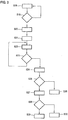
- Fig. 1 schematically shows a flowchart of a method for detecting at least two information to be acquired with information content to be linked.
- three processes are carried out in parallel.
- the basic dialogue is carried out by a voice dialogue device.
- a dialogue includes speech output by the speech device, typically questions to a user, and speech input from a user, choosing a dialogue, influencing a dialogue guide, and / or entering information into the speech dialogue device.
- steps S9 to S11 it is continuously checked whether a retry condition is satisfied, and if the retry condition exists, a natural-language summary output is generated and output to the user as a voice output.
- step S12 it is checked in parallel to the two further processes in step S12 whether an interruption condition is fulfilled and if this interruption condition is met, the first process is interrupted with the steps S1 to S8 and possibly resumed later.
- step S1 voice input data is first acquired.
- the voice dialogue device comprises a voice input device, for example one or more microphones.
- the acoustically acquired speech data are first digitized and stored in a memory device.
- step S2 a speech recognition algorithm is applied to the speech input data acquired in step S1. It is determined whether at least one of the information to be detected is included in the voice input data. If this is not the case, the detection of voice input data is continued until at least one piece of information is contained in the detected voice input data. The one or more information contained in the acquired voice input data is subsequently stored. The information is stored in an ontology-based database. Each of the information is thus assigned a meaning within the framework of the dialogue conducted by the speech dialogue device. The meaning assignment is done by adding metadata to the collected information.
- step S3 a determination of the addressed function.
- the method can be used to control multiple devices and each of these devices can have different input capabilities.
- a voice dialogue that controls a communication device for example, trigger a call, add an entry to a phone book, or edit such an entry or write a text message by voice recognition.
- an appointment scheduler can be controlled by the voice dialogue device, whereby new appointments can be created by voice dialogues, schedules lists can be output or settings can be changed.
- a destination address for the navigation can be entered or searched for the nearest gas station.
- the voice dialogue device thus evaluates the information extracted in step S2 and determines both the further information to be acquired and the voice outputs of the voice dialogue device, which are output, in particular as questions, between the captures of the information.
- step S4 the information extracted in step S2 or the information extracted in step S2 is stored.
- the meta information described in step S2 is stored for the information, with which an ontology-based Data structure is formed in which not only the extracted information but also a meaning content of the extracted information and a relationship between the information is stored.
- step S5 it is checked whether all information to be acquired has already been detected.
- the number and type of information to be detected is determined by the function determined in step S3. As explained there, it is possible that the number of information to be acquired and the type of information to be acquired are adjusted in further detection steps.
- step S6 a speech output by the speech dialog device is output, which queries the user at least one more of the information to be acquired. This creates a dialog by alternately querying information and capturing the corresponding information. The re-detection and evaluation of the further information is then carried out in step S7, as well as to step S1 and step S2 explained. Subsequently, in step S4, the newly acquired information is likewise stored with associated meta-information, and in step S5 it is again checked whether all the information to be acquired is now detected. This is repeated until it is determined in step S5 that now all information to be detected is detected. In this case, the process ends in step S8, after which control of components to be controlled, storage of information recorded by the voice dialogue, or the like can take place.
- step S9 input data are thereby acquired by the speech dialog device, which are evaluated as part of a repeat condition. This is in particular the time currently elapsed between a last speech output of the speech dialogue device and the acquisition of the information to be acquired.
- signals from operating elements can be detected, which, when actuated by a user to output a natural language Lead summary issue.
- the voice input data is continuously examined for the presence of a keyword by which a user can initiate generation of a summary output and the speech output thereof.
- step S10 it is checked if the above input data satisfies the repetition condition.
- the repetition condition is fulfilled when the keyword has been detected, an output of a summary output has been requested by the user by actuating an operating element, or a predetermined time interval has been exceeded. If the repetition condition is not met, the method is continued with step S9. Upon fulfillment of the repeat condition, the process proceeds to step S11 where a summary output is generated and output. This is with reference to Fig. 2 explained in more detail.
- step S12 it is continuously checked whether there is an interruption condition and, in the event of an interruption condition, the interactive dialogue described with respect to steps S1 to S8 is interrupted.
- the speech output and the speech acquisition are interrupted.
- a natural-language summary output may be generated and output.
- FIG. 12 is a schematic flow diagram for generating and outputting a natural language summary output.
- step S13 first, data is acquired that includes the structure of the summary output, in particular the number and selection of the information contained in the summary output, and the type of the Playback of information, determine. In particular, this records what triggered the generation of the summary output.
- the type of call determines the other data considered to determine the verbosity of the summary output. The verbosity is set at a call due to an interruption depending on the duration of the interruption and as in Fig. 3 explains certain complexity value determined.
- step S14 it is determined which of the acquired information is reproduced as part of the summary output. For this purpose, from the values determined in step S13, a common value is determined which determines the verbosity and, depending on this, one of a plurality of predefined structures for a summary output is selected. In this case, a pre-selection of a group of structures of summary outputs takes place depending on the type and number of the information recorded and the addressed function. Within this group, one of the structures is then selected depending on the particular common value.
- a structure of the summary output includes information as to which information is collected in what form at what location and also typically additional phrases for linking the information.
- step S15 the summary output is generated by inserting the acquired information into the structure according to the previously-determined summary output structure to obtain a natural-language summary output.
- the information to be captured is the dialog type, a city, a street and a house number provided. All information except the house number has already been recorded.
- destination input the addressed function, namely the determination of a navigation destination, specified, and by "Munich” and “Innere Wiener Straße” the place and the street. It reproduces all three previously acquired information.
- the summary output can also be generated together with the question of the next information to be acquired. This could, for example, as a summary edition of the sentence "to which house number in the Innere Wiener Straße should be driven?" to be generated.
- step S16 The summary output is then output via a voice output device in step S16, and in step S17, as steps S1 to S8 in FIG Fig. 1 returned process shown.
- step S6 the point at which the last speech output was made by the speech dialog device.
- step S7 the point at which the last speech output was made by the speech dialog device.
- step S9 the execution of steps S9 to S11 is started again in step S9.
- Fig. 3 shows a detailed flowchart of step S12.
- the signals of further motor vehicle systems are detected in step S18.
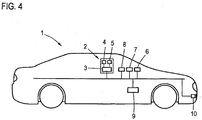
- This can, as in Fig. 4 shown, in particular a navigation system 8, a communication device 7, a radio 6 and / or a driver assistance system 9, which evaluates a driving situation of the motor vehicle 1, be.
- step S19 it is determined whether an interruption condition is satisfied.
- An interrupt condition is satisfied in the case where at least one of the automotive systems whose signals have been detected in steps S18 transmits an interrupt signal. Additionally or alternatively, further interruption conditions could be checked in step S19, for example if another passenger of the motor vehicle is talking, if the user speaks without continuing the speech dialogue and if a certain minimum time has elapsed since the last speech output of the speech dialogue device during which no information was detected. If no interruption condition exists, the method continues from step S18.
- step S20 a time detection is started or a time counter is reset.
- the time counter is used at the end of the interruption, that is to say when the interruption condition is omitted, to record the total length of the interruption of the speech dialogue and to control the generation and outputting of the summary output in dependence thereon.
- step S21 the execution of the dialogue, ie the execution of steps S1 to S8 is stopped and the current dialog state is stored.
- the current dialog state is stored.
- the last or further preceding speech output can also be stored by the speech dialog device, the addressed function and / or the step within a dialog in which the dialog is currently located.
- point S21 may be omitted, since a dialog state may already exist in the memory under certain circumstances. However, since a further dialogue could possibly be carried out during the interruption, a separate saving of the dialog state is generally advantageous.
- step S22 the signals of other devices connected to the voice dialing device are detected again, and in step S23, it is again checks if the interruption condition is met.
- the steps S22 and S23 thus correspond to the steps S18 and S19. However, it repeats the steps S22 and S23 as long as the interruption condition is satisfied.
- step S24 the process continues to step S24.
- step S24 first, the timer started in step S20 is stopped, or the value of the timer is read out. Thus, in step S24, the period of time for which the interruption occurred is detected.
- step S25 it is checked whether the dialogue interrupted in step S21 should be continued.
- the duration of the interruption is evaluated. If the time duration is greater than a predetermined limit value, the dialog is aborted in step S26 and can be restarted by the user in step S1.
- Other conditions may lead to the termination of the dialogue.
- a dialogue should typically not continue in a motor vehicle when a user has left the vehicle between the beginning of the interruption and the end of the interruption. It is also possible that further operator inputs of a user make a dialogue obsolete. For example, a station selection can not be performed if the user has previously turned off the radio.
- a complexity value is determined in step S27.
- the complexity value is a measure of a user's exposure to the interrupting event.
- the complexity value is determined as a function of the connected device that gives the signal that leads to the fulfillment of the interruption condition.
- step S28 the repeat condition is evaluated and in response to the time period detected in step S24 and that in step S27 determined complexity value determines whether a natural language summary output should be generated and output as a voice output.
- a value is determined as a function of the time duration and the complexity value, which value is compared with a predetermined limit value.
- the determination of the value can be determined by using a two-dimensional table of values, calculating a weighted sum, product formation or other functions that depend on the time duration, the complexity value and optionally further parameters.
- step S28 If it is determined in step S28 that the repeat condition is not satisfied, the dialog state is restored in step S30. At this time, the values stored in step S21 are reloaded. The dialog state is changed so that the dialogue with the last preceding step S6 off Fig. 1 , So is continued with the last preceding speech output by the speech dialog box.
- step S28 If it is determined in step S28 that a natural language summary output is to be generated and output as a voice output, it is done in step S29.
- the generation and output of the summary output is done as is Fig. 2 explained. If a dialog state has been saved in step S21, then before the return, as described with reference to step S17 in FIG Fig. 2 is explained, a restoration of the dialogue state.
- Fig. 4 schematically shows a motor vehicle 1, comprising a voice dialogue device 2, which is designed for carrying out the method described above.
- the voice dialing device 2 comprises a control device 3 and a voice input device 4, which is designed as a microphone with associated analog-to-digital converter, and a voice output device 5, which is designed as a loudspeaker with associated digital-to-analog converter.
- the control device 3 is connected via a vehicle bus, such as a CAN bus, with other components of the motor vehicle.
- the other components are a radio 6, a Communication device 7, a navigation device 8 and a driver assistance system 9, which evaluates a traffic situation, which is detected by sensors of the motor vehicle, of which the camera 10 is shown by way of example.
- the radio 6, the communication device 7 and the navigation device 8 are controllable.
- the navigation device 8 navigation targets can be specified for radio 6 by voice commands a station selection, a volume selection and other control functions are performed and the communication device 7 are controlled in particular to make or receive calls.
- an address book and an organizer are integrated in the communication device 7, wherein adding and editing entries of the address book and the scheduler is also possible by voice commands by the voice dialogue device 2.
- the voice dialog device 2 can in each case request missing information from the user by means of a voice output after acquiring information by means of a voice input by the user.
- this multi-part dialogue can be interrupted depending on signals of the other vehicle equipment.
- a voice dialogue should be interrupted when the navigation system 8 issues a navigation instruction by which radio 6 receives and issues a traffic message, a call is received and / or received at the communication device 7, or the driver assistance system detects a complex traffic situation requiring full attention required by the driver. It is therefore provided that the radio 6, the communication device 7, the navigation system 8 and the driver assistance system 9 via the vehicle bus interrupt signals to the voice dialogue device 2 can transmit.
- the speech dialog device is designed as described with reference to FIG Fig. 1 to Fig. 3 explains, after elimination of the interrupt signal and thus completion of such an interruption to generate a natural language summary output and output as a voice output that summarizes the previous dialogue.
- the verbosity of the summary output is adjusted depending on the duration of the interruption and a complexity value.
- the complexity value is determined depending on which of the other devices has sent an interrupt signal.
- the navigation system 8, the communication device 7 and the radio 6 are assigned fixed complexity values.
- the driver assistance system 9 independently determines a device complexity value as a function of the traffic situation and transmits it to the voice dialog device 2 with the interrupt signal.
- the voice dialogue device 2 can also generate a natural language summary output and output as a voice output when a corresponding voice command of a user has been detected.
Landscapes
- Engineering & Computer Science (AREA)
- Computational Linguistics (AREA)
- Health & Medical Sciences (AREA)
- Audiology, Speech & Language Pathology (AREA)
- Human Computer Interaction (AREA)
- Physics & Mathematics (AREA)
- Acoustics & Sound (AREA)
- Multimedia (AREA)
- Artificial Intelligence (AREA)
- Mechanical Engineering (AREA)
- Navigation (AREA)
- Machine Translation (AREA)
Claims (10)
- Procédé de détection d'au moins deux informations à détecter avec un contenu d'informations à relier par un dispositif de dialogue vocal (2), dans lequel respectivement une sortie vocale est effectuée par le dispositif de dialogue vocal (2) entre les détections des informations, dans lequel les informations sont détectées respectivement par détection des données d'entrée vocale en langue naturelle et extraction des informations respectives des données d'entrée vocale par un algorithme de reconnaissance vocale, dans lequel lors du remplissage d'une condition de répétition par le dispositif de dialogue vocal (2) une sortie de résumé en langue naturelle est générée et est émise comme sortie vocale qui comporte un rendu en langue naturelle au moins des informations déjà détectées ou d'une partie de ces informations ou des informations dérivées de ces informations, dans lequel lorsqu'au moment du remplissage de la condition de répétition déjà plus d'une des informations à détecter a été détectée, en fonction d'un paramètre de répétition pour chacune des informations déjà détectées il est déterminé par le dispositif de dialogue vocal (2) si un rendu en langue naturelle de ces informations ou d'une partie de ces informations ou des informations dérivées de ces informations est enregistré dans le résumé ou pas, dans lequel une condition nécessaire au remplissage de la condition de répétition est qu'une condition d'interruption tout d'abord remplie pendant le remplissage de laquelle la détection des informations est interrompue, n'est plus remplie,
caractérisé en ce
que la durée pour laquelle la condition d'interruption se présente, est détectée par le dispositif de dialogue vocal (2), selon quoi le paramètre de répétition est déterminé en fonction de cette durée et/ou que par le dispositif de dialogue vocal (2) lors du remplissage de la condition d'interruption une valeur de complexité est déterminée ou détectée, laquelle est une mesure pour la sollicitation d'un utilisateur par l'événement conditionnant l'interruption, selon quoi le paramètre de répétition est déterminé en fonction de cette valeur de complexité. - Procédé selon la revendication 1,
caractérisé en ce
que la condition de répétition évalue elle-même en outre le nombre des informations déjà détectées et/ou les informations déjà détectées. - Procédé selon la revendication 1 ou 2, dans lequel le paramètre de répétition est déterminé en fonction de la valeur de complexité,
caractérisé en ce
que la condition d'interruption évalue un signal d'un dispositif relié au dispositif de dialogue vocal (2), dans lequel le dispositif relié transmet en outre une valeur de complexité de dispositif, en fonction de laquelle la valeur de complexité est déterminée. - Procédé selon l'une quelconque des revendications précédentes, dans lequel le paramètre de répétition est déterminé en fonction de la valeur de complexité,
caractérisé en ce
que la condition d'interruption évalue des signaux de plusieurs dispositifs reliés au dispositif de dialogue vocal (2), dans lequel la valeur de complexité est déterminée en fonction du dispositif relié ou des dispositifs reliés qui donne ou donnent le signal qui mène ou mènent au remplissage de la condition d'interruption. - Procédé selon l'une quelconque des revendications précédentes,
caractérisé en ce
que la valeur de complexité est déterminée en fonction des informations à détecter ou au moins une des informations déjà détectées. - Dispositif de dialogue vocal pour un véhicule automobile (1),
caractérisé en ce
qu'il est réalisé pour la mise en oeuvre d'un procédé selon l'une quelconque des revendications précédentes et comporte un dispositif d'entrée vocale (4) pour la détection des données d'entrée vocale et un dispositif de sortie vocale (5) pour la sortie vocale. - Véhicule automobile,
caractérisé en ce
qu'il comporte un dispositif de dialogue vocal (2) selon la revendication 6. - Véhicule automobile selon la revendication 7,
caractérisé en ce
qu'il comporte au moins un système de véhicule qui donne lors du remplissage d'une condition de signal un signal d'interruption au dispositif de dialogue vocal (2), dans lequel lors du don du signal d'interruption la condition d'interruption est remplie. - Véhicule automobile selon la revendication 8,
caractérisé en ce
que l'autre système de véhicule est un dispositif de communication (7), une radio (6), un système d'assistance au conducteur (9) évaluant une situation de circulation ou un système de navigation (8). - Véhicule automobile selon la revendication 9, dans lequel l'autre système de véhicule est un système d'assistance au conducteur (9) évaluant une situation de circulation,
caractérisé en ce
que le système d'assistance au conducteur (9) évaluant une situation de circulation est réalisé afin de déterminer lors du don du signal d'interruption en outre une valeur de complexité de dispositif en fonction de la situation de circulation.
Applications Claiming Priority (2)
| Application Number | Priority Date | Filing Date | Title |
|---|---|---|---|
| DE102014002543.8A DE102014002543A1 (de) | 2014-02-22 | 2014-02-22 | Verfahren zur Erfassung wenigstens zweier zu erfassender Informationen mit zu verknüpfendem Informationsgehalt durch eine Sprachdialogeinrichtung, Sprachdialogeinrichtung und Kraftfahrzeug |
| PCT/EP2015/000185 WO2015124259A1 (fr) | 2014-02-22 | 2015-01-31 | Procédé de détection d'au moins deux informations à détecter, comportant un contenu informationnel à combiner, à l'aide d'un moyen de dialogue vocal, moyen de dialogue vocal et véhicule automobile |
Publications (2)
| Publication Number | Publication Date |
|---|---|
| EP3108476A1 EP3108476A1 (fr) | 2016-12-28 |
| EP3108476B1 true EP3108476B1 (fr) | 2018-01-03 |
Family
ID=52464316
Family Applications (1)
| Application Number | Title | Priority Date | Filing Date |
|---|---|---|---|
| EP15703453.9A Active EP3108476B1 (fr) | 2014-02-22 | 2015-01-31 | Procédé de détection d'au moins deux informations à détecter, comportant un contenu informationnel à combiner, à l'aide d'un moyen de dialogue vocal, moyen de dialogue vocal et véhicule automobile |
Country Status (5)
| Country | Link |
|---|---|
| US (1) | US9773500B2 (fr) |
| EP (1) | EP3108476B1 (fr) |
| CN (1) | CN106030701B (fr) |
| DE (1) | DE102014002543A1 (fr) |
| WO (1) | WO2015124259A1 (fr) |
Families Citing this family (11)
| Publication number | Priority date | Publication date | Assignee | Title |
|---|---|---|---|---|
| DE102014002543A1 (de) | 2014-02-22 | 2015-08-27 | Audi Ag | Verfahren zur Erfassung wenigstens zweier zu erfassender Informationen mit zu verknüpfendem Informationsgehalt durch eine Sprachdialogeinrichtung, Sprachdialogeinrichtung und Kraftfahrzeug |
| EP3384475B1 (fr) * | 2015-12-06 | 2021-12-22 | Cerence Operating Company | Système et procédé d'ajustement de conversations sur la base de l'état cognitif d'un utilisateur |
| US11410646B1 (en) * | 2016-09-29 | 2022-08-09 | Amazon Technologies, Inc. | Processing complex utterances for natural language understanding |
| US10679608B2 (en) | 2016-12-30 | 2020-06-09 | Google Llc | Conversation-aware proactive notifications for a voice interface device |
| DE102017207038A1 (de) * | 2017-04-26 | 2018-10-31 | Bayerische Motoren Werke Aktiengesellschaft | Spracheingabe bei einem Kraftfahrzeug |
| US10114816B1 (en) * | 2017-04-28 | 2018-10-30 | International Business Machines Corporation | Assessing complexity of dialogs to streamline handling of service requests |
| JP6988438B2 (ja) * | 2017-12-20 | 2022-01-05 | トヨタ自動車株式会社 | 車載制御装置、制御装置、制御方法、制御プログラム、及び発話応答方法 |
| DE102018200746B4 (de) * | 2018-01-17 | 2022-09-08 | Volkswagen Aktiengesellschaft | Aktivierung eines Sprachdialogsystems in einem Kraftfahrzeug |
| US11938958B2 (en) * | 2018-08-06 | 2024-03-26 | Nissan Motor Co., Ltd. | Voice dialogue device, voice dialogue system, and control method for voice dialogue system |
| JP7407046B2 (ja) * | 2020-03-26 | 2023-12-28 | 本田技研工業株式会社 | 音声出力の制御方法および音声出力制御装置 |
| CN114267345B (zh) * | 2022-02-25 | 2022-05-17 | 阿里巴巴达摩院(杭州)科技有限公司 | 模型训练方法、语音处理方法及其装置 |
Family Cites Families (21)
| Publication number | Priority date | Publication date | Assignee | Title |
|---|---|---|---|---|
| JPS63149719A (ja) * | 1986-12-13 | 1988-06-22 | Brother Ind Ltd | 情報処理装置 |
| US6108515A (en) * | 1996-11-21 | 2000-08-22 | Freeman; Michael J. | Interactive responsive apparatus with visual indicia, command codes, and comprehensive memory functions |
| US7069221B2 (en) * | 2001-10-26 | 2006-06-27 | Speechworks International, Inc. | Non-target barge-in detection |
| JP3902483B2 (ja) | 2002-02-13 | 2007-04-04 | 三菱電機株式会社 | 音声処理装置及び音声処理方法 |
| DE10255436A1 (de) * | 2002-11-28 | 2004-06-17 | Robert Bosch Gmbh | Fahrerassistenzsystem |
| DE10342541A1 (de) | 2003-09-15 | 2005-05-12 | Daimler Chrysler Ag | Arbeitsbelastungsabhängige Dialogführung |
| DE10343683A1 (de) * | 2003-09-20 | 2005-04-21 | Daimler Chrysler Ag | Informationssystem für Kraftfahrzeuge |
| EP1560200B8 (fr) * | 2004-01-29 | 2009-08-05 | Harman Becker Automotive Systems GmbH | Methode et système d'interface par dialogue vocal |
| GB0411377D0 (en) | 2004-05-21 | 2004-06-23 | Univ Belfast | Dialogue manager |
| US7716056B2 (en) * | 2004-09-27 | 2010-05-11 | Robert Bosch Corporation | Method and system for interactive conversational dialogue for cognitively overloaded device users |
| US7684990B2 (en) * | 2005-04-29 | 2010-03-23 | Nuance Communications, Inc. | Method and apparatus for multiple value confirmation and correction in spoken dialog systems |
| US7518631B2 (en) * | 2005-06-28 | 2009-04-14 | Microsoft Corporation | Audio-visual control system |
| DE102006052600A1 (de) | 2006-11-08 | 2008-05-15 | Volkswagen Ag | Verfahren und Vorrichtung zur Sprachbedienung in einem Kraftfahrzeug |
| US7984440B2 (en) * | 2006-11-17 | 2011-07-19 | Sap Ag | Interactive audio task system with interrupt recovery and confirmations |
| DE102007043264A1 (de) | 2007-09-11 | 2009-03-12 | Siemens Ag | Vorrichtung und Verfahren zur Ausgabe eine Sprachsignals |
| WO2010037163A1 (fr) * | 2008-09-30 | 2010-04-08 | National Ict Australia Limited | Mesure de la charge cognitive |
| US8880406B2 (en) * | 2011-03-28 | 2014-11-04 | Epic Systems Corporation | Automatic determination of and response to a topic of a conversation |
| CN202798776U (zh) * | 2012-07-19 | 2013-03-13 | 广东翼卡车联网服务有限公司 | 一种应用聊天软件的车载对话装置 |
| US9966075B2 (en) * | 2012-09-18 | 2018-05-08 | Qualcomm Incorporated | Leveraging head mounted displays to enable person-to-person interactions |
| US9405504B2 (en) * | 2013-03-12 | 2016-08-02 | Panasonic Intellectual Property Management Co., Ltd. | Information communication terminal and dialogue presentation method |
| DE102014002543A1 (de) | 2014-02-22 | 2015-08-27 | Audi Ag | Verfahren zur Erfassung wenigstens zweier zu erfassender Informationen mit zu verknüpfendem Informationsgehalt durch eine Sprachdialogeinrichtung, Sprachdialogeinrichtung und Kraftfahrzeug |
-
2014
- 2014-02-22 DE DE102014002543.8A patent/DE102014002543A1/de not_active Withdrawn
-
2015
- 2015-01-31 CN CN201580009626.1A patent/CN106030701B/zh active Active
- 2015-01-31 US US15/120,077 patent/US9773500B2/en active Active
- 2015-01-31 WO PCT/EP2015/000185 patent/WO2015124259A1/fr not_active Ceased
- 2015-01-31 EP EP15703453.9A patent/EP3108476B1/fr active Active
Also Published As
| Publication number | Publication date |
|---|---|
| DE102014002543A1 (de) | 2015-08-27 |
| EP3108476A1 (fr) | 2016-12-28 |
| US9773500B2 (en) | 2017-09-26 |
| WO2015124259A1 (fr) | 2015-08-27 |
| US20170249941A1 (en) | 2017-08-31 |
| WO2015124259A8 (fr) | 2015-12-17 |
| CN106030701A (zh) | 2016-10-12 |
| CN106030701B (zh) | 2019-04-16 |
Similar Documents
| Publication | Publication Date | Title |
|---|---|---|
| EP3108476B1 (fr) | Procédé de détection d'au moins deux informations à détecter, comportant un contenu informationnel à combiner, à l'aide d'un moyen de dialogue vocal, moyen de dialogue vocal et véhicule automobile | |
| DE102019217751B4 (de) | Verfahren zum Betreiben eines Sprachdialogsystems und Sprachdialogsystem | |
| EP1071075A2 (fr) | Procédé de reconnaissance de la parole utilisant des mesures de fiabilité | |
| DE212017000053U1 (de) | Sequenzabhängige Datennachrichtenkonsolidierung in einer sprachaktivierten Computernetzwerkumgebung | |
| EP1342054A1 (fr) | Procede de commande d'entree et de sortie vocale | |
| EP3224830B1 (fr) | Commande d'un appareil d'un véhicule automobile, à correction de commande | |
| EP2983937A1 (fr) | Procédé et dispositif de conduite proactive de dialogue | |
| DE10220521B4 (de) | Verfahren und System zur Verarbeitung von Sprachdaten und Klassifizierung von Gesprächen | |
| DE102007058651A1 (de) | Verfahren zum Betrieb eines Navigationsgeräts | |
| WO2015185464A1 (fr) | Système d'assistance pouvant être commandé au moyen d'entrées vocales et comprenant un moyen fonctionnel et plusieurs modules de reconnaissance de la parole | |
| EP4214703B1 (fr) | Procédé de fonctionnement de système de dialogue vocal et système de dialogue vocal | |
| EP1330817B1 (fr) | Reconnaissance vocale robuste avec organisation de banque de donnees | |
| EP1321851B1 (fr) | Méthode et système pour l'utilisation de marqueurs sélectionnables par un utilisateur comme points d'entrée dans la structure d'un menu d'un système de dialogue de parole | |
| EP3576084B1 (fr) | Conception du dialogue efficace | |
| EP3058565B1 (fr) | Procédé de commande vocale ainsi que produit-programme d'ordinateur pour exécuter le procédé | |
| EP3115886B1 (fr) | Procede de fonctionnement d'un systeme de commande vocale et systeme de commande vocale | |
| DE102015212650B4 (de) | Verfahren und System zum rechnergestützten Verarbeiten einer Spracheingabe | |
| EP1168302A2 (fr) | Système de reconnaissance de parole avec mode de veille active | |
| DE102017211447B4 (de) | Verfahren zum Auswählen eines Listeneintrags aus einer Auswahlliste einer Bedienvorrichtung mittels Sprachbedienung sowie Bedienvorrichtung | |
| DE102019203533A1 (de) | Verfahren zur Wiedergabe von Audioinhalten und Audiowiedergabesystem | |
| DE102016205925A1 (de) | Verfahren und System zum Steuern einer Anwendungseinheit | |
| DE102023003428B4 (de) | Verfahren zum Betrieb eines fahrzeugintegrierten Sprachassistenten, Sprachassistent und Fahrzeug | |
| DE102024123259B3 (de) | Intelligenter Assistent für ein Kraftfahrzeug | |
| EP1959430A2 (fr) | Procédé destiné à la génération automatique d'applications vocales VoiceXML à partir de modèles de dialogues vocaux | |
| DE102023004990A1 (de) | Dialogsystem und Verfahren zur Nutzerinterkation unter Verwendung eines solchen Dialogsystems |
Legal Events
| Date | Code | Title | Description |
|---|---|---|---|
| PUAI | Public reference made under article 153(3) epc to a published international application that has entered the european phase |
Free format text: ORIGINAL CODE: 0009012 |
|
| 17P | Request for examination filed |
Effective date: 20160922 |
|
| AK | Designated contracting states |
Kind code of ref document: A1 Designated state(s): AL AT BE BG CH CY CZ DE DK EE ES FI FR GB GR HR HU IE IS IT LI LT LU LV MC MK MT NL NO PL PT RO RS SE SI SK SM TR |
|
| AX | Request for extension of the european patent |
Extension state: BA ME |
|
| RIN1 | Information on inventor provided before grant (corrected) |
Inventor name: PFLEGER, NORBERT Inventor name: MOEGELE, HANNES Inventor name: SCHEHL, JAN |
|
| DAX | Request for extension of the european patent (deleted) | ||
| GRAP | Despatch of communication of intention to grant a patent |
Free format text: ORIGINAL CODE: EPIDOSNIGR1 |
|
| INTG | Intention to grant announced |
Effective date: 20170817 |
|
| GRAS | Grant fee paid |
Free format text: ORIGINAL CODE: EPIDOSNIGR3 |
|
| GRAA | (expected) grant |
Free format text: ORIGINAL CODE: 0009210 |
|
| AK | Designated contracting states |
Kind code of ref document: B1 Designated state(s): AL AT BE BG CH CY CZ DE DK EE ES FI FR GB GR HR HU IE IS IT LI LT LU LV MC MK MT NL NO PL PT RO RS SE SI SK SM TR |
|
| REG | Reference to a national code |
Ref country code: GB Ref legal event code: FG4D Free format text: NOT ENGLISH |
|
| REG | Reference to a national code |
Ref country code: CH Ref legal event code: EP Ref country code: AT Ref legal event code: REF Ref document number: 960954 Country of ref document: AT Kind code of ref document: T Effective date: 20180115 |
|
| REG | Reference to a national code |
Ref country code: FR Ref legal event code: PLFP Year of fee payment: 4 |
|
| REG | Reference to a national code |
Ref country code: IE Ref legal event code: FG4D Free format text: LANGUAGE OF EP DOCUMENT: GERMAN |
|
| REG | Reference to a national code |
Ref country code: DE Ref legal event code: R096 Ref document number: 502015002762 Country of ref document: DE |
|
| REG | Reference to a national code |
Ref country code: NL Ref legal event code: MP Effective date: 20180103 |
|
| REG | Reference to a national code |
Ref country code: LT Ref legal event code: MG4D |
|
| PG25 | Lapsed in a contracting state [announced via postgrant information from national office to epo] |
Ref country code: NL Free format text: LAPSE BECAUSE OF FAILURE TO SUBMIT A TRANSLATION OF THE DESCRIPTION OR TO PAY THE FEE WITHIN THE PRESCRIBED TIME-LIMIT Effective date: 20180103 |
|
| PG25 | Lapsed in a contracting state [announced via postgrant information from national office to epo] |
Ref country code: LT Free format text: LAPSE BECAUSE OF FAILURE TO SUBMIT A TRANSLATION OF THE DESCRIPTION OR TO PAY THE FEE WITHIN THE PRESCRIBED TIME-LIMIT Effective date: 20180103 Ref country code: HR Free format text: LAPSE BECAUSE OF FAILURE TO SUBMIT A TRANSLATION OF THE DESCRIPTION OR TO PAY THE FEE WITHIN THE PRESCRIBED TIME-LIMIT Effective date: 20180103 Ref country code: FI Free format text: LAPSE BECAUSE OF FAILURE TO SUBMIT A TRANSLATION OF THE DESCRIPTION OR TO PAY THE FEE WITHIN THE PRESCRIBED TIME-LIMIT Effective date: 20180103 Ref country code: NO Free format text: LAPSE BECAUSE OF FAILURE TO SUBMIT A TRANSLATION OF THE DESCRIPTION OR TO PAY THE FEE WITHIN THE PRESCRIBED TIME-LIMIT Effective date: 20180403 Ref country code: ES Free format text: LAPSE BECAUSE OF FAILURE TO SUBMIT A TRANSLATION OF THE DESCRIPTION OR TO PAY THE FEE WITHIN THE PRESCRIBED TIME-LIMIT Effective date: 20180103 Ref country code: CY Free format text: LAPSE BECAUSE OF FAILURE TO SUBMIT A TRANSLATION OF THE DESCRIPTION OR TO PAY THE FEE WITHIN THE PRESCRIBED TIME-LIMIT Effective date: 20180103 |
|
| PG25 | Lapsed in a contracting state [announced via postgrant information from national office to epo] |
Ref country code: SE Free format text: LAPSE BECAUSE OF FAILURE TO SUBMIT A TRANSLATION OF THE DESCRIPTION OR TO PAY THE FEE WITHIN THE PRESCRIBED TIME-LIMIT Effective date: 20180103 Ref country code: PL Free format text: LAPSE BECAUSE OF FAILURE TO SUBMIT A TRANSLATION OF THE DESCRIPTION OR TO PAY THE FEE WITHIN THE PRESCRIBED TIME-LIMIT Effective date: 20180103 Ref country code: RS Free format text: LAPSE BECAUSE OF FAILURE TO SUBMIT A TRANSLATION OF THE DESCRIPTION OR TO PAY THE FEE WITHIN THE PRESCRIBED TIME-LIMIT Effective date: 20180103 Ref country code: GR Free format text: LAPSE BECAUSE OF FAILURE TO SUBMIT A TRANSLATION OF THE DESCRIPTION OR TO PAY THE FEE WITHIN THE PRESCRIBED TIME-LIMIT Effective date: 20180404 Ref country code: LV Free format text: LAPSE BECAUSE OF FAILURE TO SUBMIT A TRANSLATION OF THE DESCRIPTION OR TO PAY THE FEE WITHIN THE PRESCRIBED TIME-LIMIT Effective date: 20180103 Ref country code: IS Free format text: LAPSE BECAUSE OF FAILURE TO SUBMIT A TRANSLATION OF THE DESCRIPTION OR TO PAY THE FEE WITHIN THE PRESCRIBED TIME-LIMIT Effective date: 20180503 Ref country code: BG Free format text: LAPSE BECAUSE OF FAILURE TO SUBMIT A TRANSLATION OF THE DESCRIPTION OR TO PAY THE FEE WITHIN THE PRESCRIBED TIME-LIMIT Effective date: 20180403 |
|
| REG | Reference to a national code |
Ref country code: CH Ref legal event code: PL |
|
| PG25 | Lapsed in a contracting state [announced via postgrant information from national office to epo] |
Ref country code: MT Free format text: LAPSE BECAUSE OF FAILURE TO SUBMIT A TRANSLATION OF THE DESCRIPTION OR TO PAY THE FEE WITHIN THE PRESCRIBED TIME-LIMIT Effective date: 20180103 |
|
| REG | Reference to a national code |
Ref country code: DE Ref legal event code: R097 Ref document number: 502015002762 Country of ref document: DE |
|
| PG25 | Lapsed in a contracting state [announced via postgrant information from national office to epo] |
Ref country code: MC Free format text: LAPSE BECAUSE OF FAILURE TO SUBMIT A TRANSLATION OF THE DESCRIPTION OR TO PAY THE FEE WITHIN THE PRESCRIBED TIME-LIMIT Effective date: 20180103 Ref country code: AL Free format text: LAPSE BECAUSE OF FAILURE TO SUBMIT A TRANSLATION OF THE DESCRIPTION OR TO PAY THE FEE WITHIN THE PRESCRIBED TIME-LIMIT Effective date: 20180103 Ref country code: IT Free format text: LAPSE BECAUSE OF FAILURE TO SUBMIT A TRANSLATION OF THE DESCRIPTION OR TO PAY THE FEE WITHIN THE PRESCRIBED TIME-LIMIT Effective date: 20180103 Ref country code: EE Free format text: LAPSE BECAUSE OF FAILURE TO SUBMIT A TRANSLATION OF THE DESCRIPTION OR TO PAY THE FEE WITHIN THE PRESCRIBED TIME-LIMIT Effective date: 20180103 Ref country code: LU Free format text: LAPSE BECAUSE OF NON-PAYMENT OF DUE FEES Effective date: 20180131 |
|
| REG | Reference to a national code |
Ref country code: IE Ref legal event code: MM4A |
|
| REG | Reference to a national code |
Ref country code: BE Ref legal event code: MM Effective date: 20180131 |
|
| PLBE | No opposition filed within time limit |
Free format text: ORIGINAL CODE: 0009261 |
|
| STAA | Information on the status of an ep patent application or granted ep patent |
Free format text: STATUS: NO OPPOSITION FILED WITHIN TIME LIMIT |
|
| PG25 | Lapsed in a contracting state [announced via postgrant information from national office to epo] |
Ref country code: SK Free format text: LAPSE BECAUSE OF FAILURE TO SUBMIT A TRANSLATION OF THE DESCRIPTION OR TO PAY THE FEE WITHIN THE PRESCRIBED TIME-LIMIT Effective date: 20180103 Ref country code: CZ Free format text: LAPSE BECAUSE OF FAILURE TO SUBMIT A TRANSLATION OF THE DESCRIPTION OR TO PAY THE FEE WITHIN THE PRESCRIBED TIME-LIMIT Effective date: 20180103 Ref country code: BE Free format text: LAPSE BECAUSE OF NON-PAYMENT OF DUE FEES Effective date: 20180131 Ref country code: LI Free format text: LAPSE BECAUSE OF NON-PAYMENT OF DUE FEES Effective date: 20180131 Ref country code: SM Free format text: LAPSE BECAUSE OF FAILURE TO SUBMIT A TRANSLATION OF THE DESCRIPTION OR TO PAY THE FEE WITHIN THE PRESCRIBED TIME-LIMIT Effective date: 20180103 Ref country code: CH Free format text: LAPSE BECAUSE OF NON-PAYMENT OF DUE FEES Effective date: 20180131 Ref country code: DK Free format text: LAPSE BECAUSE OF FAILURE TO SUBMIT A TRANSLATION OF THE DESCRIPTION OR TO PAY THE FEE WITHIN THE PRESCRIBED TIME-LIMIT Effective date: 20180103 |
|
| 26N | No opposition filed |
Effective date: 20181005 |
|
| PG25 | Lapsed in a contracting state [announced via postgrant information from national office to epo] |
Ref country code: IE Free format text: LAPSE BECAUSE OF NON-PAYMENT OF DUE FEES Effective date: 20180131 |
|
| PG25 | Lapsed in a contracting state [announced via postgrant information from national office to epo] |
Ref country code: SI Free format text: LAPSE BECAUSE OF FAILURE TO SUBMIT A TRANSLATION OF THE DESCRIPTION OR TO PAY THE FEE WITHIN THE PRESCRIBED TIME-LIMIT Effective date: 20180103 |
|
| PG25 | Lapsed in a contracting state [announced via postgrant information from national office to epo] |
Ref country code: TR Free format text: LAPSE BECAUSE OF FAILURE TO SUBMIT A TRANSLATION OF THE DESCRIPTION OR TO PAY THE FEE WITHIN THE PRESCRIBED TIME-LIMIT Effective date: 20180103 |
|
| PG25 | Lapsed in a contracting state [announced via postgrant information from national office to epo] |
Ref country code: PT Free format text: LAPSE BECAUSE OF FAILURE TO SUBMIT A TRANSLATION OF THE DESCRIPTION OR TO PAY THE FEE WITHIN THE PRESCRIBED TIME-LIMIT Effective date: 20180103 |
|
| PG25 | Lapsed in a contracting state [announced via postgrant information from national office to epo] |
Ref country code: MK Free format text: LAPSE BECAUSE OF NON-PAYMENT OF DUE FEES Effective date: 20180103 Ref country code: RO Free format text: LAPSE BECAUSE OF FAILURE TO SUBMIT A TRANSLATION OF THE DESCRIPTION OR TO PAY THE FEE WITHIN THE PRESCRIBED TIME-LIMIT Effective date: 20180103 Ref country code: HU Free format text: LAPSE BECAUSE OF FAILURE TO SUBMIT A TRANSLATION OF THE DESCRIPTION OR TO PAY THE FEE WITHIN THE PRESCRIBED TIME-LIMIT; INVALID AB INITIO Effective date: 20150131 |
|
| REG | Reference to a national code |
Ref country code: AT Ref legal event code: MM01 Ref document number: 960954 Country of ref document: AT Kind code of ref document: T Effective date: 20200131 |
|
| PG25 | Lapsed in a contracting state [announced via postgrant information from national office to epo] |
Ref country code: AT Free format text: LAPSE BECAUSE OF NON-PAYMENT OF DUE FEES Effective date: 20200131 |
|
| P01 | Opt-out of the competence of the unified patent court (upc) registered |
Effective date: 20230530 |
|
| PGFP | Annual fee paid to national office [announced via postgrant information from national office to epo] |
Ref country code: GB Payment date: 20260122 Year of fee payment: 12 |
|
| PGFP | Annual fee paid to national office [announced via postgrant information from national office to epo] |
Ref country code: DE Payment date: 20260131 Year of fee payment: 12 |
|
| PGFP | Annual fee paid to national office [announced via postgrant information from national office to epo] |
Ref country code: FR Payment date: 20260128 Year of fee payment: 12 |