EP3108809A1 - Dispositif et procede de mesure de pression dans le c ur d'un patient - Google Patents
Dispositif et procede de mesure de pression dans le c ur d'un patient Download PDFInfo
- Publication number
- EP3108809A1 EP3108809A1 EP15173069.4A EP15173069A EP3108809A1 EP 3108809 A1 EP3108809 A1 EP 3108809A1 EP 15173069 A EP15173069 A EP 15173069A EP 3108809 A1 EP3108809 A1 EP 3108809A1
- Authority
- EP
- European Patent Office
- Prior art keywords
- heart
- pump
- pressure
- sensor
- thorax
- Prior art date
- Legal status (The legal status is an assumption and is not a legal conclusion. Google has not performed a legal analysis and makes no representation as to the accuracy of the status listed.)
- Withdrawn
Links
Images
Classifications
-
- A—HUMAN NECESSITIES
- A61—MEDICAL OR VETERINARY SCIENCE; HYGIENE
- A61B—DIAGNOSIS; SURGERY; IDENTIFICATION
- A61B5/00—Measuring for diagnostic purposes; Identification of persons
- A61B5/02—Detecting, measuring or recording for evaluating the cardiovascular system, e.g. pulse, heart rate, blood pressure or blood flow
- A61B5/021—Measuring pressure in heart or blood vessels
- A61B5/0215—Measuring pressure in heart or blood vessels by means inserted into the body
- A61B5/02158—Measuring pressure in heart or blood vessels by means inserted into the body provided with two or more sensor elements
-
- A—HUMAN NECESSITIES
- A61—MEDICAL OR VETERINARY SCIENCE; HYGIENE
- A61B—DIAGNOSIS; SURGERY; IDENTIFICATION
- A61B5/00—Measuring for diagnostic purposes; Identification of persons
- A61B5/07—Endoradiosondes
- A61B5/076—Permanent implantation
-
- A—HUMAN NECESSITIES
- A61—MEDICAL OR VETERINARY SCIENCE; HYGIENE
- A61B—DIAGNOSIS; SURGERY; IDENTIFICATION
- A61B5/00—Measuring for diagnostic purposes; Identification of persons
- A61B5/48—Other medical applications
- A61B5/4836—Diagnosis combined with treatment in closed-loop systems or methods
-
- A—HUMAN NECESSITIES
- A61—MEDICAL OR VETERINARY SCIENCE; HYGIENE
- A61B—DIAGNOSIS; SURGERY; IDENTIFICATION
- A61B5/00—Measuring for diagnostic purposes; Identification of persons
- A61B5/68—Arrangements of detecting, measuring or recording means, e.g. sensors, in relation to patient
- A61B5/6846—Arrangements of detecting, measuring or recording means, e.g. sensors, in relation to patient specially adapted to be brought in contact with an internal body part, i.e. invasive
- A61B5/6847—Arrangements of detecting, measuring or recording means, e.g. sensors, in relation to patient specially adapted to be brought in contact with an internal body part, i.e. invasive mounted on an invasive device
- A61B5/686—Permanently implanted devices, e.g. pacemakers, other stimulators, biochips
-
- A—HUMAN NECESSITIES
- A61—MEDICAL OR VETERINARY SCIENCE; HYGIENE
- A61M—DEVICES FOR INTRODUCING MEDIA INTO, OR ONTO, THE BODY; DEVICES FOR TRANSDUCING BODY MEDIA OR FOR TAKING MEDIA FROM THE BODY; DEVICES FOR PRODUCING OR ENDING SLEEP OR STUPOR
- A61M60/00—Blood pumps; Devices for mechanical circulatory actuation; Balloon pumps for circulatory assistance
- A61M60/10—Location thereof with respect to the patient's body
- A61M60/122—Implantable pumps or pumping devices, i.e. the blood being pumped inside the patient's body
- A61M60/126—Implantable pumps or pumping devices, i.e. the blood being pumped inside the patient's body implantable via, into, inside, in line, branching on, or around a blood vessel
- A61M60/148—Implantable pumps or pumping devices, i.e. the blood being pumped inside the patient's body implantable via, into, inside, in line, branching on, or around a blood vessel in line with a blood vessel using resection or like techniques, e.g. permanent endovascular heart assist devices
-
- A—HUMAN NECESSITIES
- A61—MEDICAL OR VETERINARY SCIENCE; HYGIENE
- A61M—DEVICES FOR INTRODUCING MEDIA INTO, OR ONTO, THE BODY; DEVICES FOR TRANSDUCING BODY MEDIA OR FOR TAKING MEDIA FROM THE BODY; DEVICES FOR PRODUCING OR ENDING SLEEP OR STUPOR
- A61M60/00—Blood pumps; Devices for mechanical circulatory actuation; Balloon pumps for circulatory assistance
- A61M60/10—Location thereof with respect to the patient's body
- A61M60/122—Implantable pumps or pumping devices, i.e. the blood being pumped inside the patient's body
- A61M60/165—Implantable pumps or pumping devices, i.e. the blood being pumped inside the patient's body implantable in, on, or around the heart
-
- A—HUMAN NECESSITIES
- A61—MEDICAL OR VETERINARY SCIENCE; HYGIENE
- A61M—DEVICES FOR INTRODUCING MEDIA INTO, OR ONTO, THE BODY; DEVICES FOR TRANSDUCING BODY MEDIA OR FOR TAKING MEDIA FROM THE BODY; DEVICES FOR PRODUCING OR ENDING SLEEP OR STUPOR
- A61M60/00—Blood pumps; Devices for mechanical circulatory actuation; Balloon pumps for circulatory assistance
- A61M60/10—Location thereof with respect to the patient's body
- A61M60/122—Implantable pumps or pumping devices, i.e. the blood being pumped inside the patient's body
- A61M60/165—Implantable pumps or pumping devices, i.e. the blood being pumped inside the patient's body implantable in, on, or around the heart
- A61M60/178—Implantable pumps or pumping devices, i.e. the blood being pumped inside the patient's body implantable in, on, or around the heart drawing blood from a ventricle and returning the blood to the arterial system via a cannula external to the ventricle, e.g. left or right ventricular assist devices
-
- A—HUMAN NECESSITIES
- A61—MEDICAL OR VETERINARY SCIENCE; HYGIENE
- A61M—DEVICES FOR INTRODUCING MEDIA INTO, OR ONTO, THE BODY; DEVICES FOR TRANSDUCING BODY MEDIA OR FOR TAKING MEDIA FROM THE BODY; DEVICES FOR PRODUCING OR ENDING SLEEP OR STUPOR
- A61M60/00—Blood pumps; Devices for mechanical circulatory actuation; Balloon pumps for circulatory assistance
- A61M60/20—Type thereof
- A61M60/205—Non-positive displacement blood pumps
- A61M60/216—Non-positive displacement blood pumps including a rotating member acting on the blood, e.g. impeller
- A61M60/226—Non-positive displacement blood pumps including a rotating member acting on the blood, e.g. impeller the blood flow through the rotating member having mainly radial components
-
- A—HUMAN NECESSITIES
- A61—MEDICAL OR VETERINARY SCIENCE; HYGIENE
- A61M—DEVICES FOR INTRODUCING MEDIA INTO, OR ONTO, THE BODY; DEVICES FOR TRANSDUCING BODY MEDIA OR FOR TAKING MEDIA FROM THE BODY; DEVICES FOR PRODUCING OR ENDING SLEEP OR STUPOR
- A61M60/00—Blood pumps; Devices for mechanical circulatory actuation; Balloon pumps for circulatory assistance
- A61M60/20—Type thereof
- A61M60/205—Non-positive displacement blood pumps
- A61M60/216—Non-positive displacement blood pumps including a rotating member acting on the blood, e.g. impeller
- A61M60/226—Non-positive displacement blood pumps including a rotating member acting on the blood, e.g. impeller the blood flow through the rotating member having mainly radial components
- A61M60/232—Centrifugal pumps
-
- A—HUMAN NECESSITIES
- A61—MEDICAL OR VETERINARY SCIENCE; HYGIENE
- A61M—DEVICES FOR INTRODUCING MEDIA INTO, OR ONTO, THE BODY; DEVICES FOR TRANSDUCING BODY MEDIA OR FOR TAKING MEDIA FROM THE BODY; DEVICES FOR PRODUCING OR ENDING SLEEP OR STUPOR
- A61M60/00—Blood pumps; Devices for mechanical circulatory actuation; Balloon pumps for circulatory assistance
- A61M60/20—Type thereof
- A61M60/205—Non-positive displacement blood pumps
- A61M60/216—Non-positive displacement blood pumps including a rotating member acting on the blood, e.g. impeller
- A61M60/237—Non-positive displacement blood pumps including a rotating member acting on the blood, e.g. impeller the blood flow through the rotating member having mainly axial components, e.g. axial flow pumps
-
- A—HUMAN NECESSITIES
- A61—MEDICAL OR VETERINARY SCIENCE; HYGIENE
- A61M—DEVICES FOR INTRODUCING MEDIA INTO, OR ONTO, THE BODY; DEVICES FOR TRANSDUCING BODY MEDIA OR FOR TAKING MEDIA FROM THE BODY; DEVICES FOR PRODUCING OR ENDING SLEEP OR STUPOR
- A61M60/00—Blood pumps; Devices for mechanical circulatory actuation; Balloon pumps for circulatory assistance
- A61M60/40—Details relating to driving
- A61M60/403—Details relating to driving for non-positive displacement blood pumps
- A61M60/422—Details relating to driving for non-positive displacement blood pumps the force acting on the blood contacting member being electromagnetic, e.g. using canned motor pumps
-
- A—HUMAN NECESSITIES
- A61—MEDICAL OR VETERINARY SCIENCE; HYGIENE
- A61M—DEVICES FOR INTRODUCING MEDIA INTO, OR ONTO, THE BODY; DEVICES FOR TRANSDUCING BODY MEDIA OR FOR TAKING MEDIA FROM THE BODY; DEVICES FOR PRODUCING OR ENDING SLEEP OR STUPOR
- A61M60/00—Blood pumps; Devices for mechanical circulatory actuation; Balloon pumps for circulatory assistance
- A61M60/50—Details relating to control
- A61M60/508—Electronic control means, e.g. for feedback regulation
- A61M60/515—Regulation using real-time patient data
-
- A—HUMAN NECESSITIES
- A61—MEDICAL OR VETERINARY SCIENCE; HYGIENE
- A61M—DEVICES FOR INTRODUCING MEDIA INTO, OR ONTO, THE BODY; DEVICES FOR TRANSDUCING BODY MEDIA OR FOR TAKING MEDIA FROM THE BODY; DEVICES FOR PRODUCING OR ENDING SLEEP OR STUPOR
- A61M60/00—Blood pumps; Devices for mechanical circulatory actuation; Balloon pumps for circulatory assistance
- A61M60/50—Details relating to control
- A61M60/508—Electronic control means, e.g. for feedback regulation
- A61M60/515—Regulation using real-time patient data
- A61M60/531—Regulation using real-time patient data using blood pressure data, e.g. from blood pressure sensors
-
- A—HUMAN NECESSITIES
- A61—MEDICAL OR VETERINARY SCIENCE; HYGIENE
- A61M—DEVICES FOR INTRODUCING MEDIA INTO, OR ONTO, THE BODY; DEVICES FOR TRANSDUCING BODY MEDIA OR FOR TAKING MEDIA FROM THE BODY; DEVICES FOR PRODUCING OR ENDING SLEEP OR STUPOR
- A61M60/00—Blood pumps; Devices for mechanical circulatory actuation; Balloon pumps for circulatory assistance
- A61M60/80—Constructional details other than related to driving
- A61M60/802—Constructional details other than related to driving of non-positive displacement blood pumps
- A61M60/81—Pump housings
- A61M60/816—Sensors arranged on or in the housing, e.g. ultrasonic flow sensors
-
- A—HUMAN NECESSITIES
- A61—MEDICAL OR VETERINARY SCIENCE; HYGIENE
- A61B—DIAGNOSIS; SURGERY; IDENTIFICATION
- A61B2560/00—Constructional details of operational features of apparatus; Accessories for medical measuring apparatus
- A61B2560/02—Operational features
- A61B2560/0204—Operational features of power management
- A61B2560/0214—Operational features of power management of power generation or supply
- A61B2560/0219—Operational features of power management of power generation or supply of externally powered implanted units
-
- A—HUMAN NECESSITIES
- A61—MEDICAL OR VETERINARY SCIENCE; HYGIENE
- A61B—DIAGNOSIS; SURGERY; IDENTIFICATION
- A61B2562/00—Details of sensors; Constructional details of sensor housings or probes; Accessories for sensors
- A61B2562/02—Details of sensors specially adapted for in-vivo measurements
- A61B2562/0247—Pressure sensors
-
- A—HUMAN NECESSITIES
- A61—MEDICAL OR VETERINARY SCIENCE; HYGIENE
- A61B—DIAGNOSIS; SURGERY; IDENTIFICATION
- A61B2562/00—Details of sensors; Constructional details of sensor housings or probes; Accessories for sensors
- A61B2562/16—Details of sensor housings or probes; Details of structural supports for sensors
- A61B2562/168—Fluid filled sensor housings
-
- A—HUMAN NECESSITIES
- A61—MEDICAL OR VETERINARY SCIENCE; HYGIENE
- A61B—DIAGNOSIS; SURGERY; IDENTIFICATION
- A61B5/00—Measuring for diagnostic purposes; Identification of persons
- A61B5/0002—Remote monitoring of patients using telemetry, e.g. transmission of vital signals via a communication network
- A61B5/0031—Implanted circuitry
-
- A—HUMAN NECESSITIES
- A61—MEDICAL OR VETERINARY SCIENCE; HYGIENE
- A61M—DEVICES FOR INTRODUCING MEDIA INTO, OR ONTO, THE BODY; DEVICES FOR TRANSDUCING BODY MEDIA OR FOR TAKING MEDIA FROM THE BODY; DEVICES FOR PRODUCING OR ENDING SLEEP OR STUPOR
- A61M2205/00—General characteristics of the apparatus
- A61M2205/33—Controlling, regulating or measuring
- A61M2205/3331—Pressure; Flow
-
- A—HUMAN NECESSITIES
- A61—MEDICAL OR VETERINARY SCIENCE; HYGIENE
- A61M—DEVICES FOR INTRODUCING MEDIA INTO, OR ONTO, THE BODY; DEVICES FOR TRANSDUCING BODY MEDIA OR FOR TAKING MEDIA FROM THE BODY; DEVICES FOR PRODUCING OR ENDING SLEEP OR STUPOR
- A61M2230/00—Measuring parameters of the user
- A61M2230/30—Blood pressure
Definitions
- the invention is in the field of mechanics and electrical engineering and can be used with particular advantage in the field of medical technology. It specifically addresses pressure measurement on the heart of a patient using sensor devices.
- a variety of medical devices have been developed which are used to monitor or assist patients and which may be implanted in the patient's body in whole or in part. These include, for example, pacemakers, defibrillators and cardiac assist systems in the form of fully or partially implanted cardiac pumps.
- monitoring the fluid pressure inside the heart is important.
- the present invention is based on the background of the prior art the object to provide a device for measuring pressure on the heart of a patient, the measurement of a corrected pressure in connection with the operation of a device connected to the heart of the patient in more efficient, simplest possible , cheaper and for the patient as little burdening way allowed.
- the object is achieved with the features of claim 1.
- the claims 2 to 11 call specific embodiments of the solution.
- the claim 12 relates to a method for solving the problem, the claim 13 to a computer program product and the claims 14 and 15 to a control device.
- a device for pressure measurement at the heart of a patient characterized by a sensor device which detects the pressure difference between a point within the heart on the one hand and the outside of the heart within the thorax lying space on the other hand.
- at least one element of the sensor device can be arranged on a device connected to the heart, in particular a heart pump, a pacemaker or defibrillator.
- the present solution allows the measurement of the transmural pressure and thus an improved control of the device connected to the heart, such as a heart pump, a pacemaker or a defibrillator.
- the sensor device can be connected both to the space inside the heart / heart wall and to the space outside the heart in the pericardium or in the thorax.
- the connection can, as will be explained in more detail below, be realized electrically or hydraulically (by means of a fluid channel) or via another type of communication.
- the connection of at least one part of the sensor device to a device is advantageous, so that the expense in the production and also in the implantation of the overall assembly is optimized. Sources of error in operation can be minimized and a reliable placement in the patient's body can be achieved.
- At least one sensor of the sensor device and possibly also a fluid channel, with which the sensor is connected or in which it is arranged, can be firmly connected to or attached to a device, such as a heart pump.
- An embodiment of the solution may for example provide that at least one element of the sensor device is arranged on a device connected to the heart, in particular a heart pump.
- the sensor device has only a single pressure sensor in the form of a pressure difference sensor.
- This may, for example, have a measuring diaphragm, the pressure on the inside of the heart being present on a first side of the diaphragm, while the pressure on the second side of the diaphragm is present from the thorax region.
- a membrane or sensor device can close immediately a continuous opening in the heart wall or be provided within the heart wall.
- differential pressure sensor can also be connected on one or both sides of the membrane in each case by means of a fluid channel with the heart interior on the one hand and the pericardium or the thorax on the other hand, so act on the differential pressure measuring element, in particular the membrane, the two to be compared pressures.
- the corresponding fluid channels may be formed by solid tubular elements or cannulas or catheters. They can also be formed by bores and / or channels within a solid body, for example a housing of a device, for example in or on a heart pump.
- a further embodiment of the solution can also provide, for example, that the differential pressure sensor is connected on the one hand to a region within the pump or in its intake region or its discharge region and on the other hand to a region outside the pump housing.
- a measurement basically means that a differential pressure between the interior of the pump, either in the intake or in the discharge area, on the one hand and outside the pump in the thorax on the other hand is measured.
- the pressure difference between the suction and discharge areas created by the operation of the pump can be taken into account in the determination of the pressure in the blood vessels and in the heart. This results in a particularly favorable arrangement of all channels on such a pump or in the area of Pump in its interior and on its outer side, so that the overall arrangement, formed from the sensor device and such a heart pump, is particularly inexpensive to manufacture, implant and operate.
- a further embodiment of the solution may provide that the channel extends through the interior of a pump housing and is at least partially, in particular sections, surrounded on all sides by the pumped blood through the pump. If such a channel runs inside a pump, the arrangement is particularly space-saving and less prone.
- there are problems of space within the pump housing to solve because there, for example, moving parts need space and must not be hindered by the channel.
- Particular problems may arise, for example, in the use of axially conveying rotor pumps, since in such pumps most of the interior of the pump housing is swept over during the rotation of the conveyor rotor.
- Such a pump can, for example, also suck blood in the axial direction and convey it in the radial direction.
- a fluid channel on the housing wall can run separately from the pump interior or be introduced as a bore in the wall of the pump housing.
- the solution can also be configured in that the sensor device comprises two absolute pressure sensors, the first of which is arranged inside the heart or connected to the interior of the heart via a fluid channel and the second outside of the heart in the thorax or with an area outside Heart is connected in the thorax via a fluid channel and which are connected to a device for differential pressure determination.
- the absolute pressure sensors can be attached to the housing of the device and measure the pressure outside or inside the housing.
- an absolute pressure sensor can be used, for example, in the case of an off-heart part of the pump housing arranged on the outside of the housing and also optionally be attached to this and communicate with the pericardium or the thorax outside the pericardium directly or by means of a fluid channel.
- Such an absolute pressure sensor can also be arranged in the interior of the pump housing and communicate with the corresponding areas outside the heart by means of a channel running through the wall of the pump housing.
- An absolute pressure sensor may also be fixedly disposed inside the heart on the outside or inside of the pump housing and connected to the housing.
- the device for differential pressure determination is arranged outside the heart in the thorax or outside the patient's body.
- the sensors are connected to a radio device for the transmission of measured values or to an electrical line passing through the heart wall.
- the sensors can also be designed as passive, funkabfragbare surface wave sensors in the form of a transponder.
- the pressure difference between the determined measured values of both pressure sensors is to be determined, these measured values can first be transmitted to a device for detecting pressure difference.
- the transmission of the values can be done electrically or by means of a radio transmission or other non-physically bound transmission method.
- the pressure difference determination device can then perform a difference formation in an analog or digital manner and provide the pressure difference value or transmit it directly to a control device of the device, in particular the heart pump.
- the controller of the device can also take over directly the pressure difference determination.
- the solution of the problem further relates to a method for controlling or regulating an aggregate in a patient's body under consideration a pressure detected in the heart of the patient, wherein the pressure is detected as a differential pressure between the interior of the heart and the area outside the heart in the thorax and is based on the control or regulation.
- the device described above can be used, in particular in conjunction with the control device of an implanted device, such as a heart pump, a pacemaker or a defibrillator.
- an implanted device such as a heart pump, a pacemaker or a defibrillator.
- the solution relates to a computer program product having a computer program for controlling an aggregate in a patient's body, taking into account a pressure detected in the heart of the patient, the pressure being determined as the differential pressure between the interior of the heart and the area outside the heart in the thorax and used in the computer program as a parameter.
- a computer program is used to operate, for example, a microcontroller that performs processing of the acquired measurement data.
- the program can also be operated as a subprogram or program module in the operation of a control unit of a corresponding unit, such as a heart pump.
- a control device for regulating a cardiac pump may also be provided, in which parameters such as e.g. Filling pressures of the heart based on the pressure difference between the pressure inside the heart and outside the heart in the thorax, determined by a device according to one of claims 1 to 11, are used and in which the delivery rate of the pump serves as a manipulated variable.
- the solution in connection with a cardiac pacemaker may also provide a controller for regulating a cardiac pacemaker, in which parameters such as heart pressure pressures based on the pressure difference between the heart interior and the space outside the heart in the thorax, determined by a device according to one of the claims 1 to 11, are used and in which serves as a target size of the scheme, the flow rate of the heart.
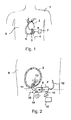
- FIG. 1 schematically shows the body 1 of a patient, wherein separately and schematically the heart 2 is shown with an implanted heart pump 3.
- the heart pump 3 has a rotor which is rotatable about the axis 4 and thereby promotes blood into a catheter 5.
- the pump 3 sucks through an intake 6, which passes through a wall of the heart 2, blood from the interior of the heart, for example from an atrium or a ventricle, and promotes this via the cannula / catheter 5 in a blood vessel.
- control unit 7 which controls the pump 3, for example by means of electrical signals.
- the pump 3 is driven by an electric motor with windings and magnets.
- the motor may be a brushless, for example in the pulse width modulation method controlled electric motor.
- the rotor of the pump 3 may be formed as a radial rotor which accelerates axially flowing fluid in the radial direction. In a radially outer collecting space, the pumped fluid / blood is then collected and passed radially outward into the cannula 5 by the pressure generated.
- the consideration of the pressure conditions in the heart 2 is important in comparison to the pressure prevailing in the thorax 8 outside the heart.
- the differential pressure between the space inside the heart 2 and the thorax 8 is measured by a sensor device, which will be discussed in more detail below.
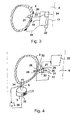
- FIG. 2 schematically shows in a cross section the heart 2 of the patient, which is shown here only as a cavity and is located in the thorax 8. It is a heart pump 3 'is provided, which is designed as an axially pumping pump with a rotor 9.
- the pump delivers blood from inside the heart 2 in the direction of the arrow 10, sucks it out of the heart through the suction cannula 11 and expels it through the outflow cannula 12 in the direction of a blood vessel, not shown.
- at least two sensors of a sensor device can be provided. In FIG. 2 a total of three sensors are shown, the sensors 13, 14 are intended as alternatives and each measure the pressure inside the heart.
- the senor 13 is arranged directly in the heart, while the sensor 14 is connected in the interior of the pump through the intake 11 to the interior of the heart and, if it is apart from flow resistance, directly measures the pressure inside the heart.
- the sensor 15 is arranged outside the pump 3 'in the thorax 8 and measures the pressure there.
- the three sensors 13, 14, 15 are each equipped with radio devices or induction coils, which allow them to send detected measured values to a device 16 for determining the pressure difference.
- the device 16 may for example be designed as a microcontroller and be equipped with a receiver for receiving the measured data.
- a computer program running on the microcontroller detects the pressure differential detected by the various sensors 13, 14, 15 of the sensor device becomes. This can then be forwarded to a control device of the pump 3 '.
- the sensors 13, 14, 15 are arranged and attached directly to the heart pump 3 'or to the intake 11 of the pump. They may be attached to the outside of the pump housing, such as the sensor 15, but also, like the sensor 14, inside the pump chamber on the inside of the housing.
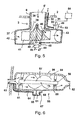
- FIG. 3 a pacemaker 17 is shown implanted in the thorax 8 of a patient.
- the pacemaker 17 is connected by means of various lines 18, 19, 20 with electrodes which lie directly against the heart wall of the heart 2.
- two sensors 21, 22 are provided, wherein the first sensor 21 is arranged inside the heart 2 and connected to the pacemaker 17 by means of an electrical line 23 is.
- the sensor 22 is attached externally to the housing on the pacemaker 17 outside and serves to measure the pressure in the thorax. Both sensors 21, 22 are connected by means of lines to a differential pressure detecting device 24 which is integrated into the pacemaker 17. The determined differential pressure can thus be used within various algorithms of the pacemaker 17.
- FIG. 4 schematically shows the heart 2 of a patient with two alternatively usable units, each of which allow for a differential pressure determination.
- a pacemaker 17 is shown only schematically as a box. Fixed to this is a differential pressure sensor 25, which provides a separation membrane 27 in a measuring space 26.
- the first compartment 28 on the side 2 of the membrane 27 facing the heart is connected to the interior of the heart via a cannula 29.
- the second subspace 30, which lies on the side of the membrane 27 facing away from the heart 2 is connected to the interior of the thorax 8 by means of a cannula 31.
- the membrane position of the elastic, deflectable membrane 27 directly indicates the pressure difference between the interior of the heart 2 and the thorax. This is detected and evaluated by a sensor and microcontroller 32 and supplied as a value of the pressure difference directly to the control unit 33. This in turn can act on the pacemaker 17 and be associated with this.
- a heart pump 3 which is designed as an axial / radial pump and has an intake 6, which protrudes through the heart wall of the heart 2 and is fitted tightly into the opening of the heart wall.
- a first sensor 34 is arranged, which communicates with the interior of the heart 2 via the interior of the intake manifold 6 and measures the absolute pressure prevailing there.
- a sensor 35 is arranged on the outside of the pump 3, which detects the absolute pressure in the vicinity of the pump 3, ie in the thorax. Both sensors 34, 35 are connected via radio or via an electrical line to a differential pressure detecting device 36, which determines the differential pressure between heart heart and thorax.
- FIG. 5 an axial / radial pump 3 is shown in more detail by way of example.
- the pump has a housing 37 with an intake 6, which passes through the wall of the heart 2.
- an inflow / suction channel 6 ' is formed, is sucked by the blood in the direction of arrows 38, 39.
- the pump motor has an internal stator 40, on which the rotor 41 can be mounted hydrostatically and / or magnetically as well as in the radial direction as well as in the axial direction.
- the pump motor may be designed as a brushless electric motor.
- flow channels for the blood are integrated, which can flow in the axial direction and eject by centrifugal action in the radial direction.
- annular collecting space 42 is formed in the housing 37, in which the blood collects and flows in the circumferential direction up to an outflow opening 43, from where it is moved further into a Ausströmkanüle.
- a differential pressure sensor 44 is shown with a membrane 45, wherein the sensor communicates on the one hand via a channel 46 in the stator with the suction of the pump in the intake and on the other hand with the pump exterior via a fluid channel 47.
- the differential pressure is evaluated in an evaluation device 48 and forwarded accordingly to an aggregate.
- the second differential pressure device which is alternatively conceivable on such a pump, has a differential pressure sensor 49 with a membrane 50 and an evaluation device 51.
- the sensor 49 is connected on one side of the membrane 50 via a channel 52 with the heart interior, which runs in or on the housing 37 parallel to the suction channel 6 '.
- the channel 52 may be formed by a bent tube placed externally on the housing 37 or by a bore in the wall of the housing 37 or else by a tube running on the inner wall of the housing 37.
- the sensor 49 communicates on the other side of the membrane via a cannula 53 with the outer environment of the pump housing 37 in the thorax.
- the differential pressure determining device 51 communicates with an aggregate 54.
- an axial pump 55 is shown with a partially cylindrical housing 56 in which a rotor 57 is rotatably mounted.
- the rotor 57 has a hub 58 with conveying elements 59.
- the hub 58 is rotatably mounted in two bearings 60, 61 and usually driven by a motor or a flexible shaft, which is not shown in the figure.
- the flexible shaft usually protrudes through the outflow opening 62 of the housing 56.
- the inflow opening is designated 63.
- a channel 64 is connected, which extends on the outside of the wall of the housing 56 and leads to a first partial space 65 on one side of the diaphragm 66 of a differential pressure sensor 67.
- the second partial space 68 of the differential pressure sensor 67 is connected via an opening and / or a fluid channel with the outer environment of the pump housing 56.
- the fluid channel 64 can also run within the housing wall of the housing 56 or on the inside of the housing wall of the housing 56 between the inflow opening 63 and the differential pressure sensor 67.
- the actual filling pressure of the heart can be determined without possible influences of respiration, "pressing" or pathological changes of the thorax pressure. Therefore, with the same number of pressure sensors as before, a more advantageous signal can be measured. This allows a faster control of heart pumps than before, which is more robust against these disturbances. This would lead to a consequent intake prevention and by the faster adaptation to physical stress to an improved quality of life of the patients. Detection of a pathological change in thoracic pressure (e.g., pericardial effusion, cardiac tamponade) would also be conceivable.
- a pathological change in thoracic pressure e.g., pericardial effusion, cardiac tamponade
Landscapes
- Health & Medical Sciences (AREA)
- Engineering & Computer Science (AREA)
- Heart & Thoracic Surgery (AREA)
- Life Sciences & Earth Sciences (AREA)
- Cardiology (AREA)
- General Health & Medical Sciences (AREA)
- Veterinary Medicine (AREA)
- Biomedical Technology (AREA)
- Public Health (AREA)
- Animal Behavior & Ethology (AREA)
- Anesthesiology (AREA)
- Hematology (AREA)
- Mechanical Engineering (AREA)
- Medical Informatics (AREA)
- Physics & Mathematics (AREA)
- Biophysics (AREA)
- Pathology (AREA)
- Molecular Biology (AREA)
- Surgery (AREA)
- Vascular Medicine (AREA)
- Physiology (AREA)
- External Artificial Organs (AREA)
- Measuring Pulse, Heart Rate, Blood Pressure Or Blood Flow (AREA)
Priority Applications (5)
| Application Number | Priority Date | Filing Date | Title |
|---|---|---|---|
| EP15173069.4A EP3108809A1 (fr) | 2015-06-22 | 2015-06-22 | Dispositif et procede de mesure de pression dans le c ur d'un patient |
| CN201680036413.2A CN107771054A (zh) | 2015-06-22 | 2016-06-16 | 用于测量患者心脏内的压力的装置和方法 |
| US15/738,486 US20180168469A1 (en) | 2015-06-22 | 2016-06-16 | Device and method for measuring pressure in a patient's heart |
| PCT/EP2016/063960 WO2016207066A1 (fr) | 2015-06-22 | 2016-06-16 | Dispositif et procédé de mesure de pression au niveau du cœur d'un patient |
| DE112016002790.7T DE112016002790A5 (de) | 2015-06-22 | 2016-06-16 | Vorrichtung und Verfahren zur Druckmessung am Herzen eines Patienten |
Applications Claiming Priority (1)
| Application Number | Priority Date | Filing Date | Title |
|---|---|---|---|
| EP15173069.4A EP3108809A1 (fr) | 2015-06-22 | 2015-06-22 | Dispositif et procede de mesure de pression dans le c ur d'un patient |
Publications (1)
| Publication Number | Publication Date |
|---|---|
| EP3108809A1 true EP3108809A1 (fr) | 2016-12-28 |
Family
ID=53488189
Family Applications (1)
| Application Number | Title | Priority Date | Filing Date |
|---|---|---|---|
| EP15173069.4A Withdrawn EP3108809A1 (fr) | 2015-06-22 | 2015-06-22 | Dispositif et procede de mesure de pression dans le c ur d'un patient |
Country Status (5)
| Country | Link |
|---|---|
| US (1) | US20180168469A1 (fr) |
| EP (1) | EP3108809A1 (fr) |
| CN (1) | CN107771054A (fr) |
| DE (1) | DE112016002790A5 (fr) |
| WO (1) | WO2016207066A1 (fr) |
Cited By (1)
| Publication number | Priority date | Publication date | Assignee | Title |
|---|---|---|---|---|
| EP3656411A1 (fr) | 2018-11-26 | 2020-05-27 | Berlin Heart GmbH | Pompe à sang permettant de supporter une fonction cardiaque et procédé de fabrication d'un carter de pompe d'une pompe à sang |
Families Citing this family (18)
| Publication number | Priority date | Publication date | Assignee | Title |
|---|---|---|---|---|
| EP3634528B1 (fr) | 2017-06-07 | 2023-06-07 | Shifamed Holdings, LLC | Dispositifs de déplacement de fluide intravasculaire, systèmes et procédés d'utilisation |
| US11511103B2 (en) | 2017-11-13 | 2022-11-29 | Shifamed Holdings, Llc | Intravascular fluid movement devices, systems, and methods of use |
| EP3746149B1 (fr) | 2018-02-01 | 2025-08-06 | Shifamed Holdings, LLC | Pompes à sang intravasculaires |
| WO2020028537A1 (fr) | 2018-07-31 | 2020-02-06 | Shifamed Holdings, Llc | Pompes sanguines intravasculaires et procédés d'utilisation |
| US10960118B2 (en) | 2018-07-31 | 2021-03-30 | Abiomed, Inc. | Systems and methods for controlling a heart pump to minimize myocardial oxygen consumption |
| WO2020073047A1 (fr) | 2018-10-05 | 2020-04-09 | Shifamed Holdings, Llc | Pompes à sang intravasculaires et procédés d'utilisation |
| WO2021011473A1 (fr) | 2019-07-12 | 2021-01-21 | Shifamed Holdings, Llc | Pompes à sang intravasculaires et méthode d'utilisation et procédé de fabrication |
| US11654275B2 (en) | 2019-07-22 | 2023-05-23 | Shifamed Holdings, Llc | Intravascular blood pumps with struts and methods of use and manufacture |
| US12465748B2 (en) | 2019-08-07 | 2025-11-11 | Supira Medical, Inc. | Catheter blood pumps and collapsible pump housings |
| EP4501393A3 (fr) | 2019-09-25 | 2025-04-09 | Shifamed Holdings, LLC | Pompes à sang à cathéter et boîtiers de pompes pliables |
| US11724089B2 (en) | 2019-09-25 | 2023-08-15 | Shifamed Holdings, Llc | Intravascular blood pump systems and methods of use and control thereof |
| WO2021062260A1 (fr) | 2019-09-25 | 2021-04-01 | Shifamed Holdings, Llc | Pompes à sang de cathéter et conduits sanguins pliables |
| EP4072650A4 (fr) | 2019-12-11 | 2024-01-10 | Shifamed Holdings, LLC | Pompes à sang d'aorte descendante et de veine cave |
| EP4077947A4 (fr) | 2019-12-19 | 2024-01-10 | Shifamed Holdings, LLC | Pompes à sang intravasculaires, moteurs et commande de fluide |
| CN114504728A (zh) * | 2020-11-17 | 2022-05-17 | 苏州恒瑞宏远医疗科技有限公司 | 一种用于心脏血泵的传感器及心脏血泵 |
| CN117982258B (zh) * | 2022-10-27 | 2025-07-25 | 合源医疗器械(上海)有限公司 | 医疗装置 |
| WO2025175188A1 (fr) * | 2024-02-16 | 2025-08-21 | Shifamed Holdings, Llc | Dispositifs médicaux implantables à cartouches hermétiques enfermées à l'intérieur d'une membrane de glissement |
| SE2450759A1 (en) * | 2024-07-04 | 2026-01-05 | Scandinavian Real Heart | Integrated Differential Pressure Sensor for Artificial Heart Control |
Citations (8)
| Publication number | Priority date | Publication date | Assignee | Title |
|---|---|---|---|---|
| EP0902708A1 (fr) * | 1996-04-30 | 1999-03-24 | Medtronic, Inc. | Procede et appareil d'optimisation du retard auriculo-ventriculaire d'un stimulateur cardiaque |
| US6328699B1 (en) | 2000-01-11 | 2001-12-11 | Cedars-Sinai Medical Center | Permanently implantable system and method for detecting, diagnosing and treating congestive heart failure |
| US20020120200A1 (en) * | 1997-10-14 | 2002-08-29 | Brian Brockway | Devices, systems and methods for endocardial pressure measurement |
| US20070249950A1 (en) * | 2006-04-20 | 2007-10-25 | Thomas Piaget | Implanted air passage sensors |
| US20070282210A1 (en) | 2006-05-04 | 2007-12-06 | Stern David R | Implantable wireless sensor for in vivo pressure measurement and continuous output determination |
| EP2415396A1 (fr) * | 2010-08-06 | 2012-02-08 | BIOTRONIK SE & Co. KG | Moniteur cardiaque |
| WO2013122459A1 (fr) | 2012-02-13 | 2013-08-22 | Rienks, Rienk | Procédé et système de détection d'une tamponnade cardiaque chez un patient |
| EP1415672B1 (fr) | 1999-04-20 | 2014-09-10 | Berlin Heart GmbH | Pompe avec capteur de pression |
Family Cites Families (12)
| Publication number | Priority date | Publication date | Assignee | Title |
|---|---|---|---|---|
| US5964694A (en) * | 1997-04-02 | 1999-10-12 | Guidant Corporation | Method and apparatus for cardiac blood flow assistance |
| DE10016422B4 (de) * | 2000-04-01 | 2013-10-31 | Impella Cardiosystems Ag | Parakardiale Blutpumpe |
| US20080097226A1 (en) * | 2005-06-09 | 2008-04-24 | Mcconnell Patrick I | Evaluation of cardiac function using left ventricular pressure during LVAD support |
| US20070021680A1 (en) * | 2005-07-22 | 2007-01-25 | Transoma Medical, Inc. | Methods to reduce power to measure pressure |
| US7682313B2 (en) * | 2005-11-23 | 2010-03-23 | Vital Sensors Holding Company, Inc. | Implantable pressure monitor |
| US20080139951A1 (en) * | 2006-12-08 | 2008-06-12 | Cardiac Pacemakers, Inc. | Detection of Stenosis |
| US8027724B2 (en) * | 2007-08-03 | 2011-09-27 | Cardiac Pacemakers, Inc. | Hypertension diagnosis and therapy using pressure sensor |
| US20100081892A1 (en) * | 2008-09-30 | 2010-04-01 | NelIcor Puritan Bennett Ireland | Systems and Methods for Combined Pulse Oximetry and Blood Pressure Measurement |
| CN101983732B (zh) * | 2010-11-19 | 2012-07-25 | 北京工业大学 | 基于生理参数的血泵控制设备 |
| EP2520317B1 (fr) * | 2011-05-05 | 2014-07-09 | Berlin Heart GmbH | Pompe à sang |
| GB201112350D0 (en) * | 2011-07-18 | 2011-08-31 | Calon Cardio Technology Ltd | Cardiac Pump |
| DE102013012391A1 (de) * | 2012-09-26 | 2014-03-27 | CircuLite GmbH | Pumpe, System mit einer Blutpumpe und Verfahren zur Herstellung einer Blutpumpe |
-
2015
- 2015-06-22 EP EP15173069.4A patent/EP3108809A1/fr not_active Withdrawn
-
2016
- 2016-06-16 US US15/738,486 patent/US20180168469A1/en not_active Abandoned
- 2016-06-16 DE DE112016002790.7T patent/DE112016002790A5/de not_active Withdrawn
- 2016-06-16 CN CN201680036413.2A patent/CN107771054A/zh active Pending
- 2016-06-16 WO PCT/EP2016/063960 patent/WO2016207066A1/fr not_active Ceased
Patent Citations (8)
| Publication number | Priority date | Publication date | Assignee | Title |
|---|---|---|---|---|
| EP0902708A1 (fr) * | 1996-04-30 | 1999-03-24 | Medtronic, Inc. | Procede et appareil d'optimisation du retard auriculo-ventriculaire d'un stimulateur cardiaque |
| US20020120200A1 (en) * | 1997-10-14 | 2002-08-29 | Brian Brockway | Devices, systems and methods for endocardial pressure measurement |
| EP1415672B1 (fr) | 1999-04-20 | 2014-09-10 | Berlin Heart GmbH | Pompe avec capteur de pression |
| US6328699B1 (en) | 2000-01-11 | 2001-12-11 | Cedars-Sinai Medical Center | Permanently implantable system and method for detecting, diagnosing and treating congestive heart failure |
| US20070249950A1 (en) * | 2006-04-20 | 2007-10-25 | Thomas Piaget | Implanted air passage sensors |
| US20070282210A1 (en) | 2006-05-04 | 2007-12-06 | Stern David R | Implantable wireless sensor for in vivo pressure measurement and continuous output determination |
| EP2415396A1 (fr) * | 2010-08-06 | 2012-02-08 | BIOTRONIK SE & Co. KG | Moniteur cardiaque |
| WO2013122459A1 (fr) | 2012-02-13 | 2013-08-22 | Rienks, Rienk | Procédé et système de détection d'une tamponnade cardiaque chez un patient |
Cited By (3)
| Publication number | Priority date | Publication date | Assignee | Title |
|---|---|---|---|---|
| EP3656411A1 (fr) | 2018-11-26 | 2020-05-27 | Berlin Heart GmbH | Pompe à sang permettant de supporter une fonction cardiaque et procédé de fabrication d'un carter de pompe d'une pompe à sang |
| WO2020109216A1 (fr) | 2018-11-26 | 2020-06-04 | Berlin Heart Gmbh | Pompe d'assistance circulatoire destinée à l'assistance de la fonction cardiaque et procédé de fabrication d'un boîtier de pompe d'une pompe d'assistance circulatoire |
| US12420081B2 (en) | 2018-11-26 | 2025-09-23 | Berlin Heart Gmbh | Blood pump for supporting heart function and method for producing a pump housing of a blood pump |
Also Published As
| Publication number | Publication date |
|---|---|
| DE112016002790A5 (de) | 2018-03-01 |
| CN107771054A (zh) | 2018-03-06 |
| WO2016207066A1 (fr) | 2016-12-29 |
| US20180168469A1 (en) | 2018-06-21 |
Similar Documents
| Publication | Publication Date | Title |
|---|---|---|
| WO2016207066A1 (fr) | Dispositif et procédé de mesure de pression au niveau du cœur d'un patient | |
| WO2016173896A1 (fr) | Dispositif de pompe et procédé pour actionner une pompe pour liquides | |
| DE3316101C1 (de) | Redundante Kolbenpumpe zum Betrieb ein- oder mehrkammriger pneumatischer Blutpumpen | |
| DE2754894C2 (de) | Vorrichtung zum Bilanzieren einer einem Patienten entnommenen Flüssigkeit mit einer Ersatzflüssigkeit | |
| EP3263148B1 (fr) | Procédé de détermination de paramètres de fonctionnement d'une pompe à sang | |
| DE69101106T2 (de) | Verfahren und Vorrichtung zur Durchflussregulierung einer Herzprothese mit periodischem Durchfluss. | |
| EP1339443B1 (fr) | Procédé pour étalonner un capteur de pression ou un capteur de débit sur une pompe rotative | |
| EP4033100B1 (fr) | Procédé de fonctionnement d'un dispositif d'alimentation qui sollicite un canal avec un liquide, dispositif d'alimentation, catheter creux et pompe à cathéter | |
| EP1749549B1 (fr) | Système de drainage de fluide cephalo-rachidien | |
| EP3106187A1 (fr) | Pompe cardiaque implantable | |
| EP3060808B1 (fr) | Procédé de surveillance d'une pompe à rotor utilisée pour une application médicale | |
| WO2019234167A1 (fr) | Dispositif de détermination et procédé pour déterminer la viscosité d'un fluide | |
| EP3135326A1 (fr) | Pompe cardiaque et procede de fonctionnement d'une pompe cardiaque | |
| DE102013012391A1 (de) | Pumpe, System mit einer Blutpumpe und Verfahren zur Herstellung einer Blutpumpe | |
| WO2017102164A1 (fr) | Pompe à sang de soutien cardiaque et procédé de fonctionnement de celle-ci | |
| WO2019034670A1 (fr) | Pompe pourvue d'un capteur de rotor pour la détection de paramètres physiologiques, de paramètres d'écoulement et de paramètres de mouvement | |
| EP3164168A2 (fr) | Procédé et dispositif d'assistance cardiaque pour déterminer une pression de sortie | |
| DE202008016450U1 (de) | Brustpumpe zum Abpumpen von Milch von einer Brust | |
| DE102015222199A1 (de) | Herzunterstützungspumpe, Verfahren zum Betreiben einer Herzunterstützungspumpe und Steuergerät | |
| EP3270986A1 (fr) | Dispositif de pompe cardiaque et procede pour faire fonctionner ce dernier | |
| WO2011124388A1 (fr) | Dispositif d'aspiration pour aspirer un liquide corporel | |
| EP0925081A1 (fr) | Dispositif a pompe intracardiaque | |
| DE102018210076A1 (de) | Verfahren und Vorrichtung zum Erkennen eines Verschleißzustands eines Herzunterstützungssystems, Verfahren und Vorrichtung zum Betreiben eines Herzunterstützungssystems und Herzunterstützungssystem | |
| EP3284490A1 (fr) | Procédé de fonctionnement d'un dispositif extracorporel de traitement du sang et dispositif de traitement du sang | |
| WO2011131766A1 (fr) | Dispositif d'assistance cardiaque |
Legal Events
| Date | Code | Title | Description |
|---|---|---|---|
| PUAI | Public reference made under article 153(3) epc to a published international application that has entered the european phase |
Free format text: ORIGINAL CODE: 0009012 |
|
| AK | Designated contracting states |
Kind code of ref document: A1 Designated state(s): AL AT BE BG CH CY CZ DE DK EE ES FI FR GB GR HR HU IE IS IT LI LT LU LV MC MK MT NL NO PL PT RO RS SE SI SK SM TR |
|
| AX | Request for extension of the european patent |
Extension state: BA ME |
|
| RIN1 | Information on inventor provided before grant (corrected) |
Inventor name: GRANEGGER, MARCUS |
|
| STAA | Information on the status of an ep patent application or granted ep patent |
Free format text: STATUS: THE APPLICATION IS DEEMED TO BE WITHDRAWN |
|
| 18D | Application deemed to be withdrawn |
Effective date: 20170629 |