EP3109254A1 - Vernetztes nukleosid und nukleotid - Google Patents
Vernetztes nukleosid und nukleotid Download PDFInfo
- Publication number
- EP3109254A1 EP3109254A1 EP15751291.4A EP15751291A EP3109254A1 EP 3109254 A1 EP3109254 A1 EP 3109254A1 EP 15751291 A EP15751291 A EP 15751291A EP 3109254 A1 EP3109254 A1 EP 3109254A1
- Authority
- EP
- European Patent Office
- Prior art keywords
- group
- amino
- compound
- nucleic acid
- acid synthesis
- Prior art date
- Legal status (The legal status is an assumption and is not a legal conclusion. Google has not performed a legal analysis and makes no representation as to the accuracy of the status listed.)
- Granted
Links
- JGKAALNRLDZJKX-JQSOEZDFSA-N CC(C(C12)O3)(N(C=C4C)C3=NC4=O)O[C@@]1(COCc1ccccc1)C1(CC1)C2(O)OCc1ccccc1 Chemical compound CC(C(C12)O3)(N(C=C4C)C3=NC4=O)O[C@@]1(COCc1ccccc1)C1(CC1)C2(O)OCc1ccccc1 JGKAALNRLDZJKX-JQSOEZDFSA-N 0.000 description 1
- LGJBKWLYYCOKTA-PRFDXTEYSA-N CC(C(N1)=O)=CN([C@@H]2O[C@@]3(COCc4ccccc4)C4(CC4)C4(OCc5ccccc5)OC2C34)C1=O Chemical compound CC(C(N1)=O)=CN([C@@H]2O[C@@]3(COCc4ccccc4)C4(CC4)C4(OCc5ccccc5)OC2C34)C1=O LGJBKWLYYCOKTA-PRFDXTEYSA-N 0.000 description 1
- 0 CC(C(N1)=O)=CN([C@@](C2OS(C)(=O)=O)O[C@@](COCc3ccccc3)(C3(CC3)C3O*)C23OCc2ccccc2)C1=O Chemical compound CC(C(N1)=O)=CN([C@@](C2OS(C)(=O)=O)O[C@@](COCc3ccccc3)(C3(CC3)C3O*)C23OCc2ccccc2)C1=O 0.000 description 1
Images


Classifications
-
- C—CHEMISTRY; METALLURGY
- C12—BIOCHEMISTRY; BEER; SPIRITS; WINE; VINEGAR; MICROBIOLOGY; ENZYMOLOGY; MUTATION OR GENETIC ENGINEERING
- C12N—MICROORGANISMS OR ENZYMES; COMPOSITIONS THEREOF; PROPAGATING, PRESERVING, OR MAINTAINING MICROORGANISMS; MUTATION OR GENETIC ENGINEERING; CULTURE MEDIA
- C12N15/00—Mutation or genetic engineering; DNA or RNA concerning genetic engineering, vectors, e.g. plasmids, or their isolation, preparation or purification; Use of hosts therefor
- C12N15/09—Recombinant DNA-technology
- C12N15/11—DNA or RNA fragments; Modified forms thereof; Non-coding nucleic acids having a biological activity
- C12N15/113—Non-coding nucleic acids modulating the expression of genes, e.g. antisense oligonucleotides; Antisense DNA or RNA; Triplex- forming oligonucleotides; Catalytic nucleic acids, e.g. ribozymes; Nucleic acids used in co-suppression or gene silencing
-
- C—CHEMISTRY; METALLURGY
- C07—ORGANIC CHEMISTRY
- C07H—SUGARS; DERIVATIVES THEREOF; NUCLEOSIDES; NUCLEOTIDES; NUCLEIC ACIDS
- C07H19/00—Compounds containing a hetero ring sharing one ring hetero atom with a saccharide radical; Nucleosides; Mononucleotides; Anhydro-derivatives thereof
- C07H19/02—Compounds containing a hetero ring sharing one ring hetero atom with a saccharide radical; Nucleosides; Mononucleotides; Anhydro-derivatives thereof sharing nitrogen
- C07H19/04—Heterocyclic radicals containing only nitrogen atoms as ring hetero atom
- C07H19/16—Purine radicals
-
- C—CHEMISTRY; METALLURGY
- C07—ORGANIC CHEMISTRY
- C07H—SUGARS; DERIVATIVES THEREOF; NUCLEOSIDES; NUCLEOTIDES; NUCLEIC ACIDS
- C07H19/00—Compounds containing a hetero ring sharing one ring hetero atom with a saccharide radical; Nucleosides; Mononucleotides; Anhydro-derivatives thereof
- C07H19/02—Compounds containing a hetero ring sharing one ring hetero atom with a saccharide radical; Nucleosides; Mononucleotides; Anhydro-derivatives thereof sharing nitrogen
- C07H19/04—Heterocyclic radicals containing only nitrogen atoms as ring hetero atom
- C07H19/06—Pyrimidine radicals
-
- C—CHEMISTRY; METALLURGY
- C07—ORGANIC CHEMISTRY
- C07H—SUGARS; DERIVATIVES THEREOF; NUCLEOSIDES; NUCLEOTIDES; NUCLEIC ACIDS
- C07H21/00—Compounds containing two or more mononucleotide units having separate phosphate or polyphosphate groups linked by saccharide radicals of nucleoside groups, e.g. nucleic acids
-
- C—CHEMISTRY; METALLURGY
- C12—BIOCHEMISTRY; BEER; SPIRITS; WINE; VINEGAR; MICROBIOLOGY; ENZYMOLOGY; MUTATION OR GENETIC ENGINEERING
- C12N—MICROORGANISMS OR ENZYMES; COMPOSITIONS THEREOF; PROPAGATING, PRESERVING, OR MAINTAINING MICROORGANISMS; MUTATION OR GENETIC ENGINEERING; CULTURE MEDIA
- C12N2310/00—Structure or type of the nucleic acid
- C12N2310/30—Chemical structure
- C12N2310/31—Chemical structure of the backbone
-
- Y—GENERAL TAGGING OF NEW TECHNOLOGICAL DEVELOPMENTS; GENERAL TAGGING OF CROSS-SECTIONAL TECHNOLOGIES SPANNING OVER SEVERAL SECTIONS OF THE IPC; TECHNICAL SUBJECTS COVERED BY FORMER USPC CROSS-REFERENCE ART COLLECTIONS [XRACs] AND DIGESTS
- Y02—TECHNOLOGIES OR APPLICATIONS FOR MITIGATION OR ADAPTATION AGAINST CLIMATE CHANGE
- Y02P—CLIMATE CHANGE MITIGATION TECHNOLOGIES IN THE PRODUCTION OR PROCESSING OF GOODS
- Y02P20/00—Technologies relating to chemical industry
- Y02P20/50—Improvements relating to the production of bulk chemicals
- Y02P20/55—Design of synthesis routes, e.g. reducing the use of auxiliary or protecting groups
Definitions
- the present invention relates to bridged nucleosides and nucleotides. More specifically, the present invention relates to bridged nucleosides and nucleotides having high binding affinities for single-stranded RNAs and high nuclease resistance.
- Treatments of disorders using nucleic acid drugs include antisense therapies, antigene therapies, aptamers, siRNAs, and the like.
- An antisense therapy is the procedure for treatment or prevention of diseases involving inhibiting a translation process of pathogenic RNAs by externally introducing oligonucleotides (antisense strands) complementary to disease-associated mRNAs to form the double strands.
- the mechanism of siRNAs is similar to that of the antisense therapies, which involves inhibiting translation from mRNAs to proteins by administration of double-stranded RNAs to the body.
- oligonucleotides which are small nucleic acid molecules (oligonucleotides), exert their functions by binding to disease-related biological components, such as proteins.
- nucleic acid drugs Although various artificial nucleic acids have been developed as materials for such nucleic acid drugs, there has not been found any ideal molecule yet.
- the materials developed for nucleic acid drugs to date include S-oligo (phosphorothioate), 2',4'-BNA (bridged nucleic acid)/LNA (locked nucleic acid) (See Patent Documents 1 to 3 and Non-patent Documents 1 to 4).
- S-oligo is commercially available as an antisense drug for cytomegalovirus in United States. While this drug has high nuclease resistance, it has a weakness to be improved concerning about its low binding affinity for the target nucleic acid strands.
- Patent Document 4 Furthermore, in recent years, application of oligonucleotides having nucleoside structures such as those represented by formulas a and b below: to the aforementioned materials has also been proposed (Patent Document 4).
- the present invention was made to address the above-described problems, and it is an object thereof to provide a novel molecule for antisense therapies and nucleic acid drugs, the molecule being not susceptible to nuclease degradation in vivo, having a high binding affinity and specificity for target mRNAs, being capable of effectively regulating expression of specific genes, and furthermore, being superior in terms of productivity.
- the present invention provides a compound represented by formula I below or a salt thereof:
- the Base in the formula I is a 6-aminopurine-9-yl group, a 2,6-diaminopurine-9-yl group, a 2-amino-6-chloropurine-9-yl group, a 2-amino-6-fluoropurine-9-yl group, a 2-amino-6-bromopurine-9-yl group, a 2-amino-6-hydroxypurine-9-yl group, a 6-amino-2-methoxypurine-9-yl group, a 6-amino-2-chloropurine-9-yl group, a 6-amino-2-fluoropurine-9-yl group, a 2,6-dimethoxypurine-9-yl group, a 2,6-dichloropurine-9-yl group, a 6 mercaptopurine-9-yl group, a 2-oxo-4-amino-1,2-dihydropyrimidine-1-yl group, a 4-a
- the Base in the formula I is a 2-oxo-4-hydroxy-5-methyl-1,2-dihydropyrimidine-1-yl group.
- R 6 and R 7 in the formula I are both hydrogen atoms.
- the present invention also provides an oligonucleotide containing at least one nucleoside structure represented by formula II below or a pharmacologically acceptable salt thereof:
- R 6 and R 7 in the formula II are both hydrogen atoms.
- the present invention also provides a method for producing the oligonucleotide or pharmacologically acceptable salt thereof described above, comprising:
- novel 2',4'-bridged nucleosides and nucleotides are provided.
- An oligonucleotide containing a 2',4'-bridged artificial nucleotide of the present invention has a binding affinity for single-stranded RNA comparable to that of known 2',4'-BNA/LNA and has higher nuclease resistance than LNA.
- they are expected to the application for nucleic acid drugs because of their much stronger binding affinity for single-stranded RNAs than S-oligo's affinity.
- the 2',4'-bridged nucleosides and nucleotides of the present invention can be produced by simpler reaction processes than conventional ones, and thus it is also possible to increase industrial production efficiency even more.
- C 1 to C 6 linear alkyl group refers to any linear alkyl group having 1 to 6 carbon atoms and specifically a methyl group, an ethyl group, an n-propyl group, an n-butyl group, an n-pentyl group, or an n-hexyl group.
- C 1 to C 6 linear alkoxy group encompasses alkoxy groups having any linear alkyl group having 1 to 6 carbon atoms.
- the linear alkoxy groups include a methyloxy group, an ethyloxy group, an n-propyloxy group, and the like.
- C 1 to C 6 linear alkylthio group encompasses alkylthio groups having any linear alkyl group having 1 to 6 carbon atoms.
- the linear alkylthio groups include a methylthio group, an ethylthio group, an n-propylthio group, and the like.
- C 1 to C 6 linear alkylamino group encompasses alkylamino groups which contain one or two alkylamino groups having any linear alkyl group having 1 to 6 carbon atoms.
- the linear alkylamino groups include a methylamino group, a dimethylamino group, an ethylamino group, a methylethylamino group, a diethylamino group, and the like.
- C 1 to C 7 alkyl group that may be branched or form a ring encompasses any linear alkyl groups having 1 to 7 carbon atoms, any branched alkyl groups having 3 to 7 carbon atoms, and any cyclic alkyl groups having 3 to 7 carbon atoms. It may be simply referred to as "lower alkyl group”.
- the linear alkyl groups having 1 to 7 carbon atoms include a methyl group, an ethyl group, an n-propyl group, an n-butyl group, an n-pentyl group, an n-hexyl group, and an n-heptyl group
- the branched alkyl groups having 3 to 7 carbon atoms include an isopropyl group, an isobutyl group, a tert -butyl group, an isopentyl group, and the like
- the cyclic alkyl groups having 3 to 7 carbon atoms include a cyclobutyl group, a cyclopentyl group, a cyclohexyl group, and the like.
- C 2 to C 7 alkenyl group that maybe branched or form a ring encompasses any linear alkenyl groups having 2 to 7 carbon atoms, any branched alkenyl groups having 3 to 7 carbon atoms, and any cyclic alkenyl groups having 3 to 7 carbon atoms. It may be simply referred to as "lower alkenyl group”.
- the linear alkenyl groups having 2 to 7 carbon atoms include an ethenyl group, a 1-propenyl group, a 2-propenyl group, a 1-butenyl group, a 2-butenyl group, a 1-pentenyl group, a 2-pentenyl group, a 3-pentenyl group, a 4-pentenyl group, a 1-hexenyl group, and the like
- the branched alkenyl groups having 3 to 7 carbon atoms include an isopropenyl group, a 1-methyl-1-propenyl group, a 1-methyl-2-propenyl group, a 2-methyl-1-propenyl group, a 2-methyl-2-propenyl group, a 1-methyl-2-butenyl group, and the like
- the cyclic alkenyl groups having 3 to 7 carbon atoms include a cyclobutenyl group, a cyclopentenyl group, a cyclohexenyl
- C 3 to C 10 aryl group that may contain a hetero atom encompasses any aryl groups having 6 to 10 carbon atoms and consisting of only hydrocarbons and any heteroaryl groups having 3 to 12 carbon atoms in which at least one carbon atom constituting the ring structure of the aryl groups was substituted with a hetero atom (e.g., a nitrogen atom, an oxygen atom, and a sulfur atom as well as a combination of these).
- a hetero atom e.g., a nitrogen atom, an oxygen atom, and a sulfur atom as well as a combination of these.
- the aryl groups having 6 to 10 carbon atoms include a phenyl group, a naphthyl group, an indenyl group, an azulenyl group, and the like
- the heteroaryl groups having 3 to 12 carbon atoms include a pyridyl group, a pyrrolyl group, a quinolyl group, an indolyl group, an imidazolyl group, a furyl group, a thienyl group, and the like.
- aralkyl group having a C 3 to C 12 aryl moiety that may contain a hetero atom examples include a benzyl group, a phenethyl group, a naphthylmethyl group, a 3-phenylpropyl group, a 2-phenylpropyl group, a 4-phenylbutyl group, a 2-phenylbutyl group, a pyridylmethyl group, an indolylmethyl group, a furylmethyl group, a thienylmethyl group, a pyrrolylmethyl group, a 2-pyridylethyl group, a 1-pyridylethyl group, a 3-thienylpropyl group, and the like.
- acyl group examples include aliphatic acyl groups and aromatic acyl groups.
- the aliphatic acyl groups include alkylcarbonyl groups such as a formyl group, an acetyl group, a propionyl group, a butyryl group, an isobutyryl group, a pentanoyl group, a pivaloyl group, a valeryl group, an isovaleryl group, an octanoyl group, a nonanoyl group, a decanoyl group, a 3-methylnonanoyl group, a 8-methylnonanoyl group, a 3-ethyloctanoyl group, a 3,7-dimethyloctanoyl group, an undecanoyl group, a dodecanoyl group, a tridecanoyl group, a tetradecanoyl group, a penta
- aromatic acyl groups examples include arylcarbonyl groups such as a benzoyl group, an ⁇ -naphthoyl group, and a ß-naphthoyl group; halogenoarylcarbonyl groups such as a 2-bromobenzoyl group and a 4-chlorobenzoyl group; lower alkylated arylcarbonyl groups such as a 2,4,6-trimethylbenzoyl group and a 4-toluoyl group; lower alkoxylated arylcarbonyl groups such as a 4-anisoyl group; carboxylated arylcarbonyl groups such as a 2-carboxybenzoyl group, 3-carboxybenzoyl group, and a 4-carboxybenzoyl group; nitrated arylcarbonyl groups such as a 4-nitrobenzoyl group and a 2-nitrobenzoyl group; lower alkoxycarbonylated arylcarbonyl groups such as a
- the acyl group is a formyl group, an acetyl group, a propionyl group, a butyryl group, an isobutyryl group, a pentanoyl group, a pivaloyl group, or a benzoyl group.
- sil group examples include tri-lower alkylsilyl groups such as a trimethylsilyl group, a triethylsilyl group, an isopropyldimethylsilyl group, a t-butyldimethylsilyl group, a methyldiisopropylsilyl group, a methyl di-t-butylsilyl group, and a triisopropylsilyl group; and tri-lower alkylsilyl groups substituted with one or two aryl groups such as a diphenylmethylsilyl group, a butyldiphenylbutylsilyl group, a diphenylisopropylsilyl group, and a phenyldiisopropylsilyl group.
- tri-lower alkylsilyl groups such as a trimethylsilyl group, a triethylsilyl group, an isopropyldimethylsilyl group,
- the silyl group is a trimethylsilyl group, a triethylsilyl group, a triisopropylsilyl group, a t-butyldimethylsilyl group, or a t-butyldiphenylsilyl group, more preferably a trimethylsilyl group.
- halogen atom includes, for example, a fluorine atom, a chlorine atom, a bromine atom, and an iodine atom.
- the halogen atom is a fluorine atom or a chlorine atom.
- protective group in phrases "a protective group for an amino group on nucleic acid synthesis", "a protective group for a hydroxyl group on nucleic acid synthesis”, “a hydroxyl group protected by a protective group for nucleic acid synthesis”, “a phosphate group protected by a protective group for nucleic acid synthesis”, and “a mercapto group protected by a protective group for nucleic acid synthesis”, as used herein, is not limited to specific groups as far as the protective group can stably protect an amino group, a hydroxyl group, a phosphate group, or a mercapto group during nucleic acid synthesis.
- the protective group refers to those which are stable in acid or neutral condition and may be cleaved by chemical methods such as hydrogenolysis, hydrolysis, electrolysis, and photodissociation.
- protective groups include lower alkyl groups, lower alkenyl groups, acyl groups, tetrahydropyranyl or tetrahydrothiopyranyl groups, tetrahydrofuranyl or tetrahydrothiofuranyl groups, silyl groups, lower alkoxymethyl groups, lower alkoxylated lower alkoxymethyl groups, halogeno lower alkoxymethyl groups, lower alkoxylated ethyl groups, halogenated ethyl groups, methyl groups substituted with one to three aryl groups, "methyl groups substituted with one to three aryl groups having the aryl ring substituted with a lower alkyl group, a lower alkoxy group, a halogen atom, or a cyano group", lower alkoxycarbonyl groups
- the tetrahydropyranyl groups or tetrahydrothiopyranyl groups include a tetrahydropyran-2-yl group, a 3-bromotetrahydropyran-2-yl group, a 4-methoxytetrahydropyran-4-yl group, a tetrahydrothiopyran-4-yl group, a 4-methoxytetrahydrothiopyran-4-yl group, and the like.
- the tetrahydrofuranyl groups or tetrahydrothiofuranyl groups include a tetrahydrofuran-2-yl group and a tetrahydrothiofuran-2-yl group.
- the lower alkoxymethyl groups include a methoxymethyl group, a 1,1-dimethyl-1-methoxymethyl group, an ethoxymethyl group, a propoxymethyl group, an isopropoxymethyl group, a butoxymethyl group, a t-butoxymethyl group, and the like.
- the lower alkoxylated lower alkoxymethyl groups include a 2-methoxyethoxymethyl group and the like.
- the halogeno lower alkoxymethyl groups include a 2,2,2-trichloroethoxymethyl group, a bis(2-chloroethoxy)methyl group, and the like.
- the lower alkoxylated ethyl groups include a 1-ethoxyethyl group, a 1-(isopropoxy) ethyl group, and the like.
- the halogenated ethyl groups include a 2,2,2-trichloroethyl group and the like.
- the methyl groups substituted with one to three aryl groups include a benzyl group, an ⁇ -naphthylmethyl group, a ß-naphthylmethyl group, a diphenylmethyl group, a triphenylmethyl group, an ⁇ -naphthyldiphenylmethyl group, a 9-anthrylmethyl group, and the like.
- methyl groups substituted with one to three aryl groups having aryl rings substituted with a lower alkyl group, a lower alkoxy group, a halogen atom, or a cyano group include a 4-methylbenzyl group, a 2,4,6-trimethylbenzyl group, a 3,4,5-trimethylbenzyl group, a 4-methoxybenzyl group, a 4-methoxyphenyldiphenylmethyl group, a 4,4'-dimethoxytriphenylmethyl group, a 2-nitrobenzyl group, a 4-nitrobenzyl group, a 4-chlorobenzyl group, a 4-bromobenzyl group, a 4-cyanobenzyl group, and the like.
- the lower alkoxycarbonyl groups include a methoxycarbonyl group, an ethoxycarbonyl group, a t-butoxycarbonyl group, an isobutoxycarbonyl group, and the like.
- the "aryl groups substituted with a halogen atom, a lower alkoxy group, or a nitro group” include a 4-chlorophenyl group, a 2-fluorophenyl group, a 4-methoxyphenyl group, a 4-nitrophenyl group, a 2,4-dinitrophenyl group, and the like.
- lower alkoxycarbonyl groups substituted with a halogen atom or a tri-lower alkylsilyl group include a 2,2,2-trichloroethoxycarbonyl group, a 2-trimethylsilyl ethoxycarbonyl group, and the like.
- alkenyloxycarbonyl groups include a vinyloxycarbonyl group, an aryloxycarbonyl group, and the like.
- aralkyloxycarbonyl groups having an aryl ring that may be substituted with a lower alkoxy or a nitro group include a benzyloxycarbonyl group, a 4-methoxybenzyloxycarbonyl group, a 3,4-dimethoxybenzyloxycarbonyl group, a 2-nitrobenzyloxycarbonyl group, a 4-nitrobenzyloxycarbonyl group, and the like.
- the "protective group for an hydroxyl group on nucleic acid synthesis” is preferably an aliphatic acyl group, an aromatic acyl group, a methyl group substituted with one to three aryl groups, a "methyl group substituted with one to three aryl groups having aryl rings substituted with a lower alkyl, a lower alkoxy, a halogen, or a cyano group", or a silyl group, and more preferably an acetyl group, a benzoyl group, a benzyl group, a p-methoxybenzoyl group, a dimethoxytrityl group, a monomethoxytrityl group, or a tert -butyldiphenylsilyl group.
- the protective group in the phrase "a hydroxyl group protected by a protective group for nucleic acid synthesis” is preferably an aliphatic acyl group, an aromatic acyl group, "a methyl group substituted with one to three aryl groups", “an aryl group substituted with a halogen atom, lower alkoxy group, or a nitro group", a lower alkyl group, or a lower alkenyl group, and more preferably a benzoyl group, a benzyl group, a 2-chlorophenyl group, a 4-chlorophenyl group, or a 2-propenyl group.
- the "protective group for an amino group on nucleic acid synthesis” is preferably an acyl group, and more preferably a benzoyl group.
- the "protective group” in the phrase "a phosphate group protected by a protective group for nucleic acid synthesis” is preferably a lower alkyl group, a lower alkyl group substituted with a cyano group, an aralkyl group, "an aralkyl group having an aryl ring substituted with a nitro group or a halogen atom", or "an aryl group substituted with a lower alkyl group, a halogen atom, or a nitro group", and more preferably a 2-cyanoethyl group, a 2,2,2-trichloroethyl group, a benzyl group, a 2-chlorophenyl group, or a 4-chlorophenyl group.
- R 4 and R 5 each independently represent a hydroxyl group, a hydroxyl group protected by a protective group for nucleic acid synthesis, a mercapto group, a mercapto group protected by a protective group for nucleic acid synthesis, an amino group, an alkoxy group having 1 to 5 carbon atoms, an alkylthio group having 1 to 5 carbon atoms, a cyanoalkoxy group having 1 to 6 carbon atoms, or an amino group substituted with an alkyl group having 1 to 6 carbon atoms), the ones where R 4 can be represented by OR 4a and R 5 can be represented by NR 5a are referred to as a "phosphoramidite group".
- the phosphoramidite groups include, preferably, groups represented by the formula -P(OC 2 H 4 CN)(N(iPr) 2 ) or the formula -P(OCH 3 )(N(iPr) 2 ). In these formulas, iPr represents an isopropyl group.
- nucleoside and nucleoside analogue refer to an unnatural “nucleoside” in which a purine or a pyrimidine base is bonded to sugar, as well as those in which a heteroaromatic ring and an aromatic hydrocarbon ring other than purine and pyrimidine, serving to substitute for a purine or a pyrimidine base, are bonded with sugars.
- artificial oligonucleotide and “oligonucleotide analogue”, as used herein, refer to unnatural derivatives of "oligonucleotides” in which 2 to 50 of same or different "nucleosides” or “nucleoside analogues” are bonded via phosphodiester bonds.
- analogues include preferably sugar derivatives with sugar moieties modified; thioated derivatives with phosphate diester moiety thioated; esters with terminal phosphate moiety esterificated; and amides in which amino groups on a purine base is amidated, and preferably sugar derivatives with sugar moiety modified.
- salts of compounds represented by the formula I or II refers to salts of compounds represented by the formula I or II according to the present invention.
- these salts include metal salts including alkaline metal salts such as sodium salts, potassium salts, and lithium salts, alkaline earth metal salts such as calcium salts and magnesium salts, aluminum salts, iron salts, zinc salts, cuprous salts, nickel salts, and cobalt salts; amine salts including inorganic salts such as ammonium salts and organic salts such as t-octylamine salts, dibenzylamine salts, morpholine salts, glucosamine salts, phenylglycine alkylester salts, ethylenediamine salts, N-methylglucamine salts, guanidine salts, diethylamine salts, triethylamine salts, dicyclohexylamine salts, N,N'-dibenzylethylenediamine salts, chloroprocaine
- salts of oligonucleotide analogues containing at least one of nucleoside structures represented by the formula II of the present invention include metal salts including alkaline metal salts such as sodium salts, potassium salts, and lithium salts, alkaline earth metal salts such as calcium salts and magnesium salts, aluminum salts, iron salts, zinc salts, cuprous salts, nickel salts, and cobalt salts; amine salts including inorganic salts such as ammonium salts and organic salts such as t-octylamine salts, dibenzylamine salts, morpholine salts, glucosamine salts, phenylglycine alkylester salts, ethylenediamine salts, N-methylglucamine salts, guanidine salts, diethylamine salts, triethylamine salts, dicyclohexylamine salts
- 2',4'-bridged nucleosides and nucleotides or salts (preferably, pharmacologically acceptable salts) thereof according to the present invention (hereinafter, the term "2',4'-bridged nucleosides" collectively refers to 2',4'-bridged nucleosides themselves, salts of 2',4'-bridged nucleosides, and pharmacologically acceptable salts of 2',4'-bridged nucleosides, unless otherwise stated) have the structures represented by formula I below:
- Base is a purine base (i.e., purine-9-yl group) or a pyrimidine base (i.e., 2-oxo-1,2-dihydropyrimidine-1-yl group).
- bases may have any one or more substituents selected from group ⁇ consisting of a hydroxyl group, a C 1 to C 6 linear alkyl group, a C 1 to C 6 linear alkoxy group, a mercapto group, a C 1 to C 6 linear alkylthio group, an amino group, a C 1 to C 6 linear alkylamino group, and a halogen atom.
- Base examples include a 6-aminopurine-9-yl group (adeninyl group), a 2,6-diaminopurine-9-yl group, a 2-amino-6-chloropurine-9-yl group, a 2-amino-6-fluoropurine-9-yl group, a 2-amino-6-bromopurine-9-yl group, a 2-amino-6-hydroxypurine-9-yl group (guaninyl group), a 6-amino-2-methoxypurine-9-yl group, a 6-amino-2-chloropurine-9-yl group, a 6-amino-2-fluoropurine-9-yl group, a 2,6-dimethoxypurine-9-yl group, a 2,6-dichloropurine-9-yl group, a 6 mercaptopurine-9-yl group, a 2-oxo-4-amino-1,2-dihydropyr
- Base is preferably one of compounds which have the structural formulas represented as follows:
- a hydroxyl group is preferably protected by a protective group.
- an example of the combination of R 6 and R 7 is the case where both of R 6 and R 7 are hydrogen atoms.
- Other examples of the combination of R 6 and R 7 include combinations which can be created in accordance with the type of a linear or branched Grignard reagent to be used in the Kulinkovich reaction and the type of an alkene to be added and with which the formula I can be represented as formulas below: and for example.
- the 2',4'-bridged nucleosides of the present invention have, for example, a spirocyclopropane group introduced into the position 6' in the bridged structure of conventional 2',4'-BNA/LNA, and thus improve the enzyme-resistance of oligonucleotides, which will be described later. Moreover, a distortion of the ring of such a cyclopropane group has a direct effect on the conformation of the sugar moiety. Thus, the 2',4'-bridged nucleosides of the present invention can further improve the binding affinity of the resultant oligonucleotide for ssRNA due to this effect.
- oligonucleotides (2',4'-bridged artificial nucleotides) may be prepared using such 2',4'-bridged nucleosides.
- triphosphorylation may be easily carried out according to the method described in Non-patent Document 5.
- oligonucleotides or pharmacologically acceptable salts thereof of the present invention contain at least one nucleoside structure represented by formula II below: (where "Base”, R 6 and R 7 are as defined for the formula I above).
- the oligonucleotides of the present invention have at least one of the nucleoside structures above at any positions in the structures.
- the position and number of the nucleoside structures which are not limited to the specific position and number, may be appropriately selected depending on the purposes.
- oligonucleotide analogue containing such a nucleoside structure has significantly improved enzyme-resistance when compared with the cases where conventional 2',4'-BNA/LNA is used, and also has a good binding affinity for ssRNA comparable to that of known 2',4'-BNA/LNA.
- the oligonucleotide analogues synthesized using the 2',4'-bridged nucleosides of the present invention are expected their usefulness as pharmaceutical agents (antisense molecules) inhibiting a function of a specific gene to treat a disease, such as antitumor agents and antiviral drugs.
- a nucleic acid in the form of a single strand is known to constantly have a structural fluctuation of a sugar moiety between the form close to a sugar moiety in a double-stranded DNA and the form close to a sugar moiety in a double-stranded DNA-RNA or a double-stranded RNA.
- a single-stranded nucleic acid forms a double strand with the complementary RNA strand, its structure of the sugar moiety is fixed.
- the 2',4'-bridged nucleosides of the present invention form readily double strands with the intended RNA strands, which may be then maintained stably, because the sugar moiety has been already kept to the structure capable of forming double strands.
- a double-stranded nucleic acid is known to be stabilized with hydrated water with a chain-like structure referred to as "network of water molecules".
- Additives typically used in the art of pharmaceuticals such as excipients, binders, preservatives, oxidation stabilizers, disintegrants, lubricants, and flavoring substances can be added to the oligonucleotide analogues of the present invention to prepare parenteral formulations or liposomal formulations.
- topical formulations such as liquids, creams, and ointments may be prepared by adding pharmaceutical carriers typically used in the art.
- Table 1 shows the physical property data of the obtained compound 2.
- Table 2 shows the physical property data of the obtained compound 3.
- Table 3 shows the physical property data of the obtained compound 4.
- Table 4 shows the physical property data of the obtained compound 5.
- Table 5 shows the physical property data of the obtained compound 6.
- Table 6 shows the physical property data of the obtained compound 8.
- Physical property data of the obtained compound 8 M.P. 47-50 °C; 1 H NMR (400 MHz, CDCl 3 ) ⁇ -0.01 (s, 3H), 0.0 3 (s, 3H), 0.65-0.70 (m, 2H), 0.77-1.03 (m, 2H), 0.78 (s, 9H), 1.
- Table 7 shows the physical property data of the obtained compound 9.
- Table 8 shows the physical property data of the obtained compound 10.
- Table 9 shows the physical property data of the obtained compound 11.
- Table 10 shows the physical property data of compound 13 obtained by synthesis (A) above.
- Table 11 shows the physical property data of the obtained compound 17.
- Table 12 shows the physical property data of compound 13 obtained by synthesis (B) above.
- Table 13 shows the physical property data of the obtained compound 14.
- Table 14 shows the physical property data of the obtained compound 15.
- Table 15 shows the physical property data of the obtained compound 16.
- the synthesis scale was 0.2 ⁇ mol, and the synthesis was performed trityl-on.
- Activator 42 (0.25 M acetonitrile solution manufactured by Sigma-Aldrich) was used as an activator.
- Condensation time was 8 minutes for the synthesis using compound 16 and 32 seconds for the synthesis using the other natural amidite blocks.
- the oligonucleotides were treated with 28% aqueous ammonia at room temperature for 1.5 hours, thus cleaved from the column support, and subsequently allowed to stand at 55°C for 12 hours to thereby deprotect the base moiety and the phosphoric diester moiety. Then, the oligonucleotides were purified on a simplified reverse-phase column (Sep-Pak (registered trademark) Plus C18 Environmental Cartridges manufactured by Waters) and further purified by reverse-phase HPLC.
- oligonucleotides were synthesized in the same manner as described above using, instead of compound 16 (amidite block) above, 2',4'-BNA/LNA (having the same structure as compound 16 obtained in Example 1 above except that no spirocyclopropane group is present at the position 6' in the bridge portion) synthesized using the method described in Obika et al., Tetrahedron Lett., 1997, 38, pp. 8735-8738 .
- oligonucleotides were synthesized in the same manner as described above using natural thymidine (manufactured by Sigma-Aldrich) instead of compound 16 (amidite block) above.
- compositions of the oligonucleotides obtained in Example 2 were determined by MALDI-TOF-MASS.
- a matrix (1 ⁇ L) obtained by mixing an aqueous solution of 3-hydroxypicolinic acid (10 mg/mL) and an aqueous solution of ammonium citrate (1 mg/ mL) in a volume ratio of 1:1 was dried on a measurement plate.
- An oligonucleotide (50 ⁇ M, 1 ⁇ L) dissolved in water was placed on the dried matrix and then dried. After that, measurement was performed. The molecular weight was measured in a negative reflector mode, and oligothymidylic acids (7 mer, 15 mer, and 23 mer) were used as external standards.
- the synthesized oligonucleotides were quantified by measuring ultraviolet absorption spectra at 260 nm using an absorbance measurement apparatus (SHIMADZU UV-1800 manufactured by Shimadzu Corporation).
- Table 16 shows the results. [Table 16] MALDI-TOF MS Oligonucleotides Yield (%) Calcd. [M-H] - Found [M-H] - 5'-d(GCGTT X TTTGCT)-3' 26 3686.4 3686.8 5'-d(GCGTT X T X TGCT)-3' 36 3740.5 3740.3 5'-d(GCGTT XX TTGCT)-3' 12 3740.5 3741.0 5'-d(GCG X T X T X TGCT)-3' 41 3794.5 3794.6 5'-d(GCGTT XXX TGCT)-3' 8 3794.5 3794.6 5'-d(TTTTTTTT X T)-3' 23 3033.0 3032.5
- target strands that is, a single-stranded oligo-DNA and a single-stranded oligo-RNA (each synthesized according to a phosphoramidite method as in Example 1) having the sequence (SEQ ID NO: 1) of 5'-(AGCAAAAAACGC)-3'
- the hybridization ability (binding affinity) of the various types of oligonucleotides from Example 2 was determined.
- T m values were measured to determine the hybridization ability of the oligonucleotides.
- the T m values of the formed double strands were measured.
- phosphate buffers (10 mM, pH 7.2, 130 ⁇ L) containing respective oligonucleotides (final concentration 4 ⁇ M) and sodium chloride (final concentration 100 mM) were bathed in boiled water and then slowly cooled to room temperature.
- SHIMADZU UV-1650PC and SHIMADZU UV-1800 spectrometers manufactured by Shimadzu Corporation were used as measurement apparatuses. Under nitrogen stream, each measurement solution was cooled to 5°C before starting the measurement. The temperature was raised to 90°C at the rate of 0.5°C/min while absorbance at 260 nm was plotted at intervals of 0.5°C.
- the T m value was calculated using a median method, and a mean value of three independent measurements was adopted.
- Table 17 shows the results in the cases where the single-stranded oligo-DNA was used as the target strand
- Table 18 shows the results in the cases where the single-stranded oligo-RNA was used as the target strand.
- T m value means the temperature at which 50% of the double strands dissociate
- T m value per modification unit in the cases where compound 16 (amidite block) was used and in the cases where 2',4'-BNA/LNA was used.
- the oligonucleotides containing compound 16 (amidite block) had higher T m values with respect to both of the single-stranded oligo-DNA and the single-stranded oligo-RNA than the natural oligonucleotide, thereby exhibiting high binding affinities.
- the oligonucleotides containing compound 16 (amidite block) exhibited high binding affinities comparable to the binding affinities of those containing 2',4'-BNA/LNA.
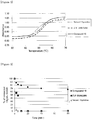
- Fig. 1 shows T m curves indicating dissociation of the double-stranded hybrids which the various types of oligonucleotides having the sequence of 5'-d(GCGTTXTTTGCT)-3' have formed with the single-stranded oligo-RNA target strand.
- the vertical axis indicates absorbance at 260 nm
- the horizontal axis indicates temperature (°C).
- oligonucleotides containing compound 16 exhibit high binding affinities for the single-stranded oligo-RNA which are comparable to the binding affinities of those containing 2',4'-BNA/LNA.
- the synthesis scale was 1.0 ⁇ mol, and the synthesis was performed trityl-on.
- Activator 42 (0.25 M acetonitrile solution manufactured by Sigma-Aldrich) was used as the activator.
- the condensation time was 10 minutes for the synthesis using compound 16, and 40 seconds for the synthesis using the other natural amidite blocks.
- the column support was transferred into a microtube and allowed to stand overnight at 55°C in 28% aqueous ammonia to cleave the oligonucleotides from the column support and deprotect the base moiety and the phosphoric diester moiety.
- the oligonucleotides were purified on a simplified reverse-phase column (Sep-Pak (registered trademark) Plus C18 Environmental Cartridges manufactured by Waters) and further purified by reverse-phase HPLC.
- the nuclease resistance was assessed in the following manner. To Tris-hydrochloric acid buffers (50 mM, pH 8.0, 100 ⁇ L) containing the various types of oligonucleotides respectively (final concentration 4 ⁇ M) and magnesium chloride (final concentration 10 mM) was added 3'-exonuclease (Crotalus Admanteus Venom Phosphodiesterase: CAVP manufactured by Pharmacia Biotech) to a concentration of 1 ⁇ g/mL, and the mixtures were allowed to stand at 37°C.
- Tris-hydrochloric acid buffers 50 mM, pH 8.0, 100 ⁇ L
- 3'-exonuclease (Crotalus Admanteus Venom Phosphodiesterase: CAVP manufactured by Pharmacia Biotech)
- a 0.1 M triethyl ammonium acetate (TEAA) buffer (pH 7.0) and 0.1 M TEAA buffer:acetonitrile 1:1 (v/v) were prepared as the solution A and the solution B, respectively, of the mobile phase, and the HPLC was performed using a gradient of the solution B concentration from 6 to 12% (20 minutes). Analysis was performed at a flow rate of 1 mL/min with UV detection at 260 nm.
- TEAA triethyl ammonium acetate
- Fig. 2 is a graph illustrating changes in the proportion of unreacted oligonucleotides over time when the various types of oligonucleotides having the sequence of 5'-d(TTTTTTTTXT)-3' were treated with 3'-exonuclease.
- the vertical axis indicates the proportion (%) of oligonucleotides unreacted in the nuclease treatment
- the horizontal axis indicates the nuclease treatment time (min). Symbols in Fig.
- the oligonucleotides containing compound 16 were not readily degraded, with 60% or more remaining unreacted even at 80 minutes after the nuclease treatment.
- the oligonucleotides containing 2',4'-BNA/LNA and the oligonucleotides containing natural thymidine were almost completely degraded at 20 minutes after the nuclease treatment.
- the oligonucleotides containing compound 16 (amidite block) have much higher enzyme-resistant ability than the oligonucleotides containing 2',4'-BNA/LNA.
- Table 19 shows the physical property data of the obtained compound 18.
- Table 20 shows the physical property data of the obtained compound 20.
- Table 21 shows the physical property data of the obtained compound 21.
- Table 22 shows the physical property data of the obtained compound 22.
- Table 23 shows the physical property data of the obtained compound 23.
- mouse phosphatase and tensin homolog ( Pten ) mRNA was selected (NCBI Reference Number: NM_008960.2), and an oligonucleotide complementary to a sequence from the 60th to the 73th base of the complete 8229 bases was synthesized. It should be noted that with respect to the sequence, a reported sequence was used (Molecular Therapy-Nucleic Acids, 2012, 1, e47).
- oligonucleotide 1 As shown in Table 24 was produced in which all of the linkages were phosphorothioated.
- a scpBNA-incorporated oligonucleotide (oligonucleotide 2) was produced using the scpBNA-T amidite block (compound 16) obtained in Example 1 and the scpBNA- m C amidite block (compound 23) obtained in Example 6.
- These oligonucleotides were produced through custom synthesis by GeneDesign, Inc. The produced oligonucleotides were endotoxin-free, in vivo -grade oligonucleotides that were in sodium form.
- binding affinities of oligonucleotides 1 and 2 above for a complementary strand RNA were assessed in the following manner.
- Oligonucleotide 1 and oligonucleotide 2 were added separately to a phosphate buffer (10 mM NaH 2 PO 4 -10 mM Na 2 HPO 4 , 100 mM NaCl, pH 7.0) to a final concentration of 2 ⁇ M to prepare respective oligonucleotide solutions.
- a phosphate buffer (10 mM NaH 2 PO 4 -10 mM Na 2 HPO 4 , 100 mM NaCl, pH 7.0
- the temperature was raised at the rate of 0.5°C/min within a temperature range of 4°C to 95°C while absorbance at 260 nm was monitored.
- the T m value was calculated using a median method, and a mean value of three independent measurements was adopted.
- Table 24 shows the results together with the results of mass spectrometry of oligonucleotides 1 and 2.
- RNA later registered trademark Stabilization Solution
- a High Capacity cDNA Reverse Transcription Kit (Thermo Fisher Scientific, 4368813) was used, and cDNA was produced according to the protocol of this kit.
- cDNA above was diluted 30-fold to prepare a cDNA solution, which was subjected to real-time PCR for the target gene Pten.
- the Pten expression level relative to the expression level of the housekeeping gene Gapdh was assessed.
- This reaction was performed using a TaqMan (registered trademark) Fast Universal PCR Master Mix (Thermo Fisher Scientific, 4352042) and a TaqMan probe (Thermo Fisher Scientific, Pten : Mm00477208_m1, Gapdh : Mm99999915_g1) according to the protocols of these products.
- the collected blood samples were each added into a tube (BD,365967) containing a blood coagulation accelerator and a serum separator, and centrifugation was performed at 5,000 rpm for 20 minutes at 4°C. Serum was collected and used for the subsequent blood test.
- the GOT (AST) value and the GPT (ALT) value which are indices of hepatotoxicity, were calculated using a Transaminase CII-Test Wako (431-30901 manufactured by Wako Pure Chemical Industries, Ltd.). Equal amounts of a substrate enzyme solution and a coloring reagent were mixed to form a substrate coloring solution. Then, 100 ⁇ L of the substrate coloring solution was dispensed into a 96-well plate, which was then heated at 37°C for 5 minutes. After that, 2 ⁇ L of the serum obtained above was added to the coloring solution, followed by heating at 37°C for 20 minutes.
- Figs. 3 and 4 show the results.
- oligonucleotide 2 As shown in Fig. 3 , quantification of the expression level of Pten mRNA expressed in the liver showed high knockdown efficiencies (60% to 70%) both in the oligonucleotide 1-administered group and in the oligonucleotide 2-admimistered group, and it was thus found that the scpBNA-incorporated oligonucleotide (oligonucleotide 2) exhibited an antisense activity equivalent to that of the 2',4'-LNA/BNA-incorporated oligonucleotides (oligonucleotide 1).
- oligonucleotide 1 in the group to which the 2',4'-LNA/BNA-incorporated oligonucleotide (oligonucleotide 1) was administered, the AST/ALT value exceeded 100/30 Karmen, and toxicity was observed.
- oligonucleotide 2 in the group to which the scpBNA-incorporated oligonucleotide (oligonucleotide 2) was administered, the AST/ALT value was reduced to about half that in the oligonucleotide 1-administered group, and hematotoxicity was not observed.
- a mouse liver cancer-derived cell line NMuLi was seeded into a 96-well plate at a density of 2.5 ⁇ 10 3 cells/well and cultured for 24 hours.
- Oligonucleotide 1 or 2 obtained in Example 7 was complexed with Lipofectamine 2000 in Opti-MEM according to the protocol supplied with the plate, and 50 ⁇ L of the resultant complex was added to 100 ⁇ L of 10% FBS/DMEM (containing no antibiotic) in each well. After 24 hours, the culture medium was removed from the wells.
- a mixed solution (SuperPrepTM, manufactured by Toyobo Co., Ltd., SCQ-101) of 49.7 ⁇ L of Lysis Solution and 0.3 ⁇ L of gDNA Remover was added at 50 ⁇ L/well, followed by gentle shaking, and then incubation was performed for 5 minutes at room temperature. Then, a mixed solution (SuperPrepTM, manufactured by Toyobo Co., Ltd., SCQ-101) of 9.5 ⁇ L of Stop Solution and 0.5 ⁇ L of RNase Inhibitor was added at 10 ⁇ L/well, followed by gentle shaking, and then incubation was performed for 2 minutes at room temperature to afford a cell lysate.
- SuperPrepTM manufactured by Toyobo Co., Ltd., SCQ-101
- the Pten expression level relative to the expression level of the housekeeping gene Gapdh was assessed.
- the reaction was performed using a TaqMan (registered trademark) Fast Universal PCR Master Mix (Thermo Fisher Scientific, 4352042) and a TaqMan probe (Thermo Fisher Scientific, Pten : Mm00477208_m1, Gapdh: Mm99999915_g1) according to the protocols of these products.
- oligonucleotide 2 showed a slightly higher IC 50 value than oligonucleotide 1, there was no significant difference in the Pten mRNA expression level in the NMuLi cells between oligonucleotide 1 and oligonucleotide 2.
- oligonucleotide 2 exhibits an antisense activity equivalent to that of the 2',4'-LNA/BNA-incorporated oligonucleotide (oligonucleotide 1).
- Table 26 shows the physical property data of the obtained compound 24.
- Table 27 shows the physical property data of the obtained compound 25.
- Table 28 shows the physical property data of the obtained compound 29.
- Table 29 shows the physical property data of the obtained compound 30.
- Table 30 shows the physical property data of the obtained compound 31.
- Table 31 shows the physical property data of the obtained compound 32.
- Table 32 shows the physical property data of the obtained compound 33.
- N,N-diisopropylethylamine (76 ⁇ L, 43.8 ⁇ mol) and 2-cyanoethyl-N,N-diisopropyl phosphorochloridate (24 ⁇ L, 11.0 ⁇ mol) were added, and the mixture was stirred at room temperature for 1 hour.
- 2-cyanoethyl-N,N-diisopropyl phosphorochloridate (24 ⁇ L, 11.0 ⁇ mol) was added, and the mixture was stirred at room temperature for 1 hour.
- a saturated aqueous solution of sodium bicarbonate was added, followed by extraction with ethyl acetate and then washing with saturated saline and water.
- Table 33 shows the physical property data of the obtained compound 34.
- Table 34 shows the physical property data of the obtained compound 35.
- Table 35 shows the physical property data of the obtained compound 36.
- Table 36 shows the physical property data of the obtained compound 40.
- novel 2',4'-bridged nucleosides and nucleotides with a spirocyclopropane group at the position 6' are provided.
- An oligonucleotide containing the 2',4'-bridged artificial nucleotide has a binding affinity for single-stranded RNA comparable to that of known 2',4'-BNA/LNA and higher nuclease resistance than LNA.
- Oligonucleotides of the present invention are useful as, for example, materials for nucleic acid drugs.
Landscapes
- Chemical & Material Sciences (AREA)
- Organic Chemistry (AREA)
- Life Sciences & Earth Sciences (AREA)
- Health & Medical Sciences (AREA)
- Engineering & Computer Science (AREA)
- Genetics & Genomics (AREA)
- Molecular Biology (AREA)
- Biochemistry (AREA)
- Biotechnology (AREA)
- General Health & Medical Sciences (AREA)
- Biomedical Technology (AREA)
- Wood Science & Technology (AREA)
- Zoology (AREA)
- Bioinformatics & Cheminformatics (AREA)
- General Engineering & Computer Science (AREA)
- Microbiology (AREA)
- Biophysics (AREA)
- Physics & Mathematics (AREA)
- Plant Pathology (AREA)
- Pharmaceuticals Containing Other Organic And Inorganic Compounds (AREA)
- Saccharide Compounds (AREA)
- Medicines That Contain Protein Lipid Enzymes And Other Medicines (AREA)
Applications Claiming Priority (2)
| Application Number | Priority Date | Filing Date | Title |
|---|---|---|---|
| JP2014028210 | 2014-02-18 | ||
| PCT/JP2015/054308 WO2015125783A1 (ja) | 2014-02-18 | 2015-02-17 | 架橋型ヌクレオシドおよびヌクレオチド |
Publications (3)
| Publication Number | Publication Date |
|---|---|
| EP3109254A1 true EP3109254A1 (de) | 2016-12-28 |
| EP3109254A4 EP3109254A4 (de) | 2017-07-05 |
| EP3109254B1 EP3109254B1 (de) | 2018-04-11 |
Family
ID=53878285
Family Applications (1)
| Application Number | Title | Priority Date | Filing Date |
|---|---|---|---|
| EP15751291.4A Active EP3109254B1 (de) | 2014-02-18 | 2015-02-17 | Vernetztes nukleosid und nukleotid |
Country Status (6)
| Country | Link |
|---|---|
| US (1) | US9611479B2 (de) |
| EP (1) | EP3109254B1 (de) |
| JP (1) | JP6233903B2 (de) |
| CN (1) | CN106103463B (de) |
| CA (1) | CA2939822C (de) |
| WO (1) | WO2015125783A1 (de) |
Cited By (4)
| Publication number | Priority date | Publication date | Assignee | Title |
|---|---|---|---|---|
| WO2021178885A1 (en) * | 2020-03-06 | 2021-09-10 | Aligos Therapeutics, Inc. | Modified short interfering nucleic acid (sina) molecules and uses thereof |
| EP3919501A4 (de) * | 2019-02-01 | 2022-11-23 | Osaka University | 5'-modifiziertes nukleosid und nukleotid damit |
| EP4108670A4 (de) * | 2020-02-19 | 2024-04-17 | Osaka University | Verbrücktes nukleosid und dieses verwendendes nukleotid |
| EP4349986A4 (de) * | 2021-05-25 | 2025-11-19 | Univ Nat Corp Tokyo Medical & Dental | Heteronukleinsäure mit scpbna oder amna |
Families Citing this family (24)
| Publication number | Priority date | Publication date | Assignee | Title |
|---|---|---|---|---|
| WO2017119463A1 (ja) * | 2016-01-07 | 2017-07-13 | 国立大学法人大阪大学 | α-シヌクレイン発現抑制剤 |
| EP3507367A4 (de) | 2016-07-05 | 2020-03-25 | Aduro BioTech, Inc. | Cyclisches dinukleotidverbindungen mit eingeschlossenen nukleinsäuren und verwendungen davon |
| EP3587576A4 (de) | 2017-02-21 | 2021-01-06 | Osaka University | Antisense-oligonukleinsäure |
| US11286275B2 (en) | 2017-02-21 | 2022-03-29 | Osaka University | Nucleic acid compound and oligonucleotide |
| WO2019009298A1 (ja) * | 2017-07-05 | 2019-01-10 | 国立大学法人大阪大学 | α-シヌクレイン発現抑制剤 |
| BR112020018902A2 (pt) | 2018-03-20 | 2021-01-26 | Tokyo Institute Of Technology | oligonucleotídeo antissenso com toxicidade reduzida |
| JP7473113B2 (ja) * | 2018-07-31 | 2024-04-23 | 国立大学法人大阪大学 | オリゴヌクレオチドを含有する小細胞肺癌治療薬 |
| WO2020050307A1 (ja) | 2018-09-05 | 2020-03-12 | 国立大学法人大阪大学 | Arl4cを標的分子とするアンチセンスオリゴヌクレオチド、及び当該アンチセンスオリゴヌクレオチドを使用した核酸医薬 |
| WO2020203896A1 (ja) | 2019-03-29 | 2020-10-08 | シスメックス株式会社 | 新規人工核酸、その製造方法及び用途 |
| KR20240113860A (ko) | 2019-04-05 | 2024-07-23 | 가부시기가이샤 닛뽕쇼꾸바이 | 가교형 인공 뉴클레오시드의 제조 |
| SG11202112741XA (en) | 2019-05-31 | 2021-12-30 | Aligos Therapeutics Inc | Modified gapmer oligonucleotides and methods of use |
| US20220251557A1 (en) * | 2019-11-27 | 2022-08-11 | Tokyo Institute Of Technology | Method for reducing toxicity of antisense nucleic acids |
| AU2021251249A1 (en) * | 2020-04-10 | 2022-11-10 | Aligos Therapeutics, Inc. | Short interfering nucleic acid (siNA) molecules and uses thereof for coronavirus diseases |
| CN116322706B (zh) | 2020-09-25 | 2025-12-05 | 株式会社理真思 | 新人工核酸、其制造方法和用途 |
| CN116507727A (zh) | 2020-11-06 | 2023-07-28 | 住友制药株式会社 | Rps25基因的表达和/或功能调节剂 |
| US20240148775A1 (en) | 2021-02-25 | 2024-05-09 | Osaka University | Oligonucleotide for inducing n-exon skipping during rest mrna precursor processing |
| TW202313975A (zh) | 2021-05-28 | 2023-04-01 | 日商住友製藥股份有限公司 | 反義核酸 |
| US20240390508A1 (en) | 2021-08-21 | 2024-11-28 | Takeda Pharmaceutical Company Limited | Human transferrin receptor binding peptide-drug conjugate |
| EP4458836A4 (de) | 2021-12-27 | 2025-05-21 | Riken Genesis Co., Ltd. | Neuartige künstliche nukleinsäure, verfahren zur herstellung davon und verwendung davon |
| EP4495242A1 (de) | 2022-03-17 | 2025-01-22 | Aichi Medical University | Antisense-nukleinsäure zur hemmung der biosynthese von chondroitinsulfat |
| JPWO2024181416A1 (de) | 2023-02-28 | 2024-09-06 | ||
| JPWO2024257847A1 (de) | 2023-06-16 | 2024-12-19 | ||
| JPWO2025005265A1 (de) * | 2023-06-30 | 2025-01-02 | ||
| US20250368996A1 (en) | 2024-05-14 | 2025-12-04 | Aligos Therapeutics, Inc. | Modified antisense oligonucleotides for treating hepatitis b virus |
Family Cites Families (8)
| Publication number | Priority date | Publication date | Assignee | Title |
|---|---|---|---|---|
| WO1994019023A1 (en) | 1993-02-19 | 1994-09-01 | Isis Pharmaceuticals, Inc. | Cyclobutyl antisense oligonucleotides, methods of making and use thereof |
| US5659022A (en) | 1996-01-05 | 1997-08-19 | Epoch Pharmaceuticals, Inc. | Oligonucleotide-cyclopropapyrroloindole conjugates as sequence specific hybridization and crosslinking agents for nucleic acids |
| US20050032068A1 (en) | 2002-11-05 | 2005-02-10 | Prakash Thazha P. | Sugar and backbone-surrogate-containing oligomeric compounds and compositions for use in gene modulation |
| JP3756313B2 (ja) | 1997-03-07 | 2006-03-15 | 武 今西 | 新規ビシクロヌクレオシド及びオリゴヌクレオチド類縁体 |
| EP1481983A4 (de) | 2002-02-13 | 2008-04-02 | Takeshi Imanishi | Nukleosidanaloga und oligonukleotidderivat, das ein nukleotidanalogon davon enthält |
| EP1661905B9 (de) * | 2003-08-28 | 2012-12-19 | IMANISHI, Takeshi | Neue synthetische nukleidsäuren vom typ mit quervernetzter n-o-bindung |
| AU2008272918B2 (en) * | 2007-07-05 | 2012-09-13 | Isis Pharmaceuticals, Inc. | 6-disubstituted bicyclic nucleic acid analogs |
| US10723754B2 (en) * | 2012-10-22 | 2020-07-28 | Idenix Pharmaceuticals Llc | 2′,4′-bridged nucleosides for HCV infection |
-
2015
- 2015-02-17 CN CN201580014501.8A patent/CN106103463B/zh active Active
- 2015-02-17 WO PCT/JP2015/054308 patent/WO2015125783A1/ja not_active Ceased
- 2015-02-17 US US15/118,546 patent/US9611479B2/en active Active
- 2015-02-17 EP EP15751291.4A patent/EP3109254B1/de active Active
- 2015-02-17 CA CA2939822A patent/CA2939822C/en active Active
- 2015-02-17 JP JP2016504111A patent/JP6233903B2/ja active Active
Cited By (6)
| Publication number | Priority date | Publication date | Assignee | Title |
|---|---|---|---|---|
| EP3919501A4 (de) * | 2019-02-01 | 2022-11-23 | Osaka University | 5'-modifiziertes nukleosid und nukleotid damit |
| EP4108670A4 (de) * | 2020-02-19 | 2024-04-17 | Osaka University | Verbrücktes nukleosid und dieses verwendendes nukleotid |
| WO2021178885A1 (en) * | 2020-03-06 | 2021-09-10 | Aligos Therapeutics, Inc. | Modified short interfering nucleic acid (sina) molecules and uses thereof |
| US11549110B2 (en) | 2020-03-06 | 2023-01-10 | Aligos Therapeutics, Inc. | Modified short interfering nucleic acid (siNA) molecules and uses thereof |
| US12129469B2 (en) | 2020-03-06 | 2024-10-29 | Aligos Therapeutics, Inc. | Modified short interfering nucleic acid (siNA) molecules and uses thereof |
| EP4349986A4 (de) * | 2021-05-25 | 2025-11-19 | Univ Nat Corp Tokyo Medical & Dental | Heteronukleinsäure mit scpbna oder amna |
Also Published As
| Publication number | Publication date |
|---|---|
| US20170044528A1 (en) | 2017-02-16 |
| US9611479B2 (en) | 2017-04-04 |
| CN106103463A (zh) | 2016-11-09 |
| CA2939822C (en) | 2018-09-25 |
| CN106103463B (zh) | 2018-11-30 |
| EP3109254B1 (de) | 2018-04-11 |
| JPWO2015125783A1 (ja) | 2017-03-30 |
| JP6233903B2 (ja) | 2017-11-22 |
| CA2939822A1 (en) | 2015-08-27 |
| WO2015125783A1 (ja) | 2015-08-27 |
| EP3109254A4 (de) | 2017-07-05 |
Similar Documents
| Publication | Publication Date | Title |
|---|---|---|
| EP3109254B1 (de) | Vernetztes nukleosid und nukleotid | |
| EP2495248B1 (de) | Gebrücktes künstliches nukleosid und nukleotid | |
| JP6562517B2 (ja) | 架橋型ヌクレオシドおよびヌクレオチド | |
| EP2899197B1 (de) | Oligonukleotid und künstliches nukleosid mit guanidinbrücke | |
| US12398171B2 (en) | 5′-modified nucleoside and nucleotide using same | |
| EP3925965A1 (de) | 5'-modifiziertes nukleosid und nukleotid damit | |
| US12606589B2 (en) | Bridged nucleoside and nucleotide using same | |
| JP7650412B2 (ja) | 5′位修飾ヌクレオシドおよびそれを用いたヌクレオチド | |
| EP4617279A1 (de) | Modifiziertes nukleosid mit guanidinstruktur im verbrückten teil und verfahren zur herstellung eines oligonukleotids damit | |
| JP7709690B2 (ja) | 架橋型ヌクレオシドおよびそれを用いたヌクレオチド | |
| CN118946575A (zh) | 5'位修饰核苷和使用其的核苷酸 |
Legal Events
| Date | Code | Title | Description |
|---|---|---|---|
| PUAI | Public reference made under article 153(3) epc to a published international application that has entered the european phase |
Free format text: ORIGINAL CODE: 0009012 |
|
| STAA | Information on the status of an ep patent application or granted ep patent |
Free format text: STATUS: REQUEST FOR EXAMINATION WAS MADE |
|
| 17P | Request for examination filed |
Effective date: 20160822 |
|
| AK | Designated contracting states |
Kind code of ref document: A1 Designated state(s): AL AT BE BG CH CY CZ DE DK EE ES FI FR GB GR HR HU IE IS IT LI LT LU LV MC MK MT NL NO PL PT RO RS SE SI SK SM TR |
|
| AX | Request for extension of the european patent |
Extension state: BA ME |
|
| DAX | Request for extension of the european patent (deleted) | ||
| A4 | Supplementary search report drawn up and despatched |
Effective date: 20170608 |
|
| RIC1 | Information provided on ipc code assigned before grant |
Ipc: C07H 19/16 20060101ALI20170601BHEP Ipc: C07H 19/06 20060101AFI20170601BHEP Ipc: C07H 21/00 20060101ALI20170601BHEP |
|
| REG | Reference to a national code |
Ref country code: DE Ref legal event code: R079 Ref document number: 602015009952 Country of ref document: DE Free format text: PREVIOUS MAIN CLASS: C07H0019020000 Ipc: C07H0019060000 |
|
| GRAP | Despatch of communication of intention to grant a patent |
Free format text: ORIGINAL CODE: EPIDOSNIGR1 |
|
| STAA | Information on the status of an ep patent application or granted ep patent |
Free format text: STATUS: GRANT OF PATENT IS INTENDED |
|
| RIC1 | Information provided on ipc code assigned before grant |
Ipc: C07H 19/16 20060101ALI20171115BHEP Ipc: C07H 21/00 20060101ALI20171115BHEP Ipc: C07H 19/06 20060101AFI20171115BHEP |
|
| INTG | Intention to grant announced |
Effective date: 20171220 |
|
| GRAS | Grant fee paid |
Free format text: ORIGINAL CODE: EPIDOSNIGR3 |
|
| GRAA | (expected) grant |
Free format text: ORIGINAL CODE: 0009210 |
|
| STAA | Information on the status of an ep patent application or granted ep patent |
Free format text: STATUS: THE PATENT HAS BEEN GRANTED |
|
| AK | Designated contracting states |
Kind code of ref document: B1 Designated state(s): AL AT BE BG CH CY CZ DE DK EE ES FI FR GB GR HR HU IE IS IT LI LT LU LV MC MK MT NL NO PL PT RO RS SE SI SK SM TR |
|
| REG | Reference to a national code |
Ref country code: GB Ref legal event code: FG4D |
|
| REG | Reference to a national code |
Ref country code: CH Ref legal event code: EP |
|
| REG | Reference to a national code |
Ref country code: AT Ref legal event code: REF Ref document number: 987917 Country of ref document: AT Kind code of ref document: T Effective date: 20180415 |
|
| REG | Reference to a national code |
Ref country code: IE Ref legal event code: FG4D |
|
| REG | Reference to a national code |
Ref country code: DE Ref legal event code: R096 Ref document number: 602015009952 Country of ref document: DE |
|
| REG | Reference to a national code |
Ref country code: NL Ref legal event code: MP Effective date: 20180411 |
|
| REG | Reference to a national code |
Ref country code: LT Ref legal event code: MG4D |
|
| PG25 | Lapsed in a contracting state [announced via postgrant information from national office to epo] |
Ref country code: NL Free format text: LAPSE BECAUSE OF FAILURE TO SUBMIT A TRANSLATION OF THE DESCRIPTION OR TO PAY THE FEE WITHIN THE PRESCRIBED TIME-LIMIT Effective date: 20180411 |
|
| PG25 | Lapsed in a contracting state [announced via postgrant information from national office to epo] |
Ref country code: AL Free format text: LAPSE BECAUSE OF FAILURE TO SUBMIT A TRANSLATION OF THE DESCRIPTION OR TO PAY THE FEE WITHIN THE PRESCRIBED TIME-LIMIT Effective date: 20180411 Ref country code: SE Free format text: LAPSE BECAUSE OF FAILURE TO SUBMIT A TRANSLATION OF THE DESCRIPTION OR TO PAY THE FEE WITHIN THE PRESCRIBED TIME-LIMIT Effective date: 20180411 Ref country code: FI Free format text: LAPSE BECAUSE OF FAILURE TO SUBMIT A TRANSLATION OF THE DESCRIPTION OR TO PAY THE FEE WITHIN THE PRESCRIBED TIME-LIMIT Effective date: 20180411 Ref country code: BG Free format text: LAPSE BECAUSE OF FAILURE TO SUBMIT A TRANSLATION OF THE DESCRIPTION OR TO PAY THE FEE WITHIN THE PRESCRIBED TIME-LIMIT Effective date: 20180711 Ref country code: PL Free format text: LAPSE BECAUSE OF FAILURE TO SUBMIT A TRANSLATION OF THE DESCRIPTION OR TO PAY THE FEE WITHIN THE PRESCRIBED TIME-LIMIT Effective date: 20180411 Ref country code: NO Free format text: LAPSE BECAUSE OF FAILURE TO SUBMIT A TRANSLATION OF THE DESCRIPTION OR TO PAY THE FEE WITHIN THE PRESCRIBED TIME-LIMIT Effective date: 20180711 Ref country code: LT Free format text: LAPSE BECAUSE OF FAILURE TO SUBMIT A TRANSLATION OF THE DESCRIPTION OR TO PAY THE FEE WITHIN THE PRESCRIBED TIME-LIMIT Effective date: 20180411 Ref country code: ES Free format text: LAPSE BECAUSE OF FAILURE TO SUBMIT A TRANSLATION OF THE DESCRIPTION OR TO PAY THE FEE WITHIN THE PRESCRIBED TIME-LIMIT Effective date: 20180411 |
|
| PG25 | Lapsed in a contracting state [announced via postgrant information from national office to epo] |
Ref country code: GR Free format text: LAPSE BECAUSE OF FAILURE TO SUBMIT A TRANSLATION OF THE DESCRIPTION OR TO PAY THE FEE WITHIN THE PRESCRIBED TIME-LIMIT Effective date: 20180712 Ref country code: HR Free format text: LAPSE BECAUSE OF FAILURE TO SUBMIT A TRANSLATION OF THE DESCRIPTION OR TO PAY THE FEE WITHIN THE PRESCRIBED TIME-LIMIT Effective date: 20180411 Ref country code: LV Free format text: LAPSE BECAUSE OF FAILURE TO SUBMIT A TRANSLATION OF THE DESCRIPTION OR TO PAY THE FEE WITHIN THE PRESCRIBED TIME-LIMIT Effective date: 20180411 Ref country code: RS Free format text: LAPSE BECAUSE OF FAILURE TO SUBMIT A TRANSLATION OF THE DESCRIPTION OR TO PAY THE FEE WITHIN THE PRESCRIBED TIME-LIMIT Effective date: 20180411 |
|
| REG | Reference to a national code |
Ref country code: AT Ref legal event code: MK05 Ref document number: 987917 Country of ref document: AT Kind code of ref document: T Effective date: 20180411 |
|
| PG25 | Lapsed in a contracting state [announced via postgrant information from national office to epo] |
Ref country code: PT Free format text: LAPSE BECAUSE OF FAILURE TO SUBMIT A TRANSLATION OF THE DESCRIPTION OR TO PAY THE FEE WITHIN THE PRESCRIBED TIME-LIMIT Effective date: 20180813 |
|
| REG | Reference to a national code |
Ref country code: DE Ref legal event code: R097 Ref document number: 602015009952 Country of ref document: DE |
|
| PG25 | Lapsed in a contracting state [announced via postgrant information from national office to epo] |
Ref country code: CZ Free format text: LAPSE BECAUSE OF FAILURE TO SUBMIT A TRANSLATION OF THE DESCRIPTION OR TO PAY THE FEE WITHIN THE PRESCRIBED TIME-LIMIT Effective date: 20180411 Ref country code: EE Free format text: LAPSE BECAUSE OF FAILURE TO SUBMIT A TRANSLATION OF THE DESCRIPTION OR TO PAY THE FEE WITHIN THE PRESCRIBED TIME-LIMIT Effective date: 20180411 Ref country code: RO Free format text: LAPSE BECAUSE OF FAILURE TO SUBMIT A TRANSLATION OF THE DESCRIPTION OR TO PAY THE FEE WITHIN THE PRESCRIBED TIME-LIMIT Effective date: 20180411 Ref country code: AT Free format text: LAPSE BECAUSE OF FAILURE TO SUBMIT A TRANSLATION OF THE DESCRIPTION OR TO PAY THE FEE WITHIN THE PRESCRIBED TIME-LIMIT Effective date: 20180411 Ref country code: DK Free format text: LAPSE BECAUSE OF FAILURE TO SUBMIT A TRANSLATION OF THE DESCRIPTION OR TO PAY THE FEE WITHIN THE PRESCRIBED TIME-LIMIT Effective date: 20180411 Ref country code: SK Free format text: LAPSE BECAUSE OF FAILURE TO SUBMIT A TRANSLATION OF THE DESCRIPTION OR TO PAY THE FEE WITHIN THE PRESCRIBED TIME-LIMIT Effective date: 20180411 |
|
| PLBE | No opposition filed within time limit |
Free format text: ORIGINAL CODE: 0009261 |
|
| STAA | Information on the status of an ep patent application or granted ep patent |
Free format text: STATUS: NO OPPOSITION FILED WITHIN TIME LIMIT |
|
| PG25 | Lapsed in a contracting state [announced via postgrant information from national office to epo] |
Ref country code: IT Free format text: LAPSE BECAUSE OF FAILURE TO SUBMIT A TRANSLATION OF THE DESCRIPTION OR TO PAY THE FEE WITHIN THE PRESCRIBED TIME-LIMIT Effective date: 20180411 Ref country code: SM Free format text: LAPSE BECAUSE OF FAILURE TO SUBMIT A TRANSLATION OF THE DESCRIPTION OR TO PAY THE FEE WITHIN THE PRESCRIBED TIME-LIMIT Effective date: 20180411 |
|
| 26N | No opposition filed |
Effective date: 20190114 |
|
| PG25 | Lapsed in a contracting state [announced via postgrant information from national office to epo] |
Ref country code: SI Free format text: LAPSE BECAUSE OF FAILURE TO SUBMIT A TRANSLATION OF THE DESCRIPTION OR TO PAY THE FEE WITHIN THE PRESCRIBED TIME-LIMIT Effective date: 20180411 |
|
| REG | Reference to a national code |
Ref country code: CH Ref legal event code: PL |
|
| PG25 | Lapsed in a contracting state [announced via postgrant information from national office to epo] |
Ref country code: MC Free format text: LAPSE BECAUSE OF FAILURE TO SUBMIT A TRANSLATION OF THE DESCRIPTION OR TO PAY THE FEE WITHIN THE PRESCRIBED TIME-LIMIT Effective date: 20180411 Ref country code: LU Free format text: LAPSE BECAUSE OF NON-PAYMENT OF DUE FEES Effective date: 20190217 |
|
| REG | Reference to a national code |
Ref country code: BE Ref legal event code: MM Effective date: 20190228 |
|
| REG | Reference to a national code |
Ref country code: IE Ref legal event code: MM4A |
|
| PG25 | Lapsed in a contracting state [announced via postgrant information from national office to epo] |
Ref country code: CH Free format text: LAPSE BECAUSE OF NON-PAYMENT OF DUE FEES Effective date: 20190228 Ref country code: LI Free format text: LAPSE BECAUSE OF NON-PAYMENT OF DUE FEES Effective date: 20190228 |
|
| PG25 | Lapsed in a contracting state [announced via postgrant information from national office to epo] |
Ref country code: IE Free format text: LAPSE BECAUSE OF NON-PAYMENT OF DUE FEES Effective date: 20190217 |
|
| PG25 | Lapsed in a contracting state [announced via postgrant information from national office to epo] |
Ref country code: BE Free format text: LAPSE BECAUSE OF NON-PAYMENT OF DUE FEES Effective date: 20190228 |
|
| PG25 | Lapsed in a contracting state [announced via postgrant information from national office to epo] |
Ref country code: TR Free format text: LAPSE BECAUSE OF FAILURE TO SUBMIT A TRANSLATION OF THE DESCRIPTION OR TO PAY THE FEE WITHIN THE PRESCRIBED TIME-LIMIT Effective date: 20180411 |
|
| PG25 | Lapsed in a contracting state [announced via postgrant information from national office to epo] |
Ref country code: MT Free format text: LAPSE BECAUSE OF NON-PAYMENT OF DUE FEES Effective date: 20190217 |
|
| PG25 | Lapsed in a contracting state [announced via postgrant information from national office to epo] |
Ref country code: CY Free format text: LAPSE BECAUSE OF FAILURE TO SUBMIT A TRANSLATION OF THE DESCRIPTION OR TO PAY THE FEE WITHIN THE PRESCRIBED TIME-LIMIT Effective date: 20180411 |
|
| PG25 | Lapsed in a contracting state [announced via postgrant information from national office to epo] |
Ref country code: IS Free format text: LAPSE BECAUSE OF FAILURE TO SUBMIT A TRANSLATION OF THE DESCRIPTION OR TO PAY THE FEE WITHIN THE PRESCRIBED TIME-LIMIT Effective date: 20180811 |
|
| PG25 | Lapsed in a contracting state [announced via postgrant information from national office to epo] |
Ref country code: HU Free format text: LAPSE BECAUSE OF FAILURE TO SUBMIT A TRANSLATION OF THE DESCRIPTION OR TO PAY THE FEE WITHIN THE PRESCRIBED TIME-LIMIT; INVALID AB INITIO Effective date: 20150217 |
|
| PG25 | Lapsed in a contracting state [announced via postgrant information from national office to epo] |
Ref country code: MK Free format text: LAPSE BECAUSE OF FAILURE TO SUBMIT A TRANSLATION OF THE DESCRIPTION OR TO PAY THE FEE WITHIN THE PRESCRIBED TIME-LIMIT Effective date: 20180411 |
|
| PGFP | Annual fee paid to national office [announced via postgrant information from national office to epo] |
Ref country code: GB Payment date: 20260213 Year of fee payment: 12 |
|
| PGFP | Annual fee paid to national office [announced via postgrant information from national office to epo] |
Ref country code: DE Payment date: 20260317 Year of fee payment: 12 |
|
| PGFP | Annual fee paid to national office [announced via postgrant information from national office to epo] |
Ref country code: FR Payment date: 20260227 Year of fee payment: 12 |