EP3110201A1 - Procédé de manipulation d'une procédure de détermination d'emplacement, noeuds d'accès radio et passerelle de noeud d'accès radio - Google Patents
Procédé de manipulation d'une procédure de détermination d'emplacement, noeuds d'accès radio et passerelle de noeud d'accès radio Download PDFInfo
- Publication number
- EP3110201A1 EP3110201A1 EP15305985.2A EP15305985A EP3110201A1 EP 3110201 A1 EP3110201 A1 EP 3110201A1 EP 15305985 A EP15305985 A EP 15305985A EP 3110201 A1 EP3110201 A1 EP 3110201A1
- Authority
- EP
- European Patent Office
- Prior art keywords
- radio access
- access node
- hnb
- hnb2
- context
- Prior art date
- Legal status (The legal status is an assumption and is not a legal conclusion. Google has not performed a legal analysis and makes no representation as to the accuracy of the status listed.)
- Withdrawn
Links
- 238000000034 method Methods 0.000 title claims abstract description 159
- 238000004891 communication Methods 0.000 claims abstract description 18
- 238000005259 measurement Methods 0.000 claims description 72
- 230000004913 activation Effects 0.000 description 19
- 230000004044 response Effects 0.000 description 18
- 230000000977 initiatory effect Effects 0.000 description 14
- 230000009471 action Effects 0.000 description 9
- 230000000737 periodic effect Effects 0.000 description 6
- 230000008859 change Effects 0.000 description 3
- 230000001960 triggered effect Effects 0.000 description 3
- 102000018059 CS domains Human genes 0.000 description 2
- 108050007176 CS domains Proteins 0.000 description 2
- 230000001419 dependent effect Effects 0.000 description 2
- 238000010586 diagram Methods 0.000 description 2
- 230000006870 function Effects 0.000 description 2
- 230000011664 signaling Effects 0.000 description 2
- 208000000649 small cell carcinoma Diseases 0.000 description 2
- 230000006978 adaptation Effects 0.000 description 1
- 230000009286 beneficial effect Effects 0.000 description 1
- 230000005540 biological transmission Effects 0.000 description 1
- 230000001413 cellular effect Effects 0.000 description 1
- 230000001934 delay Effects 0.000 description 1
- 230000000694 effects Effects 0.000 description 1
- 230000003116 impacting effect Effects 0.000 description 1
- 230000006872 improvement Effects 0.000 description 1
- 230000003993 interaction Effects 0.000 description 1
- 238000004321 preservation Methods 0.000 description 1
- 101150067879 sas-6 gene Proteins 0.000 description 1
Images

Classifications
-
- H—ELECTRICITY
- H04—ELECTRIC COMMUNICATION TECHNIQUE
- H04W—WIRELESS COMMUNICATION NETWORKS
- H04W64/00—Locating users or terminals or network equipment for network management purposes, e.g. mobility management
-
- H—ELECTRICITY
- H04—ELECTRIC COMMUNICATION TECHNIQUE
- H04W—WIRELESS COMMUNICATION NETWORKS
- H04W36/00—Hand-off or reselection arrangements
- H04W36/0005—Control or signalling for completing the hand-off
- H04W36/0011—Control or signalling for completing the hand-off for data sessions of end-to-end connection
- H04W36/0033—Control or signalling for completing the hand-off for data sessions of end-to-end connection with transfer of context information
-
- H—ELECTRICITY
- H04—ELECTRIC COMMUNICATION TECHNIQUE
- H04W—WIRELESS COMMUNICATION NETWORKS
- H04W36/00—Hand-off or reselection arrangements
- H04W36/08—Reselecting an access point
-
- H—ELECTRICITY
- H04—ELECTRIC COMMUNICATION TECHNIQUE
- H04W—WIRELESS COMMUNICATION NETWORKS
- H04W84/00—Network topologies
- H04W84/02—Hierarchically pre-organised networks, e.g. paging networks, cellular networks, WLAN [Wireless Local Area Network] or WLL [Wireless Local Loop]
- H04W84/04—Large scale networks; Deep hierarchical networks
- H04W84/042—Public Land Mobile systems, e.g. cellular systems
- H04W84/045—Public Land Mobile systems, e.g. cellular systems using private Base Stations, e.g. femto Base Stations, home Node B
Definitions
- the present invention relates to a method for handling a location determining procedure.
- the present invention further relates to radio access nodes and a radio access node gateway configured to perform such a method.
- the present invention relates to a wireless communication network comprising such radio access nodes and radio access node gateway.
- radio coverage is provided by areas known as cells.
- a base station is located in each cell to provide the radio coverage area.
- Traditional base stations provide coverage in relatively large geographical areas and these cells are often referred to as macro cells.
- macro cells are often referred to as macro cells.
- smaller-sized cells are sometimes referred to as micro cells, pico cells or femto cells.
- Such small cells are typically established by providing a small-cell base station that provides radio coverage having a relatively limited range within the radio coverage area of a macro cell.
- the transmission power of the small cell base station is relatively low and, hence, each small cell provides a smaller coverage area compared to that of a macro cell and covers, for example, an office or a home.
- a group of such small cell base stations may together provide a wireless small-cell network.
- UE mobile user equipment
- a Standalone Serving Mobile Location Centre may be used.
- the SAS uses measurement information to calculate an accurate location for a UE.
- Two commonly used techniques by the SAS to accurately locate a UE are so-called Enhanced cell-id, also referred to as cell-ID with round trip time (RTT) and Assisted Global Navigation Satellite System (A-GNSS), an example of which is Assisted Global Positioning Systems (A-GPS). Both of these techniques utilise measurement information obtained from measurements executed by the UE that is to be located.
- RTT round trip time
- A-GNSS Assisted Global Navigation Satellite System
- A-GPS Assisted Global Positioning Systems
- the UE may take some time for the required measurements to be performed by the UE. Now if during such a measurement period, the UE relocates from one cell to another cell, via a so-called handover, the ability to report the relevant measurements to the SAS within a timeframe required for the location service that triggered the location request can be impacted.
- FIG. 1 schematically shows a lay-out of a heterogeneous network including cells of different size, i.e. small cells formed by base stations covering a limited area, as well as bigger cells formed by base stations covering a larger area.
- base stations for forming small cells throughout this description reference is made to home Node B base stations (HNBs) 3a, 3b.
- the base stations for covering a larger area, i.e. for forming macro cells, are denoted as NodeB base stations 7a, 7b.
- the HNBs 3a, 3b are connected to an HNB gateway (HNB-GW) 2 over an luh-interface.
- HNB-GW HNB gateway
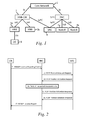
- FIG. 2 In order to locate a UE within a wireless network, such as the wireless network depicted in FIG. 1 , the typical course of action is depicted in FIG. 2 and includes the following actions:
- the use of small cells may introduce issues with respect to determining the location of an UE accurately.
- the CN nodes, as well as the SAS may often be unaware of a UE's mobility if the UE moves between small cells supported by the small cell gateway using a handover procedure. Consequently, there are a number of occasions in which the interaction between inter small cell mobility and active PCAP sessions causes it to be difficult to determine an accurate location for a UE within a reasonable period of time. That is, a PCAP procedure and any associated measurements active on the serving small cell will be aborted when a UE hands over to another small cell before the relevant PCAP procedure has been completed.
- the time between handovers would be about 15 seconds assuming that the UE moves diametrically across the cell and less if the UE moves through a chord of the cell.
- the nominal A-GPS response time as considered in the 3GPP-Standards is 20 seconds. In other words, it may nominally take 20 seconds for a UE to perform a GPS fix and report the related GPS information to a base station serving the cell within which the UE resides.
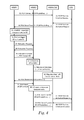
- the transmittal of information related to the location determining procedure to the second radio access node allows for example an active luPC connection and associated PCAP procedure information for a UE to be maintained across an inter-base station handover. Maintaining an active PCAP session during handover reduces the impact on network entities, such as a Standalone Serving Mobile Location Centre, radio access nodes such as base stations, a user equipment or a radio access node gateway, in that none of these entities have to terminate and restart a procedure related to the location determining procedure each time the UE moves between radio access nodes.
- network entities such as a Standalone Serving Mobile Location Centre, radio access nodes such as base stations, a user equipment or a radio access node gateway, in that none of these entities have to terminate and restart a procedure related to the location determining procedure each time the UE moves between radio access nodes.
- the method further comprises forwarding, by the second radio access node, at least a portion of the information related to the location determining procedure to a radio access node gateway, whereby the second radio access node requests the radio access node gateway to establish a portion of the context between the second radio access node (HNB2) and the radio access node gateway.
- HNB2 second radio access node
- Informing the gateway about the change provides an effective way to establish the context between the radio access node gateway and the second radio access node for position location purposes, in particular if the mobile user equipment undergoes a handover while a context for enabling execution of the location determining procedure is not yet established between the radio access node gateway and the first radio access node.
- the method further comprises forwarding, by the second radio access node, at least a portion of the information related to the location determining procedure to a radio access node gateway, whereby the second radio access node requests the radio access node gateway to disconnect a portion of the context established between the first radio access node and the radio access node gateway and to reconnect the portion of the context between the second radio access node and the radio access node gateway.
- Informing the gateway about the change provides an effective way to disconnect the context between the radio access node gateway and the first radio access node for location determining purposes, and to reconnect the context with the second radio access node for the same purposes.
- the information related to the location determining procedure includes information related to a status of measurements taken on the mobile user equipment (UE) as part of the location determining procedure.
- Knowledge about the status of measurements associated with the location determining procedure may reduce the time needed to obtain the desired UE location information significantly.
- the second radio access node may know, after handover of the UE, which measurements, if any, have been configured already on the UE. Consequently, unnecessary reconfiguration of measurements may be avoided.
- the radio access node gateway is further configured, prior to receiving information related to the location determining procedure, to establish the portion of the context between the first radio access node and, after receiving information related to the location determining procedure, to disconnect the context portion established between the first radio access node and the radio access node gateway and to reconnect the context portion between the second radio access node and the radio access node gateway.
- some embodiments relate to a wireless communication network comprising a radio access node as defined above for operating a cell serving a user equipment prior to handover, a radio access node as defined above for operating a cell serving a user equipment after handover and a radio access node gateway as defined above.
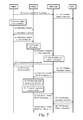
- a UE may have more than one active luPC session concurrently and hence associated PUA & PCAP contexts on a serving HNB for the same UE.
- the target HNB is preferably configured to manage the reception of one or more sets of PUA & PCAP context information. If more than one set of PUA & PCAP contexts is then received, the target HNB indicates this to the HNB-GW. This enables the HNB-GW to associate all the existing luPC connections for the UE to the target HNB.
- the example illustrates that active PCAP connections and procedure(s) may be maintained across inter-HNB handover(s), thus reducing the time taken to locate a UE as the connected-mode UE moves across multiple HNB(s).
Landscapes
- Engineering & Computer Science (AREA)
- Computer Networks & Wireless Communication (AREA)
- Signal Processing (AREA)
- Mobile Radio Communication Systems (AREA)
Priority Applications (1)
| Application Number | Priority Date | Filing Date | Title |
|---|---|---|---|
| EP15305985.2A EP3110201A1 (fr) | 2015-06-25 | 2015-06-25 | Procédé de manipulation d'une procédure de détermination d'emplacement, noeuds d'accès radio et passerelle de noeud d'accès radio |
Applications Claiming Priority (1)
| Application Number | Priority Date | Filing Date | Title |
|---|---|---|---|
| EP15305985.2A EP3110201A1 (fr) | 2015-06-25 | 2015-06-25 | Procédé de manipulation d'une procédure de détermination d'emplacement, noeuds d'accès radio et passerelle de noeud d'accès radio |
Publications (1)
| Publication Number | Publication Date |
|---|---|
| EP3110201A1 true EP3110201A1 (fr) | 2016-12-28 |
Family
ID=53510815
Family Applications (1)
| Application Number | Title | Priority Date | Filing Date |
|---|---|---|---|
| EP15305985.2A Withdrawn EP3110201A1 (fr) | 2015-06-25 | 2015-06-25 | Procédé de manipulation d'une procédure de détermination d'emplacement, noeuds d'accès radio et passerelle de noeud d'accès radio |
Country Status (1)
| Country | Link |
|---|---|
| EP (1) | EP3110201A1 (fr) |
Cited By (1)
| Publication number | Priority date | Publication date | Assignee | Title |
|---|---|---|---|---|
| CN111600686A (zh) * | 2019-02-01 | 2020-08-28 | 华为技术有限公司 | 一种通信方法及装置 |
Citations (2)
| Publication number | Priority date | Publication date | Assignee | Title |
|---|---|---|---|---|
| EP2736278A1 (fr) * | 2011-07-20 | 2014-05-28 | Huawei Technologies Co., Ltd | Procédé et dispositif de positionnement d'équipement utilisateur dans un processus de transfert intercellulaire |
| WO2014182214A1 (fr) * | 2013-05-10 | 2014-11-13 | Telefonaktiebolaget L M Ericsson (Publ) | Procédés et agencements pour permettre la poursuite de mesures de positionnement en cours lors d'un transfert intercellulaire |
-
2015
- 2015-06-25 EP EP15305985.2A patent/EP3110201A1/fr not_active Withdrawn
Patent Citations (2)
| Publication number | Priority date | Publication date | Assignee | Title |
|---|---|---|---|---|
| EP2736278A1 (fr) * | 2011-07-20 | 2014-05-28 | Huawei Technologies Co., Ltd | Procédé et dispositif de positionnement d'équipement utilisateur dans un processus de transfert intercellulaire |
| WO2014182214A1 (fr) * | 2013-05-10 | 2014-11-13 | Telefonaktiebolaget L M Ericsson (Publ) | Procédés et agencements pour permettre la poursuite de mesures de positionnement en cours lors d'un transfert intercellulaire |
Non-Patent Citations (1)
| Title |
|---|
| HUAWEI: "Further discussion on E-CID positioning during handover", vol. RAN WG3, no. San Francisco, USA; 20131111 - 20131115, 12 November 2013 (2013-11-12), XP050738169, Retrieved from the Internet <URL:http://www.3gpp.org/ftp/Meetings_3GPP_SYNC/RAN/RAN3/Docs/> [retrieved on 20131112] * |
Cited By (2)
| Publication number | Priority date | Publication date | Assignee | Title |
|---|---|---|---|---|
| CN111600686A (zh) * | 2019-02-01 | 2020-08-28 | 华为技术有限公司 | 一种通信方法及装置 |
| CN111600686B (zh) * | 2019-02-01 | 2021-12-31 | 华为技术有限公司 | 一种通信方法及装置 |
Similar Documents
| Publication | Publication Date | Title |
|---|---|---|
| TWI586186B (zh) | 在異質網路中小胞元發現方法及裝置 | |
| US9420451B2 (en) | Method for limited positioning-based reporting in wireless communication system and apparatus therefor | |
| US9445388B2 (en) | Variable-positioning based reporting method in wireless communication system and device supporting same | |
| US9497656B2 (en) | Measurement report method in wireless communication system and apparatus for supporting same | |
| US9867224B2 (en) | Method and apparatus for transmitting a handover report and an RLF report | |
| US9838897B2 (en) | Method for reporting in wireless communication system and apparatus therefor | |
| US9713115B2 (en) | Method for reporting positioning status in a wireless communication system and apparatus therefor | |
| US9706424B2 (en) | Correlation validity evaluation in wireless communication system and method and apparatus for reporting based on same | |
| US9578549B2 (en) | Method and apparatus for supporting RLF reason detection or handover failure reason detection | |
| EP2278842A1 (fr) | Dispositif permettant de déterminer une technologie d'accès radio pour un service de localisation | |
| US20130003695A1 (en) | Handover in Relation to Cell Identity Ambiguity | |
| WO2009143708A1 (fr) | Procédé, système et dispositif de compte rendu d’informations de localisation d’utilisateur | |
| JP5538540B2 (ja) | ホット・スポット検出のためのue測定 | |
| US11057810B2 (en) | Packet data network gateway handoff | |
| CN102307375A (zh) | 异网络间的切换方法及系统、eHRPD网络 | |
| US20130315203A1 (en) | Network sharing and reverse single radio voice call continuity | |
| US20150024788A1 (en) | Method for processing location information in wireless communication system and apparatus for supporting same | |
| JP6527527B2 (ja) | 無線基地局及び無線端末 | |
| US9432967B2 (en) | Method for reporting information based on location estimation and estimating location in wireless communication system, and apparatus for supporting same | |
| EP3110201A1 (fr) | Procédé de manipulation d'une procédure de détermination d'emplacement, noeuds d'accès radio et passerelle de noeud d'accès radio | |
| WO2019192000A1 (fr) | Procédé et appareil de communication | |
| CN121728519A (zh) | 一种集群通信中的小区重选方法、装置、设备及存储介质 |
Legal Events
| Date | Code | Title | Description |
|---|---|---|---|
| PUAI | Public reference made under article 153(3) epc to a published international application that has entered the european phase |
Free format text: ORIGINAL CODE: 0009012 |
|
| AK | Designated contracting states |
Kind code of ref document: A1 Designated state(s): AL AT BE BG CH CY CZ DE DK EE ES FI FR GB GR HR HU IE IS IT LI LT LU LV MC MK MT NL NO PL PT RO RS SE SI SK SM TR |
|
| AX | Request for extension of the european patent |
Extension state: BA ME |
|
| 17P | Request for examination filed |
Effective date: 20170628 |
|
| RBV | Designated contracting states (corrected) |
Designated state(s): AL AT BE BG CH CY CZ DE DK EE ES FI FR GB GR HR HU IE IS IT LI LT LU LV MC MK MT NL NO PL PT RO RS SE SI SK SM TR |
|
| STAA | Information on the status of an ep patent application or granted ep patent |
Free format text: STATUS: THE APPLICATION IS DEEMED TO BE WITHDRAWN |
|
| 18D | Application deemed to be withdrawn |
Effective date: 20170629 |