EP3113122B1 - Systeme de reprise de produits jetables a valoriser et dispositif et procede de reconnaissance de manipulation de ces derniers - Google Patents
Systeme de reprise de produits jetables a valoriser et dispositif et procede de reconnaissance de manipulation de ces derniers Download PDFInfo
- Publication number
- EP3113122B1 EP3113122B1 EP16176102.8A EP16176102A EP3113122B1 EP 3113122 B1 EP3113122 B1 EP 3113122B1 EP 16176102 A EP16176102 A EP 16176102A EP 3113122 B1 EP3113122 B1 EP 3113122B1
- Authority
- EP
- European Patent Office
- Prior art keywords
- unit
- disposable
- reverse vending
- vending system
- sensor element
- Prior art date
- Legal status (The legal status is an assumption and is not a legal conclusion. Google has not performed a legal analysis and makes no representation as to the accuracy of the status listed.)
- Not-in-force
Links
Images




Classifications
-
- G—PHYSICS
- G06—COMPUTING OR CALCULATING; COUNTING
- G06Q—INFORMATION AND COMMUNICATION TECHNOLOGY [ICT] SPECIALLY ADAPTED FOR ADMINISTRATIVE, COMMERCIAL, FINANCIAL, MANAGERIAL OR SUPERVISORY PURPOSES; SYSTEMS OR METHODS SPECIALLY ADAPTED FOR ADMINISTRATIVE, COMMERCIAL, FINANCIAL, MANAGERIAL OR SUPERVISORY PURPOSES, NOT OTHERWISE PROVIDED FOR
- G06Q30/00—Commerce
- G06Q30/02—Marketing; Price estimation or determination; Fundraising
- G06Q30/0241—Advertisements
- G06Q30/0251—Targeted advertisements
- G06Q30/0255—Targeted advertisements based on user history
- G06Q30/0256—User search
-
- G—PHYSICS
- G07—CHECKING-DEVICES
- G07F—COIN-FREED OR LIKE APPARATUS
- G07F7/00—Mechanisms actuated by objects other than coins to free or to actuate vending, hiring, coin or paper currency dispensing or refunding apparatus
- G07F7/06—Mechanisms actuated by objects other than coins to free or to actuate vending, hiring, coin or paper currency dispensing or refunding apparatus by returnable containers, i.e. reverse vending systems in which a user is rewarded for returning a container that serves as a token of value, e.g. bottles
-
- G—PHYSICS
- G07—CHECKING-DEVICES
- G07F—COIN-FREED OR LIKE APPARATUS
- G07F7/00—Mechanisms actuated by objects other than coins to free or to actuate vending, hiring, coin or paper currency dispensing or refunding apparatus
- G07F7/06—Mechanisms actuated by objects other than coins to free or to actuate vending, hiring, coin or paper currency dispensing or refunding apparatus by returnable containers, i.e. reverse vending systems in which a user is rewarded for returning a container that serves as a token of value, e.g. bottles
- G07F7/0609—Mechanisms actuated by objects other than coins to free or to actuate vending, hiring, coin or paper currency dispensing or refunding apparatus by returnable containers, i.e. reverse vending systems in which a user is rewarded for returning a container that serves as a token of value, e.g. bottles by fluid containers, e.g. bottles, cups, gas containers
Definitions
- the invention relates to a return system for disposable goods to be canceled, in particular a deposit return system for containers such as bottles, cans or the like.
- the invention also relates to a device and a method for recognizing manipulation on such a return system.
- RVS reverse vending systems
- An RVS usually comprises a front unit into which the disposable goods are entered and then conveyed to a compactor or compressor via a transport and sorting line.
- the compactor contains a cancellation unit which irreversibly destroys the entered disposable goods and reduces or compresses them to the smallest possible volume.
- the destruction of the disposable goods is often done by means of cutting rollers that are closely spaced and rotate in opposite directions.
- the destroyed and compressed disposable goods are collected in a container and are available for transport to a recycling facility.
- the deposit amount of the entered one-way goods is credited to the user of the RVS.
- the return system contains a cancellation unit with a compactor (see [0098]) for destroying the disposable goods.
- the system for manipulation detection contains at least one sensor element (see “load determining device") and an evaluation unit ("..configured to determine the difference between the "after” weight and the "before” weight in the storage container ... ").
- return systems are known for one-way goods to be canceled which are equipped with a cancellation unit for destroying the one-way goods to be canceled.
- return systems it is not uncommon for such return systems to be manipulated in such a way that, with fraudulent intent, individual disposable goods or containers within the transport and sorting path between the front unit and the compactor or the cancellation unit are intercepted and fed back to the front unit.
- the fraudster makes use of the fact that the recording or identification of the disposable goods and the crediting of the deposit usually take place within the front unit. This means that the deposit of the disposable goods can be credited multiple times, which can ultimately lead to considerable financial losses on the part of the RVS operator.
- a return system is disclosed with a cancellation unit for destroying the disposable goods to be canceled, with at least one sensor element for detecting at least one parameter and an evaluation unit being provided for the detection of tampering, the evaluation unit determining the parameter, namely the sound produced when the respective disposable goods are mechanically destroyed , evaluates to check whether the one-way item is really destroyed by the cancellation unit, with The evaluation unit also performs a control function for the return system or for components thereof, and the evaluation unit generates a control signal, an error message and / or an alarm if the test shows that the disposable item is not destroyed by the validation unit in a regular or intended manner , although a sensor system indicates that the one-way item to be canceled has been fed to the return system.
- the at least one sensor element is designed so that it detects at least one mechanical parameter, with the exception of sound, which is characteristic of the operation of the cancellation unit during the destruction of a disposable item
- the evaluation unit is designed to evaluate the at least one parameter in order to check whether the one-way item will be destroyed by the cancellation unit.
- the evaluation unit also exercises a control function for the return system or for components thereof and generates a control signal, an error message and / or an alarm if the check shows that the disposable goods are not destroyed by the validation unit in a regular or intended manner, although a sensor system indicates that the disposable goods to be canceled have been fed to the return system.
- the at least one sensor element is preferably arranged close to or directly on the cancellation unit itself in order to detect the at least one parameter, the evaluation unit checking, for example by comparison with references, whether the parameter (s) is normal or regular operation for the destruction process Show cancellation unit or not.
- the device presented here is designed for installation in such a return system and has at least one sensor element (preferably arranged on the validation unit) that detects at least one parameter, except sound, which is characteristic of the operation of the validation unit during the destruction of a disposable item, and has an evaluation unit which evaluates the at least one parameter in order to assign check whether the one-way item is destroyed in the normal way by the cancellation unit.
- the method presented here for operating such a return system comprises a first step in which at least one mechanical parameter, with the exception of sound, is detected by means of at least one sensor element, which is characteristic of the operation of the cancellation unit during the destruction of a disposable item, and comprises a second step , in which the at least one parameter is evaluated by means of an evaluation unit in order to check whether the disposable item is destroyed by the cancellation unit.
- a control signal, an error message and / or an alarm is generated for the validation unit or the entire RVS if the check shows that the single-use item is not destroyed by the validation unit in a regular or intended manner, although a sensor system ( in the front unit) indicates that the return system has received the disposable goods to be validated.
- the RVS can then be switched off completely.
- the error message can be transmitted to a unit monitoring the RVS. Or the alarm can be triggered.
- the solution presented here records characteristic sensor signals or data for the cancellation unit, which directly indicate the operating status of the cancellation unit or a cutting unit located therein and enable a reliable evaluation of whether the destruction of disposable goods is actually carried out and in the intended manner if previously it was recognized in the front unit that a disposable item that is subject to a deposit has been supplied. Even if one of them is manipulated If the detected disposable goods are illegally removed from the transport route, it is recognized (preferably on the validation unit itself) that the disposable goods are not being properly destroyed and measures such as controlling the RVS and / or generating an error message and / or an alarm can be taken to be triggered.
- the evaluation unit evaluates the at least one recorded parameter and its change over a period of time using reference data.
- a temporal course of the respective parameter eg current or torque of the cutting unit
- reference s
- sensors can be used to measure the current (e.g. motor current of the cutting unit drive).
- Mechanical or electromechanical sensors are also advantageous, depending on the application, for example for a torque or force measurement (which can take place several times at different points, for example) or also for a distance measurement (for example deflection of the drive chains).
- optical sensors can also be advantageous. This also includes cameras, light barriers, light switches or light grids.
- pneumatic sensors or pressure-sensitive sensors such as piezo sensors.
- the sensors can carry out static as well as dynamic measurements. In particular, there is a detection of (very) different Parameters that correlate little or not with each other are interesting in order to improve the evaluation or to validate results.
- At least two sensor elements that detect different parameters are preferably arranged on the cancellation unit, in particular in a housing.
- a double or multiple and varied sensor system is preferably used in order to ensure the evaluation of the operating behavior of the cancellation unit even more extensively.
- the cancellation unit has at least two cutting rollers, on the bearing of which a first sensor element is arranged which detects a mechanical parameter, in particular a force developing between the cutting rollers.
- a drive that drives the cutting rollers in particular a chain drive, can be monitored by arranging a (second) sensor element there, this sensor element detecting a mechanical parameter, in particular a chain tension of the chain drive.
- a protective element can also be provided, preferably between at least two components of the return system, in particular between the cancellation unit and the housing for the at least one sensor element, such a protective element, in particular an optical waveguide or a electrical signal line, is arranged in such a way that this protective element is severed or at least damaged in the event of a manipulation attempt on the return system.
- the signal processing unit e.g. micro-controller
- the Figure 1 schematically illustrates the structure of a return system 100 for disposable goods 140 to be disposed of.
- the disposable items 140 can in particular be plastic or PET bottles and cans.
- the return system 100 comprises a front unit 110 into which the respective disposable item is introduced by the user via an input opening.
- the return system 100 hereinafter also referred to for short as RVS (reverse vending system)
- RVS reverse vending system
- the return system 100 has a sensor system 115 within the front unit 110, with which the inputted disposable goods 140 are checked and determined whether or not they are a container subject to a deposit. For this purpose, an identification or recognition feature, such as a bar code, is searched for on the disposable item 140.
- the input goods 140 are fed via a transport and sorting path to a compactor 120, which may also be mounted spatially (far) away from the front unit 110 can.
- the disposable item 140 is then intended to be destroyed (irreversibly as possible) within a cancellation unit 122.
- the volume of the disposable goods is reduced via a cutting mechanism and the security features (barcode etc.) are preferably also destroyed at the same time.
- the disposable goods 140 cannot be fed back to the front unit 110 after they have passed through the compactor 120. In this respect, an attempt at fraud is no longer feasible.
- the compacted disposable goods 140 are finally disposed of in a container 129 which is emptied regularly. As the Fig. 1 shows, the disposable goods 140 input via the front unit 110 are transported to the compactor 120 via a transport or sorting path.
- a plurality of sensors S1, S2... Sn are preferably arranged on the validation unit 122 or the cutting unit installed therein in order to detect and evaluate typical parameters, such as torques, forces, motor currents that occur during Process of compacting occur.
- two sensors S1 and S2 are used as an example, the signals of which are recorded and measured by a signal processing unit 133, which can be implemented, for example, by a micro-controller. Signal processing is primarily carried out here.
- Downstream is an evaluation unit 134 by means of which the evaluation of the detected sensor signals or data takes place in order to check whether a proper cutting unit operation is being carried out or not.
- the evaluation unit can also be implemented using an application running on a computer or PC. This can also perform control functions for the RVS. Depending on the result of the evaluation, the evaluation unit 134 responds by generating control signals, error messages and / or alarm signals to the RVS or to other units monitoring the RVS.
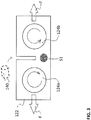
- Fig. 3 and 4th illustrate two possible types of implementation for the acquisition and combinatorial evaluation of parameters that characterize a regular cutterbar operation:
- the cutting mechanism 122 is shown schematically (as an integral part of the cancellation unit), with two cutting rollers 124a and 124b rotating against one another gripping and compacting the disposable goods 140 to be disposed of and canceled.
- forces F occur which also act on the mounting of the cutting mechanism and can thus be detected by a first sensor S1, for example by means of a strain gauge.
- the cutting mechanism 122 has a drive 123 in the form of a chain drive, the current chain tension being detected and measured via a second sensor S2.
- a path sensor for example, is suitable as sensor S2.
- an upper time signal curve is shown, which relates to a sensor signal that is generated, for example, by sensor S2 (see Fig. 4 ) is delivered.
- the lower signal curve indicates another parameter that can also indicate whether the cutting unit is working normally or not.
- the evaluation unit 134 (which can also perform a control function) has determined a relevant deviation between the actual signal curve and the normal target signal curve that is so large that it can be concluded that a manipulation detection or attempted fraud can be concluded, the evaluation and Control unit 134 puts the RVS 100 out of operation and / or generates an error or alarm message.
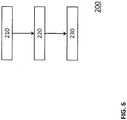
- the method 200 carried out to detect manipulation is based on FIG Fig. 6 shown in the form of a flow chart:
- a first step 210 the parameters measured by the sensors are recorded and fed to the evaluation.
- the evaluation unit 134 evaluates the multiple parameters in order to check whether the disposable item 140 is actually destroyed by the cancellation unit 122.
- a control signal, an error message and / or an alarm is generated if the check shows that the disposable item is not destroyed by the validation unit, although the input-side sensor system 115 indicates that the return system 100 has received the Disposable goods 140 has been supplied.
- devices and methods for tamper-proof sensory monitoring of the physical destruction process of valuable symbols on objects subject to a deposit are disclosed.
- the present invention solves the problem that the return system, RVS for short, is part of a chain for billing deposit amounts, the task of the RVS being, among other things, to destroy the valuable deposit logo and to create a valuable data record as a replacement that can be used for billing of Deposit value can be used.
- Conventional systems for deposit settlement are corrupted if it is possible to create valuable data records through manipulation of the RVS without the corresponding deposit logo being destroyed. So far, the physical destruction of the deposit logo could not be detected directly by sensors, which created possibilities for manipulation. Such manipulation attempts are effectively prevented with the solution presented here.
- a characteristic movement profile of the specific cutting unit in which the destruction takes place is additionally determined in a micro-controller, so that the measuring device for the sensor-based detection of the destruction cannot be removed and mounted on a different cutting unit.
- the microcontroller receives information about the activity of the cutting unit.
- the measuring device for the sensor-based detection of the destruction is encased. This housing (see sensor system 131 in Fig. 2 ) is connected to the cutting unit in such a way that opening or removal is electronically monitored and reliably detected.
- the RVS 100 can also be secured against attempts at manipulation by placing between at least two components of the return system 100, such as a protective element is arranged between the cancellation unit 122 and the housing 131 for the at least one sensor element.
- a protective element is arranged between the cancellation unit 122 and the housing 131 for the at least one sensor element.
- This can e.g. be an optical waveguide OWG or an electrical signal line which is arranged in such a way that the protective element is severed or at least damaged when attempted to manipulate it.
- This solution can also be implemented and used independently of the previously described acquisition and evaluation of parameters.
- This independently executable solution also includes devices and methods for protecting the systems and system parts, which are equipped with tamper-proof sensor monitoring of the physical destruction process of valuable symbols on objects subject to a deposit.
- a transmitter / receiver unit for a fiber optic communication link is placed in the system.
- the fiber-optic cable is then passed through openings or specially provided fastening points in / on the housing.
- the routing is appropriately chosen so that all housing parts and components of the system are connected to one another in such a way that the fiber-optic cable has to be cut to open the housing. It will also no longer be possible to change the position of the system components in relation to one another without destroying the fiber-optic cable.
- a coded signal or sensor signal is sent by means of the transmitter / receiver unit. When the fiber-optic cable is cut, the machine automatically malfunctions and it is no longer possible to generate signed raw data records.
- the device according to the invention for detecting manipulation can also be designed together with or separately from the sensors as a module that can be manufactured as an additional component for existing RVS.
- the sensors (see 131 in Fig. 2 ) can be produced together with a cutting unit as an integral component / built-in module.
Landscapes
- Physics & Mathematics (AREA)
- General Physics & Mathematics (AREA)
- Business, Economics & Management (AREA)
- Strategic Management (AREA)
- Accounting & Taxation (AREA)
- Development Economics (AREA)
- Finance (AREA)
- Engineering & Computer Science (AREA)
- Entrepreneurship & Innovation (AREA)
- Game Theory and Decision Science (AREA)
- Economics (AREA)
- Marketing (AREA)
- General Business, Economics & Management (AREA)
- Theoretical Computer Science (AREA)
- Control Of Vending Devices And Auxiliary Devices For Vending Devices (AREA)
Claims (10)
- Système de recyclage (100) pour des produits jetables (140) à dévaloriser, comprenant une unité de dévalorisation (122) destinée à détruire les produits jetables (140) à dévaloriser, au moins un élément de capteur (S1, S2, ... Sn) et une unité d'évaluation étant prévus pour détecter au moins une grandeur caractéristique (US1 ; US2) et une unité d'évaluation (134),
dans lequel l'unité d'évaluation (134) évalue ladite au moins une grandeur caractéristique (US1, US2) afin de vérifier si le produit jetable (140) est détruit par l'unité de dévalorisation (122), l'unité d'évaluation (134) remplissant aussi une fonction de commande pour le système de recyclage (100) ou pour des composants de celui-ci, et dans lequel l'unité d'évaluation (134) produit un signal de commande, un message d'erreur et/ou une alarme si le résultat de la vérification indique que le produit jetable (140) n'est pas détruit normalement ou correctement par l'unité de dévalorisation bien qu'un système de capteurs (115) indique que le produit jetable (140) à dévaloriser a été amené au système de recyclage (100),
caractérisé en ce que ledit au moins un élément de capteur (S1, S2, ... Sn) détecte au moins une grandeur caractéristique mécanique (US1 ; US2), à l'exception du son, qui est caractéristique du fonctionnement de l'unité de dévalorisation (122) pendant la destruction d'un produit jetable (140). - Système de recyclage (100) selon la revendication 1, caractérisé en ce que l'unité d'évaluation (134) évalue ladite au moins une grandeur caractéristique (US1, US2) détectée et la variation de celle-ci pendant une période de temps à l'aide de données de référence.
- Système de recyclage (100) selon la revendication 1 ou 2, caractérisé en ce que ledit au moins un élément de capteur (S1, S2, ... Sn) est un élément de capteur optique, électrique, magnétique électromagnétique, sensible à la pression et/ou pneumatique.
- Système de recyclage (100) selon l'une quelconque des revendications précédentes, caractérisé en ce que ledit au moins un élément de capteur (S1, S2) est disposé sur l'unité de dévalorisation (122), en particulier sur un dispositif de coupe situé sur celui-ci.
- Système de recyclage (100) selon l'une quelconque des revendications précédentes, caractérisé en ce qu'au moins deux ou plusieurs éléments de capteur (S1, S2) sont disposés sur l'unité de dévalorisation (122), en particulier dans un système de capteurs (131), et détectent différentes grandeurs caractéristiques (US1 ; US2).
- Système de recyclage (100) selon l'une quelconque des revendications précédentes, caractérisé en ce que l'unité de dévalorisation (122) présente au moins deux cylindres de coupe (124a, 124b) au niveau du logement desquels est disposé un premier élément de capteur (S1) qui détecte la grandeur caractéristique mécanique, en particulier une force (F) créée entre les cylindres de coupe (124a, 124b).
- Système de recyclage (100) selon l'une quelconque des revendications précédentes, caractérisé en ce que l'unité de dévalorisation (122) présente au moins deux cylindres de coupe (124a, 124b) et un entraînement qui les entraîne, en particulier un entraînement par chaîne (123), sur lequel est disposé un deuxième élément de capteur (S2), l'élément de capteur (S2) détectant la grandeur caractéristique mécanique, en particulier une tension de chaîne de l'entraînement par chaîne (123).
- Système de recyclage (100) selon l'une quelconque des revendications précédentes, caractérisé en ce qu'entre au moins deux composants du système de recyclage (100), en particulier entre l'unité de dévalorisation (122) et le boîtier (131) pour ledit au moins un élément de capteur, est disposé un élément de protection, en particulier un guide d'ondes optiques (OWG) ou une ligne de signal électrique, de telle sorte que lors d'une tentative de manipulation sur le système de recyclage (100), l'élément de protection se brise ou est au moins endommagé.
- Dispositif (130) destiné à reconnaître une manipulation et à être installé dans un système de recyclage (100) pour des produits jetables (140) à dévaloriser comprenant une unité de dévalorisation (122) destinée à détruire les produits jetables (140) à dévaloriser, le dispositif (130) de reconnaissance de manipulation présentant au moins un élément de capteur (S1, S2, ... Sn) pour détecter au moins une grandeur caractéristique (US1 ; US2) et une unité d'évaluation (134),
dans lequel l'unité d'évaluation (134) évalue ladite au moins une grandeur caractéristique (US1, US2) afin de vérifier si le produit jetable (140) est détruit par l'unité de dévalorisation (122), l'unité d'évaluation (134) remplissant aussi une fonction de commande pour le système de recyclage (100) ou pour des composants de celui-ci, et dans lequel l'unité d'évaluation (134) produit un signal de commande, un message d'erreur et/ou une alarme si le résultat de la vérification indique que le produit jetable (140) n'est pas détruit normalement ou correctement par l'unité de dévalorisation bien qu'un système de capteurs (115) indique que le produit jetable (140) à dévaloriser a été amené au système de recyclage (100),
caractérisé en ce que ledit au moins un élément de capteur (S1, S2, ..., Sn) détecte au moins une grandeur caractéristique mécanique (US1 ; US2), à l'exception du son, qui est caractéristique du fonctionnement de l'unité de dévalorisation (122) pendant la destruction d'un produit jetable (140). - Procédé (200) de reconnaissance de manipulation sur un système de recyclage (100) pour des produits jetables (140) à dévaloriser, dans lequel les produits jetables (140) à dévaloriser sont détruits au moyen d'une unité de dévalorisation (122), dans lequel au moins un élément de capteur (S1, S2, ... Sn) pour détecter au moins une grandeur caractéristique (US1 ; US2) et une unité d'évaluation (134) sont prévus pour la reconnaissance de manipulation,
dans lequel l'unité d'évaluation (134) permet d'évaluer ladite au moins une grandeur caractéristique (US1, US2) afin de vérifier si le produit jetable (140) est détruit par l'unité de dévalorisation (122) (étape 220),
dans lequel l'unité d'évaluation (134) remplit aussi une fonction de commande pour le système de recyclage (100) ou pour des composants de celui-ci, et dans lequel l'unité d'évaluation (134) produit un signal de commande, un message d'erreur et/ou une alarme si le résultat de la vérification indique que le produit jetable (140) n'est pas détruit normalement ou correctement par l'unité de dévalorisation bien qu'un système de capteurs (115) indique que le produit jetable (140) à dévaloriser a été amené au système de recyclage (100),
caractérisé en ce que ledit au moins un élément de capteur (S1, S2, ..., Sn), disposé sur l'unité de dévalorisation (122), permet de détecter au moins une grandeur caractéristique mécanique (US1; US2), à l'exception du son, qui est caractéristique du fonctionnement de l'unité de dévalorisation (122) pendant la destruction d'un produit jetable (140) (étape 210).
Applications Claiming Priority (1)
| Application Number | Priority Date | Filing Date | Title |
|---|---|---|---|
| DE102015110545.4A DE102015110545A1 (de) | 2015-06-30 | 2015-06-30 | Rücknahmesystem für zu entwertende Einweggüter und Vorrichtung sowie Verfahren zur Manipulationserkennung an demselben |
Publications (2)
| Publication Number | Publication Date |
|---|---|
| EP3113122A1 EP3113122A1 (fr) | 2017-01-04 |
| EP3113122B1 true EP3113122B1 (fr) | 2020-11-18 |
Family
ID=56296515
Family Applications (1)
| Application Number | Title | Priority Date | Filing Date |
|---|---|---|---|
| EP16176102.8A Not-in-force EP3113122B1 (fr) | 2015-06-30 | 2016-06-24 | Systeme de reprise de produits jetables a valoriser et dispositif et procede de reconnaissance de manipulation de ces derniers |
Country Status (2)
| Country | Link |
|---|---|
| EP (1) | EP3113122B1 (fr) |
| DE (1) | DE102015110545A1 (fr) |
Families Citing this family (5)
| Publication number | Priority date | Publication date | Assignee | Title |
|---|---|---|---|---|
| DE102018100977B4 (de) * | 2018-01-17 | 2023-05-25 | Wincor Nixdorf International Gmbh | Leergut-Transportvorrichtung, Kompaktoranordnung, Kompaktoreinrichtung und Verfahren zum Betreiben derer |
| DE102021102865A1 (de) * | 2021-02-08 | 2022-08-11 | Wincor Nixdorf International Gmbh | System und Verfahren zum Überwachen eines Betriebes einer Momentübertragungsvorrichtung |
| EP4361978A1 (fr) * | 2022-10-25 | 2024-05-01 | RE DEPOSIT Solutions GmbH | Dispositif de reprise de récipients vides, dispositif de détermination pour un dispositif de récupération de récipients vides et support lisible par ordinateur pourvu d'instructions pour un dispositif de reprise de récipients vides |
| CN115363356B (zh) * | 2022-10-25 | 2023-01-13 | 合肥科之谷互联网科技服务有限公司 | 一种基于知识产权数据的存储管理系统 |
| EP4379685A1 (fr) * | 2022-11-29 | 2024-06-05 | RE DEPOSIT Solutions GmbH | Dispositif de reprise de récipients vides et support lisible par ordinateur pourvu d'instructions pour un dispositif de reprise de récipients vides |
Citations (1)
| Publication number | Priority date | Publication date | Assignee | Title |
|---|---|---|---|---|
| EP3065112A1 (fr) * | 2015-03-06 | 2016-09-07 | Wincor Nixdorf International GmbH | Système de reprise d'articles consignés doté d'une unité de détection par le son destinée à reconnaître la destruction de l'article à usage unique |
Family Cites Families (8)
| Publication number | Priority date | Publication date | Assignee | Title |
|---|---|---|---|---|
| US4285426A (en) * | 1979-01-25 | 1981-08-25 | Pepsico Inc. | Container redemption apparatus and process |
| US5111927A (en) * | 1990-01-05 | 1992-05-12 | Schulze Jr Everett E | Automated recycling machine |
| US5997423A (en) * | 1996-11-20 | 1999-12-07 | Lg Industrial Systems Co., Ltd. | Apparatus for controlling chain tension |
| DE10063368A1 (de) * | 2000-12-19 | 2002-06-20 | Klaus Rudolph | Vorrichtung zum Sortieren und/oder Sammeln von Materialien |
| US20080296374A1 (en) * | 2005-02-07 | 2008-12-04 | Recyclebank Llc | Recycling kiosk system and method thereof |
| DE102009043816A1 (de) * | 2009-08-20 | 2011-02-24 | Wincor Nixdorf International Gmbh | Leergutrücknahmeeinrichtung |
| US8401354B2 (en) * | 2010-02-23 | 2013-03-19 | US Seismic Systems, Inc. | Fiber optic security systems and methods of using the same |
| US8851265B2 (en) * | 2011-01-05 | 2014-10-07 | RecycleTech Corporation | Reverse vending machine |
-
2015
- 2015-06-30 DE DE102015110545.4A patent/DE102015110545A1/de not_active Withdrawn
-
2016
- 2016-06-24 EP EP16176102.8A patent/EP3113122B1/fr not_active Not-in-force
Patent Citations (1)
| Publication number | Priority date | Publication date | Assignee | Title |
|---|---|---|---|---|
| EP3065112A1 (fr) * | 2015-03-06 | 2016-09-07 | Wincor Nixdorf International GmbH | Système de reprise d'articles consignés doté d'une unité de détection par le son destinée à reconnaître la destruction de l'article à usage unique |
Also Published As
| Publication number | Publication date |
|---|---|
| EP3113122A1 (fr) | 2017-01-04 |
| DE102015110545A1 (de) | 2017-01-05 |
Similar Documents
| Publication | Publication Date | Title |
|---|---|---|
| DE4123887C2 (de) | Vorrichtung zur Echtheitsprüfung eines Zahlungsmittels | |
| EP3113122A1 (fr) | Systeme de reprise de produits jetables a valoriser et dispositif et procede de reconnaissance de manipulation de ces derniers | |
| EP2286390B1 (fr) | Système de reconnaissance de manipulation pour des coffres amovibles utilisés dans des guichets automatiques bancaires | |
| EP2730906B1 (fr) | Dispositif et procédé de surveillance de l'état d'un palier à roulement | |
| DE102004038906B4 (de) | Verfahren zur Erfassung beweglicher Objekte in einer Überwachungseinrichtung und Überwachungseinrichtung | |
| EP2619735B1 (fr) | Procédé pour la surveillance du transport de billets de banque | |
| DE10050486A1 (de) | Vorrichtung und Verfahren zur Bearbeitung von Blattgut | |
| CN104537760B (zh) | 钞箱、自动柜员机及钞票状态监测方法 | |
| DE102017105174A1 (de) | Verfahren zum Erzeugen von Trainingsdaten für die Überwachung einer Gefahrenquelle | |
| DE10111907A1 (de) | Vorrichtung und Verfahren zur Entwertung von Blattgut | |
| DE4416813A1 (de) | Vorrichtung zur Unterrichtung einer Zentrale über einen nicht betriebsnormalen Stoßvorgang an einem Fahrzeug | |
| EP2722788B1 (fr) | Dispositif de lecture d'une carte à puce et procédé de détection d'un module de skimming | |
| EP3347880B1 (fr) | Procédé et dispositif de détermination de l'intégrité d'un dispositif lecteur de carte et terminal de distribution automatique en étant équipé | |
| EP3190679B1 (fr) | Procédé et dispositif de dépassivation d'une batterie d'un coffre | |
| EP2561487B1 (fr) | Procédé de distribution de billets de banque au moyen de distributeurs automatiques de billets de banque et distributeur automatique de billets de banque permettant de mettre en oeuvre ledit procédé | |
| EP3142039B1 (fr) | Terminal self-service équipé avec dispositif de lecture de carte ainsi que procédé de surveillance | |
| EP2765560B1 (fr) | Coffret à argent à vérification automatique | |
| AT501236B1 (de) | Lesevorrichtung für kartenförmige datenträger und betriebsverfahren hierfür | |
| EP2455925B1 (fr) | Procédé et dispositif de défense contre les tentatives de manipulation sur un système de caméra | |
| EP4361978A1 (fr) | Dispositif de reprise de récipients vides, dispositif de détermination pour un dispositif de récupération de récipients vides et support lisible par ordinateur pourvu d'instructions pour un dispositif de reprise de récipients vides | |
| EP3065112B1 (fr) | Système de reprise d'articles consignés doté d'une unité de détection par le son destinée à reconnaître la destruction de l'article à usage unique | |
| EP4094052A1 (fr) | Dispositif de dosage et procédé de distribution dosée d'un milieu | |
| EP2851875B1 (fr) | Automate de reprise pour bouteilles consignées | |
| DE102009026184A1 (de) | Vorrichtung und Verfahren zum Kompaktieren von Gebinden | |
| EP4251427B1 (fr) | Imprimante d'étiquettes |
Legal Events
| Date | Code | Title | Description |
|---|---|---|---|
| PUAI | Public reference made under article 153(3) epc to a published international application that has entered the european phase |
Free format text: ORIGINAL CODE: 0009012 |
|
| STAA | Information on the status of an ep patent application or granted ep patent |
Free format text: STATUS: THE APPLICATION HAS BEEN PUBLISHED |
|
| AK | Designated contracting states |
Kind code of ref document: A1 Designated state(s): AL AT BE BG CH CY CZ DE DK EE ES FI FR GB GR HR HU IE IS IT LI LT LU LV MC MK MT NL NO PL PT RO RS SE SI SK SM TR |
|
| AX | Request for extension of the european patent |
Extension state: BA ME |
|
| STAA | Information on the status of an ep patent application or granted ep patent |
Free format text: STATUS: REQUEST FOR EXAMINATION WAS MADE |
|
| 17P | Request for examination filed |
Effective date: 20170703 |
|
| RBV | Designated contracting states (corrected) |
Designated state(s): AL AT BE BG CH CY CZ DE DK EE ES FI FR GB GR HR HU IE IS IT LI LT LU LV MC MK MT NL NO PL PT RO RS SE SI SK SM TR |
|
| STAA | Information on the status of an ep patent application or granted ep patent |
Free format text: STATUS: EXAMINATION IS IN PROGRESS |
|
| 17Q | First examination report despatched |
Effective date: 20180611 |
|
| GRAP | Despatch of communication of intention to grant a patent |
Free format text: ORIGINAL CODE: EPIDOSNIGR1 |
|
| STAA | Information on the status of an ep patent application or granted ep patent |
Free format text: STATUS: GRANT OF PATENT IS INTENDED |
|
| INTG | Intention to grant announced |
Effective date: 20200616 |
|
| GRAS | Grant fee paid |
Free format text: ORIGINAL CODE: EPIDOSNIGR3 |
|
| GRAA | (expected) grant |
Free format text: ORIGINAL CODE: 0009210 |
|
| STAA | Information on the status of an ep patent application or granted ep patent |
Free format text: STATUS: THE PATENT HAS BEEN GRANTED |
|
| AK | Designated contracting states |
Kind code of ref document: B1 Designated state(s): AL AT BE BG CH CY CZ DE DK EE ES FI FR GB GR HR HU IE IS IT LI LT LU LV MC MK MT NL NO PL PT RO RS SE SI SK SM TR |
|
| REG | Reference to a national code |
Ref country code: GB Ref legal event code: FG4D Free format text: NOT ENGLISH |
|
| REG | Reference to a national code |
Ref country code: CH Ref legal event code: EP |
|
| REG | Reference to a national code |
Ref country code: IE Ref legal event code: FG4D Free format text: LANGUAGE OF EP DOCUMENT: GERMAN |
|
| REG | Reference to a national code |
Ref country code: DE Ref legal event code: R096 Ref document number: 502016011719 Country of ref document: DE |
|
| REG | Reference to a national code |
Ref country code: AT Ref legal event code: REF Ref document number: 1336615 Country of ref document: AT Kind code of ref document: T Effective date: 20201215 |
|
| REG | Reference to a national code |
Ref country code: NL Ref legal event code: MP Effective date: 20201118 |
|
| PG25 | Lapsed in a contracting state [announced via postgrant information from national office to epo] |
Ref country code: NO Free format text: LAPSE BECAUSE OF FAILURE TO SUBMIT A TRANSLATION OF THE DESCRIPTION OR TO PAY THE FEE WITHIN THE PRESCRIBED TIME-LIMIT Effective date: 20210218 Ref country code: RS Free format text: LAPSE BECAUSE OF FAILURE TO SUBMIT A TRANSLATION OF THE DESCRIPTION OR TO PAY THE FEE WITHIN THE PRESCRIBED TIME-LIMIT Effective date: 20201118 Ref country code: PT Free format text: LAPSE BECAUSE OF FAILURE TO SUBMIT A TRANSLATION OF THE DESCRIPTION OR TO PAY THE FEE WITHIN THE PRESCRIBED TIME-LIMIT Effective date: 20210318 Ref country code: GR Free format text: LAPSE BECAUSE OF FAILURE TO SUBMIT A TRANSLATION OF THE DESCRIPTION OR TO PAY THE FEE WITHIN THE PRESCRIBED TIME-LIMIT Effective date: 20210219 Ref country code: FI Free format text: LAPSE BECAUSE OF FAILURE TO SUBMIT A TRANSLATION OF THE DESCRIPTION OR TO PAY THE FEE WITHIN THE PRESCRIBED TIME-LIMIT Effective date: 20201118 |
|
| PG25 | Lapsed in a contracting state [announced via postgrant information from national office to epo] |
Ref country code: BG Free format text: LAPSE BECAUSE OF FAILURE TO SUBMIT A TRANSLATION OF THE DESCRIPTION OR TO PAY THE FEE WITHIN THE PRESCRIBED TIME-LIMIT Effective date: 20210218 Ref country code: SE Free format text: LAPSE BECAUSE OF FAILURE TO SUBMIT A TRANSLATION OF THE DESCRIPTION OR TO PAY THE FEE WITHIN THE PRESCRIBED TIME-LIMIT Effective date: 20201118 Ref country code: PL Free format text: LAPSE BECAUSE OF FAILURE TO SUBMIT A TRANSLATION OF THE DESCRIPTION OR TO PAY THE FEE WITHIN THE PRESCRIBED TIME-LIMIT Effective date: 20201118 Ref country code: IS Free format text: LAPSE BECAUSE OF FAILURE TO SUBMIT A TRANSLATION OF THE DESCRIPTION OR TO PAY THE FEE WITHIN THE PRESCRIBED TIME-LIMIT Effective date: 20210318 Ref country code: LV Free format text: LAPSE BECAUSE OF FAILURE TO SUBMIT A TRANSLATION OF THE DESCRIPTION OR TO PAY THE FEE WITHIN THE PRESCRIBED TIME-LIMIT Effective date: 20201118 |
|
| REG | Reference to a national code |
Ref country code: LT Ref legal event code: MG9D |
|
| PG25 | Lapsed in a contracting state [announced via postgrant information from national office to epo] |
Ref country code: HR Free format text: LAPSE BECAUSE OF FAILURE TO SUBMIT A TRANSLATION OF THE DESCRIPTION OR TO PAY THE FEE WITHIN THE PRESCRIBED TIME-LIMIT Effective date: 20201118 |
|
| PG25 | Lapsed in a contracting state [announced via postgrant information from national office to epo] |
Ref country code: CZ Free format text: LAPSE BECAUSE OF FAILURE TO SUBMIT A TRANSLATION OF THE DESCRIPTION OR TO PAY THE FEE WITHIN THE PRESCRIBED TIME-LIMIT Effective date: 20201118 Ref country code: EE Free format text: LAPSE BECAUSE OF FAILURE TO SUBMIT A TRANSLATION OF THE DESCRIPTION OR TO PAY THE FEE WITHIN THE PRESCRIBED TIME-LIMIT Effective date: 20201118 Ref country code: SM Free format text: LAPSE BECAUSE OF FAILURE TO SUBMIT A TRANSLATION OF THE DESCRIPTION OR TO PAY THE FEE WITHIN THE PRESCRIBED TIME-LIMIT Effective date: 20201118 Ref country code: LT Free format text: LAPSE BECAUSE OF FAILURE TO SUBMIT A TRANSLATION OF THE DESCRIPTION OR TO PAY THE FEE WITHIN THE PRESCRIBED TIME-LIMIT Effective date: 20201118 Ref country code: RO Free format text: LAPSE BECAUSE OF FAILURE TO SUBMIT A TRANSLATION OF THE DESCRIPTION OR TO PAY THE FEE WITHIN THE PRESCRIBED TIME-LIMIT Effective date: 20201118 Ref country code: SK Free format text: LAPSE BECAUSE OF FAILURE TO SUBMIT A TRANSLATION OF THE DESCRIPTION OR TO PAY THE FEE WITHIN THE PRESCRIBED TIME-LIMIT Effective date: 20201118 |
|
| REG | Reference to a national code |
Ref country code: DE Ref legal event code: R097 Ref document number: 502016011719 Country of ref document: DE |
|
| PG25 | Lapsed in a contracting state [announced via postgrant information from national office to epo] |
Ref country code: DK Free format text: LAPSE BECAUSE OF FAILURE TO SUBMIT A TRANSLATION OF THE DESCRIPTION OR TO PAY THE FEE WITHIN THE PRESCRIBED TIME-LIMIT Effective date: 20201118 |
|
| PLBE | No opposition filed within time limit |
Free format text: ORIGINAL CODE: 0009261 |
|
| STAA | Information on the status of an ep patent application or granted ep patent |
Free format text: STATUS: NO OPPOSITION FILED WITHIN TIME LIMIT |
|
| 26N | No opposition filed |
Effective date: 20210819 |
|
| PG25 | Lapsed in a contracting state [announced via postgrant information from national office to epo] |
Ref country code: AL Free format text: LAPSE BECAUSE OF FAILURE TO SUBMIT A TRANSLATION OF THE DESCRIPTION OR TO PAY THE FEE WITHIN THE PRESCRIBED TIME-LIMIT Effective date: 20201118 Ref country code: IT Free format text: LAPSE BECAUSE OF FAILURE TO SUBMIT A TRANSLATION OF THE DESCRIPTION OR TO PAY THE FEE WITHIN THE PRESCRIBED TIME-LIMIT Effective date: 20201118 Ref country code: NL Free format text: LAPSE BECAUSE OF FAILURE TO SUBMIT A TRANSLATION OF THE DESCRIPTION OR TO PAY THE FEE WITHIN THE PRESCRIBED TIME-LIMIT Effective date: 20201118 |
|
| PG25 | Lapsed in a contracting state [announced via postgrant information from national office to epo] |
Ref country code: ES Free format text: LAPSE BECAUSE OF FAILURE TO SUBMIT A TRANSLATION OF THE DESCRIPTION OR TO PAY THE FEE WITHIN THE PRESCRIBED TIME-LIMIT Effective date: 20201118 Ref country code: SI Free format text: LAPSE BECAUSE OF FAILURE TO SUBMIT A TRANSLATION OF THE DESCRIPTION OR TO PAY THE FEE WITHIN THE PRESCRIBED TIME-LIMIT Effective date: 20201118 |
|
| PG25 | Lapsed in a contracting state [announced via postgrant information from national office to epo] |
Ref country code: MC Free format text: LAPSE BECAUSE OF FAILURE TO SUBMIT A TRANSLATION OF THE DESCRIPTION OR TO PAY THE FEE WITHIN THE PRESCRIBED TIME-LIMIT Effective date: 20201118 |
|
| REG | Reference to a national code |
Ref country code: CH Ref legal event code: PL |
|
| REG | Reference to a national code |
Ref country code: BE Ref legal event code: MM Effective date: 20210630 |
|
| PG25 | Lapsed in a contracting state [announced via postgrant information from national office to epo] |
Ref country code: LU Free format text: LAPSE BECAUSE OF NON-PAYMENT OF DUE FEES Effective date: 20210624 |
|
| PG25 | Lapsed in a contracting state [announced via postgrant information from national office to epo] |
Ref country code: LI Free format text: LAPSE BECAUSE OF NON-PAYMENT OF DUE FEES Effective date: 20210630 Ref country code: IE Free format text: LAPSE BECAUSE OF NON-PAYMENT OF DUE FEES Effective date: 20210624 Ref country code: CH Free format text: LAPSE BECAUSE OF NON-PAYMENT OF DUE FEES Effective date: 20210630 |
|
| PG25 | Lapsed in a contracting state [announced via postgrant information from national office to epo] |
Ref country code: IS Free format text: LAPSE BECAUSE OF FAILURE TO SUBMIT A TRANSLATION OF THE DESCRIPTION OR TO PAY THE FEE WITHIN THE PRESCRIBED TIME-LIMIT Effective date: 20210318 |
|
| PG25 | Lapsed in a contracting state [announced via postgrant information from national office to epo] |
Ref country code: BE Free format text: LAPSE BECAUSE OF NON-PAYMENT OF DUE FEES Effective date: 20210630 |
|
| PGFP | Annual fee paid to national office [announced via postgrant information from national office to epo] |
Ref country code: GB Payment date: 20220623 Year of fee payment: 7 Ref country code: DE Payment date: 20220530 Year of fee payment: 7 |
|
| REG | Reference to a national code |
Ref country code: AT Ref legal event code: MM01 Ref document number: 1336615 Country of ref document: AT Kind code of ref document: T Effective date: 20210624 |
|
| PGFP | Annual fee paid to national office [announced via postgrant information from national office to epo] |
Ref country code: FR Payment date: 20220621 Year of fee payment: 7 |
|
| PG25 | Lapsed in a contracting state [announced via postgrant information from national office to epo] |
Ref country code: AT Free format text: LAPSE BECAUSE OF NON-PAYMENT OF DUE FEES Effective date: 20210624 |
|
| PG25 | Lapsed in a contracting state [announced via postgrant information from national office to epo] |
Ref country code: HU Free format text: LAPSE BECAUSE OF FAILURE TO SUBMIT A TRANSLATION OF THE DESCRIPTION OR TO PAY THE FEE WITHIN THE PRESCRIBED TIME-LIMIT; INVALID AB INITIO Effective date: 20160624 |
|
| PG25 | Lapsed in a contracting state [announced via postgrant information from national office to epo] |
Ref country code: CY Free format text: LAPSE BECAUSE OF FAILURE TO SUBMIT A TRANSLATION OF THE DESCRIPTION OR TO PAY THE FEE WITHIN THE PRESCRIBED TIME-LIMIT Effective date: 20201118 |
|
| REG | Reference to a national code |
Ref country code: DE Ref legal event code: R119 Ref document number: 502016011719 Country of ref document: DE |
|
| GBPC | Gb: european patent ceased through non-payment of renewal fee |
Effective date: 20230624 |
|
| PG25 | Lapsed in a contracting state [announced via postgrant information from national office to epo] |
Ref country code: MK Free format text: LAPSE BECAUSE OF FAILURE TO SUBMIT A TRANSLATION OF THE DESCRIPTION OR TO PAY THE FEE WITHIN THE PRESCRIBED TIME-LIMIT Effective date: 20201118 Ref country code: DE Free format text: LAPSE BECAUSE OF NON-PAYMENT OF DUE FEES Effective date: 20240103 Ref country code: GB Free format text: LAPSE BECAUSE OF NON-PAYMENT OF DUE FEES Effective date: 20230624 |
|
| PG25 | Lapsed in a contracting state [announced via postgrant information from national office to epo] |
Ref country code: FR Free format text: LAPSE BECAUSE OF NON-PAYMENT OF DUE FEES Effective date: 20230630 |
|
| PG25 | Lapsed in a contracting state [announced via postgrant information from national office to epo] |
Ref country code: MT Free format text: LAPSE BECAUSE OF FAILURE TO SUBMIT A TRANSLATION OF THE DESCRIPTION OR TO PAY THE FEE WITHIN THE PRESCRIBED TIME-LIMIT Effective date: 20201118 |
|
| PG25 | Lapsed in a contracting state [announced via postgrant information from national office to epo] |
Ref country code: TR Free format text: LAPSE BECAUSE OF FAILURE TO SUBMIT A TRANSLATION OF THE DESCRIPTION OR TO PAY THE FEE WITHIN THE PRESCRIBED TIME-LIMIT Effective date: 20201118 |