EP3113401B1 - Procédé et dispositif de transmission d'informations - Google Patents
Procédé et dispositif de transmission d'informations Download PDFInfo
- Publication number
- EP3113401B1 EP3113401B1 EP15768245.1A EP15768245A EP3113401B1 EP 3113401 B1 EP3113401 B1 EP 3113401B1 EP 15768245 A EP15768245 A EP 15768245A EP 3113401 B1 EP3113401 B1 EP 3113401B1
- Authority
- EP
- European Patent Office
- Prior art keywords
- carrier
- data
- field
- preset
- identifier
- Prior art date
- Legal status (The legal status is an assumption and is not a legal conclusion. Google has not performed a legal analysis and makes no representation as to the accuracy of the status listed.)
- Active
Links
Images


Classifications
-
- H—ELECTRICITY
- H04—ELECTRIC COMMUNICATION TECHNIQUE
- H04L—TRANSMISSION OF DIGITAL INFORMATION, e.g. TELEGRAPHIC COMMUNICATION
- H04L1/00—Arrangements for detecting or preventing errors in the information received
- H04L1/12—Arrangements for detecting or preventing errors in the information received by using return channel
- H04L1/16—Arrangements for detecting or preventing errors in the information received by using return channel in which the return channel carries supervisory signals, e.g. repetition request signals
- H04L1/18—Automatic repetition systems, e.g. Van Duuren systems
- H04L1/1867—Arrangements specially adapted for the transmitter end
- H04L1/1887—Scheduling and prioritising arrangements
-
- H—ELECTRICITY
- H04—ELECTRIC COMMUNICATION TECHNIQUE
- H04W—WIRELESS COMMUNICATION NETWORKS
- H04W72/00—Local resource management
- H04W72/20—Control channels or signalling for resource management
- H04W72/23—Control channels or signalling for resource management in the downlink direction of a wireless link, i.e. towards a terminal
-
- H—ELECTRICITY
- H04—ELECTRIC COMMUNICATION TECHNIQUE
- H04L—TRANSMISSION OF DIGITAL INFORMATION, e.g. TELEGRAPHIC COMMUNICATION
- H04L5/00—Arrangements affording multiple use of the transmission path
- H04L5/003—Arrangements for allocating sub-channels of the transmission path
- H04L5/0053—Allocation of signalling, i.e. of overhead other than pilot signals
-
- H—ELECTRICITY
- H04—ELECTRIC COMMUNICATION TECHNIQUE
- H04L—TRANSMISSION OF DIGITAL INFORMATION, e.g. TELEGRAPHIC COMMUNICATION
- H04L5/00—Arrangements affording multiple use of the transmission path
- H04L5/0091—Signalling for the administration of the divided path, e.g. signalling of configuration information
- H04L5/0096—Indication of changes in allocation
-
- H—ELECTRICITY
- H04—ELECTRIC COMMUNICATION TECHNIQUE
- H04L—TRANSMISSION OF DIGITAL INFORMATION, e.g. TELEGRAPHIC COMMUNICATION
- H04L5/00—Arrangements affording multiple use of the transmission path
- H04L5/0091—Signalling for the administration of the divided path, e.g. signalling of configuration information
- H04L5/0096—Indication of changes in allocation
- H04L5/0098—Signalling of the activation or deactivation of component carriers, subcarriers or frequency bands
-
- H—ELECTRICITY
- H04—ELECTRIC COMMUNICATION TECHNIQUE
- H04W—WIRELESS COMMUNICATION NETWORKS
- H04W72/00—Local resource management
- H04W72/12—Wireless traffic scheduling
-
- H—ELECTRICITY
- H04—ELECTRIC COMMUNICATION TECHNIQUE
- H04L—TRANSMISSION OF DIGITAL INFORMATION, e.g. TELEGRAPHIC COMMUNICATION
- H04L5/00—Arrangements affording multiple use of the transmission path
- H04L5/0001—Arrangements for dividing the transmission path
- H04L5/0003—Two-dimensional division
- H04L5/0005—Time-frequency
- H04L5/0007—Time-frequency the frequencies being orthogonal, e.g. OFDM(A) or DMT
- H04L5/001—Time-frequency the frequencies being orthogonal, e.g. OFDM(A) or DMT the frequencies being arranged in component carriers
-
- H—ELECTRICITY
- H04—ELECTRIC COMMUNICATION TECHNIQUE
- H04L—TRANSMISSION OF DIGITAL INFORMATION, e.g. TELEGRAPHIC COMMUNICATION
- H04L5/00—Arrangements affording multiple use of the transmission path
- H04L5/003—Arrangements for allocating sub-channels of the transmission path
-
- H—ELECTRICITY
- H04—ELECTRIC COMMUNICATION TECHNIQUE
- H04L—TRANSMISSION OF DIGITAL INFORMATION, e.g. TELEGRAPHIC COMMUNICATION
- H04L5/00—Arrangements affording multiple use of the transmission path
- H04L5/003—Arrangements for allocating sub-channels of the transmission path
- H04L5/0044—Allocation of payload; Allocation of data channels, e.g. PDSCH or PUSCH
-
- H—ELECTRICITY
- H04—ELECTRIC COMMUNICATION TECHNIQUE
- H04W—WIRELESS COMMUNICATION NETWORKS
- H04W16/00—Network planning, e.g. coverage or traffic planning tools; Network deployment, e.g. resource partitioning or cells structures
- H04W16/14—Spectrum sharing arrangements between different networks
Definitions
- the present invention relates to the communications field, and in particular, to an information transmission method and a device.
- HARQ Hybrid Automatic Repeat Request
- HARQ Hybrid Automatic Repeat Request
- a dedicated field is added to downlink data scheduling signaling to instruct to retransmit data, which increases overheads of downlink scheduling signaling.
- WO2013/087835A1 describes that a method includes, in a carrier aggregation system having multiple component carriers, utilizing an air interface based collision avoidance procedure on at least one component carrier that is associated to a cellular radio access technology to check that a radio resource in the at least one component carrier is available; and thereafter communicating on the radio resource using the cellular radio access technology only if the check reveals that the radio resource is available.
- the subject-matter of claims 1-8 provides an information transmission method and a device, which can resolve a problem of excessively high overheads of scheduling signaling of data retransmission in an unlicensed spectrum.
- An embodiment of the present invention provides a network device, where the network device is applied to data transmission in a preset spectrum, and the preset spectrum is a spectrum that occupies a spectrum resource for a limited time each time.
- the network device 101 includes a control unit 1011 and a sending unit 1012.
- the control unit 1011 is configured to write a data retransmission identifier of a first carrier into a preset field of a physical downlink control channel, where the preset field includes one or more of a CIF (Carrier Indicator) field, an NDI (New Data Indicator) field, and an RBA (Resource Block Assignment) field, and the first carrier is a carrier in the preset spectrum.
- the preset field includes one or more of a CIF (Carrier Indicator) field, an NDI (New Data Indicator) field, and an RBA (Resource Block Assignment) field
- the first carrier is a carrier in the preset spectrum.
- the control unit 1011 is further configured to generate a data scheduling instruction of the physical downlink control channel, where the data scheduling instruction of the physical downlink control channel is used to instruct to retransmit data that is on the first carrier.
- the sending unit 1012 is configured to send, on a second carrier, the data scheduling instruction of the physical downlink control channel generated by the control unit 1011 to a receiving device.
- the sending unit 1012 is further configured to send the data that is on the first carrier on the second carrier according to the data scheduling instruction of the physical downlink control channel.
- the network device 101 may further include: a determining unit 1013, configured to determine, if the preset field includes the CIF field, whether a resource of the first carrier may be occupied to send data.
- the sending unit 1012 is configured to: when a determining result of the determining unit 1013 is no, send the preset field CIF by using a physical downlink control channel of a second carrier.
- downlink control information that the CIF is a first index number of the first carrier is merely an example in the present invention, and the present invention includes, but is not limited to, the example.
- the network device when a determining result of the determining unit 1013 is yes, the network device does not send downlink control information that the preset field CIF is a first index number of the first carrier by using a physical downlink control channel of a second carrier.
- the determining unit 1013 is further configured to determine, if the preset field includes the CIF field, whether a resource of the second carrier may be occupied to send data.
- the sending unit 1012 is configured to: when a determining result of the determining unit 1013 is yes, send the preset field CIF by using a physical downlink control channel of a second carrier.
- downlink control information that the CIF may be a first index number of the first carrier is merely an example in the present invention, and the present invention includes, but is not limited to, the example.
- the sending unit 1012 is configured to: when a determining result of the determining unit 1013 is no, skip sending downlink control information that the preset field CIF is a first index number of the first carrier by using a physical downlink control channel of a second carrier.
- a data retransmission identifier of a first carrier is written into a preset field of a physical downlink control channel, a data scheduling instruction of the physical downlink control channel is generated, the data scheduling instruction of the physical downlink control channel is sent, on a second carrier, to a receiving device, and data that is on the first carrier is sent on the second carrier according to the data scheduling instruction of the physical downlink control channel, which resolves a problem of excessively high overheads of scheduling signaling of data retransmission in an unlicensed spectrum.
- the preset field includes the CIF field, and the control unit 1011 is specifically configured to use the first index number of the first carrier as the data retransmission identifier of the first carrier and write the first index number of the first carrier into the CIF field, where the first index number of the first carrier is used to instruct to retransmit the data of the first carrier on the second carrier.
- the preset field includes the NDI field
- the control unit 1011 is specifically configured to use a non-new data identifier as the data retransmission identifier of the first carrier and write the non-new data identifier into the NDI field, where the non-new data identifier is used to instruct to retransmit the data of the first carrier on the second carrier.
- the preset field includes the RBA field
- the control unit 1011 is specifically configured to use a preset quantity of resource blocks as the data retransmission identifier of the first carrier and write the preset quantity of resource blocks into the RBA field, where the preset quantity of resource blocks is used to instruct to retransmit the data of the first carrier on the second carrier.
- a data retransmission identifier of a first carrier is written into a preset field of a physical downlink control channel, a data scheduling instruction of the physical downlink control channel is generated, the data scheduling instruction of the physical downlink control channel is sent, on a second carrier, to a receiving device, and data that is on the first carrier is sent on the second carrier according to the data scheduling instruction of the physical downlink control channel, which resolves a problem of excessively high overheads of scheduling signaling of data retransmission in an unlicensed spectrum.
- an embodiment of the present invention provides a receiving device, which corresponds to the network device described in the embodiment corresponding to FIG. 1 and applied to data transmission in a preset spectrum.
- the preset spectrum is a spectrum that occupies a spectrum resource for a limited time each time.
- the receiving device 201 includes a receiving unit 2011 and a judgment unit 2012.
- the receiving unit 2011 is configured to receive a data scheduling instruction, which is sent by a network device, of a physical downlink control channel, where the data scheduling instruction of the physical downlink control channel includes a preset field, and the preset field includes one or more of a CIF field, an NDI field, and an RBA field.
- the judgment unit 2012 is configured to obtain a data retransmission identifier of a first carrier, and determine whether the preset field includes the data retransmission identifier of the first carrier.
- the receiving unit 2011 is further configured to: when a determining result of the judgment unit 2012 is that the preset field includes the data retransmission identifier of the first carrier, receive data that is on the first carrier on a second carrier according to the data retransmission identifier of the first carrier.
- a data scheduling instruction which is sent by a network device, of a physical downlink control channel is received, whether a preset field includes a data retransmission identifier of a first carrier is determined, and data that is on the first carrier is received on a second carrier according to the data retransmission identifier of the first carrier if the preset field includes the data retransmission identifier of the first carrier, which resolves a problem of excessively high overheads of scheduling signaling of data retransmission in an unlicensed spectrum.
- the preset field includes the CIF field
- the judgment unit 2012 is specifically configured to determine whether the CIF field includes a first index number of the first carrier.
- the receiving unit 2011 is specifically configured to: when a determining result of the judgment unit 2012 is that the CIF field includes the first index number of the first carrier, receive the data that is on the first carrier on the second carrier according to the first index number of the first carrier.
- the receiving device 201 further includes a determining unit 2013, which is specifically configured to determine, if the preset field includes the CIF field, whether the network device may occupy a resource of the first carrier to send data.
- the receiving unit 2011 is configured to: when a determining result of the determining unit 2013 is no, receive and detect a scheduling instruction about whether the preset field CIF is sent by using a downlink control channel of the second carrier, where the CIF may be the first index number of the first carrier; or is configured to: when a determining result of the determining unit 2013 is yes, skip receiving a scheduling instruction about whether the preset field CIF is sent by using a downlink control channel of the second carrier, where the CIF is the first index number of the first carrier, and instead, receive and detect scheduling instruction information that is on the first carrier and that is used by the network device to schedule the first carrier to transmit first carrier data to a user device.
- the determining unit 2013 is configured to determine, if the preset field includes the CIF field, whether the network device may occupy a resource of the first carrier to send data.
- the receiving unit 2011 is configured to: when a determining result of the determining unit 2013 is yes, receive and detect a scheduling instruction about whether the preset field CIF is sent by using a downlink control channel of the second carrier, where the CIF is the first index number of the first carrier; or is configured to: when a determining result of the determining unit 2013 is no, skip receiving a scheduling instruction about whether the preset field CIF is sent by using a downlink control channel of the second carrier, where the CIF is the first index number of the first carrier.
- the preset field includes the NDI field
- the judgment unit 2012 is specifically configured to determine whether the NDI field includes a non-new data identifier.
- the receiving unit 2011 is specifically configured to: when a determining result of the judgment unit 2012 is that the NDI field includes the non-new data identifier, receive the data that is on the first carrier on the second carrier according to the non-new data identifier.
- the preset field includes the RBA field
- the judgment unit 2012 is specifically configured to determine whether the RBA field includes a preset quantity of resource blocks.
- the receiving unit 2011 is specifically configured to: when a determining result of the judgment unit 2012 is that the RBA field includes the preset quantity of resource blocks, receive the data that is on the first carrier on the second carrier according to the preset quantity of resource blocks.
- a data scheduling instruction which is sent by a network device, of a physical downlink control channel is received, whether a preset field includes a data retransmission identifier of a first carrier is determined, and data that is on the first carrier is received on a second carrier according to the data retransmission identifier of the first carrier if the preset field includes the data retransmission identifier of the first carrier, which resolves a problem of excessively high overheads of scheduling signaling of data retransmission in an unlicensed spectrum.
- An embodiment of the present invention provides another network device 3001.
- the device may be built in micro computer processing or may be micro computer processing, for example, a portable device such as a general-purpose computer, a customized machine, a mobile phone terminal, or a tablet computer.
- the network device 3001 includes: at least one processor 3011, a memory 3012, a bus 3013, and a transmitter 3014.
- the at least one processor 3011, the memory 3012, and the transmitter 3014 are connected to and communicate with each other by using the bus 3013.
- the bus 3013 may be an ISA (Industry Standard Architecture) bus, a PCI (Peripheral Component Interconnect) bus, an EISA (Extended Industry Standard Architecture) bus, or the like.
- the bus 3013 may be classified into an address bus, a data bus, a control bus, and the like.
- the bus in FIG. 3 is represented by using only one bold line, but it does not mean that there is only one bus or one type of bus.
- the memory 3012 is configured to execute application program code of a solution in the present invention, where the application program code for executing the solution in the present invention is stored in the memory, and execution of the application program code is controlled by the processor 3011.
- the memory may be a read-only memory ROM or another type of static storage device that can store static information and an instruction, or a random access memory RAM or another type of dynamic storage device that can store information and an instruction, and may also be an electrically erasable programmable read-only memory EEPROM, a compact disc read-only memory CD-ROM or other optical disk memory, optical disc memory (including a compact disc, a laser disc, an optical disc, a digital versatile disc, a Blu-ray disc, and the like), a magnetic disk memory medium or another magnetic storage device, or any other medium that can carry or store expected program code in a form of an instruction or a data structure and can be accessed by a computer, but the present invention is not limited thereto.
- These memories are connected to the processor by using the bus.
- the processor 3011 may be a central processing unit 3011 (Central Processing Unit, CPU for short) or an application-specific integrated circuit (Application-Specific Integrated Circuit, ASIC for short), or is configured as one or more integrated circuits that implement the embodiment of the present invention.
- CPU Central Processing Unit
- ASIC Application-Specific Integrated Circuit
- the processor 3011 is configured to invoke the program code in the memory 3012. In a possible implementation manner, when the foregoing application program is executed by the processor 3011, the following functions are implemented.
- the processor 3011 is configured to write a data retransmission identifier of a first carrier into a preset field of a physical downlink control channel, where the preset field includes one or more of a CIF field, an NDI field, and an RBA field, where the first carrier is a carrier in the preset spectrum.
- the processor 3011 is further configured to generate a data scheduling instruction of the physical downlink control channel, where the data scheduling instruction of the physical downlink control channel is used to instruct to retransmit data that is on the first carrier.
- the transmitter 3014 is configured to send, on a second carrier, the data scheduling instruction of the physical downlink control channel to a receiving device.
- the transmitter 3014 is further configured to send the data that is on the first carrier on the second carrier according to the data scheduling instruction of the physical downlink control channel.
- a data retransmission identifier of a first carrier is written into a preset field of a physical downlink control channel, a data scheduling instruction of the physical downlink control channel is generated, the data scheduling instruction of the physical downlink control channel is sent, on a second carrier, to a receiving device, and data that is on the first carrier is sent on the second carrier according to the data scheduling instruction of the physical downlink control channel, which resolves a problem of excessively high overheads of scheduling signaling of data retransmission in an unlicensed spectrum.
- the preset field includes the CIF field
- the processor 3011 is specifically configured to use a first index number of the first carrier as the data retransmission identifier of the first carrier and write the first index number of the first carrier into the CIF field, where the first index number of the first carrier is used to instruct to retransmit the data of the first carrier on the second carrier.
- the processor 3011 is specifically configured to: if the preset field includes the CIF field, determine whether a resource of the first carrier may be occupied to send data. If not, the transmitter 3014 sends the preset field CIF by using the physical downlink control channel of the second carrier.
- downlink control information that the CIF is the first index number of the first carrier is merely an example in the present invention, and the present invention includes, but is not limited to, the example. Alternatively, if yes, the transmitter 3014 does not send downlink control information that the preset field CIF is the first index number of the first carrier by using the physical downlink control channel of the second carrier.
- the processor 3011 is specifically configured to: if the preset field includes the CIF field, determine whether a resource of the second carrier may be occupied to send data. If yes, the transmitter 3014 sends the preset field CIF by using the physical downlink control channel of the second carrier.
- downlink control information that the CIF may be the first index number of the first carrier is merely an example in the present invention, and the present invention includes, but is not limited to, the example. Alternatively, if not, the transmitter 3014 does not send downlink control information that the preset field CIF is the first index number of the first carrier by using the physical downlink control channel of the second carrier.
- the preset field includes the NDI field
- the processor 3011 is specifically configured to use a non-new data identifier as the data retransmission identifier of the first carrier and write the non-new data identifier into the NDI field, where the non-new data identifier is used to instruct to retransmit the data of the first carrier on the second carrier.
- the preset field includes the RBA field
- the processor 3011 is specifically configured to use a preset quantity of resource blocks as the data retransmission identifier of the first carrier and write the preset quantity of resource blocks into the RBA field, where the preset quantity of resource blocks is used to instruct to retransmit the data of the first carrier on the second carrier.
- a data retransmission identifier of a first carrier is written into a preset field of a physical downlink control channel, a data scheduling instruction of the physical downlink control channel is generated, the data scheduling instruction of the physical downlink control channel is sent, on a second carrier, to a receiving device, and data that is on the first carrier is sent on the second carrier according to the data scheduling instruction of the physical downlink control channel, which resolves a problem of excessively high overheads of scheduling signaling of data retransmission in an unlicensed spectrum.
- An embodiment of the present invention provides another receiving device 4001.
- the device may be built in micro computer processing or may be micro computer processing, for example, a portable device such as a general-purpose computer, a customized machine, a mobile phone terminal, or a tablet computer.
- the receiving device 4001 includes: at least one processor 4011, a memory 4012, a bus 4013, and a receiver 4014.
- the at least one processor 4011, the memory 4012, and the receiver 4014 are connected to and communicate with each other by using the bus 4013.
- the bus 4013 may be an ISA (Industry Standard Architecture) bus, a PCI (Peripheral Component Interconnect) bus, an EISA (Extended Industry Standard Architecture) bus, or the like.
- the bus 4013 may be classified into an address bus, a data bus, a control bus, and the like.
- the bus in FIG. 4 is represented by using only one bold line, but it does not mean that there is only one bus or one type of bus.
- the memory 4012 is configured to execute application program code of a solution in the present invention, where the application program code for executing the solution in the present invention is stored in the memory, and execution of the application program code is controlled by the processor 4011.
- the memory may be a read-only memory ROM or another type of static storage device that can store static information and an instruction, or a random access memory RAM or another type of dynamic storage device that can store information and an instruction, and may also be an electrically erasable programmable read-only memory EEPROM, a compact disc read-only memory CD-ROM or other optical disk memory, optical disc memory (including a compact disc, a laser disc, an optical disc, a digital versatile disc, a Blu-ray disc, and the like), a magnetic disk memory medium or another magnetic storage device, or any other medium that can carry or store expected program code in a form of an instruction or a data structure and can be accessed by a computer, but the present invention is not limited thereto.
- These memories are connected to the processor by using the bus.
- the processor 4011 may be a central processing unit 4011 (Central Processing Unit, CPU for short) or an application-specific integrated circuit (Application-Specific Integrated Circuit, ASIC for short), or is configured as one or more integrated circuits that implement the embodiment of the present invention.
- CPU Central Processing Unit
- ASIC Application-Specific Integrated Circuit
- the processor 4011 is configured to invoke the program code in the memory 4012. In a possible implementation manner, when the foregoing application program is executed by the processor 4011, the following functions are implemented.
- the receiver 4014 is configured to receive a data scheduling instruction, which is sent by a network device, of a physical downlink control channel, where the data scheduling instruction of the physical downlink control channel includes a preset field, and the preset field includes one or more of a CIF field, an NDI field, and an RBA field.
- the processor 4011 is configured to obtain a data retransmission identifier of a first carrier and determine whether the preset field includes the data retransmission identifier of the first carrier.
- the receiver 4014 is specifically configured to: when a determining result of the processor 4011 is that the preset field includes the data retransmission identifier of the first carrier, receive data that is on the first carrier on a second carrier according to the data retransmission identifier of the first carrier.
- a data scheduling instruction which is sent by a network device, of a physical downlink control channel is received, whether a preset field includes a data retransmission identifier of a first carrier is determined, and data that is on the first carrier is received on a second carrier according to the data retransmission identifier of the first carrier if the preset field includes the data retransmission identifier of the first carrier, which resolves a problem of excessively high overheads of scheduling signaling of data retransmission in an unlicensed spectrum.
- the preset field includes the CIF field
- the processor 4011 is specifically configured to determine whether the CIF field includes a first index number of the first carrier.
- the receiver 4014 is specifically configured to: when a determining result of the processor 4011 is that the CIF field includes the first index number of the first carrier, receive the data that is on the first carrier on the second carrier according to the first index number of the first carrier.
- the processor 4011 is specifically configured to: when the preset field includes the CIF field, determine whether the network device may occupy a resource of the first carrier to send data.
- the receiving device 1001 may further include a transmitter, and the transmitter is configured to: when a processing result of the processor 4011 is no, receive and detect a scheduling instruction about whether the preset field CIF is sent by using a downlink control channel of the second carrier, where the CIF may be the first index number of the first carrier; or is configured to: when a processing result of the processor 4011 is yes, skip receiving a scheduling instruction about whether the preset field CIF is sent by using a downlink control channel of the second carrier, where the CIF is the first index number of the first carrier, but instead receive and detect scheduling instruction information that is on the first carrier and that is used by the network device to schedule the first carrier to transmit first carrier data to a user device.
- the processor 4011 is specifically configured to: when the preset field includes the CIF field, determine whether the network device may occupy a resource of the first carrier to send data.
- the receiver 4014 is specifically configured to: when a determining result of the processor 4011 is yes, receive and detect a scheduling instruction about whether the preset field CIF is sent by using a downlink control channel of the second carrier, where the CIF may be the first index number of the first carrier; or when a processing result of the processor 4011 is no, skip receiving a scheduling instruction about whether the preset field CIF is sent by using a downlink control channel of the second carrier, where the CIF is the first index number of the first carrier.
- the preset field includes the NDI field
- the processor 4011 is specifically configured to determine whether the NDI field includes a non-new data identifier.
- the receiver 4014 is specifically configured to: when a determining result of the processor 4011 is that the NDI field includes the non-new data identifier, receive the data that is on the first carrier on the second carrier according to the non-new data identifier.
- the preset field includes the RBA field
- the processor 4011 is specifically configured to determine whether the RBA field includes a preset quantity of resource blocks.
- the receiver 4014 is specifically configured to: when a determining result of the processor 4011 is that the RBA field includes the preset quantity of resource blocks, receive the data that is on the first carrier on the second carrier according to the preset quantity of resource blocks.
- a data scheduling instruction which is sent by a network device, of a physical downlink control channel is received, whether a preset field includes a data retransmission identifier of a first carrier is determined, and data that is on the first carrier is received on a second carrier according to the data retransmission identifier of the first carrier if the preset field includes the data retransmission identifier of the first carrier, which resolves a problem of excessively high overheads of scheduling signaling of data retransmission in an unlicensed spectrum.
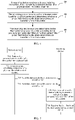
- an embodiment of the present invention provides an information transmission method.
- the method is used by the network device described in the embodiment corresponding to FIG. 1 for data transmission in a preset spectrum, where the preset spectrum is a spectrum that occupies a spectrum resource for a limited time each time.
- the method includes the following steps.
- a network device writes a data retransmission identifier of a first carrier into a preset field of a physical downlink control channel.
- the preset field includes one or more of a CIF field, an NDI field, and an RBA field, and the first carrier is a carrier in the preset spectrum.
- a first index number, which is in the CIF field, of the first carrier is used as the data retransmission identifier of the first carrier, where the first index number of the first carrier is used to instruct to retransmit data that is on the first carrier on another carrier, and a second index number of the first carrier is used to instruct to transmit the data that is on the first carrier on the first carrier.
- the first index number of first carrier and the second index number of the first carrier are equal, and the first index number and the second index number are located at the CIF field of physical downlink control information, so that the data that is on the first carrier may be retransmitted by using a carrier at which a physical downlink control channel carrying the physical downlink control information is located.
- a CIF field of control information transmitted on the second carrier includes the first index number of the first carrier, it indicates that the data that is on the first carrier is to be retransmitted on the second carrier.
- a CIF field of control information transmitted on the first carrier includes the first index number of the first carrier, or when control information transmitted on the first carrier does not include a CIF field, it indicates that the data of the first carrier is transmitted on the first carrier.
- a non-new data identifier is used as the data retransmission identifier of the first carrier.
- the non-new data identifier is used to instruct to retransmit the data that is on the first carrier on another carrier.
- a new data identifier is used to instruct to transmit the data that is on the first carrier on the first carrier.
- the preset field includes the RBA field
- a preset quantity of resource blocks is used as the data retransmission identifier of the first carrier.
- an odd-numbered quantity of resource blocks is used as a preset quantity of resource blocks, that is, if a quantity of resource blocks is an odd number, it indicates that the data that is on the first carrier is to be retransmitted on another carrier; or if a quantity of resource blocks is an even number, it indicates that the data that is on the first carrier is transmitted on the first carrier.
- the preset field includes multiple of the CIF field, the NDI field, and the RBA field
- the preset field includes the CIF field and the NDI field.
- the CIF field includes the first index number of the first carrier, or when the NDI field includes the non-new data identifier, it indicates that the preset field includes the data retransmission identifier of the first carrier. Therefore, there is double determining for the data retransmission identifier of the first carrier.
- the data retransmission identifier of the first carrier can also be determined by using the NDI field, thereby preventing an error in a field from affecting the data retransmission identifier of the first carrier.
- the spectrum resource of the preset spectrum can be occupied for only a limited time, when transmission of the data of the first carrier is not complete, retransmission needs to be performed for the data of the first carrier. However, a time for occupying the first carrier ends, retransmission of the data that is on the first carrier needs to be performed on another carrier.
- the network device generates a data scheduling instruction of the physical downlink control channel.
- a data scheduling instruction of the physical downlink control channel is used to retransmit the data that is on the first carrier, that is, the data that is on the first carrier is retransmitted on another carrier.
- the network device sends, on a second carrier, the data scheduling instruction of the physical downlink control channel to a receiving device.
- the network device sends data that is on the first carrier on the second carrier according to the data scheduling instruction of the physical downlink control channel.
- a new field needs to be added to a physical downlink control channel to indicate data retransmission in an unlicensed spectrum.
- a retransmission identifier of a first carrier is added to an existing field, thereby mitigating a problem of excessively high overheads of scheduling signaling of data retransmission in an unlicensed spectrum.
- a data retransmission identifier of a first carrier is written into a preset field of a physical downlink control channel, a data scheduling instruction of the physical downlink control channel is generated, the data scheduling instruction of the physical downlink control channel is sent, on a second carrier, to a receiving device, and data that is on the first carrier is sent on the second carrier according to the data scheduling instruction of the physical downlink control channel, which resolves a problem of excessively high overheads of scheduling signaling of data retransmission in an unlicensed spectrum.
- an embodiment of the present invention provides an information transmission method, where the information transmission method is applied to data transmission in a preset spectrum by a receiving device which is described in the embodiment corresponding to FIG. 2 , and the preset spectrum is a spectrum that occupies a spectrum resource for a limited time each time.
- the method includes the following steps: 601: A receiving device receives a data scheduling instruction, which is sent by a network device, of a physical downlink control channel.
- the data scheduling instruction of the physical downlink control channel includes a preset field, and the preset field includes one or more of a CIF field, an NDI field, and an RBA field.
- the receiving device obtains a data retransmission identifier of a first carrier and determines whether the preset field includes the data retransmission identifier of the first carrier.
- the data retransmission identifier of the first carrier may be included in a data scheduling instruction of a physical downlink control channel and sent to the receiving device, or may be preset in the receiving device, so that the receiving device can identify the data retransmission identifier of the first carrier. How to obtain the data retransmission identifier of the first carrier is not limited by the present invention.
- the receiving device receives data that is on the first carrier on a second carrier according to the data retransmission identifier of the first carrier if the preset field includes the data retransmission identifier of the first carrier.
- a first index number of the first carrier is the data retransmission identifier of the first carrier. Whether the CIF field includes the first index number of the first carrier is determined; and if the CIF field includes the first index number of the first carrier, data that is on the first carrier is received on the second carrier according to the first index number of the first carrier.
- a non-new data identifier is the data retransmission identifier of the first carrier. Whether the NDI field includes the non-new data identifier is determined; and if the NDI field includes the non-new data identifier, data that is on the first carrier is received on the second carrier according to the non-new data identifier.
- a preset quantity of resource blocks is the data retransmission identifier of the first carrier. Whether the RBA field includes the preset quantity of resource blocks is determined; and if a quantity of resource blocks is the preset quantity of resource blocks, data that is on the first carrier is received on the second carrier according to the preset quantity of resource blocks.
- a new field needs to be added to a physical downlink control channel to indicate data retransmission in an unlicensed spectrum.
- a retransmission identifier of a first carrier is added to an existing field, thereby mitigating a problem of excessively high overheads of scheduling signaling of data retransmission in an unlicensed spectrum.
- a data scheduling instruction which is sent by a network device, of a physical downlink control channel is received, whether a preset field includes a data retransmission identifier of a first carrier is determined, and data that is on the first carrier is received on a second carrier according to the data retransmission identifier of the first carrier if the preset field includes the data retransmission identifier of the first carrier, which resolves a problem of excessively high overheads of scheduling signaling of data retransmission in an unlicensed spectrum.
- another embodiment of the present invention provides an information transmission method, where the information transmission method is applied to data transmission in a preset spectrum, and the preset spectrum is a spectrum that occupies a spectrum resource for a limited time each time.
- the preset spectrum is an unlicensed spectrum.
- the present invention is not limited to data transmission in an unlicensed spectrum.
- the method includes the following steps: 701: A network device writes a data retransmission identifier of a first carrier into a preset field of a physical downlink control channel.
- the physical downlink control channel may be a PDCCH (Physical Downlink Control Channel, physical downlink control channel) or an EPDCCH (Enhanced Physical Downlink Control Channel, enhanced physical downlink control channel), and a specific form of the physical downlink control channel is not limited in the present invention.
- PDCCH Physical Downlink Control Channel
- EPDCCH Enhanced Physical Downlink Control Channel, enhanced physical downlink control channel
- the preset field includes one or more of a CIF field, an NDI field, and an RBA field.
- a field including a data retransmission identifier of a first carrier is used as the preset field.
- the CIF field, the NDI field, and the RBA field are not used as the preset fields
- the CIF field, the NDI field, and the RBA field also have original functions of the CIF field, the NDI field, and the RBA field.
- this embodiment provides three solutions to describe in detail how to instruct to retransmit data that is on the first carrier on a second carrier when the CIF field, the NDI field, and the RBA field are separately used as the preset field.
- the preset field includes the CIF field, and a first index number of the first carrier is used as the data retransmission identifier of the first carrier.
- each carrier may be provided with two index numbers, for example, index numbers "0000" and "0001".
- the first index number "0000” is used to instruct to transmit data that is on the carrier on another carrier
- the second index number "0001" is used to instruct to transmit data that is on the carrier on the carrier.
- a data scheduling instruction is sent on the second carrier. If the CIF field includes a first index number of the first carrier, it indicates that the data that is on the first carrier is to be retransmitted on the second carrier. If the CIF field includes a second index number of the first carrier, it indicates that the data that is on the first carrier is transmitted on the first carrier, and only the data scheduling instruction is sent by using the second carrier, that is, cross-carrier scheduling.
- the data that is on the first carrier may be retransmitted by using the second carrier at which the physical downlink control channel is located.
- the data is indicated by transmission of control information on the second carrier, where the CIF field included in the control information is the first index number of the first carrier.
- a base station may instruct UE to transmit data of another carrier on the carrier.
- Information in the CIF field is a first index number of the another carrier. For example, a first index number and a second index number of the first carrier are both "0001".
- downlink control information indicated by the preset field CIF is sent in the downlink control channel of the second carrier, and the CIF indicator is "0001", it indicates that data that needs to be retransmitted and that is on the first carrier is to be transmitted on the second carrier. If downlink control information indicated by the preset field CIF is sent in the downlink control channel of the first carrier, and the CIF indicator is "0001" or downlink control information that does not include the preset field CIF is sent in the downlink control channel of the first carrier, it indicates that data that needs to be retransmitted and that is on the first carrier is transmitted on the first carrier.
- the preset field includes the NDI field, and the non-new data identifier is used as the data retransmission identifier of the first carrier.
- the CIF field has an original function.
- the CIF field includes the index number of the first carrier, which represents that data needing to be transmitted is the data that is on the first carrier.
- the non-new data identifier is used to instruct to transmit the data that is on the first carrier on another carrier.
- a new data identifier is used to instruct to transmit the data that is on the first carrier on the first carrier.
- "0" may be used as the new data identifier
- " 1" may be used as the non-new data identifier.
- the data scheduling instruction is sent on the second carrier.
- the NDI field includes the non-new data identifier, it indicates that the data that is on the first carrier is to be retransmitted on the second carrier. If the NDI field includes the new data identifier, it indicates that the data that is on the first carrier is transmitted on the first carrier, and only the data scheduling instruction is sent by using the second carrier, that is, cross-carrier scheduling. It should be noted that, if the physical downlink control channel has multiple NDI fields, the preset field may be one or more of the multiple NDI fields.
- the preset field includes the RBA field, and a preset quantity of resource blocks is used as the data retransmission identifier of the first carrier.
- a preset quantity of resource blocks is used as the data retransmission identifier of the first carrier.
- the quantity of resource blocks is an odd number, it indicates that the data that is on the first carrier is to be retransmitted on another carrier; or if the quantity of resource blocks is an even number, it indicates that the data that is on the first carrier is transmitted on the first carrier.
- the quantity of resource blocks is an even number, it indicates that the data that is on the first carrier is to be retransmitted on another carrier; or if the quantity of resource blocks is an odd number, it indicates that the data that is on the first carrier is transmitted on the first carrier.
- the preset quantity of resource blocks is not limited in this embodiment and can be autonomously set according to a specific case as long as receiving and sending parties both can identify the preset quantity of resource blocks.
- an example in which an odd-numbered quantity of resource blocks is used as the data retransmission identifier of the first carrier is used for description.
- the data scheduling instruction is sent on the second carrier. If the quantity of resource blocks is an odd number, it indicates that the data that is on the first carrier is to be retransmitted on the second carrier; or if the quantity of the resource block is an even number, it indicates that the data that is on the first carrier is transmitted on the first carrier, and only the data scheduling instruction is sent by using the second carrier, that is, cross-carrier scheduling.
- the preset field includes multiple of the CIF field, the NDI field, and the RBA field
- the preset field includes the CIF field and the NDI field.
- the CIF field includes the first index number of the first carrier, or when the NDI field includes the non-new data identifier, it indicates that the preset field includes the data retransmission identifier of the first carrier. Therefore, there is double determining for the data retransmission identifier of the first carrier.
- the data retransmission identifier of the first carrier can also be determined by using the NDI field, thereby preventing an error in a field from affecting the data retransmission identifier of the first carrier.
- the network device generates a data scheduling instruction of the physical downlink control channel.
- a data scheduling instruction of the physical downlink control channel is used to instruct to retransmit the data that is on the first carrier, that is, to retransmit the data that is on the first carrier on another carrier.
- the network device sends, on a second carrier, the data scheduling instruction of the physical downlink control channel to a receiving device.
- the network device determines whether a resource of the first carrier may be occupied to send data. If not, the network device sends the preset field CIF by using the physical downlink control channel of the second carrier.
- downlink control information that the CIF is the first index number of the first carrier is merely an example in the present invention, and the present invention includes, but is not limited to, the example. Alternatively, if yes, the network device does not send downlink control information that the preset field CIF is the first index number of the first carrier by using the physical downlink control channel of the second carrier.
- the network device determines whether a resource of the second carrier may be occupied to send data. If yes, the network device sends the preset field CIF by using the physical downlink control channel of the second carrier.
- downlink control information that the CIF may be the first index number of the first carrier is merely an example in the present invention, and the present invention includes, but is not limited to, the example.
- the network device does not send downlink control information that the preset field CIF is the first index number of the first carrier by using the physical downlink control channel of the second carrier.
- the network device may be a station, and the receiving device may be user equipment.
- the network device sends data that is on the first carrier on a second carrier according to the data scheduling instruction of the physical downlink control channel.
- the receiving device determines whether a preset field of the data scheduling instruction includes the data retransmission identifier of the first carrier.
- the receiving device may determine whether a preset field includes the data retransmission identifier of the first carrier by using a same method.
- the data retransmission identifier of the first carrier may be included in the data scheduling instruction of the physical downlink control channel in step 703 and sent to the receiving device, or may be preset in the receiving device, so that the receiving device can identify the data retransmission identifier of the first carrier. How to obtain the data retransmission identifier of the first carrier is not limited in the present invention.
- the receiving device learns whether the network device may occupy a resource of the first carrier to send data. If not, the user equipment detects a scheduling instruction about whether the preset field CIF is sent by using the downlink control channel of the second carrier, where the CIF may be the first index number of the first carrier. If yes, the user equipment does not detect the scheduling instruction about whether the preset field CIF is sent by using the downlink control channel of the second carrier, where the CIF is the first index number of the first carrier, but detects scheduling instruction information that is on the first carrier and that is used by the network device to schedule the first carrier to transmit data of the first carrier to user equipment.
- the receiving device learns whether the network device may occupy a resource of the first carrier to send data. If yes, the user equipment detects whether the preset field CIF is sent by using the downlink control channel of the second carrier, where the CIF is a scheduling instruction of the first index number of the first carrier; or if not, the user equipment does not detect whether a scheduling instruction that the preset field CIF is a first index number of the first carrier is sent by using the downlink control channel of the second carrier.
- the receiving device receives the data that is on the first carrier on the second carrier according to the data retransmission identifier of the first carrier.
- the receiving device receives the data on a corresponding carrier.
- a new field needs to be added to a physical downlink control channel to indicate data retransmission in an unlicensed spectrum.
- a retransmission identifier of a first carrier is added to an existing field, thereby mitigating a problem of excessively high overheads of scheduling signaling of data retransmission in an unlicensed spectrum.
- a data retransmission identifier of a first carrier is written into a preset field of a physical downlink control channel, a data scheduling instruction of the physical downlink control channel is generated, the data scheduling instruction of the physical downlink control channel is sent, on a second carrier, to a receiving device, and data that is on the first carrier is sent on the second carrier according to the data scheduling instruction of the physical downlink control channel, which resolves a problem of excessively high overheads of scheduling signaling of data retransmission in an unlicensed spectrum.
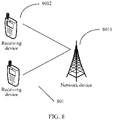
- An embodiment of the present invention provides a wireless communications system, where the wireless communications system is applied to data transmission in a preset spectrum, and the preset spectrum is a spectrum that occupies a spectrum resource for a limited time each time.
- the preset spectrum in this embodiment may be an unlicensed spectrum.
- the wireless communications system 801 includes at least one network device 8011 and at least one receiving device 8012.
- the network device 8011 is the network device described in the embodiment corresponding to FIG. 1
- the receiving device 8012 is the receiving device described in the embodiment corresponding to FIG. 2 .
- the network device 8011 is the network device described in the embodiment corresponding to FIG. 3
- the receiving device 8012 is the receiving device described in the embodiment corresponding to FIG. 4 .
- the network device 8011 may be a base station, and the receiving device 8012 may be user equipment.
- a data retransmission identifier of a first carrier is written into a preset field of a physical downlink control channel, a data scheduling instruction of the physical downlink control channel is generated, the data scheduling instruction of the physical downlink control channel is sent, on a second carrier, to a receiving device, and data that is on the first carrier is sent on the second carrier according to the data scheduling instruction of the physical downlink control channel, which resolves a problem of excessively high overheads of scheduling signaling of data retransmission in an unlicensed spectrum.
- the present invention may be implemented by hardware, firmware or a combination thereof.
- the foregoing functions may be stored in a computer-readable medium or transmitted as one or more instructions or code in the computer-readable medium.
- the computer-readable medium includes a computer memory medium and a communications medium, where the communications medium includes any medium that enables a computer program to be transmitted from one place to another.
- the memory medium may be any available medium accessible to a computer.
- the computer-readable medium may include a RAM (Random Access Memory), a ROM (Read-Only Memory), an EEPROM (Electrically Erasable Programmable Read-Only Memory), a CD-ROM (Compact Disc Read-Only Memory) or other optical disc memory, a disk memory medium or another magnetic storage device, or any other medium that can carry or store expected program code in a form of an instruction or a data structure and can be accessed by a computer.
- any connection may be appropriately defined as a computer-readable medium.
- the coaxial cable, optical fiber/cable, twisted pair, DSL or wireless technologies such as infrared ray, radio and microwave are included in fixation of a medium to which they belong.
- a disk and disc used by the present invention includes a CD (Compact Disc), a laser disc, an optical disc, a DVD (Digital Versatile Disc), a floppy disk and a Blu-ray disc, where the disk generally copies data by a magnetic means, and the disc copies data optically by a laser means.
- CD Compact Disc
- DVD Digital Versatile Disc
- a floppy disk a floppy disk
- Blu-ray disc where the disk generally copies data by a magnetic means, and the disc copies data optically by a laser means.
Landscapes
- Engineering & Computer Science (AREA)
- Signal Processing (AREA)
- Computer Networks & Wireless Communication (AREA)
- Mobile Radio Communication Systems (AREA)
- Detection And Prevention Of Errors In Transmission (AREA)
Claims (8)
- Dispositif de réseau, le dispositif de réseau étant appliqué à une transmission de données dans un spectre prédéfini, le spectre prédéfini étant un spectre qui occupe une ressource spectrale pendant un temps limité à chaque fois, et le dispositif de réseau comprenant :une unité de commande (1011), configurée pour écrire un identifiant de retransmission de données d'une première porteuse dans un champ prédéfini d'un canal physique de commande en liaison descendante, le champ prédéfini comprenant un champ d'indication de porteuse (CIF) et un champ d'indication de nouvelles données (NDI) ou bien le champ prédéfini comprenant un champ CIF, un champ NDI et un champ d'attribution de blocs de ressources (RBA), et la première porteuse étant une porteuse dans le spectre prédéfini ;l'unité de commande (1011) étant en outre configurée pour générer une instruction de planification de données du canal physique de commande en liaison descendante, l'instruction de planification de données du canal physique de commande en liaison descendante étant utilisée pour donner l'instruction de retransmettre des données qui sont sur la première porteuse ; etune unité d'envoi (1012), configurée pour envoyer, sur une seconde porteuse, à un dispositif de réception, l'instruction de planification de données du canal physique de commande en liaison descendante générée par l'unité de commande (1011) ;l'unité d'envoi (1012) étant en outre configurée pour envoyer sur la seconde porteuse les données qui sont sur la première porteuse selon l'instruction de planification de données du canal physique de commande en liaison descendante ; etl'unité de commande (1011) étant spécifiquement configurée pour: lorsque le champ prédéfini comprend le champ CIF, utiliser un premier numéro d'indice de la première porteuse comme l'identifiant de retransmission de données de la première porteuse et écrire le premier numéro d'indice de la première porteuse dans le champ CIF, le premier numéro d'indice de la première porteuse étant utilisé pour donner l'instruction de retransmettre les données de la première porteuse sur la seconde porteuse ; etl'unité de commande (1011) étant spécifiquement configurée pour: lorsque le champ prédéfini comprend le champ NDI, utiliser un identifiant de données non nouvelles comme l'identifiant de retransmission de données de la première porteuse et écrire l'identifiant de données non nouvelles dans le champ NDI, l'identifiant de données non nouvelles étant utilisé pour donner l'instruction de retransmettre les données de la première porteuse sur la seconde porteuse.
- Dispositif selon la revendication 1, dans lequel :
l'unité de commande (1011) est spécifiquement configurée pour: lorsque le champ prédéfini comprend le champ RBA, utiliser un nombre prédéfini de blocs de ressources comme l'identifiant de retransmission de données de la première porteuse et écrire le nombre prédéfini de blocs de ressources dans le champ RBA, le nombre prédéfini de blocs de ressources étant utilisé pour donner l'instruction de retransmettre les données de la première porteuse sur la seconde porteuse. - Dispositif de réception, le dispositif de réception étant appliqué à une transmission de données dans un spectre prédéfini, le spectre prédéfini étant un spectre qui occupe une ressource spectrale pendant un temps limité à chaque fois, et le dispositif de réception comprenant :une unité de réception (2011), configurée pour recevoir une instruction de planification de données, qui est envoyée par un dispositif de réseau, d'un canal physique de commande en liaison descendante, l'instruction de planification de données du canal physique de commande en liaison descendante comprenant un champ prédéfini, et le champ prédéfini comprenant un champ d'indication de porteuse (CIF) et un champ d'indication de nouvelles données (NDI) ou comprenant un champ prédéfini qui comprend un champ CIF, un champ NDI et un champ d'attribution de blocs de ressources (RBA) ; etune unité d'évaluation (2012), configurée pour obtenir un identifiant de retransmission de données d'une première porteuse et déterminer si le champ prédéfini comprend l'identifiant de retransmission de données de la première porteuse ;l'unité de réception (2011) étant en outre configurée pour: lorsqu'un résultat de détermination de l'unité d'évaluation (2012) est que le champ prédéfini comprend l'identifiant de retransmission de données de la première porteuse, recevoir sur une seconde porteuse des données qui sont sur la première porteuse selon l'identifiant de retransmission de données de la première porteuse ; etl'unité d'évaluation (2012) étant spécifiquement configurée pour: lorsque le champ prédéfini comprend le champ CIF, déterminer si le champ CIF comprend un premier numéro d'indice de la première porteuse ; etl'unité de réception (2011) étant spécifiquement configurée pour : lorsqu'un résultat de détermination de l'unité d'évaluation est que le champ CIF comprend le premier numéro d'indice de la première porteuse, recevoir sur la seconde porteuse les données qui sont sur la première porteuse selon le premier numéro d'indice de la première porteuse ; etl'unité d'évaluation (2012) étant spécifiquement configurée pour: lorsque le champ prédéfini comprend le champ NDI, déterminer si le champ NDI comprend un identifiant de données non nouvelles ; etl'unité de réception (2011) étant spécifiquement configurée pour : lorsqu'un résultat de détermination de l'unité d'évaluation est que le champ NDI comprend l'identifiant de données non nouvelles, recevoir sur la seconde porteuse les données qui sont sur la première porteuse selon l'identifiant de données non nouvelles.
- Dispositif selon la revendication 3, dans lequel :l'unité d'évaluation (2012) est spécifiquement configurée pour: lorsque le champ prédéfini comprend le champ RBA, déterminer si le champ RBA comprend un nombre prédéfini de blocs de ressources ; etl'unité de réception (2011) est spécifiquement configurée pour: lorsqu'un résultat de détermination de l'unité d'évaluation est que le champ RBA comprend le nombre prédéfini de blocs de ressources, recevoir sur la seconde porteuse les données qui sont sur la première porteuse selon le nombre prédéfini de blocs de ressources.
- Procédé de transmission d'informations, le procédé de transmission d'informations étant appliqué à une transmission de données par un dispositif de réseau dans un spectre prédéfini, le spectre prédéfini étant un spectre qui occupe une ressource spectrale pendant un temps limité à chaque fois, et le procédé de transmission d'informations comprenant les étapes consistant à :écrire, par le dispositif de réseau, un identifiant de retransmission de données d'une première porteuse dans un champ prédéfini d'un canal physique de commande en liaison descendante, le champ prédéfini comprenant un champ d'indication de porteuse (CIF) et un champ d'indication de nouvelles données (NDI) ou bien le champ prédéfini comprenant un champ CIF, un champ NDI et un champ d'attribution de blocs de ressources (RBA), et la première porteuse étant une porteuse dans le spectre prédéfini ;générer, par le dispositif de réseau, une instruction de planification de données du canal physique de commande en liaison descendante, l'instruction de planification de données du canal physique de commande en liaison descendante étant utilisée pour donner l'instruction de retransmettre des données qui sont sur la première porteuse ;envoyer, par le dispositif de réseau sur une seconde porteuse, à un dispositif de réception, l'instruction de planification de données du canal physique de commande en liaison descendante ; etenvoyer, par le dispositif de réseau sur la seconde porteuse, les données qui sont sur la première porteuse selon l'instruction de planification de données du canal physique de commande en liaison descendante ; etle champ prédéfini comprenant le champ CIF ; etl'écriture, par le dispositif de réseau, d'un identifiant de retransmission de données d'une première porteuse dans un champ prédéfini d'un canal physique de commande en liaison descendante comprenant l'étape consistant à :utiliser, par le dispositif de réseau, un premier numéro d'indice de la première porteuse comme l'identifiant de retransmission de données de la première porteuse et écrire le premier numéro d'indice de la première porteuse dans le champ CIF, le premier numéro d'indice de la première porteuse étant utilisé pour donner l'instruction de retransmettre les données de la première porteuse sur la seconde porteuse ; etle champ prédéfini comprenant le champ NDI ; etl'écriture, par le dispositif de réseau, d'un identifiant de retransmission de données d'une première porteuse dans un champ prédéfini d'un canal physique de commande en liaison descendante comprenant l'étape consistant à :
utiliser, par le dispositif de réseau, un identifiant de données non nouvelles comme l'identifiant de retransmission de données de la première porteuse et écrire l'identifiant de données non nouvelles dans le champ NDI, l'identifiant de données non nouvelles étant utilisé pour donner l'instruction de retransmettre les données de la première porteuse sur la seconde porteuse. - Procédé selon la revendication 5, dans lequel le champ prédéfini comprend le champ RBA ; et
l'écriture, par le dispositif de réseau, d'un identifiant de retransmission de données d'une première porteuse dans un champ prédéfini d'un canal physique de commande en liaison descendante comprend l'étape consistant à :
utiliser, par le dispositif de réseau, un nombre prédéfini de blocs de ressources comme l'identifiant de retransmission de données de la première porteuse et écrire le nombre prédéfini de blocs de ressources dans le champ RBA, le nombre prédéfini de blocs de ressources étant utilisé pour donner l'instruction de retransmettre les données de la première porteuse sur la seconde porteuse. - Procédé de transmission d'informations, le procédé de transmission d'informations étant appliqué à une transmission de données par un dispositif de réception dans un spectre prédéfini, le spectre prédéfini étant un spectre qui occupe une ressource spectrale pendant un temps limité à chaque fois, et le procédé de transmission d'informations comprenant les étapes consistant à :recevoir, par le dispositif de réception, une instruction de planification de données, qui est envoyée par le dispositif de réseau, d'un canal physique de commande en liaison descendante, l'instruction de planification de données du canal physique de commande en liaison descendante comprenant un champ prédéfini, et le champ prédéfini comprenant un champ d'indication de porteuse (CIF) et un champ d'indication de nouvelles données (NDI) ou comprenant un champ prédéfini qui comprend un champ CIF, un champ NDI et un champ d'attribution de blocs de ressources (RBA) ;obtenir, par le dispositif de réception, un identifiant de retransmission de données d'une première porteuse et déterminer si le champ prédéfini comprend l'identifiant de retransmission de données de la première porteuse ; etrecevoir, par le dispositif de réception sur une seconde porteuse, des données qui sont sur la première porteuse selon l'identifiant de retransmission de données de la première porteuse si le champ prédéfini comprend l'identifiant de retransmission de données de la première porteuse ; etle fait de déterminer, par le dispositif de réception, si le champ prédéfini comprend l'identifiant de retransmission de données de la première porteuse comprenant l'étape consistant à :déterminer, par le dispositif de réception, si le champ CIF comprend un premier numéro d'indice de la première porteuse ; etla réception, par le dispositif de réception sur une seconde porteuse, de données qui sont sur la première porteuse selon l'identifiant de retransmission de données de la première porteuse si le champ prédéfini comprend l'identifiant de retransmission de données de la première porteuse comprenant l'étape consistant à :si le champ CIF comprend le premier numéro d'indice de la première porteuse, recevoir, par le dispositif de réception sur la seconde porteuse, les données qui sont sur la première porteuse selon le premier numéro d'indice de la première porteuse ; etle fait de déterminer, par le dispositif de réception, si le champ prédéfini comprend l'identifiant de retransmission de données de la première porteuse comprenant l'étape consistant à :déterminer, par le dispositif de réception, si le champ NDI comprend un identifiant de données non nouvelles ; etla réception, par le dispositif de réception sur une seconde porteuse, de données qui sont sur la première porteuse selon l'identifiant de retransmission de données de la première porteuse si le champ prédéfini comprend l'identifiant de retransmission de données de la première porteuse comprenant l'étape consistant à :
si le champ NDI comprend l'identifiant de données non nouvelles, recevoir, par le dispositif de réception sur la seconde porteuse, les données qui sont sur la première porteuse selon l'identifiant de données non nouvelles. - Procédé selon la revendication 7, dans lequel le champ prédéfini comprend le champ RBA ;
le fait de déterminer, par le dispositif de réception, si le champ prédéfini comprend l'identifiant de retransmission de données de la première porteuse comprend l'étape consistant à :déterminer, par le dispositif de réception, si le champ RBA comprend un nombre prédéfini de blocs de ressources ; etla réception, par le dispositif de réception sur une seconde porteuse, de données qui sont sur la première porteuse selon l'identifiant de retransmission de données de la première porteuse si le champ prédéfini comprend l'identifiant de retransmission de données de la première porteuse comprend l'étape consistant à :
si le champ RBA comprend le nombre prédéfini de blocs de ressources, recevoir, par le dispositif de réception sur la seconde porteuse, les données qui sont sur la première porteuse selon le nombre prédéfini de blocs de ressources.
Applications Claiming Priority (2)
| Application Number | Priority Date | Filing Date | Title |
|---|---|---|---|
| PCT/CN2014/074061 WO2015143629A1 (fr) | 2014-03-25 | 2014-03-25 | Procédé et dispositif de transmission d'informations |
| PCT/CN2015/073881 WO2015143986A1 (fr) | 2014-03-25 | 2015-03-09 | Procédé et dispositif de transmission d'informations |
Publications (3)
| Publication Number | Publication Date |
|---|---|
| EP3113401A1 EP3113401A1 (fr) | 2017-01-04 |
| EP3113401A4 EP3113401A4 (fr) | 2017-04-05 |
| EP3113401B1 true EP3113401B1 (fr) | 2022-08-31 |
Family
ID=54193872
Family Applications (1)
| Application Number | Title | Priority Date | Filing Date |
|---|---|---|---|
| EP15768245.1A Active EP3113401B1 (fr) | 2014-03-25 | 2015-03-09 | Procédé et dispositif de transmission d'informations |
Country Status (5)
| Country | Link |
|---|---|
| US (1) | US9999070B2 (fr) |
| EP (1) | EP3113401B1 (fr) |
| KR (1) | KR101869009B1 (fr) |
| CN (2) | CN105264808A (fr) |
| WO (2) | WO2015143629A1 (fr) |
Families Citing this family (4)
| Publication number | Priority date | Publication date | Assignee | Title |
|---|---|---|---|---|
| WO2018107458A1 (fr) * | 2016-12-16 | 2018-06-21 | 富士通株式会社 | Appareil et procédé pour un système de transmission et de communication non autorisé |
| US10257831B2 (en) * | 2017-03-01 | 2019-04-09 | Alcatel Lucent | Adaptive allocation of temporal resources for massive multiple-input-multiple-output (MIMO) in unlicensed frequency bands |
| US10069575B1 (en) | 2017-03-01 | 2018-09-04 | Alcatel Lucent | Dynamic interference suppression for massive multiple-input-multiple-output (MIMO) in unlicensed frequency bands |
| KR102949715B1 (ko) | 2020-04-27 | 2026-04-08 | 삼성전자 주식회사 | 무선 통신 시스템에서 제어 정보를 설정하는 방법 및 장치 |
Family Cites Families (15)
| Publication number | Priority date | Publication date | Assignee | Title |
|---|---|---|---|---|
| CN101605356B (zh) * | 2008-06-12 | 2011-11-02 | 电信科学技术研究院 | 一种指示资源的方法、装置及系统 |
| WO2010002130A2 (fr) * | 2008-07-03 | 2010-01-07 | Lg Electronics Inc. | Procédé de traitement ndi dans une procédure d’accès aléatoire et procédé d’émission et de réception d’un signal à l’aide de celui-ci |
| US8245092B2 (en) * | 2008-11-03 | 2012-08-14 | Apple Inc. | Method for efficient control signaling of two codeword to one codeword transmission |
| EP2200208A1 (fr) * | 2008-12-19 | 2010-06-23 | Panasonic Corporation | Accusé de réception/accusé de réception négatif HARQ pour PDSCH dynamique |
| CN101841407A (zh) * | 2009-03-17 | 2010-09-22 | 华为技术有限公司 | 数据重传的方法和装置 |
| KR101782640B1 (ko) * | 2009-07-16 | 2017-09-28 | 엘지전자 주식회사 | 다중 반송파 시스템에서 harq 수행 장치 및 방법 |
| CN101990242B (zh) * | 2009-07-31 | 2014-08-13 | 夏普株式会社 | 频谱聚合系统中的自适应重传方法和用户设备 |
| KR101800016B1 (ko) * | 2010-01-21 | 2017-11-22 | 엘지전자 주식회사 | 다중 반송파 시스템에서 하이브리드 자동 재전송 요청 수행 방법 및 장치 |
| KR101819501B1 (ko) * | 2010-02-04 | 2018-01-17 | 엘지전자 주식회사 | 복수의 컴포넌트 캐리어를 지원하는 무선통신 시스템에서 데이터를 송수신하기 위한 방법 및 장치 |
| KR101614096B1 (ko) * | 2010-08-12 | 2016-04-29 | 한국전자통신연구원 | 이동통신 시스템에서 멀티 캐리어 구조를 위한 채널 관리 방법 |
| CN102098152A (zh) * | 2010-12-30 | 2011-06-15 | 电子科技大学 | 载波聚合下harq的跨载波重传方法 |
| EP2503835A1 (fr) * | 2011-03-23 | 2012-09-26 | Panasonic Corporation | Affectation de ressources pour une transmission de groupes simples et multiples |
| US9973967B2 (en) * | 2011-12-15 | 2018-05-15 | Nokia Solutions And Networks Oy | Radio operations in a carrier aggregation system |
| CN102710398B (zh) * | 2012-04-20 | 2016-01-13 | 北京创毅讯联科技股份有限公司 | 一种长期演进网络中的混合自动重传方法和用户设备 |
| CN104734821B (zh) * | 2013-12-19 | 2019-04-05 | 电信科学技术研究院 | 数据传输方法和装置 |
-
2014
- 2014-03-25 WO PCT/CN2014/074061 patent/WO2015143629A1/fr not_active Ceased
- 2014-03-25 CN CN201480000377.5A patent/CN105264808A/zh active Pending
-
2015
- 2015-03-09 EP EP15768245.1A patent/EP3113401B1/fr active Active
- 2015-03-09 WO PCT/CN2015/073881 patent/WO2015143986A1/fr not_active Ceased
- 2015-03-09 CN CN201580014390.0A patent/CN106464449B/zh active Active
- 2015-03-09 KR KR1020167029426A patent/KR101869009B1/ko not_active Expired - Fee Related
-
2016
- 2016-09-23 US US15/274,832 patent/US9999070B2/en active Active
Also Published As
| Publication number | Publication date |
|---|---|
| CN106464449B (zh) | 2019-09-13 |
| KR101869009B1 (ko) | 2018-06-19 |
| WO2015143629A1 (fr) | 2015-10-01 |
| US9999070B2 (en) | 2018-06-12 |
| CN105264808A (zh) | 2016-01-20 |
| EP3113401A1 (fr) | 2017-01-04 |
| US20170013642A1 (en) | 2017-01-12 |
| WO2015143986A1 (fr) | 2015-10-01 |
| EP3113401A4 (fr) | 2017-04-05 |
| KR20160135817A (ko) | 2016-11-28 |
| CN106464449A (zh) | 2017-02-22 |
Similar Documents
| Publication | Publication Date | Title |
|---|---|---|
| CN107241805B (zh) | 一种上行资源分配方法及装置 | |
| EP4099790B1 (fr) | Procédé de planification de cellule de desserte, dispositif terminal et dispositif de réseau | |
| WO2019174486A1 (fr) | Procédé d'indication et de détermination de ressources et dispositif | |
| US11258557B2 (en) | Transmission method and device | |
| WO2017166984A1 (fr) | Procédé de rétroaction d'informations, station de base, terminal et support de stockage | |
| CN111953458B (zh) | 一种pucch资源确定方法和通信设备 | |
| US10784996B2 (en) | HARQ feedback on grant-less UL | |
| CN114451038A (zh) | 用于上行链路配置授权传输的上行链路控制信息 | |
| CN111277376B (zh) | 混合自动重传请求应答传输方法及设备 | |
| CN104754524A (zh) | 一种群组通信的方法、用户设备、基站设备及系统 | |
| US20240373432A1 (en) | Method and device for reporting uplink control information, storage medium, and user equipment | |
| US9999070B2 (en) | Information transmission method and device | |
| JP2023514763A (ja) | データ伝送方法、端末機器、および記憶媒体 | |
| WO2019192283A1 (fr) | Procédé et appareil de détermination de ressource, et procédé et appareil d'indication de ressource | |
| WO2018171352A1 (fr) | Procédé et terminal de transmission de données | |
| CN112702794A (zh) | 上行传输的方法、上行传输指示的方法及设备 | |
| WO2020034813A1 (fr) | Procédé de transmission combinée d'uci, terminal et dispositif de réseau | |
| KR102953384B1 (ko) | 버퍼 상태 보고의 전송 방법 및 단말 | |
| CN112584532B (zh) | 上行信道的信息确定方法、终端及网络侧设备 | |
| EP3979736A1 (fr) | Procédé de transmission à multiplexage de données, station de base, terminal, et support de stockage | |
| US10333659B2 (en) | Data transmission method, device, and system | |
| WO2020237510A1 (fr) | Procédé et appareil de détection de signalisation de commande, dispositif et support de stockage | |
| WO2016161601A1 (fr) | Procédé, dispositif et système de retransmission de données | |
| US20170034809A1 (en) | Information transmission method, device, and system | |
| CN109565811B (zh) | 一种数据调度方法及装置、计算机存储介质 |
Legal Events
| Date | Code | Title | Description |
|---|---|---|---|
| PUAI | Public reference made under article 153(3) epc to a published international application that has entered the european phase |
Free format text: ORIGINAL CODE: 0009012 |
|
| STAA | Information on the status of an ep patent application or granted ep patent |
Free format text: STATUS: REQUEST FOR EXAMINATION WAS MADE |
|
| 17P | Request for examination filed |
Effective date: 20160928 |
|
| AK | Designated contracting states |
Kind code of ref document: A1 Designated state(s): AL AT BE BG CH CY CZ DE DK EE ES FI FR GB GR HR HU IE IS IT LI LT LU LV MC MK MT NL NO PL PT RO RS SE SI SK SM TR |
|
| AX | Request for extension of the european patent |
Extension state: BA ME |
|
| A4 | Supplementary search report drawn up and despatched |
Effective date: 20170302 |
|
| RIC1 | Information provided on ipc code assigned before grant |
Ipc: H04W 72/14 20090101ALI20170224BHEP Ipc: H04L 1/18 20060101ALI20170224BHEP Ipc: H04W 72/12 20090101ALI20170224BHEP Ipc: H04W 16/14 20090101ALI20170224BHEP Ipc: H04L 5/00 20060101ALI20170224BHEP Ipc: H04W 72/04 20090101ALI20170224BHEP Ipc: H04L 1/16 20060101AFI20170224BHEP |
|
| DAV | Request for validation of the european patent (deleted) | ||
| DAX | Request for extension of the european patent (deleted) | ||
| RAP1 | Party data changed (applicant data changed or rights of an application transferred) |
Owner name: HUAWEI TECHNOLOGIES CO., LTD. |
|
| STAA | Information on the status of an ep patent application or granted ep patent |
Free format text: STATUS: EXAMINATION IS IN PROGRESS |
|
| 17Q | First examination report despatched |
Effective date: 20200529 |
|
| GRAP | Despatch of communication of intention to grant a patent |
Free format text: ORIGINAL CODE: EPIDOSNIGR1 |
|
| STAA | Information on the status of an ep patent application or granted ep patent |
Free format text: STATUS: GRANT OF PATENT IS INTENDED |
|
| INTG | Intention to grant announced |
Effective date: 20220316 |
|
| GRAS | Grant fee paid |
Free format text: ORIGINAL CODE: EPIDOSNIGR3 |
|
| GRAA | (expected) grant |
Free format text: ORIGINAL CODE: 0009210 |
|
| STAA | Information on the status of an ep patent application or granted ep patent |
Free format text: STATUS: THE PATENT HAS BEEN GRANTED |
|
| AK | Designated contracting states |
Kind code of ref document: B1 Designated state(s): AL AT BE BG CH CY CZ DE DK EE ES FI FR GB GR HR HU IE IS IT LI LT LU LV MC MK MT NL NO PL PT RO RS SE SI SK SM TR |
|
| REG | Reference to a national code |
Ref country code: CH Ref legal event code: EP Ref country code: GB Ref legal event code: FG4D |
|
| REG | Reference to a national code |
Ref country code: AT Ref legal event code: REF Ref document number: 1516084 Country of ref document: AT Kind code of ref document: T Effective date: 20220915 |
|
| REG | Reference to a national code |
Ref country code: DE Ref legal event code: R096 Ref document number: 602015080590 Country of ref document: DE |
|
| REG | Reference to a national code |
Ref country code: IE Ref legal event code: FG4D |
|
| REG | Reference to a national code |
Ref country code: LT Ref legal event code: MG9D |
|
| REG | Reference to a national code |
Ref country code: NL Ref legal event code: MP Effective date: 20220831 |
|
| PG25 | Lapsed in a contracting state [announced via postgrant information from national office to epo] |
Ref country code: SE Free format text: LAPSE BECAUSE OF FAILURE TO SUBMIT A TRANSLATION OF THE DESCRIPTION OR TO PAY THE FEE WITHIN THE PRESCRIBED TIME-LIMIT Effective date: 20220831 Ref country code: RS Free format text: LAPSE BECAUSE OF FAILURE TO SUBMIT A TRANSLATION OF THE DESCRIPTION OR TO PAY THE FEE WITHIN THE PRESCRIBED TIME-LIMIT Effective date: 20220831 Ref country code: NO Free format text: LAPSE BECAUSE OF FAILURE TO SUBMIT A TRANSLATION OF THE DESCRIPTION OR TO PAY THE FEE WITHIN THE PRESCRIBED TIME-LIMIT Effective date: 20221130 Ref country code: LV Free format text: LAPSE BECAUSE OF FAILURE TO SUBMIT A TRANSLATION OF THE DESCRIPTION OR TO PAY THE FEE WITHIN THE PRESCRIBED TIME-LIMIT Effective date: 20220831 Ref country code: LT Free format text: LAPSE BECAUSE OF FAILURE TO SUBMIT A TRANSLATION OF THE DESCRIPTION OR TO PAY THE FEE WITHIN THE PRESCRIBED TIME-LIMIT Effective date: 20220831 Ref country code: FI Free format text: LAPSE BECAUSE OF FAILURE TO SUBMIT A TRANSLATION OF THE DESCRIPTION OR TO PAY THE FEE WITHIN THE PRESCRIBED TIME-LIMIT Effective date: 20220831 Ref country code: ES Free format text: LAPSE BECAUSE OF FAILURE TO SUBMIT A TRANSLATION OF THE DESCRIPTION OR TO PAY THE FEE WITHIN THE PRESCRIBED TIME-LIMIT Effective date: 20220831 |
|
| REG | Reference to a national code |
Ref country code: AT Ref legal event code: MK05 Ref document number: 1516084 Country of ref document: AT Kind code of ref document: T Effective date: 20220831 |
|
| PG25 | Lapsed in a contracting state [announced via postgrant information from national office to epo] |
Ref country code: PL Free format text: LAPSE BECAUSE OF FAILURE TO SUBMIT A TRANSLATION OF THE DESCRIPTION OR TO PAY THE FEE WITHIN THE PRESCRIBED TIME-LIMIT Effective date: 20220831 Ref country code: IS Free format text: LAPSE BECAUSE OF FAILURE TO SUBMIT A TRANSLATION OF THE DESCRIPTION OR TO PAY THE FEE WITHIN THE PRESCRIBED TIME-LIMIT Effective date: 20221231 Ref country code: HR Free format text: LAPSE BECAUSE OF FAILURE TO SUBMIT A TRANSLATION OF THE DESCRIPTION OR TO PAY THE FEE WITHIN THE PRESCRIBED TIME-LIMIT Effective date: 20220831 Ref country code: GR Free format text: LAPSE BECAUSE OF FAILURE TO SUBMIT A TRANSLATION OF THE DESCRIPTION OR TO PAY THE FEE WITHIN THE PRESCRIBED TIME-LIMIT Effective date: 20221201 |
|
| PG25 | Lapsed in a contracting state [announced via postgrant information from national office to epo] |
Ref country code: SM Free format text: LAPSE BECAUSE OF FAILURE TO SUBMIT A TRANSLATION OF THE DESCRIPTION OR TO PAY THE FEE WITHIN THE PRESCRIBED TIME-LIMIT Effective date: 20220831 Ref country code: RO Free format text: LAPSE BECAUSE OF FAILURE TO SUBMIT A TRANSLATION OF THE DESCRIPTION OR TO PAY THE FEE WITHIN THE PRESCRIBED TIME-LIMIT Effective date: 20220831 Ref country code: PT Free format text: LAPSE BECAUSE OF FAILURE TO SUBMIT A TRANSLATION OF THE DESCRIPTION OR TO PAY THE FEE WITHIN THE PRESCRIBED TIME-LIMIT Effective date: 20230102 Ref country code: DK Free format text: LAPSE BECAUSE OF FAILURE TO SUBMIT A TRANSLATION OF THE DESCRIPTION OR TO PAY THE FEE WITHIN THE PRESCRIBED TIME-LIMIT Effective date: 20220831 Ref country code: CZ Free format text: LAPSE BECAUSE OF FAILURE TO SUBMIT A TRANSLATION OF THE DESCRIPTION OR TO PAY THE FEE WITHIN THE PRESCRIBED TIME-LIMIT Effective date: 20220831 Ref country code: AT Free format text: LAPSE BECAUSE OF FAILURE TO SUBMIT A TRANSLATION OF THE DESCRIPTION OR TO PAY THE FEE WITHIN THE PRESCRIBED TIME-LIMIT Effective date: 20220831 |
|
| PG25 | Lapsed in a contracting state [announced via postgrant information from national office to epo] |
Ref country code: SK Free format text: LAPSE BECAUSE OF FAILURE TO SUBMIT A TRANSLATION OF THE DESCRIPTION OR TO PAY THE FEE WITHIN THE PRESCRIBED TIME-LIMIT Effective date: 20220831 Ref country code: EE Free format text: LAPSE BECAUSE OF FAILURE TO SUBMIT A TRANSLATION OF THE DESCRIPTION OR TO PAY THE FEE WITHIN THE PRESCRIBED TIME-LIMIT Effective date: 20220831 |
|
| REG | Reference to a national code |
Ref country code: DE Ref legal event code: R097 Ref document number: 602015080590 Country of ref document: DE |
|
| PG25 | Lapsed in a contracting state [announced via postgrant information from national office to epo] |
Ref country code: NL Free format text: LAPSE BECAUSE OF FAILURE TO SUBMIT A TRANSLATION OF THE DESCRIPTION OR TO PAY THE FEE WITHIN THE PRESCRIBED TIME-LIMIT Effective date: 20220831 Ref country code: AL Free format text: LAPSE BECAUSE OF FAILURE TO SUBMIT A TRANSLATION OF THE DESCRIPTION OR TO PAY THE FEE WITHIN THE PRESCRIBED TIME-LIMIT Effective date: 20220831 |
|
| PLBE | No opposition filed within time limit |
Free format text: ORIGINAL CODE: 0009261 |
|
| STAA | Information on the status of an ep patent application or granted ep patent |
Free format text: STATUS: NO OPPOSITION FILED WITHIN TIME LIMIT |
|
| 26N | No opposition filed |
Effective date: 20230601 |
|
| PG25 | Lapsed in a contracting state [announced via postgrant information from national office to epo] |
Ref country code: SI Free format text: LAPSE BECAUSE OF FAILURE TO SUBMIT A TRANSLATION OF THE DESCRIPTION OR TO PAY THE FEE WITHIN THE PRESCRIBED TIME-LIMIT Effective date: 20220831 |
|
| REG | Reference to a national code |
Ref country code: DE Ref legal event code: R119 Ref document number: 602015080590 Country of ref document: DE |
|
| PG25 | Lapsed in a contracting state [announced via postgrant information from national office to epo] |
Ref country code: MC Free format text: LAPSE BECAUSE OF FAILURE TO SUBMIT A TRANSLATION OF THE DESCRIPTION OR TO PAY THE FEE WITHIN THE PRESCRIBED TIME-LIMIT Effective date: 20220831 |
|
| REG | Reference to a national code |
Ref country code: CH Ref legal event code: PL |
|
| REG | Reference to a national code |
Ref country code: BE Ref legal event code: MM Effective date: 20230331 |
|
| PG25 | Lapsed in a contracting state [announced via postgrant information from national office to epo] |
Ref country code: LU Free format text: LAPSE BECAUSE OF NON-PAYMENT OF DUE FEES Effective date: 20230309 |
|
| REG | Reference to a national code |
Ref country code: IE Ref legal event code: MM4A |
|
| PG25 | Lapsed in a contracting state [announced via postgrant information from national office to epo] |
Ref country code: LI Free format text: LAPSE BECAUSE OF NON-PAYMENT OF DUE FEES Effective date: 20230331 Ref country code: IE Free format text: LAPSE BECAUSE OF NON-PAYMENT OF DUE FEES Effective date: 20230309 Ref country code: FR Free format text: LAPSE BECAUSE OF NON-PAYMENT OF DUE FEES Effective date: 20230331 Ref country code: DE Free format text: LAPSE BECAUSE OF NON-PAYMENT OF DUE FEES Effective date: 20231003 Ref country code: CH Free format text: LAPSE BECAUSE OF NON-PAYMENT OF DUE FEES Effective date: 20230331 |
|
| PG25 | Lapsed in a contracting state [announced via postgrant information from national office to epo] |
Ref country code: BE Free format text: LAPSE BECAUSE OF NON-PAYMENT OF DUE FEES Effective date: 20230331 |
|
| PG25 | Lapsed in a contracting state [announced via postgrant information from national office to epo] |
Ref country code: IT Free format text: LAPSE BECAUSE OF FAILURE TO SUBMIT A TRANSLATION OF THE DESCRIPTION OR TO PAY THE FEE WITHIN THE PRESCRIBED TIME-LIMIT Effective date: 20220831 |
|
| PG25 | Lapsed in a contracting state [announced via postgrant information from national office to epo] |
Ref country code: BG Free format text: LAPSE BECAUSE OF FAILURE TO SUBMIT A TRANSLATION OF THE DESCRIPTION OR TO PAY THE FEE WITHIN THE PRESCRIBED TIME-LIMIT Effective date: 20220831 |
|
| PG25 | Lapsed in a contracting state [announced via postgrant information from national office to epo] |
Ref country code: BG Free format text: LAPSE BECAUSE OF FAILURE TO SUBMIT A TRANSLATION OF THE DESCRIPTION OR TO PAY THE FEE WITHIN THE PRESCRIBED TIME-LIMIT Effective date: 20220831 |
|
| PG25 | Lapsed in a contracting state [announced via postgrant information from national office to epo] |
Ref country code: CY Free format text: LAPSE BECAUSE OF FAILURE TO SUBMIT A TRANSLATION OF THE DESCRIPTION OR TO PAY THE FEE WITHIN THE PRESCRIBED TIME-LIMIT; INVALID AB INITIO Effective date: 20150309 |
|
| PG25 | Lapsed in a contracting state [announced via postgrant information from national office to epo] |
Ref country code: HU Free format text: LAPSE BECAUSE OF FAILURE TO SUBMIT A TRANSLATION OF THE DESCRIPTION OR TO PAY THE FEE WITHIN THE PRESCRIBED TIME-LIMIT; INVALID AB INITIO Effective date: 20150309 |
|
| PG25 | Lapsed in a contracting state [announced via postgrant information from national office to epo] |
Ref country code: TR Free format text: LAPSE BECAUSE OF FAILURE TO SUBMIT A TRANSLATION OF THE DESCRIPTION OR TO PAY THE FEE WITHIN THE PRESCRIBED TIME-LIMIT Effective date: 20220831 |
|
| PGFP | Annual fee paid to national office [announced via postgrant information from national office to epo] |
Ref country code: GB Payment date: 20260202 Year of fee payment: 12 |