EP3113449B1 - Procédé de répartition de charge améliorée concernant la mise à disposition d'un service de réseau dans un réseau informatique, système de répartition de charge améliorée concernant la mise à disposition d'un service de réseau dans un réseau informatique, programme et produit de programme informatique - Google Patents
Procédé de répartition de charge améliorée concernant la mise à disposition d'un service de réseau dans un réseau informatique, système de répartition de charge améliorée concernant la mise à disposition d'un service de réseau dans un réseau informatique, programme et produit de programme informatique Download PDFInfo
- Publication number
- EP3113449B1 EP3113449B1 EP15174901.7A EP15174901A EP3113449B1 EP 3113449 B1 EP3113449 B1 EP 3113449B1 EP 15174901 A EP15174901 A EP 15174901A EP 3113449 B1 EP3113449 B1 EP 3113449B1
- Authority
- EP
- European Patent Office
- Prior art keywords
- server
- client device
- network service
- servers
- value
- Prior art date
- Legal status (The legal status is an assumption and is not a legal conclusion. Google has not performed a legal analysis and makes no representation as to the accuracy of the status listed.)
- Active
Links
Images


Classifications
-
- H—ELECTRICITY
- H04—ELECTRIC COMMUNICATION TECHNIQUE
- H04L—TRANSMISSION OF DIGITAL INFORMATION, e.g. TELEGRAPHIC COMMUNICATION
- H04L67/00—Network arrangements or protocols for supporting network services or applications
- H04L67/01—Protocols
- H04L67/10—Protocols in which an application is distributed across nodes in the network
- H04L67/1001—Protocols in which an application is distributed across nodes in the network for accessing one among a plurality of replicated servers
- H04L67/1034—Reaction to server failures by a load balancer
Definitions
- the present invention relates to a method for improved load distribution with regard to the provision of a network service in a computer network, the computer network comprising multiple servers for providing the network service to a client device, the multiple servers comprising multiple primary servers, the multiple servers for at least one secondary server Include failover.
- the present invention further relates to a system for improved load distribution with regard to the provision of a network service in a computer network, the system comprising the computer network and a client device, the computer network comprising several servers for providing the network service to a client device, the several Servers comprise multiple primary servers, wherein the multiple servers comprise at least one secondary server for failover.
- the present invention also relates to a computer program and a computer program product.
- the Domain Name System (DNS) protocol provides a way of realizing load distribution with regard to the provision of a network service and failover in an Internet Protocol (IP) -based computer network.
- the Domain Name System (DNS) provides Service Resource Record (SRV) records for the purpose of load balancing and failover.
- the Service Resource Record (SRV) records contain several entries, with each entry for a (requested) network service - in addition to various other data fields (for example the network address or the host name of the server providing the requested network service) - a prioritization value (which is also called “priority” is referred to) and a load distribution value (which is also referred to as "weight").
- SRV Service Resource Record
- DNS Domain Name System
- a disadvantage of such implemented methods for load distribution is the possible occurrence of an overload situation of a server if it is the penultimate available server of a group of servers providing a certain network service with the same prioritization value - i.e. if, for example, all other servers in this group have failed so that the quality of service of the network service deteriorates and / or the overloaded server also fails.
- An object of the present invention is to provide a method for improved load distribution with regard to the provision of a network service in a computer network, through which a deterioration in the quality of service and / or the failure of a server of a group of servers with the same prioritization value - in particular with a comparatively low configuration effort - is avoided.
- the second server is determined from the at least one secondary server.
- the multiple servers are configured to provide the network service to the client device and, in addition to the multiple primary servers, also include the at least one secondary server for failover.
- a secondary server becomes dependent on the load distribution data the Service Resource Record (SRV) determines data records from the at least one secondary server.
- SSV Service Resource Record
- SSV Service Resource Record
- a determination of a server by the client device includes access to the service resource record (SRV) data records (stored in the client device).
- SSV service resource record
- the one client device is at the same time also at least one client device - i.e. includes exactly one client device or multiple client devices.
- the method steps according to the method of the present invention specify the logical sequence of the method steps for exactly one client device of the multiple client devices, the time sequence of the method steps from different clients -Devices can also be different.
- a server is determined in order to use the network service provided by the determined server by the client device.
- a server for providing the network service to the at least one client device fails
- the server for providing the network service to the at least one client device is unavailable is - ie for example that an existing server fails or a target server (according to the data field "target") in the Service Resource Record (SRV) data records (which are stored in the client device) does not exist or no longer exists or is incorrectly designated.
- SSV Service Resource Record
- the second server or the further second server - in the event that the first or the further first server fails to provide the network service to the client device - as a function of a failure prioritization value related to the first server or further first server, depending on the load distribution data related to the primary server and depending on the load distribution data and prioritization data related to the at least one secondary server, the Service Resource Record (SRV) data records are determined, so that in particular the one on the first Server or further first server-related failure priority value is equal to the priority value related to the second server.
- SSV Service Resource Record
- the at least one secondary server is determined from the multiple servers as a function of a failure prioritization value of the Service Resource Record (SRV) data records.
- SSV Service Resource Record
- a secondary server is selected with priority (i.e. priority over the primary servers, especially if at least one further primary server is still available) and a primary server is only selected as a lower priority (i.e. only if all secondary servers for the provision of the network service fail).
- the first server for providing the network service to the client device fails and another server of the multiple primary servers for providing the network service to the client device is available - only one server of the at least one secondary server is selected for failover for the first server.
- the second server (or replacement server for the failed primary server) is a failover server, so that it is replaced by the first server that failed to provide the network service to the client device (primary -) Server there is no increased load on the other available primary servers.
- a replacement server from the group of (secondary) failover servers is determined as the second server.
- the at least one secondary server comprises a first secondary server and a second secondary server, with - in the event that the first server fails to provide the network service to the client device and another server the multiple primary servers are available for providing the network service to the client device - the first secondary server is determined as the second server from the at least one secondary server as a function of the load distribution data of the Service Resource Record (SRV) data records relating to the secondary server.
- SSV Service Resource Record
- the requests for the network service originally distributed on the failed first server is divided between several secondary servers, so that the second server has to process a lower network load compared to the failed first server.
- server resources can be saved and a comparatively high availability can still be achieved.
- the first server is determined from the multiple primary servers depending on the load distribution data of the Service Resource Record (SRV) data records related to the multiple primary servers, whereby - in the event that the first server is for the provision of the network service to the client device fails and another server of the multiple primary servers is available for the provision of the network service to the client device and the second server is available for service use by the client device - the network service is available to the client device is provided by the second server in such a way that a proportion of network service requests from the client device is processed by the second server, the proportion being determined as a function of a load distribution value related to the first server, the proportion in particular as a function of a multiplication of the first server related Load distribution value is determined with a load distribution value related to the second server.
- SSV Service Resource Record
- the present invention it is advantageously possible that even when only the first server fails - but in particular at least one further primary server is still available - only the requests originally directed to the failed primary server to the secondary server or failover server according to the Redistribute load balancing data associated with the secondary servers.
- all servers are advantageously loaded with less than 100% of the requests as long as at least two servers are available to provide the network service to the client device.
- the Service Resource Record (SRV) data records include prioritization data, load distribution data and failure prioritization data, each entry of the Service Resource Record (SRV) data records being assigned to one of the several servers, with each entry each include a prioritization value of the prioritization data, a load distribution value of the load distribution data and a failure prioritization value of the failure prioritization data, the first server being determined as a function of a first prioritization value and a first load distribution value of a first entry assigned to the first server and - in the event that the first server is for the provision of the network service to the client device fails and another server of several primary servers is available for the provision of the network service to the client device - the second server is dependent ability of a first failure prioritization value of the first entry is determined.
- a server is determined as the second server, to which a second prioritization value is assigned in a second entry of the Service Resource Record (SRV) data records, which is equal to a first failure prioritization value of the Service Resource Record (SRV) data records assigned to the first server.
- SSV Service Resource Record
- the configuration effort required to avoid a deterioration in the quality of service and / or the failure of a server of the group of servers with the same prioritization value can be kept comparatively low, with the invention improved load distribution is achieved, in particular with comparatively little configuration effort, in that the Domain Name System (DNS) protocol is expanded to include an additional data field per entry.
- DNS Domain Name System
- the additional data field is referred to in particular as the failure prioritization value and the entirety of the failure priority values of all entries in the Service Resource Record (SRV) data records is also referred to as failure prioritization data.
- the first server for providing the network service to the client device fails and all secondary servers - in particular a prioritization value is assigned to which in the service resource record data records has the same priority as the first failure prioritization value of the first server - fail for the provision of the network service to the client device - for failover for the failed first server a further first server from the multiple primary servers is determined, the prioritization value in particular with the first prioritization value of the first server is equal.
- secondary servers i.e. servers with a prioritization value that is equal to the failure prioritization value of the failed first server
- only subordinate - i.e. in the event that all secondary servers providing network service fail - another primary server that is still available
- the first server for providing the network service to the client device fails and all secondary servers - in particular with a prioritization value that is equal to the first failure priority value of the first server - for the provision of the network service to the client device fail and all other primary servers - in particular with a prioritization value equal to the first prioritization value of the first server - for the provision of the network service to the client device fail - for failover a tertiary server of the plurality of servers is determined for the failed first server, the prioritization value of which is in particular subordinate to the first failure prioritization value of the first server
- improved failover can also be achieved in that the tertiary servers are only used when all primary servers and secondary servers have failed.
- the present invention it is advantageously possible to provide a system with a computer network and a client device which is configured in such a way that a deterioration in the quality of service and / or failure of a server of a group of servers with the same prioritization value is thereby avoided is that the second server is determined from the at least one secondary server.
- the multiple servers are configured to provide the network service to the client device and, in addition to the multiple primary servers, also include the at least one secondary server for failover.
- the second server is dependent on the load distribution data of the Service Resource Record (SRV) data records determined from the at least one secondary server.
- SSV Service Resource Record
- the system is configured in such a way that a failover server of the at least one secondary server (ie in particular the secondary server) is not only available for selection as a replacement server when all primary servers for providing the network service to the client device have failed , but is already available for selection as a replacement server for the failed primary server when at least one other primary server of the multiple primary servers is still available for providing the network service to the client device.
- the system is configured in such a way that - in the event that the first server for providing the network service to the client device fails and another server of the plurality of primary servers for providing the Network service is available to the client device - only one server of the at least one secondary server is selected for failover for the first server.
- the system according to the invention ensures that the second server (or substitute server for the failed primary server) is a failover server, so that a failure of the one responsible for providing the network service to the client device the originally intended first (primary) server does not lead to an increased load on the other available primary servers.
- An improved load distribution in the system compared to the prior art is thus advantageously achieved in that a replacement server from the group of failover servers is determined as the second server.
- the at least one secondary server comprises a first secondary server and a second secondary server, the client device being configured in such a way that - in the event that the first server is used to provide the network service the client device fails and another server of the multiple primary servers is available to provide the network service to the client device - the first secondary server as the second server from the at least one secondary server, depending on the load distribution data of the service resource record ( SRV) records are determined.
- SRV service resource record
- the present invention it is advantageously possible to provide a system in which the requests of the client device originally distributed to the failed first server are divided between several failover servers so that the second server has a lower network load compared to the failed first server has to process.
- server resources can be saved and a comparatively high availability can still be achieved.
- the client device is configured in such a way that the first server is determined from the multiple primary servers as a function of the load distribution data of the Service Resource Record (SRV) data records relating to the multiple primary servers
- Client device is configured in such a way that - in the event that the first server for providing the network service to the client device fails and another server of the multiple primary servers is available for providing the network service to the client device and the second Server is available for service use by the client device - the network service is provided to the client device by the second server in such a way that a portion of network service requests from the client device is processed by the second server, the portion depending on a
- We determine the first server-related load distribution value d the proportion being determined in particular as a function of a multiplication of the load distribution value relating to the first server by a load distribution value relating to the second server.
- the system it is advantageously possible for the system to be configured in such a way that even when only the first server fails - but in particular at least one further primary server is still available - only the requests originally directed to the failed primary server are received the Secondary server or failover server are redistributed according to the load balancing data assigned to the secondary servers.
- all servers are advantageously loaded with less than 100% of the requests as long as at least two servers are available to provide the network service to the client device.
- the present invention also relates to a computer program with a computer-readable program code, with the aid of which the method according to the invention can be carried out when the computer-readable program code is executed on a programmable device.
- the present invention also relates to a computer program product with a computer program according to the invention stored on a storage medium, with the aid of which a method according to the invention can be carried out when the computer-readable program code is executed on a programmable device.
- FIG. 1 A system for load balancing related to the provision of a network service in a computer network 100 according to the present invention is schematically illustrated.
- the system comprises the computer network 100 and a client device 40.
- the client device 40 is connected to the computer network 100, the network service provided in the computer network 100 being used by the client device 40.
- the computer network 100 comprises several servers 11, 12, 21, 22 for providing the network service to the client device 40, the several servers 11, 12, 21, 22 both several primary servers 11, 12 and at least one secondary server 21, 22 to include failover.
- the several servers 11, 12, 21, 22 both several primary servers 11, 12 and at least one secondary server 21, 22 to include failover.
- Figure 1 two primary servers 11, 12 of the plurality of primary servers and two secondary servers 21, 22 of the at least one secondary server 21, 22 are shown.
- the computer network 100 also includes a Domain Name System (DNS) server 50 for providing service resource record (SRV) data records.
- DNS Domain Name System
- the Service Resource Record (SRV) data records contain in particular several entries, with each entry (or data record) on the network service - in addition to various other data fields (which include, for example, the network address or the host name of the server providing the network service) - a prioritization value (which also referred to as "priority”) and a load sharing value (which is also referred to as "weight").
- prioritization value which also referred to as "priority”
- load sharing value which is also referred to as "weight”
- the Service Resource Record (SRV) data records comprise several entries, an entry of the Service Resource Record (SRV) data records having the following structure in particular: "_service._proto.name. TTL class SRV priority weight port target.”
- the client device 40 is configured in particular in such a way that the client device 40 - for a given network service (for example a Session Initiation Protocol (SIP) service) - must try to contact the server with the lowest prioritization value the client device 40 in the computer network 100, in particular the Client device 40 is configured in such a way that several target servers are contacted with the same prioritization value (or “priority”) in an order and / or according to a frequency distribution that is determined as a function of the load distribution value (or the weight) (For example, the load balancing value indicates the probability that the client device 40 will (next) select or determine the target server (belonging to the entry) from the available servers with the same prioritization value).
- a given network service for example a Session Initiation Protocol (SIP) service
- SIP Session Initiation Protocol
- the Client device 40 is configured in such a way that several target servers are contacted with the same prioritization value (or “priority”) in
- the service resource record (SRV) data records transmit the information to the client device 40 that for the requested network service - here the Session Initiation Protocol (SIP) service - the servers 11 and 12 with the lowest priority value (which here is "0"). Therefore, the servers 11 and 12 with the lowest priority value are referred to herein as primary servers 11, 12.
- the primary servers 11, 12 are TCP servers here, using port 5060 in each case.
- the network service requests (here the SIP requests) of the client device 40 are distributed to the two primary servers 11, 12 in a ratio according to the load distribution values that the primary servers 11, 12 with the service resource record (SRV) records assigned the lowest priority value.
- the network service requests are distributed to the two primary servers 11, 12 in a ratio of 20:80.
- the network service requests (here the SIP requests) are distributed to the secondary servers 21, 22 (here the two TCP servers 21 and 22) in a ratio that is assigned to the secondary servers 21, 22 in the service resource record (SRV) data records Load distribution values - here in a ratio of 50:50.
- This failover is in Figure 1 illustrated by the double arrow designated by reference number 2.
- FIG. 2 a system for load balancing with regard to the provision of a network service in a computer network is schematically illustrated.
- the client device 40 initially determines a first server 11 as a function of the load distribution data of the Service Resource Record (SRV) data records from the multiple primary servers 11, 12 - ie in particular from the servers 11, 12 with the lowest prioritization value.
- the network service is provided to the client device 40 by the first server 11 (this case is shown in FIG Figure 2 not illustrated).
- SSV Service Resource Record
- a replacement server is determined by the client device 40 as a replacement for the failed first server 11 (for example the second server 21).
- the first server 11 for providing the network service to the client device 40 fails, that the first server 11 (at least for the client device 40) is unavailable - for example due to a server failure or due to changes in the structure of the computer network 100 or other circumstances which are not mapped by the service resource record (SRV) data records present in the client device 40.
- the replacement server is determined depending on the prioritization data of the Service Resource Record (SRV) data records.
- the replacement server is determined from the remaining servers 12, 21, 22 of the multiple servers 11, 12, 21, 22, which in particular include both primary servers and failover servers.
- the remaining servers 12, 21, 22 comprise the remaining primary servers of the plurality of primary servers 12 - i.e. all available primary servers 12 with the exception of the failed first server 11 - as well as the at least one secondary server 21, 22 and in particular further failover servers.
- load distribution is thereby advantageously achieved in such a way that all available servers, i.e.
- servers with the same prioritization value and servers with different prioritization values are used for load distribution, even if at least one server fails for all servers with the same prioritization value (here primary server 11, 12) and at least one server is available at the same time.
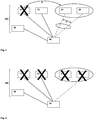
- FIG 3 a system for improved load balancing with regard to the provision of a network service in a computer network according to the present invention is schematically illustrated.
- the load distribution improved according to the invention is implemented for a system which, in particular, already uses the Domain Name System (DNS) protocol for load distribution and failover.
- DNS Domain Name System
- the Domain Name System (DNS) protocol is expanded by an additional data field per entry.
- the additional data field is referred to in particular as the failure prioritization value and the entirety of the failure priority values of all entries in the Service Resource Record (SRV) data records is also referred to as failure prioritization data.
- SSV Service Resource Record
- the entries in the Service Resource Record (SRV) data records each essentially have the following form: "_service._proto.name. TTL class SRV priority weight failure_priority port target.”
- SRV Service Resource Record
- the failure priority value (or the data field "failure_priority") - in the event that the target server according to the data field "target” (for the provision of the network service according to the data field "_service” to the client) Device 40) fails - the prioritization value (or the "priority" data field) of an alternative server (second server or replacement server) is defined.
- This situation is exemplified in Figure 3 illustrated by the double arrow marked with reference number 4.
- the network service requests are distributed to the other servers by the client device 40 according to the load distribution data.
- the network service requests are distributed depending on the load balancing data related to the primary servers. In the above example, this is 20% of the requests that are distributed to the primary server 12 according to the weight “20”.
- the remaining requests - i.e.
- the requests that would be allocated to the failed first server 11 according to the load distribution value of the first entry are distributed here to the secondary servers 21, 22 according to the load distribution values which are related to the secondary servers (in the above example, according to the weighting "50", this is 50% of the 80% of the requests (originally distributed over the failed first server), i.e. a total of 40% of the requests) .
- the two secondary servers 21, 22 each receive 50% of the requests from client device 40. This advantageously makes it possible according to the invention for all servers to have to process less than 100% of the network load as long as at least two servers are available.
- FIG 4 a system for improved load balancing with regard to the provision of a network service in a computer network according to the present invention is schematically illustrated.
- the failed first server 11 here primary server 11, 12
- all target servers here secondary servers 21, 22
- a prioritization value is assigned in the Service Resource Record (SRV) data records that corresponds to the prioritization value of the (failed) first server 11 is equal -
- a server is determined as a substitute server to which a prioritization value is assigned in the service resource record (SRV) records, which is subordinate to the failure prioritization value of the (failed) first server 11 (i.e.
- the computer network 100 comprises a plurality of primary servers 11, 12 with a first primary server 11 and a second primary server 12. Furthermore, the computer network comprises at least one secondary server 21, 22 (ie failover server) with a first secondary server 21 and a second secondary server 22, and in particular other failover servers.
- the client device 40 retrieves Service Resource Record (SRV) records from the Domain Name System (DNS) server 50 (specifically selected for use by the client device 40) and stores them in a memory area (Domain Name System (DNS) cache). of the client device 40 is stored.
- SSV Service Resource Record
- DNS Domain Name System
- the Service Resource Record (SRV) records contain - for the same network service - a first entry assigned to the first primary server 11, a second entry assigned to the second primary server 12, a third entry assigned to the first secondary server 21 and a fourth entry associated with second secondary server 22.
- the first entry - which is assigned to the first primary server 11 - has a first prioritization value, a first load distribution value and a first failure prioritization value.
- the second entry - which is assigned to the second primary server 12 - has a second prioritization value, a second load distribution value and a second failure prioritization value.
- the third entry - which is assigned to the first secondary server 21 - has a third prioritization value, a third load distribution value and a third failure prioritization value.
- the fourth entry - which is assigned to the second secondary server 22 - has a fourth prioritization value, a fourth load distribution value and a fourth failure prioritization value.
- the Service Resource Record (SRV) data records also include a fifth entry - which is assigned to the tertiary server - and a fifth prioritization value, a fifth load distribution value and a fifth failure prioritization value.
- the first and the second prioritization value have the same value (for example the value “0”).
- the third and fourth prioritization values have the same value (for example the value “1”), which is subordinate to the first and second prioritization value (that is, higher here).
- the fifth prioritization value is subordinate to the first, second, third and fourth prioritization value (i.e., for example, the fifth prioritization value is "2").
- the first load distribution value is 80
- the second load distribution value is 20
- the third load distribution value is 50
- the fourth load distribution value is 50
- in particular the fifth load distribution value is 100.
- the first to fourth failure prioritization values each have a value that is equal to the third and fourth prioritization values - in this exemplary embodiment this is the value "1".
- a first proportion of the requests relating to the network service are processed by the first primary server 11 according to the first load distribution value (here 80% of the requests) and a second proportion of the requests relating to the network service are processed by the second primary server 12 in accordance with the second load distribution value (here 20% of the requests).
- the second portion of the requests regarding the network service will continue to be based on the second load distribution value (here 20% of the requests) processed by the second primary server 12 and - since the first failure prioritization value (here "1") and the second and third prioritization value (here also "1") have the same value - the first portion of the requests are related to the Network service according to the first load distribution value (here 80% of the requests) for processing by the first and second secondary server 21, 22 distributed to the first and second secondary server 21, 22.
- the second server 21 is determined as a function of the first failure prioritization value (here "1") of the first entry.
- the inquiries on the first and second secondary servers 21, 22 (here totaling 80%) are distributed to the first and second secondary servers 21, 22 in the ratio of the third and fourth load distribution values (that is, 50% each).
- the second server 21 is composed of one of the two secondary servers 21, 22 in Dependency of the load distribution data (assigned to the secondary servers) of the Service Resource Record (SRV) data records selected.
- SSV Service Resource Record
- FIG. 5 A preferred embodiment of the present invention is illustrated, wherein - in the event that the first primary server 11 fails to provide the network service to the client device 40, the first and second secondary servers 21, 22 also fail to provide the network service to the Client device 40 fail and all other secondary servers for the provision of the network service to the client device 40 also fail (i.e. those further secondary servers to which a prioritization value is assigned in the Service Resource Record (SRV) records that corresponds to the first failure prioritization value of the first server 11 is equal) - the second primary server 12 is determined as a substitute server, whose prioritization value is equal to the first prioritization value of the first server 11.
- a primary server 12 is only selected (ie subordinate) when all (higher-priority) secondary servers 21, 22 for providing the network service to the client device 40 have failed.
Landscapes
- Engineering & Computer Science (AREA)
- Computer Networks & Wireless Communication (AREA)
- Signal Processing (AREA)
- Hardware Redundancy (AREA)
Claims (15)
- Procédé de répartition de la charge lors de la fourniture d'un service réseau dans un réseau informatique (100), dans lequel le réseau informatique (100) comprend plusieurs serveurs (11, 12, 21, 22) pour la fourniture d'un service réseau à un appareil client (40), dans lequel les plusieurs serveurs (11, 12, 21, 22) comprennent plusieurs serveurs primaires (11, 12), dans lequel les plusieurs serveurs (11, 12, 21, 22) comprennent, outre les plusieurs serveurs primaires (11, 12), au moins un serveur secondaire (21, 22) pour le basculement et dans lequel les plusieurs serveurs primaires (11, 12) représentent un groupe de serveurs avec la même valeur de priorité, dans lequel le réseau informatique (100) comporte un serveur Domain Name System, DNS, (50) pour la fourniture de blocs de données d'enregistrement de ressource de service, SRV, dans lequel les blocs de données d'enregistrement de ressource de service, SRV, comportent des données de répartition de charge, incluant la valeur de priorité susmentionnée pour les plusieurs serveurs primaires et une valeur de priorité de basculement pour l'au moins un serveur secondaire, dans lequel l'appareil client (40) est relié au réseau informatique (100) pour utiliser le service réseau,
dans lequel le procédé comprend les étapes suivantes :- détermination par l'appareil client (40) d'un premier serveur (11), dans lequel le premier serveur (11) est sélectionné parmi les plusieurs serveurs primaires (11, 12) en fonction des données de répartition de charge des blocs de données d'enregistrement de ressource de service, SRV,- fourniture du service réseau à l'appareil client (40) par le premier serveur (11) - en cas de disponibilité du premier serveur (11) fournissant le service réseau à l'appareil client (40),dans lequel le procédé est caractérisé en ce que le procédé comprend en outre les étapes suivantes :- en cas de défaillance du premier serveur (11) fournissant le service réseau à l'appareil client (40) et de disponibilité d'un autre serveur (12) des plusieurs serveurs primaires (11, 12) fournissant le service réseau à l'appareil client (40) - détermination par l'appareil client (40) d'un deuxième serveur (21) parmi l'au moins un serveur secondaire (21, 22), dans lequel le deuxième serveur (21) est déterminé parmi l'au moins un serveur secondaire (21, 22) en fonction des données de répartition de charge des blocs de données d'enregistrement de ressource de service, SRV, dans lequel le service réseau est fourni à l'appareil client (40) par le deuxième serveur (21) dans le cas où le deuxième serveur (21) est disponible pour une utilisation du service par l'appareil client (40). - Procédé selon la revendication 1, dans lequel l'au moins un serveur secondaire (21, 22) est déterminé parmi les plusieurs serveurs (11, 12, 21, 22) en fonction d'une valeur de priorité de basculement des blocs de données d'enregistrement de ressource de service, SRV.
- Procédé selon l'une des revendications précédentes, dans lequel - en cas de défaillance du premier serveur (11) fournissant le service réseau à l'appareil client (40) et de disponibilité d'un autre serveur (12) des plusieurs serveurs primaires (11, 12) fournissant le service réseau à l'appareil client (40) - un serveur de l'au moins un serveur secondaire (21, 22) est sélectionné exclusivement comme basculement pour le premier serveur (11).
- Procédé selon l'une des revendications précédentes, dans lequel l'au moins un serveur secondaire (21, 22) comprend un premier serveur secondaire (21) et un deuxième serveur secondaire (22), dans lequel - en cas de défaillance du premier serveur (11) fournissant le service réseau à l'appareil client (40) et de disponibilité d'un autre serveur (12) des plusieurs serveurs primaires (11, 12) fournissant le service réseau à l'appareil client (40) - le premier serveur secondaire (21) est déterminé comme le deuxième serveur (21) parmi l'au moins un serveur secondaire (21, 22) en fonction des données de répartition de charge des blocs de données d'enregistrement de ressource de service, SRV, se rapportant au serveur secondaire (21, 22).
- Procédé selon l'une des revendications précédentes, dans lequel le premier serveur (11) est déterminé parmi les plusieurs serveurs primaires (11, 12) en fonction des données de répartition de charge des blocs de données d'enregistrement de ressource de service, SRV, se rapportant aux plusieurs serveurs primaires (11, 12), dans lequel - en cas de défaillance du premier serveur (11) fournissant le service réseau à l'appareil client (40) et de disponibilité d'un autre serveur (12) des plusieurs serveurs primaires (11, 12) fournissant le service réseau à l'appareil client (40) et de disponibilité du deuxième serveur (21) pour une utilisation du service par l'appareil client (40) - le service réseau est fourni à l'appareil client (40) de telle sorte qu'une fraction des demandes de service réseau de l'appareil client (40) est traitée par le deuxième serveur (21), dans lequel la fraction est déterminée en fonction d'une valeur de répartition de charge se rapportant au premier serveur (11), dans lequel la fraction est en particulier déterminée en fonction d'une multiplication de la valeur de répartition de charge se rapportant au premier serveur (11) par une valeur de répartition de charge se rapportant au deuxième serveur (21).
- Procédé selon l'une des revendications précédentes, dans lequel les blocs de données d'enregistrement de ressource de service, SRV, comprennent des données de priorité, des données de répartition de charge et des données de priorité de basculement, dans lequel une entrée des blocs de données d'enregistrement de ressource de service, SRV, est respectivement associée à un serveur des plusieurs serveurs (11, 12, 21, 22), dans lequel chaque entrée comprend respectivement une valeur de priorité des données de priorité, une valeur de répartition de charge des données de répartition de charge et une valeur de priorité de basculement des données de priorité de basculement, dans lequel le premier serveur (11) est déterminé en fonction d'une première valeur de priorité et d'une première valeur de répartition de charge d'une première entrée associée au premier serveur (11) et - en cas de défaillance du premier serveur (11) fournissant le service réseau à l'appareil client (40) et de disponibilité d'un autre serveur (12) des plusieurs serveurs primaires (11, 12) fournissant le service réseau à l'appareil client (40) - le deuxième serveur (21) est déterminé en fonction d'une première valeur de priorité de basculement de la première entrée.
- Procédé selon l'une des revendications précédentes, dans lequel - en cas de défaillance du premier serveur (11) fournissant le service réseau à l'appareil client (40) et de disponibilité d'un autre serveur (12) des plusieurs serveurs primaires (11, 12) fournissant le service réseau à l'appareil client (40) - est déterminé comme deuxième serveur (21) un serveur auquel une deuxième valeur de priorité dans une deuxième entrée des blocs de données d'enregistrement de ressource de service, SRV, est associée, cette valeur étant de même rang qu'une première valeur de priorité de basculement des blocs de données d'enregistrement de ressource de service, SRV, associée au premier serveur (11).
- Procédé selon l'une des revendications précédentes, dans lequel - en cas de défaillance du premier serveur (11) fournissant le service réseau à l'appareil client (40) et de tous les serveurs secondaires (21, 22) - auxquels est en particulier associée dans les blocs de données d'enregistrement de ressource de service, SRV, une valeur de priorité de rang égal à la première valeur de priorité de basculement du premier serveur (11) fournissant le service réseau à l'appareil client (40) - un premier serveur ultérieur (12) est déterminé comme basculement pour le premier serveur défaillant (11) parmi les plusieurs serveurs primaires (11, 12), dont la valeur de priorité est en particulier de rang égal à la première valeur de priorité du premier serveur (11).
- Procédé selon l'une des revendications précédentes, dans lequel - en cas de défaillance du premier serveur (11) fournissant le service réseau à l'appareil client (40) et de tous les serveurs secondaires (21, 22) - en particulier avec une valeur de priorité de rang égal à la première valeur de priorité de basculement du premier serveur (11), fournissant le service réseau à l'appareil client (40) - un serveur tertiaire est déterminé comme basculement pour le premier serveur défaillant (11) parmi les plusieurs serveurs primaires (11, 12), dont la valeur de priorité est en particulier de rang inférieur à la première valeur de priorité de basculement du premier serveur (11).
- Système de répartition de la charge lors de la fourniture d'un service réseau dans un réseau informatique (100), dans lequel le système comprend le réseau informatique (100) et un appareil client (40), dans lequel le réseau informatique (100) comprend plusieurs serveurs (11, 12, 21, 22) pour la fourniture du service réseau à l'appareil client (40), dans lequel les plusieurs serveurs (11, 12, 21, 22) comprennent plusieurs serveurs primaires (11, 12), dans lequel les plusieurs serveurs (11, 12, 21, 22) comprennent, outre les plusieurs serveurs primaires (11, 12), au moins un serveur secondaire (21, 22) pour le basculement et dans lequel les plusieurs serveurs primaires (11, 12) représentent un groupe de serveurs avec la même valeur de priorité, dans lequel le réseau informatique (100) comporte un serveur Domain Name System, DNS, (50) pour la fourniture de blocs de données d'enregistrement de ressource de service, SRV, dans lequel les blocs de données d'enregistrement de ressource de service, SRV, comportent des données de répartition de charge, incluant la valeur de priorité susmentionnée pour les plusieurs serveurs primaires et une valeur de priorité de basculement pour l'au moins un serveur secondaire, dans lequel l'appareil client (40) est relié au réseau informatique (100) pour utiliser le service réseau, dans lequel l'appareil client (40) est configuré pour déterminer un premier serveur (11), dans lequel l'appareil client (40) est configuré pour sélectionner le premier serveur (11) parmi les plusieurs serveurs primaires (11, 12) en fonction des données de répartition de charge des blocs de données d'enregistrement de ressource de service, SRV, dans lequel le système est configuré de telle sorte que, en cas de disponibilité du premier serveur (11) fournissant le service réseau à l'appareil client (40), le service réseau est fourni à l'appareil client (40) par le premier serveur (11), dans lequel le système est caractérisé en ce que le système est configuré de telle sorte que :- en cas de défaillance du premier serveur (11) fournissant le service réseau à l'appareil client (40) et de disponibilité d'un autre serveur (12) des plusieurs serveurs primaires (11, 12) fournissant le service réseau à l'appareil client (40) - un deuxième serveur (21) est déterminé par l'appareil client (40) parmi l'au moins un serveur secondaire (21, 22), dans lequel l'appareil client (40) est configuré de telle sorte que le deuxième serveur (21) est déterminé parmi l'au moins un serveur secondaire (21, 22) en fonction des données de répartition de charge des blocs de données d'enregistrement de ressource de service, SRV, dans lequel le système est configuré de telle sorte que - en cas de disponibilité du deuxième serveur (21) pour une utilisation du service par l'appareil client (40) - le service réseau est fourni à l'appareil client (40) par le deuxième serveur (21).
- Système selon la revendication 10, dans lequel système est configuré de telle sorte que - en cas de défaillance du premier serveur (11) fournissant le service réseau à l'appareil client (40) et de disponibilité d'un autre serveur (12) des plusieurs serveurs primaires (11, 12) fournissant le service réseau à l'appareil client (40) - un serveur de l'au moins un serveur secondaire (21, 22) est sélectionné exclusivement comme basculement pour le premier serveur (11).
- Système selon l'une des revendications 10 ou 11, dans lequel l'au moins un serveur secondaire (21, 22) comprend un premier serveur secondaire (21) et un deuxième serveur secondaire (22), dans lequel l'appareil client (40) est configuré de telle sorte que - en cas de défaillance du premier serveur (11) fournissant le service réseau à l'au moins un appareil client (40) et de disponibilité d'un autre serveur (12) des plusieurs serveurs primaires (11, 12) fournissant le service réseau à l'appareil client (40) - le premier serveur secondaire (21) est déterminé comme le deuxième serveur (21) parmi l'au moins un serveur secondaire (21, 22) en fonction des données de répartition de charge des blocs de données d'enregistrement de ressource de service, SRV, se rapportant au serveur secondaire (21, 22).
- Système selon l'une des revendications 10 à 12, dans lequel l'appareil client (40) est configuré de telle sorte que le premier serveur (11) est déterminé parmi les plusieurs serveurs primaires (11, 12) en fonction des données de répartition de charge des blocs de données d'enregistrement de ressource de service, SRV, se rapportant aux plusieurs serveurs primaires (11, 12), dans lequel l'appareil client (40) est configuré de telle sorte que - en cas de défaillance du premier serveur (11) fournissant le service réseau à l'appareil client (40) et de disponibilité d'un autre serveur (12) des plusieurs serveurs primaires (11, 12) fournissant le service réseau à l'appareil client (40) et de disponibilité du deuxième serveur (21) pour une utilisation du service par l'appareil client (40) - le service réseau est fourni à l'appareil client (40) de telle sorte qu'une fraction des demandes de service réseau de l'appareil client (40) est traitée par le deuxième serveur (21), dans lequel la fraction est déterminée en fonction d'une valeur de répartition de charge se rapportant au premier serveur (11), dans lequel la fraction est en particulier déterminée en fonction d'une multiplication de la valeur de répartition de charge se rapportant au premier serveur (11) par une valeur de répartition de charge se rapportant au deuxième serveur (21) .
- Programme informatique doté d'un code de programmation lisible par ordinateur, à l'aide duquel un procédé selon l'une des revendications 1 à 9 peut être mis en œuvre, lorsque le code de programmation lisible par ordinateur est exécuté sur un dispositif programmable.
- Produit-programme informatique doté d'un code de programmation selon la revendication 14, enregistré sur un support d'enregistrement, à l'aide duquel un procédé selon l'une des revendications 1 à 9 peut être mis en œuvre, lorsque le code de programmation lisible par ordinateur est exécuté sur un dispositif programmable.
Priority Applications (1)
| Application Number | Priority Date | Filing Date | Title |
|---|---|---|---|
| EP15174901.7A EP3113449B1 (fr) | 2015-07-01 | 2015-07-01 | Procédé de répartition de charge améliorée concernant la mise à disposition d'un service de réseau dans un réseau informatique, système de répartition de charge améliorée concernant la mise à disposition d'un service de réseau dans un réseau informatique, programme et produit de programme informatique |
Applications Claiming Priority (1)
| Application Number | Priority Date | Filing Date | Title |
|---|---|---|---|
| EP15174901.7A EP3113449B1 (fr) | 2015-07-01 | 2015-07-01 | Procédé de répartition de charge améliorée concernant la mise à disposition d'un service de réseau dans un réseau informatique, système de répartition de charge améliorée concernant la mise à disposition d'un service de réseau dans un réseau informatique, programme et produit de programme informatique |
Publications (2)
| Publication Number | Publication Date |
|---|---|
| EP3113449A1 EP3113449A1 (fr) | 2017-01-04 |
| EP3113449B1 true EP3113449B1 (fr) | 2020-09-23 |
Family
ID=53525078
Family Applications (1)
| Application Number | Title | Priority Date | Filing Date |
|---|---|---|---|
| EP15174901.7A Active EP3113449B1 (fr) | 2015-07-01 | 2015-07-01 | Procédé de répartition de charge améliorée concernant la mise à disposition d'un service de réseau dans un réseau informatique, système de répartition de charge améliorée concernant la mise à disposition d'un service de réseau dans un réseau informatique, programme et produit de programme informatique |
Country Status (1)
| Country | Link |
|---|---|
| EP (1) | EP3113449B1 (fr) |
Cited By (1)
| Publication number | Priority date | Publication date | Assignee | Title |
|---|---|---|---|---|
| US11973823B1 (en) * | 2023-01-11 | 2024-04-30 | Dell Products L.P. | Offloading namespace redirection to backup clients in a scale out cluster |
Families Citing this family (1)
| Publication number | Priority date | Publication date | Assignee | Title |
|---|---|---|---|---|
| US20250225032A1 (en) * | 2024-01-09 | 2025-07-10 | Capital One Services, Llc | High availability system outage recovery |
Family Cites Families (2)
| Publication number | Priority date | Publication date | Assignee | Title |
|---|---|---|---|---|
| US8645565B2 (en) * | 2008-07-31 | 2014-02-04 | Tekelec, Inc. | Methods, systems, and computer readable media for throttling traffic to an internet protocol (IP) network server using alias hostname identifiers assigned to the IP network server with a domain name system (DNS) |
| US8606938B1 (en) * | 2012-09-27 | 2013-12-10 | Ringcentral, Inc. | High availability for cloud-based services |
-
2015
- 2015-07-01 EP EP15174901.7A patent/EP3113449B1/fr active Active
Non-Patent Citations (1)
| Title |
|---|
| None * |
Cited By (1)
| Publication number | Priority date | Publication date | Assignee | Title |
|---|---|---|---|---|
| US11973823B1 (en) * | 2023-01-11 | 2024-04-30 | Dell Products L.P. | Offloading namespace redirection to backup clients in a scale out cluster |
Also Published As
| Publication number | Publication date |
|---|---|
| EP3113449A1 (fr) | 2017-01-04 |
Similar Documents
| Publication | Publication Date | Title |
|---|---|---|
| DE60302876T2 (de) | Master-knotenauswahl in geclusterten knotenkonfigurationen | |
| DE602005001063T2 (de) | Verfahren und Anordnung zur Beschränkung der Wiederbenutzung von DNS Antworten | |
| DE60122691T2 (de) | Verfahren und vorrichtung zum verteilten cachen | |
| DE60317925T2 (de) | Steuerung von netzwerkverkehr in einer peer-to-peer umgebung | |
| DE60318468T2 (de) | Verfahren zur lösung von entscheidungslosigkeiten in einem cluster-rechnersystem | |
| DE112010004772T5 (de) | Verfahren und System zum Verwalten von Konfigurationen von Systemverwaltungsagentenin einer Verteilten Umgebung | |
| DE112013004976T5 (de) | Adaptive Präfixdelegierung | |
| DE102016219854A1 (de) | Computersystem und Verfahren zum dynamischen Anpassen eines software-definierten Netzwerks | |
| EP3113449B1 (fr) | Procédé de répartition de charge améliorée concernant la mise à disposition d'un service de réseau dans un réseau informatique, système de répartition de charge améliorée concernant la mise à disposition d'un service de réseau dans un réseau informatique, programme et produit de programme informatique | |
| WO2005073852A1 (fr) | Procede permettant de faire fonctionner un ensemble de plusieurs ordinateurs en cas de defaillance d'un ordinateur | |
| DE112005001995B4 (de) | Computeranordnung und Verfahren zum Anbieten von Diensten für Benutzer über ein Netzwerk | |
| EP1994713A1 (fr) | Procédé de fonctionnement d'un réseau de données décentralisé | |
| DE102013108306A1 (de) | Verfahren und System zur Synchronisation von Daten | |
| DE102015212354A1 (de) | Verfahren zur verbesserten Lastverteilung bezüglich der Bereitstellung eines Netzwerkdienstes in einem Computernetzwerk, System zur verbesserten Lastverteilung bezüglich der Bereitstellung eines Netzwerkdienstes in einem Computernetzwerk, Programm und Computerprogrammprodukt | |
| EP3475819A1 (fr) | Procédé d'attribution automatique et dynamique de la responsabilité pour tâches aux composants de calcul disponibles dans un système de traitement de données hautement distribué | |
| EP1619849B1 (fr) | Procédé de synchronisation d'un système distribué | |
| EP3054654B1 (fr) | Systeme de reseau et procede de resolution de nom dans un systeme de reseau | |
| EP3800517A1 (fr) | Système d'automatisation redondant, procédé de création d'un tel système d'automatisation, programme informatique et support lisible par ordinateur | |
| DE102015101915A1 (de) | Verfahren und Vorrichtung zur Bearbeitung von Post-Script-Dateien | |
| EP3396919A1 (fr) | Procédé de transmission de données à partir d'un appareil à un gestionnaire de données, unité de transmission, appareil et système | |
| AT518910B1 (de) | Verfahren zur Prüfung der Verfügbarkeit und Integrität eines verteilt gespeicherten Datenobjekts | |
| EP1757999B1 (fr) | Mise à disposition de services dans un réseau | |
| DE102020112638B4 (de) | Verfahren und Recheneinheit zum automatisierten Auffinden und Zuordnen von Domains | |
| DE102020003281A1 (de) | Verfahren zum Betreiben eines Systems für eine Vielzahl von Kraftfahrzeugen, sowie System | |
| DE102010052612B4 (de) | Netzstruktur |
Legal Events
| Date | Code | Title | Description |
|---|---|---|---|
| PUAI | Public reference made under article 153(3) epc to a published international application that has entered the european phase |
Free format text: ORIGINAL CODE: 0009012 |
|
| STAA | Information on the status of an ep patent application or granted ep patent |
Free format text: STATUS: THE APPLICATION HAS BEEN PUBLISHED |
|
| AK | Designated contracting states |
Kind code of ref document: A1 Designated state(s): AL AT BE BG CH CY CZ DE DK EE ES FI FR GB GR HR HU IE IS IT LI LT LU LV MC MK MT NL NO PL PT RO RS SE SI SK SM TR |
|
| AX | Request for extension of the european patent |
Extension state: BA ME |
|
| STAA | Information on the status of an ep patent application or granted ep patent |
Free format text: STATUS: REQUEST FOR EXAMINATION WAS MADE |
|
| 17P | Request for examination filed |
Effective date: 20170524 |
|
| RBV | Designated contracting states (corrected) |
Designated state(s): AL AT BE BG CH CY CZ DE DK EE ES FI FR GB GR HR HU IE IS IT LI LT LU LV MC MK MT NL NO PL PT RO RS SE SI SK SM TR |
|
| STAA | Information on the status of an ep patent application or granted ep patent |
Free format text: STATUS: EXAMINATION IS IN PROGRESS |
|
| 17Q | First examination report despatched |
Effective date: 20190201 |
|
| GRAP | Despatch of communication of intention to grant a patent |
Free format text: ORIGINAL CODE: EPIDOSNIGR1 |
|
| STAA | Information on the status of an ep patent application or granted ep patent |
Free format text: STATUS: GRANT OF PATENT IS INTENDED |
|
| INTG | Intention to grant announced |
Effective date: 20200612 |
|
| GRAS | Grant fee paid |
Free format text: ORIGINAL CODE: EPIDOSNIGR3 |
|
| GRAA | (expected) grant |
Free format text: ORIGINAL CODE: 0009210 |
|
| STAA | Information on the status of an ep patent application or granted ep patent |
Free format text: STATUS: THE PATENT HAS BEEN GRANTED |
|
| AK | Designated contracting states |
Kind code of ref document: B1 Designated state(s): AL AT BE BG CH CY CZ DE DK EE ES FI FR GB GR HR HU IE IS IT LI LT LU LV MC MK MT NL NO PL PT RO RS SE SI SK SM TR |
|
| REG | Reference to a national code |
Ref country code: GB Ref legal event code: FG4D Free format text: NOT ENGLISH |
|
| REG | Reference to a national code |
Ref country code: CH Ref legal event code: EP |
|
| REG | Reference to a national code |
Ref country code: IE Ref legal event code: FG4D Free format text: LANGUAGE OF EP DOCUMENT: GERMAN |
|
| REG | Reference to a national code |
Ref country code: DE Ref legal event code: R096 Ref document number: 502015013493 Country of ref document: DE Ref country code: AT Ref legal event code: REF Ref document number: 1317576 Country of ref document: AT Kind code of ref document: T Effective date: 20201015 |
|
| PG25 | Lapsed in a contracting state [announced via postgrant information from national office to epo] |
Ref country code: GR Free format text: LAPSE BECAUSE OF FAILURE TO SUBMIT A TRANSLATION OF THE DESCRIPTION OR TO PAY THE FEE WITHIN THE PRESCRIBED TIME-LIMIT Effective date: 20201224 Ref country code: NO Free format text: LAPSE BECAUSE OF FAILURE TO SUBMIT A TRANSLATION OF THE DESCRIPTION OR TO PAY THE FEE WITHIN THE PRESCRIBED TIME-LIMIT Effective date: 20201223 Ref country code: BG Free format text: LAPSE BECAUSE OF FAILURE TO SUBMIT A TRANSLATION OF THE DESCRIPTION OR TO PAY THE FEE WITHIN THE PRESCRIBED TIME-LIMIT Effective date: 20201223 Ref country code: SE Free format text: LAPSE BECAUSE OF FAILURE TO SUBMIT A TRANSLATION OF THE DESCRIPTION OR TO PAY THE FEE WITHIN THE PRESCRIBED TIME-LIMIT Effective date: 20200923 Ref country code: FI Free format text: LAPSE BECAUSE OF FAILURE TO SUBMIT A TRANSLATION OF THE DESCRIPTION OR TO PAY THE FEE WITHIN THE PRESCRIBED TIME-LIMIT Effective date: 20200923 Ref country code: HR Free format text: LAPSE BECAUSE OF FAILURE TO SUBMIT A TRANSLATION OF THE DESCRIPTION OR TO PAY THE FEE WITHIN THE PRESCRIBED TIME-LIMIT Effective date: 20200923 |
|
| PG25 | Lapsed in a contracting state [announced via postgrant information from national office to epo] |
Ref country code: LV Free format text: LAPSE BECAUSE OF FAILURE TO SUBMIT A TRANSLATION OF THE DESCRIPTION OR TO PAY THE FEE WITHIN THE PRESCRIBED TIME-LIMIT Effective date: 20200923 Ref country code: RS Free format text: LAPSE BECAUSE OF FAILURE TO SUBMIT A TRANSLATION OF THE DESCRIPTION OR TO PAY THE FEE WITHIN THE PRESCRIBED TIME-LIMIT Effective date: 20200923 |
|
| REG | Reference to a national code |
Ref country code: NL Ref legal event code: MP Effective date: 20200923 |
|
| REG | Reference to a national code |
Ref country code: LT Ref legal event code: MG4D |
|
| PG25 | Lapsed in a contracting state [announced via postgrant information from national office to epo] |
Ref country code: LT Free format text: LAPSE BECAUSE OF FAILURE TO SUBMIT A TRANSLATION OF THE DESCRIPTION OR TO PAY THE FEE WITHIN THE PRESCRIBED TIME-LIMIT Effective date: 20200923 Ref country code: NL Free format text: LAPSE BECAUSE OF FAILURE TO SUBMIT A TRANSLATION OF THE DESCRIPTION OR TO PAY THE FEE WITHIN THE PRESCRIBED TIME-LIMIT Effective date: 20200923 Ref country code: PT Free format text: LAPSE BECAUSE OF FAILURE TO SUBMIT A TRANSLATION OF THE DESCRIPTION OR TO PAY THE FEE WITHIN THE PRESCRIBED TIME-LIMIT Effective date: 20210125 Ref country code: EE Free format text: LAPSE BECAUSE OF FAILURE TO SUBMIT A TRANSLATION OF THE DESCRIPTION OR TO PAY THE FEE WITHIN THE PRESCRIBED TIME-LIMIT Effective date: 20200923 Ref country code: RO Free format text: LAPSE BECAUSE OF FAILURE TO SUBMIT A TRANSLATION OF THE DESCRIPTION OR TO PAY THE FEE WITHIN THE PRESCRIBED TIME-LIMIT Effective date: 20200923 Ref country code: SM Free format text: LAPSE BECAUSE OF FAILURE TO SUBMIT A TRANSLATION OF THE DESCRIPTION OR TO PAY THE FEE WITHIN THE PRESCRIBED TIME-LIMIT Effective date: 20200923 Ref country code: CZ Free format text: LAPSE BECAUSE OF FAILURE TO SUBMIT A TRANSLATION OF THE DESCRIPTION OR TO PAY THE FEE WITHIN THE PRESCRIBED TIME-LIMIT Effective date: 20200923 |
|
| PG25 | Lapsed in a contracting state [announced via postgrant information from national office to epo] |
Ref country code: AL Free format text: LAPSE BECAUSE OF FAILURE TO SUBMIT A TRANSLATION OF THE DESCRIPTION OR TO PAY THE FEE WITHIN THE PRESCRIBED TIME-LIMIT Effective date: 20200923 Ref country code: ES Free format text: LAPSE BECAUSE OF FAILURE TO SUBMIT A TRANSLATION OF THE DESCRIPTION OR TO PAY THE FEE WITHIN THE PRESCRIBED TIME-LIMIT Effective date: 20200923 Ref country code: PL Free format text: LAPSE BECAUSE OF FAILURE TO SUBMIT A TRANSLATION OF THE DESCRIPTION OR TO PAY THE FEE WITHIN THE PRESCRIBED TIME-LIMIT Effective date: 20200923 |
|
| REG | Reference to a national code |
Ref country code: DE Ref legal event code: R097 Ref document number: 502015013493 Country of ref document: DE |
|
| PG25 | Lapsed in a contracting state [announced via postgrant information from national office to epo] |
Ref country code: SK Free format text: LAPSE BECAUSE OF FAILURE TO SUBMIT A TRANSLATION OF THE DESCRIPTION OR TO PAY THE FEE WITHIN THE PRESCRIBED TIME-LIMIT Effective date: 20200923 |
|
| PLBE | No opposition filed within time limit |
Free format text: ORIGINAL CODE: 0009261 |
|
| STAA | Information on the status of an ep patent application or granted ep patent |
Free format text: STATUS: NO OPPOSITION FILED WITHIN TIME LIMIT |
|
| PG25 | Lapsed in a contracting state [announced via postgrant information from national office to epo] |
Ref country code: DK Free format text: LAPSE BECAUSE OF FAILURE TO SUBMIT A TRANSLATION OF THE DESCRIPTION OR TO PAY THE FEE WITHIN THE PRESCRIBED TIME-LIMIT Effective date: 20200923 Ref country code: SI Free format text: LAPSE BECAUSE OF FAILURE TO SUBMIT A TRANSLATION OF THE DESCRIPTION OR TO PAY THE FEE WITHIN THE PRESCRIBED TIME-LIMIT Effective date: 20200923 |
|
| 26N | No opposition filed |
Effective date: 20210624 |
|
| PG25 | Lapsed in a contracting state [announced via postgrant information from national office to epo] |
Ref country code: IT Free format text: LAPSE BECAUSE OF FAILURE TO SUBMIT A TRANSLATION OF THE DESCRIPTION OR TO PAY THE FEE WITHIN THE PRESCRIBED TIME-LIMIT Effective date: 20200923 |
|
| REG | Reference to a national code |
Ref country code: DE Ref legal event code: R079 Ref document number: 502015013493 Country of ref document: DE Free format text: PREVIOUS MAIN CLASS: H04L0029080000 Ipc: H04L0065000000 |
|
| REG | Reference to a national code |
Ref country code: CH Ref legal event code: PL |
|
| PG25 | Lapsed in a contracting state [announced via postgrant information from national office to epo] |
Ref country code: MC Free format text: LAPSE BECAUSE OF FAILURE TO SUBMIT A TRANSLATION OF THE DESCRIPTION OR TO PAY THE FEE WITHIN THE PRESCRIBED TIME-LIMIT Effective date: 20200923 |
|
| REG | Reference to a national code |
Ref country code: BE Ref legal event code: MM Effective date: 20210731 |
|
| PG25 | Lapsed in a contracting state [announced via postgrant information from national office to epo] |
Ref country code: LI Free format text: LAPSE BECAUSE OF NON-PAYMENT OF DUE FEES Effective date: 20210731 Ref country code: CH Free format text: LAPSE BECAUSE OF NON-PAYMENT OF DUE FEES Effective date: 20210731 |
|
| PG25 | Lapsed in a contracting state [announced via postgrant information from national office to epo] |
Ref country code: LU Free format text: LAPSE BECAUSE OF NON-PAYMENT OF DUE FEES Effective date: 20210701 |
|
| PG25 | Lapsed in a contracting state [announced via postgrant information from national office to epo] |
Ref country code: BE Free format text: LAPSE BECAUSE OF NON-PAYMENT OF DUE FEES Effective date: 20210731 |
|
| REG | Reference to a national code |
Ref country code: AT Ref legal event code: MM01 Ref document number: 1317576 Country of ref document: AT Kind code of ref document: T Effective date: 20210701 |
|
| PG25 | Lapsed in a contracting state [announced via postgrant information from national office to epo] |
Ref country code: AT Free format text: LAPSE BECAUSE OF NON-PAYMENT OF DUE FEES Effective date: 20210701 |
|
| PG25 | Lapsed in a contracting state [announced via postgrant information from national office to epo] |
Ref country code: HU Free format text: LAPSE BECAUSE OF FAILURE TO SUBMIT A TRANSLATION OF THE DESCRIPTION OR TO PAY THE FEE WITHIN THE PRESCRIBED TIME-LIMIT; INVALID AB INITIO Effective date: 20150701 |
|
| PG25 | Lapsed in a contracting state [announced via postgrant information from national office to epo] |
Ref country code: CY Free format text: LAPSE BECAUSE OF FAILURE TO SUBMIT A TRANSLATION OF THE DESCRIPTION OR TO PAY THE FEE WITHIN THE PRESCRIBED TIME-LIMIT Effective date: 20200923 |
|
| PG25 | Lapsed in a contracting state [announced via postgrant information from national office to epo] |
Ref country code: MK Free format text: LAPSE BECAUSE OF FAILURE TO SUBMIT A TRANSLATION OF THE DESCRIPTION OR TO PAY THE FEE WITHIN THE PRESCRIBED TIME-LIMIT Effective date: 20200923 |
|
| PG25 | Lapsed in a contracting state [announced via postgrant information from national office to epo] |
Ref country code: MT Free format text: LAPSE BECAUSE OF FAILURE TO SUBMIT A TRANSLATION OF THE DESCRIPTION OR TO PAY THE FEE WITHIN THE PRESCRIBED TIME-LIMIT Effective date: 20200923 |
|
| PGFP | Annual fee paid to national office [announced via postgrant information from national office to epo] |
Ref country code: DE Payment date: 20250722 Year of fee payment: 11 |
|
| PGFP | Annual fee paid to national office [announced via postgrant information from national office to epo] |
Ref country code: GB Payment date: 20250724 Year of fee payment: 11 |
|
| PGFP | Annual fee paid to national office [announced via postgrant information from national office to epo] |
Ref country code: FR Payment date: 20250723 Year of fee payment: 11 |
|
| PGFP | Annual fee paid to national office [announced via postgrant information from national office to epo] |
Ref country code: IE Payment date: 20250724 Year of fee payment: 11 |
|
| PGFP | Annual fee paid to national office [announced via postgrant information from national office to epo] |
Ref country code: IS Payment date: 20250718 Year of fee payment: 11 |
|
| PG25 | Lapsed in a contracting state [announced via postgrant information from national office to epo] |
Ref country code: TR Free format text: LAPSE BECAUSE OF FAILURE TO SUBMIT A TRANSLATION OF THE DESCRIPTION OR TO PAY THE FEE WITHIN THE PRESCRIBED TIME-LIMIT Effective date: 20200923 |