EP3113457A1 - Ipv6-adressenverarbeitungsverfahren und vorrichtung sowie dhcpv6-relaisvorrichtung - Google Patents
Ipv6-adressenverarbeitungsverfahren und vorrichtung sowie dhcpv6-relaisvorrichtung Download PDFInfo
- Publication number
- EP3113457A1 EP3113457A1 EP14883705.7A EP14883705A EP3113457A1 EP 3113457 A1 EP3113457 A1 EP 3113457A1 EP 14883705 A EP14883705 A EP 14883705A EP 3113457 A1 EP3113457 A1 EP 3113457A1
- Authority
- EP
- European Patent Office
- Prior art keywords
- ipv6
- ipv4
- address
- dhcpv6
- option
- Prior art date
- Legal status (The legal status is an assumption and is not a legal conclusion. Google has not performed a legal analysis and makes no representation as to the accuracy of the status listed.)
- Withdrawn
Links
Images


Classifications
-
- H—ELECTRICITY
- H04—ELECTRIC COMMUNICATION TECHNIQUE
- H04L—TRANSMISSION OF DIGITAL INFORMATION, e.g. TELEGRAPHIC COMMUNICATION
- H04L61/00—Network arrangements, protocols or services for addressing or naming
- H04L61/09—Mapping addresses
- H04L61/25—Mapping addresses of the same type
- H04L61/2503—Translation of Internet protocol [IP] addresses
-
- H—ELECTRICITY
- H04—ELECTRIC COMMUNICATION TECHNIQUE
- H04L—TRANSMISSION OF DIGITAL INFORMATION, e.g. TELEGRAPHIC COMMUNICATION
- H04L69/00—Network arrangements, protocols or services independent of the application payload and not provided for in the other groups of this subclass
- H04L69/16—Implementation or adaptation of Internet protocol [IP], of transmission control protocol [TCP] or of user datagram protocol [UDP]
- H04L69/167—Adaptation for transition between two IP versions, e.g. between IPv4 and IPv6
-
- H—ELECTRICITY
- H04—ELECTRIC COMMUNICATION TECHNIQUE
- H04L—TRANSMISSION OF DIGITAL INFORMATION, e.g. TELEGRAPHIC COMMUNICATION
- H04L61/00—Network arrangements, protocols or services for addressing or naming
- H04L61/09—Mapping addresses
- H04L61/25—Mapping addresses of the same type
- H04L61/2503—Translation of Internet protocol [IP] addresses
- H04L61/251—Translation of Internet protocol [IP] addresses between different IP versions
-
- H—ELECTRICITY
- H04—ELECTRIC COMMUNICATION TECHNIQUE
- H04L—TRANSMISSION OF DIGITAL INFORMATION, e.g. TELEGRAPHIC COMMUNICATION
- H04L61/00—Network arrangements, protocols or services for addressing or naming
- H04L61/50—Address allocation
- H04L61/5007—Internet protocol [IP] addresses
- H04L61/5014—Internet protocol [IP] addresses using dynamic host configuration protocol [DHCP] or bootstrap protocol [BOOTP]
-
- H—ELECTRICITY
- H04—ELECTRIC COMMUNICATION TECHNIQUE
- H04L—TRANSMISSION OF DIGITAL INFORMATION, e.g. TELEGRAPHIC COMMUNICATION
- H04L2101/00—Indexing scheme associated with group H04L61/00
- H04L2101/60—Types of network addresses
- H04L2101/618—Details of network addresses
- H04L2101/659—Internet protocol version 6 [IPv6] addresses
Definitions
- the present disclosure relates to the field of communication, and in particular to a method and device for processing an Internet Protocol version 6 (IPv6) address, Dynamic Host Configuration Protocol for IPv6 (DHCPv6) relay equipment and a DHCPv6 server.
- IPv6 Internet Protocol version 6
- DHCPv6 Dynamic Host Configuration Protocol for IPv6
- NAT in a related art belongs to a Wide Area Network (WAN) access technology, is a translation technology for translating a private (reserved) address into a legal Internet Protocol (IP) address, and is widely applied to various types of Internet access manners and various types of networks. NAT can solve the problem of IP address depletion.
- WAN Wide Area Network
- IP Internet Protocol
- IPv4 Internet Protocol version 4
- IPv6 Internet Protocol version 6
- DNS64 Domain Name System 64
- NAT64 is a stateful technology for transmitting a network address and a protocol, and usually merely supports an IPv6 network-side user to initiate to connect and access to an IPv4-side network resource. However, NAT64 also supports manual configuration of a static mapping relationship for active initiation of connection and access of an IPv4 network to an IPv6 network. NAT64 may implements IPv6 and IPv4 network address and protocol translation under a Transmission Control Protocol (TCP), a User Datagram Protocol (UDP) and an Internet Control Message Protocol (ICMP).
- TCP Transmission Control Protocol
- UDP User Datagram Protocol
- ICMP Internet Control Message Protocol
- DNS64 mainly supports work of NAT64, and mainly synthesizes record A (IPv4 address) in DNS query information into record AAAA (IPv6 address) and returns synthesized record AAAA to an IPv6-side user.
- Synthesis of record AAAA is implemented by pre-configuring an IPv6 prefix (called pref64::/n for short) used for synthesizing IPv6 address on DNS64.
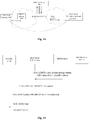
- Networking of a common application scenario of NAT64 and DNS64 is as shown in Fig. 1 .
- a DNS64 server and a NAT64 router are completely independent parts, wherein 64:FF9B::/96 is a known prefix of DNS 64 pref64::/n, DNS64 usually defaults to use the prefix for synthesis from an IPv4 address to an IPv6 address, the prefix is also employed as a translation prefix of NAT64, and NAT64 translation is performed merely after traffic matched with the prefix is implemented.
- the prefix is usually represented as pref64::/n, wherein pref64 identifies a NAT64 prefix configured to synthesize the IPv6 address, n identifies a length of the NAT64 prefix, and besides adopting the known prefix, the prefix may be flexibly configured according to a practical network condition during network deployment.
- the length of the prefix supports: a range of 32, 40, 48, 56, 64, 96 or the like, and translation rules for prefixes with different lengths are not completely the same.
- Fig. 1 when an IPv6 only user initiates connection to access to an ordinary IPv6 website, traffic may be matched with a default IPv6 route to be directly forwarded to an IPv6 router for processing.
- the IPv6 only user initiates connection to access to an IPv4 single-protocol stack server, the IPv6 only user is impossible to acquire IPv6 address information corresponding to an address of a destination IPv4 server, and sends a DNS request to the DNS64 server to find that the IPv4 server corresponds to an IPv4 address, i.e.
- the DNS64 server is required to perform prefix synthesis, namely to synthesize record A and pref64::/n into record AAAA, and return the record AAAA to the IPv6 only user.
- Traffic of a pref64::/n network segment is routed and forwarded to the NAT64 router, thereby implementing IPv6 and IPv4 address and protocol translation to access to a resource in an IPv4 network.
- DNS64 is required to cooperatively work with NAT64, a DHCPv6 server is required to issue the IPv6 address of the DNS64 server; in a scenario where no DNS64 is deployed in the network and the DNS is still located in an IPv4 network, NAT64 may not independently implement IPv6/IPv4 mutual visit.
- client equipment may not acquire the IPv6 address corresponding to the DNS server, and furthermore, even though the client equipment acquires the IPv6 address corresponding to the DNS server, the client equipment may still not acquire record AAAA corresponding to the destination IPv4 server, so that a corresponding technical solution is required to solve the problem of the scenario under the condition of independent work of NAT64.
- the DNS64 server may be configured to cooperatively work with NAT64 to solve the problem of the scenario where the original DNS server is still deployed in the IPv4 network; however, an existing IPv4 network further, besides the DNS server, correspondingly includes: a log server, a Cookie server, a resource location server, a strategy filtering server and the like, and parameters of these servers are all issued to IPv4 client equipment through a DHCPv4 option; and furthermore, for how IPv6-only client equipment acquires each network parameter in an IPv4 network, there is no universal technical solution to enable the IPv6-only client equipment to acquire IPv6 addresses of each IPv4 server.
- a DHCPv6 is designed to process the allocation of an IPv6 address, an IPv6 prefix and other network information to client equipment, wherein the other network information includes information of a DNS server, a log server, a Cookie server, a resource location server, a strategy server and the like.
- the other network information servers are deployed in an IPv4 network, a corresponding IPv6 prefix is required to synthesize an IPv6 address corresponding to a corresponding IPv4 server, wherein the IPv6 prefixes may be the same, and may also be different, and these IPv6 prefixes are collectively referred to as synthesis IPv6 prefixes.
- the present disclosure provides a method and device for processing an IPv6 address, DHCPv6 relay equipment and a DHCPv6 server, so as to at least solve various problems appearing when some servers are still deployed in an IPv4 network in an IPv6/IPv5 network interworking process and problems of network configuration regulation inflexibility and complexity in network maintenance when NAT64 services are upgraded or all upgraded to an IPv6 network in a later period.
- a method for processing an Internet Protocol version 6 (IPv6) address including: acquiring an Internet Protocol version 4 (IPv4) information option, of which an address field is an IPv4 address, in information options of an IPv6 message; acquiring an IPv6 prefix corresponding to the IPv4 information option; and synthesizing an IPv6 address according to the IPv4 address in the IPv4 information option and the IPv6 prefix.
- IPv4 Internet Protocol version 4
- the IPv6 message includes at least one of: a Dynamic Host Configuration Protocol for IPv6 (DHCPv6) relay-reply message sent by a DHCPv6 server and generated to give a reply to DHCPv6 relay equipment; and a DHCPv6 reply message sent by a DHCPv6 server and configured to directly give a reply to client equipment.
- DHCPv6 Dynamic Host Configuration Protocol for IPv6
- the IPv4 information option, of which the address field is the IPv4 address in the information options of the IPv6 message includes at least one of: a multiplexed IPv6 option in a DHCPv6 message, wherein the multiplexed IPv6 option contains the IPv4 address; and an extended DHCPv6 message option, wherein the extended DHCPv6 message option contains the IPv4 address.
- acquiring the IPv6 prefix corresponding to the IPv4 information option includes at least one of: acquiring the IPv6 prefix corresponding to the IPv4 information option from local configuration information of network equipment which synthesizes the IPv6 address; and acquiring the IPv6 prefix from a server which stores the IPv6 prefix.
- a device for processing an Internet Protocol version 6 (IPv6) address including: a first acquisition component, configured to acquire an Internet Protocol version 4, IPv4, information option, of which an address field is an IPv4 address, in information options of an IPv6 message; a second acquisition component, configured to acquire an IPv6 prefix corresponding to the IPv4 information option; and a first synthesis component, configured to synthesize an IPv6 address according to the IPv4 address in the IPv4 information option and the IPv6 prefix.
- IPv6 Internet Protocol version 6
- the second acquisition component includes at least one of: a first acquisition element, configured to acquire the IPv6 prefix corresponding to the IPv4 information option from local configuration information of network equipment which synthesizes the IPv6 address; and a second acquisition element, configured to acquire the IPv6 prefix from a server which stores the IPv6 prefix.
- the device further including: a first generation component, configured to generate an IPv6 message containing an IPv6 address information option according to the synthesized IPv6 address; and a first sending component, configured to send the generated IPv6 message to client equipment.
- a first generation component configured to generate an IPv6 message containing an IPv6 address information option according to the synthesized IPv6 address
- a first sending component configured to send the generated IPv6 message to client equipment.
- DHCPv6 relay equipment is provided, which may include the device mentioned in any item.
- a DHCPv6 server is provided, which may include the device mentioned in any item.
- an IPv4 information option of which an address field is an IPv4 address, in information options of an IPv6 message is monitored; an IPv6 prefix corresponding to the IPv4 information option is acquired; and an IPv6 address is synthesized according to the IPv4 address in the IPv4 information option and the acquired IPv6 prefix.
- FIG. 2 is a flowchart of a method for processing an IPv6 address according to an embodiment of the present disclosure, and as shown in Fig. 2 , the flow includes the following steps:
- the IPv6 address is synthesized according to the monitored IPv4 address and the IPv6 prefix, so that various problems appearing when some servers are still deployed in an IPv4 network in an IPv6/IPv4 network interworking process and problems of network configuration regulation inflexibility and complexity in network maintenance when NAT64 services are upgraded or all upgraded to an IPv6 network in a later period are solved, and the effects of automatically synthesizing the IPv6 address by virtue of network equipment, reducing complexity in system maintenance and enhancing convenience for transition from IPv4 to IPv6 are further achieved.
- IPv6 messages may also be adopted for synthesis of the IPv6 address.
- a DHCPv6 relay-reply message sent by a DHCPv6 server and generated to give a reply to DHCPv6 relay equipment may be adopted; and a DHCPv6 reply message sent by the DHCPv6 server and configured to directly give a reply to client equipment may also be adopted.
- the IPv6 message when the network equipment which synthesizes the IPv6 address is DHCPv6 relay equipment, the IPv6 message may be a DHCPv6 relay-reply message received from the DHCPv6 server by the DHCPv6 relay equipment; and under the latter condition, when the network equipment which synthesizes the IPv6 address is the DHCPv6 server, the IPv6 message is a DHCPv6 message generated by the DHCPv6 server according to an IPv4 address stored by the DHCPv6 server.
- the IPv4 address may exist in multiple forms, that is, multiple manners may be adopted for the IPv4 information option, of which the address field is the IPv4 address, in the information option of the IPv6 message.
- multiple manners may be adopted: an IPv6 option in an original DHCPv6 message is multiplexed, wherein the multiplexed IPv6 option contains the IPv4 address; and a DHCPv6 message option is extended, wherein the extended DHCPv6 message option contains the IPv4 address.
- multiple manners may also be adopted to acquire the IPv6 prefix corresponding to the IPv4 information option, and for example, at least one of the following acquisition manners may be adopted: the IPv6 prefix corresponding to the IPv4 information option is acquired from local configuration information of network equipment which synthesizes the IPv6 address; and the IPv6 prefix is acquired from a server which stores the IPv6 prefix.
- the network equipment which synthesizes the IPv6 address may execute various kinds of operation according to the synthesized IPv6 address. For example, an IPv6 message containing an IPv6 address information option is generated according to the synthesized IPv6 address; and the generated IPv6 message is sent to the client equipment.
- the embodiment further provides a device for processing an IPv6 address, which is configured to implement the abovementioned embodiment and example implementation mode, and that what has been described will not be elaborated.
- a device for processing an IPv6 address which is configured to implement the abovementioned embodiment and example implementation mode, and that what has been described will not be elaborated.
- term "component”, used below, may implement a combination of software and/or hardware with a preset function.
- the device described in the following embodiment is preferably implemented with software, implementation with hardware or a combination of software and hardware is also possible and conceivable.
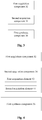
- Fig. 3 is a structure block diagram of a device for processing an IPv6 address according to an embodiment of the present disclosure, and as shown in Fig. 3 , the device includes a first acquisition component 32, a second acquisition component 34 and a first synthesis component 36. The device will be described below.
- the first acquisition component 32 is configured to acquire an IPv4 information option, of which an address field is an IPv4 address, in information options of an IPv6 message;
- the second acquisition component 34 is connected to the first acquisition component 32, and is configured to acquire an IPv6 prefix corresponding to the IPv4 information option;
- the first synthesis component 36 is connected to the acquisition component 34, and is configured to synthesize an IPv6 address according to the IPv4 address in the IPv4 information option and the IPv6 prefix.
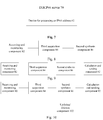
- Fig. 4 is an example structure block diagram of the acquisition component 34 in the device for processing the IPv6 address according to an embodiment of the present disclosure, and as shown in Fig. 4 , the second acquisition component 34 includes at least one of: a first acquisition element 42 and a second acquisition element 44.
- the second acquisition component 34 will be described below.
- the first acquisition element 42 is configured to acquire the IPv6 prefix corresponding to the IPv4 information option from local configuration information of network equipment which synthesizes the IPv6 address; and the second acquisition element 44 is configured to acquire the IPv6 prefix from a server which stores the IPv6 prefix.
- Fig. 5 is an example structure block diagram of the device for processing the IPv6 address according to an embodiment of the present disclosure, and as shown in Fig. 5 , the device further, besides all the structures shown in Fig. 3 , includes a first generation component 52 and a first sending component 54. The device will be described below.
- the first generation component 52 is connected to the synthesis component 36, and is configured to generate an IPv6 message containing an IPv6 address information option according to the synthesized IPv6 address; and the first sending component 54 is connected to the first generation component 52, and is configured to send the generated IPv6 message to the client equipment.
- Fig. 6 is a structure block diagram of DHCPv6 relay equipment according to an embodiment of the present disclosure, and as shown in Fig. 6 , the DHCPv6 relay equipment 60 includes the device for processing the IPv6 address 62 above mentioned.
- Fig. 7 is a structure block diagram of a DHCPv6 server according to an embodiment of the present disclosure, and as shown in Fig. 7 , the DHCPv6 server 70 includes the device for processing the IPv6 address 62 above mentioned.
- the embodiment provides a solution for synthesizing an IPv6 address.
- various problems appearing when some servers are still deployed in an IPv4 network in an IPv6/IPv4 network interworking process are solved; in addition, network configurations are reduced; and moreover, when NAT64 services are upgraded or all upgraded to an IPv6 network in a later period, the network configurations are flexibly regulated, complexity in network maintenance is reduced, and easiness for maintenance is ensured.
- the method for synthesizing the IPv6 address includes that: intermediate equipment receives a DHCPv6 relay-reply message from DHCPv6 server equipment, and monitors a network configuration information option, of which an address field is an IPv4 address, in network information options therein; the intermediate equipment acquires a synthesis IPv6 prefix corresponding to each IPv4 network configuration information option; and the intermediate equipment synthesizes an IPv6 address according to the IPv4 address in the network configuration information option and the acquired synthesis IPv6 prefix corresponding to each network configuration information option.
- the intermediate equipment may update a message by virtue of the synthesized IPv6 addresses, generate a corresponding IPv6 address network configuration information option for each network configuration information option of which the address field is the IPv4 address in the option, recalculate information such as a length of a message and forward a DHCPv6 reply message to client equipment.
- the network configuration information option, containing the IPv4 address, from a DHCPv6 server may multiplex a corresponding DHCPv6 IPv6 network configuration information option, and a DHCPv6 IPv4 network server option may also be added; when the corresponding DHCPv6 IPv6 network configuration information option is multiplexed, the IPv4 address of the IPv4 network server is contained in the IPv6 option; after monitoring the IPv4 address, the intermediate equipment generates the corresponding IPv6 address, updates the IPv6 option by the synthesized IPv6 address, calculates a message and forwards the message to the client equipment; when a DHCPv6 IPv4 network server option is added, it is necessary to define a type field in the added DHCPv6 IPv4 network server option, wherein the type field corresponds to an option-code field used by a corresponding network server option to identify corresponding network server information corresponding to the added DHCPv6 IPv4 network server option ; and after monitoring the added DH
- the intermediate equipment may acquire the synthesis IPv6 prefix corresponding to each network configuration information option through local configuration information, and may also acquire the synthesis IPv6 prefix from a centralized server in another manner; and in addition, the synthesis IPv6 prefixes correspond to network configuration information options may be the same or different which depends on a practical network deployment condition.
- the intermediate equipment may directly and locally synthesize the IPv6 address of each IPv4 network server and send the synthesized IPv6 address and/or an IPv6 address to the client equipment through a DHCPv6 reply message.
- the client equipment does not perceive an IPv4 network, and the client equipment is not required to perform system and/or network upgrading.
- Fig. 8 is a structure block diagram of a device for synthesizing an IPv6 address according to an embodiment of the present disclosure, and as shown in Fig. 8 , the device includes a receiving and monitoring component 82 (with a function the same as that of the first acquisition component 32), a third acquisition component 84 (with a function the same as that of the second acquisition component 34) and a second synthesis component 86 (with a function the same as that of the first synthesis component 36).
- the device will be described below.
- the receiving and monitoring component 82 is configured to receive a DHCPv6 relay-reply message from DHCPv6 server equipment, and monitor a network configuration information option, of which an address field is an IPv4 address, in network information options in the DHCPv6 relay-reply message;
- the third acquisition component 84 is connected to the receiving and monitoring component 82, and is configured to acquire a synthesis IPv6 prefix corresponding to each network configuration information option;
- the second synthesis component 86 is connected to the third acquisition component 84, and is configured to synthesize an IPv6 address according to the IPv4 address in the network configuration information option and the acquired synthesis IPv6 prefix corresponding to each network configuration information option.
- Fig. 9 is a first example structure block diagram of the device for synthesizing the IPv6 address according to an embodiment of the present disclosure, and as shown in Fig. 9 , the device further, besides all the component s shown in Fig. 8 , includes a calculation and sending component 92 (with functions the same as the functions of the generation component 52 and the sending component 54). The calculation and sending component 92 will be described below.
- the calculation and sending component 92 is connected to the second synthesis component 86, and is configured to update a message by the synthesized IPv6 address; generate a corresponding IPv6 address network configuration information option for each network configuration information option of which the address field is the IPv4 address in the options; recalculate information such as a length of the message; and forward a DHCPv6 reply message to client equipment.
- the receiving and monitoring component 82 is required to monitor a corresponding multiplexed IPv6 network configuration information option of which an address field is an IPv4 address, in a DHCPv6 message; and/or is required to monitor an added DHCPv6 IPv4 network server option, in which a type field corresponding to an option-code field used by a corresponding network server is defined to identify corresponding network server information corresponding to the added DHCPv6 IPv4 network server option.
- Fig. 10 is a second example structure block diagram of the device for synthesizing the IPv6 address according to an embodiment of the present disclosure, and as shown in Fig. 10 , the device further, besides all the components shown in Fig. 8 , includes an updating/deletion component 102.
- the updating/deletion component 102 will be described below.
- the updating/deletion component 102 is connected to the third acquisition component 84 and the second synthesis component 86, and is configured to update/delete a corresponding IPv6 prefix when the synthesis IPv6 prefix acquired by the third acquisition component 84 is updated/deleted.
- the synthesis IPv6 prefix acquired by the third acquisition component 84 may be locally configured by intermediate equipment, and may also be acquired from a centralized server in another manner; and in addition, the third acquisition component 84 may acquire one or more synthesis IPv6 prefixes corresponding to different IPv4 servers respectively, which specifically depends on a practical network deployment condition.
- Fig. 11 is a structure block diagram of a system for synthesizing an IPv6 address according to an embodiment of the present disclosure, and as shown in Fig. 11 , the system for synthesizing the IPv6 address 110 includes DHCPv6 server equipment 112 and intermediate equipment 114 including any abovementioned device for synthesizing the IPv6 address, wherein the DHCPv6 server equipment 112 includes a second generation component 1102 and a second sending component 1104.
- the DHCPv6 server equipment 112 will be described below.
- the second generation component 1102 is configured to, after receiving a DHCPv6 relay-forwarding message from the intermediate equipment, generate a DHCPv6 relay-reply message containing a network configuration information option of each IPv4 address, wherein the option may multiplex a corresponding DHCPv6 IPv6 network configuration information option, and a DHCPv6 IPv4 network server option may also be added; and the second sending component 1104 is connected to the generation component 1102, and is configured to send the DHCPv6 relay-reply message generated by the second generation component 1102 and containing the network configuration information option of the IPv4 address to the intermediate equipment.
- the intermediate equipment 1104 directly and locally synthesizes the IPv6 address of each IPv4 network server and sends the synthesized IPv6 address and/or an IPv6 address to the client equipment through a DHCPv6 reply message when receiving a DHCPv6 message of the client equipment as the DHCPv6 server equipment 1102.
- the client equipment Since the client equipment does not perceive an IPv4 network, the client equipment is not required to perform system and/or network upgrading.
- the intermediate equipment realizes a function of synthesizing an IPv6 address by virtue of an IPv4 address at the same time of automatically configuring a basic IPv6 address.
- a problem about access of a universal IPv6-only client to an IPv4 network server is solved, so that complexity in maintenance is reduced and convenience for transition to pure IPv6 is enhanced.
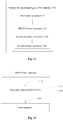
- Fig. 12 is a flowchart of a method for synthesizing an IPv6 address according to an embodiment of the present disclosure, and as shown in Fig. 12 , the method includes the following steps:
- the network configuration information option received from a DHCPv6 server by the intermediate equipment and containing the IPv4 address may be a multiplexed IPv6 network configuration information option in a DHCPv6 message, and the DHCPv6 IPv4 network server option may also be added; when the corresponding IPv6 network configuration information option in the DHCPv6 message is multiplexed, the IPv4 address of the IPv4 network server is contained in the IPv6 network configuration information option; after monitoring the IPv4 address, the intermediate equipment generates a corresponding IPv6 address, updates the IPv6 option by virtue of the synthesized IPv6 address, calculates a message and forwards the message to the client equipment; when the IPv4 network server option in the DHCPv6 message is added, it is necessary to define a type field, corresponding to an option-code field used by a corresponding network server, in the added IPv4 network server option, to identify corresponding network server information corresponding to the added IPv4 network server option; and after monitoring
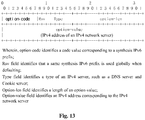
- Fig. 13 is a diagram of a message format of a DHCPv6 message containing a new IPv4 network server address option according to an example embodiment of the present disclosure.
- option-code field identifies a code value corresponding to an IPv4 network server address option
- Rsv field is a reserved field
- type field identifies a type of a IPv4 server, such as a DNS server and a Cookie server, wherein different type fields identify different IPv4 server types for synthesis of IPv6 addresses of corresponding IPv4 servers on intermediate equipment
- Option-len field identifies a length of an option-value
- Option-value field identifies an IPv4 address of a corresponding IPv4 network server
- the DHCPv6 message is required to contain multiple IPv4 network server address options.
- Fig. 14 is a diagram of a system for synthesizing an IPv6 address according to an example embodiment of the present disclosure, and as shown in Fig. 14 , the system includes: BRAS/NAT64 equipment 1402, DHCPv6 server equipment 1404 and an IPv6-only terminal/home gateway equipment 1406. The system will be described below.
- the BRAS/NAT64 equipment 1402 as DHCPv6 relay intermediate equipment, is configured to receive a DHCPv6 message sent by the DHCPv6 server equipment and monitor a network configuration information option, of which an address field is an IPv4 address, in network information options; also acquire a synthesis IPv6 prefix corresponding to each network configuration information option and synthesize an IPv6 address according to the IPv4 address in the network configuration information option and the acquired synthesis IPv6 prefix corresponding to each network configuration information option; and further update the message by virtue of the synthesized IPv6 address, generate a corresponding IPv6 address network configuration information option for each network configuration information option, of which the address field is the IPv4 address, in the options, recalculate information such as a length of a message, and forward a DHCPv6 reply message to the client equipment;
- the DHCPv6 server equipment 140 as a DHCPv6 server, supports a DHCPv6 option containing the IPv4 address and sends the DHCPv6 option containing the IPv4 address to the BRAS/NAT64 intermediate equipment through a DHCPv6 message;
- the IPv6-only terminal/home gateway equipment 1406, as the DHCPv6 client equipment, is configured to receive the DHCPv6 message and store and/or update parameters required to be stored.
- Fig. 15 is a diagram of a flow for synthesizing an IPv6 of an IPv4 DNS server according to an example embodiment of the present disclosure
- an IPv6 address of the IPv4 DNS server is contained in a multiplexed IPv6 option of a DHCPv6 message, and as shown in Fig. 15 , the diagram may include the following processing steps:
- the intermediate equipment BRAS/NAT64 may acquire the synthesis IPv6 prefix corresponding to each network configuration information option through local configuration information, and may also acquire the synthesis IPv6 prefix from a centralized server in another manner.
- network configuration information options may correspond to the same or different synthesis IPv6 prefixes, which depends on a practical network deployment condition.
- the intermediate equipment BRAS/NAT64 when receiving a DHCPv6 message of the client equipment as DHCPv6 server equipment, directly and locally synthesizes the IPv6 address of each IPv4 network server and sends the synthesized IPv6 address or/and an IPv6 address to the client equipment through a DHCPv6 reply message.
- the client equipment does not perceive an IPv4 network, and the client equipment is not required to perform system and/or network upgrading.
- IPv6-initiated TCP session and Session Initiation Protocol (SIP) flow, which will not be elaborated one by one herein.
- SIP Session Initiation Protocol
- each component or each step of the present disclosure may be implemented by a universal computing device, and the components or steps may be concentrated on a single computing device or distributed on a network formed by a plurality of computing devices, and may optionally be implemented by programmable codes executable for the computing devices, so that the components or steps may be stored in a storage device for execution with the computing devices, the shown or described steps may be executed in sequences different from those described here in some circumstances, or may form each integrated circuit module respectively, or multiple components or steps therein may form a single integrated circuit component for implementation.
- the present disclosure is not limited to any specific hardware and software combination.
Landscapes
- Engineering & Computer Science (AREA)
- Computer Networks & Wireless Communication (AREA)
- Signal Processing (AREA)
- Computer Security & Cryptography (AREA)
- Data Exchanges In Wide-Area Networks (AREA)
- Small-Scale Networks (AREA)
Applications Claiming Priority (2)
| Application Number | Priority Date | Filing Date | Title |
|---|---|---|---|
| CN201410073262.0A CN104883407A (zh) | 2014-02-28 | 2014-02-28 | IPv6地址处理方法、装置及DHCPv6中继设备 |
| PCT/CN2014/082755 WO2015127750A1 (zh) | 2014-02-28 | 2014-07-22 | IPv6地址处理方法、装置及DHCPv6中继设备 |
Publications (2)
| Publication Number | Publication Date |
|---|---|
| EP3113457A1 true EP3113457A1 (de) | 2017-01-04 |
| EP3113457A4 EP3113457A4 (de) | 2017-10-11 |
Family
ID=53950740
Family Applications (1)
| Application Number | Title | Priority Date | Filing Date |
|---|---|---|---|
| EP14883705.7A Withdrawn EP3113457A4 (de) | 2014-02-28 | 2014-07-22 | Ipv6-adressenverarbeitungsverfahren und vorrichtung sowie dhcpv6-relaisvorrichtung |
Country Status (5)
| Country | Link |
|---|---|
| US (1) | US20160380963A1 (de) |
| EP (1) | EP3113457A4 (de) |
| JP (1) | JP2017506862A (de) |
| CN (1) | CN104883407A (de) |
| WO (1) | WO2015127750A1 (de) |
Families Citing this family (7)
| Publication number | Priority date | Publication date | Assignee | Title |
|---|---|---|---|---|
| EP3276920B1 (de) * | 2015-05-25 | 2020-01-15 | Huawei Technologies Co., Ltd. | Verfahren, vorrichtung und system zur nachrichtenverarbeitung |
| CN106559507B (zh) * | 2015-09-29 | 2019-10-22 | 中国电信股份有限公司 | IPv4重复地址检测方法和装置 |
| EP3242466B1 (de) * | 2016-05-04 | 2019-04-17 | Siemens Aktiengesellschaft | Verfahren zur konfiguration von kommunikationsgeräten eines industriellen automatisierungssystems und konfigurationsdatenverteilereinheit |
| CN110247998A (zh) * | 2019-07-03 | 2019-09-17 | 北京宏图佳都通信设备有限公司 | 一种IPv4/IPv6数据传输处理方法和系统 |
| CN113746944B (zh) * | 2020-05-29 | 2024-05-14 | 台众计算机股份有限公司 | IPv6网点管理方法及设备 |
| US20220094664A1 (en) * | 2020-09-23 | 2022-03-24 | Avaya Management L.P. | Method and system to enhance communication between an ipv6-only sip client and an ipv4-only server or client |
| CN113660357B (zh) * | 2021-08-17 | 2023-10-27 | 烽火通信科技股份有限公司 | 一种IPv6双栈系统自动获取IP地址的方法和装置 |
Family Cites Families (14)
| Publication number | Priority date | Publication date | Assignee | Title |
|---|---|---|---|---|
| JP5387061B2 (ja) * | 2009-03-05 | 2014-01-15 | 沖電気工業株式会社 | 情報変換装置、情報変換方法、情報変換プログラム及び中継装置 |
| EP2413544A4 (de) * | 2009-03-26 | 2012-03-21 | Huawei Tech Co Ltd | Verfahren zur herstellung eines ipv6-hosts zum zugriff auf einen ipv4-host, verfahren zur erstellung eines ipv6-adressenpräfixes und übersetzungsvorrichtung dafür |
| CN101848247A (zh) * | 2009-03-26 | 2010-09-29 | 华为技术有限公司 | 实现IPv6主机访问IPv4主机的方法、获取IPv6地址前缀的方法和转换装置 |
| US8509244B2 (en) * | 2009-08-14 | 2013-08-13 | Telefonaktiebolaget L M Ericsson (Publ) | Method and apparatus for providing host node awareness for multiple NAT64 environments |
| JP5333095B2 (ja) * | 2009-09-10 | 2013-11-06 | 沖電気工業株式会社 | アドレス変換・プロトコル変換システム、並びに、トランスレータ装置及びトランスレータプログラム |
| CN101692674B (zh) * | 2009-10-30 | 2012-10-17 | 杭州华三通信技术有限公司 | 双栈接入的方法和设备 |
| US8509185B2 (en) * | 2010-02-26 | 2013-08-13 | Telefonaktiebolaget Lm Ericsson | Enabling IPV6 mobility with NAT64 |
| CN102739809B (zh) * | 2011-04-07 | 2015-07-15 | 中国电信股份有限公司 | DNS64数据库、服务器、系统和IPv4/IPv6通信方法 |
| US8995360B2 (en) * | 2011-06-09 | 2015-03-31 | Time Warner Cable Enterprises Llc | Techniques for prefix subnetting |
| CN102843441B (zh) * | 2011-06-24 | 2017-02-22 | 华为技术有限公司 | 控制地址配置方式的方法和设备 |
| CN102255982A (zh) * | 2011-07-21 | 2011-11-23 | 电子科技大学 | 一种IPv4/IPv6转换网关以及转换方法 |
| CN102938735B (zh) * | 2012-11-15 | 2016-02-10 | 北京邮电大学 | 使用路由通告携带选项下发nat64地址前缀的方法 |
| CN104869065B (zh) * | 2014-02-26 | 2020-04-21 | 中兴通讯股份有限公司 | 数据报文处理方法及装置 |
| CN104883408A (zh) * | 2014-02-28 | 2015-09-02 | 中兴通讯股份有限公司 | 一种处理NAT64前缀的方法、网络设备及DHCPv6服务器 |
-
2014
- 2014-02-28 CN CN201410073262.0A patent/CN104883407A/zh not_active Withdrawn
- 2014-07-22 WO PCT/CN2014/082755 patent/WO2015127750A1/zh not_active Ceased
- 2014-07-22 JP JP2016554585A patent/JP2017506862A/ja active Pending
- 2014-07-22 US US15/121,064 patent/US20160380963A1/en not_active Abandoned
- 2014-07-22 EP EP14883705.7A patent/EP3113457A4/de not_active Withdrawn
Also Published As
| Publication number | Publication date |
|---|---|
| US20160380963A1 (en) | 2016-12-29 |
| WO2015127750A1 (zh) | 2015-09-03 |
| EP3113457A4 (de) | 2017-10-11 |
| JP2017506862A (ja) | 2017-03-09 |
| CN104883407A (zh) | 2015-09-02 |
Similar Documents
| Publication | Publication Date | Title |
|---|---|---|
| EP3113457A1 (de) | Ipv6-adressenverarbeitungsverfahren und vorrichtung sowie dhcpv6-relaisvorrichtung | |
| KR100901790B1 (ko) | IPv4 네트워크 기반 IPv6 서비스 제공시스템에서의 제어 터널 및 다이렉트 터널 설정 방법 | |
| EP3113458A1 (de) | Verfahren zur verarbeitung von nat64-präfix, netzwerkvorrichtung und dhcpv6-server | |
| US8886775B2 (en) | Dynamic learning by a server in a network environment | |
| US20110110375A1 (en) | Method of receiving a data packet in an ipv6 domain, an associated device and an associated home gateway | |
| US8693369B2 (en) | Method of routing a data packet in a network and an associated device | |
| KR100944421B1 (ko) | 네트워크 어드레스 번역기 구성을 위해 파라미터 도입을 위한 방법 및 장치와, nat 디바이스의 자가-구성을 위한 방법과, 컴퓨터-판독가능 매체와, 통신 네트워크 | |
| WO2020240046A1 (en) | Transparent multiplexing of ip endpoints | |
| EP3459228A1 (de) | Lokales ausbrechen in mobilen ip-netzwerken | |
| US11196703B2 (en) | Connecting radio base stations via a third party network | |
| CN113542452A (zh) | 基于算法映射的实时IPv4-IPv6溯源方法及系统 | |
| CN104935677B (zh) | 一种nat64资源获取方法及获取/分配装置 | |
| US8891518B2 (en) | Routing device and method of translating addresses in cascade in a network | |
| JP4712481B2 (ja) | 通信方法および装置 | |
| EP2052514B1 (de) | Pervasive dynamische host-konfiguration zwischen domänen | |
| EP3125487B1 (de) | Ipv6-netzwerk-parameterverarbeitungsverfahren, vorrichtung, system und aaa-server | |
| EP2961110A1 (de) | Paketübertragungsverfahren und -vorrichtung sowie server | |
| WO2008069504A1 (en) | Method for configuring control tunnel and direct tunnel in ipv4 network-based ipv6 service providing system | |
| Sun et al. | DHCPv4-over-DHCPv6 (DHCP 4o6) transport | |
| JP6403225B2 (ja) | 中継装置のipアドレス解決方法、中継装置、及び、プログラム | |
| EP3313038B1 (de) | Verfahren und vorrichtung zur aktualisierung der adresse des internetprotokolls (ip) und gateway | |
| Sun et al. | RFC 7341: DHCPv4-over-DHCPv6 (DHCP 4o6) Transport | |
| Singh et al. | RFC 6204: Basic Requirements for IPv6 Customer Edge Routers | |
| JP2010212921A (ja) | IPv6/IPv4トランスレータとこれを用いたIPv6/IPv4ネットワークシステム | |
| Byrne | Internet Engineering Task Force M. Mawatari Internet-Draft Japan Internet Exchange Co., Ltd. Intended status: BCP M. Kawashima Expires: December 27, 2012 NEC AccessTechnica, Ltd. |
Legal Events
| Date | Code | Title | Description |
|---|---|---|---|
| PUAI | Public reference made under article 153(3) epc to a published international application that has entered the european phase |
Free format text: ORIGINAL CODE: 0009012 |
|
| STAA | Information on the status of an ep patent application or granted ep patent |
Free format text: STATUS: REQUEST FOR EXAMINATION WAS MADE |
|
| 17P | Request for examination filed |
Effective date: 20160824 |
|
| AK | Designated contracting states |
Kind code of ref document: A1 Designated state(s): AL AT BE BG CH CY CZ DE DK EE ES FI FR GB GR HR HU IE IS IT LI LT LU LV MC MK MT NL NO PL PT RO RS SE SI SK SM TR |
|
| AX | Request for extension of the european patent |
Extension state: BA ME |
|
| DAX | Request for extension of the european patent (deleted) | ||
| A4 | Supplementary search report drawn up and despatched |
Effective date: 20170913 |
|
| RIC1 | Information provided on ipc code assigned before grant |
Ipc: H04L 29/12 20060101AFI20170907BHEP |
|
| STAA | Information on the status of an ep patent application or granted ep patent |
Free format text: STATUS: EXAMINATION IS IN PROGRESS |
|
| 17Q | First examination report despatched |
Effective date: 20180824 |
|
| STAA | Information on the status of an ep patent application or granted ep patent |
Free format text: STATUS: THE APPLICATION HAS BEEN WITHDRAWN |
|
| 18W | Application withdrawn |
Effective date: 20181016 |