EP3116276B1 - Datenübertragungsverfahren und -vorrichtung - Google Patents
Datenübertragungsverfahren und -vorrichtung Download PDFInfo
- Publication number
- EP3116276B1 EP3116276B1 EP14889559.2A EP14889559A EP3116276B1 EP 3116276 B1 EP3116276 B1 EP 3116276B1 EP 14889559 A EP14889559 A EP 14889559A EP 3116276 B1 EP3116276 B1 EP 3116276B1
- Authority
- EP
- European Patent Office
- Prior art keywords
- data transmission
- time
- transmission mode
- data
- domain
- Prior art date
- Legal status (The legal status is an assumption and is not a legal conclusion. Google has not performed a legal analysis and makes no representation as to the accuracy of the status listed.)
- Active
Links
Images


Classifications
-
- H—ELECTRICITY
- H04—ELECTRIC COMMUNICATION TECHNIQUE
- H04W—WIRELESS COMMUNICATION NETWORKS
- H04W28/00—Network traffic management; Network resource management
- H04W28/16—Central resource management; Negotiation of resources or communication parameters, e.g. negotiating bandwidth or QoS [Quality of Service]
- H04W28/18—Negotiating wireless communication parameters
- H04W28/22—Negotiating communication rate
-
- H—ELECTRICITY
- H04—ELECTRIC COMMUNICATION TECHNIQUE
- H04W—WIRELESS COMMUNICATION NETWORKS
- H04W28/00—Network traffic management; Network resource management
- H04W28/02—Traffic management, e.g. flow control or congestion control
- H04W28/06—Optimizing the usage of the radio link, e.g. header compression, information sizing, discarding information
-
- H—ELECTRICITY
- H04—ELECTRIC COMMUNICATION TECHNIQUE
- H04L—TRANSMISSION OF DIGITAL INFORMATION, e.g. TELEGRAPHIC COMMUNICATION
- H04L5/00—Arrangements affording multiple use of the transmission path
- H04L5/003—Arrangements for allocating sub-channels of the transmission path
- H04L5/0044—Allocation of payload; Allocation of data channels, e.g. PDSCH or PUSCH
-
- H—ELECTRICITY
- H04—ELECTRIC COMMUNICATION TECHNIQUE
- H04L—TRANSMISSION OF DIGITAL INFORMATION, e.g. TELEGRAPHIC COMMUNICATION
- H04L5/00—Arrangements affording multiple use of the transmission path
- H04L5/0091—Signalling for the administration of the divided path, e.g. signalling of configuration information
-
- H—ELECTRICITY
- H04—ELECTRIC COMMUNICATION TECHNIQUE
- H04L—TRANSMISSION OF DIGITAL INFORMATION, e.g. TELEGRAPHIC COMMUNICATION
- H04L27/00—Modulated-carrier systems
- H04L27/26—Systems using multi-frequency codes
- H04L27/2601—Multicarrier modulation systems
-
- H—ELECTRICITY
- H04—ELECTRIC COMMUNICATION TECHNIQUE
- H04L—TRANSMISSION OF DIGITAL INFORMATION, e.g. TELEGRAPHIC COMMUNICATION
- H04L5/00—Arrangements affording multiple use of the transmission path
- H04L5/003—Arrangements for allocating sub-channels of the transmission path
- H04L5/0053—Allocation of signalling, i.e. of overhead other than pilot signals
Definitions
- the present invention relates to a mobile communication technology, in particular to a dynamic data transmission method and apparatus based on a time-domain symbol.
- next generation mobile communication technology i.e., the 5th Generation (5G) mobile communication technology.
- 5G next generation mobile communication technology
- the industry generally believes that the next generation mobile communication system should have features such as ultrahigh speed, ultrahigh capacity, ultrahigh reliability and ultralow delay transmission feature.
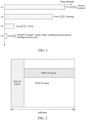
- FIG. 1 is a schematic diagram of delay transmission features in existing different generation mobile communication technologies.
- horizontal ordinates express delay demands and longitudinal coordinates express different generation mobile communication systems.
- a delay of data transmission in a traditional system of the 2nd Generation (2G) mobile communication technology exceeds 100ms, and this delay can reach a low delay communication effect in the aspect of human body muscle response;
- a delay of data transmission in a system of the 3rd Generation (3G) mobile communication technology is 100ms, and this delay can reach a low delay communication effect in the aspect of hearing;
- a delay of data transmission in a 4G system is about 20ms, and this delay can reach a low delay communication effect in the aspect of vision.
- a physical downlink control channel is located on first n Orthogonal Frequency Division Multiplexing (OFDM) symbols of a sub frame, and a Physical Downlink Share Channel (PDSCH) is located after a Physical Downlink Control Channel (PDCCH) time domain and occupies the entire subframe in the time domain.
- OFDM Orthogonal Frequency Division Multiplexing
- PDSCH Physical Downlink Share Channel
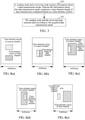
- an enhanced Physical Downlink Control Channel (ePDCCH) and a physical downlink share channel use a frequency division multiplexing mode, and time-domain lengths are the same, as illustrated in FIG. 2 which is a schematic diagram of a physical downlink control channel and a physical downlink share channel in an existing LTE system.
- an oblique line shaded part expresses a PDCCH region
- an oblique small check shaded part expresses an ePDCCH region
- a black part expresses a PDSCH region.
- a PDSCH frequency-domain position can be known and corresponding data decoding is started to implement data transmission.
- the PDCCH/ePDCCH receiving is delayed, thus decoding of data born by the PHSCH will be delayed; and in the other aspect, since an interval of PDCCH/ePDCCH/PDSCH transmission in the LTE system is one subframe, even though there is burst super real-time data transmission, processing can be performed by waiting for the incoming of a next subframe and this data transmission mode increases data transmission delay.
- time-domain length is fixed, i.e., the entire subframe is occupied in time domain
- a frequency-domain position of data transmission can only be adjusted.
- data transmission can only be completed in a delay of one subframe, this undoubtedly also increases data transmission delay and consequently rapid transmission of data is hindered.
- the document US2010/0284339 discloses a method of transmitting cyclic prefix length information when wireless access systems having different cyclic prefix lengths coexist.
- the document US 2008/279143 A1 discloses a method for supporting short latency data transmission in a mobile communication system.
- the embodiments of the present invention provide a data transmission method and apparatus, which can decrease data transmission delay, satisfy transmission delay requirements under specific application scenarios and thus realize rapid transmission of data.
- the time-domain length of data transmission is configured based on the time-domain symbol
- the setting of the time-domain length of data transmission is flexible
- multiple opportunities of data transmission can exist in one subframe
- resources used for data transmission can be guaranteed to be found rapidly when there is a data transmission demand, thus rapid data transmission is realized and data transmission delay is reduced.
- FIG. 3 is a flowchart of a data transmission method according to the embodiment of the present invention. As illustrated in FIG. 3 , the data transmission method includes the following steps:
- a transmission node acquires information about a data transmission mode, and the information about the data transmission mode includes a rapid data transmission mode, the rapid data transmission mode includes a time-domain length of data transmission configured based a time-domain symbol.
- the transmission node includes a sending node and a receiving node. It needs to be stated that, for transmission networks such as some private networks or dedicated networks in which sending nodes only supporting the rapid data transmission mode are located, all receiving nodes accessing to the transmission networks use the rapid data transmission mode to transmit data.
- acquiring the information about the data transmission mode includes:
- the time-domain symbol at least includes: an Orthogonal Frequency Division Multiplexing (OFDM) symbol, or a Single Carrier Frequency Division Multiple Access (SC-FDMA) symbol,
- OFDM Orthogonal Frequency Division Multiplexing
- SC-FDMA Single Carrier Frequency Division Multiple Access
- the time-domain length includes h time-domain symbols.
- h includes at least one of 1, 2, 3 or 4, and the number of time-domain symbols contained in one or more subframes mainly involves in an application scenario that the time-domain length of one or more subframes is less than 1ms; or the situation of dividing into a plurality of small data packets needs to be avoided so as to realize transmission of larger data packets.
- the sub frame with a length less than 1ms is a sub frame in a frame structure newly defined in the embodiment of the present invention and is different from the defined subframe in the frame structure of the existing LTE system; and the time-domain length according to the claims is one of a plurality of preset lengths , 1, 2, 3 or 4 symbols, and is dynamically selected through signaling .
- time-domain length of data transmission in the embodiment of the present invention, multiple opportunities of data transmission can exist within 1ms, resources used for data transmission can be guaranteed to be found rapidly when there is a data transmission demand, and thus rapid data transmission is realized.
- the number of the time-domain symbols for transmitting data in the time-domain length is dynamically determined according to information of data which needs to be transmitted such as a size of a data packet, such that the data can be guaranteed to be completely transmitted within a time as short as possible, and the problem of time delay caused by dividing one data packet into a plurality of small data packets for transmission since the time-domain length of data transmission is limited is avoided.
- a determining mode of a time-domain region of the time-domain symbols in the subframe is:
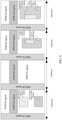
- a relationship between the data channel and a corresponding control channel is that: in a first relationship, time-domain symbols of the data channel and time-domain symbols of the corresponding control channel have the same time-domain starting position and time-domain ending position, as illustrated in FIG. 4(a) ; or in a second relationship, a time-domain starting position of time-domain symbols of the data channel is next to a time-domain ending position of time-domain symbols of its corresponding control channel as illustrated in FIG.
- the data channel and its corresponding control channel have the same frequency-domain positions, or have different or partially same frequency-domain positions; optionally, if the data channel and its corresponding control channel agree to have the same frequency-domain positions, the frequency-domain positions of the data channel do not need to be indicated by signaling and the frequency-domain positions of the data channel may be determined according to the detected control channel; or the frequency-domain positions of the data channel and its corresponding control channel are respectively determined, and the frequency-domain positions of the data channel may be determined through resource indication signaling born by the control channel; or in a third relationship, time-domain symbols of the data channel and time-domain symbols of its corresponding control channel have the same time-domain starting position and a time-domain length of the data channel is greater than or equal to a time-domain length of the control channels, as illustrated in FIG.
- the time-domain length of the data channel may be preset, or indicated by signaling from the sending node (i.e., the sending node transmits a data channel time-domain length signaling indication to the receiving node, and after the receiving node receives the signaling indication, the receiving node determines the time-domain length of the data channel according to the signaling indication) or determined according to the time-domain length of the control channel, e.g., the time-domain length of the data channel is k times of the time-domain length of the control channel, and k is 1, 2, 3, 4, etc., or the time-domain length of the data channel and the time-domain length of the control channel have a preset mapping relationship, as shown in Table 1 and Table 2; at this moment, the frequency-domain positions of the data channel and its corresponding control channel are not strictly limited, i.e., may be the same and may also be different; Table 1 Time-domain length of control channel 1 2 3 4 Time-domain length of data channel 2 3 5 6 or as shown in
- Indicating the time-domain length of the data channel through the signaling includes: the sending node transmitting data channel time-domain length indication signaling to the receiving node, and after the receiving node receives the signaling, determining the time-domain length of the data channel according to the signaling, herein the signaling may represent a length value, and several values may also be preset and the value is dynamically selected according to the signaling; or
- Frequency-domain positions of the data channel and its corresponding control channel may be discontinuous and may also be continuous, and specific implementation thereof does not limit the protection range of the present invention.
- the data channel and its corresponding control channel include: a downlink data channel and its corresponding downlink control channel, and/or a uplink data channel and its corresponding uplink control channel, and, the uplink control channel is used for bearing uplink control information, such as Hybrid Automatic Repeat reQuest Acknowledgment (HARQ-ACK), and Channel State Information (CSI); and the time-domain length of the uplink control channel is also allocated based on the time-domain symbols.
- uplink control information such as Hybrid Automatic Repeat reQuest Acknowledgment (HARQ-ACK), and Channel State Information (CSI)
- CSI Channel State Information
- the uplink control channel may be used for indicating related transmission information of the corresponding data channel, e.g., a size of a transmission block, a new data packet/old data packet, version information, related reference signal information, etc.
- autonomous scheduling refers to pre-allocating partial sources, e.g., PUSCH resources or resources for transmitting data with a new time-frequency unit as a unit.
- the receiving node when the receiving node has a data transmission demand, the receiving node directly transmits data on the predefined resources and does not need to send a scheduling request to the sending node to wait for the scheduling by the sending node, such that the delay caused by waiting for scheduling is decreased, the data transmission delay is shortened and thus the data transmission speed is improved.
- the resources of the control channel are mapped by using a preset mode, e.g., locating on preset time-domain resources, data transmission is performed according to the preset size of the transmission block, and a fixed modulating and coding mode is used, including: a frequency domain is continuously or discretely mapped by taking a resource block as a unit or is continuously or discretely mapped by taking a specific control channel unit; the control channel and the data channel may be multiplexed on a same resource block of a same time-domain symbol, or multiplexed on different time-domain symbols of a same resource block, or multiplexed on different resource blocks of a same time-domain symbol.
- a preset mode e.g., locating on preset time-domain resources
- data transmission is performed according to the preset size of the transmission block
- a fixed modulating and coding mode is used, including: a frequency domain is continuously or discretely mapped by taking a resource block as a unit or is continuously or discretely mapped by taking
- step 301 the sending node and the receiving node transmit data according to the acquired data transmission mode.
- transmitting the data according to the data transmission mode includes: transmitting uplink data and its corresponding control channel according to the data transmission mode, and/or transmitting downlink data and its corresponding control channel according to the data transmission mode, i.e., data transmission is performed according to time-frequency resources designated in the data transmission mode.
- Transmission includes sending and/or receiving.
- the uplink data are born through the uplink data channel
- uplink control information is born through the uplink control channel
- the uplink control information includes feedback information of downlink data, and/or channel state information, and/or transmission information related to uplink data, etc.
- the transmitted data include a size of a transmission block, and/or a new data packet/old data packet, and/or version information, and/or a modulating mode, and/or related reference signal information.
- the sending node receives uplink data and its corresponding control channel and/or sending downlink data and its corresponding control channel according to the configuration of the data channel and the control channel in the embodiment of the present invention, and the sending node includes but not limited to a base station, a relay transmission node, a wireless gateway or a router; and the receiving node receives downlink data and/or sends uplink data according to the configuration of the data channel and the control channel in the present invention, and the receiving node includes but not limited to User Equipment (UE), a micro base station or a home base station.
- UE User Equipment
- FIG. 5 is a schematic diagram of data transmission in a rapid data transmission mode under a spectrum share scenario according to the embodiment of the present invention.
- FIG. 5 is a schematic diagram of data transmission in a rapid data transmission mode under a spectrum share scenario according to the embodiment of the present invention.
- idle resources may be partial uplink resources which are caused to be idle due to uplink and downlink service asymmetry such that the idle uplink resources are used for transmitting downlink data, or partial downlink resources are idle such that the idle downlink resources are used for transmitting uplink data, or when the LTE system and other systems share spectrum resources and the other systems do not use the resources, the LTE system may use the idle resources to transmit uplink data or downlink data.
- the method further includes dividing data transmission opportunities, including: continuously dividing data transmission opportunities or dividing data transmission opportunities according to a preset interval, and, continuous dividing data transmission opportunities includes: numbering all time-domain symbols available for data transmission in a preset specific time window, and sequentially setting apart every h time-time symbols into a time-domain unit, herein the time-domain unit is used for data transmission.
- supposing that the number of time-domain symbols available for data transmission within 1ms is 11, if h is 2, 6 time-domain units can be set and the last time-domain unit includes one time-domain symbol; or 5 time-domain units are set apart and the last time-domain unit includes 3 time-domain symbols.
- supposing that the number of time-domain symbols available for data transmission within 3ms is 33, if h is 3, 11 time-domain units can be set apart.
- supposing that the number of time-domain symbols available for data transmission in 2ms is 20, if h is 4, 5 time-domain units can be set apart, etc.
- Dividing data transmission opportunities according to the preset interval includes: supposing that k data transmission opportunities exist in a specific time window, herein k is a preset value, and using remaining other time-domain symbols for other purposes, e.g., control channel transmission, reference signal transmission, synchronizing channel or broadcast channel or multicast channel transmission, etc., herein reference signals may be used for measurement and may also be used for demodulation.
- the specific time window mainly limits the time-domain region used for transmitting the data channel.
- the time-domain length of data transmission is configured based on the time-domain symbol
- the setting of the time-domain length of data transmission is flexible
- multiple opportunities of data transmission can exist in one subframe
- resources used for data transmission can be guaranteed to be found rapidly when there is a data transmission demand, thus rapid data transmission is realized and data transmission delay is reduced.
- the demands of data scheduling for time-domain resources are reduced, more flexible resource application is realized and spectrum efficiency is improved.
- the method further includes: the sending node determining whether the receiving node uses the rapid data transmission mode, including: the sending node determining whether the receiving node uses the rapid data transmission mode according to preset transmission information of the receiving node, and when determining that the receiving node uses the rapid data transmission mode, sending the information about the data transmission information to the receiving node to indicate that the data transmission mode of the receiving node is the rapid data transmission mode.
- the preset transmission information of the receiving node at least includes at least one of the following: transmission mode request information, device type information and service type information.
- Determining whether the receiving node uses the rapid data transmission mode includes:
- the sending node determines that the receiving node transmits data according to the conventional data transmission mode.
- the sending node further judges the current service demand, such as Quality of service (Qos) and service type, and determines whether the receiving node uses the rapid data transmission mode; or the sending node determines whether the receiving node uses the rapid data transmission mode according to the transmission mode request information received from the receiving node having the ultralow delay data transmission demand, and if the transmission mode request information is not received from the receiving node, the receiving node uses the conventional data transmission mode to transmit data.
- Qos Quality of service
- service type service type
- the method provided by the embodiment of the present invention further includes: the sending node setting the receiving node to simultaneously use the rapid data transmission mode and the conventional data transmission mode, herein the rapid data transmission mode and the conventional data transmission mode of the receiving node are located in different serving cells (the serving cells may also be viewed as component carriers), or are located on different subframes of a same serving cell, or are located on different time-domain symbols of a same subframe of a same serving cell.
- a primary serving cell uses the conventional data transmission mode
- a secondary serving cell uses the rapid data transmission mode
- the configuration mode of the data transmission mode of the embodiment of the present invention may use a combination of a plurality of modes, e.g., a combination of a subframe configuration mode and a configuration mode based on a serving cell, or a combination of a configuration mode of different time-domain symbols in a subframe and a configuration mode based on a serving cell, or a combination of a subframe configuration mode, a configuration mode based on a serving cell, and a configuration mode of different time-domain symbols in a subframe, etc., which is not limited here.
- One or more relationships may exist between the control channel and the data channel, e.g., different resources select different modes, or different service types select different modes, or different terminals select different modes, or different transmission nodes select different modes, or different configurations are performed aiming at a plurality of different resource selections, service types, terminals and transmission nodes, etc.
- a sending node is a relay transmission node and a receiving node is user equipment.
- the relay transmission node in this embodiment determines that the user equipment supports a rapid data transmission mode, data are transmitted between the relay transmission node and the user equipment according to the rapid data transmission mode, and the rapid data transmission mode includes: a time-domain length of data transmission is configured based on a time-domain symbol.
- the relay transmission node is a transmission node which only supports the rapid data transmission mode, all user equipment accessing to the relay transmission node use the rapid data transmission mode to transmit data; and at this moment, a mode configuration does not need to be sent to the user equipment and the user equipment accessing to the relay transmission node can recognize that the rapid data transmission mode needs to be used to perform data transmission.
- the relay transmission node needs to determine whether the accessing user equipment supports the rapid data transmission mode according to predefined transmission information of the user equipment, and the predefined transmission information at least includes at least one of the following: transmission mode request information, user equipment type and service information, and the transmission mode request information is sent by the user equipment; the user equipment type includes user equipment having an ultralow delay data transmission demand; and the service type includes an ultralow delay service, data demanded by a small resource block, etc., e.g., ultrasonic delay demand services of 1ms, 20ms, etc.
- the relay transmission node further judges the current service demand, such as Quality of service (Qos) and service type, and determines whether the user equipment uses the rapid data transmission mode; or the relay transmission node determines whether the user equipment uses the rapid data transmission mode according to the transmission mode request information received from the user equipment having the ultralow delay data transmission demand, and if the transmission mode request information is not received from the user equipment, the user equipment uses the conventional data transmission mode to transmit data; and thereafter, the relay transmission node sends transmission mode configuration information to the user equipment to indicate that the transmission mode of the user equipment is the rapid data transmission mode.
- Qos Quality of service
- service type service type
- the time-domain symbol includes at least one of the following: an Orthogonal Frequency Division Multiplexing (OFDM) symbol, a Single Carrier Frequency Division Multiple Access (SC-FDMA) symbol; and the time-domain length includes h time-domain symbols, and according to the claims h includes at least one of 1, 2, 3 or 4.
- OFDM Orthogonal Frequency Division Multiplexing
- SC-FDMA Single Carrier Frequency Division Multiple Access
- the time-domain length of the data channel is dynamically changed.
- a relationship between the data channel and a corresponding control channel includes at least one of the following:
- the frequency-domain position of the data channel is indicated by information born by the corresponding control channel; or the frequency-domain position is determined according to the frequency-domain position of the corresponding control channel, e.g., they are the same frequency-domain positions or have a specific mapping relationship, e.g., the control channel is located on frequency-domain position X, the data channel is located on frequency-domain position 2 ⁇ X or (X+1), etc.; or the position of the data channel is preconfigured by a base station, etc.
- transmitting the data according to the rapid data transmission mode includes: the relay transmission node receiving uplink data and its corresponding control channel according to the rapid data transmission mode, and/or sending downlink data and its corresponding control channel according to the rapid data transmission mode; and the user equipment receiving downlink data and/or sending uplink data according to the configurations of the data channel and the control channel.
- the relay transmission node receives the uplink data and the corresponding uplink control information sent by the user equipment, and the uplink data are born through the uplink data channel, and the uplink control information is born through the uplink control channel; and the uplink control information includes at least one of the following: feedback information of downlink data, downlink channel state information and transmission information related to the uplink data.
- the transmission information transmitted through the rapid data transmission mode includes at least one of the following: a size of a transmission block, a new data packet/old data packet, version information, a modulating mode and related reference signal information; the base station firstly decodes the control channel to acquire the transmission information, and then decodes the data channel according to the transmission information.
- the data channel when the data channel is an uplink data channel, the data channel may not have a corresponding control channel, and data transmission is performed in a predefined format according to resources pre-allocated by the base station and the service demand of the user equipment, e.g., code modulation and sending are performed according to the transmission block with the predetermined size, and whether data repeat is performed is determined according to feedback information for the base station sending data to the user equipment.
- the relay transmission node configures that the user equipment simultaneously supports the rapid data transmission mode and the conventional data transmission mode
- the rapid data transmission mode and the conventional data transmission mode of the receiving node are located on different component carriers (serving cells), or are located on different subframes of a same component carrier (serving cell) or different time-domain symbols of a same subframe.
- a primary serving cell uses the conventional data transmission mode, and a secondary serving cell uses the rapid data transmission mode;
- User equipment determines whether to transmit data according to a rapid data transmission mode according to predefined transmission information, and the rapid data transmission mode includes: a time-domain length of data transmission is configured based on a time-domain symbol.
- the predefined transmission information at least includes at least one of the following: configuration information, access system (transmission node) type and service information;
- the access system type includes the system supporting the rapid data transmission mode;
- the configuration information is configuration information sent by the transmission node;
- the service type includes an ultralow delay service and data demanded by a small resource block, e.g., an ultralow delay demand service of 1ms, 20ms, etc.
- the user equipment may determine whether to transmit data according to the rapid data transmission mode as follows:
- the embodiment of the present invention further provides a data transmission system, at least including a transmission node, the transmission node is configured to acquire information about a data transmission mode and transmit data according to the acquired data transmission mode, herein the information about the data transmission mode includes a rapid data transmission mode, the rapid data transmission mode includes: configuring a time-domain length of data transmission based on a time-domain symbol.
- the transmission node includes a sending node and/or a receiving node, and the sending node is configured to acquire information about a data transmission mode and transmit data according to the acquired data transmission mode; and the receiving node is configured to acquire the information about the data transmission mode and transmit data according to the acquired data transmission mode, herein the information about the data transmission mode includes a rapid data transmission mode, the rapid data transmission mode includes a time-domain length of data transmission configured based a time-domain symbol.
- the sending node only supports the rapid data transmission mode.
- the sending node When the sending node not only supports the rapid data transmission mode, but also supports a conventional data transmission mode, the sending node is further configured to determine whether the receiving node supports the rapid data transmission mode according to preset transmission information of the receiving node, and when determining that the receiving node supports the rapid data transmission mode, send the information about the data transmission mode to the receiving node to indicate that the data transmission mode of the receiving node is the rapid data transmission mode, herein the preset transmission information of the receiving node at least includes at least one of the following: transmission mode request information, device type information and service type information.
- the receiving node is further configured to transmit data by using the rapid data transmission mode according to the indication of the sending node.
- the sending node is further configured to, when determining that the receiving node does not support the rapid data transmission mode, determine that the receiving node transmits data according to the conventional data transmission mode; and correspondingly, the receiving node is further configured to transmit data by using the conventional data transmission mode according to the indication of the sending node.
- the sending node is further configured to, when determining that the receiving node simultaneously supports the rapid data transmission mode and the conventional data transmission mode, set the receiving node to simultaneously support the rapid data transmission mode and the conventional data transmission mode; and correspondingly, the receiving node is further configured to perform data transmission in the rapid data transmission mode and/or the conventional data transmission mode according to the setting of the sending node.
- the sending node includes, but not limited to, a base station, a relay transmission node, a wireless gateway or a router; and the receiving node includes, but not limited to user equipment, a micro base station or a home base station.
- the present invention further provides data transmission software, which is used for executing the above-mentioned embodiments and the technical solutions described in the preferred embodiments.
- the present invention further provides a storage medium, which stores the above-mentioned software and includes, but not limited to, an optical disk, a soft disk, a hard disk, an erasable memory, etc.
- modules and all steps in the present invention may be implemented by using general-purpose computing devices, and they may be integrated in a single computing device or distributed on a network consisting of a plurality of computing devices. Alternatively they may be implemented by using program codes executable by computing devices, and thus they may be stored in memory devices and executed by computing devices, or they may be respectively manufactured into integrated circuit modules, or a plurality of modules or steps thereof may be manufactured into a single integrated circuit module to implement. Therefore, the present invention is not limited to any specific combination of hardware and software.
- the embodiments of the present invention can reduce data transmission delay, satisfy transmission delay requirements under specific application scenarios and thus realize rapid data transmission.
Landscapes
- Engineering & Computer Science (AREA)
- Signal Processing (AREA)
- Computer Networks & Wireless Communication (AREA)
- Quality & Reliability (AREA)
- Mobile Radio Communication Systems (AREA)
Claims (28)
- Datenübertragungsverfahren das aufweist:Erfassen von Informationen über einen Datenübertragungsmodus (300) durch einen Übertragungsknoten, wobei die Informationen über den Datenübertragungsmodus einen schnellen Datenübertragungsmodus aufweisen, wobei der schnelle Datenübertragungsmodus aufweist: Konfigurieren einer Zeitdomänenlänge der Datenübertragung, wobei die Zeitdomänenlänge eine Anzahl von Zeitdomänensymbolen aufweist, und das Zeitdomänensymbol aufweist: ein orthogonales Frequenzmultiplex, OFDM, Symbol oder ein Einzelträger-Frequenzmultiplex-Vielfachzugriff, SC-FDMA, Symbol; undÜbertragen von Daten durch den Übertragungsknoten gemäß dem erfassten Datenübertragungsmodus (301), wobei die Anzahl der Zeitdomänensymbole durch eine Signalisierung dynamisch geändert wird, die durch einen Steuerkanal getragen wird, der einem Datenkanal entspricht, und die Anzahl der Zeitdomänensymbole mindestens eine von 1, 2, 3 oder 4 aufweist.
- Datenübertragungsverfahren nach Anspruch 1, wobei der Übertragungsknoten einen Sendeknoten aufweist und der Sendeknoten nur den schnellen Datenübertragungsmodus unterstützt.
- Datenübertragungsverfahren nach Anspruch 1, wobei der Übertragungsknoten einen Sendeknoten und einen Empfangsknoten aufweist, und wenn der Sendeknoten nicht nur den schnellen Datenübertragungsmodus unterstützt, sondern auch einen herkömmlichen Datenübertragungsmodus unterstützt, das Verfahren ferner aufweist:Feststellen durch den Sendeknoten, ob der Empfangsknoten den schnellen Datenübertragungsmodus verwendet; undbeim Feststellen, dass der Empfangsknoten den schnellen Datenübertragungsmodus verwendet, Senden der Informationen über den Datenübertragungsmodus an den Empfangsknoten, um anzuzeigen, dass der Datenübertragungsmodus des Empfangsknotens der schnelle Datenübertragungsmodus ist.
- Datenübertragungsverfahren nach Anspruch 3, wobei das Feststellen, ob der Empfangsknoten den schnellen Datenübertragungsmodus verwendet, aufweist:
Feststellen gemäß voreingestellten Übertragungsinformationen des Empfangsknotens, ob der Empfangsknoten den schnellen Datenübertragungsmodus verwendet. - Datenübertragungsverfahren nach Anspruch 4, wobei die voreingestellten Übertragungsinformationen des Empfangsknotens mindestens eine der folgenden aufweisen: Übertragungsmodus-Anforderungsinformationen, Vorrichtungstypinformationen und Diensttypinformationen.
- Datenübertragungsverfahren nach Anspruch 4, wobei das Feststellen, ob der Empfangsknoten den schnellen Datenübertragungsmodus verwendet, aufweist:wenn der Sendeknoten Übertragungsmodus-Anforderungsinformationen vom Empfangsknoten empfängt, Feststellen durch den Sendeknoten, dass der Empfangsknoten den schnellen Datenübertragungsmodus verwendet; oderwenn der Sendeknoten gemäß den Vorrichtungstypinformationen des Empfangsknotens feststellt, dass ein Typ des Empfangsknotens eine Vorrichtung ist, die die schnelle Datenübertragung unterstützt, Feststellen durch den Sendeknoten, dass der Empfangsknoten den schnellen Datenübertragungsmodus verwendet; oderwenn der Sendeknoten gemäß Diensttypinformationen des Empfangsknotens feststellt, dass ein Diensttyp des Empfangsknotens einen Dienst mit extrem niedriger Verzögerung und/oder Daten aufweist, die durch einen kleinen Ressourcenblock benötigt werden, Feststellen durch den Sendeknoten, dass der Empfangsknoten den schnellen Datenübertragungsmodus verwendet; oderwenn der Sendeknoten gemäß Vorrichtungstypinformationen des Empfangsknotens feststellt, dass eine Empfangsvorrichtung eine Vorrichtung ist, die die schnelle Datenübertragung unterstützt, und gemäß einem Diensttyp der Empfangsvorrichtung feststellt, dass die Empfangsvorrichtung einen Diensttyp aufweist, der die schnelle Datenübertragung verwendet, Feststellen durch den Sendeknoten, dass der Empfangsknoten den schnellen Datenübertragungsmodus verwendet.
- Datenübertragungsverfahren nach Anspruch 1 oder 3, wobei der Übertragungsknoten einen Sendeknoten und einen Empfangsknoten aufweist, und wenn der Sendeknoten feststellt, dass der Empfangsknoten gleichzeitig den schnellen Datenübertragungsmodus und den herkömmlichen Datenübertragungsmodus verwendet, das Verfahren ferner aufweist: Einstellen des Empfangsknotens durch den Sendeknoten, gleichzeitig den schnellen Datenübertragungsmodus und den herkömmlichen Datenübertragungsmodus zu verwenden.
- Datenübertragungsverfahren nach Anspruch 7, wobei der schnelle Datenübertragungsmodus und der herkömmliche Datenübertragungsmodus des Empfangsknotens in unterschiedlichen Versorgungszellen angeordnet sind, oder auf unterschiedlichen Unterrahmen einer selben Versorgungszelle angeordnet sind, oder auf unterschiedlichen Zeitdomänensymbolen eines selben Unterrahmens einer selben Versorgungszelle angeordnet sind.
- Datenübertragungsverfahren nach Anspruch 8, wobei, wenn der Empfangsknoten gleichzeitig den schnellen Datenübertragungsmodus und den herkömmlichen Datenübertragungsmodus unterstützt, das Verfahren mindestens einen der folgenden Schritte aufweist:Verwenden des herkömmlichen Datenübertragungsmodus durch eine primäre Versorgungszelle des Empfangsknotens, und Verwenden des schnellen Datenübertragungsmodus durch eine sekundäre Versorgungszelle des Empfangsknotens;Verwenden des herkömmlichen Datenübertragungsmodus durch die primäre Versorgungszelle und Verwenden des schnellen Datenübertragungsmodus durch eine dedizierte Versorgungszelle des Empfangsknotens;Verwenden unterschiedlicher Übertragungsmoden durch unterschiedliche Unterrahmensätze einer selben Versorgungszelle des Empfangsknotens; undVerwenden unterschiedlicher Übertragungsmoden durch unterschiedliche Zeitdomänensymbole eines selben Unterrahmens einer selben Versorgungszelle des Empfangsknotens.
- Datenübertragungsverfahren nach Anspruch 1, 2 oder 3, wobei der Übertragungsknoten einen Sendeknoten und einen Empfangsknoten aufweist; und das Erfassen von Informationen über einen Datenübertragungsmodus aufweist:Senden durch einen oberen Knoten in einem Übertragungsnetzwerk der Informationen über den Datenübertragungsmodus zum Sendeknoten vor der Datenübertragung, undSenden durch den Sendeknoten der Informationen über den Datenübertragungsmodus an den Empfangsknoten; oderSenden durch den Sendeknoten der Informationen über den Datenübertragungsmodus an den Empfangsknoten, bevor der Sendeknoten Daten sendet, wenn der Empfangsknoten eine Datenübertragung durchführen muss; oderSenden durch den Sendeknoten der Informationen über den Datenübertragungsmodus in Steuerinformationen, die den Daten entsprechen, wenn der Empfangsknoten eine Datenübertragung durchführen muss; oderdynamisches Bestimmen der Informationen über den Datenübertragungsmodus gemäß Dateninformationen, die übertragen werden müssen, wenn eine Datenübertragung zwischen dem Sendeknoten und dem Empfangsknoten durchgeführt wird.
- Datenübertragungsverfahren nach Anspruch 1, wobei ein Bestimmungsmodus eines Zeitdomänenbereichs der Zeitdomänensymbole in einem Unterrahmen das Bestimmen einer Zeitdomänen-Startposition der Zeitdomänensymbole gemäß einer Zeitdomänen-Startposition eines Steuerkanals ist, der mit Daten in Beziehung steht, und eine Beziehung zwischen einem Datenkanal und einem entsprechenden Steuerkanal darin besteht, dass: Zeitdomänenpositionen von Zeitdomänensymbolen des Datenkanals gemäß einer Signalisierung bestimmt werden, die durch den Steuerkanal getragen wird, der dem Datenkanal entspricht, und eine Zeitdomänen-Startposition von Zeitdomänensymbolen des Datenkanals früher oder später als oder dieselbe ist wie eine Zeitdomänen-Startposition von Zeitdomänensymbolen des Steuerkanals; oder eine Zeitdomänen-Startposition von Zeitdomänensymbolen des Datenkanals gemäß einer Zeitdomänenlänge des Datenkanals eingestellt wird, und ein Zeitdomänensymbolbereich des Steuerkanals an einer voreingestellten Position in einem Zeitdomänenlängenbereich des Datenkanals angeordnet ist.
- Datenübertragungsverfahren nach Anspruch 1, wobei die Anzahl der Zeitdomänensymbole zum Übertragen von Daten voreingestellt ist; oder die Anzahl der Zeitdomänensymbole gemäß Dateninformationen, die übertragen werden müssen, dynamisch bestimmt wird.
- Datenübertragungsverfahren nach Anspruch 1, wobei der Datenkanal und der entsprechende Steuerkanal des Datenkanals aufweisen: einen Downlink-Datenkanal und einen entsprechenden Downlink-Steuerkanal des Downlink-Datenkanals, und/oder einen Uplink-Datenkanal und einen entsprechenden Uplink-Steuerkanal des Uplink-Datenkanals; und
wenn der Uplink-Datenkanal eine autonome Zeitplanung verwendet, der Uplink-Steuerkanal zum Anzeigen zugehöriger Übertragungsinformationen des entsprechenden Datenkanals verwendet wird. - Datenübertragungsverfahren nach Anspruch 1, 2 oder 3, wobei des Übertragen der Daten gemäß dem Datenübertragungsmodus aufweist:
Übertragen von Uplink-Daten und eines entsprechenden Steuerkanals der Uplink-Daten gemäß dem Datenübertragungsmodus, und/oder Übertragen von Downlink-Daten und eines entsprechenden Steuerkanals der Downlink-Daten gemäß dem Datenübertragungsmodus, wobei die Uplink-Daten durch einen Uplink-Datenkanal getragen werden, Uplink-Steuerinformationen durch einen Uplink-Steuerkanal getragen werden und die Übertragung Senden und/oder Empfangen aufweist. - Datenübertragungsverfahren nach Anspruch 1, 2 oder 3, wobei der Sendeknoten eine Basisstation, einen Weiterleitungs-Übertragungsknoten, ein drahtloses Gateway oder einen Router aufweist; und der Empfangsknoten eine Benutzereinrichtung, eine Mikrobasisstation oder eine Haushalts-Basisstation aufweist.
- Sendeknoten, der konfiguriert ist, Informationen über einen Datenübertragungsmodus zu erfassen und Daten gemäß dem erfassten Datenübertragungsmodus zu übertragen, wobei die Informationen über den Datenübertragungsmodus einen schnellen Datenübertragungsmodus aufweisen, wobei der schnelle Datenübertragungsmodus aufweist: Konfigurieren einer Zeitdomänenlänge der Datenübertragung, wobei die Zeitdomänenlänge eine Anzahl von Zeitdomänensymbolen aufweist, und das Zeitdomänensymbol aufweist: ein orthogonales Frequenzmultiplex, OFDM, Symbol oder ein Einzelträger-Frequenzmultiplex-Vielfachzugriff, SC-FDMA, Symbol,
wobei die Anzahl der Zeitdomänensymbole durch eine Signalisierung dynamisch geändert wird, die durch einen Steuerkanal getragen wird, der einem Datenkanal entspricht, und die Anzahl der Zeitdomänensymbole mindestens eine von 1, 2, 3 oder 4 aufweist. - Sendeknoten nach Anspruch 16, wobei der Sendeknoten nur den schnellen Datenübertragungsmodus unterstützt.
- Sendeknoten nach Anspruch 16, wobei, wenn der Sendeknoten nicht nur den schnellen Datenübertragungsmodus unterstützt, sondern auch einen herkömmlichen Datenübertragungsmodus unterstützt,
der Sendeknoten ferner konfiguriert ist, gemäß voreingestellten Übertragungsinformationen des Empfangsknotens festzustellen, ob ein Empfangsknoten den schnellen Datenübertragungsmodus unterstützt, und beim Feststellen, dass der Empfangsknoten den schnellen Datenübertragungsmodus verwendet, die Informationen über den Datenübertragungsmodus an den Empfangsknoten zu senden, um anzuzeigen, dass der Datenübertragungsmodus des Empfangsknotens der schnelle Datenübertragungsmodus ist; und die voreingestellten Übertragungsinformationen des Empfangsknotens mindestens eine der folgenden aufweisen: Übertragungsmodus-Anforderungsinformationen, Vorrichtungstypinformationen und Diensttypinformationen. - Sendeknoten nach Anspruch 18, wobei der Sendeknoten ferner konfiguriert ist, beim Feststellen, dass der Empfangsknoten den schnellen Datenübertragungsmodus nicht unterstützt, festzustellen, dass der Empfangsknoten Daten gemäß dem herkömmlichen Datenübertragungsmodus überträgt.
- Sendeknoten nach Anspruch 18, wobei der Sendeknoten ferner konfiguriert ist, beim Feststellen, dass der Empfangsknoten gleichzeitig den schnellen Datenübertragungsmodus und den herkömmlichen Datenübertragungsmodus unterstützt, den Empfangsknoten einzustellen, gleichzeitig den schnellen Datenübertragungsmodus und den herkömmlichen Datenübertragungsmodus zu unterstützen.
- Sendeknoten nach einem der Ansprüche 16 bis 20, wobei der Sendeknoten eine Basisstation, einen Weiterleitungs-Übertragungsknoten, ein drahtloses Gateway oder einen Router aufweist.
- Sendeknoten nach Anspruch 16, wobei der Sendeknoten ferner konfiguriert ist, einen Zeitdomänenbereich der Zeitdomänensymbole in einem Unterrahmen zu bestimmen, durch: Bestimmen einer Zeitdomänen-Startposition der Zeitdomänensymbole gemäß einer Zeitdomänen-Startposition eines Steuerkanals, der mit Daten in Beziehung steht, und eine Beziehung zwischen dem Datenkanal und einem entsprechenden Steuerkanal darin besteht, dass:
Zeitdomänenpositionen von Zeitdomänensymbolen des Datenkanals gemäß einer Signalisierung bestimmt werden, die durch den Steuerkanal getragen wird, der dem Datenkanal entspricht, und eine Zeitdomänen-Startposition von Zeitdomänensymbolen des Datenkanals früher oder später als oder dieselbe ist wie eine Zeitdomänen-Startposition von Zeitdomänensymbolen des Steuerkanals; oder eine Zeitdomänen-Startposition von Zeitdomänensymbolen des Datenkanals gemäß einer Zeitdomänenlänge des Datenkanals eingestellt wird, und ein Zeitdomänensymbolbereich des Steuerkanals an einer voreingestellten Position in einem Zeitdomänenlängenbereich des Datenkanals angeordnet ist. - Sendeknoten nach Anspruch 16, wobei die Anzahl der Zeitdomänensymbole zum Übertragen von Daten voreingestellt ist; oder die Anzahl der Zeitdomänensymbole gemäß Dateninformationen, die übertragen werden müssen, dynamisch bestimmt wird.
- Empfangsknoten, der konfiguriert ist, Informationen über einen Datenübertragungsmodus zu erfassen; und Daten gemäß dem erfassten Datenübertragungsmodus zu übertragen,
wobei die Informationen über den Datenübertragungsmodus einen schnellen Datenübertragungsmodus aufweisen, wobei der schnelle Datenübertragungsmodus aufweist: Konfigurieren einer Zeitdomänenlänge der Datenübertragung, wobei die Zeitdomänenlänge eine Anzahl von Zeitdomänensymbolen aufweist, und das Zeitdomänensymbol aufweist:ein orthogonales Frequenzmultiplex, OFDM, Symbol oder ein Einzelträger-Frequenzmultiplex-Vielfachzugriff, SC-FDMA, Symbol,wobei die Anzahl der Zeitdomänensymbole durch eine Signalisierung dynamisch geändert wird, die durch einen Steuerkanal getragen wird, der einem Datenkanal entspricht, und die Anzahl der Zeitdomänensymbole mindestens eine von 1, 2, 3 oder 4 aufweist. - Empfangsknoten nach Anspruch 24, wobei der Empfangsknoten ferner konfiguriert ist, Daten unter Verwendung des schnellen Datenübertragungsmodus und/oder eines herkömmlichen Datenübertragungsmodus gemäß einer Anzeige eines Sendeknotens zu übertragen.
- Empfangsknoten nach Anspruch 24 oder 25, wobei der Empfangsknoten eine Benutzereinrichtung, eine Mikrobasisstation oder eine Haushalts-Basisstation aufweist.
- Empfangsknoten nach Anspruch 24, wobei der Empfangsknoten ferner konfiguriert ist, einen Zeitdomänenbereich der Zeitdomänensymbole in einem Unterrahmen zu bestimmen durch: Bestimmen einer Zeitdomänen-Startposition der Zeitdomänensymbole gemäß einer Zeitdomänen-Startposition eines Steuerkanals, der mit Daten in Beziehung steht, und eine Beziehung zwischen dem Datenkanal und einem entsprechenden Steuerkanal darin besteht, dass:
Zeitdomänenpositionen von Zeitdomänensymbolen des Datenkanals gemäß einer Signalisierung bestimmt werden, die durch den Steuerkanal getragen wird, der dem Datenkanal entspricht, und eine Zeitdomänen-Startposition von Zeitdomänensymbolen des Datenkanals früher oder später als oder dieselbe ist wie eine Zeitdomänen-Startposition von Zeitdomänensymbolen des Steuerkanals; oder eine Zeitdomänen-Startposition von Zeitdomänensymbolen des Datenkanals gemäß einer Zeitdomänenlänge des Datenkanals eingestellt wird, und ein Zeitdomänensymbolbereich des Steuerkanals an einer voreingestellten Position in einem Zeitdomänenlängenbereich des Datenkanals angeordnet ist. - Empfangsknoten nach Anspruch 24, wobei die Anzahl der Zeitdomänensymbole zum Übertragen von Daten voreingestellt ist; oder die Anzahl der Zeitdomänensymbole gemäß Dateninformationen, die übertragen werden müssen, dynamisch bestimmt wird.
Priority Applications (1)
| Application Number | Priority Date | Filing Date | Title |
|---|---|---|---|
| EP22160867.2A EP4156586A1 (de) | 2014-04-16 | 2014-07-24 | Datenübertragungsverfahren und -vorrichtung |
Applications Claiming Priority (2)
| Application Number | Priority Date | Filing Date | Title |
|---|---|---|---|
| CN201410153277.8A CN105025574B (zh) | 2014-04-16 | 2014-04-16 | 一种数据传输方法及装置 |
| PCT/CN2014/082875 WO2015158056A1 (zh) | 2014-04-16 | 2014-07-24 | 一种数据传输方法及装置 |
Related Child Applications (1)
| Application Number | Title | Priority Date | Filing Date |
|---|---|---|---|
| EP22160867.2A Division EP4156586A1 (de) | 2014-04-16 | 2014-07-24 | Datenübertragungsverfahren und -vorrichtung |
Publications (3)
| Publication Number | Publication Date |
|---|---|
| EP3116276A1 EP3116276A1 (de) | 2017-01-11 |
| EP3116276A4 EP3116276A4 (de) | 2017-04-05 |
| EP3116276B1 true EP3116276B1 (de) | 2022-03-09 |
Family
ID=54323438
Family Applications (2)
| Application Number | Title | Priority Date | Filing Date |
|---|---|---|---|
| EP22160867.2A Pending EP4156586A1 (de) | 2014-04-16 | 2014-07-24 | Datenübertragungsverfahren und -vorrichtung |
| EP14889559.2A Active EP3116276B1 (de) | 2014-04-16 | 2014-07-24 | Datenübertragungsverfahren und -vorrichtung |
Family Applications Before (1)
| Application Number | Title | Priority Date | Filing Date |
|---|---|---|---|
| EP22160867.2A Pending EP4156586A1 (de) | 2014-04-16 | 2014-07-24 | Datenübertragungsverfahren und -vorrichtung |
Country Status (5)
| Country | Link |
|---|---|
| US (2) | US10623999B2 (de) |
| EP (2) | EP4156586A1 (de) |
| JP (1) | JP6377763B2 (de) |
| CN (1) | CN105025574B (de) |
| WO (1) | WO2015158056A1 (de) |
Families Citing this family (41)
| Publication number | Priority date | Publication date | Assignee | Title |
|---|---|---|---|---|
| TWI710272B (zh) * | 2015-09-11 | 2020-11-11 | 美商內數位專利控股公司 | 無線區域網路(wlan)多使用者同時隨機存取方法及裝置 |
| US9801175B2 (en) * | 2015-11-06 | 2017-10-24 | Motorola Mobility Llc | Method and apparatus for low latency transmissions |
| US10868645B2 (en) | 2015-11-06 | 2020-12-15 | Huawei Technologies Co., Ltd. | Method and base station for transmitting downlink data |
| FR3043522A1 (fr) * | 2015-11-10 | 2017-05-12 | Orange | Transmission de donnees de volume variable dans un reseau mobile de communication |
| US11323200B2 (en) * | 2015-11-13 | 2022-05-03 | Guangdong Oppo Mobile Telecommunications Corp., Ltd. | Method of allocating radio resource and device utilizing the same |
| EP4270889A1 (de) | 2015-12-18 | 2023-11-01 | Fraunhofer-Gesellschaft zur Förderung der angewandten Forschung e.V. | Datensignalübertragung in einem drahtlosen kommunikationssystem mit reduzierter ende-zu-ende-latenzzeit |
| WO2017133013A1 (zh) | 2016-02-05 | 2017-08-10 | 华为技术有限公司 | 一种传输控制信令的方法及设备 |
| JP6949153B2 (ja) * | 2016-02-05 | 2021-10-13 | 華為技術有限公司Huawei Technologies Co.,Ltd. | 制御シグナリング送信の方法及びデバイス |
| CN107046720B (zh) * | 2016-02-06 | 2021-05-18 | 华为技术有限公司 | 一种低时延业务传输方法、相关设备及系统 |
| CN107154901B (zh) * | 2016-03-03 | 2021-07-06 | 中兴通讯股份有限公司 | 数据传输的控制方法及系统、数据传输方法及装置 |
| TWI673987B (zh) * | 2016-03-18 | 2019-10-01 | 聯發科技股份有限公司 | 用於ofdm符元之靈活訊框架構之方法以及使用者設備 |
| CN107306172A (zh) * | 2016-04-19 | 2017-10-31 | 普天信息技术有限公司 | 低时延上行通信方法及装置 |
| WO2017195654A1 (ja) * | 2016-05-12 | 2017-11-16 | シャープ株式会社 | 送信装置、受信装置および通信方法 |
| WO2018018479A1 (zh) * | 2016-07-27 | 2018-02-01 | 广东欧珀移动通信有限公司 | 通信方法和通信设备 |
| WO2018027807A1 (zh) * | 2016-08-11 | 2018-02-15 | 富士通株式会社 | 资源调度方法、装置和通信系统 |
| WO2018027809A1 (zh) * | 2016-08-11 | 2018-02-15 | 富士通株式会社 | 资源调度方法、装置和通信系统 |
| MX389533B (es) * | 2016-10-25 | 2025-03-20 | Ericsson Telefon Ab L M | Adaptación de evitación de colisión para sistemas de transmisión autónomos. |
| ES2872535T3 (es) * | 2016-11-03 | 2021-11-02 | Guangdong Oppo Mobile Telecommunications Corp Ltd | Método y aparato para transmitir una señal de control de enlace ascendente |
| CN108174445B (zh) * | 2016-12-07 | 2022-02-11 | 华为技术有限公司 | 一种上行信息处理的方法及装置 |
| CA3041365C (en) * | 2016-12-07 | 2023-09-26 | Qualcomm Incorporated | Control channel configuration and timing for autonomous uplink |
| CN110100485B (zh) | 2016-12-23 | 2021-05-11 | Oppo广东移动通信有限公司 | 数据传输方法和装置 |
| WO2018141091A1 (zh) * | 2017-02-04 | 2018-08-09 | 华为技术有限公司 | 发送信息的方法、接收信息的方法和装置 |
| CN108633034B (zh) | 2017-03-24 | 2021-04-09 | 华为技术有限公司 | 一种数据传输的方法、网络设备和终端设备 |
| CN110430618B (zh) | 2017-05-04 | 2020-06-19 | 华为技术有限公司 | 一种资源指示方法及装置 |
| EP3636023B1 (de) | 2017-05-05 | 2021-08-18 | Samsung Electronics Co., Ltd. | Verfahren und vorrichtung zum empfangen eines downlink-steuerkanals in einem drahtloskommunikationssystem |
| CN108990145B (zh) * | 2017-06-01 | 2021-12-14 | 中兴通讯股份有限公司 | 传输模式控制方法及装置、通信系统及存储介质 |
| EP3618551B1 (de) * | 2017-06-16 | 2021-04-21 | Guangdong Oppo Mobile Telecommunications Corp., Ltd. | Kanalübertragungsverfahren und endgerät |
| CN107205279A (zh) * | 2017-06-20 | 2017-09-26 | 北京北方烽火科技有限公司 | 一种数据传输方法及装置 |
| CN109391387B (zh) * | 2017-08-03 | 2022-05-17 | 维沃移动通信有限公司 | 解调参考信号传输方法、网络设备及计算机可读存储介质 |
| RU2737109C1 (ru) * | 2017-08-10 | 2020-11-24 | Гуандун Оппо Мобайл Телекоммьюникейшнс Корп., Лтд. | Способ беспроводной связи, сетевое устройство и оконечное устройство |
| CN109600846B (zh) * | 2017-09-30 | 2022-06-10 | 华为技术有限公司 | 一种时域信息的确定方法及装置 |
| CN110786043B (zh) * | 2017-10-25 | 2025-11-25 | Oppo广东移动通信有限公司 | 数据传输模式的确定方法、网络设备及计算机存储介质 |
| CN109787731A (zh) * | 2017-11-14 | 2019-05-21 | 珠海市魅族科技有限公司 | 一种指示时域资源分配的方法、装置及通信设备 |
| CN110034899B (zh) * | 2018-01-12 | 2021-02-12 | 华为技术有限公司 | 信号检测的方法和装置 |
| CN111066359A (zh) * | 2018-02-08 | 2020-04-24 | Oppo广东移动通信有限公司 | 传输信息的方法、接收信息的方法、终端设备和网络设备 |
| CN110475345B (zh) * | 2018-05-10 | 2024-06-21 | 中兴通讯股份有限公司 | 数据传输的发送、接收方法及装置 |
| WO2020056751A1 (zh) * | 2018-09-21 | 2020-03-26 | 北京小米移动软件有限公司 | 传输配置方法、装置、设备、系统及存储介质 |
| CN118119024A (zh) * | 2018-12-21 | 2024-05-31 | 维沃移动通信有限公司 | 非授权频段信息传输方法、终端及网络设备 |
| CN110891092B (zh) * | 2019-12-09 | 2022-09-23 | 北京布袋森林科技有限责任公司 | 一种数据压缩传输方法及装置 |
| JP2021044833A (ja) * | 2020-11-25 | 2021-03-18 | フラウンホーファー−ゲゼルシャフト・ツール・フェルデルング・デル・アンゲヴァンテン・フォルシュング・アインゲトラーゲネル・フェライン | エンド・ツー・エンド・レイテンシが縮小された無線通信システムにおけるデータ信号送信 |
| CN114885360B (zh) * | 2022-06-09 | 2024-07-26 | 中国联合网络通信集团有限公司 | 时延可靠性确定方法、接入网设备及存储介质 |
Family Cites Families (12)
| Publication number | Priority date | Publication date | Assignee | Title |
|---|---|---|---|---|
| US6819930B1 (en) * | 2000-11-03 | 2004-11-16 | Lucent Technologies Inc. | Apparatus and method for use in allocating a channel resource in wireless multiple access communications systems |
| AU2002308688A1 (en) * | 2001-05-10 | 2002-11-18 | Verma Amit | Fast exchange during initialization in multicarrier communication systems |
| EP1650920B1 (de) * | 2004-10-21 | 2017-12-06 | Samsung Electronics Co., Ltd. | Gerät und verfahren zum annulieren der intersymbolstörung in einem ofdm system. |
| CN101682417B (zh) * | 2007-05-09 | 2013-09-25 | 三星电子株式会社 | 用于在移动通信系统中发送/接收帧的方法 |
| CN101383795B (zh) * | 2007-09-07 | 2010-12-08 | 北京大学 | 提高ofdm发射机有效数据传输效率的方法及ofdm发射机 |
| KR101443630B1 (ko) * | 2007-11-09 | 2014-09-23 | 엘지전자 주식회사 | 기본 신호 할당 단위 설정 방법 및 이를 이용한 신호 전송방법 |
| KR101604684B1 (ko) * | 2008-01-17 | 2016-03-25 | 엘지전자 주식회사 | 순환전치길이 정보 전송방법 |
| CN101924721B (zh) * | 2009-06-10 | 2013-06-05 | 清华大学 | 确定下行多址系统传输模式的方法及发射端、接收端装置 |
| WO2011055986A2 (en) * | 2009-11-08 | 2011-05-12 | Lg Electronics Inc. | A method and a base station for transmitting a csi-rs, and a method and a user equipment for receiving the csi-rs |
| CN102595604B (zh) | 2012-01-18 | 2015-01-28 | 新邮通信设备有限公司 | 一种基站向终端传输控制信息的方法和系统 |
| JP5713457B2 (ja) * | 2012-03-27 | 2015-05-07 | 日本電信電話株式会社 | 無線通信システム、無線通信装置及び無線通信方法 |
| US10420054B2 (en) * | 2014-03-28 | 2019-09-17 | Qualcomm Incorporated | Wireless communications in a system that supports a first subframe type having a first symbol duration and a second subframe type having a second symbol duration |
-
2014
- 2014-04-16 CN CN201410153277.8A patent/CN105025574B/zh active Active
- 2014-07-24 US US15/304,121 patent/US10623999B2/en active Active
- 2014-07-24 WO PCT/CN2014/082875 patent/WO2015158056A1/zh not_active Ceased
- 2014-07-24 JP JP2016562859A patent/JP6377763B2/ja active Active
- 2014-07-24 EP EP22160867.2A patent/EP4156586A1/de active Pending
- 2014-07-24 EP EP14889559.2A patent/EP3116276B1/de active Active
-
2020
- 2020-03-06 US US16/811,005 patent/US11546804B2/en active Active
Also Published As
| Publication number | Publication date |
|---|---|
| CN105025574A (zh) | 2015-11-04 |
| EP3116276A4 (de) | 2017-04-05 |
| JP6377763B2 (ja) | 2018-08-22 |
| JP2017516388A (ja) | 2017-06-15 |
| CN105025574B (zh) | 2019-07-02 |
| EP3116276A1 (de) | 2017-01-11 |
| US20170041829A1 (en) | 2017-02-09 |
| US20200213911A1 (en) | 2020-07-02 |
| EP4156586A1 (de) | 2023-03-29 |
| US10623999B2 (en) | 2020-04-14 |
| WO2015158056A1 (zh) | 2015-10-22 |
| US11546804B2 (en) | 2023-01-03 |
Similar Documents
| Publication | Publication Date | Title |
|---|---|---|
| US11546804B2 (en) | Data transmission method and apparatus | |
| US9894654B2 (en) | Defining sub-subchannels for data communication using separately provided frequency and time resources and related wireless terminals and network nodes | |
| CN104823475B (zh) | 在无线通信系统中监视下行链路控制信道的方法及其装置 | |
| RU2583043C1 (ru) | Способ и устройство для приема канала управления нисходящей линии связи в системе беспроводной связи | |
| CN103548311B (zh) | 在无线通信系统中发送控制信息的方法和装置 | |
| JP6162244B2 (ja) | 端末装置、基地局装置、および通信方法 | |
| KR102241077B1 (ko) | 무선 통신 시스템에서 d2d(device-to-device) 통신을 위한 탐색 신호 검출방법 및 이를 위한 장치 | |
| JP6163554B2 (ja) | 端末装置、基地局装置、および通信方法 | |
| KR102180830B1 (ko) | 채널 상태의 측정을 기반으로 기계 타입 통신을 위한 가상 캐리어를 선택하기 위한 방법 및 이동 통신 단말기 장치 | |
| EP3787216A1 (de) | Konfiguration von downlink-übertragungen | |
| JP6417614B2 (ja) | 端末装置、基地局装置、および、通信方法 | |
| EP2728780B1 (de) | Antwortinformationssendeverfahren, empfangsverfahren und vorrichtung | |
| JP2017513275A (ja) | 無線通信システムにおいて低い遅延のための信号送受信方法及びこのための装置 | |
| US20160248553A1 (en) | Terminal, base station, and communication method | |
| KR102229854B1 (ko) | 채널 상태의 측정을 기반으로 기계 타입 통신을 위한 가상 캐리어를 선택하기 위한 방법 및 이동 통신 기지국 | |
| KR20170041163A (ko) | D2d 통신을 위한 자원 할당 방법 및 장치 | |
| WO2014185850A1 (en) | Method, ue and basestation for reporting/receiving harq ack/nack for pdsch in dynamic tdd configurations | |
| WO2015019852A1 (ja) | 端末、基地局、および、通信方法 | |
| WO2015046165A1 (ja) | 端末、基地局および通信方法 | |
| EP2816753A1 (de) | Verfahren zur neuübertragung einer adaptierenden zeitduplex-rahmenstruktur, netzwerk und endgeräteseitige vorrichtung | |
| AU2016306316B2 (en) | Terminal device, communication method, and integrated circuit | |
| EP4280770A1 (de) | Verfahren und vorrichtung für uplink-übertragung und -empfang in einem drahtloskommunikationssystem | |
| KR20160058694A (ko) | 레거시 시스템 지원을 위한 프레임 전송 방법 그리고 이를 이용한 셀 탐색 방법 및 단말 | |
| JP2015142311A (ja) | 基地局装置、端末装置、通信方法、および、集積回路 |
Legal Events
| Date | Code | Title | Description |
|---|---|---|---|
| STAA | Information on the status of an ep patent application or granted ep patent |
Free format text: STATUS: THE INTERNATIONAL PUBLICATION HAS BEEN MADE |
|
| PUAI | Public reference made under article 153(3) epc to a published international application that has entered the european phase |
Free format text: ORIGINAL CODE: 0009012 |
|
| STAA | Information on the status of an ep patent application or granted ep patent |
Free format text: STATUS: REQUEST FOR EXAMINATION WAS MADE |
|
| 17P | Request for examination filed |
Effective date: 20161005 |
|
| AK | Designated contracting states |
Kind code of ref document: A1 Designated state(s): AL AT BE BG CH CY CZ DE DK EE ES FI FR GB GR HR HU IE IS IT LI LT LU LV MC MK MT NL NO PL PT RO RS SE SI SK SM TR |
|
| AX | Request for extension of the european patent |
Extension state: BA ME |
|
| A4 | Supplementary search report drawn up and despatched |
Effective date: 20170306 |
|
| RIC1 | Information provided on ipc code assigned before grant |
Ipc: H04W 72/04 20090101ALI20170228BHEP Ipc: H04L 5/00 20060101AFI20170228BHEP |
|
| DAX | Request for extension of the european patent (deleted) | ||
| STAA | Information on the status of an ep patent application or granted ep patent |
Free format text: STATUS: EXAMINATION IS IN PROGRESS |
|
| 17Q | First examination report despatched |
Effective date: 20181005 |
|
| REG | Reference to a national code |
Ref country code: DE Ref legal event code: R079 Ref document number: 602014082819 Country of ref document: DE Free format text: PREVIOUS MAIN CLASS: H04W0072040000 Ipc: H04L0005000000 |
|
| RIC1 | Information provided on ipc code assigned before grant |
Ipc: H04W 28/06 20090101ALI20210723BHEP Ipc: H04L 5/00 20060101AFI20210723BHEP |
|
| GRAP | Despatch of communication of intention to grant a patent |
Free format text: ORIGINAL CODE: EPIDOSNIGR1 |
|
| STAA | Information on the status of an ep patent application or granted ep patent |
Free format text: STATUS: GRANT OF PATENT IS INTENDED |
|
| INTG | Intention to grant announced |
Effective date: 20210917 |
|
| GRAS | Grant fee paid |
Free format text: ORIGINAL CODE: EPIDOSNIGR3 |
|
| GRAA | (expected) grant |
Free format text: ORIGINAL CODE: 0009210 |
|
| STAA | Information on the status of an ep patent application or granted ep patent |
Free format text: STATUS: THE PATENT HAS BEEN GRANTED |
|
| AK | Designated contracting states |
Kind code of ref document: B1 Designated state(s): AL AT BE BG CH CY CZ DE DK EE ES FI FR GB GR HR HU IE IS IT LI LT LU LV MC MK MT NL NO PL PT RO RS SE SI SK SM TR |
|
| REG | Reference to a national code |
Ref country code: GB Ref legal event code: FG4D |
|
| REG | Reference to a national code |
Ref country code: CH Ref legal event code: EP Ref country code: AT Ref legal event code: REF Ref document number: 1475037 Country of ref document: AT Kind code of ref document: T Effective date: 20220315 |
|
| REG | Reference to a national code |
Ref country code: DE Ref legal event code: R096 Ref document number: 602014082819 Country of ref document: DE |
|
| REG | Reference to a national code |
Ref country code: IE Ref legal event code: FG4D |
|
| REG | Reference to a national code |
Ref country code: SE Ref legal event code: TRGR |
|
| REG | Reference to a national code |
Ref country code: FI Ref legal event code: FGE |
|
| REG | Reference to a national code |
Ref country code: LT Ref legal event code: MG9D |
|
| REG | Reference to a national code |
Ref country code: NL Ref legal event code: MP Effective date: 20220309 |
|
| PG25 | Lapsed in a contracting state [announced via postgrant information from national office to epo] |
Ref country code: RS Free format text: LAPSE BECAUSE OF FAILURE TO SUBMIT A TRANSLATION OF THE DESCRIPTION OR TO PAY THE FEE WITHIN THE PRESCRIBED TIME-LIMIT Effective date: 20220309 Ref country code: NO Free format text: LAPSE BECAUSE OF FAILURE TO SUBMIT A TRANSLATION OF THE DESCRIPTION OR TO PAY THE FEE WITHIN THE PRESCRIBED TIME-LIMIT Effective date: 20220609 Ref country code: LT Free format text: LAPSE BECAUSE OF FAILURE TO SUBMIT A TRANSLATION OF THE DESCRIPTION OR TO PAY THE FEE WITHIN THE PRESCRIBED TIME-LIMIT Effective date: 20220309 Ref country code: HR Free format text: LAPSE BECAUSE OF FAILURE TO SUBMIT A TRANSLATION OF THE DESCRIPTION OR TO PAY THE FEE WITHIN THE PRESCRIBED TIME-LIMIT Effective date: 20220309 Ref country code: BG Free format text: LAPSE BECAUSE OF FAILURE TO SUBMIT A TRANSLATION OF THE DESCRIPTION OR TO PAY THE FEE WITHIN THE PRESCRIBED TIME-LIMIT Effective date: 20220609 |
|
| REG | Reference to a national code |
Ref country code: AT Ref legal event code: MK05 Ref document number: 1475037 Country of ref document: AT Kind code of ref document: T Effective date: 20220309 |
|
| PG25 | Lapsed in a contracting state [announced via postgrant information from national office to epo] |
Ref country code: LV Free format text: LAPSE BECAUSE OF FAILURE TO SUBMIT A TRANSLATION OF THE DESCRIPTION OR TO PAY THE FEE WITHIN THE PRESCRIBED TIME-LIMIT Effective date: 20220309 Ref country code: GR Free format text: LAPSE BECAUSE OF FAILURE TO SUBMIT A TRANSLATION OF THE DESCRIPTION OR TO PAY THE FEE WITHIN THE PRESCRIBED TIME-LIMIT Effective date: 20220610 |
|
| PG25 | Lapsed in a contracting state [announced via postgrant information from national office to epo] |
Ref country code: NL Free format text: LAPSE BECAUSE OF FAILURE TO SUBMIT A TRANSLATION OF THE DESCRIPTION OR TO PAY THE FEE WITHIN THE PRESCRIBED TIME-LIMIT Effective date: 20220309 |
|
| PG25 | Lapsed in a contracting state [announced via postgrant information from national office to epo] |
Ref country code: SM Free format text: LAPSE BECAUSE OF FAILURE TO SUBMIT A TRANSLATION OF THE DESCRIPTION OR TO PAY THE FEE WITHIN THE PRESCRIBED TIME-LIMIT Effective date: 20220309 Ref country code: SK Free format text: LAPSE BECAUSE OF FAILURE TO SUBMIT A TRANSLATION OF THE DESCRIPTION OR TO PAY THE FEE WITHIN THE PRESCRIBED TIME-LIMIT Effective date: 20220309 Ref country code: RO Free format text: LAPSE BECAUSE OF FAILURE TO SUBMIT A TRANSLATION OF THE DESCRIPTION OR TO PAY THE FEE WITHIN THE PRESCRIBED TIME-LIMIT Effective date: 20220309 Ref country code: PT Free format text: LAPSE BECAUSE OF FAILURE TO SUBMIT A TRANSLATION OF THE DESCRIPTION OR TO PAY THE FEE WITHIN THE PRESCRIBED TIME-LIMIT Effective date: 20220711 Ref country code: ES Free format text: LAPSE BECAUSE OF FAILURE TO SUBMIT A TRANSLATION OF THE DESCRIPTION OR TO PAY THE FEE WITHIN THE PRESCRIBED TIME-LIMIT Effective date: 20220309 Ref country code: EE Free format text: LAPSE BECAUSE OF FAILURE TO SUBMIT A TRANSLATION OF THE DESCRIPTION OR TO PAY THE FEE WITHIN THE PRESCRIBED TIME-LIMIT Effective date: 20220309 Ref country code: CZ Free format text: LAPSE BECAUSE OF FAILURE TO SUBMIT A TRANSLATION OF THE DESCRIPTION OR TO PAY THE FEE WITHIN THE PRESCRIBED TIME-LIMIT Effective date: 20220309 Ref country code: AT Free format text: LAPSE BECAUSE OF FAILURE TO SUBMIT A TRANSLATION OF THE DESCRIPTION OR TO PAY THE FEE WITHIN THE PRESCRIBED TIME-LIMIT Effective date: 20220309 |
|
| PG25 | Lapsed in a contracting state [announced via postgrant information from national office to epo] |
Ref country code: PL Free format text: LAPSE BECAUSE OF FAILURE TO SUBMIT A TRANSLATION OF THE DESCRIPTION OR TO PAY THE FEE WITHIN THE PRESCRIBED TIME-LIMIT Effective date: 20220309 Ref country code: IS Free format text: LAPSE BECAUSE OF FAILURE TO SUBMIT A TRANSLATION OF THE DESCRIPTION OR TO PAY THE FEE WITHIN THE PRESCRIBED TIME-LIMIT Effective date: 20220709 Ref country code: AL Free format text: LAPSE BECAUSE OF FAILURE TO SUBMIT A TRANSLATION OF THE DESCRIPTION OR TO PAY THE FEE WITHIN THE PRESCRIBED TIME-LIMIT Effective date: 20220309 |
|
| REG | Reference to a national code |
Ref country code: DE Ref legal event code: R097 Ref document number: 602014082819 Country of ref document: DE |
|
| PLBE | No opposition filed within time limit |
Free format text: ORIGINAL CODE: 0009261 |
|
| STAA | Information on the status of an ep patent application or granted ep patent |
Free format text: STATUS: NO OPPOSITION FILED WITHIN TIME LIMIT |
|
| PG25 | Lapsed in a contracting state [announced via postgrant information from national office to epo] |
Ref country code: DK Free format text: LAPSE BECAUSE OF FAILURE TO SUBMIT A TRANSLATION OF THE DESCRIPTION OR TO PAY THE FEE WITHIN THE PRESCRIBED TIME-LIMIT Effective date: 20220309 |
|
| 26N | No opposition filed |
Effective date: 20221212 |
|
| PG25 | Lapsed in a contracting state [announced via postgrant information from national office to epo] |
Ref country code: SI Free format text: LAPSE BECAUSE OF FAILURE TO SUBMIT A TRANSLATION OF THE DESCRIPTION OR TO PAY THE FEE WITHIN THE PRESCRIBED TIME-LIMIT Effective date: 20220309 Ref country code: MC Free format text: LAPSE BECAUSE OF FAILURE TO SUBMIT A TRANSLATION OF THE DESCRIPTION OR TO PAY THE FEE WITHIN THE PRESCRIBED TIME-LIMIT Effective date: 20220309 |
|
| REG | Reference to a national code |
Ref country code: CH Ref legal event code: PL |
|
| REG | Reference to a national code |
Ref country code: BE Ref legal event code: MM Effective date: 20220731 |
|
| PG25 | Lapsed in a contracting state [announced via postgrant information from national office to epo] |
Ref country code: LU Free format text: LAPSE BECAUSE OF NON-PAYMENT OF DUE FEES Effective date: 20220724 Ref country code: LI Free format text: LAPSE BECAUSE OF NON-PAYMENT OF DUE FEES Effective date: 20220731 Ref country code: CH Free format text: LAPSE BECAUSE OF NON-PAYMENT OF DUE FEES Effective date: 20220731 |
|
| PG25 | Lapsed in a contracting state [announced via postgrant information from national office to epo] |
Ref country code: BE Free format text: LAPSE BECAUSE OF NON-PAYMENT OF DUE FEES Effective date: 20220731 |
|
| P01 | Opt-out of the competence of the unified patent court (upc) registered |
Effective date: 20230530 |
|
| PG25 | Lapsed in a contracting state [announced via postgrant information from national office to epo] |
Ref country code: IT Free format text: LAPSE BECAUSE OF FAILURE TO SUBMIT A TRANSLATION OF THE DESCRIPTION OR TO PAY THE FEE WITHIN THE PRESCRIBED TIME-LIMIT Effective date: 20220309 Ref country code: IE Free format text: LAPSE BECAUSE OF NON-PAYMENT OF DUE FEES Effective date: 20220724 |
|
| PG25 | Lapsed in a contracting state [announced via postgrant information from national office to epo] |
Ref country code: HU Free format text: LAPSE BECAUSE OF FAILURE TO SUBMIT A TRANSLATION OF THE DESCRIPTION OR TO PAY THE FEE WITHIN THE PRESCRIBED TIME-LIMIT; INVALID AB INITIO Effective date: 20140724 |
|
| PG25 | Lapsed in a contracting state [announced via postgrant information from national office to epo] |
Ref country code: MK Free format text: LAPSE BECAUSE OF FAILURE TO SUBMIT A TRANSLATION OF THE DESCRIPTION OR TO PAY THE FEE WITHIN THE PRESCRIBED TIME-LIMIT Effective date: 20220309 Ref country code: CY Free format text: LAPSE BECAUSE OF FAILURE TO SUBMIT A TRANSLATION OF THE DESCRIPTION OR TO PAY THE FEE WITHIN THE PRESCRIBED TIME-LIMIT Effective date: 20220309 |
|
| PG25 | Lapsed in a contracting state [announced via postgrant information from national office to epo] |
Ref country code: MT Free format text: LAPSE BECAUSE OF FAILURE TO SUBMIT A TRANSLATION OF THE DESCRIPTION OR TO PAY THE FEE WITHIN THE PRESCRIBED TIME-LIMIT Effective date: 20220309 |
|
| PGFP | Annual fee paid to national office [announced via postgrant information from national office to epo] |
Ref country code: FI Payment date: 20250715 Year of fee payment: 12 |
|
| PGFP | Annual fee paid to national office [announced via postgrant information from national office to epo] |
Ref country code: DE Payment date: 20250604 Year of fee payment: 12 |
|
| PG25 | Lapsed in a contracting state [announced via postgrant information from national office to epo] |
Ref country code: TR Free format text: LAPSE BECAUSE OF FAILURE TO SUBMIT A TRANSLATION OF THE DESCRIPTION OR TO PAY THE FEE WITHIN THE PRESCRIBED TIME-LIMIT Effective date: 20220309 |
|
| PGFP | Annual fee paid to national office [announced via postgrant information from national office to epo] |
Ref country code: GB Payment date: 20260608 Year of fee payment: 13 |
|
| PGFP | Annual fee paid to national office [announced via postgrant information from national office to epo] |
Ref country code: SE Payment date: 20260610 Year of fee payment: 13 |
|
| PGFP | Annual fee paid to national office [announced via postgrant information from national office to epo] |
Ref country code: FR Payment date: 20260608 Year of fee payment: 13 |