EP3116394B1 - Systèmes pour administrer un agent aux poumons d'un utilisateur et pour la surveillance simultanée de la santé pulmonaire - Google Patents
Systèmes pour administrer un agent aux poumons d'un utilisateur et pour la surveillance simultanée de la santé pulmonaire Download PDFInfo
- Publication number
- EP3116394B1 EP3116394B1 EP15762194.7A EP15762194A EP3116394B1 EP 3116394 B1 EP3116394 B1 EP 3116394B1 EP 15762194 A EP15762194 A EP 15762194A EP 3116394 B1 EP3116394 B1 EP 3116394B1
- Authority
- EP
- European Patent Office
- Prior art keywords
- computer
- agent
- inhalant
- user
- parameter
- Prior art date
- Legal status (The legal status is an assumption and is not a legal conclusion. Google has not performed a legal analysis and makes no representation as to the accuracy of the status listed.)
- Active
Links
Images


Classifications
-
- A—HUMAN NECESSITIES
- A61—MEDICAL OR VETERINARY SCIENCE; HYGIENE
- A61B—DIAGNOSIS; SURGERY; IDENTIFICATION
- A61B5/00—Measuring for diagnostic purposes; Identification of persons
- A61B5/08—Measuring devices for evaluating the respiratory organs
- A61B5/087—Measuring breath flow
-
- A—HUMAN NECESSITIES
- A61—MEDICAL OR VETERINARY SCIENCE; HYGIENE
- A61B—DIAGNOSIS; SURGERY; IDENTIFICATION
- A61B5/00—Measuring for diagnostic purposes; Identification of persons
- A61B5/0002—Remote monitoring of patients using telemetry, e.g. transmission of vital signals via a communication network
-
- A—HUMAN NECESSITIES
- A61—MEDICAL OR VETERINARY SCIENCE; HYGIENE
- A61B—DIAGNOSIS; SURGERY; IDENTIFICATION
- A61B5/00—Measuring for diagnostic purposes; Identification of persons
- A61B5/08—Measuring devices for evaluating the respiratory organs
- A61B5/087—Measuring breath flow
- A61B5/0878—Measuring breath flow using temperature sensing means
-
- A—HUMAN NECESSITIES
- A61—MEDICAL OR VETERINARY SCIENCE; HYGIENE
- A61B—DIAGNOSIS; SURGERY; IDENTIFICATION
- A61B5/00—Measuring for diagnostic purposes; Identification of persons
- A61B5/72—Signal processing specially adapted for physiological signals or for diagnostic purposes
- A61B5/7271—Specific aspects of physiological measurement analysis
- A61B5/7282—Event detection, e.g. detecting unique waveforms indicative of a medical condition
-
- A—HUMAN NECESSITIES
- A61—MEDICAL OR VETERINARY SCIENCE; HYGIENE
- A61B—DIAGNOSIS; SURGERY; IDENTIFICATION
- A61B5/00—Measuring for diagnostic purposes; Identification of persons
- A61B5/74—Details of notification to user or communication with user or patient; User input means
-
- A—HUMAN NECESSITIES
- A61—MEDICAL OR VETERINARY SCIENCE; HYGIENE
- A61M—DEVICES FOR INTRODUCING MEDIA INTO, OR ONTO, THE BODY; DEVICES FOR TRANSDUCING BODY MEDIA OR FOR TAKING MEDIA FROM THE BODY; DEVICES FOR PRODUCING OR ENDING SLEEP OR STUPOR
- A61M15/00—Inhalators
- A61M15/0001—Details of inhalators; Constructional features thereof
- A61M15/0021—Mouthpieces therefor
-
- A—HUMAN NECESSITIES
- A61—MEDICAL OR VETERINARY SCIENCE; HYGIENE
- A61M—DEVICES FOR INTRODUCING MEDIA INTO, OR ONTO, THE BODY; DEVICES FOR TRANSDUCING BODY MEDIA OR FOR TAKING MEDIA FROM THE BODY; DEVICES FOR PRODUCING OR ENDING SLEEP OR STUPOR
- A61M15/00—Inhalators
- A61M15/0065—Inhalators with dosage or measuring devices
-
- A—HUMAN NECESSITIES
- A61—MEDICAL OR VETERINARY SCIENCE; HYGIENE
- A61M—DEVICES FOR INTRODUCING MEDIA INTO, OR ONTO, THE BODY; DEVICES FOR TRANSDUCING BODY MEDIA OR FOR TAKING MEDIA FROM THE BODY; DEVICES FOR PRODUCING OR ENDING SLEEP OR STUPOR
- A61M15/00—Inhalators
- A61M15/0086—Inhalation chambers
-
- A—HUMAN NECESSITIES
- A61—MEDICAL OR VETERINARY SCIENCE; HYGIENE
- A61M—DEVICES FOR INTRODUCING MEDIA INTO, OR ONTO, THE BODY; DEVICES FOR TRANSDUCING BODY MEDIA OR FOR TAKING MEDIA FROM THE BODY; DEVICES FOR PRODUCING OR ENDING SLEEP OR STUPOR
- A61M15/00—Inhalators
- A61M15/009—Inhalators using medicine packages with incorporated spraying means, e.g. aerosol cans
-
- A—HUMAN NECESSITIES
- A61—MEDICAL OR VETERINARY SCIENCE; HYGIENE
- A61B—DIAGNOSIS; SURGERY; IDENTIFICATION
- A61B2560/00—Constructional details of operational features of apparatus; Accessories for medical measuring apparatus
- A61B2560/02—Operational features
- A61B2560/0204—Operational features of power management
- A61B2560/0209—Operational features of power management adapted for power saving
-
- A—HUMAN NECESSITIES
- A61—MEDICAL OR VETERINARY SCIENCE; HYGIENE
- A61B—DIAGNOSIS; SURGERY; IDENTIFICATION
- A61B2560/00—Constructional details of operational features of apparatus; Accessories for medical measuring apparatus
- A61B2560/02—Operational features
- A61B2560/0204—Operational features of power management
- A61B2560/0214—Operational features of power management of power generation or supply
-
- A—HUMAN NECESSITIES
- A61—MEDICAL OR VETERINARY SCIENCE; HYGIENE
- A61B—DIAGNOSIS; SURGERY; IDENTIFICATION
- A61B2562/00—Details of sensors; Constructional details of sensor housings or probes; Accessories for sensors
- A61B2562/02—Details of sensors specially adapted for in-vivo measurements
- A61B2562/028—Microscale sensors, e.g. electromechanical sensors [MEMS]
-
- A—HUMAN NECESSITIES
- A61—MEDICAL OR VETERINARY SCIENCE; HYGIENE
- A61M—DEVICES FOR INTRODUCING MEDIA INTO, OR ONTO, THE BODY; DEVICES FOR TRANSDUCING BODY MEDIA OR FOR TAKING MEDIA FROM THE BODY; DEVICES FOR PRODUCING OR ENDING SLEEP OR STUPOR
- A61M16/00—Devices for influencing the respiratory system of patients by gas treatment, e.g. ventilators; Tracheal tubes
- A61M16/0003—Accessories therefor, e.g. sensors, vibrators, negative pressure
- A61M2016/003—Accessories therefor, e.g. sensors, vibrators, negative pressure with a flowmeter
- A61M2016/0033—Accessories therefor, e.g. sensors, vibrators, negative pressure with a flowmeter electrical
- A61M2016/0036—Accessories therefor, e.g. sensors, vibrators, negative pressure with a flowmeter electrical in the breathing tube and used in both inspiratory and expiratory phase
-
- A—HUMAN NECESSITIES
- A61—MEDICAL OR VETERINARY SCIENCE; HYGIENE
- A61M—DEVICES FOR INTRODUCING MEDIA INTO, OR ONTO, THE BODY; DEVICES FOR TRANSDUCING BODY MEDIA OR FOR TAKING MEDIA FROM THE BODY; DEVICES FOR PRODUCING OR ENDING SLEEP OR STUPOR
- A61M2205/00—General characteristics of the apparatus
- A61M2205/33—Controlling, regulating or measuring
- A61M2205/3331—Pressure; Flow
- A61M2205/3334—Measuring or controlling the flow rate
-
- A—HUMAN NECESSITIES
- A61—MEDICAL OR VETERINARY SCIENCE; HYGIENE
- A61M—DEVICES FOR INTRODUCING MEDIA INTO, OR ONTO, THE BODY; DEVICES FOR TRANSDUCING BODY MEDIA OR FOR TAKING MEDIA FROM THE BODY; DEVICES FOR PRODUCING OR ENDING SLEEP OR STUPOR
- A61M2205/00—General characteristics of the apparatus
- A61M2205/35—Communication
- A61M2205/3546—Range
- A61M2205/3561—Range local, e.g. within room or hospital
-
- A—HUMAN NECESSITIES
- A61—MEDICAL OR VETERINARY SCIENCE; HYGIENE
- A61M—DEVICES FOR INTRODUCING MEDIA INTO, OR ONTO, THE BODY; DEVICES FOR TRANSDUCING BODY MEDIA OR FOR TAKING MEDIA FROM THE BODY; DEVICES FOR PRODUCING OR ENDING SLEEP OR STUPOR
- A61M2205/00—General characteristics of the apparatus
- A61M2205/35—Communication
- A61M2205/3576—Communication with non implanted data transmission devices, e.g. using external transmitter or receiver
-
- A—HUMAN NECESSITIES
- A61—MEDICAL OR VETERINARY SCIENCE; HYGIENE
- A61M—DEVICES FOR INTRODUCING MEDIA INTO, OR ONTO, THE BODY; DEVICES FOR TRANSDUCING BODY MEDIA OR FOR TAKING MEDIA FROM THE BODY; DEVICES FOR PRODUCING OR ENDING SLEEP OR STUPOR
- A61M2205/00—General characteristics of the apparatus
- A61M2205/35—Communication
- A61M2205/3576—Communication with non implanted data transmission devices, e.g. using external transmitter or receiver
- A61M2205/3584—Communication with non implanted data transmission devices, e.g. using external transmitter or receiver using modem, internet or Bluetooth®
-
- A—HUMAN NECESSITIES
- A61—MEDICAL OR VETERINARY SCIENCE; HYGIENE
- A61M—DEVICES FOR INTRODUCING MEDIA INTO, OR ONTO, THE BODY; DEVICES FOR TRANSDUCING BODY MEDIA OR FOR TAKING MEDIA FROM THE BODY; DEVICES FOR PRODUCING OR ENDING SLEEP OR STUPOR
- A61M2205/00—General characteristics of the apparatus
- A61M2205/35—Communication
- A61M2205/3576—Communication with non implanted data transmission devices, e.g. using external transmitter or receiver
- A61M2205/3592—Communication with non implanted data transmission devices, e.g. using external transmitter or receiver using telemetric means, e.g. radio or optical transmission
-
- A—HUMAN NECESSITIES
- A61—MEDICAL OR VETERINARY SCIENCE; HYGIENE
- A61M—DEVICES FOR INTRODUCING MEDIA INTO, OR ONTO, THE BODY; DEVICES FOR TRANSDUCING BODY MEDIA OR FOR TAKING MEDIA FROM THE BODY; DEVICES FOR PRODUCING OR ENDING SLEEP OR STUPOR
- A61M2205/00—General characteristics of the apparatus
- A61M2205/50—General characteristics of the apparatus with microprocessors or computers
- A61M2205/502—User interfaces, e.g. screens or keyboards
-
- A—HUMAN NECESSITIES
- A61—MEDICAL OR VETERINARY SCIENCE; HYGIENE
- A61M—DEVICES FOR INTRODUCING MEDIA INTO, OR ONTO, THE BODY; DEVICES FOR TRANSDUCING BODY MEDIA OR FOR TAKING MEDIA FROM THE BODY; DEVICES FOR PRODUCING OR ENDING SLEEP OR STUPOR
- A61M2205/00—General characteristics of the apparatus
- A61M2205/50—General characteristics of the apparatus with microprocessors or computers
- A61M2205/52—General characteristics of the apparatus with microprocessors or computers with memories providing a history of measured variating parameters of apparatus or patient
-
- A—HUMAN NECESSITIES
- A61—MEDICAL OR VETERINARY SCIENCE; HYGIENE
- A61M—DEVICES FOR INTRODUCING MEDIA INTO, OR ONTO, THE BODY; DEVICES FOR TRANSDUCING BODY MEDIA OR FOR TAKING MEDIA FROM THE BODY; DEVICES FOR PRODUCING OR ENDING SLEEP OR STUPOR
- A61M2205/00—General characteristics of the apparatus
- A61M2205/60—General characteristics of the apparatus with identification means
- A61M2205/6018—General characteristics of the apparatus with identification means providing set-up signals for the apparatus configuration
-
- A—HUMAN NECESSITIES
- A61—MEDICAL OR VETERINARY SCIENCE; HYGIENE
- A61M—DEVICES FOR INTRODUCING MEDIA INTO, OR ONTO, THE BODY; DEVICES FOR TRANSDUCING BODY MEDIA OR FOR TAKING MEDIA FROM THE BODY; DEVICES FOR PRODUCING OR ENDING SLEEP OR STUPOR
- A61M2205/00—General characteristics of the apparatus
- A61M2205/60—General characteristics of the apparatus with identification means
- A61M2205/6054—Magnetic identification systems
-
- A—HUMAN NECESSITIES
- A61—MEDICAL OR VETERINARY SCIENCE; HYGIENE
- A61M—DEVICES FOR INTRODUCING MEDIA INTO, OR ONTO, THE BODY; DEVICES FOR TRANSDUCING BODY MEDIA OR FOR TAKING MEDIA FROM THE BODY; DEVICES FOR PRODUCING OR ENDING SLEEP OR STUPOR
- A61M2205/00—General characteristics of the apparatus
- A61M2205/60—General characteristics of the apparatus with identification means
- A61M2205/6063—Optical identification systems
- A61M2205/6072—Bar codes
-
- A—HUMAN NECESSITIES
- A61—MEDICAL OR VETERINARY SCIENCE; HYGIENE
- A61M—DEVICES FOR INTRODUCING MEDIA INTO, OR ONTO, THE BODY; DEVICES FOR TRANSDUCING BODY MEDIA OR FOR TAKING MEDIA FROM THE BODY; DEVICES FOR PRODUCING OR ENDING SLEEP OR STUPOR
- A61M2205/00—General characteristics of the apparatus
- A61M2205/82—Internal energy supply devices
- A61M2205/8206—Internal energy supply devices battery-operated
-
- A—HUMAN NECESSITIES
- A61—MEDICAL OR VETERINARY SCIENCE; HYGIENE
- A61M—DEVICES FOR INTRODUCING MEDIA INTO, OR ONTO, THE BODY; DEVICES FOR TRANSDUCING BODY MEDIA OR FOR TAKING MEDIA FROM THE BODY; DEVICES FOR PRODUCING OR ENDING SLEEP OR STUPOR
- A61M2205/00—General characteristics of the apparatus
- A61M2205/82—Internal energy supply devices
- A61M2205/8206—Internal energy supply devices battery-operated
- A61M2205/8212—Internal energy supply devices battery-operated with means or measures taken for minimising energy consumption
Definitions
- the field of the currently claimed embodiments of this invention relates to systems for delivering an agent to be taken up by a user's lungs and for simultaneously monitoring the user's lung health.
- the present invention relates to a system, and computer-executable medium according to independent claims 1, and 9, respectively.
- MDI metered dose inhalers
- the two most prominent diseases treated with MDIs are asthma and chronic obstructive pulmonary disease (COPD). While the clinical effectiveness of the therapies is well documented, major problems arise because of the degree of the patients' adherence to the therapy. There are different types of non-adherence: “erratic”, “unwitting”, and “intelligent”.
- the "erratic" type typically either forgets to use the inhalers on a regular basis, or the inhalation process itself is performed in a wrong way, either because the operation of the releasing mechanism is not synchronized with inhaling, or because the inhalation is not strong enough, or, the opposite, too strong and not lasting long enough.
- the recommended flow range is within a narrow range that the patient barely can judge from instructions such as "breathe deeply” or alike.
- the "unwitting" adherence type is characterized by a lack of education; for example, patients do not understand how often they should use the medication, when, and how, and also why.
- the last group is intentionally not taking the medication, for example, because the patient thinks he does not need the treatment.
- the patients regularly perform breathing test maneuvers, for example a forced expiration maneuver, or peak flow measurements to assess the health status of the lung.
- US Patent No. 5,505,195 discloses a device that can be used to measure flow in a dry powder inhaler using a thermistor as flow sensor.
- EP 1 944 036 A2 D1 discloses improvements in and relates to drug delivery for selectively delivering drug-laden air into a patient's lungs.
- a housing defines a holding chamber which includes an inlet through which a liquid or dry powder drug passes into the holding chamber from a source of droplets or particles, for example, a multi-dose inhaler (MDI).
- MDI releases the liquid or powder drug in a cloud such that it loads the air with the drug.
- a sensor is disposed between the MDI and the holding chamber which detects each actuation of the MDI. The sensor also detects the rate at which air or other gas enters the holding chamber via the inlet.
- the holding chamber also includes an outlet to which a mouthpiece is attached.
- a patient inhales from the mouthpiece drawing air or gas laden with the drug from the holding chamber. This causes ambient air or gas to be drawn into the holding chamber via the inlet. The rate of flow of air through the inlet is detected by the sensor.
- a first valve is disposed between the outlet and the mouthpiece through which drug-laden air passes when the patient inhales. The first valve and the sensor seem to have a much smaller cross-section than the holding chamber.
- a second valve is disposed in the mouthpiece which permits exhaled air to be vented to atmosphere.
- a controller operates to control both the first and second valves. The first valve must be closed during exhalation so that exhaled air does not enter the holding chamber.
- a second sensor is located in the mouthpiece in order to monitor the breathing pattern of the patient.
- the controller operates the first and second valves on the basis of the monitored breathing pattern.
- the second sensor detects this and the controller operates the valves such that the first valve is open and the second valve is closed in order that the patient inhales drug-laden air from the holding chamber.
- the first valve is closed and the second valve is opened such that the patient finishes any remainder of the inhalation with ambient air which enters the mouthpiece via the second valve, and exhales through the mouthpiece such that the exhaled air is vented to atmosphere via the second valve and does not enter the holding chamber.
- the first indicator is a patient feedback indicator which indicates to a patient whether or not suitable inhalation is taking place.
- a block diagram of the controller includes a processor.
- the sensor sends signals to the processor via an amplifier to indicate when the drug is being introduced into the holding chamber, and the rate of inhalation of the patient.
- the processor calculates the dose given to the patient on the basis of a program, a memory containing look-up data, and a clock. Before treatment starts, it is necessary to enter the drug formulation which is being delivered by e.g. drug formulation input which is in the form of buttons on the apparatus. Information regarding drug formulations is stored in the memory.
- the processor will normally calculate the amount of drug delivered to a patient on a breath-by-breath basis, adding the dose detected to have been delivered in one breath to the amount delivered in each preceding breath.
- the processor also analyses the breathing pattern such that, if during inhalation, the patient is breathing correctly, a patient feedback indicator is caused to indicate to the patient that correct inhalation is taking place.
- EP 2 335 758 A2 discloses a nebulizer.
- the nebulizer is supplied to the patient pre-programmed with the dose of a particular drug which the patient requires. Before use, the patient will insert the drug, usually in liquid form, into the nebulizer. The atomization is generated by compressed air. The patient then starts inhaling and provided that the patient inhales strongly enough, the first three breaths are measured using a suitable sensor, such as a pressure sensor to identify the average duration of inhalation, and the drug is then delivered into a subsequent breath for the first 50% of that breath, calculated by averaging the duration of the previous three inhalations.
- a suitable sensor such as a pressure sensor to identify the average duration of inhalation
- the flow rate of inhalation of the patient through the device is measured, and from this, the dose of drug received by the patient is continually calculated.
- the nebulizer will automatically stop atomizing the drug.
- information concerning the treatment which has been carried out can be downloaded on to the data carrier after the treatment, or before the next treatment is started. Such downloaded information might include data on when treatments are given, how long a treatment took to complete, whether treatment was completed or not, the duration of a patient's inhalations during treatment, the flow rate of a patient's inhalations and the like.
- the atomizer must be reset before the next dose of the drug is delivered.
- the nebulizer is disclosed in Medic-Aid Limited's earlier patent publication GB 2 316 323 A .
- GB 2 316 323 A shows this nebulizer.
- Compressed air is supplied via a port to the nebulizer jet, and this works in conjunction with a baffle to aerosolize the liquid drug which has been placed in a nebulizer bowl.
- This nebulizer is venturi nebulizer which draws in air through the spout into the centre of the baffle, and then up and out through the outlet of the spout into the mouthpiece.
- the nebulizer only generates aerosol during inspiration, the patient's inhaled air is drawn through a valve, and further through the mouthpiece to the patient. A small proportion of this air is drawn down through the centre of the nebulizer to operate the venturi system.
- the flow through the nebulizer is completely independent of the patient's flow, and the nebulizer produces a constant rate of output.
- the valve creates a pressure drop within the mouthpiece, and this is monitored through a port. On exhalation the valve will close, and the patient will exhale through another valve.
- US 2014/0034051 A1 discloses a nebulizer including a main body comprising an air channel section, a mixing chamber and a venturi positioned within the patient's oral cavity and configured to receive medicine and air and mix the medicine and air within the mixing chamber and receive the air flow through the venturi and cause the medicine entering the mixing chamber to be atomized by the action of air flowing through the venturi.
- An air flow sensor is associated with the main body and configured to measure the air flow created by the patient's inhaling and exhaling air. Different types of mass air flow sensors could be used such as MEMS technology or semiconductor based MAF (mass air flow) sensor.
- the method for delivering an agent to be taken up by a user's lungs is as such not the subject matter of the claims.
- an embodiment of the current invention provides a device that can be attached to an inhaler (MDI or powder or mist).
- an embodiment can be structured to be attached to, but not limited to, existing metered dose inhalers, dry powder inhalers, and/or nebulizers.
- the device can include a low resistance airflow sensing tube having a reduced cross-sectional area, an upstream tube opening and a downstream tube opening positioned in the air passage, and an electronic module sensing the differential pressure using a MEMS element, and wirelessly submitting the measured data to a smartphone, tablet, or other computing device.
- Another aspect of some embodiments of the current invention is that the same device can be used as a personal spirometer if not attached to a MDI; patients can perform, on a regular basis, physiological measurements of breathing as Forced expiration or Peak flow.
- the device can provide a highly dynamical flow signal that can be assessed between 100 and more than 1000 times per second, for example, and that can be used to derive an individual biomarker that represents lung health status, and that can be calculated from the inhalation flow trace so that the user does not have to perform a separate maneuver.
- the inhaled dose and pharmacokinetics can be estimated based on the dynamics of the flow curve and the volume calculated. This can enable, for example, an adjustment the user's individual inhalation schedule based on the actual drug intake.
- the device can be extremely simple to use.
- the measurements can be started and stopped automatically.
- the device can be low cost to manufacture since it does not process the data and does not require any user interaction.
- a coupled smartphone or tablet can be used as a processing and gateway unit and can provide many additional features, including patient motivation programs, online data sharing, educational and real-time feedback training programs to improve the inhalation process and life style, e-commerce options, tracking, and communication with doctors and caregivers.
- airflow is intended to have a broad definition such that it can include any gas that a user inhales during use. It can include, but is not limited to, air having a composition of the local environment, air from a local environment modified by the addition and/or removal of components, a supplied gas which can be a mixed or substantially pure gas, such as, but not limited to, oxygen, or any combination thereof.
- inhalant is intended to have a broad definition to include anything that a user can or will inhale.
- the term inhalant can refer to air as it exists in a local environment of the user, air modified from how it exists in the local environment of the user, a gas or mixture of gases, and/or any of the preceding that also contains particles suspended therein that can be inhaled by a user.
- the term “inhalant” is intended to include, but is not limited to, air alone and air with fine particles suspended therein.
- particles is intended to include solid and/or liquid particles.
- inhalant can include, but is not limited to, air in a local environment, pure and/or mixed gas compositions such as, but not limited to, oxygen, aerosols, vapors and any combination thereof.
- the term "computer” is intended to have a broad meaning to include any device, whether localized or distributed over a network that has one or more data processors, such as, but not limited to one or more CPU's (central processing units).
- the term "computer” can include, but is not limited to, one or more smart phones, one or more smart watches, one or more wearable computational devices, one or more tablet computers, one or more laptop computers, one or more desktop computers, or more workstation computers, and any combination thereof.
- the term computer can include, but is not limited to, any combination of the above-noted devices networked together in a local area network (LAN), a wide area network (WAN) and/or over the internet, for example.
- LAN local area network
- WAN wide area network
- substantially non-turbulent, unobstructed air flow means that the degree of obstruction and turbulence introduced by the inhalant-flow detection system is sufficiently small so as not to interfere with use of the system for delivering an agent to be taken up by a user's lungs.
- Figure 1 is a schematic illustration of a system 100 for delivering an agent to be taken up by a user's lungs and for simultaneously monitoring said user's lung health according to an embodiment of the current invention.
- the system 100 includes an inhalant-flow detection system 102 and a computer-executable medium 104 comprising non-transient computer code.
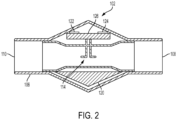
- the inhalant-flow detection system 102 includes a tube 106 having a first end 108 to receive air intake and a second end 110 having a shape and size suitable to be used as a mouth piece for a user to receive inhalant therethrough.
- the first end 108 is one of attached to or configured to be attachable to an agent delivery device 112.
- the agent delivery device 112 is configured to supply a quantified dose of the agent into air flowing through the tube 106 to provide the inhalant.
- the inhalant-flow detection system 102 also includes a flow sensor 114 arranged to intercept a portion of inhalant flowing through the tube 106 and to provide detection signals regarding inhalant speed as a function of time.
- the computer-executable medium 104 can be contained at least partially on a computer 116, as is illustrated schematically as a smart phone in the embodiment of Figure 1 .
- the computer-executable medium 104 includes non-transient computer code, which when executed on the computer 116, causes the computer 116 to:
- the inhalant-flow detection system 102 is configured to provide substantially non-turbulent, unobstructed air flow from the first end 108 to the second end 110 of the tube 106.
- the includes computer-executable medium 104 further non-transient computer code, which when executed on the computer 116, causes the computer 116 to:
- the includes computer-executable medium 104 further non-transient computer code, which when executed on the computer 116, causes the computer 116 to send the calculated parameter to data storage 118 to be available for later retrieval.
- the data storage device 118 can be on the computer 116 and/or on other external devices.
- the includes computer-executable medium 104 further non-transient computer code, which when executed on the computer 116, causes the computer 116 to retrieve a plurality of previously saved values of the calculated parameter and calculate at least one of a personal baseline value for the user or a time-dependent personal trend in the parameter for the user.
- the agent can be at least one of a therapeutic agent, a diagnostic agent, or a nutritional agent.
- the agent can be at least one of a bronchodilator, a long-acting beta2-agonist, an anticholinergic, a sympathomimetic, a corticosteroid, an antihistamine; insulin, a structured lipid nanocarrier as a carrier for chemotherapy.
- the agent can be at least one of aclidinium, ipratropium bromide, tiotropium, albuterol, arformoterol, formoterol, indacaterol, levalbuterol, metaproterenol, pirbuterol, salmeterol, beclomethasone, budesonide, ciclesonide, flunisolide, fluticasone, and mometasone.
- the inhalant-flow detection system 102 can further include a battery 120 configured to provide self-contained operation of the inhalant-flow detection system, a data storage device 122 configured to save the detection signals for later retrieval, and a wireless transmitter 124 configured to transmit the signals to the computer 116.
- a battery 120 configured to provide self-contained operation of the inhalant-flow detection system
- a data storage device 122 configured to save the detection signals for later retrieval
- a wireless transmitter 124 configured to transmit the signals to the computer 116.
- the flow sensor 114 can include a flow-through microelectromechanical systems (MEMS) device 126.
- MEMS microelectromechanical systems
- the flow-through MEMS device 126 can have channels with a width of at least 100 ⁇ m and less than 400 ⁇ m to prevent clogging by particles in the inhalant.
- system 100 can also include computer 116 which contains the computer-executable medium 104.
- system 100 can also include an adapter 128 configured to connect the tube 106 to the agent delivery device 112.
- system 100 can also include the agent delivery device 112 at least one of connected to or integral with the tube 106.
- the inhalant-flow detection system 102 can have a sleep mode and an active measuring mode such that the sleep mode uses less electrical power than said active measuring mode.
- the inhalant-flow detection system 102 can further have a usage interrogation mode that periodically checks status of usage of the inhalant-flow detection system and automatically switches the inhalant-flow detection system from sleep mode to active measuring mode based on a result of an interrogation.
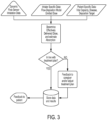
- Figures 3 and 4 help explain the operation of the system 100 for dose calculation and monitoring aspects, respectfully.
- a user uses agent delivery device 112 to provide a measured dose of the agent.
- the information concerning the type of agent and the quantity of the dose can be known in advance for specific devices and stored in a look-up table, for example. They could also be contained within barcodes, RFID tags, etc. that could be read into the system.
- the general concepts of the invention can include other ways of providing knowledge of the amount and type of agent provided, such as real-time measurements, for example.
- the user inhales the inhalant that contains the agent from the agent delivery device 112.
- the inhalant-flow detection system 102 measures, in real time, a flow speed profile as a function of time as the user inhales the inhalant.
- Information about the user can be input and/or retrieved from storage to include in the calculations.
- the information can include, but is not limited to, age and health of the user, for example. It can include model information that models the amount of inhalant that reaches a user's lungs under the measured conditions, for example.
- the model can be a general theoretical mode, a semi-empirical model, and/or empirical model.
- the user input data can be static data once stored, or it could be modified and updated by previous usage of the system 100 and/or by external input.
- the computer 116 calculates the amount of the agent that reached the user's lungs for the specific dose being taken up.
- the computer can further estimate the amount of agent absorbed by the user's lungs for the specific case. This can be performed in real time to provide feedback to the user. This can provide useful information such as indicating that a smaller dose was actually received than was intended. This can allow the user to take another dose planned to make up for the deficiency.
- the history of use of the device can be stored and/or sent to other parties, such as the user's caregiver.
- Figure 4 helps illustrate a lung health monitoring aspect according to some embodiments of the current invention.
- the same flow data can be analyzed to calculate one or more parameters that can be indicative of normal or abnormal inhalation function.
- the first derivative and/or second derivation of the initial increase in the flow curve can serve as a biomarker.
- Such a parameter can be compared to a baseline for the parameter established previously for the particular user, for example.
- the parameter could also be stored and/or sent to another party, such as the caregiver.
- Another embodiment, not being claimed, includes a method for quantifying delivery of an agent to be taken up by a user's lungs and for simultaneously monitoring the user's lung health using a computer.
- the method includes receiving, by the computer, inhalant-flow signals from a inhalant-flow detection system for an inhalant over an inhalation time period; receiving, by the computer, information about a quantity and type of agent contained within the inhalant during the inhalation time period; calculating, using the computer, a delivered dose of the agent to be taken up by the user's lungs based on at least the inhalant-flow signals received, the information received about the quantity and type of agent, and information concerning physiology of the user; and providing an output signal, from the computer, based on the delivered dose calculated.
- the method can further include calculating, by the computer, a parameter based on the inhalant-flow signals; comparing, using the computer, the parameter to at least one of a corresponding previously determined parameter from the user, a theoretically expected value of the parameter, or an empirically determined baseline value of the parameter; determining, using the computer, whether the parameter is indicative of normal lung health or indicative of abnormal lung health of the user during the inhalation time period; and outputting, from the computer, a signal containing information of normal lung health or abnormal lung health determined for the inhalation time period.
- the method can further include sending, using the computer, the calculated parameter to data storage to be available for later retrieval.
- the method can further include retrieving, using the computer, a plurality of previously saved values of the calculated parameter; and calculating, using the computer, at least one of a personal baseline value for the user or a time-dependent personal trend in the parameter for the user.
- a computer-executable medium includes non-transient computer code for quantifying delivery of an agent to be taken up by a user's lungs and for simultaneously monitoring the user's lung health.
- the non-transient computer code when executed on a computer, causes the computer to:
- the computer-executable medium further includes non-transient computer code, which when executed on the computer, causes the computer to:
- the computer-executable medium further includes non-transient computer code, which when executed on the computer, causes the computer to send the calculated parameter to data storage to be available for later retrieval.
- the computer-executable medium further includes non-transient computer code, which when executed on the computer, causes the computer to:
- An embodiment of the current invention provides an apparatus that measures flow via a tube that has an air passage with reduced cross-sectional area. Such a structure can help to provide non-turbulent flow through the central region of the tube. It also has an upstream tube opening and a downstream tube opening attached to a pressure sensing electronics.
- the apparatus is constructed in a way that it can be fluidly connected to metered dose inhaler devices.
- the flow sensing tube is reduced in cross section at least at one portion of the airflow passage such that the overall flow resistance is low and so that the user's breathing is not significantly obstructed while using the device.
- the flow is measured using a differential pressure sensor principle using an upstream and a downstream opening to accurately assess flow and pressure values over a large range of flow with a low resistance.
- a differential pressure sensor principle using an upstream and a downstream opening to accurately assess flow and pressure values over a large range of flow with a low resistance.
- the two upstream and downstream openings may be covered by a filter material, or a foam like material to prevent powders, particles, or aerosols from clogging the measurement openings.
- the senor used includes the tube and a MEMS element measuring flow with two thermopiles, whereas the internal channels of the thermopiles are so large that powder particles that potentially enter the sensor can float through the sensor without clogging the channels.
- the heated thermopiles are resistant to humidity that may enter the sensor, because fluid particles would be vaporized quickly.
- the flow measurement tube is a simple to manufacture and can be a low cost plastic part.
- the device could be designed in a way that this plastic part is a replacement part.
- the device cleaning becomes a simple process.
- the device electronics parts can be completely enclosed in the housing, charging (if required at all) can be performed via induction, so that the device as a whole can be rinsed with a cleaning solution or water for simple cleaning.
- the tube can be designed in a way to keep the airflow through the tube laminar and avoid higher resistance or turbulences.
- Data from the differential pressure sensor can then be linearized, digitized and stored for further analysis or immediately transferred such as via wireless technologies, for example Bluetooth, to a Smartphone, a tablet, a Smartwatch, or similar mobile platform or a computer.
- An advantage of one embodiment is that the device can be attached to the outlet of existing metered dose inhalers or powder inhalers as they are widely used today, and there is no need to redesign and integrate it in the packaging or housing of the inhaler itself. Most of them use similar shapes and sizes; some will need a specific adaptor or specific outside form factors. All other parts of the device will be the same for almost all drug inhalers currently used. It also can be used with other breathing related drug delivery devices and units, such as aerosol inhalation devices.
- the same device can be used as a personal spirometer without an inhaler attached to it to perform breathing related measures and maneuvers such as Forced Expiration or Peak Flow measures.
- the sensor as described above is bi-directional and covers a large range of flows.
- One aspect of some embodiments of the invention is that we can derive from the measured, high dynamic flow curve a biomarker representative for the individual lung health status, for example, calculated by using first and second derivatives of the first portion of the inhalation curve profile, or any other affine transformation. Using this marker instead of having the patient performing a second, separate spirometer maneuver can have a major advantage since the daily routine of taking the medication delivers at the same time information about the lung health.
- the measured signal can be used to estimate the biological equivalent drug dose that reached the lung for a specific, individual inhalation process.
- the pharmacokinetics and the drug dose that reaches the blood highly depend on how the inhalation process is performed by the patient. If the flow dynamics and volume of the inhalation process is known, it can be estimated (knowing the drug content and inhaler type) how much of the released drug dose reached the lung. This could be used to adjust and adapt the individual treatment plan and schedule.
- the sensor device itself does not require any user interaction. Start and Stop can be automatically triggered by the flow crossing a threshold value, and this by the start of a measurement itself.
- the synchronization between the release process of the drug and the start of inhalation can be estimated solely based on the measured flow data. If required, the device could be used together with a special educational program running on the tablet or Smartphone as a training device to improve the inhalation process.
- the sensor electronics can be designed to operate with low energy; the device itself does not require powerful and energy consuming processing units or a display.
- the manufacturing price of the device can be low since it only contains the sensing part, a means to wirelessly transmit the data, memory to store raw data, and a battery.
- the sensor part may be integrated in the inhaler device itself, without massively increasing the cost of the inhaler, or selectively providing the device only for a particular target patient group (which would make the distribution process much more difficult).
- processing devices i.e. Smartphones and tablets
- smartphones are powerful computing devices that allow much more computing intensive analysis routines without increasing the price of the device itself. This can allow the device to operate with lower quality and thus lower priced sensor data and compensate, for example, for higher noise using advanced methods of time series analysis.
- Some embodiments of the current invention can also provide numerous additional services to patients, doctors, payers, and caring givers, since mobile devices are typically connected in various forms to wide area networks, thus the internet is readily accessible. Some embodiments can allow for the assessment of the frequency and quality of the inhalation and the health status of the lung using the same data, and allows one to detect if the inhalation has been performed accurately.
- the attached Smartphone can provide instant or later feedback to patient or inform care givers if inhalation was not performed accurately. Some embodiments of the invention can also be used to automatically trigger the delivery of replacements if the drug container is close to empty or too old.
- the device can be used as a training device with training software programs running on the Smartphone or tablet for learning how to correctly inhale (using placebo substances).
- the Smartphone based device allows one to additionally provide education and motivational programs, such as integrated walk tests, tracking activity, quit smoking programs, healthy food, exercise programs, or air quality warnings that are based on location detection, that are used to engage and motivate patients.
- education and motivational programs such as integrated walk tests, tracking activity, quit smoking programs, healthy food, exercise programs, or air quality warnings that are based on location detection, that are used to engage and motivate patients.
- GroudIDs Group Identification numbers
- the GroupID allows doctors, payers, hospitals, pharmacies, and companies to access their patient group (or a sub-group of their patients) as a whole group anonymously for study purposes, and allows for the customization of the software running on the Smartphone, tablet and computers of a specific group.
- the patient decides actively with whom he wants to share the recorded data.
- the patient is identified with a code only, so that the company providing the device and services can handle all patient related data anonymously, but the medical provider can identify the patient using his data base if the patient agreed to share the data with a particular provide/doctor/hospital.
- the advantage of this patient centric "push" like data transmission systems is that is simplifies the fulfillment of international data security regulations.
- the measurement tube and electronics are embedded in a plastic housing that has a mouthpiece on one end 110.
- a breathing measurement device a personal spirometer
- the patient breaths through the device; the opening 108 is left open to the atmosphere.
- the device will be attached to the inhaler device at the opening 108; there will be different adaptors 128 to fit the opening to the different available devices.
- the measurement sensing tube is embedded in the outside housing that adds space for the sensor and electronics and the battery.
- Some embodiments that do not form the subject-matter of the claims include a method of calculating from the dynamics of an inhalation flow profile measured during the inhalation process using a pulmonary drug delivery device pharmacokinetic parameters, such as the delivered dose, the absorbed drug content, and distribution.
- the estimates of the pharmacokinetics can be based on stored values, curves, and functions for a specific inhaler device.
- the inhaled substance can be carried by nanostructured lipid nanocarriers that can be used to transport pharmaceuticals, chemotherapeutics, genetic or biological agents, or any other nano-particle that can be delivered with the inhaled breathing airflow.
Landscapes
- Health & Medical Sciences (AREA)
- Life Sciences & Earth Sciences (AREA)
- Engineering & Computer Science (AREA)
- Heart & Thoracic Surgery (AREA)
- Biomedical Technology (AREA)
- General Health & Medical Sciences (AREA)
- Veterinary Medicine (AREA)
- Public Health (AREA)
- Animal Behavior & Ethology (AREA)
- Pulmonology (AREA)
- Biophysics (AREA)
- Anesthesiology (AREA)
- Hematology (AREA)
- Bioinformatics & Cheminformatics (AREA)
- Pathology (AREA)
- Surgery (AREA)
- Molecular Biology (AREA)
- Medical Informatics (AREA)
- Physics & Mathematics (AREA)
- Physiology (AREA)
- Artificial Intelligence (AREA)
- Computer Vision & Pattern Recognition (AREA)
- Psychiatry (AREA)
- Signal Processing (AREA)
- Computer Networks & Wireless Communication (AREA)
- Measurement Of The Respiration, Hearing Ability, Form, And Blood Characteristics Of Living Organisms (AREA)
Claims (9)
- Un système (100) pour délivrer un agent devant être absorbé par les poumons d'un utilisateur et pour surveiller simultanément la santé pulmonaire dudit utilisateur, comprenant :un système de détection de débit d'inhalant (102), comprenant :un tube (106) avec une première extrémité destinée à recevoir une admission d'air et une seconde extrémité (110) avec une forme et une dimension qui conviennent à une utilisation en tant que pièce buccale pour un utilisateur devant recevoir au travers de celle-ci un inhalant, ladite première extrémité (108) étant soit fixée, soit configurée pour être fixée, à un dispositif de délivrance d'agent (112), ledit dispositif de délivrance d'agent (112) étant configuré pour amener une dose quantifiée dudit agent dans l'air traversant ledit tube (106) pour produire ledit inhalant, etun débitmètre (114) agencé pour intercepter une partie de l'inhalant traversant ledit tube (106) et pour produire des signaux de détection relatifs à la vitesse de l'inhalant en fonction du temps ; etun support exécutable par calculateur (104) comprenant du code informatique non transitoire (116) qui, lorsqu'il est exécuté sur un calculateur (116), fait en sorte que le calculateur (116) :reçoive lesdits signaux de détection en provenance dudit débitmètre (114) pendant un laps de temps d'inhalation dudit agent,reçoive des informations relatives à une quantité et à un type de l'agent produit par ledit dispositif de délivrance d'agent (112) pour ledit inhalant pendant ledit laps de temps d'inhalation,calcule une dose délivrée dudit agent que doivent absorber les poumons dudit utilisateur, sur la base au moins desdits signaux de détection reçus, desdites informations reçues relatives à ladite quantité et au type de l'agent, et d'informations relatives à la physiologie dudit utilisateur, etproduise un signal de sortie basé sur ladite dose délivrée calculée,dans lequel ledit support exécutable par calculateur (104) comprend en outre du code informatique non transitoire (116) qui, lorsqu'il est exécuté sur le calculateur (116), fait en sorte que le calculateur (116) :calcule un paramètre basé sur lesdits signaux de détection reçus pendant ledit laps de temps d'inhalation en provenance dudit débitmètre (114),compare ledit paramètre à au moins l'un d'entre un paramètre correspondant précédemment déterminé provenant dudit utilisateur, une valeur théoriquement attendue dudit paramètre, ou une valeur de référence déterminée de façon empirique dudit paramètre,détermine si ledit paramètre est représentatif d'une santé pulmonaire normale ou bien représentatif d'une santé pulmonaire anormale dudit utilisateur pendant ledit laps de temps d'inhalation, etproduise en sortie un signal contenant une information de santé pulmonaire normale ou de santé pulmonaire anormale déterminées pendant ledit laps de temps d'inhalation,dans lequel ledit support exécutable par calculateur (104) comprend en outre du code informatique non transitoire qui, lorsqu'il est exécuté sur le calculateur (116), fait en sorte que le calculateur (116) :envoie ledit paramètre calculé à un stockage de données (118) pour le rendre disponible pour être ultérieurement retrouvé ;retrouve une pluralité de valeurs précédemment mémorisées dudit paramètre calculé, etcalcule au moins l'une d'entre une valeur de référence personnelle pour ledit utilisateur ou une tendance personnelle dépendant du temps dudit paramètre pour ledit utilisateur,dans lequel ledit système de détection de débit d'inhalant (102) est configuré pour produire de ladite première extrémité (108) à ladite seconde extrémité (110) dudit tube (106) un débit d'air substantiellement non turbulent et non obstrué.
- Le système (100) de la revendication 1, dans lequel ledit agent est au moins l'un d'entre un agent thérapeutique, un agent de diagnostic, ou un agent nutritionnel.
- Le système (100) de la revendication 1, dans lequel ledit agent est au moins l'un d'entre un bronchodilatateur, un agoniste bêta-2 à action prolongée, un anticholinergique, un sympathomimétique, un corticostéroïde, un antihistaminique, de l'insuline, ou un nanocarrier lipidique structuré, en tant que véhicule de chimiothérapie.
- Le système (100) de la revendication 1, dans lequel ledit agent est au moins l'un d'entre : aclidinium, ipratropium bromure, tiotropium, albuterol, arformoterol, formoterol, indacaterol, levalbuterol, metaproterenol, pirbuterol, salmeterol, beclomethasone, budesonide, ciclesonide, flunisolide, fluticasone, et mometasone.
- Le système (100) de la revendication 1, dans lequel ledit système de détection de débit d'inhalant (102) comprend en outre :une batterie (120) configurée pour assurer un fonctionnement autonome dudit système de détection de débit d'inhalant (102),un dispositif de stockage de données (122) configuré pour sauvegarder lesdits signaux de détection pour les retrouver ultérieurement, etun émetteur/récepteur sans fil (124) configuré pour transmettre lesdits signaux à un calculateur (116).
- Le système (100) de la revendication 5, dans lequel ledit débitmètre (114) comprend un composant traversable de système microélectromécanique (MEMS) (126), qui comprend de préférence des canaux avec une largeur d'au moins 100 µm et de moins de 400 µm ;dans lequel le système (100) peut en outre comprendre un calculateur (116), ledit calculateur (116) comprenant ledit support exécutable par calculateur (104) ;dans lequel le système (100) peut en outre comprendre un adaptateur (128) configuré pour relier ledit tube (106) à un dispositif de délivrance d'agent (112), ou le système (100) peut en outre comprendre un dispositif de délivrance d'agent (112) qui est soit connecté soit intégré audit tube (106).
- Le système (100) de l'une des revendications 1 à 6,dans lequel ledit système de détection de débit d'inhalant (102) possède un mode de sommeil et un mode de mesure active, etdans lequel ledit mode de sommeil utilise moins d'énergie électrique que ledit mode de mesure active.
- Le système (100) de la revendication 7, dans lequel ledit système de détection de débit d'inhalant (102) possède un mode d'interrogation d'utilisation qui vérifie de façon périodique le statut de l'utilisation du système de détection de débit d'inhalant (102) et commute automatiquement le système de détection de débit d'inhalant (102) du mode de sommeil au mode de mesure active, sur la base d'un résultat d'une interrogation.
- Un support exécutable par calculateur (104) comprenant du code informatique non transitoire pour quantifier la délivrance d'un agent devant être absorbé par les poumons d'un utilisateur et pour surveiller simultanément la santé pulmonaire dudit utilisateur, qui, lorsqu'il est exécuté sur un système de l'une des revendications 1 à 8, fait en sorte que le calculateur (116) :reçoive des signaux de débit d'inhalant en provenance dudit système de détection de débit d'inhalant (102) pour un inhalant pendant un laps de temps d'inhalation ;reçoive des informations relatives à une quantité et un type d'agent contenu au sein dudit inhalant pendant ledit laps de temps d'inhalation ;calcule une dose délivrée dudit agent que doivent absorber les poumons dudit utilisateur, sur la base au moins desdits signaux de débit d'inhalant reçus, desdites informations reçues relatives à ladite quantité et au type de l'agent, et d'informations concernant la physiologie dudit utilisateur ; etproduise un signal de sortie sur la base de ladite dose délivrée calculée ;comprenant en outre du code informatique non transitoire (116) qui, lorsqu'il est exécuté sur le calculateur (116), fait en sorte que le calculateur (116) :calcule un paramètre sur la base desdits signaux de débit d'inhalant ;compare ledit paramètre à au moins l'un d'entre un paramètre correspondant précédemment déterminé pour ledit utilisateur, une valeur théoriquement attendue dudit paramètre, ou une valeur de référence déterminée de façon empirique dudit paramètre ;détermine si ledit paramètre est représentatif d'une santé pulmonaire normale ou bien représentatif d'une santé pulmonaire anormale dudit utilisateur pendant ledit laps de temps d'inhalation ; etdélivre en sortie un signal contenant une information de santé pulmonaire normale ou de santé pulmonaire anormale déterminées pour ledit laps de temps d'inhalation,dans lequel ledit support exécutable par calculateur (104) comprend en outre du code informatique non transitoire qui, lorsqu'il est exécuté sur le calculateur (116), fait en sorte que le calculateur :
envoie ledit paramètre calculé à un stockage de données (118) pour le rendre disponible pour le retrouver ultérieurement ;retrouve une pluralité de valeurs précédemment sauvegardées dudit paramètre calculé ; etcalcule au moins l'une d'entre une valeur de référence personnelle pour ledit utilisateur ou une tendance personnelle, fonction du temps, dudit paramètre pour ledit utilisateur.
Applications Claiming Priority (2)
| Application Number | Priority Date | Filing Date | Title |
|---|---|---|---|
| US201461950624P | 2014-03-10 | 2014-03-10 | |
| PCT/US2015/019711 WO2015138454A1 (fr) | 2014-03-10 | 2015-03-10 | Systèmes et procédés pour administrer un agent aux poumons d'un utilisateur et pour la surveillance simultanée de la santé pulmonaire |
Publications (3)
| Publication Number | Publication Date |
|---|---|
| EP3116394A1 EP3116394A1 (fr) | 2017-01-18 |
| EP3116394A4 EP3116394A4 (fr) | 2017-12-06 |
| EP3116394B1 true EP3116394B1 (fr) | 2024-07-24 |
Family
ID=54072335
Family Applications (1)
| Application Number | Title | Priority Date | Filing Date |
|---|---|---|---|
| EP15762194.7A Active EP3116394B1 (fr) | 2014-03-10 | 2015-03-10 | Systèmes pour administrer un agent aux poumons d'un utilisateur et pour la surveillance simultanée de la santé pulmonaire |
Country Status (3)
| Country | Link |
|---|---|
| US (1) | US10743793B2 (fr) |
| EP (1) | EP3116394B1 (fr) |
| WO (1) | WO2015138454A1 (fr) |
Families Citing this family (24)
| Publication number | Priority date | Publication date | Assignee | Title |
|---|---|---|---|---|
| US11253661B2 (en) | 2012-06-25 | 2022-02-22 | Gecko Health Innovations, Inc. | Devices, systems, and methods for adherence monitoring and patient interaction |
| CA2922686C (fr) | 2013-08-28 | 2023-03-07 | Gecko Health Innovations, Inc. | Dispositifs, systemes et procedes pour un controle du respect, et dispositifs, systemes et procedes pour surveiller l'utilisation de distributeurs de produits consommables |
| EP3185752B1 (fr) | 2014-08-28 | 2020-12-30 | Norton (Waterford) Limited | Module de surveillance de conformité pour un inhalateur |
| JP6715237B2 (ja) | 2014-08-28 | 2020-07-01 | ノートン (ウォーターフォード) リミテッド | 呼吸作動式の吸入器用のコンプライアンス監視モジュール |
| JP6799529B2 (ja) | 2014-08-28 | 2020-12-16 | マイクロドース セラピューテクス,インコーポレイテッド | 小型圧力センサ起動を備えるタイダルドライパウダー吸入器 |
| GB201420039D0 (en) | 2014-11-11 | 2014-12-24 | Teva Uk Ltd | System for training a user in administering a medicament |
| US10058661B2 (en) | 2014-12-04 | 2018-08-28 | Norton (Waterford) Limited | Inhalation monitoring system and method |
| CN109152891B (zh) * | 2016-03-24 | 2022-11-08 | 特鲁德尔医学国际公司 | 具有电子指示器的呼吸护理系统 |
| WO2017201463A1 (fr) * | 2016-05-19 | 2017-11-23 | Mannkind Corporation | Appareil, système et procédé pour détecter et surveiller des inhalations |
| ES2966349T3 (es) | 2016-05-19 | 2024-04-22 | Trudell Medical Int | Cámara de retención con válvula inteligente |
| ES2988939T3 (es) | 2016-07-08 | 2024-11-22 | Trudell Medical Int Inc | Dispositivo de presión espiratoria positiva oscilante inteligente |
| IL314077A (en) | 2016-11-18 | 2024-09-01 | Norton Waterford Ltd | inhaler |
| US11344685B2 (en) | 2016-11-18 | 2022-05-31 | Norton (Waterford) Limited | Drug delivery device with electronics |
| CN110049795B (zh) | 2016-12-09 | 2022-07-19 | 特鲁德尔医学国际公司 | 智能雾化器 |
| EP3338842A1 (fr) * | 2016-12-22 | 2018-06-27 | Bernhard Schulz | Nébuliseur pour l'inhalation à flux laminaire d'un aérosol |
| ES2875352T3 (es) | 2017-11-20 | 2021-11-10 | Presspart Gmbh & Co Kg | Sistema de inhalación |
| US11666801B2 (en) | 2018-01-04 | 2023-06-06 | Trudell Medical International | Smart oscillating positive expiratory pressure device |
| EP3801714B1 (fr) | 2018-06-04 | 2026-01-28 | Trudell Medical International Inc. | Chambre de retenue à valve intelligente |
| WO2020014326A1 (fr) * | 2018-07-10 | 2020-01-16 | Ciancone Christopher V | Dispositif de mesure de l'haleine |
| CA3138446A1 (fr) | 2019-04-30 | 2020-11-05 | Norton (Waterford) Limited | Systeme d'inhalateur |
| CA3140949A1 (fr) | 2019-05-17 | 2020-11-26 | Norton (Waterford) Limited | Dispositif d'administration de medicament faisant appel a de l'electronique |
| WO2021038467A1 (fr) | 2019-08-27 | 2021-03-04 | Trudell Medical International | Dispositif intelligent à pression expiratoire positive oscillante |
| TWI793596B (zh) * | 2020-05-08 | 2023-02-21 | 微邦科技股份有限公司 | 用於估計使用者的吸入劑量的方法 |
| EP4233064A1 (fr) * | 2020-10-21 | 2023-08-30 | Norton (Waterford) Limited | Système à inhalateur |
Citations (2)
| Publication number | Priority date | Publication date | Assignee | Title |
|---|---|---|---|---|
| EP1037683B1 (fr) * | 1997-12-12 | 2006-07-19 | Respironics Respiratory Drug Delivery (UK) Ltd | Appareil d'inhalation |
| US20100089394A1 (en) * | 2007-06-05 | 2010-04-15 | Canon Kabushiki Kaisha | Inhaler and driving method for same |
Family Cites Families (17)
| Publication number | Priority date | Publication date | Assignee | Title |
|---|---|---|---|---|
| US5363842A (en) * | 1991-12-20 | 1994-11-15 | Circadian, Inc. | Intelligent inhaler providing feedback to both patient and medical professional |
| US5505195A (en) | 1993-09-16 | 1996-04-09 | Medtrac Technologies Inc. | Dry powder inhalant device with dosage and air flow monitor |
| US5794612A (en) * | 1997-04-02 | 1998-08-18 | Aeromax Technologies, Inc. | MDI device with ultrasound sensor to detect aerosol dispensing |
| AU7780600A (en) * | 1999-10-01 | 2001-05-10 | Glaxo Group Limited | Patient data monitoring system |
| GB0003197D0 (en) * | 2000-02-11 | 2000-04-05 | Aid Medic Ltd | Improvements in and relating to controlling drug delivery |
| US8820316B2 (en) * | 2000-02-11 | 2014-09-02 | Respironics Respiratory Drug Delivery (Uk) Ltd | Drug delivery apparatus |
| AU2001235009B2 (en) | 2000-02-11 | 2004-10-07 | Respironics Respiratory Drug Delivery (Uk) Ltd | Drug delivery apparatus |
| MY136453A (en) * | 2000-04-27 | 2008-10-31 | Philip Morris Usa Inc | "improved method and apparatus for generating an aerosol" |
| US20050172958A1 (en) | 2003-08-20 | 2005-08-11 | The Brigham And Women's Hospital, Inc. | Inhalation device and system for the remote monitoring of drug administration |
| US8109266B2 (en) * | 2004-02-20 | 2012-02-07 | Pneumoflex Systems, Llc | Nebulizer having flow meter function |
| WO2008088780A1 (fr) * | 2007-01-12 | 2008-07-24 | University Of Pittsburgh-Of The Commonwealth System Of Higher Education | Détection d'oxyde nitrique |
| WO2008112353A2 (fr) | 2007-02-05 | 2008-09-18 | The Brigham And Women's Hospital, Inc. | Aerosol-doseur instrumente et methodes permettant de prevoir les exacerbations d'une maladie |
| WO2010023591A2 (fr) * | 2008-08-25 | 2010-03-04 | Koninklijke Philips Electronics N.V. | Appareil d'administration de médicament respiratoire fournissant des instructions audio |
| CN102470225B (zh) * | 2009-07-22 | 2014-03-05 | 皇家飞利浦电子股份有限公司 | 雾化器 |
| US9352107B2 (en) * | 2010-01-07 | 2016-05-31 | Koninklijke Philips N.V. | Respiratory drug delivery apparatus including a feedback and compliance device |
| US20130186392A1 (en) * | 2010-01-20 | 2013-07-25 | Koninklijke Philips Electronics, N.V. | Aerosol delivery system with temperature-based aerosol detector |
| JP2013517493A (ja) * | 2010-01-20 | 2013-05-16 | コーニンクレッカ フィリップス エレクトロニクス エヌ ヴィ | フローセンサ及びエアロゾル送達装置 |
-
2015
- 2015-03-10 US US15/125,511 patent/US10743793B2/en active Active
- 2015-03-10 EP EP15762194.7A patent/EP3116394B1/fr active Active
- 2015-03-10 WO PCT/US2015/019711 patent/WO2015138454A1/fr not_active Ceased
Patent Citations (2)
| Publication number | Priority date | Publication date | Assignee | Title |
|---|---|---|---|---|
| EP1037683B1 (fr) * | 1997-12-12 | 2006-07-19 | Respironics Respiratory Drug Delivery (UK) Ltd | Appareil d'inhalation |
| US20100089394A1 (en) * | 2007-06-05 | 2010-04-15 | Canon Kabushiki Kaisha | Inhaler and driving method for same |
Also Published As
| Publication number | Publication date |
|---|---|
| US10743793B2 (en) | 2020-08-18 |
| US20170079557A1 (en) | 2017-03-23 |
| EP3116394A4 (fr) | 2017-12-06 |
| WO2015138454A1 (fr) | 2015-09-17 |
| EP3116394A1 (fr) | 2017-01-18 |
Similar Documents
| Publication | Publication Date | Title |
|---|---|---|
| EP3116394B1 (fr) | Systèmes pour administrer un agent aux poumons d'un utilisateur et pour la surveillance simultanée de la santé pulmonaire | |
| US11918736B2 (en) | Method and apparatus to measure, aid and correct the use of inhalers | |
| US11141547B2 (en) | Inhalation monitoring system and method | |
| EP2914320B1 (fr) | Systèmes d'administration de médicament pulmonaire | |
| US20160325058A1 (en) | Systems and methods for managing pulmonary medication delivery | |
| AU2020278126B2 (en) | Drug delivery device with electronics | |
| EP3868431A1 (fr) | Dispositifs inhalateurs pour surveiller un flux d'air | |
| CN104968265A (zh) | 用于监测疾病状态的系统 | |
| EP3990070B1 (fr) | Système et méthode de contrôle de dosage d'inhalateur | |
| JP2023531631A (ja) | 吸入器システム | |
| EP4146309B1 (fr) | Appareil et support de stockage non transitoire d'estimation d'une dose d'inhalation d'une personne | |
| AU2021291033A1 (en) | Inhaler system | |
| EA047169B1 (ru) | Система и способ наблюдения ингаляции |
Legal Events
| Date | Code | Title | Description |
|---|---|---|---|
| STAA | Information on the status of an ep patent application or granted ep patent |
Free format text: STATUS: THE INTERNATIONAL PUBLICATION HAS BEEN MADE |
|
| PUAI | Public reference made under article 153(3) epc to a published international application that has entered the european phase |
Free format text: ORIGINAL CODE: 0009012 |
|
| STAA | Information on the status of an ep patent application or granted ep patent |
Free format text: STATUS: REQUEST FOR EXAMINATION WAS MADE |
|
| 17P | Request for examination filed |
Effective date: 20161010 |
|
| AK | Designated contracting states |
Kind code of ref document: A1 Designated state(s): AL AT BE BG CH CY CZ DE DK EE ES FI FR GB GR HR HU IE IS IT LI LT LU LV MC MK MT NL NO PL PT RO RS SE SI SK SM TR |
|
| AX | Request for extension of the european patent |
Extension state: BA ME |
|
| DAV | Request for validation of the european patent (deleted) | ||
| DAX | Request for extension of the european patent (deleted) | ||
| A4 | Supplementary search report drawn up and despatched |
Effective date: 20171106 |
|
| RIC1 | Information provided on ipc code assigned before grant |
Ipc: A61M 15/00 20060101ALI20171027BHEP Ipc: A61B 5/00 20060101ALI20171027BHEP Ipc: A61B 5/087 20060101AFI20171027BHEP |
|
| RAP1 | Party data changed (applicant data changed or rights of an application transferred) |
Owner name: RESPIMETRIX GMBH |
|
| STAA | Information on the status of an ep patent application or granted ep patent |
Free format text: STATUS: EXAMINATION IS IN PROGRESS |
|
| 17Q | First examination report despatched |
Effective date: 20200804 |
|
| P01 | Opt-out of the competence of the unified patent court (upc) registered |
Effective date: 20230523 |
|
| RAP3 | Party data changed (applicant data changed or rights of an application transferred) |
Owner name: GERRESHEIMER RESPIMETRIX GMBH |
|
| GRAP | Despatch of communication of intention to grant a patent |
Free format text: ORIGINAL CODE: EPIDOSNIGR1 |
|
| STAA | Information on the status of an ep patent application or granted ep patent |
Free format text: STATUS: GRANT OF PATENT IS INTENDED |
|
| INTG | Intention to grant announced |
Effective date: 20231220 |
|
| GRAJ | Information related to disapproval of communication of intention to grant by the applicant or resumption of examination proceedings by the epo deleted |
Free format text: ORIGINAL CODE: EPIDOSDIGR1 |
|
| STAA | Information on the status of an ep patent application or granted ep patent |
Free format text: STATUS: EXAMINATION IS IN PROGRESS |
|
| GRAP | Despatch of communication of intention to grant a patent |
Free format text: ORIGINAL CODE: EPIDOSNIGR1 |
|
| STAA | Information on the status of an ep patent application or granted ep patent |
Free format text: STATUS: GRANT OF PATENT IS INTENDED |
|
| INTC | Intention to grant announced (deleted) | ||
| INTG | Intention to grant announced |
Effective date: 20240306 |
|
| GRAS | Grant fee paid |
Free format text: ORIGINAL CODE: EPIDOSNIGR3 |
|
| GRAA | (expected) grant |
Free format text: ORIGINAL CODE: 0009210 |
|
| STAA | Information on the status of an ep patent application or granted ep patent |
Free format text: STATUS: THE PATENT HAS BEEN GRANTED |
|
| AK | Designated contracting states |
Kind code of ref document: B1 Designated state(s): AL AT BE BG CH CY CZ DE DK EE ES FI FR GB GR HR HU IE IS IT LI LT LU LV MC MK MT NL NO PL PT RO RS SE SI SK SM TR |
|
| REG | Reference to a national code |
Ref country code: GB Ref legal event code: FG4D |
|
| REG | Reference to a national code |
Ref country code: CH Ref legal event code: EP |
|
| REG | Reference to a national code |
Ref country code: IE Ref legal event code: FG4D Ref country code: DE Ref legal event code: R096 Ref document number: 602015089315 Country of ref document: DE |
|
| REG | Reference to a national code |
Ref country code: LT Ref legal event code: MG9D |
|
| REG | Reference to a national code |
Ref country code: NL Ref legal event code: MP Effective date: 20240724 |
|
| PG25 | Lapsed in a contracting state [announced via postgrant information from national office to epo] |
Ref country code: PT Free format text: LAPSE BECAUSE OF FAILURE TO SUBMIT A TRANSLATION OF THE DESCRIPTION OR TO PAY THE FEE WITHIN THE PRESCRIBED TIME-LIMIT Effective date: 20241125 |
|
| REG | Reference to a national code |
Ref country code: AT Ref legal event code: MK05 Ref document number: 1705511 Country of ref document: AT Kind code of ref document: T Effective date: 20240724 |
|
| PG25 | Lapsed in a contracting state [announced via postgrant information from national office to epo] |
Ref country code: NL Free format text: LAPSE BECAUSE OF FAILURE TO SUBMIT A TRANSLATION OF THE DESCRIPTION OR TO PAY THE FEE WITHIN THE PRESCRIBED TIME-LIMIT Effective date: 20240724 |
|
| PG25 | Lapsed in a contracting state [announced via postgrant information from national office to epo] |
Ref country code: PT Free format text: LAPSE BECAUSE OF FAILURE TO SUBMIT A TRANSLATION OF THE DESCRIPTION OR TO PAY THE FEE WITHIN THE PRESCRIBED TIME-LIMIT Effective date: 20241125 Ref country code: NL Free format text: LAPSE BECAUSE OF FAILURE TO SUBMIT A TRANSLATION OF THE DESCRIPTION OR TO PAY THE FEE WITHIN THE PRESCRIBED TIME-LIMIT Effective date: 20240724 |
|
| PG25 | Lapsed in a contracting state [announced via postgrant information from national office to epo] |
Ref country code: NO Free format text: LAPSE BECAUSE OF FAILURE TO SUBMIT A TRANSLATION OF THE DESCRIPTION OR TO PAY THE FEE WITHIN THE PRESCRIBED TIME-LIMIT Effective date: 20241024 |
|
| PG25 | Lapsed in a contracting state [announced via postgrant information from national office to epo] |
Ref country code: FI Free format text: LAPSE BECAUSE OF FAILURE TO SUBMIT A TRANSLATION OF THE DESCRIPTION OR TO PAY THE FEE WITHIN THE PRESCRIBED TIME-LIMIT Effective date: 20240724 Ref country code: PL Free format text: LAPSE BECAUSE OF FAILURE TO SUBMIT A TRANSLATION OF THE DESCRIPTION OR TO PAY THE FEE WITHIN THE PRESCRIBED TIME-LIMIT Effective date: 20240724 Ref country code: GR Free format text: LAPSE BECAUSE OF FAILURE TO SUBMIT A TRANSLATION OF THE DESCRIPTION OR TO PAY THE FEE WITHIN THE PRESCRIBED TIME-LIMIT Effective date: 20241025 |
|
| PG25 | Lapsed in a contracting state [announced via postgrant information from national office to epo] |
Ref country code: BG Free format text: LAPSE BECAUSE OF FAILURE TO SUBMIT A TRANSLATION OF THE DESCRIPTION OR TO PAY THE FEE WITHIN THE PRESCRIBED TIME-LIMIT Effective date: 20240724 |
|
| PG25 | Lapsed in a contracting state [announced via postgrant information from national office to epo] |
Ref country code: LV Free format text: LAPSE BECAUSE OF FAILURE TO SUBMIT A TRANSLATION OF THE DESCRIPTION OR TO PAY THE FEE WITHIN THE PRESCRIBED TIME-LIMIT Effective date: 20240724 |
|
| PG25 | Lapsed in a contracting state [announced via postgrant information from national office to epo] |
Ref country code: AT Free format text: LAPSE BECAUSE OF FAILURE TO SUBMIT A TRANSLATION OF THE DESCRIPTION OR TO PAY THE FEE WITHIN THE PRESCRIBED TIME-LIMIT Effective date: 20240724 Ref country code: IS Free format text: LAPSE BECAUSE OF FAILURE TO SUBMIT A TRANSLATION OF THE DESCRIPTION OR TO PAY THE FEE WITHIN THE PRESCRIBED TIME-LIMIT Effective date: 20241124 |
|
| PG25 | Lapsed in a contracting state [announced via postgrant information from national office to epo] |
Ref country code: HR Free format text: LAPSE BECAUSE OF FAILURE TO SUBMIT A TRANSLATION OF THE DESCRIPTION OR TO PAY THE FEE WITHIN THE PRESCRIBED TIME-LIMIT Effective date: 20240724 |
|
| PG25 | Lapsed in a contracting state [announced via postgrant information from national office to epo] |
Ref country code: ES Free format text: LAPSE BECAUSE OF FAILURE TO SUBMIT A TRANSLATION OF THE DESCRIPTION OR TO PAY THE FEE WITHIN THE PRESCRIBED TIME-LIMIT Effective date: 20240724 Ref country code: RS Free format text: LAPSE BECAUSE OF FAILURE TO SUBMIT A TRANSLATION OF THE DESCRIPTION OR TO PAY THE FEE WITHIN THE PRESCRIBED TIME-LIMIT Effective date: 20241024 |
|
| PG25 | Lapsed in a contracting state [announced via postgrant information from national office to epo] |
Ref country code: RS Free format text: LAPSE BECAUSE OF FAILURE TO SUBMIT A TRANSLATION OF THE DESCRIPTION OR TO PAY THE FEE WITHIN THE PRESCRIBED TIME-LIMIT Effective date: 20241024 Ref country code: PL Free format text: LAPSE BECAUSE OF FAILURE TO SUBMIT A TRANSLATION OF THE DESCRIPTION OR TO PAY THE FEE WITHIN THE PRESCRIBED TIME-LIMIT Effective date: 20240724 Ref country code: NO Free format text: LAPSE BECAUSE OF FAILURE TO SUBMIT A TRANSLATION OF THE DESCRIPTION OR TO PAY THE FEE WITHIN THE PRESCRIBED TIME-LIMIT Effective date: 20241024 Ref country code: LV Free format text: LAPSE BECAUSE OF FAILURE TO SUBMIT A TRANSLATION OF THE DESCRIPTION OR TO PAY THE FEE WITHIN THE PRESCRIBED TIME-LIMIT Effective date: 20240724 Ref country code: IS Free format text: LAPSE BECAUSE OF FAILURE TO SUBMIT A TRANSLATION OF THE DESCRIPTION OR TO PAY THE FEE WITHIN THE PRESCRIBED TIME-LIMIT Effective date: 20241124 Ref country code: HR Free format text: LAPSE BECAUSE OF FAILURE TO SUBMIT A TRANSLATION OF THE DESCRIPTION OR TO PAY THE FEE WITHIN THE PRESCRIBED TIME-LIMIT Effective date: 20240724 Ref country code: GR Free format text: LAPSE BECAUSE OF FAILURE TO SUBMIT A TRANSLATION OF THE DESCRIPTION OR TO PAY THE FEE WITHIN THE PRESCRIBED TIME-LIMIT Effective date: 20241025 Ref country code: FI Free format text: LAPSE BECAUSE OF FAILURE TO SUBMIT A TRANSLATION OF THE DESCRIPTION OR TO PAY THE FEE WITHIN THE PRESCRIBED TIME-LIMIT Effective date: 20240724 Ref country code: ES Free format text: LAPSE BECAUSE OF FAILURE TO SUBMIT A TRANSLATION OF THE DESCRIPTION OR TO PAY THE FEE WITHIN THE PRESCRIBED TIME-LIMIT Effective date: 20240724 Ref country code: BG Free format text: LAPSE BECAUSE OF FAILURE TO SUBMIT A TRANSLATION OF THE DESCRIPTION OR TO PAY THE FEE WITHIN THE PRESCRIBED TIME-LIMIT Effective date: 20240724 Ref country code: AT Free format text: LAPSE BECAUSE OF FAILURE TO SUBMIT A TRANSLATION OF THE DESCRIPTION OR TO PAY THE FEE WITHIN THE PRESCRIBED TIME-LIMIT Effective date: 20240724 |
|
| PG25 | Lapsed in a contracting state [announced via postgrant information from national office to epo] |
Ref country code: RO Free format text: LAPSE BECAUSE OF FAILURE TO SUBMIT A TRANSLATION OF THE DESCRIPTION OR TO PAY THE FEE WITHIN THE PRESCRIBED TIME-LIMIT Effective date: 20240724 Ref country code: SM Free format text: LAPSE BECAUSE OF FAILURE TO SUBMIT A TRANSLATION OF THE DESCRIPTION OR TO PAY THE FEE WITHIN THE PRESCRIBED TIME-LIMIT Effective date: 20240724 Ref country code: DK Free format text: LAPSE BECAUSE OF FAILURE TO SUBMIT A TRANSLATION OF THE DESCRIPTION OR TO PAY THE FEE WITHIN THE PRESCRIBED TIME-LIMIT Effective date: 20240724 |
|
| PG25 | Lapsed in a contracting state [announced via postgrant information from national office to epo] |
Ref country code: EE Free format text: LAPSE BECAUSE OF FAILURE TO SUBMIT A TRANSLATION OF THE DESCRIPTION OR TO PAY THE FEE WITHIN THE PRESCRIBED TIME-LIMIT Effective date: 20240724 |
|
| PG25 | Lapsed in a contracting state [announced via postgrant information from national office to epo] |
Ref country code: CZ Free format text: LAPSE BECAUSE OF FAILURE TO SUBMIT A TRANSLATION OF THE DESCRIPTION OR TO PAY THE FEE WITHIN THE PRESCRIBED TIME-LIMIT Effective date: 20240724 |
|
| REG | Reference to a national code |
Ref country code: DE Ref legal event code: R097 Ref document number: 602015089315 Country of ref document: DE |
|
| PG25 | Lapsed in a contracting state [announced via postgrant information from national office to epo] |
Ref country code: SK Free format text: LAPSE BECAUSE OF FAILURE TO SUBMIT A TRANSLATION OF THE DESCRIPTION OR TO PAY THE FEE WITHIN THE PRESCRIBED TIME-LIMIT Effective date: 20240724 Ref country code: IT Free format text: LAPSE BECAUSE OF FAILURE TO SUBMIT A TRANSLATION OF THE DESCRIPTION OR TO PAY THE FEE WITHIN THE PRESCRIBED TIME-LIMIT Effective date: 20240724 |
|
| PLBE | No opposition filed within time limit |
Free format text: ORIGINAL CODE: 0009261 |
|
| STAA | Information on the status of an ep patent application or granted ep patent |
Free format text: STATUS: NO OPPOSITION FILED WITHIN TIME LIMIT |
|
| 26N | No opposition filed |
Effective date: 20250425 |
|
| PG25 | Lapsed in a contracting state [announced via postgrant information from national office to epo] |
Ref country code: SE Free format text: LAPSE BECAUSE OF FAILURE TO SUBMIT A TRANSLATION OF THE DESCRIPTION OR TO PAY THE FEE WITHIN THE PRESCRIBED TIME-LIMIT Effective date: 20240724 |
|
| REG | Reference to a national code |
Ref country code: DE Ref legal event code: R119 Ref document number: 602015089315 Country of ref document: DE |
|
| PG25 | Lapsed in a contracting state [announced via postgrant information from national office to epo] |
Ref country code: MC Free format text: LAPSE BECAUSE OF FAILURE TO SUBMIT A TRANSLATION OF THE DESCRIPTION OR TO PAY THE FEE WITHIN THE PRESCRIBED TIME-LIMIT Effective date: 20240724 |
|
| REG | Reference to a national code |
Ref country code: CH Ref legal event code: H13 Free format text: ST27 STATUS EVENT CODE: U-0-0-H10-H13 (AS PROVIDED BY THE NATIONAL OFFICE) Effective date: 20251023 |
|
| PG25 | Lapsed in a contracting state [announced via postgrant information from national office to epo] |
Ref country code: LU Free format text: LAPSE BECAUSE OF NON-PAYMENT OF DUE FEES Effective date: 20250310 |
|
| GBPC | Gb: european patent ceased through non-payment of renewal fee |
Effective date: 20250310 |
|
| REG | Reference to a national code |
Ref country code: BE Ref legal event code: MM Effective date: 20250331 |
|
| PG25 | Lapsed in a contracting state [announced via postgrant information from national office to epo] |
Ref country code: DE Free format text: LAPSE BECAUSE OF NON-PAYMENT OF DUE FEES Effective date: 20251001 |
|
| PG25 | Lapsed in a contracting state [announced via postgrant information from national office to epo] |
Ref country code: GB Free format text: LAPSE BECAUSE OF NON-PAYMENT OF DUE FEES Effective date: 20250310 |
|
| PG25 | Lapsed in a contracting state [announced via postgrant information from national office to epo] |
Ref country code: FR Free format text: LAPSE BECAUSE OF NON-PAYMENT OF DUE FEES Effective date: 20250331 |
|
| PG25 | Lapsed in a contracting state [announced via postgrant information from national office to epo] |
Ref country code: BE Free format text: LAPSE BECAUSE OF NON-PAYMENT OF DUE FEES Effective date: 20250331 |
|
| PG25 | Lapsed in a contracting state [announced via postgrant information from national office to epo] |
Ref country code: CH Free format text: LAPSE BECAUSE OF NON-PAYMENT OF DUE FEES Effective date: 20250331 |
|
| PG25 | Lapsed in a contracting state [announced via postgrant information from national office to epo] |
Ref country code: IE Free format text: LAPSE BECAUSE OF NON-PAYMENT OF DUE FEES Effective date: 20250310 |