EP3119035B1 - Procédé de vérification de dispositifs réseaux et réseau - Google Patents
Procédé de vérification de dispositifs réseaux et réseau Download PDFInfo
- Publication number
- EP3119035B1 EP3119035B1 EP16171062.9A EP16171062A EP3119035B1 EP 3119035 B1 EP3119035 B1 EP 3119035B1 EP 16171062 A EP16171062 A EP 16171062A EP 3119035 B1 EP3119035 B1 EP 3119035B1
- Authority
- EP
- European Patent Office
- Prior art keywords
- network
- web interfaces
- web
- screen
- graphical
- Prior art date
- Legal status (The legal status is an assumption and is not a legal conclusion. Google has not performed a legal analysis and makes no representation as to the accuracy of the status listed.)
- Not-in-force
Links
Images



Classifications
-
- G—PHYSICS
- G06—COMPUTING OR CALCULATING; COUNTING
- G06F—ELECTRIC DIGITAL DATA PROCESSING
- G06F3/00—Input arrangements for transferring data to be processed into a form capable of being handled by the computer; Output arrangements for transferring data from processing unit to output unit, e.g. interface arrangements
- G06F3/14—Digital output to display device ; Cooperation and interconnection of the display device with other functional units
- G06F3/1454—Digital output to display device ; Cooperation and interconnection of the display device with other functional units involving copying of the display data of a local workstation or window to a remote workstation or window so that an actual copy of the data is displayed simultaneously on two or more displays, e.g. teledisplay
-
- H—ELECTRICITY
- H04—ELECTRIC COMMUNICATION TECHNIQUE
- H04L—TRANSMISSION OF DIGITAL INFORMATION, e.g. TELEGRAPHIC COMMUNICATION
- H04L41/00—Arrangements for maintenance, administration or management of data switching networks, e.g. of packet switching networks
- H04L41/22—Arrangements for maintenance, administration or management of data switching networks, e.g. of packet switching networks comprising specially adapted graphical user interfaces [GUI]
-
- G—PHYSICS
- G06—COMPUTING OR CALCULATING; COUNTING
- G06F—ELECTRIC DIGITAL DATA PROCESSING
- G06F18/00—Pattern recognition
- G06F18/20—Analysing
- G06F18/23—Clustering techniques
- G06F18/232—Non-hierarchical techniques
- G06F18/2321—Non-hierarchical techniques using statistics or function optimisation, e.g. modelling of probability density functions
- G06F18/23213—Non-hierarchical techniques using statistics or function optimisation, e.g. modelling of probability density functions with fixed number of clusters, e.g. K-means clustering
-
- G—PHYSICS
- G06—COMPUTING OR CALCULATING; COUNTING
- G06F—ELECTRIC DIGITAL DATA PROCESSING
- G06F3/00—Input arrangements for transferring data to be processed into a form capable of being handled by the computer; Output arrangements for transferring data from processing unit to output unit, e.g. interface arrangements
- G06F3/01—Input arrangements or combined input and output arrangements for interaction between user and computer
- G06F3/048—Interaction techniques based on graphical user interfaces [GUI]
- G06F3/0481—Interaction techniques based on graphical user interfaces [GUI] based on specific properties of the displayed interaction object or a metaphor-based environment, e.g. interaction with desktop elements like windows or icons, or assisted by a cursor's changing behaviour or appearance
- G06F3/0482—Interaction with lists of selectable items, e.g. menus
-
- G—PHYSICS
- G06—COMPUTING OR CALCULATING; COUNTING
- G06F—ELECTRIC DIGITAL DATA PROCESSING
- G06F3/00—Input arrangements for transferring data to be processed into a form capable of being handled by the computer; Output arrangements for transferring data from processing unit to output unit, e.g. interface arrangements
- G06F3/01—Input arrangements or combined input and output arrangements for interaction between user and computer
- G06F3/048—Interaction techniques based on graphical user interfaces [GUI]
- G06F3/0484—Interaction techniques based on graphical user interfaces [GUI] for the control of specific functions or operations, e.g. selecting or manipulating an object, an image or a displayed text element, setting a parameter value or selecting a range
- G06F3/04845—Interaction techniques based on graphical user interfaces [GUI] for the control of specific functions or operations, e.g. selecting or manipulating an object, an image or a displayed text element, setting a parameter value or selecting a range for image manipulation, e.g. dragging, rotation, expansion or change of colour
-
- G—PHYSICS
- G06—COMPUTING OR CALCULATING; COUNTING
- G06F—ELECTRIC DIGITAL DATA PROCESSING
- G06F3/00—Input arrangements for transferring data to be processed into a form capable of being handled by the computer; Output arrangements for transferring data from processing unit to output unit, e.g. interface arrangements
- G06F3/14—Digital output to display device ; Cooperation and interconnection of the display device with other functional units
-
- G—PHYSICS
- G06—COMPUTING OR CALCULATING; COUNTING
- G06F—ELECTRIC DIGITAL DATA PROCESSING
- G06F9/00—Arrangements for program control, e.g. control units
- G06F9/06—Arrangements for program control, e.g. control units using stored programs, i.e. using an internal store of processing equipment to receive or retain programs
- G06F9/44—Arrangements for executing specific programs
- G06F9/451—Execution arrangements for user interfaces
-
- G—PHYSICS
- G06—COMPUTING OR CALCULATING; COUNTING
- G06T—IMAGE DATA PROCESSING OR GENERATION, IN GENERAL
- G06T11/00—Two-dimensional [2D] image generation
- G06T11/20—Drawing from basic elements
- G06T11/26—Drawing of charts or graphs
-
- H—ELECTRICITY
- H04—ELECTRIC COMMUNICATION TECHNIQUE
- H04L—TRANSMISSION OF DIGITAL INFORMATION, e.g. TELEGRAPHIC COMMUNICATION
- H04L41/00—Arrangements for maintenance, administration or management of data switching networks, e.g. of packet switching networks
- H04L41/02—Standardisation; Integration
- H04L41/0246—Exchanging or transporting network management information using the Internet; Embedding network management web servers in network elements; Web-services-based protocols
- H04L41/0253—Exchanging or transporting network management information using the Internet; Embedding network management web servers in network elements; Web-services-based protocols using browsers or web-pages for accessing management information
-
- H—ELECTRICITY
- H04—ELECTRIC COMMUNICATION TECHNIQUE
- H04L—TRANSMISSION OF DIGITAL INFORMATION, e.g. TELEGRAPHIC COMMUNICATION
- H04L67/00—Network arrangements or protocols for supporting network services or applications
- H04L67/01—Protocols
- H04L67/02—Protocols based on web technology, e.g. hypertext transfer protocol [HTTP]
-
- H—ELECTRICITY
- H04—ELECTRIC COMMUNICATION TECHNIQUE
- H04L—TRANSMISSION OF DIGITAL INFORMATION, e.g. TELEGRAPHIC COMMUNICATION
- H04L41/00—Arrangements for maintenance, administration or management of data switching networks, e.g. of packet switching networks
- H04L41/02—Standardisation; Integration
- H04L41/0246—Exchanging or transporting network management information using the Internet; Embedding network management web servers in network elements; Web-services-based protocols
- H04L41/0273—Exchanging or transporting network management information using the Internet; Embedding network management web servers in network elements; Web-services-based protocols using web services for network management, e.g. simple object access protocol [SOAP]
Definitions
- the present invention relates to a method for verifying network devices in a network and a network.
- the infrastructure of a network in particular network facilities of the network, is often examined.
- the network devices Depending on the characteristics and type of the network devices, one is confronted with several different web interfaces, graphical user interfaces of the respective network devices.
- the EP 1 426 882 A2 shows a way to represent similarities of different data sets from a large amount of data. In this case, for example, a map is generated in which similar data are represented close to one another.
- the US 2010/0290601 A1 describes a method, in networks in which a large number of messages are exchanged, the behavior and the stability of the network by means of an analysis of the log data attached to the messages.
- an object of the present invention is to improve the checking of network devices in a network.
- the graphical representations of the web interfaces are displayed reduced in size such that the graphical representations of the web interfaces of a group are displayed together within the screen area on the screen.
- the network devices therefore also have different network addresses.
- the proposed method further comprises the step: Check the network facilities using the displayed graphical representation of the web interfaces associated with the network facilities.
- the network devices are at least partially networked with each other, ie, coupled and / or electrically connected so that they can transmit information, commands and / or data to each other.
- the network devices can preferably actively and / or passively process electrical signals, ie the network devices can comprise active network components.
- the network devices are preferably connected to a power supply, which supplies them with an electrical power necessary for proper operation.
- the network devices may be autonomous systems, e.g. Computers, printers, control units, field devices and the like include.
- the network devices include devices, machines, and / or electrical systems that are at least partially automated, i. need no or reduced human intervention for their operation.
- the network devices may be part of an autonomous system, e.g. a computer.
- the network devices are set up to transmit data with the aid of a network network protocol.
- the network protocol may include TCP / IP, UDP, IPX / SPX, NetBEUI, AppleTalk, BACnet, and so on.
- the network protocol includes HTTP, UDS, FTP, SMTP, POP, Telnet, OPC UA, SOCKS, TCP, UDP, SCTP, IP, ICMP, Ethernet, Token Bus, Token Ring, FDDI, and / or IPoAC.
- the network addresses are IP addresses of the network devices.
- the web interface refers to an interface, preferably a graphical user interface, to a network device.
- functions of the respective network device can be executed and / or the functions can be accessed.
- the web interface can be called in particular via the Hypertext Transfer Protocol (HTTP).
- HTTP Hypertext Transfer Protocol
- the web interface may in particular comprise a graphical user interface (GUI) and / or a web service.
- GUI graphical user interface
- the graphical user interface is preferably displayed graphically on a screen by means of a display device.
- the display device relates in particular to a window and / or a browser device that can be displayed on a screen.
- the display device can relate to an imaging environment in a computing unit which can reproduce the graphical representation of the web interface with the aid of source codes which are made available by the respective network device.
- the screen can be on any relate electronic device that can visually represent an electronic signal.
- the screen comprises a monitor, a display device, a projection device or another electrical display device.
- the graphical user interface allows interaction with the particular network device, eg, entering commands, retrieving information, changing or setting configuration and modifications.
- the network devices can communicate with each other, e.g. Provide data or functions to each other.
- An example of a web interface is an integrated web server of a network device through which the user can make changes to the configuration of the network device.
- the web interface is preferably platform independent, i. regardless of an operating system of the respective network device.
- the network device can be controlled, operated, modified and / or configured.
- the web interface includes a graphical representation in a display device.
- the graphical representation may include text elements (e.g., characters and numbers), images, colors, color combinations, hyperlinks, and / or markers.
- the web interface may include marked areas for input of commands for the network device.
- the text elements may contain information, e.g. a version number of a firmware to play over the respective network device.
- each network device of the network has a network address associated with it.
- the assignment of the network addresses to the network devices preferably takes place unambiguously, ie a network device can have at most one network address, and a network address can be assigned to at most one network device.
- the network address is suitable for a unique identification of the respective network device. It is it is conceivable that the network address associated with a particular network device can be released again by assigning another network address to the particular network device.
- the network devices can be addressed, and in response, the web interface of the respective network device can be played.
- the network addresses can be in the form of a table.
- a computing unit and / or server device coupled to the network may provide a table of the network devices and the respective associated network addresses.
- the web interfaces can be displayed graphically in a display device.
- the graphical representation of the individual web interface can be stored electronically in the form of the respective image data set.
- the graphical representation of the respective web interface can be generated with the aid of the stored image data record.
- An image data set is in particular an electronic file and / or refers to a content in an electronic file.
- the graphical representation of the respective web interface can be generated on the basis of color values, for example in a CMYK color space, RGB color space or Lab color space, which are assigned to each point, eg a pixel, a screen and / or a display device on a screen ,
- the image data set can accordingly comprise the color values assigned to the pixels.
- the image data set is generated and / or stored, for example, by means of a descriptive language, eg HTML.
- the graphical representation of the web interface can be generated based on the respective image data set.
- the graphical representation of a server device, a network device and / or a computing unit can be generated.
- the graphical similarity measure indicates how many similarities the graphical representation of a specific web interface has with the graphical representations of other web interfaces.
- the graphical similarity measure may be an absolute or relational size and may include, for example, a scalar, a vector, a matrix and / or an array.
- a correlation parameter and / or a proximity measure of the web interfaces can be calculated, which mathematically records similarities of the graphic representations of two web interfaces and reproduces them as a one-dimensional variable.
- the determination of the graphical similarity measure takes place by the image data record of the individual web interfaces being evaluated.
- an image clustering method and / or a cluster analysis is performed to determine the graphical similarity measure and / or for ordering the web interfaces in groups.
- a "Structural Similarity Index” SSIM
- MSE Mean Squared Error
- K-Means K-Means
- C-Means C-Means
- GMLC Gaussian Maximum Likelihood Classfication
- the graphical similarity measure may be determined using a pixel-oriented, cat-oriented, region-oriented, model-based and / or texture-oriented method or a combination thereof.
- a similarity of web interfaces is determined by the graphical similarity measure of the respective graphical representations of the corresponding web interfaces.
- the retrieved web interfaces are assigned to a common group if their graphical similarity measure exceeds a predetermined threshold.
- a group of web interfaces may point to certain properties of the network devices that comprise the web interfaces of the group of web interfaces.
- the display of the graphical representations of the web interfaces may be performed in a display device, e.g. a window or browser device on the screen.
- the screen area of the screen has predetermined screen dimensions defined by an indication of pixel numbers for each direction, e.g. Height x width, can be defined.
- the graphical representations of the grouped web interfaces can each have image dimensions that are many times smaller than the screen dimensions of the screen area. This allows multiple graphical displays to be displayed simultaneously on the screen.
- the graphical representations of the web interfaces associated with a common group may have the same or different image dimensions.
- the graphical representations of the web interfaces are displayed on the screen, so that the graphical representations of similar web interfaces can be displayed grouped.
- a so-called "false-positive” i.
- a web interface that is incorrectly associated with the group can be identified faster than having to individually review the graphical representations.
- the playback of the graphical representations of the retrieved web interfaces is accelerated because the web interfaces are not individually loaded for display on the screen, but only their graphical representations are displayed based on the respective image data set.
- a loading time required to transfer data for generating the respective graphical representation of the retrieved web interfaces can be saved.
- the graphical representations of the web interfaces associated with different groups are displayed in the display device as a function of the similarity measure.
- the graphical representations of web interfaces which are assigned due to their similarity based on the similarity measure of a common group, are preferably displayed grouped on the screen. Furthermore, the graphical representations of the retrieved web interfaces associated with each other and different groups of web interfaces may be displayed close to each other on the screen. Accordingly, the graphical representations of two groups of web interfaces, which are not very similar, can be arranged far apart.
- similar may refer to the similarity measure of the graphical representations of web interfaces, which exceeds a predetermined threshold.
- the graphical representations of the web interfaces are provided on the screen with a respective hyperlink, by means of which the respective web interface is retrievable.
- the respective hyperlink can be used to quickly access the respective network device.
- the hyperlinks can in particular be provided by means of a network address list. This allows quick access to the particular network device to be checked.
- the network comprises a computer network, an intranet and / or an Internet with a network protocol.
- the network includes several interconnected network devices.
- a number of network devices in a network are at least two, and are preferably not limited.
- the network may include at least a portion of the Internet.
- the network may have an internal network, i. the intranet, of a company.
- the network devices comprise machines, devices, EDP devices, computers, printers, server devices, routers, switches, bridges, firewalls and / or session border controllers.
- the network devices can be part of a computer network.
- the network devices may include active and / or passive network components.
- the network devices may extract information from a received and / or measured electrical signal. Further, the network devices may preferably prepare information for transmission from an information source to an information consumer.
- the network also has at least one further network device without a respective web interface.
- the network may include network devices that are networked with other network devices of the network and that do not have an associated web interface.
- an error message can be reproduced which can be stored in the form of an image data set and whose graphical representation can be displayed on the screen.
- a list of network devices without a dedicated web interface can be created.
- the respective image data record is stored in a bitmap format.
- the respective image data set is stored as a raster graphic.
- the bitmap format comprises a grid-like arrangement of pixels, i. Pixels to each of which, as described above, color values are assigned.
- the bitmap format comprises in particular the image dimensions and the color values of the respective image data set.
- the respective image data set is generated in an APX, BMP, GBR, GIF, JPEG, PBM, PGF, PGM, PNG, PPM, TIFF, XBM and / or XCF format, and / or saved.
- the respective image data set can be stored as a vector graphic.
- the method further comprises the step: Perform a pattern recognition process with the graphical representations of the web interfaces.
- the pattern recognition method can recognize regularities, repetitions, similarities and / or regularities in the graphical representations of the retrieved web interfaces.
- the pattern recognition method is particularly suitable for determining the similarity measure of the graphical representations of the web interfaces.
- the groups of web interfaces are marked by means of a discoloration against a background color and / or border on the screen.
- the screen area of the screen may have a uniform background color.
- the groups of web interfaces may be underlaid with a color that differs from the background color of the screen.
- the groups of web interfaces may be outlined with a line or otherwise. In this way, the groups of web interfaces in the graphical representations can be made visually recognizable.
- a particular size of the border and / or a discolored area of a group of web interfaces may be varied depending on a number of web interfaces in the group of web interfaces. For example, the size of the border and / or the discolored area of a group increases as the number of web interfaces in that group grows.
- the screen has a black background color while the groups of web interfaces are edged and an area within a border around each group of web interfaces is white.
- the border may be in the form of a black, white or colored line.
- the method further comprises the step: visually checking at least one of the groups of web interfaces whose graphical representations are displayed on the screen.
- visual checking refers to checking the graphical representations of the web interfaces associated with a common set of web interfaces.
- the optical checking comprises, for example, detecting a version number of the respective web interface, detecting a potential security risk and detecting a security gap.
- the review can comprise accessing at least one of the network devices by means of a respective hyperlink.
- the method further comprises the step: Hide a visually checked set of web interfaces.
- the graphical representations of the web interfaces include characters, patterns, images, and / or regions of mutually different colors.
- the method further comprises the step: Changing a size of the graphical representation of at least one of the web interfaces on the screen, wherein the size of the graphical representation is determined by a number of pixels comprising the graphical representations on the screen.
- a number of pixels along each axis of the graphical representation of the web interface indicates how large the graph is.
- the size of the graphical representations of the web interfaces can be varied by reducing or increasing the number of pixels and interpolating and / or approximating the color values.
- a plurality of groups of web interfaces whose respective similarity measure is higher than a threshold value for the similarity measure are displayed overlapping.
- the overlapping of groups may refer to touching and / or confluence of borders and / or discolored areas of the groups.
- two groups may be similar to each other such that a distance between the two groups is smaller than a size of one of these two groups, so that the two groups are overlapped.
- the size of the group may refer to an area of the border and / or the discolored area of the group.
- a network with several network devices is proposed.
- the network is comprised of a screen and a computing unit.
- the arithmetic unit is set up to carry out the proposed method.
- the respective unit for example the arithmetic unit, can be implemented in terms of hardware and / or software.
- the respective unit may be designed as a device or as part of a device, for example as a computer or as a microprocessor or as a mobile computing unit.
- the respective unit may be designed as a computer program product, as a function, as a routine, as part of a program code or as an executable object.
- a computer program product such as a computer program means, for example, as a storage medium, such as memory card, USB stick, CD-ROM, DVD, or in the form of a downloadable file from a server in a network be provided or delivered. This can be done, for example, in a wireless communication network by transmitting a corresponding file with the computer program product or the computer program means.
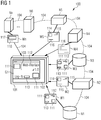
- Fig. 1 schematically shows an embodiment of a network 100.
- the network 100 is, for example, an intranet of a company or part of an enterprise intranet. In another example, network 100 is part of a global network of computers, particularly the Internet.
- the network 100 comprises a plurality of network devices N1-Nn which are networked with one another, ie are coupled to one another in such a way that data can be transferred between the network devices N1-Nn.
- the networking of the network devices N1-Nn is shown schematically by dashed lines 104.
- network 100 is part of a larger network that has more network facilities than those in Fig. 1 shown network devices N1 - Nn includes.
- at least one of the network devices N1 -Nn of the network 100 may comprise a subnetwork with a plurality of further networked network devices (not shown).
- a computing unit 101 is coupled to the network 100 or forms part of the network 100.
- the computing unit 101 may interact directly or indirectly with the network devices N1-Nn.
- the respective web interface W1-Wn is graphically displayed on a screen 102 of the arithmetic unit 101.
- the network devices N1-Nn can be controlled via a respective web interface W1-Wn, wherein at least part of the network devices N1-Nn, such as e.g. the network device N6, can not be equipped with a web interface. Therefore, a number of the retrievable web interfaces of n network devices may be less than n.
- the respective web interface W1-Wn is in particular a graphical user interface.
- the web interface W1-Wn enables a driving, a configuration and / or a modification of the respective network device N1-Nn.
- the network devices N1, N3 are each a database device.
- the network devices N2, N5 are each a control unit of a field device.
- the network device N4 is a printer.
- the network device N6 is a computer.
- the network device Nn is a sensor device.
- the webinterfaces W1 - W5 each have several different graphic elements.
- the web interfaces W1, W3 each have two picture elements 111, a text element 112 and a text input field 113.
- the web interfaces W2, W5 each have a picture element 114 and a text element 115.
- the web interface W4 has several text elements 116.
- the web interface Wn has a display area 117 and a text element 118.
- the web interfaces W1-Wn are stored electronically locally at the respective network devices N1-Nn.
- the web interfaces W1-Wn are stored in the form of a respective HTML source code which is loaded by a browser device when the network device N1-Nn responds.
- the HTML source codes of the web interfaces W1-Wn comprise a respective position of the text and picture elements 111-118 as well as their contents as described in US Pat Fig. 1 schematically are shown.
- the storage takes place in particular on a local memory device of the arithmetic unit 101.
- the retrieved web interface W1 - Wn is displayed in a display window 103 of the browser device.
- Fig. 1 shows a graphical representation G1 of the web interface W1 of the network device N1 in the window 103 of the browser device on the screen 102.
- the picture elements 111 are respectively positioned at the corners top left and bottom right of the window 103 and show a logo of the web interface and a distinctive image for the Network device N1.
- the text element 112 indicates the name of the network device N1, the type of the web interface W1, and a version number of the web interface W1.
- a password and a login name can be input.
- the associated network device N1 can be accessed. Thereby, information about and from the network device N1 can be displayed on the screen 102, the network device N1 can be configured, operated and controlled.
- the version number of the web interface W1 is checked for actuality in the text field 112, the standard password and the standard login name entered in the login field in the text input field 113 and searched for vulnerable text parts or picture elements.
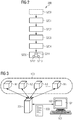
- FIG. 10 shows a flowchart 200 of a method for verifying network devices in a network.
- the flowchart 200 shows the method for checking the network devices N1-Nn in the network 100 in FIG Fig. 1 ,
- the network 100 is connected to the network devices N1-Nn as shown in FIG Fig. 1 is shown provided.
- the network 100 includes a server device 301, as in FIG Fig. 3 1, which is coupled to the network devices N1 - Nn of the network 100 and checks connections in the network 100. Additionally or alternatively, the computing unit 101 may check the ports in the network 100.
- the network 100 comprises n network devices N1-Nn.
- the server device 301 Based on the connections at the ports, the server device 301 creates a network address list 302 of network devices N1-Nn registered in the network 100. In this case, at least a part of the network devices N1-Nn can be controlled via a respective web interface W1-Wn.
- a first step S201 of the method for checking the network devices N1-Nn the web interfaces W1-Wn are retrieved.
- the retrieval of the web interfaces W1 - Wn can be done using the network address list 302, as in Fig. 3 shown.
- Fig. 4 illustrates that the arithmetic unit 101 responds to the network devices N1-Nn (represented by a respective arrow 401).
- the network devices N1 - Nn return the respective web interface W1 - Wn in response, as represented by a respective arrow 402.
- the result is the respective web interface W1 - Wn.
- the web interfaces W1 - Wn are graphically displayed ("rendered") without being displayed on the screen 102. Instead, in a next step S202 (see FIG. Fig. 2 ) generates a respective image data record B1 - Bn for the retrieved web interfaces W1 - Wn, which comprises a respective expected graphical representation of the web interfaces W1 - Wn.
- the image data sets B1-Bn are created and / or stored in a BMP or JPEG format.
- the graphic Representations relate to a window of the browser device 103.
- the image data sets B1 - Bn are installed together with a respective network address A1 - At the network devices N1 - Nn in a memory device 403 which is installed locally in the computing unit 101 and / or centrally in the network 100 , saved.
- the retrieved web interfaces W1-Wn are organized into groups.
- a graphical similarity measure for the graphical representations of the retrieved web interfaces W1 - Wn is determined.
- the graphic similarity measure is determined with the aid of the respective image data record.
- the graphical similarity measure is determined by a pixel-based comparison of graphical representations or a histogram-based method (e.g., histogram-based image segmentation).
- a histogram-based method e.g., histogram-based image segmentation.
- an edge-oriented method is used in which first edges of a respective graphical representation are detected. The detected edges are connected together so that a portion of the graphical representation is included therein.
- a distribution of color values in the enclosed area is determined and compared with distributions of the other graphical representations. If the distributions of two graphical representations agree with each other, the similarity measure is increased.
- Graphical representations of web interfaces W1 - Wn whose similarity measure is higher than a predetermined threshold value are each arranged in common groups.
- the graphical representations of the web interfaces W1, W3 are arranged in a common group.
- the graphical representations may differ only in one position or content of a text element and / or picture element 111-1187.
- the network devices N1-Nn, which are arranged in a common group are electronic systems of the same type, eg control units of a respective machine, printer devices or field devices.
- a next step S204 the graphical representations of the web interfaces W1 - Wn of at least one of the groups of web interfaces are displayed on the screen 102.
- the screen 102 has a rectangular screen surface having dimensions x102, y102 in the x and y directions, as in FIG Fig. 5 shown. More specifically, the graphs G501-G519 of the web interfaces W1-Wn arranged in the groups are displayed on the screen 102 of the arithmetic unit 101.
- Fig. 5 shows schematic diagrams G501 - G519 of retrieved webinterfaces W501 - W519.
- Graphs G501-G509 are organized into three groups 501-503 of web interfaces and displayed on screen 102.
- the web interfaces W501 - W519 are displayed in a respective rectangular window F501 - F519 corresponding to the browser device window 103, as in FIG Fig. 5 shown schematically.
- Optical similarity of web interfaces W1-Wn lies preferably in that the respective position and / or the respective content of the text and picture elements 111-118 of the web interfaces W1-Wn have similarities.
- a first group 501 of web interfaces comprises the graphic representations G501-G503 of web interfaces W501-W503.
- Graphs G501-G503 each contain content represented by a respective star S501-S503.
- the contents S501-S503 are optically similar to each other.
- the graphs G501-G503 include a respective graphical representation of the web interfaces W1, W3.
- a second group 502 of web interfaces comprises the graphic representations G504-G515 of web interfaces W504-W515.
- Graphs G504-G515 each contain content represented by a respective circle S504-S515.
- the contents S504-S515 are optically similar to each other.
- the graphical ones include Representations G504 - G515 A respective graphical representation of the webinterfaces W2, W5.
- a third group 503 of web interfaces comprises the graphic representations G516-G519 of web interfaces W516-W519.
- Graphs G516-G519 each contain a content represented by a respective triangle S516-S519.
- the contents S516-S519 are optically similar to each other.
- the first group 501 comprises three plots G501 - G503
- the second group 502 comprises thirteen plots G504 - G515
- the third group 503 comprises four plots G516 - G519.
- the groups 501-503 are spaced from each other, bordered by a respective line L501-L503, and provided with a color within a respective border L501-L503 which contrasts with a background color of the screen area 102.
- the color within the borders L501-L503 is white, while the background color of the screen area 102 is light blue.
- a next step S205 the graphical representations of the web interfaces W1 - Wn displayed on the screen 102 are checked.
- the respective network devices N1-Nn are checked.
- Checking the graphical representations includes detection of false positives (S211), detection of potential danger points (S212) and hiding of already checked groups of web interfaces (S213).
- the checking comprises accessing the network devices N1-Nn by means of a respective hyperlink with which the graphical representation of the web interface W1-Wn is provided.
- the hyperlinks will be in particular with the help of the stored network addresses A1 - An generated.
- FIG. 12 schematically shows graphical representations G601-G610 of web interfaces W601-W610 on the screen 102.
- Graphs G601-G610 are associated with a group 601 that is bordered by a line L601.
- the content in each of the graphs G601-G610 is represented by a rectangle S601-S610, respectively.
- Graph G610 has a different content than the remaining graphs G601-G609, as represented by a semicircle S610 'in addition to the rectangle S610. As a result, the graphical representation G610 differs from the remaining graphic representations G601 - G609. Thus, the graphical representation G610 is a false positive, which is erroneously associated with the group 601. The recognition of this false positives takes place at first sight of the graphic representations G601 - G610 of group 601. The detection of the false positives is thus faster than the individual web interfaces W601 - W610 are called.
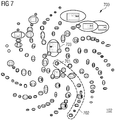
- Fig. 7 and Fig. 8 schematically show respectively a first and second embodiment of an arrangement 700, 800 of groups of Webinterfaces W1 - Wn.
- each group a certain number of graphical representations of the web interfaces W1 - Wn are arranged.
- Each group has a border within which the color differs from a color of the background of the screen area 102.
- the groups are spirally arranged, ie, extending outward from a center 701 in a plurality of uniform curves.
- a curved branch 702 of groups is exemplary of these curves.
- At center 701 is a graphical representation of a web interface defined as a starting point.
- the groups may be arranged depending on a respective similarity measure to the center 701.
- the similarity measure refers to the graphical representations in the respective group and in the center 701. The greater the similarity measure between the groups and the center 701, the smaller the distance between the respective group and the center 701 is.
- the groups may be arranged at a predetermined angle apart from each other about the center 701, with increasing distance from the center 701, the predetermined angle is gradually reduced. In this way, a spiral arrangement of groups of webinterfaces, as in Fig. 7 , be generated.
- Fig. 8 The groups are arranged as a function of the similarity measure and are shown coupled to one another on the screen surface 102 by means of dashed lines. Connected groups are arranged close to each other and connected by a dashed line. Overall, a network of interconnected graphical representations of the web interfaces, which resembles a neural network.
- the different groups can be viewed with the aid of drag-and-drop as well as zoom-in and zoom-out.
- Groups already checked by the user can be hidden with a mouse click, eg by hiding the border and the color within the border of the respective group. It is also conceivable to have multiple levels of groups of web interfaces to provide each one of the several levels is optionally displayed.
- the graphical representations of web interfaces W1 - Wn in the assemblies 700, 800 are provided with a respective hyperlink. With a click on one of the graphical representations the respective web interface W1 - Wn is called up. This makes it possible to quickly access the respective network device N1-Nn.
Landscapes
- Engineering & Computer Science (AREA)
- Theoretical Computer Science (AREA)
- Physics & Mathematics (AREA)
- General Engineering & Computer Science (AREA)
- General Physics & Mathematics (AREA)
- Human Computer Interaction (AREA)
- Data Mining & Analysis (AREA)
- Computer Networks & Wireless Communication (AREA)
- Signal Processing (AREA)
- Software Systems (AREA)
- Life Sciences & Earth Sciences (AREA)
- Artificial Intelligence (AREA)
- Bioinformatics & Cheminformatics (AREA)
- Bioinformatics & Computational Biology (AREA)
- Computer Vision & Pattern Recognition (AREA)
- Evolutionary Biology (AREA)
- Evolutionary Computation (AREA)
- Probability & Statistics with Applications (AREA)
- User Interface Of Digital Computer (AREA)
- Information Transfer Between Computers (AREA)
- Computer And Data Communications (AREA)
Claims (14)
- Procédé (200) de visualisation de représentations graphiques (G501 - G610) d'interfaces web (W1 - Wn) de dispositifs de réseau (N1 - Nn) dans un réseau (100) sur un écran (102), lesquelles peuvent être commandées à l'aide de l'interface web (W1 - Wn) respective, qui représente une surface d'utilisateur graphique, et disposent chacune d'une adresse de réseau (A1 - An), comprenant:l'appel (S201) des interfaces web (W1 - Wn) à l'aide des adresses de réseau (A1 - An);la production (S202) d'un enregistrement d'image (B1 - Bn) pour chaque interface web (W1 - Wn) appelée, l'enregistrement d'image (B1 - Bn) comprenant la représentation graphique (G501 - G610) de l'interface web (W1 - Wn) dans un dispositif d'affichage (103);le classement (S203) des interfaces web (W1 - Wn) appelées en groupes (501 - 503), les représentations graphiques (G501 - G610) présentant dans le dispositif d'affichage (103) des interfaces web (W1 - Wn) associées à un groupe (501 - 503) respectif, un degré de similitude graphique, le degré de similitude graphique indiquant combien de similitudes la représentation graphique (G501 G610) d'une certaine interface web (W1 - Wn) possède avec les représentations graphiques (G501 - G610) d'autres interfaces web (W1 - Wn) et le degré de similitude graphique étant déterminé à l'aide de l'enregistrement d'image (B1 - Bn) respectif, et les interfaces web (W1 - Wn) appelées étant associées dans un groupe commun (501 - 503) quand leur degré de similitude graphique dépasse positivement une valeur de seuil prédéfinie; etla visualisation (S204) des représentations graphiques (G501 - G610) des interfaces web (W1 - Wn) d'au moins un des groupes (501 - 503) sur l'écran (102) avec une surface d'écran (x102, y102),les représentations graphiques (G501 - G610) des interfaces web (W1 - Wn) étant visualisées réduites de sorte que les représentations graphiques (G501 - G610) des interfaces web (W1 - Wn) d'un groupe (501 - 503) sont toutes visualisées à l'intérieur de la surface d'écran (x102, y102) sur l'écran (102).
- Procédé selon la revendication 1,
caractérisé en ce que
les représentations graphiques (G501 - G610) des interfaces web (W1 - Wn), classées en différents groupes (501 - 503) sont visualisées sur l'écran (102) espacées l'une de l'autre en fonction du degré de similitude. - Procédé selon la revendication 1 ou 2,
caractérisé en ce que
les représentations graphiques (G501 - G610) des interfaces web (W1 - Wn) sur l'écran (102) sont munies d'un lien hypertexte respectif au moyen duquel l'interface web (W1 - Wn) respective, peut être appelée. - Procédé selon l'une des revendications 1-3,
caractérisé en ce que
le réseau (100) comprend un réseau informatique, un Intranet et/ou un Internet avec un protocole de réseau. - Procédé selon l'une des revendications précédentes,
caractérisé en ce que
les dispositifs de réseau (N1 - Nn) comprennent des machines, des appareils, des dispositifs de traitement électronique des données, des ordinateurs, des imprimantes, des dispositifs serveurs, des routeurs, des commutateurs, des ponts, des parefeux et/ou des contrôleurs de session en périphérie. - Procédé selon l'une des revendications précédentes,
caractérisé en ce que
le réseau (100) possède en outre au moins un autre dispositif de réseau sans interface web respective. - Procédé selon l'une des revendications précédentes, caractérisé en ce que l'enregistrement d'image (B1 - Bn) respectif est stocké sous un format Bitmap.
- Procédé selon l'une des revendications précédentes, comprenant en outre:
l'exécution d'un procédé de reconnaissance de figure avec les représentations graphiques (G501 - G610) des interfaces web (W1 - Wn). - Procédé selon l'une des revendications précédentes,
caractérisé en ce que
les groupes (501 - 503) d'interfaces web (W1 - Wn) sont caractérisées à l'aide d'une coloration contre une couleur d'arrière-fond et/ou d'un bord sur l'écran (102). - Procédé selon l'une des revendications précédentes, comprenant en outre:une évaluation optique (S205) d'au moins un des groupes (501 - 503) d'interfaces web (W1 - Wn) dont les représentations graphiques (G501 - G610) sont visualisées sur l'écran (102); etle masquage (S2123) d'un groupe optiquement évalué (501 - 503) d'interfaces web (W1 - Wn).
- Procédé selon l'une des revendications précédentes,
caractérisé en ce que
les représentations graphiques (G501 - G610) des interfaces web (W1 - Wn) contiennent des dessins, des textes, des figures, des images et/ou des zones de couleurs différentes les unes des autres. - Procédé selon l'une des revendications précédentes, comprenant en outre:
la modification d'une dimension de la représentation graphique (G501 - G610) d'au moins une des interfaces web (W1 - Wn) sur l'écran (102), la dimension de la représentation graphique (G501 - G610) étant déterminée par un nombre de pixels, qui comprend la représentation graphique respective sur l'écran (102). - Procédé selon l'une des revendications précédentes,
caractérisé en ce que
plusieurs groupes (501 - 503) d'interfaces web (W1 - Wn) dont le degré de similitude respectif est plus élevé que la valeur de seuil du degré de similitude, se visualisent par chevauchement. - Réseau (100) avec plusieurs dispositifs de réseau (101, N1 - N6), un écran (102) et une unité de calcul (101), laquelle est configurée pour exécuter le procédé selon l'une des revendications précédentes.
Applications Claiming Priority (1)
| Application Number | Priority Date | Filing Date | Title |
|---|---|---|---|
| DE102015213463.6A DE102015213463A1 (de) | 2015-07-17 | 2015-07-17 | Verfahren zum Überprüfen von Netzwerkeinrichtungen und Netzwerk |
Publications (2)
| Publication Number | Publication Date |
|---|---|
| EP3119035A1 EP3119035A1 (fr) | 2017-01-18 |
| EP3119035B1 true EP3119035B1 (fr) | 2018-12-26 |
Family
ID=56194227
Family Applications (1)
| Application Number | Title | Priority Date | Filing Date |
|---|---|---|---|
| EP16171062.9A Not-in-force EP3119035B1 (fr) | 2015-07-17 | 2016-05-24 | Procédé de vérification de dispositifs réseaux et réseau |
Country Status (4)
| Country | Link |
|---|---|
| US (1) | US20170017360A1 (fr) |
| EP (1) | EP3119035B1 (fr) |
| CN (1) | CN106354453A (fr) |
| DE (1) | DE102015213463A1 (fr) |
Families Citing this family (2)
| Publication number | Priority date | Publication date | Assignee | Title |
|---|---|---|---|---|
| US10937213B2 (en) * | 2019-06-27 | 2021-03-02 | Fuji Xerox Co., Ltd. | Systems and methods for summarizing and steering multi-user collaborative data analyses |
| JP7378990B2 (ja) * | 2019-07-03 | 2023-11-14 | 株式会社日立製作所 | 構成表示装置、構成表示方法、及び構成表示プログラム |
Family Cites Families (8)
| Publication number | Priority date | Publication date | Assignee | Title |
|---|---|---|---|---|
| GB2395807A (en) * | 2002-11-27 | 2004-06-02 | Sony Uk Ltd | Information retrieval |
| US20060136417A1 (en) * | 2004-12-17 | 2006-06-22 | General Electric Company | Method and system for search, analysis and display of structured data |
| US20110208732A1 (en) * | 2010-02-24 | 2011-08-25 | Apple Inc. | Systems and methods for organizing data items |
| US8949177B2 (en) * | 2007-10-17 | 2015-02-03 | Avaya Inc. | Method for characterizing system state using message logs |
| US8498473B2 (en) * | 2010-08-24 | 2013-07-30 | Compuware Corporation | System for computationally quantifying similarities between images |
| US20140359489A1 (en) * | 2013-05-30 | 2014-12-04 | Qualcomm Incorporated | Web browser history |
| CN103530026B (zh) * | 2013-10-31 | 2018-05-18 | 北京国双科技有限公司 | 网页弹出框定位方法和装置 |
| US9569536B2 (en) * | 2013-12-17 | 2017-02-14 | Microsoft Technology Licensing, Llc | Identifying similar applications |
-
2015
- 2015-07-17 DE DE102015213463.6A patent/DE102015213463A1/de not_active Withdrawn
-
2016
- 2016-05-24 EP EP16171062.9A patent/EP3119035B1/fr not_active Not-in-force
- 2016-07-11 US US15/206,370 patent/US20170017360A1/en not_active Abandoned
- 2016-07-15 CN CN201610557311.7A patent/CN106354453A/zh active Pending
Non-Patent Citations (1)
| Title |
|---|
| None * |
Also Published As
| Publication number | Publication date |
|---|---|
| US20170017360A1 (en) | 2017-01-19 |
| EP3119035A1 (fr) | 2017-01-18 |
| DE102015213463A1 (de) | 2017-01-19 |
| CN106354453A (zh) | 2017-01-25 |
Similar Documents
| Publication | Publication Date | Title |
|---|---|---|
| EP2034461B1 (fr) | Procédé de détection et/ou de suivi d'objets mobiles dans une scène de surveillance présentant des perturbateurs, dispositif et programme informatique | |
| DE102021125856A1 (de) | Erkennen von feindlichen angriffen auf ein tiefes neuronales netz (deep neural network (dnn)) | |
| DE112022003791T5 (de) | Automatisches erzeugen eines oder mehrerer bildverarbeitungsaufträge basierend auf bereichen von interesse (rois) digitaler bilder | |
| EP3968213B1 (fr) | Procédé et dispositif pour determiner le chemin d'un rail dans une voie ferrée | |
| EP3789926A1 (fr) | Procédé de détection d'une perturbation adversaire dans des données d'entrée d'un réseau de neurones | |
| DE112020005732B4 (de) | Erzeugen von trainingsdaten zur objekterkennung | |
| DE102019208735A1 (de) | Verfahren zum Betreiben eines Fahrassistenzsystems eines Fahrzeugs und Fahrerassistenzsystem für ein Fahrzeug | |
| EP2289022B1 (fr) | Procédé et dispositif de détermination automatique d' éléments de commande dans des applications informatiques | |
| DE102019208733A1 (de) | Verfahren und Generator zum Erzeugen von gestörten Eingangsdaten für ein neuronales Netz | |
| DE102019127622B4 (de) | Abwehrgenerator, Verfahren zur Verhinderung eines Angriffs auf eine KI-Einheit und computerlesbares-Speichermedium | |
| EP3119035B1 (fr) | Procédé de vérification de dispositifs réseaux et réseau | |
| WO2015162112A1 (fr) | Procédé de création automatisée d'un jeu de données caractérisant un dessin technique | |
| DE112022002323T5 (de) | Erkennungsvorrichtung, steuerverfahren für erkennungsvorrichtung, verfahren zur modellerzeugung durch modellerzeugungsvorrichtung, die ein trainiertes modell erzeugt, informationsverarbeitungsprogramm und aufzeichnungsmedium | |
| EP4250246A1 (fr) | Procédé mis en uvre par ordinateur pour détecter un objet dans un espace intérieur d'un véhicule de transport public | |
| EP4371084B1 (fr) | Procédé de fourniture de données d'image d'apprentissage permettant l'apprentissage d'une fonction | |
| DE102020129164A1 (de) | Verfahren und vorrichtung zur unterscheidung von verschiedenen konfigurationszuständen eines objekts auf der grundlage einer bildlichen darstellung des objekts | |
| EP3973458A1 (fr) | Procédé pour faire fonctionner un réseau neuronal profond | |
| EP2887264B1 (fr) | Détection de forme et de segment circulaire | |
| DE102020203705A1 (de) | Plausibilisierung der Ausgabe neuronaler Klassifikatornetzwerke anhand von Zusatzinformationen über Merkmale | |
| DE102021131946B4 (de) | Erfassungseinrichtung, Verfahren sowie System zur visuellen Erfassung von Objekten | |
| DE102020209078A1 (de) | Automatisierte Prozessüberwachung | |
| DE102024207745A1 (de) | Verfahren und Vorrichtung zum ortsaufgelösten Lokalisieren eines Defekts eines Bauteils | |
| DE102023204522A1 (de) | Verfahren zur Detektion eines sicherheitsrelevanten Eingriffs in ein informationstechnisches System | |
| DE102024201988A1 (de) | Verfahren zum Erkennen eines vorgegebenen Gegenstandes in einem Innenraum eines Fahrzeuges | |
| DE102023128935A1 (de) | Erkennungsvorrichtung und Verfahren zur Objektklassifizierung unter Verwendung eines White-Box-Modells |
Legal Events
| Date | Code | Title | Description |
|---|---|---|---|
| PUAI | Public reference made under article 153(3) epc to a published international application that has entered the european phase |
Free format text: ORIGINAL CODE: 0009012 |
|
| STAA | Information on the status of an ep patent application or granted ep patent |
Free format text: STATUS: THE APPLICATION HAS BEEN PUBLISHED |
|
| AK | Designated contracting states |
Kind code of ref document: A1 Designated state(s): AL AT BE BG CH CY CZ DE DK EE ES FI FR GB GR HR HU IE IS IT LI LT LU LV MC MK MT NL NO PL PT RO RS SE SI SK SM TR |
|
| AX | Request for extension of the european patent |
Extension state: BA ME |
|
| STAA | Information on the status of an ep patent application or granted ep patent |
Free format text: STATUS: REQUEST FOR EXAMINATION WAS MADE |
|
| 17P | Request for examination filed |
Effective date: 20170206 |
|
| RBV | Designated contracting states (corrected) |
Designated state(s): AL AT BE BG CH CY CZ DE DK EE ES FI FR GB GR HR HU IE IS IT LI LT LU LV MC MK MT NL NO PL PT RO RS SE SI SK SM TR |
|
| STAA | Information on the status of an ep patent application or granted ep patent |
Free format text: STATUS: EXAMINATION IS IN PROGRESS |
|
| 17Q | First examination report despatched |
Effective date: 20170608 |
|
| RAP1 | Party data changed (applicant data changed or rights of an application transferred) |
Owner name: SIEMENS AKTIENGESELLSCHAFT |
|
| GRAP | Despatch of communication of intention to grant a patent |
Free format text: ORIGINAL CODE: EPIDOSNIGR1 |
|
| STAA | Information on the status of an ep patent application or granted ep patent |
Free format text: STATUS: GRANT OF PATENT IS INTENDED |
|
| INTG | Intention to grant announced |
Effective date: 20180809 |
|
| GRAS | Grant fee paid |
Free format text: ORIGINAL CODE: EPIDOSNIGR3 |
|
| GRAA | (expected) grant |
Free format text: ORIGINAL CODE: 0009210 |
|
| STAA | Information on the status of an ep patent application or granted ep patent |
Free format text: STATUS: THE PATENT HAS BEEN GRANTED |
|
| AK | Designated contracting states |
Kind code of ref document: B1 Designated state(s): AL AT BE BG CH CY CZ DE DK EE ES FI FR GB GR HR HU IE IS IT LI LT LU LV MC MK MT NL NO PL PT RO RS SE SI SK SM TR |
|
| REG | Reference to a national code |
Ref country code: GB Ref legal event code: FG4D Free format text: NOT ENGLISH |
|
| REG | Reference to a national code |
Ref country code: CH Ref legal event code: EP |
|
| REG | Reference to a national code |
Ref country code: AT Ref legal event code: REF Ref document number: 1082910 Country of ref document: AT Kind code of ref document: T Effective date: 20190115 |
|
| REG | Reference to a national code |
Ref country code: DE Ref legal event code: R096 Ref document number: 502016002948 Country of ref document: DE |
|
| REG | Reference to a national code |
Ref country code: IE Ref legal event code: FG4D Free format text: LANGUAGE OF EP DOCUMENT: GERMAN |
|
| PG25 | Lapsed in a contracting state [announced via postgrant information from national office to epo] |
Ref country code: HR Free format text: LAPSE BECAUSE OF FAILURE TO SUBMIT A TRANSLATION OF THE DESCRIPTION OR TO PAY THE FEE WITHIN THE PRESCRIBED TIME-LIMIT Effective date: 20181226 Ref country code: LT Free format text: LAPSE BECAUSE OF FAILURE TO SUBMIT A TRANSLATION OF THE DESCRIPTION OR TO PAY THE FEE WITHIN THE PRESCRIBED TIME-LIMIT Effective date: 20181226 Ref country code: BG Free format text: LAPSE BECAUSE OF FAILURE TO SUBMIT A TRANSLATION OF THE DESCRIPTION OR TO PAY THE FEE WITHIN THE PRESCRIBED TIME-LIMIT Effective date: 20190326 Ref country code: NO Free format text: LAPSE BECAUSE OF FAILURE TO SUBMIT A TRANSLATION OF THE DESCRIPTION OR TO PAY THE FEE WITHIN THE PRESCRIBED TIME-LIMIT Effective date: 20190326 Ref country code: FI Free format text: LAPSE BECAUSE OF FAILURE TO SUBMIT A TRANSLATION OF THE DESCRIPTION OR TO PAY THE FEE WITHIN THE PRESCRIBED TIME-LIMIT Effective date: 20181226 Ref country code: LV Free format text: LAPSE BECAUSE OF FAILURE TO SUBMIT A TRANSLATION OF THE DESCRIPTION OR TO PAY THE FEE WITHIN THE PRESCRIBED TIME-LIMIT Effective date: 20181226 |
|
| REG | Reference to a national code |
Ref country code: NL Ref legal event code: MP Effective date: 20181226 |
|
| REG | Reference to a national code |
Ref country code: LT Ref legal event code: MG4D |
|
| PG25 | Lapsed in a contracting state [announced via postgrant information from national office to epo] |
Ref country code: RS Free format text: LAPSE BECAUSE OF FAILURE TO SUBMIT A TRANSLATION OF THE DESCRIPTION OR TO PAY THE FEE WITHIN THE PRESCRIBED TIME-LIMIT Effective date: 20181226 Ref country code: SE Free format text: LAPSE BECAUSE OF FAILURE TO SUBMIT A TRANSLATION OF THE DESCRIPTION OR TO PAY THE FEE WITHIN THE PRESCRIBED TIME-LIMIT Effective date: 20181226 Ref country code: AL Free format text: LAPSE BECAUSE OF FAILURE TO SUBMIT A TRANSLATION OF THE DESCRIPTION OR TO PAY THE FEE WITHIN THE PRESCRIBED TIME-LIMIT Effective date: 20181226 Ref country code: GR Free format text: LAPSE BECAUSE OF FAILURE TO SUBMIT A TRANSLATION OF THE DESCRIPTION OR TO PAY THE FEE WITHIN THE PRESCRIBED TIME-LIMIT Effective date: 20190327 |
|
| PG25 | Lapsed in a contracting state [announced via postgrant information from national office to epo] |
Ref country code: NL Free format text: LAPSE BECAUSE OF FAILURE TO SUBMIT A TRANSLATION OF THE DESCRIPTION OR TO PAY THE FEE WITHIN THE PRESCRIBED TIME-LIMIT Effective date: 20181226 |
|
| PG25 | Lapsed in a contracting state [announced via postgrant information from national office to epo] |
Ref country code: PL Free format text: LAPSE BECAUSE OF FAILURE TO SUBMIT A TRANSLATION OF THE DESCRIPTION OR TO PAY THE FEE WITHIN THE PRESCRIBED TIME-LIMIT Effective date: 20181226 Ref country code: PT Free format text: LAPSE BECAUSE OF FAILURE TO SUBMIT A TRANSLATION OF THE DESCRIPTION OR TO PAY THE FEE WITHIN THE PRESCRIBED TIME-LIMIT Effective date: 20190426 Ref country code: CZ Free format text: LAPSE BECAUSE OF FAILURE TO SUBMIT A TRANSLATION OF THE DESCRIPTION OR TO PAY THE FEE WITHIN THE PRESCRIBED TIME-LIMIT Effective date: 20181226 Ref country code: IT Free format text: LAPSE BECAUSE OF FAILURE TO SUBMIT A TRANSLATION OF THE DESCRIPTION OR TO PAY THE FEE WITHIN THE PRESCRIBED TIME-LIMIT Effective date: 20181226 Ref country code: ES Free format text: LAPSE BECAUSE OF FAILURE TO SUBMIT A TRANSLATION OF THE DESCRIPTION OR TO PAY THE FEE WITHIN THE PRESCRIBED TIME-LIMIT Effective date: 20181226 |
|
| PG25 | Lapsed in a contracting state [announced via postgrant information from national office to epo] |
Ref country code: RO Free format text: LAPSE BECAUSE OF FAILURE TO SUBMIT A TRANSLATION OF THE DESCRIPTION OR TO PAY THE FEE WITHIN THE PRESCRIBED TIME-LIMIT Effective date: 20181226 Ref country code: IS Free format text: LAPSE BECAUSE OF FAILURE TO SUBMIT A TRANSLATION OF THE DESCRIPTION OR TO PAY THE FEE WITHIN THE PRESCRIBED TIME-LIMIT Effective date: 20190426 Ref country code: EE Free format text: LAPSE BECAUSE OF FAILURE TO SUBMIT A TRANSLATION OF THE DESCRIPTION OR TO PAY THE FEE WITHIN THE PRESCRIBED TIME-LIMIT Effective date: 20181226 Ref country code: SM Free format text: LAPSE BECAUSE OF FAILURE TO SUBMIT A TRANSLATION OF THE DESCRIPTION OR TO PAY THE FEE WITHIN THE PRESCRIBED TIME-LIMIT Effective date: 20181226 Ref country code: SK Free format text: LAPSE BECAUSE OF FAILURE TO SUBMIT A TRANSLATION OF THE DESCRIPTION OR TO PAY THE FEE WITHIN THE PRESCRIBED TIME-LIMIT Effective date: 20181226 |
|
| PGFP | Annual fee paid to national office [announced via postgrant information from national office to epo] |
Ref country code: FR Payment date: 20190517 Year of fee payment: 4 |
|
| REG | Reference to a national code |
Ref country code: DE Ref legal event code: R097 Ref document number: 502016002948 Country of ref document: DE |
|
| PG25 | Lapsed in a contracting state [announced via postgrant information from national office to epo] |
Ref country code: DK Free format text: LAPSE BECAUSE OF FAILURE TO SUBMIT A TRANSLATION OF THE DESCRIPTION OR TO PAY THE FEE WITHIN THE PRESCRIBED TIME-LIMIT Effective date: 20181226 |
|
| PGFP | Annual fee paid to national office [announced via postgrant information from national office to epo] |
Ref country code: DE Payment date: 20190719 Year of fee payment: 4 |
|
| PLBE | No opposition filed within time limit |
Free format text: ORIGINAL CODE: 0009261 |
|
| STAA | Information on the status of an ep patent application or granted ep patent |
Free format text: STATUS: NO OPPOSITION FILED WITHIN TIME LIMIT |
|
| 26N | No opposition filed |
Effective date: 20190927 |
|
| REG | Reference to a national code |
Ref country code: CH Ref legal event code: PL |
|
| PG25 | Lapsed in a contracting state [announced via postgrant information from national office to epo] |
Ref country code: MC Free format text: LAPSE BECAUSE OF FAILURE TO SUBMIT A TRANSLATION OF THE DESCRIPTION OR TO PAY THE FEE WITHIN THE PRESCRIBED TIME-LIMIT Effective date: 20181226 Ref country code: CH Free format text: LAPSE BECAUSE OF NON-PAYMENT OF DUE FEES Effective date: 20190531 Ref country code: LI Free format text: LAPSE BECAUSE OF NON-PAYMENT OF DUE FEES Effective date: 20190531 |
|
| REG | Reference to a national code |
Ref country code: BE Ref legal event code: MM Effective date: 20190531 |
|
| PG25 | Lapsed in a contracting state [announced via postgrant information from national office to epo] |
Ref country code: LU Free format text: LAPSE BECAUSE OF NON-PAYMENT OF DUE FEES Effective date: 20190524 Ref country code: SI Free format text: LAPSE BECAUSE OF FAILURE TO SUBMIT A TRANSLATION OF THE DESCRIPTION OR TO PAY THE FEE WITHIN THE PRESCRIBED TIME-LIMIT Effective date: 20181226 |
|
| PG25 | Lapsed in a contracting state [announced via postgrant information from national office to epo] |
Ref country code: TR Free format text: LAPSE BECAUSE OF FAILURE TO SUBMIT A TRANSLATION OF THE DESCRIPTION OR TO PAY THE FEE WITHIN THE PRESCRIBED TIME-LIMIT Effective date: 20181226 |
|
| PG25 | Lapsed in a contracting state [announced via postgrant information from national office to epo] |
Ref country code: IE Free format text: LAPSE BECAUSE OF NON-PAYMENT OF DUE FEES Effective date: 20190524 |
|
| PG25 | Lapsed in a contracting state [announced via postgrant information from national office to epo] |
Ref country code: BE Free format text: LAPSE BECAUSE OF NON-PAYMENT OF DUE FEES Effective date: 20190531 |
|
| REG | Reference to a national code |
Ref country code: DE Ref legal event code: R119 Ref document number: 502016002948 Country of ref document: DE |
|
| GBPC | Gb: european patent ceased through non-payment of renewal fee |
Effective date: 20200524 |
|
| PG25 | Lapsed in a contracting state [announced via postgrant information from national office to epo] |
Ref country code: GB Free format text: LAPSE BECAUSE OF NON-PAYMENT OF DUE FEES Effective date: 20200524 Ref country code: FR Free format text: LAPSE BECAUSE OF NON-PAYMENT OF DUE FEES Effective date: 20200531 |
|
| PG25 | Lapsed in a contracting state [announced via postgrant information from national office to epo] |
Ref country code: CY Free format text: LAPSE BECAUSE OF FAILURE TO SUBMIT A TRANSLATION OF THE DESCRIPTION OR TO PAY THE FEE WITHIN THE PRESCRIBED TIME-LIMIT Effective date: 20181226 Ref country code: DE Free format text: LAPSE BECAUSE OF NON-PAYMENT OF DUE FEES Effective date: 20201201 |
|
| PG25 | Lapsed in a contracting state [announced via postgrant information from national office to epo] |
Ref country code: HU Free format text: LAPSE BECAUSE OF FAILURE TO SUBMIT A TRANSLATION OF THE DESCRIPTION OR TO PAY THE FEE WITHIN THE PRESCRIBED TIME-LIMIT; INVALID AB INITIO Effective date: 20160524 Ref country code: MT Free format text: LAPSE BECAUSE OF FAILURE TO SUBMIT A TRANSLATION OF THE DESCRIPTION OR TO PAY THE FEE WITHIN THE PRESCRIBED TIME-LIMIT Effective date: 20181226 |
|
| PG25 | Lapsed in a contracting state [announced via postgrant information from national office to epo] |
Ref country code: MK Free format text: LAPSE BECAUSE OF FAILURE TO SUBMIT A TRANSLATION OF THE DESCRIPTION OR TO PAY THE FEE WITHIN THE PRESCRIBED TIME-LIMIT Effective date: 20181226 |
|
| REG | Reference to a national code |
Ref country code: AT Ref legal event code: MM01 Ref document number: 1082910 Country of ref document: AT Kind code of ref document: T Effective date: 20210524 |
|
| PG25 | Lapsed in a contracting state [announced via postgrant information from national office to epo] |
Ref country code: AT Free format text: LAPSE BECAUSE OF NON-PAYMENT OF DUE FEES Effective date: 20210524 |