EP3120280B1 - Automated and personalized protection system for mobile applications - Google Patents
Automated and personalized protection system for mobile applications Download PDFInfo
- Publication number
- EP3120280B1 EP3120280B1 EP15709871.6A EP15709871A EP3120280B1 EP 3120280 B1 EP3120280 B1 EP 3120280B1 EP 15709871 A EP15709871 A EP 15709871A EP 3120280 B1 EP3120280 B1 EP 3120280B1
- Authority
- EP
- European Patent Office
- Prior art keywords
- software application
- entity
- mobile software
- registry
- protected
- Prior art date
- Legal status (The legal status is an assumption and is not a legal conclusion. Google has not performed a legal analysis and makes no representation as to the accuracy of the status listed.)
- Active
Links
Images


Classifications
-
- G—PHYSICS
- G06—COMPUTING OR CALCULATING; COUNTING
- G06F—ELECTRIC DIGITAL DATA PROCESSING
- G06F21/00—Security arrangements for protecting computers, components thereof, programs or data against unauthorised activity
- G06F21/10—Protecting distributed programs or content, e.g. vending or licensing of copyrighted material ; Digital rights management [DRM]
- G06F21/12—Protecting executable software
- G06F21/14—Protecting executable software against software analysis or reverse engineering, e.g. by obfuscation
-
- G—PHYSICS
- G06—COMPUTING OR CALCULATING; COUNTING
- G06F—ELECTRIC DIGITAL DATA PROCESSING
- G06F21/00—Security arrangements for protecting computers, components thereof, programs or data against unauthorised activity
- G06F21/50—Monitoring users, programs or devices to maintain the integrity of platforms, e.g. of processors, firmware or operating systems
- G06F21/52—Monitoring users, programs or devices to maintain the integrity of platforms, e.g. of processors, firmware or operating systems during program execution, e.g. stack integrity ; Preventing unwanted data erasure; Buffer overflow
- G06F21/54—Monitoring users, programs or devices to maintain the integrity of platforms, e.g. of processors, firmware or operating systems during program execution, e.g. stack integrity ; Preventing unwanted data erasure; Buffer overflow by adding security routines or objects to programs
-
- H—ELECTRICITY
- H04—ELECTRIC COMMUNICATION TECHNIQUE
- H04L—TRANSMISSION OF DIGITAL INFORMATION, e.g. TELEGRAPHIC COMMUNICATION
- H04L63/00—Network architectures or network communication protocols for network security
- H04L63/14—Network architectures or network communication protocols for network security for detecting or protecting against malicious traffic
- H04L63/1441—Countermeasures against malicious traffic
-
- H—ELECTRICITY
- H04—ELECTRIC COMMUNICATION TECHNIQUE
- H04L—TRANSMISSION OF DIGITAL INFORMATION, e.g. TELEGRAPHIC COMMUNICATION
- H04L63/00—Network architectures or network communication protocols for network security
- H04L63/20—Network architectures or network communication protocols for network security for managing network security; network security policies in general
-
- H—ELECTRICITY
- H04—ELECTRIC COMMUNICATION TECHNIQUE
- H04L—TRANSMISSION OF DIGITAL INFORMATION, e.g. TELEGRAPHIC COMMUNICATION
- H04L67/00—Network arrangements or protocols for supporting network services or applications
- H04L67/34—Network arrangements or protocols for supporting network services or applications involving the movement of software or configuration parameters
-
- H—ELECTRICITY
- H04—ELECTRIC COMMUNICATION TECHNIQUE
- H04W—WIRELESS COMMUNICATION NETWORKS
- H04W12/00—Security arrangements; Authentication; Protecting privacy or anonymity
- H04W12/02—Protecting privacy or anonymity, e.g. protecting personally identifiable information [PII]
-
- H—ELECTRICITY
- H04—ELECTRIC COMMUNICATION TECHNIQUE
- H04W—WIRELESS COMMUNICATION NETWORKS
- H04W12/00—Security arrangements; Authentication; Protecting privacy or anonymity
- H04W12/30—Security of mobile devices; Security of mobile applications
- H04W12/37—Managing security policies for mobile devices or for controlling mobile applications
-
- H—ELECTRICITY
- H04—ELECTRIC COMMUNICATION TECHNIQUE
- H04W—WIRELESS COMMUNICATION NETWORKS
- H04W4/00—Services specially adapted for wireless communication networks; Facilities therefor
- H04W4/50—Service provisioning or reconfiguring
-
- H—ELECTRICITY
- H04—ELECTRIC COMMUNICATION TECHNIQUE
- H04L—TRANSMISSION OF DIGITAL INFORMATION, e.g. TELEGRAPHIC COMMUNICATION
- H04L2209/00—Additional information or applications relating to cryptographic mechanisms or cryptographic arrangements for secret or secure communication H04L9/00
- H04L2209/16—Obfuscation or hiding, e.g. involving white box
Definitions
- This invention relates to a method to automatically personalize, in terms of security, mobile device software applications.
- This invention also relates to a system, a server and a mobile device suitable for carrying out such a method.
- Microprocessor smart cards have been commonly used to protect keys and secret data of given applications from service providers. Being considered as a "tamper resistant" device, the smart cards have been used to protect payment applications from banks, ticketing applications from transportation authorities or biometric data for access control purposes.
- Mobile contactless technologies offer a tremendous opportunity to deploy service provider's applications and services via a new form factor token, and secure elements such as SIM cards, micro-SD cards or mobile phone embedded chips has been looked during quite a long time as the right place to securely store the most sensitive part of mobile applications of the service providers.
- HCE Home Card Emulation
- Main weakness of current technologies to protect mobile software applications relates to the fact that they provide the same protection for all replicas (e.g. one per user and per mobile device) of an executable protected application to be delivered to end users, so an attacker may still have the incentive to crack one to then, using the same logic, crack many.
- Document WO2008/34900 A1 discloses a method for protecting a computer program against manipulation and for shielding its communication with other programs against eavesdropping and modification.
- Document EP1505794 A2 discloses a client application having embedded or hard-coded code or instructions customized for a pre-determined user.
- the customised code or instructions may include personalised information relating to financial services, and the nicknames may be allocated to specific financial instruments such as a bank account.
- a first aspect of the invention is to provide a new automated and personalized protection method for mobile software applications, such a method requiring different entities to interact to secure and consistently deliver to each user of a given mobile device software application (and typically for each one of his devices) a different "tamper resistant" solution in terms of logical security, this system drastically decreasing to incentive for an attacker to try to get secret data from even one single user mobile device.
- This object is achieved through a method to automatically generate mobile device software applications as defined in claim 1.
- While most of the embodiments into de description of this invention refer to the set of input registries being sent from the first entity to the second entity comprised into one or several input files, those registries can also be sent directly from one table or data base of the first entity to another one of the second entity, or using other transmission mechanisms.
- the protected mobile software application is inputted to a quality control system of the second entity, in charge to determine whether the security parameters and/or the obfuscation rules have been properly personalized into the protected mobile software application. So in this manner e.g. an electrical failure occurring during the security personalization may be identified before the second entity sends a protected mobile software application to the first entity.
- the second entity stores the output registries in at least one output file and stores the at least one output file into its systems.
- the at least one output file is sent by the second entity to the first entity, and the first entity stores it into its systems. So in this manner the first entity has available at its systems the information about the security protection that at least partly applies to each one of the replicas of a given mobile software application.
- the first entity assigns the at least one unique identifier of the input registry to a particular user before sending the set of input registries to the second entity, thus the protected mobile software application is already assigned to a given user when received by the first entity from the second entity.
- the same protected mobile software application is assigned to all user mobile devices. In this way the mobile software application protection is applied per user, and not per device, but making still difficult enough for an attacker to attack many protected mobile software applications if he has succeed in cracking the security of one.
- a different protected mobile software application is assigned to each one of the user mobile devices.
- this approach provides a per user and per device protection to a given mobile software application.
- the first entity assigns the at least one unique identifier of the input registry, and the protected mobile software application, to a particular user after having received the corresponding protected mobile software application from the second entity and after the user has successfully become registered into a service of the service provider by using the protected mobile software application. So the assignment is performed as a result of the user interest in receiving services through the protected mobile software application.
- the first entity assigns the at least one unique identifier of the input registry, and the protected mobile software application, to a particular mobile device of a user after having received the corresponding protected mobile software application from the second entity and after the user has successfully become registered into a service of the service provider by using the protected mobile software application. So in this case the assignment is also performed as a result of the user interest in receiving services through the protected mobile software application, but it is made on per user mobile device basis.
- some of the security parameters personalized into the protected mobile software application are sent to the first entity in the context of an on-line connection from the mobile software application, and the first entity validates the security parameters.
- the first entity is able to determine whether those parameters are valid and, if not, disable the protected mobile software application into the first entity system.
- the protected mobile software application is downloaded to the user mobile device as a result of another application, that is previously installed into said user mobile device, addressing a particular remote address, and at least one of the on-line services is not available for the protected mobile software application if a successful registration process that requires the user entering an activation code into the protected mobile software application has not been completed within a given time period after the protected mobile software application has been downloaded to the user mobile device, such time period being defined by the first entity.
- the referred another application may be e.g. a "launcher" application (able to link to a particular e.g. web address) or a browser at the mobile.
- a first advantage of this embodiment is that the protected mobile software application can only be downloaded from remote address/es defined by the first entity. In some embodiments the user must login and sign the remote request to make the protected mobile application being downloaded to the mobile device.
- a second benefit of this embodiment is that there is a limited time period for the user to complete the registration process, thus there is limited time period for a hacker to attack the application before the registration process ends. If that time period is exceeded one or several on-line services will not be available through the protected mobile software application.
- This countermeasure may be of major interest for a service provider in connection to e.g. on-line services where payments are involved (e.g. NFC or ecommerce payments performed using the protected mobile software application), that may be restricted if the registration is performed out of the defined time window.
- the first entity if the time period is exceeded the first entity disables the protected mobile software application at its systems so no on-line services will be available through the mobile application.
- the protected mobile software application is used to provide a set of on-line services to the user and at least one of those on-line services is not available for the protected mobile software application until it has been registered into the first entity systems by the user entering an activation code at the mobile device and selecting a PIN, the PIN being required to have access to the at least one on-line service.
- the user selects the PIN by entering it into the mobile device, as part of the protected mobile software application registration process.
- usage of the protected mobile software application may be restricted until the user successfully performs a secure registration process (e.g. the activation code is obtained after the user has logged into the service provider web page and has signed the request, and it has a limited time validity).
- a secure registration process e.g. the activation code is obtained after the user has logged into the service provider web page and has signed the request, and it has a limited time validity.
- the protected mobile software application is used to provide on-line mobile contactless payment services to the user and those payment services are not available for the protected mobile software application until the first entity downloads to the protected mobile software application at least a part of at least one credential to be used for the on-line contactless payment services.
- the at least a part of the at least one credential is downloaded during the protected mobile software application registration process, after the user enters an activation code at the mobile device and selects a PIN, the PIN being required to make on-line mobile contactless payments.
- it is downloaded after the registration process, as a result of the user inserting the PIN at the mobile application and the first entity verifying it is correct.
- usage of the protected mobile software application may be also restricted until at least a part of at least one credential is available into the protected mobile payment application (and receiving such at least a part of at least one credential at the protected mobile software application typically requires the user inserting an activation code - e.g. obtained through other channel - and/or inserting a PIN - to be verified by the first entity -).
- At least one data of the output personalization registry was not used to generate the protected mobile software application that is associated to the output registry and to the at least one unique identifier, and at least part of those data are sent to the first entity, and the first entity at least partly re-personalizes the protected mobile software application, in terms of at least part of the security parameters and/or the obfuscation rules, using at least part of those data. So using this embodiment the security parameters and/or obfuscation rules may be renewed in the protected mobile software application when the current security personalization expires or is close to expire.
- a new output personalization registry associated to the at least one unique identifier, is generated by the second entity during the life cycle of a given protected mobile software application, and at least part of this new output registry is sent to the first entity, and the first entity at least partly re-personalizes the protected mobile software application, in terms of at least part of the security parameters and/or the obfuscation rules, using data included into the new output registry. So if security personalization data into the previous output registry has been consumed or has expired, the second entity may generate new data and send them to the first entity to re-personalize the protected mobile software application in terms of security parameters and/or obfuscation rules.
- one or several processes belonging to the domain of the first entity are provided by the second entity, or by a trusted third party, on behalf of the first entity.
- the user requests of a replica of the mobile software application is received by the second entity, that downloads a protected mobile software application, and assigns it to a given user mobile device, on behalf of the first entity.
- the assignment is made by a trusted third party, on behalf of the first entity, after the user has successfully become registered into a service of the service provider by using the protected mobile software application.
- one or several processes of the second entity are provided by the first entity or by a third party, on behalf of the first entity.
- the first entity is the security personalizer of mobile phone software applications.
- a second aspect of the invention is directed to a system to automatically generate mobile device software applications as defined in claim 20.
- Patent document US 2013/0042300 describes a method to provide a given security level to an application into an end device but such a method is only to be applied after the application has already been downloaded to such end device, as the query for a new security level is in fact made from the application itself.
- a security protection is provided to the mobile software application before the application is downloaded to the mobile device, thus the security process is entirely managed at a central level and the security is applied at that level, before application downloading.
- the invention allows applying the security protection a priori, thus the application downloaded to the mobile device is already protected.
- US 2013/0042300 refers to a central place assigning, as a result of a query from the application in the end user device, a predefined security configuration from a limited set of possible configurations for that type of end-device.
- US 2013/0042300 relates to a set of possible application security configurations, not to a per user application security personalization.
- the invention refers to the user requesting a replica of the mobile software application, and a protected mobile software application, that is different in terms of security parameters and/or obfuscation rules than any other, is downloaded to the user mobile device.
- the invention provides mechanisms to deliver a security protection to the application that is different per user (thus preventing a massive attack to the mobile software application)
- US 2013/0042300 indicates that one or several functions of the application are configured on the basis of the applied security configuration (e.g. as a result of the new security configuration a PIN is now required to access to a given feature). So in US 2013/0042300 the application functionally is directly affected by the new security configuration.
- the applied protection does not affect to the application functionality, but simply provides a per user protection, based on obfuscation techniques, to the mobile software application. In other words, the protection does not have any impact on the functionality provided by the application to the end user.
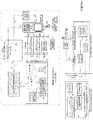
- Figure 1 is a schematic diagram illustrating an embodiment of an automated and personalized protection system for mobile applications according to the invention.
- This figure shows the system (100) of a first entity, that is a service provider, and the system (200) of a second entity, that is a security personalizer of mobile software applications. Both of them are prepared to execute a method according to the invention.
- step (1) the first entity generates an input file comprising a set of input registries, each input registry containing at least a unique identifier.
- Figure 1 illustrates a particular example where there is a single unique identifier (i) associated to each input registry (i). This unique identifier may be a unique transaction code associated to the input registry.
- the input file is stored into the databases (DDBB) of the first entity that relates to mobile software applications security protection, according to the invention.
- step (2) the first entity sends the input file, and the second entity receives it.
- step (3) the second entity generates an output personalization file from data included in the input file, generating an output registry on the output file for each one of the input registries into the input file.
- the unique identifier (i) of input registry (i) is used to generate the output registry (i).
- the unique identifier (i) is simply part of the output registry (i); in another example the unique identifier (i) is also used to calculate personalization data of the output registry (i).
- both the input file and the output personalization file are stored into the DDBB of the second entity that relates to mobile software applications security protection, according to the invention.
- the second entity stores the output registries in at least one output file and stores the at least one output file into its systems.
- the personalization data of a given output registry (i) are calculated in step (3) to be different that the personalization data of another output registry (j).
- it is achieved by using the unique identifier (i) as input for calculation of output registry (i) personalization data and the unique identifier (j) as input for calculation of output registry (j) personalization data.
- each output registry contains data that will be later used, at least partly, to protect a mobile software application.
- those data would be used as security parameters, and also to define obfuscation rules, to protect a mobile software application.
- the data will be inputted to a generic replica of a given mobile phone software application.
- a second entity being a security personalizer of mobile device software applications, receives the input file and uses the at least one unique identifier included in an input registry to generate an output personalization registry, where this output registry is different than another output registry, generated from another input registry, in terms of security parameters and/or obfuscation rules for personalization, and the data of the output registry is to be at least partly inputted to a generic replica of a mobile device software application.
- step (4) the second entity uses the security personalization data into output registry 1 as data to be inputted to obfuscation software, able to obfuscate a generic replica of the mobile software application by using the referred output registry 1 personalization data.
- the result of the obfuscation process is a protected mobile software application that is associated to the output registry 1 and to the related unique identifier 1, the protection being related to personalized security parameters and obfuscation rules.
- the process is repeated for each one of the output registries of the output personalization file, so N protected mobile software applications are generated, each one associated to its corresponding output registry and unique identifier.
- the N protected mobile software applications and the association of each one to the corresponding output registry and unique identifier are stored into the DDBB of the second entity that relates to mobile software applications security protection, according to the invention.
- the personalization data of a given output registry (i) are calculated to be different that the personalization data or another output registry (j). So the protected mobile software application associated to the output registry (i) and to the related unique identifier (i) will be different, in terms of personalized security parameters and/or obfuscation rules, than the protected mobile software application associated to the output registry (j) and to the related unique identifier (j).
- the second entity uses the at least part of the output registry, a generic replica of the mobile device software application and obfuscation software to generate a protected mobile software application that is associated to the output registry and to the at least one unique identifier, being this protected mobile software application different in terms of security parameters and/or obfuscation rules than another one obtained using at least part of another output registry.
- step (5) the second entity sends the protected mobile software applications to the first entity, each one associated to the corresponding unique identifier from the corresponding input registry, and the first entity receives and stores them into the DDBB of the first entity that relates to mobile software applications security protection, according to the invention.
- the second entity sends the protected mobile software applications to the first entity, each one associated to one or several unique identifiers from the corresponding input registry, and the first entity stores them and the association to at least one of the unique identifiers.
- the second entity also sends to the first entity in step (5) the output personalization file. So in this particular implementation, the at least one output file is sent by the second entity to the first entity, and the first entity stores it into its systems.
- the first entity assigns the unique identifier of each input registry to a particular user in step (1), before sending the input file to the second entity, so the DDBB of the first entity that relates to mobile software applications security protection would have this assignment stored from step (1).
- the first entity assigns the at least one unique identifier of the input registry to a particular user before sending the set of input registries to the second entity, thus the protected mobile software application is already assigned to a given user when received by the first entity from the second entity. And the same protected mobile software application will be assigned to all user mobile devices.
- a user requests a replica of the mobile software application to the first entity.
- the user has previously downloaded into his mobile device (400) an installer application from an applications store, and sends a request to receive a replica of the mobile software application by using the installer application into the mobile device.
- the request is sent to the server of the first entity associated to protected mobile software applications.
- the first entity searches into the DDBB for the protected mobile software application assigned to the user in step (1) and the applications server downloads it to the user mobile device.
- a user requests a replica of the mobile software application to the first entity and a protected mobile software application is downloaded to a user mobile device.
- Figure 1 also illustrates other embodiment according to the invention, where the assignment of the unique identifier of each input registry to a particular user is not made in step (1), but after the user has successfully become registered into at least part of the services of the service provider that relates to the usage of the protected mobile software application.
- step (7) the user obtains an activation code via the web page of the service provider, after successful login and transaction signature.
- the application initiates (e.g. via https) a secure registration process onto the referred services via the server of the first entity associated to protected mobile software applications, the process including sending the activation code from the mobile software protected application to the server of the first entity, and once the registration has been successfully completed, the first entity assigns, into the DDBB for the protected mobile software applications, the protected mobile software application to the user. Therefore the assignment is performed as a result of the user interest in receiving services through the protected mobile software application.
- the first entity assigns the at least one unique identifier of the input registry, and the protected mobile software application, to a particular user after having received the corresponding protected mobile software application from the second entity and after the user has successfully become registered into a service of the service provider by using the protected mobile software application.
- Figure 1 also illustrates another embodiment according to the invention, where the assignment of the unique identifier of each input registry to a particular user is not made in step (1), but after the user has successfully become registered into at least part of the services of the service provider that relates to the usage of the protected mobile software application.
- step (7) the user obtains an activation code via the web page of the service provider, after successful login and transaction signature.
- the application initiates (e.g. via https) a secure registration process onto the referred services via the server of the first entity associated to protected mobile software applications, the process including sending the activation code and at least one unique mobile device identifier from the mobile software protected application to the server of the first entity, and once the registration has been successfully completed, the first entity assigns, into the DDBB for the protected mobile software applications, the protected mobile software application to the user mobile device. Therefore in this case the assignment is also performed as a result of the user interest in receiving services through the protected mobile software application, but it is made on per user mobile device basis.
- the first entity assigns the at least one unique identifier of the input registry, and the protected mobile software application, to a particular mobile device of a user after having received the corresponding protected mobile software application from the second entity and after the user has successfully become registered into a service of the service provider by using the protected mobile software application.
- the assignment of the protected mobile software application is per user device, if the same user would later request a replica of the mobile software application to be downloaded to another one of his mobile devices, the downloaded protected mobile software application would be different, in terms of security parameters and/or obfuscation rules, than any other one previously downloaded into another device of that user.
- the first three embodiments above may be used to highly protect a multiplicity of mobile software applications on per user or per user mobile device basis.
- the embodiments could be applied to trading/broker applications from banks, multimedia messaging applications from telecoms or smartphone vendors, couponing applications from merchants, applications from transport operators offering routes discovery to its users or mobile social media applications.
- a protected replica of a mobile software application into a mobile device of a user is always different than another protected replica of the same mobile software application into a mobile device of another user, in terms of security parameters and/or obfuscation rules.
- Figure 1 also illustrates another embodiment according to the invention, where the user has downloaded into his mobile device, before step (6), an installer application from an applications store. Within this embodiment the user will have a limited period of time to register his protected mobile software application.
- step (6) the user request a replica of the mobile software application to the first entity by using the installer application into the mobile device.
- the assignment of the at least one unique identifier of the input registry, and the protected mobile software application, to a particular mobile device of a user is made after the user has successfully become registered into at least part of the services of the service provider that relates to the usage of the protected mobile software application.
- step (7) the user obtains an activation code via the web page of the service provider, after successful login and transaction signature.
- the application initiates (e.g. via https) a secure registration process onto the referred services via the server of the first entity associated to protected mobile software applications, the process including sending the activation code and at least one unique mobile device identifier from the mobile software protected application to the server of the first entity, and once the registration has been successfully completed, the first entity assigns, into the DDBB for the protected mobile software applications, the protected mobile software application to the user mobile device.
- a secure registration process onto the referred services via the server of the first entity associated to protected mobile software applications, the process including sending the activation code and at least one unique mobile device identifier from the mobile software protected application to the server of the first entity, and once the registration has been successfully completed, the first entity assigns, into the DDBB for the protected mobile software applications, the protected mobile software application to the user mobile device.
- the protected mobile software application is downloaded to the user mobile device as a result of another application, that is previously installed into said user mobile device, addressing a particular remote address, and at least one of the on-line services is not available for the protected mobile software application if a successful registration process that requires the user entering an activation code into the protected mobile software application has not been completed within a given time period after the protected mobile software application has been downloaded to the user mobile device, such time period defined by the first entity.
- the protected mobile software application can only be downloaded from remote address/es defined by the first entity.
- the first entity may use at least part of the security parameters, obfuscated into the mobile software application, to verify the authenticity of the application during the registration process.
- a bank service provider may block NFC or ecommerce on-line mobile payments at the payments server, when those are made via a protected mobile software application that was not registered within the predefined period of time.
- Figure 2 illustrates another embodiment according to the invention.
- this embodiment is described in connection to document WO2014/029620 , which belongs to the same applicant as the present application.
- Document WO2014/029620 relates to a method to enable mobile contactless ticketing/payments via a mobile phone application.
- figure 2.b of document WO2014/029620 shows an exemplary payment system to enable mobile contactless payments via a mobile phone application where:
- the mobile phone application registration process start in step (5) (when an activation code is generated) and ends in step (14) (after the user has selected a PIN for mobile contactless payments and a first set of credentials for mobile contactless payments has been stored into the mobile phone payment application).
- the payments server module of WO2014/029620 could even be the same server that the one referred to in this invention, associated to the protected mobile software applications. So in this case it would be easy to restrict on-line mobile contactless payments until the protected mobile software application (named as mobile phone application in WO2014/029620 ) has been registered into the first entity systems by the user entering an activation code at the mobile device and selecting a PIN, the PIN being required to make mobile contactless payments.
- Fig. 2 of the present invention combines the system disclosed in Fig. 1 of the present invention with the system disclosed in Fig. 2b of WO2014/029620 .
- steps (5) to (14) are named herein as step (7) in the context of figure 2 . That is, step (7) of this embodiment of the invention refers to the process of registering the mobile software application, selecting a PIN for on-line mobile contactless payments, and getting the credentials for mobile contactless payments.
- the protected mobile software application is used to provide a set of on-line services to the user and at least one of those on-line services is not available for the protected mobile software application until it has been registered into the first entity systems by the user entering an activation code at the mobile device and selecting a PIN, the PIN being required to have access to the at least one on-line service.
- the on-line mobile contactless payments are restricted until the protected mobile software application has been registered into the first entity systems by the user entering an activation code at the mobile device and selecting a PIN, the PIN being required to make mobile contactless payments, and until the first entity downloads to the protected mobile software application a set of credentials to be used for the on-line contactless mobile payment services.
- step (7) of this embodiment of the invention refers to the process of registering the mobile software application and getting the credentials for mobile contactless payments
- the protected mobile software application is used to provide on-line mobile contactless payment services to the user and those payment services are not available for the protected mobile software application until the first entity downloads to the protected mobile software application at least a part of at least one credential to be used for the on-line contactless mobile payment services.
- Figures 3a-3c illustrate a part of another embodiment according to the invention.
- only part of the output personalization registry is used to generate the protected mobile software application and another part is used for future security re-personalizations of the protected mobile software application.
- the security parameters and/or obfuscation rules may be renewed in the protected mobile software application when the current security personalization expires or is close to expire.
- figure 3.a shows an output personalization file with N output registries, each one with one unique identifier.
- Output personalization registry 1 contains a first set of security parameters [sp 11a , sp 11b , sp 11c ,... sp 11n ] associated to a first set of obfuscation rules [or 11a , or 11b , or 11c ,... or 11n ], a second set of security parameters [sp 12a , sp 12b , sp 12c ,... sp 12m ] associated to a second set of obfuscation rules [or 12a , or 12b , or 12c ,... or 12m ] ... and a n th set of security parameters [spina, sp 1nb , sp 1nc ,...
- sp 1nl associated to a n th set of obfuscation rules [or 1na , or 1nb , or 1nc ,... or 1nl ] and [sp 11a , sp 11b , sp 11c ,... sp 11n ] and [or 11a , or 11b , or 11c ,... or 11n ] are used to initially personalize, in terms of security parameters and obfuscation rules, the protected mobile software application; [sp 12a , sp 12b , sp 12c ,... sp 12m ] and [or 12a , or 12b , or 12c ,...
- sp 1(i-1)k ] and [or 1(i-1)a , or 1(i-1)b , or (1(i-1)c ,... or 1(i-1)k ] are replaced by [sp 1ia , sp 1ib , sp 1ic ,... sp 1ij ] and [or 1ia , or 1ib , or 1ic ,... or 1ij ] in the context of (i-1) security re-personalization process.
- the same logic may be applied to output personalization registries 2 to N.
- a set of "empty" registers has been personalized into the protected mobile software application at first security personalization such that at least part of those can be used in the context of future security re-personalization processes.
- some of the security parameters personalized into the protected mobile software application are sent to the first entity in the context of an on-line connection from the mobile software application, and the first entity validates the security parameters.
- [sp 11a , sp 11b , sp 11c ] are sent from the protected mobile software application to the first entity during the application registration process, after the application has obtained those values applying [or 11a , or 11b , or 11c ]. If the values are not correct, the first entity will not allow the registration process to be completed, and will disable the protected mobile software application into its systems. The rest of the security parameters will be sent during the life cycle of the application, for validation by the first entity; if not correct, the application will be disabled at the first entity systems.
- Figure 3.b shows how sp 11a has been divided in 4 parts and obfuscated into different locations into the protected mobile software application.
- the obfuscation rule or 11a has been divided in two parts: a first part or 11a(start) , that allows to address sp 11a(part1) from the application code, and a second part or 11a(part1) that allows to address from the application code de following part of sp 11a .
- Each part refers to the next one until the one that is labeled as the end part in the obfuscation rule.
- Figure 3.b also shows the empty locations where future security parameters and obfuscation rules can be placed.
- Figure 3.c shows the result of a security re-personalization process where sp 12a , associated to the first re-personalization of output registry 1, is now divided in 5 parts and obfuscated into different locations into the protected mobile software application.
- the obfuscation rule or 12a has been divided in two parts: a first part or 12a(start) , that allows to address sp 12a(part1) from the application code, and a second part or 12a(Part1) that allows to address from the application code de following part of sp 12a .
- the same logic may be applied to each one of the parameters/obfuscation rules and to each one of the output registries.
- Figure 3 is an illustrative example about using security parameters and obfuscation rules to protect the mobile software application, and many variances are possible without departing from the principles of this invention.
- the code could use or 11a(start) to address sp 11a(part1) when the security personalization is the initial one, and changing the value of that parameter, at the first security re-personalization, the code could later use or 12a(start) to address sp 12a(part1) when the security personalization is the one of the first re-personalization.
- the obfuscation rules may be different than those in these examples, as defined by the first issuer.
- some of the security parameters of the initial security personalization could be used, together with parts of the application code, to create a network of code checksums during the generation of the protected mobile software application, those checksums being embedded and obfuscated into the code at the time of generation of the protected mobile software application, and the code checksums being different than those of another protected mobile software application calculated upon the different security parameters of the first security personalization of the another protected mobile software application.
- At least one data of the output personalization registry was not used to generate the protected mobile software application that is associated to the output registry and to the at least one unique identifier, and at least part of those data are sent to the first entity, and the first entity at least partly re-personalizes the protected mobile software application, in terms of at least part of the security parameters and/or the obfuscation rules, using at least part of those data.
- new output personalization registries are generated by the second entity during the life cycle of the protected mobile software applications and are sent to the first entity. Therefore, using this embodiment the security parameters and/or obfuscation rules may be renewed by the first entity into the protected mobile software application when all the parameters of the previous output registry have either been user or expired.
- a new output personalization registry associated to the at least one unique identifier, is generated by the second entity during the life cycle of a given protected mobile software application, and at least part of this new output registry is sent to the first entity, and the first entity at least partly re-personalizes the protected mobile software application, in terms of at least part of the security parameters and/or the obfuscation rules, using data included into the new output registry.
- the security re-personalization is performed when the first entity verifies that the user entered a correct PIN value. So when the user inserts the PIN to have access to a remote service from the service provider (e.g. via a Web Service) the first entity may take advantage of that on-going process to re-personalize the protected mobile software application in terms of security parameters and/or obfuscation rules.
- the security re-personalization process is initiated by the first entity in the context of an on-line request to the first entity initiated from the protected mobile software application.
- the re-personalization process is initiated by the first entity without requiring the user inserting the PIN, thus the first entity may decide making the re-personalization e.g. based on risk management criteria.
- Figure 1 also illustrates a part of another embodiment according to the invention.
- a quality control system in charge to verify whether the security parameters and/or the obfuscation rules into the output registries has been properly personalized into the corresponding protected mobile software applications.
- This quality control system is targeted to identify any personalization error on the protected mobile software application as result of e.g. an electrical failure occurring during the security personalization process.
- the target is to be able identify it before the second entity sends a protected mobile software application to the first entity.
- Figure 1 illustrates how a protected mobile software application is generated in step (4).
- the generated application is sent to the quality control system of the second entity ( figure 1.a ) in charge to determine whether there is any security personalization error.
- the quality control system will also verify whether the "empty" registers have been properly personalized into the protected mobile software application. If there was a personalization error, it is reported to the system of the obfuscation software such that the security personalization process will be repeated. If the personalization was correct, step (4) finalizes by sending the protected mobile software application, and the association to the corresponding output registry and unique identifier to the DDBB of the second entity, according to the invention.
- the protected mobile software application is inputted to a quality control system of the second entity, in charge to determine whether the security parameters and/or the obfuscation rules have been properly personalized into the protected mobile software application.
- the embodiments of the invention described with reference to the drawings comprise computer apparatus (a computer apparatus is herein understood to be any electronic processing means capable of executing a sequence of steps encoded as a program) and processes performed in computer apparatus, the invention also extends to computer programs, particularly computer programs on or in a carrier, adapted for putting the invention into practice.
- the program may be in the form of source code, object code, a code intermediate source and object code such as in partially compiled form, or in any other form suitable for use in the implementation of the processes according to the invention.
- the carrier may be any entity or device capable of carrying the program.
- the carrier may comprise a storage medium, such as a ROM, for example a CD ROM or a semiconductor ROM, or a magnetic recording medium, for example a floppy disc or hard disk.
- the carrier may be a transmissible carrier such as an electrical or optical signal which may be conveyed via electrical or optical cable or by radio or other means.
- the carrier may be constituted by such cable or other device or means.
- the carrier may be an integrated circuit in which the program is embedded, the integrated circuit being adapted for performing, or for use in the performance of, the relevant processes.
Landscapes
- Engineering & Computer Science (AREA)
- Computer Security & Cryptography (AREA)
- Software Systems (AREA)
- Signal Processing (AREA)
- Computer Networks & Wireless Communication (AREA)
- Theoretical Computer Science (AREA)
- Computer Hardware Design (AREA)
- General Engineering & Computer Science (AREA)
- General Physics & Mathematics (AREA)
- Physics & Mathematics (AREA)
- Technology Law (AREA)
- Multimedia (AREA)
- Computing Systems (AREA)
- Stored Programmes (AREA)
- Telephone Function (AREA)
- Information Transfer Between Computers (AREA)
- Facsimiles In General (AREA)
Priority Applications (1)
| Application Number | Priority Date | Filing Date | Title |
|---|---|---|---|
| PL15709871T PL3120280T3 (pl) | 2014-03-17 | 2015-03-03 | Zautomatyzowany i spersonalizowany system zabezpieczeń dla aplikacji mobilnych |
Applications Claiming Priority (2)
| Application Number | Priority Date | Filing Date | Title |
|---|---|---|---|
| ES201400211A ES2545974B1 (es) | 2014-03-17 | 2014-03-17 | Sistema de protección automático y personalizado para aplicaciones móviles |
| PCT/EP2015/054428 WO2015139950A1 (en) | 2014-03-17 | 2015-03-03 | Automated and personalized protection system for mobile applications |
Publications (2)
| Publication Number | Publication Date |
|---|---|
| EP3120280A1 EP3120280A1 (en) | 2017-01-25 |
| EP3120280B1 true EP3120280B1 (en) | 2019-11-13 |
Family
ID=52682679
Family Applications (1)
| Application Number | Title | Priority Date | Filing Date |
|---|---|---|---|
| EP15709871.6A Active EP3120280B1 (en) | 2014-03-17 | 2015-03-03 | Automated and personalized protection system for mobile applications |
Country Status (7)
| Country | Link |
|---|---|
| US (1) | US10616262B2 (da) |
| EP (1) | EP3120280B1 (da) |
| DK (1) | DK3120280T3 (da) |
| ES (1) | ES2545974B1 (da) |
| PL (1) | PL3120280T3 (da) |
| PT (1) | PT3120280T (da) |
| WO (1) | WO2015139950A1 (da) |
Families Citing this family (7)
| Publication number | Priority date | Publication date | Assignee | Title |
|---|---|---|---|---|
| US10142232B2 (en) * | 2014-06-03 | 2018-11-27 | Huawei Technologies Co., Ltd. | Route setting method and terminal device |
| US10496814B2 (en) * | 2016-03-07 | 2019-12-03 | Intertrust Technologies Corporation | Software integrity checking systems and methods |
| US12339979B2 (en) | 2016-03-07 | 2025-06-24 | Crowdstrike, Inc. | Hypervisor-based interception of memory and register accesses |
| US12248560B2 (en) * | 2016-03-07 | 2025-03-11 | Crowdstrike, Inc. | Hypervisor-based redirection of system calls and interrupt-based task offloading |
| ES2814877T3 (es) * | 2016-07-11 | 2021-03-29 | Afirma Consulting & Tech S L | Protección de seguridad de aplicaciones de dispositivos móviles basada en personalización y vinculación segura de dominios de código |
| US11456855B2 (en) * | 2019-10-17 | 2022-09-27 | Arm Limited | Obfuscating data at-transit |
| US11790103B2 (en) * | 2020-09-29 | 2023-10-17 | Citrix Systems, Inc. | Adaptive data loss prevention |
Family Cites Families (32)
| Publication number | Priority date | Publication date | Assignee | Title |
|---|---|---|---|---|
| US6738766B2 (en) * | 2000-02-02 | 2004-05-18 | Doongo Technologies, Inc. | Apparatus and methods for providing personalized application search results for wireless devices based on user profiles |
| US7054443B1 (en) * | 2000-03-27 | 2006-05-30 | Microsoft Corporation | System and method for protecting digital goods using random and automatic code obfuscation |
| WO2003003169A2 (en) * | 2001-06-28 | 2003-01-09 | Cloakware Corporation | Secure method and system for biometric verification |
| US7822688B2 (en) * | 2002-08-08 | 2010-10-26 | Fujitsu Limited | Wireless wallet |
| GB0318000D0 (en) * | 2003-07-31 | 2003-09-03 | Ncr Int Inc | Mobile applications |
| US20050069138A1 (en) * | 2003-09-25 | 2005-03-31 | Sun Microsystems, Inc., A Delaware Corporation | Application program obfuscation |
| US20060020883A1 (en) * | 2004-05-28 | 2006-01-26 | Microsoft Corporation | Web page personalization |
| US8108689B2 (en) * | 2005-10-28 | 2012-01-31 | Panasonic Corporation | Obfuscation evaluation method and obfuscation method |
| WO2007085023A2 (en) * | 2006-01-20 | 2007-07-26 | Josef Berger | Systems and methods for operating communication processes using a personalized communication web server |
| WO2008034900A1 (en) * | 2006-09-21 | 2008-03-27 | Boesgaard Soerensen Hans Marti | Fabrication of computer executable program files from source code |
| EP2122530A2 (en) * | 2006-12-15 | 2009-11-25 | Hans Martin Boesgaard Sørensen | Digital data authentication |
| AU2008243851A1 (en) * | 2007-04-25 | 2008-11-06 | Fireflight (Pty) Ltd | Method and system for installing a software application on a mobile computing device |
| GB0714622D0 (en) * | 2007-07-26 | 2007-09-05 | Affle Ltd | Application generation system and method |
| US20100211638A1 (en) * | 2007-07-27 | 2010-08-19 | Goojet | Method and device for creating computer applications |
| US8176337B2 (en) * | 2008-03-12 | 2012-05-08 | Apple Inc. | Computer object code obfuscation using boot installation |
| US9361636B2 (en) * | 2008-05-20 | 2016-06-07 | Microsoft Technology Licensing, Llc | Creating, managing, and provisioning packages of online applications |
| US8522354B2 (en) * | 2008-05-24 | 2013-08-27 | Via Technologies, Inc. | Microprocessor apparatus for secure on-die real-time clock |
| US8406748B2 (en) * | 2009-01-28 | 2013-03-26 | Headwater Partners I Llc | Adaptive ambient services |
| US20090327091A1 (en) * | 2008-06-26 | 2009-12-31 | Microsoft Corporation | License management for software products |
| FI121829B (fi) * | 2009-06-18 | 2011-04-29 | Pekka Aarne Rehtijaervi | Räätälöidyn sovelluksen tuottaminen käyttäjän päätelaitteelle |
| FR2951343A1 (fr) * | 2009-10-14 | 2011-04-15 | Alcatel Lucent | Gestion de dispositif de communication a travers un reseau de telecommunications |
| KR101097103B1 (ko) * | 2009-12-22 | 2011-12-22 | 한국저작권위원회 | 소프트웨어 소스코드의 유출을 방지하기 위한 시스템 및 방법 |
| US9554754B2 (en) * | 2010-01-08 | 2017-01-31 | Jeffrey Ruby | System, method and computer program for weight, lifestyle and/or disease management integrating nutrition, exercise and behaviour management |
| US20110296175A1 (en) * | 2010-05-25 | 2011-12-01 | beonSoft Inc. | Systems and methods for software license distribution using asymmetric key cryptography |
| FI20106336A0 (fi) * | 2010-12-17 | 2010-12-17 | Pocketsoft Oy | Räätälöidyn sovelluksen tuottaminen käyttäjän päätelaitteelle |
| FI20106335A0 (fi) * | 2010-12-17 | 2010-12-17 | Pocketsoft Oy | Räätälöidyn sovelluksen tuottaminen käyttäjän päätelaitteelle |
| US9134969B2 (en) * | 2011-12-13 | 2015-09-15 | Ipar, Llc | Computer-implemented systems and methods for providing consistent application generation |
| WO2014003394A1 (en) * | 2012-06-25 | 2014-01-03 | Lg Electronics Inc. | Apparatus and method for processing an interactive service |
| US9378026B2 (en) * | 2012-07-27 | 2016-06-28 | Daniel A. Dooley | Customizable application |
| US8887128B2 (en) * | 2012-12-17 | 2014-11-11 | Sas Institute Inc. | Computer-implemented systems and methods for automated generation of a customized software product |
| US9380040B1 (en) * | 2013-07-11 | 2016-06-28 | Parallels IP Holdings GmbH | Method for downloading preauthorized applications to desktop computer using secure connection |
| US9189207B2 (en) * | 2014-03-11 | 2015-11-17 | Telefonaktiebolaget L M Ericsson (Publ) | Methods and systems for dynamic runtime generation of customized applications |
-
2014
- 2014-03-17 ES ES201400211A patent/ES2545974B1/es active Active
-
2015
- 2015-03-03 DK DK15709871.6T patent/DK3120280T3/da active
- 2015-03-03 PL PL15709871T patent/PL3120280T3/pl unknown
- 2015-03-03 PT PT157098716T patent/PT3120280T/pt unknown
- 2015-03-03 WO PCT/EP2015/054428 patent/WO2015139950A1/en not_active Ceased
- 2015-03-03 US US15/125,610 patent/US10616262B2/en not_active Expired - Fee Related
- 2015-03-03 EP EP15709871.6A patent/EP3120280B1/en active Active
Non-Patent Citations (1)
| Title |
|---|
| None * |
Also Published As
| Publication number | Publication date |
|---|---|
| PL3120280T3 (pl) | 2020-04-30 |
| US20170006057A1 (en) | 2017-01-05 |
| US10616262B2 (en) | 2020-04-07 |
| ES2545974A1 (es) | 2015-09-17 |
| ES2545974B1 (es) | 2016-04-27 |
| PT3120280T (pt) | 2019-11-27 |
| EP3120280A1 (en) | 2017-01-25 |
| DK3120280T3 (da) | 2020-02-17 |
| WO2015139950A1 (en) | 2015-09-24 |
Similar Documents
| Publication | Publication Date | Title |
|---|---|---|
| US10904002B2 (en) | Token security on a communication device | |
| EP3120280B1 (en) | Automated and personalized protection system for mobile applications | |
| EP2524471B1 (en) | Anytime validation for verification tokens | |
| JP5959410B2 (ja) | 決済方法、これを実行する決済サーバ、これを実行するためのプログラム及びこれを実行するシステム | |
| EP2617219B1 (en) | Secure near field communication of a non-secure memory element payload | |
| CA2882986C (en) | Method and system to enable mobile contactless ticketing/payments via a mobile phone application | |
| AU2012265824B2 (en) | A transaction system and method for use with a mobile device | |
| JP2017537421A (ja) | 支払いトークンのセキュリティを確保する方法 | |
| JP2019517229A (ja) | ポータブル電子デバイスと関連したデジタルシークレットの生成、格納、管理および使用のためのシステムおよび方法 | |
| EP3657422B1 (en) | Dynamic verification method and system for card transactions | |
| CN110546668B (zh) | 卡的交易的动态认证方法及系统 | |
| KR101795450B1 (ko) | 보안 터널 기반 인증 방법 및 장치 | |
| US10909530B2 (en) | Authentication method | |
| KR101617452B1 (ko) | 오티피를 이용한 온라인 결제방법 | |
| AU2015200701B2 (en) | Anytime validation for verification tokens | |
| da Fonte | Host card emulation with tokenisation: Security risk assessments | |
| WO2026080538A1 (en) | System and methods for latent applet activation | |
| HK40017303A (en) | Dynamic verification method and system for card transactions |
Legal Events
| Date | Code | Title | Description |
|---|---|---|---|
| STAA | Information on the status of an ep patent application or granted ep patent |
Free format text: STATUS: THE INTERNATIONAL PUBLICATION HAS BEEN MADE |
|
| PUAI | Public reference made under article 153(3) epc to a published international application that has entered the european phase |
Free format text: ORIGINAL CODE: 0009012 |
|
| STAA | Information on the status of an ep patent application or granted ep patent |
Free format text: STATUS: REQUEST FOR EXAMINATION WAS MADE |
|
| 17P | Request for examination filed |
Effective date: 20160916 |
|
| AK | Designated contracting states |
Kind code of ref document: A1 Designated state(s): AL AT BE BG CH CY CZ DE DK EE ES FI FR GB GR HR HU IE IS IT LI LT LU LV MC MK MT NL NO PL PT RO RS SE SI SK SM TR |
|
| AX | Request for extension of the european patent |
Extension state: BA ME |
|
| RIN1 | Information on inventor provided before grant (corrected) |
Inventor name: GARCIA MURGA, IMANOL Inventor name: SAN JOSE SANCHEZ, JULIO Inventor name: PEREZ LAFUENTE, CARLOS ALBERTO |
|
| DAV | Request for validation of the european patent (deleted) | ||
| DAX | Request for extension of the european patent (deleted) | ||
| STAA | Information on the status of an ep patent application or granted ep patent |
Free format text: STATUS: EXAMINATION IS IN PROGRESS |
|
| 17Q | First examination report despatched |
Effective date: 20190423 |
|
| REG | Reference to a national code |
Ref country code: DE Ref legal event code: R079 Ref document number: 602015041576 Country of ref document: DE Free format text: PREVIOUS MAIN CLASS: G06F0021120000 Ipc: G06F0021140000 |
|
| RIC1 | Information provided on ipc code assigned before grant |
Ipc: H04L 29/08 20060101ALI20190701BHEP Ipc: G06F 21/14 20130101AFI20190701BHEP Ipc: H04W 12/00 20090101ALI20190701BHEP Ipc: H04W 4/50 20180101ALI20190701BHEP Ipc: G06F 21/54 20130101ALI20190701BHEP |
|
| GRAP | Despatch of communication of intention to grant a patent |
Free format text: ORIGINAL CODE: EPIDOSNIGR1 |
|
| STAA | Information on the status of an ep patent application or granted ep patent |
Free format text: STATUS: GRANT OF PATENT IS INTENDED |
|
| INTG | Intention to grant announced |
Effective date: 20190823 |
|
| GRAS | Grant fee paid |
Free format text: ORIGINAL CODE: EPIDOSNIGR3 |
|
| GRAA | (expected) grant |
Free format text: ORIGINAL CODE: 0009210 |
|
| STAA | Information on the status of an ep patent application or granted ep patent |
Free format text: STATUS: THE PATENT HAS BEEN GRANTED |
|
| AK | Designated contracting states |
Kind code of ref document: B1 Designated state(s): AL AT BE BG CH CY CZ DE DK EE ES FI FR GB GR HR HU IE IS IT LI LT LU LV MC MK MT NL NO PL PT RO RS SE SI SK SM TR |
|
| REG | Reference to a national code |
Ref country code: CH Ref legal event code: EP Ref country code: AT Ref legal event code: REF Ref document number: 1202419 Country of ref document: AT Kind code of ref document: T Effective date: 20191115 |
|
| REG | Reference to a national code |
Ref country code: PT Ref legal event code: SC4A Ref document number: 3120280 Country of ref document: PT Date of ref document: 20191127 Kind code of ref document: T Free format text: AVAILABILITY OF NATIONAL TRANSLATION Effective date: 20191120 |
|
| REG | Reference to a national code |
Ref country code: DE Ref legal event code: R096 Ref document number: 602015041576 Country of ref document: DE |
|
| REG | Reference to a national code |
Ref country code: NL Ref legal event code: FP Ref country code: IE Ref legal event code: FG4D |
|
| REG | Reference to a national code |
Ref country code: CH Ref legal event code: NV Representative=s name: MICHELI AND CIE SA, CH |
|
| REG | Reference to a national code |
Ref country code: NO Ref legal event code: T2 Effective date: 20191113 |
|
| REG | Reference to a national code |
Ref country code: DK Ref legal event code: T3 Effective date: 20200212 |
|
| REG | Reference to a national code |
Ref country code: SE Ref legal event code: TRGR Ref country code: FI Ref legal event code: FGE |
|
| REG | Reference to a national code |
Ref country code: LT Ref legal event code: MG4D |
|
| PG25 | Lapsed in a contracting state [announced via postgrant information from national office to epo] |
Ref country code: LV Free format text: LAPSE BECAUSE OF FAILURE TO SUBMIT A TRANSLATION OF THE DESCRIPTION OR TO PAY THE FEE WITHIN THE PRESCRIBED TIME-LIMIT Effective date: 20191113 Ref country code: BG Free format text: LAPSE BECAUSE OF FAILURE TO SUBMIT A TRANSLATION OF THE DESCRIPTION OR TO PAY THE FEE WITHIN THE PRESCRIBED TIME-LIMIT Effective date: 20200213 Ref country code: LT Free format text: LAPSE BECAUSE OF FAILURE TO SUBMIT A TRANSLATION OF THE DESCRIPTION OR TO PAY THE FEE WITHIN THE PRESCRIBED TIME-LIMIT Effective date: 20191113 Ref country code: GR Free format text: LAPSE BECAUSE OF FAILURE TO SUBMIT A TRANSLATION OF THE DESCRIPTION OR TO PAY THE FEE WITHIN THE PRESCRIBED TIME-LIMIT Effective date: 20200214 |
|
| PGFP | Annual fee paid to national office [announced via postgrant information from national office to epo] |
Ref country code: PL Payment date: 20200221 Year of fee payment: 6 Ref country code: AT Payment date: 20200218 Year of fee payment: 6 Ref country code: FI Payment date: 20200320 Year of fee payment: 6 Ref country code: SE Payment date: 20200220 Year of fee payment: 6 Ref country code: NL Payment date: 20200219 Year of fee payment: 6 Ref country code: DK Payment date: 20200220 Year of fee payment: 6 Ref country code: NO Payment date: 20200220 Year of fee payment: 6 |
|
| PG25 | Lapsed in a contracting state [announced via postgrant information from national office to epo] |
Ref country code: HR Free format text: LAPSE BECAUSE OF FAILURE TO SUBMIT A TRANSLATION OF THE DESCRIPTION OR TO PAY THE FEE WITHIN THE PRESCRIBED TIME-LIMIT Effective date: 20191113 Ref country code: IS Free format text: LAPSE BECAUSE OF FAILURE TO SUBMIT A TRANSLATION OF THE DESCRIPTION OR TO PAY THE FEE WITHIN THE PRESCRIBED TIME-LIMIT Effective date: 20200313 Ref country code: RS Free format text: LAPSE BECAUSE OF FAILURE TO SUBMIT A TRANSLATION OF THE DESCRIPTION OR TO PAY THE FEE WITHIN THE PRESCRIBED TIME-LIMIT Effective date: 20191113 |
|
| PGFP | Annual fee paid to national office [announced via postgrant information from national office to epo] |
Ref country code: BE Payment date: 20200227 Year of fee payment: 6 Ref country code: CH Payment date: 20200219 Year of fee payment: 6 |
|
| PG25 | Lapsed in a contracting state [announced via postgrant information from national office to epo] |
Ref country code: AL Free format text: LAPSE BECAUSE OF FAILURE TO SUBMIT A TRANSLATION OF THE DESCRIPTION OR TO PAY THE FEE WITHIN THE PRESCRIBED TIME-LIMIT Effective date: 20191113 |
|
| PGFP | Annual fee paid to national office [announced via postgrant information from national office to epo] |
Ref country code: TR Payment date: 20200218 Year of fee payment: 6 |
|
| PG25 | Lapsed in a contracting state [announced via postgrant information from national office to epo] |
Ref country code: EE Free format text: LAPSE BECAUSE OF FAILURE TO SUBMIT A TRANSLATION OF THE DESCRIPTION OR TO PAY THE FEE WITHIN THE PRESCRIBED TIME-LIMIT Effective date: 20191113 Ref country code: RO Free format text: LAPSE BECAUSE OF FAILURE TO SUBMIT A TRANSLATION OF THE DESCRIPTION OR TO PAY THE FEE WITHIN THE PRESCRIBED TIME-LIMIT Effective date: 20191113 Ref country code: CZ Free format text: LAPSE BECAUSE OF FAILURE TO SUBMIT A TRANSLATION OF THE DESCRIPTION OR TO PAY THE FEE WITHIN THE PRESCRIBED TIME-LIMIT Effective date: 20191113 Ref country code: ES Free format text: LAPSE BECAUSE OF FAILURE TO SUBMIT A TRANSLATION OF THE DESCRIPTION OR TO PAY THE FEE WITHIN THE PRESCRIBED TIME-LIMIT Effective date: 20191113 |
|
| REG | Reference to a national code |
Ref country code: DE Ref legal event code: R097 Ref document number: 602015041576 Country of ref document: DE |
|
| PG25 | Lapsed in a contracting state [announced via postgrant information from national office to epo] |
Ref country code: SM Free format text: LAPSE BECAUSE OF FAILURE TO SUBMIT A TRANSLATION OF THE DESCRIPTION OR TO PAY THE FEE WITHIN THE PRESCRIBED TIME-LIMIT Effective date: 20191113 Ref country code: SK Free format text: LAPSE BECAUSE OF FAILURE TO SUBMIT A TRANSLATION OF THE DESCRIPTION OR TO PAY THE FEE WITHIN THE PRESCRIBED TIME-LIMIT Effective date: 20191113 |
|
| PLBE | No opposition filed within time limit |
Free format text: ORIGINAL CODE: 0009261 |
|
| STAA | Information on the status of an ep patent application or granted ep patent |
Free format text: STATUS: NO OPPOSITION FILED WITHIN TIME LIMIT |
|
| 26N | No opposition filed |
Effective date: 20200814 |
|
| PG25 | Lapsed in a contracting state [announced via postgrant information from national office to epo] |
Ref country code: MC Free format text: LAPSE BECAUSE OF FAILURE TO SUBMIT A TRANSLATION OF THE DESCRIPTION OR TO PAY THE FEE WITHIN THE PRESCRIBED TIME-LIMIT Effective date: 20191113 |
|
| PG25 | Lapsed in a contracting state [announced via postgrant information from national office to epo] |
Ref country code: SI Free format text: LAPSE BECAUSE OF FAILURE TO SUBMIT A TRANSLATION OF THE DESCRIPTION OR TO PAY THE FEE WITHIN THE PRESCRIBED TIME-LIMIT Effective date: 20191113 |
|
| PGFP | Annual fee paid to national office [announced via postgrant information from national office to epo] |
Ref country code: FR Payment date: 20210217 Year of fee payment: 7 Ref country code: IE Payment date: 20210217 Year of fee payment: 7 Ref country code: IT Payment date: 20210211 Year of fee payment: 7 Ref country code: PT Payment date: 20210302 Year of fee payment: 7 Ref country code: LU Payment date: 20210218 Year of fee payment: 7 |
|
| PGFP | Annual fee paid to national office [announced via postgrant information from national office to epo] |
Ref country code: DE Payment date: 20210218 Year of fee payment: 7 Ref country code: GB Payment date: 20210217 Year of fee payment: 7 |
|
| REG | Reference to a national code |
Ref country code: FI Ref legal event code: MAE |
|
| REG | Reference to a national code |
Ref country code: NO Ref legal event code: MMEP |
|
| PG25 | Lapsed in a contracting state [announced via postgrant information from national office to epo] |
Ref country code: FI Free format text: LAPSE BECAUSE OF NON-PAYMENT OF DUE FEES Effective date: 20210303 |
|
| REG | Reference to a national code |
Ref country code: CH Ref legal event code: PL |
|
| REG | Reference to a national code |
Ref country code: DK Ref legal event code: EBP Effective date: 20210331 |
|
| REG | Reference to a national code |
Ref country code: NL Ref legal event code: MM Effective date: 20210401 |
|
| REG | Reference to a national code |
Ref country code: AT Ref legal event code: MM01 Ref document number: 1202419 Country of ref document: AT Kind code of ref document: T Effective date: 20210303 |
|
| REG | Reference to a national code |
Ref country code: BE Ref legal event code: MM Effective date: 20210331 |
|
| PG25 | Lapsed in a contracting state [announced via postgrant information from national office to epo] |
Ref country code: SE Free format text: LAPSE BECAUSE OF NON-PAYMENT OF DUE FEES Effective date: 20210304 Ref country code: CH Free format text: LAPSE BECAUSE OF NON-PAYMENT OF DUE FEES Effective date: 20210331 Ref country code: AT Free format text: LAPSE BECAUSE OF NON-PAYMENT OF DUE FEES Effective date: 20210303 Ref country code: LI Free format text: LAPSE BECAUSE OF NON-PAYMENT OF DUE FEES Effective date: 20210331 Ref country code: NO Free format text: LAPSE BECAUSE OF NON-PAYMENT OF DUE FEES Effective date: 20210331 Ref country code: NL Free format text: LAPSE BECAUSE OF NON-PAYMENT OF DUE FEES Effective date: 20210401 |
|
| PG25 | Lapsed in a contracting state [announced via postgrant information from national office to epo] |
Ref country code: DK Free format text: LAPSE BECAUSE OF NON-PAYMENT OF DUE FEES Effective date: 20210331 |
|
| PG25 | Lapsed in a contracting state [announced via postgrant information from national office to epo] |
Ref country code: MT Free format text: LAPSE BECAUSE OF FAILURE TO SUBMIT A TRANSLATION OF THE DESCRIPTION OR TO PAY THE FEE WITHIN THE PRESCRIBED TIME-LIMIT Effective date: 20191113 Ref country code: CY Free format text: LAPSE BECAUSE OF FAILURE TO SUBMIT A TRANSLATION OF THE DESCRIPTION OR TO PAY THE FEE WITHIN THE PRESCRIBED TIME-LIMIT Effective date: 20191113 |
|
| PG25 | Lapsed in a contracting state [announced via postgrant information from national office to epo] |
Ref country code: MK Free format text: LAPSE BECAUSE OF FAILURE TO SUBMIT A TRANSLATION OF THE DESCRIPTION OR TO PAY THE FEE WITHIN THE PRESCRIBED TIME-LIMIT Effective date: 20191113 |
|
| PG25 | Lapsed in a contracting state [announced via postgrant information from national office to epo] |
Ref country code: BE Free format text: LAPSE BECAUSE OF NON-PAYMENT OF DUE FEES Effective date: 20210331 |
|
| REG | Reference to a national code |
Ref country code: DE Ref legal event code: R119 Ref document number: 602015041576 Country of ref document: DE |
|
| PG25 | Lapsed in a contracting state [announced via postgrant information from national office to epo] |
Ref country code: PT Free format text: LAPSE BECAUSE OF NON-PAYMENT OF DUE FEES Effective date: 20220905 |
|
| GBPC | Gb: european patent ceased through non-payment of renewal fee |
Effective date: 20220303 |
|
| PG25 | Lapsed in a contracting state [announced via postgrant information from national office to epo] |
Ref country code: LU Free format text: LAPSE BECAUSE OF NON-PAYMENT OF DUE FEES Effective date: 20220303 Ref country code: IE Free format text: LAPSE BECAUSE OF NON-PAYMENT OF DUE FEES Effective date: 20220303 Ref country code: GB Free format text: LAPSE BECAUSE OF NON-PAYMENT OF DUE FEES Effective date: 20220303 Ref country code: FR Free format text: LAPSE BECAUSE OF NON-PAYMENT OF DUE FEES Effective date: 20220331 Ref country code: DE Free format text: LAPSE BECAUSE OF NON-PAYMENT OF DUE FEES Effective date: 20221001 |
|
| PG25 | Lapsed in a contracting state [announced via postgrant information from national office to epo] |
Ref country code: PL Free format text: LAPSE BECAUSE OF NON-PAYMENT OF DUE FEES Effective date: 20210303 Ref country code: IT Free format text: LAPSE BECAUSE OF NON-PAYMENT OF DUE FEES Effective date: 20220303 |