EP3120562B1 - Codage vidéo échelonnable au moyen de décalages de couches de référence et de référence mise à l'échelle - Google Patents
Codage vidéo échelonnable au moyen de décalages de couches de référence et de référence mise à l'échelle Download PDFInfo
- Publication number
- EP3120562B1 EP3120562B1 EP15714726.5A EP15714726A EP3120562B1 EP 3120562 B1 EP3120562 B1 EP 3120562B1 EP 15714726 A EP15714726 A EP 15714726A EP 3120562 B1 EP3120562 B1 EP 3120562B1
- Authority
- EP
- European Patent Office
- Prior art keywords
- layer
- ref
- scaled
- offset
- rlid
- Prior art date
- Legal status (The legal status is an assumption and is not a legal conclusion. Google has not performed a legal analysis and makes no representation as to the accuracy of the status listed.)
- Active
Links
Images



Classifications
-
- H—ELECTRICITY
- H04—ELECTRIC COMMUNICATION TECHNIQUE
- H04N—PICTORIAL COMMUNICATION, e.g. TELEVISION
- H04N19/00—Methods or arrangements for coding, decoding, compressing or decompressing digital video signals
- H04N19/50—Methods or arrangements for coding, decoding, compressing or decompressing digital video signals using predictive coding
- H04N19/59—Methods or arrangements for coding, decoding, compressing or decompressing digital video signals using predictive coding involving spatial sub-sampling or interpolation, e.g. alteration of picture size or resolution
-
- H—ELECTRICITY
- H04—ELECTRIC COMMUNICATION TECHNIQUE
- H04N—PICTORIAL COMMUNICATION, e.g. TELEVISION
- H04N19/00—Methods or arrangements for coding, decoding, compressing or decompressing digital video signals
- H04N19/10—Methods or arrangements for coding, decoding, compressing or decompressing digital video signals using adaptive coding
- H04N19/134—Methods or arrangements for coding, decoding, compressing or decompressing digital video signals using adaptive coding characterised by the element, parameter or criterion affecting or controlling the adaptive coding
- H04N19/167—Position within a video image, e.g. region of interest [ROI]
-
- H—ELECTRICITY
- H04—ELECTRIC COMMUNICATION TECHNIQUE
- H04N—PICTORIAL COMMUNICATION, e.g. TELEVISION
- H04N19/00—Methods or arrangements for coding, decoding, compressing or decompressing digital video signals
- H04N19/10—Methods or arrangements for coding, decoding, compressing or decompressing digital video signals using adaptive coding
- H04N19/169—Methods or arrangements for coding, decoding, compressing or decompressing digital video signals using adaptive coding characterised by the coding unit, i.e. the structural portion or semantic portion of the video signal being the object or the subject of the adaptive coding
- H04N19/182—Methods or arrangements for coding, decoding, compressing or decompressing digital video signals using adaptive coding characterised by the coding unit, i.e. the structural portion or semantic portion of the video signal being the object or the subject of the adaptive coding the unit being a pixel
-
- H—ELECTRICITY
- H04—ELECTRIC COMMUNICATION TECHNIQUE
- H04N—PICTORIAL COMMUNICATION, e.g. TELEVISION
- H04N19/00—Methods or arrangements for coding, decoding, compressing or decompressing digital video signals
- H04N19/10—Methods or arrangements for coding, decoding, compressing or decompressing digital video signals using adaptive coding
- H04N19/169—Methods or arrangements for coding, decoding, compressing or decompressing digital video signals using adaptive coding characterised by the coding unit, i.e. the structural portion or semantic portion of the video signal being the object or the subject of the adaptive coding
- H04N19/187—Methods or arrangements for coding, decoding, compressing or decompressing digital video signals using adaptive coding characterised by the coding unit, i.e. the structural portion or semantic portion of the video signal being the object or the subject of the adaptive coding the unit being a scalable video layer
-
- H—ELECTRICITY
- H04—ELECTRIC COMMUNICATION TECHNIQUE
- H04N—PICTORIAL COMMUNICATION, e.g. TELEVISION
- H04N19/00—Methods or arrangements for coding, decoding, compressing or decompressing digital video signals
- H04N19/30—Methods or arrangements for coding, decoding, compressing or decompressing digital video signals using hierarchical techniques, e.g. scalability
- H04N19/33—Methods or arrangements for coding, decoding, compressing or decompressing digital video signals using hierarchical techniques, e.g. scalability in the spatial domain
-
- H—ELECTRICITY
- H04—ELECTRIC COMMUNICATION TECHNIQUE
- H04N—PICTORIAL COMMUNICATION, e.g. TELEVISION
- H04N19/00—Methods or arrangements for coding, decoding, compressing or decompressing digital video signals
- H04N19/70—Methods or arrangements for coding, decoding, compressing or decompressing digital video signals characterised by syntax aspects related to video coding, e.g. related to compression standards
-
- H—ELECTRICITY
- H04—ELECTRIC COMMUNICATION TECHNIQUE
- H04N—PICTORIAL COMMUNICATION, e.g. TELEVISION
- H04N19/00—Methods or arrangements for coding, decoding, compressing or decompressing digital video signals
- H04N19/80—Details of filtering operations specially adapted for video compression, e.g. for pixel interpolation
Definitions
- the present invention relates to a sampling filter process for scalable video coding. More specifically, the present invention relates to re-sampling using video data obtained from an encoder or decoder process, where the encoder or decoder process can be MPEG-4 Advanced Video Coding (AVC) or High Efficiency Video Coding (HEVC). Further, the present invention specifically relates to Scalable HEVC (SHVC) that includes a two layer video coding system.
- AVC MPEG-4 Advanced Video Coding
- HEVC High Efficiency Video Coding
- SHVC Scalable HEVC
- Scalable video coding refers to video coding in which a base layer (BL), sometimes referred to as a reference layer, and one or more scalable enhancement layers (EL) are used.
- the base layer can carry video data with a base level of quality.
- the one or more enhancement layers can carry additional video data to support higher spatial, temporal, and/or signal-to-noise SNR levels. Enhancement layers may be defined relative to a previously coded layer.
- the base layer and enhancement layers can have different resolutions.
- Upsampling filtering sometimes referred to as resampling filtering, may be applied to the base layer in order to match a spatial aspect ratio or resolution of an enhancement layer. This process may be called spatial scalability.
- An upsampling filter set can be applied to the base layer, and one filter can be chosen from the set based on a phase (sometimes referred to as a fractional pixel shift). The phase may be calculated based on the ratio between base layer and enhancement layer picture resolutions.
- MINOO K ET AL "AHG13: SHVC Upsampling with phase offset adjustment", 104.
- MINOO K ET AL "On handling re-sampling phase offsets with fixed filters", 16.
- JCT-VC MEETING 9-1-2014 - 17-1-2014; SAN JOSE; (JOINT COLLABORATIVE TEAM ON VIDEO CODING OF ISO/IEC JTC1/SC29/WG11 AND ITU-T SG.16), 10 January 2014 , discusses an approach to signalling phase offsets to improve inter-layer prediction precision and hence the compression performance of SHEVC.
- Embodiments of the present invention provide methods, devices and systems for the upsampling process from BL resolution to EL resolution to implement the upsampling of Fig. 2 .
- the upsampling process of embodiments of the present invention includes three separate modules, a first module to select input samples from the BL video signal, a second module to select a filter for filtering the samples, and a third module using phase filtering to filter the input samples to recreate video that approximates the EL resolution video.
- the filters of the third module can be selected from a set of fixed filters each with different phase. In these modules, the selection of the input samples and filters for generating the output samples are determined based upon a mapping between the EL sample positions and the corresponding BL sample positions.
- the embodiments included herein are related to the mapping or computation between the EL and the BL sample positions.
- One embodiment includes a system for scalable video coding, as defined in the appended independent claim 1. The invention is defined in the appended claims.
- a BL video is encoded in an Encoder E0, labeled 100, and decoded in a decoder D0, labeled 102, to produce a base layer video output BL out.
- the BL video is typically at a lower quality than the remaining layers, such as the Full Resolution (FR) layer that receives an input FR (y).
- the FR layer includes an encoder E1, labeled 104, and a decoder D1, labeled 106.
- cross-layer (CL) information from the BL encoder 100 is used to produce enhancement layer (EL) information.
- EL enhancement layer
- the corresponding EL bitstream of the full resolution layer is then decoded in decoder D1 106 using the CL information from decoder D0 102 of the BL to output full resolution video, FR out.
- CL information in a scalable video coding system, the encoded information can be transmitted more efficiently in the EL than if the FR was encoded independently without the CL information.
- An example of coding that can use two layers shown in Fig. 1 includes video coding using AVC and the Scalable Video Coding (SVC) extension of AVC, respectively.
- SVC Scalable Video Coding
- Fig. 1 further shows block 108 with a down-arrow r illustrating a resolution reduction from the FR to the BL to illustrate that the BL can be created by a downsampling of the FR layer data.
- a downsampling is shown by the arrow r of block 108 Fig. 1
- the BL can be independently created without the downsampling process.
- the cross-layer CL information provided from the BL to the FR layer shown in Fig. 1 illustrates that the CL information can be used in the coding of the FR video in the EL.
- the CL information includes pixel information derived from the encoding and decoding process of the BL. Examples of BL encoding and decoding are AVC and HEVC. Because the BL pictures are at a different spatial resolution than the FR pictures, a BL picture needs to be upsampled (or re-sampled) back to the FR picture resolution in order to generate a suitable prediction for the FR picture.
- Fig. 2 illustrates an upsampling process in block 200 of data from the BL layer to the EL.
- the components of the upsampling block 200 can be included in either or both of the encoder E1 104 and the decoder D1 106 of the EL of the video coding system of Fig. 1 .
- the BL data at resolution x that is input into upsampling block 200 in Fig. 2 is derived from one or more of the encoding and decoding processes of the BL.
- a BL picture is upsampled using the up-arrow r process of block 200 to generate the EL resolution output y' that can be used as a basis for prediction of the original FR input y.
- the upsampling block 200 works by interpolating from the BL data to recreate what is modified from the FR data. For instance, if every other pixel is dropped from the FR in block 108 to create the lower resolution BL data, the dropped pixels can be recreated using the upsampling block 200 by interpolation or other techniques to generate the EL resolution output y' from upsampling block 200. The data y' is then used to make encoding and decoding of the EL data more efficient.
- Fig. 3 shows a general block diagram for implementing an upsampling process of Fig. 2 for embodiments of the present invention.
- the upsampling or re-sampling process can be determined to minimize an error E (e.g. mean-squared error) between the upsampled data y' and the full resolution data y.
- the system of Fig. 3 includes a select input samples module 300 that samples an input video signal.
- the system further includes a select filter module 302 to select a filter from the subsequent filter input samples module 304 to upsample the selected input samples from module 300.
- a set of input samples in a video signal x is first selected.
- the samples can be a two-dimensional subset of samples in x, and a two-dimensional filter can be applied to the samples.
- the module 302 receives the data samples in x from module 300 and identifies the position of each sample from the data it receives, enabling module 302 to select an appropriate filter to direct the samples toward a subsequent filter module 304.
- the filter in module 304 is selected to filter the input samples, where the selected filter is chosen or configured to have a phase corresponding to the particular output sample location desired.
- the filter input samples module 304 can include separate row and column filters.
- the selection of filters is represented herein as filters h[n; p], where the filters can be separable along each row or column, and p denotes a phase index selection for the filter.
- the output of the filtering process using the selected filter h[n;p] on the selected input samples produces output value y'.
- Fig. 4 shows details of components for the select sample module 302 of Fig. 3 (labeled 302a in Fig. 4 ) and the filters module 304 of Fig. 3 (labeled 304a in Fig. 4 ) for a system with fixed filters.
- the input samples can be along a row or column of data.
- the select filter module 302a includes a select control 400 that identifies the input samples x[m] and provides a signal to a selector 402 that directs them through the selector 402 to a desired filter.
- the filter module 304a then includes the different filters h[n;p] that can be applied to the input samples, where the filter phase can be chosen among P phases from each row or column element depending on the output sample m desired.
- the selector 402 of module 302a directs the input samples to a desired column or row filter in 304a based on the "Filter (n) SEL" signal from select control 400.
- a separate select control 400 signal “Phase (p) SEL” selects the appropriate filter phase p for each of the row or column elements.
- the filter module 304a output produces the output y'[n].
- Fig. 4 the outputs from individual filter components h[n;p] are shown added "+" to produce the output y'[n].
- each box e.g. h[0;p] represents one coefficient or number in a filter with phase p. Therefore, the filter with phase p is represented by all n+1 numbers in h[0,p], ..., h[n;p].
- phase offset adjustment parameters can be signaled. Let a sample location relative to the top-left sample in the current EL picture be (xP, yP), and a sample location in the BL reference layer in units of 1/16-th sample relative to the top-left sample of the BL be (xRef16, yRef16).
- the sample position (xRef16, yRef16) is used to select the input samples and the filters used in computing the output sample values as specified in HEVC Draft 5.
- variables offsetX, addX, offsetY, and addY specify scaled reference layer offset and phase parameters in the horizontal and vertical directions
- variables phaseX and phaseY specify reference layer phase offset parameters in the horizontal and vertical directions
- variables ScaleFactorX and ScaleFactorY are computed based on the ratio of the reference layer to the scaled reference layer width and height. These variables are computed based upon phase offset parameters specified in [1].
- ScaledRefLayerLeftOffset specifies offsets in two pixel unit resolution based on the values of the syntax elements scaled_ref_layer_left_offset[rLId], scaled_ref_layer_top_offset[rLId], scaled_ref_layer_right_offset[rLId], and scaled_ref_layer_bottom_offset[rLId].
- Table 1 illustrates the signaling of these syntax elements in HEVC Draft 5 at the SPS multilayer extension layer.
- Table 1 shows current syntax for signaling scaled layer offsets (shown in bold type). In Table 1, the four syntax elements listed below are signaled.
- the offset parameters are signaled at the SPS level, it is desirable to signal below the sequence level in order to accommodate other applications and operations such as interlace/progressive scalability and pan and scan. In addition, it is desirable to increase the resolution of the offset for proper BL and EL alignment.
- phase offset adjustment parameters in Tables 2 and 3 be signaled. It is also possible to signal at other levels such as the slice level. Other variations are also possible, such as a flag signaling whether or not offset parameters are signaled at all, or per dimension or color component. Note that fractional pel accuracy of the phase offset parameters can be given in 1/16, 1/4, or 1/2, etc.
- the scaled reference layer offset parameters are signaled at the PPS level.
- the pps_multilayer_extension syntax is parsed if a pps_extension_type_flag[1] (e.g. pps_multilayer_extension_flag) is set.
- Table 3 shows the scaled_ref_layer_id, scaled_ref_layer_left_offset, scaled_ref_layer_top_offset, scaled_ref_layer_right_offset and scaled_ref_layer_bottom_offset syntax elements signaled in the pps_multilayer_extension.
- the resolution of the scaled reference layer offset can be increased from 2-integer pel.
- the original coarser resolution allows for selection of a region in the scaled reference layer, while the additional proposed finer resolution allows for finer local phase offset adjustment between layers.
- Table 3 shows an example of the signaling of the proposed additional phase offset parameters:
- the additional syntax elements are used to provide finer alignment between the layers.
- One example of the use of the syntax is as follows:
- scaled reference layer phase offset parameters scaled_ref_layer_left_phase, scaled_ref_layer_left_phase_chroma, scaled_ref_layer_top_phase, and scaled_ref_layer_top_phase_chroma provide additional independent finer level or resolution over the previous scaled reference layer phase offset parameters scaled_ref_layer_left_offset, scaled_ref_layer_top_offset, scaled_ref_layer_right_offset and scaled_ref_layer_bottom_offset.
- the reference layer phase offset parameters ref_layer_horizontal_delta, ref_layer_vertical_delta, ref_layer_horizontal_delta_chroma and ref_layer_vertical_delta_chroma provide finer reference layer phase offset resolution.
- Table 2 Proposed syntax for activating PPS multilayer extension. pic_parameter_set_rbsp( ) ⁇ Descriptor pps_pic_parameter_set_id ue(v) pps_ seq_parameter_set_id ue(v) ...
- Example syntax allows for interlace to progressive scalability and finer alignment between layers.
- Example syntax was given to illustrate how additional phase offset parameters in both scaled reference layer and the reference layer can be used for alignment between layers.
- the resolution of the scaled reference layer offset is increased from 2-integer pel.
- the original coarser resolution allows for selection of a region in the scale reference layer, while the additional proposed finer resolution allows for finer local phase offset between layers.
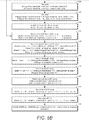
- FIGS. 5a and 5b are a flow chart illustrating one example of a method 500 for coding scalable video.
- determine if a pps_extension_flag e.g. pps_extension_present_flag
- the PPS multilayer extension flag is read or examined to determine if the pps_multilayer_extension should be parsed. In some cases, for example, when using an encoder, this step is referred to as signaling. It is understood that in the case of an encoder or encoding, the corresponding encoder-appropriate terminology is assumed.
- pps_extension_type_flag[1] is set, specifying that the pps_multilayer_extension syntax structure is present, the method proceeds 504 to the pps_multilayer_extension and the rest of the steps after 503 are processed.
- reference_layer_offset rLId is determined.
- a scaled_reference_offset_present_flag e.g. scaled_ref_layer_offset_present_flag
- scaled_ref_layer_offset_present_flag is checked to determine whether it is set to indicate that the scaled reference layer offset parameters are present.
- scaled_ref_layer_left_offset is determined.
- scaled_ref_layer_top_offset is determined.
- scaled_ref_layer right offset is determined.
- scaled_ref_layer_bottom_offset is determined.
- RefLayerHorizontalDeltaChroma ref_layer_horizontal_delta_chroma[rLId]
- RefLayerVerticalDeltaChroma ref_layer_vertical_delta_chroma[rLId]
- addX ScaleFactorX ⁇ phaseX + 4 > > 3
- addY ScaleFactorY ⁇ phaseY + 4 > > 3
- yRef16 yP ⁇ offsetY ⁇ ScaleFactorY + addY + 1 ⁇ ⁇ 11 > > 12 ⁇ deltaY
- FIG. 6 is a simplified block diagram that illustrates an example video coding system 10 that may utilize the techniques of this disclosure.
- video coder can refer to either or both video encoders and video decoders.
- video coding or “coding” may refer to video encoding and video decoding.
- video coding system 10 includes a source device 12 and a destination device 14.
- Source device 12 generates encoded video data. Accordingly, source device 12 may be referred to as a video encoding device.
- Destination device 14 may decode the encoded video data generated by source device 12. Accordingly, destination device 14 may be referred to as a video decoding device.
- Source device 12 and destination device 14 may be examples of video coding devices.
- Destination device 14 may receive encoded video data from source device 12 via a channel 16.
- Channel 16 may comprise a type of medium or device capable of moving the encoded video data from source device 12 to destination device 14 .
- channel 16 may comprise a communication medium that enables source device 12 to transmit encoded video data directly to destination device 14 in real-time.
- source device 12 may modulate the encoded video data according to a communication standard, such as a wireless communication protocol, and may transmit the modulated video data to destination device 14.
- the communication medium may comprise a wireless or wired communication medium, such as a radio frequency (RF) spectrum or one or more physical transmission lines.
- the communication medium may form part of a packet-based network, such as a local area network, a wide-area network, or a global network such as the Internet.
- the communication medium may include routers, switches, base stations, or other equipment that facilitates communication from source device 12 to destination device 14.
- channel 16 may correspond to a storage medium that stores the encoded video data generated by source device 12.
- source device 12 includes a video source 18, video encoder 20, and an output interface 22.
- output interface 22 may include a modulator/demodulator (modem) and/or a transmitter.
- video source 18 may include a source such as a video capture device, e.g., a video camera, a video archive containing previously captured video data, a video feed interface to receive video data from a video content provider, and/or a computer graphics system for generating video data, or a combination of such sources.
- Video encoder 20 may encode the captured, pre-captured, or computer-generated video data.
- the encoded video data may be transmitted directly to destination device 14 via output interface 22 of source device 12.
- the encoded video data may also be stored onto a storage medium or a file server for later access by destination device 14 for decoding and/or playback.
- destination device 14 includes an input interface 28, a video decoder 30, and a display device 32.
- input interface 28 may include a receiver and/or a modem.
- Input interface 28 of destination device 14 receives encoded video data over channel 16.
- the encoded video data may include a variety of syntax elements generated by video encoder 20 that represent the video data. Such syntax elements may be included with the encoded video data transmitted on a communication medium, stored on a storage medium, or stored a file server.
- Display device 32 may be integrated with or may be external to destination device 14.
- destination device 14 may include an integrated display device and may also be configured to interface with an external display device.
- destination device 14 may be a display device.
- display device 32 displays the decoded video data to a user.
- Video encoder 20 includes a resampling module 25 which may be configured to code (e.g., encode) video data in a scalable video coding scheme that defines at least one base layer and at least one enhancement layer. Resampling module 25 may resample at least some video data as part of an encoding process, wherein resampling may be performed in an adaptive manner using resampling filters. Likewise, video decoder 30 may also include a resampling module 35 similar to the resampling module 25 employed in the video encoder 20.
- Video encoder 20 and video decoder 30 may operate according to a video compression standard, such as the High Efficiency Video Coding (HEVC) standard.
- HEVC High Efficiency Video Coding
- the HEVC standard is being developed by the Joint Collaborative Team on Video Coding (JCT-VC) of ITU-T Video Coding Experts Group (VCEG) and ISO/IEC Motion Picture Experts Group (MPEG).
- JCT-VC Joint Collaborative Team on Video Coding
- VCEG Video Coding Experts Group
- MPEG ISO/IEC Motion Picture Experts Group
- a recent draft of the HEVC standard is described in Recommendation ITU-T H.265
- video encoder 20 and video decoder 30 may operate according to other proprietary or industry standards, such as the ITU-T H.264 standard, alternatively referred to as MPEG-4, Part 10, Advanced Video Coding (AVC), or extensions of such standards.
- the techniques of this disclosure are not limited to any particular coding standard or technique.
- Other examples of video compression standards and techniques include MPEG-2, ITU-T H.263 and proprietary or open source compression formats and related formats.
- Video encoder 20 and video decoder 30 may be implemented in hardware, software, firmware or any combination thereof.
- the video encoder 20 and decoder 30 may employ one or more processors, digital signal processors (DSPs), application specific integrated circuits (ASICs), field programmable gate arrays (FPGAs), discrete logic, or any combinations thereof.
- DSPs digital signal processors
- ASICs application specific integrated circuits
- FPGAs field programmable gate arrays
- a device may store instructions for the software in a suitable, non-transitory computer-readable storage medium and may execute the instructions in hardware using one or more processors to perform the techniques of this disclosure.
- Each of video encoder 20 and video decoder 30 may be included in one or more encoders or decoders, either of which may be integrated as part of a combined encoder/decoder (CODEC) in a respective device.
- CODEC combined encoder/decoder
- aspects of the subject matter described herein may be described in the general context of computer-executable instructions, such as program modules, being executed by a computer.
- program modules include routines, programs, objects, components, data structures, and so forth, which perform particular tasks or implement particular abstract data types.
- aspects of the subject matter described herein may also be practiced in distributed computing environments where tasks are performed by remote processing devices that are linked through a communications network.
- program modules may be located in both local and remote computer storage media including memory storage devices.
- Particular embodiments may be implemented in a non-transitory computer-readable storage medium for use by or in connection with the instruction execution system, apparatus, system, or machine.
- the computer-readable storage medium contains instructions for controlling a computer system to perform a method described by particular embodiments.
- the computer system may include one or more computing devices.
- the instructions, when executed by one or more computer processors, may be configured to perform that which is described in particular embodiments.
Landscapes
- Engineering & Computer Science (AREA)
- Multimedia (AREA)
- Signal Processing (AREA)
- Compression Or Coding Systems Of Tv Signals (AREA)
Claims (3)
- Système permettant un codage vidéo échelonnable comprenant :un premier agencement de couche « layer » de codage comprenant des modules de codage vidéo d'une résolution de base afin de fournir une première couche de codage ;un second agencement de couche de codage comprenant des modules de codage vidéo d'une résolution améliorée ayant une résolution supérieure à une résolution de base pour fournir une seconde couche de codage ;dans lequel les valeurs de pixel dans la seconde couche de codage sont prédites sur la base de valeurs de pixel dans la première couche de codage ;dans lequel la prédiction d'une valeur à un emplacement de pixel dans la seconde couche de codage est basée sur une valeur correspondante à un emplacement de pixel dans la première couche de codage ;dans lequel l'emplacement de pixel correspondant dans la première couche de codage est calculé sur la base de l'emplacement de pixel dans la seconde couche de codage ;dans lequel l'emplacement de pixel dans la seconde couche de codage est (xP, yP) ;dans lequel l'emplacement de pixel correspondant dans la première couche de codage est calculé comme étant (xRef16, yRef16) en unités de 1/16ème d'échantillon par rapport à l'échantillon supérieur gauche de la première couche de codage, où :des variables ScaleFactorX et ScaleFactorY sont calculées sur la base du rapport entre la couche de référence et la largeur et la hauteur de la couche de référence mise à l'échelle ;la variable cIdx spécifie l'indice de composante de couleur et les valeurs SubWidthC et SubHeightC sont spécifiées en fonction de la structure d'échantillonnage du format de chrominance, « chroma » ;et où :


 ScaledRefLayerLeftOffset = scaled_ref_layer_left_offset [rLId] << 1 ;ScaledRefLayerTopOffset = scaled_ref_layer_top_offset [rLId] << 1 ;scaled_ref_layer_left_offset [rLId] spécifie un décalage horizontal entre un échantillon de luminance supérieur gauche d'une image intercouche associée ayant un nuh_layer_id égal à rLId et l'échantillon de luminance supérieur gauche de l'image actuelle en unités de deux échantillons de luminance ;scaled_ref_layer_top_offset [rLId] spécifie le décalage vertical entre l'échantillon de luminance supérieur gauche d'une image intercouche associée ayant un nuh_layer_id égal à rLId et l'échantillon de luminance supérieur gauche de l'image actuelle en unités de deux échantillons de luminance ; etdans lequel la signalisation de scaled_ref_layer_left_offset et de scaled_ref_layer_top_offset se produit au niveau du PPS,et où :


 ScaledRefLayerLeftPhase = scaled_ref_layer_left-phase[rLId] ;ScaledRefLayerTopPhase = scaled_ref_layer_top_phase[rLId] ;RefLayerHorizontalDelta = ref layer horizontal delta [rLId] ;RefLayerVerticalDelta = ref_layer_vertical_delta[rLId] ;scaled_ref_layer_left_phase [rLId] spécifie un décalage de luminance horizontal entre nuh_layer_id égal à rLId et l'image actuelle en unités de ½ échantillons de luminance ;scaled_ref_layer_top_phase [rLId] spécifie un décalage de luminance vertical entre nuh_layer_id égal à rLId et l'image actuelle en unités de ½ échantillons de luminance ;scaled_ref_layer_left_phase_chroma spécifie le décalage de chrominance horizontal par rapport à la luminance en unités de 1/4 d'échantillons de luminance ;scaled_ref_layer_top_phase_chroma spécifie le décalage de chrominance vertical par rapport à la luminance en unités de 1/4 d'échantillons de luminance ;ref del horizontal horizontal delta [rLId] spécifie un décalage de luminance horizontal entre nuh_layer_id égal à rLId et l'image actuelle en unités de 1/8 d'échantillons de luminance ;ref layer vertical delta [rLId] spécifie un décalage de luminance vertical entre nuh_layer_id égal à rLId et l'image actuelle en unités de 1/8 d'échantillons de luminance ;RefLayerHorizontalDeltaChroma = ref_layer_horizontal_delta_chroma [rLId] ;RefLayerVerticalDeltaChroma = ref layer vertical delta chroma [rLId] ;ref_layer_horizonal_delta_chroma [rLId] spécifie le décalage horizontal entre les échantillons de chrominance et les échantillons de luminance dans nuh_layer_id égal à rLId en unités de 1/4 d'échantillons ;ref_layer_vertical_delta_chroma [rLId] spécifie le décalage vertical entre les échantillons de chrominance et les échantillons de luminance dans nuh_layer_id égal à rLId en unité de 1/4 d'échantillons ; etdans lequel la signalisation de scaled_ref_layer_left_phase, scaled_ref_layer_top_phase, ref_layer_horizontal_delta, ref layer vertical delta, ref-layer_horizontal_delta_chroma, ref_layer_vertical_delta_chroma, scaled_ref_layer_left_phase_chroma et scaled_ref_layer_top_phase_chroma se produit au niveau du PPS.
 - Système selon la revendication 1, dans lequel le système est un système standard de codage vidéo à haute efficacité, HEVC, et scaled_ref_layer_left_offset, scaled_ref_layer_top_offset, scaled_ref_layer_left_phase, scaled_ref_layer_top_phase, ref_layer_horizontal_delta, et ref_layer_vertical_delta sont signalés dans une syntaxe pps_multilayer_extension dépendant d'un drapeau « flag » apps_extension_type_flag[1].
- Système selon la revendication 1, dans lequel le système est un système standard de codage vidéo à haute efficacité, HEVC, et la signalisation de scaled_ref_layer_left_offset et scaled_ref_layer_top_offset dépend d'un drapeau « flag » scaled_reference_offset_present_flag, et la signalisation de scaled_ref_layer_left_phase, scaled_ref_layer_top_phase, ref_layer_horizontal_delta, ref_layer_vertical_delta, ref_layer_horizontal_delta_chroma, ref_layer_vertical_delta_chroma, scaled_ref_layer_left_phase_chroma et scaled_ref_layer_top_phase_chroma dépend d'un drapeau scaled_reference_phase_present_flag.
Priority Applications (1)
| Application Number | Priority Date | Filing Date | Title |
|---|---|---|---|
| EP20160514.4A EP3700218A1 (fr) | 2014-03-18 | 2015-03-18 | Codage vidéo échelonnable au moyen de décalages de couches de référence et de référence mise à l'échelle |
Applications Claiming Priority (2)
| Application Number | Priority Date | Filing Date | Title |
|---|---|---|---|
| US201461955123P | 2014-03-18 | 2014-03-18 | |
| PCT/US2015/021341 WO2015143090A1 (fr) | 2014-03-18 | 2015-03-18 | Codage vidéo échelonnable au moyen de décalages de couches de référence et de référence mise à l'échelle |
Related Child Applications (1)
| Application Number | Title | Priority Date | Filing Date |
|---|---|---|---|
| EP20160514.4A Division EP3700218A1 (fr) | 2014-03-18 | 2015-03-18 | Codage vidéo échelonnable au moyen de décalages de couches de référence et de référence mise à l'échelle |
Publications (2)
| Publication Number | Publication Date |
|---|---|
| EP3120562A1 EP3120562A1 (fr) | 2017-01-25 |
| EP3120562B1 true EP3120562B1 (fr) | 2020-03-04 |
Family
ID=57588802
Family Applications (2)
| Application Number | Title | Priority Date | Filing Date |
|---|---|---|---|
| EP15714726.5A Active EP3120562B1 (fr) | 2014-03-18 | 2015-03-18 | Codage vidéo échelonnable au moyen de décalages de couches de référence et de référence mise à l'échelle |
| EP20160514.4A Withdrawn EP3700218A1 (fr) | 2014-03-18 | 2015-03-18 | Codage vidéo échelonnable au moyen de décalages de couches de référence et de référence mise à l'échelle |
Family Applications After (1)
| Application Number | Title | Priority Date | Filing Date |
|---|---|---|---|
| EP20160514.4A Withdrawn EP3700218A1 (fr) | 2014-03-18 | 2015-03-18 | Codage vidéo échelonnable au moyen de décalages de couches de référence et de référence mise à l'échelle |
Country Status (1)
| Country | Link |
|---|---|
| EP (2) | EP3120562B1 (fr) |
Cited By (1)
| Publication number | Priority date | Publication date | Assignee | Title |
|---|---|---|---|---|
| US12413769B2 (en) | 2019-08-06 | 2025-09-09 | Dolby Laboratories Licensing Corporation | Canvas size scalable video coding |
Families Citing this family (2)
| Publication number | Priority date | Publication date | Assignee | Title |
|---|---|---|---|---|
| UA128591C2 (uk) * | 2019-06-24 | 2024-08-21 | Хуавей Текнолоджиз Ко., Лтд. | Обчислення відстані зразка для режиму геометричного розбиття |
| CN115550669B (zh) * | 2022-11-30 | 2023-03-24 | 摩尔线程智能科技(北京)有限责任公司 | 一种视频转码方法及装置、电子设备和存储介质 |
Family Cites Families (1)
| Publication number | Priority date | Publication date | Assignee | Title |
|---|---|---|---|---|
| US10448032B2 (en) * | 2012-09-04 | 2019-10-15 | Qualcomm Incorporated | Signaling of down-sampling location information in scalable video coding |
-
2015
- 2015-03-18 EP EP15714726.5A patent/EP3120562B1/fr active Active
- 2015-03-18 EP EP20160514.4A patent/EP3700218A1/fr not_active Withdrawn
Non-Patent Citations (1)
| Title |
|---|
| None * |
Cited By (1)
| Publication number | Priority date | Publication date | Assignee | Title |
|---|---|---|---|---|
| US12413769B2 (en) | 2019-08-06 | 2025-09-09 | Dolby Laboratories Licensing Corporation | Canvas size scalable video coding |
Also Published As
| Publication number | Publication date |
|---|---|
| EP3700218A1 (fr) | 2020-08-26 |
| EP3120562A1 (fr) | 2017-01-25 |
Similar Documents
| Publication | Publication Date | Title |
|---|---|---|
| US20240155145A1 (en) | Scalable video coding using reference and scaled reference layer offsets | |
| US20240236343A9 (en) | Reference layer and scaled reference layer offsets for scalable video coding | |
| US20240236344A9 (en) | On reference layer and scaled reference layer offset parameters for inter-layer prediction in scalable video coding | |
| US20240146939A1 (en) | Derivation of resampling filters for scalable video coding | |
| US20220038721A1 (en) | Cross-component quantization in video coding | |
| EP3120562B1 (fr) | Codage vidéo échelonnable au moyen de décalages de couches de référence et de référence mise à l'échelle | |
| CN113545060A (zh) | 视频编码中的空瓦片编码 | |
| US10218970B2 (en) | Resampling filters for scalable video coding with phase offset adjustment and signaling of same | |
| US20150271495A1 (en) | Scalable Video Coding using Phase Offset Flag Signaling | |
| EP3149942A1 (fr) | Paramètres de décalage de couche de référence pour une prédiction inter-couches dans un codage vidéo extensible |
Legal Events
| Date | Code | Title | Description |
|---|---|---|---|
| STAA | Information on the status of an ep patent application or granted ep patent |
Free format text: STATUS: THE INTERNATIONAL PUBLICATION HAS BEEN MADE |
|
| PUAI | Public reference made under article 153(3) epc to a published international application that has entered the european phase |
Free format text: ORIGINAL CODE: 0009012 |
|
| STAA | Information on the status of an ep patent application or granted ep patent |
Free format text: STATUS: REQUEST FOR EXAMINATION WAS MADE |
|
| 17P | Request for examination filed |
Effective date: 20161017 |
|
| AK | Designated contracting states |
Kind code of ref document: A1 Designated state(s): AL AT BE BG CH CY CZ DE DK EE ES FI FR GB GR HR HU IE IS IT LI LT LU LV MC MK MT NL NO PL PT RO RS SE SI SK SM TR |
|
| AX | Request for extension of the european patent |
Extension state: BA ME |
|
| DAV | Request for validation of the european patent (deleted) | ||
| DAX | Request for extension of the european patent (deleted) | ||
| STAA | Information on the status of an ep patent application or granted ep patent |
Free format text: STATUS: EXAMINATION IS IN PROGRESS |
|
| 17Q | First examination report despatched |
Effective date: 20181112 |
|
| GRAP | Despatch of communication of intention to grant a patent |
Free format text: ORIGINAL CODE: EPIDOSNIGR1 |
|
| STAA | Information on the status of an ep patent application or granted ep patent |
Free format text: STATUS: GRANT OF PATENT IS INTENDED |
|
| INTG | Intention to grant announced |
Effective date: 20191023 |
|
| GRAS | Grant fee paid |
Free format text: ORIGINAL CODE: EPIDOSNIGR3 |
|
| GRAA | (expected) grant |
Free format text: ORIGINAL CODE: 0009210 |
|
| STAA | Information on the status of an ep patent application or granted ep patent |
Free format text: STATUS: THE PATENT HAS BEEN GRANTED |
|
| AK | Designated contracting states |
Kind code of ref document: B1 Designated state(s): AL AT BE BG CH CY CZ DE DK EE ES FI FR GB GR HR HU IE IS IT LI LT LU LV MC MK MT NL NO PL PT RO RS SE SI SK SM TR |
|
| REG | Reference to a national code |
Ref country code: GB Ref legal event code: FG4D |
|
| REG | Reference to a national code |
Ref country code: CH Ref legal event code: EP |
|
| REG | Reference to a national code |
Ref country code: AT Ref legal event code: REF Ref document number: 1241797 Country of ref document: AT Kind code of ref document: T Effective date: 20200315 |
|
| REG | Reference to a national code |
Ref country code: DE Ref legal event code: R096 Ref document number: 602015048117 Country of ref document: DE |
|
| REG | Reference to a national code |
Ref country code: IE Ref legal event code: FG4D |
|
| PG25 | Lapsed in a contracting state [announced via postgrant information from national office to epo] |
Ref country code: FI Free format text: LAPSE BECAUSE OF FAILURE TO SUBMIT A TRANSLATION OF THE DESCRIPTION OR TO PAY THE FEE WITHIN THE PRESCRIBED TIME-LIMIT Effective date: 20200304 Ref country code: NO Free format text: LAPSE BECAUSE OF FAILURE TO SUBMIT A TRANSLATION OF THE DESCRIPTION OR TO PAY THE FEE WITHIN THE PRESCRIBED TIME-LIMIT Effective date: 20200604 Ref country code: RS Free format text: LAPSE BECAUSE OF FAILURE TO SUBMIT A TRANSLATION OF THE DESCRIPTION OR TO PAY THE FEE WITHIN THE PRESCRIBED TIME-LIMIT Effective date: 20200304 |
|
| REG | Reference to a national code |
Ref country code: NL Ref legal event code: MP Effective date: 20200304 |
|
| PG25 | Lapsed in a contracting state [announced via postgrant information from national office to epo] |
Ref country code: BG Free format text: LAPSE BECAUSE OF FAILURE TO SUBMIT A TRANSLATION OF THE DESCRIPTION OR TO PAY THE FEE WITHIN THE PRESCRIBED TIME-LIMIT Effective date: 20200604 Ref country code: HR Free format text: LAPSE BECAUSE OF FAILURE TO SUBMIT A TRANSLATION OF THE DESCRIPTION OR TO PAY THE FEE WITHIN THE PRESCRIBED TIME-LIMIT Effective date: 20200304 Ref country code: SE Free format text: LAPSE BECAUSE OF FAILURE TO SUBMIT A TRANSLATION OF THE DESCRIPTION OR TO PAY THE FEE WITHIN THE PRESCRIBED TIME-LIMIT Effective date: 20200304 Ref country code: GR Free format text: LAPSE BECAUSE OF FAILURE TO SUBMIT A TRANSLATION OF THE DESCRIPTION OR TO PAY THE FEE WITHIN THE PRESCRIBED TIME-LIMIT Effective date: 20200605 Ref country code: LV Free format text: LAPSE BECAUSE OF FAILURE TO SUBMIT A TRANSLATION OF THE DESCRIPTION OR TO PAY THE FEE WITHIN THE PRESCRIBED TIME-LIMIT Effective date: 20200304 |
|
| REG | Reference to a national code |
Ref country code: LT Ref legal event code: MG4D |
|
| PG25 | Lapsed in a contracting state [announced via postgrant information from national office to epo] |
Ref country code: NL Free format text: LAPSE BECAUSE OF FAILURE TO SUBMIT A TRANSLATION OF THE DESCRIPTION OR TO PAY THE FEE WITHIN THE PRESCRIBED TIME-LIMIT Effective date: 20200304 |
|
| PG25 | Lapsed in a contracting state [announced via postgrant information from national office to epo] |
Ref country code: ES Free format text: LAPSE BECAUSE OF FAILURE TO SUBMIT A TRANSLATION OF THE DESCRIPTION OR TO PAY THE FEE WITHIN THE PRESCRIBED TIME-LIMIT Effective date: 20200304 Ref country code: PT Free format text: LAPSE BECAUSE OF FAILURE TO SUBMIT A TRANSLATION OF THE DESCRIPTION OR TO PAY THE FEE WITHIN THE PRESCRIBED TIME-LIMIT Effective date: 20200729 Ref country code: CZ Free format text: LAPSE BECAUSE OF FAILURE TO SUBMIT A TRANSLATION OF THE DESCRIPTION OR TO PAY THE FEE WITHIN THE PRESCRIBED TIME-LIMIT Effective date: 20200304 Ref country code: LT Free format text: LAPSE BECAUSE OF FAILURE TO SUBMIT A TRANSLATION OF THE DESCRIPTION OR TO PAY THE FEE WITHIN THE PRESCRIBED TIME-LIMIT Effective date: 20200304 Ref country code: RO Free format text: LAPSE BECAUSE OF FAILURE TO SUBMIT A TRANSLATION OF THE DESCRIPTION OR TO PAY THE FEE WITHIN THE PRESCRIBED TIME-LIMIT Effective date: 20200304 Ref country code: IS Free format text: LAPSE BECAUSE OF FAILURE TO SUBMIT A TRANSLATION OF THE DESCRIPTION OR TO PAY THE FEE WITHIN THE PRESCRIBED TIME-LIMIT Effective date: 20200704 Ref country code: SK Free format text: LAPSE BECAUSE OF FAILURE TO SUBMIT A TRANSLATION OF THE DESCRIPTION OR TO PAY THE FEE WITHIN THE PRESCRIBED TIME-LIMIT Effective date: 20200304 Ref country code: EE Free format text: LAPSE BECAUSE OF FAILURE TO SUBMIT A TRANSLATION OF THE DESCRIPTION OR TO PAY THE FEE WITHIN THE PRESCRIBED TIME-LIMIT Effective date: 20200304 Ref country code: SM Free format text: LAPSE BECAUSE OF FAILURE TO SUBMIT A TRANSLATION OF THE DESCRIPTION OR TO PAY THE FEE WITHIN THE PRESCRIBED TIME-LIMIT Effective date: 20200304 |
|
| REG | Reference to a national code |
Ref country code: CH Ref legal event code: PL |
|
| REG | Reference to a national code |
Ref country code: AT Ref legal event code: MK05 Ref document number: 1241797 Country of ref document: AT Kind code of ref document: T Effective date: 20200304 |
|
| REG | Reference to a national code |
Ref country code: DE Ref legal event code: R097 Ref document number: 602015048117 Country of ref document: DE |
|
| REG | Reference to a national code |
Ref country code: BE Ref legal event code: MM Effective date: 20200331 |
|
| PG25 | Lapsed in a contracting state [announced via postgrant information from national office to epo] |
Ref country code: MC Free format text: LAPSE BECAUSE OF FAILURE TO SUBMIT A TRANSLATION OF THE DESCRIPTION OR TO PAY THE FEE WITHIN THE PRESCRIBED TIME-LIMIT Effective date: 20200304 Ref country code: LU Free format text: LAPSE BECAUSE OF NON-PAYMENT OF DUE FEES Effective date: 20200318 |
|
| PLBE | No opposition filed within time limit |
Free format text: ORIGINAL CODE: 0009261 |
|
| STAA | Information on the status of an ep patent application or granted ep patent |
Free format text: STATUS: NO OPPOSITION FILED WITHIN TIME LIMIT |
|
| PG25 | Lapsed in a contracting state [announced via postgrant information from national office to epo] |
Ref country code: LI Free format text: LAPSE BECAUSE OF NON-PAYMENT OF DUE FEES Effective date: 20200331 Ref country code: CH Free format text: LAPSE BECAUSE OF NON-PAYMENT OF DUE FEES Effective date: 20200331 Ref country code: IE Free format text: LAPSE BECAUSE OF NON-PAYMENT OF DUE FEES Effective date: 20200318 Ref country code: DK Free format text: LAPSE BECAUSE OF FAILURE TO SUBMIT A TRANSLATION OF THE DESCRIPTION OR TO PAY THE FEE WITHIN THE PRESCRIBED TIME-LIMIT Effective date: 20200304 Ref country code: AT Free format text: LAPSE BECAUSE OF FAILURE TO SUBMIT A TRANSLATION OF THE DESCRIPTION OR TO PAY THE FEE WITHIN THE PRESCRIBED TIME-LIMIT Effective date: 20200304 Ref country code: IT Free format text: LAPSE BECAUSE OF FAILURE TO SUBMIT A TRANSLATION OF THE DESCRIPTION OR TO PAY THE FEE WITHIN THE PRESCRIBED TIME-LIMIT Effective date: 20200304 |
|
| 26N | No opposition filed |
Effective date: 20201207 |
|
| PG25 | Lapsed in a contracting state [announced via postgrant information from national office to epo] |
Ref country code: PL Free format text: LAPSE BECAUSE OF FAILURE TO SUBMIT A TRANSLATION OF THE DESCRIPTION OR TO PAY THE FEE WITHIN THE PRESCRIBED TIME-LIMIT Effective date: 20200304 Ref country code: BE Free format text: LAPSE BECAUSE OF NON-PAYMENT OF DUE FEES Effective date: 20200331 Ref country code: SI Free format text: LAPSE BECAUSE OF FAILURE TO SUBMIT A TRANSLATION OF THE DESCRIPTION OR TO PAY THE FEE WITHIN THE PRESCRIBED TIME-LIMIT Effective date: 20200304 |
|
| PG25 | Lapsed in a contracting state [announced via postgrant information from national office to epo] |
Ref country code: FR Free format text: LAPSE BECAUSE OF NON-PAYMENT OF DUE FEES Effective date: 20200504 |
|
| PG25 | Lapsed in a contracting state [announced via postgrant information from national office to epo] |
Ref country code: TR Free format text: LAPSE BECAUSE OF FAILURE TO SUBMIT A TRANSLATION OF THE DESCRIPTION OR TO PAY THE FEE WITHIN THE PRESCRIBED TIME-LIMIT Effective date: 20200304 Ref country code: MT Free format text: LAPSE BECAUSE OF FAILURE TO SUBMIT A TRANSLATION OF THE DESCRIPTION OR TO PAY THE FEE WITHIN THE PRESCRIBED TIME-LIMIT Effective date: 20200304 Ref country code: CY Free format text: LAPSE BECAUSE OF FAILURE TO SUBMIT A TRANSLATION OF THE DESCRIPTION OR TO PAY THE FEE WITHIN THE PRESCRIBED TIME-LIMIT Effective date: 20200304 |
|
| PG25 | Lapsed in a contracting state [announced via postgrant information from national office to epo] |
Ref country code: MK Free format text: LAPSE BECAUSE OF FAILURE TO SUBMIT A TRANSLATION OF THE DESCRIPTION OR TO PAY THE FEE WITHIN THE PRESCRIBED TIME-LIMIT Effective date: 20200304 Ref country code: AL Free format text: LAPSE BECAUSE OF FAILURE TO SUBMIT A TRANSLATION OF THE DESCRIPTION OR TO PAY THE FEE WITHIN THE PRESCRIBED TIME-LIMIT Effective date: 20200304 |
|
| REG | Reference to a national code |
Ref country code: GB Ref legal event code: 732E Free format text: REGISTERED BETWEEN 20220714 AND 20220720 |
|
| REG | Reference to a national code |
Ref country code: DE Ref legal event code: R081 Ref document number: 602015048117 Country of ref document: DE Owner name: ARRIS INTERNATIONAL IP LTD, SALTAIRE, GB Free format text: FORMER OWNER: ARRIS ENTERPRISES LLC, SUWANEE, GA., US Ref country code: DE Ref legal event code: R082 Ref document number: 602015048117 Country of ref document: DE Representative=s name: MURGITROYD GERMANY PATENTANWALTSGESELLSCHAFT M, DE Ref country code: DE Ref legal event code: R081 Ref document number: 602015048117 Country of ref document: DE Owner name: ARRIS ENTERPRISES LLC (N. D. GES. D. STAATES D, US Free format text: FORMER OWNER: ARRIS ENTERPRISES LLC, SUWANEE, GA., US Ref country code: DE Ref legal event code: R081 Ref document number: 602015048117 Country of ref document: DE Owner name: ANDREW WIRELESS SYSTEMS UK LTD., GB Free format text: FORMER OWNER: ARRIS ENTERPRISES LLC, SUWANEE, GA., US |
|
| P01 | Opt-out of the competence of the unified patent court (upc) registered |
Effective date: 20230530 |
|
| REG | Reference to a national code |
Ref country code: DE Ref legal event code: R081 Ref document number: 602015048117 Country of ref document: DE Owner name: ARRIS ENTERPRISES LLC (N. D. GES. D. STAATES D, US Free format text: FORMER OWNER: ARRIS INTERNATIONAL IP LTD, SALTAIRE, WEST YORKSHIRE, GB Ref country code: DE Ref legal event code: R081 Ref document number: 602015048117 Country of ref document: DE Owner name: ANDREW WIRELESS SYSTEMS UK LTD., GB Free format text: FORMER OWNER: ARRIS INTERNATIONAL IP LTD, SALTAIRE, WEST YORKSHIRE, GB |
|
| REG | Reference to a national code |
Ref country code: GB Ref legal event code: 732E Free format text: REGISTERED BETWEEN 20240418 AND 20240424 |
|
| REG | Reference to a national code |
Ref country code: DE Ref legal event code: R081 Ref document number: 602015048117 Country of ref document: DE Owner name: ARRIS ENTERPRISES LLC (N. D. GES. D. STAATES D, US Free format text: FORMER OWNER: ANDREW WIRELESS SYSTEMS UK LTD., LONDON, GB |
|
| REG | Reference to a national code |
Ref country code: GB Ref legal event code: 732E Free format text: REGISTERED BETWEEN 20250213 AND 20250219 |
|
| PGFP | Annual fee paid to national office [announced via postgrant information from national office to epo] |
Ref country code: DE Payment date: 20250327 Year of fee payment: 11 |
|
| PGFP | Annual fee paid to national office [announced via postgrant information from national office to epo] |
Ref country code: GB Payment date: 20250327 Year of fee payment: 11 |