EP3120592B1 - Authentification dans une découverte de dispositif à dispositif - Google Patents
Authentification dans une découverte de dispositif à dispositif Download PDFInfo
- Publication number
- EP3120592B1 EP3120592B1 EP15765552.3A EP15765552A EP3120592B1 EP 3120592 B1 EP3120592 B1 EP 3120592B1 EP 15765552 A EP15765552 A EP 15765552A EP 3120592 B1 EP3120592 B1 EP 3120592B1
- Authority
- EP
- European Patent Office
- Prior art keywords
- prose
- token
- discoveree
- discoverer
- direct discovery
- Prior art date
- Legal status (The legal status is an assumption and is not a legal conclusion. Google has not performed a legal analysis and makes no representation as to the accuracy of the status listed.)
- Active
Links
Images



Classifications
-
- H—ELECTRICITY
- H04—ELECTRIC COMMUNICATION TECHNIQUE
- H04W—WIRELESS COMMUNICATION NETWORKS
- H04W12/00—Security arrangements; Authentication; Protecting privacy or anonymity
- H04W12/06—Authentication
-
- H—ELECTRICITY
- H04—ELECTRIC COMMUNICATION TECHNIQUE
- H04W—WIRELESS COMMUNICATION NETWORKS
- H04W12/00—Security arrangements; Authentication; Protecting privacy or anonymity
- H04W12/04—Key management, e.g. using generic bootstrapping architecture [GBA]
-
- H—ELECTRICITY
- H04—ELECTRIC COMMUNICATION TECHNIQUE
- H04W—WIRELESS COMMUNICATION NETWORKS
- H04W12/00—Security arrangements; Authentication; Protecting privacy or anonymity
- H04W12/04—Key management, e.g. using generic bootstrapping architecture [GBA]
- H04W12/043—Key management, e.g. using generic bootstrapping architecture [GBA] using a trusted network node as an anchor
- H04W12/0431—Key distribution or pre-distribution; Key agreement
-
- H—ELECTRICITY
- H04—ELECTRIC COMMUNICATION TECHNIQUE
- H04W—WIRELESS COMMUNICATION NETWORKS
- H04W4/00—Services specially adapted for wireless communication networks; Facilities therefor
- H04W4/06—Selective distribution of broadcast services, e.g. multimedia broadcast multicast service [MBMS]; Services to user groups; One-way selective calling services
-
- H—ELECTRICITY
- H04—ELECTRIC COMMUNICATION TECHNIQUE
- H04W—WIRELESS COMMUNICATION NETWORKS
- H04W4/00—Services specially adapted for wireless communication networks; Facilities therefor
- H04W4/80—Services using short range communication, e.g. near-field communication [NFC], radio-frequency identification [RFID] or low energy communication
-
- H—ELECTRICITY
- H04—ELECTRIC COMMUNICATION TECHNIQUE
- H04W—WIRELESS COMMUNICATION NETWORKS
- H04W76/00—Connection management
- H04W76/10—Connection setup
-
- H—ELECTRICITY
- H04—ELECTRIC COMMUNICATION TECHNIQUE
- H04W—WIRELESS COMMUNICATION NETWORKS
- H04W8/00—Network data management
- H04W8/005—Discovery of network devices, e.g. terminals
Definitions
- Embodiments presented herein relate to authentication, and particularly to methods, wireless devices, a network node, computer programs, and a computer program product for authentication in device to device discovery.
- ProSe Proximity services
- 3GPP 3rd Generation Partnership Project
- WDs wireless devices
- the ProSe service is described in 3GPP TS 22.278 'Technical Specification Group Services and System Aspects; Service requirements for the Evolved Packet System (EPS) (Release 12)' - V12.4.0, Section: 7A.0A.1 and 3GPP TS 23.303 'Technical Specification Group Services and System Aspects; Proximity based Services; Stage 2 (Release 12)' - V0.2.1, Sections: 4.2, 5.3.2, 5.3.3.
- EPS Evolved Packet System
- ProSe Discovery identifies that ProSe-enabled WDs are in proximity of each other, using Evolved Universal Terrestrial Radio Access (E-UTRA), with or without the Evolved Universal Terrestrial Radio Access Network (E-UTRAN), or the Evolved Packet Core (EPC) network when permission, authorisation and proximity criteria are fulfilled.
- E-UTRA Evolved Universal Terrestrial Radio Access
- E-UTRAN Evolved Universal Terrestrial Radio Access Network
- EPC Evolved Packet Core
- the ProSe Function comprises three main sub-functions that perform different roles depending on the ProSe feature.
- the Direct Discovery Name Management Function is one of the sub-functions.
- the Direct Discovery Name Management Function is used for open Prose Direct Discovery to allocate and process the mapping of ProSe Applications identities or identifiers and ProSe Application Codes used in ProSe Direct Discovery. It uses ProSe related subscriber data stored in the Home Subscriber Server (HSS) for authorisation for each discovery request. It also provides the WD with the necessary security material in order to protect discovery messages transmitted over the air.
- HSS Home Subscriber Server
- a Discoverer WD transmits information (such as a direct discovery request message) about other WDs that it would like to receive responses from.
- This approach may be regarded as querying "who is there/are you there".
- the transmitted information may be about a ProSe Application Identifier corresponding to a group and the members of the same group who listen and are interested in the same application (the ProSe Application Identifier) may respond to the Discoverer WD who then for example can start communication with the Group member(s), and so on.
- a Discoveree WD listens to Direct Discovery Request messages (e.g., on broadcast channels) and discovers a code or an identifier that the Discoveree WD is interested in, then the Discoveree WD replies by announcing a Direct Discovery Response message.
- Direct Discovery Request messages e.g., on broadcast channels
- the Discoverer WD receives the Direct Discovery Response message, it is today not possible for the Discoverer WD to be able to determine whether the responding WD is a genuine WD, i.e., a WD authorized to respond to the Direct Discovery request message or not. It could happen that a false Discoveree WD could fool the Discoverer WD that the false Discoveree WD is a genuine Discoveree WD which is currently located in proximity of the Discoverer WD. Also replay attacks where, for example, a false Discoveree WD is replaying genuine Direct Discovery response messages may occur. Such issues are not described in 3GPP TR 33.833 'Technical Specification Group Services and System Aspects Study on security issues to support Proximity Services (Release 12)' - V0.4.0, section 6.2.5 .
- An object of embodiments herein is to provide secure device to device discovery.
- a method for authentication in device to device discovery is performed by a Discoverer device.
- the method comprises broadcasting a direct discovery request.
- the method comprises receiving a direct discovery response from a Discoveree device, the direct discovery response comprising a first token.
- the method comprises obtaining a determination of whether the first token was generated for the Discoveree device or not.
- this enables the Discoverer WD to know that the Discoveree WD is genuine and that the Direct Discovery Response message is not replayed by a false WD.
- the determination comprises querying a network node to determine whether the first token was generated for the Discoveree device or not.
- this enables the Discoverer WD to know that the Discoveree WD is authorized by the ProSe Function in the network to respond to the announced Direct Discovery Request message.
- Direct Discovery Response message For example a ProSe Application Identifier together with a ProSe WD Identifier of the Discoveree WD, then the ProSe WD Identifier of the Discoveree WD could be encrypted but the ProSe Application Identifier could be sent in clear text. This could be achieved if the Direct Discovery Response message is supporting partial encryption.
- the ProSe WD Identifier of the Discoverer WD could be encrypted but the ProSe Application Identifier could be sent in clear text. This could be achieved if the Direct Discovery Request message is supporting partial encryption.
- the wireless device for authentication in device to device discovery.
- the wireless device comprises a processing unit and a non-transitory computer readable storage medium, the non-transitory computer readable storage medium comprising instructions executable by the processing unit.
- the wireless device is operative to perform a method according to the first aspect.
- a computer program for authentication in device to device discovery comprising computer program code which, when run on a wireless device, causes the wireless device to perform a method according to the first aspect.
- a method for authentication in device to device discovery is performed by a Discoveree device.
- the method comprises receiving a broadcasted direct discovery request from a Discoverer device.
- the method comprises transmitting a direct discovery response to the Discoverer device, the direct discovery response comprising a first token.
- a wireless device for authentication in device to device discovery.
- the wireless device comprises a processing unit and a non-transitory computer readable storage medium, the non-transitory computer readable storage medium comprising instructions executable by the processing unit.
- the wireless device is operative to perform a method according to the fourth aspect.
- a computer program for authentication in device to device discovery comprising computer program code which, when run on a wireless device, causes the wireless device to perform a method according to the fourth aspect.
- a seventh aspect there is presented a method for authentication in device to device discovery.
- the method is performed by a network node.
- the method comprises receiving a request to generate a first token from a Discoveree device.
- the method comprises generating the first token.
- the method comprises transmitting the first token to the Discoveree device.
- the method comprises receiving a request from a Discoverer device to determine whether the first token was generated for the Discoveree device or not.
- the method comprises performing a determination of whether the first token was generated for the Discoveree device or not.
- the method comprises transmitting a result thereof to the Discoverer device.
- the network node for authentication in device to device discovery.
- the network node comprises a processing unit and a non-transitory computer readable storage medium, the non-transitory computer readable storage medium comprising instructions executable by the processing unit.
- the network node is operative to perform a method according to the seventh aspect.
- a ninth aspect there is presented a computer program for authentication in device to device discovery, the computer program comprising computer program code which, when run on a network node, causes the network node to perform a method according to the seventh aspect.
- a computer program product comprising a computer program according to at least one of the third aspect, the sixth aspect, and the ninth aspect and a computer readable means on which the at least one computer program is stored.
- the computer readable means may be non-transitory computer readable means.
- any feature of the first, second, third, fourth, fifth, sixth, seventh, eight, ninth, and tenth aspects may be applied to any other aspect, wherever appropriate.
- any advantage of the first aspect may equally apply to the second, third, fourth, fifth, sixth, seventh, eight, ninth, and/or tenth aspect, respectively, and vice versa.
- Figure 1 schematically illustrates a scenario 1 for device to device ProSe where WD1 11a and WD2 11b are located within coverage of a cell 12 served by a network node 10.
- WD1 has a role of transmission
- WD1 sends discovery message and WD2 receives it.
- WD1 and WD2 may change their transmission and reception role.
- the transmission from WD1 may be received by one or more WDs like WD2.
- ProSe Discovery must be authorised by the operator, and the authorisation can be on a "per WD” basis, or a "per WD per application” basis.
- An authorised application may interact with the ProSe Discovery feature to request the use of certain ProSe Discovery preferences.
- the network controls the use of E-UTRAN resources used for ProSe Discovery for a ProSe-enabled WD served by E-UTRAN.
- ProSe Discovery may be used as a standalone process (i.e. it is not necessarily followed by ProSe Communication) or as an enabler for other services.
- FIG. 2 schematically illustrates a high level view of a non-roaming architecture for a communications network where embodiments presented herein may be applied.
- WD1 11a and WD2 11b use a subscription of the same PLMN.
- the communications network of Figure 2 comprises an E-UTRAN 14.
- the communications network of Figure 2 additionally comprises a number of functional nodes; HSS 17 is a Home Subscriber Server, MME 15 is a Mobility Management Entity, S/PGW 16 is a Serving Gateway and/or a Packet Data Network Gateway, and SLP 19 is a SUPL Location Platform (where SUPL is short for Secure User Plane Location).
- HSS 17 is a Home Subscriber Server
- MME 15 is a Mobility Management Entity
- S/PGW 16 is a Serving Gateway and/or a Packet Data Network Gateway
- SLP 19 is a SUPL Location Platform (where SUPL is short for Secure User Plane Location).
- SUPL Secure User Plane Location
- the communications network of Figure 2 further comprises a ProSe Function 18, and a ProSe Application Server 20.
- Figure 2 also schematically illustrates some logical network interfaces; PC1, LTE-Uu, PC5, S1, PC3, S6a, PC4a, PC4b, and PC2 enabling communications between elements of the communications network and/or the wireless devices 11a, 11b.
- each wireless device 11a, 11b is associated with a ProSe application 13a, 13b.
- FIG. 3 schematically illustrates the WD-to-ProSe Function Interfaces for each sub-function in the ProSe function.
- the ProSe Function may be regarded as the logical function that is used for network related actions required for ProSe.
- the ProSe Function may play different roles for each of the features of ProSe.
- the wireless devices 11a, 11b have a PC3 interface to a HPLMN ProSE Function 18a, a VPLMN ProSe Function 18b, and a Local PLMN ProSE Fuction 18c.
- the ProSe Function 18b and the Local PLMN ProSE Fuction 18c are optional.
- the ProSe Function consists of main sub-functions that perform different roles depending on the ProSe feature.
- the Direct Provisioning Function is used to provision the UE with necessary parameters in order to use ProSe Direct Discovery and ProSe Direct Communication. It is used to provision the UE's with PLMN specific parameters that allow the UE to use ProSe in this specific PLMN.
- Direct Discovery Name Management Function is used for open ProSe Direct Discovery to allocate and process the mapping of ProSe Application IDs and ProSe Application Codes used in ProSe Direct Discovery. It uses ProSe related subscriber data stored in HSS for authorization for each discovery request. It also provides the UE with necessary security material in order to protect discovery messages transmitted over the air.
- FIG. 4 schematically illustrates ProSe Function Interfaces PC4a, PC4b, PC6, and PC7 to other network elements and PLMNs, where DPF is a Direct Provisioning Function.
- PC4a is used to provide subscription information in order to authorise access for ProSe Direct Discovery and ProSe Direct Communication on a per PLMN basis.
- PC6 is used between the ProSe Function in the HPLMN and the ProSe Function in a Local PLMN (ProSe Direct Discovery). With ProSe Direct Discovery this interface is used for HPLMN control of ProSe service authorization. It is also used to authorise ProSe Direct Discovery requests, retrieve the Discovery Filter(s) corresponding ProSe Application ID name(s) and translate the ProSe Application Code to the ProSe Application ID Name.
- PC7 is used between the ProSe Function in the HPLMN and the ProSe Function in the VPLMN. It is used for HPLMN control of ProSe service authorization. It is also used to authorise ProSe Direct Discovery requests, retrieve the Discovery Filter(s) corresponding ProSe Application ID name(s) and translate the ProSe Application Code to the ProSe Application ID Name.
- the ProSe discovery procedure is described in 3GPP TS 23.303 'Technical Specification Group Services and System Aspects; Proximity based Services; Stage 2 (Release 12)' - V0.2.1, Sections: 4.2, 5.3.2, 5.3.3.
- ProSe Direct Discovery may be provided as a standalone service enabler that for example may use information from the discovered WD for certain applications in the WD that are permitted to use this information e.g., "find a taxi nearby", “find me a coffee shop”, etc. Additionally, for example depending on the information obtained, ProSe Direct Discovery may be used for subsequent actions e.g., to initiate ProSe Direct Communication.
- Model A The first is termed Model A and the second Model B.
- Model A This model generally defines two roles for the ProSe-enabled WDs that are participating in ProSe Direct Discovery.
- An Announcing WD is the WD that announces certain information that could be used by WDs in proximity that have permission to discover.
- a Monitoring WD is the WD that monitors certain information of interest in proximity of Announcing WDs.
- the Announcing WD may broadcast discovery messages at pre-defined discovery intervals and the Monitoring WDs that are interested in these messages read them and process them.
- Step 101 Service authorisation for ProSe direct services is performed for ProSe Direct Discovery.
- Model B (who is there?"/"are you there?”): This model generally defines two roles for the ProSe-enabled WDs that are participating in ProSe Direct Discovery.
- the Discoverer WD transmits a request containing certain information about what it is interested to discover.
- the Discoveree WD receives the request message can respond with some information related to the request of the Discoverer WD.
- the Discoverer WD may thus transmit information about other WDs that it would like to receive responses from.
- the transmitted information may be about a ProSe Application Identifier corresponding to a group and the members of the group may thus respond.
- Model B No signaling flow for Model B has yet been approved to be included into 3GPP TS 23.303 'Technical Specification Group Services and System Aspects; Proximity based Services; Stage 2 (Release 12)' - V0.2.1, Sections: 4.2, 5.3.2 , 5.3.3.
- the following model for ProSe Direct Discovery Model B has been included into 3GPP TR 23.703 'Technical Specification Group Services and System Aspects; Study on architecture enhancements to support Proximity-based Services (ProSe); (Release 12)' - V1.1.0 , Sections 6.1.1.2.3.3 . It is noted that this is one example of how the format for the Direct Discovery message could look like.
- a Discovery Model field may indicate whether the message is for Model A ("I am here"), or Model B ("who is there”/"are you there").
- a Type field may indicate whether the ProSe Identifier is a ProSe WD Identifier, and whether it is used for Open Discovery or Restricted Discovery.
- a Content field may for example indicate at least one of the following (for example with the Type field set to 1): the ProSe WD Identifier or ProSe Group Identifier, (for example with the Type field set to 2): the ProSe Application Identifier, and (for example with the Type field set to 3): the ProSe Application Identifier and ProSe WD Identifier.
- the WD or application may announce a discovery message, for example indicating in the "Discovery model” field "Model B (request)” and carrying the Identities as described above.
- the discovery message may comprise the ProSe Application Identifier in addition to the ProSe WD Identifier.
- each of the recipient(s) of this message may respond with a discovery message with for example the "Discovery model" field set to "Model B (response)" and which message comprises the ProSe WD Identifier and/or the ProSe Application Identifier that was included in the request at the next discovery interval (if required based on the protocol design).
- the WD or application may support discovery using "Model A”
- the WD may announce a discovery message for example indicating in the "Discovery model” field "Model A” and the ProSe Application Identifier of its own.
- the ProSe Application Identifier may be comprised in the content of the message.
- the ProSe Application Identifier and ProSe WD Identifier may be comprised in the content of the message.
- the Type filed may in these cases also be used in order to assist the processing of open or restricted discovery messages by the access stratum.
- Model A the announced code is integrity protected as shows in the signalling flow diagram of Figure 7 . It is assumed that there is a "time value" parameter available to both the WDs. The possible multiple ProSe Functions have also been collapsed into one logical element as it does not affect the security here, so in effect the signalling flow diagram represents both the Announcing WD and Monitoring WD being in their home network.
- Step 201 The Announcing WD transmits a Discovery Request message to the ProSe Function in order to be allowed to announce code on that PLMN.
- Step 202. The ProSe function returns the ProSe App Code that the announcing WD can announce and a Discovery Key associated with it.
- the ProSe Function stores the Discovery Key with the ProSe App Code.
- Step 203 The Announcing WD starts announcing. In each slot that it announces, the Announcing WD calculates a Message Integrity Code (MIC) to append to the ProSe App Code, so that the announced code becomes the ProSe App Code plus the MIC.
- the MIC is generally calculated using the key derivation function (KDF) described in 3GPP TS 33.220 'Technical Specification Group Services and System Aspects; Generic Authentication Architecture (GAA); Generic Bootstrapping Architecture (GBA) (Release 12)'-V12.1.0, section Annex B with the Discovery Key as the key and the "time value" parameter and the ProSe App Code as the other inputs.
- KDF key derivation function
- GAA Generic Authentication Architecture
- GBA Generic Bootstrapping Architecture
- Step 204 The Monitoring WD transmits a Discovery Request message to the ProSe Function in order to get the ProSe App Code that it wants to listen for.
- Step 205 The ProSe Function returns the ProSe App Code.
- Step 206 The Monitoring WD listens for announced codes that contain a ProSe App Code that it is interested in.
- Step 207 On hearing such an announced code, the Monitoring WD transmits a Match Request message to the ProSe function containing the 'time value' parameter related to the slot it heard the announcement in and the announced code, i.e. the ProSe App Code and the MIC.
- Step 208 The ProSe Function checks if the MIC is valid. The relevant Discovery Key is found using the ProSe App Code.
- Step 209 The ProSe Function returns an acknowledgement that the integrity check has passed to the Monitoring WD.
- the Discoverer WD transmits information (such as a direct discovery request message) about other WDs that it would like to receive responses from.
- information such as a direct discovery request message
- the Discoveree WD listens to Direct Discovery Request messages (e.g., on broadcast channels) and discovers a code or an identifier that the Discoveree WD is interested in, then the Discoveree WD replies by announcing a Direct Discovery Response message.
- the Discoverer WD receives the Direct Discovery Response message, it is today not possible for the Discoverer WD to be able to determine whether the responding WD is a genuine WD, i.e., a WD authorized to respond to the Direct Discovery request message or not.
- the embodiments disclosed herein relate to secure device to device discovery, and particularly to authentication in device to device discovery.
- a wireless device acting either as a Discoverer WD or a Discoveree WD
- a network node a network node
- methods performed by the Discoverer WD, the Discoveree WD, and the network node and computer programs comprising code, for example in the form of computer program products, that when run on the wireless device and/or the network node causes the wireless device and/or the network node to perform the methods.
- the storage medium 43 may also comprise persistent storage, which, for example, can be any single one or combination of magnetic memory, optical memory, solid state memory or even remotely mounted memory.
- the wireless device further comprises a communications interface 42 for communications with a further wireless device and a network node 12.
- the communications interface 42 may comprise one or more transmitters and receivers, comprising analogue and digital components and a suitable number of antennae for radio communications.
- the processing unit 42 controls the general operation of the wireless device e.g. by sending data and control signals to the communications interface 42 and the storage medium 43, by receiving data and reports from the communications interface 42, and by retrieving data and instructions from the storage medium 43.
- Other components, as well as the related functionality, of the wireless device are omitted in order not to obscure the concepts presented herein.
- Fig 13 schematically illustrates, in terms of a number of functional modules, the components of a wireless device acting either as a Discoverer WD 11a or a Discoveree WD 11b according to an embodiment.
- the wireless device of Fig 13 comprises a number of functional modules, such as any of a broadcast module 41a, a receive module 41b, an obtain module 41c, a query module 41d, an enable module 41e, a prevent module 41f, a transmit module 41g, a request module 41h, and a generate module 41j.
- the functionality of each functional module 41a-j will be further disclosed below in the context of which the functional modules 41a-j may be used.
- each functional module 41a-j may be implemented in hardware or in software.
- the processing unit 41 may thus be arranged to from the storage medium 43 fetch instructions as provided by a functional module 41a-j and to execute these instructions, thereby performing any steps as will be disclosed hereinafter.
- Fig 15 schematically illustrates, in terms of a number of functional modules, the components of a network node 12 according to an embodiment.
- the network node of Fig 15 comprises a number of functional modules, such as any of a receive module 51a, a generate module 51b, a transmit module 51c, and a perform module 51d.
- the functionality of each functional module 5a-d will be further disclosed below in the context of which the functional modules 51a-d may be used.
- each functional module 51a-d may be implemented in hardware or in software.
- the processing unit 51 may thus be arranged to from the storage medium 53 fetch instructions as provided by a functional module 51a-d and to execute these instructions, thereby performing any steps as will be disclosed hereinafter.
- the computer program product 31a, 31b, 31c is illustrated as an optical disc, such as a CD (compact disc) or a DVD (digital versatile disc) or a Blu-Ray disc.
- the computer program product 31a, 31b, 31c could also be embodied as a memory, such as a random access memory (RAM), a read-only memory (ROM), an erasable programmable read-only memory (EPROM), or an electrically erasable programmable read-only memory (EEPROM) and more particularly as a non-volatile storage medium of a device in an external memory such as a USB (Universal Serial Bus) memory.
- RAM random access memory
- ROM read-only memory
- EPROM erasable programmable read-only memory
- EEPROM electrically erasable programmable read-only memory
- the computer programs 32a, 32b, 32c are here schematically shown as a track on the depicted optical disk, the computer programs 32a, 32b, 32c can be stored in any way which is suitable for the computer program product 31a, 31b, 31c.
- the Discoverer device is configured to, in a step S101, broadcast a direct discovery request.
- the Discoverer device is configured to, in a step S102, receive a direct discovery response from a Discoveree device.
- the direct discovery response comprises a first token.
- the Discoverer WD when the Discoverer WD wishes to discover other WDs (Discoveree WDs) in its vicinity, it broadcasts a Direct Discovery Request message.
- the Discoveree WD(s) process the Direct Discovery Request message and based on the information in the Direct Discovery Request message the Discoveree WDs may decide to respond with a Direct Discovery Response message.
- the Discoverer WD may need to ensure that the Discoveree WD is genuine and that the Discovery response message is not replayed by a false WD, and the Discoverer WD, and/or may need to ensure that the Discoveree WD is authorized by the ProSe Function in the network to respond to the announced Discovery request message.
- a Token (a first token) is included in the Direct Discovery Response message from the Discoveree WDs to the Discoverer WD.
- the Discoverer device is configured to, in a step S103, obtain a determination of whether the first token was generated for the Discoveree device or not.
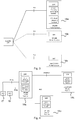
- Figure 8 schematically illustrates a signalling flow diagram for authentication in device to device discovery involving one Discoverer WD1 and three Discoveree WD2, WD3, WD4, where Discoveree WD3 and WD4 respond to an announced Discovery request message from the Discoverer WD1 with respective identifiers and Tokens.
- the Model B (“who is there"/"are you there") is used.
- the Discoverer WD transmits a ProSe Application ID and its identity in the Direct Discovery Request message.
- the Discoveree WD2 or Discoveree WD3 or Discoveree WD4 listens to the Direct Discovery Request messages and discovers a ProSe Application ID that the Discoveree WD is interested in, then the Discoveree WD replies by announcing a Direct Discovery Response message.
- the Discoverer WD determines whether the responding WD is a genuine WD, the responding Discoveree WD includes a Token together with the ProSe Application ID and the identifier of the responding Discoveree WD.
- the Discoverer device may optionally be configured to, in a step S105, and if determined that the first token was generated for the Discoveree device, enable exchange of data messages in direct communication with the Discoveree device.
- the Discoverer device may optionally be configured to, in a step S106, and if determined that the first token was not generated for the Discoveree device, prevent exchange of data messages in direct communication with the Discoveree device.
- the first token may be generated by a network node.
- the ProSe Function in the network may thus determine a Token which it provides to the Discoveree WD.
- the Discoveree WD then includes the Token to the Discoverer WD in Direct Discovery Response message.
- the first token may be generated by the Discoveree device.
- the Discoveree WD may thus generate the Token itself.
- the Discoveree WD then includes the Token in the Discovery response message back to the Discoverer WD in Direct Discovery Response message.
- the Discoverer WD receives the Direct Discovery Response message.
- the Discoverer WD needs to check the Token included in the Direct Discovery Response message.
- the check of the Token may comprise determining a Token (a second token) for the Discoverer WD in the same way as for the Discoveree WD.
- the second token may be generated by a network node.
- the second token may be generated by the Discoverer device.
- the Token for the Discoverer WD may be compared to the Token received in the Direct Discovery Response message. Hence the determination may comprise comparing the first token of the Discoveree WD to a second token of the Discoverer device.
- the Direct Discovery Response message is genuine. If the two Tokens are equal then the Discoverer WD knows that the Direct Discovery Response message is genuine which means that the Discoveree WD is genuine and authorized to respond and the Direct Discovery Response message is not a replayed Direct Discovery Response message.
- the determination may be generated by the Discoverer device.
- the Discoverer WD may thus generate its own Token and compare it with the broadcasted Token in the Discovery response message.
- the generation of the determination may comprise the Discoverer device to, in an optional step S104, query a network node to decide whether the first token was generated for the Discoveree device or not.
- the Discoverer WD may thus request the ProSe Function in the network to determine the Token of the Discoverer WD and compare the two Tokens on behalf of the Discoveree WD.
- the ProSe Function in the network then informs the Discoverer WD if the check of the Token was successful.
- Encryption may be applied to at least one of the direct discovery response and the direct discovery request. Details thereof will now be disclosed in turn.
- a Token would not provide privacy to broadcasted identifiers in the Direct Discovery Response message, particularly not in Model B. Privacy could be provided by supporting encryption of the identifier(s).
- the direct discovery response may comprise at least two broadcasted identifiers, one of which is encrypted.
- the Direct Discovery Response message for example a ProSe Application Identifier and a ProSe WD Identifier of the Discoveree WD
- the direct discovery request may comprise at least two broadcasted identifiers, one of which is encrypted.
- the Direct Discovery Request message for example a ProSe Application Identifier and a ProSe WD Identifier of the Discoverer WD
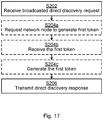
- Fig 17 illustrating a method for authentication in device to device discovery as performed by a Discoveree device according to an embodiment.
- the Discoveree device is configured to, in a step S202, receive a broadcasted direct discovery request from a Discoverer device. According to some embodiments the Discoveree device is configured to, in a step S206, transmit a direct discovery response to the Discoverer device.
- the direct discovery response comprises a first token.
- the Discoveree device may optionally be configured to, in a step S204a, request a network node to generate the first token.
- the Discoveree device may then be configured to, in a step S204b, receiving the first token from the network node prior to transmitting the direct discovery response.
- the Discoveree device may optionally be configured to, in a step S204c, generate the first token prior to transmitting the direct discovery response.
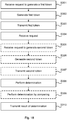
- Fig 18 illustrating a method for authentication in device to device discovery as performed by a network node according to an embodiment.
- the network node is configured to, in a step S301, receive a request to generate a first token from a Discoveree device. According to some embodiments the network node is configured to, in a step S302, generate the first token. According to some embodiments the network node is configured to, in a step S303, transmit the first token to the Discoveree device. According to some embodiments the network node is configured to, in a step S304, receive a request from a Discoverer device to determine whether the first token was generated for the Discoveree device or not. According to some embodiments the network node is configured to, in a step S308, perform a determination of whether the first token was generated for the Discoveree device or not. According to some embodiments the network node is configured to, in a step S310, transmit a result thereof to the Discoverer device.
- the network node may optionally be configured to, in a step S305, receive a request to generate a second token from the Discoverer device.
- the network node may optionally be configured to, in a step S306, generate the second token.
- the network node may optionally be configured to, in a step S309, performing the determination by comparing the first token to the second token.
- the network node may optionally be configured to, in a step S307, transmit the second token to the Discoverer device.
- Table 1 Examples of identifiers in Direct Discovery Request messages in Model B 1) ProSe WD Identifier of Discoveree WD 2) ProSe Group Identifier of the group of Discoveree WDs 3) ProSe Application Identifier 4) ProSe Application Code 5) ProSe Application Identifier and ProSe WD Identifier of Discoverer WD 6) ProSe Application Code and ProSe WD Identifier of Discoverer WD 7) ProSe Application Identifier and ProSe Group Identifier of the group of Discoverer WD and Discoveree WDs 8) ProSe Application Code and ProSe Group Identifier of the group of Discoverer WD and Discoveree WDs
- the identifier of the Discoverer WD i.e., the ProSe WD identifier of Discoverer WD
- the identifier of the Discoverer WD is broadcasted.
- the Discoveree WD may check with the ProSe Function in the network whether the broadcasted ProSe Application Code (ProSe App Code) origins from an authorized Discoverer WD and also find out the identifier of the Discoverer WD from the ProSe Function in the network.
- ProSe App Code ProSe App Code
- the format for the Direct Discovery Response message in Model B is not described in any 3GPP specification. Without loss of generality it is assumed that the Direct Discovery Response message for example may indicate any of the following combinations of identities presented in Table 2.
- Table 2 Examples of identities included in Direct Discovery Response message in Model B 1) ProSe WD Identifier of Discoveree WD 2a) ProSe Group member Identifier of the Discoveree WD 2b) ProSe WD Identifier of Discoveree WD 3a) ProSe Application Identifier and ProSe WD Identifier of Discoveree WD 3b) ProSe Application Identifier and ProSe Group member Identifier of Discoveree WD 4a) ProSe Application Code and ProSe WD Identifier of Discoveree WD 4b) ProSe Application Code and ProSe Group member Identifier of Discoveree WD 5) ProSe Application Identifier and ProSe WD Identifier of Discoveree WD 6) ProSe Application Code and ProSe WD Identifier of Discover
- the token may comprise a message authentication code (MAC).
- the MAC may be a function of any combination of a First parameter, a Second parameter, a Third parameter, and a Fourth parameter.
- One purpose of the First parameter may be to provide a freshness indication.
- parameters which could provide this include, but are not limited to, a ProSe App Code, a time stamp, a time value, a counter value.
- the ProSe App Code could for example provide freshness in a time window.
- the ProSe App Code may be generated by the ProSe function in the network and may have an associated validity timer. When the validity timer expires then the ProSe App Code is no longer valid. Any freshness indication may be initialized upon generation of the token.
- One purpose of the Second parameter may be to make it difficult to forge tokens.
- parameters which could be used for the Second parameter include, but are not limited to, a Discovery security key, a Group security key, and any security key shared between Discoverer WD and Discoveree WD.
- the Discovery security key may be shared by the Discoverer WD and the ProSe function in the network; or the Discovery key may be shared by the Discoverer WD and the Discoveree WD.
- the Group key may be shared by all the Group members part of the same Group.
- One purpose of the Third parameter may be to make the token unique per Discoveree WD.
- parameters which could be used for the Third parameter include, but are not limited to a Discoveree WD identifier as ProSe WD identifier, a Discoveree WD identifier as ProSe Group member identifier, a group member within a Group identified by a Group identifier, and any other Discoveree WD identifier.
- the Fourth parameter may be to map the Direct Discovery Response to the Direct Discovery Request. Some examples of the Fourth parameter will be provided next.
- Model B is used and that a Discoveree WD listens to broadcasted Direct Discovery Request messages announcing a code and/or identifier(s).
- a Discoveree WD listens to broadcasted Direct Discovery Request messages announcing a code and/or identifier(s).
- the Discoveree WD would like to respond back to the Discoverer WD with a Direct Discovery Response message including a Token.
- the Discoveree WD contacts the ProSe Function in the network, requesting the ProSe function to check whether the Direct Discovery Request message is broadcasted by an authorized Discoverer WD. If the ProSe Function in the network determines that the Discoverer WD is genuine, and determines that the Discoveree WD is allowed to respond to the Direct Discovery Request message, then the ProSe Function generates a Token by using a shared security key (for example a Discovery security key, a Group security key or any other security key) which the ProSe Function in the network shares with the Discoverer WD.
- a shared security key for example a Discovery security key, a Group security key or any other security key
- the Token may comprise a MAC determined over a defined number of parameters, known by the ProSe Function in the network and also known by the Discoverer WD.
- the Token may be generated in many different ways, for example as described above.
- the ProSe Function in the network provides the Token to the Discoveree WD.
- the Discoveree WD broadcasts the Direct Discovery Response message including the Token.
- the Discoverer WD hears the Direct Discovery Response message including the Token.
- the Discoveree WD checks whether the Direct Discovery Request message is broadcasted by an authorized Discoverer WD. If the Discoveree WD determines that the Discoverer WD is genuine, then the Discoveree WD generates a Token by using a shared security key which the Discoveree WD shares with the Discoverer WD.
- the Token may comprise a MAC determined over a defined number of parameters, known by the Discoveree WD and also known by the Discoverer WD.
- the Token may be generated in many different ways, for example as described above.
- the Discoveree WD broadcasts the Direct Discovery Response message including the Token.
- the Discoverer WD hears the Direct Discovery Response message including the Token.
- the Discoverer WD determines the MAC over a defined number of parameters (for example the same parameters as used by the ProSe Function in the network), and the Discoverer WD compares the calculated MAC with the MAC in the Token. If the both MAC's are equal, then the Discoverer WD knows that the Discoveree WD transmitting the Direct Discovery Response message is genuine and authorized by the ProSe Function in the network to respond to the original Direct Discovery request message. The Discoverer WD knows now that the Discoveree WD is within proximity, and may take any appropriate action e.g., initiate direct communication with the Discoveree WD.
- a defined number of parameters for example the same parameters as used by the ProSe Function in the network
- the Discoverer WD requests the ProSe Function in the network to verify the Token by forwarding the Direct Discovery response message including the Token to the ProSe Function in the network.
- the ProSe Function in the network determines the MAC over a defined number of parameters (for example the same parameters as used by the ProSe Function in the network when determining the Token on behalf of the Discoveree WD).
- the ProSe Function in the network compares the calculated MAC with the MAC in the Token. If the both MACs are equal, then the ProSe Function in the network knows that the Discoveree WD transmitting the Direct Discovery Response message is genuine and authorized by the ProSe Function in the network to respond to the original Direct Discovery Request message.
- the ProSe Function in the network informs the Discoverer WD that the Discoveree WD is genuine.
- the Discoverer WD knows now that the Discoveree WD is within proximity, and may take any appropriate action e.g., initiate direct communication with the Discoveree WD.
- FIG. 9 A detailed signaling flow diagram based on Embodiment 1, 2, 3, and 4 is provided in Figure 9 and comprises steps as will be discussed below. Reference is also made to the flowchart of Figure 10 based on Embodiment 1, 2, 3, and 4.
- a shared security key for example a Discovery key or Group key, may be pre-configured or provisioned in the Discoverer WD.
- a shared security key for example a Discovery key or Group key, may be pre-configured or provisioned in the Discoveree WD.
- Step 301 The Discoverer WD may transmit a Discovery Request message to the ProSe Function in order to request to be allowed to announce one or more identifiers/codes on that PLMN.
- the ProSe function may return the Discovery Response message (containing for example a ProSe App Code or an application Identifier or any other identifier) that the Discoverer WD is allowed to announce and may also include an associated security key (for example a Discovery Key, a Group Key or some other security key).
- the ProSe Function may store the Discovery Key together with the Discovery Request message.
- Step 302. Optional step: The Discoveree WD transmits a Discovery Request message to the ProSe Function in the network in order to obtain a code and/or identifier(s) that it wants to listen for. The ProSe Function in the network returns the code and/or identifier(s) to the Discoveree WD.
- Step 303 The Discoverer WD starts announcing (broadcasting) the Direct Discovery Request message.
- Step 304 The Discoveree WD listens for announced (broadcasted) information that comprises a code and/or identifier(s) that the Discoveree WD is interested in.
- steps 305, 306, 307, 309, 310; or steps 305, 306, 307 (except for Embodiment 1), 308, 309, 310; or steps 308, 309, 310 take place.
- Step 305 Upon hearing such an announced code or identifier, the Discoveree WD sends a Found Match Request message to the ProSe function with the Direct Discovery Request message comprising the code and/or identifier(s).
- the Discoveree WD may also transmit an indication that it wants to use, for example, Model B and announces (broadcasts) a Direct Discovery Response message.
- Step 306 The ProSe Function in the network verifies the received code and/or identifier(s). If the verification is successful, then, according to Embodiment 1, the ProSe Function in the network generates a Token using a security key (for example a Discovery Key, a Group Key or some other security key).
- a security key for example a Discovery Key, a Group Key or some other security key.
- Step 307. The ProSe Function informs the Discoveree WD that the match of the Direct Discovery Request message was successful.
- the ProSe Function according to Embodiment 1, provides the Token to the Discoveree WD.
- Step 308 Upon hearing such an announced code or identifier in step 304, the Discoveree WD, according to Embodiment 2, verifies the received code and/or identifier(s) and if verification is successful, then the Discoveree WD generates a Token; or if the ProSe Function in in step 307 informs the Discoveree WD that the match of the Direct Discovery Request message was successful, then the Discoveree WD, according to Embodiment 2, generates a Token.
- Step 309 The Discoveree WD starts to announce (broadcast) the Direct Discovery Response message comprising the Token.
- Step 310 The Discoverer WD listens for Direct Discovery Response messages and receives the Direct Discovery Response message including the Token which it is interested in.
- step 311 or 312 takes place.
- Step 311 The Discoverer WD, according to Embodiment 3, verifies the Token using the shared secret key (for example a Discovery key or a group key or some other security key). If the verification is successful then the Discoverer WD knows that the Discoveree WD is within proximity.
- the shared secret key for example a Discovery key or a group key or some other security key.
- the Discoverer WD forwards the Token to the ProSe Function in the network.
- the ProSe Function in the network verifies the Token using the shared secret key (for example a Discovery key or a group key or some other security key). If the verification is successful then the ProSe Function knows that the Discoveree WD is genuine and within proximity.
- the ProSe Function in the network informs the Discoverer WD. Discoverer WD knows now that the Discoveree WD is within proximity.
- Step 401 The Discoveree WD receives an announced code and/or identitie(s) in a Direct Discovery request message from a Discoverer UE.
- Step 402. The Discoveree WD requests ProSe Function in the network to match the announced code and/or identitie(s), or the Discoveree WD matches the announced code and/or identitie(s) locally.
- Step 404 The Discoveree WD announces the Direct Discovery Response message including the Token.
- Step 405. The Discoverer WD hears the announced Direct Discovery Response message including the Token.
- Step 406 The Discoverer WD verifies the Token in the announced Direct Discovery Response message.
- the Discoverer WD could also request the ProSe Function in the network to verify the Token on behalf of the Discoverer WD. If the verification is successful then the Discoverer WD and Discoveree WD can start communication.
- Discoverer WD may request the ProSe Function in the network to check the freshness value in step 312.
- Embodiment 5 if there, for example in Model B, are two broadcasted identifiers in the Direct Discovery Response message, for example a ProSe Application Identifier and a ProSe WD Identifier of the Discoveree WD, then it may be possible to encrypt the ProSe WD Identifier of the Discoveree WD, since the Discoverer WD may be enabled to filter out the Direct Discovery Response messages it is interested in by monitoring the ProSe Application Identifier which it is interested in. The ProSe Application Identifier would then be sent in clear text.
- Table 3 summarizes examples of broadcasted identifiers included in a Direct Discovery Response message.
- Partial encryption of the Direct Discovery Response message would imply that Discoverer WD interested in a ProSe Application Identifier would need to decrypt the ProSe WD Identifier of Discoveree WD or Group member identifier of Discoveree WD in order to find out who has responded to the Direct Discovery Request message which Discoverer WD originally broadcasted.
- the Direct Discovery Response message only comprises one identifier as a ProSe WD identifier of the Discoveree WD or a Group member identifier of the Discoveree WD, also this identifier may be encrypted. It may be possible for the Discoverer WD to decrypt all broadcasted Direct Discovery Response messages it listens to, as the Discoverer WD then may not be able to filter out the Direct Discovery Response messages the Discoverer WD is interested in.
- the identifiers may not be broadcast in clear text and instead some temporary identifier allocated by the ProSe Function in the network may be temporarily broadcast.
- Embodiment 6 if there, for example in Model B, are two broadcasted identifiers in the Direct Discovery Request message, for example a ProSe Application Identifier and a ProSe WD Identifier of the Discoverer WD, then it may be possible to encrypt the ProSe WD Identifier of the Discoverer WD, since the Discoveree WD may be enabled to filter out the Direct Discovery Request messages it is interested in by monitoring the ProSe Application Identifier. The ProSe Application Identifier may then be transmitted in clear text. Table 4 summarizes examples of broadcasted identifiers included in a Direct Discovery Request message.
- Model B Direct Discovery Request
- ProSe Application Identifier Encrypted ProSe WD Identifier of Discoverer WD Token or MAC or or ProSe App Code Encrypted Group Identifier
- Partial encryption of the Direct Discovery Request message would imply that Discoveree WDs interested in a ProSe Application Identifier would need to 1) decrypt the Group Identifier in order to find out whether the Direct Discovery Request message is addressed to them; or 2) decrypt the ProSe WD Identifier of Discoverer WD in order to find out what Discoverer WD transmitted the discovery request.
- the Direct Discovery Request message only comprises one identifier as a ProSe Application Identifier or a ProSe Application Code or Group Identifier, also this identifier may be encrypted. It may be possible for the Discoveree WD to decrypt all broadcasted Direct Discovery Request messages it listens to, as the Discoveree WD then may not be able to filter out the Direct Discovery Request messages the Discoveree WD is interested in.
Landscapes
- Engineering & Computer Science (AREA)
- Computer Networks & Wireless Communication (AREA)
- Signal Processing (AREA)
- Computer Security & Cryptography (AREA)
- Databases & Information Systems (AREA)
- Multimedia (AREA)
- Mobile Radio Communication Systems (AREA)
- Small-Scale Networks (AREA)
- Alarm Systems (AREA)
Claims (13)
- Procédé d'authentification dans une découverte de dispositif à dispositif, en utilisant un service de proximité, ProSe, le procédé étant effectué par un dispositif découvreur (11a), comprenant :la diffusion (S101) d'une demande de découverte directe ;la réception (S102) d'une réponse de découverte directe en provenance du dispositif découvert (11b), la réponse de découverte directe comprenant un premier jeton, dans lequel le premier jeton est généré par une fonction ProSe dans un noeud de réseau (12) ;l'obtention (S103) d'une détermination si le premier jeton a été généré pour le dispositif découvert ou non, dans lequel la détermination comprend la comparaison du premier jeton à un deuxième jeton du dispositif découvreur et dans lequel au moins l'une de la réponse de découverte directe et de la demande de découverte directe comprend au moins deux identifiants diffusés dont l'un est crypté.
- Procédé selon la revendication 1, dans lequel le deuxième jeton est généré par la fonction ProSe dans le noeud de réseau (12) ou par le dispositif découvreur (11a).
- Procédé selon la revendication 1 ou 2, dans lequel la détermination est générée par le dispositif découvreur.
- Procédé selon la revendication 3, dans lequel la génération de la détermination comprend :
l'interrogation (S104) de la fonction ProSe dans le noeud de réseau (12) pour décider si le premier jeton a été généré pour le dispositif découvert ou non. - Procédé selon la revendication 1, comprenant en outre, s'il est déterminé que le premier jeton a été généré pour le dispositif découvert :
la permission de l'échange (S105) de messages de données en communication directe avec le dispositif découvert. - Procédé selon la revendication 1, comprenant en outre, s'il est déterminé que le premier jeton n'a pas été généré pour le dispositif découvert :
l'interdiction de l'échange (S106) de messages de données en communication directe avec le dispositif découvert. - Procédé d'authentification dans une découverte de dispositif à dispositif, en utilisant un service de proximité, ProSe, le procédé étant effectué par un dispositif découvert (11b), comprenant :la réception (S202) d'une demande de découverte directe diffusée en provenance d'un dispositif découvreur (11a) ;la transmission (S206) d'une réponse de découverte directe à destination du dispositif découvreur, la réponse de découverte directe comprenant un premier jeton, dans lequel le premier jeton est généré par une fonction ProSe dans un noeud de réseau (12), et dans lequel au moins l'une de la réponse de découverte directe et de la demande de découverte directe comprend au moins deux identifiants diffusés dont l'un est crypté.
- Procédé selon la revendication 7, comprenant en outre :la demande (S204a) à la fonction ProSe dans le noeud de réseau (12) pour générer le premier jeton ; etla réception (S204b) du premier jeton en provenance de la fonction ProSe dans le noeud de réseau avant la transmission de la réponse de découverte directe.
- Procédé d'authentification dans une découverte de dispositif à dispositif, en utilisant un service de proximité, ProSe, le procédé étant effectué par une fonction ProSe dans un noeud de réseau (12), comprenant :la réception (S301) d'une demande en provenance d'un dispositif découvert (11b) pour générer un premier jeton ;la génération (S302) du premier jeton ;la transmission (S303) du premier jeton à destination du dispositif découvert ;la réception (S304) d'une demande en provenance d'un dispositif découvreur (11a) pour déterminer si le premier jeton a été généré pour le dispositif découvert ou non ;l'exécution (S308) d'une détermination si le premier jeton a été généré pour le dispositif découvert ou non ; etla transmission (S310) d'un résultat de la détermination à destination du dispositif découvreur.
- Procédé selon la revendication 9, comprenant en outre :la réception (S305) d'une demande en provenance du dispositif découvreur pour générer un deuxième jeton ;la génération (S306) du deuxième jeton ; etl'exécution (S309) de la détermination par la comparaison du premier jeton au deuxième jeton.
- Dispositif sans fil (11a) pour une authentification dans une découverte de dispositif à dispositif, en utilisant un service de proximité, ProSe, le dispositif sans fil comprenant une unité de traitement (41) et un support de mémorisation lisible par ordinateur non transitoire (43), ledit support de mémorisation lisible par ordinateur non transitoire (43) comprenant des instructions exécutables par ladite unité de traitement de telle manière que ledit dispositif sans fil soit activé pour ProSe et agisse en tant que dispositif découvreur, et opérationnel pour :la diffusion d'une demande de découverte directe ;la réception d'une réponse de découverte directe en provenance d'un dispositif découvert (11b), la réponse de découverte directe comprenant un premier jeton, dans lequel le premier jeton est généré par une fonction ProSe dans un noeud de réseau (12) ;l'obtention d'une détermination si le premier jeton a été généré pour le dispositif découvert ou non, dans lequel la détermination comprend la comparaison du premier jeton à un deuxième jeton du dispositif découvreur, et dans lequel au moins l'une de la réponse de découverte directe et de la demande de découverte directe comprend au moins deux identifiants diffusés dont l'un est crypté.
- Dispositif sans fil (11b) pour une authentification dans une découverte de dispositif à dispositif, en utilisant un service de proximité, ProSe, le dispositif sans fil comprenant une unité de traitement (41) et un support de mémorisation lisible par ordinateur non transitoire (43), ledit support de mémorisation lisible par ordinateur non transitoire comprenant des instructions exécutables par ladite unité de traitement de telle manière que ledit dispositif sans fil soit activé pour ProSe et agisse en tant que dispositif découvert, et soit opérationnel pour :la réception d'une demande de découverte directe diffusée en provenance d'un dispositif découvreur (11a) ;la transmission d'une réponse de découverte directe à destination du dispositif découvreur, la réponse de découverte directe comprenant un premier jeton, dans lequel le premier jeton est généré par une fonction ProSe dans un noeud de réseau (12), et dans lequel au moins l'une de la réponse de découverte directe et de la demande de découverte directe comprend au moins deux identifiants diffusés dont l'un est crypté.
- Noeud de réseau (12) pour une authentification dans une découverte de dispositif à dispositif, en utilisant un service de proximité, ProSe, le noeud de réseau comprenant une unité de traitement (51) et un support de mémorisation lisible par ordinateur non transitoire (53), ledit support de mémorisation lisible par ordinateur non transitoire comprenant des instructions exécutables par ladite unité de traitement de telle manière que ledit noeud de réseau mette en oeuvre une fonction ProSe, et soit opérationnel pour :la réception d'une demande en provenance d'un dispositif découvert (11b) pour générer un premier jeton ;la génération du premier jeton ;la transmission du premier jeton à destination du dispositif découvert ;la réception d'une demande en provenance d'un dispositif découvreur (11a) pour déterminer si le premier jeton a été généré pour le dispositif découvert ou non ;l'exécution d'une détermination si le premier jeton a été généré pour le dispositif découvert ou non ; etla transmission d'un résultat de la détermination à destination du dispositif découvreur.
Applications Claiming Priority (2)
| Application Number | Priority Date | Filing Date | Title |
|---|---|---|---|
| US201461968725P | 2014-03-21 | 2014-03-21 | |
| PCT/SE2015/050250 WO2015142247A1 (fr) | 2014-03-21 | 2015-03-05 | Authentification dans une découverte de dispositif à dispositif |
Publications (3)
| Publication Number | Publication Date |
|---|---|
| EP3120592A1 EP3120592A1 (fr) | 2017-01-25 |
| EP3120592A4 EP3120592A4 (fr) | 2017-01-25 |
| EP3120592B1 true EP3120592B1 (fr) | 2019-05-22 |
Family
ID=54145046
Family Applications (1)
| Application Number | Title | Priority Date | Filing Date |
|---|---|---|---|
| EP15765552.3A Active EP3120592B1 (fr) | 2014-03-21 | 2015-03-05 | Authentification dans une découverte de dispositif à dispositif |
Country Status (6)
| Country | Link |
|---|---|
| US (2) | US10064053B2 (fr) |
| EP (1) | EP3120592B1 (fr) |
| CN (1) | CN106134232B (fr) |
| BR (1) | BR112016021675A2 (fr) |
| MX (1) | MX363654B (fr) |
| WO (1) | WO2015142247A1 (fr) |
Families Citing this family (18)
| Publication number | Priority date | Publication date | Assignee | Title |
|---|---|---|---|---|
| EP3136770B1 (fr) * | 2014-05-16 | 2018-08-29 | Huawei Technologies Co., Ltd. | Procédés de transmission d'informations prose et dispositifs |
| EP4391619A3 (fr) | 2014-10-03 | 2024-07-10 | InterDigital Patent Holdings, Inc. | Procédés de découverte directe restreinte |
| CN105828413B (zh) * | 2015-01-09 | 2020-11-10 | 中兴通讯股份有限公司 | 一种d2d模式b发现的安全方法、终端和系统 |
| MX2017012896A (es) | 2015-04-06 | 2017-12-07 | Interdigital Patent Holdings Inc | Métodos, aparatos y sistemas dirigidos al descubrimiento directo por servicios de proximidad (prose). |
| US10080185B2 (en) * | 2015-04-10 | 2018-09-18 | Qualcomm Incorporated | Method and apparatus for securing structured proximity service codes for restricted discovery |
| US10057022B2 (en) * | 2015-09-28 | 2018-08-21 | Yazaki Corporation | Method for controlling access to an in-vehicle wireless network |
| US10425251B2 (en) * | 2015-10-20 | 2019-09-24 | Wistron Neweb Corporation | Method and system of device-to-device tunnel establishment between small cells |
| WO2018194202A1 (fr) * | 2017-04-21 | 2018-10-25 | 엘지전자(주) | Dispositif de communication v2x et procédé de communication de données associé |
| WO2019006728A1 (fr) * | 2017-07-06 | 2019-01-10 | 北京小米移动软件有限公司 | Appareil et procédé d'établissement d'une connexion rapide entre des dispositifs de l'internet des objets, et dispositif |
| WO2020053121A1 (fr) * | 2018-09-10 | 2020-03-19 | Koninklijke Kpn N.V. | Découverte de dispositif à l'aide de codes de découverte radio dans un réseau local sécurisé |
| CN109768861B (zh) * | 2019-01-24 | 2021-07-30 | 西安电子科技大学 | 一种海量d2d匿名发现认证与密钥协商方法 |
| CN114980099B (zh) * | 2020-12-02 | 2023-11-17 | 支付宝(杭州)信息技术有限公司 | 一种设备之间的连接方法、装置及设备 |
| AU2021417416A1 (en) | 2021-01-08 | 2023-07-13 | Nokia Technologies Oy | A method, apparatus and computer program product for authentication procedure between devices |
| US12395827B2 (en) * | 2021-02-11 | 2025-08-19 | Qualcomm Incorporated | Techniques for sidelink discovery between user equipments associated with different discovery models |
| SE546427C2 (en) * | 2021-03-04 | 2024-10-29 | Munters Europe Ab | A system and methods for communication of sensor data and/or user control data |
| WO2022198466A1 (fr) * | 2021-03-23 | 2022-09-29 | Oppo广东移动通信有限公司 | Procédé de découverte et terminal |
| EP4285623A4 (fr) | 2021-05-10 | 2024-10-02 | ZTE Corporation | Systèmes et procédés d'autorisation de services basés sur la proximité |
| WO2022265165A1 (fr) * | 2021-06-18 | 2022-12-22 | 엘지전자 주식회사 | Procédé et appareil pour effectuer une communication de dispositif à dispositif dans un système de communication sans fil |
Citations (1)
| Publication number | Priority date | Publication date | Assignee | Title |
|---|---|---|---|---|
| WO2013163634A1 (fr) * | 2012-04-27 | 2013-10-31 | Interdigital Patent Holdings, Inc. | Systèmes et procédés pour personnaliser et/ou adapter une interface de service |
Family Cites Families (24)
| Publication number | Priority date | Publication date | Assignee | Title |
|---|---|---|---|---|
| US8737316B2 (en) | 2009-05-01 | 2014-05-27 | Qualcomm Incorporated | Home agent-less MIPv6 route optimization over WAN |
| US20100278345A1 (en) * | 2009-05-04 | 2010-11-04 | Thomas Matthieu Alsina | Method and apparatus for proximity based pairing of mobile devices |
| US8666403B2 (en) * | 2009-10-23 | 2014-03-04 | Nokia Solutions And Networks Oy | Systems, methods, and apparatuses for facilitating device-to-device connection establishment |
| US9596122B2 (en) * | 2010-12-03 | 2017-03-14 | International Business Machines Corporation | Identity provider discovery service using a publish-subscribe model |
| EP2884812B1 (fr) * | 2011-04-01 | 2016-12-28 | Interdigital Patent Holdings, Inc. | Dispositif et procédé pour un partage de contexte PDP commun |
| US10419907B2 (en) * | 2012-02-22 | 2019-09-17 | Qualcomm Incorporated | Proximity application discovery and provisioning |
| CN103379580B (zh) * | 2012-04-13 | 2018-12-14 | 华为技术有限公司 | 设备发现的方法、设备和系统 |
| US9240881B2 (en) * | 2012-04-30 | 2016-01-19 | Alcatel Lucent | Secure communications for computing devices utilizing proximity services |
| CN104584670B (zh) * | 2012-08-23 | 2019-04-19 | 交互数字专利控股公司 | 用于执行装置到装置发现的方法和设备 |
| ES2672591T3 (es) | 2012-09-06 | 2018-06-15 | Koninklijke Kpn N.V. | Establecimiento de una sesión de comunicación de dispositivo a dispositivo |
| CN102857901A (zh) * | 2012-09-12 | 2013-01-02 | 中兴通讯股份有限公司 | 终端的发现、发现处理方法及装置 |
| EP2915354A4 (fr) * | 2012-11-01 | 2016-06-29 | Lg Electronics Inc | Procédé et appareil pour la fourniture d'une protection d'intégrité en vue d'une recherche de service basée sur la proximité avec une plage de recherche étendue |
| CN109982303B (zh) * | 2012-11-01 | 2022-06-07 | 交互数字专利控股公司 | 用于实现WLAN接近服务(WLAN ProSe)的方法 |
| US10531269B2 (en) * | 2012-11-01 | 2020-01-07 | Intel Corporation | Network assisted device-to-device discovery for peer-to-peer applications |
| US9532224B2 (en) * | 2012-11-05 | 2016-12-27 | Electronics And Telecommunications Research Institute | Method of device-to-device discovery and apparatus thereof |
| US8594632B1 (en) * | 2012-12-11 | 2013-11-26 | Intel Corporation | Device to-device (D2D) discovery without authenticating through cloud |
| US9883388B2 (en) * | 2012-12-12 | 2018-01-30 | Intel Corporation | Ephemeral identity for device and service discovery |
| JP6145177B2 (ja) * | 2013-01-25 | 2017-06-07 | コニンクリーケ・ケイピーエヌ・ナムローゼ・フェンノートシャップ | 3gpplteにおける通信移動体デバイス間の近接発見、認証、およびリンク確立 |
| CN104105155B (zh) * | 2013-04-01 | 2019-07-16 | 中兴通讯股份有限公司 | 接收设备发现信息、发送设备发现信息的方法和用户设备 |
| US20160065362A1 (en) * | 2013-04-05 | 2016-03-03 | Interdigital Patent Holdings, Inc. | Securing peer-to-peer and group communications |
| WO2015020381A1 (fr) * | 2013-08-04 | 2015-02-12 | Lg Electronics Inc. | Procédé et appareil pour interrompre le fonctionnement entre dispositifs dans un système de communication sans fil |
| KR102094216B1 (ko) | 2013-11-04 | 2020-03-27 | 삼성전자 주식회사 | 이동 통신 시스템 환경에서 프락시미티 기반 서비스 단말 간 발견 및 통신을 지원하기 위한 보안 방안 및 시스템 |
| CN105981433B (zh) * | 2014-02-10 | 2019-09-10 | Lg电子株式会社 | 无线通信系统中指示d2d数据的qos的方法和装置 |
| US9655163B2 (en) * | 2014-03-11 | 2017-05-16 | Innovative Sonic Corporation | Method and apparatus for implementing a device-to-device (D2D) service in a wireless communication system |
-
2015
- 2015-03-05 BR BR112016021675A patent/BR112016021675A2/pt not_active IP Right Cessation
- 2015-03-05 EP EP15765552.3A patent/EP3120592B1/fr active Active
- 2015-03-05 MX MX2016011574A patent/MX363654B/es unknown
- 2015-03-05 WO PCT/SE2015/050250 patent/WO2015142247A1/fr not_active Ceased
- 2015-03-05 CN CN201580015152.1A patent/CN106134232B/zh active Active
- 2015-03-05 US US14/437,662 patent/US10064053B2/en active Active
-
2018
- 2018-06-07 US US16/002,786 patent/US11516659B2/en active Active
Patent Citations (1)
| Publication number | Priority date | Publication date | Assignee | Title |
|---|---|---|---|---|
| WO2013163634A1 (fr) * | 2012-04-27 | 2013-10-31 | Interdigital Patent Holdings, Inc. | Systèmes et procédés pour personnaliser et/ou adapter une interface de service |
Non-Patent Citations (1)
| Title |
|---|
| ZTE: "Solution for ProSe discovery and communication", vol. SA WG2, no. San Diego, USA; 20130408 - 20130412, 2 April 2013 (2013-04-02), XP050708226, Retrieved from the Internet <URL:http://www.3gpp.org/ftp/tsg_sa/WG2_Arch/TSGS2_96_San_Diego/Docs/> [retrieved on 20130402] * |
Also Published As
| Publication number | Publication date |
|---|---|
| EP3120592A1 (fr) | 2017-01-25 |
| WO2015142247A1 (fr) | 2015-09-24 |
| US20180295515A1 (en) | 2018-10-11 |
| MX363654B (es) | 2019-03-28 |
| CN106134232B (zh) | 2019-11-26 |
| MX2016011574A (es) | 2016-11-29 |
| CN106134232A (zh) | 2016-11-16 |
| US11516659B2 (en) | 2022-11-29 |
| US10064053B2 (en) | 2018-08-28 |
| EP3120592A4 (fr) | 2017-01-25 |
| US20160302062A1 (en) | 2016-10-13 |
| BR112016021675A2 (pt) | 2018-12-04 |
Similar Documents
| Publication | Publication Date | Title |
|---|---|---|
| US11516659B2 (en) | Authentication in device to device discovery | |
| JP7521564B2 (ja) | 第一のネットワークノード、第二のネットワークノード、それらの方法、及びプログラム | |
| US11233817B2 (en) | Methods and apparatus for end device discovering another end device | |
| EP2950499B1 (fr) | Procédé, dispositif, et système de maintien de session d'accès 802.1x | |
| EP3200486B1 (fr) | Système, dispositif et procédé d'établissement de connexion | |
| KR102255901B1 (ko) | 직접 발견을 위한 애플리케이션들의 인가 | |
| JP2015519790A (ja) | マシンツーマシンデバイストリガリングのためのシステム、方法、および装置 | |
| KR102088848B1 (ko) | 이동 통신에서 ProSe그룹 통신 또는 공공 안전을 지원하기 위한 보안 방안 및 시스템 | |
| EP3128773B1 (fr) | Procédé et appareil de traitement pour découverte d2d | |
| WO2015127881A1 (fr) | Procédé, système et dispositif de transmission d'un message par satellite | |
| JP2016518046A (ja) | ネットワーク上においてシグナリングストームを制限するための機構 | |
| EP3169031B1 (fr) | Procédé, dispositif et plate-forme de partage de réseau local sans fil | |
| WO2021139552A1 (fr) | Procédé et appareil pour contrôler un équipement d'utilisateur relais | |
| CN105101465A (zh) | 无线网络配置方法及无线网络配置系统 | |
| CN104956763B (zh) | 用于设备到设备通信的方法和装置 | |
| US12368706B2 (en) | Privacy protection for sidelink communications | |
| US20190364392A1 (en) | Method, device and system for transmitting broadcasting services, and computer storage medium | |
| CN110740440B (zh) | 一种近距离业务实现的方法、相关装置和系统 | |
| WO2018049655A1 (fr) | Procédé, appareil, et système de mise en réseau de dispositifs | |
| WO2016079309A1 (fr) | Profil visant à assurer le même niveau de sécurité que dans le système 3gpp existant pour la prise en charge d'un epc de services de proximité (prose) pour la découverte et la communication directes de wlan | |
| CN120188502A (zh) | 一种通信方法、装置及存储介质 |
Legal Events
| Date | Code | Title | Description |
|---|---|---|---|
| STAA | Information on the status of an ep patent application or granted ep patent |
Free format text: STATUS: THE INTERNATIONAL PUBLICATION HAS BEEN MADE |
|
| PUAI | Public reference made under article 153(3) epc to a published international application that has entered the european phase |
Free format text: ORIGINAL CODE: 0009012 |
|
| STAA | Information on the status of an ep patent application or granted ep patent |
Free format text: STATUS: REQUEST FOR EXAMINATION WAS MADE |
|
| 17P | Request for examination filed |
Effective date: 20160916 |
|
| A4 | Supplementary search report drawn up and despatched |
Effective date: 20170103 |
|
| AK | Designated contracting states |
Kind code of ref document: A1 Designated state(s): AL AT BE BG CH CY CZ DE DK EE ES FI FR GB GR HR HU IE IS IT LI LT LU LV MC MK MT NL NO PL PT RO RS SE SI SK SM TR |
|
| AX | Request for extension of the european patent |
Extension state: BA ME |
|
| DAV | Request for validation of the european patent (deleted) | ||
| DAX | Request for extension of the european patent (deleted) | ||
| STAA | Information on the status of an ep patent application or granted ep patent |
Free format text: STATUS: EXAMINATION IS IN PROGRESS |
|
| 17Q | First examination report despatched |
Effective date: 20171207 |
|
| REG | Reference to a national code |
Ref country code: DE Ref legal event code: R079 Ref document number: 602015030819 Country of ref document: DE Free format text: PREVIOUS MAIN CLASS: H04W0012060000 Ipc: H04W0004800000 |
|
| GRAP | Despatch of communication of intention to grant a patent |
Free format text: ORIGINAL CODE: EPIDOSNIGR1 |
|
| STAA | Information on the status of an ep patent application or granted ep patent |
Free format text: STATUS: GRANT OF PATENT IS INTENDED |
|
| RIC1 | Information provided on ipc code assigned before grant |
Ipc: H04W 12/04 20090101ALI20190124BHEP Ipc: H04W 8/00 20090101ALI20190124BHEP Ipc: H04W 12/06 20090101ALI20190124BHEP Ipc: H04W 4/06 20090101ALI20190124BHEP Ipc: H04W 4/80 20180101AFI20190124BHEP |
|
| INTG | Intention to grant announced |
Effective date: 20190208 |
|
| GRAS | Grant fee paid |
Free format text: ORIGINAL CODE: EPIDOSNIGR3 |
|
| GRAA | (expected) grant |
Free format text: ORIGINAL CODE: 0009210 |
|
| STAA | Information on the status of an ep patent application or granted ep patent |
Free format text: STATUS: THE PATENT HAS BEEN GRANTED |
|
| AK | Designated contracting states |
Kind code of ref document: B1 Designated state(s): AL AT BE BG CH CY CZ DE DK EE ES FI FR GB GR HR HU IE IS IT LI LT LU LV MC MK MT NL NO PL PT RO RS SE SI SK SM TR |
|
| REG | Reference to a national code |
Ref country code: GB Ref legal event code: FG4D |
|
| REG | Reference to a national code |
Ref country code: CH Ref legal event code: EP |
|
| REG | Reference to a national code |
Ref country code: IE Ref legal event code: FG4D |
|
| REG | Reference to a national code |
Ref country code: DE Ref legal event code: R096 Ref document number: 602015030819 Country of ref document: DE |
|
| REG | Reference to a national code |
Ref country code: AT Ref legal event code: REF Ref document number: 1137568 Country of ref document: AT Kind code of ref document: T Effective date: 20190615 |
|
| REG | Reference to a national code |
Ref country code: NL Ref legal event code: FP |
|
| REG | Reference to a national code |
Ref country code: LT Ref legal event code: MG4D |
|
| PG25 | Lapsed in a contracting state [announced via postgrant information from national office to epo] |
Ref country code: HR Free format text: LAPSE BECAUSE OF FAILURE TO SUBMIT A TRANSLATION OF THE DESCRIPTION OR TO PAY THE FEE WITHIN THE PRESCRIBED TIME-LIMIT Effective date: 20190522 Ref country code: LT Free format text: LAPSE BECAUSE OF FAILURE TO SUBMIT A TRANSLATION OF THE DESCRIPTION OR TO PAY THE FEE WITHIN THE PRESCRIBED TIME-LIMIT Effective date: 20190522 Ref country code: ES Free format text: LAPSE BECAUSE OF FAILURE TO SUBMIT A TRANSLATION OF THE DESCRIPTION OR TO PAY THE FEE WITHIN THE PRESCRIBED TIME-LIMIT Effective date: 20190522 Ref country code: FI Free format text: LAPSE BECAUSE OF FAILURE TO SUBMIT A TRANSLATION OF THE DESCRIPTION OR TO PAY THE FEE WITHIN THE PRESCRIBED TIME-LIMIT Effective date: 20190522 Ref country code: NO Free format text: LAPSE BECAUSE OF FAILURE TO SUBMIT A TRANSLATION OF THE DESCRIPTION OR TO PAY THE FEE WITHIN THE PRESCRIBED TIME-LIMIT Effective date: 20190822 Ref country code: SE Free format text: LAPSE BECAUSE OF FAILURE TO SUBMIT A TRANSLATION OF THE DESCRIPTION OR TO PAY THE FEE WITHIN THE PRESCRIBED TIME-LIMIT Effective date: 20190522 Ref country code: PT Free format text: LAPSE BECAUSE OF FAILURE TO SUBMIT A TRANSLATION OF THE DESCRIPTION OR TO PAY THE FEE WITHIN THE PRESCRIBED TIME-LIMIT Effective date: 20190922 Ref country code: AL Free format text: LAPSE BECAUSE OF FAILURE TO SUBMIT A TRANSLATION OF THE DESCRIPTION OR TO PAY THE FEE WITHIN THE PRESCRIBED TIME-LIMIT Effective date: 20190522 |
|
| PG25 | Lapsed in a contracting state [announced via postgrant information from national office to epo] |
Ref country code: BG Free format text: LAPSE BECAUSE OF FAILURE TO SUBMIT A TRANSLATION OF THE DESCRIPTION OR TO PAY THE FEE WITHIN THE PRESCRIBED TIME-LIMIT Effective date: 20190822 Ref country code: GR Free format text: LAPSE BECAUSE OF FAILURE TO SUBMIT A TRANSLATION OF THE DESCRIPTION OR TO PAY THE FEE WITHIN THE PRESCRIBED TIME-LIMIT Effective date: 20190823 Ref country code: LV Free format text: LAPSE BECAUSE OF FAILURE TO SUBMIT A TRANSLATION OF THE DESCRIPTION OR TO PAY THE FEE WITHIN THE PRESCRIBED TIME-LIMIT Effective date: 20190522 Ref country code: RS Free format text: LAPSE BECAUSE OF FAILURE TO SUBMIT A TRANSLATION OF THE DESCRIPTION OR TO PAY THE FEE WITHIN THE PRESCRIBED TIME-LIMIT Effective date: 20190522 |
|
| REG | Reference to a national code |
Ref country code: AT Ref legal event code: MK05 Ref document number: 1137568 Country of ref document: AT Kind code of ref document: T Effective date: 20190522 |
|
| PG25 | Lapsed in a contracting state [announced via postgrant information from national office to epo] |
Ref country code: EE Free format text: LAPSE BECAUSE OF FAILURE TO SUBMIT A TRANSLATION OF THE DESCRIPTION OR TO PAY THE FEE WITHIN THE PRESCRIBED TIME-LIMIT Effective date: 20190522 Ref country code: SK Free format text: LAPSE BECAUSE OF FAILURE TO SUBMIT A TRANSLATION OF THE DESCRIPTION OR TO PAY THE FEE WITHIN THE PRESCRIBED TIME-LIMIT Effective date: 20190522 Ref country code: RO Free format text: LAPSE BECAUSE OF FAILURE TO SUBMIT A TRANSLATION OF THE DESCRIPTION OR TO PAY THE FEE WITHIN THE PRESCRIBED TIME-LIMIT Effective date: 20190522 Ref country code: CZ Free format text: LAPSE BECAUSE OF FAILURE TO SUBMIT A TRANSLATION OF THE DESCRIPTION OR TO PAY THE FEE WITHIN THE PRESCRIBED TIME-LIMIT Effective date: 20190522 Ref country code: AT Free format text: LAPSE BECAUSE OF FAILURE TO SUBMIT A TRANSLATION OF THE DESCRIPTION OR TO PAY THE FEE WITHIN THE PRESCRIBED TIME-LIMIT Effective date: 20190522 Ref country code: DK Free format text: LAPSE BECAUSE OF FAILURE TO SUBMIT A TRANSLATION OF THE DESCRIPTION OR TO PAY THE FEE WITHIN THE PRESCRIBED TIME-LIMIT Effective date: 20190522 |
|
| REG | Reference to a national code |
Ref country code: DE Ref legal event code: R097 Ref document number: 602015030819 Country of ref document: DE |
|
| PG25 | Lapsed in a contracting state [announced via postgrant information from national office to epo] |
Ref country code: SM Free format text: LAPSE BECAUSE OF FAILURE TO SUBMIT A TRANSLATION OF THE DESCRIPTION OR TO PAY THE FEE WITHIN THE PRESCRIBED TIME-LIMIT Effective date: 20190522 Ref country code: IT Free format text: LAPSE BECAUSE OF FAILURE TO SUBMIT A TRANSLATION OF THE DESCRIPTION OR TO PAY THE FEE WITHIN THE PRESCRIBED TIME-LIMIT Effective date: 20190522 |
|
| PLBE | No opposition filed within time limit |
Free format text: ORIGINAL CODE: 0009261 |
|
| STAA | Information on the status of an ep patent application or granted ep patent |
Free format text: STATUS: NO OPPOSITION FILED WITHIN TIME LIMIT |
|
| PG25 | Lapsed in a contracting state [announced via postgrant information from national office to epo] |
Ref country code: TR Free format text: LAPSE BECAUSE OF FAILURE TO SUBMIT A TRANSLATION OF THE DESCRIPTION OR TO PAY THE FEE WITHIN THE PRESCRIBED TIME-LIMIT Effective date: 20190522 |
|
| 26N | No opposition filed |
Effective date: 20200225 |
|
| PG25 | Lapsed in a contracting state [announced via postgrant information from national office to epo] |
Ref country code: PL Free format text: LAPSE BECAUSE OF FAILURE TO SUBMIT A TRANSLATION OF THE DESCRIPTION OR TO PAY THE FEE WITHIN THE PRESCRIBED TIME-LIMIT Effective date: 20190522 |
|
| PG25 | Lapsed in a contracting state [announced via postgrant information from national office to epo] |
Ref country code: SI Free format text: LAPSE BECAUSE OF FAILURE TO SUBMIT A TRANSLATION OF THE DESCRIPTION OR TO PAY THE FEE WITHIN THE PRESCRIBED TIME-LIMIT Effective date: 20190522 |
|
| PG25 | Lapsed in a contracting state [announced via postgrant information from national office to epo] |
Ref country code: MC Free format text: LAPSE BECAUSE OF FAILURE TO SUBMIT A TRANSLATION OF THE DESCRIPTION OR TO PAY THE FEE WITHIN THE PRESCRIBED TIME-LIMIT Effective date: 20190522 |
|
| REG | Reference to a national code |
Ref country code: CH Ref legal event code: PL |
|
| REG | Reference to a national code |
Ref country code: BE Ref legal event code: MM Effective date: 20200331 |
|
| PG25 | Lapsed in a contracting state [announced via postgrant information from national office to epo] |
Ref country code: LU Free format text: LAPSE BECAUSE OF NON-PAYMENT OF DUE FEES Effective date: 20200305 |
|
| PG25 | Lapsed in a contracting state [announced via postgrant information from national office to epo] |
Ref country code: FR Free format text: LAPSE BECAUSE OF NON-PAYMENT OF DUE FEES Effective date: 20200331 Ref country code: IE Free format text: LAPSE BECAUSE OF NON-PAYMENT OF DUE FEES Effective date: 20200305 Ref country code: CH Free format text: LAPSE BECAUSE OF NON-PAYMENT OF DUE FEES Effective date: 20200331 Ref country code: LI Free format text: LAPSE BECAUSE OF NON-PAYMENT OF DUE FEES Effective date: 20200331 |
|
| PG25 | Lapsed in a contracting state [announced via postgrant information from national office to epo] |
Ref country code: BE Free format text: LAPSE BECAUSE OF NON-PAYMENT OF DUE FEES Effective date: 20200331 |
|
| PG25 | Lapsed in a contracting state [announced via postgrant information from national office to epo] |
Ref country code: MT Free format text: LAPSE BECAUSE OF FAILURE TO SUBMIT A TRANSLATION OF THE DESCRIPTION OR TO PAY THE FEE WITHIN THE PRESCRIBED TIME-LIMIT Effective date: 20190522 Ref country code: CY Free format text: LAPSE BECAUSE OF FAILURE TO SUBMIT A TRANSLATION OF THE DESCRIPTION OR TO PAY THE FEE WITHIN THE PRESCRIBED TIME-LIMIT Effective date: 20190522 |
|
| PG25 | Lapsed in a contracting state [announced via postgrant information from national office to epo] |
Ref country code: MK Free format text: LAPSE BECAUSE OF FAILURE TO SUBMIT A TRANSLATION OF THE DESCRIPTION OR TO PAY THE FEE WITHIN THE PRESCRIBED TIME-LIMIT Effective date: 20190522 Ref country code: IS Free format text: LAPSE BECAUSE OF FAILURE TO SUBMIT A TRANSLATION OF THE DESCRIPTION OR TO PAY THE FEE WITHIN THE PRESCRIBED TIME-LIMIT Effective date: 20190922 |
|
| PGFP | Annual fee paid to national office [announced via postgrant information from national office to epo] |
Ref country code: GB Payment date: 20260327 Year of fee payment: 12 |
|
| PGFP | Annual fee paid to national office [announced via postgrant information from national office to epo] |
Ref country code: DE Payment date: 20260327 Year of fee payment: 12 |
|
| PGFP | Annual fee paid to national office [announced via postgrant information from national office to epo] |
Ref country code: NL Payment date: 20260326 Year of fee payment: 12 |