EP3121724A1 - Procédé de surveillance d'un programme logiciel et dispositif électronique correspondant, système de communication, produit-programme lisible par ordinateur et support d'informations lisible par ordinateur - Google Patents
Procédé de surveillance d'un programme logiciel et dispositif électronique correspondant, système de communication, produit-programme lisible par ordinateur et support d'informations lisible par ordinateur Download PDFInfo
- Publication number
- EP3121724A1 EP3121724A1 EP15306207.0A EP15306207A EP3121724A1 EP 3121724 A1 EP3121724 A1 EP 3121724A1 EP 15306207 A EP15306207 A EP 15306207A EP 3121724 A1 EP3121724 A1 EP 3121724A1
- Authority
- EP
- European Patent Office
- Prior art keywords
- watched
- software program
- supervisor
- forced
- forcing
- Prior art date
- Legal status (The legal status is an assumption and is not a legal conclusion. Google has not performed a legal analysis and makes no representation as to the accuracy of the status listed.)
- Ceased
Links
Images

Classifications
-
- G—PHYSICS
- G06—COMPUTING OR CALCULATING; COUNTING
- G06F—ELECTRIC DIGITAL DATA PROCESSING
- G06F9/00—Arrangements for program control, e.g. control units
- G06F9/06—Arrangements for program control, e.g. control units using stored programs, i.e. using an internal store of processing equipment to receive or retain programs
- G06F9/46—Multiprogramming arrangements
- G06F9/48—Program initiating; Program switching, e.g. by interrupt
- G06F9/4806—Task transfer initiation or dispatching
- G06F9/4843—Task transfer initiation or dispatching by program, e.g. task dispatcher, supervisor, operating system
- G06F9/485—Task life-cycle, e.g. stopping, restarting, resuming execution
-
- G—PHYSICS
- G06—COMPUTING OR CALCULATING; COUNTING
- G06F—ELECTRIC DIGITAL DATA PROCESSING
- G06F11/00—Error detection; Error correction; Monitoring
- G06F11/30—Monitoring
- G06F11/3003—Monitoring arrangements specially adapted to the computing system or computing system component being monitored
-
- G—PHYSICS
- G06—COMPUTING OR CALCULATING; COUNTING
- G06F—ELECTRIC DIGITAL DATA PROCESSING
- G06F11/00—Error detection; Error correction; Monitoring
- G06F11/07—Responding to the occurrence of a fault, e.g. fault tolerance
- G06F11/0703—Error or fault processing not based on redundancy, i.e. by taking additional measures to deal with the error or fault not making use of redundancy in operation, in hardware, or in data representation
- G06F11/0706—Error or fault processing not based on redundancy, i.e. by taking additional measures to deal with the error or fault not making use of redundancy in operation, in hardware, or in data representation the processing taking place on a specific hardware platform or in a specific software environment
- G06F11/0715—Error or fault processing not based on redundancy, i.e. by taking additional measures to deal with the error or fault not making use of redundancy in operation, in hardware, or in data representation the processing taking place on a specific hardware platform or in a specific software environment in a system implementing multitasking
-
- G—PHYSICS
- G06—COMPUTING OR CALCULATING; COUNTING
- G06F—ELECTRIC DIGITAL DATA PROCESSING
- G06F11/00—Error detection; Error correction; Monitoring
- G06F11/07—Responding to the occurrence of a fault, e.g. fault tolerance
- G06F11/0703—Error or fault processing not based on redundancy, i.e. by taking additional measures to deal with the error or fault not making use of redundancy in operation, in hardware, or in data representation
- G06F11/0751—Error or fault detection not based on redundancy
- G06F11/0754—Error or fault detection not based on redundancy by exceeding limits
- G06F11/0757—Error or fault detection not based on redundancy by exceeding limits by exceeding a time limit, i.e. time-out, e.g. watchdogs
-
- G—PHYSICS
- G06—COMPUTING OR CALCULATING; COUNTING
- G06F—ELECTRIC DIGITAL DATA PROCESSING
- G06F11/00—Error detection; Error correction; Monitoring
- G06F11/07—Responding to the occurrence of a fault, e.g. fault tolerance
- G06F11/0703—Error or fault processing not based on redundancy, i.e. by taking additional measures to deal with the error or fault not making use of redundancy in operation, in hardware, or in data representation
- G06F11/0793—Remedial or corrective actions
-
- G—PHYSICS
- G06—COMPUTING OR CALCULATING; COUNTING
- G06F—ELECTRIC DIGITAL DATA PROCESSING
- G06F11/00—Error detection; Error correction; Monitoring
- G06F11/07—Responding to the occurrence of a fault, e.g. fault tolerance
- G06F11/14—Error detection or correction of the data by redundancy in operations
- G06F11/1402—Saving, restoring, recovering or retrying
- G06F11/1415—Saving, restoring, recovering or retrying at system level
- G06F11/1438—Restarting or rejuvenating
-
- G—PHYSICS
- G06—COMPUTING OR CALCULATING; COUNTING
- G06F—ELECTRIC DIGITAL DATA PROCESSING
- G06F11/00—Error detection; Error correction; Monitoring
- G06F11/30—Monitoring
- G06F11/3003—Monitoring arrangements specially adapted to the computing system or computing system component being monitored
- G06F11/302—Monitoring arrangements specially adapted to the computing system or computing system component being monitored where the computing system component is a software system
-
- G—PHYSICS
- G06—COMPUTING OR CALCULATING; COUNTING
- G06F—ELECTRIC DIGITAL DATA PROCESSING
- G06F11/00—Error detection; Error correction; Monitoring
- G06F11/30—Monitoring
- G06F11/3055—Monitoring arrangements for monitoring the status of the computing system or of the computing system component, e.g. monitoring if the computing system is on, off, available, not available
-
- G—PHYSICS
- G06—COMPUTING OR CALCULATING; COUNTING
- G06F—ELECTRIC DIGITAL DATA PROCESSING
- G06F11/00—Error detection; Error correction; Monitoring
- G06F11/30—Monitoring
- G06F11/3089—Monitoring arrangements determined by the means or processing involved in sensing the monitored data, e.g. interfaces, connectors, sensors, probes, agents
- G06F11/3093—Configuration details thereof, e.g. installation, enabling, spatial arrangement of the probes
-
- G—PHYSICS
- G06—COMPUTING OR CALCULATING; COUNTING
- G06F—ELECTRIC DIGITAL DATA PROCESSING
- G06F9/00—Arrangements for program control, e.g. control units
- G06F9/06—Arrangements for program control, e.g. control units using stored programs, i.e. using an internal store of processing equipment to receive or retain programs
- G06F9/44—Arrangements for executing specific programs
- G06F9/445—Program loading or initiating
-
- G—PHYSICS
- G06—COMPUTING OR CALCULATING; COUNTING
- G06F—ELECTRIC DIGITAL DATA PROCESSING
- G06F9/00—Arrangements for program control, e.g. control units
- G06F9/06—Arrangements for program control, e.g. control units using stored programs, i.e. using an internal store of processing equipment to receive or retain programs
- G06F9/46—Multiprogramming arrangements
- G06F9/50—Allocation of resources, e.g. of the central processing unit [CPU]
- G06F9/5005—Allocation of resources, e.g. of the central processing unit [CPU] to service a request
- G06F9/5011—Allocation of resources, e.g. of the central processing unit [CPU] to service a request the resources being hardware resources other than CPUs, Servers and Terminals
- G06F9/5016—Allocation of resources, e.g. of the central processing unit [CPU] to service a request the resources being hardware resources other than CPUs, Servers and Terminals the resource being the memory
-
- G—PHYSICS
- G06—COMPUTING OR CALCULATING; COUNTING
- G06F—ELECTRIC DIGITAL DATA PROCESSING
- G06F11/00—Error detection; Error correction; Monitoring
- G06F11/07—Responding to the occurrence of a fault, e.g. fault tolerance
- G06F11/14—Error detection or correction of the data by redundancy in operations
- G06F11/1402—Saving, restoring, recovering or retrying
- G06F11/1415—Saving, restoring, recovering or retrying at system level
- G06F11/1417—Boot up procedures
-
- G—PHYSICS
- G06—COMPUTING OR CALCULATING; COUNTING
- G06F—ELECTRIC DIGITAL DATA PROCESSING
- G06F2201/00—Indexing scheme relating to error detection, to error correction, and to monitoring
- G06F2201/81—Threshold
-
- G—PHYSICS
- G06—COMPUTING OR CALCULATING; COUNTING
- G06F—ELECTRIC DIGITAL DATA PROCESSING
- G06F2201/00—Indexing scheme relating to error detection, to error correction, and to monitoring
- G06F2201/865—Monitoring of software
-
- G—PHYSICS
- G06—COMPUTING OR CALCULATING; COUNTING
- G06F—ELECTRIC DIGITAL DATA PROCESSING
- G06F2201/00—Indexing scheme relating to error detection, to error correction, and to monitoring
- G06F2201/88—Monitoring involving counting
Definitions
- the present disclosure relates to the field of software programs that are used for driving at least an electronic device.
- a method for monitoring a software program and corresponding electronic device, communication system, computer readable program product and computer readable storage medium are described.
- a software program usually comprises several processes, which themselves can comprise one or more software threads.
- One definition of a thread (or execution thread), in the technical field of the present disclosure, can be "the smallest sequence of programmed instructions that can be managed independently by a scheduler , which is typically a part of an Operating System. Multiple threads can exist within the same process, executing concurrently (one starting before others finish) and share resources such as memory ( WIKIPEDIA-https://en.wikipedia.org/wiki/Thread_(computing)#cite_note-1).
- software program can comprise, in some embodiments, several software processes executing independently and eventually communicating together (for instance thanks to technics known as Inter Process Communication (IPC) technics).
- IPC Inter Process Communication
- Such an electronic device can have an abnormal behavior or even not respond anymore to some user commands if one of the processes of its software program unexpectedly exits or crashes itself, or if one of the threads of one of those processes is blocked (for example in a dead-lock or an endless loop), or if one of those threads monopolizes a processing resource, for example in an infinite loop due to a defect, or if it requires an abnormal amount of resources (like in memory leak issues).
- Solutions have been searched in order to identify and/or remedy to such defective situations.
- an observer process can monitor periodically the processes and their processing and memory usage in order to detect abnormalities.
- this observation can be done by a "ps" command.
- Such monitoring can detect that a process has disappeared, or takes too much processing time or memory, or uses no processing time for a long time (and thus can is perhaps blocked).
- the present principles enable at least one of the above disadvantages to be resolved by proposing a method, to be performed in at least on electronic device, for monitoring the execution of a software program comprising at least one watched process, said monitoring method comprises periodic reading, by at least one supervisor process, of at least one memory zone shared by said watched process and said supervisor process.
- said method further comprises:
- the forcing can relate to the watched process, to several processes including to the watched process, to the main process of the software program.
- said method is performed in a single electronic device.
- said method further comprises maintaining, by said supervisor process, at least one boot counter located in a first non-volatile memory zone of said electronic device, a boot counter being representative of a number of boots of a process of said software program.
- said boot counter is representative of at least one item belonging to a group comprising:
- said conditional forcing takes into account at least one element belonging to a group comprising:
- said conditional forcing further depends on the sensitivity of said watched process.
- sensitivity of a watched process, it is to be understood herein how much a watch process is critical, or in other terms a level of risk for the software program, the device where the software program is implemented, and/or the private data or the welfare of a user of the device to be affected, if the watched process is malfunctioning (for instance is stopped, blocked, ).
- said software program comprises a plurality of watched processes and the memory zones of at least two watched processes are adjacent.
- said monitoring method further comprises:
- said conditional forcing further comprises generating an alert according to the update of said first and/or second read memory zone.
- said shared memory zone is only accessible by said watched process and said supervisor process.
- said monitoring method comprises:
- said item of information comprises at least an element belonging to a group of elements constituted of:
- Such a monitoring data can be any data useful for the monitoring of the watched process, like a memory usage, a processing usage, an error indicator (like a number or a type of error), a delay for performing some actions (for instance a meant delay, a maximum delay, a minimum delay,..).
- the present disclosure relates to an electronic device, comprising at least one memory and at least one processor, said processor being configured for monitoring the execution of a software program comprising at least one watched process, said monitoring comprising periodic reading, by at least one supervisor process located in said electronic device, of at least one memory zone shared by said watched process and said supervisor process.
- said processor is configured for:
- the present disclosure relates to a system comprising at least one first and one second electronic devices, said first electronic device comprising at least one memory and at least one processor, said processor being configured for monitoring the execution of a software program comprising at least one watched process located in said second device, said monitoring comprising periodic reading, by at least one supervisor process located in said first electronic device, of at least one memory zone shared by said watched process and said supervisor process.
- said processor is configured for:
- the electronic device or the communication system of the present disclosure can be adapted to perform the method of the present disclosure in any of its embodiments.
- the present embodiments related to a monitoring method or to the corresponding electronic device or communication system can be employed in any combination or sub-combination.
- some embodiments of the monitoring method can involve a conditional forcing depending on the sensitivity of said watched process and generating an alert according to an update of said first and/or second read memory.
- the present disclosure relates to a non-transitory program storage device, readable by a computer.
- said non-transitory computer readable program product tangibly embodies a program of instructions executable by a computer to perform the monitoring method of the present disclosure in any of its embodiments.
- the present disclosure relates to a computer readable storage medium carrying a software program comprising program code instructions for performing the method of the present disclosure, in any of its embodiments, when said non transitory software program is executed by a computer.
- At least one embodiment of the present disclosure offers a new way of monitoring processes of a software program that are executing in at least an electronic device.
- the software program comprises at least one process (called “watched process”) to be watched by at least one supervisor process.
- a supervisor process can be part of the software program or can execute independently.
- a watched process and a supervisor process watching this watched process shares a memory zone.
- the supervisor process checks periodically if the memory zone have been updated by the watched process and reacts in case if the memory zone has not been updated. This reacting can notably include forcing a boot (or in other word a terminating followed by a launching) of at least one process of the software program (for instance a watched process, or a main process of the software program, or all processes of the software program located on an electronic device, ).
- Such an embodiment offer a simple and portable way of monitoring a software program, as at least all processes except the supervisor processes do not need to be Operating System (OS) dependent or to use specific libraries or program that could compromise the security of the electronic device.
- OS Operating System
- a supervisor process itself can have a limited access to OS calls 150.
- the supervisor process has only been provided with a "CAP-SYS-BOOT" capacity.
- a supervisor process does not have to use a system call. For instance, in an embodiment with only one supervisor process being the main process of the software program, the supervisor process can just terminate (for instance by assigning a specific value to a variable assessed in a loop of the main process, the specific value being the condition for exiting the loop).
- the booting of a process of the software program is performed conditionally. Indeed, even if done in the purpose of solving a problem raised during the execution of the software program, like an abnormal behavior of at least one thread of a process of the software program, repeated forced reboots can lead to a situation being considered as worse, at a user's point of view, than the abnormal behavior of the software program. For instance, a user can rather experience a Set Top Box letting him watch the latest episode of his favorite series, even if he can't record it, than a Set Top Box which can record the episode but reboots every five minutes.
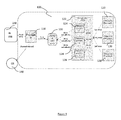
- the software program 100 of figure 1 comprises at least one watched, or observed, process 120 and at least one supervisor process 110, in charge of monitoring the state of at least one of watched processes 120.
- a single supervisor process P 110 monitored all the processes 120 to be watched (like Process 1, Process 2, ...Process n of figure 1 ).
- the software program 100 can comprise several supervisor processes.
- a process can be watched by a unique supervisor process, or by several supervisor processes. Such a later embodiment can be useful for very critical (or sensitive) watched processes and/or for fault-tolerant software environment and can eventually permits a continuous monitoring of a watched process even if one of the supervisor process encountered itself a problem.
- all the processes of the software program can be watched by another process (with some process acting concurrently as a watched process and as a supervisor process watching at least another process), or only a part of the processes of the software program can be watched.
- a process, not being itself watched can be dedicated (as a supervisor process) to the watch of the other processes of the software program.
- only the critical processes, being mandatory for a main, or normal, usage of the electronic device are watched by a supervisor process.
- a supervisor process can be watched by another supervisor process and vice-versa.
- the software program can execute in a single electronic device, or in a distributed system, comprising at least two electronic devices.
- no assumption is made about the location of the at least one supervisor process, the at least one watched process, and the shared memory zone(s).
- each watched process calls a monitoring service of a dynamic library 122 (like the dynamic library "LibL" of figure 1 ), which itself launches a thread 124 in charge of periodically writing in a memory zone 130 shared at least with a supervisor process.
- a dynamic library 122 like the dynamic library "LibL" of figure 1
- all memory zones are contiguous. They are located in a volatile memory zone A.
- the monitoring service can be for instance a first function or a method that can be called once by any process to be monitored according the monitoring method of the present disclosure.
- the monitoring service launches a thread (T1) 124 in each process 120 with a given priority.
- the thread 124 is attributed a very high priority (for instance the highest priority).
- This thread periodically (for instance each second, each five seconds, or each ten seconds) writes in a specific part of the memory zone A 130 shared with the supervisor process 110, at least one item of information that is representative of the watched process 120 being alive and in a normal state.
- the access to the memory zone 130 is restricted by access rights. For instance, each watched process is provided with a writing right and the supervisor process is provided only with a reading right.
- Giving a high priority to the monitored thread can permit to avoid the situation where the detection of a blocked thread or process is uncertain as a process, which is inactive because it has no task to perform, cannot be distinguished from a blocked process.
- the written item of information can comprise:
- a first shared memory zone, related to a first watched process can be disjoint or contiguous with a second shared memory related to a second watched process.
- a specific memory zone A 130 can gather items of information related to each watched processes. For instance, if Process 1, Process 2, ..., Process N are watched (as illustrated by figure 1 ), the specific memory zone A can comprise the following items of information:
- the item of information related to a watched process can comprise an incremented counter, or any other information that permit to verify an access of the watched process to the shared memory zone since a previous reading of the shared memory zone by a supervisor process.
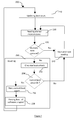
- Figure 2 describes the monitoring method in a particular embodiment of the present disclosure, compatible with the embodiment of figure 1 .
- the method 200 is performed in a supervisor process 110.
- the supervisor process is systematically launched during the boot of the software program 100.
- the method 200 comprises maintaining a boot counter, called herein a boot index (BI) that indicates the number of boots of the software program and is incremented for each time the software program is rebooted.
- BI boot index
- This boot rank index can be stored for instance in a non-volatile memory zone 150 of the electronic device, like in a flash memory file.
- the method 200 can comprise, during the start of the boot process, an updating 210 of the counter.
- the updating 210 can be done before a terminating of the software program.
- the method 200 comprises reading 220 at least one memory zone (like a part of the zone "A" 130 of figure 1 ) shared by the supervisor process and a watched process that is executing concurrently to said supervisor process.
- the items of information related to each process watched by a supervisor process can be similar. Such an embodiment permits to have a unified reading by a supervisor process and thus, leads to a simpler implementation of the supervisor process. In particular, in some embodiments that involve several supervisor processes, all the reading performed by the supervisor processes can be similar. In other embodiments, the item of information written in the shared memory zone by a watched process can differ upon watches processes. Such embodiment can permit to take into account different environments, or constraints, of the watched processes. It can also permit to watch legacy processes used in a software program.
- the reading 220 is performed periodically, for instance each 3 seconds, or each 5 seconds, or each 10 seconds, or each 20 seconds.
- the priority of the supervisor process can be chosen lower than the priority of each thread using the monitoring service.
- the reading period in the shared memory zone is chosen in order to be bigger than the writing period of the watched process.
- the time interval between two reading of a given shared memory zone is superior to the periodicity of invocation of the monitoring service, at least one new writing (by a watched process) should be performed in the given shared memory zone during the time interval between two readings. So, a lack of updating of the shared memory zone during this time interval can be considered as symptomatic of an abnormal behavior of a watched process.
- the abnormal behavior of a watched process can be caused for instance by a thread of the watched process being blocked or by a termination of the watched process.
- the thread in charge of the writing in the watched process is given a very high priority, even the highest priority, compared to the other threads of the watched process, there is a very low probability (even no probability) that another thread jeopardizes the resource allocated to the process, thus preventing the monitored thread to write in the shared memory zone.
- a termination of the watched process has a high probability.
- the method 200 also comprises a verifying 230 if an update of the shared memory zone has occurred since last reading.
- the shared memory zone contains notably the time of the latest writing by a watched process.
- a lack of new writing can be detected by an elapsed time since this latest writing being superior to the time elapsed since the previous reading by the supervisor process.
- the time elapsed since the previous reading can be considered (even with some approximation) as being a time period of the readings.
- the method can comprise comparing the item of information read in the shared memory zone with at least an item of information previously read and stored by the supervisor process (for instance, the latest memorized item or a previously memorized item). It can also comprise a storing of the newly read item of information.
- the method comprises waiting 240 for the time period for another reading to be elapsed (either for the reading of the same shared memory zone, or for the reading of a memory zone shared with another watched process).
- the method comprises a reacting 250 of the supervisor process.
- the reacting 250 can comprise a conditional forced booting 258 of a process.
- a forced booting can be performed according to at least one boot criterion.
- the method can comprise a checking 252 of at least one boot criteria, before performing (or not) a forced reboot 258 according to this boot criteria.
- a first boot criterion can be for instance a comparison of the current number of forced reboots with a given threshold (for instance a maximum number of consecutive forced re-boots). In other embodiments, it can be a comparison of the current number of boots (given by the boot index BI updated 210 by the supervisor process) with a given threshold (for instance a maximum number of boots).
- the method comprises a storing of the time of each forced reboot
- it can be a comparison of the current number of forced re-boots, or consecutive forced re-boots, during a specified duration (for instance an hour, four hours, a day, ...) with a given threshold (for instance a maximum number of forced re-boots to be performed in the specified duration).
- a first given boot criteria is a current number N of consecutive forced reboots, since last normal, un-forced boot of the software program, being less to a given, maximum, number of consecutive forced re-boots.
- a "normal" boot can be for instance a boot performed manually by a user (for instance by a powering off followed by a powering on of the electronic device). If the number of consecutive forced boot is equal or superior to the given maximum number of consecutive forced re-boots, then no forced boot 258 will be performed.
- the supervisor process can terminate itself or can continue to execute (and eventually continue to monitor the concerned watched process).
- the software program terminates normally (for instance because of the electronic device is being powered off by a user), the current number of consecutive forced boots will be reset to zero.
- the method comprises storing 256 the value of the current boot index (called herein "forced boot index” (FBI)) and forcing a boot of the software program.
- FBI forced boot index
- only the latest (current) value of the forced boot index or several values of the forced boot index can be stored.
- the N latest values of the Forced Boot index can be stored.
- all the values of the Forced Boot index, since the boot of the supervisor process can be stored.
- the forcing 258 can comprise for instance a termination of a main process of the software program. A boot of the software program can be performed automatically after a termination thanks to a watch dog for instance.
- the checking 252 of the boot criteria can comprise a computation of at least one forced boot index (stored during previous storing 256) according to the current boot index value.
- the current number of boot (forced or due to the electronic device being powered off), represented by the current value of the boot index, is 127, and the maximum number of consecutive forced boots is 3.
- the method comprises storing 256 the current boot rank index before forcing 258 a boot of a process of the software program.
- verifying 254 that a forced reboot is possible can comprise interaction with a user of the electronic device, in order to inform the user about the planned forced boot, and eventually to get his approval before.
- an alert message can be rendered (like a textual message, visual message or an audio message) on a user interface of the electronic device.
- a Light Emitting Diode LED
- a pop up message been displayed (like "unmanageable error - the set top box will reboot in 5 seconds").
- a validation of the forced reboot can be received from the user.
- conditional forced booting can comprise terminating and booting the watched process or the main processes of the software program or performing a restart of the electronic device.
- An embodiment where a restart of the electronic device is performed can avoid a user to reboot manually its electronic device.
- this deleting can be performed by the supervisor process (for instance before or after the terminating and/or the booting), and/or by the watched process itself, like during its termination and/or its initialization.
- the item of information of the shared memory zone can comprise some data (for instance a name of a watched process) that permits the supervisor process to recognize a watched process that is just launched again.
- the reacting 250 can also comprise a storing of data (like the current time and/or the last item of information read in the shared memory zone) in a log file for instance, for debug and maintenance.
- the data can be stored in a log file, for instance a log file located in a non-volatile RAM (like a flash memory, and/or a hard disk, or a removable storage like a USB key) of the electronic device, so that it can be further accessed, either locally or remotely, and collected.
- a non-volatile RAM like a flash memory, and/or a hard disk, or a removable storage like a USB key
- a status message can be sent to a remote equipment for problem history collection (with or without an authorization of the user).
- a shared memory zone can only be accessed by two particular processes: a particular process to be watched and a particular supervisor process, in charge of its watching.
- a particular process to be watched can be accessed by two particular processes: a particular process to be watched and a particular supervisor process, in charge of its watching.
- Such a solution can rely on a check of process identifiers.
- both processes can be configured as belonging to a particular group of process.
- the item of information contained in the shared memory zone can be encrypted.
- the boot index and the forced boot index can be stored in memory zone that can only be accessed, either in reading and/or writing, to a particular supervisor process, or can be encrypted.
- a supervisor process can be part of the software program and can force a boot of a main process of the software program or a restart of the electronic device where the software program is located (and thus its own boot).
- a supervisor process can force a boot of at least one watched process, or be launched independently to the software program to be monitored.
- the counting of boots or of forced boots can be performed lightly differently, as it will be evident for a person skilled in the art after the reading of the present disclosure.
- the supervisor process counts its own boots and stores boot indexes related to its forced boot.
- the supervisor process can count the boots of a watched process (by updating, for instance, a boot count relating to the watched process when the shared memory zone between the watched process and the supervisor process is updated for the first time) and store the index relating to forced boots of the watched process.
- the supervisor process can count the boots of the main program (being considered as a particular watched process for instance) and store the index relating to forced boots of the main process.
- the supervisor process can force a boot of several processes (for instance a boot of at least one watched process and/or a boot of the software program) or a restart of the electronic device.
- the process that will be forced to boot can depend from several boot criteria. For instance, a supervisor process can first force a boot of a watched process and then, after a first given number of consecutive boots of the watched process during a specific duration, force the boot of the software program (or a restart of the electronic device where the software program is located) after a second given number of consecutive boots of the software program (or restart).
- the monitoring service offered by the dynamic library 120 can have, as a parameter, a callback method returning a status of the process invoking the callback method.
- the callback method is called periodically by a monitored thread T1, before performing the writing in a shared memory zone, and returns a status representative of the current state of the corresponding watched process.
- This status can notably belong to a given set of values.
- At least some of the values that can be taken by the status can indicate an abnormal state of the process. It can be for instance a Boolean.
- a returned value "false" indicates an abnormal state of the watched process.
- the status can take more than two values. Different abnormal states can for instance be defined, in order to react differently depending on the abnormal state. For instance, a "critical" state can justify a forced reboot, but some others states do not necessitate such a reboot.
- a status can belong to a set of enumerative values, or correspond to a mask giving more precise information about status of a process (with different values for "KO”, “lack of memory”, “lack of CPU”, “one thread in deadlock”,....).
- a monitored thread (by means of the software of the monitoring method dynamic library) can use the status returned by the callback method in order to decide to write or not in the shared memory zone. Indeed, in such a case, omitting to update the shared memory zone can be a way of generating a reacting of a supervisor process.
- the monitoring thread (by means of the software of the monitoring method dynamic library) can enrich the item of information to be written in the shared memory zone with the status returned by the watched process so that a supervisor process can process it.
- the dynamic library can propose a second monitoring service, in charge of launching a second thread with the same priority as the calling watched process, that periodically (for instance each second, each 5 seconds, each 10 seconds,...) write in a second shared memory zone a second item of information.
- This second item of information can be the same item of information as in the first shared memory zone or a different one).
- the monitoring method can comprise, as for the first memory zone, a reading of the second memory zone, a checking of an update of the second memory zone and a reacting. For instance, when the second thread has the same priority than the calling thread of the watched process, a lack of update of the second memory zone can permit detecting of a situation where the watched process is not being provided enough processing resource.
- the reacting can comprise generating an alert (for instance sending a SMS, or an email to a determined recipient, or rendering an audio alert, or printing a textual message).
- Figure 3 describes the structure of an electronic device 30 adapted notably to the execution of a supervisor process performing the monitoring method of the present disclosure.
- the electronic device is also adapted to the execution of at least one watched process of software program.
- the electronic device 30 can include different devices, linked together via a data and address bus 300, which can also carry a timer signal.
- a micro-processor 31 or CPU
- a graphics card 32 depending on embodiments, such a card may be optional
- at least one Input/ Output module 34 (like a keyboard, a mouse, an LED, and so on), a ROM (or « Read Only Memory ») 35, a RAM (or « Random Access Memory ») 36.
- the electronic device can also comprise communication interfaces 37, 38 configured for the reception and/or transmission of data, via a wireless connection (notably of type WIFI® or Bluetooth), wired communication interfaces 38 (optional), a power supply 39.
- a wireless connection notably of type WIFI® or Bluetooth
- the electronic device 30 can also include, or be connected to, a display module 33, for instance a screen, directly connected to the graphics card 32 by a dedicated bus 330.
- a display module 33 for instance a screen
- the electronic device 30 can communicate with another device thanks to a wireless interface.
- Each of the mentioned memories can include at least one register, that is to say a memory zone of low capacity (a few binary data) or high capacity (with a capability of storage of a whole program or of all or part of data representative of data to be calculated or displayed).
- the microprocessor 31 loads the program instructions 360 in a register of the RAM 36, notably the program instruction needed for performing at least one embodiment of the monitoring method described herein, and executes the program instructions.
- the electronic device 30 includes several microprocessors.
- the power supply 39 is external to the electronic device 30.
- the microprocessor 31 can be configured for monitoring the execution of a software program comprising at least one watched process, said monitoring comprising periodic reading, by at least one supervisor process located in said electronic device, of at least one memory zone shared by said watched process and a supervisor process.
- the processor is configured for:
- the electronic device 30 can notably belong to a communication system further comprising another electronic device (where some part of the software program, like a watched process, and/or some other supervisor process can be located for instance).
- aspects of the present principles can be embodied as a system, method, or computer readable medium. Accordingly, aspects of the present disclosure can take the form of an hardware embodiment, a software embodiment (including firmware, resident software, micro-code, and so forth), or an embodiment combining software and hardware aspects that can all generally be referred to herein as a "circuit", "module” or “system”. Furthermore, aspects of the present principles can take the form of a computer readable storage medium. Any combination of one or more computer readable storage medium(s) may be utilized.
- a computer readable storage medium can take the form of a computer readable program product embodied in one or more computer readable medium(s) and having computer readable program code embodied thereon that is executable by a computer.
- a computer readable storage medium as used herein is considered a non-transitory storage medium given the inherent capability to store the information therein as well as the inherent capability to provide retrieval of the information therefrom.
- a computer readable storage medium can be, for example, but is not limited to, an electronic, magnetic, optical, electromagnetic, infrared, or semiconductor system, apparatus, or device, or any suitable combination of the foregoing.
Landscapes
- Engineering & Computer Science (AREA)
- Theoretical Computer Science (AREA)
- Physics & Mathematics (AREA)
- General Engineering & Computer Science (AREA)
- General Physics & Mathematics (AREA)
- Quality & Reliability (AREA)
- Software Systems (AREA)
- Computing Systems (AREA)
- Mathematical Physics (AREA)
- Debugging And Monitoring (AREA)
- Stored Programmes (AREA)
Priority Applications (2)
| Application Number | Priority Date | Filing Date | Title |
|---|---|---|---|
| EP15306207.0A EP3121724A1 (fr) | 2015-07-24 | 2015-07-24 | Procédé de surveillance d'un programme logiciel et dispositif électronique correspondant, système de communication, produit-programme lisible par ordinateur et support d'informations lisible par ordinateur |
| US15/215,553 US20170024244A1 (en) | 2015-07-24 | 2016-07-20 | Method for monitoring a software program and corresponding electronic device, communication system, computer readable program product and computer readable storage medium |
Applications Claiming Priority (1)
| Application Number | Priority Date | Filing Date | Title |
|---|---|---|---|
| EP15306207.0A EP3121724A1 (fr) | 2015-07-24 | 2015-07-24 | Procédé de surveillance d'un programme logiciel et dispositif électronique correspondant, système de communication, produit-programme lisible par ordinateur et support d'informations lisible par ordinateur |
Publications (1)
| Publication Number | Publication Date |
|---|---|
| EP3121724A1 true EP3121724A1 (fr) | 2017-01-25 |
Family
ID=53794171
Family Applications (1)
| Application Number | Title | Priority Date | Filing Date |
|---|---|---|---|
| EP15306207.0A Ceased EP3121724A1 (fr) | 2015-07-24 | 2015-07-24 | Procédé de surveillance d'un programme logiciel et dispositif électronique correspondant, système de communication, produit-programme lisible par ordinateur et support d'informations lisible par ordinateur |
Country Status (2)
| Country | Link |
|---|---|
| US (1) | US20170024244A1 (fr) |
| EP (1) | EP3121724A1 (fr) |
Cited By (5)
| Publication number | Priority date | Publication date | Assignee | Title |
|---|---|---|---|---|
| CN113326139A (zh) * | 2021-06-28 | 2021-08-31 | 上海商汤科技开发有限公司 | 一种任务处理方法、装置、设备及存储介质 |
| CN114217925A (zh) * | 2021-12-07 | 2022-03-22 | 中信银行股份有限公司 | 一种实现异常自动重启的业务程序运行监控方法及系统 |
| CN114297001A (zh) * | 2021-12-27 | 2022-04-08 | 武汉思普崚技术有限公司 | 一种用于网络安全设备进程重启的方法与系统 |
| CN116225817A (zh) * | 2021-12-03 | 2023-06-06 | 网联清算有限公司 | 一种数据库仲裁进程的监控方法及装置 |
| EP4593326A4 (fr) * | 2022-10-28 | 2025-12-31 | Shenzhen Yinwang Intelligent Technology Co Ltd | Procédé et appareil de communication, et dispositif de conduite intelligent |
Families Citing this family (2)
| Publication number | Priority date | Publication date | Assignee | Title |
|---|---|---|---|---|
| FR3119689B1 (fr) * | 2021-02-11 | 2023-12-08 | Orange | Procédé de gestion du fonctionnement d’un terminal de lecture de contenus multimédias. |
| CN115756797B (zh) * | 2022-11-25 | 2023-06-20 | 广州力麒智能科技有限公司 | 一种排队系统调度检测方法及装置 |
Citations (4)
| Publication number | Priority date | Publication date | Assignee | Title |
|---|---|---|---|---|
| US20020147873A1 (en) * | 2001-04-06 | 2002-10-10 | Kwon Jin Wook | Real time based system and method for monitoring the same |
| US20040015979A1 (en) * | 2002-07-22 | 2004-01-22 | Te-Cheng Shen | System and method for efficiently exchanging data among processes |
| US20050172173A1 (en) * | 2004-01-16 | 2005-08-04 | Page John M. | Apparatus and method for monitoring system status in an embedded system |
| US20110320858A1 (en) * | 2010-06-29 | 2011-12-29 | Alcatel-Lucent Canada, Inc. | Monitoring software thread execution |
Family Cites Families (9)
| Publication number | Priority date | Publication date | Assignee | Title |
|---|---|---|---|---|
| US5872967A (en) * | 1989-12-29 | 1999-02-16 | Packard Bell Nec | Method for warm boot from reset |
| US5345583A (en) * | 1992-05-13 | 1994-09-06 | Scientific-Atlanta, Inc. | Method and apparatus for momentarily interrupting power to a microprocessor to clear a fault state |
| JP4232092B2 (ja) * | 2003-06-06 | 2009-03-04 | 日本電気株式会社 | 携帯端末システム及び携帯端末 |
| US7237712B2 (en) * | 2004-12-01 | 2007-07-03 | Alfred E. Mann Foundation For Scientific Research | Implantable device and communication integrated circuit implementable therein |
| FR2882449A1 (fr) * | 2005-01-21 | 2006-08-25 | Meiosys Soc Par Actions Simpli | Procede non intrusif de rejeu d'evenements internes au sein d'un processus applicatif, et systeme mettant en oeuvre ce procede |
| FR2881246B1 (fr) * | 2005-01-21 | 2007-03-23 | Meiosys Soc Par Actions Simpli | Procede perdictif de gestion, de journalisation ou de rejeu d'operations non deterministes au sein du deroulement d'un processus applicatif |
| TW200915062A (en) * | 2007-09-20 | 2009-04-01 | Promos Technologies Inc | Method for managing application programs by utilizing redundancy and load balance |
| US8719631B2 (en) * | 2011-07-11 | 2014-05-06 | Red Hat Israel, Ltd. | Virtual machine (VM)-based disk rescue |
| US9454437B2 (en) * | 2013-09-24 | 2016-09-27 | Texas Instruments Incorporated | Non-volatile logic based processing device |
-
2015
- 2015-07-24 EP EP15306207.0A patent/EP3121724A1/fr not_active Ceased
-
2016
- 2016-07-20 US US15/215,553 patent/US20170024244A1/en not_active Abandoned
Patent Citations (4)
| Publication number | Priority date | Publication date | Assignee | Title |
|---|---|---|---|---|
| US20020147873A1 (en) * | 2001-04-06 | 2002-10-10 | Kwon Jin Wook | Real time based system and method for monitoring the same |
| US20040015979A1 (en) * | 2002-07-22 | 2004-01-22 | Te-Cheng Shen | System and method for efficiently exchanging data among processes |
| US20050172173A1 (en) * | 2004-01-16 | 2005-08-04 | Page John M. | Apparatus and method for monitoring system status in an embedded system |
| US20110320858A1 (en) * | 2010-06-29 | 2011-12-29 | Alcatel-Lucent Canada, Inc. | Monitoring software thread execution |
Cited By (5)
| Publication number | Priority date | Publication date | Assignee | Title |
|---|---|---|---|---|
| CN113326139A (zh) * | 2021-06-28 | 2021-08-31 | 上海商汤科技开发有限公司 | 一种任务处理方法、装置、设备及存储介质 |
| CN116225817A (zh) * | 2021-12-03 | 2023-06-06 | 网联清算有限公司 | 一种数据库仲裁进程的监控方法及装置 |
| CN114217925A (zh) * | 2021-12-07 | 2022-03-22 | 中信银行股份有限公司 | 一种实现异常自动重启的业务程序运行监控方法及系统 |
| CN114297001A (zh) * | 2021-12-27 | 2022-04-08 | 武汉思普崚技术有限公司 | 一种用于网络安全设备进程重启的方法与系统 |
| EP4593326A4 (fr) * | 2022-10-28 | 2025-12-31 | Shenzhen Yinwang Intelligent Technology Co Ltd | Procédé et appareil de communication, et dispositif de conduite intelligent |
Also Published As
| Publication number | Publication date |
|---|---|
| US20170024244A1 (en) | 2017-01-26 |
Similar Documents
| Publication | Publication Date | Title |
|---|---|---|
| US20170024244A1 (en) | Method for monitoring a software program and corresponding electronic device, communication system, computer readable program product and computer readable storage medium | |
| CN111324423B (zh) | 容器内进程的监控方法、装置、存储介质和计算机设备 | |
| US10068015B2 (en) | Monitoring a monitoring-target process | |
| US8768896B2 (en) | Setting information database management | |
| CN109634802B (zh) | 进程监控方法及终端设备 | |
| US20240338459A1 (en) | Automatic analysis of the exploitability of vulnerabilities of a software image | |
| CN113190427B (zh) | 卡顿监控方法、装置、电子设备及存储介质 | |
| US20160357623A1 (en) | Abnormality detection method and information processing apparatus | |
| CN110716943A (zh) | 缺失数据补录方法、装置、计算机设备及存储介质 | |
| US10318731B2 (en) | Detection system and detection method | |
| CN103257922A (zh) | 一种快速测试bios与os接口代码可靠性的方法 | |
| US9009537B2 (en) | Diagnostic data capture in a computing environment | |
| CN115185755A (zh) | 一种异常检测方法、装置、存储介质及电子设备 | |
| CN117337413A (zh) | 可编程逻辑控制器、终端装置、程序管理系统、程序管理方法及程序 | |
| CN111176959B (zh) | 跨域的应用服务器的预警方法、系统及存储介质 | |
| CN113835859A (zh) | 一种任务调度方法、装置、设备及可读存储介质 | |
| CN101458624A (zh) | 可编程逻辑器件的加载方法、处理器和装置 | |
| CN113760491A (zh) | 一种任务调度系统、方法、设备及存储介质 | |
| CN105700656B (zh) | 待机异常耗电侦测系统及方法 | |
| CN119336497A (zh) | 用于任务栈内存管理的方法、装置、设备和存储介质 | |
| CN107273291B (zh) | 一种处理器调试方法及系统 | |
| US10802901B2 (en) | Obtaining state information of threads of a device | |
| CN112835693A (zh) | 任务的定时方法、装置及电子设备 | |
| EP3070610B1 (fr) | Dispositif de traitement d'informations, procédé de commande associé, et support d'enregistrement | |
| US20070220524A1 (en) | Apparatus and method to manage system by processes using process data record |
Legal Events
| Date | Code | Title | Description |
|---|---|---|---|
| PUAI | Public reference made under article 153(3) epc to a published international application that has entered the european phase |
Free format text: ORIGINAL CODE: 0009012 |
|
| AK | Designated contracting states |
Kind code of ref document: A1 Designated state(s): AL AT BE BG CH CY CZ DE DK EE ES FI FR GB GR HR HU IE IS IT LI LT LU LV MC MK MT NL NO PL PT RO RS SE SI SK SM TR |
|
| AX | Request for extension of the european patent |
Extension state: BA ME |
|
| 17P | Request for examination filed |
Effective date: 20170713 |
|
| RBV | Designated contracting states (corrected) |
Designated state(s): AL AT BE BG CH CY CZ DE DK EE ES FI FR GB GR HR HU IE IS IT LI LT LU LV MC MK MT NL NO PL PT RO RS SE SI SK SM TR |
|
| 17Q | First examination report despatched |
Effective date: 20170825 |
|
| STAA | Information on the status of an ep patent application or granted ep patent |
Free format text: STATUS: THE APPLICATION HAS BEEN REFUSED |
|
| 18R | Application refused |
Effective date: 20190331 |