EP3121735A1 - Datengewinnungsverfahren und -vorrichtung - Google Patents
Datengewinnungsverfahren und -vorrichtung Download PDFInfo
- Publication number
- EP3121735A1 EP3121735A1 EP14893347.6A EP14893347A EP3121735A1 EP 3121735 A1 EP3121735 A1 EP 3121735A1 EP 14893347 A EP14893347 A EP 14893347A EP 3121735 A1 EP3121735 A1 EP 3121735A1
- Authority
- EP
- European Patent Office
- Prior art keywords
- data
- execution step
- physical resource
- input data
- node
- Prior art date
- Legal status (The legal status is an assumption and is not a legal conclusion. Google has not performed a legal analysis and makes no representation as to the accuracy of the status listed.)
- Ceased
Links
Images



Classifications
-
- G—PHYSICS
- G06—COMPUTING OR CALCULATING; COUNTING
- G06F—ELECTRIC DIGITAL DATA PROCESSING
- G06F16/00—Information retrieval; Database structures therefor; File system structures therefor
- G06F16/20—Information retrieval; Database structures therefor; File system structures therefor of structured data, e.g. relational data
- G06F16/24—Querying
- G06F16/245—Query processing
- G06F16/2458—Special types of queries, e.g. statistical queries, fuzzy queries or distributed queries
- G06F16/2471—Distributed queries
-
- G—PHYSICS
- G06—COMPUTING OR CALCULATING; COUNTING
- G06F—ELECTRIC DIGITAL DATA PROCESSING
- G06F16/00—Information retrieval; Database structures therefor; File system structures therefor
- G06F16/20—Information retrieval; Database structures therefor; File system structures therefor of structured data, e.g. relational data
- G06F16/28—Databases characterised by their database models, e.g. relational or object models
- G06F16/284—Relational databases
- G06F16/285—Clustering or classification
-
- G—PHYSICS
- G06—COMPUTING OR CALCULATING; COUNTING
- G06F—ELECTRIC DIGITAL DATA PROCESSING
- G06F16/00—Information retrieval; Database structures therefor; File system structures therefor
-
- G—PHYSICS
- G06—COMPUTING OR CALCULATING; COUNTING
- G06F—ELECTRIC DIGITAL DATA PROCESSING
- G06F16/00—Information retrieval; Database structures therefor; File system structures therefor
- G06F16/20—Information retrieval; Database structures therefor; File system structures therefor of structured data, e.g. relational data
- G06F16/24—Querying
- G06F16/245—Query processing
- G06F16/2458—Special types of queries, e.g. statistical queries, fuzzy queries or distributed queries
- G06F16/2465—Query processing support for facilitating data mining operations in structured databases
-
- G—PHYSICS
- G06—COMPUTING OR CALCULATING; COUNTING
- G06N—COMPUTING ARRANGEMENTS BASED ON SPECIFIC COMPUTATIONAL MODELS
- G06N20/00—Machine learning
Definitions
- Embodiments of the present invention relate to data processing technologies, and in particular, to a data mining method and apparatus.
- Data mining refers to a nontrivial process of revealing information that is implicit, previously unknown, and potentially valuable from a large amount of data in a database.
- DM is mainly based on artificial intelligence, machine learning, pattern recognition, statistics, a database, visualization technologies, and the like, analyzes enterprise data in a highly automated manner, makes an inductive inference, and mines for a potential pattern of the enterprise data, to help a decider to adjust a marketing strategy, reduce risks, and make a correct decision.
- Embodiments of the present invention provide a data mining method and apparatus, to overcome a failure in execution of a data mining process because of a physical resource shortage in the data mining process.
- an embodiment of the present invention provides a data mining method, where the method is applied to a distributed system, the distributed system includes at least one node, and the method includes:
- an embodiment of the present invention provides a data mining apparatus, where the apparatus includes: a transceiver, a processor, and a memory, where the transceiver is configured to receive an original data set, and send to-be-processed input data obtained through extraction to each node for processing; the memory is configured to store the original data set; and the processor is configured to determine multiple execution steps of a data mining process; acquire a correspondence between a physical resource required by each execution step in a running process and a physical resource occupied by input data of the data mining process; determine a node for executing each execution step, where the node is a node that provides a physical resource for each execution step; determine, according to the correspondence and a physical resource possessed by a node for executing a corresponding execution step, a maximum amount of data of the input data that can be processed by the node for executing each step; determine, according to the maximum amount of data of the input data that can be processed by the node for executing each step, a maximum amount of data
- a relationship between a property of a data mining process and a physical resource possessed by a network node in a data mining process and a distributed network system is comprehensively evaluated, so as to obtain a maximum amount of data that can be supported in the distributed network system to run the data mining process; and input data is accurately and effectively limited, so that normal running of the system can be ensured.
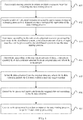
- FIG. 1 is a flowchart of Embodiment 1 of a data mining method according to the present invention.
- This embodiment may be executed by a general data mining apparatus, and the data mining apparatus may be implemented by general software and/or hardware.
- the data mining method in this embodiment is applied to a distributed architecture, where the distributed architecture includes at least one node, and the node may be a common PC, a virtual machine in a server in a cloud architecture, or another computing resource that can be used in the distributed architecture.
- the method in this embodiment may include:
- a manner for determining the multiple execution steps of the data mining process may be: parsing the data mining process by a data mining apparatus , or acquiring, by a data mining apparatus, from a storage apparatus that stores the execution steps of the data mining process.
- the acquisition manner that parsing the data mining process may be: dividing the data mining process according to different algorithm principles used in different phases of the data mining process; or using a phased processing result obtained in the data mining process as a division basis; or dividing the data mining process according to a logical step of the data mining process, where the logical step is generally set during study and design of the data mining process, and is generally strongly associated with a processing phase.
- the foregoing parsing methods are simple examples of manners that can be covered by the present invention, and do not particularly limit a range that can be covered by the present invention.
- Step 102 Acquire a correspondence between a physical resource required by each execution step in a running process and a physical resource occupied by input data of the data mining process.
- the correspondence is preferably a ratio parameter of the physical resource required by each execution step in the running process to the physical resource occupied by the input data of the data mining process.
- Step 103 Determine a node for executing each execution step, where the node provides a physical resource for each execution step.
- a relationship between nodes that provide a physical resource for each execution step includes: a same node provides a physical resource for multiple execution steps; multiple nodes jointly provide a physical resource for one execution step; multiple nodes provide a physical resource for multiple execution steps, and the like.
- the data mining apparatus acquires in advance a situation of all nodes or available nodes in a distributed system, for example, which nodes are idle, which nodes may be used in combination, and even a historical running record of an execution step on a node.
- a running situation of each node is managed by a management apparatus in the distributed system, and the data mining apparatus may directly acquire a distribution situation and a capability attribute of each node from the management apparatus.
- Step 104 Determine, according to the correspondence and a physical resource possessed by a node for executing a corresponding execution step, a maximum amount of data of the input data that can be processed by the node for executing each step.
- step 102 The correspondence between a physical resource required by each execution step in a running process and a physical resource occupied by input data of the data mining process is already obtained in step 102. Therefore, after the node that provides a physical resource for each execution step is further determined in step 103, in each execution step, calculation is performed according to a physical resource possessed by a corresponding node, to obtain a maximum amount of data that is allowed to be input in a corresponding single execution step in the data mining process.
- Step 105 Determine, according to the maximum amount of data of the input data that can be processed by the node for executing each step, a maximum amount of data of input data that can be processed by the distributed system.
- step 104 multiple maximum amounts of data that are separately allowed to be input in the execution steps in the data mining process are obtained, and the maximum amount of data that the distributed system allows to input is a minimum value of the multiple maximum amounts of input data.
- a principle thereof is similar to the short plank law, and the distributed system can normally run only when an amount of input data is less than the minimum value of the maximum amounts of data that can be processed in the execution steps.
- Step 106 Process to-be-mined data in accordance with the data mining process according to the maximum amount of data of the input data that can be processed by the distributed system.
- a relationship between a property of a data mining process (including execution steps included in the data mining process and a relationship between each execution step and a node for running the execution step) and a physical resource possessed by a network node in a distributed network system is comprehensively evaluated, so as to obtain a maximum amount of data that can be supported in the distributed network system to run the data mining process; and input data is accurately and effectively limited, so that normal running of the system can be ensured.
- the given data mining process may be any known data mining process, and what needs to be done in the present invention is how to analyze the data mining process, and use a physical resource possessed by each node in the distributed system, so as to correspondingly limit and optimize input data.
- the data mining process is not specifically limited herein in this embodiment.
- step 101 a related method for determining multiple execution steps of a data mining process is disclosed.
- a process for determining a data mining process is described in detail below with reference to a specific data mining process.
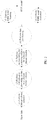
- FIG. 2 is a schematic diagram of a data mining process illustrated in the present invention.
- the data mining process in this embodiment is merely exemplary, and for another data mining process, execution steps may also be acquired by applying the method in the present invention based on content disclosed in this embodiment.
- the data mining process includes the following execution steps:
- Feature selection herein is an operation step in the illustrated data mining process, and an objective of feature column selection is to achieve higher execution efficiency.
- Feature column extraction involved in a specific method in the present invention is considered from a limitation to a maximum amount of data that is allowed to be input by a distributed system, and objectives and meanings of the feature selection herein and the feature column extraction involved in the specific method are different.
- an execution step of feature column selection during data mining may be combined with feature column selection in the data mining method provided by the present invention. For example, step (1) is combined into step 404 as one step for processing.
- Table 1 is used as an instance of the input data of the data mining process.
- Table 1 User ID Age On-net duration Quantity of times of Internet accesses SMS message transmission amount Call duration ... Already off-net 1 35 10 25 10 300 ... 0 2 26 1 40 25 80 ... 1 3 41 15 3 2 180 ... 0 ...
- the target column is preferably a data column of "already off-net".
- Step (2) Perform normalization processing on data in a selected feature column.
- the step means normalizing a feature value in the feature column to between 0 and 1. For example, an original value range of ages is 0 to 100, and a value of each age is divided by 100 to obtain a normalization result of data in the feature column.
- Step (3) Perform median filling for a missing value in the selected feature column.
- the step means that, if a value of a sample in a feature column of the input data is empty, to avoid affecting a subsequent process, the empty position is filled with a median. For example, an age of a user sample is empty, and a median 50 of 0 and 100 is filled.
- Step (4) Perform data partitioning.
- the step means that half data that is processed in steps (1), (2), and (3) is used as input data of step (5), and the other half of the data is used as input data of step (6).
- Step (5) Perform K-nearest neighbor (k-Nearest Neighbor, KNN for short) model learning.
- Half data rows partitioned in step (4) are used as input to perform KNN model learning.
- a KNN model is output after step (5) is executed, where the KNN model is main output of the entire data mining process.
- Step (6) Perform KNN model evaluation.
- the KNN model that is output in step (5) is used as input, and KNN model evaluation is performed on the data obtained through partitioning in step (4).
- step (6) parameters such as an accuracy rate and a recall rate of the KNN model are obtained.
- the data mining process shown in FIG. 2 is parsed, and multiple execution steps for executing the data mining process are obtained, which are specifically shown in Table 2.
- Table 2 First set of execution steps Input of an execution step Output of the execution step (1) Feature column selection Input data Result of feature column selection (2) Normalization Result of feature column selection Result of normalization (3) Missing value filling Result of normalization Result of missing value filling (4) Data partitioning Result of missing value filling Result (two parts of data, which are respectively recorded as D1 and D2) of data partitioning (5) KNN model learning Result D1 of data partitioning KNN model (6) KNN model evaluation Result D2 of data partitioning; KNN model Result of model evaluation
- parsing the data mining process is a specific manner of determining multiple execution steps for executing the data mining process.
- the six execution steps are obtained in a relatively simple parsing manner, and the six execution steps obtained by means of parsing are referred to as a first set of execution steps in a subsequent embodiment.
- the first set of execution steps of the data mining process may be acquired by selecting another manner in practice. For example, a correspondence between the data mining process and a corresponding first set of execution steps is directly recorded in the distributed system.
- the foregoing first set of execution steps can be directly used to execute subsequent steps 102 to 106; in addition, a method for performing optimization processing on the first set of execution steps is provided.
- Process data generated in the multiple execution steps is analyzed, which specifically includes: when it is determined that there is one execution step in which the process data is used as input data, and the input data of the determined execution step does not include other process data except the process data, an execution step in which the process data is generated is combined with the execution step in which the process data is used as input into an optimized execution step.
- the process data is specifically represented as input data or output data of a specific step in Table 2.
- the determining condition for determining combination of two execution steps is also applicable to combination of more than two execution steps in a series relationship.
- process data between at least two combined execution steps is referred to as temporary data.
- process data between step (1) and step (2) may be referred to as temporary data
- process data between step (2) and step (3) may also be referred to as temporary data.
- a set of execution steps formed by the original execution steps in the first set of execution steps and the optimized execution step is also referred to as a second set of execution steps, which is shown in Table 3 below.
- Table 3 Second set of execution steps Execution step Input of the execution step Output of the execution step 1 (1) Feature column selection Input data Result (recorded as T1) obtained after feature column selection, normalization, and missing value filling are successively performed on the input data (2) Normalization (3) Missing value filling 2 (4) Data partitioning Result T1 of missing value filling Result (two parts of data, which are respectively recorded as T2 and T3) of data partitioning 3 (5) KNN model learning Result T2 of data partitioning KNN model (recorded as T4) 4 (6) KNN model evaluation Result T3 of data partitioning; KNN model T4 Result (recorded as T5) of model evaluation
- the inventor analyzes an association between process data and execution steps in the data mining process, and combines an execution step in which the temporary data is generated with an execution step in which the temporary data is used as input, so as to prevent space occupied by the temporary data from being calculated into space occupied by the execution step, thereby improving node utilization.
- execution step optimization is performed, a physical resource of a node can be more effectively used, and larger input data can be processed.
- Each of execution steps (1), (2), and (3) in Table 2 is an operation on a sample on a single row, and rows are independent of each other. Therefore, operations of (1), (2), and (3) may be successively performed on data on each row, and only one piece of process data is output instead of outputting one piece of temporary data in each execution step.
- the output data of execution step (4) is not completely used as input of execution step (5) or execution step (6), that is, process data generated in execution step (4) cannot be directly deleted after being used as the input data of step (5) or step (6), and can be deleted after the process data is used in both step (5) and step (6). Therefore, execution step (4) cannot be combined with execution step (5) or execution step (6) into one execution step.
- a constitution of an amount of data of an original data set is jointly determined by a quantity of samples included and a quantity of feature columns included by a sample. Therefore, when combination of the foregoing execution steps is determined based on a property of process data between the execution steps (that is, it is determined that there is one execution step in which the process data is used as input data, and the input data of the determined execution step does not include other process data except the process data), the input data is preferably limited within a range of a determined maximum amount of data in a manner of feature column extraction; and when combination of the foregoing execution steps is determined based on that a unit processed in an execution step is a single sample, the input data is preferably limited within a range of a determined maximum amount of data in a manner of controlling a total quantity of samples.
- step implementation principles for subsequent steps 102 to 104 are the same.
- a description is provided in detail by using the second set of optimized execution steps shown in Table 3 as an example.
- the node in a distributed architecture in this embodiment may be specifically a computer, a server, a virtual machine, or the like.
- the physical resource in this embodiment may be specifically a processor core, a hard disk, a memory, or the like, which may be specifically shown in Table 4.
- Table 4 shows that a distributed system includes two nodes. In a specific implementation process, a quantity of nodes in the distributed system in this embodiment may be specified according to a specific environment, and is not specifically limited herein.
- step 102 the correspondence between a physical resource required by each execution step in a running process and a physical resource occupied by input data of the data mining process is acquired. Specifically, for any execution step of the multiple execution steps for executing the data mining process, for each execution step of the multiple execution steps, a ratio of all physical resources occupied by input data and output data of the execution step to the physical resource occupied by the input data of the data mining process when the execution step is running is determined. The ratio is a specific manifestation of the correspondence.
- the memory is more likely to become a bottleneck for feature column quantity selection. Therefore, all the following analyses are performed by using the memory as an example. According to experience, estimation of a CPU, a hard disk, and another cluster resource and impact on feature column quantity selection may be further considered based on a memory instance, or may be separately considered in a manner similar to memory analysis, and details are not described herein.
- the foregoing ratio parameter may be preset according to an empirical value, or may be instantly obtained through calculation by using an execution step.
- Table 5 lists an instance of a proportional relationship between a memory Ti occupied by input data and a memory To occupied by output data in the data mining process in each execution step, and specific meanings of T1 to T4 are shown in Table 3.
- Output data represented by T4 is a result of model evaluation, and generally includes several indicators such as an accuracy rate and a recall rate. Therefore, an occupied memory may be ignored, and the result of model evaluation is not mentioned below again. It should be noted that, Table 5 provides a proportional relationship between occupied resources Ti and To of the second set of optimized execution steps that is corresponding to Table 3.
- the physical resource required by each execution step in the running process includes a physical resource occupied by input data of the execution step and a physical resource occupied by output data of the execution step, where (input data of an execution step + output data of the execution step)/M is the ratio of the physical resource required by each execution step in the running process to the physical resource occupied by the input data of the data mining process.
- the acquiring a correspondence between a physical resource required by each execution step in a running process and a physical resource occupied by input data of the data mining process specifically includes:
- step 103 the node for executing each execution step is determined, where the node provides a physical resource for each execution step.
- This embodiment of the present invention is applied to a distributed architecture, and physical resources required by the second set of execution step 1 to execution step 4 in Table 3 may be stored and processed on nodes in the distributed architecture in a distributed manner. Therefore, the physical resource possessed by the node and provided for the execution step determines a maximum amount of data that can be processed in each execution step.
- step 104 the maximum amount of data of the input data that can be processed by the node for executing each step is determined according to the correspondence and a physical resource possessed by a node for executing a corresponding execution step.
- the distributed architecture includes two nodes, and sizes of physical resources possessed by the two nodes are respectively recorded as M1 and M2.
- step 105 the maximum amount of data of the input data that can be processed by the distributed system is determined according to the maximum amount of data of the input data that can be processed by the node for executing each step.
- M ⁇ A may be solved according to limitation conditions that satisfy all of the corresponding inequalities of the foregoing execution steps. Therefore, A is the maximum amount of data of the input data that can be processed in the data mining process.
- the to-be-mined data is processed in accordance with the data mining process according to the maximum amount of data. Specifically including that, to-be-processed input data extracted from the original data set is less than or equal to the maximum amount of data.
- sizes of several pieces of to-be-processed input data of a saturation level, a common level, and an optimum level may be correspondingly set respectively based on different levels such as 80%, 60%, and 50% of the maximum amount of data, so that a user can determine appropriate to-be-processed input data according to the levels.
- the to-be-processed input data is used as input of the data mining process, the data mining process is executed to obtain a data mining model, and an effect of the data mining model is verified, evaluated, and the like.
- a maximum amount of data of input data that can be processed is determined according to a ratio of a physical resource required by each execution step in a running process in a data mining process to a physical resource occupied by input data of the data mining process, and a physical resource possessed by each node, providing a physical resource for the data mining process, in a distributed system; and to-be-processed input data is extracted from an original data set according to the maximum amount of data.
- the maximum amount of data that can be processed in the data mining process can be determined under the constraint of limited physical resources, thereby ensuring that a data mining task is effectively implemented.
- FIG. 3 is a flowchart of Embodiment 2 of a data mining method according to the present invention. This embodiment is based on Embodiment 1 of FIG. 1 , and steps 103 and 104 are described in detail.
- the data mining process shown in FIG. 2 and the second set of execution steps that is shown in Table 3 and that is obtained after step optimization processing is implemented are still used as an example, and physical resources required by the execution steps in a running process are provided by multiple nodes in a distributed architecture in a shared manner.
- Step 301 Determine a node that provides a physical resource for each execution step.
- Step 302 Successively traverse all execution steps to obtain a maximum value of input data that can be processed by the node for executing each execution step.
- One or more nodes that provide a physical resource for a traversed execution step are determined, and a maximum value of data that can be input on the one or more nodes in the execution step is obtained through calculation according to a ratio parameter of a physical resource possessed by the one or more nodes to the execution step.
- Step 303 After all the execution steps are traversed, calculate multiple maximum values, obtained in the execution steps in a traversing process, of input data, and use a minimum value of the multiple maximum values of the input data as a maximum amount of data of input data that can be processed by the distributed system.
- execution step 1 M+0.9M ⁇ M1+M2; for execution step 2, 0.9M+0.45M+0.45M ⁇ M1+M2; and for execution step 3, 0.45M+0.45M ⁇ M1+M2.
- execution step 4 0.45M+2x0.45M ⁇ M1+M2, and a physical resource required by input data of the execution step is smaller than a physical resource possessed by each node in the distributed architecture, that is, 0.45M ⁇ M1 and 0.45M ⁇ M2, where 0.45M corresponds to input data T4.
- a value range of M is determined according to the expressions in Table 7.
- a maximum amount of data that can be processed in a data mining process can be determined under the constraint of limited physical resources, thereby ensuring that a task is effectively implemented.
- FIG. 4 is a flowchart of Embodiment 3 of a data mining method according to the present invention. This embodiment is implemented based on the embodiments of FIG. 1 and FIG. 3 , and specifically includes the following steps:
- Steps 401 to 403 in this embodiment are respectively similar to steps 101 to 105, and details are not described herein again in this embodiment.
- a specific implementation process of step 403 in this embodiment may be executed according to the embodiment of FIG. 3 , and details are not described herein again.
- the maximum quantity K of data columns selected from the original data set is determined according to the maximum amount of data. Specifically, the maximum quantity K of the selected data columns is determined according to the maximum amount of data, a row quantity of the original data set, and a physical resource occupied by a data column. For example, the result of the foregoing Embodiment 2 is used again, and it is known that M ⁇ 6.31 G.
- step 405 the K data columns are selected from the original data set, where the K data columns include K-1 feature columns and one target column.
- step 405 there are two possible implementation manners for step 405, and implementing the two possible implementation manners, further includes:
- the column of "already off-net” is the target column (1 indicates being already off-net, and 0 indicates being not off-net), and the other columns are feature columns.
- Each feature column may be regarded as a vector, a dimension of the vector is a quantity of samples of the original data set, and values in the vector are values of all samples on the feature column in the original data set.
- the target column may also be regarded as a vector, and values in the vector are values of all samples on the target column.
- a value range of the correlation coefficient is [0,1], a correlation between the vectors is higher if the correlation coefficient is closer to 1, and the correlation between the vectors is lower if the correlation coefficient is closer to 0.
- a correlation coefficient between each feature column and the target column ("already off-net") may also be calculated by using the same method.
- a correlation coefficient between every two features and a correlation coefficient between a feature column and the target column may be calculated by using matrix multiplication.
- a correlation coefficient between feature columns or between a feature column and the target column may be directly solved according to A T *A.
- a correlation coefficient matrix is obtained as follows. Because the matrix is symmetrical, and a diagonal element is 1, only an upper triangular or lower triangular part needs to be calculated.
- a finally obtained first correlation coefficient and second correlation coefficient may be shown in Table 9.
- K data columns are selected from the original data set, and specific implement manners are as follows:
- a clustering algorithm corresponding to the clustering calculation in this embodiment includes any one of the following:
- P P in different clustering algorithms.
- P k-1.
- a feature column is directly selected from each cluster, and in this cluster, a second correlation coefficient between the selected feature column and the target column is the highest.
- Table 10 Cluster identifier Feature column identifier Second correlation coefficient 1 1 0.5 3 0.4 2 9 0.1 2 0.3 6 0.05 5 0.7 3 10 0.4 4 0.9 7 0.35 4 8 0.6
- One feature column that has a highest second correlation coefficient with the target column is selected from each cluster of the four clusters. For example, a second correlation coefficient 0.9 between a feature column 4 in a cluster 3 and the target column is the highest. Therefore, the feature column 4 is selected from the cluster 3, and finally, feature columns 1, 5, 4, and 8 are selected.
- the feature columns 1, 5, 4, and 8 and the target column are the K data columns selected from the original data set.
- the clustering algorithm is not specifically limited in this embodiment.
- K data columns are selected from an original data set by using a clustering algorithm, not only a maximum amount of data is met, but also data reliability is satisfied.
- P 4, that is, four clusters are obtained through second clustering calculation.
- a relationship between a quantity of feature columns in a cluster and a second correlation coefficient between a feature column and the target column may be shown in Table 9.
- One feature column that has a highest second correlation coefficient with the target column is selected from each cluster of the four clusters. For example, a second correlation coefficient 0.9 between a feature column 4 in a cluster 3 and the target column is the highest. Therefore, the feature column 4 is selected from the cluster 3.
- a selection result of the manner may be shown in Table 11.
- Table 11 Feature column identifier Second correlation coefficient 1 0.5 5 0.7 4 0.9 8 0.6
- K data columns are selected from an original data set by using a clustering algorithm, not only a maximum amount of data is met, but also data reliability is satisfied.
- FIG. 5 is a structural apparatus diagram of Embodiment 1 of a data mining apparatus according to the present invention.
- This embodiment of the present invention further provides a data mining apparatus 50, where the apparatus includes: a transceiver 501, a processor 503, and a memory 502.
- the transceiver 501 is configured to receive an original data set, and send to-be-processed input data obtained through extraction to each node for processing.
- the memory 502 is configured to store the original data set.
- the processor 503 is configured to determine multiple execution steps of a data mining process; acquire a correspondence between a physical resource required by each execution step in a running process and a physical resource occupied by input data of the data mining process; determine a node for executing each execution step, where the node provides a physical resource for each execution step; determine, according to the correspondence and a physical resource possessed by a node for executing a corresponding execution step, a maximum amount of data of the input data that can be processed by the node for executing each step; determine, according to the maximum amount of data of the input data that can be processed by the node for executing each step, a maximum amount of data of input data that can be processed by the distributed system; and process to-be-mined data in accordance with the data mining process according to the maximum amount of data of the input data that can be processed by the distributed system.
- the processor 503 is further configured to: acquire the multiple execution steps for executing the data mining process, and analyze process data generated in the multiple execution steps; and when it is determined that there is one execution step in which the process data is used as input data, and the input data of the determined execution step does not include other process data except the process data, combine an execution step in which the process data is generated with the execution step in which the process data is used as input into an optimized execution step.
- the processor is further configured to: for each execution step of the multiple execution steps, a ratio of all physical resources occupied by input data and output data of the execution step to the physical resource occupied by the input data of the data mining process when the execution step is running is determined.
- the processor 503 is further configured to: perform summation calculation according to two larger ratios in three ratios of the physical resource occupied by the temporary data, a physical resource occupied by the input data of the optimized execution step, and a physical resource occupied by the output data of the optimized execution step respectively to the physical resource occupied by the input data of the data mining process, to obtain a ratio parameter of a physical resource required by the optimized execution step in a running process to the physical resource occupied by the input data of the data mining process.
- the processor 503 is further configured to: screen one or more maximum amounts of data of an input data set can be allowed by each node, and use a minimum value of the one or more maximum amounts of data as the maximum amount of data of the input data that can be processed by the distributed system to run the data mining process.
- the processor 503 is further configured to: determine, according to the maximum amount of data, a maximum quantity K of data columns selected from the to-be-mined data, where K is an integer; and select K data columns from the to-be-mined data, where the K data columns include K-1 feature columns and one target column.
- the processor 503 is further configured to: perform clustering calculation on feature columns in the to-be-mined data, to obtain P clusters; and screen out K data columns from the P clusters according to a correlation between a feature column and the target column.
- the data mining apparatus 50 may be configured to complete implementation of various methods in the foregoing Embodiment 1 to Embodiment 3. Preferred properties in this embodiment are proposed for specific implementation involved in the method embodiments, and a one-to-one correspondence thereof is not described herein.
- the program may be stored in a computer-readable storage medium.
- the foregoing storage medium includes: any medium that can store program code, such as a ROM, a RAM, a magnetic disk, or an optical disc.
Landscapes
- Engineering & Computer Science (AREA)
- Theoretical Computer Science (AREA)
- Databases & Information Systems (AREA)
- Physics & Mathematics (AREA)
- Data Mining & Analysis (AREA)
- General Engineering & Computer Science (AREA)
- General Physics & Mathematics (AREA)
- Software Systems (AREA)
- Mathematical Physics (AREA)
- Computational Linguistics (AREA)
- Probability & Statistics with Applications (AREA)
- Fuzzy Systems (AREA)
- Computer Vision & Pattern Recognition (AREA)
- Computing Systems (AREA)
- Medical Informatics (AREA)
- Evolutionary Computation (AREA)
- Artificial Intelligence (AREA)
- Information Retrieval, Db Structures And Fs Structures Therefor (AREA)
- Management, Administration, Business Operations System, And Electronic Commerce (AREA)
Applications Claiming Priority (2)
| Application Number | Priority Date | Filing Date | Title |
|---|---|---|---|
| CN201410239140.4A CN105205052B (zh) | 2014-05-30 | 2014-05-30 | 一种数据挖掘方法及装置 |
| PCT/CN2014/087630 WO2015180340A1 (zh) | 2014-05-30 | 2014-09-28 | 一种数据挖掘方法及装置 |
Publications (2)
| Publication Number | Publication Date |
|---|---|
| EP3121735A1 true EP3121735A1 (de) | 2017-01-25 |
| EP3121735A4 EP3121735A4 (de) | 2017-04-19 |
Family
ID=54698001
Family Applications (1)
| Application Number | Title | Priority Date | Filing Date |
|---|---|---|---|
| EP14893347.6A Ceased EP3121735A4 (de) | 2014-05-30 | 2014-09-28 | Datengewinnungsverfahren und -vorrichtung |
Country Status (4)
| Country | Link |
|---|---|
| US (1) | US10606867B2 (de) |
| EP (1) | EP3121735A4 (de) |
| CN (1) | CN105205052B (de) |
| WO (1) | WO2015180340A1 (de) |
Families Citing this family (7)
| Publication number | Priority date | Publication date | Assignee | Title |
|---|---|---|---|---|
| CN107229663B (zh) * | 2016-03-25 | 2022-05-27 | 阿里巴巴集团控股有限公司 | 数据处理方法和装置以及数据表处理方法和装置 |
| US10657145B2 (en) | 2017-12-18 | 2020-05-19 | International Business Machines Corporation | Clustering facets on a two-dimensional facet cube for text mining |
| CN108664605B (zh) * | 2018-05-09 | 2021-03-09 | 北京三快在线科技有限公司 | 一种模型评估方法及系统 |
| US11069447B2 (en) * | 2018-09-29 | 2021-07-20 | Intego Group, LLC | Systems and methods for topology-based clinical data mining |
| CN110427341A (zh) * | 2019-06-11 | 2019-11-08 | 福建奇点时空数字科技有限公司 | 一种基于路径排序的知识图谱实体关系挖掘方法 |
| US20210133556A1 (en) * | 2019-10-31 | 2021-05-06 | International Business Machines Corporation | Feature-separated neural network processing of tabular data |
| CN112257955A (zh) * | 2020-11-06 | 2021-01-22 | 开普云信息科技股份有限公司 | 一种基于聚类算法的共享单车优化调配方法、控制装置、电子设备及其存储介质 |
Family Cites Families (11)
| Publication number | Priority date | Publication date | Assignee | Title |
|---|---|---|---|---|
| CA2159269C (en) * | 1995-09-27 | 2000-11-21 | Chaitanya K. Baru | Method and apparatus for achieving uniform data distribution in a parallel database system |
| US6032146A (en) | 1997-10-21 | 2000-02-29 | International Business Machines Corporation | Dimension reduction for data mining application |
| US6862623B1 (en) * | 2000-04-14 | 2005-03-01 | Microsoft Corporation | Capacity planning for server resources |
| US7472107B2 (en) * | 2003-06-23 | 2008-12-30 | Microsoft Corporation | Integrating horizontal partitioning into physical database design |
| US7516152B2 (en) * | 2005-07-05 | 2009-04-07 | International Business Machines Corporation | System and method for generating and selecting data mining models for data mining applications |
| US7493406B2 (en) * | 2006-06-13 | 2009-02-17 | International Business Machines Corporation | Maximal flow scheduling for a stream processing system |
| CN101799809B (zh) * | 2009-02-10 | 2011-12-14 | 中国移动通信集团公司 | 数据挖掘方法和数据挖掘系统 |
| CN102096602A (zh) * | 2009-12-15 | 2011-06-15 | 中国移动通信集团公司 | 一种任务调度方法及其系统和设备 |
| US9495427B2 (en) * | 2010-06-04 | 2016-11-15 | Yale University | Processing of data using a database system in communication with a data processing framework |
| CN102693317B (zh) * | 2012-05-29 | 2014-11-05 | 华为软件技术有限公司 | 数据挖掘流程生成方法及装置 |
| CN102903114A (zh) | 2012-10-09 | 2013-01-30 | 河海大学 | 一种基于改进型层次聚类的高光谱遥感数据降维方法 |
-
2014
- 2014-05-30 CN CN201410239140.4A patent/CN105205052B/zh not_active Expired - Fee Related
- 2014-09-28 WO PCT/CN2014/087630 patent/WO2015180340A1/zh not_active Ceased
- 2014-09-28 EP EP14893347.6A patent/EP3121735A4/de not_active Ceased
-
2016
- 2016-10-28 US US15/337,508 patent/US10606867B2/en not_active Expired - Fee Related
Also Published As
| Publication number | Publication date |
|---|---|
| US20170046422A1 (en) | 2017-02-16 |
| CN105205052A (zh) | 2015-12-30 |
| WO2015180340A1 (zh) | 2015-12-03 |
| CN105205052B (zh) | 2019-01-25 |
| US10606867B2 (en) | 2020-03-31 |
| EP3121735A4 (de) | 2017-04-19 |
Similar Documents
| Publication | Publication Date | Title |
|---|---|---|
| EP3121735A1 (de) | Datengewinnungsverfahren und -vorrichtung | |
| US9705816B2 (en) | Method and apparatus for allocating resource reflecting adaptive evaluation in cloud computing for high-throughput computing | |
| US11734353B2 (en) | Multi-sampling model training method and device | |
| US8160975B2 (en) | Granular support vector machine with random granularity | |
| US11568300B2 (en) | Apparatus and method for managing machine learning with plurality of learning algorithms and plurality of training dataset sizes | |
| US9176969B2 (en) | Integrating and extracting topics from content of heterogeneous sources | |
| US9953262B2 (en) | Application recommending method and apparatus | |
| US12184310B2 (en) | Fingerprints for compressed columnar data search | |
| US20170316079A1 (en) | Scalable tri-point arbitration and clustering | |
| Mohammad et al. | Customer churn prediction in telecommunication industry using machine learning classifiers | |
| JP6779231B2 (ja) | データ処理方法及びシステム | |
| WO2014118980A1 (ja) | 情報変換方法、情報変換装置および情報変換プログラム | |
| US10180970B2 (en) | Data processing method and data processing apparatus | |
| US11748668B2 (en) | Internal load balancer for tree-based ensemble classifiers | |
| CN111507479B (zh) | 特征分箱方法、装置、设备及计算机可读存储介质 | |
| CN113516185A (zh) | 模型训练的方法、装置、电子设备及存储介质 | |
| CN113434273B (zh) | 数据处理方法、装置、系统及存储介质 | |
| CN109657060B (zh) | 安全生产事故案例推送方法及系统 | |
| EP2541409B1 (de) | Parallelisierung von umfangreichen Datenclusteranalysen | |
| US10685018B1 (en) | Methods and apparatus for computing estimated quantiles for streaming data over sliding windows | |
| CN114065860A (zh) | 银行账户数据分类方法及装置 | |
| CN113760484A (zh) | 数据处理的方法和装置 | |
| EP2953063A1 (de) | Lernverfahren, informationsumwandlungsvorrichtung und lernprogramm | |
| WO2015141157A1 (ja) | 情報処理装置、及び、クラスタリング方法 | |
| CN114862598A (zh) | 基于活跃用户的交易风险控制方法及装置 |
Legal Events
| Date | Code | Title | Description |
|---|---|---|---|
| PUAI | Public reference made under article 153(3) epc to a published international application that has entered the european phase |
Free format text: ORIGINAL CODE: 0009012 |
|
| 17P | Request for examination filed |
Effective date: 20161020 |
|
| AK | Designated contracting states |
Kind code of ref document: A1 Designated state(s): AL AT BE BG CH CY CZ DE DK EE ES FI FR GB GR HR HU IE IS IT LI LT LU LV MC MK MT NL NO PL PT RO RS SE SI SK SM TR |
|
| AX | Request for extension of the european patent |
Extension state: BA ME |
|
| A4 | Supplementary search report drawn up and despatched |
Effective date: 20170317 |
|
| RIC1 | Information provided on ipc code assigned before grant |
Ipc: G06F 17/30 20060101AFI20170313BHEP |
|
| DAX | Request for extension of the european patent (deleted) | ||
| 17Q | First examination report despatched |
Effective date: 20191125 |
|
| REG | Reference to a national code |
Ref country code: DE Ref legal event code: R003 |
|
| STAA | Information on the status of an ep patent application or granted ep patent |
Free format text: STATUS: THE APPLICATION HAS BEEN REFUSED |
|
| 18R | Application refused |
Effective date: 20201118 |