EP3122327B1 - Compositions antimicrobiennes contenant des ingrédients actifs cationiques - Google Patents
Compositions antimicrobiennes contenant des ingrédients actifs cationiques Download PDFInfo
- Publication number
- EP3122327B1 EP3122327B1 EP15768833.4A EP15768833A EP3122327B1 EP 3122327 B1 EP3122327 B1 EP 3122327B1 EP 15768833 A EP15768833 A EP 15768833A EP 3122327 B1 EP3122327 B1 EP 3122327B1
- Authority
- EP
- European Patent Office
- Prior art keywords
- antimicrobial
- foam
- concentrate
- composition
- alkyl
- Prior art date
- Legal status (The legal status is an assumption and is not a legal conclusion. Google has not performed a legal analysis and makes no representation as to the accuracy of the status listed.)
- Active
Links
Images


Classifications
-
- A—HUMAN NECESSITIES
- A61—MEDICAL OR VETERINARY SCIENCE; HYGIENE
- A61K—PREPARATIONS FOR MEDICAL, DENTAL OR TOILETRY PURPOSES
- A61K8/00—Cosmetics or similar toiletry preparations
- A61K8/18—Cosmetics or similar toiletry preparations characterised by the composition
- A61K8/30—Cosmetics or similar toiletry preparations characterised by the composition containing organic compounds
- A61K8/40—Cosmetics or similar toiletry preparations characterised by the composition containing organic compounds containing nitrogen
- A61K8/43—Guanidines
-
- A—HUMAN NECESSITIES
- A01—AGRICULTURE; FORESTRY; ANIMAL HUSBANDRY; HUNTING; TRAPPING; FISHING
- A01N—PRESERVATION OF BODIES OF HUMANS OR ANIMALS OR PLANTS OR PARTS THEREOF; BIOCIDES, e.g. AS DISINFECTANTS, AS PESTICIDES OR AS HERBICIDES; PEST REPELLANTS OR ATTRACTANTS; PLANT GROWTH REGULATORS
- A01N25/00—Biocides, pest repellants or attractants, or plant growth regulators, characterised by their forms, or by their non-active ingredients or by their methods of application, e.g. seed treatment or sequential application; Substances for reducing the noxious effect of the active ingredients to organisms other than pests
- A01N25/16—Foams
-
- A—HUMAN NECESSITIES
- A01—AGRICULTURE; FORESTRY; ANIMAL HUSBANDRY; HUNTING; TRAPPING; FISHING
- A01N—PRESERVATION OF BODIES OF HUMANS OR ANIMALS OR PLANTS OR PARTS THEREOF; BIOCIDES, e.g. AS DISINFECTANTS, AS PESTICIDES OR AS HERBICIDES; PEST REPELLANTS OR ATTRACTANTS; PLANT GROWTH REGULATORS
- A01N25/00—Biocides, pest repellants or attractants, or plant growth regulators, characterised by their forms, or by their non-active ingredients or by their methods of application, e.g. seed treatment or sequential application; Substances for reducing the noxious effect of the active ingredients to organisms other than pests
- A01N25/30—Biocides, pest repellants or attractants, or plant growth regulators, characterised by their forms, or by their non-active ingredients or by their methods of application, e.g. seed treatment or sequential application; Substances for reducing the noxious effect of the active ingredients to organisms other than pests characterised by the surfactants
-
- A—HUMAN NECESSITIES
- A01—AGRICULTURE; FORESTRY; ANIMAL HUSBANDRY; HUNTING; TRAPPING; FISHING
- A01N—PRESERVATION OF BODIES OF HUMANS OR ANIMALS OR PLANTS OR PARTS THEREOF; BIOCIDES, e.g. AS DISINFECTANTS, AS PESTICIDES OR AS HERBICIDES; PEST REPELLANTS OR ATTRACTANTS; PLANT GROWTH REGULATORS
- A01N33/00—Biocides, pest repellants or attractants, or plant growth regulators containing organic nitrogen compounds
- A01N33/02—Amines; Quaternary ammonium compounds
- A01N33/12—Quaternary ammonium compounds
-
- A—HUMAN NECESSITIES
- A01—AGRICULTURE; FORESTRY; ANIMAL HUSBANDRY; HUNTING; TRAPPING; FISHING
- A01N—PRESERVATION OF BODIES OF HUMANS OR ANIMALS OR PLANTS OR PARTS THEREOF; BIOCIDES, e.g. AS DISINFECTANTS, AS PESTICIDES OR AS HERBICIDES; PEST REPELLANTS OR ATTRACTANTS; PLANT GROWTH REGULATORS
- A01N47/00—Biocides, pest repellants or attractants, or plant growth regulators containing organic compounds containing a carbon atom not being member of a ring and having no bond to a carbon or hydrogen atom, e.g. derivatives of carbonic acid
- A01N47/40—Biocides, pest repellants or attractants, or plant growth regulators containing organic compounds containing a carbon atom not being member of a ring and having no bond to a carbon or hydrogen atom, e.g. derivatives of carbonic acid the carbon atom having a double or triple bond to nitrogen, e.g. cyanates, cyanamides
- A01N47/42—Biocides, pest repellants or attractants, or plant growth regulators containing organic compounds containing a carbon atom not being member of a ring and having no bond to a carbon or hydrogen atom, e.g. derivatives of carbonic acid the carbon atom having a double or triple bond to nitrogen, e.g. cyanates, cyanamides containing —N=CX2 groups, e.g. isothiourea
- A01N47/44—Guanidine; Derivatives thereof
-
- A—HUMAN NECESSITIES
- A61—MEDICAL OR VETERINARY SCIENCE; HYGIENE
- A61K—PREPARATIONS FOR MEDICAL, DENTAL OR TOILETRY PURPOSES
- A61K8/00—Cosmetics or similar toiletry preparations
- A61K8/18—Cosmetics or similar toiletry preparations characterised by the composition
- A61K8/30—Cosmetics or similar toiletry preparations characterised by the composition containing organic compounds
- A61K8/33—Cosmetics or similar toiletry preparations characterised by the composition containing organic compounds containing oxygen
- A61K8/34—Alcohols
- A61K8/345—Alcohols containing more than one hydroxy group
-
- A—HUMAN NECESSITIES
- A61—MEDICAL OR VETERINARY SCIENCE; HYGIENE
- A61K—PREPARATIONS FOR MEDICAL, DENTAL OR TOILETRY PURPOSES
- A61K8/00—Cosmetics or similar toiletry preparations
- A61K8/18—Cosmetics or similar toiletry preparations characterised by the composition
- A61K8/30—Cosmetics or similar toiletry preparations characterised by the composition containing organic compounds
- A61K8/40—Cosmetics or similar toiletry preparations characterised by the composition containing organic compounds containing nitrogen
- A61K8/41—Amines
-
- A—HUMAN NECESSITIES
- A61—MEDICAL OR VETERINARY SCIENCE; HYGIENE
- A61K—PREPARATIONS FOR MEDICAL, DENTAL OR TOILETRY PURPOSES
- A61K8/00—Cosmetics or similar toiletry preparations
- A61K8/18—Cosmetics or similar toiletry preparations characterised by the composition
- A61K8/30—Cosmetics or similar toiletry preparations characterised by the composition containing organic compounds
- A61K8/40—Cosmetics or similar toiletry preparations characterised by the composition containing organic compounds containing nitrogen
- A61K8/41—Amines
- A61K8/416—Quaternary ammonium compounds
-
- A—HUMAN NECESSITIES
- A61—MEDICAL OR VETERINARY SCIENCE; HYGIENE
- A61K—PREPARATIONS FOR MEDICAL, DENTAL OR TOILETRY PURPOSES
- A61K8/00—Cosmetics or similar toiletry preparations
- A61K8/18—Cosmetics or similar toiletry preparations characterised by the composition
- A61K8/30—Cosmetics or similar toiletry preparations characterised by the composition containing organic compounds
- A61K8/60—Sugars; Derivatives thereof
- A61K8/602—Glycosides, e.g. rutin
-
- A—HUMAN NECESSITIES
- A61—MEDICAL OR VETERINARY SCIENCE; HYGIENE
- A61K—PREPARATIONS FOR MEDICAL, DENTAL OR TOILETRY PURPOSES
- A61K8/00—Cosmetics or similar toiletry preparations
- A61K8/18—Cosmetics or similar toiletry preparations characterised by the composition
- A61K8/72—Cosmetics or similar toiletry preparations characterised by the composition containing organic macromolecular compounds
- A61K8/81—Cosmetics or similar toiletry preparations characterised by the composition containing organic macromolecular compounds obtained by reactions involving only carbon-to-carbon unsaturated bonds
- A61K8/8141—Compositions of homopolymers or copolymers of compounds having one or more unsaturated aliphatic radicals, each having only one carbon-to-carbon double bond, and at least one being terminated by only one carboxyl radical, or of salts, anhydrides, esters, amides, imides or nitriles thereof; Compositions of derivatives of such polymers
- A61K8/8158—Homopolymers or copolymers of amides or imides, e.g. (meth) acrylamide; Compositions of derivatives of such polymers
-
- A—HUMAN NECESSITIES
- A61—MEDICAL OR VETERINARY SCIENCE; HYGIENE
- A61P—SPECIFIC THERAPEUTIC ACTIVITY OF CHEMICAL COMPOUNDS OR MEDICINAL PREPARATIONS
- A61P31/00—Antiinfectives, i.e. antibiotics, antiseptics, chemotherapeutics
- A61P31/04—Antibacterial agents
-
- A—HUMAN NECESSITIES
- A61—MEDICAL OR VETERINARY SCIENCE; HYGIENE
- A61P—SPECIFIC THERAPEUTIC ACTIVITY OF CHEMICAL COMPOUNDS OR MEDICINAL PREPARATIONS
- A61P31/00—Antiinfectives, i.e. antibiotics, antiseptics, chemotherapeutics
- A61P31/10—Antimycotics
-
- A—HUMAN NECESSITIES
- A61—MEDICAL OR VETERINARY SCIENCE; HYGIENE
- A61P—SPECIFIC THERAPEUTIC ACTIVITY OF CHEMICAL COMPOUNDS OR MEDICINAL PREPARATIONS
- A61P31/00—Antiinfectives, i.e. antibiotics, antiseptics, chemotherapeutics
- A61P31/12—Antivirals
-
- A—HUMAN NECESSITIES
- A61—MEDICAL OR VETERINARY SCIENCE; HYGIENE
- A61Q—SPECIFIC USE OF COSMETICS OR SIMILAR TOILETRY PREPARATIONS
- A61Q17/00—Barrier preparations; Preparations brought into direct contact with the skin for affording protection against external influences, e.g. sunlight, X-rays or other harmful rays, corrosive materials, bacteria or insect stings
- A61Q17/005—Antimicrobial preparations
-
- A—HUMAN NECESSITIES
- A61—MEDICAL OR VETERINARY SCIENCE; HYGIENE
- A61Q—SPECIFIC USE OF COSMETICS OR SIMILAR TOILETRY PREPARATIONS
- A61Q19/00—Preparations for care of the skin
-
- A—HUMAN NECESSITIES
- A61—MEDICAL OR VETERINARY SCIENCE; HYGIENE
- A61Q—SPECIFIC USE OF COSMETICS OR SIMILAR TOILETRY PREPARATIONS
- A61Q19/00—Preparations for care of the skin
- A61Q19/10—Washing or bathing preparations
-
- A—HUMAN NECESSITIES
- A61—MEDICAL OR VETERINARY SCIENCE; HYGIENE
- A61K—PREPARATIONS FOR MEDICAL, DENTAL OR TOILETRY PURPOSES
- A61K2800/00—Properties of cosmetic compositions or active ingredients thereof or formulation aids used therein and process related aspects
- A61K2800/20—Chemical, physico-chemical or functional or structural properties of the composition as a whole
- A61K2800/30—Characterized by the absence of a particular group of ingredients
-
- A—HUMAN NECESSITIES
- A61—MEDICAL OR VETERINARY SCIENCE; HYGIENE
- A61K—PREPARATIONS FOR MEDICAL, DENTAL OR TOILETRY PURPOSES
- A61K2800/00—Properties of cosmetic compositions or active ingredients thereof or formulation aids used therein and process related aspects
- A61K2800/40—Chemical, physico-chemical or functional or structural properties of particular ingredients
- A61K2800/54—Polymers characterized by specific structures/properties
-
- A—HUMAN NECESSITIES
- A61—MEDICAL OR VETERINARY SCIENCE; HYGIENE
- A61K—PREPARATIONS FOR MEDICAL, DENTAL OR TOILETRY PURPOSES
- A61K2800/00—Properties of cosmetic compositions or active ingredients thereof or formulation aids used therein and process related aspects
- A61K2800/74—Biological properties of particular ingredients
Definitions
- the present invention is directed to antimicrobial compositions, like personal care compositions, having improved antimicrobial efficacy and high foaming attributes. More particularly, the present invention relates to antimicrobial compositions exhibiting the antimicrobial effectiveness of cationic active ingredients, a foam boosting surfactant, a chelating agent, a novel foam boosting copolymer, with optional properties of a broad spectrum of antimicrobial efficacy, high foam and reduced irritation to mammalian tissue.
- the composition is substantially free of aromatic biocides such as triclosan, anionic surfactants and C 1 to C 4 alcohols
- Antimicrobial personal care compositions are known in the art. Especially useful are antimicrobial cleansing compositions, which typically are used to cleanse the skin and to destroy bacteria and other microorganisms present on the skin, especially the hands, arms, and face of the user.
- Antimicrobial compositions are used, for example, in the health care industry; long term care, hospitality and health / exercise facilities; food service industry, meat processing industry, and in the private sector by individual consumers.
- the widespread use of antimicrobial compositions indicates the importance consumers place on controlling bacteria and other microorganism populations on skin. It is important, however, that antimicrobial populations provide a substantial and broad spectrum reduction in microorganism populations quickly and without problems associated with toxicity and skin irritation.
- antimicrobial cleansing compositions typically contain an active antimicrobial agent, skin conditioning agents for cosmetic effects, and dyes, perfumes, and optional thickening agents, such as clays, polymers, cellulosic derivatives, or colloids, for aesthetic effects, all in an aqueous carrier.
- antimicrobial agents include active ingredients selected from the following classes: phenolic compounds, carbanalide compounds, lower alcohols, surface active agents halogens, and carboxylic acids. Each of these classes has their own unique advantages and challenges. Examples of specific antimicrobial agents include PCMX (para-chlorometa xylenol), Triclosan, Triclocarban, benzyl alcohol, quaternary ammonium compounds (QAC), iodine and iodine complexes and biguanides (e.g., chlorhexidine digluconate). At this time Triclosan is the dominant antimicrobial active ingredient in the dermal cleanser market.
- PCMX para-chlorometa xylenol
- Triclosan Triclocarban
- benzyl alcohol benzyl alcohol
- QAC quaternary ammonium compounds
- iodine and iodine complexes e.g., chlorhexidine digluconate
- Triclosan is disfavored as an antimicrobial agent due to environmental persistence and health concerns due to the possible formation of intermediate and/or environmental by products.
- a need exists for an efficacious antimicrobial personal care composition which is substantially free of biocides such as Triclocarban and Triclosan but that still provides a high foam level desired by consumers and is mild to the skin.
- the present invention is directed to such antimicrobial compositions.
- US 2012/070341 A1 discloses an antimicrobial dermal cleanser comprising a cationic active ingredient, a quaternized sugar-derived surfactant, a foam boosting surfactant, chelators and water.
- the composition is free of triclosan.
- the compositions disclosed are stable and have a pH of to to 8.
- the cleanser exhibits high cidal activity against bacteria, fungus, virus, provides copious foam and foam stability, improves skin compatibility and exhibits reduced tissue irritancy potential.
- JP 2004 224703 A discloses a foamable, sterilizing-cleansing agent comprising 0.01 to 10 % of an alkyl dimethyl benzyl ammonium salt type cationic surfactant containing 55 to 75 mass% of lauryl dimethyl benzyl ammonium salt; 0.1 to 30 % of a polyoxyalkylene alkyl ether type non-ionic surfactant, which is preferably a polyoxyethylene alkyl ether or a polyoxyethylene polyoxypropylene alkyl ether (copolymer); 0.1 to 30 % of a non-ionic surfactant such as alkylamine oxide, fatty acid alkanol amide or alkyl polyglucoside; and water.
- a polyoxyalkylene alkyl ether type non-ionic surfactant which is preferably a polyoxyethylene alkyl ether or a polyoxyethylene polyoxypropylene alkyl ether (copolymer)
- compositions may also comprise glycols such as propylene glycol or PEG as a carrier.
- the sterilising-cleansing agent may contain 0.05 to 5 % of metal chelating agents, preferably ethylenediamine tetraacetic acid tetrasodium salt.
- a composition according to claim 1 that exhibits rapid cidal efficacy and high foaming attributes.
- the antimicrobial composition comprises a cationic active ingredient, a foam boosting surfactant which may encompass nonionic surfactants, cationic surfactants or amphoteric surfactants, a novel foam boosting copolymer, a chelating agent, a foam stabilizer and water.
- the present antimicrobial compositions are substantially free of the antimicrobial agent triclosan (i.e., 2,4,4'-trichloro-2'hydroxy-diphenylether), anionic surfactants and C 1 to C 4 alcohols and have rapid cidal efficacy.
- the compositions also provide stable copious foam and may optionally contain ingredients to increase skin compatibility and skin health.
- one aspect of the present invention is to provide an antimicrobial composition for reducing microbial population on dermal tissue
- the antimicrobial composition can comprise: (a) 0.1 wt.% to 10.0 wt.%, by weight of cationic actives; (b) 0.1 wt.% to 20 wt.%, by weight of a foam boosting surfactant; (c) 0.5 wt.% to 25 wt.% dermal adjuvants (d) 0.05 wt.% to 12.0 wt.%, by weight of a foam boosting polymer, (e) 0.1 wt. % to 10 wt. % of a foam stabilizer, (f) from 0.1 wt. % 6.0 wt.
- % of a chelating agent such that the chelating agent forms a calcium-chelating agent complex with a stability constant (expressed in logarithmic form) greater than 5.5 and (g) water or other suitable diluent wherein the composition it substantially free of triclosan, anionic surfactants and C 1 to C 4 alcohols.
- Another aspect of the present invention is to provide an antimicrobial composition for reducing microbial population on dermal tissue which is stable and has a pH of 4.0 to 9.0.
- the present composition also exhibits excellent esthetic properties, such as copious foam and foam stability and may optionally contain ingredients to increase skin compatibility and skin health. Moreover, the composition may exhibit reduced tissue irritancy potential.
- a further aspect of the present disclosure is to provide personal use products based on an antimicrobial composition of the present invention, for example, a skin cleanser, a surgical scrub, a hand sanitizer gel, a disinfectant, and antiseptic wash.
- an antimicrobial composition of the present invention for example, a skin cleanser, a surgical scrub, a hand sanitizer gel, a disinfectant, and antiseptic wash.
- a further aspect of the present invention is to provide a use of the antimicrobial dermal concentrate of claim 1 wherein the concentrate is diluted at the point of use to form a use solution wherein the ratio of concentrate to water is from 1: 1 to 1:10.
- a further aspect of the present invention is to provide an antimicrobial use solution comprising the antimicrobial dermal concentrate of claims 1 to 7, wherein the ratio of concentrate to water is from 1: 1 to 1:10.
- a further aspect of the present disclosure is to provide a method of reducing gram positive and/or gram negative bacteria populations on mammalian tissue, including human tissue, by contacting the tissue, like the dermis, with a composition of the present invention for a sufficient time, such as 15 seconds to 5 minutes, to reduce the bacteria level to a desired level.
- Antimicrobial efficacy is applicable to viral and fungal organisms as well as gram positive and gram negative bacteria.
- weight percent (wt-%), percent by weight, and % by weight are synonyms that refer to the concentration of a substance as the weight of that substance divided by the total weight of the composition and multiplied by 100.
- cationic active is defined as the ingredient that provides antimicrobial cidal activity.
- skin care active is defined as the ingredient or ingredients that improve or maintain the health of the dermal barrier.
- alkyl refers to a straight or branched chain monovalent hydrocarbon radical having a specified number of carbon atoms. As used herein, “alkyl” refers to a linear or branched C 6 -C 18 carbon chain.
- microbial or “microbial population” refers to bacterial, fungal, yeast, or viral population or combinations thereof or any mixture thereof in a laboratory or natural setting.
- rapid cidal efficacy refers to ⁇ 3 log kill in up to 60 seconds in the in vitro time kill test ASTM E 2315.
- surfactant or "surface active agent” refers to an organic chemical that when added to a liquid changes the properties of that liquid at a surface or interface.
- Cropsing means to perform or aid in soil removal, bleaching, microbial population reduction, rinsing, or combination thereof.
- the term “free” or “substantially free” refers to compositions completely lacking the component or having such a small amount of the component that the component does not affect the effectiveness of the composition.
- the component may be present as an impurity or as a contaminant and shall be less than 0.5 wt. %. In another embodiment, the amount of the component is less than 0.1 wt. % and in yet another embodiment, the amount of component is less than 0.01 wt. %.
- actives or “percent actives” or “percent by weight actives” or “actives concentration” are used interchangeably herein and refers to the concentration of those ingredients involved in cleansing expressed as a percentage minus inert ingredients such as water or salts.
- the term "substantially free of triclosan” is defined as meaning that the composition contains 0% to 0.25% by weight, in total, of triclosan.
- triclosan may be present in an antimicrobial composition in a total amount of 0.25% or less either as a by-product or as a component of an ingredient in the composition, but triclosan is not intentionally introduced into the composition.
- the present invention relates to an antimicrobial composition that exhibits rapid cidal antimicrobial efficacy and high foaming attributes.
- the antimicrobial composition comprises a cationic active ingredient, a foam boosting surfactant which may encompass nonionic surfactants, amphoteric surfactants, or cationic surfactants and water.
- the present antimicrobial compositions are substantially free of the antimicrobial agent triclosan (i.e., 2,4,4'-trichloro-2'hydroxy-diphenylether), anionic surfactants and C 1 to C 4 alcohols, has rapid cidal efficacy and provide stable copious foam and may optionally contain ingredients to increase skin compatibility and skin health.
- an antimicrobial composition for reducing microbial population on dermal tissue includes: (a) 0.1 wt.% to 10.0 wt.%, by weight of cationic actives; (b) 0.1 wt.% to 20 wt.%, by weight of a foam boosting surfactant; (c) 0.5 wt.% to 25 wt.% dermal adjuvants and (d) water or other suitable diluent.
- Another aspect of the present invention is to provide an antimicrobial composition for reducing microbial population on dermal tissue which is stable and has a pH of 5.0 to 8.0.
- the present composition also surprisingly exhibits excellent esthetic properties, such as copious foam and foam stability and may optionally contain ingredients to increase skin compatibility and skin health. Moreover, the composition may exhibit reduced tissue irritancy potential.
- a further aspect of the present invention is to provide personal use products based on an antimicrobial composition of the present invention, for example, a skin cleanser, a surgical scrub, a hand sanitizer gel, and a disinfectant.
- an antimicrobial composition of the present invention for example, a skin cleanser, a surgical scrub, a hand sanitizer gel, and a disinfectant.
- a further aspect of the present disclosure is to provide a method of reducing gram positive and/or gram negative bacteria populations on mammalian tissue, including human tissue, by contacting the tissue, like the dermis, with a composition of the present invention for a sufficient time, such as 30 seconds to 5 minutes, to reduce the bacteria level to a desired level.
- a cationic active is present in an antimicrobial composition for reducing microbial population on the dermal tissue of a mammal of the present invention in an amount of 0.1 wt. % to 10.0 wt. %, and preferably 0.1 wt. % to 5.0 wt.%, by weight of the composition.
- the amount of antimicrobial agent in the composition is related to the end use of the composition.
- the amount of antimicrobial agent is sufficient in the compositions of the invention to achieve a microbial kill in a short contact time, for example, 15 to 30 seconds.
- Cationic active ingredients are an antimicrobial agent useful in the present invention.
- the cationic or cationically-active ingredients are substances based on nitrogen centered cationic moieties with net positive change.
- the cationic or cationically-active ingredients are preferably selected from the group consisting of cationic polymers, cationic surfactants, cationic monomers, cationic silicon compounds, cationic derivatized protein hydrolyzates and betaine with at least one cationic or cationically-active group.
- Suitable cationic active ingredients contain quaternary ammonium groups.
- Suitable cationic active ingredients especially include those of the general formula: N (+) R 1 R 2 R 3 R 4 X (-) wherein R 1 , R 2 , R 3 and R 4 independently of each other represent alkyl groups, aliphatic groups, aromatic groups, alkoxy groups, polyoxyalkylene groups, alkylamido groups, hydroxyalkyl groups, aryl groups, H + ions, each with from 1 to 22 carbon atoms, with the provision that at least one of the groups R 1 , R 2 , R 3 and R 4 has at least eight carbon atoms and wherein X(-) represents an anion, for example, a halogen, acetate, phosphate, nitrate or alkyl sulfate, preferably a chloride.
- the aliphatic groups can also contain cross-linking or other groups, for example additional amino groups, in addition to the carbon and hydrogen atoms.
- Particular cationic active ingredients include, for example alkyl dimethyl benzyl ammonium chloride (ADBAC), alkyl dimethyl ethylbenzyl ammonium chloride, dialkyl dimethyl ammonium chloride, benzethonium chloride, N, N-bis-(3-aminopropyl) dodecylamine, chlorhexidine gluconate, PHMB (polyhexamethylene biguanide), salt of a biguanide, a substituted biguanide derivative, an organic salt of a quaternary ammonium containing compound or an inorganic salt of a quaternary ammonium containing compound or mixtures thereof.
- ADBAC alkyl dimethyl benzyl ammonium chloride
- alkyl dimethyl ethylbenzyl ammonium chloride dialkyl dimethyl ammonium chloride
- benzethonium chloride N, N-bis-(3-aminopropyl) dodecylamine,
- the cationic active ingredient is selected from the group consisting of a salt of a biguanide, a substituted biguanide, an organic salt of a quaternary ammonium containing compound or an inorganic salt of a quaternary ammonium containing compound, chlorohexidine gluconate (CHG).
- a present antimicrobial composition is substantially free of triclosan.
- substantially freeof triclosan is defined as meaning that the composition contains 0% to 0.25% by weight, in total, of triclosan.
- triclosan may be present in an antimicrobial composition in a total amount of 0.25% or less either as a by-product or as a component of an ingredient in the composition, but triclosan is not intentionally introduced into the composition.
- Triclosan is disfavored as an antimicrobial agent due to environmental and health concerns due to the possible formation of intermediate and/or environmental by products.
- the present antimicrobial composition for reducing microbial population on the dermal tissue of a mammal of the present invention also contains one or more foam boosting surfactants.
- the one or more foam boosting surfactants is present in an amount of 0.1% to 40.0%, and preferably 1% to 25%, by weight, of the composition.
- the amount of foam boosting surfactant present in the composition is related to the amount of the cationic active in the composition, the amount of the quaternized sugar-derived surfactant in the composition, the identity of the foam boosting surfactant, and the end use of the composition.
- the foam-boosting surfactant can be (a) nonionic surfactants or cationic surfactants, or mixtures thereof.
- the formulation is substantially free of anionic or zwitterionic surfactants.
- non ionic foam-boosting co-surfactants include alkyl amine oxide, alkyl ether amine oxide, alkyl alcohol alkoxylates, aryl alcohol alkoxylates, substituted alcohol alkoxylates, block nonionic copolymers, heteric nonionic copolymers, alkanolamides, substituted amides, or polyethoxylated glycerol derivatives.
- the antimicrobial composition can contain a nonionic surfactant component that includes a detersive amount of nonionic surfactant or a mixture of nonionic surfactants.
- a nonionic surfactant has a hydrophobic region, such as a long chain alkyl group or an alkylated aryl group, and a hydrophilic group comprising an ethoxy and/or other hydrophilic moieties.
- a "nonionic foam-boosting surfactant” has a hydrophobic region having an alkyl group containing six to eighteen carbon atoms, and an average of one to about twenty ethoxy and/or propoxy moieties.
- non ionic foam-boosting co-surfactants include alkyl amine oxide, alkyl ether amine oxide, alkyl alcohol alkoxylates, aryl alcohol alkoxylates, substituted alcohol alkoxylates, block nonionic copolymers, heteric nonionic copolymers, alkanolamides, or polyethoxylated glycerol esters, and mixtures thereof.
- the antimicrobial composition can contain an amphoteric surfactant component that includes a detersive amount of amphoteric surfactant or a mixture of amphoteric surfactants.
- Suitable amphoteric surfactants that can be used include imidiazolines and imidiazoline derivatives, isethionates, betaine derivatives, amphoacetate derivatives, propionates, and mixtures thereof.
- the antimicrobial composition may contain a cationic surfactant component that includes a detersive amount of cationic surfactant or a mixture of cationic surfactants.
- Cationic surfactants that can be used in the antimicrobial composition include quaternized sugar-derived surfactants, quaternized polysaccharides, alkyl polysaccharides, alkoxylated amines, alkoxylated ether amines, phospholipids, phospholipid derivatives, and mixtures thereof. Particularly preferred is a quaternized sugar-derived surfactant.
- the quaternized sugar surfactant may be present in an amount of 0.1% to 18%, and preferably 0.25% to 12.5%, by weight, of the composition.
- the amount of quaternized sugar-derived surfactant present in the composition is related to the amount of the cationic active in the composition, to the identity of the quaternized sugar-derived surfactant, and the end use of the composition.
- the quaternized sugar-derived surfactant is a quaternized alkyl polyglucoside or a polyquaternized alkyl polyglucoside, and the like.
- the antimicrobial composition includes a polyquaternary functionalized alkyl polyglucoside, a cationic active ingredient, water, and an optional foam boosting surfactant.
- the poly quaternary functionalized alkyl polyglucoside is a cationic surfactant naturally derived from alkyl polyglucosides and has a sugar backbone.
- Poly quaternary alkyl polyglucosides have the following representative formula:
- R is an alkyl group having from 6 to 22 carbon atoms and n is an integer ranging from 4 to 6.
- suitable poly quaternary functionalized alkyl polyglucosides components which can be used in the cleansing compositions according to the present invention include those in which the R alkyl moiety contains from 8 to 12-carbon atoms. In a preferred embodiment the quaternary functionalized alkyl polyglucoside contains primarily 10-12 carbon atoms.
- Examples of commercially suitable poly quaternary functionalized alkyl polyglucosides useful in cleansing compositions of the present invention include: Poly Suga ® Quat series of quaternary functionalized alkyl polyglucosides, available from Colonial Chemical, Inc., located in South Pittsburg, TN.
- the antimicrobial composition includes a quaternary functionalized alkyl polyglucoside, a cationic active ingredient, water, and an optional foam boosting surfactant.
- the quaternary functionalized alkyl polyglucoside is a naturally derived cationic surfactant from alkyl polyglucosides and has a sugar backbone.
- Quaternary functionalized alkyl polyglucosides have the following representative formula:
- R 1 is an alkyl group having from 6 to 22 carbon atoms
- R 2 is CH 3 (CH 2 ) n' where n' is an integer ranging from 0-21.
- suitable quaternary functionalized alkyl polyglucosides components which can be used in the cleansing compositions according to the present invention include those in which the R 1 alkyl moiety contains primarily 10-12 carbon atoms, the R 2 group is CH 3 and n is the degree of polymerization of 1-2.
- Further examples of a suitable quaternary functionalized alkyl polyglucoside include the antimicrobial and antifungal quaternary functionalized alkyl polyglucosides described in United States Patent numbers 7,084,129 and 7,507,399 .
- Examples of commercially suitable quaternary functionalized alkyl polyglucosides useful in cleansing compositions of the present invention include: Suga ® Quat TM 1212 (primarily C 12 quaternary functionalized alkyl polyglucoside), Suga ® Quat L 1210 (primarily C 12 quaternary functionalized alkyl polyglucoside), and Suga ® Quat S 1218 (primarily C 12 quaternary functionalized alkyl polyglucoside) available from Colonial Chemical, Inc., located in South Pittsburg, TN.
- the composition can contain from 1 wt. % to 30 wt. % of dermal adjuvants, preferably from 5 wt. % to 25 wt. % of dermal adjuvants.
- Dermal adjuvants/skin care actives generally include any substance which improves or maintains the health of the dermal barrier. Some examples include emollients and skin moisturizer/protectants.
- the composition can include emollients which are polymers such as dimethyl siloxanes Examples of high include dicaprylyl carbonate, dibutyl adipate, hexyl laurate, dicaprylyl ether, propylheptyl caprylate, 4-10 centistoke silicone oil, D4, 5, or 6 cyclic siloxane, isocetyl palmitate, hydrogentated polyisobutene, and diethylhexylcarbonate.
- emollients which are polymers such as dimethyl siloxanes
- examples of high include dicaprylyl carbonate, dibutyl adipate, hexyl laurate, dicaprylyl ether, propylheptyl caprylate, 4-10 centistoke silicone oil, D4, 5, or 6 cyclic siloxane, isocetyl palmitate, hydrogentated polyisobutene, and diethylhexylcarbonate.
- Polymers such as dimethyl siloxanes examples include capric/caprylic triglyceride, C12-15 alkyl benzoate, capric triglyceride, caprylic triglyceride, isopropyl myristrate, isopropyl palmitate, octyldodecanol, decyl oleate, cocoglycerides, ethylhexyl stearate, ceteraryl isononanoate, cetearyl ethyhexanonate, decyl cocoate, cetyl dimethicone, ethylhexyl palmitate, PPG-11 stearyl ether, PPG-15 stearyl ether, Dimethicone fluid, and PPG-14 butyl ether.
- These materials also may include polymers such as siloxanes examples include mono-, di-, and tri-glycerides and butters and hydrogenated versions of seed and nut oils including; palm oil, coconut oil, vegetable oil, avocado oil, canola oil, corn oil, soy bean oil, sunflower oil, safflower oil, meadowfoam seed oil, bilberry seed oil, watermelon seed oil, olive oil, cranberry, macadamia nut oil, argan oil, pomegranate oil, argan moraccan oil, blue berry oil, raspberry oil, walnut oil, pecan oil, peanut oil, bayberry oil, mango seed oil, Marula oil, castor oil: Shea butter, jojoba oil, hydrolyzed jojoba oil, Carnauba butter, Carnauba wax, castor isostearate succinate stearyl heptanoate, cetyl ricinoleate, oleyl frucate, sucrose monostearate, sucrose distearate, sucrose
- Alkyl modified dimethicone (stearoxy dimethicone, behenoxy dimethicone, cetyl dimethicone, certeryl methicone C30-45 Alkyl cetearyl dimethicone copolymer, C30-45 Alkyl dimethicone, caprylyl methicone, PEG-8 dimethicone/dimer dilinoleic acid copolymer, Bis-PEG-10 Dimethicone/Dimer Dilinoleate Copolymer, Stearoxymethicone/Dimethicone Copolymer, Dipheyl dimethicone, Lauryl polyglycerol-3 polydimethylsiloxyethyl dimethicone, Lauryl PEG-9 polydimethylsiloxyethyl dimethicone), Dimethicone fluid (>20cst), quaternized ammonia silicone polymers, Amino silicones, silicone quaternium-18, Amodimethicone
- Emollients if present may be in an amount of from 0.01 wt. % to 10 wt. %, preferably from 0.05 wt. % to 8 wt. % and more preferably from 0.1 wt. % to 5 wt. %.
- the composition can include at least one additional skin conditioner such as vitamins, a humectant, an occlusive agent, or other moisturizer to provide skin moisturizing, skin softening, skin barrier maintenance, anti-irritation, or other skin health benefits.
- additional skin conditioners include alkyl benzoate, myristyl myristate, cetyl myristate, gelatin, carboxylic acid, lactic acid, glyceryl dioleate, methyl laurate, PPG-9 laurate, lauryl lacylate allantoin, octyl palmitate, lanolin, propylene glycol, butylene glycol, ethylene glycol, caprylyl glycol, monobutyl ether, glycerine, fatty acids, proline, natural oils such as almond, mineral, canola, sesame, soybean, pyrrolidine, wheat germ, hydrolyzed wheat protein, hydrolyzed oat protein, hydrolyzed collagen, corn, peanut and olive oil, isopropy
- humectants include hydroxyethyl urea, agarose, urea, sodium PCA, arginine PCA, fructose, glucose, glutamic acid, glycerine, honey, lactose, maltose, polyethylene glycol, sorbitol and mixtures thereof.
- occlusive agents include petrolatum, shea butter, avocado oil, balm mint oil, cod liver oil, mineral oil, trimyristin, stearyl stearate, synthetic wax, or mixtures thereof.
- moisturizers include ethyl hexylglycerin, cholesterol, cystine, hyaluronic acid, keratin, lecithin, egg yolk, glycine, PPG-12, polyquaternium polymers such as polyquaternium-11, behentrimonium chloride, dihydroxypropyl PEG-5 linoleammonium chloride, glycerol oleate, PEG-7 glyceryl cocoate, cocoglucoside, PEG-200 hydrogenated glyceryl palmate, panthenol, retinol, salicylic acid, vegetable oil, methyl gluceth-10, methyl gluceth-20, ethoxylated derivatives of skin conditioners such as glycereth-26 and eth
- the skin conditioner component is present in lower amounts that seen in traditional commercial skin sanitizers. Applicants have found that due to the chronic use of such sanitizers, lower amounts can be used with similar health benefits and less tacky residue.
- the skin conditioner or combination thereof in total is present in the composition in an amount from 0.1 wt. % to 20 wt. %, preferably from 0.5 wt. % to 15 wt. %, and more preferably from 1 wt. % to 10 wt. %.
- the composition of the invention includes a novel foam boosting copolymer.
- the foam boosting copolymer is present in an amount of from 0.05 wt. % to 18 wt. %, preferably from 0.1 to 10 wt. %.
- Copolymers which function according to the invention comprise a hydrophobically modified cationic polymer obtainable from the polymerization of the following structural units:
- the first structural unit is a water-soluble cationic ethylenically unsaturated monomer.
- the first structural unit can be a dialkyl diallyl ammonium with halides, hydrogensulfate or methosulfate as counterions according to formula (I): wherein:
- the first structural unit is a quaternary or acid salt of dialkyl amino alkyl (meth)acrylate.
- the first structural unit is an acid salt of a dialkyl amino alkyl (meth) acrylamide or a quaternary dialkyl amino alkyl (meth) acrylamide according to formula (II): wherein:
- Suitable examples of the first structural unit are diallyl dimethyl ammonium chloride (DADMAC), (3-acrylamidopropyl)-trimethylammonium chloride (APTAC), (3-methacryl-amidopropyl)-trimethylammonium chloride (MAPTAC), dimethylaminopropylacrylat methochlorid, dimethylaminopropylmethacrylat metrochlorid.
- DMAC diallyl dimethyl ammonium chloride
- APITAC (3-acrylamidopropyl)-trimethylammonium chloride
- MATAC (3-methacryl-amidopropyl)-trimethylammonium chloride
- dimethylaminopropylacrylat methochlorid dimethylaminopropylmethacrylat methochlorid.
- the first structural unit is [2-(Acryloyloxy)ethyl]trimethylammonium chloride, also referred to as dimethylaminoethyl acrylate methochloride (DMA3*MeCl), or trimethyl-[2-(2-methylprop-2-enoyloxy)ethyl]azanium chloride, also referred as dimethylaminoethyl methacrylate methochloride(DMAEMA*MeCl).
- the first structural unit is DADMAC.
- the second structural unit is acylamide or methacrylamide All wt % for each of the structural units are calculated based on 100% by weight of all structural units derived from all the monomers in the co polymer.
- a preferred copolymer is a DADMAC/(meth)acrylamide copolymer with a molecular weight of approximately 2,000,000 such as the Mackermium 007 line of copolymers available from Rhodia, Inc.
- the composition includes a foam solubilizer which includes an organic solvent, other than a short chain alcohol, typically soluble in both water and oil.
- foam solubilizers include: polyols, such as glycerol (glycerin), propylene glycol, hexylene glycol, diethylene glycol, propylene glycol n-alkanols, terpenes, di-terpenes, tri-terpenes, terpen-ols, limonene, terpene-ol, l-menthol, dioxolane, ethylene glycol, other glycols, sulfoxides, such as dimethylsulfoxide (DMSO), dimethylformanide, methyl dodecyl sulfoxide, dimethylacetamide; monooleate of ethoxylated glycerides (with 8 to 10 ethylene oxide units); azone (1-dodecylazacycloheptan-2-one), 2-(
- the foam solubilizer is present in the composition in an amount of from 0.1 wt. % to 10 wt. %, preferably from 0.5 wt. % to 8 wt. %.
- the composition is generally a concentrate or a ready to use composition that includes a chelating agent.
- a chelating agent is a molecule capable of coordinating (i.e., binding) the metal ions commonly found in water sources to prevent the metal ions from interfering with the action of the other ingredients.
- chelating agents according to the disclosure include phosphonic acid and phosphonates, phosphates, aminocarboxylates and their derivatives, pyrophosphates, ethylenediamine and ethylenetriamine derivatives, hydroxyacids, and mono-, di-, and tri-carboxylates and their corresponding acids.
- the composition is phosphate free.
- Preferred chelating agents form calcium-chelating agent complexes with a stability constant (expressed in logarithmic form) of 5.5 or greater.
- the calcium-chelating agent stability constant (K) is the measure of the stability of a calcium-chelating agent complex (CaL) formed by the reaction of a calcium ion (Ca) with a chelating agent (L) in aqueous solution.
- Chelating agents of the invention are selected from the group comprising ethylenediaminetetraacetic acid (EDTA); diethylenetriaminepentacetic acid (DTPA); methylglycine-N,N-diacetic acid (MGDA); glutamic acid-N,N-diacetic acid (GLDA); Aspartic acid-N,N-diacetic acid (ASDA) and alkali, alkali earth metal, transition metal and/or ammonium salts thereof.
- EDTA ethylenediaminetetraacetic acid
- DTPA diethylenetriaminepentacetic acid
- MGDA methylglycine-N,N-diacetic acid
- GLDA glutamic acid-N,N-diacetic acid
- ASDA Aspartic acid-N,N-diacetic acid
- the carrier of the present antimicrobial composition comprises water, propylene glycol, glycerols, alcohols or mixtures thereof.
- the water may be provided as deionized water or as softened water.
- the water provided as part of the composition can be relatively free of hardness. It is expected that the water can be deionized to remove a portion of the dissolved solids. That is, the concentrate can be formulated with water that includes dissolved solids, and can be formulated with water that can be characterized as hard water.
- the antimicrobial composition of the present invention does not rely upon a low pH or a high pH to provide a rapid reduction in microbial populations.
- Antimicrobial populations of the present invention have a pH of 5.0 to 8.0. Within this pH range, the present compositions effectively reduce microbial populations, and are consumer acceptable, i.e., are mild to the skin, are phase stable, and generate copious, stable foam.
- the antimicrobial composition can include additional components or agents, such as additional functional materials.
- additional functional materials such as additional functional materials.
- the antimicrobial composition including the cationic active ingredients and quaternary sugar-derived surfactants may provide a large amount, or even all of the total weight of the antimicrobial composition, for example, in embodiments having few or no additional functional materials disposed therein.
- the functional materials provide desired properties and functionalities to the antimicrobial composition.
- the term "functional materials" include a material that when dispersed or dissolved in a use and/or concentrate solution, such as an aqueous solution, provides a beneficial property in a particular use.
- the antimicrobial composition containing the cationic active ingredients and the quaternized sugar-derived surfactants may optionally contain additional surfactants, pH adjusting compound, preservatives, antioxidants, fragrances, dyes, other disinfectants, sanitizers, thickening or gelling agents, or mixtures thereof.
- additional surfactants pH adjusting compound, preservatives, antioxidants, fragrances, dyes, other disinfectants, sanitizers, thickening or gelling agents, or mixtures thereof.
- the composition may optionally include a preservative.
- preservatives fall into specific classes including phenolics, halogen compounds, quaternary ammonium compounds, metal derivatives, amines, alkanolamines, nitro derivatives, biguanides, analides, organosulfur and sulfur-nitrogen compounds, alkyl parabens, and miscellaneous compounds.
- phenolic antimicrobial agents include pentachlorophenol, orthophenylphenol, chloroxylenol, p-chloro-m-cresol, p-chlorophenol, chlorothymol, m-cresol, o-cresol, p-cresol, isopropyl cresols, mixed cresols, phenoxyethanol, phenoxyethylparaben, phenoxyisopropanol, phenyl paraben, resorcinol, and derivatives thereof.
- halogen compounds include sodium trichloroisocyanurate, sodium dichloroisocyanurate, iodine-poly(vinylpyrolidin-onen) complexes, and bromine compounds such as 2-bromo-2-nitropropane-1,3-diol, and derivatives thereof.
- quaternary ammonium compounds include benzalkonium chloride, benzethonium chloride, behentrimonium chloride, cetrimonium chloride, and derivatives thereof.
- amines and nitro containing compounds include hexahydro-1,3,5-tris(2-hydroxyethyl)-s-triazine, dithiocarbamates such as sodium dimethyldithiocarbamate, and derivatives thereof.
- biguanides include polyaminopropyl biguanide and chlorhexidine gluconate.
- alkyl parabens include methyl, ethyl, propyl and butyl parabens.
- the preservative is preferably present in the composition in an amount from 0 to 3 wt. %, from 0.01 to 2 wt. %, and from 0.5 to 1 wt. %.
- the composition may optionally include a thickener.
- thickeners include (1) cellulosic thickeners and their derivatives, (2) natural gums, (3) starches, (4) stearates, and (5) fatty acid alcohols, (6) acrylic acid polymers and crosspolymers (example "carbomer”, (7) Aristoflex AVC (need generic category name)
- cellulosic thickeners include carboxymethyl hydroxyethylcellulose, cellulose, hydroxybutyl methylcellulose, hydroxyethylcellulose, hydroxypropylcellulose, hydroxypropyl methyl cellulose, methylcellulose, microcrystalline cellulose, and sodium cellulose sulfate.
- Some examples of natural gums include acacia, calcium carrageenan, guar, gelatin, guar gum, hydroxypropyl guar, karaya gum, kelp, locust bean gum, pectin, sodium carrageenan, tragacanth gum, and xanthan gum.
- Some examples of starches include oat flour, potato starch, wheat flour, and wheat starch.
- Some examples of stearates include PEG-150 distearate, and methoxy PEG-22/dodecyl glycol copolymer.
- Some examples of fatty acid alcohols include caprylic alcohol, cetearyl alcohol, lauryl alcohol, oleyl alcohol, and palm kernel alcohol.
- the amount of thickener in the composition depends on the desired viscosity of the composition.
- the composition may optionally contain additional surfactant or combination of surfactants.
- additional surfactant or combination of surfactants can be selected from water soluble or water dispersible nonionic, semi-polar nonionic, cationic, amphoteric, or surface-active agents; or any combination thereof.
- the particular surfactant or surfactant mixture chosen for use in the process and products of this invention can depend on the conditions of final utility, including method of manufacture, physical product form, and use pH.
- the composition is substantially free of anionic or zwitterionic surfactants.
- Sanitizer compositions of the present invention can have a pH of 4.0 to 8. Within this pH range, the present compositions effectively reduce microbial populations, and are consumer acceptable, i.e., are mild to the skin, are phase stable, and generate copious, stable foam. In some instances a pH adjusting compound may be necessary in a sufficient amount to provide a desired composition pH. To achieve the full advantage of the present invention, the pH-adjusting compound is present in an amount of 0.05 % to 3.5%, by weight.
- Examples of basic pH-adjusting compounds include ammonia; mono-, di-, and trialkyl amines; mono-, di-, and trialkanolamines; alkali metal and alkaline earth metal hydroxides; alkali metal phosphates; alkali sulfates; alkali metal carbonates; and mixtures thereof.
- the identity of the basic pH adjuster is not limited, and any basic pH-adjusting compound known in the art can be used.
- basic pH-adjusting compounds are ammonia; sodium, potassium, and lithium hydroxide; sodium and potassium phosphates, including hydrogen and dihydrogen phosphates; sodium and potassium carbonate and bicarbonate; sodium and potassium sulfate and bisulfate; monoethanolamine; trimethylamine; isopropanolamine; diethanolamine; and triethanolamine.
- an acidic pH-adjusting compound is not limited and any acidic pH-adjusting compound known in the art, alone or in combination, can be used.
- specific acidic pH-adjusting compounds are the mineral acids and polycarboxylic acids.
- mineral acids are hydrochloric acid, nitric acid, phosphoric acid, and sulfuric acid.
- polycarboxylic acids are citric acid, glycolic acid, and lactic acid.
- the composition may optionally include an antioxidant for improved skin condition through the removal of free radicals, and improved product stability.
- antioxidants include retinol and retinol derivatives, ascorbic acid and ascorbic acid derivatives, BHA, BHT, beta carotene, cysteine, erythorbic acid, hydroquinone, and tocopherol and tocopherol derivatives.
- an antioxidant is included, it is preferably present in the composition in an amount from 0.001 to 2 wt. %, from 0.01 to 1 wt. %, and from 0.05 to 0.5 wt. %.
- the composition may optionally include a fragrance.
- a fragrance examples include to natural oils or naturally derived materials, and synthetic fragrances such as hydrocarbons, alcohols, aldehydes, ketones, esters, lactones, ethers, nitriles, and polyfunctionals.
- natural oils include the following: basil ( Ocimum basilicum ) oil, bay ( Pimento acris ) oil, bee balm ( Monarda didyma ) oil, bergamot ( Citrus aurantium bergamia ) oil, cardamom ( Elettaria cardamomum ) oil, cedarwood ( Cedrus atlantica ) oil, chamomile ( Anthemis nobilis ) oil, cinnamon ( Cinnamomum cassia ) oil, citronella ( Cymbopogon nardus ) oil, clary ( Salvia sclarea ) oil, clove ( Eugenia caryophyllus ) oil, cloveleaf ( Eufenia caryophyllus ) oil, Cyperus esculentus oil, cypress ( Cupressus sempervirens ) oil, Eucalyptus citriodora oil, geranium maculatum oil, ginger ( Zingiber officinale
- Some examples of synthetic hydrocarbon fragrances include caryophyllene, ⁇ -farnesene, limonene, ⁇ -pinene, and ⁇ -pinene.
- Some examples of synthetic aldehyde fragrances include 2-methyl undecanal, citral, hexyl cinnamic aldehyde, isocycolcitral, lilial, and 10-undecenal.
- Some examples of synthetic ketone fragrances include cashmeran, ⁇ -ionone, isocyclemone E, koavone, muscone, and tonalide.
- Some examples of synthetic lactone fragrances include coumarin, jasmine lactone, muskalactone, and peach aldehyde.
- Some examples of synthetic ether fragrances include ambroxan, anther, and galaxolide.
- synthetic nitrile fragrances include cinnamonitrile and germonitrile.
- synthetic polyfunctional fragrances include amyl salicylate, isoeugenol, hedione, heliotropine, lyral, and vanillin.
- the composition may include a mixture of fragrances including a mixture of natural and synthetic fragrances.
- the fragrance can be present in a composition in an amount up to 5 wt. %, preferably from 0 to 3 wt. %, from 0 to 1 wt. %, and from 0 to 0.2 wt. %.
- the composition may optionally include a dye.
- dyes include any water soluble or product soluble dye, any FD&C or D&C approved dye.
- compositions of to the invention are easily produced by any of a number of known art techniques.
- a part of the water is supplied to a suitable mixing vessel further provided with a stirrer or agitator, and while stirring, the remaining constituents are added to the mixing vessel, including any final amount of water needed to provide to 100% wt. of the inventive composition.
- compositions may be packaged in any suitable container particularly flasks or bottles, including squeeze-type or pump bottles, as well as bottles provided with a spray apparatus (e.g. trigger spray) which is used to dispense the composition by spraying.
- the selected packaging may have a pump head foamer.
- pump head foamers include the F2 foamer from Rexam PLC (London, England, formerly Airspray), and the RF-17 Palm Foamer from Rieke Corporation (Auburn, Indiana). Accordingly the compositions are desirably provided as concentrates or ready to use products in a manual or automated dispensing equipment.
- the composition may be provided in various packaging sizes.
- packaging sizes include 42.5 g (1.5 oz), 500 ml and 1 liter bottles.
- compositions of the present invention are intended to be used in the types of liquid forms described, nothing in this specification shall be understood as to limit the use of the composition according to the invention with a further amount of water to form a solution there from. Conversely, nothing in the specification shall be also understood to limit the forming of a "super-concentrated" composition based upon the composition described above. Such a super-concentrated ingredient composition is essentially the same as the compositions described above except in that they include a lesser amount of water.
- the invention includes compositions and methods for reducing the population of a microorganism on skin. These compositions and methods can operate by contacting the body with a composition of the invention. Contacting can include any of numerous methods for applying a composition of the invention, such as spraying the compositions, immersing, foam or gel treating the skin with the composition, or a combination thereof.
- the compositions and methods may be used without further dilution with water or other suitable diluents or may be supplied as concentrated compositions.
- the concentrated compositions may be diluted prior to packaging or diluted prior to/at the point of use.
- the concentrated compositions may be diluted at a concentrate: diluent ratio from 1:1 to 1:10. More preferably, the concentrated compositions may be diluted at a concentrate:diluent ration from 1:3 to 1: 8.
- the concentrated compositions may be diluted manually or through automated dispensing and/or diluting equipment.
- compositions of the invention may be combined with treated or untreated water.
- the compositions may be combined with aerated, chlorinated, desalinated, disinfected, reverse osmosis (RO) and/or filtered water.
- the compositions may also be combined with water sources containing mineral ions such as calcium, magnesium, iron, copper, manganese, bicarbonate, phosphate, silicate, sulfate, fluoride, chloride, bromide, hydroxide, nitrate, and nitrite.
- the concentrate compositions may be diluted at or prior to the point of use with water pretreated with coagulant and/or flocculants.
- compositions of the invention can be included in any skin application products such, sanitizers, deodorizers, antiseptics, fungicides, germicides, virucides, waterless hand sanitizers, and pre- or post-surgical scrubs, preoperative skin preps.
- the antimicrobial composition of the present invention has a high broad spectrum of antimicrobial efficacy, high foam and reduced irritation to mammalian tissue.
- Exemplary compositions are provided in the following tables.
- Table A-Antimicrobial Composition with improved Foam Stability Expressed as Weight Percentage
- Antimicrobial composition (pH 5.0 - 6.7)
- Ingredient Example Preferred Embodiment (% w/w) More Preferred Embodiment (% w/w) Lower Limit Upper Limit Lower Limit Upper Limit Cationic Active
- Foam Boosting Surfactant Dimethyl amine oxide; alkyl polyglucoside 0.1 12.0 1.0 5.0
- Materials used in the described embodiments include, but are not limited to: Stearyldimonium-hydroxypropyl Laurylglucosides Chloride, Cocoglucosides Hydroxypropyl-trimonium Chloride, Laurylglucosides Hydroxypropyl-trimonium Chloride, Poly (Lauryldimonium-hydroxypropyl Decylglucosides Chloride), Poly (Stearyldimonium-hydroxypropyl Decylglucosides Chloride), Poly (Stearyldimonium-hydroxypropyl Laruylglucosides Chloride), Poly (Trimonium-hydroxypropyl Cocoglucosides Chloride).
- composition can be tested at any concentration from 0-100%.
- concentration to use is at the discretion of the investigator, and suitable concentrations are readily determined by those skilled in the art. All testing if performed in triplicate, the results are combined, and the average log reduction is reported.
- contact time period also is at the discretion of the investigator. Any contact time period can be chosen. Typical contact times range from 15 second to 5 minutes, with 30 seconds and 1 minute being typical contact times.
- the contact temperature also can be any temperature, typically room temperature, or about 25 degrees Celsius.
- the microbial suspension, or test inoculum is prepared by growing a microbial culture on any appropriate solid media (e.g., agar).
- the microbial population then is washed from the agar with sterile physiological saline and the population of the microbial suspension is adjusted to about 10 8 colony forming units per ml (cfu/ml).
- the table below lists the test microbial cultures used in the following tests and includes the name of the bacteria, the ATCC (American Type Culture Collection) identification number, and the abbreviation for the name of the organism used hereafter.
- Organism Name ATCC # Abbreviation S. aureusylococcus 6538 S. aureus Escherichia coli 112229 E. coli
- the foam height was determined with the following procedural steps:
- the foam stability was determined by using the difference between the foam/ air interference and the foam/aqueous interface 5 minutes after pouring a 1% solution into a 1000mL beaker.
- the test consists of a topical exposure of the neat test chemical to a reconstructed human epidermis (RhE) model followed by a cell viability test.
- Cell viability is measured by dehydrogenase conversion of MTT [(3-4,5-dimethyl thiazole 2-yl) 2,5-diphenyltetrazolium bromide], present in cell mitochondria, into a blue formazan salt that is quantitatively measured after extraction from tissues.
- MTT (3-4,5-dimethyl thiazole 2-yl) 2,5-diphenyltetrazolium bromide]
- EpiDerm tissues are conditioned by incubation of release transport-stress related compounds and debris overnight. After pre-incubation, tissues are topically exposed to the test chemicals for 60 minutes. Preferably, three tissues are used per test chemical (TC) and for the positive control (PC) and negative control (NC). Tissues are then thoroughly rinsed, blotted to remove the test substances, and transferred to fresh medium. Tissues are incubated for 42 hrs.
- TC test chemical
- PC positive control
- NC negative control
- the MTT assay is performed by transferring the tissues to 24-well plates containing MTT medium (1 mg/mL) after a 3 hr MTT incubation, the blue formazan salt formed by cellular mitochondria is extracted with 2.0 mL/tissue of isopropanol and the optical density of the extracted formazan is determined using a spectrophotometer at 570nm. Relative cell viability is calculated for each tissue as % of the mean of the negative control tissues. Skin irritation potential of the test material is predicted if the remaining relative cell viability is below 50%.
- the foam resistance was determined by measuring 65 grams of the test product into a blender and blending for about 10 seconds on medium speed. Thereafter, the test solution was poured into a cylinder and a plastic ball was dropped into the test solution and timed to determine how many seconds it took for the plastic ball to drop from a first pre-determined level to a second pre-determined level, e.g., from 100 mL mark on the cylinder to the 40 mL mark on the cylinder.
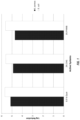
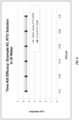
- Table 7 and Figure 1 Log Kill of Cationic Active Ingredients: The following figures illustrate the efficacy following a 30 second exposure time of three different cationic active ingredients, specifically, 0.5 % Quat (Benzalkonium Chloride), 2% CHG (Chlorhexidine Gluconate), and 1% PHMB (polyhexamethylene biguanide) in a representative surfactant system.
- 0.5 % Quat Benzalkonium Chloride
- CHG Chlorhexidine Gluconate
- PHMB polyhexamethylene biguanide
- Table 7 illustrates the formulas for the three cationic active ingredient systems tested. Both the quaternary sugar-derived surfactant and foam boosting surfactant were held constant and only the cationic active ingredient was changed between the three tests performed. The results are illustrated in Figure 1 .
- Active Ingredient System Ingredients Level (%w/w) Quaternary Ammonium Compound (Quat) Active Ingredient 0.5 Quaternized Sugar-Derived Surfactant 1.25 Foam Boosting Agent 1.95 Chlorhexidine Gluconate (CHG) Active Ingredient 2.0 Quaternized Sugar-Derived Surfactant 1.25 Foam Boosting Agent 1.95 Poly Hexamethylene Biguanide (PHMB) Active Ingredient 1.0 Quaternized Sugar-Derived Surfactant 1.25 Foam Boosting Agent 1.95
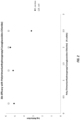
- Table 8 and Figure 2 (Log Kill of Quaternary Sugar-Derived Surfactants): Next, Applicants tested the efficacy against S. aureus and E. coli bacteria with increased concentrations of quaternary sugar-derived surfactants, specifically, Poly (Trimoniumhydroxypropyl Cocogluocosides Chloride). The amount and type of cationic active ingredient (0.5% ADBAC Quat) and foam boosting surfactant (1.95% Alkyl Dimethyl Amine Oxide) was held constant. Table 8 below illustrates the quantitative results of this test and Figure 2 illustrates the graphical results.
- quaternary sugar-derived surfactants specifically, Poly (Trimoniumhydroxypropyl Cocogluocosides Chloride).
- the amount and type of cationic active ingredient (0.5% ADBAC Quat) and foam boosting surfactant (1.95% Alkyl Dimethyl Amine Oxide) was held constant. Table 8 below illustrates the quantitative results of this test and Figure 2 illustrates the graphical results.
- the quaternary sugar-derived surfactant has a high cidal activity against S. aureus and E. coli bacteria after only 30 seconds of exposure. Also, the tolerance of the quaternary sugar derived surfactant against bacteria is shown. Furthermore, it is clearly illustrated that an increased concentration of quaternary sugar-derived surfactant maintains a good log kill of bacteria up until a 1 to 4 ratio of quaternary sugar-derived surfactant to cationic active ingredients.
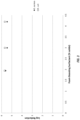
- Table 9 and Figure 3 (Log Kill of Foam Boosting Surfactants): Table 15 and Figure 3 illustrate the efficacy with increased concentrations of foam boosting surfactants, specifically, amine oxide. The amount and type of cationic active ingredient (0.5% ADBAC Quat) and Quaternary sugar-derived surfactant (1.25 % Poly Trimoniumhydroxypropyl Cocoglucosides Chloride) were held constant. Table 9 below illustrates the quantitative results of this test and Figure 3 illustrates the graphical results. TABLE 9 (not in accordance with the present invention) Foam Boosting Agent (% w/w) Active (% w/w) Quaternized Sugar-Derived Surfactant (% w/w) S. aureus Log Reduction E. coli Log Reduction 1.95 0.5 1.25 >5.5 >5.5 3.0 0.5 1.25 >5.5 >5.5 4.2 0.5 1.25 >5.5 >5.5
- the foam boosting surfactant has a high cidal activity against S. aureus and E. coli bacteria after only 30 seconds of exposure. Also, the tolerance of the foam boosting surfactant against bacteria is shown. Furthermore, it is clearly illustrated that a broad range of foam boosting surfactant maintains a good log kill of bacteria.
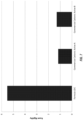
- the foam profile of an antimicrobial Dermal Cleanser as illustrated in Table 12 to three commercially available antimicrobial soaps.
- the antimicrobial dermal cleanser according to Table 12 has both good foam volume and foam stability especially in comparison to antimicrobial hand soaps that are commercially available.
- Foam Rigidity Formula of Current Invention (pH of 5.5-7.5): REFERENCE TABLE 11 (not in accordance with the present invention) Component Weight Percent Water 91.7 Cationic Active (Quaternary Ammonium Compound) 0.5 Quaternized Sugar-Derived Surfactant 0.7 Foam Boosting Surfactant 4.1 Dermal Adjuvants 3.0
- Dermal Cleanser of Current Invention (pH of 5.5-7.5): REFERENCE TABLE 12 (not in accordance with the present invention) Component Weight Percent Range Water 7.5 - 99.3 Cationic Active (Quaternary Ammonium Compound) 0.3 - 5 Quaternized Sugar-Derived Surfactant 0.05 - 7.5 Foam Boosting Surfactant 0.2 - 5 Dermal Adjuvants 0.1-7
- IDS Iminodisuccinic Acid
- EDTA Ethylenediamine Tetraacetic Acid
- the testing results indicate that antimicrobial efficacy is enhanced by chelating agents with high stability constants for Ca 2+ and Mg 2+ .
- Example 6 Comp.
- Example 7 USP Water 74.4 73.7 Acrylamide/DADMAC Copolymer 0.6 0.59 Benzethonium Chloride, 99.5% 1.2 0 Chlorhexidine Gluconate Powder, 99% 0 1.2 Tetrasodium Ethylenediaminetetraacetic acid, 40% 0 0.99 Lauryl Dimethylamine Oxide, 30% 21.8 21.6 Lactic Acid 0.69 0.69 Total 100 100
- Example 8 Example 9
- Example 10 Example 11 Wt% Wt% Wt% Wt% Wt% USP Water qs qs qs qs Acrylamide/DADMAC Copolymer 0.3-0.5 0.3-0.5 0.3-0.5 0.3-0.5 Benzethonium Chloride, 99% 0.5 2 0 0 Chlorhexidine Gluconate Salt, 20% 0 0 2.5 10 Tetrasodium Ethylenediaminetetraacetic acid, 40% 0.5-1.0 0.5-1.0 0.5-1.0 0.5-1.0 Lau
- the antimicrobial compositions of the present invention have several practical end uses, including hand cleansers, surgical scrubs, hand sanitizer gels, and similar personal care products. Additional types of compositions include foamed compositions, such as creams, and mousses.
- the present antimicrobial compositions can be manufactured as dilute ready-to-use compositions, or as concentrates that are diluted prior to or at the point of use. The dilution may occur manually or via automated dispensing and/or diluting equipment.
Landscapes
- Health & Medical Sciences (AREA)
- Life Sciences & Earth Sciences (AREA)
- General Health & Medical Sciences (AREA)
- Veterinary Medicine (AREA)
- Animal Behavior & Ethology (AREA)
- Public Health (AREA)
- Epidemiology (AREA)
- Birds (AREA)
- Environmental Sciences (AREA)
- Agronomy & Crop Science (AREA)
- Pest Control & Pesticides (AREA)
- Plant Pathology (AREA)
- Engineering & Computer Science (AREA)
- Dentistry (AREA)
- Wood Science & Technology (AREA)
- Zoology (AREA)
- Dermatology (AREA)
- Toxicology (AREA)
- Pharmacology & Pharmacy (AREA)
- Communicable Diseases (AREA)
- Oncology (AREA)
- Chemical & Material Sciences (AREA)
- Chemical Kinetics & Catalysis (AREA)
- General Chemical & Material Sciences (AREA)
- Medicinal Chemistry (AREA)
- Nuclear Medicine, Radiotherapy & Molecular Imaging (AREA)
- Organic Chemistry (AREA)
- Emergency Medicine (AREA)
- Virology (AREA)
- Detergent Compositions (AREA)
- Agricultural Chemicals And Associated Chemicals (AREA)
- Cosmetics (AREA)
- Acyclic And Carbocyclic Compounds In Medicinal Compositions (AREA)
- Medicinal Preparation (AREA)
- Medicines That Contain Protein Lipid Enzymes And Other Medicines (AREA)
- Pharmaceuticals Containing Other Organic And Inorganic Compounds (AREA)
Claims (9)
- Concentré cutané antimicrobien comprenant :(a) un principe actif cationique choisi dans le groupe constitué d'un sel de biguanide, d'un dérivé de biguanide substitué, d'un sel organique d'un composé contenant de l'ammonium quaternaire ou d'un sel inorganique d'un composé contenant de l'ammonium quaternaire et de gluconate de chlorohexidine (CHG) ;(b) un agent de surface dérivé d'un sucre quaternisé ;(c) un agent tensioactif renforçant la mousse, comprenant un oxyde d'alkylamine, un oxyde d'alkyl éther amine et des esters de glycérol polyéthoxylés, ou une combinaison de ceux-ci ;(d) un copolymère renforçant la mousse, dans lequel le copolymère renforçant la mousse est un copolymère de chlorure de diméthyldiallylammonium et d'acrylamide ;(e) un diol en C5 à 12, linéaire ou ramifié, stabilisant la mousse, dont la structure
 (f) un agent chélateur aminocarboxylate capable de former un complexe calcium-agent chélateur avec une constante de stabilité (exprimée logarithmiquement) supérieure ou égale à 5,5, dans lequel l'agent chélateur est choisi dans le groupe constitué d'acide éthylènediaminetétraacétique (EDTA) ; d'acide diéthylènetriaminepentacétique (DTPA) ; d'acide méthylglycine-N,N-diacétique (MGDA) ; d'acide glutamique-N,N-diacétique (GLDA) ; d'acide aspartique-N,N-diacétique (ASDA) et les alcalis, les métaux de terre alcalins, les métaux de transition et/ou les sels d'ammonium de ceux-ci ; et(g) de l'eau,dans lequel le concentré est substantiellement exempt d'agents de surface anioniques, de triclosan et d'alcools en C1 à 4.
 - Concentré dermique antimicrobien selon la revendication 1, dans lequel le concentré comprend de 0,1 % en poids à 10 % en poids d'au moins un ingrédient actif cationique.
- Concentré dermique antimicrobien selon la revendication 1, dans lequel le concentré dermique antimicrobien comprend de 0,05 % en poids à 12 % en poids d'agent tensioactif renforçant la mousse.
- Concentré dermique antimicrobien selon la revendication 1, dans lequel le tensioactif dérivé de sucre quaternisé comprend un polyglucoside d'alkyle quaternisé ou un polyglucoside d'alkyle polyquaternisé.
- Concentré dermique antimicrobien selon la revendication 1, dans lequel l'agent tensioactif renforçant la mousse comprend un oxyde d'alkylamine ou un oxyde d'alkyl éther amine.
- Concentré dermique antimicrobien selon la revendication 1, dans lequel le copolymère chlorure de diméthyldiallylammonium-acrylamide a un poids moléculaire compris entre 500 000 et 5 000 000 g/mol.
- Concentré dermique antimicrobien selon la revendication 1, dans lequel le stabilisateur de mousse est l'hexylène glycol.
- Utilisation du concentré dermique antimicrobien selon la revendication 1, comme nettoyant pour les mains, exfoliant chirurgical ou gel désinfectant pour les mains, dans laquelle le concentré est dilué au point d'utilisation pour former une solution d'utilisation, dans laquelle le rapport entre le concentré et l'eau est compris entre 1:1 et 1:10.
- Solution d'utilisation antimicrobienne comprenant le concentré dermique antimicrobien selon l'une quelconque des revendications 1 à 7, dans laquelle le rapport entre le concentré et l'eau est compris entre 1:1 et 1:10.
Applications Claiming Priority (2)
| Application Number | Priority Date | Filing Date | Title |
|---|---|---|---|
| US14/225,039 US20150272124A1 (en) | 2014-03-25 | 2014-03-25 | Antimicrobial compositions containing cationic active ingredients |
| PCT/US2015/018370 WO2015148063A1 (fr) | 2014-03-25 | 2015-03-03 | Compositions antimicrobiennes contenant des ingrédients actifs cationiques |
Publications (3)
| Publication Number | Publication Date |
|---|---|
| EP3122327A1 EP3122327A1 (fr) | 2017-02-01 |
| EP3122327A4 EP3122327A4 (fr) | 2017-12-13 |
| EP3122327B1 true EP3122327B1 (fr) | 2025-06-04 |
Family
ID=54188526
Family Applications (1)
| Application Number | Title | Priority Date | Filing Date |
|---|---|---|---|
| EP15768833.4A Active EP3122327B1 (fr) | 2014-03-25 | 2015-03-03 | Compositions antimicrobiennes contenant des ingrédients actifs cationiques |
Country Status (9)
| Country | Link |
|---|---|
| US (3) | US20150272124A1 (fr) |
| EP (1) | EP3122327B1 (fr) |
| JP (1) | JP6392890B2 (fr) |
| CN (1) | CN106232092B (fr) |
| AU (1) | AU2015236680B2 (fr) |
| BR (1) | BR112016022235B1 (fr) |
| CA (1) | CA2943619C (fr) |
| MX (1) | MX382881B (fr) |
| WO (1) | WO2015148063A1 (fr) |
Families Citing this family (40)
| Publication number | Priority date | Publication date | Assignee | Title |
|---|---|---|---|---|
| US20150272124A1 (en) * | 2014-03-25 | 2015-10-01 | Ecolab Usa Inc. | Antimicrobial compositions containing cationic active ingredients |
| US9956153B2 (en) * | 2014-08-01 | 2018-05-01 | Ecolab Usa Inc. | Antimicrobial foaming compositions containing cationic active ingredients |
| US9775346B1 (en) | 2016-04-01 | 2017-10-03 | Roger Wilson | Hand sanitizer composition and method of manufacture |
| US10561698B2 (en) | 2015-04-01 | 2020-02-18 | Roger Wilson | Hand sanitizer composition and method of manufacture |
| KR20180098320A (ko) * | 2015-12-23 | 2018-09-03 | 에프엠씨 코포레이션 | 고랑에서의 종자의 현장 처리 |
| JP6634284B2 (ja) * | 2015-12-25 | 2020-01-22 | 日油株式会社 | 濃縮抗菌剤組成物 |
| WO2017185000A1 (fr) * | 2016-04-21 | 2017-10-26 | Oms Investments, Inc. | Compositions d'un composé d'ammonium quaternaire avec un acide gras monocarboxylique |
| GB201611745D0 (en) * | 2016-07-05 | 2016-08-17 | Biocillin Therapeutics Ltd | Hygiene products |
| JP6251787B1 (ja) * | 2016-08-18 | 2017-12-20 | 株式会社Adeka | 除菌用シート |
| AU2018227539B2 (en) * | 2017-03-01 | 2020-04-09 | Ecolab Usa Inc. | Reduced inhalation hazard sanitizers and disinfectants via high molecular weight polymers |
| WO2019046409A1 (fr) | 2017-08-30 | 2019-03-07 | Ecolab Usa Inc. | Molécules présentant un groupe hydrophobe et deux groupes ioniques hydrophiles identiques et compositions correspondantes |
| RU2696259C2 (ru) * | 2017-10-23 | 2019-08-01 | Общество С Ограниченной Ответственностью "Сан Системз" | Солюбилизация хлоргексидина основания, антисептическая и дезинфицирующая композиции |
| WO2019126703A1 (fr) * | 2017-12-22 | 2019-06-27 | Ecolab Usa Inc. | Compositions antimicrobiennes à efficacité améliorée |
| US11419333B2 (en) * | 2018-01-19 | 2022-08-23 | Championx Usa Inc. | Compositions and methods for biofilm removal |
| WO2019147496A1 (fr) * | 2018-01-23 | 2019-08-01 | Kegel, Llc | Produit de nettoyage pour des soins personnels sous forme de comprimé |
| US11084974B2 (en) | 2018-08-29 | 2021-08-10 | Championx Usa Inc. | Use of multiple charged cationic compounds derived from polyamines for clay stabilization in oil and gas operations |
| US11058111B2 (en) | 2018-08-29 | 2021-07-13 | Ecolab Usa Inc. | Use of multiple charged cationic compounds derived from primary amines or polyamines for microbial fouling control in a water system |
| CN116082183A (zh) | 2018-08-29 | 2023-05-09 | 埃科莱布美国股份有限公司 | 衍生自多胺的带多个电荷的离子化合物及其组合物和其作为反相破乳剂用于油气操作的用途 |
| WO2020047181A1 (fr) | 2018-08-29 | 2020-03-05 | Ecolab Usa Inc. | Utilisation de composés ioniques à charges multiples dérivés de polyamines pour clarification d'eaux usées |
| CA3110686C (fr) | 2018-08-29 | 2025-11-04 | Ecolab Usa Inc. | Composes ioniques a charges multiples derives de polyamines et compositions a base de ces composes et procedes de preparation associes |
| CN112654248A (zh) * | 2018-09-14 | 2021-04-13 | 3M创新有限公司 | 包含氯已定的抗微生物组合物 |
| CA3128188C (fr) * | 2019-01-29 | 2023-10-17 | Ecolab Usa Inc. | Utilisation de composes cationiques a base de sucre comme inhibiteurs de corrosion dans un reseau d'alimentation en eau |
| CN113365498B (zh) * | 2019-01-29 | 2022-10-25 | 埃科莱布美国股份有限公司 | 阳离子糖基化合物用于在水系统中进行微生物结垢控制的用途 |
| CA3128083A1 (fr) * | 2019-02-13 | 2020-08-20 | Rhodia Operations | Compositions de nettoyage desinfectantes a longue duree et procedes d'utilisation associes |
| CA3136427C (fr) | 2019-04-16 | 2023-10-24 | Ecolab Usa Inc. | Utilisation de composes cationiques a charges multiples derives de polyamines et leurs compositions pour lutter contre la corrosion dans un reseau d'alimentation en eau |
| JP2021138652A (ja) * | 2020-03-05 | 2021-09-16 | 日油株式会社 | 消毒剤組成物 |
| RU2738595C1 (ru) * | 2020-03-17 | 2020-12-14 | Марина Михайловна Бурмина | Лечебно-косметическая композиция |
| US12076414B2 (en) | 2020-04-23 | 2024-09-03 | Johnson & Johnson Consumer Inc. | Methods and compositions inhibiting enveloped viruses using high molecular weight hydrophobically modified alkali swellable emulsion polymers |
| US20210330700A1 (en) | 2020-04-23 | 2021-10-28 | Johnson & Johnson Consumer Inc. | Methods and compositions for inhibiting influenza viruses using low molecular weight hydrophobically modified polymers and polyalkylene glycols |
| US12186335B2 (en) | 2020-04-23 | 2025-01-07 | Johnson & Johnson Consumer Inc. | Methods and compositions for inhibiting enveloped viruses using high molecular weight hydrophobically modified alkali swellable emulsion polymers and surfactant |
| US20210330698A1 (en) | 2020-04-23 | 2021-10-28 | Johnson & Johnson Consumer Inc. | Methods and compositions for inhibiting enveloped viruses using low molecular weight hydrophobically modified polymers |
| US11690869B2 (en) | 2020-04-23 | 2023-07-04 | Johnson & Johnson Consumer Inc. | Methods of inhibiting enveloped viruses using low molecular weight hydrophobically modified polymers |
| CN115734808A (zh) * | 2020-06-30 | 2023-03-03 | 联合利华知识产权控股有限公司 | 消毒组合物 |
| CA3185062A1 (fr) * | 2020-07-06 | 2022-01-13 | Gang Pu | Compositions d'alcool/eau mixtes moussantes comprenant un siloxane alcoxyle structure |
| US12532885B2 (en) | 2020-09-18 | 2026-01-27 | Ecolab Usa Inc. | Reduced misting peracid based cleaning, sanitizing, and disinfecting compositions via the use of high molecular weight polymers |
| JP2023545647A (ja) | 2020-09-25 | 2023-10-31 | ユニリーバー・アイピー・ホールディングス・ベスローテン・ヴェンノーツハップ | 保湿抗菌組成物 |
| JP7623552B2 (ja) * | 2020-12-09 | 2025-01-29 | 株式会社三鷹ホールディングス | 感染防止及び消臭洗浄剤、並びに、それを用いた衛生及び生活用品 |
| US12553009B2 (en) | 2022-05-20 | 2026-02-17 | The Procter & Gamble Company | Detergent formulations |
| US20240016148A1 (en) * | 2022-05-20 | 2024-01-18 | The Procter & Gamble Company | Methods for potentiating a biocide |
| AU2023463958A1 (en) * | 2023-08-31 | 2026-04-02 | Kimberly-Clark Worldwide, Inc. | Long-lasting disinfectant articles |
Citations (1)
| Publication number | Priority date | Publication date | Assignee | Title |
|---|---|---|---|---|
| WO2015148063A1 (fr) * | 2014-03-25 | 2015-10-01 | Ecolab Usa Inc. | Compositions antimicrobiennes contenant des ingrédients actifs cationiques |
Family Cites Families (59)
| Publication number | Priority date | Publication date | Assignee | Title |
|---|---|---|---|---|
| US3664961A (en) | 1970-03-31 | 1972-05-23 | Procter & Gamble | Enzyme detergent composition containing coagglomerated perborate bleaching agent |
| US4764365A (en) | 1986-10-27 | 1988-08-16 | Calgon Corporation | Personal skin care products containing dimethyl diallyl ammonium chloride/acrylic acid-type polymers |
| US5234618A (en) | 1989-10-09 | 1993-08-10 | Kao Corporation | Liquid detergent composition |
| US5225095A (en) * | 1991-08-02 | 1993-07-06 | Chubb National Foam, Inc. | Foam concentrate |
| US5188756A (en) | 1991-08-07 | 1993-02-23 | Kolmar Laboratories, Inc. | Topical cleansing and conditioning composition |
| US6592873B1 (en) | 1992-10-30 | 2003-07-15 | Iowa State University Research Foundation, Inc. | Polynucleic acids isolated from a porcine reproductive and respiratory syndrome virus (PRRSV) and proteins encoded by the polynucleic acids |
| US5415814A (en) | 1993-08-27 | 1995-05-16 | The Procter & Gamble Company | Concentrated liquid or gel light duty dishwashing detergent composition containing calcium xylene sulfonate |
| US5417893A (en) | 1993-08-27 | 1995-05-23 | The Procter & Gamble Company | Concentrated liquid or gel light duty dishwashing detergent compositions containing calcium ions and disulfonate surfactants |
| US5635462A (en) * | 1994-07-08 | 1997-06-03 | Gojo Industries, Inc. | Antimicrobial cleansing compositions |
| US5653970A (en) | 1994-12-08 | 1997-08-05 | Lever Brothers Company, Division Of Conopco, Inc. | Personal product compositions comprising heteroatom containing alkyl aldonamide compounds |
| US5707959A (en) | 1995-05-31 | 1998-01-13 | The Procter & Gamble Company | Processes for making a granular detergent composition containing a crystalline builder |
| US5756446A (en) | 1996-05-07 | 1998-05-26 | Henkel Corporation | Sugar surfactants having enhanced tactile properties |
| EP0939618B1 (fr) | 1996-07-10 | 2002-09-11 | Steris Inc. | Produit de lavage pour la peau a base de triclosan et possedant une meilleure efficacite |
| AUPO690997A0 (en) | 1997-05-20 | 1997-06-12 | Novapharm Research (Australia) Pty Ltd | Alkylpolyglucosides containing disinfectant compositions active against pseudomonas microorganism |
| US6057274A (en) | 1997-08-22 | 2000-05-02 | Henkel Corporation | Antibacterial composition having enhanced tactile properties |
| SE511873C2 (sv) | 1997-08-27 | 1999-12-13 | Akzo Nobel Nv | Katjoniska sockertensider från etoxilerade ammoniumföreningar och reducerande sackarider samt användning därav som hydrotoper för tensider |
| CO5040174A1 (es) | 1997-12-12 | 2001-05-29 | Colgate Palmolive Co | Composiciones antimicrobianas para multiples propositos en microemulsion que contienen un tensioactivo cationico |
| DE60045761D1 (de) | 1999-01-28 | 2011-05-05 | Canon Kk | Elektronenstrahlgerät |
| US6221828B1 (en) | 1999-02-12 | 2001-04-24 | Kao Corporation | Detergent composition comprising an alkylpolyglycoside, a germicide, and a fatty acid salt |
| US6369021B1 (en) | 1999-05-07 | 2002-04-09 | Ecolab Inc. | Detergent composition and method for removing soil |
| US6130196A (en) | 1999-06-29 | 2000-10-10 | Colgate-Palmolive Co. | Antimicrobial multi purpose containing a cationic surfactant |
| US7074747B1 (en) * | 1999-07-01 | 2006-07-11 | Johnson & Johnson Consumer Companies, Inc. | Cleansing compositions |
| DE19933404A1 (de) | 1999-07-21 | 2001-01-25 | Henkel Kgaa | Reinigungsmittel für harte Oberflächen |
| US6140289A (en) | 2000-01-24 | 2000-10-31 | Colgate-Palmolive Company | Antimicrobial cleaning composition containing a cationic surfactant |
| US20010044393A1 (en) * | 2000-02-18 | 2001-11-22 | Peterson Robert Frederick | Rinse-off antimicrobial liquid cleansing composition |
| US20030074742A1 (en) | 2000-03-03 | 2003-04-24 | General Electric Company | Siloxane dry cleaning composition and process |
| US6764989B1 (en) | 2000-10-02 | 2004-07-20 | Huish Detergents, Inc. | Liquid cleaning composition containing α-sulfofatty acid ester |
| US20020183233A1 (en) | 2000-12-14 | 2002-12-05 | The Clorox Company, Delaware Corporation | Bactericidal cleaning wipe |
| US7345015B1 (en) | 2006-12-19 | 2008-03-18 | The Clorox Company | Low residue cleaning solution for disinfecting wipes comprising a C8-10 alkyl polyglycoside |
| US6395691B1 (en) | 2001-02-28 | 2002-05-28 | Unilever Home & Personal Care Usa Division Of Conopco, Inc. | Personal wash compositions containing particle-in-oil dispersion |
| US6616922B2 (en) * | 2001-03-27 | 2003-09-09 | The Dial Corporation | Antibacterial compositions |
| JP4230153B2 (ja) | 2002-02-22 | 2009-02-25 | 花王株式会社 | 硬質表面用防汚洗浄剤 |
| US7544649B2 (en) | 2002-02-22 | 2009-06-09 | Kao Corporation | Antifouling detergent for hard surfaces |
| GB2392450A (en) * | 2002-08-31 | 2004-03-03 | Reckitt Benckiser Inc | Liquid detergent compositions |
| US20050176614A1 (en) | 2002-10-16 | 2005-08-11 | Heinz-Dieter Soldanski | Transparent abrasive cleaning product, especially manual dishwashing liquid |
| US20040136940A1 (en) | 2002-10-31 | 2004-07-15 | Virginia Lazarowitz | Cleaner compositions |
| JP2004224703A (ja) * | 2003-01-20 | 2004-08-12 | Teepol Diversey Kk | 手指用殺菌洗浄剤組成物 |
| US7250392B1 (en) | 2003-03-07 | 2007-07-31 | Cognis Corporation | Surfactant blend for cleansing wipes |
| WO2004092315A1 (fr) | 2003-04-14 | 2004-10-28 | Kao Corporation | Composition d'agent de nettoyage |
| US20050000030A1 (en) | 2003-06-27 | 2005-01-06 | Dupont Jeffrey Scott | Fabric care compositions for lipophilic fluid systems |
| JP4050676B2 (ja) | 2003-08-22 | 2008-02-20 | 花王株式会社 | 洗浄料 |
| US7084129B1 (en) | 2003-09-15 | 2006-08-01 | Colonial Chemical | Antimicrobial quaternary surfactants based upon alkyl polyglycoside |
| JP2005154360A (ja) * | 2003-11-27 | 2005-06-16 | Lion Corp | 皮膚洗浄剤組成物 |
| US7507399B1 (en) | 2004-08-05 | 2009-03-24 | Surfatech Corporation | Functionalized polymeric surfactants based upon alkyl polyglycosides |
| US20090069436A1 (en) | 2004-08-05 | 2009-03-12 | Ebiox, Ltd. | Antimicrobial skin composition comprising a biguanide or a quaternium compound |
| US6906023B1 (en) | 2004-08-18 | 2005-06-14 | Unilever Home & Personal Care Usa, A Division Of Conopco, Inc. | Soap bars comprising high levels of sugars made by extrusion route |
| US6906018B1 (en) | 2004-08-18 | 2005-06-14 | Unilever Home & Personal Care Usa Division Of Conopco, Inc. | Extrudable soap bars comprising high levels of sugars |
| US7547672B2 (en) | 2004-10-12 | 2009-06-16 | Pantheon Chemical, Inc. | Composition for cleaning and degreasing, system for using the composition, and methods of forming and using the composition |
| DE102004051420A1 (de) | 2004-10-22 | 2006-05-04 | Merz Pharma Gmbh & Co. Kgaa | Treibgasfreie schaumbildende, insbesondere hypoallergene Systeme für pharmazeutisch-dermatologische, kosmetische und hygienische Anwendungen und deren Herstellung |
| CN101228311A (zh) | 2005-05-23 | 2008-07-23 | 陶氏康宁公司 | 含糖-硅氧烷共聚物的表面处理组合物 |
| GB0525504D0 (en) * | 2005-12-14 | 2006-01-25 | Bristol Myers Squibb Co | Antimicrobial composition |
| US7179779B1 (en) | 2006-01-06 | 2007-02-20 | North Carolina State University | Cationic bleach activator with enhanced hydrolytic stability |
| DE102007039649A1 (de) | 2006-12-05 | 2008-06-12 | Henkel Kgaa | Reinigungsmittel für harte Oberflächen |
| JP5946990B2 (ja) | 2007-08-29 | 2016-07-06 | エージェンシー フォー サイエンス,テクノロジー アンド リサーチ | 化粧品及び医薬品使用のための精油を含有する糖系界面活性剤マイクロエマルジョン |
| JP5522647B2 (ja) * | 2008-03-31 | 2014-06-18 | 株式会社 資生堂 | 起泡性皮膚洗浄料 |
| US8933055B2 (en) | 2010-09-22 | 2015-01-13 | Ecolab Usa Inc. | Antimicrobial compositions containing cationic active ingredients and quaternary sugar derived surfactants |
| US9232790B2 (en) | 2011-08-02 | 2016-01-12 | Kimberly-Clark Worldwide, Inc. | Antimicrobial cleansing compositions |
| AU2013240278B2 (en) * | 2012-03-30 | 2017-10-19 | Gojo Industries, Inc. | Cationic antimicrobial handwash |
| US9956153B2 (en) * | 2014-08-01 | 2018-05-01 | Ecolab Usa Inc. | Antimicrobial foaming compositions containing cationic active ingredients |
-
2014
- 2014-03-25 US US14/225,039 patent/US20150272124A1/en not_active Abandoned
-
2015
- 2015-03-03 WO PCT/US2015/018370 patent/WO2015148063A1/fr not_active Ceased
- 2015-03-03 BR BR112016022235-0A patent/BR112016022235B1/pt not_active IP Right Cessation
- 2015-03-03 CN CN201580020889.2A patent/CN106232092B/zh active Active
- 2015-03-03 CA CA2943619A patent/CA2943619C/fr active Active
- 2015-03-03 EP EP15768833.4A patent/EP3122327B1/fr active Active
- 2015-03-03 AU AU2015236680A patent/AU2015236680B2/en active Active
- 2015-03-03 MX MX2016012370A patent/MX382881B/es unknown
- 2015-03-03 JP JP2016558710A patent/JP6392890B2/ja active Active
-
2016
- 2016-05-20 US US15/160,580 patent/US11590065B2/en active Active
-
2023
- 2023-01-24 US US18/158,889 patent/US12171851B2/en active Active
Patent Citations (1)
| Publication number | Priority date | Publication date | Assignee | Title |
|---|---|---|---|---|
| WO2015148063A1 (fr) * | 2014-03-25 | 2015-10-01 | Ecolab Usa Inc. | Compositions antimicrobiennes contenant des ingrédients actifs cationiques |
Also Published As
| Publication number | Publication date |
|---|---|
| BR112016022235B1 (pt) | 2021-03-23 |
| WO2015148063A1 (fr) | 2015-10-01 |
| JP6392890B2 (ja) | 2018-09-19 |
| CA2943619A1 (fr) | 2015-10-01 |
| CN106232092A (zh) | 2016-12-14 |
| US11590065B2 (en) | 2023-02-28 |
| US20160262999A1 (en) | 2016-09-15 |
| EP3122327A4 (fr) | 2017-12-13 |
| EP3122327A1 (fr) | 2017-02-01 |
| MX2016012370A (es) | 2016-12-02 |
| CN106232092B (zh) | 2020-07-14 |
| US20150272124A1 (en) | 2015-10-01 |
| AU2015236680A1 (en) | 2016-09-29 |
| CA2943619C (fr) | 2021-05-04 |
| MX382881B (es) | 2025-03-13 |
| US12171851B2 (en) | 2024-12-24 |
| JP2017510581A (ja) | 2017-04-13 |
| AU2015236680B2 (en) | 2017-07-06 |
| US20230157937A1 (en) | 2023-05-25 |
Similar Documents
| Publication | Publication Date | Title |
|---|---|---|
| US12171851B2 (en) | Antimicrobial compositions containing cationic active ingredients | |
| US10517806B2 (en) | Antimicrobial foaming compositions containing cationic active ingredients | |
| CN103118655B (zh) | 含有阳离子活性成分和季化糖衍生的表面活性剂的抗微生物组合物 | |
| WO2007144286A1 (fr) | Compositions antimicrobiennes | |
| KR20170005407A (ko) | 액상 항균 조성물 | |
| HK1226967A1 (en) | Antimicrobial compositions containing cationic active ingredients | |
| HK1226967B (zh) | 含有阳离子活性成分的抗微生物组合物 |
Legal Events
| Date | Code | Title | Description |
|---|---|---|---|
| STAA | Information on the status of an ep patent application or granted ep patent |
Free format text: STATUS: THE INTERNATIONAL PUBLICATION HAS BEEN MADE |
|
| PUAI | Public reference made under article 153(3) epc to a published international application that has entered the european phase |
Free format text: ORIGINAL CODE: 0009012 |
|
| STAA | Information on the status of an ep patent application or granted ep patent |
Free format text: STATUS: REQUEST FOR EXAMINATION WAS MADE |
|
| 17P | Request for examination filed |
Effective date: 20161017 |
|
| AK | Designated contracting states |
Kind code of ref document: A1 Designated state(s): AL AT BE BG CH CY CZ DE DK EE ES FI FR GB GR HR HU IE IS IT LI LT LU LV MC MK MT NL NO PL PT RO RS SE SI SK SM TR |
|
| AX | Request for extension of the european patent |
Extension state: BA ME |
|
| DAV | Request for validation of the european patent (deleted) | ||
| DAX | Request for extension of the european patent (deleted) | ||
| RAP1 | Party data changed (applicant data changed or rights of an application transferred) |
Owner name: ECOLAB USA INC. |
|
| RIC1 | Information provided on ipc code assigned before grant |
Ipc: A61K 8/41 20060101ALI20171031BHEP Ipc: A61K 8/72 20060101ALI20171031BHEP Ipc: A01N 25/16 20060101ALI20171031BHEP Ipc: A61Q 19/10 20060101ALI20171031BHEP Ipc: A61K 8/81 20060101ALI20171031BHEP Ipc: A61K 8/60 20060101ALI20171031BHEP Ipc: A61K 8/34 20060101ALI20171031BHEP Ipc: A61Q 17/00 20060101ALI20171031BHEP Ipc: A61K 8/43 20060101AFI20171031BHEP |
|
| A4 | Supplementary search report drawn up and despatched |
Effective date: 20171109 |
|
| STAA | Information on the status of an ep patent application or granted ep patent |
Free format text: STATUS: EXAMINATION IS IN PROGRESS |
|
| 17Q | First examination report despatched |
Effective date: 20191010 |
|
| REG | Reference to a national code |
Ref country code: DE Ref legal event code: R079 Free format text: PREVIOUS MAIN CLASS: A61K0008430000 Ipc: A61K0008340000 Ref document number: 602015091770 Country of ref document: DE |
|
| RIC1 | Information provided on ipc code assigned before grant |
Ipc: A01N 25/16 20060101ALI20241124BHEP Ipc: A61Q 19/10 20060101ALI20241124BHEP Ipc: A61Q 17/00 20060101ALI20241124BHEP Ipc: A61K 8/81 20060101ALI20241124BHEP Ipc: A61K 8/60 20060101ALI20241124BHEP Ipc: A61K 8/43 20060101ALI20241124BHEP Ipc: A61K 8/41 20060101ALI20241124BHEP Ipc: A61K 8/34 20060101AFI20241124BHEP |
|
| GRAP | Despatch of communication of intention to grant a patent |
Free format text: ORIGINAL CODE: EPIDOSNIGR1 |
|
| STAA | Information on the status of an ep patent application or granted ep patent |
Free format text: STATUS: GRANT OF PATENT IS INTENDED |
|
| INTG | Intention to grant announced |
Effective date: 20250110 |
|
| GRAS | Grant fee paid |
Free format text: ORIGINAL CODE: EPIDOSNIGR3 |
|
| GRAA | (expected) grant |
Free format text: ORIGINAL CODE: 0009210 |
|
| STAA | Information on the status of an ep patent application or granted ep patent |
Free format text: STATUS: THE PATENT HAS BEEN GRANTED |
|
| AK | Designated contracting states |
Kind code of ref document: B1 Designated state(s): AL AT BE BG CH CY CZ DE DK EE ES FI FR GB GR HR HU IE IS IT LI LT LU LV MC MK MT NL NO PL PT RO RS SE SI SK SM TR |
|
| REG | Reference to a national code |
Ref country code: GB Ref legal event code: FG4D |
|
| REG | Reference to a national code |
Ref country code: CH Ref legal event code: EP |
|
| REG | Reference to a national code |
Ref country code: DE Ref legal event code: R096 Ref document number: 602015091770 Country of ref document: DE |
|
| REG | Reference to a national code |
Ref country code: IE Ref legal event code: FG4D |
|
| REG | Reference to a national code |
Ref country code: NL Ref legal event code: MP Effective date: 20250604 |
|
| PG25 | Lapsed in a contracting state [announced via postgrant information from national office to epo] |
Ref country code: FI Free format text: LAPSE BECAUSE OF FAILURE TO SUBMIT A TRANSLATION OF THE DESCRIPTION OR TO PAY THE FEE WITHIN THE PRESCRIBED TIME-LIMIT Effective date: 20250604 Ref country code: ES Free format text: LAPSE BECAUSE OF FAILURE TO SUBMIT A TRANSLATION OF THE DESCRIPTION OR TO PAY THE FEE WITHIN THE PRESCRIBED TIME-LIMIT Effective date: 20250604 |
|
| REG | Reference to a national code |
Ref country code: LT Ref legal event code: MG9D |
|
| PG25 | Lapsed in a contracting state [announced via postgrant information from national office to epo] |
Ref country code: NO Free format text: LAPSE BECAUSE OF FAILURE TO SUBMIT A TRANSLATION OF THE DESCRIPTION OR TO PAY THE FEE WITHIN THE PRESCRIBED TIME-LIMIT Effective date: 20250904 Ref country code: GR Free format text: LAPSE BECAUSE OF FAILURE TO SUBMIT A TRANSLATION OF THE DESCRIPTION OR TO PAY THE FEE WITHIN THE PRESCRIBED TIME-LIMIT Effective date: 20250905 |
|
| PG25 | Lapsed in a contracting state [announced via postgrant information from national office to epo] |
Ref country code: PL Free format text: LAPSE BECAUSE OF FAILURE TO SUBMIT A TRANSLATION OF THE DESCRIPTION OR TO PAY THE FEE WITHIN THE PRESCRIBED TIME-LIMIT Effective date: 20250604 |
|
| PG25 | Lapsed in a contracting state [announced via postgrant information from national office to epo] |
Ref country code: BG Free format text: LAPSE BECAUSE OF FAILURE TO SUBMIT A TRANSLATION OF THE DESCRIPTION OR TO PAY THE FEE WITHIN THE PRESCRIBED TIME-LIMIT Effective date: 20250604 |
|
| PG25 | Lapsed in a contracting state [announced via postgrant information from national office to epo] |
Ref country code: HR Free format text: LAPSE BECAUSE OF FAILURE TO SUBMIT A TRANSLATION OF THE DESCRIPTION OR TO PAY THE FEE WITHIN THE PRESCRIBED TIME-LIMIT Effective date: 20250604 |
|
| PG25 | Lapsed in a contracting state [announced via postgrant information from national office to epo] |
Ref country code: RS Free format text: LAPSE BECAUSE OF FAILURE TO SUBMIT A TRANSLATION OF THE DESCRIPTION OR TO PAY THE FEE WITHIN THE PRESCRIBED TIME-LIMIT Effective date: 20250904 |
|
| PG25 | Lapsed in a contracting state [announced via postgrant information from national office to epo] |
Ref country code: LV Free format text: LAPSE BECAUSE OF FAILURE TO SUBMIT A TRANSLATION OF THE DESCRIPTION OR TO PAY THE FEE WITHIN THE PRESCRIBED TIME-LIMIT Effective date: 20250604 |
|
| PG25 | Lapsed in a contracting state [announced via postgrant information from national office to epo] |
Ref country code: NL Free format text: LAPSE BECAUSE OF FAILURE TO SUBMIT A TRANSLATION OF THE DESCRIPTION OR TO PAY THE FEE WITHIN THE PRESCRIBED TIME-LIMIT Effective date: 20250604 |
|
| PG25 | Lapsed in a contracting state [announced via postgrant information from national office to epo] |
Ref country code: PT Free format text: LAPSE BECAUSE OF FAILURE TO SUBMIT A TRANSLATION OF THE DESCRIPTION OR TO PAY THE FEE WITHIN THE PRESCRIBED TIME-LIMIT Effective date: 20251006 |
|
| REG | Reference to a national code |
Ref country code: AT Ref legal event code: MK05 Ref document number: 1799695 Country of ref document: AT Kind code of ref document: T Effective date: 20250604 |
|
| PG25 | Lapsed in a contracting state [announced via postgrant information from national office to epo] |
Ref country code: IS Free format text: LAPSE BECAUSE OF FAILURE TO SUBMIT A TRANSLATION OF THE DESCRIPTION OR TO PAY THE FEE WITHIN THE PRESCRIBED TIME-LIMIT Effective date: 20251004 |
|
| PG25 | Lapsed in a contracting state [announced via postgrant information from national office to epo] |
Ref country code: AT Free format text: LAPSE BECAUSE OF FAILURE TO SUBMIT A TRANSLATION OF THE DESCRIPTION OR TO PAY THE FEE WITHIN THE PRESCRIBED TIME-LIMIT Effective date: 20250604 Ref country code: SM Free format text: LAPSE BECAUSE OF FAILURE TO SUBMIT A TRANSLATION OF THE DESCRIPTION OR TO PAY THE FEE WITHIN THE PRESCRIBED TIME-LIMIT Effective date: 20250604 |
|
| PG25 | Lapsed in a contracting state [announced via postgrant information from national office to epo] |
Ref country code: CZ Free format text: LAPSE BECAUSE OF FAILURE TO SUBMIT A TRANSLATION OF THE DESCRIPTION OR TO PAY THE FEE WITHIN THE PRESCRIBED TIME-LIMIT Effective date: 20250604 |
|
| PG25 | Lapsed in a contracting state [announced via postgrant information from national office to epo] |
Ref country code: EE Free format text: LAPSE BECAUSE OF FAILURE TO SUBMIT A TRANSLATION OF THE DESCRIPTION OR TO PAY THE FEE WITHIN THE PRESCRIBED TIME-LIMIT Effective date: 20250604 |
|
| PG25 | Lapsed in a contracting state [announced via postgrant information from national office to epo] |
Ref country code: RO Free format text: LAPSE BECAUSE OF FAILURE TO SUBMIT A TRANSLATION OF THE DESCRIPTION OR TO PAY THE FEE WITHIN THE PRESCRIBED TIME-LIMIT Effective date: 20250604 Ref country code: SK Free format text: LAPSE BECAUSE OF FAILURE TO SUBMIT A TRANSLATION OF THE DESCRIPTION OR TO PAY THE FEE WITHIN THE PRESCRIBED TIME-LIMIT Effective date: 20250604 |
|
| PG25 | Lapsed in a contracting state [announced via postgrant information from national office to epo] |
Ref country code: IT Free format text: LAPSE BECAUSE OF FAILURE TO SUBMIT A TRANSLATION OF THE DESCRIPTION OR TO PAY THE FEE WITHIN THE PRESCRIBED TIME-LIMIT Effective date: 20250604 |
|
| REG | Reference to a national code |
Ref country code: DE Ref legal event code: R097 Ref document number: 602015091770 Country of ref document: DE |
|
| PLBE | No opposition filed within time limit |
Free format text: ORIGINAL CODE: 0009261 |
|
| STAA | Information on the status of an ep patent application or granted ep patent |
Free format text: STATUS: NO OPPOSITION FILED WITHIN TIME LIMIT |
|
| PG25 | Lapsed in a contracting state [announced via postgrant information from national office to epo] |
Ref country code: DK Free format text: LAPSE BECAUSE OF FAILURE TO SUBMIT A TRANSLATION OF THE DESCRIPTION OR TO PAY THE FEE WITHIN THE PRESCRIBED TIME-LIMIT Effective date: 20250604 |
|
| REG | Reference to a national code |
Ref country code: CH Ref legal event code: L10 Free format text: ST27 STATUS EVENT CODE: U-0-0-L10-L00 (AS PROVIDED BY THE NATIONAL OFFICE) Effective date: 20260416 |