EP3123377B1 - Verfahren und system zur optimierung multifaktorieller prozesse - Google Patents
Verfahren und system zur optimierung multifaktorieller prozesse Download PDFInfo
- Publication number
- EP3123377B1 EP3123377B1 EP15769236.9A EP15769236A EP3123377B1 EP 3123377 B1 EP3123377 B1 EP 3123377B1 EP 15769236 A EP15769236 A EP 15769236A EP 3123377 B1 EP3123377 B1 EP 3123377B1
- Authority
- EP
- European Patent Office
- Prior art keywords
- factors
- factor
- genetic
- interaction
- interactions
- Prior art date
- Legal status (The legal status is an assumption and is not a legal conclusion. Google has not performed a legal analysis and makes no representation as to the accuracy of the status listed.)
- Active
Links
Images




Classifications
-
- C—CHEMISTRY; METALLURGY
- C12—BIOCHEMISTRY; BEER; SPIRITS; WINE; VINEGAR; MICROBIOLOGY; ENZYMOLOGY; MUTATION OR GENETIC ENGINEERING
- C12Q—MEASURING OR TESTING PROCESSES INVOLVING ENZYMES, NUCLEIC ACIDS OR MICROORGANISMS; COMPOSITIONS OR TEST PAPERS THEREFOR; PROCESSES OF PREPARING SUCH COMPOSITIONS; CONDITION-RESPONSIVE CONTROL IN MICROBIOLOGICAL OR ENZYMOLOGICAL PROCESSES
- C12Q3/00—Condition responsive control processes
-
- G—PHYSICS
- G16—INFORMATION AND COMMUNICATION TECHNOLOGY [ICT] SPECIALLY ADAPTED FOR SPECIFIC APPLICATION FIELDS
- G16B—BIOINFORMATICS, i.e. INFORMATION AND COMMUNICATION TECHNOLOGY [ICT] SPECIALLY ADAPTED FOR GENETIC OR PROTEIN-RELATED DATA PROCESSING IN COMPUTATIONAL MOLECULAR BIOLOGY
- G16B5/00—ICT specially adapted for modelling or simulations in systems biology, e.g. gene-regulatory networks, protein interaction networks or metabolic networks
- G16B5/30—Dynamic-time models
-
- G—PHYSICS
- G06—COMPUTING OR CALCULATING; COUNTING
- G06F—ELECTRIC DIGITAL DATA PROCESSING
- G06F16/00—Information retrieval; Database structures therefor; File system structures therefor
- G06F16/20—Information retrieval; Database structures therefor; File system structures therefor of structured data, e.g. relational data
- G06F16/24—Querying
- G06F16/245—Query processing
- G06F16/2457—Query processing with adaptation to user needs
- G06F16/24575—Query processing with adaptation to user needs using context
-
- G—PHYSICS
- G06—COMPUTING OR CALCULATING; COUNTING
- G06F—ELECTRIC DIGITAL DATA PROCESSING
- G06F16/00—Information retrieval; Database structures therefor; File system structures therefor
- G06F16/20—Information retrieval; Database structures therefor; File system structures therefor of structured data, e.g. relational data
- G06F16/24—Querying
- G06F16/245—Query processing
- G06F16/2457—Query processing with adaptation to user needs
- G06F16/24578—Query processing with adaptation to user needs using ranking
-
- G—PHYSICS
- G16—INFORMATION AND COMMUNICATION TECHNOLOGY [ICT] SPECIALLY ADAPTED FOR SPECIFIC APPLICATION FIELDS
- G16B—BIOINFORMATICS, i.e. INFORMATION AND COMMUNICATION TECHNOLOGY [ICT] SPECIALLY ADAPTED FOR GENETIC OR PROTEIN-RELATED DATA PROCESSING IN COMPUTATIONAL MOLECULAR BIOLOGY
- G16B5/00—ICT specially adapted for modelling or simulations in systems biology, e.g. gene-regulatory networks, protein interaction networks or metabolic networks
-
- G—PHYSICS
- G16—INFORMATION AND COMMUNICATION TECHNOLOGY [ICT] SPECIALLY ADAPTED FOR SPECIFIC APPLICATION FIELDS
- G16C—COMPUTATIONAL CHEMISTRY; CHEMOINFORMATICS; COMPUTATIONAL MATERIALS SCIENCE
- G16C99/00—Subject matter not provided for in other groups of this subclass
Definitions
- Zhibiao Fu et al. (XP055389156) describes an approach to optimise a S. cerevisiae fermentation process that relies on a risk assessment approach to identify critical process parameters, followed by modelling of the response surface or process attributes to 3 critical process parameters and multivariate Bayesian predictive analysis to identify process operating conditions (for the 3 critical process parameters) where all attributes meet specified criteria.
- E. Orban et al. (XP055389106) describes a study of the effect of temperature and yeast concentration on NaCl-induced autolysis of Kluyveromyces fragilis, using the response surface methodology. Saxeena Deepali et al.
- a first aspect provides a method for increasing process performance in a biological process comprising at least one process step, the method comprising:
- the biological process comprises a plurality of process steps, wherein the at least one process step comprises a manufacturing process, and/or suitably the at least one process step comprises an analytical process.
- each factor is modified over at least two levels, wherein a level corresponds to a parameter range or characteristic associated with the factor.
- the multi-factorial interaction comprises at least one two-factor interaction, optionally at least one three-factor interaction, specifically the multi-factorial interaction may comprise at least one interaction that comprises more than three factors.
- the at least one process factor is selected from the group consisting of: temperature; pH; titrants; buffer concentration; reagent concentration; growth media composition; nutrient concentration; waste-product concentration; oxygen concentration; reactor volume; fermentation volume; impeller speed; seed culture conditions; airflow; pressure; feed composition; feed rate; feed timing; antifoam type; antifoam concentration; shaking speed; presence of baffles; size of baffles; position of baffles; bioreactor geometry; inducer concentration; induction time; stock culture generation method; stock culture storage conditions; and timings of any process step.
- the at least one genetic factor is selected from the group consisting of: vector type; genetic background; epigenetic modifications; gene variant; gene identity; host organism species; host organism strain; promoter type; codon usage; ribosome binging site; origin of replication; selection marker; site of chromosomal integration; leader sequence; operator usage; activator usage; operon design; mRNA 5' optimisation strategy; copy number; orientation of genetic constructs; insulator elements; siRNA candidates; non-coding nucleic acid; gene knockouts; and gene upregulation.
- the method may comprise at least one further step: (d) an optimisation phase, in which higher order interactions are used to generate a higher-order model based upon a limited number of factors identified as contributing most significantly to an increase in process performance.
- a further aspect of the invention provides a system for increasing process performance in a biological process, the system comprising:
- the laboratory automation apparatus is further configured so as to implement the optimisation phase.
- the laboratory automation apparatus comprises one or more of the group consisting of: liquid handling and dispensing apparatus; container handling apparatus; a laboratory robot; an incubator; plate handling apparatus; a spectrophotometer; chromatography apparatus; a mass spectrometer; thermal-cycling apparatus; and centrifuge apparatus.
- the processor implements the method of the invention as part of a laboratory information management system (LIMS).
- LIMS laboratory information management system
- the term “comprising” means any of the recited elements are necessarily included and other elements may optionally be included as well.
- Consisting essentially of means any recited elements are necessarily included, elements that would materially affect the basic and novel characteristics of the listed elements are excluded, and other elements may optionally be included.
- Consisting of means that all elements other than those listed are excluded. Embodiments defined by each of these terms are within the scope of this invention.
- process is defined as a specific sequence of transformative events performed upon a starting material in order to achieve a specified purpose or goal.
- the process may result in the transformation of the starting material into a product - in which case the process is a "production process".
- the process may result in the determination of information about the starting material - in which case the process may be diagnostic or prognostic in nature.
- the overall process may be sub-divided into individual process steps that are applied in sequence to achieve the desired outcome. Accordingly, the process is a "bio-process” that uses complete living cells or their components (e.g., prokaryotic or eukaryotic cells, enzymes, organelles such as chloroplasts) to obtain desired products.
- a process comprises a set of steps that are applied on inputs (including at least a physical input) in order to produce an output (including at least a physical output such as a product, and possibly additional data outputs).
- An instance of the disclosure may include a process which involves the introduction of one or more genes into a microorganism, which in turn expresses one or more proteins encoded by those genes or modifies the metabolic processes of the organism by the expression of non-protein-coding genes or other alterations to the genetic makeup of the host.
- the protein(s) itself is may be the desired product or where it functions as part of a pathway, the protein may contribute to the generation of a desired product.
- a product is defined as any desirable physical output of a process.
- a product may include a eukaryotic or prokaryotic organism, virus, nanostructure, protein, polypeptide, polynucleotide, polymer, complex or small molecule that is produced as a result of the process. It will be appreciated that the aforementioned does not represent an exhaustive list of potential products, which are typically reliant upon the precise nature of the process that is to be undertaken.
- factor is used herein to denote any defined feature of or within a process that can be modified without changing the ultimate goal of the process. Accordingly there are two categories of factors: genetic and process factors.
- Process factors suitably relate to features of a process which are not associated with the genetics of a construct or host.
- Typical process factors may include features of the equipment (e.g. dimensions of a reaction tank, impeller configurations, siting of probes), environment (e.g. temperature, pH, oxygenation,), protocol (e.g. timings of significant stages and events such as inoculation and induction), reagents (growth media composition, nutrient level, feedstock concentration, inducer concentration), handling of cells (stock storage conditions, size of inoculations between reactors), process design (number of process steps, type of reaction vessel). It will be appreciated that the aforementioned does not represent an exhaustive list of potential process factors, which are typically reliant upon the precise nature of the process that is to be undertaken.
- Genetic factors suitably relate to qualitative and quantitative features associated with any genetic material involved in a process, for example, such as features of the specific genetic 'construct' which is used to introduce new nucleic acid, including DNA, into the host (e.g. identity or composition of vector), features of the host microorganism (e.g. strain, genetic background (including knockouts of undesirable genes) and protein overexpression, epigenetic factors), features of functional DNA (e.g. gene identity, promoter strength, ribosome binding site strength, plasmid origin of replication, terminator, codon usage strategy, operator, activator, gene variant).
- features of the specific genetic 'construct' which is used to introduce new nucleic acid, including DNA, into the host (e.g. identity or composition of vector), features of the host microorganism (e.g. strain, genetic background (including knockouts of undesirable genes) and protein overexpression, epigenetic factors), features of functional DNA (e.g. gene identity, promoter strength, ribosome binding site strength, plasmid origin of
- a given process step within a process - such as a bioprocess - may comprise a plurality of factors that can interact with each other.
- a cascade of interactions that will modify the effects of other factors within that process step in a causative manner.
- this cascade of interactions may lead to additional interactions within factors of neighbouring or even distant process steps. It follows, therefore, that many processes can be considered to be multi-factorial in nature.
- the term "multi-factorial" when applied to a given process refers to a situation where multiple known factors are considered to be likely to influence the output (e.g. quantity, quality or identity of products) or characteristics (e.g. time, cost, infrastructure requirements) of the process.
- a multi-factorial interaction comprises at least one two-factor interaction, optionally at least one three-factor interaction.
- the multi-factorial interactions observed may comprise a plurality of two-factor and/or three-factor (or more) interactions.
- a process or process step is considered where at least seven individual factors are identified as potentially relevant to the performance of the process or process step, leading to the identification of at least one multi-factorial interaction and wherein the factors are selected from at least two process factors and at least two genetic factors.
- the number of factors required for consideration is greater than 8; greater than 9; greater than 10; greater than 11; greater than 12; greater than 13; greater than 14, and optionally at least 15.
- the number of factors required for consideration may be up to or in excess of 500, 1000 or even 100,000.
- the process is a bio-process in which number of factors is at least seven, where at least two are selected from process factors and at least two are genetic factors.
- the present disclosure provides a novel methodology that uses the combination of fractional factorial design of experiments, factor screening and filtering in order to derive a highly efficient methodology for improving the process.
- a specific instance works by building a series of multidimensional linear models from experimental data and approximating the response surface as a function of the experimental factors. The required number of experiments at each stage is kept feasible by constraining the objectives of each iteration of the process. The iterative nature of the process allows migration over the response surface to an optimal region. For the search process to find an optimum it requires the input of significant domain expertise at each stage. If at any point the domain expertise is considered limiting, the experiments can be expanded to accommodate uncertainties.
- Figure 2 shows a flow chart of a process according to the present disclosure.
- factors genetic and/or process factors
- levels may be defined by an automated process which may for example be the result of machine learning trained on some combination of prior experimental data and externally derived information.
- experimental data are used to define the factors of most importance for more in-depth investigation.
- a preliminary model of the response surface is fitted using 1 st order polynomials containing single factors and multifactor interactions. The aim is to do sufficient experimentation to be able to choose the most important factors from the original list.
- the factor mining step requires the definition of which factors will be varied in the process or sub-process under consideration and which initial levels are to be chosen. Since the overall process is effectively a local search by gradient ascent, the initial screen essentially determines the size of the final optimum. This, therefore, relies to an extent on some prior knowledge available for the bio-based manufacture of the desired product; or where the process is analytical in nature for the analysis of the starting material. Existence of prior knowledge is not essential for performance of the invention as this can be mitigated by using the initial screening trials to identify a suitable starting point.
- the factors that are typically identified for screening include two principal categories: process factors and genetic factors.
- the screening step aims to find the experimental factors leading to high product yield and eliminate unimportant factors.
- the screening stage uses a fractional factorial strategy. This attempts to estimate coefficients of a linear model in n factors.
- the model is a first-order polynomial in which the terms are all single factors ("main effects", e.g. A, B, C) and low-order interactions between the factors (e.g. AB, AC, ABC). This allows detection of the effects of individual factors, such as temperature or pH, as well as synergistic effects such as those which only occur at high temperature and low pH, for example.
- the set of effects to be estimated contains all single factors (A, B, C) and all interactions (AB, AC, BC, ABC), 7 in total.
- A, B, C all single factors
- AB, AC, BC, ABC all interactions
- Y ⁇ 0 + ⁇ 1 A + ⁇ 2 B + ⁇ 3 C + ⁇ 4 AB + ⁇ 5 AC + ⁇ 6 BC + ⁇ 7 ABC
- Coefficient ⁇ 0 models the intercept, ⁇ 1-3 the strengths of the main effects, ⁇ 4-6 two factor interactions (2FIs) and ⁇ 7 the single three factor interaction (3FI).
- an instance of the disclosure provides an improved method in order to determine which experiments should be performed so as to identify the most relevant factors and interactions required to optimise any given process.
- Factorial designs may be analysed by a standard analysis of variants (ANOVA) method.
- transformation of the response variable using the power transformation found by the procedure of Box & Cox may be performed beforehand ( Box & Cox (1964) J. Royal Stat. Soc. B 26:211-252 ). Effect sizes for main effects and interactions are found as the difference between average response values for the high (+1) and low (-1) levels.
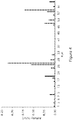
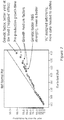
- the first-order model may be specified by a manual or automated choice of significant terms by reference to a half-normal plot. The adequacy of the full model and each contributing term is then assessed by partitioning the sum-of-squares contributions to the variance and assessing significance using the F distribution.
- residuals may be plotted against run order and effect sizes to screen for outliers and test adequacy of model assumptions.
- the procedure of Box & Cox may also be useful in identifying dependence of variance on response sizes.
- a normal probability plot of residuals can be used as a further test of model adequacy in addition to the Shapiro-Wilk test to assess deviations from normality in the distribution of error terms ( Shapiro & Wilk (1965) Biometrika 52 (3-4): 591-611 ).
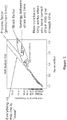
- Screening typically takes place over several iterations aiming to locate a region with high values and suitably low levels of variation of the required responses.
- the surface is navigated using an optimization process, including but not limited to gradient ascent, conjugate gradient methods, Newton-Raphson optimization, rank-one, rank-two and the Newton-Lagrange algorithm, until a suitable threshold value is achieved or other termination criteria (e.g. resource limits or the limit of feasible factor settings) are met. Following this the need for further optimisation is assessed using the lack-of-fit value for the resulting model and economic considerations.
- the output of the screening step is a parameterised first order polynomial model. This allows one to establish which factors are contributing to the variability of responses, approximate levels at which they should be set and determine which factors can be eliminated.
- a moderately extended design including 3 levels per factor may be implemented to acquire better parameter estimates and determine the need for adopting a more complex model. This can be performed by comparison between the model value prediction for the centrepoint and its measured value. Incorporation of this into the ANOVA procedure allows the contribution of curvature in the response surface to the overall variance to be assessed.
- the optimisation step typically uses a response surface methodology (RSM) to fit a higher-order model (typically quadratic) in a small number of factors based on the last-stage factorial experiment, however the invention should be understood to include other optimization methods including but not restricted to: Newton-Raphson, Newton-Lagrange, rank-one, rank-two, steepest ascent, conjugate gradient and support vector machine regression.
- RSM response surface methodology
- the most appropriate extensions depend on the details of the model to be fitted and expectations of the geometry of the space.
- a central composite design may be used, in which the number of factor levels is increased from three to five and a quadratic model is estimated. Values for the additional levels are chosen as the two factorial levels ⁇ a and the centrepoint.
- the design should be replicated for each combination of categorical factors.
- the value of ⁇ is preferably chosen to permit rotation of the resulting model where constraints on factor levels do not prevent this.
- Models may for example be optimised using automated stepwise regression with manual intervention where necessary, or via standard processes of nonlinear optimization or by application of machine learning methods including but not restricted to support vector machines, artificial neural networks and metaheuristic methods.
- the resulting model can be used to define experimental conditions for production.
- Optional confirmatory runs can be used to determine the degree of agreement between predicted and actual values.
- Statistical tools for generating and analysing experimental designs according to the methodology of the present invention are available and may include packages such as DesignExpert® (Stat-Ease, Inc., Minneapolis, MN, USA).
- the described method can be implemented via one or more computer systems.
- the present disclosure provides a computer readable medium containing program instructions for implementing the method of the invention, wherein execution of the program instructions by one or more processors of a computer system causes the one or more processors to carry out the phases as described herein.
- the computer system includes at least: an input device, an output device, a storage medium, and a microprocessor).
- Possible input devices include a keyboard, a computer mouse, a touch screen, and the like.
- Output devices computer monitor, a liquid-crystal display (LCD), light emitting diode (LED) computer monitor, virtual reality (VR) headset and the like.
- LCD liquid-crystal display
- LED light emitting diode
- VR virtual reality
- information can be output to a user, a user interface device, a computer-readable storage medium, or another local or networked computer.
- Storage media include various types of memory such as a hard disk, RAM, flash memory, and other magnetic, optical, physical, or electronic memory devices.
- the microprocessor is any typical computer microprocessor for performing calculations and directing other functions for performing input, output, calculation, and display of data.
- Two or more computer systems may be linked using wired or wireless means and may communicate with one another or with other computer systems directly and/or using a publicly-available networking system such as the Internet. Networking of computers permits various aspects of the disclosure to be carried out, stored in, and shared amongst one or more computer systems locally and at remote sites.
- the computer processor may comprise an artificial neural network (ANN).
- the method may be incorporated as part of a laboratory information management system (LIMS) or a software suite that is compatible with a LIMS.
- LIMS laboratory information management system
- the methods described may be configured to interact with and control automated laboratory equipment including liquid handling and dispensing apparatus or more advanced laboratory robotic systems. Where higher numbers of factors are considered during the factor screening phase, in one embodiment of the invention it is an option to automate performance of factor screening experiments using a high-level programming language to produce reproducible and scalable workflows to underpin the screening, refining and optimisation phases of the method.
- Suitable high-level programming languages may include C++, JavaTM, Visual Basic, Ruby and PHP, as well as the biology specific language AnthaTM (www.antha-lang.org).
- Example 1 Multi-factorial screen for a bio-process
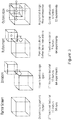
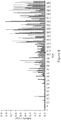
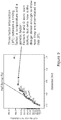
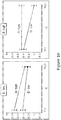
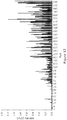
- Figure 9 shows the analysis of the data obtained from the refinement. Owing to the much denser design at this stage (2 7-1 ), the BCD interaction observed did not have any aliases, assuming that there were no 4Fls. The implications of this 3FI were that three apparently unrelated factors - a genetic factor (B), a process temperature (C) and a timing factor (D) - were interacting in such a way that a combination of the correct levels were required to get the highest yields, see Figure 10 . Owing to the lack of other factors observed as significant at this point, it was possible to eliminate more factors from further investigation and progress to the optimisation step.
- B genetic factor
- C process temperature
- D timing factor
- DEXML software that facilitates automated execution of liquid handling steps involved in a multifactorial experiment.
- the example here is directed to medium preparation, but the skilled person will appreciate that this framework can equally be applied to other processes including the complex genetic construct assembly required to investigate high numbers of genetic factors.
- DEXML produces instructions for liquid-handling robots and setup instructions for users of such robots in order to implement liquid-handling stages relevant to designed experiments. Given a set of parameters defining composition of liquid media or bacterial cultures the system calculates required volumes and concentrations of stock components, requirements for liquid handling resources such as tips, defines a setup plan for deck layout and produces an instruction script for direct execution by the robot.
- Inputs DesignExpert text file, Configuration file (CSV format)
- Outputs Liquid handling instructions Parameters: Set in configuration file Dependencies: Labware definitions. Implementation: Ruby 1.9.3 scripts
- DEXML is a command-line tool for creating implementations of designed experiments. The best way to understand its operation is through a description of use. The workflow is as follows:
- An experimental stage is essentially a set of designed experimental runs laid out in an appropriate liquid handling receptacle such as a 96-well plate.
- an appropriate liquid handling receptacle such as a 96-well plate.
- Each stage entry in the config consists of declarations that a particular component is needed when implementing that stage.
- Liquid components can be fixed or variable, the variability either being determined based on the experimental design or on the desired target volume of each experiment. Non-liquid components can also be specified if they place constraints on the design layout (a good example of this is when plates must be incubated at different temperatures). Each component is given a designation according to whether it is a liquid (and if so what type of liquid) or some other experimental variable such as time, temperature or shaking speed.
- the config file provides the ability to define how these factors are grouped together.
- the config contains information on the concentrations of relevant stock solutions and optional commands for the implementer.
- the software is then run on the config file and DesignExpertTM file to produce an implementation of each stage defined in the config.
- the program works as follows: first it loads the two files and extracts the required information. Subsequently for each stage it determines how each experiment should be implemented in terms of the required liquid components and what volumes of these are needed. Concentrations are converted into volumes using the configuration information such as stock solution concentrations, adjusting these concentrations as necessary to ensure that parameters of the liquid handler (e.g. minimum transfer volume) are satisfied.
- the layout of the experiments on the output plates is defined. This can be set by the user via judicious choice of factor assignations but can also be modified through the choice of several automated options in the config file. Given the plate layout, the software then determines how much of each stock component is required and defines how they should be laid out on the robot deck given constraints on labware positions and types.
- the system defines an execution plan to enact the required transfer of liquids and implement the experiments.
- This consists of a set of robot instructions for loading/unloading tips, aspirating and dispensing volumes of particular liquids at required positions and other peripheral features such as changes in liquid handling adaptor.
- the plan is devised on a per-component basis, with the full plan being assembled by concatenating the subplans for all components.
- Each component subplan has two stages: first the system attempts to use any bulk-handling facility to pipette volumes to and from several wells simultaneously (at present this is restricted to 8-channel column-by-column pipetting). Then any remaining required volume is made up using individual transfers. Operations are planned in order to ensure that transfer volume limits (upper and lower) are not transgressed at any stage.
- the basic plan is then passed to an optimizer layer which refines the execution to improve speed via operations such as determining where the channel can be used to pipette from one source to multiple destinations (multipipetting) without risk of contamination, or to improve volumetric accuracy.
- the instructions are then passed to a simulator layer which checks that component volumes, liquid handling channel limitations and tip resources are not exceeded during execution and that the composition of the final output plates is as required.
- plan If the plan is validated it is output in an appropriate machine-readable format for implementation on the liquid-handling platform.
- a set of human-readable instructions is also produced for manual validation, if required.
- Robot setup instructions detailing component layout on source plates are also produced in a simple text format for viewing with appropriate software.
Landscapes
- Engineering & Computer Science (AREA)
- Life Sciences & Earth Sciences (AREA)
- Bioinformatics & Cheminformatics (AREA)
- Health & Medical Sciences (AREA)
- Theoretical Computer Science (AREA)
- Physics & Mathematics (AREA)
- Bioinformatics & Computational Biology (AREA)
- Molecular Biology (AREA)
- Biotechnology (AREA)
- General Health & Medical Sciences (AREA)
- Physiology (AREA)
- Evolutionary Biology (AREA)
- Medical Informatics (AREA)
- Spectroscopy & Molecular Physics (AREA)
- Biophysics (AREA)
- Organic Chemistry (AREA)
- Chemical & Material Sciences (AREA)
- General Engineering & Computer Science (AREA)
- Zoology (AREA)
- Wood Science & Technology (AREA)
- Computational Linguistics (AREA)
- Data Mining & Analysis (AREA)
- Databases & Information Systems (AREA)
- General Physics & Mathematics (AREA)
- Computing Systems (AREA)
- Proteomics, Peptides & Aminoacids (AREA)
- Microbiology (AREA)
- Immunology (AREA)
- Biochemistry (AREA)
- Genetics & Genomics (AREA)
- Measuring Or Testing Involving Enzymes Or Micro-Organisms (AREA)
- Management, Administration, Business Operations System, And Electronic Commerce (AREA)
- Apparatus Associated With Microorganisms And Enzymes (AREA)
Claims (15)
- Verfahren zur Erhöhung der Prozessleistung in einem biologischen Prozess, umfassend mindestens einen Prozessschritt, wobei das Verfahren umfasst:(a) eine Identifikationsphase, in der mindestens sieben Faktoren durch eine Benutzerauswahl identifiziert und/oder automatisch von einem Prozessor ausgewählt werden, wobei ein Faktor als ein Merkmal eines Prozesses oder innerhalb eines Prozesses definiert wird, das, wenn es modifiziert wird, die Leistung des Prozesses beeinflusst, und wobei die Faktoren aus mindestens zwei Prozessfaktoren und mindestens zwei genetischen Faktoren ausgewählt sind, wobei Prozessfaktoren aus einer Gruppe ausgewählt sind, die Merkmale der Ausrüstung, der Umgebung, des Protokolls, der Reagenzien, des Umgangs mit Zellen und des Prozessdesigns umfasst, und wobei genetische Faktoren qualitative und quantitative Merkmale sind, die mit dem an dem Prozess beteiligten genetischen Material verbunden sind;(b) eine Faktor-Screening-Phase, in der einzelne und kombinierte Beiträge zur Prozessleistung jedes der mindestens sieben Faktoren, wie in (a) beschrieben, von einer Laborautomatisierungsvorrichtung und einem Prozessor bestimmt werden, der die Laborautomatisierungsvorrichtung steuert, um experimentelle Daten unter Verwendung eines fraktionierten faktoriellen Versuchsplans zu erfassen, wobei die experimentellen Daten vom Prozessor verwendet werden, um die für die weitere Untersuchung wichtigsten Faktoren zu definieren und das Vorhandensein multifaktorieller Wechselwirkungen zu identifizieren, indem mindestens einige der Koeffizienten eines Polynommodells erster Ordnung der Prozessleistung als Funktion der mindestens sieben Faktoren geschätzt werden, wobei das Modell einen Term für jeden einzelnen Faktor und einen Term für jede Wechselwirkung zwischen zwei Faktoren und drei Faktoren zwischen den mindestens sieben Faktoren umfasst; und(c) eine Verfeinerungsphase, in der Wechselwirkungen, die zu einer Erhöhung der Prozessleistung zwischen den mindestens sieben Faktoren führen, vom Prozessor, der eine Laborautomatisierungsvorrichtung steuert, identifiziert und getestet werden, um weitere Experimente durchzuführen, um bessere Parameterschätzungen für die Wechselwirkungen zu erhalten, die in der Screening-Phase ermittelt wurden, um die Prozessleistung zu steigern.
- Verfahren nach Anspruch 1, wobei der biologische Prozess mehrere Prozessschritte umfasst.
- Verfahren nach Anspruch 1 oder 2, wobei der mindestens eine Prozessschritt einen Herstellungsprozess oder einen Analyseprozess umfasst.
- Verfahren nach einem der Ansprüche 1 bis 3, wobei jeder Faktor über mindestens zwei Stufen modifiziert wird, wobei eine Stufe einem mit dem Faktor verbundenen Parameterbereich oder einer dem Faktor zugeordneten Eigenschaft entspricht.
- Verfahren nach einem der vorherigen Ansprüche, wobei die multifaktorielle Wechselwirkung mindestens eine Zwei-Faktor-Wechselwirkung umfasst.
- Verfahren nach einem der Ansprüche 1 bis 4, wobei die multifaktorielle Wechselwirkung mindestens eine Drei-Faktor-Wechselwirkung umfasst.
- Verfahren nach einem der Ansprüche 1 bis 4, wobei die multifaktorielle Wechselwirkung mindestens eine Wechselwirkung umfasst, die mehr als drei Faktoren umfasst.
- Verfahren nach einem der vorherigen Ansprüche, wobei die multifaktorielle Wechselwirkung mindestens einen Prozessfaktor und mindestens einen genetischen Faktor umfasst.
- Verfahren nach einem der vorherigen Ansprüche, wobei der mindestens eine Prozessfaktor ausgewählt ist aus der Gruppe bestehend aus:
Temperatur; pH-Wert; Titriermittel; Pufferkonzentration; Reagenzienkonzentration; Zusammensetzung der Wachstumsmedien; Nährstoffkonzentration; Abfallproduktkonzentration; Sauerstoffkonzentration; Reaktorvolumen; Fermentationsvolumen; Laufraddrehzahl; Samenkulturbedingungen; Luftstrom; Druck; Beschickungszusammensetzung; Beschickungsgeschwindigkeit; Beschickungszeitpunkt; Antischaumtyp; Antischaumkonzentration; Schüttelgeschwindigkeit; Vorhandensein von Leitblechen; Größe der Leitbleche; Position der Leitbleche; Bioreaktorgeometrie; Induktorkonzentration; Induktionszeit; Verfahren zur Erzeugung von Stammkulturen; Lagerbedingungen für die Stammkultur; und Zeitpunkten eines beliebigen Prozessschritts. - Verfahren nach einem der vorherigen Ansprüche, wobei der mindestens eine genetische Faktor ausgewählt ist aus der Gruppe bestehend aus:
Vektortyp; genetischem Hintergrund; epigenetischen Modifikationen; Genvariante; Genidentität; Wirtsorganismusarten; Stamm des Wirtsorganismus; Promotortyp; Codon-Verwendung; Ribosomen-Bindungsstelle; Replikationsursprung; Auswahlmarker; Stelle der chromosomalen Integration; Leitsequenz; Bedienernutzung; Aktivatorverwendung; Operon-Design; mRNA 5'-Optimierungsstrategie; Kopiennummer; Orientierung genetischer Konstrukte; Isolatorelementen; siRNA-Kandidaten; nichtkodierender Nukleinsäure; Gen-Knockouts; und Gen-Hochregulation. - Verfahren nach einem der vorherigen Ansprüche, wobei das Verfahren mindestens einen weiteren Schritt umfasst:
(d) eine Optimierungsphase, in der Interaktionen höherer Ordnung verwendet werden, um ein Modell höherer Ordnung zu generieren, das auf einer begrenzten Anzahl von Faktoren basiert, die als am signifikantesten zur Steigerung der Prozessleistung beitragend identifiziert werden. - System zur Steigerung der Prozessleistung in einem biologischen Prozess, wobei das System umfasst:(i) einen Prozessor, der angepasst ist, um das Verfahren zu implementieren, das einen der Ansprüche 1 bis 11 umfasst;(ii) eine Laborautomatisierungsvorrichtung, wobei die Vorrichtung vom Prozessor gesteuert wird und so konfiguriert ist, dass sie die Faktor-Screening- und Verfeinerungsphasen implementiert.
- System nach Anspruch 12, wobei die Laborautomatisierungsvorrichtung ferner konfiguriert ist, um die Optimierungsphase zu implementieren.
- System nach Anspruch 12 und 13, wobei die Laborautomatisierungsvorrichtung eine oder mehrere der Gruppen umfasst, bestehend aus:
Geräten zur Handhabung und Abgabe von Flüssigkeiten; Containerhandhabungsgeräten; einem Laborroboter; einem Inkubator; Plattenhandhabungsgeräten; einem Spektrophotometer; einem Chromatographiegerät; einem Massenspektrometer; einem Temperaturwechselgerät; und einem Zentrifugengerät. - System nach den Ansprüchen 12 bis 14, wobei der Prozessor das Verfahren nach den Ansprüchen 1 bis 11 als Teil eines Laborinformationsmanagementsystems (LIMS) implementiert.
Applications Claiming Priority (2)
| Application Number | Priority Date | Filing Date | Title |
|---|---|---|---|
| GBGB1405243.5A GB201405243D0 (en) | 2014-03-24 | 2014-03-24 | System and apparatus 1 |
| PCT/US2015/022275 WO2015148526A1 (en) | 2014-03-24 | 2015-03-24 | Multifactorial process optimisation method and system |
Publications (3)
| Publication Number | Publication Date |
|---|---|
| EP3123377A1 EP3123377A1 (de) | 2017-02-01 |
| EP3123377A4 EP3123377A4 (de) | 2017-10-11 |
| EP3123377B1 true EP3123377B1 (de) | 2020-10-28 |
Family
ID=50686808
Family Applications (2)
| Application Number | Title | Priority Date | Filing Date |
|---|---|---|---|
| EP15770388.5A Active EP3123378B1 (de) | 2014-03-24 | 2015-03-24 | Multifaktorielles bewertungsverfahren und system |
| EP15769236.9A Active EP3123377B1 (de) | 2014-03-24 | 2015-03-24 | Verfahren und system zur optimierung multifaktorieller prozesse |
Family Applications Before (1)
| Application Number | Title | Priority Date | Filing Date |
|---|---|---|---|
| EP15770388.5A Active EP3123378B1 (de) | 2014-03-24 | 2015-03-24 | Multifaktorielles bewertungsverfahren und system |
Country Status (6)
| Country | Link |
|---|---|
| US (2) | US10590494B2 (de) |
| EP (2) | EP3123378B1 (de) |
| CN (1) | CN106415561A (de) |
| DK (1) | DK3123378T3 (de) |
| GB (1) | GB201405243D0 (de) |
| WO (2) | WO2015148539A1 (de) |
Families Citing this family (7)
| Publication number | Priority date | Publication date | Assignee | Title |
|---|---|---|---|---|
| CN109086962A (zh) * | 2018-06-27 | 2018-12-25 | 中国石油天然气股份有限公司 | 确定稠油着火外界影响因素的分析方法及装置 |
| CN109241580B (zh) * | 2018-08-15 | 2023-08-18 | 深圳大学 | 一种地块设计方法、装置、计算机设备和存储介质 |
| US11176154B1 (en) * | 2019-02-05 | 2021-11-16 | Amazon Technologies, Inc. | Collaborative dataset management system for machine learning data |
| US20220328128A1 (en) * | 2019-05-08 | 2022-10-13 | Zymergen Inc. | Downscaling parameters to design experiments and plate models for micro-organisms at small scale to improve prediction of performance at larger scale |
| US12047373B2 (en) * | 2019-11-05 | 2024-07-23 | Salesforce.Com, Inc. | Monitoring resource utilization of an online system based on browser attributes collected for a session |
| GB201919469D0 (en) * | 2019-12-31 | 2020-02-12 | Synthace Ltd | Systems and methods for improved liquid handling for automation of laboratory processes |
| TWI758979B (zh) | 2020-11-30 | 2022-03-21 | 財團法人工業技術研究院 | 適應性搜尋空間調整的參數最佳化系統與方法及應用其之使用者介面 |
Family Cites Families (19)
| Publication number | Priority date | Publication date | Assignee | Title |
|---|---|---|---|---|
| US7043414B2 (en) * | 1997-06-20 | 2006-05-09 | Brown Peter G | System and method for simulating, modeling and scheduling of solution preparation in batch process manufacturing facilities |
| US20020035506A1 (en) * | 1998-10-30 | 2002-03-21 | Rami Loya | System for design and implementation of employee incentive and compensation programs for businesses |
| US6931396B1 (en) * | 1999-06-29 | 2005-08-16 | Gene Logic Inc. | Biological data processing |
| AU2002316267A1 (en) * | 2001-06-14 | 2003-01-02 | Rigel Pharmaceuticals, Inc. | Multidimensional biodata integration and relationship inference |
| EP1576524A2 (de) * | 2002-12-09 | 2005-09-21 | Applera Corporation | Durchsuchbare datenbank für biologische verwendung |
| US20050033568A1 (en) * | 2003-08-08 | 2005-02-10 | Hong Yu | Methods and systems for extracting synonymous gene and protein terms from biological literature |
| US7787601B2 (en) * | 2004-03-10 | 2010-08-31 | Convergys Customer Management Group, Inc. | System and method for IVR signature detection and event management |
| WO2009132271A2 (en) * | 2008-04-24 | 2009-10-29 | University Of Rochester Medical Center | Risk stratification of genetic disease using scoring of amino acid residue conservation in protein families |
| KR101432052B1 (ko) * | 2008-11-24 | 2014-08-20 | 삼성전자주식회사 | 인쇄 제어 단말장치, 및 인쇄 제어 방법 |
| WO2010098865A1 (en) * | 2009-02-26 | 2010-09-02 | Gt Life Sciences, Inc. | Mammalian cell line models and related methods |
| US8756050B1 (en) * | 2010-09-14 | 2014-06-17 | Amazon Technologies, Inc. | Techniques for translating content |
| WO2012045088A2 (en) * | 2010-10-01 | 2012-04-05 | The Board Of Trustees Of The University Of Illinois | Combinatorial design of highly efficient heterologous pathways |
| US8898149B2 (en) * | 2011-05-06 | 2014-11-25 | The Translational Genomics Research Institute | Biological data structure having multi-lateral, multi-scalar, and multi-dimensional relationships between molecular features and other data |
| EP2608122A1 (de) * | 2011-12-22 | 2013-06-26 | Philip Morris Products S.A. | Systeme und Verfahren zur Quantifizierung der Auswirkung von biologischen Störungen |
| WO2013086048A1 (en) * | 2011-12-05 | 2013-06-13 | Visa International Service Association | Dynamic network analytic system |
| EP2795501A2 (de) * | 2011-12-21 | 2014-10-29 | Life Technologies Corporation | Verfahren und systeme für experimentelles in-silico-designing und zur ausführung eines biologischen workflows |
| US20140185954A1 (en) * | 2012-12-28 | 2014-07-03 | Industrial Technology Research Institute | Influence-based social media interventions in healthcare |
| JP2014241040A (ja) * | 2013-06-11 | 2014-12-25 | 株式会社東芝 | 情報処理装置、方法、及びプログラム |
| US20160034514A1 (en) * | 2014-08-04 | 2016-02-04 | Regents Of The University Of Minnesota | Providing search results based on an identified user interest and relevance matching |
-
2014
- 2014-03-24 GB GBGB1405243.5A patent/GB201405243D0/en not_active Ceased
-
2015
- 2015-03-24 EP EP15770388.5A patent/EP3123378B1/de active Active
- 2015-03-24 DK DK15770388.5T patent/DK3123378T3/da active
- 2015-03-24 EP EP15769236.9A patent/EP3123377B1/de active Active
- 2015-03-24 CN CN201580027270.4A patent/CN106415561A/zh active Pending
- 2015-03-24 WO PCT/US2015/022290 patent/WO2015148539A1/en not_active Ceased
- 2015-03-24 WO PCT/US2015/022275 patent/WO2015148526A1/en not_active Ceased
-
2016
- 2016-09-20 US US15/270,837 patent/US10590494B2/en active Active
- 2016-09-22 US US15/272,688 patent/US10100375B2/en active Active
Non-Patent Citations (1)
| Title |
|---|
| OXFORD BIOMEDICA: "Multifactorial optimization of a lentiviral vector transfection/transduction system for improved vector titre and robustness", 29 July 2019 (2019-07-29), Retrieved from the Internet <URL:https://www.regmednet.com/users/268581-synthace/documents/51001-oxford-biomedica-case-study-v4_1> [retrieved on 20190911] * |
Also Published As
| Publication number | Publication date |
|---|---|
| US20170011045A1 (en) | 2017-01-12 |
| WO2015148539A1 (en) | 2015-10-01 |
| CN106415561A (zh) | 2017-02-15 |
| GB201405243D0 (en) | 2014-05-07 |
| US10100375B2 (en) | 2018-10-16 |
| US20170016079A1 (en) | 2017-01-19 |
| US10590494B2 (en) | 2020-03-17 |
| DK3123378T3 (da) | 2022-01-10 |
| EP3123378A4 (de) | 2017-08-16 |
| EP3123378A1 (de) | 2017-02-01 |
| WO2015148526A1 (en) | 2015-10-01 |
| EP3123377A4 (de) | 2017-10-11 |
| EP3123377A1 (de) | 2017-02-01 |
| EP3123378B1 (de) | 2021-10-06 |
Similar Documents
| Publication | Publication Date | Title |
|---|---|---|
| US10590494B2 (en) | Multifactorial process optimisation method and system | |
| Liao et al. | Artificial intelligence: a solution to involution of design–build–test–learn cycle | |
| Chen et al. | edgeR v4: powerful differential analysis of sequencing data with expanded functionality and improved support for small counts and larger datasets | |
| Tibbs Cortes et al. | Status and prospects of genome‐wide association studies in plants | |
| EP3122892B1 (de) | Bioprozessverfahren und system | |
| US20220328128A1 (en) | Downscaling parameters to design experiments and plate models for micro-organisms at small scale to improve prediction of performance at larger scale | |
| Heinemann et al. | Synthetic biology—putting engineering into biology | |
| Singh et al. | Revolutionizing enzyme engineering through artificial intelligence and machine learning | |
| Sun et al. | The E. coli whole-cell modeling project | |
| Moser et al. | Model-assisted DoE software: optimization of growth and biocatalysis in Saccharomyces cerevisiae bioprocesses | |
| US20230073351A1 (en) | Selecting biological sequences for screening to identify sequences that perform a desired function | |
| EP3899685A1 (de) | Verfahren, vorrichtung und computerlesbares medium zur effizienten optimierung eines phänotyps mit einem spezialisierten vorhersagemodell | |
| US10102335B2 (en) | Cost-optimized design analysis for rapid microbial prototyping | |
| Kuchemüller et al. | Efficient optimization of process strategies with model-assisted design of experiments | |
| KR20200078558A (ko) | 고 처리량 게놈 제조 작업을 계획하고 수행하기 위한 장치-애그노스틱 시스템 | |
| Petersen et al. | teemi: An open-source literate programming approach for iterative design-build-test-learn cycles in bioengineering | |
| Wang et al. | Synthetic promoter design in Escherichia coli based on generative adversarial network | |
| Heo et al. | Architectures of emerging biofoundry platforms for synthetic biology | |
| Carbonell | Synthetic biology design tools for metabolic engineering | |
| CN116524994B (zh) | 一种基于贪婪算法的菌株构建排程设计方法 | |
| Zrimec et al. | Supervised generative design of regulatory DNA for gene expression control | |
| Peng et al. | Genome-scale modeling for rational design of microbial cells and cocultures | |
| Peters et al. | Exploring of the feature space of de novo developed post-transcriptional riboregulators | |
| Ma et al. | Multi-Objective Bayesian Optimization for Data-Efficient Bioprocess Development | |
| Saban et al. | Deciphering plasmid replication dynamics: a computational approach to predict ColE1-like plasmid copy number |
Legal Events
| Date | Code | Title | Description |
|---|---|---|---|
| STAA | Information on the status of an ep patent application or granted ep patent |
Free format text: STATUS: THE INTERNATIONAL PUBLICATION HAS BEEN MADE |
|
| PUAI | Public reference made under article 153(3) epc to a published international application that has entered the european phase |
Free format text: ORIGINAL CODE: 0009012 |
|
| STAA | Information on the status of an ep patent application or granted ep patent |
Free format text: STATUS: REQUEST FOR EXAMINATION WAS MADE |
|
| 17P | Request for examination filed |
Effective date: 20161024 |
|
| AK | Designated contracting states |
Kind code of ref document: A1 Designated state(s): AL AT BE BG CH CY CZ DE DK EE ES FI FR GB GR HR HU IE IS IT LI LT LU LV MC MK MT NL NO PL PT RO RS SE SI SK SM TR |
|
| AX | Request for extension of the european patent |
Extension state: BA ME |
|
| RIN1 | Information on inventor provided before grant (corrected) |
Inventor name: GRANT, CHRISTOPHER RICHARD Inventor name: GERSHATER, MARKUS CHRISTIAN Inventor name: SADOWSKI, MICHAEL IAN Inventor name: WARD, SEAN MICHAEL |
|
| DAV | Request for validation of the european patent (deleted) | ||
| DAX | Request for extension of the european patent (deleted) | ||
| A4 | Supplementary search report drawn up and despatched |
Effective date: 20170911 |
|
| RIC1 | Information provided on ipc code assigned before grant |
Ipc: G06F 19/00 20110101ALI20170905BHEP Ipc: G06F 19/12 20110101ALI20170905BHEP Ipc: C12Q 3/00 20060101ALI20170905BHEP Ipc: G06F 19/10 20110101AFI20170905BHEP |
|
| STAA | Information on the status of an ep patent application or granted ep patent |
Free format text: STATUS: EXAMINATION IS IN PROGRESS |
|
| 17Q | First examination report despatched |
Effective date: 20180620 |
|
| RAP1 | Party data changed (applicant data changed or rights of an application transferred) |
Owner name: SYNTHACE LIMITED |
|
| RIC1 | Information provided on ipc code assigned before grant |
Ipc: G16B 5/00 20190101AFI20190121BHEP Ipc: C12Q 3/00 20060101ALI20190121BHEP Ipc: G16C 20/10 20190101ALI20190121BHEP |
|
| REG | Reference to a national code |
Ref country code: DE Ref legal event code: R079 Ref document number: 602015061171 Country of ref document: DE Free format text: PREVIOUS MAIN CLASS: G06F0019100000 Ipc: G16C0099000000 |
|
| RIC1 | Information provided on ipc code assigned before grant |
Ipc: G16C 99/00 20190101AFI20200124BHEP Ipc: G16B 5/00 20190101ALI20200124BHEP Ipc: C12Q 3/00 20060101ALI20200124BHEP |
|
| GRAP | Despatch of communication of intention to grant a patent |
Free format text: ORIGINAL CODE: EPIDOSNIGR1 |
|
| STAA | Information on the status of an ep patent application or granted ep patent |
Free format text: STATUS: GRANT OF PATENT IS INTENDED |
|
| INTG | Intention to grant announced |
Effective date: 20200506 |
|
| GRAS | Grant fee paid |
Free format text: ORIGINAL CODE: EPIDOSNIGR3 |
|
| GRAA | (expected) grant |
Free format text: ORIGINAL CODE: 0009210 |
|
| STAA | Information on the status of an ep patent application or granted ep patent |
Free format text: STATUS: THE PATENT HAS BEEN GRANTED |
|
| AK | Designated contracting states |
Kind code of ref document: B1 Designated state(s): AL AT BE BG CH CY CZ DE DK EE ES FI FR GB GR HR HU IE IS IT LI LT LU LV MC MK MT NL NO PL PT RO RS SE SI SK SM TR |
|
| REG | Reference to a national code |
Ref country code: GB Ref legal event code: FG4D |
|
| REG | Reference to a national code |
Ref country code: CH Ref legal event code: EP |
|
| REG | Reference to a national code |
Ref country code: AT Ref legal event code: REF Ref document number: 1329032 Country of ref document: AT Kind code of ref document: T Effective date: 20201115 |
|
| REG | Reference to a national code |
Ref country code: DE Ref legal event code: R096 Ref document number: 602015061171 Country of ref document: DE |
|
| REG | Reference to a national code |
Ref country code: IE Ref legal event code: FG4D |
|
| REG | Reference to a national code |
Ref country code: CH Ref legal event code: NV Representative=s name: VALIPAT S.A. GEVERS SA, CH |
|
| REG | Reference to a national code |
Ref country code: AT Ref legal event code: MK05 Ref document number: 1329032 Country of ref document: AT Kind code of ref document: T Effective date: 20201028 |
|
| REG | Reference to a national code |
Ref country code: NL Ref legal event code: MP Effective date: 20201028 |
|
| PG25 | Lapsed in a contracting state [announced via postgrant information from national office to epo] |
Ref country code: GR Free format text: LAPSE BECAUSE OF FAILURE TO SUBMIT A TRANSLATION OF THE DESCRIPTION OR TO PAY THE FEE WITHIN THE PRESCRIBED TIME-LIMIT Effective date: 20210129 Ref country code: PT Free format text: LAPSE BECAUSE OF FAILURE TO SUBMIT A TRANSLATION OF THE DESCRIPTION OR TO PAY THE FEE WITHIN THE PRESCRIBED TIME-LIMIT Effective date: 20210301 Ref country code: RS Free format text: LAPSE BECAUSE OF FAILURE TO SUBMIT A TRANSLATION OF THE DESCRIPTION OR TO PAY THE FEE WITHIN THE PRESCRIBED TIME-LIMIT Effective date: 20201028 Ref country code: FI Free format text: LAPSE BECAUSE OF FAILURE TO SUBMIT A TRANSLATION OF THE DESCRIPTION OR TO PAY THE FEE WITHIN THE PRESCRIBED TIME-LIMIT Effective date: 20201028 Ref country code: NO Free format text: LAPSE BECAUSE OF FAILURE TO SUBMIT A TRANSLATION OF THE DESCRIPTION OR TO PAY THE FEE WITHIN THE PRESCRIBED TIME-LIMIT Effective date: 20210128 Ref country code: NL Free format text: LAPSE BECAUSE OF FAILURE TO SUBMIT A TRANSLATION OF THE DESCRIPTION OR TO PAY THE FEE WITHIN THE PRESCRIBED TIME-LIMIT Effective date: 20201028 |
|
| REG | Reference to a national code |
Ref country code: LT Ref legal event code: MG4D |
|
| PG25 | Lapsed in a contracting state [announced via postgrant information from national office to epo] |
Ref country code: IS Free format text: LAPSE BECAUSE OF FAILURE TO SUBMIT A TRANSLATION OF THE DESCRIPTION OR TO PAY THE FEE WITHIN THE PRESCRIBED TIME-LIMIT Effective date: 20210228 Ref country code: LV Free format text: LAPSE BECAUSE OF FAILURE TO SUBMIT A TRANSLATION OF THE DESCRIPTION OR TO PAY THE FEE WITHIN THE PRESCRIBED TIME-LIMIT Effective date: 20201028 Ref country code: PL Free format text: LAPSE BECAUSE OF FAILURE TO SUBMIT A TRANSLATION OF THE DESCRIPTION OR TO PAY THE FEE WITHIN THE PRESCRIBED TIME-LIMIT Effective date: 20201028 Ref country code: SE Free format text: LAPSE BECAUSE OF FAILURE TO SUBMIT A TRANSLATION OF THE DESCRIPTION OR TO PAY THE FEE WITHIN THE PRESCRIBED TIME-LIMIT Effective date: 20201028 Ref country code: BG Free format text: LAPSE BECAUSE OF FAILURE TO SUBMIT A TRANSLATION OF THE DESCRIPTION OR TO PAY THE FEE WITHIN THE PRESCRIBED TIME-LIMIT Effective date: 20210128 Ref country code: ES Free format text: LAPSE BECAUSE OF FAILURE TO SUBMIT A TRANSLATION OF THE DESCRIPTION OR TO PAY THE FEE WITHIN THE PRESCRIBED TIME-LIMIT Effective date: 20201028 Ref country code: AT Free format text: LAPSE BECAUSE OF FAILURE TO SUBMIT A TRANSLATION OF THE DESCRIPTION OR TO PAY THE FEE WITHIN THE PRESCRIBED TIME-LIMIT Effective date: 20201028 |
|
| PG25 | Lapsed in a contracting state [announced via postgrant information from national office to epo] |
Ref country code: HR Free format text: LAPSE BECAUSE OF FAILURE TO SUBMIT A TRANSLATION OF THE DESCRIPTION OR TO PAY THE FEE WITHIN THE PRESCRIBED TIME-LIMIT Effective date: 20201028 |
|
| REG | Reference to a national code |
Ref country code: DE Ref legal event code: R097 Ref document number: 602015061171 Country of ref document: DE |
|
| PG25 | Lapsed in a contracting state [announced via postgrant information from national office to epo] |
Ref country code: LT Free format text: LAPSE BECAUSE OF FAILURE TO SUBMIT A TRANSLATION OF THE DESCRIPTION OR TO PAY THE FEE WITHIN THE PRESCRIBED TIME-LIMIT Effective date: 20201028 Ref country code: RO Free format text: LAPSE BECAUSE OF FAILURE TO SUBMIT A TRANSLATION OF THE DESCRIPTION OR TO PAY THE FEE WITHIN THE PRESCRIBED TIME-LIMIT Effective date: 20201028 Ref country code: SK Free format text: LAPSE BECAUSE OF FAILURE TO SUBMIT A TRANSLATION OF THE DESCRIPTION OR TO PAY THE FEE WITHIN THE PRESCRIBED TIME-LIMIT Effective date: 20201028 Ref country code: SM Free format text: LAPSE BECAUSE OF FAILURE TO SUBMIT A TRANSLATION OF THE DESCRIPTION OR TO PAY THE FEE WITHIN THE PRESCRIBED TIME-LIMIT Effective date: 20201028 Ref country code: EE Free format text: LAPSE BECAUSE OF FAILURE TO SUBMIT A TRANSLATION OF THE DESCRIPTION OR TO PAY THE FEE WITHIN THE PRESCRIBED TIME-LIMIT Effective date: 20201028 Ref country code: CZ Free format text: LAPSE BECAUSE OF FAILURE TO SUBMIT A TRANSLATION OF THE DESCRIPTION OR TO PAY THE FEE WITHIN THE PRESCRIBED TIME-LIMIT Effective date: 20201028 |
|
| PG25 | Lapsed in a contracting state [announced via postgrant information from national office to epo] |
Ref country code: DK Free format text: LAPSE BECAUSE OF FAILURE TO SUBMIT A TRANSLATION OF THE DESCRIPTION OR TO PAY THE FEE WITHIN THE PRESCRIBED TIME-LIMIT Effective date: 20201028 |
|
| PLBE | No opposition filed within time limit |
Free format text: ORIGINAL CODE: 0009261 |
|
| STAA | Information on the status of an ep patent application or granted ep patent |
Free format text: STATUS: NO OPPOSITION FILED WITHIN TIME LIMIT |
|
| 26N | No opposition filed |
Effective date: 20210729 |
|
| PG25 | Lapsed in a contracting state [announced via postgrant information from national office to epo] |
Ref country code: MC Free format text: LAPSE BECAUSE OF FAILURE TO SUBMIT A TRANSLATION OF THE DESCRIPTION OR TO PAY THE FEE WITHIN THE PRESCRIBED TIME-LIMIT Effective date: 20201028 Ref country code: AL Free format text: LAPSE BECAUSE OF FAILURE TO SUBMIT A TRANSLATION OF THE DESCRIPTION OR TO PAY THE FEE WITHIN THE PRESCRIBED TIME-LIMIT Effective date: 20201028 Ref country code: IT Free format text: LAPSE BECAUSE OF FAILURE TO SUBMIT A TRANSLATION OF THE DESCRIPTION OR TO PAY THE FEE WITHIN THE PRESCRIBED TIME-LIMIT Effective date: 20201028 |
|
| PG25 | Lapsed in a contracting state [announced via postgrant information from national office to epo] |
Ref country code: SI Free format text: LAPSE BECAUSE OF FAILURE TO SUBMIT A TRANSLATION OF THE DESCRIPTION OR TO PAY THE FEE WITHIN THE PRESCRIBED TIME-LIMIT Effective date: 20201028 |
|
| REG | Reference to a national code |
Ref country code: BE Ref legal event code: MM Effective date: 20210331 |
|
| PG25 | Lapsed in a contracting state [announced via postgrant information from national office to epo] |
Ref country code: LU Free format text: LAPSE BECAUSE OF NON-PAYMENT OF DUE FEES Effective date: 20210324 Ref country code: IE Free format text: LAPSE BECAUSE OF NON-PAYMENT OF DUE FEES Effective date: 20210324 |
|
| PG25 | Lapsed in a contracting state [announced via postgrant information from national office to epo] |
Ref country code: IS Free format text: LAPSE BECAUSE OF FAILURE TO SUBMIT A TRANSLATION OF THE DESCRIPTION OR TO PAY THE FEE WITHIN THE PRESCRIBED TIME-LIMIT Effective date: 20210228 |
|
| PG25 | Lapsed in a contracting state [announced via postgrant information from national office to epo] |
Ref country code: BE Free format text: LAPSE BECAUSE OF NON-PAYMENT OF DUE FEES Effective date: 20210331 |
|
| PG25 | Lapsed in a contracting state [announced via postgrant information from national office to epo] |
Ref country code: HU Free format text: LAPSE BECAUSE OF FAILURE TO SUBMIT A TRANSLATION OF THE DESCRIPTION OR TO PAY THE FEE WITHIN THE PRESCRIBED TIME-LIMIT; INVALID AB INITIO Effective date: 20150324 |
|
| P01 | Opt-out of the competence of the unified patent court (upc) registered |
Effective date: 20230523 |
|
| PG25 | Lapsed in a contracting state [announced via postgrant information from national office to epo] |
Ref country code: CY Free format text: LAPSE BECAUSE OF FAILURE TO SUBMIT A TRANSLATION OF THE DESCRIPTION OR TO PAY THE FEE WITHIN THE PRESCRIBED TIME-LIMIT Effective date: 20201028 |
|
| PG25 | Lapsed in a contracting state [announced via postgrant information from national office to epo] |
Ref country code: MK Free format text: LAPSE BECAUSE OF FAILURE TO SUBMIT A TRANSLATION OF THE DESCRIPTION OR TO PAY THE FEE WITHIN THE PRESCRIBED TIME-LIMIT Effective date: 20201028 |
|
| PG25 | Lapsed in a contracting state [announced via postgrant information from national office to epo] |
Ref country code: TR Free format text: LAPSE BECAUSE OF FAILURE TO SUBMIT A TRANSLATION OF THE DESCRIPTION OR TO PAY THE FEE WITHIN THE PRESCRIBED TIME-LIMIT Effective date: 20201028 |
|
| PG25 | Lapsed in a contracting state [announced via postgrant information from national office to epo] |
Ref country code: MT Free format text: LAPSE BECAUSE OF FAILURE TO SUBMIT A TRANSLATION OF THE DESCRIPTION OR TO PAY THE FEE WITHIN THE PRESCRIBED TIME-LIMIT Effective date: 20201028 |
|
| REG | Reference to a national code |
Ref country code: CH Ref legal event code: U11 Free format text: ST27 STATUS EVENT CODE: U-0-0-U10-U11 (AS PROVIDED BY THE NATIONAL OFFICE) Effective date: 20260401 |
|
| PGFP | Annual fee paid to national office [announced via postgrant information from national office to epo] |
Ref country code: GB Payment date: 20260326 Year of fee payment: 12 |
|
| PGFP | Annual fee paid to national office [announced via postgrant information from national office to epo] |
Ref country code: DE Payment date: 20260326 Year of fee payment: 12 |
|
| PGFP | Annual fee paid to national office [announced via postgrant information from national office to epo] |
Ref country code: FR Payment date: 20260326 Year of fee payment: 12 |
|
| PGFP | Annual fee paid to national office [announced via postgrant information from national office to epo] |
Ref country code: CH Payment date: 20260401 Year of fee payment: 12 |