EP3124064A2 - Dialysesystem mit mehrfach-heizer-leistungskoordination - Google Patents
Dialysesystem mit mehrfach-heizer-leistungskoordination Download PDFInfo
- Publication number
- EP3124064A2 EP3124064A2 EP16176496.4A EP16176496A EP3124064A2 EP 3124064 A2 EP3124064 A2 EP 3124064A2 EP 16176496 A EP16176496 A EP 16176496A EP 3124064 A2 EP3124064 A2 EP 3124064A2
- Authority
- EP
- European Patent Office
- Prior art keywords
- heater
- power
- heaters
- fluid
- powered
- Prior art date
- Legal status (The legal status is an assumption and is not a legal conclusion. Google has not performed a legal analysis and makes no representation as to the accuracy of the status listed.)
- Granted
Links
Images





Classifications
-
- A—HUMAN NECESSITIES
- A61—MEDICAL OR VETERINARY SCIENCE; HYGIENE
- A61M—DEVICES FOR INTRODUCING MEDIA INTO, OR ONTO, THE BODY; DEVICES FOR TRANSDUCING BODY MEDIA OR FOR TAKING MEDIA FROM THE BODY; DEVICES FOR PRODUCING OR ENDING SLEEP OR STUPOR
- A61M5/00—Devices for bringing media into the body in a subcutaneous, intra-vascular or intramuscular way; Accessories therefor, e.g. filling or cleaning devices, arm rests
- A61M5/44—Devices for bringing media into the body in a subcutaneous, intra-vascular or intramuscular way; Accessories therefor, e.g. filling or cleaning devices, arm rests having means for cooling or heating the devices or media
-
- A—HUMAN NECESSITIES
- A61—MEDICAL OR VETERINARY SCIENCE; HYGIENE
- A61M—DEVICES FOR INTRODUCING MEDIA INTO, OR ONTO, THE BODY; DEVICES FOR TRANSDUCING BODY MEDIA OR FOR TAKING MEDIA FROM THE BODY; DEVICES FOR PRODUCING OR ENDING SLEEP OR STUPOR
- A61M1/00—Suction or pumping devices for medical purposes; Devices for carrying-off, for treatment of, or for carrying-over, body-liquids; Drainage systems
- A61M1/14—Dialysis systems; Artificial kidneys; Blood oxygenators ; Reciprocating systems for treatment of body fluids, e.g. single needle systems for hemofiltration or pheresis
- A61M1/16—Dialysis systems; Artificial kidneys; Blood oxygenators ; Reciprocating systems for treatment of body fluids, e.g. single needle systems for hemofiltration or pheresis with membranes
- A61M1/1654—Dialysates therefor
- A61M1/1656—Apparatus for preparing dialysates
-
- A—HUMAN NECESSITIES
- A61—MEDICAL OR VETERINARY SCIENCE; HYGIENE
- A61M—DEVICES FOR INTRODUCING MEDIA INTO, OR ONTO, THE BODY; DEVICES FOR TRANSDUCING BODY MEDIA OR FOR TAKING MEDIA FROM THE BODY; DEVICES FOR PRODUCING OR ENDING SLEEP OR STUPOR
- A61M1/00—Suction or pumping devices for medical purposes; Devices for carrying-off, for treatment of, or for carrying-over, body-liquids; Drainage systems
- A61M1/14—Dialysis systems; Artificial kidneys; Blood oxygenators ; Reciprocating systems for treatment of body fluids, e.g. single needle systems for hemofiltration or pheresis
- A61M1/16—Dialysis systems; Artificial kidneys; Blood oxygenators ; Reciprocating systems for treatment of body fluids, e.g. single needle systems for hemofiltration or pheresis with membranes
- A61M1/1654—Dialysates therefor
- A61M1/1656—Apparatus for preparing dialysates
- A61M1/166—Heating
Definitions
- the present disclosure relates generally to medical fluid systems and more particularly to dialysis systems that can be used in a patient's home.
- the system of the present disclosure is a medical fluid system, such as a dialysis system, which can be used in a patient's home.
- the medical fluid system in one embodiment generates dialysis fluid.
- the process begins by purifying water.
- the purified water is delivered to the dialysis machine, which adds concentrates to the purified water to create dialysate.
- the apparatus therefore includes a water purification system placed on the front end of the dialysis machine.
- the system generates dialysate online, that is, it generates the medical fluid as it is needed as opposed to being pre-generated and stored in supply bags.
- the need to upgrade the electrical system of a patient's home to handle both dialysate preparation and dialysate delivery could provide an impediment to adoption of the therapy.
- the present system accordingly provides a supplemental power supply, which is connected in parallel with the patient's line or branch power.
- the supplemental power is discharged into the system to prevent the total power draw from the load or branch from exceeding its load rating.
- the supplemental power supply draws power from the branch circuit. For example, there may be sixteen to twenty-two hours per day that the equipment is not in use. The supplemental source during this time replenishes its power reserve for the next dialysis treatment.
- both the branch and the supplemental power devices supply power during therapy to the dialysis hardware.
- the branch and the supplemental power devices (i) operate in parallel to supply power to each of the medical fluid components requiring power; or (ii) are dedicated individually to one or more of the medical fluid components requiring power (e.g., branch supplies power to each of the medical fluid components requiring power except for the dialysate preparation unit which is powered via the supplemental power source).
- branch supplies power to each of the medical fluid components requiring power except for the dialysate preparation unit which is powered via the supplemental power source.
- the supplemental power source can be one of several different types, each of which offers different benefits and drawbacks.
- the supplemental power source is an electrochemical battery or batteries, e.g., which uses a rechargeable chemistry such as Lithium-Ion, Lithium-Ion-Polymer, Lithium-Ion-Phosphate, Lithium-Sulfur, Lithium-Nano-Titanate, Nickel-Metal-Hydride, Nickel-Cadmium, Nickel-Iron, Nickel-Zink, Lead-acid, and rechargeable-alkaline cells.
- a rechargeable chemistry such as Lithium-Ion, Lithium-Ion-Polymer, Lithium-Ion-Phosphate, Lithium-Sulfur, Lithium-Nano-Titanate, Nickel-Metal-Hydride, Nickel-Cadmium, Nickel-Iron, Nickel-Zink, Lead-acid, and rechargeable-alkaline cells.
- the supplemental power source can alternatively be one or more capacitor, such as an ultracapacitor (sometimes called a supercapacitor).
- Ultracapacitors have faster discharge rates than the electrochemical batteries but offer the benefit of survival across millions of charge/discharge cycles without performance degradation.
- recent advancements in the capacitor field have achieved energy densities in excess of 300 W(h)/kg, approximately twice the density of a Lithium-Ion cell.
- the high rate of discharge for ultracapacitor is not necessarily a drawback because the high discharge rate would allow a capacitor of a given energy density to supply more instantaneous energy to the system than a battery of equivalent energy density.
- a third option is to convert water during off-therapy hours into pressurized hydrogen using an electrolysis reaction.
- the hydrogen is oxidized in a fuel cell to produce electrical current for use by the device.
- the electrolysis reaction is very energy inefficient, however, the resulting hydrogen generation is highly flammable and is therefore stored safely and at relatively low pressures in one preferred embodiment.
- two heaters may be provided, one for a dialysate preparation unit and one for a dialysate delivery unit. Powering the heaters at both times may exceed the peak current rating for the branch or line power (assuming branch or line power is powering both heaters).
- the heaters are each powered via a duty cycle using pulse width modulation, which for each heater applies maximum power to the heater for a first period of time and no power to the heater for a second period of time.
- the first time relative to the second time sets the duty cycle (e.g., fifty percent duty cycle requires full power for half the time and no power for half the time).
- the present system includes a logic implementer or controller configured to, as much as possible, apply power to only one of the heaters at any given time.
- the logic implementer or controller can be configured such that if the first heater needs power, the logic implementer looks to see if the second heater is currently being powered. If not, the logic implementer causes power to be supplied to the first heater. If so, the logic implementer keeps checking to see if the second heater is currently being powered and causes power to be supplied to the first heater as soon as the second heater is no longer being powered.
- the logic implementer is further configured such that if the second heater needs power, the logic implementer looks to see if the first heater is currently being powered. If not, the logic implementer causes power to be supplied to the second heater. If so, the logic implementer keeps checking to see if the first heater is currently being powered and causes power to be supplied to the second heater as soon as the first heater is no longer being powered.
- the logic implementer or controller powers the first heater for a first predetermined duration and then powers the second heater for a second predetermined duration, the durations dependent upon the respective required duty cycles of the two heaters. If the collective duty cycles are less than one-hundred percent, the logic implementer or controller is further configured to apply no power to either heater for a predetermined period of time after one or both of the first and second predetermined power durations. In one embodiment, the logic implementer or controller attempts to space apart the powering of the two heaters as much as possible.
- first and second heaters that are sized and configured to each operate at less than fifty percent duty cycle.
- the logic implementer is configured to minimize the amount of time of overlapping powering of the first and second heaters as much as possible. To do so, a second heater is powered at the instant power is removed from a first heater. The logic implementer then waits as long as possible (according to the duty cycle of the first heater) to re-power the first heater. The second heater is powered for as long as needed according to its duty cycle. This procedure is repeated, eliminating power overlap as much as possible.
- the supplemental power source discussed above can be used to prevent the dual heaters from drawing too much current.
- the branch or line power and the supplemental power source are split to each power one of the heaters.
- one of the branch or line power alone is used to power both heaters when the heaters do not have to be powered at the same time.
- the second power source is called upon whenever both heaters are being powered, either to power one of the heaters or to add to a collective power source that can provide the needed current draw of both heaters.
- system 10a illustrates one embodiment of a medical fluid system employing a supplemental power supply or source.
- System 10a illustrates a dialysis system, and in particular an online dialysis system, which produces dialysate or dialysis fluid online (mixing dialysate components at the time of therapy as opposed to the use of a premixed, bagged dialysate).
- the dialysis system can be a peritoneal dialysis ("PD") system, a hemodialysis (“HD”) system, a hemofiltration (“HF') system, a hemodiafiltration (“HDF') system and a continuous renal replacement therapy (“CRRT”) system.
- PD peritoneal dialysis
- HD hemodialysis
- HF' hemofiltration
- HDF' hemodiafiltration
- CRRT continuous renal replacement therapy
- System 10a includes apparatus 12 for receiving line or branch power, such as 120VAC or 240VAC residential or commercial power.
- Apparatus 12 includes a plug and/or a cord and any needed power regulation apparatus, such as a transformer, analog to digital converter and any fusing or other desired circuit protection.
- System 10a includes a supplemental power source or supply 14.
- Supplemental power source 14 includes wiring or circuit board traces that connect to branch power apparatus 12, such that branch power apparatus 12 can deliver power to supplemental power source 14.
- Supplemental power supply 14 includes an apparatus capable of receiving power from branch power apparatus 12, storing such power and delivering the power when needed to the medical fluid or dialysis apparatus described herein.
- the apparatus can be one of several different types, each of which offers different benefits and drawbacks.
- supplemental power source 14 includes an electrochemical battery or batteries, e.g., which uses a rechargeable chemistry such as Lithium-Ion, Lithium-Ion-Polymer, Lithium-Ion-Phosphate, Lithium-Sulfur, Lithium-Nano-Titanate, Nickel-Metal-Hydride, Nickel-Cadmium, Nickel-Iron, Nickel-Zink, Lead-acid, and rechargeable-alkaline cells.
- a rechargeable chemistry such as Lithium-Ion, Lithium-Ion-Polymer, Lithium-Ion-Phosphate, Lithium-Sulfur, Lithium-Nano-Titanate, Nickel-Metal-Hydride, Nickel-Cadmium, Nickel-Iron, Nickel-Zink, Lead-acid, and rechargeable-alkaline cells.
- chemistries is capable of storing sufficient amounts of energy in a reasonably sized package to fit the medical fluid
- Supplemental power source 14 is alternatively one or more capacitor, such as an ultracapacitor (sometimes called a supercapacitor).
- Ultracapacitors have higher faster discharge rates than the electrochemical batteries but offer the benefit of survival across millions of charge/discharge cycles without performance degradation.
- recent advancements in the capacitor field have achieved energy densities in excess of 300 W(h)/kg, approximately twice the density of a Lithium-Ion cell.
- a third option is to convert water during off-therapy hours into pressurized hydrogen using an electrolysis reaction. During therapy, the hydrogen is oxidized in a fuel cell to produce electrical current for use by the device.
- branch power 12 and supplemental power source 14 power a dialysis machine 20.
- dialysis machine 20 includes a water purification unit 22, a dialysate preparation unit 24, a dialysate delivery unit 30 and a disinfection unit 26.
- a water purification unit is discussed in copending application serial No. 11/937,232, entitled, “Water Distillation System For Home Dialysis", filed November 8, 2007 , assigned to the assignee of the present application, the entire contents of which are disclosed herein by reference.
- a dialysate preparation unit is discussed in U.S. Patent No. 5,274,434 ("the '434 Patent"), entitled “Method And Apparatus For Kidney Dialysis, assigned to the assignee of the present application, the relevant contents which are incorporated herein expressly by reference.
- Disinfection unit 26 can be part of the dialysate generation and delivery units, that is, use the same pumps, valves and heater as the other units. Disinfection unit 26 in one embodiment uses the machine heater to heat water within the dialysate circuit to a temperature sufficient to neutralize infectious agents in the flow path. Alternatively, disinfection unit 26 includes a port for accepting a disinfecting chemical is used with or without heat in the fluid circuit. Disinfection unit 26 further alternatively generates the chemical, e.g., ozone, which passes atmospheric oxygen through a live electric arc. The ozone is pumped through the dialysate path, sterilizing the path. To reiterate, disinfection unit 26 can be a separate module, or can use existing components, which are part of one or more of dialysate preparation unit 24 and dialysate delivery unit 30.
- ozone which passes atmospheric oxygen through a live electric arc. The ozone is pumped through the dialysate path, sterilizing the path.
- disinfection unit 26 can be a separate module,
- dialysate delivery unit 30 includes a controller 32, a dialysate heater 34, one or more pump 36 to pump dialysate (and potentially additionally to pump blood for a blood dialysis treatment), valves 38 and electrically/pneumatically controlled sensors 40, such as pressure sensors, temperature sensors, conductivity sensors, air detection sensors, blood leak detection sensors, etc.
- Controller 32 in one embodiment includes a plurality of controllers, each including processing and memory. Controller 32 can for example include a master or supervisory processor that controls a plurality of delegate processors, each of which are dedicated to various functions of dialysis system 20. Controller 32 can also include redundant processing, such as a safety processor which ensures that each of the other processors is performing its function correctly.
- Controller 32 can control any one or more of water purification unit 22, dialysate preparation unit 24 and disinfection unit 26 in addition to controlling heater 34, pump 36, valves 38 and sensors 40.
- controller 32 of dialysate system 20 is further configured to control the switching associated with branch power 12 and supplemental power supply 14 via electrical or signal lines 42a to 42c, which extend respectively to a branch power switch 44a connecting branch power 12 to dialysis machine 20, switch 44b connecting branch power 12 to supplemental power supply 14 and a third switch 44c connecting supplemental power supply 14 to dialysis instrument 20.
- Controller 32 via signal line 42a selectively opens or closes switch 44a to selectively allow branch power from branch power supply 12 to dialysis instrument 20.
- Controller 32 via signal line 42b controls switch 44b to allow power selectively from branch power supply 12 to charge supplemental power supply 14.
- Controller 32 uses signal line 42c to selectively open and close switch 44c to allow supplemental power supply 14 to supply power to dialysis instrument 20.
- branch power supply 12 powers controller 32 via a power line 46 independent of switches 44a and 44c.
- controller 32 can be powered at anytime via power line 46 regardless of the state of switches 44 (referring collectively to switches 44a to 44c). At least a small amount of power can therefore be supplied to controller 32 of dialysis instrument 20 at any given time.
- controller 32 runs on on-board battery power.
- FIG. 2 alternative system 10b having branch power 12 and supplemental power supply 14 is illustrated.
- each of the components of dialysis system 20 including water purification unit 22, dialysate preparation unit 24, dialysate delivery unit 30, disinfection unit 26, branch power apparatus 12 and supplemental power supply 14 are the same as described above for system 10a.
- System 10b is different however in that a separate controller 50 is provided with supplemental power supply 14 for controlling switches 44 via signal lines 42 (referring collectively to signal lies 42a to 42c) to allow (i) branch power to selectively supply power to dialysis instrument 20 and/or supplemental power supply 14 and (ii) supplemental power supply 14 to selectively supply power to dialysis instrument 20.
- Dialysis preparation unit 30 still includes controller or control scheme 32 as described above for controlling any one or more of dialysis delivery unit 30, water purification unit 22, dialysate preparation unit 24 and disinfection unit 26. Separate power line 46 from branch power supply 12 to controller 32 is not needed in system 10b. There may be instances in system 10b when no power is supplied to the instrument.
- supplemental power supply 14 powers controller 50. Controller 50 can be shutdown at any time dialysis instrument 20 is not functioning and no power is supplied from branch power supply 12 to supplemental power supply 14. Controller 50 is powered and active however even if branch power 12, not supplemental power supply 14 is supplying power to dialysis instrument 20 currently.
- switch 44 to allow power to be delivered to dialysis instrument 20 (via on or both supplies 12 and 14) or for branch power supply 12 to supplemental power supply 14.
- switch 44b from branch power supply 12 to supplemental power supply 14 is open, while switches 44a and 44c from branch power 12 and supplemental power supply 14, respectively, to dialysis instrument 20 are closed.
- both power supplies are powering dialysis instrument 20 and accordingly splitting the overall power load, so that the overall system 10 (referring collectively to system 10a or 10b) can operate with existing branch or power in the patient's home.
- Different embodiments for splitting the power load between branch power 12 and supplemental power supply 14 are illustrated below.
- branch power 12 and supplemental power supply 14 when powering dialysis instrument 20, for example, when the power load is relatively low.
- there may be a water purification phase in which water purification unit 22, dialysate preparation unit 24, dialysate delivery unit 30 and disinfection unit 26 have to be powered, so that both supplies 12 and 14 are needed.
- There may be a different time during treatment in which only dialysate preparation unit 24 and dialysate delivery unit 30 are powered.
- only one of the units, e.g., branch power supply 12 needs to power dialysis instrument 20.
- switch 44a is closed, while switch 44c is open.
- Switch 44b can be opened or closed, such that branch power may not or may, respectively, charge supplemental power supply 14.
- supplemental power supply 14 can be powering the entire dialysis instrument 20, while branch power 12 is either not used or is charging supplemental power supply 14.
- switch 44c is closed, switch 44a is open and switch 44b is open or closed depending on whether branch power 12 is charging power supply 14.
- branch power 12 can recharge supplemental power supply 14 before the next therapy begins.
- system 10 referring collectively to systems 10a and 10b
- switches 44a and 44c to dialysis instrument 20 are opened, while switch 44b from branch power 12 to supplemental power supply 14 is closed. If supplemental power supply 14 becomes fully charged before therapy begins, switch 44b can be opened to stop any further charging of supplemental power supply 14.
- FIG. 3 branch power 12 and supplemental power source 14 are wired into a single pair of power lines 52a and 52b to dialysis instrument 20.
- the single pair of power lines 52a and 52b powers instrument 20 regardless of the current demand.
- the lines however accommodate any current demand without having to upgrade branch power 12.
- branch power 12 is dedicated to dialysate preparation unit 24, dialysate delivery unit 30 and disinfection until 26 via branch power lines 54a and 54b.
- Supplemental power source 12 is dedicated to powering water purification unit 22 via dedicated supplemental power lines 56a and 56b. It is expected that water purification unit 22 will consume a relatively high amount of power when it is needed. Supplemental power source 14 is dedicated to this load. It is also expected that disinfection unit 26 will operate at a different time than dialysate preparation unit 24 is operated.
- dialysate delivery unit 30 e.g., the dialysate pump or pumps and associated valves
- dialysate delivery unit 30 may need to be powered while disinfection unit 26 is running (e.g., to pump hot disinfecting water or solution from disinfection unit 26 through the dialysate side of instrument 20 to clean the dialysis instrument.
- the blood side of a blood treating dialysis treatment may be likewise disinfected or be a disposable unit that does not need to be cleaned. Accordingly, the three units 24, 26 and 30 connected to branch power 12 in Fig. 4 will likely not be operating at least a peak power draw at the same time.
- branch power 12 via branch power lines 54a and 54b powers dialysate delivery unit 30 and disinfection unit 26.
- Supplemental power supply 14 via supplemental power lines 56a and 56b powers water purification unit 22 and dialysate preparation unit 24.
- Water purification unit 22 and dialysate preparation unit 24 in one embodiment operate in tandem to produce dialysate or dialysis fluid for use.
- water purification unit 22 operates prior to therapy to produce purified water.
- Dialysate preparation unit 24 draws the purified water during treatment to prepare the final dialysate solution.
- Dialysate delivery unit 30 operates during dialysis to perform treatment. Disinfection unit 26 is used at the end of treatment as discussed above to clean dialysis instrument 20. Dialysate delivery unit 30 is likely not powered fully while disinfection unit 26 is operating as discussed above.
- Fig. 6 yet another alternative embodiment for splitting power between branch power 12 and supplemental power supply 14 is illustrated.
- branch power 12 via branch power lines 54a and 54b powers each of water purification unit 22, dialysate preparation unit 24 and disinfection unit 26.
- Supplemental power supply 14 via power lines 56a and 56b is dedicated to powering dialysate delivery unit 30.
- dialysate delivery unit 30 may be powered during a portion or all the time that water purification unit 22, dialysate preparation unit 24 and disinfection unit 26 are powered. Accordingly, it is believed that the partition of power via Fig. 6 is also an efficient way to split the overall power requirement of system 10.
- both the water purification unit 22 and dialysate delivery unit 30 will each include a dedicated heater.
- Heaters are typically one of the larger power consuming components of a medical delivery system, including dialysis systems.
- the heaters can vary from a batch type variety, which typically uses resistive plate heating, to an inline variety, which can use resistive plate heating or inductive heating (see, e.g., application serial No. 11/773,903, entitled “Dialysis Fluid Heating Systems", filed July 6, 2007 , assigned to the assignee of the present application).
- the following methods and algorithms partition the individual duty cycles of the dual heaters as much as possible to prevent a combined power draw by both heaters from exceeding a current rating of the patient's line or branch power. It is contemplated to use the following methods alone or in combination with the supplemental power supply systems 10 above to minimize total power draw and to prevent an upgrade of the patient's line or branch power.
- Heaters such as plate heaters
- PWM pulse with modulation
- PWM either supplies full power or one-hundred percent for a certain period of time and then no power or zero percent power for another period of time.
- This allows associated electronics to operate without variable resistors or other type of analog control device to apportion full power into some needed percentage.
- a heater using PWM provides a duty cycle of fifty percent by applying full power or one-hundred percent for half the time the heater is operated and no power or zero percent for the other half of the time that the heater is operated.
- the heater systems and algorithms attempt to modify the PWM sequence to power a first heater during a second heater's zero percent power or no power duration and power the second heater during the first heater's zero power or no power duration.
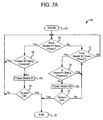
- Method or algorithm 60 of Fig. 7A starts at oval 62 and at diamond 64 determines whether a first heater (heater No. 1) needs power. If so, algorithm 60 next determines whether a second heater (heater No. 2) is currently being powered at diamond 66. If the second heater is not being powered as determined at diamond 66, method 60 causes the first heater to be powered according to its PWM sequence as seen at block 68. If the fluid heating has not yet been completed, as determined at diamond 70, and if the second heater is not being powered as determined in connection with diamond 66, method or algorithm 60 makes a return loop to diamond 64 to determine whether the first heater still needs to be powered. The loop just described is continued until either the system finished heating fluid, as determined at diamond 70, or the first heater no longer needs power, as determined in connection with diamond 64.
- method or algorithm 60 determines whether the second heater needs power at diamond 72. If the second heater does need power, a loop back to diamond 64 is created, which continues until either the first or second heaters needs power. It should be appreciated that during this loop neither heater is powered, which is a time of relatively little current draw, which is desirable for reducing the overall load on the associated residential or commercial power supply.
- method or algorithm 60 determines whether or not the first heater is currently being powered at diamond 74. If the first heater is being powered as determined at diamond 74, algorithm 60 returns to diamond 72 to determine whether the second heater still needs power. The loop between diamond 72 and diamond 74 is continued until the second heater needs power and the first heater is no longer being powered. Thus it should be seen that method or algorithm 60 prevents the two heaters from being heated at the same time and only powers each heater for as long as it needs to be powered.
- method or algorithm 60 causes heater number two to be powered according to its PWM sequence as seen in block 76. If the system has not completed its fluid heating, as determined at diamond 70, a loop back to diamond 72 is created, which is repeated until either the second heater no longer needs power or the system has completed its fluid heating. If neither heater no longer requires power, as determined at diamond 70, method or algorithm 60 ends as seen at oval 78.
- Fig. 7B illustrates a method similar to that of method 60 of Fig. 7A .
- method 160 allows for the first and second heaters to operate in a master/delegate relationship.
- the master heater is used for any needs of the dialysate preparation unit 24, the disinfection unit 26 and the delivery unit 30 (e.g., the PD/HD/HDF/CRRT machine), which is connected to the patient and delivers fluid at a precise temperature.
- the delegate heater is assigned to water purification unit 22, for which precise control is less critical.
- a separate disinfection unit 26 can be provided for each of PD/HD/HDF/CRRT machine 30 and the water purification unit 22 via their own heaters (and/or ozone or chemicals). In such case, the master heater would meet the needs of a first disinfection unit 26 for PD/HD/HDF/CRRT machine 30, while the delegate heater would be used to disinfect water purification unit 22.
- Water purification unit 22 operates optimally at higher temperatures but does not require as precise a control because it has no direct patient connection.
- master heater is allowed to heat whenever needed. Rather than waiting for the delegate heater to finish heating before the master heater begins, system 10 commands the delegate heater to stop heating. The delegate heater then ceases to heat and the master heater resumes heating. When the master heater is finished, system 10 allows the delegate heater to heat again if needed, until such time as the master needs to heat again, causing system 10 to power the delegate heater down, and so on.
- Method or algorithm 160 of Fig. 7B starts at oval 162 and at diamond 164 determines whether the master heater needs power. If so, algorithm 160 removes power from the delegate heater if it is being heated, as seen at block 166 and powers the master heater as seen at block 168 (e.g., for a PWM time segment). A loop between diamond 164, block 166 and block 168 continues until the master heater no longer needs power as determined at diamond 164. Algorithm 160 next determines whether the delegate heater needs power at diamond 170. If so, algorithm 160 powers the delegate heater at block 172 (e.g., for a PWM time segment).
- method 160 returns to diamond 164 to determine if the mater heater needs power. If so, the loop between diamond 164, block 166 and block 168 is begun again and continues until the master heater no longer needs power as determined at diamond 164. Thus, the heating of the delegate heater is interrupted as seen at block 166. The loop between diamond 164, diamond 170 and block 172 continues until the delegate heater no longer needs power as determined at diamond 170. Method 160 of system 10 then determines if the system should be shut down at diamonded 174. If so, method 160 ends as seen at oval 176. If not, the entire method is begun again at diamond 164.
- method or algorithm 80 illustrates a further alternative method or algorithm for controlling the duty cycles of first and second heaters of a medical fluid treatment, such as a dialysis treatment, so that total power draw at any given time does not exceed a maximum rated power draw for the patient's branch electrical system (residential or commercial).
- Method or algorithm 80 begins at oval 82, and a first heater of the medical fluid system is powered for a predetermined amount of time (according to its PWM sequence) as seen at block 84.
- method or algorithm 80 can apportion some or all of the available off time and consume a predetermined amount of the off time (no power to either heater) at this point in method 80, as seen at block 86.
- Method or algorithm 80 then powers a second heater of the medical fluid system for a predetermined amount of time (according to its PWM sequence) as seen at block 88. If the total duty cycle of both heaters is less than one-hundred percent, method or algorithm 80 can apportion some or all of the available off time and consume a predetermined amount of the off time (no power to either heater) at this point in method 80, as seen at block 90.
- method or algorithm 80 determines whether to continue heating (whether fluid heating is completed). If so, the steps taken at blocks 84 to 90 are repeated until heating is no longer required, as determined at diamond 92, at which time method or algorithm 80 ends, as seen at oval 94.
- Methods or algorithms 60, 160 and 80 of Figs. 7A , 7B and 8 are particularly well suited for instances in which the total duty cycle (combined durty cycles of first and second heaters) is less than or equal to one-hundred percent. That is, the percentage of time that the first heater is powered plus the percentage of time that the second heater is powered is less than or equal to one-hundred percent. In such case, methods or algorithms 60, 160 and 80 ensure that the heating of one heater does not overlap the heating of the second heater. Accordingly, the power or current drawn due to the heating of the medical fluid system is never greater than the full power or current drawn by either heater taken alone.
- method 80 could be expanded to control three or more heaters without exceeding a branch line current or power limit.
- Fig. 9 illustrates a method or algorithm 100 which is employed when the total duty cycle of both heaters exceeds one-hundred percent. This method or algorithm attempts to minimize as much as possible the time that the two heaters have to be powered simultaneously.
- Method or algorithm 100 begins at oval 102 as illustrated. The first heater is powered for a predetermined amount of time, as seen at block 104. The second heater is powered at the instant that power is removed from the first heater, as seen at block 106. Thus, up to block 106, there is no overlap in heating. Method or algorithm 100 then determines whether the system is to continue heating, as determined at diamond 108. If so, method or algorithm 100 waits as long as possible before powering the first heater again based on the duty cycle for the first heater. The above loop continues until heating is discontinued, as determined at diamond 108, after which method or algorithm 100 ends, as seen at oval 112.
- method or algorithm 100 maximizes an opportunity that the duty cycle of the first heater due to a control algorithm for that heater may be lessened between sequential applications of power to the first heater. If the duty cycle of the first heater is diminished, method 100 can wait an additional amount of time before re-powering the first heater, minimizing any overlapping time that both heaters are powered.
- Method or algorithm 100 may be modifies to satisfy a master/delegate relationship between the heaters.
- the first or mater heater is powered as needed.
- the second or delegate heater is powered for as long as needed but only if the first, master heater is not being heated.
- the second, delegate heater may be "starved" of power for certain periods.
- the method or algorithm may allow for a small amount of overlap, ensuring (i) the first, master heater receives as much power as needed and (ii) that the overlap does not exceed or overly exceed a current or power rating of the patient's or clinic's facility.
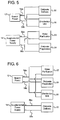
- Figs. 5 and 6 above show different embodiments for using a supplemental power source 14 in combination with branch power 12 to separate and dedicate first and second heaters to one of the power sources.
- Fig. 5 shows branch power dedicated to the dialysate delivery heater, while supplemental power supply 14 is dedicated to the heater for the water purification unit.
- Fig. 6 shows an alternative embodiment in which branch power 12 is dedicated to the water purification heater, while supplemental power supply 14 is dedicated to the dialysate delivery heater.
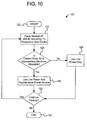
- method or algorithm 120 illustrates an alternative embodiment for incorporating supplemental power supply 14 to ensure that the patient's branch power source is not overtaxed at a time that both heaters have to be powered simultaneously.
- Method or algorithm 120 begins at oval 122.
- the first and second heaters are powered according to their respective duty cycles, as indicated at block 124.
- method or algorithm 120 determines whether the current draw is at or approaching a maximum allowable current draw. For example, the method or algorithm 120 could determine at diamond 126 whether the current draw is at ninety-five percent of a maximum allowable current draw. If the current draw is not at or approaching the maximum allowable, method or algorithm 120 uses only line power supply 12, as seen at block 128. If the current draw is at or approaching a maximum as determined at diamond 126, method or algorithm 120 uses the line power 12 and supplemental power source 14, as seen at block 130.
- the branch 12 and supplemental power 14 sources can be distributed according to any suitable configuration shown in Figs. 3 to 6 .
- method or algorithm 120 determines whether the system is to continue heating. If not, method or algorithm 120 ends, as seen at oval 134. If so, the steps just described are repeated until heating is completed.
- a graph of current draw verses time shows graphically how the power is distributed to the first and second heaters in a situation when the total duty cycle of both heaters is less than one-hundred percent.
- a gap g exists in time between each power-on sequence for either the first and second heaters.
- the total time that both heaters are on is less than one-hundred percent of the time. Accordingly, the powering of the first and second heaters is spaced apart as much as possible, so that power draw from the line 12 or branch 14 power supplies has a rest period before the powering of either heater.
- the second heater is powered at the instant the first heater is switched de-powered, creating a larger time gap g between the time that the second heater is powered and the time that the first heater is powered.
- both heaters have an individual sixty percent duty cycle, meaning that each heater needs to be powered for sixty percent of the total time at full power.
- the total power drawn is the sum of the power needed by both the first and second heaters.
- the second heater is powered at the instant that power is removed from the first heater.
- the system waits four time periods before re-powering the first heater, which is the maximum allowable time that the system can wait before re-powering the first heater according to the existing sixty percent duty cycle of the first heater.
- the overlap in the heating of both heaters simultaneously can be lessened. For example, if after the first six time increments, the duty cycle of the second heater is reduced to fifty percent, waiting until ten time increments to re-power the first heater will allow the overlap in time both heaters are being heated simultaneously to a single time increment. In another example, if the duty cycle of the first heater at any time between time increment six and time increment ten lessens, e.g., changes to fifty percent, then the system can wait until time period eleven before re-powering the first heater, thus reducing or possibly eliminating (e.g., if duty cycle is decreased to forty percent) the overlap between time period ten and time period twelve.
Landscapes
- Health & Medical Sciences (AREA)
- Heart & Thoracic Surgery (AREA)
- Urology & Nephrology (AREA)
- Anesthesiology (AREA)
- Vascular Medicine (AREA)
- Engineering & Computer Science (AREA)
- Biomedical Technology (AREA)
- Hematology (AREA)
- Life Sciences & Earth Sciences (AREA)
- Animal Behavior & Ethology (AREA)
- General Health & Medical Sciences (AREA)
- Public Health (AREA)
- Veterinary Medicine (AREA)
- Emergency Medicine (AREA)
- External Artificial Organs (AREA)
Priority Applications (2)
| Application Number | Priority Date | Filing Date | Title |
|---|---|---|---|
| EP20180920.9A EP3730167B1 (de) | 2008-02-14 | 2009-01-23 | Dialysesystem mit leistungskoordination mehrerer heizer |
| EP19150224.4A EP3488883B1 (de) | 2008-02-14 | 2009-01-23 | Dialysesystem mit leistungskoordination mehrerer heizer |
Applications Claiming Priority (3)
| Application Number | Priority Date | Filing Date | Title |
|---|---|---|---|
| US12/031,605 US7892423B2 (en) | 2008-02-14 | 2008-02-14 | Dialysis system including multi-heater power coordination |
| EP09710209.9A EP2254614B1 (de) | 2008-02-14 | 2009-01-23 | Dialysesystem mit energiekoordination mehrerer heizelemente |
| PCT/US2009/031809 WO2009102543A2 (en) | 2008-02-14 | 2009-01-23 | Dialysis system including multi-heater power coordination |
Related Parent Applications (2)
| Application Number | Title | Priority Date | Filing Date |
|---|---|---|---|
| EP09710209.9A Division EP2254614B1 (de) | 2008-02-14 | 2009-01-23 | Dialysesystem mit energiekoordination mehrerer heizelemente |
| EP09710209.9A Division-Into EP2254614B1 (de) | 2008-02-14 | 2009-01-23 | Dialysesystem mit energiekoordination mehrerer heizelemente |
Related Child Applications (3)
| Application Number | Title | Priority Date | Filing Date |
|---|---|---|---|
| EP20180920.9A Division EP3730167B1 (de) | 2008-02-14 | 2009-01-23 | Dialysesystem mit leistungskoordination mehrerer heizer |
| EP19150224.4A Division EP3488883B1 (de) | 2008-02-14 | 2009-01-23 | Dialysesystem mit leistungskoordination mehrerer heizer |
| EP19150224.4A Division-Into EP3488883B1 (de) | 2008-02-14 | 2009-01-23 | Dialysesystem mit leistungskoordination mehrerer heizer |
Publications (3)
| Publication Number | Publication Date |
|---|---|
| EP3124064A2 true EP3124064A2 (de) | 2017-02-01 |
| EP3124064A3 EP3124064A3 (de) | 2017-04-19 |
| EP3124064B1 EP3124064B1 (de) | 2019-02-20 |
Family
ID=40791113
Family Applications (4)
| Application Number | Title | Priority Date | Filing Date |
|---|---|---|---|
| EP16176496.4A Active EP3124064B1 (de) | 2008-02-14 | 2009-01-23 | Dialysesystem mit mehrfach-heizer-leistungskoordination |
| EP20180920.9A Active EP3730167B1 (de) | 2008-02-14 | 2009-01-23 | Dialysesystem mit leistungskoordination mehrerer heizer |
| EP19150224.4A Active EP3488883B1 (de) | 2008-02-14 | 2009-01-23 | Dialysesystem mit leistungskoordination mehrerer heizer |
| EP09710209.9A Active EP2254614B1 (de) | 2008-02-14 | 2009-01-23 | Dialysesystem mit energiekoordination mehrerer heizelemente |
Family Applications After (3)
| Application Number | Title | Priority Date | Filing Date |
|---|---|---|---|
| EP20180920.9A Active EP3730167B1 (de) | 2008-02-14 | 2009-01-23 | Dialysesystem mit leistungskoordination mehrerer heizer |
| EP19150224.4A Active EP3488883B1 (de) | 2008-02-14 | 2009-01-23 | Dialysesystem mit leistungskoordination mehrerer heizer |
| EP09710209.9A Active EP2254614B1 (de) | 2008-02-14 | 2009-01-23 | Dialysesystem mit energiekoordination mehrerer heizelemente |
Country Status (5)
| Country | Link |
|---|---|
| US (3) | US7892423B2 (de) |
| EP (4) | EP3124064B1 (de) |
| ES (1) | ES2817554T3 (de) |
| MX (1) | MX2010008961A (de) |
| WO (1) | WO2009102543A2 (de) |
Families Citing this family (61)
| Publication number | Priority date | Publication date | Assignee | Title |
|---|---|---|---|---|
| MXPA05000816A (es) | 2002-07-19 | 2005-04-28 | Baxter Int | Sistemas y metodos para realizar dialisis peritoneal. |
| US7736328B2 (en) | 2007-07-05 | 2010-06-15 | Baxter International Inc. | Dialysis system having supply container autoconnection |
| US8105487B2 (en) | 2007-09-25 | 2012-01-31 | Fresenius Medical Care Holdings, Inc. | Manifolds for use in conducting dialysis |
| US8240636B2 (en) | 2009-01-12 | 2012-08-14 | Fresenius Medical Care Holdings, Inc. | Valve system |
| US8535522B2 (en) | 2009-02-12 | 2013-09-17 | Fresenius Medical Care Holdings, Inc. | System and method for detection of disconnection in an extracorporeal blood circuit |
| US9358331B2 (en) | 2007-09-13 | 2016-06-07 | Fresenius Medical Care Holdings, Inc. | Portable dialysis machine with improved reservoir heating system |
| US8597505B2 (en) | 2007-09-13 | 2013-12-03 | Fresenius Medical Care Holdings, Inc. | Portable dialysis machine |
| US9308307B2 (en) | 2007-09-13 | 2016-04-12 | Fresenius Medical Care Holdings, Inc. | Manifold diaphragms |
| US8040493B2 (en) | 2007-10-11 | 2011-10-18 | Fresenius Medical Care Holdings, Inc. | Thermal flow meter |
| EP2237814B1 (de) | 2007-11-29 | 2019-03-06 | Fresenius Medical Care Holdings, Inc. | Verteileranordnung zur durchführung von hämodialyse und hämofiltration |
| US7892423B2 (en) * | 2008-02-14 | 2011-02-22 | Baxter International Inc. | Dialysis system including multi-heater power coordination |
| US10973968B2 (en) | 2008-02-14 | 2021-04-13 | Baxter International Inc. | Control of a water device via a dialysis machine user interface |
| US8057679B2 (en) | 2008-07-09 | 2011-11-15 | Baxter International Inc. | Dialysis system having trending and alert generation |
| CA2976872C (en) | 2008-10-07 | 2021-04-13 | Fresenius Medical Care Holdings, Inc. | Priming system and method for dialysis systems |
| NZ592652A (en) | 2008-10-30 | 2013-10-25 | Fresenius Med Care Hldg Inc | Modular, portable dialysis system |
| WO2010114932A1 (en) | 2009-03-31 | 2010-10-07 | Xcorporeal, Inc. | Modular reservoir assembly for a hemodialysis and hemofiltration system |
| US8753515B2 (en) | 2009-12-05 | 2014-06-17 | Home Dialysis Plus, Ltd. | Dialysis system with ultrafiltration control |
| US8501009B2 (en) | 2010-06-07 | 2013-08-06 | State Of Oregon Acting By And Through The State Board Of Higher Education On Behalf Of Oregon State University | Fluid purification system |
| WO2012051278A1 (en) | 2010-10-12 | 2012-04-19 | Tanis Kevin J | Medical device |
| US9585810B2 (en) | 2010-10-14 | 2017-03-07 | Fresenius Medical Care Holdings, Inc. | Systems and methods for delivery of peritoneal dialysis (PD) solutions with integrated inter-chamber diffuser |
| US20120199205A1 (en) | 2011-02-03 | 2012-08-09 | Fresenius Medical Care Deutschland Gmbh | System for preparing a medical fluid and method for preparing a medical fluid |
| US9861733B2 (en) | 2012-03-23 | 2018-01-09 | Nxstage Medical Inc. | Peritoneal dialysis systems, devices, and methods |
| JP6049685B2 (ja) | 2011-03-23 | 2016-12-21 | ネクステージ メディカル インコーポレイテッド | 腹膜透析使い捨てユニット、コントローラ、腹膜透析システム |
| US8942835B2 (en) * | 2011-06-16 | 2015-01-27 | Bsh Home Appliances Corporation | System and method of operating household appliances |
| EP2763719B1 (de) | 2011-10-07 | 2017-08-09 | Outset Medical, Inc. | Wärmeaustauschflüssigkeitsreinigung für ein dialysesystem |
| AU2013201567B2 (en) | 2012-11-28 | 2015-12-17 | Gambro Lundia Ab | Systems, apparatus, equipment with thermal disinfection and thermal disinfection methods |
| US9201036B2 (en) | 2012-12-21 | 2015-12-01 | Fresenius Medical Care Holdings, Inc. | Method and system of monitoring electrolyte levels and composition using capacitance or induction |
| US9157786B2 (en) | 2012-12-24 | 2015-10-13 | Fresenius Medical Care Holdings, Inc. | Load suspension and weighing system for a dialysis machine reservoir |
| JP2014176610A (ja) | 2013-03-14 | 2014-09-25 | Baxter Internatl Inc | 透析機械のユーザインタフェースを介した水処理装置の制御 |
| US9737649B2 (en) | 2013-03-14 | 2017-08-22 | Smith & Nephew, Inc. | Systems and methods for applying reduced pressure therapy |
| WO2014151930A2 (en) | 2013-03-14 | 2014-09-25 | Smith & Nephew Inc. | Systems and methods for applying reduced pressure therapy |
| US10117292B2 (en) * | 2013-04-19 | 2018-10-30 | Chromalox, Inc. | Medium voltage heater elements moisture detection circuit |
| US20150045763A1 (en) | 2013-08-06 | 2015-02-12 | Fresenius Medical Care Holdings, Inc. | Self-warming peritoneal dialysis solution bag |
| RU2016108629A (ru) | 2013-08-13 | 2017-09-19 | Смит Энд Нефью, Инк. | Системы и способы для применения терапии пониженным давлением |
| US9528723B2 (en) | 2013-09-20 | 2016-12-27 | Hamilton Sundstrand Corporation | Pulse width modulated multiple heater control |
| US9354640B2 (en) | 2013-11-11 | 2016-05-31 | Fresenius Medical Care Holdings, Inc. | Smart actuator for valve |
| CN104623751B (zh) | 2013-11-13 | 2017-04-12 | 甘布罗伦迪亚股份公司 | 透析监控器及操作方法 |
| CN104623750B (zh) | 2013-11-13 | 2017-09-12 | 甘布罗伦迪亚股份公司 | 透析监控器、与流体加热相关的方法以及透析监控器电池单元的使用 |
| CN104740707B (zh) | 2013-12-30 | 2018-06-01 | 甘布罗伦迪亚股份公司 | 透析机、控制透析机的方法 |
| JP6657186B2 (ja) | 2014-04-29 | 2020-03-04 | アウトセット・メディカル・インコーポレイテッドOutset Medical, Inc. | 透析システムおよび方法 |
| US12133789B2 (en) | 2014-07-31 | 2024-11-05 | Smith & Nephew, Inc. | Reduced pressure therapy apparatus construction and control |
| WO2016018448A1 (en) | 2014-07-31 | 2016-02-04 | Smith & Nephew, Inc. | Systems and methods for applying reduced pressure therapy |
| CA2972691C (en) | 2014-12-30 | 2023-02-21 | Smith & Nephew, Inc. | Systems and methods for applying reduced pressure therapy |
| CA2972701A1 (en) | 2014-12-30 | 2016-07-07 | Smith & Nephew, Inc. | Systems and methods for applying reduced pressure therapy |
| JP2018524718A (ja) | 2015-06-25 | 2018-08-30 | ガンブロ・ルンディア・エービーGambro Lundia Ab | 分散データベースを有する医療装置システム及び方法 |
| WO2017062042A1 (en) | 2015-10-07 | 2017-04-13 | Smith & Nephew, Inc. | Systems and methods for applying reduced pressure therapy |
| EP3187211A1 (de) * | 2015-12-31 | 2017-07-05 | Fraunhofer Gesellschaft zur Förderung der angewandten Forschung e.V. | Vorrichtung und verfahren zur erzeugung eines dialysats zur dialyse |
| EP4393526A3 (de) | 2016-02-12 | 2024-08-14 | Smith & Nephew, Inc | Systeme und verfahren zur erkennung von betriebsbedingungen einer unterdrucktherapie |
| JP6936250B2 (ja) | 2016-05-06 | 2021-09-15 | ガンブロ ルンディア アー・ベー | 使用場所での透析流体調製を有し、かつその試験を含む腹膜透析のためのシステムおよび方法 |
| CN109069713A (zh) | 2016-05-13 | 2018-12-21 | 史密夫和内修有限公司 | 负压伤口治疗系统中的自动伤口联接检测 |
| US11534537B2 (en) | 2016-08-19 | 2022-12-27 | Outset Medical, Inc. | Peritoneal dialysis system and methods |
| CN110100283B (zh) | 2016-12-21 | 2023-07-04 | 甘布罗伦迪亚股份公司 | 包括具有支持外域的安全集群域的信息技术基础架构的医疗设备系统 |
| WO2018237375A1 (en) | 2017-06-24 | 2018-12-27 | Nxstage Medical, Inc. | Peritoneal dialysis fluid preparation and/or treatment devices methods and systems |
| CA3092575A1 (en) | 2018-02-28 | 2019-09-06 | Nxstage Medical, Inc. | Fluid preparation and treatment devices, methods, and systems |
| AU2019325668B2 (en) | 2018-08-23 | 2025-03-27 | Outset Medical, Inc. | Dialysis system and methods |
| EP3774343B1 (de) * | 2018-08-31 | 2023-01-04 | Hewlett-Packard Development Company, L.P. | Reduzierung von nullleistungsereignissen eines beheizten systems |
| AU2020266584B2 (en) | 2019-04-30 | 2025-10-23 | Outset Medical, Inc. | Dialysis system and methods |
| US11577013B2 (en) | 2019-09-10 | 2023-02-14 | Fresenius Medical Care Holdings, Inc. | In-line heating of dialysis fluids |
| WO2021189076A2 (en) | 2020-03-18 | 2021-09-23 | Graco Minnesota Inc. | Independent heated hose |
| WO2026077923A1 (en) * | 2024-10-08 | 2026-04-16 | Gambro Lundia Ab | Devices for handling leakage currents in dialysis therapy |
| WO2026099148A2 (en) * | 2024-11-05 | 2026-05-15 | Gambro Lundia Ab | Power management for dialysis therapy in a residential space |
Citations (1)
| Publication number | Priority date | Publication date | Assignee | Title |
|---|---|---|---|---|
| US20080021377A1 (en) | 2003-11-05 | 2008-01-24 | Baxter International Inc. | Dialysis fluid heating systems |
Family Cites Families (64)
| Publication number | Priority date | Publication date | Assignee | Title |
|---|---|---|---|---|
| US3563381A (en) | 1968-12-18 | 1971-02-16 | Andrew Charles Edelson | Dialysis apparatus |
| US3814249A (en) | 1970-05-25 | 1974-06-04 | Eaton Medical Electronics Inc | Dialysis apparatus |
| US3685680A (en) | 1970-06-08 | 1972-08-22 | Battelle Development Corp | Peritoneal dialysis delivery unit using home-prepared dialysate |
| FR2120507A5 (de) | 1971-01-06 | 1972-08-18 | Rhone Poulenc Sa | |
| US3878095A (en) | 1974-05-02 | 1975-04-15 | Advanced Medical Sciences Inc | Dialysis apparatus |
| FR2283167A1 (fr) | 1974-06-04 | 1976-03-26 | Rhone Poulenc Ind | Utilisation en dialyse selective de membranes a base de polymeres echangeurs d'ions et d'un liant |
| US3915802A (en) | 1974-08-19 | 1975-10-28 | Upjohn Co | Dialysis process and apparatus |
| US4348280A (en) | 1974-10-21 | 1982-09-07 | Baxter Travenol Laboratories, Inc. | Proportioning dialysis machine |
| US4060485A (en) | 1975-06-09 | 1977-11-29 | I T L Technology, Inc. | Dialysis apparatus |
| US4360323A (en) | 1976-11-19 | 1982-11-23 | Halbert Fischel | Proportioning pumping system for dialysis machines |
| US4209402A (en) | 1977-07-12 | 1980-06-24 | Gentles William M | Kidney dialysis filter washing process |
| US4734198A (en) | 1984-02-06 | 1988-03-29 | Minntech Corporation | Dialysis solution mixing system |
| US4655941A (en) | 1984-02-13 | 1987-04-07 | Tomita Pharmaceutical Corp., Ltd. | Method of preparing mixed electrolyte powder for bicarbonate dialysis and powder mixture formed |
| IT1209560B (it) | 1984-06-25 | 1989-08-30 | Pierrel Hospital Spa | Contenitore e metodo per il lavaggio e l'integrazione operativa del funzionamento di circuiti e filtri per dialisi. |
| US4664891A (en) | 1984-07-23 | 1987-05-12 | Renal Systems, Inc. | Dialysis solution preparation from prepackaged dry chemicals |
| US4976683A (en) | 1986-06-20 | 1990-12-11 | Abbott Laboratories | Peritoneal dialysis method |
| AU627309B2 (en) | 1989-05-26 | 1992-08-20 | Terumo Kabushiki Kaisha | Preparation for blood dialysis and method for production thereof |
| US5256371A (en) | 1989-12-13 | 1993-10-26 | Medical Support Gmbh | Method and arrangement for disinfecting a dialysis fluid circuit |
| US5274434A (en) | 1990-04-02 | 1993-12-28 | Hitachi, Ltd. | Method and apparatus for inspecting foreign particles on real time basis in semiconductor mass production line |
| US5032265A (en) | 1990-06-20 | 1991-07-16 | Millipore Corporation | Method and system for producing sterile aqueous solutions |
| WO1992003202A2 (en) | 1990-08-20 | 1992-03-05 | Abbott Laboratories | Medical drug formulation and delivery system |
| FR2666739B1 (fr) | 1990-09-13 | 1998-01-02 | Soludia Sa | Dispositif pour la preparation extemporanee et en continu de dialysat. |
| US5336165A (en) | 1991-08-21 | 1994-08-09 | Twardowski Zbylut J | Artificial kidney for frequent (daily) Hemodialysis |
| DE4139165C2 (de) | 1991-11-28 | 1994-12-08 | Fresenius Ag | Einrichtung zur Herstellung einer medizinischen Flüssigkeit |
| FR2687307B1 (fr) | 1992-02-14 | 1999-06-04 | Lascombes Jean Jacques | Dispositif pour la preparation d'une solution a usage medical. |
| US5616248A (en) | 1992-04-06 | 1997-04-01 | Schal; Wilfried | Method for the preparation of hemodialysis fluids containing bicarbonate |
| US6156007A (en) | 1992-09-04 | 2000-12-05 | Hemotherm, Inc. | Apparatus for whole-body hyperthermia |
| US5385564A (en) | 1992-10-05 | 1995-01-31 | Fresenius Usa, Inc. | System for preparation and use of dialysis solution |
| JP2769592B2 (ja) | 1992-12-14 | 1998-06-25 | 富田製薬株式会社 | 重炭酸透析用人工腎臓灌流用剤の製造方法及び人工腎臓灌流用剤 |
| US5591344A (en) * | 1995-02-13 | 1997-01-07 | Aksys, Ltd. | Hot water disinfection of dialysis machines, including the extracorporeal circuit thereof |
| US5624572A (en) | 1995-06-07 | 1997-04-29 | Cobe Laboratories, Inc. | Power management system and method for maximizing heat delivered to dialysate in a dialysis machine |
| US5685835A (en) | 1995-06-07 | 1997-11-11 | Cobe Laboratories, Inc. | Technique for using a dialysis machine to disinfect a blood tubing set |
| AU7016396A (en) * | 1995-10-10 | 1997-04-30 | Donald Kuhnel | Fluid heater with improved heating elements controller |
| FR2749761B1 (fr) | 1996-06-18 | 1998-07-31 | Hospal Ind | Procede de desinfection pour une machine de dialyse |
| DE19814687C1 (de) | 1998-04-01 | 1999-02-18 | Fresenius Medical Care De Gmbh | Dialysegerät mit Vorrichtung zur Herstellung von Dialyselösungen |
| DE19850830B4 (de) | 1998-11-04 | 2004-12-30 | Fresenius Medical Care Deutschland Gmbh | Verfahren zur Herstellung einer Lösung, insbesondere einer Dialyse- oder Infusionslösung |
| US20100332149A1 (en) | 1998-12-17 | 2010-12-30 | Hach Company | Method and system for remote monitoring of fluid quality and treatment |
| US9056783B2 (en) | 1998-12-17 | 2015-06-16 | Hach Company | System for monitoring discharges into a waste water collection system |
| US6274103B1 (en) | 1999-03-26 | 2001-08-14 | Prismedical Corporation | Apparatus and method for preparation of a peritoneal dialysis solution |
| US6229957B1 (en) * | 1999-05-14 | 2001-05-08 | Joseph Baker | Physiological fluid warming process and apparatus |
| EP1059083B1 (de) | 1999-06-07 | 2004-04-14 | Nipro Corporation | Feste pharmazeutische Zubereitung für die Dialyse sowie Verfahren zu deren Herstellung |
| US6251279B1 (en) | 1999-12-09 | 2001-06-26 | Dialysis Systems, Inc. | Heat disinfection of a water supply |
| JP2001346868A (ja) | 2000-06-12 | 2001-12-18 | Teijin Ltd | 透析液調製装置および人工透析装置 |
| US6595944B2 (en) | 2000-06-17 | 2003-07-22 | Fresenius Medical Care Deutschland Gmbh | Dialysis machine and method of operating a dialysis machine |
| JP3899506B2 (ja) | 2000-09-27 | 2007-03-28 | ニプロ株式会社 | 固形透析用製剤およびその製造方法 |
| JP2002102336A (ja) | 2000-09-27 | 2002-04-09 | Nipro Corp | 固形透析用製剤およびその製造方法 |
| US20030034305A1 (en) | 2001-01-05 | 2003-02-20 | Gambro, Inc. | Purified water supply system for high demand devices and applications |
| US7250619B2 (en) | 2001-05-14 | 2007-07-31 | Prismedical Corporation | Powered sterile solution device |
| ITBO20010353A1 (it) | 2001-06-05 | 2002-12-05 | Gambro Dasco Spa | Dispositivo di preparazione di liquido dializzante per una macchina di dialisi |
| ATE445576T1 (de) | 2001-11-05 | 2009-10-15 | Bionomics Ltd | Vorrichtung und verfahren zur herstellung von wasser hoher mikrobiologischer reinheit mit hilfe einer umkehrosmose-membrananlage |
| US7153285B2 (en) | 2002-01-17 | 2006-12-26 | Baxter International Inc. | Medical fluid heater using radiant energy |
| US6745903B2 (en) | 2002-03-14 | 2004-06-08 | Peter Grandics | Methods for the on-line, on-demand preparation of sterile, water-for-injection grade water |
| US7175606B2 (en) | 2002-05-24 | 2007-02-13 | Baxter International Inc. | Disposable medical fluid unit having rigid frame |
| US20050209547A1 (en) | 2002-06-06 | 2005-09-22 | Burbank Jeffrey H | Last-chance quality check and/or air/pathogen filter for infusion systems |
| DK1523351T3 (da) | 2002-07-19 | 2010-04-26 | Baxter Int | System til peritonealdialyse |
| US9700663B2 (en) | 2005-01-07 | 2017-07-11 | Nxstage Medical, Inc. | Filtration system for preparation of fluids for medical applications |
| US6902670B2 (en) | 2003-03-19 | 2005-06-07 | Kuo-Hsin Ho | Hemodialysis machine |
| JP4089530B2 (ja) | 2003-06-30 | 2008-05-28 | 澁谷工業株式会社 | 透析装置 |
| US8038639B2 (en) * | 2004-11-04 | 2011-10-18 | Baxter International Inc. | Medical fluid system with flexible sheeting disposable unit |
| DE102006012198A1 (de) | 2006-03-16 | 2007-09-27 | Seccua Gmbh | Steuerungen eines Filtrationssystems |
| JP5204995B2 (ja) * | 2006-06-22 | 2013-06-05 | 日機装株式会社 | 透析治療用セントラルシステム及びその消毒方法 |
| KR20230165373A (ko) * | 2007-02-27 | 2023-12-05 | 데카 프로덕츠 리미티드 파트너쉽 | 혈액투석 시스템 |
| US8078333B2 (en) * | 2007-07-05 | 2011-12-13 | Baxter International Inc. | Dialysis fluid heating algorithms |
| US7892423B2 (en) * | 2008-02-14 | 2011-02-22 | Baxter International Inc. | Dialysis system including multi-heater power coordination |
-
2008
- 2008-02-14 US US12/031,605 patent/US7892423B2/en active Active
-
2009
- 2009-01-23 ES ES19150224T patent/ES2817554T3/es active Active
- 2009-01-23 EP EP16176496.4A patent/EP3124064B1/de active Active
- 2009-01-23 EP EP20180920.9A patent/EP3730167B1/de active Active
- 2009-01-23 MX MX2010008961A patent/MX2010008961A/es active IP Right Grant
- 2009-01-23 WO PCT/US2009/031809 patent/WO2009102543A2/en not_active Ceased
- 2009-01-23 EP EP19150224.4A patent/EP3488883B1/de active Active
- 2009-01-23 EP EP09710209.9A patent/EP2254614B1/de active Active
-
2011
- 2011-02-18 US US13/030,909 patent/US8216452B2/en active Active
-
2012
- 2012-06-12 US US13/494,259 patent/US8419933B2/en active Active
Patent Citations (1)
| Publication number | Priority date | Publication date | Assignee | Title |
|---|---|---|---|---|
| US20080021377A1 (en) | 2003-11-05 | 2008-01-24 | Baxter International Inc. | Dialysis fluid heating systems |
Also Published As
| Publication number | Publication date |
|---|---|
| EP3124064A3 (de) | 2017-04-19 |
| US20120248039A1 (en) | 2012-10-04 |
| EP3488883A1 (de) | 2019-05-29 |
| WO2009102543A3 (en) | 2009-12-03 |
| US7892423B2 (en) | 2011-02-22 |
| EP3124064B1 (de) | 2019-02-20 |
| EP3730167A1 (de) | 2020-10-28 |
| US8419933B2 (en) | 2013-04-16 |
| US20110132841A1 (en) | 2011-06-09 |
| US8216452B2 (en) | 2012-07-10 |
| EP2254614B1 (de) | 2016-09-07 |
| US20090206017A1 (en) | 2009-08-20 |
| EP3488883B1 (de) | 2020-07-22 |
| WO2009102543A2 (en) | 2009-08-20 |
| MX2010008961A (es) | 2010-09-14 |
| WO2009102543A4 (en) | 2010-01-28 |
| ES2817554T3 (es) | 2021-04-07 |
| EP2254614A2 (de) | 2010-12-01 |
| EP3730167B1 (de) | 2024-06-26 |
Similar Documents
| Publication | Publication Date | Title |
|---|---|---|
| AU2021202246B2 (en) | Control of a water device via a dialysis machine user interface | |
| EP3124064B1 (de) | Dialysesystem mit mehrfach-heizer-leistungskoordination | |
| EP2252344B1 (de) | Dialysesystem mit ergänzender stromquelle | |
| US8349174B2 (en) | Portable power dialysis machine | |
| EP3141273B1 (de) | Hyper-/hypothermiesystem auf fluidbasis mit temperaturregelungsvorrichtung | |
| KR102342973B1 (ko) | 투석 모니터 및 작동 방법 | |
| JPH11506961A (ja) | 透析機の電力管理装置 | |
| US20140110318A1 (en) | Blood Purification System | |
| CN104288853A (zh) | 包括热量回收的透析系统 | |
| US12403227B2 (en) | Centrally controlled multi-patient dialysis treatment system and its use | |
| WO2023183485A1 (en) | Dialysis system having thermoelectric heating | |
| CN114949414A (zh) | 一种ecmo设备系统电源异常自动切换供电方法及系统 | |
| EP4035702A1 (de) | Dialysemaschine und steuerverfahren für eine dialysemaschine | |
| WO2026012933A1 (en) | System and method for supplying a fluid for use in dialysis therapy |
Legal Events
| Date | Code | Title | Description |
|---|---|---|---|
| PUAI | Public reference made under article 153(3) epc to a published international application that has entered the european phase |
Free format text: ORIGINAL CODE: 0009012 |
|
| STAA | Information on the status of an ep patent application or granted ep patent |
Free format text: STATUS: REQUEST FOR EXAMINATION WAS MADE |
|
| 17P | Request for examination filed |
Effective date: 20160627 |
|
| AC | Divisional application: reference to earlier application |
Ref document number: 2254614 Country of ref document: EP Kind code of ref document: P |
|
| AK | Designated contracting states |
Kind code of ref document: A2 Designated state(s): AT BE BG CH CY CZ DE DK EE ES FI FR GB GR HR HU IE IS IT LI LT LU LV MC MK MT NL NO PL PT RO SE SI SK TR |
|
| PUAL | Search report despatched |
Free format text: ORIGINAL CODE: 0009013 |
|
| AK | Designated contracting states |
Kind code of ref document: A3 Designated state(s): AT BE BG CH CY CZ DE DK EE ES FI FR GB GR HR HU IE IS IT LI LT LU LV MC MK MT NL NO PL PT RO SE SI SK TR |
|
| RIC1 | Information provided on ipc code assigned before grant |
Ipc: A61M 1/14 20060101AFI20170315BHEP Ipc: A61M 1/16 20060101ALI20170315BHEP Ipc: A61M 5/44 20060101ALI20170315BHEP |
|
| GRAP | Despatch of communication of intention to grant a patent |
Free format text: ORIGINAL CODE: EPIDOSNIGR1 |
|
| STAA | Information on the status of an ep patent application or granted ep patent |
Free format text: STATUS: GRANT OF PATENT IS INTENDED |
|
| INTG | Intention to grant announced |
Effective date: 20180824 |
|
| GRAS | Grant fee paid |
Free format text: ORIGINAL CODE: EPIDOSNIGR3 |
|
| GRAA | (expected) grant |
Free format text: ORIGINAL CODE: 0009210 |
|
| STAA | Information on the status of an ep patent application or granted ep patent |
Free format text: STATUS: THE PATENT HAS BEEN GRANTED |
|
| AC | Divisional application: reference to earlier application |
Ref document number: 2254614 Country of ref document: EP Kind code of ref document: P |
|
| AK | Designated contracting states |
Kind code of ref document: B1 Designated state(s): AT BE BG CH CY CZ DE DK EE ES FI FR GB GR HR HU IE IS IT LI LT LU LV MC MK MT NL NO PL PT RO SE SI SK TR |
|
| REG | Reference to a national code |
Ref country code: GB Ref legal event code: FG4D |
|
| REG | Reference to a national code |
Ref country code: CH Ref legal event code: EP |
|
| REG | Reference to a national code |
Ref country code: AT Ref legal event code: REF Ref document number: 1097344 Country of ref document: AT Kind code of ref document: T Effective date: 20190315 |
|
| REG | Reference to a national code |
Ref country code: IE Ref legal event code: FG4D |
|
| REG | Reference to a national code |
Ref country code: DE Ref legal event code: R096 Ref document number: 602009057149 Country of ref document: DE |
|
| REG | Reference to a national code |
Ref country code: LT Ref legal event code: MG4D |
|
| REG | Reference to a national code |
Ref country code: NL Ref legal event code: MP Effective date: 20190220 |
|
| PG25 | Lapsed in a contracting state [announced via postgrant information from national office to epo] |
Ref country code: PT Free format text: LAPSE BECAUSE OF FAILURE TO SUBMIT A TRANSLATION OF THE DESCRIPTION OR TO PAY THE FEE WITHIN THE PRESCRIBED TIME-LIMIT Effective date: 20190620 Ref country code: NO Free format text: LAPSE BECAUSE OF FAILURE TO SUBMIT A TRANSLATION OF THE DESCRIPTION OR TO PAY THE FEE WITHIN THE PRESCRIBED TIME-LIMIT Effective date: 20190520 Ref country code: LT Free format text: LAPSE BECAUSE OF FAILURE TO SUBMIT A TRANSLATION OF THE DESCRIPTION OR TO PAY THE FEE WITHIN THE PRESCRIBED TIME-LIMIT Effective date: 20190220 Ref country code: SE Free format text: LAPSE BECAUSE OF FAILURE TO SUBMIT A TRANSLATION OF THE DESCRIPTION OR TO PAY THE FEE WITHIN THE PRESCRIBED TIME-LIMIT Effective date: 20190220 Ref country code: FI Free format text: LAPSE BECAUSE OF FAILURE TO SUBMIT A TRANSLATION OF THE DESCRIPTION OR TO PAY THE FEE WITHIN THE PRESCRIBED TIME-LIMIT Effective date: 20190220 |
|
| PG25 | Lapsed in a contracting state [announced via postgrant information from national office to epo] |
Ref country code: HR Free format text: LAPSE BECAUSE OF FAILURE TO SUBMIT A TRANSLATION OF THE DESCRIPTION OR TO PAY THE FEE WITHIN THE PRESCRIBED TIME-LIMIT Effective date: 20190220 Ref country code: NL Free format text: LAPSE BECAUSE OF FAILURE TO SUBMIT A TRANSLATION OF THE DESCRIPTION OR TO PAY THE FEE WITHIN THE PRESCRIBED TIME-LIMIT Effective date: 20190220 Ref country code: BG Free format text: LAPSE BECAUSE OF FAILURE TO SUBMIT A TRANSLATION OF THE DESCRIPTION OR TO PAY THE FEE WITHIN THE PRESCRIBED TIME-LIMIT Effective date: 20190520 Ref country code: IS Free format text: LAPSE BECAUSE OF FAILURE TO SUBMIT A TRANSLATION OF THE DESCRIPTION OR TO PAY THE FEE WITHIN THE PRESCRIBED TIME-LIMIT Effective date: 20190620 Ref country code: GR Free format text: LAPSE BECAUSE OF FAILURE TO SUBMIT A TRANSLATION OF THE DESCRIPTION OR TO PAY THE FEE WITHIN THE PRESCRIBED TIME-LIMIT Effective date: 20190521 Ref country code: LV Free format text: LAPSE BECAUSE OF FAILURE TO SUBMIT A TRANSLATION OF THE DESCRIPTION OR TO PAY THE FEE WITHIN THE PRESCRIBED TIME-LIMIT Effective date: 20190220 |
|
| REG | Reference to a national code |
Ref country code: AT Ref legal event code: MK05 Ref document number: 1097344 Country of ref document: AT Kind code of ref document: T Effective date: 20190220 |
|
| PG25 | Lapsed in a contracting state [announced via postgrant information from national office to epo] |
Ref country code: EE Free format text: LAPSE BECAUSE OF FAILURE TO SUBMIT A TRANSLATION OF THE DESCRIPTION OR TO PAY THE FEE WITHIN THE PRESCRIBED TIME-LIMIT Effective date: 20190220 Ref country code: IT Free format text: LAPSE BECAUSE OF FAILURE TO SUBMIT A TRANSLATION OF THE DESCRIPTION OR TO PAY THE FEE WITHIN THE PRESCRIBED TIME-LIMIT Effective date: 20190220 Ref country code: DK Free format text: LAPSE BECAUSE OF FAILURE TO SUBMIT A TRANSLATION OF THE DESCRIPTION OR TO PAY THE FEE WITHIN THE PRESCRIBED TIME-LIMIT Effective date: 20190220 Ref country code: SK Free format text: LAPSE BECAUSE OF FAILURE TO SUBMIT A TRANSLATION OF THE DESCRIPTION OR TO PAY THE FEE WITHIN THE PRESCRIBED TIME-LIMIT Effective date: 20190220 Ref country code: ES Free format text: LAPSE BECAUSE OF FAILURE TO SUBMIT A TRANSLATION OF THE DESCRIPTION OR TO PAY THE FEE WITHIN THE PRESCRIBED TIME-LIMIT Effective date: 20190220 Ref country code: CZ Free format text: LAPSE BECAUSE OF FAILURE TO SUBMIT A TRANSLATION OF THE DESCRIPTION OR TO PAY THE FEE WITHIN THE PRESCRIBED TIME-LIMIT Effective date: 20190220 Ref country code: RO Free format text: LAPSE BECAUSE OF FAILURE TO SUBMIT A TRANSLATION OF THE DESCRIPTION OR TO PAY THE FEE WITHIN THE PRESCRIBED TIME-LIMIT Effective date: 20190220 |
|
| REG | Reference to a national code |
Ref country code: DE Ref legal event code: R097 Ref document number: 602009057149 Country of ref document: DE |
|
| PG25 | Lapsed in a contracting state [announced via postgrant information from national office to epo] |
Ref country code: PL Free format text: LAPSE BECAUSE OF FAILURE TO SUBMIT A TRANSLATION OF THE DESCRIPTION OR TO PAY THE FEE WITHIN THE PRESCRIBED TIME-LIMIT Effective date: 20190220 |
|
| PLBE | No opposition filed within time limit |
Free format text: ORIGINAL CODE: 0009261 |
|
| STAA | Information on the status of an ep patent application or granted ep patent |
Free format text: STATUS: NO OPPOSITION FILED WITHIN TIME LIMIT |
|
| PG25 | Lapsed in a contracting state [announced via postgrant information from national office to epo] |
Ref country code: AT Free format text: LAPSE BECAUSE OF FAILURE TO SUBMIT A TRANSLATION OF THE DESCRIPTION OR TO PAY THE FEE WITHIN THE PRESCRIBED TIME-LIMIT Effective date: 20190220 |
|
| 26N | No opposition filed |
Effective date: 20191121 |
|
| PG25 | Lapsed in a contracting state [announced via postgrant information from national office to epo] |
Ref country code: SI Free format text: LAPSE BECAUSE OF FAILURE TO SUBMIT A TRANSLATION OF THE DESCRIPTION OR TO PAY THE FEE WITHIN THE PRESCRIBED TIME-LIMIT Effective date: 20190220 |
|
| PG25 | Lapsed in a contracting state [announced via postgrant information from national office to epo] |
Ref country code: TR Free format text: LAPSE BECAUSE OF FAILURE TO SUBMIT A TRANSLATION OF THE DESCRIPTION OR TO PAY THE FEE WITHIN THE PRESCRIBED TIME-LIMIT Effective date: 20190220 |
|
| PG25 | Lapsed in a contracting state [announced via postgrant information from national office to epo] |
Ref country code: MC Free format text: LAPSE BECAUSE OF FAILURE TO SUBMIT A TRANSLATION OF THE DESCRIPTION OR TO PAY THE FEE WITHIN THE PRESCRIBED TIME-LIMIT Effective date: 20190220 |
|
| REG | Reference to a national code |
Ref country code: CH Ref legal event code: PL |
|
| REG | Reference to a national code |
Ref country code: BE Ref legal event code: MM Effective date: 20200131 |
|
| PG25 | Lapsed in a contracting state [announced via postgrant information from national office to epo] |
Ref country code: LU Free format text: LAPSE BECAUSE OF NON-PAYMENT OF DUE FEES Effective date: 20200123 |
|
| PG25 | Lapsed in a contracting state [announced via postgrant information from national office to epo] |
Ref country code: CH Free format text: LAPSE BECAUSE OF NON-PAYMENT OF DUE FEES Effective date: 20200131 Ref country code: LI Free format text: LAPSE BECAUSE OF NON-PAYMENT OF DUE FEES Effective date: 20200131 Ref country code: BE Free format text: LAPSE BECAUSE OF NON-PAYMENT OF DUE FEES Effective date: 20200131 |
|
| PG25 | Lapsed in a contracting state [announced via postgrant information from national office to epo] |
Ref country code: IE Free format text: LAPSE BECAUSE OF NON-PAYMENT OF DUE FEES Effective date: 20200123 |
|
| PG25 | Lapsed in a contracting state [announced via postgrant information from national office to epo] |
Ref country code: MT Free format text: LAPSE BECAUSE OF FAILURE TO SUBMIT A TRANSLATION OF THE DESCRIPTION OR TO PAY THE FEE WITHIN THE PRESCRIBED TIME-LIMIT Effective date: 20190220 Ref country code: CY Free format text: LAPSE BECAUSE OF FAILURE TO SUBMIT A TRANSLATION OF THE DESCRIPTION OR TO PAY THE FEE WITHIN THE PRESCRIBED TIME-LIMIT Effective date: 20190220 |
|
| PG25 | Lapsed in a contracting state [announced via postgrant information from national office to epo] |
Ref country code: MK Free format text: LAPSE BECAUSE OF FAILURE TO SUBMIT A TRANSLATION OF THE DESCRIPTION OR TO PAY THE FEE WITHIN THE PRESCRIBED TIME-LIMIT Effective date: 20190220 |
|
| REG | Reference to a national code |
Ref country code: GB Ref legal event code: 732E Free format text: REGISTERED BETWEEN 20251030 AND 20251105 |
|
| PGFP | Annual fee paid to national office [announced via postgrant information from national office to epo] |
Ref country code: GB Payment date: 20251219 Year of fee payment: 18 |
|
| PGFP | Annual fee paid to national office [announced via postgrant information from national office to epo] |
Ref country code: FR Payment date: 20251218 Year of fee payment: 18 |
|
| PGFP | Annual fee paid to national office [announced via postgrant information from national office to epo] |
Ref country code: DE Payment date: 20251217 Year of fee payment: 18 |