EP3125075B1 - Verfahren, vorrichtung und system zur steuerung einer intelligenten, am körper tragbaren vorrichtung - Google Patents
Verfahren, vorrichtung und system zur steuerung einer intelligenten, am körper tragbaren vorrichtung Download PDFInfo
- Publication number
- EP3125075B1 EP3125075B1 EP15828228.5A EP15828228A EP3125075B1 EP 3125075 B1 EP3125075 B1 EP 3125075B1 EP 15828228 A EP15828228 A EP 15828228A EP 3125075 B1 EP3125075 B1 EP 3125075B1
- Authority
- EP
- European Patent Office
- Prior art keywords
- power
- terminal device
- instruction
- intelligent wearable
- wearable device
- Prior art date
- Legal status (The legal status is an assumption and is not a legal conclusion. Google has not performed a legal analysis and makes no representation as to the accuracy of the status listed.)
- Active
Links
Images
Classifications
-
- G—PHYSICS
- G06—COMPUTING OR CALCULATING; COUNTING
- G06F—ELECTRIC DIGITAL DATA PROCESSING
- G06F3/00—Input arrangements for transferring data to be processed into a form capable of being handled by the computer; Output arrangements for transferring data from processing unit to output unit, e.g. interface arrangements
- G06F3/01—Input arrangements or combined input and output arrangements for interaction between user and computer
-
- G—PHYSICS
- G06—COMPUTING OR CALCULATING; COUNTING
- G06F—ELECTRIC DIGITAL DATA PROCESSING
- G06F1/00—Details not covered by groups G06F3/00 - G06F13/00 and G06F21/00
- G06F1/26—Power supply means, e.g. regulation thereof
- G06F1/32—Means for saving power
- G06F1/3203—Power management, i.e. event-based initiation of a power-saving mode
- G06F1/3234—Power saving characterised by the action undertaken
- G06F1/3287—Power saving characterised by the action undertaken by switching off individual functional units in the computer system
-
- G—PHYSICS
- G06—COMPUTING OR CALCULATING; COUNTING
- G06F—ELECTRIC DIGITAL DATA PROCESSING
- G06F1/00—Details not covered by groups G06F3/00 - G06F13/00 and G06F21/00
- G06F1/26—Power supply means, e.g. regulation thereof
- G06F1/32—Means for saving power
- G06F1/3203—Power management, i.e. event-based initiation of a power-saving mode
- G06F1/3206—Monitoring of events, devices or parameters that trigger a change in power modality
-
- G—PHYSICS
- G06—COMPUTING OR CALCULATING; COUNTING
- G06F—ELECTRIC DIGITAL DATA PROCESSING
- G06F1/00—Details not covered by groups G06F3/00 - G06F13/00 and G06F21/00
- G06F1/26—Power supply means, e.g. regulation thereof
- G06F1/32—Means for saving power
- G06F1/3203—Power management, i.e. event-based initiation of a power-saving mode
- G06F1/3206—Monitoring of events, devices or parameters that trigger a change in power modality
- G06F1/3209—Monitoring remote activity, e.g. over telephone lines or network connections
-
- G—PHYSICS
- G06—COMPUTING OR CALCULATING; COUNTING
- G06F—ELECTRIC DIGITAL DATA PROCESSING
- G06F1/00—Details not covered by groups G06F3/00 - G06F13/00 and G06F21/00
- G06F1/26—Power supply means, e.g. regulation thereof
- G06F1/32—Means for saving power
- G06F1/3203—Power management, i.e. event-based initiation of a power-saving mode
- G06F1/3234—Power saving characterised by the action undertaken
- G06F1/325—Power saving in peripheral device
- G06F1/3278—Power saving in modem or I/O interface
-
- G—PHYSICS
- G06—COMPUTING OR CALCULATING; COUNTING
- G06F—ELECTRIC DIGITAL DATA PROCESSING
- G06F9/00—Arrangements for program control, e.g. control units
- G06F9/06—Arrangements for program control, e.g. control units using stored programs, i.e. using an internal store of processing equipment to receive or retain programs
- G06F9/44—Arrangements for executing specific programs
- G06F9/4401—Bootstrapping
- G06F9/4406—Loading of operating system
-
- G—PHYSICS
- G06—COMPUTING OR CALCULATING; COUNTING
- G06F—ELECTRIC DIGITAL DATA PROCESSING
- G06F9/00—Arrangements for program control, e.g. control units
- G06F9/06—Arrangements for program control, e.g. control units using stored programs, i.e. using an internal store of processing equipment to receive or retain programs
- G06F9/44—Arrangements for executing specific programs
- G06F9/4401—Bootstrapping
- G06F9/442—Shutdown
-
- G—PHYSICS
- G06—COMPUTING OR CALCULATING; COUNTING
- G06F—ELECTRIC DIGITAL DATA PROCESSING
- G06F1/00—Details not covered by groups G06F3/00 - G06F13/00 and G06F21/00
- G06F1/16—Constructional details or arrangements
- G06F1/1613—Constructional details or arrangements for portable computers
- G06F1/163—Wearable computers, e.g. on a belt
-
- Y—GENERAL TAGGING OF NEW TECHNOLOGICAL DEVELOPMENTS; GENERAL TAGGING OF CROSS-SECTIONAL TECHNOLOGIES SPANNING OVER SEVERAL SECTIONS OF THE IPC; TECHNICAL SUBJECTS COVERED BY FORMER USPC CROSS-REFERENCE ART COLLECTIONS [XRACs] AND DIGESTS
- Y02—TECHNOLOGIES OR APPLICATIONS FOR MITIGATION OR ADAPTATION AGAINST CLIMATE CHANGE
- Y02D—CLIMATE CHANGE MITIGATION TECHNOLOGIES IN INFORMATION AND COMMUNICATION TECHNOLOGIES [ICT], I.E. INFORMATION AND COMMUNICATION TECHNOLOGIES AIMING AT THE REDUCTION OF THEIR OWN ENERGY USE
- Y02D10/00—Energy efficient computing, e.g. low power processors, power management or thermal management
-
- Y—GENERAL TAGGING OF NEW TECHNOLOGICAL DEVELOPMENTS; GENERAL TAGGING OF CROSS-SECTIONAL TECHNOLOGIES SPANNING OVER SEVERAL SECTIONS OF THE IPC; TECHNICAL SUBJECTS COVERED BY FORMER USPC CROSS-REFERENCE ART COLLECTIONS [XRACs] AND DIGESTS
- Y02—TECHNOLOGIES OR APPLICATIONS FOR MITIGATION OR ADAPTATION AGAINST CLIMATE CHANGE
- Y02D—CLIMATE CHANGE MITIGATION TECHNOLOGIES IN INFORMATION AND COMMUNICATION TECHNOLOGIES [ICT], I.E. INFORMATION AND COMMUNICATION TECHNOLOGIES AIMING AT THE REDUCTION OF THEIR OWN ENERGY USE
- Y02D30/00—Reducing energy consumption in communication networks
- Y02D30/50—Reducing energy consumption in communication networks in wire-line communication networks, e.g. low power modes or reduced link rate
Definitions
- the present invention relates to the field of communications technologies, and in particular, to a method and a terminal device for controlling an intelligent wearable device.
- An intelligent wearable device With development of electronic technologies, an intelligent wearable device becomes a hot topic.
- An intelligent wearable device is a wearable device developed by intelligently designing a daily wearable device by using electronic technologies.
- the intelligent wearable device is light, clings to the body and has other characteristics, and therefore becomes a more suitable medium for communication between the body and the world. Compared with a terminal device, the intelligent wearable device is smaller and more suitable to be carried around.
- major manufacturers launch various intelligent wearable devices in succession, such as Google Glass and Pebble Smartwatch. With launch and popularization of the massive intelligent wearable devices, the intelligent wearable device is bound to become an inseparable part of our life.
- US 2008/165829 A1 Methods and systems for powering-off a Bluetooth device from a linked device are provided.
- a device can transmit a Bluetooth signal to a linked device to instruct the linked device to power-off. In this manner, the user need only turn off one device manually which results in all linked devices being powered off.
- an intelligent wearable device is relatively small in volume, and therefore has a relatively small battery.
- the intelligent wearable device usually does not have a cellular communication function, but connects to and communicates with a terminal device by means of short-range wireless communication such as Bluetooth communication and WiFi communication.
- the terminal device pushes a call alert, a real-time email alert, an SMS message, social network information, and the like to the intelligent wearable device by using the short-range wireless communication technology.
- That technology has a disadvantage that an intelligent wearable device needs to maintain an active short-range wireless communications module to receive in real time a call alert, an email alert, an SMS message, social network information, or the like pushed by a terminal device. This is bound to cause unnecessary power consumption of the intelligent wearable device.
- a battery capacity of the intelligent wearable device is relatively small. Relatively large power consumption of the short-range wireless communications module certainly results in that the intelligent wearable device needs to be frequently recharged and that user experience deteriorates.
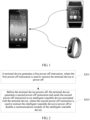
- the embodiments of the present invention provide a schematic diagram of an application scenario of a method for controlling an intelligent wearable device, where the schematic diagram of the application scenario includes a terminal device and at least one intelligent wearable device.
- the terminal device may be a handheld portable mobile terminal device such as a terminal device or a tablet computer PAD
- the intelligent wearable device may be a smart watch, a smart band, intelligent wearable glasses, a smart headset, a smart ring, or the like.
- the at least one intelligent wearable device is specifically a smart watch, and the figure further illustrates a communication link between the terminal device and the intelligent wearable device.
- the terminal device communicates with the intelligent wearable device by using a short-range wireless communication technology.
- the terminal device communicates with the smart watch by using a Bluetooth technology.
- a user may implement control over the smart watch by pre-configuring the terminal device.
- the terminal device when detecting a first instruction used to instruct the terminal device to power off, the terminal device generates a second instruction and sends the second instruction to the smart watch by using Bluetooth, where the second instruction is used to instruct the smart watch to automatically power off or automatically disable a short-range wireless communications module of the smart watch, and the smart watch receives the second instruction and, according to the second instruction, automatically powers off or automatically disables the short-range wireless communications module of the smart watch.
- the terminal device communicatively connects to the smart watch only by using the short-range wireless communication technology. Therefore, when detecting the first instruction used to instruct the terminal device to power off, the terminal device generates the second instruction and sends the second instruction to the smart watch by using Bluetooth, where the second instruction is used to instruct the smart watch to automatically power off or automatically disable the short-range wireless communications module of the smart watch.
- the terminal device further communicatively connects to another intelligent wearable device except the smart watch by using the short-range wireless communication technology
- the terminal device when the terminal device generates the second instruction, the terminal device sends the second instruction to both the smart watch and the another intelligent wearable device except the smart watch by using Bluetooth, where the second instruction is used to instruct all intelligent wearable devices that communicatively connect to the terminal device by using the short-range wireless communication technology to automatically power off or automatically disable short-range wireless communications modules of the intelligent wearable devices.
- the terminal device when a terminal device is to power off, the terminal device sends a power-off instruction to an intelligent wearable device, where the power-off instruction is used to instruct the intelligent wearable device to automatically power off or automatically disable a short-range wireless communications module of the intelligent wearable device, so as to reduce power consumption of the intelligent wearable device.
- the terminal device determines, by detecting information about a scenario in which the terminal device is located, whether a power-off instruction needs to be sent to the smart watch. Specifically, the terminal device detects and acquires the scenario information of the terminal device, and determines, according to the scenario information, whether the power-off instruction needs to be sent to the smart watch.
- the terminal device sends the power-off instruction to the smart watch by using the short-range wireless communication technology, where the power-off instruction is used to instruct the smart watch to automatically power off or automatically disable the short-range wireless communications module of the smart watch, and the smart watch receives the power-off instruction and, according to the power-off instruction, automatically powers off or automatically disables the short-range wireless communications module of the smart watch.
- a terminal device detects and acquires scenario information of the terminal device, determines, according to the scenario information, whether an intelligent wearable device need automatically power off or automatically disable a short-range wireless communications module of the intelligent wearable device, and if a determining result is that the intelligent wearable device can automatically power off or automatically disable the short-range wireless communications module of the intelligent wearable device, sends a power-off instruction to the wearable device, where the power-off instruction is used to instruct the intelligent wearable device to automatically power off or automatically disable the short-range wireless communications module of the intelligent wearable device, so as to reduce power consumption of the intelligent wearable device.
- FIG. 2 is a flowchart of a method for controlling an intelligent wearable device according to an embodiment of the present invention, where the control method may be applied in the application scenario shown in FIG. 1 .
- the control method includes the following steps:
- a terminal device generates a first power-off instruction, where the first power-off instruction is used to instruct the terminal device to power off.
- the terminal device Before the terminal device powers off, the terminal device generates a second power-off instruction and sends the second power-off instruction to the intelligent wearable device associated with the terminal device, where the second power-off instruction is used to instruct the intelligent wearable device to power off or disable a communications module of the intelligent wearable device.
- the terminal device may be referred to as a terminal (Terminal), a mobile station (Mobile Station, "MS” for short), a mobile terminal (Mobile Terminal), or the like.
- the terminal device may communicate with one or more core networks over a radio access network (Radio Access Network, "RAN” for short).
- RAN Radio Access Network
- the terminal device may be a mobile phone (or referred to as a "cellular” phone), a computer with a mobile terminal, or the like, or for example, the terminal device may be a portable, pocket-sized, handheld, computer built-in, or in-vehicle mobile apparatus, which exchanges voice and/or data with the radio access network.
- the intelligent wearable device may be a smart watch, a smart band, intelligent wearable glasses, a smart headset, a smart ring, or the like.
- the terminal device generates a second power-off instruction specifically includes that the terminal device needs to determine a trigger condition for generating the first power-off instruction.
- the trigger condition for the first power-off instruction includes power-off caused by low battery, forced power-off by a holder of the terminal device, automatic power-off at a preset moment, power-off caused by a terminal device restart, and the like.
- the terminal device restart If a determining result indicates that the trigger condition for the first power-off instruction is the terminal device restart, at the same time of generating the first power-off instruction, the terminal device does not generate the second power-off instruction, or after the terminal device generates the first power-off instruction and before the terminal device enters a power-off state, the terminal device does not generate the second power-off instruction.
- the power-off caused by the terminal device restart not only includes an automatic restart caused by a bug and the like in an application running on the terminal device, but also includes a manual restart by the holder of the terminal device.
- the terminal device generates the first power-off instruction, where the first power-off instruction is used to instruct the terminal device to power off, and before the terminal device powers off, the terminal device generates the second power-off instruction includes at least the following two cases: First, the terminal device generates the first power-off instruction and the second power-off instruction at the same time; and second, the terminal device generates the second power-off instruction at any moment after generating the first power-off instruction and before powering off.
- the intelligent wearable device associated with the terminal device refers to an intelligent wearable device that performs short-range wireless communication with the terminal device.
- a communications module for the intelligent wearable device to perform short-range wireless communication with the terminal device includes a Bluetooth module, a WiFi module, a notification management module, or the like.
- this embodiment of the present invention includes at least the following implementation manners:
- the terminal device directly controls, by sending the second power-off instruction, the intelligent wearable device to power off or disable the communications module of the intelligent wearable device, that is, whether the intelligent wearable device powers off or disables the communications module of the intelligent wearable device is controlled by the terminal device; or the terminal device sends the second power-off instruction to the intelligent wearable device, and the intelligent wearable device determines, according to the second power-off instruction, whether to power off or disable the communications module of the intelligent wearable device, that is, whether the intelligent wearable device powers off or disables the communications module of the intelligent wearable device is controlled by the intelligent wearable device.
- the intelligent wearable device may perform a corresponding action immediately after receiving the second power-off instruction, or may perform a corresponding action within a preset period of time after receiving the second power-off instruction.
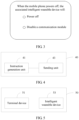
- the terminal device generates the second power-off instruction and sends the second power-off instruction to the intelligent wearable device associated with the terminal device, a representation form of which may be specifically as follows: After the terminal device generates the first power-off instruction and before the terminal device powers off, a window shown in FIG. 3 pops up on a display screen of the terminal device, and the holder of the terminal device selects, when the terminal device powers off, whether the intelligent wearable device that performs the short-range wireless communication with the terminal device powers off or disables the communications module.
- the terminal device may directly send a second power-off instruction, where the second power-off instruction is used to instruct the intelligent wearable device to automatically power off; or the terminal device may directly send a second power-off instruction, where the second power-off instruction is used to instruct the intelligent wearable device to automatically disable the communications module.
- the terminal device when a terminal device is to power off, the terminal device sends a power-off instruction to an intelligent wearable device associated with the terminal device, and after receiving the power-off instruction, the intelligent wearable device powers off or disables a communications module for the intelligent wearable device to communicate with the terminal device.
- the intelligent wearable device in this embodiment can not only ensure to normally receive the information sent by the terminal device, but also immediately power off or disable the communications module of the intelligent wearable device when the terminal device powers off, which reduces battery power consumption and improves user experience.
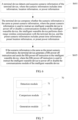
- FIG. 4 shows a terminal device 40 according to an embodiment of the present invention, where the terminal device 40 may implement the function described in the foregoing embodiment of the method for controlling an intelligent wearable device, and the terminal device 40 may be applied in the scenario shown in FIG. 1 and is corresponding to the smartphone in FIG. 1 .
- the terminal device 40 includes an instruction generation unit 41 and a sending unit 43.
- the instruction generation unit 41 is configured to generate a first power-off instruction, where the first power-off instruction is used to instruct the terminal device to power off; and configured to generate a second power-off instruction before the terminal device powers off, where the second power-off instruction is used to instruct an intelligent wearable device to power off or disable a communications module of the intelligent wearable device.
- the sending unit 43 is configured to send the second power-off instruction to the intelligent wearable device.
- the instruction generation unit 41 is specifically configured to determine that generation of the first power-off instruction is not triggered by a restart of an operating system of the terminal device; and generate the second power-off instruction if the generation of the first power-off instruction is not triggered by the restart of the operating system of the terminal device.
- the instruction generation unit 41 is specifically configured to generate the first power-off instruction and the second power-off instruction at the same time; or the instruction generation unit 41 is specifically configured to generate the second power-off instruction after the instruction generation unit 41 generates the first power-off instruction and before the terminal device powers off.
- an instruction generation unit of the terminal device when a terminal device is to power off, an instruction generation unit of the terminal device generates a power-off instruction that is used to instruct an intelligent wearable device associated with the terminal device to power off or disable a communications module of the intelligent wearable device.
- the terminal device provided in this embodiment of the present invention sends, on the verge of entering a power-off state, an instruction to control the intelligent wearable device associated with the terminal device to power off or disable the communications module of the intelligent wearable device.
- the intelligent wearable device After the terminal device powers off, the intelligent wearable device cannot receive any information sent from the terminal device even if the short-range wireless communications module of the intelligent wearable device is enabled, and therefore, maintaining the active short-range wireless communications module of the intelligent wearable device wastes unnecessary power.
- the terminal device provided in this embodiment of the present invention, battery power consumption is reduced and user experience is improved.
- FIG. 5 is a schematic structural diagram of a system 50 for controlling an intelligent wearable device according to an embodiment of the present invention, where the control system includes a terminal device 51 and an intelligent wearable device 53, the terminal device 51 can implement a same or similar function of the terminal device 40, and the terminal device 51 can implement the function described in the foregoing embodiment of the method for controlling an intelligent wearable device.
- the terminal device 51 is configured to generate a third power-off instruction, where the third power-off instruction is used to instruct the terminal device 51 to power off; and configured to: before the terminal device 51 powers off, generate a fourth power-off instruction and send the fourth power-off instruction to the intelligent wearable device 53 associated with the terminal device 51, where the fourth power-off instruction is used to instruct the intelligent wearable device 53 to power off or disable a communications module of the intelligent wearable device 53; and the intelligent wearable device 53 is configured to receive the fourth power-off instruction, and power off or disable the communications module of the intelligent wearable device 53 according to the fourth power-off instruction.
- the terminal device 51 is specifically configured to determine whether generation of the third power-off instruction is triggered by a restart of an operating system of the terminal device 51; and generate the fourth power-off instruction if the generation of the first power-off instruction is not triggered by the restart of the operating system of the terminal device.
- terminal 51 is specifically configured to generate the third power-off instruction and the fourth power-off instruction at the same time; or the terminal device 51 is specifically configured to generate the fourth power-off instruction after terminal device 51 generates the third power-off instruction and before the terminal device 51 powers off.
- an instruction generation unit of the terminal device when a terminal device is to power off, an instruction generation unit of the terminal device generates a power-off instruction that is used to instruct an intelligent wearable device associated with the terminal device to power off or disable a communications module of the intelligent wearable device. Accordingly, the intelligent wearable device receives the power-off instruction and, according to the power-off instruction, powers off or disables the communications module of the intelligent wearable device.
- the terminal device In comparison with the prior art in which an intelligent wearable device maintains an active short-range wireless communications module to receive, in real time, information sent by a terminal device, the terminal device provided in this embodiment of the present invention sends, on the verge of entering a power-off state, an instruction to control the intelligent wearable device associated with the terminal device to power off or disable the communications module of the intelligent wearable device. After the terminal device powers off, the intelligent wearable device cannot receive any information sent from the terminal device even if the short-range wireless communications module of the intelligent wearable device is enabled, and therefore, maintaining the active short-range wireless communications module of the intelligent wearable device wastes unnecessary power. In other words, by using the control system provided in this embodiment of the present invention, battery power consumption of the intelligent wearable device is reduced and user experience is improved.
- FIG 6 is a flowchart of another method for controlling an intelligent wearable device according to an example useful for understanding the invention, where the control method may be applied in the application scenario shown in FIG 1 .
- the control method includes the following steps:
- a terminal device detects and acquires scenario information of the terminal device, where the scenario information includes time information, location information, or power information.
- a terminal device detects and acquires scenario information of the terminal device includes: detecting and acquiring, by the terminal device, the time information of the terminal device; detecting and acquiring, by the terminal device, the location information of the terminal device; or detecting and acquiring, by the terminal device, the power information of the terminal device.
- one of the following methods may be used: by enabling Global Positioning System GPS in the terminal device, locating the terminal device and generating the location information; or determining and acquiring the current location information of the terminal device by using a cell ID of a wireless cellular network currently connected by the terminal device; or determining and acquiring the current location information of the terminal device by means of location by using a location reference signal of a wireless cellular network currently connected by the terminal device.
- the terminal device compares whether the scenario information is the same as preset scenario information, where the preset scenario information is used to instruct the intelligent wearable device to power off or disable a communications module of the intelligent wearable device, the intelligent wearable device performs short-range wireless communication with the terminal device, and the preset scenario information includes preset time information, preset location information, or preset power information.
- the terminal device performs the short-range wireless communication with the intelligent wearable device, that is, a distance between the terminal device and the intelligent wearable device is extremely short, generally ranging from a few meters to dozens of meters, and therefore the scenario information detected by the terminal device is scenario information of a scenario in which the intelligent wearable device is located.
- the preset power information used to instruct the intelligent wearable device that performs the short-range wireless communication with the terminal device to power off or disable the communications module of the intelligent wearable device includes that remaining power of the terminal device is slightly greater than power-off power.
- power-off power varies according to different terminal devices. For example, power-off power of a mobile phone is 3%, that is, the mobile phone automatically powers off when remaining power of a mobile phone reaches 3%. It may be artificially set that remaining power is slightly greater than power-off power.
- the intelligent wearable device that performs the short-range wireless communication with the terminal device needs to automatically power off or automatically disable the communications module of the intelligent wearable device.
- the preset time information used to instruct the intelligent wearable device that performs the short-range wireless communication with the terminal device to power off or disable the communications module of the intelligent wearable device includes time, such as 23:00, which indicates that a holder of the terminal device is about to sleep.
- the preset location information used to instruct the intelligent wearable device that performs the short-range wireless communication with the terminal device to power off or disable the communications module of the intelligent wearable device includes a place, such as an airport, in which the terminal device is required to power off.
- the preset scenario information is preset and stored in the terminal device.
- the preset scenario information may be set and stored in the terminal device by a manufacturer of the terminal device, that is, the preset scenario information cannot be changed once set; or the preset scenario information may be set and stored in the terminal device by the holder of the terminal device, that is, the preset scenario information may be set in real time by the holder of the terminal device, and may be flexibly changed.
- the terminal device If the scenario information is the same as the preset scenario information, the terminal device generates a fifth power-off instruction and sends the fifth power-off instruction to the intelligent wearable device, where the fifth power-off instruction is used to instruct the intelligent wearable device to power off or disable the communications module of the intelligent wearable device.
- the terminal device directly controls, by sending the fifth power-off instruction, the intelligent wearable device to power off or disable the communications module of the intelligent wearable device, that is, whether the intelligent wearable device powers off or disables the communications module of the intelligent wearable device is controlled by the terminal device; or the terminal device sends the fifth power-off instruction to the intelligent wearable device, and the intelligent wearable device determines, according to the fifth power-off instruction, whether to power off or disable the communications module of the intelligent wearable device, that is, whether the intelligent wearable device powers off or disables the communications module of the intelligent wearable device is controlled by the intelligent wearable device.
- the intelligent wearable device may perform a corresponding action immediately after receiving the fifth power-off instruction, or may perform a corresponding action within a preset period of time after receiving the fifth power-off instruction.
- the terminal device generates the fifth power-off instruction and sends the fifth power-off instruction to the intelligent wearable device associated with the terminal device, a representation form of which may be specifically as follows:
- a window shown in FIG. 3 pops up on a display screen of the terminal device, and the holder of the terminal device selects, when the terminal device powers off, whether the intelligent wearable device that performs the short-range wireless communication with the terminal device powers off or disables the communications module.
- the terminal device may directly send a second power-off instruction, where the second power-off instruction is used to instruct the intelligent wearable device to automatically power off; or the terminal device may directly send a second power-off instruction, where the second power-off instruction is used to instruct the intelligent wearable device to automatically disable the communications module.
- the terminal device when scenario information detected by a terminal device is the same as preset scenario information, the terminal device generates a power-off instruction and sends the power-off instruction to an intelligent wearable device associated with the terminal device, where the power-off instruction is used to instruct the intelligent wearable device to power off or disable a communications module of the intelligent wearable device.
- the intelligent wearable device powers off or disables the communications module of the intelligent wearable device in a specific scenario; this is because the preset scenario information is preset information that the intelligent wearable device in this scenario needs to power off.
- the intelligent wearable device does not need to be always in a working state, and therefore compared with the prior art, the technical solution provided in this embodiment of the present invention can reduce power consumption of the intelligent wearable device and improve user experience.
- FIG. 7 shows a terminal device 70 according to an example useful for understanding the invention, where the terminal device 70 may implement the function described in the foregoing embodiment of the method for controlling an intelligent wearable device, and the terminal device 70 may be applied in the scenario shown in FIG. 1 and is corresponding to the smartphone in FIG. 1 .
- the terminal device 70 includes a detection module 71, a comparison module 73, and a generation module 75.
- the detection module 71 is configured to detect and acquire scenario information of the terminal device, where the scenario information includes time information, location information, or power information.
- the comparison module 73 is configured to compare whether the scenario information is the same as preset scenario information, where the preset scenario information is used to instruct an intelligent wearable device to power off or disable a communications module of the intelligent wearable device, the intelligent wearable device performs short-range wireless communication with the terminal device, and the preset scenario information includes preset time information, preset location information, or preset power information.
- the generation module 75 is configured to: when a comparison result of the comparison module is that the scenario information is the same as the preset scenario information, generate a fifth power-off instruction and send the fifth power-off instruction to the intelligent wearable device, where the fifth power-off instruction is used to instruct the intelligent wearable device to power off or disable the communications module of the intelligent wearable device.
- the preset scenario information is preset and stored in the terminal device.
- the preset scenario information may be set and stored in the terminal device by a manufacturer of the terminal device, that is, the preset scenario information cannot be changed once set; or the preset scenario information may be set and stored in the terminal device by a holder of the terminal device, that is, the preset scenario information may be set in real time by the holder of the terminal device, and may be flexibly changed.
- the terminal device when scenario information detected by a terminal device is the same as preset scenario information, the terminal device generates a power-off instruction and sends the power-off instruction to an intelligent wearable device associated with the terminal device, where the power-off instruction is used to instruct the intelligent wearable device to power off or disable a communications module of the intelligent wearable device.
- the terminal device provided in this embodiment of the present invention sends the power-off instruction to the intelligent wearable device to instruct the intelligent wearable device to power off or disable the communications module of the intelligent wearable device. That is, by using the terminal device provided in this embodiment of the present invention, it may be implemented that the intelligent wearable device associated with the terminal device does not need to be always in a working state because the preset scenario information is preset information that the intelligent wearable device in a scenario needs to power off.
- the technical solution provided in this embodiment can reduce power consumption of the intelligent wearable device and improve user experience.
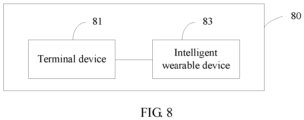
- FIG. 8 is a schematic structural diagram of a system 80 for controlling an intelligent wearable device according to an example useful for understanding the invention, where the control system includes a terminal device 81 and an intelligent wearable device 83, the terminal device 81 can implement a same or similar function of the terminal device 70, and the terminal device 81 can implement the function described in the foregoing embodiment of the method for controlling an intelligent wearable device.
- the terminal device 81 is configured to detect and acquire scenario information of the terminal device 81, where the scenario information includes time information, location information, or power information; the terminal device 81 is further configured to compare whether the scenario information is the same as preset scenario information, where the preset scenario information is used to instruct the intelligent wearable device 83 to power off or disable a communications module of the intelligent wearable device 83, the intelligent wearable device 83 performs short-range wireless communication with the terminal device 81, and the preset scenario information includes preset time information, preset location information, or preset power information; if the scenario information is the same as the preset scenario information, the terminal device 81 generates a sixth power-off instruction and send the sixth power-off instruction to the intelligent wearable device 83, where the sixth power-off instruction is used to instruct the intelligent wearable device 83 to power off or disable the communications module of the intelligent wearable device 83; and the intelligent wearable device 83 is configured to receive the sixth power-off instruction, and power off or disable the communications module of the intelligent wearable device 83 according
- the preset scenario information is preset and stored in the terminal device 81.
- the preset scenario information may be set and stored in the terminal device 81 by a manufacturer of the terminal device 81, that is, the preset scenario information cannot be changed once set; or the preset scenario information may be set and stored in the terminal device 81 by a holder of the terminal device 81, that is, the preset scenario information may be set in real time by the holder of the terminal device 81, and may be flexibly changed.
- the terminal device when scenario information detected by a terminal device is the same as preset scenario information, the terminal device generates a power-off instruction and sends the power-off instruction to an intelligent wearable device associated with the terminal device, where the power-off instruction is used to instruct the intelligent wearable device to power off or disable a communications module of the intelligent wearable device. Accordingly, the intelligent wearable device receives the power-off instruction and, according to the power-off instruction, powers off or disables the communications module of the intelligent wearable device.
- the terminal device provided in this embodiment of the present invention sends the power-off instruction to the intelligent wearable device to instruct the intelligent wearable device to power off or disable the communications module of the intelligent wearable device. That is, in the control system provided in this embodiment of the present invention, the intelligent wearable device does not need to be always in a working state because the preset scenario information is preset information that the intelligent wearable device in a scenario needs to power off.
- the technical solution provided in this embodiment can reduce power consumption of the intelligent wearable device and improve user experience.
- the functions When the functions are implemented in the form of a software functional unit and sold or used as an independent product, the functions may be stored in a computer-readable storage medium. Based on such an understanding, the technical solutions of the present invention essentially, or the part contributing to the prior art, or some of the technical solutions may be implemented in a form of a software product.
- the software product is stored in a storage medium, and includes several instructions for instructing a computer device (which may be a personal computer, a server, or a network device) to perform all or some of the steps of the methods described in the embodiments of the present invention.
- the foregoing storage medium includes: any medium that can store program code, such as a USB flash drive, a removable hard disk, a read-only memory (ROM, Read-Only Memory), a random access memory (RAM, Random Access Memory), a magnetic disk, or an optical disc.
- program code such as a USB flash drive, a removable hard disk, a read-only memory (ROM, Read-Only Memory), a random access memory (RAM, Random Access Memory), a magnetic disk, or an optical disc.
Landscapes
- Engineering & Computer Science (AREA)
- Theoretical Computer Science (AREA)
- General Engineering & Computer Science (AREA)
- Physics & Mathematics (AREA)
- General Physics & Mathematics (AREA)
- Software Systems (AREA)
- Computer Hardware Design (AREA)
- Computing Systems (AREA)
- Human Computer Interaction (AREA)
- Computer Security & Cryptography (AREA)
- Telephone Function (AREA)
- Mobile Radio Communication Systems (AREA)
- Selective Calling Equipment (AREA)
Claims (5)
- Verfahren zum Steuern einer intelligenten tragbaren Vorrichtung, umfassend Erzeugen (S201), durch eine Endgerätevorrichtung, einer ersten Ausschaltanweisung, wobei die erste Ausschaltanweisung verwendet wird, um die Endgerätevorrichtung anzuweisen, auszuschalten; und
bevor die Endgerätevorrichtung ausschaltet, Erzeugen (S203) einer zweiten Ausschaltanweisung durch die Endgerätevorrichtung und Senden der zweiten Ausschaltanweisung an die intelligente, tragbare Vorrichtung, die der Endgerätevorrichtung zugeordnet ist, wobei die zweite Ausschaltanweisung verwendet wird, um die intelligente tragbare Vorrichtung anzuweisen, ein drahtloses Nahbereichskommunikationsmodul der intelligenten tragbaren Vorrichtung auszuschalten oder zu deaktivieren, wobei das drahtlose Nahbereichskommunikationsmodul mit der Endgerätevorrichtung durch eine drahtlose Nahbereichskommunikation verbunden ist und mit dieser kommuniziert; dadurch gekennzeichnet, dass das Erzeugen einer zweiten Ausschaltanweisung durch die Endgerätevorrichtung insbesondere umfasst:Bestimmen durch die Endgerätevorrichtung, ob das Erzeugen der ersten Ausschaltanweisung durch einen Neustart eines Betriebssystems der Endgerätevorrichtung ausgelöst wird; undErzeugen der zweiten Ausschaltanweisung durch die Endgerätevorrichtung, wenn die Erzeugung der ersten Ausschaltanweisung nicht durch den Neustart des Betriebssystems der Endgerätevorrichtung ausgelöst wird. - Verfahren zum Steuern nach Anspruch 1, wobei das Erzeugen einer ersten Ausschaltanweisung durch eine Endgerätevorrichtung und vor dem Ausschalten der Endgerätevorrichtung das Erzeugen einer zweiten Ausschaltanweisung durch die Endgerätevorrichtung insbesondere umfasst:Erzeugen, durch die Endgerätevorrichtung, der ersten Ausschaltanweisung und der zweiten Ausschaltanweisung zur gleichen Zeit; odernachdem die Endgerätevorrichtung die erste Ausschaltanweisung erzeugt und bevor die Endgerätevorrichtung ausschaltet, Erzeugen der zweiten Ausschaltanweisung durch die Endgerätevorrichtung.
- Endgerätevorrichtung (40), umfassendeine Anweisungserzeugungseinheit (41), die dazu konfiguriert ist, eine erste Ausschaltanweisung zu erzeugen, wobei die erste Ausschaltanweisung dazu verwendet wird, die Endgerätevorrichtung anzuweisen, auszuschalten; und die dazu konfiguriert ist, eine zweite Ausschaltanweisung zu erzeugen, bevor die Endgerätevorrichtung ausschaltet, wobei die zweite Ausschaltanweisung dazu verwendet wird, eine durch die Endgerätevorrichtung (40) zugeordnete intelligente tragbare Vorrichtung (53) anzuweisen, ein Kommunikationsmodul der intelligenten tragbaren Vorrichtung auszuschalten oder zu deaktivieren;wobei die Endgerätevorrichtung (40) dazu konfiguriert ist, sich mittels drahtloser Nahbereichskommunikation mit der intelligenten tragbaren Vorrichtung (53) zu verbinden und mit dieser zu kommunizieren undeine Sendeeinheit (43), die dazu konfiguriert ist, die zweite Ausschaltanweisung an die intelligente tragbare Vorrichtung zu senden, dadurch gekennzeichnet, dass:
die Anweisungserzeugungseinheit insbesondere dazu konfiguriert ist, zu bestimmen, ob die Erzeugung der ersten Ausschaltanweisung durch einen Neustart eines Betriebssystems der Endgerätevorrichtung ausgelöst wird; und die zweite Ausschaltanweisung zu erzeugen, wenn die Erzeugung der ersten Ausschaltanweisung nicht durch den Neustart des Betriebssystems der Endgerätevorrichtung ausgelöst wird. - Endgerätevorrichtung nach Anspruch 3, wobei:die Anweisungserzeugungseinheit insbesondere dazu konfiguriert ist, die erste Ausschaltanweisung und die zweite Ausschaltanweisung zur gleichen Zeit zu erzeugen; oderdie Anweisungserzeugungseinheit insbesondere dazu konfiguriert ist, die zweite Ausschaltanweisung zu erzeugen, nachdem die Anweisungserzeugungseinheit die erste Ausschaltanweisung erzeugt hat und bevor die Endgerätevorrichtung ausschaltet.
- System (50) zum Steuern einer intelligenten tragbaren Vorrichtung (53), dadurch gekennzeichnet, dass es die Endgerätevorrichtung (40, 51) nach einem der Ansprüche 3 bis 4 und die intelligente tragbare Vorrichtung (53) umfasst.
Applications Claiming Priority (2)
| Application Number | Priority Date | Filing Date | Title |
|---|---|---|---|
| CN201410364461.7A CN105302284B (zh) | 2014-07-28 | 2014-07-28 | 一种智能穿戴设备的控制方法、装置及系统 |
| PCT/CN2015/084684 WO2016015577A1 (zh) | 2014-07-28 | 2015-07-21 | 一种智能穿戴设备的控制方法、装置及系统 |
Publications (3)
| Publication Number | Publication Date |
|---|---|
| EP3125075A1 EP3125075A1 (de) | 2017-02-01 |
| EP3125075A4 EP3125075A4 (de) | 2017-10-04 |
| EP3125075B1 true EP3125075B1 (de) | 2024-03-20 |
Family
ID=55199643
Family Applications (1)
| Application Number | Title | Priority Date | Filing Date |
|---|---|---|---|
| EP15828228.5A Active EP3125075B1 (de) | 2014-07-28 | 2015-07-21 | Verfahren, vorrichtung und system zur steuerung einer intelligenten, am körper tragbaren vorrichtung |
Country Status (6)
| Country | Link |
|---|---|
| US (1) | US10139893B2 (de) |
| EP (1) | EP3125075B1 (de) |
| JP (1) | JP6400124B2 (de) |
| KR (1) | KR101881429B1 (de) |
| CN (1) | CN105302284B (de) |
| WO (1) | WO2016015577A1 (de) |
Families Citing this family (18)
| Publication number | Priority date | Publication date | Assignee | Title |
|---|---|---|---|---|
| CN105589539A (zh) * | 2016-02-19 | 2016-05-18 | 南京华旗资讯科技有限公司 | 一种pc主机的智能控制系统 |
| CN106125881B (zh) | 2016-06-13 | 2018-10-26 | 北京小米移动软件有限公司 | 控制工作状态的方法和装置 |
| CN106252752B (zh) * | 2016-08-01 | 2018-09-07 | 广东乐源数字技术有限公司 | 一种智能手环出厂电池保护方法 |
| CN106507284A (zh) * | 2016-11-18 | 2017-03-15 | 广州视源电子科技股份有限公司 | 一种功能模块控制方法及装置 |
| CN107241791B (zh) * | 2017-06-09 | 2020-06-19 | 深圳市文鼎创软件有限公司 | 与蓝牙key设备通信的方法、装置、移动终端和蓝牙key设备 |
| KR102037775B1 (ko) * | 2017-08-22 | 2019-11-26 | (주)파트론 | 웨어러블 기기 및 그 제어 방법 |
| CN108055694B (zh) * | 2017-12-18 | 2020-03-27 | 广东小天才科技有限公司 | 一种可穿戴设备的通信控制方法及可穿戴设备 |
| CN108430000B (zh) * | 2018-04-13 | 2021-07-23 | 广东小天才科技有限公司 | 一种基于电量管控麦克风设备的方法、麦克风设备及系统 |
| CN110417982B (zh) * | 2018-04-26 | 2021-04-23 | Oppo广东移动通信有限公司 | 移动终端控制方法和装置、移动终端、计算机存储介质 |
| CN108665325A (zh) * | 2018-07-03 | 2018-10-16 | 罗明伟 | 一种基于物联网的可在线点赞的穿戴装置 |
| CN108848436B (zh) * | 2018-09-18 | 2020-11-13 | 广州市中音集志电子有限公司 | 个人卡拉ok使用方法及系统 |
| US20210014674A1 (en) * | 2019-07-11 | 2021-01-14 | Slim Hmi Technology | Secure interaction system and communication display device |
| CN110855452B (zh) * | 2019-11-22 | 2022-08-26 | 广东小天才科技有限公司 | 一种智能穿戴设备、移动终端、远程开机系统及方法 |
| CN111158477B (zh) * | 2019-12-25 | 2024-05-17 | 北京金山安全软件有限公司 | 一种可穿戴设备的工作方法、控制方法、可穿戴设备及服务器 |
| CN113126783A (zh) * | 2019-12-30 | 2021-07-16 | 安徽华米信息科技有限公司 | 终端设备的控制方法、装置及终端设备 |
| CN111405727B (zh) * | 2020-04-30 | 2022-05-20 | 鹏城实验室 | 一种受控设备的控制方法及控制系统 |
| CN116801223A (zh) * | 2020-12-11 | 2023-09-22 | Oppo广东移动通信有限公司 | 通信方法、装置、终端设备及存储介质 |
| CN115396990A (zh) * | 2022-06-28 | 2022-11-25 | 西安紫光展锐科技有限公司 | 功耗控制方法和装置 |
Citations (1)
| Publication number | Priority date | Publication date | Assignee | Title |
|---|---|---|---|---|
| US20080165829A1 (en) * | 2007-01-05 | 2008-07-10 | Lee Michael M | Automatic power-off of bluetooth device from linked device |
Family Cites Families (15)
| Publication number | Priority date | Publication date | Assignee | Title |
|---|---|---|---|---|
| JP2004080344A (ja) * | 2002-08-16 | 2004-03-11 | Sony Ericsson Mobilecommunications Japan Inc | 携帯通信端末及び通話装置 |
| KR100542101B1 (ko) | 2003-06-02 | 2006-01-11 | 삼성전자주식회사 | 전송 파워 제어 방법 및 이를 이용한 블루투스 장치 |
| JP2005005787A (ja) * | 2003-06-09 | 2005-01-06 | Sony Corp | 通信システム、および通信装置 |
| JP2006060774A (ja) | 2004-07-20 | 2006-03-02 | Olympus Corp | 携帯情報機器 |
| JP2011054034A (ja) * | 2009-09-03 | 2011-03-17 | Canon Inc | 電子機器システム |
| US9338276B2 (en) * | 2010-01-26 | 2016-05-10 | Apple Inc. | Gating accessory connection |
| JP2011259153A (ja) * | 2010-06-08 | 2011-12-22 | Sharp Corp | 電気機器、電源制御装置、補聴器 |
| US8320970B2 (en) * | 2011-02-16 | 2012-11-27 | Google Inc. | Mobile device display management |
| CN202276442U (zh) * | 2011-05-31 | 2012-06-13 | 深圳市力合鑫源智能技术有限公司 | 一种智能感应控制的头戴式耳机 |
| US20140045547A1 (en) | 2012-08-10 | 2014-02-13 | Silverplus, Inc. | Wearable Communication Device and User Interface |
| CN103399483B (zh) * | 2013-07-31 | 2016-12-07 | 东莞宇龙通信科技有限公司 | 可穿戴设备电源管理的方法和装置 |
| CN103441784B (zh) * | 2013-08-26 | 2016-01-27 | 刘芳 | 一种电子手环装置及电子手环信息传输方法 |
| CN103809730B (zh) * | 2014-02-18 | 2016-08-17 | 上海新储集成电路有限公司 | 一种低功耗可穿戴设备系统 |
| CN103870220A (zh) * | 2014-03-19 | 2014-06-18 | 惠州Tcl移动通信有限公司 | 一种移动设备工作模式的控制方法及控制系统 |
| CN103901768A (zh) * | 2014-04-14 | 2014-07-02 | 北京君正集成电路股份有限公司 | 一种休眠唤醒方法及智能手表 |
-
2014
- 2014-07-28 CN CN201410364461.7A patent/CN105302284B/zh active Active
-
2015
- 2015-07-21 EP EP15828228.5A patent/EP3125075B1/de active Active
- 2015-07-21 JP JP2016569422A patent/JP6400124B2/ja active Active
- 2015-07-21 WO PCT/CN2015/084684 patent/WO2016015577A1/zh not_active Ceased
- 2015-07-21 KR KR1020167033956A patent/KR101881429B1/ko active Active
-
2016
- 2016-10-20 US US15/298,472 patent/US10139893B2/en active Active
Patent Citations (1)
| Publication number | Priority date | Publication date | Assignee | Title |
|---|---|---|---|---|
| US20080165829A1 (en) * | 2007-01-05 | 2008-07-10 | Lee Michael M | Automatic power-off of bluetooth device from linked device |
Also Published As
| Publication number | Publication date |
|---|---|
| US20170038821A1 (en) | 2017-02-09 |
| KR101881429B1 (ko) | 2018-07-24 |
| EP3125075A1 (de) | 2017-02-01 |
| WO2016015577A1 (zh) | 2016-02-04 |
| CN105302284B (zh) | 2018-03-09 |
| KR20160148706A (ko) | 2016-12-26 |
| CN105302284A (zh) | 2016-02-03 |
| JP6400124B2 (ja) | 2018-10-03 |
| EP3125075A4 (de) | 2017-10-04 |
| US10139893B2 (en) | 2018-11-27 |
| JP2017521901A (ja) | 2017-08-03 |
| BR112016028258A2 (pt) | 2017-08-22 |
Similar Documents
| Publication | Publication Date | Title |
|---|---|---|
| EP3125075B1 (de) | Verfahren, vorrichtung und system zur steuerung einer intelligenten, am körper tragbaren vorrichtung | |
| EP3873004B1 (de) | Verfahren zur herstellung einer klassischen bluetooth-verbindung zwischen dualmodus-bluetooth-vorrichtungen und dualmodus-bluetooth-vorrichtung | |
| EP2988219B1 (de) | Energiesparverwaltungsverfahren und -vorrichtung für ein intelligentes endgerät | |
| JP6577597B2 (ja) | 端末制御方法および装置、ならびに端末 | |
| EP2882234B1 (de) | Verfahren, Vorrichtung, Ausrüstung und System zur Steuerung des Ein- und Ausschaltens eines drahtlosen Netzwerks | |
| US10638429B2 (en) | Terminal device with a power supply control during emergency communication | |
| EP3002933B1 (de) | Lichtsteuerungsverfahren und entsprechender apparat für benutzerterminal | |
| KR102483835B1 (ko) | 전력 송수신 방법 및 그 전자 장치 | |
| CN103458124B (zh) | 一种终端的关机处理方法、装置和终端设备 | |
| EP2765483B1 (de) | Verfahren und vorrichtung zur steuerung der abschaltung eines endgeräts | |
| US9325189B2 (en) | Battery, and method, device, and system for battery protection | |
| US8538373B2 (en) | Methods and apparatus for emergency tracking | |
| CN107534932B (zh) | 一种功能状态控制的方法及相关设备 | |
| US10624027B2 (en) | Call processing method and apparatus thereof | |
| EP3016359B1 (de) | Datenverarbeitungsverfahren, endgerät, teilnehmererkennungsmodulkarte und system | |
| EP3547752A1 (de) | Zellumschaltungsverfahren und endgerätevorrichtung | |
| CN107659718A (zh) | 控制移动终端的方法、装置、移动终端及存储介质 | |
| CN103400475A (zh) | 基于北斗技术的重要装备电子防丢器 | |
| CN111984107B (zh) | 一种终端设备供电异常处理方法和装置 | |
| CN211062006U (zh) | 一种vr设备辅助系统 | |
| KR101457849B1 (ko) | 동일한 전화번호를 사용하는 휴대폰과 워치폰의 통신기능 제어방법 | |
| BR112016028258B1 (pt) | Método e sistema para controlar um dispositivo inteligente vestível, e dispositivo terminal | |
| CN111093173A (zh) | 一种限制启动stk应用的方法和装置 |
Legal Events
| Date | Code | Title | Description |
|---|---|---|---|
| STAA | Information on the status of an ep patent application or granted ep patent |
Free format text: STATUS: THE INTERNATIONAL PUBLICATION HAS BEEN MADE |
|
| PUAI | Public reference made under article 153(3) epc to a published international application that has entered the european phase |
Free format text: ORIGINAL CODE: 0009012 |
|
| STAA | Information on the status of an ep patent application or granted ep patent |
Free format text: STATUS: REQUEST FOR EXAMINATION WAS MADE |
|
| 17P | Request for examination filed |
Effective date: 20161026 |
|
| AK | Designated contracting states |
Kind code of ref document: A1 Designated state(s): AL AT BE BG CH CY CZ DE DK EE ES FI FR GB GR HR HU IE IS IT LI LT LU LV MC MK MT NL NO PL PT RO RS SE SI SK SM TR |
|
| AX | Request for extension of the european patent |
Extension state: BA ME |
|
| A4 | Supplementary search report drawn up and despatched |
Effective date: 20170901 |
|
| RIC1 | Information provided on ipc code assigned before grant |
Ipc: G06F 1/32 20060101AFI20170828BHEP Ipc: G06F 1/16 20060101ALI20170828BHEP |
|
| DAV | Request for validation of the european patent (deleted) | ||
| DAX | Request for extension of the european patent (deleted) | ||
| STAA | Information on the status of an ep patent application or granted ep patent |
Free format text: STATUS: EXAMINATION IS IN PROGRESS |
|
| 17Q | First examination report despatched |
Effective date: 20190206 |
|
| GRAP | Despatch of communication of intention to grant a patent |
Free format text: ORIGINAL CODE: EPIDOSNIGR1 |
|
| STAA | Information on the status of an ep patent application or granted ep patent |
Free format text: STATUS: GRANT OF PATENT IS INTENDED |
|
| INTG | Intention to grant announced |
Effective date: 20231121 |
|
| GRAS | Grant fee paid |
Free format text: ORIGINAL CODE: EPIDOSNIGR3 |
|
| GRAA | (expected) grant |
Free format text: ORIGINAL CODE: 0009210 |
|
| STAA | Information on the status of an ep patent application or granted ep patent |
Free format text: STATUS: THE PATENT HAS BEEN GRANTED |
|
| AK | Designated contracting states |
Kind code of ref document: B1 Designated state(s): AL AT BE BG CH CY CZ DE DK EE ES FI FR GB GR HR HU IE IS IT LI LT LU LV MC MK MT NL NO PL PT RO RS SE SI SK SM TR |
|
| REG | Reference to a national code |
Ref country code: GB Ref legal event code: FG4D |
|
| REG | Reference to a national code |
Ref country code: CH Ref legal event code: EP |
|
| REG | Reference to a national code |
Ref country code: DE Ref legal event code: R096 Ref document number: 602015088006 Country of ref document: DE |
|
| REG | Reference to a national code |
Ref country code: IE Ref legal event code: FG4D |
|
| PG25 | Lapsed in a contracting state [announced via postgrant information from national office to epo] |
Ref country code: LT Free format text: LAPSE BECAUSE OF FAILURE TO SUBMIT A TRANSLATION OF THE DESCRIPTION OR TO PAY THE FEE WITHIN THE PRESCRIBED TIME-LIMIT Effective date: 20240320 |
|
| REG | Reference to a national code |
Ref country code: LT Ref legal event code: MG9D |
|
| PG25 | Lapsed in a contracting state [announced via postgrant information from national office to epo] |
Ref country code: GR Free format text: LAPSE BECAUSE OF FAILURE TO SUBMIT A TRANSLATION OF THE DESCRIPTION OR TO PAY THE FEE WITHIN THE PRESCRIBED TIME-LIMIT Effective date: 20240621 |
|
| PG25 | Lapsed in a contracting state [announced via postgrant information from national office to epo] |
Ref country code: RS Free format text: LAPSE BECAUSE OF FAILURE TO SUBMIT A TRANSLATION OF THE DESCRIPTION OR TO PAY THE FEE WITHIN THE PRESCRIBED TIME-LIMIT Effective date: 20240620 Ref country code: HR Free format text: LAPSE BECAUSE OF FAILURE TO SUBMIT A TRANSLATION OF THE DESCRIPTION OR TO PAY THE FEE WITHIN THE PRESCRIBED TIME-LIMIT Effective date: 20240320 |
|
| REG | Reference to a national code |
Ref country code: NL Ref legal event code: MP Effective date: 20240320 |
|
| PG25 | Lapsed in a contracting state [announced via postgrant information from national office to epo] |
Ref country code: RS Free format text: LAPSE BECAUSE OF FAILURE TO SUBMIT A TRANSLATION OF THE DESCRIPTION OR TO PAY THE FEE WITHIN THE PRESCRIBED TIME-LIMIT Effective date: 20240620 Ref country code: NO Free format text: LAPSE BECAUSE OF FAILURE TO SUBMIT A TRANSLATION OF THE DESCRIPTION OR TO PAY THE FEE WITHIN THE PRESCRIBED TIME-LIMIT Effective date: 20240620 Ref country code: LT Free format text: LAPSE BECAUSE OF FAILURE TO SUBMIT A TRANSLATION OF THE DESCRIPTION OR TO PAY THE FEE WITHIN THE PRESCRIBED TIME-LIMIT Effective date: 20240320 Ref country code: HR Free format text: LAPSE BECAUSE OF FAILURE TO SUBMIT A TRANSLATION OF THE DESCRIPTION OR TO PAY THE FEE WITHIN THE PRESCRIBED TIME-LIMIT Effective date: 20240320 Ref country code: GR Free format text: LAPSE BECAUSE OF FAILURE TO SUBMIT A TRANSLATION OF THE DESCRIPTION OR TO PAY THE FEE WITHIN THE PRESCRIBED TIME-LIMIT Effective date: 20240621 Ref country code: FI Free format text: LAPSE BECAUSE OF FAILURE TO SUBMIT A TRANSLATION OF THE DESCRIPTION OR TO PAY THE FEE WITHIN THE PRESCRIBED TIME-LIMIT Effective date: 20240320 Ref country code: BG Free format text: LAPSE BECAUSE OF FAILURE TO SUBMIT A TRANSLATION OF THE DESCRIPTION OR TO PAY THE FEE WITHIN THE PRESCRIBED TIME-LIMIT Effective date: 20240320 |
|
| REG | Reference to a national code |
Ref country code: AT Ref legal event code: MK05 Ref document number: 1668407 Country of ref document: AT Kind code of ref document: T Effective date: 20240320 |
|
| PG25 | Lapsed in a contracting state [announced via postgrant information from national office to epo] |
Ref country code: SE Free format text: LAPSE BECAUSE OF FAILURE TO SUBMIT A TRANSLATION OF THE DESCRIPTION OR TO PAY THE FEE WITHIN THE PRESCRIBED TIME-LIMIT Effective date: 20240320 Ref country code: LV Free format text: LAPSE BECAUSE OF FAILURE TO SUBMIT A TRANSLATION OF THE DESCRIPTION OR TO PAY THE FEE WITHIN THE PRESCRIBED TIME-LIMIT Effective date: 20240320 |
|
| PG25 | Lapsed in a contracting state [announced via postgrant information from national office to epo] |
Ref country code: NL Free format text: LAPSE BECAUSE OF FAILURE TO SUBMIT A TRANSLATION OF THE DESCRIPTION OR TO PAY THE FEE WITHIN THE PRESCRIBED TIME-LIMIT Effective date: 20240320 |
|
| PG25 | Lapsed in a contracting state [announced via postgrant information from national office to epo] |
Ref country code: NL Free format text: LAPSE BECAUSE OF FAILURE TO SUBMIT A TRANSLATION OF THE DESCRIPTION OR TO PAY THE FEE WITHIN THE PRESCRIBED TIME-LIMIT Effective date: 20240320 |
|
| PG25 | Lapsed in a contracting state [announced via postgrant information from national office to epo] |
Ref country code: IS Free format text: LAPSE BECAUSE OF FAILURE TO SUBMIT A TRANSLATION OF THE DESCRIPTION OR TO PAY THE FEE WITHIN THE PRESCRIBED TIME-LIMIT Effective date: 20240720 |
|
| PG25 | Lapsed in a contracting state [announced via postgrant information from national office to epo] |
Ref country code: PT Free format text: LAPSE BECAUSE OF FAILURE TO SUBMIT A TRANSLATION OF THE DESCRIPTION OR TO PAY THE FEE WITHIN THE PRESCRIBED TIME-LIMIT Effective date: 20240722 Ref country code: SM Free format text: LAPSE BECAUSE OF FAILURE TO SUBMIT A TRANSLATION OF THE DESCRIPTION OR TO PAY THE FEE WITHIN THE PRESCRIBED TIME-LIMIT Effective date: 20240320 |
|
| PG25 | Lapsed in a contracting state [announced via postgrant information from national office to epo] |
Ref country code: ES Free format text: LAPSE BECAUSE OF FAILURE TO SUBMIT A TRANSLATION OF THE DESCRIPTION OR TO PAY THE FEE WITHIN THE PRESCRIBED TIME-LIMIT Effective date: 20240320 |
|
| PG25 | Lapsed in a contracting state [announced via postgrant information from national office to epo] |
Ref country code: EE Free format text: LAPSE BECAUSE OF FAILURE TO SUBMIT A TRANSLATION OF THE DESCRIPTION OR TO PAY THE FEE WITHIN THE PRESCRIBED TIME-LIMIT Effective date: 20240320 Ref country code: CZ Free format text: LAPSE BECAUSE OF FAILURE TO SUBMIT A TRANSLATION OF THE DESCRIPTION OR TO PAY THE FEE WITHIN THE PRESCRIBED TIME-LIMIT Effective date: 20240320 |
|
| PG25 | Lapsed in a contracting state [announced via postgrant information from national office to epo] |
Ref country code: AT Free format text: LAPSE BECAUSE OF FAILURE TO SUBMIT A TRANSLATION OF THE DESCRIPTION OR TO PAY THE FEE WITHIN THE PRESCRIBED TIME-LIMIT Effective date: 20240320 |
|
| PG25 | Lapsed in a contracting state [announced via postgrant information from national office to epo] |
Ref country code: PL Free format text: LAPSE BECAUSE OF FAILURE TO SUBMIT A TRANSLATION OF THE DESCRIPTION OR TO PAY THE FEE WITHIN THE PRESCRIBED TIME-LIMIT Effective date: 20240320 |
|
| PG25 | Lapsed in a contracting state [announced via postgrant information from national office to epo] |
Ref country code: SK Free format text: LAPSE BECAUSE OF FAILURE TO SUBMIT A TRANSLATION OF THE DESCRIPTION OR TO PAY THE FEE WITHIN THE PRESCRIBED TIME-LIMIT Effective date: 20240320 |
|
| PG25 | Lapsed in a contracting state [announced via postgrant information from national office to epo] |
Ref country code: SM Free format text: LAPSE BECAUSE OF FAILURE TO SUBMIT A TRANSLATION OF THE DESCRIPTION OR TO PAY THE FEE WITHIN THE PRESCRIBED TIME-LIMIT Effective date: 20240320 Ref country code: SK Free format text: LAPSE BECAUSE OF FAILURE TO SUBMIT A TRANSLATION OF THE DESCRIPTION OR TO PAY THE FEE WITHIN THE PRESCRIBED TIME-LIMIT Effective date: 20240320 Ref country code: RO Free format text: LAPSE BECAUSE OF FAILURE TO SUBMIT A TRANSLATION OF THE DESCRIPTION OR TO PAY THE FEE WITHIN THE PRESCRIBED TIME-LIMIT Effective date: 20240320 Ref country code: PT Free format text: LAPSE BECAUSE OF FAILURE TO SUBMIT A TRANSLATION OF THE DESCRIPTION OR TO PAY THE FEE WITHIN THE PRESCRIBED TIME-LIMIT Effective date: 20240722 Ref country code: PL Free format text: LAPSE BECAUSE OF FAILURE TO SUBMIT A TRANSLATION OF THE DESCRIPTION OR TO PAY THE FEE WITHIN THE PRESCRIBED TIME-LIMIT Effective date: 20240320 Ref country code: IS Free format text: LAPSE BECAUSE OF FAILURE TO SUBMIT A TRANSLATION OF THE DESCRIPTION OR TO PAY THE FEE WITHIN THE PRESCRIBED TIME-LIMIT Effective date: 20240720 Ref country code: ES Free format text: LAPSE BECAUSE OF FAILURE TO SUBMIT A TRANSLATION OF THE DESCRIPTION OR TO PAY THE FEE WITHIN THE PRESCRIBED TIME-LIMIT Effective date: 20240320 Ref country code: EE Free format text: LAPSE BECAUSE OF FAILURE TO SUBMIT A TRANSLATION OF THE DESCRIPTION OR TO PAY THE FEE WITHIN THE PRESCRIBED TIME-LIMIT Effective date: 20240320 Ref country code: CZ Free format text: LAPSE BECAUSE OF FAILURE TO SUBMIT A TRANSLATION OF THE DESCRIPTION OR TO PAY THE FEE WITHIN THE PRESCRIBED TIME-LIMIT Effective date: 20240320 Ref country code: AT Free format text: LAPSE BECAUSE OF FAILURE TO SUBMIT A TRANSLATION OF THE DESCRIPTION OR TO PAY THE FEE WITHIN THE PRESCRIBED TIME-LIMIT Effective date: 20240320 |
|
| PG25 | Lapsed in a contracting state [announced via postgrant information from national office to epo] |
Ref country code: IT Free format text: LAPSE BECAUSE OF FAILURE TO SUBMIT A TRANSLATION OF THE DESCRIPTION OR TO PAY THE FEE WITHIN THE PRESCRIBED TIME-LIMIT Effective date: 20240320 |
|
| REG | Reference to a national code |
Ref country code: DE Ref legal event code: R097 Ref document number: 602015088006 Country of ref document: DE |
|
| PG25 | Lapsed in a contracting state [announced via postgrant information from national office to epo] |
Ref country code: IT Free format text: LAPSE BECAUSE OF FAILURE TO SUBMIT A TRANSLATION OF THE DESCRIPTION OR TO PAY THE FEE WITHIN THE PRESCRIBED TIME-LIMIT Effective date: 20240320 |
|
| PG25 | Lapsed in a contracting state [announced via postgrant information from national office to epo] |
Ref country code: DK Free format text: LAPSE BECAUSE OF FAILURE TO SUBMIT A TRANSLATION OF THE DESCRIPTION OR TO PAY THE FEE WITHIN THE PRESCRIBED TIME-LIMIT Effective date: 20240320 |
|
| PLBE | No opposition filed within time limit |
Free format text: ORIGINAL CODE: 0009261 |
|
| STAA | Information on the status of an ep patent application or granted ep patent |
Free format text: STATUS: NO OPPOSITION FILED WITHIN TIME LIMIT |
|
| PG25 | Lapsed in a contracting state [announced via postgrant information from national office to epo] |
Ref country code: DK Free format text: LAPSE BECAUSE OF FAILURE TO SUBMIT A TRANSLATION OF THE DESCRIPTION OR TO PAY THE FEE WITHIN THE PRESCRIBED TIME-LIMIT Effective date: 20240320 |
|
| PG25 | Lapsed in a contracting state [announced via postgrant information from national office to epo] |
Ref country code: MC Free format text: LAPSE BECAUSE OF FAILURE TO SUBMIT A TRANSLATION OF THE DESCRIPTION OR TO PAY THE FEE WITHIN THE PRESCRIBED TIME-LIMIT Effective date: 20240320 |
|
| 26N | No opposition filed |
Effective date: 20241223 |
|
| REG | Reference to a national code |
Ref country code: CH Ref legal event code: PL |
|
| PG25 | Lapsed in a contracting state [announced via postgrant information from national office to epo] |
Ref country code: LU Free format text: LAPSE BECAUSE OF NON-PAYMENT OF DUE FEES Effective date: 20240721 |
|
| GBPC | Gb: european patent ceased through non-payment of renewal fee |
Effective date: 20240721 |
|
| PG25 | Lapsed in a contracting state [announced via postgrant information from national office to epo] |
Ref country code: LU Free format text: LAPSE BECAUSE OF NON-PAYMENT OF DUE FEES Effective date: 20240721 |
|
| PG25 | Lapsed in a contracting state [announced via postgrant information from national office to epo] |
Ref country code: SI Free format text: LAPSE BECAUSE OF FAILURE TO SUBMIT A TRANSLATION OF THE DESCRIPTION OR TO PAY THE FEE WITHIN THE PRESCRIBED TIME-LIMIT Effective date: 20240320 Ref country code: CH Free format text: LAPSE BECAUSE OF NON-PAYMENT OF DUE FEES Effective date: 20240731 Ref country code: BE Free format text: LAPSE BECAUSE OF NON-PAYMENT OF DUE FEES Effective date: 20240731 |
|
| PG25 | Lapsed in a contracting state [announced via postgrant information from national office to epo] |
Ref country code: FR Free format text: LAPSE BECAUSE OF NON-PAYMENT OF DUE FEES Effective date: 20240731 |
|
| PG25 | Lapsed in a contracting state [announced via postgrant information from national office to epo] |
Ref country code: GB Free format text: LAPSE BECAUSE OF NON-PAYMENT OF DUE FEES Effective date: 20240721 |
|
| REG | Reference to a national code |
Ref country code: BE Ref legal event code: MM Effective date: 20240731 |
|
| PG25 | Lapsed in a contracting state [announced via postgrant information from national office to epo] |
Ref country code: IE Free format text: LAPSE BECAUSE OF NON-PAYMENT OF DUE FEES Effective date: 20240721 |
|
| PGFP | Annual fee paid to national office [announced via postgrant information from national office to epo] |
Ref country code: DE Payment date: 20250604 Year of fee payment: 11 |
|
| PG25 | Lapsed in a contracting state [announced via postgrant information from national office to epo] |
Ref country code: CY Free format text: LAPSE BECAUSE OF FAILURE TO SUBMIT A TRANSLATION OF THE DESCRIPTION OR TO PAY THE FEE WITHIN THE PRESCRIBED TIME-LIMIT; INVALID AB INITIO Effective date: 20150721 |
|
| PG25 | Lapsed in a contracting state [announced via postgrant information from national office to epo] |
Ref country code: HU Free format text: LAPSE BECAUSE OF FAILURE TO SUBMIT A TRANSLATION OF THE DESCRIPTION OR TO PAY THE FEE WITHIN THE PRESCRIBED TIME-LIMIT; INVALID AB INITIO Effective date: 20150721 |