EP3125468B1 - Procede de traitement d'application en nuage et procede de deploiement d'application, et appareil et systeme correspondants - Google Patents
Procede de traitement d'application en nuage et procede de deploiement d'application, et appareil et systeme correspondants Download PDFInfo
- Publication number
- EP3125468B1 EP3125468B1 EP14890207.5A EP14890207A EP3125468B1 EP 3125468 B1 EP3125468 B1 EP 3125468B1 EP 14890207 A EP14890207 A EP 14890207A EP 3125468 B1 EP3125468 B1 EP 3125468B1
- Authority
- EP
- European Patent Office
- Prior art keywords
- application
- virtual machine
- emergency
- relationship
- hosted
- Prior art date
- Legal status (The legal status is an assumption and is not a legal conclusion. Google has not performed a legal analysis and makes no representation as to the accuracy of the status listed.)
- Active
Links
Images




Classifications
-
- H—ELECTRICITY
- H04—ELECTRIC COMMUNICATION TECHNIQUE
- H04L—TRANSMISSION OF DIGITAL INFORMATION, e.g. TELEGRAPHIC COMMUNICATION
- H04L67/00—Network arrangements or protocols for supporting network services or applications
- H04L67/01—Protocols
- H04L67/06—Protocols specially adapted for file transfer, e.g. file transfer protocol [FTP]
-
- G—PHYSICS
- G06—COMPUTING OR CALCULATING; COUNTING
- G06F—ELECTRIC DIGITAL DATA PROCESSING
- G06F9/00—Arrangements for program control, e.g. control units
- G06F9/06—Arrangements for program control, e.g. control units using stored programs, i.e. using an internal store of processing equipment to receive or retain programs
- G06F9/46—Multiprogramming arrangements
- G06F9/50—Allocation of resources, e.g. of the central processing unit [CPU]
- G06F9/5083—Techniques for rebalancing the load in a distributed system
- G06F9/5088—Techniques for rebalancing the load in a distributed system involving task migration
-
- G—PHYSICS
- G06—COMPUTING OR CALCULATING; COUNTING
- G06F—ELECTRIC DIGITAL DATA PROCESSING
- G06F9/00—Arrangements for program control, e.g. control units
- G06F9/06—Arrangements for program control, e.g. control units using stored programs, i.e. using an internal store of processing equipment to receive or retain programs
- G06F9/46—Multiprogramming arrangements
- G06F9/50—Allocation of resources, e.g. of the central processing unit [CPU]
- G06F9/5083—Techniques for rebalancing the load in a distributed system
-
- H—ELECTRICITY
- H04—ELECTRIC COMMUNICATION TECHNIQUE
- H04L—TRANSMISSION OF DIGITAL INFORMATION, e.g. TELEGRAPHIC COMMUNICATION
- H04L12/00—Data switching networks
- H04L12/28—Data switching networks characterised by path configuration, e.g. LAN [Local Area Networks] or WAN [Wide Area Networks]
- H04L12/46—Interconnection of networks
- H04L12/4641—Virtual LANs, VLANs, e.g. virtual private networks [VPN]
-
- H—ELECTRICITY
- H04—ELECTRIC COMMUNICATION TECHNIQUE
- H04L—TRANSMISSION OF DIGITAL INFORMATION, e.g. TELEGRAPHIC COMMUNICATION
- H04L67/00—Network arrangements or protocols for supporting network services or applications
- H04L67/01—Protocols
- H04L67/10—Protocols in which an application is distributed across nodes in the network
-
- H—ELECTRICITY
- H04—ELECTRIC COMMUNICATION TECHNIQUE
- H04L—TRANSMISSION OF DIGITAL INFORMATION, e.g. TELEGRAPHIC COMMUNICATION
- H04L67/00—Network arrangements or protocols for supporting network services or applications
- H04L67/01—Protocols
- H04L67/10—Protocols in which an application is distributed across nodes in the network
- H04L67/1097—Protocols in which an application is distributed across nodes in the network for distributed storage of data in networks, e.g. transport arrangements for network file system [NFS], storage area networks [SAN] or network attached storage [NAS]
-
- H—ELECTRICITY
- H04—ELECTRIC COMMUNICATION TECHNIQUE
- H04L—TRANSMISSION OF DIGITAL INFORMATION, e.g. TELEGRAPHIC COMMUNICATION
- H04L67/00—Network arrangements or protocols for supporting network services or applications
- H04L67/01—Protocols
- H04L67/131—Protocols for games, networked simulations or virtual reality
-
- H—ELECTRICITY
- H04—ELECTRIC COMMUNICATION TECHNIQUE
- H04L—TRANSMISSION OF DIGITAL INFORMATION, e.g. TELEGRAPHIC COMMUNICATION
- H04L67/00—Network arrangements or protocols for supporting network services or applications
- H04L67/50—Network services
- H04L67/53—Network services using third party service providers
-
- H—ELECTRICITY
- H04—ELECTRIC COMMUNICATION TECHNIQUE
- H04L—TRANSMISSION OF DIGITAL INFORMATION, e.g. TELEGRAPHIC COMMUNICATION
- H04L69/00—Network arrangements, protocols or services independent of the application payload and not provided for in the other groups of this subclass
- H04L69/40—Network arrangements, protocols or services independent of the application payload and not provided for in the other groups of this subclass for recovering from a failure of a protocol instance or entity, e.g. service redundancy protocols, protocol state redundancy or protocol service redirection
-
- G—PHYSICS
- G06—COMPUTING OR CALCULATING; COUNTING
- G06F—ELECTRIC DIGITAL DATA PROCESSING
- G06F9/00—Arrangements for program control, e.g. control units
- G06F9/06—Arrangements for program control, e.g. control units using stored programs, i.e. using an internal store of processing equipment to receive or retain programs
- G06F9/44—Arrangements for executing specific programs
- G06F9/455—Emulation; Interpretation; Software simulation, e.g. virtualisation or emulation of application or operating system execution engines
- G06F9/45533—Hypervisors; Virtual machine monitors
- G06F9/45558—Hypervisor-specific management and integration aspects
- G06F2009/45562—Creating, deleting, cloning virtual machine instances
-
- G—PHYSICS
- G06—COMPUTING OR CALCULATING; COUNTING
- G06F—ELECTRIC DIGITAL DATA PROCESSING
- G06F9/00—Arrangements for program control, e.g. control units
- G06F9/06—Arrangements for program control, e.g. control units using stored programs, i.e. using an internal store of processing equipment to receive or retain programs
- G06F9/44—Arrangements for executing specific programs
- G06F9/455—Emulation; Interpretation; Software simulation, e.g. virtualisation or emulation of application or operating system execution engines
- G06F9/45533—Hypervisors; Virtual machine monitors
- G06F9/45558—Hypervisor-specific management and integration aspects
- G06F2009/4557—Distribution of virtual machine instances; Migration and load balancing
Definitions
- the present invention relates to the field of communications technologies, and in particular, to a cloud application processing method, a cloud application deployment method, a related apparatus, and a cloud service system.
- a cloud computing service in a broad sense may be regarded as a service delivery and consumption mode.
- a cloud service provider (CSP, Cloud Service Provider) connects a large quantity of computing resources by using a network and performs unified management, allocation and scheduling, and the computing resources constitute a huge computing resource pool to provide services for cloud service consumers (CSC, Cloud Service Consumer).
- CSC Cloud Service Consumer
- cloud resources may be infinitely expanded and have characteristics of high efficiency and flexibility, for example, request on demand and payment per use.
- PaaS Platform as a service
- PaaS provides a middleware platform (covering a database, an application server, and the like) for a user as a service, where the middleware platform is developed in a customized manner.
- PaaS converts a resource service of the Internet into a programmable interface, to provide a third-party developer with a resource and service platform that has a commercial value.
- a cloud computing developer obtains a large quantity of programmable elements. These programmable elements have specific service logic, which brings great convenience to development, not only improving development efficiency but also reducing development costs.
- a user may deploy an application on a virtual machine managed by a CSP server, and the CSP server (for example, Amazon EC2) performs duplication to obtain several identical standby virtual machines (with the same application installed and in a ready-to-run state).
- the CSP server for example, Amazon EC2
- load of a running virtual machine reaches a threshold set in a resilient policy
- the CSP server starts a standby virtual machine to undertake the corresponding load together with the currently running virtual machine.
- standby virtual machine resources are directly requested when an application is deployed, resulting in a low utilization rate of virtual machine resources.
- Document US 2012/254443A1 (UEDA YOHEI [JP]) 4 October 2012(2012-10-04) specifies an information processing system 100 includes a processing server group 120 including processing server 122; an alternative server 124 for responding to requests on behalf of the processing server group 120; and a load balancer 110 distributing traffic within the processing server group 120 and when the processing server group 120 is overloaded, transferring traffic to the alternate server 124.
- the information processing system 100 further calculates a target size of the processing server group 120 on the basis of the amount of traffic transferred by the load balancer 110 to the processing server group 120 and the amount of the traffic transferred by the load balancer 110 to the alternative server 124, and prepares the processing servers in the processing server group in order to increase the size of the processing server group to the target size.
- Embodiments of the present invention provide a cloud application processing method, as claimed in independent claim 6 and a cloud service provider as claimed in claim 1, to improve a utilization rate of virtual machine resources.
- the subject matter of the invention is defined by the appended claims.
- a first aspect of the present invention provides a cloud service provider server, which may include:
- the cloud service provider server further includes: a receiving unit, configured to receive an application deployment request before the second application that has an emergency relationship with the first application is determined, where the application deployment request carries the emergency policy corresponding to the first application, and the emergency policy corresponding to the first application describes that the first application and the second application have an emergency relationship.
- the application deployment request further carries a host-on relationship template, where a host-on relationship, described in the host-on relationship template, between the first application and a third application is that the first application is hosted on the third application, or a host-on relationship, described in the host-on relationship template, between the first application and a third application is that the first application and the third application are mutually hosted on each other; and the cloud service provider server further includes: a deployment unit, configured to: before the second virtual machine on which the second application is hosted is instructed to run the first application deployed on the second virtual machine, deploy, on the second virtual machine, the third application that has a host-on relationship with the first application.
- the emergency policy includes an emergency trigger condition, where the emergency trigger condition includes that a quantity of idle resources of the second virtual machine is greater than or equal to a minimum quantity of resources required to run the first application on the second virtual machine; and that the emergency unit instructs the second virtual machine on which the second application is hosted to run the first application deployed on the second virtual machine specifically includes: when determining, according to a running state of the second virtual machine, that the emergency trigger condition is satisfied, instructing the second virtual machine on which the second application is hosted to run the first application deployed on the second virtual machine.
- the emergency unit before instructing the second virtual machine on which the second application is hosted to run the first application deployed on the second virtual machine, the emergency unit is further configured to determine that the second virtual machine has sufficient idle resources for deploying the first application, and deploy the first application on the second virtual machine.
- a second aspect of the present invention provides a cloud service client, which may include:
- the application deployment request further carries a host-on relationship template, where a host-on relationship, described in the host-on relationship template, between the first application and a third application is that the first application is hosted on the third application, or a host-on relationship, described in the host-on relationship template, between the first application and a third application is that the first application and the third application are mutually hosted on each other.
- a third aspect of the present invention provides a cloud service provider server, which may include:
- the condition for adding a virtual machine includes at least one of the following conditions: that a resource utilization rate of the first virtual machine exceeds a first threshold, that a throughput per unit time of the first application running on the first virtual machine exceeds a second threshold, or that a response latency of the first application running on the first virtual machine exceeds a third threshold.
- the processor is further configured to receive an application deployment request before determining the second application that has an emergency relationship with the first application, where the application deployment request carries the emergency policy corresponding to the first application, and the emergency policy corresponding to the first application describes that the first application and the second application have an emergency relationship.
- a fourth aspect of the present invention provides a cloud service client, including:
- the application deployment request further carries a host-on relationship template, where a host-on relationship, described in the host-on relationship template, between the first application and a third application is that the first application is hosted on the third application, or a host-on relationship, described in the host-on relationship template, between the first application and a third application is that the first application and the third application are mutually hosted on each other.
- a fifth aspect of the present invention provides a cloud application processing method, which may include:
- the condition for adding a virtual machine includes at least one of the following conditions: that a resource utilization rate of the first virtual machine exceeds a first threshold, that a throughput per unit time of the first application running on the first virtual machine exceeds a second threshold, or that a response latency of the first application running on the first virtual machine exceeds a third threshold.
- the method before the determining, according to an emergency policy corresponding to a first application running on the first virtual machine, a second application that has an emergency relationship with the first application, the method further includes: receiving, by the CSP server, an application deployment request, where the application deployment request carries the emergency policy corresponding to the first application, and the emergency policy corresponding to the first application describes that the first application and the second application have an emergency relationship.
- the application deployment request further carries a host-on relationship template, where a host-on relationship, described in the host-on relationship template, between the first application and a third application is that the first application is hosted on the third application, or a host-on relationship, described in the host-on relationship template, between the first application and a third application is that the first application and the third application are mutually hosted on each other; and before the instructing a second virtual machine on which the second application is hosted to run the first application deployed on the second virtual machine, the method further includes: deploying, by the CSP server, on the second virtual machine, the third application that has a host-on relationship with the first application.
- the emergency policy further includes an emergency trigger condition; and before the instructing a second virtual machine on which the second application is hosted to run the first application deployed on the second virtual machine, the method further includes: determining, according to a running state of the second virtual machine, that the emergency trigger condition is satisfied, where the emergency trigger condition includes that a quantity of idle resources of the second virtual machine is greater than or equal to a minimum quantity of resources required to run the first application on the second virtual machine.
- the method before the instructing a second virtual machine on which the second application is hosted to run the first application deployed on the second virtual machine, the method further includes: determining that the second virtual machine has sufficient idle resources for deploying the first application, and deploying the first application on the second virtual machine.
- a sixth aspect of the present invention provides a cloud application deployment method, which may include:
- the application deployment request further carries a host-on relationship template, where a host-on relationship, described in the host-on relationship template, between the first application and a third application is that the first application is hosted on the third application, or a host-on relationship, described in the host-on relationship template, between the first application and a third application is that the first application and the third application are mutually hosted on each other.
- a seventh aspect of the present invention provides a computer storage medium, where the computer storage medium stores a program, where some or all of the steps of any cloud application processing method provided in the embodiments of the present invention are included when the program is executed.
- An eighth aspect of the present invention provides a computer storage medium, where the computer storage medium stores a program, where some or all of the steps of any cloud application deployment method provided in the embodiments of the present invention are included when the program is executed.
- an emergency policy between a first application and a second application is introduced, and based on the emergency policy, it may be implemented that a second virtual machine temporarily lends a resource to a first virtual machine. Therefore, a new virtual machine may be created only when a working state of the first virtual machine satisfies a condition for adding a virtual machine.
- the solutions of the embodiments of the present invention help improve a utilization rate of virtual machine resources because no standby virtual machine needs to be created in advance.
- a temporary resource lending mechanism between virtual machines is introduced when a working state of a first virtual machine satisfies a condition for adding a virtual machine. Therefore, an emergency virtual machine may temporarily share processing load of a first application running on the first virtual machine before a newly created standby virtual machine is deployed. This helps greatly reduce service fluctuation caused in a procedure of newly creating a standby virtual machine, and helps improve reliability of a cloud service.
- Embodiments of the present invention provide a cloud application processing method, a cloud application deployment method, a related apparatus, and a cloud service system to improve a utilization rate of virtual machine resources.
- the terms “first”, “second”, “third”, “fourth”, and so on are intended to distinguish between different objects but do not indicate a particular order.
- the terms “including”, “having”, or any other variant thereof are intended to cover a non-exclusive inclusion.
- a procedure, a method, a system, a product, or a device that includes a series of steps or units is not limited to the listed steps or units, but optionally further includes an unlisted step or unit, or optionally further includes another inherent step or unit of the process, the method, the product, or the device.
- FIG. 1 is a schematic diagram of a cloud service network architecture according to an embodiment of the present invention.
- a CSP server may provide a requested cloud service for multiple cloud service clients.
- a cloud service client may apply to the CSP server for a cloud application service.
- Technical solutions in some embodiments of the present invention may be specifically implemented based on the cloud service network architecture shown in FIG. 1 .
- an embodiment of the present invention provides a cloud service provider server 200, which may include: a determining unit 270, an emergency unit 210, a creation unit 220, and a stop unit 230.
- the determining unit 270 is configured to determine that a working state of a first virtual machine satisfies a condition for adding a virtual machine.
- the emergency unit 210 is configured to: determine, according to a determining result of the determining unit 270, and an emergency policy corresponding to a first application running on the first virtual machine, a second application that has an emergency relationship with the first application, and instruct a second virtual machine on which the second application is hosted to run the first application deployed on the second virtual machine.
- the first application may be any application currently running on the first virtual machine, or the first application may be a particular application running on the first virtual machine.
- the first application may be a user application, a system application, or the like.
- the creation unit 220 is configured to: create, according to the determining result of the determining unit 270, a third virtual machine, and deploy and start the first application on the third virtual machine.
- the second application may also be referred to as a resource lending application of the first application
- the first application may be referred to as a resource borrowing application (or may be referred to as an application that requests an emergency service) of the second application.
- the second virtual machine on which the second application is hosted may also be referred to as an emergency virtual machine (or referred to as a resource lending virtual machine) of the first virtual machine. Because the second virtual machine on which the second application is hosted allows lending a resource to the first virtual machine for an emergency need.
- Running the first application on the second virtual machine is to serve an emergency need of the first application running on the first virtual machine (that is, the first application is run on the second virtual machine to temporarily share processing load of the first application running on the first virtual machine). Therefore, the first application deployed on the second virtual machine may be referred to as an emergency application of the first application running on the first virtual machine.
- the stop unit 230 is configured to: after the first application deployed on the third virtual machine is started on the third virtual machine, instruct the second virtual machine to stop running the first application deployed on the second virtual machine.
- the first application deployed on the third virtual machine and running on the third virtual machine may share the load of the first application deployed on the first virtual machine running on the first virtual machine.
- an emergency mission of the first application deployed on the second virtual machine and running on the second virtual machine is completed. Therefore, after the third virtual machine runs the first application, the CSP server may instruct the second virtual machine to stop running the first application deployed on the second virtual machine.
- the condition for adding a virtual machine may include at least one of the following conditions: that a resource utilization rate of the first virtual machine exceeds a first threshold, that a throughput in per unit time of the first application running on the first virtual machine exceeds a second threshold, or that a response latency of the first application running on the virtual machine exceeds a third threshold.
- the cloud service provider server 200 may further include: a receiving unit 240, configured to receive an application deployment request before the second application that has an emergency relationship with the first application is determined, where the application deployment request carries the emergency policy corresponding to the first application, and the emergency policy corresponding to the first application describes that the first application has an emergency relationship with the second application.
- a receiving unit 240 configured to receive an application deployment request before the second application that has an emergency relationship with the first application is determined, where the application deployment request carries the emergency policy corresponding to the first application, and the emergency policy corresponding to the first application describes that the first application has an emergency relationship with the second application.
- That the first application has an emergency relationship with the second application may specifically indicate that the first application and the second application serve an emergency need for each other (that is, a virtual machine on which the second application is hosted and a virtual machine on which the first application is hosted may temporarily lend a virtual machine resource to each other), or that the second application serves an emergency need for the first application (that is, a virtual machine on which the second application is hosted may temporarily lend a virtual machine resource to a virtual machine on which the first application is hosted).
- the application deployment request further carries a relationship template, where a host-on relationship, described in the relationship template, between the first application and a third application is that the first application is hosted on the third application; or a host-on relationship, described in the relationship template, between the first application and a third application is that the first application and the third application are mutually hosted on each other.
- the cloud service provider server 200 may further include: a deployment unit 250, configured to: before the second virtual machine on which the second application is hosted is instructed to run the first application deployed on the second virtual machine, deploy, on the second virtual machine, the third application that has a host-on relationship with the first application.
- a deployment unit 250 configured to: before the second virtual machine on which the second application is hosted is instructed to run the first application deployed on the second virtual machine, deploy, on the second virtual machine, the third application that has a host-on relationship with the first application.
- the application deployment request further carries a second relationship template (the second relationship template may be included in an application description file in an application deployment package carried in the application deployment request), where the second relationship template describes that there is a connection relationship between the first application and a fourth application, and the connection relationship, described in the second relationship template, between the first application and the fourth application is that the first application is connected to (connect To) the fourth application, before the second virtual machine on which the second application is hosted is instructed to run the first application deployed on the second virtual machine, the deployment unit 250 may be further configured to instruct to connect the first application to (connect To) the fourth application the first application deployed on the second virtual machine to the fourth application.
- the deployment unit 250 may be further configured to instruct, , to establish a mutual connection between the first application deployed on the second virtual machine and the fourth application.
- the deployment unit 250 may be further configured to instruct, before or after the second virtual machine on which the second application is hosted is instructed to run the first application deployed on the second virtual machine to connect the fourth application to the first application deployed on the second virtual machine.
- That the deployment unit 250 connects the first application to the fourth application generally refers to establishing a communicable relationship between the first application and the fourth application, for example, record information such as an IP address and a port number that are corresponding to the fourth application into a configuration file of the first application, and so on.
- the emergency policy includes an emergency trigger condition.
- That the emergency unit 210 instructs the second virtual machine on which the second application is hosted to run the first application deployed on the second virtual machine may specifically include: when determining that the emergency trigger condition is satisfied, instructing the second virtual machine on which the second application is hosted to run the first application deployed on the second virtual machine.
- the emergency trigger condition may be set according to different scenarios and different needs.
- the emergency trigger condition may include that a quantity of idle resources of the second virtual machine is greater than or equal to a minimum quantity of resources required to run the first application on the second virtual machine (when the first application does not need to be hosted on another application, the minimum quantity of resources required to run the first application on the second virtual machine is equal to a minimum quantity of resources required to run the first application itself on the second virtual machine; when the first application needs to be hosted on another application, the minimum quantity of resources required to run the first application on the second virtual machine is equal to a minimum quantity of resources for running the another application on which the first application needs to be hosted on the second virtual machine plus a minimum quantity of resources required to run the first application itself on the second virtual machine).
- the emergency trigger condition may include that a quantity of idle resources of the second virtual machine is greater than or equal to a maximum quantity of resources required to run the first application on the second virtual machine (when the first application does not need to be hosted on another application, the maximum quantity of resources required to run the first application on the second virtual machine is equal to a maximum quantity of resources required to run the first application itself on the second virtual machine; when the first application needs to be hosted on another application, the maximum quantity of resources required to run the first application on the second virtual machine is equal to a maximum quantity of resources for running the another application on which the first application needs to be hosted on the second virtual machine plus a maximum quantity of resources required to run the first application itself on the second virtual machine).
- the emergency trigger condition may include that a quantity of idle resources of the second virtual machine is greater than or equal to an average quantity of resources required to run the first application on the second virtual machine (when the first application does not need to be hosted on another application, the average quantity of resources required to run the first application on the second virtual machine is equal to an average quantity of resources required to run the first application itself on the second virtual machine; when the first application needs to be hosted on another application, the average quantity of resources required to run the first application on the second virtual machine is equal to an average quantity of resources for running the another application on which the first application needs to be hosted on the second virtual machine plus an average quantity of resources required to run the first application itself on the second virtual machine).
- the emergency trigger condition may include that a quantity of idle resources of the second virtual machine minus a first resource quantity threshold is greater than or equal to a minimum quantity of resources required to run the first application on the second virtual machine, where the first resource quantity threshold is greater than 0.
- the emergency unit 210 may be further configured to deploy the first application on the second virtual machine, before the second virtual machine on which the second application is hosted is instructed to run the first application deployed on the second virtual machine and after it is determined that the second virtual machine has sufficient idle resources for deploying the first application.
- the cloud service provider server 200 may further include: a process management unit 260, configured to: before the second virtual machine on which the second application is hosted is instructed to run the first application deployed on the second virtual machine, add some or all processes being running on the second virtual machine to a first process group, and set a maximum quantity of available resources for the first process group.
- a process management unit 260 configured to: before the second virtual machine on which the second application is hosted is instructed to run the first application deployed on the second virtual machine, add some or all processes being running on the second virtual machine to a first process group, and set a maximum quantity of available resources for the first process group.
- the process management unit 260 is further configured to: after the second virtual machine on which the second application is hosted is instructed to run the first application deployed on the second virtual machine, add a process of the first application to a second process group, and set a maximum quantity of available resources for the second process group.
- the process management unit 260 is further configured to: after the second virtual machine stops running the first application, delete the second process group and dissolve the first process group.
- introducing a process group and setting a maximum quantity of available resources for the process group help implement performance isolation between an existing process and an emergency process, and further help reduce an adverse effect of implementation of an emergency policy on an existing application. It is understandable that a sum of the maximum quantity of available resources for the second process group and the maximum quantity of available resources for the first process group is less than or equal to a maximum quantity of available resources for the second virtual machine.
- the CSP server 200 in this embodiment may be configured to implement some or all functions of a CSP server described in the following method embodiment. Functions of the functional modules of the CSP server 200 may be implemented specifically according to a method in the following method embodiment. For a specific implementation procedure thereof, reference may be made to related descriptions in the method embodiment, and details are not described herein again.
- a CSP server 200 determines, according to an emergency policy corresponding to a first application running on the first virtual machine, a second application that has an emergency relationship with the first application, and instructs a second virtual machine on which the second application is hosted to run the first application deployed on the second virtual machine; and creates a third virtual machine, and deploys and starts the first application on the third virtual machine. After the third virtual machine runs the first application deployed on the third virtual machine, the CSP server instructs the second virtual machine to stop running the first application deployed on the second virtual machine.
- An emergency policy between a first application and a second application is introduced, and based on the emergency policy, it may be implemented that a second virtual machine temporarily lends a resource to a first virtual machine. Therefore, a new virtual machine may be created only when a working state of the first virtual machine satisfies a condition for adding a virtual machine.
- the solution of this embodiment of the present invention helps improve a utilization rate of virtual machine resources because no standby virtual machine needs to be created in advance.
- a temporary resource lending mechanism between virtual machines is introduced when a working state of a first virtual machine satisfies a condition for adding a virtual machine.
- an emergency virtual machine may temporarily share processing load of a first application running on the first virtual machine before a newly created standby virtual machine is deployed. This helps greatly reduce service fluctuation caused in a procedure of newly creating a standby virtual machine, and helps improve reliability of a cloud service.
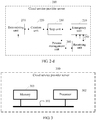
- FIG. 3 is a schematic diagram of a cloud service provider server 300 according to another embodiment of the present invention.
- the cloud service provider server 300 may include at least one bus 301, at least one processor 302 connected to the bus 301, and at least one memory 303 connected to the bus 301.
- the processor 302 is configured to determine that a working state of a first virtual machine satisfies a condition for adding a virtual machine, determine, according to an emergency policy corresponding to a first application running on the first virtual machine, a second application that has an emergency relationship with the first application, and instruct a second virtual machine on which the second application is hosted to run the first application deployed on the second virtual machine; create a third virtual machine, and deploy and start the first application on the third virtual machine; and after the first application is started on the third virtual machine, instruct the second virtual machine to stop running the first application.
- the first application may be any application currently running on the first virtual machine, or the first application may be a particular application currently running on the first virtual machine.
- the first application may be a user application, a system application, or the like.
- the second virtual machine is a virtual machine on which the second application that has an emergency relationship with the first application and the first application are deployed.
- first application there may also be another association relationship between the first application and the second application.
- connection relationship there may also be a connection relationship between the first application and the second application.
- the second application may also be referred to as a resource lending application of the first application
- the first application may be referred to as a resource borrowing application (or may be referred to as an application that requests an emergency service) of the second application.
- the second virtual machine on which the second application is hosted may also be referred to as an emergency virtual machine (or referred to as a resource lending virtual machine) of the first virtual machine because the second virtual machine on which the second application is hosted allows lending a resource to the first virtual machine for an emergency need.
- Running, on the second virtual machine, the first application that is deployed on the second virtual machine, is to serve an emergency need of the first application running on the first virtual machine (that is, the first application deployed on the second virtual machine is run on the second virtual machine to temporarily share processing load of the first application that is deployed on the first virtual machine and running on the first virtual machine). Therefore, the first application deployed on the second virtual machine may be referred to as an emergency application of the first application running on the first virtual machine.
- the first application deployed on the third virtual machine and running on the third virtual machine may share the processing load of the first application running on the first virtual machine.
- an emergency mission of the first application deployed on the second virtual machine and running on the second virtual machine is completed. Therefore, after the third virtual machine runs the first application deployed on the third virtual machine, the CSP server may instruct the second virtual machine to stop running the first application deployed on the second virtual machine.
- the condition for adding a virtual machine may include at least one of the following conditions: that a resource utilization rate of the first virtual machine exceeds a first threshold, that a throughput per unit time of the first application running on the first virtual machine exceeds a second threshold, or that a response latency of the first application running on the virtual machine exceeds a third threshold.
- the processor 302 is further configured to receive an application deployment request before determining, according to the emergency policy corresponding to the first application running on the first virtual machine, the second application that has an emergency relationship with the first application, where the application deployment request carries the emergency policy corresponding to the first application, and the emergency policy corresponding to the first application describes that the first application has an emergency relationship with the second application.
- That the first application has an emergency relationship with the second application may specifically indicate that the first application and the second application serve an emergency need of each other (that is, a virtual machine on which the second application is hosted and a virtual machine on which the first application is hosted may temporarily lend a virtual machine resource to each other), or that the second application serves an emergency need of the first application (that is, a virtual machine on which the second application is hosted may temporarily lend a virtual machine resource to a virtual machine on which the first application is hosted).
- the application deployment request further carries a relationship template, where a host-on relationship, described in the relationship template, between the first application and a third application is that the first application is hosted on the third application, or a host-on relationship, described in the relationship template, between the first application and a third application is that the first application and the third application are mutually hosted on each other.
- the processor 302 is further configured to deploy, on the second virtual machine, the third application that has a host-on relationship with the first application before instructing the second virtual machine on which the second application is hosted to run the first application deployed on the second virtual machine.
- the application deployment request further carries a second relationship template (the second relationship template may be included in an application description file in an application deployment package carried in the application deployment request), where the second relationship template describes that there is a connection relationship between the first application and a fourth application, and the connection relationship, described in the second relationship template, between the first application and the fourth application is that the first application is connected to (connect To) the fourth application, before instructing the second virtual machine on which the second application is hosted to run the first application deployed on the second virtual machine, by calling the code in the memory 303, the processor 302 is further configured to instruct to connect the first application to (connect To) the fourth application.
- the second relationship template may be included in an application description file in an application deployment package carried in the application deployment request
- the second relationship template describes that there is a connection relationship between the first application and a fourth application
- the connection relationship, described in the second relationship template, between the first application and the fourth application is that the first application is connected to (connect To) the fourth application, before instructing the second virtual machine on which the second application is hosted
- the processor 302 is further configured to instruct to establish a mutual connection between the first application and the fourth application.
- the processor 302 is further configured to instruct to connect the fourth application to the first application.
- the emergency policy includes an emergency trigger condition.
- the processor 302 is specifically configured to instruct, when determining that the emergency trigger condition is satisfied, the second virtual machine on which the second application is hosted to run the first application deployed on the second virtual machine.
- the emergency trigger condition may be set according to different scenarios and different needs.
- the emergency trigger condition may include that a quantity of idle resources of the second virtual machine is greater than or equal to a minimum quantity of resources required to run the first application on the second virtual machine (when the first application does not need to be hosted on another application, the minimum quantity of resources required to run the first application on the second virtual machine is equal to a minimum quantity of resources required to run the first application itself on the second virtual machine; when the first application needs to be hosted on another application, the minimum quantity of resources required to run the first application on the second virtual machine is equal to a minimum quantity of resources for running the another application on which the first application needs to be hosted on the second virtual machine plus a minimum quantity of resources required to run the first application itself on the second virtual machine).
- the emergency trigger condition may include that a quantity of idle resources of the second virtual machine is greater than or equal to a maximum quantity of resources required to run the first application on the second virtual machine (when the first application does not need to be hosted on another application, the maximum quantity of resources required to run the first application on the second virtual machine is equal to a maximum quantity of resources required to run the first application itself on the second virtual machine; when the first application needs to be hosted on another application, the maximum quantity of resources required to run the first application on the second virtual machine is equal to a maximum quantity of resources for running the another application on which the first application needs to be hosted on the second virtual machine plus a maximum quantity of resources required to run the first application itself on the second virtual machine).
- the emergency trigger condition may include that a quantity of idle resources of the second virtual machine is greater than or equal to an average quantity of resources required to run the first application on the second virtual machine (when the first application does not need to be hosted on another application, the average quantity of resources required to run the first application on the second virtual machine is equal to an average quantity of resources required to run the first application itself on the second virtual machine; when the first application needs to be hosted on another application, the average quantity of resources required to run the first application on the second virtual machine is equal to an average quantity of resources for running the another application on which the first application needs to be hosted on the second virtual machine plus an average quantity of resources required to run the first application itself on the second virtual machine).
- the processor 302 is further configured to deploy the first application on the second virtual machine before instructing the second virtual machine on which the second application is hosted to run the first application deployed on the second virtual machine and after determining that the second virtual machine has sufficient idle resources for deploying the first application.
- the processor 302 is further configured to add, before instructing the second virtual machine on which the second application is hosted to run the first application deployed on the second virtual machine, some or all processes being running on the second virtual machine to a first process group, and set a maximum quantity of available resources for the first process group.
- the processor 302 is further configured to add, after instructing the second virtual machine on which the second application is hosted to run the first application deployed on the second virtual machine, a process of the first application to a second process group, and set a maximum quantity of available resources for the second process group.
- the processor 302 is further configured to: after the second virtual machine stops running the first application deployed on the second virtual machine, delete the second process group, and dissolve the first process group.
- introducing a process group and setting a maximum quantity of available resources for the process group help implement performance isolation between an existing process and an emergency process, and further help reduce an adverse effect of implementation of an emergency policy on an existing application. It is understandable that a sum of the maximum quantity of available resources for the second process group and the maximum quantity of available resources for the first process group is less than or equal to a maximum quantity of available resources for the second virtual machine.
- the processor 302 is further configured to determine, according to an emergency policy corresponding to the fifth application running on the first virtual machine, a sixth application that has an emergency relationship with the fifth application, and instruct a fifth virtual machine on which the sixth application is hosted to run the fifth application deployed on the fifth virtual machine; create a fourth virtual machine, and deploy and start the fifth application on the fourth virtual machine; and after the fourth virtual machine starts the fifth application deployed on the fourth virtual machine, instruct the fifth virtual machine to stop running the fifth application deployed on the fifth virtual machine.
- Running the fifth application on the fifth virtual machine is to serve an emergency need of the fifth application running on the first virtual machine to temporarily share processing load of the fifth application running on the first virtual machine. Therefore, the fifth application deployed on the fifth virtual machine may be referred to as an emergency application of the fifth application running on the first virtual machine.
- the CSP server 300 in this embodiment may be configured to implement some or all functions of a CSP server described in the following method embodiment. Functions of the functional modules of the CSP server 300 may be implemented specifically according to a method in the following method embodiment. For a specific implementation procedure thereof, reference may be made to related descriptions in the method embodiment, and details are not described herein again.
- a CSP server 300 determines, according to an emergency policy corresponding to a first application running on the first virtual machine, a second application that has an emergency relationship with the first application, and instructs a second virtual machine on which the second application is hosted to run the first application deployed on the second virtual machine; and creates a third virtual machine, and deploys and starts the first application on the third virtual machine. After the third virtual machine runs the first application deployed on the third virtual machine, the CSP server instructs the second virtual machine to stop running the first application deployed on the second virtual machine.
- An emergency policy between a first application and a second application is introduced, and based on the emergency policy, it may be implemented that a second virtual machine temporarily lends a resource to a first virtual machine. Therefore, a new virtual machine may be created only when a working state of the first virtual machine satisfies a condition for adding a virtual machine.
- the solution of this embodiment of the present invention helps improve a utilization rate of virtual machine resources because no standby virtual machine needs to be created in advance.
- a temporary resource lending mechanism between virtual machines is introduced when a working state of a first virtual machine satisfies a condition for adding a virtual machine.
- an emergency virtual machine may temporarily share processing load of a first application running on the first virtual machine before a newly created standby virtual machine is deployed. This helps greatly reduce service fluctuation caused in a procedure of newly creating a standby virtual machine, and helps improve reliability of a cloud service.
- FIG. 4 is a structural block diagram of a CSP server 400 according to another embodiment of the present invention.
- the CSP server 400 may include: at least one processor 401, at least one network interface 404 or another user interface 403, a memory 405, and at least one communications bus 402.
- the communications bus 402 is configured to implement connections and communication between these components.
- the CSP server 400 optionally includes the user interface 403, including: a display (for example, a touchscreen, an LCD, a CRT, holographic (Holographic) imaging device, or a projector (Projector)), a click device (for example, a mouse, a trackball (trackball), a touchpad, or a touchscreen), a camera, a pickup device, and/or the like.
- the memory 405 may include a read-only memory and a random access memory, and provide an instruction and data for the processor 401.
- NVRAM nonvolatile memory
- the memory 405 stores the following elements: an executable module or a data structure, or their subsets, or their extended sets.
- An operating system 4051 includes various types of system programs for implementing various types of basic services and processing hardware-based tasks.
- An application program module 4052 includes various types of application programs for implementing various types of application services.
- the application program module 4052 may include at least one of the following units: a determining unit 270, an emergency unit 210, a creation unit 220, a stop unit 230, a receiving unit 240, a deployment unit 250, or a process management unit 260.
- the processor 401 may be configured to determine that a working state of a first virtual machine satisfies a condition for adding a virtual machine, determine, according to an emergency policy corresponding to a first application running on the first virtual machine, a second application that has an emergency relationship with the first application, and instruct a second virtual machine on which the second application is hosted to run the first application deployed on the second virtual machine; create a third virtual machine, and deploy and start the first application on the third virtual machine; and after the first application is started on the third virtual machine, instruct the second virtual machine to stop running the first application.
- the first application may be any application currently running on the first virtual machine, or the first application may be a particular application currently running on the first virtual machine.
- the first application may be a user application, a system application, or the like.
- the second virtual machine is a virtual machine on which the second application that has an emergency relationship with the first application and the first application are deployed.
- first application there may also be another association relationship between the first application and the second application.
- connection relationship there may also be a connection relationship between the first application and the second application.
- the second application may also be referred to as a resource lending application of the first application
- the first application may be referred to as a resource borrowing application (or may be referred to as an application that requests an emergency service) of the second application.
- the second virtual machine on which the second application is hosted may also be referred to as an emergency virtual machine (or referred to as a resource lending virtual machine) of the first virtual machine because the second virtual machine on which the second application is hosted allows lending a resource to the first virtual machine for an emergency need.
- Running, on the second virtual machine, the first application that is deployed on the second virtual machine, is to serve an emergency need of the first application running on the first virtual machine (that is, the first application deployed on the second virtual machine is run on the second virtual machine to temporarily share processing load of the first application that is deployed on the first virtual machine and running on the first virtual machine). Therefore, the first application deployed on the second virtual machine may be referred to as an emergency application of the first application running on the first virtual machine.
- the first application deployed on the third virtual machine and running on the third virtual machine may share the processing load of the first application running on the first virtual machine.
- an emergency mission of the first application deployed on the second virtual machine and running on the second virtual machine is completed. Therefore, after the third virtual machine runs the first application deployed on the third virtual machine, the CSP server may instruct the second virtual machine to stop running the first application deployed on the second virtual machine.
- the condition for adding a virtual machine may include at least one of the following conditions: that a resource utilization rate of the first virtual machine exceeds a first threshold, that a throughput per unit time of the first application running on the first virtual machine exceeds a second threshold, or that a response latency of the first application running on the virtual machine exceeds a third threshold.
- the processor 401 may be configured to receive an application deployment request before determining, according to the emergency policy corresponding to the first application running on the first virtual machine, the second application that has an emergency relationship with the first application, where the application deployment request carries the emergency policy corresponding to the first application, and the emergency policy corresponding to the first application describes that the first application has an emergency relationship with the second application.
- That the first application has an emergency relationship with the second application may specifically indicate that the first application and the second application serve an emergency need of each other (that is, a virtual machine on which the second application is hosted and a virtual machine on which the first application is hosted may temporarily lend a virtual machine resource to each other), or that the second application serves an emergency need of the first application (that is, a virtual machine on which the second application is hosted may temporarily lend a virtual machine resource to a virtual machine on which the first application is hosted).
- the application deployment request further carries a relationship template, where a host-on relationship, described in the relationship template, between the first application and a third application is that the first application is hosted on the third application, or a host-on relationship, described in the relationship template, between the first application and a third application is that the first application and the third application are mutually hosted on each other.
- the processor 401 may be configured to deploy, on the second virtual machine, the third application that has a host-on relationship with the first application before instructing the second virtual machine on which the second application is hosted to run the first application deployed on the second virtual machine.
- the application deployment request further carries a second relationship template (the second relationship template may be included in an application description file in an application deployment package carried in the application deployment request), where the second relationship template describes that there is a connection relationship between the first application and a fourth application, and the connection relationship, described in the second relationship template, between the first application and the fourth application is that the first application is connected to (connect To) the fourth application, before instructing the second virtual machine on which the second application is hosted to run the first application deployed on the second virtual machine, by calling the program or the instruction stored in the memory 405, the processor 401 may be configured to instruct to connect (connect To) the first application to the fourth application.
- the second relationship template may be included in an application description file in an application deployment package carried in the application deployment request
- the second relationship template describes that there is a connection relationship between the first application and a fourth application
- the connection relationship, described in the second relationship template, between the first application and the fourth application is that the first application is connected to (connect To) the fourth application, before instructing the second virtual machine on which the second
- the processor 401 may be configured to instruct to establish a mutual connection between the first application and the fourth application.
- connection relationship, described in the second relationship template, between the first application and the fourth application is that the fourth application is connected to the first application, before or after instructing the second virtual machine on which the second application is hosted to run the first application deployed on the second virtual machine, by calling the program or the instruction stored in the memory 405, the processor 401 may be configured to instruct to connect the fourth application to the first application.
- the emergency policy includes an emergency trigger condition.
- the processor 401 may be specifically configured to instruct, when determining that the emergency trigger condition is satisfied, the second virtual machine on which the second application is hosted to run the first application deployed on the second virtual machine.
- the emergency trigger condition may be set according to different scenarios and different needs.
- the emergency trigger condition may include that a quantity of idle resources of the second virtual machine is greater than or equal to a minimum quantity of resources required to run the first application on the second virtual machine (when the first application does not need to be hosted on another application, the minimum quantity of resources required to run the first application on the second virtual machine is equal to a minimum quantity of resources required to run the first application itself on the second virtual machine; when the first application needs to be hosted on another application, the minimum quantity of resources required to run the first application on the second virtual machine is equal to a minimum quantity of resources for running the another application on which the first application needs to be hosted on the second virtual machine plus a minimum quantity of resources required to run the first application itself on the second virtual machine).
- the emergency trigger condition may include that a quantity of idle resources of the second virtual machine is greater than or equal to a maximum quantity of resources required to run the first application on the second virtual machine (when the first application does not need to be hosted on another application, the maximum quantity of resources required to run the first application on the second virtual machine is equal to a maximum quantity of resources required to run the first application itself on the second virtual machine; when the first application needs to be hosted on another application, the maximum quantity of resources required to run the first application on the second virtual machine is equal to a maximum quantity of resources for running the another application on which the first application needs to be hosted on the second virtual machine plus a maximum quantity of resources required to run the first application itself on the second virtual machine).
- the emergency trigger condition may include that a quantity of idle resources of the second virtual machine is greater than or equal to an average quantity of resources required to run the first application on the second virtual machine (when the first application does not need to be hosted on another application, the average quantity of resources required to run the first application on the second virtual machine is equal to an average quantity of resources required to run the first application itself on the second virtual machine; when the first application needs to be hosted on another application, the average quantity of resources required to run the first application on the second virtual machine is equal to an average quantity of resources for running the another application on which the first application needs to be hosted on the second virtual machine plus an average quantity of resources required to run the first application itself on the second virtual machine).
- the processor 401 may be configured to deploy the first application on the second virtual machine before instructing the second virtual machine on which the second application is hosted to run the first application deployed on the second virtual machine and after determining that the second virtual machine has sufficient idle resources for deploying the first application.
- the processor 401 may be configured to add, before instructing the second virtual machine on which the second application is hosted to run the first application deployed on the second virtual machine, some or all processes being running on the second virtual machine to a first process group, and set a maximum quantity of available resources for the first process group.
- the processor 401 may be configured to add, after instructing the second virtual machine on which the second application is hosted to run the first application deployed on the second virtual machine, a process of the first application to a second process group, and set a maximum quantity of available resources for the second process group.
- the processor 401 may be configured to: after the second virtual machine stops running the first application deployed on the second virtual machine, delete the second process group, and dissolve the first process group.
- introducing a process group and setting a maximum quantity of available resources for the process group help implement performance isolation between an existing process and an emergency process, and further help reduce an adverse effect of implementation of an emergency policy on an existing application. It is understandable that a sum of the maximum quantity of available resources for the second process group and the maximum quantity of available resources for the first process group is less than or equal to a maximum quantity of available resources for the second virtual machine.
- the processor 401 may be configured to determine, according to an emergency policy corresponding to the fifth application running on the first virtual machine, a sixth application that has an emergency relationship with the fifth application, and trigger a fifth virtual machine on which the sixth application is hosted to run the fifth application deployed on the fifth virtual machine; create a fourth virtual machine, and deploy and start the fifth application on the fourth virtual machine; and after the fourth virtual machine starts the fifth application deployed on the fourth virtual machine, instruct the fifth virtual machine to stop running the fifth application deployed on the fifth virtual machine.
- Running the fifth application on the fifth virtual machine is to serve an emergency need of the fifth application running on the first virtual machine to temporarily share processing load of the fifth application running on the first virtual machine. Therefore, the fifth application deployed on the fifth virtual machine may be referred to as an emergency application of the fifth application running on the first virtual machine.
- the CSP server 400 in this embodiment may be configured to implement some or all functions of a CSP server described in the following method embodiment. Functions of the functional modules of the CSP server 400 may be implemented specifically according to a method in the following method embodiment. For a specific implementation procedure thereof, reference may be made to related descriptions in the method embodiment, and details are not described herein again.
- a CSP server 400 determines, according to an emergency policy corresponding to a first application running on the first virtual machine, a second application that has an emergency relationship with the first application, and instructs a second virtual machine on which the second application is hosted to run the first application deployed on the second virtual machine; and creates a third virtual machine, and deploys and starts the first application on the third virtual machine. After the third virtual machine runs the first application deployed on the third virtual machine, the CSP server instructs the second virtual machine to stop running the first application deployed on the second virtual machine.
- An emergency policy between a first application and a second application is introduced, and based on the emergency policy, it may be implemented that a second virtual machine temporarily lends a resource to a first virtual machine. Therefore, a new virtual machine may be created only when a working state of the first virtual machine satisfies a condition for adding a virtual machine.
- the solution of this embodiment of the present invention helps improve a utilization rate of virtual machine resources because no standby virtual machine needs to be created in advance.
- a temporary resource lending mechanism between virtual machines is introduced when a working state of a first virtual machine satisfies a condition for adding a virtual machine.
- an emergency virtual machine may temporarily share processing load of a first application running on the first virtual machine before a newly created standby virtual machine is deployed. This helps greatly reduce service fluctuation caused in a procedure of newly creating a standby virtual machine, and helps improve reliability of a cloud service.
- an embodiment of the present invention further provides a cloud service client 500, which may include:
- the application deployment request carries a node template corresponding to a first application and a node template corresponding to a second application, where the node template corresponding to the first application includes an emergency policy corresponding to the first application, and the emergency policy corresponding to the first application describes that the first application has an emergency relationship with the second application.
- the application deployment request further carries a host-on relationship template, where a host-on relationship, described in the host-on relationship template, between the first application and a third application is that the first application is hosted on the third application, or a host-on relationship, described in the host-on relationship template, between the first application and a third application is that the first application and the third application are mutually hosted on each other.
- the cloud service client 500 in this embodiment may be configured to implement some or all functions of a cloud service client described in the following method embodiment.
- Functions of the functional modules of the cloud service client 500 may be implemented specifically according to a method in the following method embodiment. For a specific implementation procedure thereof, reference may be made to related descriptions in the method embodiment, and details are not described herein again.
- an emergency policy between a first application and a second application is introduced, and based on the emergency policy, it may be implemented that a second virtual machine on which the second application is hosted temporarily lends a resource to a first virtual machine on which the first application is hosted. Therefore, a new virtual machine may be created only when a working state of the first virtual machine satisfies a condition for adding a virtual machine.
- the solution of this embodiment helps improve a utilization rate of virtual machine resources because no standby virtual machine needs to be created in advance.
- a temporary resource lending mechanism between virtual machines may be introduced when a working state of a first virtual machine satisfies a condition for adding a virtual machine. Therefore, an emergency virtual machine may temporarily share processing load of a first application running on the first virtual machine before a newly created standby virtual machine is deployed. This helps greatly reduce service fluctuation caused in a procedure of newly creating a standby virtual machine, and helps improve reliability of a cloud service.
- an embodiment of the present invention further provides another cloud service client 600, which may include: at least one bus 601, at least one processor 602 connected to the bus 601, and at least one memory 603 connected to the bus 601.
- the processor 602 is configured to generate an application deployment request, and send the application deployment request to a cloud service provider CSP server, where the application deployment request carries a node template corresponding to a first application and a node template corresponding to a second application, where the node template corresponding to the first application includes an emergency policy corresponding to the first application, and the emergency policy corresponding to the first application describes that the first application has an emergency relationship with the second application.
- the application deployment request further carries a host-on relationship template, where a host-on relationship, described in the host-on relationship template, between the first application and a third application is that the first application is hosted on the third application, or a host-on relationship, described in the host-on relationship template, between the first application and a third application is that the first application and the third application are mutually hosted on each other.
- the cloud service client 600 in this embodiment may be configured to implement some or all functions of a cloud service client described in the following method embodiment. Functions of the functional modules of the cloud service client 600 may be implemented specifically according to a method in the following method embodiment. For a specific implementation procedure thereof, reference may be made to related descriptions in the method embodiment, and details are not described herein again.
- an emergency policy between a first application and a second application is introduced, and based on the emergency policy, it may be implemented that a second virtual machine on which the second application is hosted temporarily lends a resource to a first virtual machine on which the first application is hosted. Therefore, a new virtual machine may be created only when a working state of the first virtual machine satisfies a condition for adding a virtual machine.
- the solution of this embodiment helps improve a utilization rate of virtual machine resources because no standby virtual machine needs to be created in advance.
- a temporary resource lending mechanism between virtual machines may be introduced when a working state of a first virtual machine satisfies a condition for adding a virtual machine. Therefore, an emergency virtual machine may temporarily share processing load of a first application running on the first virtual machine before a newly created standby virtual machine is deployed. This helps greatly reduce service fluctuation caused in a procedure of newly creating a standby virtual machine, and helps improve reliability of a cloud service.
- FIG. 7 is a structural block diagram of a cloud service client 700 according to another embodiment of the present invention.
- the cloud service client 700 may include: at least one processor 701, at least one network interface 704 or another user interface 703, a memory 705, and at least one communications bus 702.
- the communications bus 702 is configured to implement connections and communication between these components.
- the cloud service client 700 optionally includes the user interface 703, including: a display (for example, a touchscreen, an LCD, a CRT, holographic (Holographic) imaging device, or a projector (Projector)), a click device (for example, a mouse, a trackball (trackball), a touchpad, or a touchscreen), a camera, a pickup device, and/or the like.
- the memory 705 may include a read-only memory and a random access memory, and provide an instruction and data for the processor 701.
- NVRAM nonvolatile memory
- the memory 705 stores the following elements: an executable module or a data structure, or their subsets, or their extended sets.
- An operating system 7051 includes various types of system programs for implementing various types of basic services and processing hardware-based tasks.
- An application program module 7052 includes various types of application programs for implementing various types of application services.
- the application program module 7052 may include at least one of the following units: a generation unit 510 or a sending unit 520.
- the processor 701 may be configured to generate an application deployment request, and send the application deployment request to a cloud service provider CSP server.
- the application deployment request carries a node template corresponding to a first application and a node template corresponding to a second application, where the node template corresponding to the first application includes an emergency policy corresponding to the first application, and the emergency policy corresponding to the first application describes that the first application has an emergency relationship with the second application.
- the application deployment request further carries a host-on relationship template, where a host-on relationship, described in the host-on relationship template, between the first application and a third application is that the first application is hosted on the third application, or a host-on relationship, described in the host-on relationship template, between the first application and a third application is that the first application and the third application are mutually hosted on each other.
- the cloud service client 700 in this embodiment may be configured to implement some or all functions of a cloud service client described in the following method embodiment.
- Functions of the functional modules of the cloud service client 700 may be implemented specifically according to a method in the following method embodiment. For a specific implementation procedure thereof, reference may be made to related descriptions in the method embodiment, and details are not described herein again.
- an emergency policy between a first application and a second application is introduced, and based on the emergency policy, it may be implemented that a second virtual machine on which the second application is hosted temporarily lends a resource to a first virtual machine on which the first application is hosted. Therefore, a new virtual machine may be created only when a working state of the first virtual machine satisfies a condition for adding a virtual machine.
- the solution of this embodiment helps improve a utilization rate of virtual machine resources because no standby virtual machine needs to be created in advance.
- a temporary resource lending mechanism between virtual machines may be introduced when a working state of a first virtual machine satisfies a condition for adding a virtual machine. Therefore, an emergency virtual machine may temporarily share processing load of a first application running on the first virtual machine before a newly created standby virtual machine is deployed. This helps greatly reduce service fluctuation caused in a procedure of newly creating a standby virtual machine, and helps improve reliability of a cloud service.
- an embodiment of the present invention further provides a cloud service system, including at least one cloud service provider server 810, where the cloud service provider server 810 may be the cloud service provider server 200, the cloud service provider server 300, or the cloud service provider server 400 in the foregoing embodiments.
- the cloud service system may further include a cloud service client, where the cloud service client may be the cloud service client 600, or the cloud service client 500, or the cloud service client 700 in the foregoing embodiments.
- the cloud application processing method may include: determining, by a cloud service provider server, that a working state of a first virtual machine satisfies a condition for adding a virtual machine, determining, according to an emergency policy corresponding to a first application running on the first virtual machine, a second application that has an emergency relationship with the first application, and instructing a second virtual machine on which the second application is hosted to run the first application deployed on the second virtual machine; creating a third virtual machine, and deploying and starting the first application on the third virtual machine; and after the first application is started on the third virtual machine, instructing the second virtual machine to stop running the first application.
- FIG. 9 is a schematic flowchart of a cloud application processing method according to an embodiment of the present invention.
- the cloud application processing method provided in this embodiment of the present invention may include the following content:
- the condition for adding a virtual machine may be set according to different scenarios and different needs.
- the condition for adding a virtual machine may include at least one of the following conditions: that a resource utilization rate of the first virtual machine exceeds a first threshold (the first threshold is, for example, 80%, 85%, 90%, or 95%), that a throughput per unit time of a first application running on the first virtual machine exceeds a second threshold, and/or that a response latency of the first application running on the first virtual machine exceeds a third threshold.
- a added virtual machine may also be sometimes referred to as a "pop-up virtual machine”. Therefore, the condition for adding a virtual machine may also be sometimes referred to as a "virtual machine pop-up condition".
- the CSP server may send an instruction to the second virtual machine by using a remote call interface, so as to instruct the second virtual machine on which the second application is hosted to run the first application deployed on the second virtual machine.
- the CSP server may also instruct, in other manner, the second virtual machine on which the second application is hosted to run the first application.
- the first application may be any application currently running on the first virtual machine, or the first application may be a particular application currently running on the first virtual machine.
- the first application may be a user application, a system application, or the like.
- the second virtual machine is a virtual machine on which the second application that has an emergency relationship with the first application and the first application are deployed.
- the second application may also be referred to as a resource lending application of the first application
- the first application may be referred to as a resource borrowing application (or may be referred to as an application that requests an emergency service) of the second application.
- the second virtual machine on which the second application is hosted may also be referred to as an emergency virtual machine (or referred to as a resource lending virtual machine) of the first virtual machine because the second virtual machine on which the second application is hosted allows lending a resource to the first virtual machine for use in an emergency.
- Running the first application on the second virtual machine is to serve an emergency need of the first application running on the first virtual machine (that is, the first application is run on the second virtual machine to temporarily share processing load of the first application running on the first virtual machine). Therefore, the first application deployed on the second virtual machine may be referred to as an emergency application of the first application running on the first virtual machine.
- first application there may also be another association relationship between the first application and the second application.
- connection relationship there may also be a connection relationship between the first application and the second application.
- the third virtual machine may send a notification message to the CSP server, so as to notify the CSP server that the first application deployed on the third virtual machine has been started on the third virtual machine.
- the first application deployed on the third virtual machine and running on the third virtual machine may share the processing load of the first application running on the first virtual machine.
- an emergency mission of the first application deployed on the second virtual machine and running on the second virtual machine is completed. Therefore, after the third virtual machine runs the first application deployed on the third virtual machine, the CSP server may instruct the second virtual machine to stop running the first application deployed on the second virtual machine.
- the condition for adding a virtual machine may be set according to different scenarios and different needs.
- the condition for adding a virtual machine may include at least one of the following conditions: that a resource utilization rate of the first virtual machine exceeds a first threshold (the first threshold is, for example, 80%, 85%, 90%, or 95%), that a throughput per unit time of the first application running on the first virtual machine exceeds a second threshold, and/or that a response latency of the first application running on the first virtual machine exceeds a third threshold.
- step 902 and step 903. there is no necessary sequence for step 902 and step 903.
- the CSP server may synchronously perform, according to a determining result of the CSP server, the step of "determining, according to an emergency policy corresponding to a first application running on the first virtual machine, a second application that has an emergency relationship with the first application, and instructing a second virtual machine on which the second application is hosted to run the first application deployed on the second virtual machine" and the step of "creating a third virtual machine, and deploying and starting the first application on the third virtual machine".
- the CSP server may also first perform the step of "determining, according to an emergency policy corresponding to a first application running on the first virtual machine, a second application that has an emergency relationship with the first application, and instructing a second virtual machine on which the second application is hosted to run the first application deployed on the second virtual machine"; later on, the CSP server then performs the step of "creating a third virtual machine, and deploying and starting the first application on the third virtual machine".
- a CSP server determines, according to an emergency policy corresponding to a first application running on the first virtual machine, a second application that has an emergency relationship with the first application, and instructs a second virtual machine on which the second application is hosted to run the first application deployed on the second virtual machine; and creates a third virtual machine, and deploys and starts the first application on the third virtual machine.
- the CSP server instructs the second virtual machine to stop running the first application deployed on the second virtual machine.
- An emergency policy between a first application and a second application is introduced, and based on the emergency policy, it may be implemented that a second virtual machine temporarily lends a resource to a first virtual machine. Therefore, a new virtual machine may be created only when a working state of the first virtual machine satisfies a condition for adding a virtual machine.
- the solution of this embodiment of the present invention helps improve a utilization rate of virtual machine resources because no standby virtual machine needs to be created in advance.
- a temporary resource lending mechanism between virtual machines is introduced when a working state of a first virtual machine satisfies a condition for adding a virtual machine.
- an emergency virtual machine may temporarily share processing load of a first application running on the first virtual machine before a newly created standby virtual machine is deployed. This helps greatly reduce service fluctuation caused in a procedure of newly creating a standby virtual machine, and helps improve reliability of a cloud service.
- several applications may run on the first virtual machine, and at least one application (for example, 5 applications) of the several applications may each correspond to one emergency policy.
- the CSP server may perform similar emergency processing in the foregoing manner.
- the CSP server may further determine, according to an emergency policy corresponding to the fifth application running on the first virtual machine, a sixth application that has an emergency relationship with the fifth application, and instruct a fifth virtual machine on which the sixth application is hosted to run the fifth application deployed on the fifth virtual machine; and create a fourth virtual machine, and deploy and start the fifth application on the fourth virtual machine. After the fourth virtual machine starts the fifth application deployed on the fourth virtual machine, the CSP server instructs the fifth virtual machine to stop running the fifth application deployed on the fifth virtual machine.
- Running the fifth application on the fifth virtual machine is to serve an emergency need of the fifth application running on the first virtual machine to temporarily share processing load of the fifth application running on the first virtual machine. Therefore, the fifth application deployed on the fifth virtual machine may be referred to as an emergency application of the fifth application running on the first virtual machine.
- the method may further include: receiving an application deployment request (for example, an application deployment request from a cloud service client, where the application deployment request may be referred to as an application deployment request related to the first application, where the application deployment request related to the first application means that the application deployment request mainly relates to deployment of the first application, and certainly, the application deployment request may further relate to deployment of another application that has a correlation relationship such as a connection relationship, an emergency relationship, or a host-on relationship with the first application).
- an application deployment request for example, an application deployment request from a cloud service client, where the application deployment request may be referred to as an application deployment request related to the first application, where the application deployment request related to the first application means that the application deployment request mainly relates to deployment of the first application, and certainly, the application deployment request may further relate to deployment of another application that has a correlation relationship such as a connection relationship, an emergency relationship, or a host-on relationship with the first application.
- the application deployment request may carry the emergency policy corresponding to the first application, where the emergency policy corresponding to the first application describes an emergency relationship between K applications.
- the K applications include the first application and the second application, and K is a positive integer greater than or equal to 2. That the first application has an emergency relationship with the second application may specifically indicate that the first application and the second application serve an emergency need of each other (that is, a virtual machine on which the second application is hosted and a virtual machine on which the first application is hosted may temporarily lend a virtual machine resource to each other), or that the second application serves an emergency need of the first application (that is, a virtual machine on which the second application is hosted may temporarily lend a virtual machine resource to a virtual machine on which the first application is hosted).
- that three applications have an emergency relationship may indicate that the three applications serve an emergency need of each other (that is, virtual machines on which the three applications are hosted may temporarily lend a virtual machine resource to each other), or may indicate that two applications of the three applications (where the two applications do not include the first application, and for example, are the second application and an application APP01) serve an emergency need of the first application, that is, virtual machines on which the two applications (the second application and the application APP01) of the three applications are hosted may temporarily lend a virtual machine resource to the virtual machine on which the first application is hosted.
- a case in which more applications have an emergency relationship may be deduced by analogy.
- the application deployment request may carry an application deployment package.
- the application deployment package may include an application description file.
- the application description file may include several node templates (the application description file may further include one or more relationship templates), where a different node module corresponds to a different application (for example, a user application or a system application).
- a node template may include an emergency policy.
- the emergency policy may describe an emergency relationship between applications.
- a node template corresponding to the first application may include the emergency policy corresponding to the first application.
- the emergency policy may further include an emergency trigger condition (certainly, the emergency trigger condition may also be determined by the CSP server, or may be pre-configured in the CSP server, that is, not carried in the application deployment request).
- the instructing a second virtual machine on which the second application is hosted to run the first application deployed on the second virtual machine may include: when determining that the emergency trigger condition is satisfied, instructing the second virtual machine on which the second application is hosted to run the first application deployed on the second virtual machine.
- the emergency trigger condition may also not exist. If the emergency trigger condition does not exist, that the CSP server instructs the second virtual machine on which the second application is hosted to run the first application deployed on the second virtual machine is not limited by the emergency trigger condition.
- the emergency trigger condition may be set according to different scenarios and different needs.
- the emergency trigger condition may include that a quantity of idle resources of the second virtual machine is greater than or equal to a minimum quantity of resources required to run the first application on the second virtual machine.
- the minimum quantity of resources required to run the first application on the second virtual machine is equal to a minimum quantity of resources required to run the first application itself on the second virtual machine.
- the minimum quantity of resources required to run the first application on the second virtual machine is equal to a minimum quantity of resources for running the another application on which the first application needs to be hosted on the second virtual machine plus a minimum quantity of resources required to run the first application itself on the second virtual machine.
- the emergency trigger condition may include that a quantity of idle resources of the second virtual machine is greater than or equal to a maximum quantity of resources required to run the first application on the second virtual machine.
- the maximum quantity of resources required to run the first application on the second virtual machine is equal to a maximum quantity of resources required to run the first application itself on the second virtual machine.
- the maximum quantity of resources required to run the first application on the second virtual machine is equal to a maximum quantity of resources for running the another application on which the first application needs to be hosted on the second virtual machine plus a maximum quantity of resources required to run the first application itself on the second virtual machine.
- the emergency trigger condition may include that a quantity of idle resources of the second virtual machine is greater than or equal to an average quantity of resources required to run the first application on the second virtual machine.
- the average quantity of resources required to run the first application on the second virtual machine is equal to an average quantity of resources required to run the first application itself on the second virtual machine.
- the average quantity of resources required to run the first application on the second virtual machine is equal to an average quantity of resources for running the another application on which the first application needs to be hosted on the second virtual machine plus an average quantity of resources required to run the first application itself on the second virtual machine.
- a relationship template is used to describe that there is an association relationship between two or more applications, where the association relationship may be a host-on relationship, a connection relationship, or the like.
- a relationship template describing a host-on relationship between applications may also be referred to as a host-on relationship template, and a relationship template describing a connection relationship between applications may also be referred to as a connection relationship template.
- the method may further include: deploying, by the CSP server, on the second virtual machine, the third application that has a host-on relationship with the first application.
- the host-on relationship, described in the relationship template, between the first application and the third application is that the application is hosted on (HostOn) the third application, or the first application and the third application are hosted on each other.
- the method may further include: connecting (connect To), by the CSP server, the first application deployed on the second virtual machine to the fourth application.
- the method may further include: instructing, by the CSP server, to establish a mutual connection between the first application deployed on the second virtual machine and the fourth application.
- the method may further include: instructing, by the CSP server, to connect the fourth application to the first application deployed on the second virtual machine.
- Connecting the first application to the fourth application generally refers to establishing a communicable relationship between the first application and the fourth application, for example, recording information such as an IP address and a port number that are corresponding to the fourth application into a configuration file of the first application, and so on.
- the method before the instructing a second virtual machine on which the second application is hosted to run the first application deployed on the second virtual machine, the method may further include: after determining that the second virtual machine has sufficient idle resources for deploying the first application, deploying, by the CSP server, the first application on the second virtual machine.
- the method before the instructing a second virtual machine on which the second application is hosted to run the first application deployed on the second virtual machine, the method further includes: after determining that the second virtual machine has sufficient idle resources for deploying the first application and an application on which the first application is hosted, deploying, by the CSP server, on the second virtual machine, the first application and the application on which the first application is hosted.
- the method before the instructing a second virtual machine on which the second application is hosted to run the first application deployed on the second virtual machine, the method may further include: adding, by the CSP server, some or all processes being running on the second virtual machine to a first process group, and setting a maximum quantity of available resources for the first process group.
- the method may further include: adding, by the CSP server, a process of the first application to a second process group, and setting a maximum quantity of available resources for the second process group.
- the method may further include: deleting, by the CSP server, the second process group, and dissolving the first process group. It is understandable that introducing a process group and setting a maximum quantity of available resources for the process group help implement performance isolation between an existing process and an emergency process, and further help reduce an adverse effect of implementation of an emergency policy on an existing application. It is understandable that a sum of the maximum quantity of available resources for the second process group and the maximum quantity of available resources for the first process group is less than or equal to a maximum quantity of available resources for the second virtual machine.
- FIG. 10 is a schematic flowchart of another cloud application processing method according to another embodiment of the present invention.
- the another cloud application processing method provided in this embodiment of the present invention may include the following content:
- the application deployment request may carry an application deployment package.
- the application deployment package includes an application description file.
- the application description file may include several node templates (for example, may include a node template corresponding to a first application and a node template corresponding to a second application).
- the application deployment package may further include one or more relationship templates.
- a different node template corresponds to a different application (for example, a user application or a system application). For example, if the application deployment package may include five node templates, the five node templates correspond to five applications in a one-to-one manner.
- a relationship template is used to describe an association relationship (for example, a host-on relationship or a connection relationship) between applications.
- the application deployment request relates to deployment of a first application. Therefore, the application deployment request may be referred to as an application deployment request related to the first application, where the application deployment request related to the first application means that the application deployment request relates to the deployment of the first application. Certainly, the application deployment request may further relate to deployment of another application that has a correlation relationship such as a connection relationship, an emergency relationship, or a host-on relationship with the first application.
- the application description file may further include application topology description information. Based on the application topology description information, an application topology diagram may be obtained.
- the application topology diagram describes a relationship between the node templates in the application description file.
- association relationship may include a host-on relationship, a connection relationship, and the like.
- an application APP002 has a connection relationship with four applications
- four relationship templates may be used to respectively describe connection relationships between the application APP002 and the four applications.
- two relationship templates may be used to respectively describe host-on relationships between the application APP002 and the two applications, and so on.
- An association relationship described in a relationship template may be a unidirectional association relationship. For example, if a relationship template describes that there is a connection relationship between an application APP002 and an application APP001, and the connection relationship, described in the relationship template, between the application APP002 and the application APP001 is that the application APP002 is connected to the application APP001 (for example, application APP002 connected To application APP001), it indicates that the application APP002 needs to be connected to the application APP001.
- a relationship template describes that there is a host-on relationship between an application APP002 and an application APP001
- the host-on relationship, described in the relationship template, between the application APP002 and the application APP001 is that the application APP002 is hosted on the application APP001 (for example, application APP002 Hosted On application APP001)
- the application APP001 needs to be deployed on a virtual machine on which the application APP002 is hosted (however, the application APP002 does not need to be necessarily deployed on a virtual machine on which the application APP001 is hosted).
- the application APP002 may be referred to as a source application of the host-on relationship
- the application APP001 may be referred to as a destination application of the host-on relationship.
- association relationship described in a relationship template may also be a bidirectional association relationship.
- a relationship template describes that there is a connection relationship (communicable relationship) between an application APP001 and an application APP002
- the connection relationship, described in the relationship template, between the application APP001 and the application APP002 is that the application APP001 and the application APP002 are mutually connected
- it may indicate that the application APP001 needs to be connected to the application APP002
- the application APP002 also needs to be connected to the application APP001.
- a relationship template describes that there is a host-on relationship between an application APP003 and an application APP002, and the host-on relationship, described in the relationship template, between the application APP003 and the application APP002 is that the application APP003 and the application APP002 are mutually hosted on each other, it indicates that the application APP002 needs to be deployed on a virtual machine on which the application APP003 is hosted, and that the application APP003 also needs to be deployed on a virtual machine on which the application APP002 is hosted.
- an association relationship for example, a connection relationship or a host-on relationship
- a relationship template for example, a connection relationship or a host-on relationship
- a relationship template may further include an association relationship establishment policy, where the association relationship establishment policy describes how an association relationship is established between applications.
- a node template corresponding to a particular application may include information such as node type information (that is, type information of the application, where an application type indicated by the type information of the application may be, for example, a database application, an operating system, or a database server application), a node lifecycle management policy (that is, a lifecycle management policy of the application).
- node type information that is, type information of the application, where an application type indicated by the type information of the application may be, for example, a database application, an operating system, or a database server application
- a node lifecycle management policy that is, a lifecycle management policy of the application.
- the node lifecycle management policy may include: an install (install) policy, a configure (configure) policy, a start (start) policy, a stop (stop) policy, an uninstall (uninstall) policy, and the like.
- Names of these node lifecycle management policies are standard names that are recognizable by the CSP server. According to a name of a node lifecycle management policy, the CSP server may determine a management effect generated by the policy.
- An application running on a virtual machine may be regarded as a service node (which may be referred to as a node for short), where the node may be, for example, a user application or a system application (even a virtual machine operating system or the like).
- a node template further includes an emergency policy (for example, a node template corresponding to a first application may include an emergency policy corresponding to the first application).
- an emergency policy may describe an emergency relationship between several applications.
- an example in which one emergency policy describes an emergency relationship between two applications is mainly used.
- An emergency relationship described in an emergency policy may be unidirectional.
- an emergency relationship, described in an emergency policy a01, between a second application and a first application is: the second application is a resource lending application of the first application (that is, indicating that a virtual machine on which the second application is hosted may temporarily lend a virtual machine resource to a virtual machine on which the first application is hosted); an emergency relationship, described in an emergency policy a02, between a second application and a first application is: the first application is a resource lending application of the second application (that is, indicating that a virtual machine on which the first application is hosted may temporarily lend a virtual machine resource to a virtual machine on which the second application is hosted).
- an emergency relationship described in an emergency policy may also be bidirectional.
- an emergency relationship, described in an emergency policy a03, between a third application and a first application may be: the third application and the first application are resource lending applications of each other (that is, indicating that a virtual machine on which a third application is hosted and a virtual machine on which the first application is hosted may temporarily lend a virtual machine resource to each other).
- the application deployment package includes a first node template, a second node template, a third node template, and a fourth node template
- the first node template is a node template corresponding to a first application
- the second node template is a node template corresponding to a second application
- the third node template is a node template corresponding to a third application
- the fourth node template is a node template corresponding to a fourth application.
- the application deployment package further includes a first relationship template, a second relationship template, and a third relationship template.
- the first relationship template describes that the first application needs to be hosted on the third application (that is, the third application needs to be deployed on a virtual machine on which the first application is hosted).
- the second relationship template describes that the second application needs to be hosted on the fourth application (that is, the fourth application needs to be deployed on a virtual machine on which the second application is hosted).
- the node template corresponding to the first application further includes an emergency policy corresponding to the first application, where the emergency policy corresponding to the first application describes that the second application is a resource lending application of the first application, that is, the virtual machine on which the second application is hosted may temporarily lend a resource to the virtual machine on which the first application is hosted.
- the third relationship template further describes that there is a connection relationship between the third application and the fourth application, which is specifically that the third application is connected to the fourth application.
- the emergency policy corresponding to the first application may further include an emergency trigger condition (certainly, the emergency trigger condition may also be determined by the CSP server, or may be pre-configured in the CSP server, that is, the emergency trigger condition is not carried in the application deployment request).
- instructing a second virtual machine on which the second application is hosted to run the first application deployed on the second virtual machine may include: when determining that the emergency trigger condition is satisfied, instructing the second virtual machine on which the second application is hosted to run the first application deployed on the second virtual machine. It is understandable that after the second virtual machine on which the second application is hosted is instructed to run the first application deployed on the second virtual machine, both the second virtual machine and a first virtual machine run the first application.
- Running, on the second virtual machine, the first application deployed on the second virtual machine is to serve an emergency need of the first application running on the first virtual machine. Therefore, the first application deployed on the second virtual machine may be referred to as an emergency application of the first application running on the first virtual machine.
- the emergency trigger condition may be set according to different scenarios and different needs.
- the emergency trigger condition may include that a quantity of idle resources of the second virtual machine is greater than or equal to a minimum quantity of resources required to run the first application on the second virtual machine (because the first application needs to be hosted on the third application, the minimum quantity of resources required to run the first application on the second virtual machine may be equal to a minimum quantity of resources for running, on the second virtual machine, the third application on which the first application needs to be hosted plus a minimum quantity of resources required to run the first application itself on the second virtual machine).
- the emergency trigger condition may include that a quantity of idle resources of the second virtual machine is greater than or equal to a maximum quantity of resources required to run the first application on the second virtual machine (because the first application needs to be hosted on the third application, the maximum quantity of resources required to run the first application on the second virtual machine may be equal to a maximum quantity of resources for running, on the second virtual machine, the third application on which the first application needs to be hosted plus a maximum quantity of resources required to run the first application itself on the second virtual machine).
- the emergency trigger condition may include that a quantity of idle resources of the second virtual machine is greater than or equal to an average quantity of resources required to run the first application on the second virtual machine (because the first application needs to be hosted on the third application, the average quantity of resources required to run the first application on the second virtual machine may be equal to an average quantity of resources for running, on the second virtual machine, the third application on which the first application needs to be hosted plus an average quantity of resources required to run the first application itself on the second virtual machine).
- the CSP server may obtain an application topology diagram (each node in the application topology diagram corresponds to a node template) according to application topology description information included in the application description file, and reversely call a graph traversal algorithm according to an arrow direction in the application topology diagram to obtain a node template sequence by means of calculation.
- the CSP server may also directly obtain the node template sequence by means of calculation according to the application topology description information included in the application description file, without the need to perform the step of obtaining, based on application topology description information, an application topology diagram.
- the CSP server may further record the node template sequence into a database.
- the CSP server calculates a quantity of virtual machines required for application deployment, and determines an application that needs to be deployed on each virtual machine. According to the node template sequence, the CSP server deploys the applications, establishes association relationships between applications, starts the applications, and performs the like on the virtual machines in sequence by calling corresponding node lifecycle management policies and association relationship establishment policies.
- a manner used by the CSP server to calculate the quantity of virtual machines required for application deployment includes: searching for such a node template in the application topology diagram that an application corresponding to the node template is not a source application of a HostOn relationship described in any HostOn relationship template, that is, the node template is at a bottom layer of the application topology diagram, where a quantity of such node templates found is the quantity of virtual machines required for application deployment.
- the CSP server may determine, according to a HostOn relationship, which applications need to be deployed on a same virtual machine (applications having a HostOn relationship need to be deployed on a same virtual machine), and acquire a corresponding quantity of virtual machines from virtual machines managed by the CSP server (each virtual machine managed by the CSP server has a virtual machine ID that uniquely identifies the virtual machine).
- a Declarative Mode-based deployment policy the CSP server deploys the applications on the virtual machines, and may further start the deployed applications.
- a manner used by the CSP server to deploy and start the applications on the virtual machines by using the Declarative Mode-based deployment policy is a prior art, and specific details are not provided herein.
- the CSP server calls a node lifecycle management policy in a node template to deploy an application
- the CSP server installs a deployment artifact of an application corresponding to the node template.
- the CSP server may configure an application corresponding to the node template.
- the CSP server starts an application corresponding to the node template.
- the CSP server stops running an application corresponding to the node template.
- the CSP server uninstalls a deployment artifact of an application corresponding to the node template.
- a node lifecycle management policy in a node template includes an install policy and a configure policy
- an application corresponding to the node template may be deployed by first executing the install policy and then executing the configure policy.
- an application corresponding to the node template may be deployed by first executing the install policy, then executing the configure policy, and finally executing the start policy.
- the CSP server may further establish an association relationship between applications according to an association relationship establishment policy included in a relationship template. For example, if a relationship type between applications is ConnectTo, and an association relationship establishment policy includes connect or disconnect, the CSP server may establish a connection relationship between the applications or disconnect the connection relationship between the applications. After two applications having a particular association relationship (for example, a ConnectTo relationship) are deployed, an association relationship establishment policy may be called to establish the association relationship between the two applications. For example, the CSP server may call a connect policy provided in a ConnectTo relationship template to establish the connection relationship between the two applications.
- the CSP server deploys the first application and the third application on a first virtual machine VM-1, deploys the second application and the fourth application on a second virtual machine VM-2, and instructs to establish a connection from the third application to the fourth application.
- the CSP server After deploying an application corresponding to each node template in the application deployment package, the CSP server records, into the database, information such as a node template ID, an application ID of an application corresponding to the node template ID, a virtual machine ID of a virtual machine on which the application is hosted, an amount of disk space consumed for installing the application corresponding to the node template.
- the CSP server For each pair of applications having an emergency relationship (for example, the first application and the second application that have an emergency relationship), the CSP server searches a database for a virtual machine ID (for example, VM-1) of a virtual machine on which a deployed resource borrowing application (for example, the first application) is hosted; searches the database for disk space that needs to be consumed for deploying the resource borrowing application (for example, the first application), and the like; and checks whether remaining disk space on a virtual machine (for example, VM-2) on which a resource lending application (for example, the second application) is hosted is sufficient to deploy the resource borrowing application (for example, the first application).
- a virtual machine ID for example, VM-1
- a deployed resource borrowing application for example, the first application
- the CSP server deploys, based on a Declarative Mode policy, the resource borrowing application (for example, the first application) on the virtual machine (for example, VM-2) on which the resource lending application (for example, the second application) is hosted; if the remaining disk space on the virtual machine (for example, VM-2) on which the resource lending application (for example, the second application) is hosted is not sufficient, the resource borrowing application (for example, the first application) may not be deployed on the virtual machine (for example, VM-2) on which the resource lending application (for example, the second application) is hosted.
- the CSP server may further search the database for disk space that needs to be consumed for deploying the third application, and the like; and check whether the remaining disk space on the virtual machine (for example, VM-2) on which the resource lending application (for example, the second application) is hosted is sufficient to deploy the resource borrowing application (for example, the first application) and the third application.
- VM-2 virtual machine
- the resource lending application for example, the second application
- the CSP server deploys, based on the Declarative Mode policy, the resource borrowing application (for example, the first application) and the third application on the virtual machine (for example, VM-2) on which the resource lending application (for example, the second application) is hosted; if the remaining disk space on the virtual machine (for example, VM-2) on which the resource lending application (for example, the second application) is hosted is not sufficient, the resource borrowing application (for example, the first application) and the third application may not be deployed on the virtual machine (for example, VM-2) on which the resource lending application (for example, the second application) is hosted.
- the resource borrowing application for example, the first application
- the virtual machine for example, VM-2
- the resource lending application for example, the second application
- the emergency application does not need to be started, and the emergency application only needs to be installed and configured on the second virtual machine VM-2.
- the CSP server further deploys, for example, on the virtual machine VM-2, another application (the third application) on which the first application needs to be hosted.
- another application the third application
- the CSP server may record, into the database, information such as a node template ID corresponding to the emergency application, an application ID of the emergency application, a virtual machine ID of a virtual machine (the second virtual machine VM-2) on which the emergency application is hosted, and a current state of the emergency application.
- the emergency application is not started yet. Therefore, the current state of the emergency application is a "standby" state.
- the CSP server has completed related deployment operations of related applications.
- the CSP server monitors the working states of the first virtual machine VM-1 and the second virtual machine VM-2.
- the condition for adding a virtual machine may be set according to different scenarios and different needs.
- the condition for adding a virtual machine may include at least one of the following conditions: that a resource utilization rate of the first virtual machine exceeds a first threshold (the first threshold is, for example, 80%, 85%, 90%, or 95%), that a throughput per unit time of the first application running on the first virtual machine exceeds a second threshold, that a response latency of the first application running on the first virtual machine exceeds a third threshold, or the like.
- the CSP server searches, based on a determining result that the working state of the first virtual machine VM-1 satisfies the condition for adding a virtual machine in step 1005, a database for the emergency policy corresponding to the first application running on the first virtual machine; and the CSP server determines, according to the found emergency policy, the second application that has an emergency relationship with the first application, and instructs the second virtual machine on which the second application is hosted to run the first application deployed on the second virtual machine.
- the CSP server may send an instruction to the second virtual machine by using a remote call interface, so as to instruct the second virtual machine on which the second application is hosted to run the first application deployed on the second virtual machine.
- the CSP server may also instruct, in another manner, the second virtual machine on which the second application is hosted to run the first application deployed on the second virtual machine.
- the CSP server further deploys the third application on the third virtual machine VM-3, and establishes a connection between the third application deployed on the third virtual machine VM-3 and a fourth application deployed on the second virtual machine VM-2.
- the CSP server may record, into the database, information such as a node template ID corresponding to the first application running on the third virtual machine VM-3, a node template ID corresponding to the third application, an application ID of the first application, an application ID of the third application, a virtual machine ID of the virtual machine VM-3 on which the third application and the first application are hosted, and an amount of disk space consumed for installing the third application and the first application.
- the CSP server sets, in the database, states of the first application and the third application that are deployed on the third virtual machine, as "running".
- the CSP server may synchronously perform the step of "determining, according to an emergency policy corresponding to a first application running on the first virtual machine, a second application that has an emergency relationship with the first application, and instructing the second virtual machine on which the second application is hosted to run the first application deployed on the second virtual machine" and the step of "creating a third virtual machine VM-3, and deploying and starting the first application on the third virtual machine VM-3".
- the CSP server may also first perform the step of "determining, according to an emergency policy corresponding to a first application running on the first virtual machine, a second application that has an emergency relationship with the first application, and instructing a second virtual machine on which the second application is hosted to run the first application deployed on the second virtual machine"; later on, the CSP server then performs the step of "creating a third virtual machine VM-3, and deploying and starting the first application on the third virtual machine VM-3".
- the CSP server may further instruct the second virtual machine to stop running the third application deployed on the second virtual machine.
- the method before the instructing the second virtual machine on which the second application is hosted to run the first application deployed on the second virtual machine, the method may further include: adding, by the CSP server, some or all processes being running on the second virtual machine to a first process group, and setting a maximum quantity of available resources for the first process group.
- the method may further include: adding, by the CSP server, a process of the first application to a second process group, and setting a maximum quantity of available resources for the second process group.
- the method may further include: deleting, by the CSP server, the second process group, and dissolving the first process group. It is understandable that introducing a process group and setting a maximum quantity of available resources for the process group help implement performance isolation between an existing process and an emergency process, and further help reduce an adverse effect of implementation of an emergency policy on an existing application. It is understandable that a sum of the maximum quantity of available resources for the second process group and the maximum quantity of available resources for the first process group is less than or equal to a maximum quantity of available resources for the second virtual machine.
- a CSP server determines, according to an emergency policy corresponding to a first application running on the first virtual machine, a second application that has an emergency relationship with the first application, and instructs a second virtual machine on which the second application is hosted to run the first application deployed on the second virtual machine; and creates a third virtual machine, and deploys and starts the first application on the third virtual machine.
- the CSP server instructs the second virtual machine to stop running the first application deployed on the second virtual machine.
- An emergency policy between a first application and a second application is introduced, and based on the emergency policy, it may be implemented that a second virtual machine temporarily lends a resource to a first virtual machine. Therefore, a new virtual machine may be created only when a working state of the first virtual machine satisfies a condition for adding a virtual machine.
- the solution of this embodiment of the present invention helps improve a utilization rate of virtual machine resources because no standby virtual machine needs to be created in advance.
- a temporary resource lending mechanism between virtual machines is introduced when a working state of a first virtual machine satisfies a condition for adding a virtual machine.
- an emergency virtual machine may temporarily share processing load of a first application running on the first virtual machine before a newly created standby virtual machine is deployed. This helps greatly reduce service fluctuation caused in a procedure of newly creating a standby virtual machine, and helps improve reliability of a cloud service.
- a CSP server receives an application deployment request q1 from a cloud service client.
- the application deployment request q1 carries an application deployment package.
- the application deployment package includes an application description file.
- the application description file includes the following six node templates: a node template aVM, a node template dVM, a node template appContainer, a node template dbContainer, a node template DB, and a node template App.
- the application description file further includes four relationship templates whose types are HostOn and one relationship template whose type is ConnectTo.
- the six node templates correspond to six applications. Application IDs of the six applications are respectively as follows: appVM1, dbVM, appC1, dbC, db, and appl, where
- FIG. 11 shows a sequence of the node template aVM, the node template dVM, the node template appContainer, the node template dbContainer, the node template DB, and the node template App.
- the CSP server may further record the sequence of the node templates into a database.
- FIG. 11 shows that the application db is hosted on the application dbC, the application dbC is hosted on the app dbVM, the application appl is hosted on the application appC1, and the application appC1 is hosted on the application appVM1.
- FIG. 11 further shows that the application appC1 is connected to the application dbC.
- the CSP server calculates a quantity of virtual machines required to deploy the six applications, and determines an application that needs to be deployed on each virtual machine. According to the sequence of the node templates, the CSP server deploys the applications and starts the applications on the virtual machines in sequence by calling corresponding node lifecycle management policies, and establishes a connection from the application appC1 to the application dbC by calling an association relationship establishment policy.
- a manner used by the CSP server to calculate the quantity virtual machines required for application deployment includes: searching for such a node template in the application topology diagram that an application corresponding to the node template is not a source application of a HostOn relationship described in any HostOn relationship template, that is, the node template is at a bottom layer of the application topology diagram (that is, the node template aVM and the node template dVM), where a quantity of such node templates found is the quantity of virtual machines required for application deployment. Therefore, two virtual machines are required to deploy the six applications.
- the CSP server may determine, according to a HostOn relationship, which applications need to be deployed on a same virtual machine (applications having a HostOn relationship need to be deployed on a same virtual machine), and acquire a corresponding quantity of virtual machines from virtual machines managed by the CSP server (each virtual machine managed by the CSP server has a virtual machine ID that uniquely identifies the virtual machine).
- Table 2 Node template ID Application ID Virtual machine ID State aVM appVM1 VM-1 To be deployed dVM dbVM VM-2 To be deployed appContainer appC1 VM-1 To be deployed dbContainer dbC VM-2 To be deployed DB db VM-2 To be deployed App app1 VM-1 To be deployed
- the CSP server deploys the applications on the virtual machines, and may further start some or all of the deployed applications.
- a specific deployment procedure may be as follows:
- the application appVM1, the application appC1, and the application appl are deployed on the first virtual machine VM-1.
- the application dbVM, the application dbC, and the application db are deployed on the second virtual machine VM-2.
- the CSP server sets states of the applications to "running", which may be specifically shown in Table 3.
- Table 3 Node template ID Application ID Virtual machine ID State aVM appVM1 VM-1 Running dVM dbVM VM-2 Running appContainer appC1 VM-1 Running dbContainer dbC VM-2 Running DB db VM-2 Running App appl VM-1 Running
- Disk space consumed by the applications is shown in Table 4.
- Table 4 Application ID Disk space consumed appVM1 - dbVM - appC1 200 MB dbC 4 GB db 5 GB appl 50 MB
- the CSP server deploys, according to an emergency policy included in the node template App, the resource borrowing application appl on the virtual machine VM-2 on which the resource lending application db is hosted.
- the application appl deployed on the second virtual machine VM-2 may be referred to as an emergency application of the application appl deployed on the first virtual machine VM-1.
- the CSP server searches Table 4 for disk space that needs to be consumed for deploying the application appl, and the like, and checks whether remaining disk space on the second virtual machine VM-2 on which the application db is hosted is sufficient to deploy the application Appl. Because the application Appl needs to be hosted on the application appC1, the CSP server further searches Table 4 for disk space that needs to be consumed for deploying the application appC1, and checks whether the remaining disk space on the second virtual machine VM-2 on which the application db is hosted is sufficient to deploy the application appl and the application appC1.
- the remaining disk space on the second virtual machine VM-2 is 11 GB, and only 250 MB is required to deploy the application appl and the application appC1. Therefore, the remaining disk space on the second virtual machine VM-2 on which the application db is hosted is sufficient to deploy the application appl and the application appC1.
- the CSP server also deploys the application appl and the application appC1 on the second virtual machine VM-2.
- a procedure of deploying the application appl and the application appC1 on the second virtual machine VM-2 by the CSP server may be as follows:
- the CSP server After deploying the application appl and the application appC1 on the second virtual machine VM-2, the CSP server sets states of the application appl and the application appC1 to "standby", which may be specifically shown in Table 5.
- Table 5 Node template ID Application ID Virtual machine ID State aVM appVM1 VM_1 Running dVM dbVM VM_2 Running appContainer appC1 VM_1 Running dbContainer dbC VM_2 Running DB db VM_2 Running App app1 VM_1 Running appContainer appC1 VM_2 Standby App app1 VM_2 Standby
- the CSP server has completed related deployment operations of related applications.
- the CSP server monitors working states of the first virtual machine VM-1 and the second virtual machine VM-2.
- the CSP server determines, according to an emergency policy corresponding to the application app1 currently running on the first virtual machine, the application db that has an emergency relationship with the application appl, and instructs the second virtual machine VM-2 on which the application db is hosted to run the application appl deployed on the second virtual machine VM-2 (that is, instructs the second virtual machine VM-2 on which the application db is hosted to run the emergency application appl of the application app1).
- the condition for adding a virtual machine may be set according to different scenarios and different needs.
- the condition for adding a virtual machine may include at least one of the following conditions: that a resource utilization rate of the first virtual machine exceeds a first threshold (the first threshold is, for example, 80%, 85%, 90%, or 95%), that a throughput per unit time of the application appl running on the first virtual machine exceeds a second threshold, that a response latency of the application appl running on the first virtual machine exceeds a third threshold, or the like.
- the CSP server determines that the working state of the first virtual machine VM-1 satisfies the condition for adding a virtual machine, the CSP server further creates a third virtual machine VM-3, and deploys and starts the application app1 on the third virtual machine VM-3.
- the CSP server further deploys the application appC1 on the third virtual machine VM-3, and establishes a connection between the application appC1 deployed on the third virtual machine VM-3 and the application dbC deployed on the second virtual machine VM-2.
- the CSP server further deploys the application appVM1 on the third virtual machine VM-3.
- the CSP server After the operation of adding the third virtual machine VM-3 is completed, that is, after the third virtual machine VM-3 runs the application appl deployed on the third virtual machine VM-3, the CSP server instructs the second virtual machine VM-2 to stop running the application appl deployed on the second virtual machine VM-2. Further, because the CSP server further deploys, on the second virtual machine VM-2, the application appC1 that has a host-on relationship with the application appl, the CSP server may further instruct the second virtual machine VM-2 to stop running the application appC1 deployed on the second virtual machine VM-2.
- the application appC1 and the application app1 that are deployed on the second virtual machine VM-2 are set to a "standby" state, but the application appC1, the application app1, and the application appVM1 that are deployed on the third virtual machine VM-3 are set to a "running" state. Details are shown in Table 7.
- a CSP server may determine, according to an emergency policy corresponding to an application app1 currently running on the first virtual machine, an application db having an emergency relationship with the application app1, and instruct a second virtual machine on which the application db is hosted to run the application app1 deployed on the second virtual machine VM-2. If determining that the working state of the first virtual machine satisfies the condition for adding a virtual machine, the CSP server creates a third virtual machine, and deploys and starts the application app1 on the third virtual machine.
- the CSP server instructs the second virtual machine to stop running the application app1 deployed on the second virtual machine VM-2.
- An emergency policy between applications is introduced, and based on the emergency policy, it may be implemented that a second virtual machine temporarily lends a resource to a first virtual machine. Therefore, a new virtual machine may be created only when a working state of the first virtual machine satisfies a condition for adding a virtual machine.
- the solution of this embodiment of the present invention helps improve a utilization rate of virtual machine resources because no virtual machine needs to be created in advance.
- a temporary resource lending mechanism between virtual machines is introduced when a working state of a first virtual machine satisfies a condition for adding a virtual machine. Therefore, an emergency virtual machine may temporarily share processing load of an application app1 running on the first virtual machine before a newly created virtual machine is deployed. This helps greatly reduce service fluctuation caused in a procedure of newly creating a virtual machine, and helps improve reliability of a cloud service.
- an embodiment of the present invention further provides a cloud application deployment method, which may include:
- the application deployment request carries a node template corresponding to a first application and a node template corresponding to a second application, where the node template corresponding to the first application includes an emergency policy corresponding to the first application, and the emergency policy corresponding to the first application describes that the first application has an emergency relationship with the second application.
- the cloud service provider CSP server may create a first virtual machine and a second virtual machine, deploy the first application on the first virtual machine according to the node template corresponding to the first application, deploy the second application on the second virtual machine according to the node template corresponding to the second application, and deploy, according to the emergency policy corresponding to the first application, the first application on the second virtual machine on which the second application is hosted.
- the CSP server determines that a working state of the first virtual machine satisfies a condition for adding a virtual machine, determines, according to the emergency policy corresponding to the first application running on the first virtual machine, the second application that has an emergency relationship with the first application, and instructs the second virtual machine on which the second application is hosted to run the first application deployed on the second virtual machine; creates a third virtual machine, and deploys and starts the first application on the third virtual machine; and after the first application is started on the third virtual machine, instructs the second virtual machine to stop running the first application.
- the application deployment request further carries a host-on relationship template, where a host-on relationship, described in the host-on relationship template, between the first application and a third application is that the first application is hosted on the third application, or a host-on relationship, described in the host-on relationship template, between the first application and a third application is that the first application and the third application are mutually hosted on each other.
- the emergency policy corresponding to the first application may further include an emergency trigger condition.
- the emergency trigger condition may be set according to different scenarios and different needs.
- the emergency trigger condition may include that a quantity of idle resources of the second virtual machine is greater than or equal to a minimum quantity of resources required to run the first application on the second virtual machine.
- the minimum quantity of resources required to run the first application on the second virtual machine is equal to a minimum quantity of resources required to run the first application itself on the second virtual machine.
- the minimum quantity of resources required to run the first application on the second virtual machine is equal to a minimum quantity of resources for running the another application on which the first application needs to be hosted on the second virtual machine plus a minimum quantity of resources required to run the first application itself on the second virtual machine.
- the emergency trigger condition may include that a quantity of idle resources of the second virtual machine is greater than or equal to a maximum quantity of resources required to run the first application on the second virtual machine.
- the maximum quantity of resources required to run the first application on the second virtual machine is equal to a maximum quantity of resources required to run the first application itself on the second virtual machine.
- the maximum quantity of resources required to run the first application on the second virtual machine is equal to a maximum quantity of resources for running the another application on which the first application needs to be hosted on the second virtual machine plus a maximum quantity of resources required to run the first application itself on the second virtual machine.
- the emergency trigger condition may include that a quantity of idle resources of the second virtual machine is greater than or equal to an average quantity of resources required to run the first application on the second virtual machine.
- the average quantity of resources required to run the first application on the second virtual machine is equal to an average quantity of resources required to run the first application itself on the second virtual machine.
- the average quantity of resources required to run the first application on the second virtual machine is equal to an average quantity of resources for running the another application on which the first application needs to be hosted on the second virtual machine plus an average quantity of resources required to run the first application itself on the second virtual machine.
- an emergency policy between a first application and a second application is introduced, and based on the emergency policy, it may be implemented that a second virtual machine on which the second application is hosted temporarily lends a resource to a first virtual machine on which the first application is hosted. Therefore, a new virtual machine may be created only when a working state of the first virtual machine satisfies a condition for adding a virtual machine.
- the solution of this embodiment helps improve a utilization rate of virtual machine resources because no standby virtual machine needs to be created in advance.
- a temporary resource lending mechanism between virtual machines may be introduced when a working state of a first virtual machine satisfies a condition for adding a virtual machine. Therefore, an emergency virtual machine may temporarily share processing load of a first application running on the first virtual machine before a newly created standby virtual machine is deployed. This helps greatly reduce service fluctuation caused in a procedure of newly creating a standby virtual machine, and helps improve reliability of a cloud service.
- An embodiment of the present invention further provides a computer storage medium, where the computer storage medium may store a program.
- the program When the program is executed, some or all of the steps in any cloud application processing method recorded in the foregoing method embodiments are included.
- An embodiment of the present invention further provides another computer storage medium, where the computer storage medium may store a program.
- the program When the program is executed, some or all of the steps in any cloud application deployment method recorded in the foregoing method embodiments are included.
- the disclosed apparatuses may be implemented in other manners.
- the described apparatus embodiments are merely exemplary.
- the unit division is merely logical function division and may be other division in actual implementation.
- a plurality of units or components may be combined or integrated into another system, or some features may be ignored or not performed.
- the displayed or discussed mutual couplings or direct couplings or communication connections may be implemented through some interfaces.
- the indirect couplings or communication connections between the apparatuses or units may be implemented in electronic or other forms.
- the units described as separate parts may or may not be physically separate, and parts displayed as units may or may not be physical units, and may be located in one position or may be distributed on a plurality of network units. Some or all of the units may be selected according to actual needs to achieve the objectives of the solutions of the embodiments.
- functional units in the embodiments of the present invention may be integrated into one processing unit, or each of the units may exist alone physically, or two or more units are integrated into one unit.
- the integrated unit may be implemented in a form of hardware, or may be implemented in a form of a software functional unit.
- the integrated unit When the foregoing integrated unit is implemented in the form of a software functional unit and sold or used as an independent product, the integrated unit may be stored in a computer-readable storage medium.
- the software product is stored in a storage medium and includes several instructions for instructing a computer device (which may be a personal computer, a server, or a network device, and may be specifically a processor in a computer device) to perform all or a part of the steps of the foregoing methods described in the embodiments of the present invention.
- the foregoing storage medium includes: any medium that may store program code, such as a USB flash drive, a removable hard disk, a magnetic disk, an optical disc, a read-only memory (ROM, Read-Only Memory), or a random access memory (RAM, Random Access Memory).
- program code such as a USB flash drive, a removable hard disk, a magnetic disk, an optical disc, a read-only memory (ROM, Read-Only Memory), or a random access memory (RAM, Random Access Memory).
Landscapes
- Engineering & Computer Science (AREA)
- Computer Networks & Wireless Communication (AREA)
- Signal Processing (AREA)
- Software Systems (AREA)
- Theoretical Computer Science (AREA)
- Physics & Mathematics (AREA)
- General Engineering & Computer Science (AREA)
- General Physics & Mathematics (AREA)
- Computer Security & Cryptography (AREA)
- Stored Programmes (AREA)
Claims (11)
- Serveur de fournisseur de services en nuage (CSP) comprenant :une unité de détermination (270), configurée pour déterminer qu'un état de fonctionnement d'une première machine virtuelle remplit une condition pour ajouter une machine virtuelle ;une unité d'urgence (210), configurée pour déterminer, en fonction d'un résultat de détermination de l'unité de détermination (270) et d'une politique d'urgence correspondant à une première application s'exécutant sur la première machine virtuelle, une deuxième application qui présente une relation d'urgence bidirectionnelle avec la première application, dans lequel la première application et la deuxième application sont des applications de prêt de ressources l'une de l'autre, et pour donner comme instruction à une deuxième machine virtuelle, sur laquelle la deuxième application est hébergée, d'exécuter la première application déployée sur la deuxième machine virtuelle, dans lequel la politique d'urgence comprend : la deuxième machine virtuelle sur laquelle la deuxième application est hébergée pour partager temporairement la charge de traitement de la première application s'exécutant sur la première machine virtuelle ; et la première application est déployée sur la deuxième machine virtuelle avant que la deuxième machine virtuelle ne reçoive l'instruction d'exécuter la première application ;une unité de création (220), configurée pour créer une troisième machine virtuelle en fonction du résultat de détermination de l'unité de détermination (270) et pour déployer et lancer la première application sur la troisième machine virtuelle pendant que la deuxième machine virtuelle exécute la première application ; etune unité d'arrêt (230), configurée, après que la première application est lancée sur la troisième machine virtuelle, pour donner comme instruction à la deuxième machine virtuelle d'arrêter l'exécution de la première application.
- Serveur de fournisseur de services en nuage selon la revendication 1, dans lequel
le serveur de fournisseur de services en nuage comprend en outre : une unité de réception (240), configurée pour recevoir une demande de déploiement d'application avant que la deuxième application, qui présente une relation d'urgence avec la première application, ne soit déterminée, dans lequel la demande de déploiement d'application comporte la politique d'urgence correspondant à la première application et la politique d'urgence correspondant à la première application décrit que la première application et la deuxième application présentent une relation d'urgence. - Serveur de fournisseur de services en nuage selon la revendication 1, dans lequel la demande de déploiement d'application comporte en outre un modèle de relation d'hébergement, dans lequel une relation d'hébergement, décrite dans le modèle de relation d'hébergement, entre la première application et une troisième application est que la première application est hébergée sur la troisième application, ou une relation d'hébergement, décrite dans le modèle de relation d'hébergement, entre la première application et une troisième application est que la première application et la troisième application sont mutuellement hébergées l'une sur l'autre ; et
le serveur de fournisseur de services en nuage comprend en outre :
une unité de déploiement (250), configurée, avant que la deuxième machine virtuelle sur laquelle la deuxième application est hébergée, ne reçoive l'instruction d'exécuter la première application déployée sur la deuxième machine virtuelle, pour déployer, sur la deuxième machine virtuelle, la troisième application qui présente une relation d'hébergement avec la première application. - Serveur de fournisseur de services en nuage selon l'une quelconque des revendications 1 à 3, dans lequel
la politique d'urgence comprend une condition de déclenchement d'urgence, dans lequel la condition de déclenchement d'urgence comprend qu'une quantité de ressources inemployées de la deuxième machine virtuelle est supérieure ou égale à une quantité minimale de ressources nécessaires pour exécuter la première application sur la deuxième machine virtuelle ; et
le fait que l'unité d'urgence (210) donne comme instruction à la deuxième machine virtuelle sur laquelle la deuxième application est hébergée, d'exécuter la première application déployée sur la deuxième machine virtuelle, consiste spécialement : lorsqu'il est déterminé, en fonction d'un état de fonctionnement de la deuxième machine virtuelle, que la condition de déclenchement d'urgence est remplie, à donner comme instruction à la deuxième machine virtuelle sur laquelle la deuxième application est hébergée, d'exécuter la première application déployée sur la deuxième machine virtuelle. - Serveur de fournisseur de services en nuage selon l'une quelconque des revendications 1 à 4, dans lequel
avant de donner comme instruction à la deuxième machine virtuelle sur laquelle la deuxième application est hébergée, d'exécuter la première application déployée sur la deuxième machine virtuelle, l'unité d'urgence (210) est en outre configurée pour déterminer que la deuxième machine virtuelle possède suffisamment de ressources inemployées pour déployer la première application, et pour déployer la première application sur la deuxième machine virtuelle. - Procédé de traitement d'application en nuage consistant :à déterminer (901), au moyen d'un serveur de fournisseur de services en nuage (CSP), qu'un état de fonctionnement d'une première machine virtuelle remplit une condition pour ajouter une machine virtuelle ;à déterminer (902), en fonction d'une politique d'urgence correspondant à une première application s'exécutant sur la première machine virtuelle, une deuxième application qui présente une relation d'urgence avec la première application, et à donner comme instruction à une deuxième machine virtuelle, sur laquelle la deuxième application est hébergée, d'exécuter la première application déployée sur la deuxième machine virtuelle, dans lequel la politique d'urgence comprend : la deuxième machine virtuelle sur laquelle la deuxième application est hébergée pour partager temporairement la charge de traitement de la première application s'exécutant sur la première machine virtuelle ; et la première application est déployée sur la deuxième machine virtuelle avant que la deuxième machine virtuelle ne reçoive l'instruction d'exécuter la première application ; la première application et la deuxième application sont des applications de prêt de ressources l'une de l'autre ;à créer (903) une troisième machine virtuelle et à déployer et à lancer la première application sur la troisième machine virtuelle pendant que la deuxième machine virtuelle exécute la première application ; etaprès que la première application est lancée sur la troisième machine virtuelle, à donner comme instruction (904) à la deuxième machine virtuelle d'arrêter l'exécution de la première application.
- Procédé selon la revendication 6, dans lequel
la condition pour ajouter une machine virtuelle comprend au moins l'une des conditions suivantes :
qu'un taux d'utilisation de ressources de la première machine virtuelle dépassé un premier seuil, qu'un rendement par unité de temps de la première application s'exécutant sur la première machine virtuelle dépasse un deuxième seuil ou qu'une latence de réponse de la première application s'exécutant sur la première machine virtuelle dépasse un troisième seuil. - Procédé selon la revendication 6 ou 7, dans lequel
avant la détermination, en fonction d'une politique d'urgence correspondant à une première application s'exécutant sur la première machine virtuelle, d'une deuxième application qui présente une relation d'urgence avec la première application, le procédé consiste en outre :
à recevoir, au moyen du serveur de fournisseur CSP, une demande de déploiement d'application, dans lequel la demande de déploiement d'application comporte la politique d'urgence correspondant à la première application et la politique d'urgence correspondant à la première application décrit que la première application et la deuxième application présentent une relation d'urgence. - Procédé selon la revendication 8, dans lequel
la demande de déploiement d'application comporte en outre un modèle de relation d'hébergement, dans lequel une relation d'hébergement, décrite dans le modèle de relation d'hébergement, entre la première application et une troisième application est que la première application est hébergée sur la troisième application, ou une relation d'hébergement, décrite dans le modèle de relation d'hébergement, entre la première application et une troisième application est que la première application et la troisième application sont mutuellement hébergées l'une sur l'autre ; et
avant de donner comme instruction à une deuxième machine virtuelle sur laquelle la deuxième application est hébergée, d'exécuter la première application déployée sur la deuxième machine virtuelle, le procédé consiste en outre : à déployer, au moyen du serveur de fournisseur CSP, sur la deuxième machine virtuelle, la troisième application qui présente une relation d'hébergement avec la première application. - Procédé selon l'une quelconque des revendications 8 et 9, dans lequel la politique d'urgence comprend en outre une condition de déclenchement d'urgence ; et
avant de donner comme instruction à une deuxième machine virtuelle sur laquelle la deuxième application est hébergée, d'exécuter la première application déployée sur la deuxième machine virtuelle, le procédé consiste en outre : à déterminer, en fonction d'un état de fonctionnement de la deuxième machine virtuelle, que la condition de déclenchement d'urgence est remplie, dans lequel
la condition de déclenchement d'urgence comprend qu'une quantité de ressources inemployées de la deuxième machine virtuelle est supérieure ou égale à une quantité minimale de ressources nécessaires pour exécuter la première application sur la deuxième machine virtuelle. - Procédé selon l'une quelconque des revendications 6 à 10, dans lequel
avant de donner comme instruction à une deuxième machine virtuelle sur laquelle la deuxième application est hébergée, d'exécuter la première application déployée sur la deuxième machine virtuelle, le procédé consiste en outre :
à déterminer que la deuxième machine virtuelle possède suffisamment de ressources inemployées pour déployer la première application, et à déployer la première application sur la deuxième machine virtuelle.
Applications Claiming Priority (1)
| Application Number | Priority Date | Filing Date | Title |
|---|---|---|---|
| PCT/CN2014/076057 WO2015161472A1 (fr) | 2014-04-23 | 2014-04-23 | Procede de traitement d'application en nuage et procede de deploiement d'application, et appareil et systeme correspondants |
Publications (3)
| Publication Number | Publication Date |
|---|---|
| EP3125468A1 EP3125468A1 (fr) | 2017-02-01 |
| EP3125468A4 EP3125468A4 (fr) | 2017-04-12 |
| EP3125468B1 true EP3125468B1 (fr) | 2019-01-02 |
Family
ID=54331609
Family Applications (1)
| Application Number | Title | Priority Date | Filing Date |
|---|---|---|---|
| EP14890207.5A Active EP3125468B1 (fr) | 2014-04-23 | 2014-04-23 | Procede de traitement d'application en nuage et procede de deploiement d'application, et appareil et systeme correspondants |
Country Status (5)
| Country | Link |
|---|---|
| US (1) | US10313424B2 (fr) |
| EP (1) | EP3125468B1 (fr) |
| JP (1) | JP6293306B2 (fr) |
| CN (1) | CN105210326B (fr) |
| WO (1) | WO2015161472A1 (fr) |
Families Citing this family (14)
| Publication number | Priority date | Publication date | Assignee | Title |
|---|---|---|---|---|
| US9813421B2 (en) * | 2014-05-20 | 2017-11-07 | Box, Inc. | Systems and methods for secure resource access and network communication |
| CN106548262B (zh) * | 2015-09-21 | 2020-11-06 | 阿里巴巴集团控股有限公司 | 用于处理任务的资源的调度方法、装置和系统 |
| CN106406980B (zh) * | 2016-09-06 | 2019-11-22 | 青岛海信传媒网络技术有限公司 | 一种虚拟机的部署方法和装置 |
| TWI598744B (zh) * | 2017-03-16 | 2017-09-11 | 廣達電腦股份有限公司 | 雲端資源之管理系統及其管理方法 |
| US11513828B1 (en) | 2017-04-03 | 2022-11-29 | Parallels International Gmbh | System and method for rapid cloning of virtual machines under load balancing |
| CN108337289B (zh) * | 2017-12-15 | 2020-09-08 | 中金数据(武汉)超算技术有限公司 | 一种操作指令处理方法及系统 |
| US20190250946A1 (en) * | 2018-02-13 | 2019-08-15 | International Business Machines Corporation | Migrating a software container taking into account resource constraints |
| JP7166765B2 (ja) * | 2018-02-28 | 2022-11-08 | 富士フイルム株式会社 | アプリケーション提供装置、アプリケーション提供方法、およびアプリケーション提供プログラム |
| CN112698908A (zh) * | 2019-10-23 | 2021-04-23 | 阿里巴巴集团控股有限公司 | 云计算资源的伸缩处理方法及装置、存储介质及处理器 |
| US11301285B1 (en) | 2020-01-30 | 2022-04-12 | Parallels International Gmbh | Methods and systems for seamless virtual machine changing for software applications |
| CN112256348B (zh) * | 2020-10-23 | 2023-12-22 | 北京浪潮数据技术有限公司 | 一种云服务平台创建方法、系统及电子设备和存储介质 |
| CN112698847B (zh) * | 2020-12-31 | 2024-12-03 | 江苏视博云信息技术有限公司 | 一种云应用的部署方法、装置及系统 |
| US11368539B1 (en) * | 2021-05-27 | 2022-06-21 | International Business Machines Corporation | Application deployment in a multi-cluster environment |
| US12474898B1 (en) * | 2023-08-07 | 2025-11-18 | Amazon Technologies, Inc. | Instance replacement for applications in a service provider network |
Family Cites Families (9)
| Publication number | Priority date | Publication date | Assignee | Title |
|---|---|---|---|---|
| JP4189379B2 (ja) * | 2004-12-27 | 2008-12-03 | 株式会社日立製作所 | アプリケーション運用制御方法およびシステム |
| WO2008084826A1 (fr) * | 2007-01-11 | 2008-07-17 | Nec Corporation | Système, procédé et programme de provisionnement |
| CN102460393B (zh) * | 2009-05-01 | 2014-05-07 | 思杰系统有限公司 | 用于在虚拟存储资源之间建立云桥的系统和方法 |
| US8751627B2 (en) * | 2009-05-05 | 2014-06-10 | Accenture Global Services Limited | Method and system for application migration in a cloud |
| JP5487951B2 (ja) | 2009-12-22 | 2014-05-14 | 富士通株式会社 | 運用管理プログラム、運用管理装置および運用管理方法 |
| US8631403B2 (en) * | 2010-01-04 | 2014-01-14 | Vmware, Inc. | Method and system for managing tasks by dynamically scaling centralized virtual center in virtual infrastructure |
| JP5843459B2 (ja) * | 2011-03-30 | 2016-01-13 | インターナショナル・ビジネス・マシーンズ・コーポレーションInternational Business Machines Corporation | 情報処理システム、情報処理装置、スケーリング方法、プログラムおよび記録媒体 |
| CN103197952B (zh) * | 2012-01-09 | 2017-08-25 | 华为技术有限公司 | 基于云基础设施的针对应用系统维护部署的管理系统和方法 |
| CN103634128B (zh) * | 2012-08-21 | 2018-04-27 | 中兴通讯股份有限公司 | 虚拟机放置策略的配置方法及装置 |
-
2014
- 2014-04-23 CN CN201480000879.8A patent/CN105210326B/zh active Active
- 2014-04-23 WO PCT/CN2014/076057 patent/WO2015161472A1/fr not_active Ceased
- 2014-04-23 JP JP2016564029A patent/JP6293306B2/ja active Active
- 2014-04-23 EP EP14890207.5A patent/EP3125468B1/fr active Active
-
2016
- 2016-10-21 US US15/331,509 patent/US10313424B2/en active Active
Non-Patent Citations (1)
| Title |
|---|
| None * |
Also Published As
| Publication number | Publication date |
|---|---|
| EP3125468A4 (fr) | 2017-04-12 |
| US10313424B2 (en) | 2019-06-04 |
| JP6293306B2 (ja) | 2018-03-14 |
| EP3125468A1 (fr) | 2017-02-01 |
| CN105210326B (zh) | 2019-02-01 |
| WO2015161472A1 (fr) | 2015-10-29 |
| US20170041379A1 (en) | 2017-02-09 |
| CN105210326A (zh) | 2015-12-30 |
| JP2017514235A (ja) | 2017-06-01 |
Similar Documents
| Publication | Publication Date | Title |
|---|---|---|
| EP3125468B1 (fr) | Procede de traitement d'application en nuage et procede de deploiement d'application, et appareil et systeme correspondants | |
| US11146453B2 (en) | Method and apparatus for creating network slice, and communications system | |
| CN105743995B (zh) | 一种可移植高可用部署和管理容器集群的系统和方法 | |
| CN108737270B (zh) | 一种服务器集群的资源管理方法和装置 | |
| EP3170071B1 (fr) | Nuage à auto-extension | |
| US9081617B1 (en) | Provisioning of virtual machines using an N-ARY tree of clusters of nodes | |
| CN109768871B (zh) | 配置多个虚拟网卡的方法、宿主机和存储介质 | |
| CN102427481B (zh) | 用于对云计算服务进行管理的系统及云计算管理方法 | |
| CN108255497B (zh) | 一种应用的部署方法及装置 | |
| JP6636142B2 (ja) | スケールアウト関連付けの方法および装置、ならびにシステム | |
| CN103810444B (zh) | 一种云计算平台中多租户应用隔离的方法和系统 | |
| WO2017092505A1 (fr) | Procédé, système et dispositif pour mise à l'échelle élastique de ressources virtuelles dans un environnement informatique en nuage | |
| EP3737039B1 (fr) | Procédé de transmission de message de demande et appareil | |
| US10484262B2 (en) | Dynamic cloning of application infrastructures | |
| CN106685784A (zh) | 虚拟化网络功能vnf实例的伸缩方法及装置 | |
| CN105764097A (zh) | 资源分配方法及装置 | |
| CN116069422A (zh) | 云桌面管理方法、装置、设备及存储介质 | |
| CN110061857A (zh) | 一种多mec能力开放和共享的方法及系统 | |
| CN107534678B (zh) | 建立vnfm与vim之间的连接的方法、装置及系统 | |
| CN109257201B (zh) | 一种License的发送方法和装置 | |
| CN112416506A (zh) | 一种容器管理方法、设备及计算机存储介质 | |
| CN117435608A (zh) | 多集群的数据查询方法、装置、设备和存储介质 | |
| WO2013097237A1 (fr) | Méthode, dispositif et système de déploiement de processus d'application | |
| WO2019136798A1 (fr) | Procédé et dispositif de création de passerelle, dispositif informatique et support de stockage | |
| CN106202263A (zh) | 一种数据库的更新方法、装置及系统 |
Legal Events
| Date | Code | Title | Description |
|---|---|---|---|
| STAA | Information on the status of an ep patent application or granted ep patent |
Free format text: STATUS: THE INTERNATIONAL PUBLICATION HAS BEEN MADE |
|
| PUAI | Public reference made under article 153(3) epc to a published international application that has entered the european phase |
Free format text: ORIGINAL CODE: 0009012 |
|
| STAA | Information on the status of an ep patent application or granted ep patent |
Free format text: STATUS: REQUEST FOR EXAMINATION WAS MADE |
|
| 17P | Request for examination filed |
Effective date: 20161028 |
|
| AK | Designated contracting states |
Kind code of ref document: A1 Designated state(s): AL AT BE BG CH CY CZ DE DK EE ES FI FR GB GR HR HU IE IS IT LI LT LU LV MC MK MT NL NO PL PT RO RS SE SI SK SM TR |
|
| AX | Request for extension of the european patent |
Extension state: BA ME |
|
| REG | Reference to a national code |
Ref country code: DE Ref legal event code: R079 Ref document number: 602014039389 Country of ref document: DE Free format text: PREVIOUS MAIN CLASS: H04L0012240000 Ipc: G06F0009500000 |
|
| A4 | Supplementary search report drawn up and despatched |
Effective date: 20170310 |
|
| RIC1 | Information provided on ipc code assigned before grant |
Ipc: G06F 9/50 20060101AFI20170306BHEP Ipc: G06F 9/455 20060101ALI20170306BHEP |
|
| DAX | Request for extension of the european patent (deleted) | ||
| STAA | Information on the status of an ep patent application or granted ep patent |
Free format text: STATUS: EXAMINATION IS IN PROGRESS |
|
| 17Q | First examination report despatched |
Effective date: 20171128 |
|
| GRAP | Despatch of communication of intention to grant a patent |
Free format text: ORIGINAL CODE: EPIDOSNIGR1 |
|
| STAA | Information on the status of an ep patent application or granted ep patent |
Free format text: STATUS: GRANT OF PATENT IS INTENDED |
|
| INTG | Intention to grant announced |
Effective date: 20180713 |
|
| GRAS | Grant fee paid |
Free format text: ORIGINAL CODE: EPIDOSNIGR3 |
|
| GRAA | (expected) grant |
Free format text: ORIGINAL CODE: 0009210 |
|
| STAA | Information on the status of an ep patent application or granted ep patent |
Free format text: STATUS: THE PATENT HAS BEEN GRANTED |
|
| AK | Designated contracting states |
Kind code of ref document: B1 Designated state(s): AL AT BE BG CH CY CZ DE DK EE ES FI FR GB GR HR HU IE IS IT LI LT LU LV MC MK MT NL NO PL PT RO RS SE SI SK SM TR |
|
| REG | Reference to a national code |
Ref country code: GB Ref legal event code: FG4D |
|
| REG | Reference to a national code |
Ref country code: CH Ref legal event code: EP Ref country code: AT Ref legal event code: REF Ref document number: 1085244 Country of ref document: AT Kind code of ref document: T Effective date: 20190115 |
|
| REG | Reference to a national code |
Ref country code: DE Ref legal event code: R096 Ref document number: 602014039389 Country of ref document: DE |
|
| REG | Reference to a national code |
Ref country code: IE Ref legal event code: FG4D |
|
| REG | Reference to a national code |
Ref country code: NL Ref legal event code: MP Effective date: 20190102 |
|
| REG | Reference to a national code |
Ref country code: LT Ref legal event code: MG4D |
|
| REG | Reference to a national code |
Ref country code: AT Ref legal event code: MK05 Ref document number: 1085244 Country of ref document: AT Kind code of ref document: T Effective date: 20190102 |
|
| PG25 | Lapsed in a contracting state [announced via postgrant information from national office to epo] |
Ref country code: NL Free format text: LAPSE BECAUSE OF FAILURE TO SUBMIT A TRANSLATION OF THE DESCRIPTION OR TO PAY THE FEE WITHIN THE PRESCRIBED TIME-LIMIT Effective date: 20190102 |
|
| PG25 | Lapsed in a contracting state [announced via postgrant information from national office to epo] |
Ref country code: PT Free format text: LAPSE BECAUSE OF FAILURE TO SUBMIT A TRANSLATION OF THE DESCRIPTION OR TO PAY THE FEE WITHIN THE PRESCRIBED TIME-LIMIT Effective date: 20190502 Ref country code: ES Free format text: LAPSE BECAUSE OF FAILURE TO SUBMIT A TRANSLATION OF THE DESCRIPTION OR TO PAY THE FEE WITHIN THE PRESCRIBED TIME-LIMIT Effective date: 20190102 Ref country code: SE Free format text: LAPSE BECAUSE OF FAILURE TO SUBMIT A TRANSLATION OF THE DESCRIPTION OR TO PAY THE FEE WITHIN THE PRESCRIBED TIME-LIMIT Effective date: 20190102 Ref country code: PL Free format text: LAPSE BECAUSE OF FAILURE TO SUBMIT A TRANSLATION OF THE DESCRIPTION OR TO PAY THE FEE WITHIN THE PRESCRIBED TIME-LIMIT Effective date: 20190102 Ref country code: NO Free format text: LAPSE BECAUSE OF FAILURE TO SUBMIT A TRANSLATION OF THE DESCRIPTION OR TO PAY THE FEE WITHIN THE PRESCRIBED TIME-LIMIT Effective date: 20190402 Ref country code: FI Free format text: LAPSE BECAUSE OF FAILURE TO SUBMIT A TRANSLATION OF THE DESCRIPTION OR TO PAY THE FEE WITHIN THE PRESCRIBED TIME-LIMIT Effective date: 20190102 Ref country code: LT Free format text: LAPSE BECAUSE OF FAILURE TO SUBMIT A TRANSLATION OF THE DESCRIPTION OR TO PAY THE FEE WITHIN THE PRESCRIBED TIME-LIMIT Effective date: 20190102 |
|
| PG25 | Lapsed in a contracting state [announced via postgrant information from national office to epo] |
Ref country code: BG Free format text: LAPSE BECAUSE OF FAILURE TO SUBMIT A TRANSLATION OF THE DESCRIPTION OR TO PAY THE FEE WITHIN THE PRESCRIBED TIME-LIMIT Effective date: 20190402 Ref country code: RS Free format text: LAPSE BECAUSE OF FAILURE TO SUBMIT A TRANSLATION OF THE DESCRIPTION OR TO PAY THE FEE WITHIN THE PRESCRIBED TIME-LIMIT Effective date: 20190102 Ref country code: LV Free format text: LAPSE BECAUSE OF FAILURE TO SUBMIT A TRANSLATION OF THE DESCRIPTION OR TO PAY THE FEE WITHIN THE PRESCRIBED TIME-LIMIT Effective date: 20190102 Ref country code: IS Free format text: LAPSE BECAUSE OF FAILURE TO SUBMIT A TRANSLATION OF THE DESCRIPTION OR TO PAY THE FEE WITHIN THE PRESCRIBED TIME-LIMIT Effective date: 20190502 Ref country code: HR Free format text: LAPSE BECAUSE OF FAILURE TO SUBMIT A TRANSLATION OF THE DESCRIPTION OR TO PAY THE FEE WITHIN THE PRESCRIBED TIME-LIMIT Effective date: 20190102 Ref country code: GR Free format text: LAPSE BECAUSE OF FAILURE TO SUBMIT A TRANSLATION OF THE DESCRIPTION OR TO PAY THE FEE WITHIN THE PRESCRIBED TIME-LIMIT Effective date: 20190403 |
|
| REG | Reference to a national code |
Ref country code: DE Ref legal event code: R097 Ref document number: 602014039389 Country of ref document: DE |
|
| PG25 | Lapsed in a contracting state [announced via postgrant information from national office to epo] |
Ref country code: SK Free format text: LAPSE BECAUSE OF FAILURE TO SUBMIT A TRANSLATION OF THE DESCRIPTION OR TO PAY THE FEE WITHIN THE PRESCRIBED TIME-LIMIT Effective date: 20190102 Ref country code: IT Free format text: LAPSE BECAUSE OF FAILURE TO SUBMIT A TRANSLATION OF THE DESCRIPTION OR TO PAY THE FEE WITHIN THE PRESCRIBED TIME-LIMIT Effective date: 20190102 Ref country code: EE Free format text: LAPSE BECAUSE OF FAILURE TO SUBMIT A TRANSLATION OF THE DESCRIPTION OR TO PAY THE FEE WITHIN THE PRESCRIBED TIME-LIMIT Effective date: 20190102 Ref country code: DK Free format text: LAPSE BECAUSE OF FAILURE TO SUBMIT A TRANSLATION OF THE DESCRIPTION OR TO PAY THE FEE WITHIN THE PRESCRIBED TIME-LIMIT Effective date: 20190102 Ref country code: AL Free format text: LAPSE BECAUSE OF FAILURE TO SUBMIT A TRANSLATION OF THE DESCRIPTION OR TO PAY THE FEE WITHIN THE PRESCRIBED TIME-LIMIT Effective date: 20190102 Ref country code: AT Free format text: LAPSE BECAUSE OF FAILURE TO SUBMIT A TRANSLATION OF THE DESCRIPTION OR TO PAY THE FEE WITHIN THE PRESCRIBED TIME-LIMIT Effective date: 20190102 Ref country code: RO Free format text: LAPSE BECAUSE OF FAILURE TO SUBMIT A TRANSLATION OF THE DESCRIPTION OR TO PAY THE FEE WITHIN THE PRESCRIBED TIME-LIMIT Effective date: 20190102 Ref country code: CZ Free format text: LAPSE BECAUSE OF FAILURE TO SUBMIT A TRANSLATION OF THE DESCRIPTION OR TO PAY THE FEE WITHIN THE PRESCRIBED TIME-LIMIT Effective date: 20190102 |
|
| PLBE | No opposition filed within time limit |
Free format text: ORIGINAL CODE: 0009261 |
|
| STAA | Information on the status of an ep patent application or granted ep patent |
Free format text: STATUS: NO OPPOSITION FILED WITHIN TIME LIMIT |
|
| PG25 | Lapsed in a contracting state [announced via postgrant information from national office to epo] |
Ref country code: SM Free format text: LAPSE BECAUSE OF FAILURE TO SUBMIT A TRANSLATION OF THE DESCRIPTION OR TO PAY THE FEE WITHIN THE PRESCRIBED TIME-LIMIT Effective date: 20190102 |
|
| REG | Reference to a national code |
Ref country code: CH Ref legal event code: PL |
|
| 26N | No opposition filed |
Effective date: 20191003 |
|
| REG | Reference to a national code |
Ref country code: BE Ref legal event code: MM Effective date: 20190430 |
|
| PG25 | Lapsed in a contracting state [announced via postgrant information from national office to epo] |
Ref country code: MC Free format text: LAPSE BECAUSE OF FAILURE TO SUBMIT A TRANSLATION OF THE DESCRIPTION OR TO PAY THE FEE WITHIN THE PRESCRIBED TIME-LIMIT Effective date: 20190102 Ref country code: LU Free format text: LAPSE BECAUSE OF NON-PAYMENT OF DUE FEES Effective date: 20190423 |
|
| PG25 | Lapsed in a contracting state [announced via postgrant information from national office to epo] |
Ref country code: LI Free format text: LAPSE BECAUSE OF NON-PAYMENT OF DUE FEES Effective date: 20190430 Ref country code: CH Free format text: LAPSE BECAUSE OF NON-PAYMENT OF DUE FEES Effective date: 20190430 |
|
| PG25 | Lapsed in a contracting state [announced via postgrant information from national office to epo] |
Ref country code: BE Free format text: LAPSE BECAUSE OF NON-PAYMENT OF DUE FEES Effective date: 20190430 Ref country code: FR Free format text: LAPSE BECAUSE OF NON-PAYMENT OF DUE FEES Effective date: 20190430 Ref country code: SI Free format text: LAPSE BECAUSE OF FAILURE TO SUBMIT A TRANSLATION OF THE DESCRIPTION OR TO PAY THE FEE WITHIN THE PRESCRIBED TIME-LIMIT Effective date: 20190102 |
|
| PG25 | Lapsed in a contracting state [announced via postgrant information from national office to epo] |
Ref country code: TR Free format text: LAPSE BECAUSE OF FAILURE TO SUBMIT A TRANSLATION OF THE DESCRIPTION OR TO PAY THE FEE WITHIN THE PRESCRIBED TIME-LIMIT Effective date: 20190102 |
|
| PG25 | Lapsed in a contracting state [announced via postgrant information from national office to epo] |
Ref country code: IE Free format text: LAPSE BECAUSE OF NON-PAYMENT OF DUE FEES Effective date: 20190423 |
|
| PG25 | Lapsed in a contracting state [announced via postgrant information from national office to epo] |
Ref country code: CY Free format text: LAPSE BECAUSE OF FAILURE TO SUBMIT A TRANSLATION OF THE DESCRIPTION OR TO PAY THE FEE WITHIN THE PRESCRIBED TIME-LIMIT Effective date: 20190102 |
|
| PG25 | Lapsed in a contracting state [announced via postgrant information from national office to epo] |
Ref country code: MT Free format text: LAPSE BECAUSE OF FAILURE TO SUBMIT A TRANSLATION OF THE DESCRIPTION OR TO PAY THE FEE WITHIN THE PRESCRIBED TIME-LIMIT Effective date: 20190102 Ref country code: HU Free format text: LAPSE BECAUSE OF FAILURE TO SUBMIT A TRANSLATION OF THE DESCRIPTION OR TO PAY THE FEE WITHIN THE PRESCRIBED TIME-LIMIT; INVALID AB INITIO Effective date: 20140423 |
|
| PG25 | Lapsed in a contracting state [announced via postgrant information from national office to epo] |
Ref country code: MK Free format text: LAPSE BECAUSE OF FAILURE TO SUBMIT A TRANSLATION OF THE DESCRIPTION OR TO PAY THE FEE WITHIN THE PRESCRIBED TIME-LIMIT Effective date: 20190102 |
|
| P01 | Opt-out of the competence of the unified patent court (upc) registered |
Effective date: 20230524 |
|
| PGFP | Annual fee paid to national office [announced via postgrant information from national office to epo] |
Ref country code: GB Payment date: 20250306 Year of fee payment: 12 |
|
| PGFP | Annual fee paid to national office [announced via postgrant information from national office to epo] |
Ref country code: DE Payment date: 20250305 Year of fee payment: 12 |