EP3126879B1 - Suppression d'échos parasites après imagerie - Google Patents
Suppression d'échos parasites après imagerie Download PDFInfo
- Publication number
- EP3126879B1 EP3126879B1 EP15774067.1A EP15774067A EP3126879B1 EP 3126879 B1 EP3126879 B1 EP 3126879B1 EP 15774067 A EP15774067 A EP 15774067A EP 3126879 B1 EP3126879 B1 EP 3126879B1
- Authority
- EP
- European Patent Office
- Prior art keywords
- image
- deghosting
- point spread
- spread function
- ghost
- Prior art date
- Legal status (The legal status is an assumption and is not a legal conclusion. Google has not performed a legal analysis and makes no representation as to the accuracy of the status listed.)
- Active
Links
Images


Classifications
-
- G—PHYSICS
- G01—MEASURING; TESTING
- G01V—GEOPHYSICS; GRAVITATIONAL MEASUREMENTS; DETECTING MASSES OR OBJECTS; TAGS
- G01V1/00—Seismology; Seismic or acoustic prospecting or detecting
- G01V1/28—Processing seismic data, e.g. for interpretation or for event detection
- G01V1/36—Effecting static or dynamic corrections on records, e.g. correcting spread; Correlating seismic signals; Eliminating effects of unwanted energy
- G01V1/364—Seismic filtering
-
- G—PHYSICS
- G01—MEASURING; TESTING
- G01V—GEOPHYSICS; GRAVITATIONAL MEASUREMENTS; DETECTING MASSES OR OBJECTS; TAGS
- G01V1/00—Seismology; Seismic or acoustic prospecting or detecting
- G01V1/28—Processing seismic data, e.g. for interpretation or for event detection
- G01V1/282—Application of seismic models, synthetic seismograms
-
- G—PHYSICS
- G01—MEASURING; TESTING
- G01V—GEOPHYSICS; GRAVITATIONAL MEASUREMENTS; DETECTING MASSES OR OBJECTS; TAGS
- G01V1/00—Seismology; Seismic or acoustic prospecting or detecting
- G01V1/38—Seismology; Seismic or acoustic prospecting or detecting specially adapted for water-covered areas
-
- G—PHYSICS
- G01—MEASURING; TESTING
- G01V—GEOPHYSICS; GRAVITATIONAL MEASUREMENTS; DETECTING MASSES OR OBJECTS; TAGS
- G01V2210/00—Details of seismic processing or analysis
- G01V2210/20—Trace signal pre-filtering to select, remove or transform specific events or signal components, i.e. trace-in/trace-out
-
- G—PHYSICS
- G01—MEASURING; TESTING
- G01V—GEOPHYSICS; GRAVITATIONAL MEASUREMENTS; DETECTING MASSES OR OBJECTS; TAGS
- G01V2210/00—Details of seismic processing or analysis
- G01V2210/50—Corrections or adjustments related to wave propagation
- G01V2210/51—Migration
-
- G—PHYSICS
- G01—MEASURING; TESTING
- G01V—GEOPHYSICS; GRAVITATIONAL MEASUREMENTS; DETECTING MASSES OR OBJECTS; TAGS
- G01V2210/00—Details of seismic processing or analysis
- G01V2210/50—Corrections or adjustments related to wave propagation
- G01V2210/56—De-ghosting; Reverberation compensation
-
- G—PHYSICS
- G01—MEASURING; TESTING
- G01V—GEOPHYSICS; GRAVITATIONAL MEASUREMENTS; DETECTING MASSES OR OBJECTS; TAGS
- G01V2210/00—Details of seismic processing or analysis
- G01V2210/70—Other details related to processing
- G01V2210/74—Visualisation of seismic data
Definitions
- Acquired marine seismic data typically contains source and receiver "ghost", which refers to energy introduced due to spurious reflections from a relatively strong reflecting interface, which in the case of acquired marine seismic data may be the free sea surface.
- the ghost limits the temporal resolution of the seismic wavelet, controls the roll-off of the data spectrum at low frequencies and introduces spectral notches at higher frequencies.
- Constructive and destructive interferences of the ghost events with the up-going wavefield introduce frequency and propagation angle dependent perturbations.
- Source and receiver cable depths and the dimensionality of the wavefield directly impact the ghosts; and in practice, other factors, such as acquisition noise, weather expectations and acquisition/processing capability affect the process of removing the ghosts.
- deghosting a process to remove ghost, called “deghosting,” is applied on pre-stack data and at a relatively early stage in the processing chain so that subsequent pre-migration processing takes advantage of a sharper wavelet (e.g., velocity analysis and so forth).
- the invention relates to a method comprising determining and deghosting an image of a subsurface geologic region of interest according to claim 1 and to a system according to claim 11.
- Seismic data acquisition systems may be land-based, seabed-based, borehole-based and so forth, depending on the particular implementation.
- the seismic data acquisition system is a marine-based towed seismic data acquisition system, although other seismic data acquisition systems may be used, in accordance with further implementations.
- a survey vessel may tow one or more seismic streamers, and each of the seismic streamers may contain various seismic sensors (also called “receivers"), such as hydrophones, particle motion sensors (particle velocity sensors, particle acceleration sensors, and so forth), pressure gradient sensors, or combinations thereof.
- the sensors acquire pressure and particle motion measurements of seismic energy that interacts with a subsurface geologic region of interest.
- the seismic energy is produced by one or more seismic sources that are towed by, or coupled to, the survey vessel, in accordance with example implementations.
- the seismic source(s) may operate independently of the survey vessel, in that the seismic source(s) may be coupled to other vessels or buoys, as just a few examples.
- the seismic source(s) are activated, or fired, to produce acoustic signals, often referred to as "shots," which propagate down through a water column into a subsurface geologic region of interest, where the acoustic signals are reflected.
- shots acoustic signals
- the reflected acoustic signals, or pressure waves are sensed by the seismic sensors of the streamer(s).
- the pressure waves that are received and sensed by the seismic sensors include "upgoing” pressure waves that propagate to the sensors without reflection, as well as “downgoing” pressure waves that are produced by reflections of the pressure waves from the free surface. Due to the detection of downgoing pressure waves by the sensors, an error, called receiver side "ghost,” is introduced into the data acquired by the sensors.
- source side ghost may be introduced into the data acquired by the sensors.
- the seismic source is positioned at some depth and not exactly at the free-surface, the energy that emanates from the source propagates along two paths to the subsurface: along a first path directly to the subsurface; and along a second path in which the energy first reflects from the free surface and then propagates to the subsurface. Due to these different paths, a given shot by the source results in source energies that are delayed with respect to each other, thereby giving rise to an error, or ghost, in the data acquired by the sensors.
- the goal of the seismic acquisition may be to build up an image of a survey area for purposes of identifying subterranean geological formations. Subsequent analysis of the representation may reveal probable locations of hydrocarbon deposits in subterranean geologic formations. Moreover, the seismic data may be processed to determine an elastic model and identify formation properties, fluid properties and the lithology of the formation. Depending on the particular implementation, portions of the analysis of the seismic data may be processed by a local data processing system on the survey vessel or may be processed by a remote seismic data processing system.
- a process called migration typically is performed to geometrically re-locate the seismic events that are sensed by the sensors to form an image of the subsurface.
- RTM reverse time migration
- One way to attenuate ghost from the acquired seismic data is to process the acquired seismic data with a deghosting process prior to the migration-derived imaging.
- post-image deghosting refers to either full or residual deghosting after imaging and may have several advantages.
- post image deghosting may have the advantage of a relatively large signal-to-noise ratio (SNR), as opposed to, for example, deghosting pre-stack data.
- SNR signal-to-noise ratio
- the knowledge of a velocity model in post image deghosting may avoid limitations in the spatial sampling, which prevents a full characterization of the three-dimensional (3-D) wavefield on a conventional marine system.
- ghost notches have already been partially filled in by any form of stacking (due to the notch diversity).
- the Hessian operator H is may be viewed as a measure of illumination that reflects the effects of velocity variation and the acquisition footprint. If the requirement that the Hessian operator H is defined by the modeling operator and the migration operator is relaxed, then the operator H for the purposes described herein may be considered as a blurring operator that blurs the true reflectivity model to give the image.
- the operator H defines a multidimensional impulse response of the modeling and migration process at any scatterer point, which is also referred to as point spread function, or "PSF,” herein.
- PSF point spread function
- the operator H may be approximated by a set of discrete multi-dimensional impulse response filter PSFs, and the operator H -1 may be approximated by the inverse of the PSF filters.
- the deconvolution of the image with the PSF leads to an estimation of the reflectivity.
- the reflectivity can also be convolved with a set of PSFs to give an image.
- the definition of the operators is not limited to any particular migration/modeling methodology.
- the modeling with mirrored locations when extracting/injecting values from/into the wavefield, changes the sign of the data (mimicking a -1 reflection coefficient for the water surface; this change of sign cancels for the last modeling term).
- Modeling with ordinary and mirror sources could be performed directly with a dipole source.
- the data d described in Eq. 3 contains source and receiver ghost effects.
- Eq. 5 amounts to performing an ordinary migration, M sr * , and a mirror receiver migration, M s r * , and then applying a deconvolution to the combined ordinary and mirror images, I sr and I s r .
- deghosting post imaging honors the 3-D dimensionality of the wavefield.
- the operators H 2 and M sr * M sr may be approximated with at least one PSF depending on the required accuracy.
- the r ⁇ 2 reflectivity (Eq. 6) and/or the deghosted image (Eq. 7 or Eq. 11, described below) may be processed/analyzed in a number of applications, as can be appreciated by one of ordinary skill in the art.
- the deghosted image may be used for quality control purposes, such as (as an example) for purposes of comparing the post image deghosting with one or multiple other deghosting techniques.
- estimator (Eq. 6) is unbiased and the least-squares estimator of the reflectivity is both unbiased. Also, both estimators of the reflectivity will have the same performance only if their respective modeling operators lie in the same subspace. Strictly speaking this is not the case as the modeling operators differ by the source/receiver locations.
- a post imaging deghosting method may be applied while considering, for simplicity, source ghost and not receiver ghost.
- the receiver ghost may be considered and dealt with in a similar fashion, in accordance with example implementations.
- a seismic source may be modeled as being a single monopole point source that is located at a given depth below the sea surface, with the associated ghost effects.
- This model is assumed in example implementations that are described herein.
- the modeling of the seismic source may be more precise and include details of the actual source array used to acquire the data.
- the modeling of the source may include the strength, the firing time and the geometry of all (or a subset of) the air-guns that constitute the actual source array; and the seismic source model also includes the associated ghost effects.
- the source array directivity (or antenna) effects and ghost effects may both be included in the modeled data.
- the operators (PSF ghost ) for these implementations contain the information to compensate an image for source directivity effects and ghost effects, and to estimate the reflectivity.
- the systems and techniques that are described herein may be used to compensate an image for source directivity effects.
- the system and techniques that are described herein may be used to remove the imprint on the image of the signature of the source, i.e., to perform source designaturization.
- Performing (full or partial) source designaturization in the image domain has the same advantages as deghosting: better signal- to-noise ratio and three-dimension (3-D) processing.
- the Hessian operator is approximated in Eqs. 10 and 11 with PSFs, which are evaluated at a set of discrete points within the model.
- Two sets of PSFs are generated without and with a source ghost: PSF no ghost and PSF ghost , as set forth in Eqs. 10 and 11, respectively.
- the PSFs are also inverted in order to deconvolve the images from both illumination and source ghost effects.
- a PSF no ghost operator is applied to the reflectivity previously obtained.
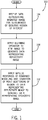
- a technique 100 to perform post-image deghosting includes receiving data (block 104) representing a migrated image, such as a reverse time migration (RTM) image.
- the data represents an image with ghost ( I ghost ) and are generated by applying a migration operator to acquired seismic data (d), as set forth in Eq. 9 above.
- a blurring operator is then applied to the migrated mage to generate data representing a reflectivity image, as described, for example, by Eq. 10 above.
- the technique 100 further includes applying (block 112) impulse responses of combined modeling and migration of point scatterers of the region (as set forth in Eq. 11 above, for example) to data representing the reflectivity image to generate data representing the deghosted image.
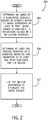
- a technique 200 includes determining (block 204) an image of a subsurface geologic region of interest, where the image represents at least in part ghost energy that is attributable to reflections that are caused by a reflecting interface.
- the technique 200 includes determining (block 208) at least one impulse response of a combined modeling and migration of at least one point scatterer for the region; and using (block 212) the impulse response(s) to attenuate the ghost energy.
- partial deghosting may be applied to the pre-stack data followed by a complementary deghosting post imaging.
- the large cross-line sampling in conventional marine acquisition may prevent the full characterization of the 3-D wavefield, and deghosting may be applied in a two-dimensional (2-D) in-line sense.
- P denotes a partial deghosting operator that is applied to the data
- a particle advantage in performing the partial deghosting prior to imaging is that some degree of deghosting may be applied in the data domain relatively early in the processing of the acquired seismic data in order to facilitate the subsequent processing of the data.
- a technique 300 includes processing (block 304) seismic data to perform partial deghosting and determining (block 308) an image of a subsurface geologic region of interest based at least in part on the result of the partial deghosting.
- the technique 300 further includes deghosting (block 312) the image of the subsurface geologic region of interest.
- a technique 400 includes performing (block 404) 2-D partial receiver side deghosting.
- the 2-D partial deghosting may involve the use of a ghost model-dependent deghosting algorithm, such as the optimal deghosting (ODG) algorithm, which relies on a ghost model to minimize the influence of the streamer noise on the deghosted data.
- ODG optimal deghosting
- the ODG algorithm is generally described in U.S. Patent No. 7,676,327 , entitled, "METHOD FOR OPTIMAL WAVE FIELD SEPARATION,” which issued on March 9, 2010.
- the partial deghosting before imaging may involve the use of a combination of model-dependent and model-independent deghosting, as described in U.S. Patent Application Publication No. US 2011/0292762 A1 , entitled, "DEGHOSTING SEISIMC DATA,” which published on December 1, 2011.
- Other 2-D techniques may be used to perform the partial receiver side deghosting, in accordance with further implementations; and a 3-D partial deghosting technique may be applied before imaging, in accordance with yet further implementations.
- the technique 400 includes generating (block 408) the reflectivity image and deghosting (block 412) the reflectivity image using the techniques that are disclosed herein.
- a technique 500 includes performing (block 504) one-dimensional (1-D) partial source side deghosting of source side data.
- the 1-D deghosting may include applying a source deghosting correction that assumes a vertical take-off, as the dependence of the correction with the departure angles (take-off and azimuth) is ignored.
- the 1-D source deghosting may be part of a Calibrated Marine Source (CMS) process, which: 1. corrects for the shot-to- shot variations of the output of the seismic source; and 2. replaces the source wavelet with a user-defined wavelet or target wavelet.
- CMS Calibrated Marine Source
- the technique 500 includes generating (block 508) the reflectivity image and deghosting (block 512) the reflectivity image using the techniques that are disclosed herein.
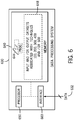
- a machine such as a data processing system 600, contains a processor 650 for purposes of processing acquired seismic data to perform deghosting, as disclosed herein.
- the processor 650 may be formed from one or more microprocessors and/or microprocessor processing cores and thus, may be itself be formed from multiple processors.
- the processor 650 may be formed from, depending on the particular implementation, one or multiple Central Processing Units (CPUs), or application specific integrated circuits (ASICs), field programmable gate arrays (FPGAs), programmable logic devices (PLDs), or other appropriate devices, as can be appreciated by one of ordinary skill in the art.
- CPUs Central Processing Units
- ASICs application specific integrated circuits
- FPGAs field programmable gate arrays
- PLDs programmable logic devices
- the processor 650 may be disposed on a survey vessel of a seismic acquisition system or may be disposed at a remote site, away from the survey location.
- the data processing system 600 may be a distributed processing system, in accordance with further implementations, with, for example, processing components geographically disposed at different locations.
- the processor 650 may be coupled to a communication interface 660 for purposes of receiving data 632, such as seismic data (particle motion data and pressure data acquired by seismic sensors, such as towed seismic sensors used in a towed marine seismic acquisition system, for example), data representing a migrated image, and so forth.
- data 632 such as seismic data (particle motion data and pressure data acquired by seismic sensors, such as towed seismic sensors used in a towed marine seismic acquisition system, for example), data representing a migrated image, and so forth.
- the communication interface 660 may be a Universal Serial Bus (USB) interface, a network interface, a removable media interface (a flash card, CD-ROM interface, etc.) or a magnetic storage interface (an Intelligent Device Electronics (IDE)-compliant interface or Small Computer System Interface (SCSI)-compliant interface, as non-limiting examples).
- USB Universal Serial Bus
- IDE Intelligent Device Electronics
- SCSI Small Computer System Interface
- the communication interface 660 may take on numerous forms, depending on the particular implementation.
- the processor 650 is coupled to a memory 640 that stores program instructions 644, which when executed by the processor 650, may cause the processor 650 to perform various tasks of one or more of the techniques and systems that are disclosed herein, such as the techniques 100, 200, 300, 400 and 500.
- the instructions 644, when executed by the processor 650, may cause the processor 650 to process data representing a migrated image to perform post-image deghosting, as discussed herein.
- the instructions 644, when executed by the processor 650 may cause the processor 650 to partially deghost seismic data before imaging, as discussed herein.
- the instructions 644 may or may not, when executed, cause the processor-650 to perform migration, depending on the particular implementation.
- the data processing system 600 may, due to execution of the instructions 344, perform partial deghosting, migration and post-image deghosting; the data processing system 600 may perform migration and post-image deghosting; the data processing processing system 600 may receive data representing the migrated image and perform post-image deghosting; and so forth.
- the data processing system 600 may solely perform post-imaging or perform other and/or different operations in addition to post-imaging, in accordance with further example implementations.
- may variations are contemplated, which are within the scope of the appended claims.
- the memory 640 is a non-transitory storage device and may take on numerous forms, such as (as non-limiting examples) semiconductor storage, magnetic storage, optical storage, phase change memory storage, capacitor-based storage, and so forth, depending on the particular implementation. Moreover, the memory 640 may be formed from more than one of these non-transitory memories, in accordance with further implementations.
- the processor 650 may store preliminary, intermediate and/or final datasets obtained via the execution of the instructions 644 in the memory 640.
- the data processing system 600 is merely an example of one out of many possible architectures, in accordance with the techniques and systems that are disclosed herein. Moreover, the data processing system 600 is represented in a simplified form in Fig. 6 , as the data processing system 600 may have various other components (a display to display initial, intermediate and/or final results of the system's processing; input devices to control the processing by the system; and so forth), as can be appreciated by the skilled artisan.
- the present invention may relate to post-image deghosting applied to a subterranean region, in accordance with further examples not forming part of the present invention, the post-image deghosting that is discussed herein may also be applied to a multi-dimensional region of interest selected from the group consisting of human tissue, plant tissue, animal tissue, solid volumes, substantially solid volumes, volumes of liquid, volumes of gas, volumes of plasma, and volumes of space near and/or outside the atmosphere of a planet, asteroid, comet, moon, or other body.
- processing techniques for collected data may also be used successfully with collected data types other than seismic data. While certain implementations have been disclosed in the context of seismic data collection and processing, those with skill in the art will recognize that one or more of the methods, techniques, and computing systems disclosed herein can be applied in many fields and contexts where data involving structures arrayed in a multi-dimensional space and/or subsurface region of interest may be collected and processed, e.g., radar, sonar, and LIDAR imaging techniques; mining area surveying and monitoring, oceanographic surveying and monitoring, and other appropriate multi-dimensional imaging problems.
Landscapes
- Life Sciences & Earth Sciences (AREA)
- Physics & Mathematics (AREA)
- Engineering & Computer Science (AREA)
- Remote Sensing (AREA)
- Acoustics & Sound (AREA)
- Environmental & Geological Engineering (AREA)
- Geology (AREA)
- General Life Sciences & Earth Sciences (AREA)
- General Physics & Mathematics (AREA)
- Geophysics (AREA)
- Oceanography (AREA)
- Geophysics And Detection Of Objects (AREA)
Claims (11)
- Procédé comprenant :la détermination d'une image d'une région digne d'intérêt géologique souterraine, l'image représentant au moins en partie l'énergie fantôme attribuable aux réflexions provoquées par une interface réfléchissante ; etle déparasitage de l'image, caractérisé en ce que le déparasitage comprend le traitement des données représentant l'image dans un ordinateur basé sur processeur pour :la détermination d'une première fonction d'étalement du point basé au moins en partie sur une première modélisation et une migration d'au moins un diffuseur du point pour la région, la première modélisation étant basée au moins en partie sur l'interface réfléchissante ;la détermination d'une seconde fonction d'étalement du point basée au moins en partie sur une seconde modélisation et une migration d'au moins un diffuseur du point pour la région, la seconde modélisation n'étant pas basée sur l'interface réfléchissante ;l'application des première et seconde fonctions d'étalement du point aux données représentant l'image pour générer des données indiquant une image déparasitée, dans lequel l'application de la fonction d'étalement du point aux données représentant l'image comprend l'application de la première fonction d'étalement du point comme un opérateur de flou pour générer des données représentant une image de réflectivité et l'application de la seconde fonction d'étalement du point aux données représentant l'image comprend l'application de la seconde fonction d'étalement du point aux données représentant l'image de réflectivité pour générer les données indiquant une image déparasitée ; et produire l'image déparasitée.
- Procédé selon la revendication 1, comprenant en outre :
la réalisation du déparasitage partiel avant de déterminer l'image et l'utilisation du déparasitage de l'image pour atténuer l'énergie fantôme résiduelle résultant du déparasitage partiel. - Procédé selon la revendication 1, dans lequel l'énergie fantôme comprend l'énergie fantôme de la source.
- Procédé selon la revendication 1, dans lequel l'énergie fantôme comprend l'énergie fantôme du récepteur.
- Procédé selon la revendication 1, dans lequel l'énergie fantôme comprend l'énergie fantôme de la source et l'énergie fantôme du récepteur.
- Procédé selon la revendication 1, dans lequel l'interface réfléchissante comprend une interface air-eau.
- Procédé selon la revendication 1, dans lequel appliquer les première et seconde fonctions d'étalement du point aux données représentant l'image comprend appliquer la fonction d'étalement du point pour estimer la réflectivité et appliquer la seconde fonction d'étalement du point à la réflectivité estimée.
- Procédé selon la revendication 7, dans lequel appliquer la première fonction d'étalement du point pour estimer la réflectivité comprend appliquer un inverse de la première fonction d'étalement du point.
- Procédé selon la revendication 1, dans lequel la région digne d'intérêt géologique souterraine comporte un fond marin.
- Procédé selon la revendication 1, dans lequel la détermination d'une image d'une région digne d'intérêt géologique souterraine comprend l'application d'un opérateur de migration de données sismiques acquises.
- Système comprenant un processeur couplé à une mémoire qui mémorise des instructions de programme, qui lorsqu'elles sont exécutées par le processeur amènent le processeur à réaliser un procédé selon l'une quelconque des revendications 1 à 10.
Applications Claiming Priority (3)
| Application Number | Priority Date | Filing Date | Title |
|---|---|---|---|
| US201461973542P | 2014-04-01 | 2014-04-01 | |
| US14/668,012 US9964655B2 (en) | 2014-04-01 | 2015-03-25 | Deghosting after imaging |
| PCT/US2015/023577 WO2015153602A1 (fr) | 2014-04-01 | 2015-03-31 | Déparasitage après imagerie |
Publications (3)
| Publication Number | Publication Date |
|---|---|
| EP3126879A1 EP3126879A1 (fr) | 2017-02-08 |
| EP3126879A4 EP3126879A4 (fr) | 2017-11-29 |
| EP3126879B1 true EP3126879B1 (fr) | 2020-06-24 |
Family
ID=54190031
Family Applications (1)
| Application Number | Title | Priority Date | Filing Date |
|---|---|---|---|
| EP15774067.1A Active EP3126879B1 (fr) | 2014-04-01 | 2015-03-31 | Suppression d'échos parasites après imagerie |
Country Status (3)
| Country | Link |
|---|---|
| US (1) | US9964655B2 (fr) |
| EP (1) | EP3126879B1 (fr) |
| WO (1) | WO2015153602A1 (fr) |
Families Citing this family (7)
| Publication number | Priority date | Publication date | Assignee | Title |
|---|---|---|---|---|
| US10977396B2 (en) | 2012-01-13 | 2021-04-13 | Schlumberger Technology Corporation | Determining an elastic model for a geologic region |
| US9436980B2 (en) * | 2012-10-10 | 2016-09-06 | Microsoft Technology Licensing, Llc | Reducing ghosting and other image artifacts in a wedge-based imaging system |
| US10743012B2 (en) * | 2016-12-15 | 2020-08-11 | Schlumberger Technology Corporation | Feature compensated borehole image coding |
| GB2560578B (en) | 2017-03-17 | 2022-06-15 | Equinor Energy As | A method of deghosting seismic data |
| CN110082832B (zh) * | 2019-05-17 | 2020-03-17 | 吉林大学 | 一种地面磁共振和探地雷达数据联合成像方法 |
| US11733413B2 (en) * | 2021-04-30 | 2023-08-22 | Saudi Arabian Oil Company | Method and system for super resolution least-squares reverse time migration |
| CN116658148B (zh) * | 2022-02-18 | 2026-01-27 | 中国石油天然气集团有限公司 | 岩性识别方法 |
Family Cites Families (12)
| Publication number | Priority date | Publication date | Assignee | Title |
|---|---|---|---|---|
| US4908801A (en) | 1989-05-30 | 1990-03-13 | Teledyne Exploration | Real-time simulation of the far-field signature of a seismic sound source array |
| GB9526099D0 (en) | 1995-12-20 | 1996-02-21 | Univ Edinburgh | Signatures of arrays of marine seismic sources |
| US6940450B2 (en) * | 2003-09-03 | 2005-09-06 | The United States Of America As Represented By The Secretary Of The Navy | Robust predictive deconvolution system and method |
| US7676327B2 (en) | 2007-04-26 | 2010-03-09 | Westerngeco L.L.C. | Method for optimal wave field separation |
| US7986586B2 (en) | 2008-04-08 | 2011-07-26 | Pgs Geophysical As | Method for deghosting marine seismic streamer data with irregular receiver positions |
| US20090326895A1 (en) | 2008-06-30 | 2009-12-31 | Beasley Craig J | Technique and system for seismic source separation |
| FR2955496B1 (fr) | 2010-01-22 | 2012-03-02 | Inst Rech Developpement Ird | L'aprotinine pour le traitement des maladies parasitaires et |
| US8693282B2 (en) * | 2010-05-25 | 2014-04-08 | Westerngeco L.L.C. | Deghosting seismic data |
| FR2961316A1 (fr) * | 2010-06-10 | 2011-12-16 | Cggveritas Services Sa | Procede de traitement de donnees sismiques marines |
| US10977396B2 (en) | 2012-01-13 | 2021-04-13 | Schlumberger Technology Corporation | Determining an elastic model for a geologic region |
| US9541661B2 (en) | 2012-04-19 | 2017-01-10 | Cgg Services Sa | Device and method for deghosting variable depth streamer data |
| US9322943B2 (en) | 2012-05-18 | 2016-04-26 | Cggveritas Services Sa | Method and apparatus for pre-stack deghosting of seismic data |
-
2015
- 2015-03-25 US US14/668,012 patent/US9964655B2/en active Active
- 2015-03-31 WO PCT/US2015/023577 patent/WO2015153602A1/fr not_active Ceased
- 2015-03-31 EP EP15774067.1A patent/EP3126879B1/fr active Active
Non-Patent Citations (1)
| Title |
|---|
| None * |
Also Published As
| Publication number | Publication date |
|---|---|
| US20150276957A1 (en) | 2015-10-01 |
| EP3126879A4 (fr) | 2017-11-29 |
| US9964655B2 (en) | 2018-05-08 |
| WO2015153602A1 (fr) | 2015-10-08 |
| EP3126879A1 (fr) | 2017-02-08 |
Similar Documents
| Publication | Publication Date | Title |
|---|---|---|
| EP3126879B1 (fr) | Suppression d'échos parasites après imagerie | |
| US9405027B2 (en) | Attentuating noise acquired in an energy measurement | |
| US9568627B2 (en) | System and method for adaptive classification and filtering for imaging diffused energy from the earths subsurface | |
| EP2780740B1 (fr) | Retrait de bruit d'une représentation sismique 3d | |
| EP3004942B1 (fr) | Systèmes et procédés permettant d'éliminer le bruit de données sismiques | |
| EP2943816B1 (fr) | Traitement de données de prospection pour déterminer un champ d'ondes | |
| CN102062874B (zh) | 用于海洋地震拖缆数据的完全带宽消幻影的方法 | |
| US20120275267A1 (en) | Seismic Data Processing | |
| US9274239B2 (en) | Wavefield deghosting | |
| EP3094993B1 (fr) | Dispositif et procédé permettant de déparasiter des données sismiques au moyen d'une inversion tau-p éparse | |
| EP2999978B1 (fr) | Procédé et appareil de démixage hybride | |
| NO20171306A1 (en) | Processing seismic data acquired using moving non-impulsive sources | |
| CN102121997A (zh) | 用于海洋地震拖缆数据的完全带宽源消幻影的方法 | |
| US20140379266A1 (en) | Processing survey data containing ghost data | |
| US9014985B2 (en) | System and method for compensating time and offset varying near-surface effects in seismic data background | |
| CN114442173B (zh) | 预测和消除波束域中的多次波的计算机程序产品和方法 | |
| AU2014374370A1 (en) | System and method of mitigating instabilities in a pseudoacoustic wave propagator | |
| Seher et al. | Deconvolution of upgoing and downgoing wavefields: A data example from the NOAKA OBN experiment | |
| Denisov et al. | A method for deghosting of data recorded with a streamer of arbitrary shape in rough sea conditions | |
| Droujinine | Sub‐basalt decoupled walkaway VSP imaging | |
| Thiel et al. | 2d Acoustic Full Waveform Inversion of Submarine Salt Layer Using Dual Sensor Streamer Data | |
| Judd et al. | Benefits of integrated approaches for solving imaging challenges presented by complex geology: latest developments in marine wide-and full-azimuth surveys | |
| Lansley | Considerations for optimum 3-D survey design, acquisition and processing | |
| NO20121476A1 (no) | Fremgangsmate og apparat for a fjerne spokelse fra seismiske data. |
Legal Events
| Date | Code | Title | Description |
|---|---|---|---|
| STAA | Information on the status of an ep patent application or granted ep patent |
Free format text: STATUS: THE INTERNATIONAL PUBLICATION HAS BEEN MADE |
|
| PUAI | Public reference made under article 153(3) epc to a published international application that has entered the european phase |
Free format text: ORIGINAL CODE: 0009012 |
|
| STAA | Information on the status of an ep patent application or granted ep patent |
Free format text: STATUS: REQUEST FOR EXAMINATION WAS MADE |
|
| 17P | Request for examination filed |
Effective date: 20161028 |
|
| AK | Designated contracting states |
Kind code of ref document: A1 Designated state(s): AL AT BE BG CH CY CZ DE DK EE ES FI FR GB GR HR HU IE IS IT LI LT LU LV MC MK MT NL NO PL PT RO RS SE SI SK SM TR |
|
| AX | Request for extension of the european patent |
Extension state: BA ME |
|
| RAP1 | Party data changed (applicant data changed or rights of an application transferred) |
Owner name: SCHLUMBERGER TECHNOLOGY B.V. |
|
| DAV | Request for validation of the european patent (deleted) | ||
| DAX | Request for extension of the european patent (deleted) | ||
| A4 | Supplementary search report drawn up and despatched |
Effective date: 20171102 |
|
| RIC1 | Information provided on ipc code assigned before grant |
Ipc: G01V 1/28 20060101AFI20171025BHEP Ipc: G01V 1/30 20060101ALI20171025BHEP |
|
| GRAP | Despatch of communication of intention to grant a patent |
Free format text: ORIGINAL CODE: EPIDOSNIGR1 |
|
| STAA | Information on the status of an ep patent application or granted ep patent |
Free format text: STATUS: GRANT OF PATENT IS INTENDED |
|
| RIC1 | Information provided on ipc code assigned before grant |
Ipc: G01V 1/36 20060101ALI20191204BHEP Ipc: G01V 1/28 20060101AFI20191204BHEP Ipc: G01V 1/38 20060101ALI20191204BHEP |
|
| INTG | Intention to grant announced |
Effective date: 20200103 |
|
| RIN1 | Information on inventor provided before grant (corrected) |
Inventor name: DU, XIANG Inventor name: FLETCHER, ROBIN Inventor name: CAPRIOLI, PHILIPPE |
|
| GRAS | Grant fee paid |
Free format text: ORIGINAL CODE: EPIDOSNIGR3 |
|
| GRAJ | Information related to disapproval of communication of intention to grant by the applicant or resumption of examination proceedings by the epo deleted |
Free format text: ORIGINAL CODE: EPIDOSDIGR1 |
|
| GRAL | Information related to payment of fee for publishing/printing deleted |
Free format text: ORIGINAL CODE: EPIDOSDIGR3 |
|
| STAA | Information on the status of an ep patent application or granted ep patent |
Free format text: STATUS: REQUEST FOR EXAMINATION WAS MADE |
|
| GRAR | Information related to intention to grant a patent recorded |
Free format text: ORIGINAL CODE: EPIDOSNIGR71 |
|
| STAA | Information on the status of an ep patent application or granted ep patent |
Free format text: STATUS: GRANT OF PATENT IS INTENDED |
|
| GRAA | (expected) grant |
Free format text: ORIGINAL CODE: 0009210 |
|
| STAA | Information on the status of an ep patent application or granted ep patent |
Free format text: STATUS: THE PATENT HAS BEEN GRANTED |
|
| INTC | Intention to grant announced (deleted) | ||
| AK | Designated contracting states |
Kind code of ref document: B1 Designated state(s): AL AT BE BG CH CY CZ DE DK EE ES FI FR GB GR HR HU IE IS IT LI LT LU LV MC MK MT NL NO PL PT RO RS SE SI SK SM TR |
|
| INTG | Intention to grant announced |
Effective date: 20200515 |
|
| REG | Reference to a national code |
Ref country code: GB Ref legal event code: FG4D |
|
| REG | Reference to a national code |
Ref country code: CH Ref legal event code: EP |
|
| REG | Reference to a national code |
Ref country code: AT Ref legal event code: REF Ref document number: 1284437 Country of ref document: AT Kind code of ref document: T Effective date: 20200715 |
|
| REG | Reference to a national code |
Ref country code: DE Ref legal event code: R096 Ref document number: 602015054745 Country of ref document: DE |
|
| REG | Reference to a national code |
Ref country code: IE Ref legal event code: FG4D |
|
| PG25 | Lapsed in a contracting state [announced via postgrant information from national office to epo] |
Ref country code: GR Free format text: LAPSE BECAUSE OF FAILURE TO SUBMIT A TRANSLATION OF THE DESCRIPTION OR TO PAY THE FEE WITHIN THE PRESCRIBED TIME-LIMIT Effective date: 20200925 Ref country code: NO Free format text: LAPSE BECAUSE OF FAILURE TO SUBMIT A TRANSLATION OF THE DESCRIPTION OR TO PAY THE FEE WITHIN THE PRESCRIBED TIME-LIMIT Effective date: 20200924 Ref country code: LT Free format text: LAPSE BECAUSE OF FAILURE TO SUBMIT A TRANSLATION OF THE DESCRIPTION OR TO PAY THE FEE WITHIN THE PRESCRIBED TIME-LIMIT Effective date: 20200624 Ref country code: FI Free format text: LAPSE BECAUSE OF FAILURE TO SUBMIT A TRANSLATION OF THE DESCRIPTION OR TO PAY THE FEE WITHIN THE PRESCRIBED TIME-LIMIT Effective date: 20200624 Ref country code: SE Free format text: LAPSE BECAUSE OF FAILURE TO SUBMIT A TRANSLATION OF THE DESCRIPTION OR TO PAY THE FEE WITHIN THE PRESCRIBED TIME-LIMIT Effective date: 20200624 |
|
| REG | Reference to a national code |
Ref country code: LT Ref legal event code: MG4D |
|
| PG25 | Lapsed in a contracting state [announced via postgrant information from national office to epo] |
Ref country code: RS Free format text: LAPSE BECAUSE OF FAILURE TO SUBMIT A TRANSLATION OF THE DESCRIPTION OR TO PAY THE FEE WITHIN THE PRESCRIBED TIME-LIMIT Effective date: 20200624 Ref country code: LV Free format text: LAPSE BECAUSE OF FAILURE TO SUBMIT A TRANSLATION OF THE DESCRIPTION OR TO PAY THE FEE WITHIN THE PRESCRIBED TIME-LIMIT Effective date: 20200624 Ref country code: HR Free format text: LAPSE BECAUSE OF FAILURE TO SUBMIT A TRANSLATION OF THE DESCRIPTION OR TO PAY THE FEE WITHIN THE PRESCRIBED TIME-LIMIT Effective date: 20200624 Ref country code: BG Free format text: LAPSE BECAUSE OF FAILURE TO SUBMIT A TRANSLATION OF THE DESCRIPTION OR TO PAY THE FEE WITHIN THE PRESCRIBED TIME-LIMIT Effective date: 20200924 |
|
| REG | Reference to a national code |
Ref country code: NL Ref legal event code: MP Effective date: 20200624 |
|
| REG | Reference to a national code |
Ref country code: AT Ref legal event code: MK05 Ref document number: 1284437 Country of ref document: AT Kind code of ref document: T Effective date: 20200624 |
|
| PG25 | Lapsed in a contracting state [announced via postgrant information from national office to epo] |
Ref country code: NL Free format text: LAPSE BECAUSE OF FAILURE TO SUBMIT A TRANSLATION OF THE DESCRIPTION OR TO PAY THE FEE WITHIN THE PRESCRIBED TIME-LIMIT Effective date: 20200624 Ref country code: AL Free format text: LAPSE BECAUSE OF FAILURE TO SUBMIT A TRANSLATION OF THE DESCRIPTION OR TO PAY THE FEE WITHIN THE PRESCRIBED TIME-LIMIT Effective date: 20200624 |
|
| PG25 | Lapsed in a contracting state [announced via postgrant information from national office to epo] |
Ref country code: PT Free format text: LAPSE BECAUSE OF FAILURE TO SUBMIT A TRANSLATION OF THE DESCRIPTION OR TO PAY THE FEE WITHIN THE PRESCRIBED TIME-LIMIT Effective date: 20201026 Ref country code: ES Free format text: LAPSE BECAUSE OF FAILURE TO SUBMIT A TRANSLATION OF THE DESCRIPTION OR TO PAY THE FEE WITHIN THE PRESCRIBED TIME-LIMIT Effective date: 20200624 Ref country code: SM Free format text: LAPSE BECAUSE OF FAILURE TO SUBMIT A TRANSLATION OF THE DESCRIPTION OR TO PAY THE FEE WITHIN THE PRESCRIBED TIME-LIMIT Effective date: 20200624 Ref country code: AT Free format text: LAPSE BECAUSE OF FAILURE TO SUBMIT A TRANSLATION OF THE DESCRIPTION OR TO PAY THE FEE WITHIN THE PRESCRIBED TIME-LIMIT Effective date: 20200624 Ref country code: IT Free format text: LAPSE BECAUSE OF FAILURE TO SUBMIT A TRANSLATION OF THE DESCRIPTION OR TO PAY THE FEE WITHIN THE PRESCRIBED TIME-LIMIT Effective date: 20200624 Ref country code: CZ Free format text: LAPSE BECAUSE OF FAILURE TO SUBMIT A TRANSLATION OF THE DESCRIPTION OR TO PAY THE FEE WITHIN THE PRESCRIBED TIME-LIMIT Effective date: 20200624 Ref country code: RO Free format text: LAPSE BECAUSE OF FAILURE TO SUBMIT A TRANSLATION OF THE DESCRIPTION OR TO PAY THE FEE WITHIN THE PRESCRIBED TIME-LIMIT Effective date: 20200624 Ref country code: EE Free format text: LAPSE BECAUSE OF FAILURE TO SUBMIT A TRANSLATION OF THE DESCRIPTION OR TO PAY THE FEE WITHIN THE PRESCRIBED TIME-LIMIT Effective date: 20200624 |
|
| PG25 | Lapsed in a contracting state [announced via postgrant information from national office to epo] |
Ref country code: PL Free format text: LAPSE BECAUSE OF FAILURE TO SUBMIT A TRANSLATION OF THE DESCRIPTION OR TO PAY THE FEE WITHIN THE PRESCRIBED TIME-LIMIT Effective date: 20200624 Ref country code: SK Free format text: LAPSE BECAUSE OF FAILURE TO SUBMIT A TRANSLATION OF THE DESCRIPTION OR TO PAY THE FEE WITHIN THE PRESCRIBED TIME-LIMIT Effective date: 20200624 Ref country code: IS Free format text: LAPSE BECAUSE OF FAILURE TO SUBMIT A TRANSLATION OF THE DESCRIPTION OR TO PAY THE FEE WITHIN THE PRESCRIBED TIME-LIMIT Effective date: 20201024 |
|
| REG | Reference to a national code |
Ref country code: DE Ref legal event code: R097 Ref document number: 602015054745 Country of ref document: DE |
|
| PG25 | Lapsed in a contracting state [announced via postgrant information from national office to epo] |
Ref country code: DK Free format text: LAPSE BECAUSE OF FAILURE TO SUBMIT A TRANSLATION OF THE DESCRIPTION OR TO PAY THE FEE WITHIN THE PRESCRIBED TIME-LIMIT Effective date: 20200624 |
|
| PLBE | No opposition filed within time limit |
Free format text: ORIGINAL CODE: 0009261 |
|
| STAA | Information on the status of an ep patent application or granted ep patent |
Free format text: STATUS: NO OPPOSITION FILED WITHIN TIME LIMIT |
|
| 26N | No opposition filed |
Effective date: 20210325 |
|
| PG25 | Lapsed in a contracting state [announced via postgrant information from national office to epo] |
Ref country code: SI Free format text: LAPSE BECAUSE OF FAILURE TO SUBMIT A TRANSLATION OF THE DESCRIPTION OR TO PAY THE FEE WITHIN THE PRESCRIBED TIME-LIMIT Effective date: 20200624 |
|
| REG | Reference to a national code |
Ref country code: DE Ref legal event code: R119 Ref document number: 602015054745 Country of ref document: DE |
|
| PG25 | Lapsed in a contracting state [announced via postgrant information from national office to epo] |
Ref country code: MC Free format text: LAPSE BECAUSE OF FAILURE TO SUBMIT A TRANSLATION OF THE DESCRIPTION OR TO PAY THE FEE WITHIN THE PRESCRIBED TIME-LIMIT Effective date: 20200624 |
|
| REG | Reference to a national code |
Ref country code: CH Ref legal event code: PL |
|
| REG | Reference to a national code |
Ref country code: BE Ref legal event code: MM Effective date: 20210331 |
|
| PG25 | Lapsed in a contracting state [announced via postgrant information from national office to epo] |
Ref country code: DE Free format text: LAPSE BECAUSE OF NON-PAYMENT OF DUE FEES Effective date: 20211001 Ref country code: IE Free format text: LAPSE BECAUSE OF NON-PAYMENT OF DUE FEES Effective date: 20210331 Ref country code: CH Free format text: LAPSE BECAUSE OF NON-PAYMENT OF DUE FEES Effective date: 20210331 Ref country code: LI Free format text: LAPSE BECAUSE OF NON-PAYMENT OF DUE FEES Effective date: 20210331 Ref country code: LU Free format text: LAPSE BECAUSE OF NON-PAYMENT OF DUE FEES Effective date: 20210331 |
|
| PG25 | Lapsed in a contracting state [announced via postgrant information from national office to epo] |
Ref country code: BE Free format text: LAPSE BECAUSE OF NON-PAYMENT OF DUE FEES Effective date: 20210331 |
|
| PG25 | Lapsed in a contracting state [announced via postgrant information from national office to epo] |
Ref country code: HU Free format text: LAPSE BECAUSE OF FAILURE TO SUBMIT A TRANSLATION OF THE DESCRIPTION OR TO PAY THE FEE WITHIN THE PRESCRIBED TIME-LIMIT; INVALID AB INITIO Effective date: 20150331 |
|
| PG25 | Lapsed in a contracting state [announced via postgrant information from national office to epo] |
Ref country code: CY Free format text: LAPSE BECAUSE OF FAILURE TO SUBMIT A TRANSLATION OF THE DESCRIPTION OR TO PAY THE FEE WITHIN THE PRESCRIBED TIME-LIMIT Effective date: 20200624 |
|
| P01 | Opt-out of the competence of the unified patent court (upc) registered |
Effective date: 20231208 |
|
| PG25 | Lapsed in a contracting state [announced via postgrant information from national office to epo] |
Ref country code: MK Free format text: LAPSE BECAUSE OF FAILURE TO SUBMIT A TRANSLATION OF THE DESCRIPTION OR TO PAY THE FEE WITHIN THE PRESCRIBED TIME-LIMIT Effective date: 20200624 |
|
| PG25 | Lapsed in a contracting state [announced via postgrant information from national office to epo] |
Ref country code: MT Free format text: LAPSE BECAUSE OF FAILURE TO SUBMIT A TRANSLATION OF THE DESCRIPTION OR TO PAY THE FEE WITHIN THE PRESCRIBED TIME-LIMIT Effective date: 20200624 |
|
| PG25 | Lapsed in a contracting state [announced via postgrant information from national office to epo] |
Ref country code: TR Free format text: LAPSE BECAUSE OF FAILURE TO SUBMIT A TRANSLATION OF THE DESCRIPTION OR TO PAY THE FEE WITHIN THE PRESCRIBED TIME-LIMIT Effective date: 20200624 |
|
| PGFP | Annual fee paid to national office [announced via postgrant information from national office to epo] |
Ref country code: GB Payment date: 20260323 Year of fee payment: 12 |
|
| PGFP | Annual fee paid to national office [announced via postgrant information from national office to epo] |
Ref country code: FR Payment date: 20260323 Year of fee payment: 12 |