EP3127352B1 - Leistungseffiziente proximitätsdetektion - Google Patents
Leistungseffiziente proximitätsdetektion Download PDFInfo
- Publication number
- EP3127352B1 EP3127352B1 EP14721020.7A EP14721020A EP3127352B1 EP 3127352 B1 EP3127352 B1 EP 3127352B1 EP 14721020 A EP14721020 A EP 14721020A EP 3127352 B1 EP3127352 B1 EP 3127352B1
- Authority
- EP
- European Patent Office
- Prior art keywords
- mobile terminal
- range wireless
- short
- wireless transmission
- location information
- Prior art date
- Legal status (The legal status is an assumption and is not a legal conclusion. Google has not performed a legal analysis and makes no representation as to the accuracy of the status listed.)
- Not-in-force
Links
Images


Classifications
-
- H—ELECTRICITY
- H04—ELECTRIC COMMUNICATION TECHNIQUE
- H04W—WIRELESS COMMUNICATION NETWORKS
- H04W4/00—Services specially adapted for wireless communication networks; Facilities therefor
- H04W4/02—Services making use of location information
- H04W4/021—Services related to particular areas, e.g. point of interest [POI] services, venue services or geofences
-
- H—ELECTRICITY
- H04—ELECTRIC COMMUNICATION TECHNIQUE
- H04W—WIRELESS COMMUNICATION NETWORKS
- H04W4/00—Services specially adapted for wireless communication networks; Facilities therefor
- H04W4/02—Services making use of location information
- H04W4/023—Services making use of location information using mutual or relative location information between multiple location based services [LBS] targets or of distance thresholds
-
- H—ELECTRICITY
- H04—ELECTRIC COMMUNICATION TECHNIQUE
- H04W—WIRELESS COMMUNICATION NETWORKS
- H04W4/00—Services specially adapted for wireless communication networks; Facilities therefor
- H04W4/80—Services using short range communication, e.g. near-field communication [NFC], radio-frequency identification [RFID] or low energy communication
-
- H—ELECTRICITY
- H04—ELECTRIC COMMUNICATION TECHNIQUE
- H04W—WIRELESS COMMUNICATION NETWORKS
- H04W52/00—Power management, e.g. Transmission Power Control [TPC] or power classes
- H04W52/02—Power saving arrangements
- H04W52/0209—Power saving arrangements in terminal devices
- H04W52/0225—Power saving arrangements in terminal devices using monitoring of external events, e.g. the presence of a signal
- H04W52/0229—Power saving arrangements in terminal devices using monitoring of external events, e.g. the presence of a signal where the received signal is a wanted signal
-
- H—ELECTRICITY
- H04—ELECTRIC COMMUNICATION TECHNIQUE
- H04W—WIRELESS COMMUNICATION NETWORKS
- H04W68/00—User notification, e.g. alerting and paging, for incoming communication, change of service or the like
- H04W68/005—Transmission of information for alerting of incoming communication
-
- H—ELECTRICITY
- H04—ELECTRIC COMMUNICATION TECHNIQUE
- H04W—WIRELESS COMMUNICATION NETWORKS
- H04W88/00—Devices specially adapted for wireless communication networks, e.g. terminals, base stations or access point devices
- H04W88/02—Terminal devices
- H04W88/06—Terminal devices adapted for operation in multiple networks or having at least two operational modes, e.g. multi-mode terminals
-
- H—ELECTRICITY
- H04—ELECTRIC COMMUNICATION TECHNIQUE
- H04L—TRANSMISSION OF DIGITAL INFORMATION, e.g. TELEGRAPHIC COMMUNICATION
- H04L2101/00—Indexing scheme associated with group H04L61/00
- H04L2101/60—Types of network addresses
- H04L2101/618—Details of network addresses
- H04L2101/622—Layer-2 addresses, e.g. medium access control [MAC] addresses
-
- Y—GENERAL TAGGING OF NEW TECHNOLOGICAL DEVELOPMENTS; GENERAL TAGGING OF CROSS-SECTIONAL TECHNOLOGIES SPANNING OVER SEVERAL SECTIONS OF THE IPC; TECHNICAL SUBJECTS COVERED BY FORMER USPC CROSS-REFERENCE ART COLLECTIONS [XRACs] AND DIGESTS
- Y02—TECHNOLOGIES OR APPLICATIONS FOR MITIGATION OR ADAPTATION AGAINST CLIMATE CHANGE
- Y02D—CLIMATE CHANGE MITIGATION TECHNOLOGIES IN INFORMATION AND COMMUNICATION TECHNOLOGIES [ICT], I.E. INFORMATION AND COMMUNICATION TECHNOLOGIES AIMING AT THE REDUCTION OF THEIR OWN ENERGY USE
- Y02D30/00—Reducing energy consumption in communication networks
- Y02D30/70—Reducing energy consumption in communication networks in wireless communication networks
Definitions
- Embodiments of the present invention relate to electronic devices, wireless communication and application services.
- Bluetooth(registered trademark) protocols can be used to detect when two devices are in close proximity.
- Bluetooth(registered trademark) technologies can consume more power than desired.
- some users may be reluctant to have a Bluetooth(registered trademark) capability turned on at all times due to the risk of unsolicited messages (“BlueJacking").
- Some technologies may detect devices within a proximity of a beacon or transmission station. However, power is consumed when scanning for devices within proximity of the beacon. Other low energy short-range wireless protocols have been designed to save energy. However, they still use a significant amount of energy scanning for other devices.
- INTERDITAL COMMUNICATION "UE triggered EPC-assisted direct discovery via control plane PC3 " discloses a direct discovery over LTE resources. Particularly, it discloses proposed changes to 3GPP TR 23.703 v1.0.0 for "EPC-assisted direct discovery resources when the UE triggers a direct discovery ", which saves LTE direct discovery resource since the UE does not need to always advertise identifiers for discovery.
- ORANGE "Corrections to consolidated Annexes for TS 23.303” discloses a similar solution for EPC-assisted direct discovery when the UE triggers a direct discovery request. It is proposed, the ProSe Function, to check the current UE location before authorizing a discovery request. The function receives location updates for UE A and/or for UE B.
- Bluetooth(registered trademark) protocols can be used to scan and detect when two devices are in close proximity.
- Bluetooth(registered trademark) technology scanning methods can consume more power than desired.
- some users may be reluctant to have Bluetooth(registered trademark) capability turned on at all times due to the risk of unsolicited messages (“BlueJacking").
- Bluetooth(registered trademark) low energy technology (BLE) has lowered the power consumption on the side of the peripheral device, or the device that is to be detected. However, BLE has not reduced power consumption when scanning for devices.
- Embodiments of the present invention provide for a device to use less power to notify a user that its device is in close enough proximity to another device to use a short-range wireless transmission protocol, such as Bluetooth(registered trademark) technology, for further communications.
- a short-range wireless transmission protocol such as Bluetooth(registered trademark) technology
- the other user may be close enough in proximity to socially interact with the user in person. Closer proximity detection may also trigger various applications.
- a cloud server such as an application server, may track and/or compare very coarse-grained locations of devices A and B to determine when to notify device A to turn on a short-range capability, send a message with the short-range capability to device B, or to start detecting device B.
- power can be saved and security can be increased by not keeping the short-range capability continuously on and scanning for devices.
- device A may know the MAC address (or PHY or other device specific address) of device B and a user identity (e.g., phone number, social application identity) of the user of device B.
- a user identity e.g., phone number, social application identity
- This link between the MAC address and a user identity can be obtained through product registration or configuration of a new application installed on the devices.
- Figure 6 illustrates an example process 600 for notifying another device through a short-range wireless transmission protocol, according to various embodiments.
- MAC addresses and corresponding user identities may be stored at a cloud server or application server.
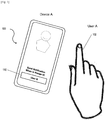
- the user 102 of Device A, or mobile terminal 100 may request that mobile terminal 100 send a notification to a selected user's device using a short-range wireless transmission protocol when the other device is with a same short-range transmission area (block 604 of Figure 6 ).
- mobile terminal 100 may be triggered or instructed to address Device B, or mobile terminal 200, with a Bluetooth(registered trademark) protocol message which essentially says "Here I am!”, such that a Bluetooth(registered trademark) protocol pairing, message, service or application may operate between the two devices within the short-range transmission area.
- the other user's mobile terminal 200 may be selected through a selection of a user identity of the other user, such as selecting User B in the application. This selection 110 is shown in Figure 1 .
- mobile terminal 200 (see Figure 3 ) is notified through a messaging system that mobile terminal 100 may be attempting to determine when mobile terminal 200 comes into proximity of the short-range wireless protocol transmissions of mobile terminal 100.
- the messaging system can be SMS or application specific over TCP/IP through an application server, such as application server 210 in Figure 2 .
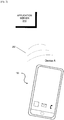
- mobile terminal 100 may send or push location information 202 to be received by application server 210 (block 606).
- mobile terminal 200 may send or push location information 302 to be received by application server 210 (block 608).
- the location information may be device information, such as a MAC address, along with a coarse-grained location of the device.
- coarse-grained location information may include a cellular position and/or a Wi-Fi access point identification.
- Cellular position may be a cell tower identifier, or cell id.
- Cellular position may include multiple cell ids.
- cellular position may include a position of the device determined by triangulation of multiple cell towers. Such triangulation may be limited in accuracy, but may be accurate enough to determine that the devices are approaching or are in the same short-range wireless transmission area.
- cell towers 402, 404 and 406 may have transmission ranges and/or directions 412, 414 and 416, respectively, which may be compared to or overlapped with each other to determine a cellular position of mobile terminal 100 to be in area 420.
- Wi-Fi access point information may also be used to determine a location or transmission area of mobile terminals 100 and 200.
- application server 210 may receive a Wi-Fi access point identifier, or Wi-Fi access point name from each of mobile terminals 100 and 200.
- Wi-Fi may be considered to include protocols that follow the IEEE 802.11 standards.
- Wi-Fi access point 510 may have mobile terminals 100 and 200 within transmission range 512. Therefore, mobile terminals 100 and 200 may report the same Wi-Fi access point name or identifier as they may be not only in the same Wi-Fi area, but in the same short-range wireless transmission area.
- the short-range wireless transmission area (i.e., IEEE 802.15.*, Bluetooth(registered trademark)) is of a shorter range than the Wi-Fi access point or of a Wi-Fi access point generally (i.e., IEEE 802.11*), according to some embodiments.
- the short-range wireless transmission area is not intended to be the same size as the Wi-Fi transmission area.
- the short-range wireless transmission area is smaller than the Wi-Fi transmission area, and may be located within or overlap the Wi-Fi transmission area.
- the short-range wireless transmission range area may be circular with a 10m radius, such as is expected with Bluetooth(registered trademark) technology and Bluetooth(registered trademark) low energy (BLE) transmission range areas.
- a higher powered Bluetooth(registered trademark) technology may have a range of 100m. Some ranges may be 1m or less.
- Mobile terminals 100 and 200 may be determined to be within a same short-range wireless transmission area (block 610). This determination may be made when the location information of the first mobile terminal 100 matches or is similar to the location information of the second mobile terminal 200.
- Determining a match of location information may include comparing Wi-Fi access point identifiers to determine if they are the same. A match may also be found when the cellular position by triangulation may overlap or be estimated to overlap. A match may also be determined if one or more cell tower ids reported from mobile terminals 100 and 200 are the same. In some cases, it may be more accurate if at least two cell ids reported by mobile terminal 100 and 200 are the same. Cell tower ids may also involve transmission directions from the tower. These directions may also be compared to determine if mobile terminals 100 and 200 are likely in the same transmission area.
- Mobile terminals 100 and 200 may send the location information periodically or only when there is a change in the cell id information or the Wi-Fi access point identifier information. This coarse-grained positioning is available on almost any networked device at a low power cost.
- the location information is received and compared at application server 210.
- mobile terminal 100 may be in Central Park, while mobile terminal 200 may be at New York University.
- Application server 120 receives the location information of each mobile terminal and compares the mobile information.
- Mobile terminals 100 and 200 are determined to be too far apart for short-range wireless transmissions. Perhaps the cell tower id or cellular position reported by mobile terminal 100 is not the same as the cell tower id or cellular position reported by mobile terminal 200. However, when mobile terminals 100 and 200 are in approximately the same geographic region (maybe just outside Madison Square Garden represented by the circle in Figure 8 ), and there is a possibility that they can be in close proximity, application server 210 may determine that mobile terminals 100 and 200 are in or are approaching a same short-range wireless transmission area.
- mobile terminal 100 may have previously sent a request to application server 210 to notify mobile terminal 100 and/or 200 when mobile terminals 100 and 200 are near each other. This may result in a short-range wireless protocol pairing or other application such that mobile terminals 100 and 200 may share photos of the event or other event information if the users are to be seated near each other at the event.
- mobile terminals 100 and 200 enter the same building and report the same cellular position and/or Wi-Fi access point identifiers to application server 210, as they are in the same part of the building.
- mobile terminal 100 may receive instructions from application server 210.
- mobile terminal 100 may send a notification 902 ( Figure 9 ) to mobile terminal 200 using the short-range wireless transmission protocol, such as a Bluetooth(registered trademark) protocol or an IEEE 802.15 protocol, indicating the presence of mobile terminal 100 to mobile terminal 200 (block 612).
- the short-range wireless transmission protocol such as a Bluetooth(registered trademark) protocol or an IEEE 802.15 protocol.
- some pairing, application activity or some other exchange may take place, enhancing the experience of the users of mobile terminals 100 and 200 without consuming the power necessary to continuously scan for the other device.
- mobile terminal 200 may be directly addressed, by its MAC address.
- the scanning may be turned off or disabled for either mobile terminal before, during and/or after the sending of the notification from mobile terminal 100 to mobile terminal 200.
- mobile terminal 100 or mobile terminal 200 may begin scanning or turn on Bluetooth(registered trademark) capability now that the mobile terminals have been notified that the mobile terminals are likely in short-range wireless transmission range or Bluetooth(registered trademark) technology proximity of each other.
- the mobile terminals, or any system involving the mobile terminals can be tuned to determine the optimal location lookup frequency and the radius of the region to turn on Bluetooth(registered trademark) capability.
- the short-range wireless protocols are not limited to Bluetooth(registered trademark) protocols (as maintained by the Bluetooth Special Interest Group) and may be other protocols distinguished from standard Wi-Fi protocols such as IEEE 802.11a, 802.11b, 802.11g, 802.11n and 802.11ac. These other short-range wireless protocols may include IEEE 802.15 protocols such as 802.15.1, 802.15.3 and 802.15.4.
- location information received at application server 210 may be access point information for IEEE 802.11 access points, while the same short-range wireless transmission area may involve the ranges of IEEE 802.15 protocols.
- NFC may also be used as a short-range wireless protocol.
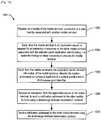
- Figure 10 represents a process 1000 from the viewpoint of the mobile terminal rather than the application server 210, as shown by the process 600 of Figure 6 .
- a selection of a user identity associated with another mobile terminal is received. This selection may be made at the mobile terminal, such as at a touch screen display, keyboard, speaker, sensor, camera or other input of the mobile terminal, such as shown in Figure 1 .
- a request is sent from the mobile terminal for an instruction from the application server when the other mobile terminal is in the same short-range wireless transmission area.
- This request may be made as part of an application downloaded and installed on the mobile terminal.
- Application server 210 may register and/or store MAC addresses, phone numbers, social application identities and/or other user identity information specific to the application or to other popular communication or social network applications.
- the location information of the mobile terminal is sent to application server 210 or any other cloud server handling the application service. This may be sent as a service of the operating system, location application or other service.
- an instruction is received from application server 210, instructing the mobile terminal to send a notification addressed to the other terminal using the short-range wireless transmission protocol, such as a Bluetooth(registered trademark) protocol.
- the notification is sent.
- the notification may be sent addressed to the MAC address of the other mobile terminal. This may be a request for a pairing, initiation of a pairing previously configured, a connection, or a simple awareness message.
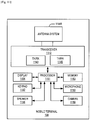
- Mobile terminal 100 may be a mobile electronic device, such as a smartphone, and include computing device and communication components shown in Figure 11.
- Figure 11 is a schematic block diagram of mobile terminal 100, according to various embodiments.
- the diagram of mobile terminal 100 is not limited to a mobile terminal.
- the diagram of mobile terminal 100 may also include parts of another electronic device, such as mobile terminal 200 and/or application server 210.
- Mobile terminal 100 may communicate with a wireless local network, the internet or other devices using a communication protocol that may include, but is not limited to, IEEE 802.11 a, 802.1 lb, 802.11g, 802.11n, 802.11ac, and/or other wireless local area network protocols.
- the short-range transmission protocols may involve Bluetooth(registered trademark) protocols, IEEE 802.15 protocols, near field communication (NFC) protocols or some other RFID protocols or standards. According to some embodiments, short-range transmission protocols may also include other certain IEEE standards that are not 802.11 but are similar in range to the short-range wireless transmission protocols described herein.
- mobile terminal 100 includes various components, such as a processor 1151, an antenna system 1146, a cellular and/or Wi-Fi transceiver 1142 (e.g., multi-band with transceivers 1143 and 1145), a memory 1153, display 1154, keypad 1152, speaker 1156, microphone 1150 and/or camera 1150.
- a processor 1151 e.g., a central processing unit (CPU)
- an antenna system 1146 e.g., a cellular and/or Wi-Fi transceiver 1142 (e.g., multi-band with transceivers 1143 and 1145)
- a memory 1153 e.g., display 1154, keypad 1152, speaker 1156, microphone 1150 and/or camera 1150.
- the display 1154 may include a touch sensitive display or screen, or the like.
- the memory 1153 stores software that may be executed by the processor 1151, and may include one or more erasable programmable read-only memories (EPROM or Flash EPROM), battery backed random access memory (RAM), magnetic, optical, or other digital storage device, and may be separate from, or at least partially within, the processor 1151.
- the processor 1151 may include more than one processor, such as, for example, a general purpose processor and a digital signal processor, which may be enclosed in a common package or separate and apart from one another.
- the processor 1151 may be configured to control various functions of mobile terminal 100, including receiving input from a touch sensitive screen or other sensors.
- Mobile terminal 100 may communicate with a base station of a network using radio frequency signals, which may be communicated through antenna system 1146.
- mobile terminal 100 may be configured to communicate via the cellular transceiver 1142 using one or more cellular communication protocols such as, for example, Advanced Mobile Phone Service (AMPS), ANSI-136, Global Standard for Mobile (GSM) communication, General Packet Radio Service (GPRS), enhanced data rates for GSM evolution (EDGE), code division multiple access (CDMA), wideband-CDMA, CDMA2000, and/or Universal Mobile Telecommunications System (UMTS), among others.
- AMPS Advanced Mobile Phone Service
- GSM Global Standard for Mobile
- GPRS General Packet Radio Service
- EDGE enhanced data rates for GSM evolution
- CDMA code division multiple access
- CDMA2000 wideband-CDMA2000
- UMTS Universal Mobile Telecommunications System
- Communication protocols as used herein may specify the information communicated, the timing, the frequency, the modulation, and/or the operations for setting-up and/or maintaining a communication
- the present invention is not limited to the particular configurations shown in Figure 11 , but is intended to encompass any configuration capable of carrying out operations described herein. While particular functionalities are shown in particular blocks by way of illustration, functionalities of different blocks and/or portions thereof may be combined, divided, and/or eliminated. Moreover, the functionality of the hardware/software architecture may be implemented as a single processor system or a multiprocessor system in accordance with various embodiments of the present invention.
- Embodiments of the present invention may include methods, electronic devices, and/or computer program products. Some embodiments of the present invention are described with reference to block diagrams and/or operational illustrations of methods and electronic devices.
- each block may represent a module, segment, or portion of code, which comprises one or more executable instructions for implementing the specified logical function(s). It is to be understood that each block of the block diagrams and/or operational illustrations, and combinations of blocks in the block diagrams and/or operational illustrations can be embodied on analog circuitry and/or digital circuitry.
- controller circuit may include one or more general purpose processors, special purpose processors, ASICs, and/or other programmable data processing apparatus, such that the instructions, which execute via the controller, create means for implementing the functions/acts specified in the block diagrams and/or operational block or blocks.
- the functions/acts noted in the blocks may occur out of the order noted in the operational illustrations. For example, two blocks shown in succession may in fact be executed substantially concurrently or the blocks may sometimes be executed in the reverse order, depending upon the functionality/acts involved.
- These computer program instructions may also be stored in a computer-usable or computer-readable memory that may direct a controller circuit to function in a particular manner, such that the instructions stored in the computer usable or computer-readable memory produce an article of manufacture including instructions that implement the function specified in the flowchart and/or block diagram block or blocks.
- the computer-usable or computer-readable medium may be, for example but not limited to, an electronic, magnetic, optical, electromagnetic, or semiconductor system, apparatus, or device.
- the computer-readable medium includes the following: hard disk devices, optical storage devices, magnetic storage devices, random access memory (RAM) devices, read-only memory (ROM) devices, erasable programmable read-only memory (EPROM or Flash memory) devices, and compact disc read-only memory (CD-ROM).
- RAM random access memory
- ROM read-only memory
- EPROM or Flash memory erasable programmable read-only memory
- CD-ROM compact disc read-only memory
- the embodiments described herein may provide for use of short-range wireless protocols without the need to indefinitely scan for other devices, increasing security and saving battery power.
Landscapes
- Engineering & Computer Science (AREA)
- Computer Networks & Wireless Communication (AREA)
- Signal Processing (AREA)
- Mobile Radio Communication Systems (AREA)
- Telephone Function (AREA)
- Telephonic Communication Services (AREA)
Claims (13)
- Anwendungsserver (210), umfassend:einen Prozessor; undeinen Speicher, der mit dem Prozessor gekoppelt ist und computerlesbaren Programmcode umfasst, der im Speicher enthalten ist und der bei Ausführung durch den Prozessor den Prozessor zum Durchführen von Operationen veranlasst, die umfassen:Empfangen von ersten Standortinformationen (202) eines ersten mobilen Endgeräts (100) am Anwendungsserver (210), wobei die ersten Standortinformationen (202) mindestens eine von einer Zellenposition und einer Wi-Fi-Zugangspunktkennung umfassen;Empfangen von zweiten Standortinformationen (302) eines zweiten mobilen Endgeräts (200) am Anwendungsserver (210), wobei die zweiten Standortinformationen (302) mindestens eine von einer Zellenposition und einer Wi-Fi-Zugangspunktkennung umfassen;Bestimmen, ob das erste mobile Endgerät (100) in einem gleichen Kurzstrecken-Drahtlosübertragungsbereich wie das zweite mobile Endgerät (200) ist, basierend auf einem Vergleich der ersten Standortinformationen (202) mit den zweiten Standortinformationen (302); undSenden in Reaktion auf eine Bestimmung, dass das erste drahtlose Endgerät (100) im gleichen Kurzstrecken-Drahtlosübertragungsbereich wie das zweite mobile Endgerät (200) ist, einer Anweisung an das erste mobile Endgerät (100), die das erste mobile Endgerät (100) zum Senden einer Benachrichtigung, die an das zweite mobile Endgerät (200) adressiert ist, unter Verwendung eines Kurzstrecken-Drahtlosübertragungsprotokolls anweist, wobei der Kurzstrecken-Drahtlosübertragungsbereich einen maximalen Radius von 100 m aufweist,Speichern einer ersten Benutzeridentität, die der MAC-Adresse des ersten mobilen Endgeräts (100) entspricht;Speichern einer zweiten Benutzeridentität, die der MAC-Adresse des zweiten mobilen Endgeräts (200) entspricht;wobei das Bestimmen in Reaktion auf ein Empfangen einer Anforderung vom ersten mobilen Endgerät (100) durchgeführt wird, wobei die Anforderung die zweite Benutzeridentität umfasst.
- Anwendungsserver (210) nach Anspruch 1, wobei die Anweisung das erste mobile Endgerät (100) ferner zum Senden der Benachrichtigung anweist, während eine Fähigkeit des ersten mobilen Endgeräts (100) zum Suchen nach anderen Vorrichtungen unter Verwendung des Kurzstrecken-Drahtlosübertragungsprotokolls ausgeschaltet oder deaktiviert ist.
- Anwendungsserver (210) nach Anspruch 1 oder 2, wobei mindestens eine der Zellenposition des ersten mobilen Endgeräts (100) und der Zellenposition des zweiten mobilen Endgeräts (200) mindestens eine Mobilfunkmastkennung umfasst.
- Anwendungsserver (210) nach einem der Ansprüche 1 bis 3, wobei mindestens eine der Zellenposition des ersten mobilen Endgeräts (100) und der Zellenposition des zweiten mobilen Endgeräts (200) Mobilfunkmast-Triangulationsinformationen umfasst.
- Anwendungsserver (210) nach einem der Ansprüche 1 bis 4, wobei die Benachrichtigung an eine MAC-Adresse des zweiten mobilen Endgeräts (200) adressiert ist.
- Verfahren, umfassend:Empfangen von ersten Standortinformationen eines ersten mobilen Endgeräts (100) an einem Anwendungsserver (210), wobei die ersten Standortinformationen (202) mindestens eine von einer Zellenposition und einer Wi-Fi-Zugangspunktkennung umfassen;Empfangen von zweiten Standortinformationen eines zweiten mobilen Endgeräts (200) am Anwendungsserver (210), wobei die zweiten Standortinformationen (302) mindestens eine von einer Zellenposition und einer Wi-Fi-Zugangspunktkennung umfassen;Bestimmen, ob das erste mobile Endgerät (100) in einem gleichen Kurzstrecken-Drahtlosübertragungsbereich wie das zweite mobile Endgerät (200) ist, basierend auf einem Vergleich der ersten Standortinformationen (202) mit den zweiten Standortinformationen (302); undSenden in Reaktion auf eine Bestimmung, dass das erste drahtlose Endgerät (100) im gleichen Kurzstrecken-Drahtlosübertragungsbereich wie das zweite mobile Endgerät (200) ist, einer Anweisung an das erste mobile Endgerät (100), die das erste mobile Endgerät (100) zum Senden einer Benachrichtigung, die an das zweite mobile Endgerät (200) adressiert ist, unter Verwendung eines Kurzstrecken-Drahtlosübertragungsprotokolls anweist, wobei der Kurzstrecken-Drahtlosübertragungsbereich einen maximalen Radius von 100 m aufweist,Speichern einer ersten Benutzeridentität, die der MAC-Adresse des ersten mobilen Endgeräts (100) entspricht;Speichern einer zweiten Benutzeridentität, die der MAC-Adresse des zweiten mobilen Endgeräts (200) entspricht;wobei das Bestimmen in Reaktion auf ein Empfangen einer Anforderung vom ersten mobilen Endgerät (100) durchgeführt wird, wobei die Anforderung die zweite Benutzeridentität umfasst.
- Verfahren nach Anspruch 6, wobei die Anweisung das erste mobile Endgerät (100) ferner zum Senden der Benachrichtigung anweist, während eine Fähigkeit des ersten mobilen Endgeräts (100) zum Suchen nach anderen Vorrichtungen unter Verwendung des Kurzstrecken-Drahtlosübertragungsprotokolls ausgeschaltet oder deaktiviert ist.
- Verfahren nach Anspruch 6 oder 7, wobei mindestens eine der Zellenposition des ersten mobilen Endgeräts (100) und der Zellenposition des zweiten mobilen Endgeräts (200) mindestens eine Mobilfunkmastkennung umfasst.
- Verfahren nach einem der Ansprüche 6 bis 8, wobei mindestens eine der Zellenposition des ersten mobilen Endgeräts (100) und der Zellenposition des zweiten mobilen Endgeräts (200) Mobilfunkmast-Triangulationsinformationen umfasst.
- System, umfassend den Anwendungsserver nach Anspruch 1 und ferner umfassend ein erstes mobiles Endgerät (100), wobei das erste mobile Endgerät umfasst:einen Prozessor (1151); undeinen Speicher (1153), der mit dem Prozessor (1151) gekoppelt ist und computerlesbaren Programmcode umfasst, der im Speicher (1153) enthalten ist und der bei Ausführung durch den Prozessor (1151) den Prozessor (1151) zum Durchführen von Operationen veranlasst, die umfassen:Empfangen einer Auswahl einer Benutzeridentität, die mit einem zweiten mobilen Endgerät (200) assoziiert ist, am ersten mobilen Endgerät (100);Senden einer Anforderung einer Anweisung vom ersten mobilen Endgerät (100) an den Anwendungsserver (210) in Reaktion darauf, dass das zweite mobile Endgerät (200), das mit der ausgewählten Benutzeridentität assoziiert ist, in einem gleichen Kurzstrecken-Drahtlosübertragungsbereich wie das erste mobile Endgerät (100) ist;Senden von Standortinformationen (202) des mobilen Endgeräts (100) vom ersten mobilen Endgerät (100) an den Anwendungsserver (210), wobei die Standortinformationen (202) mindestens eine von einer Zellenposition und einer Wi-Fi-Zugangspunktkennung umfassen;Empfangen einer Anweisung vom Anwendungsserver (210) am ersten mobilen Endgerät (100) zum Senden einer Benachrichtigung, die an das zweite mobile Endgerät (200) adressiert ist, unter Verwendung eines Kurzstrecken-Drahtlosübertragungsprotokolls; undSenden einer Benachrichtigung, die an das zweite mobile Endgerät (200) adressiert ist, unter Verwendung des Kurzstrecken-Drahtlosübertragungsprotokolls.
- System nach Anspruch 11, wobei das Senden einer Benachrichtigung durchgeführt wird, während eine Fähigkeit des ersten mobilen Endgeräts zum Suchen nach anderen Vorrichtungen unter Verwendung des Kurzstrecken-Drahtlosübertragungsprotokolls ausgeschaltet oder deaktiviert ist.
- System nach Anspruch 11 oder 12, wobei die Zellenposition mindestens eines von einer Mobilfunkmastkennung und Mobilfunkmast-Triangulationsinformationen umfasst.
- System nach einem der Ansprüche 11 bis 13, wobei die Benachrichtigung an eine MAC-Adresse des zweiten mobilen Endgeräts (200) adressiert ist.
Applications Claiming Priority (1)
| Application Number | Priority Date | Filing Date | Title |
|---|---|---|---|
| PCT/JP2014/001927 WO2015151133A1 (en) | 2014-04-02 | 2014-04-02 | Power efficient proximity detection |
Publications (2)
| Publication Number | Publication Date |
|---|---|
| EP3127352A1 EP3127352A1 (de) | 2017-02-08 |
| EP3127352B1 true EP3127352B1 (de) | 2020-10-28 |
Family
ID=50630967
Family Applications (1)
| Application Number | Title | Priority Date | Filing Date |
|---|---|---|---|
| EP14721020.7A Not-in-force EP3127352B1 (de) | 2014-04-02 | 2014-04-02 | Leistungseffiziente proximitätsdetektion |
Country Status (6)
| Country | Link |
|---|---|
| US (1) | US9820095B2 (de) |
| EP (1) | EP3127352B1 (de) |
| JP (1) | JP2017513405A (de) |
| KR (1) | KR101873671B1 (de) |
| CN (1) | CN106416309B (de) |
| WO (1) | WO2015151133A1 (de) |
Families Citing this family (135)
| Publication number | Priority date | Publication date | Assignee | Title |
|---|---|---|---|---|
| US8677377B2 (en) | 2005-09-08 | 2014-03-18 | Apple Inc. | Method and apparatus for building an intelligent automated assistant |
| US9318108B2 (en) | 2010-01-18 | 2016-04-19 | Apple Inc. | Intelligent automated assistant |
| US8977255B2 (en) | 2007-04-03 | 2015-03-10 | Apple Inc. | Method and system for operating a multi-function portable electronic device using voice-activation |
| US10002189B2 (en) | 2007-12-20 | 2018-06-19 | Apple Inc. | Method and apparatus for searching using an active ontology |
| US9330720B2 (en) | 2008-01-03 | 2016-05-03 | Apple Inc. | Methods and apparatus for altering audio output signals |
| US20100030549A1 (en) | 2008-07-31 | 2010-02-04 | Lee Michael M | Mobile device having human language translation capability with positional feedback |
| US8676904B2 (en) | 2008-10-02 | 2014-03-18 | Apple Inc. | Electronic devices with voice command and contextual data processing capabilities |
| US20120311585A1 (en) | 2011-06-03 | 2012-12-06 | Apple Inc. | Organizing task items that represent tasks to perform |
| US10276170B2 (en) | 2010-01-18 | 2019-04-30 | Apple Inc. | Intelligent automated assistant |
| US8682667B2 (en) | 2010-02-25 | 2014-03-25 | Apple Inc. | User profiling for selecting user specific voice input processing information |
| US9262612B2 (en) | 2011-03-21 | 2016-02-16 | Apple Inc. | Device access using voice authentication |
| US10057736B2 (en) | 2011-06-03 | 2018-08-21 | Apple Inc. | Active transport based notifications |
| US10134385B2 (en) | 2012-03-02 | 2018-11-20 | Apple Inc. | Systems and methods for name pronunciation |
| US10417037B2 (en) | 2012-05-15 | 2019-09-17 | Apple Inc. | Systems and methods for integrating third party services with a digital assistant |
| US9721563B2 (en) | 2012-06-08 | 2017-08-01 | Apple Inc. | Name recognition system |
| EP2954514B1 (de) | 2013-02-07 | 2021-03-31 | Apple Inc. | Sprachtrigger für einen digitalen assistenten |
| US10652394B2 (en) | 2013-03-14 | 2020-05-12 | Apple Inc. | System and method for processing voicemail |
| US10748529B1 (en) | 2013-03-15 | 2020-08-18 | Apple Inc. | Voice activated device for use with a voice-based digital assistant |
| WO2014197335A1 (en) | 2013-06-08 | 2014-12-11 | Apple Inc. | Interpreting and acting upon commands that involve sharing information with remote devices |
| HK1220268A1 (zh) | 2013-06-09 | 2017-04-28 | 苹果公司 | 用於實現跨數字助理的兩個或更多個實例的會話持續性的設備、方法、和圖形用戶界面 |
| US10176167B2 (en) | 2013-06-09 | 2019-01-08 | Apple Inc. | System and method for inferring user intent from speech inputs |
| KR101749009B1 (ko) | 2013-08-06 | 2017-06-19 | 애플 인크. | 원격 디바이스로부터의 활동에 기초한 스마트 응답의 자동 활성화 |
| US10296160B2 (en) | 2013-12-06 | 2019-05-21 | Apple Inc. | Method for extracting salient dialog usage from live data |
| US9715875B2 (en) | 2014-05-30 | 2017-07-25 | Apple Inc. | Reducing the need for manual start/end-pointing and trigger phrases |
| US9430463B2 (en) | 2014-05-30 | 2016-08-30 | Apple Inc. | Exemplar-based natural language processing |
| US9633004B2 (en) | 2014-05-30 | 2017-04-25 | Apple Inc. | Better resolution when referencing to concepts |
| US10170123B2 (en) | 2014-05-30 | 2019-01-01 | Apple Inc. | Intelligent assistant for home automation |
| US9966065B2 (en) | 2014-05-30 | 2018-05-08 | Apple Inc. | Multi-command single utterance input method |
| US9338493B2 (en) | 2014-06-30 | 2016-05-10 | Apple Inc. | Intelligent automated assistant for TV user interactions |
| US9818400B2 (en) | 2014-09-11 | 2017-11-14 | Apple Inc. | Method and apparatus for discovering trending terms in speech requests |
| US9668121B2 (en) | 2014-09-30 | 2017-05-30 | Apple Inc. | Social reminders |
| US10074360B2 (en) | 2014-09-30 | 2018-09-11 | Apple Inc. | Providing an indication of the suitability of speech recognition |
| US10127911B2 (en) | 2014-09-30 | 2018-11-13 | Apple Inc. | Speaker identification and unsupervised speaker adaptation techniques |
| US10152299B2 (en) | 2015-03-06 | 2018-12-11 | Apple Inc. | Reducing response latency of intelligent automated assistants |
| US9721566B2 (en) | 2015-03-08 | 2017-08-01 | Apple Inc. | Competing devices responding to voice triggers |
| US9886953B2 (en) | 2015-03-08 | 2018-02-06 | Apple Inc. | Virtual assistant activation |
| US10567477B2 (en) | 2015-03-08 | 2020-02-18 | Apple Inc. | Virtual assistant continuity |
| US10460227B2 (en) | 2015-05-15 | 2019-10-29 | Apple Inc. | Virtual assistant in a communication session |
| US10083688B2 (en) | 2015-05-27 | 2018-09-25 | Apple Inc. | Device voice control for selecting a displayed affordance |
| US10200824B2 (en) | 2015-05-27 | 2019-02-05 | Apple Inc. | Systems and methods for proactively identifying and surfacing relevant content on a touch-sensitive device |
| US9578173B2 (en) | 2015-06-05 | 2017-02-21 | Apple Inc. | Virtual assistant aided communication with 3rd party service in a communication session |
| US11025565B2 (en) | 2015-06-07 | 2021-06-01 | Apple Inc. | Personalized prediction of responses for instant messaging |
| US20160378747A1 (en) | 2015-06-29 | 2016-12-29 | Apple Inc. | Virtual assistant for media playback |
| US10747498B2 (en) | 2015-09-08 | 2020-08-18 | Apple Inc. | Zero latency digital assistant |
| US10740384B2 (en) | 2015-09-08 | 2020-08-11 | Apple Inc. | Intelligent automated assistant for media search and playback |
| US10331312B2 (en) | 2015-09-08 | 2019-06-25 | Apple Inc. | Intelligent automated assistant in a media environment |
| US10671428B2 (en) | 2015-09-08 | 2020-06-02 | Apple Inc. | Distributed personal assistant |
| US11587559B2 (en) | 2015-09-30 | 2023-02-21 | Apple Inc. | Intelligent device identification |
| US10691473B2 (en) | 2015-11-06 | 2020-06-23 | Apple Inc. | Intelligent automated assistant in a messaging environment |
| US10956666B2 (en) | 2015-11-09 | 2021-03-23 | Apple Inc. | Unconventional virtual assistant interactions |
| US10049668B2 (en) | 2015-12-02 | 2018-08-14 | Apple Inc. | Applying neural network language models to weighted finite state transducers for automatic speech recognition |
| US10223066B2 (en) | 2015-12-23 | 2019-03-05 | Apple Inc. | Proactive assistance based on dialog communication between devices |
| US9730006B1 (en) * | 2016-04-15 | 2017-08-08 | Qualcomm Incorporated | Enhanced system acquisition for wearables |
| US11227589B2 (en) | 2016-06-06 | 2022-01-18 | Apple Inc. | Intelligent list reading |
| US10049663B2 (en) | 2016-06-08 | 2018-08-14 | Apple, Inc. | Intelligent automated assistant for media exploration |
| US12223282B2 (en) | 2016-06-09 | 2025-02-11 | Apple Inc. | Intelligent automated assistant in a home environment |
| US10586535B2 (en) | 2016-06-10 | 2020-03-10 | Apple Inc. | Intelligent digital assistant in a multi-tasking environment |
| US12197817B2 (en) | 2016-06-11 | 2025-01-14 | Apple Inc. | Intelligent device arbitration and control |
| DK201670540A1 (en) | 2016-06-11 | 2018-01-08 | Apple Inc | Application integration with a digital assistant |
| DK179415B1 (en) | 2016-06-11 | 2018-06-14 | Apple Inc | Intelligent device arbitration and control |
| US9942719B2 (en) | 2016-08-26 | 2018-04-10 | Qualcomm Incorporated | OTDOA positioning via local wireless transmitters |
| US10474753B2 (en) | 2016-09-07 | 2019-11-12 | Apple Inc. | Language identification using recurrent neural networks |
| US10043516B2 (en) | 2016-09-23 | 2018-08-07 | Apple Inc. | Intelligent automated assistant |
| US11281993B2 (en) | 2016-12-05 | 2022-03-22 | Apple Inc. | Model and ensemble compression for metric learning |
| US11204787B2 (en) | 2017-01-09 | 2021-12-21 | Apple Inc. | Application integration with a digital assistant |
| DK201770383A1 (en) | 2017-05-09 | 2018-12-14 | Apple Inc. | USER INTERFACE FOR CORRECTING RECOGNITION ERRORS |
| US10417266B2 (en) | 2017-05-09 | 2019-09-17 | Apple Inc. | Context-aware ranking of intelligent response suggestions |
| DK180048B1 (en) | 2017-05-11 | 2020-02-04 | Apple Inc. | MAINTAINING THE DATA PROTECTION OF PERSONAL INFORMATION |
| US10395654B2 (en) | 2017-05-11 | 2019-08-27 | Apple Inc. | Text normalization based on a data-driven learning network |
| DK201770439A1 (en) | 2017-05-11 | 2018-12-13 | Apple Inc. | Offline personal assistant |
| US10726832B2 (en) | 2017-05-11 | 2020-07-28 | Apple Inc. | Maintaining privacy of personal information |
| DK201770429A1 (en) | 2017-05-12 | 2018-12-14 | Apple Inc. | LOW-LATENCY INTELLIGENT AUTOMATED ASSISTANT |
| DK179496B1 (en) | 2017-05-12 | 2019-01-15 | Apple Inc. | USER-SPECIFIC Acoustic Models |
| US11301477B2 (en) | 2017-05-12 | 2022-04-12 | Apple Inc. | Feedback analysis of a digital assistant |
| DK179745B1 (en) | 2017-05-12 | 2019-05-01 | Apple Inc. | SYNCHRONIZATION AND TASK DELEGATION OF A DIGITAL ASSISTANT |
| DK201770431A1 (en) | 2017-05-15 | 2018-12-20 | Apple Inc. | Optimizing dialogue policy decisions for digital assistants using implicit feedback |
| DK201770411A1 (en) | 2017-05-15 | 2018-12-20 | Apple Inc. | Multi-modal interfaces |
| DK201770432A1 (en) | 2017-05-15 | 2018-12-21 | Apple Inc. | Hierarchical belief states for digital assistants |
| US10303715B2 (en) | 2017-05-16 | 2019-05-28 | Apple Inc. | Intelligent automated assistant for media exploration |
| DK179549B1 (en) | 2017-05-16 | 2019-02-12 | Apple Inc. | FAR-FIELD EXTENSION FOR DIGITAL ASSISTANT SERVICES |
| US10403278B2 (en) | 2017-05-16 | 2019-09-03 | Apple Inc. | Methods and systems for phonetic matching in digital assistant services |
| US20180336892A1 (en) | 2017-05-16 | 2018-11-22 | Apple Inc. | Detecting a trigger of a digital assistant |
| US10311144B2 (en) | 2017-05-16 | 2019-06-04 | Apple Inc. | Emoji word sense disambiguation |
| JP2018201170A (ja) * | 2017-05-29 | 2018-12-20 | 京セラ株式会社 | 電子機器および情報処理方法 |
| US10657328B2 (en) | 2017-06-02 | 2020-05-19 | Apple Inc. | Multi-task recurrent neural network architecture for efficient morphology handling in neural language modeling |
| US10445429B2 (en) | 2017-09-21 | 2019-10-15 | Apple Inc. | Natural language understanding using vocabularies with compressed serialized tries |
| US10755051B2 (en) | 2017-09-29 | 2020-08-25 | Apple Inc. | Rule-based natural language processing |
| US10636424B2 (en) | 2017-11-30 | 2020-04-28 | Apple Inc. | Multi-turn canned dialog |
| US10616750B2 (en) * | 2018-01-04 | 2020-04-07 | Nxp B.V. | Wireless communication device |
| US10733982B2 (en) | 2018-01-08 | 2020-08-04 | Apple Inc. | Multi-directional dialog |
| US10733375B2 (en) | 2018-01-31 | 2020-08-04 | Apple Inc. | Knowledge-based framework for improving natural language understanding |
| US10789959B2 (en) | 2018-03-02 | 2020-09-29 | Apple Inc. | Training speaker recognition models for digital assistants |
| US10592604B2 (en) | 2018-03-12 | 2020-03-17 | Apple Inc. | Inverse text normalization for automatic speech recognition |
| US10818288B2 (en) | 2018-03-26 | 2020-10-27 | Apple Inc. | Natural assistant interaction |
| US10909331B2 (en) | 2018-03-30 | 2021-02-02 | Apple Inc. | Implicit identification of translation payload with neural machine translation |
| US11145294B2 (en) | 2018-05-07 | 2021-10-12 | Apple Inc. | Intelligent automated assistant for delivering content from user experiences |
| US10928918B2 (en) | 2018-05-07 | 2021-02-23 | Apple Inc. | Raise to speak |
| US10984780B2 (en) | 2018-05-21 | 2021-04-20 | Apple Inc. | Global semantic word embeddings using bi-directional recurrent neural networks |
| DK180639B1 (en) | 2018-06-01 | 2021-11-04 | Apple Inc | DISABILITY OF ATTENTION-ATTENTIVE VIRTUAL ASSISTANT |
| DK201870355A1 (en) | 2018-06-01 | 2019-12-16 | Apple Inc. | VIRTUAL ASSISTANT OPERATION IN MULTI-DEVICE ENVIRONMENTS |
| US11386266B2 (en) | 2018-06-01 | 2022-07-12 | Apple Inc. | Text correction |
| US10892996B2 (en) | 2018-06-01 | 2021-01-12 | Apple Inc. | Variable latency device coordination |
| DK179822B1 (da) | 2018-06-01 | 2019-07-12 | Apple Inc. | Voice interaction at a primary device to access call functionality of a companion device |
| US10496705B1 (en) | 2018-06-03 | 2019-12-03 | Apple Inc. | Accelerated task performance |
| US11010561B2 (en) | 2018-09-27 | 2021-05-18 | Apple Inc. | Sentiment prediction from textual data |
| US11462215B2 (en) | 2018-09-28 | 2022-10-04 | Apple Inc. | Multi-modal inputs for voice commands |
| US11170166B2 (en) | 2018-09-28 | 2021-11-09 | Apple Inc. | Neural typographical error modeling via generative adversarial networks |
| US10839159B2 (en) | 2018-09-28 | 2020-11-17 | Apple Inc. | Named entity normalization in a spoken dialog system |
| US11475898B2 (en) | 2018-10-26 | 2022-10-18 | Apple Inc. | Low-latency multi-speaker speech recognition |
| US11638059B2 (en) | 2019-01-04 | 2023-04-25 | Apple Inc. | Content playback on multiple devices |
| US10834035B2 (en) * | 2019-03-18 | 2020-11-10 | Universiti Brunei Darussalam | Instant messaging for mobile device with offline and online mode |
| US11348573B2 (en) | 2019-03-18 | 2022-05-31 | Apple Inc. | Multimodality in digital assistant systems |
| US11307752B2 (en) | 2019-05-06 | 2022-04-19 | Apple Inc. | User configurable task triggers |
| DK201970509A1 (en) | 2019-05-06 | 2021-01-15 | Apple Inc | Spoken notifications |
| US11475884B2 (en) | 2019-05-06 | 2022-10-18 | Apple Inc. | Reducing digital assistant latency when a language is incorrectly determined |
| US11423908B2 (en) | 2019-05-06 | 2022-08-23 | Apple Inc. | Interpreting spoken requests |
| US11140099B2 (en) | 2019-05-21 | 2021-10-05 | Apple Inc. | Providing message response suggestions |
| US11496600B2 (en) | 2019-05-31 | 2022-11-08 | Apple Inc. | Remote execution of machine-learned models |
| DK180129B1 (en) | 2019-05-31 | 2020-06-02 | Apple Inc. | User activity shortcut suggestions |
| US11289073B2 (en) | 2019-05-31 | 2022-03-29 | Apple Inc. | Device text to speech |
| DK201970510A1 (en) | 2019-05-31 | 2021-02-11 | Apple Inc | Voice identification in digital assistant systems |
| US11227599B2 (en) | 2019-06-01 | 2022-01-18 | Apple Inc. | Methods and user interfaces for voice-based control of electronic devices |
| US11360641B2 (en) | 2019-06-01 | 2022-06-14 | Apple Inc. | Increasing the relevance of new available information |
| US11488406B2 (en) | 2019-09-25 | 2022-11-01 | Apple Inc. | Text detection using global geometry estimators |
| WO2021196172A1 (en) * | 2020-04-03 | 2021-10-07 | Orange | A method for notifying a first mobile terminal of an event related to a second mobile terminal |
| US11038934B1 (en) | 2020-05-11 | 2021-06-15 | Apple Inc. | Digital assistant hardware abstraction |
| US11061543B1 (en) | 2020-05-11 | 2021-07-13 | Apple Inc. | Providing relevant data items based on context |
| US12301635B2 (en) | 2020-05-11 | 2025-05-13 | Apple Inc. | Digital assistant hardware abstraction |
| US11490204B2 (en) | 2020-07-20 | 2022-11-01 | Apple Inc. | Multi-device audio adjustment coordination |
| US11438683B2 (en) | 2020-07-21 | 2022-09-06 | Apple Inc. | User identification using headphones |
| US11445444B2 (en) | 2020-09-25 | 2022-09-13 | Snap Inc. | Power optimization for co-location connection service |
| KR102887722B1 (ko) * | 2020-11-10 | 2025-11-17 | 삼성전자주식회사 | 전자 장치 및 그 동작 방법 |
| US11930243B2 (en) * | 2022-01-04 | 2024-03-12 | Dell Products L.P. | Peripheral device registration in and migration between environments |
| CN115278536A (zh) * | 2022-07-27 | 2022-11-01 | 中国电信股份有限公司 | 定位寻物方法、系统及相关设备 |
| CN115209514B (zh) * | 2022-09-16 | 2023-02-07 | 荣耀终端有限公司 | 蜂窝通信功能的关闭方法及相关电子设备 |
Family Cites Families (19)
| Publication number | Priority date | Publication date | Assignee | Title |
|---|---|---|---|---|
| JP4100320B2 (ja) * | 2003-10-14 | 2008-06-11 | 株式会社日立製作所 | 位置検出システムおよび装置 |
| US8538393B1 (en) * | 2004-09-21 | 2013-09-17 | Advanced Ground Information Systems, Inc. | Method to provide ad hoc and password protected digital and voice networks |
| RU2395176C1 (ru) * | 2006-05-12 | 2010-07-20 | Интердиджитал Текнолоджи Корпорейшн | Способ и устройство для поддержки экстренного вызова в беспроводной региональной сети |
| EP2090129A2 (de) * | 2006-10-30 | 2009-08-19 | Interdigital Technology Corporation | Verfahren und vorrichtung zum implementieren einer tracking-bereichsaktualisierung und zellenneuauswahl in einem langzeitentwicklungssystem |
| JP4929113B2 (ja) * | 2007-09-27 | 2012-05-09 | 株式会社エヌ・ティ・ティ・ドコモ | 移動通信方法、管理サーバ及び移動機 |
| KR101533691B1 (ko) * | 2009-06-01 | 2015-07-03 | 삼성전자 주식회사 | 블루투스 모듈을 구비한 장치의 연결 시스템 및 방법 |
| US8452353B2 (en) * | 2010-02-24 | 2013-05-28 | Hewlett-Packard Development Company, L.P. | Apparatus and methods for providing intelligent battery management |
| JP5236684B2 (ja) | 2010-04-30 | 2013-07-17 | 株式会社エヌ・ティ・ティ・ドコモ | 携帯端末装置、基地局装置、及び交換局装置並びに移動通信方法 |
| KR101670758B1 (ko) | 2010-07-05 | 2016-11-01 | 에스케이텔레콤 주식회사 | 위치 측위 방법과 그를 위한 이동통신 단말기 및 위치 계산 서버 |
| US8787944B2 (en) * | 2011-08-18 | 2014-07-22 | Rivada Research, Llc | Method and system for providing enhanced location based information for wireless handsets |
| EP2763101B1 (de) | 2011-09-26 | 2020-11-04 | NEC Corporation | Informationsverarbeitungsvorrichtung |
| CN103379582A (zh) * | 2012-04-12 | 2013-10-30 | 华为技术有限公司 | 短距离端到端无线通信的方法和系统、基站、移动终端 |
| KR101883703B1 (ko) * | 2012-04-16 | 2018-07-31 | 삼성전자 주식회사 | 친구 찾기 서비스 제공 방법 및 시스템 |
| US8849203B2 (en) * | 2012-06-27 | 2014-09-30 | Alcatel Lucent | Discovering proximity devices in broadband networks |
| US10791451B2 (en) * | 2012-07-27 | 2020-09-29 | Sharp Kabushiki Kaisha | Proximity service discovery using a licensed frequency spectrum |
| US9036603B2 (en) * | 2012-08-03 | 2015-05-19 | Intel Corporation | Network assistance for device-to-device discovery |
| WO2014034572A1 (ja) * | 2012-08-28 | 2014-03-06 | 京セラ株式会社 | 移動通信システム、ユーザ端末、プロセッサ及び記憶媒体 |
| US9131341B2 (en) * | 2013-05-28 | 2015-09-08 | Tencent Technology (Shenzhen) Company Limited | System and method for locating a mobile device |
| KR102314272B1 (ko) * | 2015-04-30 | 2021-10-20 | 삼성전자주식회사 | 서비스 공유 장치 및 방법 |
-
2014
- 2014-04-02 CN CN201480079456.XA patent/CN106416309B/zh not_active Expired - Fee Related
- 2014-04-02 US US14/891,080 patent/US9820095B2/en not_active Expired - Fee Related
- 2014-04-02 WO PCT/JP2014/001927 patent/WO2015151133A1/en not_active Ceased
- 2014-04-02 EP EP14721020.7A patent/EP3127352B1/de not_active Not-in-force
- 2014-04-02 KR KR1020167030080A patent/KR101873671B1/ko not_active Expired - Fee Related
- 2014-04-02 JP JP2016560853A patent/JP2017513405A/ja active Pending
Non-Patent Citations (1)
| Title |
|---|
| None * |
Also Published As
| Publication number | Publication date |
|---|---|
| EP3127352A1 (de) | 2017-02-08 |
| US9820095B2 (en) | 2017-11-14 |
| WO2015151133A1 (en) | 2015-10-08 |
| US20170013401A1 (en) | 2017-01-12 |
| CN106416309A (zh) | 2017-02-15 |
| CN106416309B (zh) | 2020-05-12 |
| KR20160138524A (ko) | 2016-12-05 |
| KR101873671B1 (ko) | 2018-07-02 |
| JP2017513405A (ja) | 2017-05-25 |
Similar Documents
| Publication | Publication Date | Title |
|---|---|---|
| EP3127352B1 (de) | Leistungseffiziente proximitätsdetektion | |
| EP3022960B1 (de) | Verfahren und system zur verhinderung der verfolgung einer mobilen vorrichtung | |
| US10206063B2 (en) | Proximity detection in a device to device network | |
| US9237421B2 (en) | Method and apparatus for reducing transmission of location information | |
| RU2579761C2 (ru) | Способ и системы для экономии энергии за счет управления первым блоком радиосвязи на основании второго блока радиосвязи | |
| US10274574B2 (en) | System and method of transmitting location data based on wireless communication activity | |
| US9961619B2 (en) | Method for intelligently and dynamically selecting beacon transmitting nodes in ad-hoc networks | |
| KR20150132271A (ko) | 소프트웨어-인에이블링된 액세스 포인트에 의한 지능형 비커닝 | |
| US20150281886A1 (en) | Method and apparatus for improved geofencing background | |
| EP2654354B1 (de) | Bereitstellung einer aktuellen Position bei gleichzeitiger Verringerung des Gesamtstromverbrauchs | |
| EP2657719B1 (de) | System und Verfahren zum Übertragen von Standortdaten basierend auf der drahtlosen Kommunikationsaktivität | |
| JP2007274252A (ja) | ステルスアクセスポイントと通信する端末、プログラム及びアクセスポイント発見方法 |
Legal Events
| Date | Code | Title | Description |
|---|---|---|---|
| STAA | Information on the status of an ep patent application or granted ep patent |
Free format text: STATUS: THE INTERNATIONAL PUBLICATION HAS BEEN MADE |
|
| PUAI | Public reference made under article 153(3) epc to a published international application that has entered the european phase |
Free format text: ORIGINAL CODE: 0009012 |
|
| STAA | Information on the status of an ep patent application or granted ep patent |
Free format text: STATUS: REQUEST FOR EXAMINATION WAS MADE |
|
| 17P | Request for examination filed |
Effective date: 20160930 |
|
| AK | Designated contracting states |
Kind code of ref document: A1 Designated state(s): AL AT BE BG CH CY CZ DE DK EE ES FI FR GB GR HR HU IE IS IT LI LT LU LV MC MK MT NL NO PL PT RO RS SE SI SK SM TR |
|
| AX | Request for extension of the european patent |
Extension state: BA ME |
|
| DAX | Request for extension of the european patent (deleted) | ||
| STAA | Information on the status of an ep patent application or granted ep patent |
Free format text: STATUS: EXAMINATION IS IN PROGRESS |
|
| 17Q | First examination report despatched |
Effective date: 20180418 |
|
| REG | Reference to a national code |
Ref country code: DE Ref legal event code: R079 Ref document number: 602014071671 Country of ref document: DE Free format text: PREVIOUS MAIN CLASS: H04W0004000000 Ipc: H04W0004020000 |
|
| RIC1 | Information provided on ipc code assigned before grant |
Ipc: H04L 29/12 20060101ALI20200313BHEP Ipc: H04W 52/02 20090101ALI20200313BHEP Ipc: H04W 4/02 20180101AFI20200313BHEP Ipc: H04W 4/80 20180101ALI20200313BHEP Ipc: H04W 68/00 20090101ALI20200313BHEP Ipc: H04W 4/021 20180101ALI20200313BHEP |
|
| GRAJ | Information related to disapproval of communication of intention to grant by the applicant or resumption of examination proceedings by the epo deleted |
Free format text: ORIGINAL CODE: EPIDOSDIGR1 |
|
| GRAP | Despatch of communication of intention to grant a patent |
Free format text: ORIGINAL CODE: EPIDOSNIGR1 |
|
| GRAP | Despatch of communication of intention to grant a patent |
Free format text: ORIGINAL CODE: EPIDOSNIGR1 |
|
| STAA | Information on the status of an ep patent application or granted ep patent |
Free format text: STATUS: GRANT OF PATENT IS INTENDED |
|
| INTG | Intention to grant announced |
Effective date: 20200525 |
|
| INTC | Intention to grant announced (deleted) | ||
| INTG | Intention to grant announced |
Effective date: 20200604 |
|
| GRAS | Grant fee paid |
Free format text: ORIGINAL CODE: EPIDOSNIGR3 |
|
| GRAA | (expected) grant |
Free format text: ORIGINAL CODE: 0009210 |
|
| STAA | Information on the status of an ep patent application or granted ep patent |
Free format text: STATUS: THE PATENT HAS BEEN GRANTED |
|
| AK | Designated contracting states |
Kind code of ref document: B1 Designated state(s): AL AT BE BG CH CY CZ DE DK EE ES FI FR GB GR HR HU IE IS IT LI LT LU LV MC MK MT NL NO PL PT RO RS SE SI SK SM TR |
|
| REG | Reference to a national code |
Ref country code: GB Ref legal event code: FG4D |
|
| REG | Reference to a national code |
Ref country code: CH Ref legal event code: EP |
|
| REG | Reference to a national code |
Ref country code: AT Ref legal event code: REF Ref document number: 1329476 Country of ref document: AT Kind code of ref document: T Effective date: 20201115 |
|
| REG | Reference to a national code |
Ref country code: DE Ref legal event code: R096 Ref document number: 602014071671 Country of ref document: DE |
|
| REG | Reference to a national code |
Ref country code: IE Ref legal event code: FG4D |
|
| REG | Reference to a national code |
Ref country code: AT Ref legal event code: MK05 Ref document number: 1329476 Country of ref document: AT Kind code of ref document: T Effective date: 20201028 |
|
| REG | Reference to a national code |
Ref country code: NL Ref legal event code: MP Effective date: 20201028 |
|
| PG25 | Lapsed in a contracting state [announced via postgrant information from national office to epo] |
Ref country code: NO Free format text: LAPSE BECAUSE OF FAILURE TO SUBMIT A TRANSLATION OF THE DESCRIPTION OR TO PAY THE FEE WITHIN THE PRESCRIBED TIME-LIMIT Effective date: 20210128 Ref country code: PT Free format text: LAPSE BECAUSE OF FAILURE TO SUBMIT A TRANSLATION OF THE DESCRIPTION OR TO PAY THE FEE WITHIN THE PRESCRIBED TIME-LIMIT Effective date: 20210301 Ref country code: NL Free format text: LAPSE BECAUSE OF FAILURE TO SUBMIT A TRANSLATION OF THE DESCRIPTION OR TO PAY THE FEE WITHIN THE PRESCRIBED TIME-LIMIT Effective date: 20201028 Ref country code: FI Free format text: LAPSE BECAUSE OF FAILURE TO SUBMIT A TRANSLATION OF THE DESCRIPTION OR TO PAY THE FEE WITHIN THE PRESCRIBED TIME-LIMIT Effective date: 20201028 Ref country code: RS Free format text: LAPSE BECAUSE OF FAILURE TO SUBMIT A TRANSLATION OF THE DESCRIPTION OR TO PAY THE FEE WITHIN THE PRESCRIBED TIME-LIMIT Effective date: 20201028 Ref country code: GR Free format text: LAPSE BECAUSE OF FAILURE TO SUBMIT A TRANSLATION OF THE DESCRIPTION OR TO PAY THE FEE WITHIN THE PRESCRIBED TIME-LIMIT Effective date: 20210129 |
|
| REG | Reference to a national code |
Ref country code: LT Ref legal event code: MG4D |
|
| PG25 | Lapsed in a contracting state [announced via postgrant information from national office to epo] |
Ref country code: BG Free format text: LAPSE BECAUSE OF FAILURE TO SUBMIT A TRANSLATION OF THE DESCRIPTION OR TO PAY THE FEE WITHIN THE PRESCRIBED TIME-LIMIT Effective date: 20210128 Ref country code: AT Free format text: LAPSE BECAUSE OF FAILURE TO SUBMIT A TRANSLATION OF THE DESCRIPTION OR TO PAY THE FEE WITHIN THE PRESCRIBED TIME-LIMIT Effective date: 20201028 Ref country code: ES Free format text: LAPSE BECAUSE OF FAILURE TO SUBMIT A TRANSLATION OF THE DESCRIPTION OR TO PAY THE FEE WITHIN THE PRESCRIBED TIME-LIMIT Effective date: 20201028 Ref country code: PL Free format text: LAPSE BECAUSE OF FAILURE TO SUBMIT A TRANSLATION OF THE DESCRIPTION OR TO PAY THE FEE WITHIN THE PRESCRIBED TIME-LIMIT Effective date: 20201028 Ref country code: SE Free format text: LAPSE BECAUSE OF FAILURE TO SUBMIT A TRANSLATION OF THE DESCRIPTION OR TO PAY THE FEE WITHIN THE PRESCRIBED TIME-LIMIT Effective date: 20201028 Ref country code: IS Free format text: LAPSE BECAUSE OF FAILURE TO SUBMIT A TRANSLATION OF THE DESCRIPTION OR TO PAY THE FEE WITHIN THE PRESCRIBED TIME-LIMIT Effective date: 20210228 Ref country code: LV Free format text: LAPSE BECAUSE OF FAILURE TO SUBMIT A TRANSLATION OF THE DESCRIPTION OR TO PAY THE FEE WITHIN THE PRESCRIBED TIME-LIMIT Effective date: 20201028 |
|
| PG25 | Lapsed in a contracting state [announced via postgrant information from national office to epo] |
Ref country code: HR Free format text: LAPSE BECAUSE OF FAILURE TO SUBMIT A TRANSLATION OF THE DESCRIPTION OR TO PAY THE FEE WITHIN THE PRESCRIBED TIME-LIMIT Effective date: 20201028 |
|
| RAP4 | Party data changed (patent owner data changed or rights of a patent transferred) |
Owner name: SONY GROUP CORPORATION |
|
| REG | Reference to a national code |
Ref country code: DE Ref legal event code: R097 Ref document number: 602014071671 Country of ref document: DE |
|
| PG25 | Lapsed in a contracting state [announced via postgrant information from national office to epo] |
Ref country code: SM Free format text: LAPSE BECAUSE OF FAILURE TO SUBMIT A TRANSLATION OF THE DESCRIPTION OR TO PAY THE FEE WITHIN THE PRESCRIBED TIME-LIMIT Effective date: 20201028 Ref country code: CZ Free format text: LAPSE BECAUSE OF FAILURE TO SUBMIT A TRANSLATION OF THE DESCRIPTION OR TO PAY THE FEE WITHIN THE PRESCRIBED TIME-LIMIT Effective date: 20201028 Ref country code: EE Free format text: LAPSE BECAUSE OF FAILURE TO SUBMIT A TRANSLATION OF THE DESCRIPTION OR TO PAY THE FEE WITHIN THE PRESCRIBED TIME-LIMIT Effective date: 20201028 Ref country code: LT Free format text: LAPSE BECAUSE OF FAILURE TO SUBMIT A TRANSLATION OF THE DESCRIPTION OR TO PAY THE FEE WITHIN THE PRESCRIBED TIME-LIMIT Effective date: 20201028 Ref country code: RO Free format text: LAPSE BECAUSE OF FAILURE TO SUBMIT A TRANSLATION OF THE DESCRIPTION OR TO PAY THE FEE WITHIN THE PRESCRIBED TIME-LIMIT Effective date: 20201028 Ref country code: SK Free format text: LAPSE BECAUSE OF FAILURE TO SUBMIT A TRANSLATION OF THE DESCRIPTION OR TO PAY THE FEE WITHIN THE PRESCRIBED TIME-LIMIT Effective date: 20201028 |
|
| PG25 | Lapsed in a contracting state [announced via postgrant information from national office to epo] |
Ref country code: DK Free format text: LAPSE BECAUSE OF FAILURE TO SUBMIT A TRANSLATION OF THE DESCRIPTION OR TO PAY THE FEE WITHIN THE PRESCRIBED TIME-LIMIT Effective date: 20201028 |
|
| PLBE | No opposition filed within time limit |
Free format text: ORIGINAL CODE: 0009261 |
|
| STAA | Information on the status of an ep patent application or granted ep patent |
Free format text: STATUS: NO OPPOSITION FILED WITHIN TIME LIMIT |
|
| 26N | No opposition filed |
Effective date: 20210729 |
|
| PG25 | Lapsed in a contracting state [announced via postgrant information from national office to epo] |
Ref country code: IT Free format text: LAPSE BECAUSE OF FAILURE TO SUBMIT A TRANSLATION OF THE DESCRIPTION OR TO PAY THE FEE WITHIN THE PRESCRIBED TIME-LIMIT Effective date: 20201028 Ref country code: AL Free format text: LAPSE BECAUSE OF FAILURE TO SUBMIT A TRANSLATION OF THE DESCRIPTION OR TO PAY THE FEE WITHIN THE PRESCRIBED TIME-LIMIT Effective date: 20201028 |
|
| PG25 | Lapsed in a contracting state [announced via postgrant information from national office to epo] |
Ref country code: MC Free format text: LAPSE BECAUSE OF FAILURE TO SUBMIT A TRANSLATION OF THE DESCRIPTION OR TO PAY THE FEE WITHIN THE PRESCRIBED TIME-LIMIT Effective date: 20201028 Ref country code: SI Free format text: LAPSE BECAUSE OF FAILURE TO SUBMIT A TRANSLATION OF THE DESCRIPTION OR TO PAY THE FEE WITHIN THE PRESCRIBED TIME-LIMIT Effective date: 20201028 |
|
| GBPC | Gb: european patent ceased through non-payment of renewal fee |
Effective date: 20210402 |
|
| PG25 | Lapsed in a contracting state [announced via postgrant information from national office to epo] |
Ref country code: LU Free format text: LAPSE BECAUSE OF NON-PAYMENT OF DUE FEES Effective date: 20210402 |
|
| REG | Reference to a national code |
Ref country code: BE Ref legal event code: MM Effective date: 20210430 |
|
| PG25 | Lapsed in a contracting state [announced via postgrant information from national office to epo] |
Ref country code: LI Free format text: LAPSE BECAUSE OF NON-PAYMENT OF DUE FEES Effective date: 20210430 Ref country code: CH Free format text: LAPSE BECAUSE OF NON-PAYMENT OF DUE FEES Effective date: 20210430 Ref country code: GB Free format text: LAPSE BECAUSE OF NON-PAYMENT OF DUE FEES Effective date: 20210402 Ref country code: FR Free format text: LAPSE BECAUSE OF NON-PAYMENT OF DUE FEES Effective date: 20210430 |
|
| PG25 | Lapsed in a contracting state [announced via postgrant information from national office to epo] |
Ref country code: IE Free format text: LAPSE BECAUSE OF NON-PAYMENT OF DUE FEES Effective date: 20210402 |
|
| PG25 | Lapsed in a contracting state [announced via postgrant information from national office to epo] |
Ref country code: IS Free format text: LAPSE BECAUSE OF FAILURE TO SUBMIT A TRANSLATION OF THE DESCRIPTION OR TO PAY THE FEE WITHIN THE PRESCRIBED TIME-LIMIT Effective date: 20210228 |
|
| PG25 | Lapsed in a contracting state [announced via postgrant information from national office to epo] |
Ref country code: BE Free format text: LAPSE BECAUSE OF NON-PAYMENT OF DUE FEES Effective date: 20210430 |
|
| PGFP | Annual fee paid to national office [announced via postgrant information from national office to epo] |
Ref country code: DE Payment date: 20220322 Year of fee payment: 9 |
|
| PG25 | Lapsed in a contracting state [announced via postgrant information from national office to epo] |
Ref country code: HU Free format text: LAPSE BECAUSE OF FAILURE TO SUBMIT A TRANSLATION OF THE DESCRIPTION OR TO PAY THE FEE WITHIN THE PRESCRIBED TIME-LIMIT; INVALID AB INITIO Effective date: 20140402 |
|
| PG25 | Lapsed in a contracting state [announced via postgrant information from national office to epo] |
Ref country code: CY Free format text: LAPSE BECAUSE OF FAILURE TO SUBMIT A TRANSLATION OF THE DESCRIPTION OR TO PAY THE FEE WITHIN THE PRESCRIBED TIME-LIMIT Effective date: 20201028 |
|
| REG | Reference to a national code |
Ref country code: DE Ref legal event code: R119 Ref document number: 602014071671 Country of ref document: DE |
|
| PG25 | Lapsed in a contracting state [announced via postgrant information from national office to epo] |
Ref country code: DE Free format text: LAPSE BECAUSE OF NON-PAYMENT OF DUE FEES Effective date: 20231103 |
|
| PG25 | Lapsed in a contracting state [announced via postgrant information from national office to epo] |
Ref country code: MK Free format text: LAPSE BECAUSE OF FAILURE TO SUBMIT A TRANSLATION OF THE DESCRIPTION OR TO PAY THE FEE WITHIN THE PRESCRIBED TIME-LIMIT Effective date: 20201028 |
|
| PG25 | Lapsed in a contracting state [announced via postgrant information from national office to epo] |
Ref country code: MT Free format text: LAPSE BECAUSE OF FAILURE TO SUBMIT A TRANSLATION OF THE DESCRIPTION OR TO PAY THE FEE WITHIN THE PRESCRIBED TIME-LIMIT Effective date: 20201028 |
|
| PG25 | Lapsed in a contracting state [announced via postgrant information from national office to epo] |
Ref country code: TR Free format text: LAPSE BECAUSE OF FAILURE TO SUBMIT A TRANSLATION OF THE DESCRIPTION OR TO PAY THE FEE WITHIN THE PRESCRIBED TIME-LIMIT Effective date: 20201028 |