EP3127367B1 - Division de topogramme binaire signalée par un ran pour des utilisateurs itinérants et non itinérants - Google Patents
Division de topogramme binaire signalée par un ran pour des utilisateurs itinérants et non itinérants Download PDFInfo
- Publication number
- EP3127367B1 EP3127367B1 EP15773748.7A EP15773748A EP3127367B1 EP 3127367 B1 EP3127367 B1 EP 3127367B1 EP 15773748 A EP15773748 A EP 15773748A EP 3127367 B1 EP3127367 B1 EP 3127367B1
- Authority
- EP
- European Patent Office
- Prior art keywords
- opi
- network
- roaming
- andsf
- communication device
- Prior art date
- Legal status (The legal status is an assumption and is not a legal conclusion. Google has not performed a legal analysis and makes no representation as to the accuracy of the status listed.)
- Not-in-force
Links
- 238000004891 communication Methods 0.000 claims description 146
- 238000000034 method Methods 0.000 claims description 45
- 238000012545 processing Methods 0.000 description 42
- 230000011664 signaling Effects 0.000 description 22
- 238000004590 computer program Methods 0.000 description 21
- 230000015654 memory Effects 0.000 description 15
- 238000013459 approach Methods 0.000 description 10
- 230000006399 behavior Effects 0.000 description 10
- 230000006870 function Effects 0.000 description 9
- 230000001413 cellular effect Effects 0.000 description 8
- 238000007726 management method Methods 0.000 description 7
- 230000005540 biological transmission Effects 0.000 description 6
- 230000007246 mechanism Effects 0.000 description 5
- 230000008569 process Effects 0.000 description 4
- 230000010267 cellular communication Effects 0.000 description 3
- 238000005516 engineering process Methods 0.000 description 3
- 238000013507 mapping Methods 0.000 description 3
- 238000000060 site-specific infrared dichroism spectroscopy Methods 0.000 description 3
- 229910000906 Bronze Inorganic materials 0.000 description 2
- 238000004458 analytical method Methods 0.000 description 2
- 238000003491 array Methods 0.000 description 2
- 238000013475 authorization Methods 0.000 description 2
- 239000010974 bronze Substances 0.000 description 2
- KUNSUQLRTQLHQQ-UHFFFAOYSA-N copper tin Chemical compound [Cu].[Sn] KUNSUQLRTQLHQQ-UHFFFAOYSA-N 0.000 description 2
- 241000700159 Rattus Species 0.000 description 1
- BQCADISMDOOEFD-UHFFFAOYSA-N Silver Chemical compound [Ag] BQCADISMDOOEFD-UHFFFAOYSA-N 0.000 description 1
- 230000002776 aggregation Effects 0.000 description 1
- 238000004220 aggregation Methods 0.000 description 1
- 230000008901 benefit Effects 0.000 description 1
- 230000003139 buffering effect Effects 0.000 description 1
- 239000000969 carrier Substances 0.000 description 1
- 230000006835 compression Effects 0.000 description 1
- 238000007906 compression Methods 0.000 description 1
- 230000001419 dependent effect Effects 0.000 description 1
- 238000011156 evaluation Methods 0.000 description 1
- PCHJSUWPFVWCPO-UHFFFAOYSA-N gold Chemical compound [Au] PCHJSUWPFVWCPO-UHFFFAOYSA-N 0.000 description 1
- 229910052737 gold Inorganic materials 0.000 description 1
- 239000010931 gold Substances 0.000 description 1
- 230000007774 longterm Effects 0.000 description 1
- 238000013439 planning Methods 0.000 description 1
- 238000013468 resource allocation Methods 0.000 description 1
- 230000004044 response Effects 0.000 description 1
- 229910052709 silver Inorganic materials 0.000 description 1
- 239000004332 silver Substances 0.000 description 1
- 238000000638 solvent extraction Methods 0.000 description 1
Images


Classifications
-
- H—ELECTRICITY
- H04—ELECTRIC COMMUNICATION TECHNIQUE
- H04W—WIRELESS COMMUNICATION NETWORKS
- H04W16/00—Network planning, e.g. coverage or traffic planning tools; Network deployment, e.g. resource partitioning or cells structures
- H04W16/02—Resource partitioning among network components, e.g. reuse partitioning
- H04W16/10—Dynamic resource partitioning
-
- H—ELECTRICITY
- H04—ELECTRIC COMMUNICATION TECHNIQUE
- H04L—TRANSMISSION OF DIGITAL INFORMATION, e.g. TELEGRAPHIC COMMUNICATION
- H04L1/00—Arrangements for detecting or preventing errors in the information received
- H04L1/12—Arrangements for detecting or preventing errors in the information received by using return channel
- H04L1/16—Arrangements for detecting or preventing errors in the information received by using return channel in which the return channel carries supervisory signals, e.g. repetition request signals
- H04L1/1607—Details of the supervisory signal
- H04L1/1614—Details of the supervisory signal using bitmaps
-
- H—ELECTRICITY
- H04—ELECTRIC COMMUNICATION TECHNIQUE
- H04W—WIRELESS COMMUNICATION NETWORKS
- H04W4/00—Services specially adapted for wireless communication networks; Facilities therefor
- H04W4/02—Services making use of location information
- H04W4/025—Services making use of location information using location based information parameters
-
- H—ELECTRICITY
- H04—ELECTRIC COMMUNICATION TECHNIQUE
- H04W—WIRELESS COMMUNICATION NETWORKS
- H04W8/00—Network data management
- H04W8/18—Processing of user or subscriber data, e.g. subscribed services, user preferences or user profiles; Transfer of user or subscriber data
- H04W8/20—Transfer of user or subscriber data
-
- H—ELECTRICITY
- H04—ELECTRIC COMMUNICATION TECHNIQUE
- H04W—WIRELESS COMMUNICATION NETWORKS
- H04W36/00—Hand-off or reselection arrangements
- H04W36/16—Performing reselection for specific purposes
- H04W36/22—Performing reselection for specific purposes for handling the traffic
-
- H—ELECTRICITY
- H04—ELECTRIC COMMUNICATION TECHNIQUE
- H04W—WIRELESS COMMUNICATION NETWORKS
- H04W48/00—Access restriction; Network selection; Access point selection
- H04W48/08—Access restriction or access information delivery, e.g. discovery data delivery
-
- H—ELECTRICITY
- H04—ELECTRIC COMMUNICATION TECHNIQUE
- H04W—WIRELESS COMMUNICATION NETWORKS
- H04W48/00—Access restriction; Network selection; Access point selection
- H04W48/18—Selecting a network or a communication service
-
- H—ELECTRICITY
- H04—ELECTRIC COMMUNICATION TECHNIQUE
- H04W—WIRELESS COMMUNICATION NETWORKS
- H04W8/00—Network data management
- H04W8/18—Processing of user or subscriber data, e.g. subscribed services, user preferences or user profiles; Transfer of user or subscriber data
Definitions
- E-UTRAN Evolved UMTS Terrestrial Radio Access Network
- LTE Long Term Evolution
- SAE System Architecture Evolution
- the E-UTRAN consists of base stations called enhanced NodeBs (eNBs or eNodeBs), providing the E-UTRA user plane and control plane protocol terminations towards the User Equipment (UE).
- the eNBs are interconnected with each other by means of the X2 interface.
- the eNBs are also connected by means of the S1 interface to the EPC (Evolved Packet Core), more specifically to the MME (Mobility Management Entity) by means of the S1-MME interface and to the Serving Gateway (S-GW) by means of the S1-U interface.
- EPC Evolved Packet Core
- MME Mobility Management Entity
- S-GW Serving Gateway
- the eNB hosts functionalities such as Radio Resource Management (RRM), radio bearer control, admission control, header compression of user plane data towards serving gateway, routing of user plane data towards the serving gateway.
- RRM Radio Resource Management
- the MME is the control node that processes the signaling between the UE and the core network (CN).
- the main functions of the MME are related to connection management and bearer management, which are handled via Non Access Stratum (NAS) protocols.
- the S-GW is the anchor point for UE mobility, and also includes other functionalities such as temporary downlink (DL) data buffering while the UE is being paged, packet routing and forwarding the right eNB, gathering of information for charging and lawful interception.
- DL temporary downlink
- the packet data network (PDN) Gateway is the node responsible for UE IP address allocation, as well as Quality of Service (QoS) enforcement (this is explained further below).
- PDN packet data network
- P-GW Packet Data Network Gateway
- QoS Quality of Service
- Figure 2 gives a summary of the functionalities of the different nodes, and 3GPP TS 36.300 is referred to and the references therein show the details of the functionalities of the different nodes.
- Figure 2 shows logical nodes, functional entities of the control plane and radio protocol layers.
- WiFi/WLAN Wireless Fidelity/Wireless Local Area Network
- the Access Network Discovery and Selection Function is an entity defined by 3GPP for providing access discovery information as well as mobility and routing policies to the UE.
- ANDSF is a new entity added to the 3GPP architecture in Release 8 of 3GPP
- the ANDSF By supplying information about available both 3GPP and non-3GPP access networks to the UE, the ANDSF enables an energy-efficient mechanism of network discovery, where the UE can avoid continuous and energy-consuming background scanning. Furthermore, the ANDSF provides the mobile operators with a tool for the implementation of flexible and efficient UE steering of access mechanisms, where policy control can guide UEs to select one particular radio access network (RAN) over another.
- RAN radio access network
- OPI Offloading Preference Indicator
- CATT "Analysis and Way Forward of the Approaches of OPI", 3GPP DRAFT; S2 140994 , discloses the concept of OPI and its definition and three approaches of implementing OPI namely OPI threshold, OPI threshold/pointer of finer-granularity and OPI bitmap.
- WO 2015/148507 discloses techniques for coordinated application of wireless network selection and traffic routing rules such as ANDSF MO routing policy to route internet protocol traffic based on the evaluation of the threshold condition of an access network discovery.
- WO 2015/170823 discloses a method and apparatus for handling radio access network assistance in a wireless communication system and depending on whether the user equipment is a roaming user equipment or a non-roaming user equipment different RAN assistance information are applied.
- Wireless devices are also known as e.g., user equipments (UEs), mobile terminals, wireless terminals, and/or mobile stations.
- Wireless devices are enabled to communicate wirelessly in a cellular communications network or wireless communication system, sometimes also referred to as a cellular radio systems or cellular networks.
- the communication may be performed, e.g., between two wireless devices, between a wireless device and a regular telephone and/or between a wireless device and a server via a Radio Access Network (RAN) and possibly one or more core networks, comprised within the cellular communications network.
- RAN Radio Access Network
- Wireless devices may further be referred to as mobile telephones, cellular telephones, laptops, tablet computers or surf plates with wireless capability, just to mention some further non-limiting examples.
- Wireless devices in the present context may be, for example, portable, pocket-storable, hand-held, computer-comprised, or vehicle-mounted mobile devices, enabled to communicate voice and/or data, via the RAN, with another entity, such as another wireless device or a server.
- the cellular communications network covers a geographical area which is divided into cellular areas, wherein each cell area is served by a radio network node.
- a cell is the geographical area where radio coverage is provided by the radio network node using a particular carrier frequency or frequencies, or otherwise using a particular allocation of air interface resources. In that regard, two cells using different carriers or resource allocations can fully or partially overlap.
- the radio network node may e.g. be a base station such as a Radio Base Station (RBS), eNB, eNodeB, NodeB, B node, or Base Transceiver Station (BTS), depending on the technology and terminology used.
- the base stations may be of different classes such as e.g. macro eNodeB, home eNodeB or pico base station, based on transmission power and thereby also cell size.
- each radio network node may support one or several communication technologies.
- the radio network nodes communicate over the air interface operating on radio frequencies with the communication devices within range of the radio network node.
- the expression Downlink (DL) is used for the transmission path from the base station to the mobile station.
- the expression Uplink (UL) is used for the transmission path in the opposite direction i.e. from the mobile station to the base station.
- a network is said to be a home network for a UE that has a subscription in this network.
- a home operator is the operator running the home network.
- the UE may roam between different networks and be served by another network than the home network.
- Such other network is denoted visited network and is not run by the home operator.
- the home operator may have a roaming agreement with the operator of the visited network.
- WiFi/WLAN (the two terms are used interchangeably throughout this document) to offload traffic from the mobile networks is becoming more and more interesting from both the operators' and the end users' points of view.
- a very simplified Wi-Fi architecture is illustrated in Figure 3 and Figure 4 .
- AP Wi-Fi Access Point
- an Access point Controller (AC) handles the management of the AP.
- AAA Authentication, Authorization and Accounting
- RADIUS Remote Administration Dial In User Service
- the Access Network Discovery and Selection Function is an entity defined by 3GPP for providing access discovery information as well as mobility and routing policies to the UE.
- ANDSF is a new entity added to the 3GPP architecture in Release 8 of 3GPP TS 23.402.
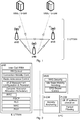
- a simplified ANDSF architecture is depicted in Figure 5 .
- an ANDSF server 2 is connected to the UE 3 and its main goal is to provide the UE 3 with access network information, i.e. information about particular access networks, in a resource efficient and secure manner.
- the communication between the UE 3 and the ANDSF server 2 is defined as an IP-based S14-interface.
- a communication network 1 may comprise the ANDSF server 2 and one or more RANs, each RAN in turn comprising one or more network nodes.
- a first RAN is indicated by a first network node 4.
- the first RAN may be a cellular mobile network such as a RAN using 2G, 3G or 4G technology.
- a second RAN is indicated by a second network node 5 that is exemplified by a Wi-Fi RAN.
- the ANDSF By supplying information about available 3GPP access networks as well as non-3GPP access networks to the UE, the ANDSF enables an energy-efficient mechanism of network discovery, where the UE can avoid continuous and energy-consuming background scanning. Furthermore, the ANDSF provides the mobile operators with a tool for the implementation of flexible and efficient UE steering of access mechanisms, where policy control can guide UEs to select one particular RAN over another. Note that this may be an overstatement if ANDSF is implemented as an application software, an "app", since it relies on OS support and priority of ANDSF in relation to other "apps". This condition may be only partly fulfilled, which makes the control somewhat unreliable. For instance, an ANDSF client in the UE 3 may be implemented as an app (i.e. software in the UE, also denoted mobile app) and this app could be trying to steer the UE 3 towards using e.g. Wi-Fi, while at the same time Wi-Fi has been turned off by the user of the UE 3. The policy control will then fail.
- the ANDSF supplies three types of information - discovery information, inter-system mobility policies (ISMP) and inter-system routing policies (ISRP). All these are summarized and implemented via ANDSF managed objects (MO), which are communicated to the UEs via an over-the-top (OTT) signaling channel, as Simple Object Access Protocol-extensible Markup Language (SOAP-XML) messages.
- ISMP inter-system mobility policies
- ISRP inter-system routing policies
- the discovery information provides the UE 3 with information regarding the availability of different RATs in the UE's 3 vicinity. This helps the UE 3 to discover available (3GPP and) non-3GPP access networks without the burden of continuous background scanning.
- the Inter-System Mobility Policies, ISMP are policies which guide the UE 3 to select the most preferable 3GPP or non-3GPP access.
- the ISMP are used for UEs that access a single access (3GPP or Wi-Fi) at a time.
- the ISMP information specifies the behavior of UEs, which can be connected to only one access network at a given time (either 3GPP, WLAN, WiMAX, etc.). If the UE 3, however, supports connection to several access networks at the same time, the operator can use the third type of information Inter-System Routing Policies, ISRP, to increase the granularity of the RAN selection. In that case, the UEs will be provided with policies, which specify how the traffic flows (voice, video streaming etc,) should be distributed over the different RAN.
- ANDSF provides mobile operators with a tool to determine how the UEs connect to different RANs and hence allows them to add more flexibility in their traffic planning. Simplified examples of ANDSF rules are given in Table 1 and Table 2.
- Table 1 consists of two access network discovery entries.
- the leftmost column states type of access network, in this case exemplified by WLAN.
- the middle column states an area of the access network, e.g. in terms of latitude, longitude, and radius.
- the rightmost column states information about the access network, e.g. authorization information and bearer types used therein etc.
- the first rule for example, states that there is a WLAN access network (with SSID "OperatorSSID812") available in the area described by the geographical coordinates.
- the second rule (second row) states that there is a WLAN access network available in two 3GPP cells, indicated by their respective cell IDs (3048 and 4053, respectively).
- Table 2 contains ISRP, and in particular description of two rules that apply to the same location (in this case represented by geographical coordinates). It is noted that the rules overlap, since the first one characterizes all data-flows carried via ports 20 to 23, all of which usually carry Transmission Control Protocol (TCP) traffic. At the same time, the second rule applies to all TCP traffic, and is hence more generic. In order to make sure that the Telnet traffic and Secure Shell (SSH) traffic (ports 22 and 23 respectively) is carried over 3GPP RA, the first rule is given a higher priority (the lower number means, in this example, higher priority). The rule priority is indicated in the leftmost column of Table 2.
- SSH Secure Shell
- This parameter can be signaled to Wi-Fi capable terminals or User Equipments (UEs) either using broadcast signaling (e.g. as part of a system information block) or be sent to the UEs in a dedicated message, e.g. an Radio Resource Control (RRC) message transmitted over a Signaling Radio Bearer.
- RRC Radio Resource Control
- the parameter takes the form of a string of bits, for example of size 4.
- the ANDSF policy refers to one or more of these bits and based on the value of these bits, the appropriately configured terminal applies an associated behavior, as described by the ANDSF policy.
- One example could be that the terminal should attempt to connect to WLAN if bit number 3 is set to 1, but if the bit is set to 0 then the terminal should not attempt to connect to WLAN.
- OPI meanings are standardized, network operators lose the flexibility to use the OPI in their own ways. Further, there is a problem of operators wanting to use the OPI but not wanting to expose any detailed information about their networks as a consequence of such use, e.g., implicitly exposing load or congestion levels. In case the OPI values are standardized, the risk of exposure of network information increases compared to the case where the meaning of the OPI is defined by the operators themselves and kept internal.
- This disclosure introduces the concept of splitting the OPI into different regions where different regions are used by different categories of UEs.
- the regions can be overlapping and it is possible that one region is completely included in another region.
- a first region A can include all values of all of the 4 bits (bit 1-4), while a second region B includes only bit 1. It is noted that the first bit in a bitstring is sometimes referred to as bit 0, and sometimes as bit 1. For the sake of readability the first bit will herein be referred to as being bit 1.
- Region A is used, for example, by UEs in their home network or UEs belonging to an operator for which the home operator has a special agreement with the network owner, and Region B is used by roaming UEs.
- bit 1 it is possible for the home operator to use all 4 bits of the OPI for its own users, while allowing roaming users to use bit 1 of the OPI.
- the value of bit 1 can be standardized at only a limited cost in terms of loss of flexibility and increased network exposure.
- the embodiment relies on that either the network or the UE behaves differently in case of roaming users compared to non-roaming users, thus making it possible for these different user categories to use different regions of the OPI.
- bitmap (also denoted bit array or bitstring) is an array data structure that compactly stores bits.
- the bitmap is a mapping from some domain to values in the set ⁇ 0,1 ⁇ , for instance a mapping from "do not offload to Wi-Fi/offload to Wi-Fi" to ⁇ 0,1 ⁇ .
- the RAN is setting many of the bits to 1 it may mean that the network is suggesting that many terminals (or groups of terminals) should attempt to offload to WLAN which in turn implies that the RAN is loaded.
- the network is suggesting that many terminals (or groups of terminals) should not attempt to offload to WLAN and that implies that the RAN is not loaded.
- bitstring is of size 4, the following interpretation may be used:
- the first bit in a bitstring may be referred to as bit 0; however for the sake of readability, this disclosure refers to the first bit as being bit 1.
- the terminals may be grouped e.g. according to different subscription classes, e.g. classes gold, silver, bronze, where e.g. terminals belonging to subscription class bronze should be offloaded to WiFi so that the other subscription classes obtains improved service in a cellular network.
- the terminals may be grouped based on type of devices, e.g. machine type devices such as sensors, or smartphone. For instance , offloading may then be performed based on amount of data (typically) sent by a certain type of device.
- their mobility patterns may be used.
- a terminal moving slowly may comprise a first group
- terminals moving fast may comprise a second group, and e.g. offloading the first group to WiFi rather than the second group.
- Various other groupings exist, e.g. based on type of ongoing service etc.
- the network 1 (e.g. ANDSF server 2 thereof) could indicate to the terminals of each group how they should interpret the bits. For example, the network 1 indicates to group A terminal that if bit 1 takes value 0 the UEs of group A should offload to WLAN, and if bit 1 takes value 1 the terminals of group A should not offload to WLAN.
- the network 1 could provide an ANDSF policy for terminals in group A as follows:
- bit 2 should be considered and the following ANDSF policy could be provided:
- bit 1 is used to indicate which WLAN the terminal should prioritize when doing offloading, e.g., if bit 1 is set to 1 the terminal should prioritize a WLAN A, while if bit 1 is set to 0 the terminal should prioritize a WLAN B.
- Which WLAN to prioritize would likely not be dependent on the load and hence if one or more bits in the bitstring is used for the purpose of indicating priorities between WLANs, the load of the network can be hidden.
- Other methods for hiding the network load are also possible, such as transmitting dummy (random) values of the OPI which are not related to internal network parameters.
- a part of the bitstring is reserved for roaming terminals and this part of the bitstring would be made publicly known, for example by specifying the meaning of this part of the bitstring in a specification. An operator could then configure ANDSF policies using this part of the bitstring that would result in a predictive behavior of the terminals when roaming in another operator's network.
- this part of the bitstring will be referred to as the public part, while the hidden part of the bitstring will be referred to as the operator specific part.
- the network could then for the operator-specific part apply some method for hiding the load, while in the public part of the bitstring provide load explicitly.
- the public part of the OPI smaller than the operator specific part, it is possible to keep the detailed network information hidden while exposing only some limited information in the public part, which might be acceptable to an operator that is concerned about disclosing internal operating parameters of the network.
- the home network is the network of the operator with which a terminal has a subscription from, while the visited network is the network of the operator that provides the RAN in which the terminal is roaming.
- a roaming terminal applies the operator-specific part of the visited network bitstring.
- the operator of the home network and the operator of the visited network have entered an agreement allowing the roaming terminal to apply the operator-specific part of the bitstring and therefore the visited network provides to the roaming terminal a means to decode the operator-specific part of the bitstring in the visited network.
- the visited network providing an ANDSF policy to the roaming terminal that allows the terminal to interpret the operator-specific part of the bitstring in the correct way.
- bitstring may be divided in different ways.
- the public part of the bitstring is the N least significant bits of the bitstring and the operator-specific part of the bitstring is the rest of the bits. For example, if the bitmap is four bits then the least (or most) significant bit can be used for roaming users and the three most (or least) significant bits are used for non-roaming users.
- bit 1 may be the public bit (public part) while bit 2, bit 3 and bit 4 belong to the operator-specific part.
- bit 1 may be the public bit (public part) while bit 2, bit 3 and bit 4 belong to the operator-specific part.
- bit 2 may be the public bit (public part) while bit 3, and bit 4 belong to the operator-specific part.
- the opposite logic may be used, wherein the operator-specific part is the least-significant bit(s) while the public part is the most-significant bit(s).
- the network may assign ranges of binary values to the different regions or parts.
- the public part of the bistring use values from 0000 to 0010, while the operator-specific part use values from 0011 to 1111.
- Which bits are belonging to the public part and the operator-specific part of the bitstring can be specified in a specification, for example be specified in a 3GPP specification such as the RRC specification of LTE (TS 36.331) or UMTS (TS 25.331).
- the network indicates to the terminal which bits belong to the public part and which bits belong to the operator specific part. This could for example be achieved by the network indicating a value X where the value X indicates how many bits of the bitstring belongs to the public part and then bit 1 to bit X would belong to the public part. In various embodiments, it may also be so that the most significant bits are being the public part and the value X would then indicate that bit (N - X + 1) to bit N belong to the public part (where N is the total number of bits of the bitstring).
- the network may indicate the value X to the UE, e.g. via RAN signaling or via ANDSF policies.
- the network may indicate which bits belong to the operator specific part.
- the UE may also be so that the UE does not know the different parts or regions of the OPI, but the network makes sure that UEs which are roaming only receives (ANDSF) policies associated with the public part of the OPI.
- ANDSF UEs which are roaming only receives
- the UE or terminal receives ANDSF policies where different rules are associated with different values of the OPI.
- the UE receives different ANDSF policies for use in roaming and non-romaing scenarios, or ANDSF policies with different validity conditions, e.g. policies that are only valid in a certain Public Land Mobile Network (PLMN).
- PLMN Public Land Mobile Network
- the UE receives an OPI value from the RAN, e.g. via broadcast or dedicated signaling.
- the UE also receives information about which part of the OPI is used for roaming and which parts are used when not roaming
- the UE checks if it is roaming or not, e.g. by checking the current PLMN ID of the network and comparing this to a stored PLMN ID of the home network or operator.
- the UE applies the part of OPI used when not roaming when checking if any ANDSF rules should be applied. Alternatively the UE applies the ANDSF policy for non-roaming scenarios or with the appropriate validity condition.
- the UE When the UE is roaming: The UE applies the part of OPI used when roaming when checking if any ANDSF rules should be applied. Alternatively the UE applies the ANDSF policy for roaming scenarios or with the appropriate validity condition.
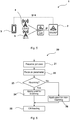
- Embodiments are related to a method in a communication device, such as a UE, for receiving one or more signaled parameter(s) as exemplified by Figure 6 . It should be noted that the method steps outlined below are optional and may be performed also in any order other besides the illustrated order.
- the method in the communication device includes the steps of:
- an embodiment of a method 20 is provided that may be performed in a UE 3.
- the UE 3 receives, box 21, policies from an ANDSF server 2.
- the UE 3 receives an OPI bitstring from a radio network node of the network in which it is currently located, i.e. in the network in which is being served, which may be the home network or a visited network.
- the network node sending the OPI bitstring may e.g. be an eNB in case the network is an LTE network or an AP in case the network is a Wi-Fi network.
- the UE 3 determines whether or not it is in a roaming state. This may for instance be done by the earlier indicated comparison of the current PLMN ID of the network and a stored PLMN ID of the home network or operator. If this comparison reveals that the UE 3 is roaming, then flow continues to box 24.
- the UE 3 applies this part of the received OPI bitstring, and e.g. based on this knowledge apply a certain ANDSF policy that it has received from the ANDSF server 2.
- the UE 3 may be aware of which part of the OPI bitstring to use when roaming for instance by being configured to always look at a specific bit (e.g. bit 1) of the OPI bitstring when roaming. If the UE 3 is not aware of the particular OPI bitstring partitioning into different parts of the visited network, it may receive instructions from a network node (e.g. ANDSF server) of the visited network regarding which parts of the OPI parameter to use. Once the UE 3 knows which part of the OPI parameter to use, it may apply the corresponding policy.
- a network node e.g. ANDSF server
- box 23 If, in box 23, the comparison reveals that the UE 3 is not roaming, i.e. that it is in its home network, then flow continues to box 25.
- box 25 the UE applies the ANDSF policies corresponding to the non-roaming part of the OPI bitstring, which part could be the operator specific part.
- a method 20 is provided, for access control or access selection.
- the method 20 may be performed in a communication device 3, e.g. a smartphone or other device as described earlier.
- the method 20 may be used e.g. for access control or access selection.
- Such access control or access selection may comprise e.g.: initial access selection, prior to being connected to a second access (or any access); traffic steering wherein the communication device 3 is connected to multiple accesses and moves some or all data carrying bearers from one access type to another; traffic aggregation, wherein the communication device 3 is connected to multiple access types and use these accesses for data transmission/reception at the same time, possibly for the same data flow.
- the method 20 comprises obtaining 21 a policy comprising one or more rules associated with different values of a parameter, the parameter comprising a first part and a second part.
- the parameter may be seen as split in two parts, which enables the use of the two parts in different ways, a particular example of which is that a first part of the parameter is used by roaming users, while a second part of the parameter is used by non-roaming users.
- the obtaining 21 the policy may comprise obtaining an ANDSF policy from an ANDSF server 2, e.g. via S14 interface (as described earlier e.g. with reference to figure 5 ).
- the method 20 comprises receiving 22 the parameter, in particular OPI parameter.
- the parameter may be received in broadcast signaling or dedicated signaling from e.g. an eNB of a RAN.
- the method 20 comprises applying 24, 26 a rule associated with a value of the first part of the parameter or a rule associated with a value of the second part of the parameter.
- the applying may for instance comprise applying 24 a part of the parameter used for roaming devices.
- the communication device 2 may establish that it is roaming in a visited network e.g. by obtaining a current PLMN ID and compare it to a PLMN ID of its home network, which PLMN ID may be stored in a memory of the communication device 3.
- the applying may correspondingly comprise applying 26 another part of the parameter, which part is used for non-roaming devices.
- a certain communication device 3 may thus obtain a policy stating e.g. that if a received parameter matches "1000”, then it should use a WLAN, while if the parameter matches "0100", then the WLAN should be used only if received WLAN signal is stronger than -60 dB.
- the method 20 comprises, before the applying 24, 26, establishing 23 whether being part of a first group of communication devices or a second group of communication devices.
- the first group may comprise communication devices that are roaming and the second group may comprise communication devices that are not roaming.
- the establishing 23 whether being part of a first group of communication devices or a second group of communication devices comprises establishing whether being in a non-roaming or roaming state.
- the communication device 3 may establish whether it is roaming or not.
- the rule comprises directing some or all communication traffic to a radio access network 5 different from a currently serving radio access network 4 or directing some or all traffic between two currently serving radio access networks 4, 5.
- the communication device 3 may be connected to different RANs simultaneously, and for instance have existing communication traffic in a WLAN while also having existing communication traffic in a 3GPP network (e.g. a 4G network).
- the communication device may have a first service ongoing in the WLAN and a second and a third service in the 3GPP network.
- the policy that it receives may then state that the second service of the 3GPP network should be steered to the WLAN.
- the policies may thus for instance state that all traffic should be moved from and/or to a particular access type, or that a particular access type should be selected for particular services or which access type should currently be used for new communication traffic.
- the method 20 comprises obtaining information about which of the first and second parts of the parameter to use when being part of a first group and when being part of a second group.
- the obtaining may comprise receiving the information from e.g. an eNB or the information may be preconfigured in the communication device 3, and the obtaining may thus comprise retrieving the information from a memory.
- the parameter comprises an Offloading Preference Indicator, OPI.
- the first part of the parameter comprises an operator specific part and the second part of the parameter comprises a public part.
- the network may indicate to the communication device 3 which part of the parameter is the private part and/or which is the public part, while in other embodiments this is not done.
- An operator of a network may indicate only to operators of other networks their particular parameter mapping of the public part/private part, without informing the communication devices thereof.
- the first part comprises N least significant bits of the parameter or N most significant bits of the parameter, and wherein the second part comprises the remaining bits of the parameter.
- the obtaining 21 comprises receiving the policy from a network node 2 or obtaining a policy preconfigured in the communication device 3.
- the parameter is received from a serving network node 4, 5.
- Example of network behavior e.g. ANDSF server
- the network node (e.g. ANDSF server 2) sends policies to the UE 3 related to different values of the OPI.
- the network node sends policies that are only associated with the part of the OPI that is used for roaming UEs, e.g. the public part, or it sends policies associated with the part of the OPI used for non-roaming UEs, e.g. the operator specific part.
- the network sends instructions to the UE containing information about which parts of the OPI shall be used, or shall be used when roaming or when not roaming.
- Embodiments are related to a method in a radio network node, such as an ANDSF server, for signaling one or more parameter, such as an offloading preference indicator to at least one communication device, such as a user equipment as exemplified by Figure 7 . It should be noted that the method steps outlined below are optional and may be performed in any order other than the illustrated.
- the method in the radio network node includes the steps of:
- the present disclosure also provides a method 30 that may be performed in a communication network 1, such as described with reference to figure 5 .
- the method 30 may comprise sending 31, from a first network node, policies to UEs 3.
- the first network node may for instance comprise an ANDSF server 2, and the policies may hence comprise ANDSF policies.
- the method 30 comprises sending 32 instructions from the first network node 2 or from a second network node to the UE 2.
- the instructions may comprise information on which part of an OPI parameter to use when being in and the second network node may for instance be an eNB 4 of an LTE network or an AP 5 of a WiFi network.
- sending 31 of the policies from the first network node 2 may be effectuated via the second network node 4, 5 of the communication system 1.
- a method 30 is provided, which may be performed in a communication system 1.
- the method 30 may be performed in a single node, e.g. an ANDSF server 2, or the method 30 may be performed and implemented in a distributed manner, wherein some steps are performed in a first network node and other steps are performed in a second network node.
- the method 30 comprises sending 31, to at least one communication device 3, a policy comprising one or more rules associated with different values of a parameter, the parameter comprising a first part and a second part.
- the policy may be sent from an ANDSF server 2 to a communication device 3 via a radio access network, e.g. an eNB thereof.
- the first part and the second part are to be used by different categories of communication devices.
- the method 30 comprises sending 32 information about which of the first and second parts of the parameter to use when being part of a first category of communication devices and when being part of a second category of communication devices.
- the sending 32 comprises sending the information in dedicated signaling in a radio access network 4, 5 or by broadcasting the information in the radio access network 4, 5.
- a first category of communication devices comprises communication devices in a non-roaming state and a second category of communication devices comprises communication devices in a roaming state.
- the parameter comprises an Offloading Preference Indicator, OPI.
- the method 30 is performed in a network node 2 of the communication system 1, the network node 2 comprising an Access Network Discovery and Selection Function, ANDSF.
- the network node 2 may comprise an ANDSF server.
- Figure 8 illustrates one embodiment of a communication device, such as a UE, which also may be referred to as an apparatus.
- the apparatus comprises radio circuitry that is configured to communicate with radio network nodes and a processing unit that is operatively associated with the radio circuitry, e.g., to send data and control signaling to a communication network via the radio circuitry, and to receive data and control signaling from the communication network via the radio circuitry.
- the processing unit in one or more example embodiments includes or is associated with memory, such as FLASH or EEPROM or some other computer-readable medium that provides non-transitory storage.
- the computer-readable medium stores a computer program product comprising program instructions that, when executed by the processing unit, configures the apparatus according to the device-side teachings herein.
- the processing unit which is also referred to herein as a "processing circuit” or simply as a “processor,” shall be understood as comprising computer circuitry, such as one or more microprocessor-based circuits, DSP-based circuits, FPGA-based circuits, ASIC-based circuits, or other digital processing circuitry.
- processing circuitry comprises fixed processing circuitry or programmed processing circuitry, or a mix of both fixed and programmed processing circuitry.
- the radio circuit is configured to send and receive signals, including data and control signaling, such as ANDSF policy signaling.
- the radio circuit includes a radio transmitter and a radio receiver that are operative as an RF transceiver, e.g., a cellular radio modem that is configured to operate in one or more communication frequency bands and in accordance with one or more defined communication network standards, e.g., one or more 3GPP standards.
- the processing circuit is configured to receive policies, such as ANDSF policies, where different rules are associated with different values of the signaled parameter, such as the offloading preference indicator (OPI).
- policies such as ANDSF policies
- OPI offloading preference indicator
- the processing circuit receives instructions/information on which part(s)/bit(s) of the signaled parameter to use depending on whether the apparatus is roaming (in a roaming state) or not roaming (in a non-roaming state).
- the processing circuit again via signaling received through the radio circuitry, is further configured to receive a reference value, such as an OPI value, from a radio network node.
- the reference value is received via broadcast.
- the reference value is received via dedicated signaling.
- the processing circuit is configured to check whether the communication device is roaming or not.
- the processing circuit in one or more embodiments is configured to check whether any ANDSF rules should be applied, based on processing/interpreting the portion of the OPI that applies to the not-roaming state.
- the processing circuit when in a roaming state, is configured to check whether any ANDSF rules should be applied, based on processing/interpreting the portion of the OPI that applies to the roaming state or condition.
- the processing circuit evaluates the applicable portion of the OPI and correspondingly whether to off-load traffic/load to a different radio access network, such as WLAN, from the radio access network, such as LTE, it is currently using/ connected to.
- a communication device is configured for operation in a wireless communication network, such as a cellular network, and comprises:
- the first information comprises, for example, an OPI bitstring having a private (first) part that is applicable for the non-roaming case and a public (second) part that is applicable for the roaming case.
- the processing circuit is configured to evaluate whether or not to offload from the wireless communication network to an alternate network, such as WiFi, based on processing the private part of the received bitstring.
- the processing circuit is configured to evaluate whether or not to offload to an alternate network, based on processing the public part of the received bitstring.
- the device receives a bitmap or other instructional information from the network that enables the device to properly process the received bitstring or other OPI information.
- the device may be preconfigured with such information, such as where standardized or predefined OPI definitions are used.
- the aforementioned memory or other computer-readable medium is configured in at least some embodiments to store computer program code and/or configuration information, e.g., policy or rules information.
- a communication device 3 is provided.
- the communication device 3 configured to:
- the communication device 3 may be configured to execute any of the embodiments of the method 20 e.g. by comprising one or more processors 40 (denoted processing unit in the figure 8 ) and one or more memories 41, the memory 41 containing instructions executable by the processor 40, whereby the memory 41 is operative to perform the steps of the method 20.
- processors 40 denoted processing unit in the figure 8
- memories 41 the memory 41 containing instructions executable by the processor 40, whereby the memory 41 is operative to perform the steps of the method 20.
- the communication device 3 is configured to establish whether being part of a first group of communication devices or a second group of communication devices, before applying the rule.
- the communication device 3 may thus apply, in response to the establishing 23, a certain rule associated with a value of the first or second part of the parameter.
- the communication device 3 is configured to establish whether being part of a first group of communication devices or a second group of communication devices by establishing whether being in a non-roaming state or a roaming state.
- the rule comprises directing some or all communication traffic to a radio access network 5 different from a currently serving radio access network 4 or directing some or all traffic between two currently serving radio access networks 4, 5.
- the communication device 3 is configured to obtain information about which of the first and second parts of the parameter to use when being part of a first group and when being part of a second group.
- the parameter comprises an Offloading Preference Indicator, OPI.
- the first part of the parameter comprises an operator specific part and the second part of the parameter comprises a public part.
- the first part comprises N least significant bits of the parameter or N most significant bits of the parameter, and wherein the second part comprises the remaining bits of the parameter.
- the communication device 3 is configured to obtain by receiving the policy from a network node 2 or by obtaining a policy preconfigured in the communication device 3.
- the communication device 3 is configured to receive the parameter from a serving network node 4, 5.
- the present disclosure also encompasses computer program product 41 comprising a computer program 42 for a communication device 3 and a computer readable means on which the computer program 52 is stored.
- the computer program 42 comprises computer program code, which, when executed on at least one processor in the communication device 3 causes the communication device 3 to perform the method 20 according to any of the described embodiments thereof.
- the computer program product 42 or the memory, thus comprise instructions executable by a processor 40.
- Such instructions may be comprised in a computer program, or in one or more software modules or function modules.
- Means are provided, e.g. function modules, that can be implemented using software instructions such as computer program executing in a processor and/or using hardware, such as application specific integrated circuits, field programmable gate arrays, discrete logical components etc., or any combination thereof.
- a communication device comprises first means for obtaining a policy comprising one or more rules associated with different values of a parameter, the parameter comprising a first part and a second part. Such means may for instance comprise circuitry for receiving the policy over an interface.
- the communication device comprises second means for receiving the parameter. Such means may for instance comprise receiving circuitry and/or antenna devices etc. for receiving wireless signaling.
- the communication device comprises third means for applying a rule associated with a value of the first part of the parameter or a rule associated with a value of the second part of the parameter.
- Such means may for instance comprise processing circuitry adapted to apply the rule associated with a value of a certain part of the parameter.
- Figure 9 illustrates a network node, such as an ANDSF server, which is configured for operation in a communication network.
- the network node also referred to as an apparatus, includes one or more communication interfaces, e.g., for communicating directly or indirectly with communication devices operating in one or more cells in the communication network, and/or for communicating with other nodes in the network.
- the communication interface(s) comprise or otherwise include radio circuitry to communicate with served communication devices, communication circuitry to communicate with other radio network and core network nodes, a processing unit operatively associated with the communication interface(s), and memory or other computer-readable medium to store configuration information and/or computer program instructions supporting implementation of the network-side processing taught herein.
- the communication interface(s) are configured in one or more embodiments to receive and send to/from a core network node, such as the MME, information and signaling related to embodiments described herein.
- a core network node such as the MME
- the processing unit is configured to send and receive data and other information, via signaling to and from the communication interface(s).
- the processing unit in one or more example embodiments includes or is associated with aforementioned memory, which comprises FLASH or EEPROM or some other computer-readable medium that provides non-transitory storage.
- the computer-readable medium stores a computer program product comprising program instructions that, when executed by the processing unit, configures the network node according to the network-side teachings herein.
- the processing unit which is also referred to herein as a "processing circuit” or simply as a “processor,” shall be understood as comprising computer circuitry, such as one or more microprocessor-based circuits, DSP-based circuits, FPGA-based circuits, ASIC-based circuits, or other digital processing circuitry.
- processing circuitry comprises fixed processing circuitry or programmed processing circuitry, or a mix of both fixed and programmed processing circuitry.
- the processing circuit of the example network node is configured to signal first information, such as one or more parameters comprising an offloading preference indicator, OPI, to at least one communication device, such as a user equipment.
- the processing circuit is further configured to send additional information, such as instructions, to the communication device on a downlink channel.
- the additional information enables the communication device to properly interpret the first information, e.g., it comprises instructions or indications as to which part(s)/bit(s) of the first information to use, in dependence on whether the communication device is roaming (in a roaming state) or not (non-roaming).
- the memory stores, for example, configuration information comprising the bitmap definitions or other rules comprising the additional information needed by the communication device for properly interpreting the first information, e.g., the OPI bitstring.
- a network node is configured for operation in a communication network and comprises:
- the first information comprises, for example, OPI information, such as a bitmap that has a private part-the first part pertaining to non-roaming operation-and a public part-the second part pertaining to roaming operation.
- the processing circuit is configured in one embodiment to generate the first and/or second parts, based on loading information determined by or provided to the network node.
- the network node is configured to receive the first and/or second parts, or at least the values for setting the first and/or second parts from another node in the network.
- the processing circuit of the network node is configured to send additional information, e.g., instructions or other configuration information, to the communication device, that indicates to the communication device how to properly interpret the first information.
- the instructions comprise a bitmap or other bit definitions that identify which bit(s) in a bitstring comprise the public part and the private part, and which may identify the proper interpretation of such bits and/or disclose any scrambling applied thereto.
- a communication system 1 is provided.
- the communication system 1 is configured to send, to at least one communication device 3, a policy comprising one or more rules associated with different values of a parameter, the parameter comprising a first part and a second part.
- the communication system 1 may be configured to perform the above steps e.g. by comprising one or more processors 50 and one or more memories 51, the memories 51, each containing instructions executable by the processors 50, whereby the memory 51 is operative to perform the steps.
- the method 30 may be performed in a single network node or in a distributed fashion in different network nodes, hence a single network node may be configured to perform the method 30, e.g. the ANDSF server 2.
- the first part and the second part are to be used by different categories of communication devices.
- the first part and the second part are to be used by different categories of communication devices.
- the communication system 1 is configured to send information about which of the first and second parts of the parameter to use when being part of a first category of communication devices and when being part of a second category of communication devices.
- the communication system 1 is configured to sending by sending the information in dedicated signaling in a radio access network 4, 5 or by broadcasting the information in the radio access network 4, 5.
- a first category of communication devices comprises communication devices in a non-roaming state and a second category of communication devices comprises communication devices in a roaming state.
- the parameter comprises an Offloading Preference Indicator, OPI.
- the present disclosure also encompasses computer program product 51 comprising a computer program 52 for a communication system 1 and a computer readable means on which the computer program 52 is stored.
- the computer program 52 comprises computer program code, which, when executed on at least one processor in the communication system 1 causes the communication system 1 to perform the method 30 according to any of the described embodiments thereof.
- the computer program 52 may be executed in a single network node 2 or in several nodes.
- the computer program product 52 or the memories thus comprise instructions executable by a processor 50.
- Such instructions may be comprised in a computer program, or in one or more software modules or function modules.
- Means are provided, e.g. function modules, that can be implemented using software instructions such as computer program executing in a processor and/or using hardware, such as application specific integrated circuits, field programmable gate arrays, discrete logical components etc., or any combination thereof.
- a communication system comprises first means for sending, to at least one communication device 3, a policy comprising one or more rules associated with different values of a parameter, the parameter comprising a first part and a second part.
- Such means may for instance comprise processing transmission circuitry and/or antenna devices.
Landscapes
- Engineering & Computer Science (AREA)
- Computer Networks & Wireless Communication (AREA)
- Signal Processing (AREA)
- Databases & Information Systems (AREA)
- Mobile Radio Communication Systems (AREA)
Claims (6)
- Procédé (20) mis en oeuvre dans un dispositif de communication (3), le procédé (20) comprenant :- l'obtention (21) d'une politique comprenant une ou plusieurs règles de fonction de découverte et de sélection de réseau d'accès, ANDSF, associées à différentes valeurs d'un indicateur de préférence de délestage, OPI, l'OPI comprenant une première partie et une deuxième partie, dans lequel l'obtention (21) comprend la réception de la politique depuis un noeud de réseau (2) ou l'obtention de la politique préconfigurée dans le dispositif de communication (3),- la réception (22) de l'OPI,- le fait d'établir (23) si l'on se trouve dans un état de non-itinérance ou d'itinérance,- l'application (24, 26) d'une règle ANDSF associée à une valeur de la première partie de l'OPI ou d'une règle ANDSF associée à une valeur de la deuxième partie de l'OPI, en fonction du fait que le dispositif de communication (3) se trouve dans un état de non-itinérance ou d'itinérance, et- dans lequel la première partie de l'OPI comprend une partie spécifique de l'opérateur et la deuxième partie de l'OPI comprend une partie publique.
- Procédé (20) selon la revendication 1, dans lequel la règle appliquée comprend l'acheminement d'une partie ou de la totalité du trafic de communication vers un réseau d'accès radio (5) différent d'un réseau d'accès radio desservant actuellement (4) ou l'acheminement d'une partie ou de la totalité du trafic entre deux réseaux d'accès radio desservant actuellement (4, 5).
- Procédé (20) selon la revendication 1, dans lequel la première partie comprend N bits les moins significatifs de l'OPI ou N bits les plus significatifs de l'OPI, et dans lequel la deuxième partie comprend les bits restants de l'OPI.
- Dispositif de communication (3), configuré pour :- obtenir une politique comprenant une ou plusieurs règles de fonction de découverte et de sélection de réseau d'accès, ANDSF, associées à différentes valeurs d'un indicateur de préférence de délestage, OPI, l'OPI comprenant une première partie et une deuxième partie, dans lequel l'obtention (21) comprend la réception de la politique depuis un noeud de réseau (2) ou l'obtention de la politique préconfigurée dans le dispositif de communication (3),- recevoir l'OPI,- établir si l'on se trouve dans un état de non-itinérance ou d'itinérance,- appliquer une règle ANDSF associée à une valeur de la première partie de l'OPI ou une règle ANDSF associée à une valeur de la deuxième partie de l'OPI, en fonction du fait que le dispositif de communication (3) se trouve dans un état de non-itinérance ou d'itinérance, et- dans lequel la première partie de l'OPI comprend une partie spécifique de l'opérateur et la deuxième partie de l'OPI comprend une partie publique.
- Dispositif de communication (3) selon la revendication 4, dans lequel la règle appliquée comprend l'acheminement d'une partie ou de la totalité du trafic de communication vers un réseau d'accès radio (5) différent d'un réseau d'accès radio desservant actuellement (4) ou l'acheminement d'une partie ou de la totalité du trafic entre deux réseaux d'accès radio desservant actuellement (4, 5).
- Dispositif de communication (3) selon la revendication 4, dans lequel la première partie comprend N bits les moins significatifs de l'OPI ou N bits les plus significatifs de l'OPI, et dans lequel la deuxième partie comprend les bits restants de l'OPI.
Priority Applications (1)
| Application Number | Priority Date | Filing Date | Title |
|---|---|---|---|
| PL15773748T PL3127367T3 (pl) | 2014-03-31 | 2015-03-30 | Podział bitmapy sygnalizowany przez ran dla użytkowników roamingowych i nie-roamingowych |
Applications Claiming Priority (2)
| Application Number | Priority Date | Filing Date | Title |
|---|---|---|---|
| US201461972828P | 2014-03-31 | 2014-03-31 | |
| PCT/SE2015/050384 WO2015152805A1 (fr) | 2014-03-31 | 2015-03-30 | Division de topogramme binaire signalée par un ran pour des utilisateurs itinérants et non itinérants |
Publications (3)
| Publication Number | Publication Date |
|---|---|
| EP3127367A1 EP3127367A1 (fr) | 2017-02-08 |
| EP3127367A4 EP3127367A4 (fr) | 2017-04-05 |
| EP3127367B1 true EP3127367B1 (fr) | 2019-03-13 |
Family
ID=54240957
Family Applications (1)
| Application Number | Title | Priority Date | Filing Date |
|---|---|---|---|
| EP15773748.7A Not-in-force EP3127367B1 (fr) | 2014-03-31 | 2015-03-30 | Division de topogramme binaire signalée par un ran pour des utilisateurs itinérants et non itinérants |
Country Status (8)
| Country | Link |
|---|---|
| US (1) | US10264460B2 (fr) |
| EP (1) | EP3127367B1 (fr) |
| DK (1) | DK3127367T3 (fr) |
| ES (1) | ES2730754T3 (fr) |
| HU (1) | HUE045302T2 (fr) |
| PL (1) | PL3127367T3 (fr) |
| PT (1) | PT3127367T (fr) |
| WO (1) | WO2015152805A1 (fr) |
Families Citing this family (4)
| Publication number | Priority date | Publication date | Assignee | Title |
|---|---|---|---|---|
| JP2021501482A (ja) * | 2017-09-30 | 2021-01-14 | オッポ広東移動通信有限公司Guangdong Oppo Mobile Telecommunications Corp., Ltd. | サービス経路の切替え方法、デバイス、記憶媒体及びシステム |
| US11082828B1 (en) | 2020-02-25 | 2021-08-03 | T-Mobile Usa, Inc. | Systems and methods for roaming configuration management |
| CN115734301B (zh) * | 2021-08-30 | 2026-01-16 | 华为技术有限公司 | 终端漫游控制、漫游策略库的生成方法及装置 |
| US12452640B2 (en) | 2022-12-01 | 2025-10-21 | T-Mobile Usa, Inc. | Automated audits relating to network configuration updates in response to roaming partner updates |
Family Cites Families (3)
| Publication number | Priority date | Publication date | Assignee | Title |
|---|---|---|---|---|
| US9516577B2 (en) | 2012-07-20 | 2016-12-06 | Nec Corporation | Dynamic activation of ANDSF policies |
| US10206135B2 (en) | 2014-03-14 | 2019-02-12 | Lg Electronics Inc. | Method and apparatus for handling RAN assistance information for roaming user equipments in wireless communication system |
| KR20160114099A (ko) | 2014-03-24 | 2016-10-04 | 인텔 아이피 코포레이션 | 무선 네트워크 선택 및 트래픽 라우팅 규칙의 조정된 적용을 위한 기술 |
-
2015
- 2015-03-30 US US15/300,157 patent/US10264460B2/en active Active
- 2015-03-30 PT PT15773748T patent/PT3127367T/pt unknown
- 2015-03-30 EP EP15773748.7A patent/EP3127367B1/fr not_active Not-in-force
- 2015-03-30 HU HUE15773748A patent/HUE045302T2/hu unknown
- 2015-03-30 WO PCT/SE2015/050384 patent/WO2015152805A1/fr not_active Ceased
- 2015-03-30 ES ES15773748T patent/ES2730754T3/es active Active
- 2015-03-30 PL PL15773748T patent/PL3127367T3/pl unknown
- 2015-03-30 DK DK15773748.7T patent/DK3127367T3/da active
Non-Patent Citations (1)
| Title |
|---|
| None * |
Also Published As
| Publication number | Publication date |
|---|---|
| PT3127367T (pt) | 2019-06-25 |
| WO2015152805A1 (fr) | 2015-10-08 |
| DK3127367T3 (da) | 2019-06-24 |
| US10264460B2 (en) | 2019-04-16 |
| HUE045302T2 (hu) | 2019-12-30 |
| ES2730754T3 (es) | 2019-11-12 |
| EP3127367A4 (fr) | 2017-04-05 |
| PL3127367T3 (pl) | 2019-09-30 |
| EP3127367A1 (fr) | 2017-02-08 |
| US20170180997A1 (en) | 2017-06-22 |
Similar Documents
| Publication | Publication Date | Title |
|---|---|---|
| JP7442484B2 (ja) | 複数のアクセスネットワークの間でのトラフィックステアリングおよび切り替え | |
| US11184417B2 (en) | System and apparatus for providing network assistance for traffic handling in downlink streaming | |
| US20220330361A1 (en) | Method for establishing connection and obtaining relay service code and communications apparatus | |
| US10932131B2 (en) | Service provisioning by local operator | |
| US12309873B2 (en) | Multi-SIM dynamic capabilities | |
| US9386617B2 (en) | Discovery and operation of hybrid wireless wide area and wireless local area networks | |
| US9820187B2 (en) | Apparatus, system and method of providing offloadability information to a user-equipment (UE) | |
| CN114175771B (zh) | 用于无线通信的方法和装置 | |
| EP2946610B1 (fr) | Terminal, noeud de réseau et procédé dans ledit terminal pour permettre l'accès à un réseau de radiocommunications | |
| US11671905B2 (en) | Prioritized scanning for improved system acquisition | |
| US10772038B2 (en) | Method whereby terminal selects PLMN in wireless communication system, and device for same | |
| EP2946599B1 (fr) | Intégration améliorée entre des réseaux wi-fi et de communication mobile | |
| US20210337383A1 (en) | Network slice authentication for default slices | |
| JP7557557B2 (ja) | Plmn識別子に関連付けられたコアネットワークタイプに基づくセルアクセス制限 | |
| EP3127367B1 (fr) | Division de topogramme binaire signalée par un ran pour des utilisateurs itinérants et non itinérants | |
| US20180042002A1 (en) | Communication Method and Device | |
| US20140286192A1 (en) | Communication station and communication device for interworking between different radio technologies with assistance information | |
| WO2017003357A1 (fr) | Identification de dispositif dans des réseaux wlan et cellulaires étendus en interfonctionnement | |
| US20260032742A1 (en) | Methods and apparatus for enabling n3gpp communication between remote wtru and relay wtru | |
| HK1235968A1 (en) | Apparatus, system and method of selecting a mobility mode of a user equipment (ue) |
Legal Events
| Date | Code | Title | Description |
|---|---|---|---|
| STAA | Information on the status of an ep patent application or granted ep patent |
Free format text: STATUS: THE INTERNATIONAL PUBLICATION HAS BEEN MADE |
|
| PUAI | Public reference made under article 153(3) epc to a published international application that has entered the european phase |
Free format text: ORIGINAL CODE: 0009012 |
|
| STAA | Information on the status of an ep patent application or granted ep patent |
Free format text: STATUS: REQUEST FOR EXAMINATION WAS MADE |
|
| 17P | Request for examination filed |
Effective date: 20160912 |
|
| AK | Designated contracting states |
Kind code of ref document: A1 Designated state(s): AL AT BE BG CH CY CZ DE DK EE ES FI FR GB GR HR HU IE IS IT LI LT LU LV MC MK MT NL NO PL PT RO RS SE SI SK SM TR |
|
| AX | Request for extension of the european patent |
Extension state: BA ME |
|
| STAA | Information on the status of an ep patent application or granted ep patent |
Free format text: STATUS: EXAMINATION IS IN PROGRESS |
|
| A4 | Supplementary search report drawn up and despatched |
Effective date: 20170306 |
|
| RIC1 | Information provided on ipc code assigned before grant |
Ipc: H04W 28/08 20090101AFI20170228BHEP |
|
| 17Q | First examination report despatched |
Effective date: 20170321 |
|
| DAV | Request for validation of the european patent (deleted) | ||
| DAX | Request for extension of the european patent (deleted) | ||
| GRAP | Despatch of communication of intention to grant a patent |
Free format text: ORIGINAL CODE: EPIDOSNIGR1 |
|
| STAA | Information on the status of an ep patent application or granted ep patent |
Free format text: STATUS: GRANT OF PATENT IS INTENDED |
|
| INTG | Intention to grant announced |
Effective date: 20181221 |
|
| GRAS | Grant fee paid |
Free format text: ORIGINAL CODE: EPIDOSNIGR3 |
|
| GRAA | (expected) grant |
Free format text: ORIGINAL CODE: 0009210 |
|
| STAA | Information on the status of an ep patent application or granted ep patent |
Free format text: STATUS: THE PATENT HAS BEEN GRANTED |
|
| AK | Designated contracting states |
Kind code of ref document: B1 Designated state(s): AL AT BE BG CH CY CZ DE DK EE ES FI FR GB GR HR HU IE IS IT LI LT LU LV MC MK MT NL NO PL PT RO RS SE SI SK SM TR |
|
| REG | Reference to a national code |
Ref country code: GB Ref legal event code: FG4D |
|
| REG | Reference to a national code |
Ref country code: CH Ref legal event code: EP Ref country code: AT Ref legal event code: REF Ref document number: 1109394 Country of ref document: AT Kind code of ref document: T Effective date: 20190315 |
|
| REG | Reference to a national code |
Ref country code: IE Ref legal event code: FG4D |
|
| REG | Reference to a national code |
Ref country code: DE Ref legal event code: R096 Ref document number: 602015026436 Country of ref document: DE |
|
| REG | Reference to a national code |
Ref country code: CH Ref legal event code: NV Representative=s name: TR-IP CONSULTING LLC, CH |
|
| REG | Reference to a national code |
Ref country code: DK Ref legal event code: T3 Effective date: 20190617 |
|
| REG | Reference to a national code |
Ref country code: PT Ref legal event code: SC4A Ref document number: 3127367 Country of ref document: PT Date of ref document: 20190625 Kind code of ref document: T Free format text: AVAILABILITY OF NATIONAL TRANSLATION Effective date: 20190612 |
|
| REG | Reference to a national code |
Ref country code: SE Ref legal event code: TRGR |
|
| REG | Reference to a national code |
Ref country code: NL Ref legal event code: FP |
|
| RAP2 | Party data changed (patent owner data changed or rights of a patent transferred) |
Owner name: GUANGDONG OPPO MOBILE TELECOMMUNICATIONS CORP., LT |
|
| REG | Reference to a national code |
Ref country code: LT Ref legal event code: MG4D |
|
| PG25 | Lapsed in a contracting state [announced via postgrant information from national office to epo] |
Ref country code: NO Free format text: LAPSE BECAUSE OF FAILURE TO SUBMIT A TRANSLATION OF THE DESCRIPTION OR TO PAY THE FEE WITHIN THE PRESCRIBED TIME-LIMIT Effective date: 20190613 Ref country code: LT Free format text: LAPSE BECAUSE OF FAILURE TO SUBMIT A TRANSLATION OF THE DESCRIPTION OR TO PAY THE FEE WITHIN THE PRESCRIBED TIME-LIMIT Effective date: 20190313 |
|
| PG25 | Lapsed in a contracting state [announced via postgrant information from national office to epo] |
Ref country code: LV Free format text: LAPSE BECAUSE OF FAILURE TO SUBMIT A TRANSLATION OF THE DESCRIPTION OR TO PAY THE FEE WITHIN THE PRESCRIBED TIME-LIMIT Effective date: 20190313 Ref country code: RS Free format text: LAPSE BECAUSE OF FAILURE TO SUBMIT A TRANSLATION OF THE DESCRIPTION OR TO PAY THE FEE WITHIN THE PRESCRIBED TIME-LIMIT Effective date: 20190313 Ref country code: BG Free format text: LAPSE BECAUSE OF FAILURE TO SUBMIT A TRANSLATION OF THE DESCRIPTION OR TO PAY THE FEE WITHIN THE PRESCRIBED TIME-LIMIT Effective date: 20190613 Ref country code: HR Free format text: LAPSE BECAUSE OF FAILURE TO SUBMIT A TRANSLATION OF THE DESCRIPTION OR TO PAY THE FEE WITHIN THE PRESCRIBED TIME-LIMIT Effective date: 20190313 |
|
| REG | Reference to a national code |
Ref country code: GR Ref legal event code: EP Ref document number: 20190401733 Country of ref document: GR Effective date: 20190906 |
|
| PG25 | Lapsed in a contracting state [announced via postgrant information from national office to epo] |
Ref country code: AL Free format text: LAPSE BECAUSE OF FAILURE TO SUBMIT A TRANSLATION OF THE DESCRIPTION OR TO PAY THE FEE WITHIN THE PRESCRIBED TIME-LIMIT Effective date: 20190313 Ref country code: SK Free format text: LAPSE BECAUSE OF FAILURE TO SUBMIT A TRANSLATION OF THE DESCRIPTION OR TO PAY THE FEE WITHIN THE PRESCRIBED TIME-LIMIT Effective date: 20190313 Ref country code: RO Free format text: LAPSE BECAUSE OF FAILURE TO SUBMIT A TRANSLATION OF THE DESCRIPTION OR TO PAY THE FEE WITHIN THE PRESCRIBED TIME-LIMIT Effective date: 20190313 Ref country code: EE Free format text: LAPSE BECAUSE OF FAILURE TO SUBMIT A TRANSLATION OF THE DESCRIPTION OR TO PAY THE FEE WITHIN THE PRESCRIBED TIME-LIMIT Effective date: 20190313 Ref country code: CZ Free format text: LAPSE BECAUSE OF FAILURE TO SUBMIT A TRANSLATION OF THE DESCRIPTION OR TO PAY THE FEE WITHIN THE PRESCRIBED TIME-LIMIT Effective date: 20190313 |
|
| REG | Reference to a national code |
Ref country code: ES Ref legal event code: FG2A Ref document number: 2730754 Country of ref document: ES Kind code of ref document: T3 Effective date: 20191112 |
|
| REG | Reference to a national code |
Ref country code: CH Ref legal event code: PUE Owner name: GUANGDONG OPPO MOBILE TELECOMMUNICATIONS CORP., CN Free format text: FORMER OWNER: TELEFONAKTIEBOLAGET LM ERICSSON (PUBL), SE |
|
| REG | Reference to a national code |
Ref country code: GB Ref legal event code: 732E Free format text: REGISTERED BETWEEN 20191031 AND 20191106 |
|
| PG25 | Lapsed in a contracting state [announced via postgrant information from national office to epo] |
Ref country code: SM Free format text: LAPSE BECAUSE OF FAILURE TO SUBMIT A TRANSLATION OF THE DESCRIPTION OR TO PAY THE FEE WITHIN THE PRESCRIBED TIME-LIMIT Effective date: 20190313 Ref country code: LU Free format text: LAPSE BECAUSE OF NON-PAYMENT OF DUE FEES Effective date: 20190330 |
|
| RAP2 | Party data changed (patent owner data changed or rights of a patent transferred) |
Owner name: GUANGDONG OPPO MOBILE TELECOMMUNICATIONS CORP., LT |
|
| REG | Reference to a national code |
Ref country code: DE Ref legal event code: R097 Ref document number: 602015026436 Country of ref document: DE |
|
| REG | Reference to a national code |
Ref country code: NL Ref legal event code: PD Owner name: GUANGDONG OPPO MOBILE TELECOMMUNICATIONS CORP., LT Free format text: DETAILS ASSIGNMENT: CHANGE OF OWNER(S), ASSIGNMENT; FORMER OWNER NAME: TELEFONAKTIEBOLAGET LM ERICSSON (PUBL) Effective date: 20191122 |
|
| REG | Reference to a national code |
Ref country code: HU Ref legal event code: AG4A Ref document number: E045302 Country of ref document: HU |
|
| PG25 | Lapsed in a contracting state [announced via postgrant information from national office to epo] |
Ref country code: IS Free format text: LAPSE BECAUSE OF FAILURE TO SUBMIT A TRANSLATION OF THE DESCRIPTION OR TO PAY THE FEE WITHIN THE PRESCRIBED TIME-LIMIT Effective date: 20190713 |
|
| PLBE | No opposition filed within time limit |
Free format text: ORIGINAL CODE: 0009261 |
|
| STAA | Information on the status of an ep patent application or granted ep patent |
Free format text: STATUS: NO OPPOSITION FILED WITHIN TIME LIMIT |
|
| PG25 | Lapsed in a contracting state [announced via postgrant information from national office to epo] |
Ref country code: MC Free format text: LAPSE BECAUSE OF FAILURE TO SUBMIT A TRANSLATION OF THE DESCRIPTION OR TO PAY THE FEE WITHIN THE PRESCRIBED TIME-LIMIT Effective date: 20190313 |
|
| REG | Reference to a national code |
Ref country code: CH Ref legal event code: PCAR Free format text: NEW ADDRESS: ROUTE DU COUTSET 18, 1485 NUVILLY (CH) |
|
| 26N | No opposition filed |
Effective date: 20191216 |
|
| PG25 | Lapsed in a contracting state [announced via postgrant information from national office to epo] |
Ref country code: SI Free format text: LAPSE BECAUSE OF FAILURE TO SUBMIT A TRANSLATION OF THE DESCRIPTION OR TO PAY THE FEE WITHIN THE PRESCRIBED TIME-LIMIT Effective date: 20190313 |
|
| REG | Reference to a national code |
Ref country code: BE Ref legal event code: HC Owner name: GUANGDONG OPPO MOBILE TELECOMMUNICATIONS CORP., LTD.; CN Free format text: DETAILS ASSIGNMENT: CHANGE OF OWNER(S), CHANGEMENT DE NOM DU PROPRIETAIRE, N+A; FORMER OWNER NAME: GUANGDONG OPPO MOBILE TELECOMMUNICATIONS CORP., LTD. Effective date: 20191114 Ref country code: BE Ref legal event code: PD Owner name: GUANGDONG OPPO MOBILE TELECOMMUNICATIONS CORP., LTD.; CN Free format text: DETAILS ASSIGNMENT: CHANGE OF OWNER(S), CESSION; FORMER OWNER NAME: TELEFONAKTIEBOLAGET LM ERICSSON (PUBL) Effective date: 20191114 |
|
| PG25 | Lapsed in a contracting state [announced via postgrant information from national office to epo] |
Ref country code: TR Free format text: LAPSE BECAUSE OF FAILURE TO SUBMIT A TRANSLATION OF THE DESCRIPTION OR TO PAY THE FEE WITHIN THE PRESCRIBED TIME-LIMIT Effective date: 20190313 |
|
| PG25 | Lapsed in a contracting state [announced via postgrant information from national office to epo] |
Ref country code: MT Free format text: LAPSE BECAUSE OF NON-PAYMENT OF DUE FEES Effective date: 20190330 |
|
| REG | Reference to a national code |
Ref country code: DE Ref legal event code: R081 Ref document number: 602015026436 Country of ref document: DE Owner name: GUANGDONG OPPO MOBILE TELECOMMUNICATIONS CORP., CN Free format text: FORMER OWNER: TELEFONAKTIEBOLAGET LM ERICSSON (PUBL), STOCKHOLM, SE |
|
| REG | Reference to a national code |
Ref country code: AT Ref legal event code: PC Ref document number: 1109394 Country of ref document: AT Kind code of ref document: T Owner name: GUANGDONG OPPO MOBILE TELECOMMUNICATIONS CORP., CN Effective date: 20200629 |
|
| REG | Reference to a national code |
Ref country code: HU Ref legal event code: FH1C Free format text: FORMER REPRESENTATIVE(S): ARINOVA SZABADALMI ES VEDJEGY IRODA, HU Representative=s name: ARINOVA SZABADALMI ES VEDJEGY IRODA, HU Ref country code: HU Ref legal event code: GB9C Owner name: GUANGDONG OPPO MOBILE TELECOMMUNICATIONS CORP., CN Free format text: FORMER OWNER(S): TELEFONAKTIEBOLAGET LM ERICSSON (PUBL), SE |
|
| REG | Reference to a national code |
Ref country code: AT Ref legal event code: UEP Ref document number: 1109394 Country of ref document: AT Kind code of ref document: T Effective date: 20190313 |
|
| PG25 | Lapsed in a contracting state [announced via postgrant information from national office to epo] |
Ref country code: CY Free format text: LAPSE BECAUSE OF FAILURE TO SUBMIT A TRANSLATION OF THE DESCRIPTION OR TO PAY THE FEE WITHIN THE PRESCRIBED TIME-LIMIT Effective date: 20190313 |
|
| PGFP | Annual fee paid to national office [announced via postgrant information from national office to epo] |
Ref country code: IE Payment date: 20220222 Year of fee payment: 8 Ref country code: HU Payment date: 20220220 Year of fee payment: 8 Ref country code: GB Payment date: 20220316 Year of fee payment: 8 Ref country code: FI Payment date: 20220217 Year of fee payment: 8 Ref country code: DK Payment date: 20220222 Year of fee payment: 8 Ref country code: DE Payment date: 20220307 Year of fee payment: 8 Ref country code: CH Payment date: 20220321 Year of fee payment: 8 Ref country code: AT Payment date: 20220217 Year of fee payment: 8 |
|
| PGFP | Annual fee paid to national office [announced via postgrant information from national office to epo] |
Ref country code: SE Payment date: 20220316 Year of fee payment: 8 Ref country code: PT Payment date: 20220216 Year of fee payment: 8 Ref country code: PL Payment date: 20220216 Year of fee payment: 8 Ref country code: NL Payment date: 20220225 Year of fee payment: 8 Ref country code: IT Payment date: 20220310 Year of fee payment: 8 Ref country code: GR Payment date: 20220217 Year of fee payment: 8 Ref country code: FR Payment date: 20220330 Year of fee payment: 8 Ref country code: BE Payment date: 20220316 Year of fee payment: 8 |
|
| PG25 | Lapsed in a contracting state [announced via postgrant information from national office to epo] |
Ref country code: MK Free format text: LAPSE BECAUSE OF FAILURE TO SUBMIT A TRANSLATION OF THE DESCRIPTION OR TO PAY THE FEE WITHIN THE PRESCRIBED TIME-LIMIT Effective date: 20190313 |
|
| PGFP | Annual fee paid to national office [announced via postgrant information from national office to epo] |
Ref country code: ES Payment date: 20220404 Year of fee payment: 8 |
|
| P01 | Opt-out of the competence of the unified patent court (upc) registered |
Effective date: 20230412 |
|
| REG | Reference to a national code |
Ref country code: DE Ref legal event code: R119 Ref document number: 602015026436 Country of ref document: DE |
|
| PG25 | Lapsed in a contracting state [announced via postgrant information from national office to epo] |
Ref country code: FI Free format text: LAPSE BECAUSE OF NON-PAYMENT OF DUE FEES Effective date: 20230330 |
|
| REG | Reference to a national code |
Ref country code: CH Ref legal event code: PL Ref country code: SE Ref legal event code: EUG |
|
| REG | Reference to a national code |
Ref country code: DK Ref legal event code: EBP Effective date: 20230331 |
|
| REG | Reference to a national code |
Ref country code: NL Ref legal event code: MM Effective date: 20230401 |
|
| REG | Reference to a national code |
Ref country code: AT Ref legal event code: MM01 Ref document number: 1109394 Country of ref document: AT Kind code of ref document: T Effective date: 20230330 |
|
| GBPC | Gb: european patent ceased through non-payment of renewal fee |
Effective date: 20230330 |
|
| REG | Reference to a national code |
Ref country code: BE Ref legal event code: MM Effective date: 20230331 |
|
| PG25 | Lapsed in a contracting state [announced via postgrant information from national office to epo] |
Ref country code: NL Free format text: LAPSE BECAUSE OF NON-PAYMENT OF DUE FEES Effective date: 20230401 |
|
| REG | Reference to a national code |
Ref country code: IE Ref legal event code: MM4A |
|
| PG25 | Lapsed in a contracting state [announced via postgrant information from national office to epo] |
Ref country code: GR Free format text: LAPSE BECAUSE OF NON-PAYMENT OF DUE FEES Effective date: 20231009 Ref country code: GB Free format text: LAPSE BECAUSE OF NON-PAYMENT OF DUE FEES Effective date: 20230330 |
|
| PG25 | Lapsed in a contracting state [announced via postgrant information from national office to epo] |
Ref country code: SE Free format text: LAPSE BECAUSE OF NON-PAYMENT OF DUE FEES Effective date: 20230331 Ref country code: PT Free format text: LAPSE BECAUSE OF NON-PAYMENT OF DUE FEES Effective date: 20231002 Ref country code: LI Free format text: LAPSE BECAUSE OF NON-PAYMENT OF DUE FEES Effective date: 20230331 Ref country code: IE Free format text: LAPSE BECAUSE OF NON-PAYMENT OF DUE FEES Effective date: 20230330 Ref country code: HU Free format text: LAPSE BECAUSE OF NON-PAYMENT OF DUE FEES Effective date: 20230331 Ref country code: GR Free format text: LAPSE BECAUSE OF NON-PAYMENT OF DUE FEES Effective date: 20231009 Ref country code: GB Free format text: LAPSE BECAUSE OF NON-PAYMENT OF DUE FEES Effective date: 20230330 Ref country code: FR Free format text: LAPSE BECAUSE OF NON-PAYMENT OF DUE FEES Effective date: 20230331 Ref country code: DE Free format text: LAPSE BECAUSE OF NON-PAYMENT OF DUE FEES Effective date: 20231003 Ref country code: CH Free format text: LAPSE BECAUSE OF NON-PAYMENT OF DUE FEES Effective date: 20230331 Ref country code: AT Free format text: LAPSE BECAUSE OF NON-PAYMENT OF DUE FEES Effective date: 20230330 |
|
| PG25 | Lapsed in a contracting state [announced via postgrant information from national office to epo] |
Ref country code: BE Free format text: LAPSE BECAUSE OF NON-PAYMENT OF DUE FEES Effective date: 20230331 |
|
| PG25 | Lapsed in a contracting state [announced via postgrant information from national office to epo] |
Ref country code: IT Free format text: LAPSE BECAUSE OF NON-PAYMENT OF DUE FEES Effective date: 20230330 Ref country code: DK Free format text: LAPSE BECAUSE OF NON-PAYMENT OF DUE FEES Effective date: 20230331 |
|
| REG | Reference to a national code |
Ref country code: ES Ref legal event code: FD2A Effective date: 20240529 |
|
| PG25 | Lapsed in a contracting state [announced via postgrant information from national office to epo] |
Ref country code: ES Free format text: LAPSE BECAUSE OF NON-PAYMENT OF DUE FEES Effective date: 20230331 |
|
| PG25 | Lapsed in a contracting state [announced via postgrant information from national office to epo] |
Ref country code: ES Free format text: LAPSE BECAUSE OF NON-PAYMENT OF DUE FEES Effective date: 20230331 |
|
| PG25 | Lapsed in a contracting state [announced via postgrant information from national office to epo] |
Ref country code: PL Free format text: LAPSE BECAUSE OF NON-PAYMENT OF DUE FEES Effective date: 20230330 |
|
| PG25 | Lapsed in a contracting state [announced via postgrant information from national office to epo] |
Ref country code: PL Free format text: LAPSE BECAUSE OF NON-PAYMENT OF DUE FEES Effective date: 20230330 |