EP3128014A1 - Moyens et procédés de stérilisation de compositions biofonctionnelles - Google Patents
Moyens et procédés de stérilisation de compositions biofonctionnelles Download PDFInfo
- Publication number
- EP3128014A1 EP3128014A1 EP16176458.4A EP16176458A EP3128014A1 EP 3128014 A1 EP3128014 A1 EP 3128014A1 EP 16176458 A EP16176458 A EP 16176458A EP 3128014 A1 EP3128014 A1 EP 3128014A1
- Authority
- EP
- European Patent Office
- Prior art keywords
- container
- carrier
- biomolecule
- amino acids
- stabilizer
- Prior art date
- Legal status (The legal status is an assumption and is not a legal conclusion. Google has not performed a legal analysis and makes no representation as to the accuracy of the status listed.)
- Granted
Links
Images








Classifications
-
- C—CHEMISTRY; METALLURGY
- C12—BIOCHEMISTRY; BEER; SPIRITS; WINE; VINEGAR; MICROBIOLOGY; ENZYMOLOGY; MUTATION OR GENETIC ENGINEERING
- C12Q—MEASURING OR TESTING PROCESSES INVOLVING ENZYMES, NUCLEIC ACIDS OR MICROORGANISMS; COMPOSITIONS OR TEST PAPERS THEREFOR; PROCESSES OF PREPARING SUCH COMPOSITIONS; CONDITION-RESPONSIVE CONTROL IN MICROBIOLOGICAL OR ENZYMOLOGICAL PROCESSES
- C12Q1/00—Measuring or testing processes involving enzymes, nucleic acids or microorganisms; Compositions therefor; Processes of preparing such compositions
- C12Q1/02—Measuring or testing processes involving enzymes, nucleic acids or microorganisms; Compositions therefor; Processes of preparing such compositions involving viable microorganisms
- C12Q1/22—Testing for sterility conditions
-
- A—HUMAN NECESSITIES
- A61—MEDICAL OR VETERINARY SCIENCE; HYGIENE
- A61J—CONTAINERS SPECIALLY ADAPTED FOR MEDICAL OR PHARMACEUTICAL PURPOSES; DEVICES OR METHODS SPECIALLY ADAPTED FOR BRINGING PHARMACEUTICAL PRODUCTS INTO PARTICULAR PHYSICAL OR ADMINISTERING FORMS; DEVICES FOR ADMINISTERING FOOD OR MEDICINES ORALLY; BABY COMFORTERS; DEVICES FOR RECEIVING SPITTLE
- A61J1/00—Containers specially adapted for medical or pharmaceutical purposes
-
- G—PHYSICS
- G01—MEASURING; TESTING
- G01N—INVESTIGATING OR ANALYSING MATERIALS BY DETERMINING THEIR CHEMICAL OR PHYSICAL PROPERTIES
- G01N33/00—Investigating or analysing materials by specific methods not covered by groups G01N1/00 - G01N31/00
- G01N33/48—Biological material, e.g. blood, urine; Haemocytometers
- G01N33/50—Chemical analysis of biological material, e.g. blood, urine; Testing involving biospecific ligand binding methods; Immunological testing
- G01N33/53—Immunoassay; Biospecific binding assay; Materials therefor
- G01N33/543—Immunoassay; Biospecific binding assay; Materials therefor with an insoluble carrier for immobilising immunochemicals
- G01N33/54393—Improving reaction conditions or stability, e.g. by coating or irradiation of surface, by reduction of non-specific binding, by promotion of specific binding
Definitions
- the present invention relates to a closed sterilized container comprising at least one carrier which is a stabilizer; and at least one biomolecule reversibly attached to the carrier, wherein said carrier partially or completely covers the attached biomolecules and wherein said at least one carrier is selected from the group consisting of (poly)peptides such as dipeptides or tripeptides, amino acids, polyalcohols, polyethyleneglycols, ionic liquids, compatible solutes, saponins and a mixture thereof.
- the invention also relates to methods for producing sterilized containers according to the invention and uses thereof.
- a major concern in the manufacturing of therapeutic and prophylactic products is to assure that no microbial contaminants can be transmitted to the recipient or user of such products.
- these pharmaceutical products are generally sourced from biological materials which may contain pathogens like e.g. viruses or their manufacturing process makes use of reagents or culture media that are suspicious to be contaminated with pathogens.
- WO 97/42980 describes a sterilization method of biologically active compounds which uses heat inactivation.
- the method includes obtaining a dried sample containing an amount of trehalose suffcient to render heat stability and exposing the dried sample to heating conditions at a temperature and for a duration sufficient to substantially inactivate viruses.
- the time and temperature applied does not comply with the definition of sterilization.
- Sterilization is defined as a validated process for the removal or destruction of all forms of microbial life (bacteria, viruses, fungi, spores) (WHO Aids Series No.2, second edition. Guidelines on sterilization and disinfection methods' effective against human immunodeficiency virus (HIV). Geneva: World Health Organization, 1989 ).
- Sterility assurance level is used as measure of sterility.
- SAL Sterility Assurance Level
- Sterility Assurance Level is the probability of a single viable microorganism occurring on an item after sterilization.
- the term SAL takes a quantitative value, generally 10 -6 or 10 -3 .
- an SAL of 10 -6 takes a lower value but provides a greater assurance of sterility than an SAL of 10 -3 .
- a SAL of 10 -6 means that there is a chance of less than 1 in a million (10 -5 ) that a particular item is contaminated.
- US 5,730,933 discloses a method for the inactivation of bio-functional compounds using radiation sterilization.
- Radiation sterilization has the advantage of high penetrating ability, relatively low chemical reactivity and instantaneous effect without the need to control temperature, pressure, vacuum or humidity.
- the radiation sterilization method disclosed in US 5,730,933 involves the incubation of the biological compound in a protection solution which contains proteins (gelatine, bovine serum albumin) and free radical scavengers as well as the freezing of the biological compounds. While freezing of biologically active compounds is an essential part of method disclosed in US 5,730,933 it has the disadvantage that the activity of the bio-functional compound is drastically reduced, in the examples cited in US 5,730.933 to less than 10 per cent of the activity before sterilization and freezing. Furthermore, protein-containing solutions like the one used in US 5,730.933 have the disadvantage that the bio-functional compounds that are incubated in these solutions have a high risk of being contaminated by micro-organisms.
- a major challenge when sterilizing bio-functional compounds is to avoid irreversible changes to active compounds during sterilization.
- Therapeutic proteins are in general of complex structure and quite fragile, i.e. sensitive to degradation (modification of their primary structure) and/or denaturation (modification of their secondary, tertiary and quaternary structures, which makes them difficult to withstand aggressive virus inactivation or sterilization methods.
- the invention relates to a sterile container, comprising a carrier, at least one biomolecule reversibly attached to the carrier, at least one stabilizer which partially or completely covers the attached biomolecules; and optionally a lid, wherein said at least one stabilizer is selected from the group consisting of (poly)peptides, amino acids, carbohydrates, polyalcohols, polyethyleneglycols, ionic liquids, compatible solutes, saponins and a mixture thereof; as well as to other embodiments as characterized in the claims.
- the present invention relates to a closed sterilized container comprising at least one carrier which is a stabilizer; and at least one biomolecule reversibly attached to the carrier, wherein said carrier partially or completely covers the attached biomolecules and wherein said at least one carrier is selected from the group consisting of (poly)peptides such as dipeptides or tripeptides, amino acids, polyalcohols, polyethyleneglycols, ionic liquids, compatible solutes, saponins and a mixture thereof.
- the sterilized containers which have been (terminally or bulk) sterilized obtained in such a way contain stable biofunctional products that do not contain measurable pathogens, i.e. no or essentially no viable pathogens, or inactivated pathogens or an amount of pathogens which is not detectable that retain a significant percentage of their activity.
- the invention furthermore relates to methods for producing sterilized containers.
- the methods include obtaining a sample in a container containing a stabilizer in a sufficient amount to render stability to the bio-functional product and exposing the sample to sterilization conditions for a duration sufficient to substantially inactivate pathogens, especially bacteria and viruses.
- the sterilization conditions include ethylene oxide treatment, heat inactivation, autoclaving, plasma sterilization and, preferably, irradiation like beta or gamma irradiation.
- the present invention provides a sterile container comprising a carrier, at least one biomolecule reversibly attached to the carrier, at least one stabilizer that covers the biomolecule(s) partially or completely and optionally a lid, wherein said at least one stabilizer is selected from the group consisting of (poly)peptides, amino acids, carbohydrates, polyalcohols, polyethyleneglycols, ionic liquids, compatible solutes, saponins and a mixture thereof, wherein preferably the stabilizer itself is the carrier.
- the present invention provides a closed sterilized container comprising at least one carrier which is a stabilizer; and at least one biomolecule reversibly attached to the carrier, wherein said carrier partially or completely covers the attached biomolecules and wherein said at least one carrier is selected from the group consisting of (poly)peptides such as dipeptides or tripeptides, amino acids, polyalcohols, polyethyleneglycols, ionic liquids, compatible solutes, saponins and a mixture thereof.
- 'container' in the context of the present invention refers to all suitable receptacles for biomolecules. These receptacles can be selected, but are not limited, to vials, ampulla, cryocontainers, tubes, phials, flasks, bottles and bags.
- the container and the lid (when the container comprises a lid) can be formed by separate elements (e.g. glass vial with rubber stopper) or be prepared in one piece (e.g. plastic ampulla).
- At least one in connection with the terms "biomolecule", “carrier” and “stabilizer” relates to the presence of at least one kind of molecule such as at least one kind of biomolecule and/or at least one kind of stabilizer. The term does not relate to the number of molecules.
- Biomolecules describes in the context of the invention any material which is essentially of biological origin and which has characteristics that are relevant for pharmaceutical, diagnostic and scientific applications.
- Biomolecules are organic molecules that are preferably produced by a living organism, including, preferably biodegradable, polymeric molecules such as (poly)peptides or peptides, carbohydrates lipids and fatty acids and nucleic acids as well as small molecules such as primary metabolites, secondary metabolites, and natural products.
- Other preferred biomolecules are combinations of the above molecules, e.g. glycoproteins, proteoglycans, glycolipids, nucleic acid-protein complexes.
- biomolecules not only comprises native molecules as they can be isolated from natural origins but also (derivatives of) naturally occurring biomolecules or biologically active fragments thereof as well as artificial, recombinant or (semi)synthetic molecules, i. e. naturally occurring or artificial molecules which are produced synthetically, semisynthetically or recombinantly.
- Artificial molecules are e. g. those derived from naturally occurring molecules with alterations introduced.
- Biodegradable polymeric molecules other than those belonging to the above-mentioned classes are lignin and polyhydroxylalcanoates (natural polymers) and polyalcylene esters, polylactic acid and its copolymers, polyamide esters, polyvinyl esters, polyvinyl alcohols and polyanhydrids (artificial polymers). All of the above molecules or classes of molecules are falling within the term "biomolecules”.
- biomolecules' as applied in the present invention also comprises biomolecules as described above which are comprised in or on structures such as eukaryotic or prokaryotic cells, tissues, viruses, as well as fragments thereof (e.g. organelles, membranes or capsids).
- the term 'biomolecule' in terms of the present invention also includes biomolecules which are comprised in or on stem cells or tumor cells as well as fragments thereof.
- the biomolecules can be attached to the solid carrier in isolated form or comprised in or on said eukaryotic or prokaryotic cells, tissues, viruses or fragments thereof.
- the structures comprising the biomolecules, preferably on their surface may serve as carriers according to the present invention.
- biomolecules exert properties which are relevant for pharmaceutical, diagnostic or scientific applications.
- biomolecules applicable in the present invention preferably exert a biological activity which makes them useful and applicable as pharmaceutically active agent(s), diagnostic agent(s) and/or research tools.
- polypeptide' as used herein describes a group of molecules which comprise the group of peptides, as well as the group of polypeptides, the latter term being interchangeably used with the term "protein".
- the group of peptides consists of molecules up to 30 amino acids
- the group of polypeptides consists of molecules with more than 30 amino acids.
- the group of 'peptides' also describes fragments of proteins of a length of 30 amino acids or less.
- Polypeptides or peptides may further form dimers, trimers and higher oligomers, i.e. consisting of more than one polypeptide or peptide molecule. Polypeptide or peptide molecules forming such dimers, trimers etc.
- polypeptide may be identical or non-identical.
- the corresponding higher order structures are, consequently, termed homo- or heterodimers, homo- or heterotrimers etc.
- polypeptide also refer to naturally modified polypeptides/proteins and peptides, wherein the modification is effected e.g. by glycosylation, acetylation, phosphorylation and the like. Such modifications are well known in the art.
- Especially preferred (poly)peptides are antibodies or fragments thereof which retain their binding specificity, enzymes, receptors, membrane proteins, transport proteins, blood coagulation factors, hormones, cytokines or functional fragments thereof.
- the at least one stabilizer which may be a carrier is preferably at least one di- and/or tripeptide. More preferably, the stabilizer comprises at least two (corresponding to at least two stabilizers or, where the stabilizer is the carrier, at least two carriers; to be transferred accordingly to the following numbers), at least three, at least four, at least five, at least six, at least seven, at least eight, at least nine or at least ten different di- and/or tripeptides.
- Exemplary dipeptides are glycylglutamine (Gly-Gln, displaying an enhanced stability as compared to glutamine alone), glycyltyrosine (Gly-Tyr), alanylglutamine (Ala-Gln, the latter two displaying an increased solubility in water as compared to tyrosine alone) and glycylglycine.
- dipeptides are Carnosine (( beta -alanyl-L-histidine), Anserine ( beta -alanyl-N-methyl histidine), Homoanserine (N-(4-Aminobutyryl)-L-histidine), Kyotorphin (L-tyrosyl-L-arginine), Balenine (or ophidine) ( beta -alanyl-N tau -methyl histidine), Glorin (N- propionyl- ⁇ -L-glutamyl-L-ornithine- ⁇ -lac ethyl ester) and Barettin (cyclo-[(6-bromo-8-en-tryptophan)-arginine]).
- Further artificial dipeptides are Aspartame ( N -L-a-espartyl-L-phenylalanine 1-methyl ester) and pseudoproline.
- Exemplary tripeptides are Glutathione ( ⁇ -glutamyl-cysteinyl-glycine) and its analogues Ophthalmic acid (L- ⁇ -glutamyl-L- ⁇ -aminobutyryl-glycine) and Norophthalmic acid (y-glutamyl-alanyl-glycine).
- IPP Isoleucine-Proline-Proline
- Glypromate gly-pro-glu
- Thyrotropin-releasing hormone TRH, thyroliberin or protirelin
- Melanostatin prolyl-leucyl-glycinamide
- Leupeptin N-acetyl-L-leucyl-L-leucyl-L-argininal
- Eisenin pGlu-Gln-Ala-OH
- the at least one tripeptide, and more preferred all tripeptides, used as a stabilizer, when used in connection with medical applications according to the invention (see below) do not exert any pharmacological properties.
- the composition according to this preferred embodiment of the invention preferably does not contain proteins or fragments of proteins which are not amino acids, dipeptides or tripeptides. Accordingly, in this preferred embodiment of the present invention, the composition does not contain proteins or fragments thereof consisting of more than three amino acids.
- composition according to this embodiment preferably further comprises at least one amino acid, preferably at least two, more preferably at least three, even more preferably at least four, at least five, at least six, at least seven, at least eight, at least nine, at least ten different amino acids or more such as at least eleven, at least 12, at least 13, at least 14, at least 15, at least 16, at least 17, at least 18, at least 19 or at least 20 different amino acids.
- nucleic acid or “nucleic acid molecule”, in accordance with the present invention, includes DNA, such as cDNA or genomic DNA, and RNA such as antisense RNA or siRNA. Further included are nucleic acid mimicking molecules known in the art such as synthetic or semi-synthetic derivatives of DNA or RNA and mixed polymers.
- nucleic acid mimicking molecules or nucleic acid derivatives include phosphorothioate nucleic acid, phosphoramidate nucleic acid, 2'-O-methoxyethyl ribonucleic acid, morpholino nucleic acid, hexitol nucleic acid (HNA), locked nucleic acid (LNA) and peptide nucleic acid (PNA) (see Braasch and Corey, Chem Biol 2001, 8: 1).
- LNA is an RNA derivative in which the ribose ring is constrained by a methylene linkage between the 2'-oxygen and the 4'-carbon.
- Nucleic acid molecules may contain additional non-natural or derivative nucleotide bases, as will be readily appreciated by those skilled in the art. Nucleic acid molecules further include ribozymes, aptamers, plasmids and chromosomes. Nucleic acid molecules may be used in accordance with the present invention in isolated form or in complex with other biomolecules such as proteins, e. g. histone proteins or proteins of the ribosome.
- carbohydrate relates to an organic compound that is an aldehyde or ketone with a number of hydroxyl groups added, usually one on each carbon atom that is not part of the aldehyde or ketone functional group.
- carbohydrates are termed mono-, oligo- or polysaccharides.
- glycosides As soon as carbohydrates are bound to non-carbohydrate molecules, the resulting molecules are termed glycosides.
- Modified carbohydrates have for example N-acethylester, caboxyl- or sulfate- side chains and may contain glucuronic acid, iduronic acid, galactosamine, glucosamine.
- Exemplary carbohydrates are amylopectin, glycogen, starch, alpha- and beta- glucan, dextran, and glycosaminoglycans like hyaluronic acid, heparin, heparan sulfate, chondroitin sulfate and derivatives thereof such as glycosides.
- Antibodies applicable in the present invention can be, for example, polyclonal or monoclonal.
- the term "antibody” also comprises derivatives of antibodies which still retain their binding specificity. Fragments of antibodies comprise, inter alia, Fab fragments, F(ab') 2 or Fv fragments. Techniques for the production of antibodies and fragments thereof are well known in the art and described, e.g. in Harlow and Lane “Antibodies, A Laboratory Manual”, Cold Spring Harbor Laboratory Press, 1988 and Harlow and Lane “Using Antibodies: A Laboratory Manual” Cold Spring Harbor Laboratory Press, 1998 .
- antibody also includes embodiments such as synthetic, chimeric, single chain (such as scFv) and humanized antibodies or derivatives or fragments thereof which still retain their binding specificity.
- synthetic, chimeric, single chain such as scFv
- humanized antibodies or derivatives or fragments thereof which still retain their binding specificity.
- Various procedures are known in the art and may be used for the production of such antibodies and/or fragments.
- techniques described for the production of single chain antibodies can be adapted to produce single chain antibodies specifically binding to a molecule of interest or fragments thereof.
- transgenic animals may be used to express humanized antibodies.
- the antibody is a monoclonal antibody.
- any technique that provides antibodies produced by continuous cell line cultures can be used.
- examples for such techniques include the hybridoma technique ( Köhler and Milstein Nature 256 (1975), 495-497 ), the trioma technique, the human B-cell hybridoma technique ( Kozbor, Immunology Today 4 (1983), 72 ) and the EBV-hybridoma technique to produce human monoclonal antibodies ( Cole et al., Monoclonal Antibodies and Cancer Therapy, Alan R. Liss, Inc. (1985), 77-96 ).
- antibody comprises antibody constructs that may be expressed in cells, e.g. antibody constructs which may be transfected and/or transduced via, amongst others, viruses or plasmid vectors.
- the antibody itself or the DNA encoding it can be sequenced providing for the information to recombinantly produce the antibody or fragment thereof in small or large scale.
- Methods of the production of a recombinant antibody are known to the person skilled in the art.
- the antibody or derivative or fragment thereof can be further chemically modified as is well known in the art.
- the antibody may be of any class of antibody. It is most preferred that the antibody is monoclonal and of the IgG, IgM or IgY class. IgY antibodies represent the analogs of IgG antibodies in chicken.
- the stabilizers are selected from the group consisting of (poly)peptides such as dipeptides or tripeptides, amino acids, carbohydrates, polyalcohols, polyethyleneglycols, ionic liquids, compatible solutes, saponins or a mixture thereof.
- polypeptides such as dipeptides or tripeptides
- amino acids amino acids
- carbohydrates polyalcohols
- polyethyleneglycols polyethyleneglycols
- ionic liquids compatible solutes
- saponins or a mixture thereof.
- the stabilizers are selected from albumins (e.g. human serum albumin, bovine serum albumin, ovalbumin, lactalbumin), heat shock proteins of the Hsp100/Clp- family, the Hsp90- family, the Hsp70- family, the Hsp60/GroEL- family and the small heat shock proteins (sHsps)
- albumins e.g. human serum albumin, bovine serum albumin, ovalbumin, lactalbumin
- heat shock proteins of the Hsp100/Clp- family e.g. human serum albumin, bovine serum albumin, ovalbumin, lactalbumin
- heat shock proteins of the Hsp100/Clp- family e.g. human serum albumin, bovine serum albumin, ovalbumin, lactalbumin
- heat shock proteins of the Hsp100/Clp- family e.g. human serum albumin, bovine serum albumin, ovalbumin, lactalbumin
- the stabilizers may also be or contain mono-, oligo and polysaccharides, preferably hydroxyethylstarch (HES), glycogen, amylase, dextran, dextrin, or inuline, xylose, mannose, glucose, fructose, galactose, ribose, fucose, glycerinaldehyd, dihydroxyaceton, lactose, lactulose, trehalose, maltose, sucrose, raffinose, mannitol, sorbitol, inositol, with or without amino-, N-acetyl-, hydroxyethy-, sulphate-modifications.
- HES hydroxyethylstarch
- the stabilizers can also comprise chaperons or caseins. Chaperons are proteins that assist the non-covalent folding/unfolding and the assembly/disassembly of other macromolecular structures, but do not occur in these structures when the latter are performing their normal biological functions.
- the stabilizers may also be or contain ionic liquids or compatible solutes.
- An ionic liquid is a salt in which the ions are poorly coordinated, which results in these solvents being liquid.
- Ionic liquids are suggested to be suitable to protect substances coated thereby from potentially harmful material influences or radiation.
- ionic liquids are believed to protect the biomolecules from decomposition upon sterilization.
- Compatible solutes are amphoteric, water-binding organic molecules that are characterized by their property to be excluded from protein surfaces.
- the stabilizer may be or contain a saponine.
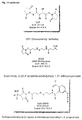
- Saponines are a class of chemical compounds forming secondary metabolites which are found in natural sources, derive from natural sources or can be chemically synthesized. Saponines are found in particular abundance in various plant species. Saponines are amphipathic glycosides grouped phenomenologically by the soap-like foaming they produce when shaken in aqueous solutions, and structurally by their composition of one or more hydrophilic glycoside moieties combined with a lipophilic triterpene derivative. Examples of saponines are glycyrrhicic acid, glycyrrhetinic acid, glucuronic acid, escin, hederacoside and digitonin. It is preferred that the saponine used as a stabilizer, when used in connection with medical applications according to the invention (see below) do not exert any pharmacological properties.
- the saponine is glycyrrhicic acid (also: glycyrrhizic acid) or a derivative thereof and the compatible solutes are ectoin or hydroxyectoin.
- glycyrrhizic acid Derivatives of glycyrrhizic acid are well-known in the art and include those produced by transformation of glycyrrhizic acid on carboxyl and hydroxyl groups, by conjugation of amino acid residues into the carbohydrate part or the introduction of 2-acetamido- ⁇ -D-glucopyranosylamine into the glycoside chain of glycyrrhizic acid.
- Other derivatives are amides of glycyrrhizic acid, conjugates of glycyrrhizic acid with two amino acid residues and a free 30-COOH function and conjugates of at least one residue of amino acid alkyl esters in the carbohydrate part of the glycyrrhizic acid molecule. Examples of specific derivatives can be found e. g. in Kondratenko et al. (Russian Journal of Bioorganic Chemistry, Vol 30(2), (2004), pp. 148-153 ).
- the at least one stabilizer and/or the at least one biomolecule is comprised in a buffered solution.
- the buffer to be used depends, inter alia, on the biomolecule which is to be covered/embedded.
- Buffers generally suitable for the contact with biomolecules are e. g. phosphate, citrate, acetate, borate, carbonate, lactate, ammonium, glycine, barbiturate, HEPES, MOPS, MES, TRIS.
- Exemplary buffers suitable for antibodies are described further below.
- the at least one stabilizer or the stabilizing composition comprises an amino acid mixture of at least two different amino acids.
- the at least one stabilizer or the stabilizing composition comprises between 2 and 18 different amino acids, more preferably 2 to 10, even more preferably 2 to 8 and most preferably 2 to 5 or 5 to 8 different amino acids.
- the at least one stabilizer or the stabilizing composition comprises at least 2, at least 3, at least 4, at least 5, at least 6, at least 7 or at least 8 different amino acids or more such as at least 9, at least 10, at least 11, at least 12, at least 13, at least 14, at least 15, at least 16, at least 17, at least 18, at least 19 or at least 20 different amino acids.
- the number of different amino acids comprised in the at least one stabilizer or the stabilizing composition preferably does not exceed 18.
- the amino acids that form the stabilizer or that are contained in the stabilizing composition can be selected from naturally occurring amino acids as well as artificial amino acids or derivatives thereof.
- Naturally occurring amino acids are e. g. the 20 proteinogenic amino acids glycine, proline, arginine, alanine, asparagine, aspartic acid, glutamic acid (according to the invention, said terms also include the salts of aspartic acid and glutamic acid), glutamine, cysteine, phenylanine, lysine, leucine, isoleucine, histidine, methionine, serine, valine, tyrosine, threonine and tryptophan.
- Other naturally occurring amino acids are e. g.
- amino acids are e.g. n-acetyl-tryptophan, phosphonoserine, phosphonothreonine, phosphonotyrosine, melanin, argininosuccinic acid and salts thereof or DOPA.
- Artificial amino acids are amino acids that have a different side chain length and/or side chain structure and/or have the amino group at a site different from the alpha-C-atom.
- the at least one stabilizer or the stabilizing composition comprises cysteine
- compositions comprising at least 3, at least 4, at least 5, at least 6, at least 7, at least 8, at least 9 or at least 10 amino acids or even more such as at least 11, at least 12, at least 13, at least 14, at least 15, at least 16, at least 17, at least 18, at least 19 or at least 20 amino acids.
- compositions comprising cysteine may be subjected to oxidation taking place e. g. at the SH groups and resulting in displeasing odors and/or possibly the composition changing color to shades of brown.
- the amount of cysteine comprised in the composition should be reduced as described above.
- these effects are undesired, they do not affect the suitability of compositions of the invention comprising a higher percentage of cysteines or otherwise exerting brownish colors or a displeasing odor.
- the at least one stabilizer or the stabilizing composition comprises an amino acid mixture of at least two different amino acids as defined above and a saponin which is preferably glycyrrhicic acid.
- the stabilizer or the stabilizing composition preferably does not comprise proteins or fragments of proteins which are not amino acids, dipeptides and/or tripeptides. Accordingly, in this preferred embodiment of the present invention, the composition does not contain proteins or fragments thereof consisting of more than three amino acids, nor hydrolysed proteins that are of human or animal origin.
- Such a composition has the advantage that there is no risk of contaminating the bio-molecules embedded therein. It is furthermore a cost effective alternative to known stabilizing compositions.
- a saponine is comprised in said at least one stabilizer or a stabilizing composition comprising any number of different amino acids comprised in the above list of minimum numbers of amino acids, such as in a composition comprising at least 3, at least 4, at least 5, at least 6, at least 7, at least 8, at least 9 or at least 10 different amino acids or even more, such as at least eleven, at least 12, at least 13, at least 14, at least 15, at least 16, at least 17, at least 18, at least 19 or at least 20 different amino acids.
- composition comprising at least one amino acid of each group of (a) an amino acid with non polar, aliphatic R groups; and (b) an amino acid with polar, uncharged R groups; and (c) an amino acid with positively charged R groups; and (d) an amino acid with negatively charged R groups; and (e) an amino acid with aromatic R groups.
- the naturally occurring amino acids can be classified into the above characteristic groups ( Nelson D.L. & Cox M.M., 'Lehninger Biochemie' (2005), pp. 122-127 ) from each of which at least one amino acid is selected for the composition according to the invention. Also other than naturally occurring amino acids such as artificial amino acids can be classified accordingly. Whereas more than one amino acid of each group such as at least two or at least three can be comprised in the composition according to the invention, it is presently preferred that only one amino acid is selected from each group. The skilled person further understands that not the same number of amino acids of each group has to be present in the composition used according to the invention. Rather, any combination of amino acids can be chosen as long as at least one amino acids of each group is present.
- a stabilizing composition wherein the amino acids comprised in the composition are alanine, glutamic acid, lysine, threonine and tryptophane.
- Another especially preferred stabilizing composition comprises aspartate, arginine, phenylalanine, serine and valine.
- At least one stabilizer or a stabilizing composition wherein the amino acids comprised in the composition are or are selected from arginine, glycine, histidine, alanine, glutamic acid, lysine and tryptophane.
- This composition has been shown to be especially advantageous with regard to its properties after sterilization, in particular after irradiation. Said combination of amino acids was shown not to exert any displeasing odor or discoloration after irradiation. However, even if these effects an undesired, they do not affect the suitability of compositions of the invention comprising a higher percentage of cysteines or otherwise exerting brownish colors or a displeasing odor.
- the biomolecules are reversibly attached to the carrier.
- the term "attached”, as interchangeably used with the term “immobilized” or “immobilizing”, relates to the fixation of biomolecules on the carrier.
- the term "reversibly attached” defines that the biomolecules. when attached to the carrier, can be released from said carrier with suitable means. Depending on the kind of attachment, e. g. of whether the attachment is covalent or non-covalent, different means of releasing the biomolecules are applicable. Examples are cleavage by proteases, a pH change or a change in temperature. The biomolecules are attached to the carrier until needed and only then released from the carrier.
- the reversible attachment of the biomolecule is chosen in such a way that the biomolecule can be quickly released from the carrier.
- the term “quickly” means that more than 50%, such as 60%, 70% or 80% of said biomolecule can be released within 2 hours or less, such as 1 hour, 30 minutes or 20 minutes, in any combination such as 60% in 30 minutes or 20 minutes, 70% in 30 minutes or 20 minutes or 80% in 30 minutes or 20 minutes, preferably more than 85% within 10 minutes or less and most preferably more than 98% within 1 minute. This can be achieved e. g. by applying one of the methods described below. Such a quick release makes the container of the invention suitable for medical or clinical applications (see below).
- the reversible attachment of the biomolecules is preferably chosen in such a way that the biomolecules are released immediately before the clinical application.
- the reversible attachment can be covalent or non-covalent.
- the non-covalent bonds are non-covalent bonds with high affinity and specificity.
- examples for such non-covalent bonds are those formed by the streptavidin-biotin or the avidin-biotin system.
- streptavidin/ avidin is coupled covalently to a suitable carrier.
- the biotinylated biomolecule then is bound non-covalently but with high affinity to the streptavidin/ avidin. By adding excess biotin, the binding is competitively suppressed and the biotinylated biomolecule is released.
- the biomolecule may be attached via a linker, preferably a cleavable linker.
- Suitable linkers can be selected, but are not limited to
- the biomolecules may be reversibly attached by drying as described in detail further below in connection with the methods of the invention.
- reversible attachment is achieved in that the biomolecules and the molecule(s) used as a stabilizer and the solid carrier stick together after drying.
- the carrier is a stabilizer
- the biomolecules and the molecules used as stabilizers stick together. Release of the biomolecules takes place upon addition of a liquid to the above compounds thus dissolving/solubilising the biomolecules and the stabilizing molecules.
- the carrier can be two-dimensional or three-dimensional.
- the carrier may be planar, spherical, bead-like, a mesh, a net or a fibre-net
- the carrier is comprised in or forms part of the container.
- Useful containers for this embodiment are glass or plastic vials.
- the container surface may exhibit specific structures for this purpose in order to increase the surface, e.g. needle-like microstructures.
- the carrier is a solid, preferably porous (e. g. a foam or sponge) container.
- Suitable carrier materials are selected from the group consisting of glass, medical grade stainless steel, metal alloys (e.g. chrome cobalt molybdenum, titan nitride oxide), hydroxyapatite, silicone, polystyrene, poly-L-lactic acid; polyurethane, polyester, polysulfone, polyethylene, polypropylene, polyacryl, polyacrylnitril, poiyamid, PMMA, fleece wadding, open porous foam, plastic or glass and reticular plastic or glass and structures derived from marine sponges (porifera) or (sintered) ceramics.
- Other preferred solid carriers are a mesh, a fibre net or sintered material.
- the carriers are beads.
- the beads can be separated from the biomolecules by filtration or, if magnetic beads like Dynabeads® or MACS®-beads are used, by magnets.
- nanobeads may be used which can be injected as biomolecule-bead complex into the patient.
- the carrier is semi-solid.
- the material of the semi-solid carrier can be selected, for example, from gels that are capable of swelling like hydrogels (e.g. PolyHema) or gelatinous protein mixtures (e.g. Matrigel).
- the carrier is solubilizable.
- Solubilizable carriers may be selected from soluble polymers, e.g. polysaccharides, polypeptides or polyethyleneglycols. Further solubilizable carriers include crystals or ionic liquids. Generally, the carriers which are stabilizers according to this invention are solubilizable.
- the solubilizable carrier comprises, preferably proteinaceous, structures and/or carbohydrate structures that dissolve in aqueous, optionally buffered solutions.
- the container is inwardly essentially free of aerial oxygen.
- the term “essentially free” refers to a very low content of aerial oxygen within the container of the invention as compared to that of air. Accordingly, "essentially free of aerial oxygen” denotes a content of aerial oxygen within the container of less than 10%, preferably less than 5%, more preferably less than 2%, even more preferably less than 1 % and most preferably between 0 and 1 %.
- the container is inwardly essentially free of liquid, preferably water.
- the term “essentially free” refers to a very low content of liquid, preferably water within the container of the invention as compared to the total volume of biomolecule and stabilizer or the water free content of the container. Accordingly, "essentially free of liquid” denotes a content of liquid within the container of less than 10 %, preferably less than 5%, more preferably less than 2% such as less than 1 %, 0.5 % or 0.2 %.
- the above two embodiments result in a further enhancement in the stability of the biomolecules attached to the stabilizer/carrier and subjected to sterilization by optimizing the environmental conditions within the container. For example by removing liquid from the container, sterilization is even less prone to destroy biomolecules attached to the carrier/stabilizer within the container since fewer reactive oxygen species may evolve from applying radiation to liquids such as water.
- the container is producible or produced by the method of the present invention as described below.
- the present invention relates to a method for producing a container for biomolecules, comprising: (a) inserting a carrier into a container; (b) reversibly attaching at least one biomolecule to said carrier; (c) incubating the carrier with the at least one reversibly attached biomolecule in a solution comprising at least one stabilizer selected from (poly)peptides such as dipeptides or tripeptides, amino acids, carbohydrates, polyalcohols, polyethylenglycols, ionic liquids, compatible solutes, saponins or a mixture thereof, such that the at least one biomolecule is partially or completely covered by said at least one stabilizer; (d) sealing the container; and (e) sterilizing the container.
- the invention relates to a method for producing a sterilized container for biomolecules, comprising: (a) inserting at least one carrier which is a stabilizer selected from (poly)peptides such as dipeptides or tripeptides, amino acids, polyalcohols, polyethylenglycols, ionic liquids, compatible solutes, saponins or a mixture thereof into a container; (b) reversibly attaching at least one biomolecule to said carrier such that the at least one biomolecule is partially or completely covered by said at least one carrier; (c) sealing the container; and (d) sterilizing the container.
- a stabilizer selected from (poly)peptides such as dipeptides or tripeptides, amino acids, polyalcohols, polyethylenglycols, ionic liquids, compatible solutes, saponins or a mixture thereof into a container; (b) reversibly attaching at least one biomolecule to said carrier such that the at least one biomolecule is
- the invention furthermore relates to a method for producing a container for biomolecules, comprising: (a) reversibly attaching at least one biomolecule to a carrier, (b) inserting the carrier with the at least one attached biomolecule into a container, (c) incubating said carrier with the at least one reversibly attached biomolecule in a solution comprising at least one stabilizer selected from (poly)peptides such as dipeptides or tripeptides, amino acids, carbohydrates, polyalcohols, polyethylenglycols, ionic liquids, compatible solutes, saponins or a mixture thereof, such that the at least one biomolecule is partially or completely covered by said at least one stabilizers, (d) sealing the container; and (e) sterilizing the container.
- a stabilizer selected from (poly)peptides such as dipeptides or tripeptides, amino acids, carbohydrates, polyalcohols, polyethylenglycols, ionic liquids, compatible solutes, sap
- the present invention relates to a method for producing a container for biomolecules, comprising: (a) reversibly attaching at least one biomolecule to a carrier, (b) incubating the carrier with the at least one reversibly attached biomolecule in a solution comprising at least one stabilizer selected from (poly)peptides such as dipeptides or tripeptides, amino acids, carbohydrates, polyalcohols, polyethylenglycols, ionic liquids, compatible solutes, saponins or a mixture thereof, such that the at least one biomolecule is partially or completely covered by said at least one stabilizer, (c) inserting the carrier with the at least one reversibly attached biomolecule into a container, (d) sealing the container; and (e) sterilizing the container.
- a stabilizer selected from (poly)peptides such as dipeptides or tripeptides, amino acids, carbohydrates, polyalcohols, polyethylenglycols, ionic liquids, compatible solutes
- the invention relates to a method for producing a sterilized container for biomolecules. comprising: (a) reversibly attaching at least one biomolecule to a carrier which is a stabilizer selected from (poly)peptides such as dipeptides or tripeptides, amino acids, polyalcohols, polyethylenglycols, ionic liquids, compatible solutes, saponins or a mixture thereof, such that the at least one biomolecule is partially or completely covered by said at least one stabilizers, (b) inserting the carrier with the at least one attached biomolecule into a container, (c) sealing the container; and (d) sterilizing the container.
- a stabilizer selected from (poly)peptides such as dipeptides or tripeptides, amino acids, polyalcohols, polyethylenglycols, ionic liquids, compatible solutes, saponins or a mixture thereof, such that the at least one biomolecule is partially or completely covered by said at least one stabilizer
- the present invention provides a method for producing a terminally sterile container for biomolecules. comprising following steps:
- Steps (a), (b) and (c) can be performed in different sequences: (a), (b) and (c) can be performed consecutively. Alternatively, step (b) can be performed before step (a) and then be followed by step (c). In a third alternative, the sequence is first (b), then (c), then (a).
- the reversible attaching of the biomolecule to the carrier and/ or the incubation in the solution comprising at least one stabilizer is done in bulk production comprising a cutting step prior to the insertion of the coated carrier into the container.
- Methods of bulk production are well-known to the skilled person.
- the insertion of the carrier with the attached biomolecules can be performed manually or automated.
- the closing of the container can, for example, be performed by applying a lid (e.g. a rubber stopper) or by melting the opening in case of glass or plastic containers which are formed only by one piece.
- a lid e.g. a rubber stopper
- a major advantage of the method and thereby produced carrier of the present invention is that the biomolecule comprising container can be (terminally or bulk) sterilized.
- the term 'terminal sterilization' in the context of the present invention means that the sterilization can be performed at the end of the production process, namely after the biomolecules and the stabilizer have been attached to the carrier and said carrier has been inserted into the container.
- Suitable sterilization methods comprise, but are not limited to ethyleneoxide (EO) treatment, (dry) heat or acid pH treatment, solvent-detergent (SD) treatment, X-rays, autoclaving or plasma sterilization.
- irradiation mostly preferred beta or gamma irradiation.
- the (terminal or bulk) sterilization allows the production of the biomolecule-comprising container under non-sterile or semi-sterile conditions. Due to this feature, the production costs can be greatly reduced compared to the costs for the production of conventional containers for biomolecules that have to be produced under completely sterile, i.e. aseptic conditions.
- the sterilization does not have to be necessarily at the end but rather can be done at another time after the addition of the at least one stabilizer.
- Another advantage of the sterilization method of the present invention is that no freezing is required for the sterilization of the biological materials. This is very advantageous as therefore the bio-functionality of the biological material that is to be sterilized can be greatly enhanced compared to methods known in the state of the art, e.g. US 5,730,933 .
- the at least one stabilizer comprises or is a saponine, preferably glycyrrhizic acid or a derivative thereof. Suitable derivatives have been defined above.
- the method of the present invention further comprises a step of drying the biomolocules.
- This step is preferably performed after incubating the carrier with the at least one reversibly attached biomolecule or, where the carrier is a stabilizer, reversibly attaching at least one biomolecule to said carrier in a solution comprising at least one stabilizer as described above.
- the step of reversible attaching comprises drying the carrier together with the biomolecule.
- the biomolecules are dried until the residual liquid content is less than 10 %, preferably less than 5%, more preferably less than 2% such as less than 1 %, 0.5 % or 0.2 % of the originally applied composition.
- Preferred drying methods include, but are not limited to methods which are used for removing the stabilizing composition such as air-drying, spray-drying, lyophilisation and precipitation. Further suitable techniques comprise crystallization and microcrystallization.
- the method according to the present invention may further comprise step (f), i.e. the elution of the biomolecules from the carrier.
- step (f) i.e. the elution of the biomolecules from the carrier.
- the elution method applied depends on the carrier used and may comprise, but is not limited to solutions with high salt concentrations, biotin-containing solutions, or solutions containing proteases or SH-containing substances.
- the present invention comprises a container where a solution is applied which detaches the biomolecule from the carrier, preferably with a rate of more than 50%, such as 60%, 70% or 80% of the attached biomolecules within 2 hours or less, such as 1 hour, 30 minutes or 20 minutes, in any combination such as 60% in 30 minutes or 20 minutes, 70% in 30 minutes or 20 minutes or 80% in 30 minutes or 20 minutes, more preferably more than 85% within 10 minutes and most preferably more than 98% within 1 minute.
- the detachment of the biomolecule(s) from the carrier can e. g.
- the biomolecule(s) are detached from the carrier by the help of ultrasound and or irradiation, preferably by infrared, visible or ultraviolet light.
- a further advantage of the method according to the present invention is that the biomolecule-comprising containers produced by said method are suited for long-time storage.
- the introduction of new or modified products to the medical marketplace requires the assurance that they can be stored for an extended period (from one to five years) without any major decrease in performance that may affect safety and efficacy when the products are used. Because full-period, ambient-aged samples usually do not exist for such products, it is generally necessary to conduct 'accelerated-aging' tests to provide experimental data in support of performance and shelf-life claims for these products until full-period samples become available.
- a simplified approach for accelerated aging is based on testing at a single accelerated temperature and then employing the rule stating that the rate of a chemical reaction will increase by factor Q 10 for every 10°C increase in temperature.
- biomolecules that are used for diagnosis or therapy
- these biomolecules usually have to be frozen in order to prevent their denaturation
- the biomolecules of interest have to be incubated in stabilizing solutions containing so-called lyoprotectants such as sugars (e..g. sucrose, trehalose, mannnitol) or salts.
- lyoprotectants such as sugars (e..g. sucrose, trehalose, mannnitol) or salts.
- biomolecules in a container according to the present invention (i.e. reversibly attached on/in a carrier, totally or partially (i. e. preferably at least 20%, preferably at least 30%, more preferably at least 40%, at least 50%, at least 60, at least 70%, even more preferably at least 80%, at least 90%, at least 95% such as at least 98 or 99%) covered by at least one stabilizer according to the present invention, said biomolecules can be stored up to 7 days at 45°C without significant loss of their biological activity. According to the rule described earlier, this 'accelerated aging' equals to a storage of 16 weeks at 5°C.
- Preferred storage temperatures are from -273°C to -15°C, especially preferred are temperatures from 2°C to 8°C and from 2°C to 30°C.
- the at least one stabilizer and/or the at least one biomolecule is comprised in a buffered, preferably aqueous solution.
- the buffer to be used depends, inter alia, on the biomolecule which is to be covered/embedded.
- Buffers generally suitable for the contact with biomolecules are e. g. phosphate, citrate, acetate, borate, carbonate, lactate, ammonium, glycine, barbiturate, HEPES, MOPS, MES, TRIS.
- said stabilizer comprises less than 1%, more preferably less than 0,3% Tween, preferably Tween 80.
- Tween is a generic term for polysorbates which are a class of emulsifiers and surfectants used in some pharmaceuticals and food preparations. They are often used to solubilize oily ingredients into water-based products.
- Polysorbates are oily liquids derived from PEG-ylated sorbitan (a derivative of sorbitol) esterified with fatty acids.
- polysorbates examples are polysorbate 20 (Tween 20 or polyoxyethylene (20) sorbitan monolaurate), polysorbate 40 (Tween 40 or polyoxyethylene (20) sorbitan monopalmitate), polysorbate 60 (Tween 60 or polyoxyethylene (20) sorbitan monostearate), and polysorbate 80 (Tween 80 or polyoxyethylene (20) sorbitan monooleate).
- Tween 80 is most preferred in the compositions used in the present invention.
- the method of the invention prior to sealing the container and after reversibly attaching the at least one biomolecule or inserting the carrier with the at least one attached biomolecule into a container, removing aerial oxygen from the container and/or removing liquid, preferably water from the container.
- the features of the above embodiment further enhance the stability of the biomolecules attached to the stabilizer/carrier and subjected to sterilization by optimizing the environmental conditions within the container. For example by removing liquid from the container, sterilization is even less prone to destroy biomolecules attached to the carrier/stabilizer within the container.
- the present invention relates to a method for the production of a sterile solution comprising at least one biomolecule comprising: (a) conducting the method for producing a container for biomolecules according to the invention; and (b) eluting the at least one biomolecule from the carrier; and optionally (c) simultaneously with, prior to or after step (b), applying a renaturing solution which enables structurally denatured biomolecules to renature.
- the steps (b) and (c) of this embodiment may form part of the methods for producing a sterilized container of the invention described further above.
- eluting relates to the release of the at least one reversibly attached biomolecules from the carrier. Elution may be effected using a, preferably buffered, aqueous solution, such as a buffered or not buffered salt solution, or water under suitable conditions depending on the kind of attachment, i. e. whether it is covalent or non-covalent as described above.
- elution rates have already been described above.
- a suitable elution rate as defined above makes the container of the invention suitable for medical applications where a device needs to be prepared for medical applications within a few minutes.
- elution may be effected by injecting a suitable, preferably aqueous solution into the container and the applying it to the patient so that the eluted biomolecules can leave the container and spread within the patient's body.
- the renaturing solution comprises chaperons (e.g. heat shock proteins of the Hsp100/Clp- family, the Hsp90- family, the Hsp70- family, the Hsp60/GroEL- family and the small heat shock proteins (sHsps).
- chaperons e.g. heat shock proteins of the Hsp100/Clp- family, the Hsp90- family, the Hsp70- family, the Hsp60/GroEL- family and the small heat shock proteins (sHsps).
- General chaperones are e. g. BiP, GRP94, GRP170
- lectin chaperones are e. g. calnexin and calreticulin
- non-classical molecular chaperones are e.g. HSP47 and ERp29
- folding chaperones are e. g. protein disulfide isomerase (PDI), peptidyl prolyl cis
- the method for the production of a sterile solution further comprises applying the eluted at least one biomolecule onto a column or a filter.
- Suitable columns or filters are e.g. ion exchange columns such as DEAE, cholestyramin, polyethylenimine coupled to a suitable matrix like sepharose or styrol, or size exclusion columns such as Sepharose G25 or columns filled with charcoal.
- Said applying corresponds to the purification of the biomolecule containing solution directly after release of the biomolecule from its carrier and/or during the infusion into a patient. This step enables the removal of substances, that might be damaging for the attached biomolecules as well as the removal of denatured biomolecules. which might have been formed during the sterilization process.
- the container according to the present invention can be used for diagnostic, prophylactic and therapeutic applications. Accordingly, the container of the invention may form part of a medical or diagnostic device. Such devices being a combination of the biological component comprising the biomolecules stabilized according to the invention and a non biological part are also termed biological-device combination product.
- Therapeutic devices include medical implants, catheters, stents, tubings, alone or in combination with other components or medical devices used in extracorporeal circulation.
- the therapy approaches may comprise in vivo as well as ex vivo applications of the container of the invention in the context of a medical device.
- a device comprising the container of the invention can be implanted into a patient for an in vivo application to gradually release the biomolecule upon applying a (body)liquid into the container.
- a device comprising the container of the invention can be connected with the circulation of a body liquid to be treated. Blood derived from an artery or a vein of a patient may be e.g. led through such device and subsequently piped back into the patient (connection with the blood stream). Alternatively, samples of a body fluid may be incubated with the carrier in vitro.
- the body fluid can be reintroduced into the body of a patient. All these applications necessitate the application of a liquid into the container to dissolve the biomolecules comprised therein which then may act e. g. as a drug.
- patient as used throughout the present invention comprises ill or diseased as well as healthy subjects.
- a patient in accordance with the present invention is any person who receives medical attention, care, or treatment. The person is most often but not always ill or injured and, if so, in need of treatment by a physician or other medical professional.
- the term “patient” is interchangeably used with "subject” which may or may not be ill.
- the subject can be an animal, preferably a mammal, most preferably a human.
- a patient is also, for example, a healthy human who is, on an acute or routine basis, diagnosed for a disease or health status.
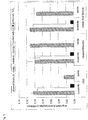
- Example 1 Interleukin-8 in glass-vials was sterilized, the vial itself is the carrier.
- A 20g/l albumin (Biotest Pharma) and 10g/l mannitol (Serag Wiesner, 219675)
- B 20g/l amino acid mixture and 1 mM glyzyrrhizic acid (ammonium salt, Fluka, 50531)
- the vials were sterilized with ⁇ 25 kGy (beta irradiation). Unsterilized controls were stored under cool conditions.
- Neutrophile granulocytes were isolated from 10% ACDA whole blood. 20 ml ACDA blood (10%) were sedimented with 2 ml HES (Grifols 662650). The supernatant was pipetted to 7 ml Percoll (L6143)and centrifuged 20 min at 2000 x g. The isolated granulocytes were resuspended in 1% autologous serum and set to a cell count of 0,5x10 6 /ml.
- the complete IL-8 solutions from the sterile and non-sterile vials and the controls were pipetted into 12-well-plates.
- Migration filters (3 ⁇ m, Coming, 3462) were inserted and 500 ⁇ l of the granulocyte suspension was pipetted into the filters. The plates were incubated for 30 min at 37°C. The number of migrated cells was detected by counting the cells in each well via FACS and counting beads (Invitrogen, C36950).
- Example 2 Interleukin-8 in glass-vials was sterilized, the stabilizer itself is the carrier.
- A 20g/l albumin ( Biotest Pharma) and 10g/l mannitol (Serag Wiesner, 219675)
- B 20g/l amino acid mixture and 1mM glyzyrrhizic acid (ammonium salt, Fluka, 50531 )
- the vials were sterilized by irradiation with ⁇ 25 kGy. Unsterilized controls were stored under cool conditions.
- Neutrophile granulocytes were isolated from 10% ACDA whole blood. 20 ml ACDA blood (10%) were sedimented with 2 ml HES ( Grifols 662650 ). The supernatant was pipetted to 7 ml Percoll (L6143)and centrifuged 20 min at 2000 x g. The isolated granulocytes were resuspended in 1% autologous serum and set to a cell count of 0,5x10 6 /ml.
- the complete IL-8-solutions from the sterile and non-sterile vials and the controls were pipetted into 12-well-plates.
- Migration filters (3 ⁇ m) were inserted and 500 ⁇ l of the granulocyte suspension was pipetted into the filters.
- the plates were incubated 30 min at 37°C. The number of migrated cells was detected by counting the cells in each well (via FACS and counting beads).
- Example 3 anti-Mouse-IgG in glass-vials was sterilized, the stabilizer itself is the carrier.
- the vials were sterilized by irradiation with ⁇ 25 kGy. Unsterilized controls were stored under cool conditions.
- An ELISA plate Greiner Bio-one, 655061 was coated with the antigen (mouse IgG, Innovativ Research, Ir-Ms-Gf): the antigen was diluted to 1 ⁇ g/ml, 100 ⁇ l were pipetted to each well and incubated over night at 4°C. The plate was washed twice with washing buffer (25x concentrate, Invitrogen, WB02 ). The plate was blocked with Albumin (5%) and washed again 3 times.
- the biomolecule (here an anti-mouse IgG antibody) loses most of its biological function during subsequent storage and or sterilisation ( ⁇ 25 kGy irradiation) if no stabilizer is added. In contrast both stabilizer solution A (Albumin and Mannitol) and B (solution with different amino acids) protected the biomolecule. Shown is the specific binding to the antigen.
- Example 4 anti-Mouse-IgG was sterilized, the carrier is an polyurethane foam.
- the antibody solution was removed and the PU samples were air dried for 2 h.
- the samples were sterilized via beta irradiation (25 kGy) and unsterile controls were stored under cool conditions.
- An ELISA plate (Greiner Bio-one, 655061 ) was coated with the antigen (mouse IgG, Innovativ Research, Ir - Ms - Gf ) : the antigen was diluted to 1 ⁇ g/ml, 100 ⁇ l were pipetted to each well and incubated over night at 4°C. The plate was washed 2 x with washing buffer (25x concentrate, Invitrogen, WB02). The plate was blocked with Albumin (5%) and washed again 3 x.
- washing buffer 25x concentrate, Invitrogen, WB02
- the PU samples were covered with PBS and incubated 1 h at ambient temperature.
- the sample solutions were collected and diluted 1:20 and further serial diluted 1:4 with PBS.
- To calculate the antibody concentration of the samples a serial dilution of fresh antibody was prepared.
- the biomolecule here an anti-mouse IgG antibody
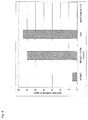
- a stabilizer solution Albumin and Mannitol protected the biomolecule.
- the recovery of the antibody is almost 100% (5 ⁇ g/ml). Shown is the specific binding to the antigen.
- Example 5 anti-Mouse-IgG was sterilized, the carrier is an PVA hydrogel.
- PVA polyvinyialcohol
- the hydrogel mixture was composed as follows:
- PVA hydrogels were poured into small petri dishes (diameter 35 mm, 2 ml solution). The hydrogel films were air dried for 48 h. The samples were sterilized via beta irradiation (25 kGy) and unsterile controls were stored under coo! conditions.
- An ELISA plate (Greiner Bio-one, 655061) was coated with the antigen (mouse IgG, Innovativ Research, Ir-Ms-Gf): the antigen was diluted to 1 ⁇ g/ml, 100 ⁇ l were pipetted to each well and incubated over night at 4°C. The plate was washed 2 x with washing buffer (25x concentrate, Invitrogen, WB02). The plate was blocked with Albumin (5%) and washed again 3 x.
- washing buffer 25x concentrate, Invitrogen, WB02
- the PVA hydrogels were placed in 6 well plates and covered with 2 ml PBS (without Ca 2+/ Mg 2+ , PAA, H15 - 002 ). After 30 min, 1h and 2 h the PBS was collected and replaced with fresh PBS.
- the plate was incubated 15 min at ambient temperature and was protected from light. To stop the color reaction 50 ⁇ l diluted H2SO4 (diluted 1:5 with aqua dest., Merck, 1007311000) were added. The absorption of the plate was detected at 450 nm ( Fusion Photometer A 153601, PerkinElmer ).
- the biomolecule (here an anti-mouse IgG antibody) loses most of its biological function during subsequent storage and or sterilisation (25 kGy irradiation) if no stabilizer is added. In contrast a stabilizer solution (Albumin and Mannitol) protected the biomolecule. The recovery of the eluted antibody is very high. Shown is the specific binding to the antigen.
- the pH was adjusted to about 7.2 using NaOH and/or NaCl. Afterwards, the solutions were subjected to sterile filtration.
- the lyophilized samples were irradiated with 25kGy and one with 50 kGy Beta-radiation.
- composition resulted in only little loss of the Hepatits A antibody portion of Beriglobin as compared to the not irradiated control.
- Adsorption of LO-MM-3 to the plate and application of the postcoating and sterilization; as well as the general ELISA procedure were conducted as described in the Materials & Methods section.
- the irradiation dose (electron beam) was 50 kGy.
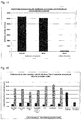
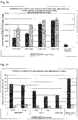
- the results of the experiment are depicted in Figure 15 .
- the structural class of saponines has the potential to enhance the protective effect of amino acid combinations. Preferred is the use of the saponine glycyrrhizic acid.
- Example 8 Stabilizing compositions comprising at least 3 different amino acids or at least two different amino acids and a saponin such glycyrrhizic acid provide avery good protection
- the amino acids were dissolved either in 0,5 M NaOH ( Merck, 106482) or 0,5 M HCl (Merck, 100319 ) to obtain stock solutions with a maximal concentration.
- the amino acid stock solutions were mixed together in different combinations to get total amino acid concentrations of 20 g/l in the postcoating solutions.
- the pH of the amino acid mixtures was set to approx. 7,0.
- Adsorption of LO-MM-3 to the plate and application of the postcoating and steriliziation; as well as the general ELISA procedure were conducted as described in the Materials & Methods section.
- the irradiation dose (electron beam) was 50 kGy.
- Example 9 A preferred amino acid composition provides protection under different stress conditions
- the pH was adjusted to about 7.2 using NaOH and/or HCl. Afterwards, the solutions were subjected to sterile filtration.
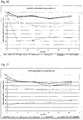
- results of the experiment are depicted in figure 17 .
- the amino acid composition provides protection under different stress conditions. The best protection is provided for beta irradiation with different doses and artificial aging under elevated temperature. The protection for gamma irradiation or ethylen oxide sterilisation is less but still relevant.
- the amino acids were dissolved either in 0,5 M NaOH ( Merck, 106482) or 0,5 M HCl ( Merck, 100319) to obtain stock solutions with a maximal concentration.
- the amino acid stock solutions were mixed together to get a total amino acid concentration of 200 mM in the postcoating solution.
- the amino acids were used in equimolar ratio.
- the pH of the amino acid mixtures was set to approx. 7,0; and the mixtures were further diluted in PBS to get the final concentration of 200 mM.
- Adsorption of LO-MM-3 to the plate and application of the postcoating and steriliziation; as well as the general ELISA procedure were conducted as described in the Materials & Methods section. Long-time storage was simulated by an accelerated aging procedure. The plates were stored at 45°C and antibody activity was determined after 0, 10, 25, 41 and 62 days of storage. This equals real time aging at 5°C of 0, 6, 12, 24 and 36 months.
- Amino acid postcoatings containing at least 5 amino acids provide protection during longtime storage. For the non sterilized samples, after 62 days at 45°C about 80% of the antigen binding ability is preservered. Sterilized samples (beta, 25 kGy) maintain about 70% of their antigen binding ability after 62 days at 45°C. Amino acid postcoatings containing only 2 amino acids maintain only about 40% antigen binding ability during the storage process, regardless of sterilization.
- Example 11 Amino acid postcoatings provide protection during different sterilization processes
- the amino acids were dissolved either in 0,5 M NaOH (Merck, 106482) or 0,5 M HCl ( Merck, 100319) to obtain stock solutions with a maximal concentration.
- the amino acid stock solutions were mixed together to get a total amino acid concentration of 200 mM in the postcoating solution.
- the amino acids were used in equimolar ratio.
- the pH of the amino acid mixtures was set to approx. 7,0; and the mixtures were further diluted in PBS to get the final concentration of 200 mM.
- Adsorption of LO-MM-3 to the plate and application of the postcoating and steriliziation; as well as the general ELISA procedure were conducted as described in the Materials & Methods section.
- One plate was irradiated (gamma, 25 kGy). The irradiation was was conducted at Beta-Gamma-Service, Bruchsal, Germany.
- Another plate was sterilized by EO (ETO BO1 cycle); the sterilization was conducted at Rose GmbH, Trier, Germany.
- Samples sterilized with gamma irradiation maintain about 85% activity when protected with an amino acid postcoating containing 18 amino acids; this effect is not further enhanced with glycyrrhizic acid; with 5 amino acids the remaining activity is 75%; with 2 amino acids only 40% are maintained.
- the protection with 2 amino acids is improved by the addition of glyccyrhizic acid; here the remaining activity is 65%.
- Samples sterilized with ETO maintain about 85% activity when protected with an amino acid postcoating containing 18 amino acids; this effect is not further enhanced with glycyrrhizic acid. Postcoatings containing 5 or 2 amino acids have only little protecting effect; the addition of glycyrrhizic acid enhances the protection marginally.
- Example 12 Postcoatings consisting of amino acids and dipeptides provide protection against high irradiation doses
- the amino acids were dissolved either in 0,5 M NaOH (Merck, 106482) or 0,5 M HCl ( Merck, 100319) to obtain stock solutions with a maximum concentration.
- the amino acid stock solutions were mixed together to get a total amino acid concentration of 20 g/l in the postcoating solution.
- the dipeptides alone were used with a concentration of 10 g/l and in combination with amino acids with 2 g/l.
- the pH of the amino acid mixtures was set to approx. 7,0.
- Adsorption of LO-MM-3 to the plate and application of the postcoating and steriliziation; as well as the general ELISA procedure were conducted as described in the Materials & Methods section.
- the irradiation dose (electron beam) was 50 kGy.
- the invention furthermore comprises the following items:
Landscapes
- Health & Medical Sciences (AREA)
- Life Sciences & Earth Sciences (AREA)
- Chemical & Material Sciences (AREA)
- Immunology (AREA)
- Engineering & Computer Science (AREA)
- Organic Chemistry (AREA)
- Molecular Biology (AREA)
- General Health & Medical Sciences (AREA)
- Physics & Mathematics (AREA)
- Analytical Chemistry (AREA)
- Zoology (AREA)
- Biomedical Technology (AREA)
- Biotechnology (AREA)
- Wood Science & Technology (AREA)
- Hematology (AREA)
- Microbiology (AREA)
- Urology & Nephrology (AREA)
- Proteomics, Peptides & Aminoacids (AREA)
- Biochemistry (AREA)
- Public Health (AREA)
- Epidemiology (AREA)
- Bioinformatics & Cheminformatics (AREA)
- Medicinal Chemistry (AREA)
- General Physics & Mathematics (AREA)
- Pathology (AREA)
- Chemical Kinetics & Catalysis (AREA)
- Biophysics (AREA)
- Food Science & Technology (AREA)
- Genetics & Genomics (AREA)
- Cell Biology (AREA)
- General Engineering & Computer Science (AREA)
- Animal Behavior & Ethology (AREA)
- Veterinary Medicine (AREA)
- Pharmacology & Pharmacy (AREA)
- Medicines That Contain Protein Lipid Enzymes And Other Medicines (AREA)
- Apparatus Associated With Microorganisms And Enzymes (AREA)
- Medical Preparation Storing Or Oral Administration Devices (AREA)
- Packages (AREA)
- Apparatus For Disinfection Or Sterilisation (AREA)
- Medicinal Preparation (AREA)
Applications Claiming Priority (3)
| Application Number | Priority Date | Filing Date | Title |
|---|---|---|---|
| EP09004735A EP2236617A1 (fr) | 2009-03-31 | 2009-03-31 | Procédés de stérilisation de terminal de compositions biofonctionnelles |
| EP10712939.7A EP2414538B1 (fr) | 2009-03-31 | 2010-03-31 | Moyens et procédés de stérilisation de compositions bio-fonctionnelles |
| PCT/EP2010/054390 WO2010112576A1 (fr) | 2009-03-31 | 2010-03-31 | Moyens et procédés de stérilisation de compositions bio-fonctionnelles |
Related Parent Applications (1)
| Application Number | Title | Priority Date | Filing Date |
|---|---|---|---|
| EP10712939.7A Division EP2414538B1 (fr) | 2009-03-31 | 2010-03-31 | Moyens et procédés de stérilisation de compositions bio-fonctionnelles |
Publications (2)
| Publication Number | Publication Date |
|---|---|
| EP3128014A1 true EP3128014A1 (fr) | 2017-02-08 |
| EP3128014B1 EP3128014B1 (fr) | 2019-11-13 |
Family
ID=41119898
Family Applications (3)
| Application Number | Title | Priority Date | Filing Date |
|---|---|---|---|
| EP09004735A Ceased EP2236617A1 (fr) | 2009-03-31 | 2009-03-31 | Procédés de stérilisation de terminal de compositions biofonctionnelles |
| EP16176458.4A Active EP3128014B1 (fr) | 2009-03-31 | 2010-03-31 | Moyens et procédés de stérilisation de compositions biofonctionnelles |
| EP10712939.7A Active EP2414538B1 (fr) | 2009-03-31 | 2010-03-31 | Moyens et procédés de stérilisation de compositions bio-fonctionnelles |
Family Applications Before (1)
| Application Number | Title | Priority Date | Filing Date |
|---|---|---|---|
| EP09004735A Ceased EP2236617A1 (fr) | 2009-03-31 | 2009-03-31 | Procédés de stérilisation de terminal de compositions biofonctionnelles |
Family Applications After (1)
| Application Number | Title | Priority Date | Filing Date |
|---|---|---|---|
| EP10712939.7A Active EP2414538B1 (fr) | 2009-03-31 | 2010-03-31 | Moyens et procédés de stérilisation de compositions bio-fonctionnelles |
Country Status (7)
| Country | Link |
|---|---|
| US (3) | US8685459B2 (fr) |
| EP (3) | EP2236617A1 (fr) |
| JP (2) | JP6250281B2 (fr) |
| CN (1) | CN102449162B (fr) |
| DK (1) | DK3128014T3 (fr) |
| ES (1) | ES2770086T3 (fr) |
| WO (1) | WO2010112576A1 (fr) |
Families Citing this family (25)
| Publication number | Priority date | Publication date | Assignee | Title |
|---|---|---|---|---|
| EP2236520A1 (fr) * | 2009-03-31 | 2010-10-06 | Leukocare Ag | Composition de stabilisation pour biomolécules immobilisées |
| EP2236617A1 (fr) * | 2009-03-31 | 2010-10-06 | Leukocare Ag | Procédés de stérilisation de terminal de compositions biofonctionnelles |
| WO2013001034A1 (fr) | 2011-06-28 | 2013-01-03 | Leukocare Ag | Nouveau procédé de stabilisation pour des virus ou bactéries |
| EP2726495B1 (fr) * | 2011-06-28 | 2019-03-06 | Leukocare Ag | Procédé pour empêcher le dépliage d'un (poly)peptide et/ou induire le re-pliage d'un (poly)peptide |
| US10780228B2 (en) | 2012-05-07 | 2020-09-22 | Medline Industries, Inc. | Prefilled container systems |
| CN103446600B (zh) * | 2012-05-31 | 2020-05-22 | 通用电气公司 | 为含有葡萄糖氧化酶的膜杀菌的方法和相应的生物传感器 |
| US9534029B2 (en) | 2012-10-03 | 2017-01-03 | Csl Behring Ag | Method of purifying proteins |
| JP6370792B2 (ja) * | 2012-10-03 | 2018-08-08 | ツェー・エス・エル・ベーリング・アクチエンゲゼルシャフト | タンパク質の精製方法 |
| CN103028124B (zh) * | 2012-12-21 | 2014-07-23 | 菱花集团有限公司 | 谷氨酸发酵中连实消相结合的物料灭菌方法 |
| AU2014226126B2 (en) | 2013-03-08 | 2019-02-14 | Genzyme Corporation | Continuous purification of therapeutic proteins |
| ES2502666B1 (es) * | 2013-04-02 | 2015-10-27 | Consejo Superior De Investigaciones Científicas (Csic) | Procedimiento de estabilización de biomoléculas |
| TWI709570B (zh) | 2014-01-17 | 2020-11-11 | 美商健臻公司 | 無菌層析法及製法 |
| TWI709569B (zh) | 2014-01-17 | 2020-11-11 | 美商健臻公司 | 無菌層析樹脂及其用於製造方法的用途 |
| US20180055958A1 (en) * | 2015-03-12 | 2018-03-01 | Sanyo Chemical Industries, Ltd. | Method for producing protein composition, and protein composition |
| CN105497925B (zh) * | 2015-12-25 | 2019-02-26 | 烟台正海生物科技股份有限公司 | 一种在电离辐射灭菌前对功能蛋白进行保护的方法及其专用保护剂 |
| US20190256551A1 (en) | 2016-09-16 | 2019-08-22 | Leukocare Ag | A novel method of producing a liquid biopharmaceutical drug product |
| KR20190053908A (ko) | 2016-09-16 | 2019-05-20 | 로이코케어 아게 | 가공 동안 바이오 의약품의 안정화를 위한 신규한 방법 |
| US11510871B2 (en) | 2016-09-16 | 2022-11-29 | Leukocare Ag | Method for producing low viscous and highly concentrated biopharmaceutical drug products in liquid formulation |
| CN112334127A (zh) * | 2018-05-11 | 2021-02-05 | 北卡罗莱纳州立大学 | 生物响应水凝胶基质及使用方法 |
| SG11202009795PA (en) * | 2018-05-18 | 2020-12-30 | Qiagen Sciences Llc | Protection of biologically active molecules during radiation sterilization |
| AU2019332764B2 (en) | 2018-08-31 | 2025-05-29 | Genzyme Corporation | Sterile chromatography resin and use thereof in manufacturing processes |
| US12178939B2 (en) | 2019-01-31 | 2024-12-31 | Cell-Medicine, Inc. | Inorganic salt-protein composite medical instrument |
| CN110665478B (zh) * | 2019-09-06 | 2022-08-23 | 武汉瑞法医疗器械有限公司 | 一种用于稳定吸附剂吸附性能的填充液及其应用 |
| CN110935043B (zh) * | 2019-12-19 | 2021-01-12 | 浙江相伴乳胶制品有限公司 | 一种乳胶制品的灭菌方法 |
| CN112107720A (zh) * | 2020-09-18 | 2020-12-22 | 华熙生物科技股份有限公司 | 透气性好的医用压敏胶及依克多因在提高医用压敏胶透气性中的应用 |
Citations (8)
| Publication number | Priority date | Publication date | Assignee | Title |
|---|---|---|---|---|
| US4244943A (en) * | 1978-05-12 | 1981-01-13 | Sumitomo Chemical Company, Limited | Method for preparing urokinase injection |
| EP0805353A2 (fr) * | 1996-05-02 | 1997-11-05 | Tosoh Corporation | Agent immunoréactif et procédé pour sa préparation |
| WO1997042980A1 (fr) | 1996-05-14 | 1997-11-20 | Quadrant Holdings Cambridge Limited | Methodes de sterilisation de produits biologiques dans leur recipient definitif |
| US5730933A (en) | 1996-04-16 | 1998-03-24 | Depuy Orthopaedics, Inc. | Radiation sterilization of biologically active compounds |
| WO2002082462A2 (fr) * | 2001-04-03 | 2002-10-17 | Bristol-Myers Squibb Pharma Company | Stabilisation et sterilisation terminale de formulations phospholipidiques |
| WO2006124988A2 (fr) * | 2005-05-19 | 2006-11-23 | Albiorex, Llc | Sterilisation finale de produits de collagene injectable |
| WO2006130869A1 (fr) * | 2005-06-02 | 2006-12-07 | Alza Corporation | Procede de sterilisation apres conditionnement de dispositifs d'administration transdermique |
| WO2007128550A1 (fr) * | 2006-05-05 | 2007-11-15 | Leukocare Ag | Matrice tridimensionnelle biocompatible utilisée pour l'immobilisation de substances biologiques |
Family Cites Families (25)
| Publication number | Priority date | Publication date | Assignee | Title |
|---|---|---|---|---|
| US3051627A (en) * | 1960-08-18 | 1962-08-28 | Armour Pharma | Stabilized chymotrypsin solution |
| US3957049A (en) * | 1973-10-09 | 1976-05-18 | Neefe Charles W | Rechargeable drug delivery method |
| US4121588A (en) * | 1977-05-16 | 1978-10-24 | Becton, Dickinson And Company | Disposable hypodermic syringe and method of manufacture |
| CA1144849A (fr) * | 1979-10-24 | 1983-04-19 | Brown (Albert) Limited | Indicateurs de sterilisation |
| JPS60120823A (ja) * | 1983-12-02 | 1985-06-28 | Green Cross Corp:The | IgG単量体 |
| AU6819294A (en) * | 1993-04-22 | 1994-11-08 | Emisphere Technologies, Inc. | Oral drug delivery compositions and methods |
| GR1002706B (el) * | 1996-05-22 | 1997-05-26 | Μικρογαλακτωματα λεκιθινης περιεχοντα πρωτεολυτικα ενζυμα α-χυμοθρυψινης η θρυψινη και μεθοδος μονιμης ενζυμικης αποτριχωσης. | |
| JP4359352B2 (ja) * | 1997-10-23 | 2009-11-04 | 田辺三菱製薬株式会社 | 室温保存製剤 |
| US6140127A (en) * | 1998-02-18 | 2000-10-31 | Cordis Corporation | Method of coating an intravascular stent with an endothelial cell adhesive five amino acid peptide |
| TR200200420T2 (tr) | 1999-08-17 | 2002-05-21 | Smithkline Beecham Biologicals S.A. | Aşı |
| US6471979B2 (en) * | 1999-12-29 | 2002-10-29 | Estrogen Vascular Technology, Llc | Apparatus and method for delivering compounds to a living organism |
| EP1299131A4 (fr) | 2000-03-23 | 2003-06-18 | Clearant Inc | Procedes de sterilisation de materiaux biologiques |
| US20030012687A1 (en) * | 2000-03-23 | 2003-01-16 | Macphee Martin J. | Methods of sterilizing biological materials |
| CA2410965C (fr) * | 2000-05-31 | 2010-09-14 | Encelle, Inc. | Methode permettant de stimuler la croissance des cheveux |
| US20030059338A1 (en) * | 2001-09-24 | 2003-03-27 | Mann David M. | Methods for sterilizing biological materials using flavonoid/flavonol stabilizers |
| JP2003300908A (ja) * | 2002-04-08 | 2003-10-21 | Towa Yakuhin Kk | 安定なカルシトニン注射用製剤 |
| EP1556091A1 (fr) * | 2002-10-04 | 2005-07-27 | Elan Pharma International Limited | Irradiation gamma d'agents actifs nanoparticulaires solides |
| ATE449161T1 (de) * | 2004-03-04 | 2009-12-15 | Leukocare Ag | Leukozytenstimulations-matrix |
| GB0503337D0 (en) | 2005-02-17 | 2005-03-23 | Glaxosmithkline Biolog Sa | Compositions |
| FR2895263B1 (fr) | 2005-12-26 | 2008-05-30 | Lab Francais Du Fractionnement | Concentre d'immunoglobines g (lg) appauvri en anticorps anti-a et anti-b, et en igg polyreactives |
| KR20140100553A (ko) * | 2006-07-10 | 2014-08-14 | 존슨 앤드 존슨 비젼 케어, 인코포레이티드 | 약제학적 제제를 함유하는 안과용 렌즈를 위한 패키지 |
| US8747738B2 (en) * | 2006-08-15 | 2014-06-10 | Abbott Cardiovascular Systems Inc. | Sterilization methods for medical devices |
| EP2236617A1 (fr) | 2009-03-31 | 2010-10-06 | Leukocare Ag | Procédés de stérilisation de terminal de compositions biofonctionnelles |
| EP2236520A1 (fr) * | 2009-03-31 | 2010-10-06 | Leukocare Ag | Composition de stabilisation pour biomolécules immobilisées |
| US8961984B2 (en) * | 2009-10-08 | 2015-02-24 | Arch Biophysics, Inc. | Surface-coated structures and methods |
-
2009
- 2009-03-31 EP EP09004735A patent/EP2236617A1/fr not_active Ceased
-
2010
- 2010-03-31 WO PCT/EP2010/054390 patent/WO2010112576A1/fr not_active Ceased
- 2010-03-31 JP JP2012502684A patent/JP6250281B2/ja active Active
- 2010-03-31 ES ES16176458T patent/ES2770086T3/es active Active
- 2010-03-31 EP EP16176458.4A patent/EP3128014B1/fr active Active
- 2010-03-31 DK DK16176458.4T patent/DK3128014T3/da active
- 2010-03-31 EP EP10712939.7A patent/EP2414538B1/fr active Active
- 2010-03-31 US US13/262,387 patent/US8685459B2/en active Active
- 2010-03-31 CN CN201080023349.7A patent/CN102449162B/zh not_active Expired - Fee Related
-
2014
- 2014-01-16 US US14/157,381 patent/US11564865B2/en active Active
-
2015
- 2015-10-01 JP JP2015195947A patent/JP6412477B2/ja active Active
-
2023
- 2023-01-18 US US18/156,151 patent/US20230225939A1/en not_active Abandoned
Patent Citations (8)
| Publication number | Priority date | Publication date | Assignee | Title |
|---|---|---|---|---|
| US4244943A (en) * | 1978-05-12 | 1981-01-13 | Sumitomo Chemical Company, Limited | Method for preparing urokinase injection |
| US5730933A (en) | 1996-04-16 | 1998-03-24 | Depuy Orthopaedics, Inc. | Radiation sterilization of biologically active compounds |
| EP0805353A2 (fr) * | 1996-05-02 | 1997-11-05 | Tosoh Corporation | Agent immunoréactif et procédé pour sa préparation |
| WO1997042980A1 (fr) | 1996-05-14 | 1997-11-20 | Quadrant Holdings Cambridge Limited | Methodes de sterilisation de produits biologiques dans leur recipient definitif |
| WO2002082462A2 (fr) * | 2001-04-03 | 2002-10-17 | Bristol-Myers Squibb Pharma Company | Stabilisation et sterilisation terminale de formulations phospholipidiques |
| WO2006124988A2 (fr) * | 2005-05-19 | 2006-11-23 | Albiorex, Llc | Sterilisation finale de produits de collagene injectable |
| WO2006130869A1 (fr) * | 2005-06-02 | 2006-12-07 | Alza Corporation | Procede de sterilisation apres conditionnement de dispositifs d'administration transdermique |
| WO2007128550A1 (fr) * | 2006-05-05 | 2007-11-15 | Leukocare Ag | Matrice tridimensionnelle biocompatible utilisée pour l'immobilisation de substances biologiques |
Non-Patent Citations (17)
| Title |
|---|
| "Guidelines on sterilization and disinfection methods", 1989, WORLD HEALTH ORGANIZATION, article "effective against human immunodeficiency virus (HIV" |
| ANDERSON JARED L ET AL: "Characterizing ionic liquids on the basis of multiple solvation interactions", JOURNAL OF THE AMERICAN CHEMICAL SOCIETY, AMERICAN CHEMICAL SOCIETY, US, vol. 124, no. 47, 27 November 2002 (2002-11-27), pages 14247 - 14254, XP002267362, ISSN: 0002-7863, DOI: 10.1021/JA028156H * |
| BAKER G ET AL: "AN ANALYTICAL VIEW OF IONIC LIQUIDS", THE ANALYST, R S C PUBLICATIONS, GB, vol. 130, 1 January 2005 (2005-01-01), pages 800 - 808, XP008074869, ISSN: 0003-2654, DOI: 10.1039/B500865B * |
| BRANCO L C ET AL: "Highly selective transport of organic compounds by using supported liquid membranes based on ionic liquids", ANGEWANDTE CHEMIE INTERNATIONAL EDITION, WILEY - V C H VERLAG GMBH & CO. KGAA, DE, vol. 41, no. 15, 1 January 2002 (2002-01-01), pages 2771 - 2773, XP002326750, ISSN: 1433-7851, DOI: 10.1002/1521-3773(20020802)41:15<2771::AID-ANIE2771>3.0.CO;2-U * |
| BRANCO L C ET AL: "STUDIES ON THE SELECTIVE TRANSPORT OF ORGANIC COMPOUNDS BY USING IONIC LIQUIDS AS NOVEL SUPPORTED LIQUID MEMBRANES", CHEMISTRY - A EUROPEAN JOURNAL, WILEY - V C H VERLAG GMBH & CO. KGAA, WEINHEIM, DE, vol. 8, no. 17, 1 January 2002 (2002-01-01), pages 3865 - 3871, XP002290889, ISSN: 0947-6539, DOI: 10.1002/1521-3765(20020902)8:17<3865::AID-CHEM3865>3.0.CO;2-L * |
| CLELAND ET AL., JOURNAL OR PHARMACEUTICAL SCIENCES, vol. 90, 2001, pages 310 - 321 |
| COLE ET AL.: "Monoclonal Antibodies and Cancer Therapy", 1985, ALAN R. LISS, INC., pages: 77 - 96 |
| HARLOW; LANE: "Antibodies, A Laboratory Manual", 1988, COLD SPRING HARBOR LABORATORY PRESS |
| HARLOW; LANE: "Using Antibodies: A Laboratory Manual", 1998, COLD SPRING HARBOR LABORATORY PRESS |
| KOHIER; MILSTEIN, NATURE, vol. 256, 1975, pages 495 - 497 |
| KONDRATENKO ET AL., RUSSIAN JOURNAL OF BIOORGANIC CHEMISTRY, vol. 30, no. 2, 2004, pages 148 - 153 |
| KOZBOR, IMMUNOLOGY TODAY, vol. 4, 1983, pages 72 |
| MALMBORG, J. IMMUNOL. METHODS, vol. 183, 1995, pages 7 - 13 |
| NELSON D.L.; COX M.M., LEHNINGER BIOCHEMIE, 2005, pages 122 - 127 |
| NUNO EMPADINHAS ET AL: "Diversity and biosynthesis of compatible solutes in hyper/thermophiles", INTERNATIONAL MICROBIOLOGY, 2006, VOL. 9, 1 January 2006 (2006-01-01), pages 199 - 206, XP055178788, Retrieved from the Internet <URL:http://www.im.microbios.org/0903/0903199.pdf> [retrieved on 20150324] * |
| SCHIER, HUMAN ANTIBODIES HYBRIDOMAS, vol. 7, 1996, pages 97 - 105 |
| TONY H.H CHEN ET AL: "Enhancement of tolerance of abiotic stress by metabolic engineering of betaines and other compatible solutes", CURRENT OPINION IN PLANT BIOLOGY, vol. 5, no. 3, 1 June 2002 (2002-06-01), GB, pages 250 - 257, XP055102201, ISSN: 1369-5266, DOI: 10.1016/S1369-5266(02)00255-8 * |
Also Published As
| Publication number | Publication date |
|---|---|
| US20140134214A1 (en) | 2014-05-15 |
| DK3128014T3 (da) | 2020-02-17 |
| JP6250281B2 (ja) | 2017-12-20 |
| US20230225939A1 (en) | 2023-07-20 |
| ES2770086T3 (es) | 2020-06-30 |
| US8685459B2 (en) | 2014-04-01 |
| WO2010112576A1 (fr) | 2010-10-07 |
| EP3128014B1 (fr) | 2019-11-13 |
| EP2414538B1 (fr) | 2016-06-29 |
| US20120093803A1 (en) | 2012-04-19 |
| EP2236617A1 (fr) | 2010-10-06 |
| CN102449162B (zh) | 2014-08-13 |
| EP2414538A1 (fr) | 2012-02-08 |
| CN102449162A (zh) | 2012-05-09 |
| JP6412477B2 (ja) | 2018-10-24 |
| JP2012521776A (ja) | 2012-09-20 |
| US11564865B2 (en) | 2023-01-31 |
| JP2016028593A (ja) | 2016-03-03 |
Similar Documents
| Publication | Publication Date | Title |
|---|---|---|
| US20230225939A1 (en) | Means and methods of sterilization of biofunctional compositions | |
| EP2414400B1 (fr) | Composition de stabilisation pour biomolécules immobilisées | |
| Bianco et al. | The induction of macrophage spreading: role of coagulation factors and the complement system. | |
| JPS58500548A (ja) | 新規な血液凝固酵素組成物の製造方法 | |
| US20150246132A1 (en) | Non-covalent, self-organzing hydrogel matrix for biotechnological applications | |
| TR201808152T4 (tr) | Kandan inter-alfa inhibitör proteinlerinin hazırlanması ve bunların bileşimi. | |
| EP1112091A1 (fr) | Sterilisation cryogenique rapide et preparation de vaccin | |
| Tymińska et al. | A novel chitosan-peptide system for cartilage tissue engineering with adipose-derived stromal cells | |
| JP7529682B2 (ja) | 体外免疫寛容増強血液治療のための治療装置及び方法 | |
| EP2913671A1 (fr) | Nouveaux supports revêtus pour la liaison spécifique de molécules cibles | |
| KR20210013553A (ko) | 방사선 멸균 동안 생물학적으로 활성인 분자의 보호 | |
| Forero et al. | Use of chitosan from Southern king crab to develop films functionalized with RGD peptides for potential tissue engineering applications | |
| JPH0757760B2 (ja) | 生体由来物質の固定化方法 | |
| ES2399350T3 (es) | ELISA rápido | |
| JP2018135314A (ja) | 抗体を含むタンパク質フィルム及びその製造方法 | |
| AU2003256205A1 (en) | New composition use and method | |
| Cunanan et al. | Hydrolysis of a neutral hydrogel and biomolecule attachment to increase cell adhesion and migration | |
| CN117244081A (zh) | 一种用于肿瘤手术创口或体内手术区清扫的mRNA制剂洗液 |
Legal Events
| Date | Code | Title | Description |
|---|---|---|---|
| PUAI | Public reference made under article 153(3) epc to a published international application that has entered the european phase |
Free format text: ORIGINAL CODE: 0009012 |
|
| STAA | Information on the status of an ep patent application or granted ep patent |
Free format text: STATUS: THE APPLICATION HAS BEEN PUBLISHED |
|
| AC | Divisional application: reference to earlier application |
Ref document number: 2414538 Country of ref document: EP Kind code of ref document: P |
|
| AK | Designated contracting states |
Kind code of ref document: A1 Designated state(s): AT BE BG CH CY CZ DE DK EE ES FI FR GB GR HR HU IE IS IT LI LT LU LV MC MK MT NL NO PL PT RO SE SI SK SM TR |
|
| STAA | Information on the status of an ep patent application or granted ep patent |
Free format text: STATUS: REQUEST FOR EXAMINATION WAS MADE |
|
| 17P | Request for examination filed |
Effective date: 20170808 |
|
| RBV | Designated contracting states (corrected) |
Designated state(s): AT BE BG CH CY CZ DE DK EE ES FI FR GB GR HR HU IE IS IT LI LT LU LV MC MK MT NL NO PL PT RO SE SI SK SM TR |
|
| STAA | Information on the status of an ep patent application or granted ep patent |
Free format text: STATUS: EXAMINATION IS IN PROGRESS |
|
| 17Q | First examination report despatched |
Effective date: 20170920 |
|
| GRAP | Despatch of communication of intention to grant a patent |
Free format text: ORIGINAL CODE: EPIDOSNIGR1 |
|
| STAA | Information on the status of an ep patent application or granted ep patent |
Free format text: STATUS: GRANT OF PATENT IS INTENDED |
|
| INTG | Intention to grant announced |
Effective date: 20190425 |
|
| GRAS | Grant fee paid |
Free format text: ORIGINAL CODE: EPIDOSNIGR3 |
|
| GRAJ | Information related to disapproval of communication of intention to grant by the applicant or resumption of examination proceedings by the epo deleted |
Free format text: ORIGINAL CODE: EPIDOSDIGR1 |
|
| GRAL | Information related to payment of fee for publishing/printing deleted |
Free format text: ORIGINAL CODE: EPIDOSDIGR3 |
|
| STAA | Information on the status of an ep patent application or granted ep patent |
Free format text: STATUS: EXAMINATION IS IN PROGRESS |
|
| GRAR | Information related to intention to grant a patent recorded |
Free format text: ORIGINAL CODE: EPIDOSNIGR71 |
|
| STAA | Information on the status of an ep patent application or granted ep patent |
Free format text: STATUS: GRANT OF PATENT IS INTENDED |
|
| GRAA | (expected) grant |
Free format text: ORIGINAL CODE: 0009210 |
|
| STAA | Information on the status of an ep patent application or granted ep patent |
Free format text: STATUS: THE PATENT HAS BEEN GRANTED |
|
| INTC | Intention to grant announced (deleted) | ||
| INTG | Intention to grant announced |
Effective date: 20191001 |
|
| AC | Divisional application: reference to earlier application |
Ref document number: 2414538 Country of ref document: EP Kind code of ref document: P |
|
| AK | Designated contracting states |
Kind code of ref document: B1 Designated state(s): AT BE BG CH CY CZ DE DK EE ES FI FR GB GR HR HU IE IS IT LI LT LU LV MC MK MT NL NO PL PT RO SE SI SK SM TR |
|
| REG | Reference to a national code |
Ref country code: CH Ref legal event code: EP Ref country code: AT Ref legal event code: REF Ref document number: 1201691 Country of ref document: AT Kind code of ref document: T Effective date: 20191115 |
|
| REG | Reference to a national code |
Ref country code: DE Ref legal event code: R096 Ref document number: 602010061995 Country of ref document: DE |
|
| REG | Reference to a national code |
Ref country code: IE Ref legal event code: FG4D |
|
| REG | Reference to a national code |
Ref country code: CH Ref legal event code: NV Representative=s name: VOSSIUS AND PARTNER PATENTANWAELTE RECHTSANWAE, CH |
|
| REG | Reference to a national code |
Ref country code: DK Ref legal event code: T3 Effective date: 20200212 |
|
| REG | Reference to a national code |
Ref country code: SE Ref legal event code: TRGR |
|
| REG | Reference to a national code |
Ref country code: LT Ref legal event code: MG4D |
|
| PG25 | Lapsed in a contracting state [announced via postgrant information from national office to epo] |
Ref country code: PT Free format text: LAPSE BECAUSE OF FAILURE TO SUBMIT A TRANSLATION OF THE DESCRIPTION OR TO PAY THE FEE WITHIN THE PRESCRIBED TIME-LIMIT Effective date: 20200313 Ref country code: FI Free format text: LAPSE BECAUSE OF FAILURE TO SUBMIT A TRANSLATION OF THE DESCRIPTION OR TO PAY THE FEE WITHIN THE PRESCRIBED TIME-LIMIT Effective date: 20191113 Ref country code: GR Free format text: LAPSE BECAUSE OF FAILURE TO SUBMIT A TRANSLATION OF THE DESCRIPTION OR TO PAY THE FEE WITHIN THE PRESCRIBED TIME-LIMIT Effective date: 20200214 Ref country code: PL Free format text: LAPSE BECAUSE OF FAILURE TO SUBMIT A TRANSLATION OF THE DESCRIPTION OR TO PAY THE FEE WITHIN THE PRESCRIBED TIME-LIMIT Effective date: 20191113 Ref country code: LT Free format text: LAPSE BECAUSE OF FAILURE TO SUBMIT A TRANSLATION OF THE DESCRIPTION OR TO PAY THE FEE WITHIN THE PRESCRIBED TIME-LIMIT Effective date: 20191113 Ref country code: BG Free format text: LAPSE BECAUSE OF FAILURE TO SUBMIT A TRANSLATION OF THE DESCRIPTION OR TO PAY THE FEE WITHIN THE PRESCRIBED TIME-LIMIT Effective date: 20200213 Ref country code: NO Free format text: LAPSE BECAUSE OF FAILURE TO SUBMIT A TRANSLATION OF THE DESCRIPTION OR TO PAY THE FEE WITHIN THE PRESCRIBED TIME-LIMIT Effective date: 20200213 Ref country code: LV Free format text: LAPSE BECAUSE OF FAILURE TO SUBMIT A TRANSLATION OF THE DESCRIPTION OR TO PAY THE FEE WITHIN THE PRESCRIBED TIME-LIMIT Effective date: 20191113 |
|
| REG | Reference to a national code |
Ref country code: NL Ref legal event code: FP |
|
| PG25 | Lapsed in a contracting state [announced via postgrant information from national office to epo] |
Ref country code: HR Free format text: LAPSE BECAUSE OF FAILURE TO SUBMIT A TRANSLATION OF THE DESCRIPTION OR TO PAY THE FEE WITHIN THE PRESCRIBED TIME-LIMIT Effective date: 20191113 Ref country code: IS Free format text: LAPSE BECAUSE OF FAILURE TO SUBMIT A TRANSLATION OF THE DESCRIPTION OR TO PAY THE FEE WITHIN THE PRESCRIBED TIME-LIMIT Effective date: 20200313 |
|
| REG | Reference to a national code |
Ref country code: ES Ref legal event code: FG2A Ref document number: 2770086 Country of ref document: ES Kind code of ref document: T3 Effective date: 20200630 |
|
| PG25 | Lapsed in a contracting state [announced via postgrant information from national office to epo] |
Ref country code: EE Free format text: LAPSE BECAUSE OF FAILURE TO SUBMIT A TRANSLATION OF THE DESCRIPTION OR TO PAY THE FEE WITHIN THE PRESCRIBED TIME-LIMIT Effective date: 20191113 Ref country code: RO Free format text: LAPSE BECAUSE OF FAILURE TO SUBMIT A TRANSLATION OF THE DESCRIPTION OR TO PAY THE FEE WITHIN THE PRESCRIBED TIME-LIMIT Effective date: 20191113 Ref country code: CZ Free format text: LAPSE BECAUSE OF FAILURE TO SUBMIT A TRANSLATION OF THE DESCRIPTION OR TO PAY THE FEE WITHIN THE PRESCRIBED TIME-LIMIT Effective date: 20191113 |
|
| REG | Reference to a national code |
Ref country code: DE Ref legal event code: R097 Ref document number: 602010061995 Country of ref document: DE |
|
| PG25 | Lapsed in a contracting state [announced via postgrant information from national office to epo] |
Ref country code: SM Free format text: LAPSE BECAUSE OF FAILURE TO SUBMIT A TRANSLATION OF THE DESCRIPTION OR TO PAY THE FEE WITHIN THE PRESCRIBED TIME-LIMIT Effective date: 20191113 Ref country code: SK Free format text: LAPSE BECAUSE OF FAILURE TO SUBMIT A TRANSLATION OF THE DESCRIPTION OR TO PAY THE FEE WITHIN THE PRESCRIBED TIME-LIMIT Effective date: 20191113 |
|
| PLBE | No opposition filed within time limit |
Free format text: ORIGINAL CODE: 0009261 |
|
| STAA | Information on the status of an ep patent application or granted ep patent |
Free format text: STATUS: NO OPPOSITION FILED WITHIN TIME LIMIT |
|
| 26N | No opposition filed |
Effective date: 20200814 |
|
| PG25 | Lapsed in a contracting state [announced via postgrant information from national office to epo] |
Ref country code: MC Free format text: LAPSE BECAUSE OF FAILURE TO SUBMIT A TRANSLATION OF THE DESCRIPTION OR TO PAY THE FEE WITHIN THE PRESCRIBED TIME-LIMIT Effective date: 20191113 |
|
| PG25 | Lapsed in a contracting state [announced via postgrant information from national office to epo] |
Ref country code: SI Free format text: LAPSE BECAUSE OF FAILURE TO SUBMIT A TRANSLATION OF THE DESCRIPTION OR TO PAY THE FEE WITHIN THE PRESCRIBED TIME-LIMIT Effective date: 20191113 |
|
| PG25 | Lapsed in a contracting state [announced via postgrant information from national office to epo] |
Ref country code: LU Free format text: LAPSE BECAUSE OF NON-PAYMENT OF DUE FEES Effective date: 20200331 |
|
| PG25 | Lapsed in a contracting state [announced via postgrant information from national office to epo] |
Ref country code: TR Free format text: LAPSE BECAUSE OF FAILURE TO SUBMIT A TRANSLATION OF THE DESCRIPTION OR TO PAY THE FEE WITHIN THE PRESCRIBED TIME-LIMIT Effective date: 20191113 Ref country code: MT Free format text: LAPSE BECAUSE OF FAILURE TO SUBMIT A TRANSLATION OF THE DESCRIPTION OR TO PAY THE FEE WITHIN THE PRESCRIBED TIME-LIMIT Effective date: 20191113 Ref country code: CY Free format text: LAPSE BECAUSE OF FAILURE TO SUBMIT A TRANSLATION OF THE DESCRIPTION OR TO PAY THE FEE WITHIN THE PRESCRIBED TIME-LIMIT Effective date: 20191113 |
|
| PG25 | Lapsed in a contracting state [announced via postgrant information from national office to epo] |
Ref country code: MK Free format text: LAPSE BECAUSE OF FAILURE TO SUBMIT A TRANSLATION OF THE DESCRIPTION OR TO PAY THE FEE WITHIN THE PRESCRIBED TIME-LIMIT Effective date: 20191113 |
|
| REG | Reference to a national code |
Ref country code: AT Ref legal event code: UEP Ref document number: 1201691 Country of ref document: AT Kind code of ref document: T Effective date: 20191113 |
|
| P01 | Opt-out of the competence of the unified patent court (upc) registered |
Effective date: 20230426 |
|
| PGFP | Annual fee paid to national office [announced via postgrant information from national office to epo] |
Ref country code: IE Payment date: 20240306 Year of fee payment: 15 Ref country code: NL Payment date: 20240311 Year of fee payment: 15 |
|
| PGFP | Annual fee paid to national office [announced via postgrant information from national office to epo] |
Ref country code: AT Payment date: 20240306 Year of fee payment: 15 |
|
| PGFP | Annual fee paid to national office [announced via postgrant information from national office to epo] |
Ref country code: DE Payment date: 20240325 Year of fee payment: 15 Ref country code: GB Payment date: 20240328 Year of fee payment: 15 |
|
| PGFP | Annual fee paid to national office [announced via postgrant information from national office to epo] |
Ref country code: SE Payment date: 20240314 Year of fee payment: 15 Ref country code: IT Payment date: 20240304 Year of fee payment: 15 Ref country code: FR Payment date: 20240307 Year of fee payment: 15 Ref country code: DK Payment date: 20240312 Year of fee payment: 15 Ref country code: BE Payment date: 20240311 Year of fee payment: 15 |
|
| PGFP | Annual fee paid to national office [announced via postgrant information from national office to epo] |
Ref country code: CH Payment date: 20240401 Year of fee payment: 15 |
|
| PGFP | Annual fee paid to national office [announced via postgrant information from national office to epo] |
Ref country code: ES Payment date: 20240408 Year of fee payment: 15 |
|
| REG | Reference to a national code |
Ref country code: DE Ref legal event code: R119 Ref document number: 602010061995 Country of ref document: DE |
|
| REG | Reference to a national code |
Ref country code: CH Ref legal event code: H13 Free format text: ST27 STATUS EVENT CODE: U-0-0-H10-H13 (AS PROVIDED BY THE NATIONAL OFFICE) Effective date: 20251023 |
|
| REG | Reference to a national code |
Ref country code: DK Ref legal event code: EBP Effective date: 20250331 |
|
| REG | Reference to a national code |
Ref country code: NL Ref legal event code: MM Effective date: 20250401 |
|
| REG | Reference to a national code |
Ref country code: AT Ref legal event code: MM01 Ref document number: 1201691 Country of ref document: AT Kind code of ref document: T Effective date: 20250331 |
|
| GBPC | Gb: european patent ceased through non-payment of renewal fee |
Effective date: 20250331 |
|
| REG | Reference to a national code |
Ref country code: SE Ref legal event code: EUG |
|
| REG | Reference to a national code |
Ref country code: BE Ref legal event code: MM Effective date: 20250331 |
|
| PG25 | Lapsed in a contracting state [announced via postgrant information from national office to epo] |
Ref country code: NL Free format text: LAPSE BECAUSE OF NON-PAYMENT OF DUE FEES Effective date: 20250401 |
|
| PG25 | Lapsed in a contracting state [announced via postgrant information from national office to epo] |
Ref country code: DE Free format text: LAPSE BECAUSE OF NON-PAYMENT OF DUE FEES Effective date: 20251001 |
|
| PG25 | Lapsed in a contracting state [announced via postgrant information from national office to epo] |
Ref country code: GB Free format text: LAPSE BECAUSE OF NON-PAYMENT OF DUE FEES Effective date: 20250331 |
|
| PG25 | Lapsed in a contracting state [announced via postgrant information from national office to epo] |
Ref country code: AT Free format text: LAPSE BECAUSE OF NON-PAYMENT OF DUE FEES Effective date: 20250331 |
|
| PG25 | Lapsed in a contracting state [announced via postgrant information from national office to epo] |
Ref country code: FR Free format text: LAPSE BECAUSE OF NON-PAYMENT OF DUE FEES Effective date: 20250331 Ref country code: IT Free format text: LAPSE BECAUSE OF NON-PAYMENT OF DUE FEES Effective date: 20250331 |
|
| PG25 | Lapsed in a contracting state [announced via postgrant information from national office to epo] |
Ref country code: BE Free format text: LAPSE BECAUSE OF NON-PAYMENT OF DUE FEES Effective date: 20250331 |
|
| PG25 | Lapsed in a contracting state [announced via postgrant information from national office to epo] |
Ref country code: CH Free format text: LAPSE BECAUSE OF NON-PAYMENT OF DUE FEES Effective date: 20250331 |
|
| PG25 | Lapsed in a contracting state [announced via postgrant information from national office to epo] |
Ref country code: IE Free format text: LAPSE BECAUSE OF NON-PAYMENT OF DUE FEES Effective date: 20250331 Ref country code: SE Free format text: LAPSE BECAUSE OF NON-PAYMENT OF DUE FEES Effective date: 20250401 |
|
| PG25 | Lapsed in a contracting state [announced via postgrant information from national office to epo] |
Ref country code: DK Free format text: LAPSE BECAUSE OF NON-PAYMENT OF DUE FEES Effective date: 20250331 |