EP3128332A2 - Système et procédé de détection magnétique destinés à détecter la vitesse de l'arbre - Google Patents
Système et procédé de détection magnétique destinés à détecter la vitesse de l'arbre Download PDFInfo
- Publication number
- EP3128332A2 EP3128332A2 EP16179343.5A EP16179343A EP3128332A2 EP 3128332 A2 EP3128332 A2 EP 3128332A2 EP 16179343 A EP16179343 A EP 16179343A EP 3128332 A2 EP3128332 A2 EP 3128332A2
- Authority
- EP
- European Patent Office
- Prior art keywords
- pole piece
- shaft
- target
- sensing system
- ferrous
- Prior art date
- Legal status (The legal status is an assumption and is not a legal conclusion. Google has not performed a legal analysis and makes no representation as to the accuracy of the status listed.)
- Withdrawn
Links
Images


Classifications
-
- G—PHYSICS
- G01—MEASURING; TESTING
- G01P—MEASURING LINEAR OR ANGULAR SPEED, ACCELERATION, DECELERATION, OR SHOCK; INDICATING PRESENCE, ABSENCE, OR DIRECTION, OF MOVEMENT
- G01P3/00—Measuring linear or angular speed; Measuring differences of linear or angular speeds
- G01P3/42—Devices characterised by the use of electric or magnetic means
- G01P3/44—Devices characterised by the use of electric or magnetic means for measuring angular speed
- G01P3/48—Devices characterised by the use of electric or magnetic means for measuring angular speed by measuring frequency of generated current or voltage
- G01P3/481—Devices characterised by the use of electric or magnetic means for measuring angular speed by measuring frequency of generated current or voltage of pulse signals
- G01P3/488—Devices characterised by the use of electric or magnetic means for measuring angular speed by measuring frequency of generated current or voltage of pulse signals delivered by variable reluctance detectors
-
- F—MECHANICAL ENGINEERING; LIGHTING; HEATING; WEAPONS; BLASTING
- F01—MACHINES OR ENGINES IN GENERAL; ENGINE PLANTS IN GENERAL; STEAM ENGINES
- F01D—NON-POSITIVE DISPLACEMENT MACHINES OR ENGINES, e.g. STEAM TURBINES
- F01D17/00—Regulating or controlling by varying flow
- F01D17/02—Arrangement of sensing elements
- F01D17/06—Arrangement of sensing elements responsive to speed
-
- G—PHYSICS
- G01—MEASURING; TESTING
- G01D—MEASURING NOT SPECIALLY ADAPTED FOR A SPECIFIC VARIABLE; ARRANGEMENTS FOR MEASURING TWO OR MORE VARIABLES NOT COVERED IN A SINGLE OTHER SUBCLASS; TARIFF METERING APPARATUS; MEASURING OR TESTING NOT OTHERWISE PROVIDED FOR
- G01D5/00—Mechanical means for transferring the output of a sensing member; Means for converting the output of a sensing member to another variable where the form or nature of the sensing member does not constrain the means for converting; Transducers not specially adapted for a specific variable
- G01D5/12—Mechanical means for transferring the output of a sensing member; Means for converting the output of a sensing member to another variable where the form or nature of the sensing member does not constrain the means for converting; Transducers not specially adapted for a specific variable using electric or magnetic means
- G01D5/244—Mechanical means for transferring the output of a sensing member; Means for converting the output of a sensing member to another variable where the form or nature of the sensing member does not constrain the means for converting; Transducers not specially adapted for a specific variable using electric or magnetic means influencing characteristics of pulses or pulse trains; generating pulses or pulse trains
- G01D5/248—Mechanical means for transferring the output of a sensing member; Means for converting the output of a sensing member to another variable where the form or nature of the sensing member does not constrain the means for converting; Transducers not specially adapted for a specific variable using electric or magnetic means influencing characteristics of pulses or pulse trains; generating pulses or pulse trains by varying pulse repetition frequency
-
- G—PHYSICS
- G01—MEASURING; TESTING
- G01P—MEASURING LINEAR OR ANGULAR SPEED, ACCELERATION, DECELERATION, OR SHOCK; INDICATING PRESENCE, ABSENCE, OR DIRECTION, OF MOVEMENT
- G01P3/00—Measuring linear or angular speed; Measuring differences of linear or angular speeds
- G01P3/42—Devices characterised by the use of electric or magnetic means
- G01P3/44—Devices characterised by the use of electric or magnetic means for measuring angular speed
-
- F—MECHANICAL ENGINEERING; LIGHTING; HEATING; WEAPONS; BLASTING
- F05—INDEXING SCHEMES RELATING TO ENGINES OR PUMPS IN VARIOUS SUBCLASSES OF CLASSES F01-F04
- F05D—INDEXING SCHEME FOR ASPECTS RELATING TO NON-POSITIVE-DISPLACEMENT MACHINES OR ENGINES, GAS-TURBINES OR JET-PROPULSION PLANTS
- F05D2270/00—Control
- F05D2270/01—Purpose of the control system
- F05D2270/02—Purpose of the control system to control rotational speed (n)
- F05D2270/021—Purpose of the control system to control rotational speed (n) to prevent overspeed
Definitions
- the invention relates to a system for determining the rotational speed of a shaft.
- the invention relates to a system for reliably determining the rotational speed of a shaft even when there is some eccentric rotation of the shaft.
- the system is useful in gas turbine engines, such as jet engines, and in particular may be used in a system for determining if a shaft in the gas turbine engine has broken.
- a broken shaft in a gas turbine engine results in the risk of so-called "turbine over-speed".
- the shaft of, for example, a jet engine breaks, the compressor mass is lost to the rotating system so the shaft and turbine then rotates significantly more quickly.
- the movement of the turbine can be sufficiently fast to cause the turbine to fly apart and break. This catastrophic failure can happen very quickly and so it is imperative to be able to detect shaft breakage quickly and reliably.
- VR sensors are often used as part of an over-speed protection system on a gas turbine engine. The purpose of such systems is to stop the engines turbine from over speeding and potentially catastrophically failing in the event of a shaft failure.
- US4045738A describes one example of a VR sensor.
- Such a system typically has speed sensors positioned both on the compressor end of the engine shaft and on the turbine end of the same shaft.
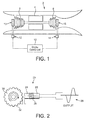
- the engine 2 comprises a combustor 4 positioned between a compressor 6 and a turbine 8.
- the engine control unit 10 is connected to a first sensor 12 at the compressor end of the shaft 16 and to a second sensor 14 at the turbine end of the shaft.
- the first sensor senses the rotation of a first phonic wheel 13 mounted to the shaft 16 and the second sensor senses the rotation of a second phonic wheel 15 mounted to the shaft.
- the engine Electronic Control Unit monitors the sensor signals from both ends of the shaft to ensure they are synchronous. In the event of a shaft failure, the sensor signals become non-synchronous. This can be detected and the fuel can then be cut off, stopping the turbine over-speeding.
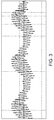
- a VR sensor 20 is illustrated schematically in Figure 2 .
- a VR sensor consists of a permanent magnet 22 attached to a pole piece 24, and a coil 26 wound around the pole piece.
- An output signal 28 is generated when the magnetic field strength within and around the pole piece changes. This is caused by the approach and passing of ferrous metal teeth 32 on a phonic wheel 30 near the pole piece 24.
- the alternating presence and absence of ferrous metal teeth on the phonic wheel varies the reluctance, or "resistance of flow" of the magnetic field, which dynamically changes the magnetic field strength. This change in magnetic field strength induces a current into a coil winding which is attached to the output terminals.
- the output signal of a VR sensor is an AC voltage that varies in frequency that is directly proportional to the speed of the monitored target.
- One complete waveform (cycle) occurs as each tooth of the wheel passes the sensing area (pole piece) of the sensor.
- the frequency of the signal, and so the speed of rotation, is determined from the zero crossing times of the signal.
- the sensor "sinusoidal like" voltage output is required to cross zero volts and reach a minimum voltage either side of zero, for a reliable speed reading to be obtained. This minimum voltage requirement avoids electrical noise causing false readings.
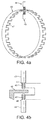
- FIG. 3 shows example of a distorted output plot from an eccentric running phonic wheel. This distortion occurs due to the rapid changes in the air-gap between the sensor and the phonic wheel that occurs during less than one revolution of the phonic wheel. The value of the peak voltage signal increases as the air gap between the sensor and the phonic wheel gets smaller and decreases as the air gap gets larger.
- the present invention provides a system according to claim 1 and a method according to claim 14. Preferred features are defined in dependent claims 2 to 13.
- a sensing system for sensing rotational speed of a shaft in a gas turbine engine comprising:
- radial in this context means in a direction orthogonal to the axis of rotation of the shaft and target.
- axial means in the direction of the axis of rotation of the target and shaft.
- the target may be a wheel and the at least one ferrous target element may be at least one ferrous tooth on the wheel.
- the wheel may comprise a plurality of ferrous teeth arranged around a circumference of the wheel.
- the target may be a slotted cylinder.
- the target provides a circumferential path a portion of which contains ferrous material and a portion of which does not contain ferrous material so that as the target rotates the probe assembly experiences variable magnetic reluctance.
- the first magnetic probe assembly may comprise one or more variable reluctance sensors. If the pole piece elements are part of the same magnetic circuit with the same sensor, then the reluctance of the magnetic field is not much changed by eccentric motion of the target and the output of the sensor is stable. If the pole piece elements are in separate sensors, each providing an independent output, the outputs can be combined to provide a stable, compensated signal in which variations due to eccentric rotation are minimal.
- the first magnetic probe assembly comprises a plurality of magnetic probes, wherein each of the first and second pole piece elements is part of a separate magnetic probe.
- the output of each of the plurality of magnetic probes may be summed or otherwise combined to provide a stable signal from which a measure of the rotational speed of the shaft can be obtained.
- Each probe may comprises a coil wound around the pole piece element.
- the coils may be connected to one another in series in order to provide a summed output signal. Alternatively, the coils may be connected in parallel, or the outputs of the coils combined in another way, for example within signal processing circuitry, to provide a stable combined output signal in which variations in voltage due to eccentric rotation of the shaft are smoothed out.
- the plurality of magnetic probes may share a permanent magnet or may have separate permanent magnets.
- the first and second pole piece elements may be part of a single pole piece.
- a coil may be wound around the pole piece and an output signal obtained from the coil.
- the pole pieces may be arranged relative to the target, and in particular relative to the ferrous target element or elements, in various ways.
- the at least one ferrous target element extends in an axial direction away from a body of the target and the first and second pole piece elements are positioned on a same side of the shaft as each other and such that the at least one ferrous target element passes between the first and second pole piece elements as the target rotates. This allows for a compact system as the pole piece elements can be relatively close to one another, with just a small air gap between the pole pieces through which the ferrous target element or elements pass as the shaft rotates.
- the pole piece elements are positioned on opposite sides of the shaft.
- the target preferably comprises a plurality of ferrous target elements so that the first pole piece is adjacent to a different ferrous target element to the second pole piece at any given moment in time.
- the first magnetic probe assembly may comprises more than two pole piece elements positioned adjacent the target.
- the pole pieces may be spaced circumferentially around the target.
- the system may comprise a second magnetic probe assembly positioned adjacent the shaft, axially spaced from the first magnetic probe assembly and wherein the system is configured to compare an output from the first magnetic probe assembly with an output from the second magnetic probe assembly to determine shaft breakage.
- the output signals from the two probe assemblies may be compared to determine if there is any change in the relative phase of the output signals indicative of shaft breakage.
- a gas turbine engine comprising a sensing system according to the first aspect of the invention.
- a method of determining rotational speed of a shaft comprising: providing a first magnetic probe and a second magnetic probe, wherein the first magnet probe and the second magnetic probe are radially spaced from one another so that the at least one ferrous target element passes proximate to the first and second magnetic probes as the target rotates and so that radial movement of a ferrous target element away from one of the first and second pole magnetic probe results in corresponding movement of a ferrous target element towards the other of the first and second magnetic probes, and combining an output from the first magnetic probe with an output of the second magnetic probe to provide a combined output signal from which the rotational speed of the shaft can be determined.
- the output from the first magnetic probe may be summed with the output of the second magnetic probe to provide the combined output signal,
- the method may further comprise comparing the combined output signal with an output signal from another speed sensor to determine if the shaft has broken.
- the method may further comprise shutting off a fuel supply if the shaft is determined to be broken.
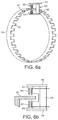
- Figure 4a illustrates a first embodiment of the invention.
- Figure 4a illustrates a target in the form of a phonic wheel 40 having a plurality of axially extending ferrous teeth 42 around the circumference.
- the phonic wheel is fixed to a rotating shaft (not shown but as illustrated in Figure 1 ) so that the teeth 42 travel along a circular path.
- Two VR probes 44, 46 are on the same side of the shaft but on opposite sides of the path of the ferrous teeth.
- the two probes 44, 46 are spaced apart, but aligned, in a radial direction so that each tooth passes between the two probes as the wheel 40 rotates. This means that if, as a result of eccentric rotation of the shaft, the teeth move towards one of the probes they will correspondingly and simultaneously move away from the other of the probes.
- Figure 4b is a schematic cross section of the arrangement of Figure 4a in the vicinity of the VR probes.
- Each of the probes comprises a permanent magnet 43, 49 a pole piece 41, 48 and a coil 45, 47 would around the respective pole piece.
- the coils 41, 48 are connected to each other in series.
- other ways of combining the outputs of each of the coils may used, such as parallel connection or a combining of the output signals within signal processing circuitry.
- Figure 5 shows the output from each of the coils during an eccentric rotation of the wheel and the combined output of the two coils connected in series.
- the teeth may first move closer to the first pole piece 41 causing an increase in the voltage induced in the coil 45 (labelled coil 1 in Figure 5 ).
- the teeth move further from the second pole piece 48, causing a decrease in the voltage induced in coil 47 (labelled coil 2 in Figure 5 ).
- the teeth move further from the first coil causing a decrease in voltage induced in coil 1 and, at the same time, closer to coil 2 causing an increase in voltage induced in coil 2.
- FIG. 5 Also shown in Figure 5 is the minimum peak-to-peak voltage V min required for a reliable speed measurement to be made. It can be seen that at times the output from both coil 1 and coil 2 is insufficient for a reliable speed measurement. However, it can also be seen that using the combined output of coil 1 and coil 2, as result of connecting them in series, it always possible to obtain a reliable speed measurement even when the wheel is rotating eccentrically.
- the arrangement illustrated in Figure 4a and 4b can be used in a shaft breakage detection system as illustrated in Figure 1 .
- shaft breakage can be determined very quickly.
- using an arrangement as shown in Figure 4a and 4b in a system as shown in Figure 1 will provide a much quicker response than a system using detection of eccentric rotation of the shaft as an indicator of shaft breakage.
- Figures 6a and 6b illustrate a sensing system in accordance with a second embodiment of the invention.
- the sensing system of Figures 6a and 6b is very similar to that shown in Figures 4a and 4b , the difference being that in the system of Figure 6a and 6b the VR probes share a common permanent magnet.
- Figure 6a illustrates a phonic wheel 40 having a plurality of axially extending teeth 42 around the circumference.
- the phonic wheel is fixed to a rotating shaft (not shown but as illustrated in Figure 1 ) so that the teeth 42 travel along a circular path.
- Two VR probes are on the same side of the shaft but on opposite sides of the path of the ferrous teeth in the same manner as shown in Figure 4a and Figure 4b .
- the two probes are spaced apart, but aligned, in a radial direction so that each tooth passes between the two probes as the wheel 40 rotates. This means that if, as a result of eccentric rotation of the shaft, the teeth move towards one of the probes they will correspondingly move away from the other of the probes.
- Figure 6b is a schematic cross section of the arrangement of Figure 6a in the vicinity of the VR probes.
- Each of the probes comprises a pole piece 61, 68 and a coil 65, 67 wound around the respective pole piece.
- Each of the pole pieces 61, 68 has a pole extension 64, 66 formed from a ferrous material which is in contact with a shared permanent magnet 63.
- the coils 61, 68 are connected to each other in series in the same manner as described with reference to Figure 4b .
- Figures 7a and 7b illustrate a sensing system in accordance with a third embodiment of the invention.
- a single VR probe is used, with a slot in the pole piece 71 through which the teeth of the phonic wheel pass.
- the pole piece then has two pole piece elements 72, 74 positioned on either side of the path of the ferrous teeth on the phonic wheel. This is clearly shown in Figure 7b .
- the two pole piece elements 72, 74 are spaced apart, but aligned, in a radial direction so that each tooth passes in the slot between the two pole piece elements as the wheel 40 rotates. This means that if, as a result of eccentric rotation of the shaft, the teeth move towards one of the pole piece elements they will correspondingly move away from the other of the pole piece elements.
- a permanent magnet 73 abuts the pole piece 71 and a single coil 75 is wound around the pole piece 71. So, in the arrangement of Figure 7a and 7b , rather than having two probes connected in series, a single probe is used with a split pole piece.
- the peak-to-peak voltage induced in the coil 75 remains relatively stable even during eccentric rotation of the wheel because the reluctance of the magnetic field passing through the pole piece is not significantly altered by the position of a ferrous tooth in the slot between the pole piece elements, only by the presence or absence of a ferrous tooth.
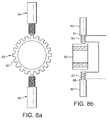
- Figure 8a is a schematic perspective view of a sensing system in accordance with a fourth embodiment of the invention.
- Figure 8b is a schematic cross-section of the system shown in Figure 8a .
- the phonic wheel 80 is a gear type wheel with the ferrous teeth 82 extending in a radial direction rather than in an axial direction.
- the phonic wheel is fixed to a rotating shaft (not shown but as illustrated in Figure 1 ) so that the teeth 82 travel along a circular path.
- Two VR probes 84, 86 are positioned on opposite sides of the shaft and wheel 80.
- the two probes 84, 86 are aligned in a radial direction (in other words they are diametrically opposed across the wheel) so that if, as a result of eccentric rotation of the shaft, the teeth move towards one of the probes they will correspondingly move away from the other of the probes.
- Figure 8b is a schematic cross section of the arrangement of Figure 8a .
- Each of the probes comprises a permanent magnet 83, 89 a pole piece 81, 88 and a coil 85, 87 would around the respective pole piece.
- the coils 85, 87 are connected to each other in series.
- the system of Figure 8a and 8b operates on the same principle as described with reference to Figures 4a and 4b , but with a different geometric arrangement.
Landscapes
- Physics & Mathematics (AREA)
- General Physics & Mathematics (AREA)
- Engineering & Computer Science (AREA)
- Mechanical Engineering (AREA)
- General Engineering & Computer Science (AREA)
- Transmission And Conversion Of Sensor Element Output (AREA)
Applications Claiming Priority (1)
| Application Number | Priority Date | Filing Date | Title |
|---|---|---|---|
| GB1512311.0A GB2540379A (en) | 2015-07-14 | 2015-07-14 | Magnetic sensing system and method for detecting shaft speed |
Publications (2)
| Publication Number | Publication Date |
|---|---|
| EP3128332A2 true EP3128332A2 (fr) | 2017-02-08 |
| EP3128332A3 EP3128332A3 (fr) | 2017-04-19 |
Family
ID=54013937
Family Applications (1)
| Application Number | Title | Priority Date | Filing Date |
|---|---|---|---|
| EP16179343.5A Withdrawn EP3128332A3 (fr) | 2015-07-14 | 2016-07-13 | Système et procédé de détection magnétique destinés à détecter la vitesse de l'arbre |
Country Status (4)
| Country | Link |
|---|---|
| US (1) | US20170115320A1 (fr) |
| EP (1) | EP3128332A3 (fr) |
| CA (1) | CA2935981A1 (fr) |
| GB (1) | GB2540379A (fr) |
Cited By (4)
| Publication number | Priority date | Publication date | Assignee | Title |
|---|---|---|---|---|
| EP3587744A1 (fr) * | 2018-06-29 | 2020-01-01 | Pratt & Whitney Canada Corp. | Roue phonique avec réglage de tension de sortie |
| US10976221B2 (en) | 2018-01-09 | 2021-04-13 | Weston Aerospace Limited | Magnetic gas turbine sensor |
| US11313245B2 (en) | 2019-01-28 | 2022-04-26 | Rolls-Royce Plc | Shaft monitoring system |
| US11371381B2 (en) | 2019-01-28 | 2022-06-28 | Rolls-Royce Plc | Shaft monitoring system |
Families Citing this family (12)
| Publication number | Priority date | Publication date | Assignee | Title |
|---|---|---|---|---|
| GB2540784A (en) | 2015-07-27 | 2017-02-01 | Weston Aerospace Ltd | Magnetic sensor system for detecting abnormal movement in a gas turbine shaft |
| US20180320601A1 (en) * | 2017-05-04 | 2018-11-08 | Rolls-Royce Corporation | Turbine assembly with auxiliary wheel |
| US10774678B2 (en) | 2017-05-04 | 2020-09-15 | Rolls-Royce Corporation | Turbine assembly with auxiliary wheel |
| US10968744B2 (en) | 2017-05-04 | 2021-04-06 | Rolls-Royce Corporation | Turbine rotor assembly having a retaining collar for a bayonet mount |
| US10865646B2 (en) | 2017-05-04 | 2020-12-15 | Rolls-Royce Corporation | Turbine assembly with auxiliary wheel |
| US11554850B2 (en) | 2019-04-25 | 2023-01-17 | Pratt & Whitney Canada Corp. | Blade angle position feedback system with offset sensors |
| US11371825B2 (en) | 2019-05-31 | 2022-06-28 | Pratt & Whitney Canada Corp. | Feedback device with differing magnetic permeability zones |
| US11365691B2 (en) | 2019-09-05 | 2022-06-21 | Pratt & Whitney Canada Corp. | Blade angle position feedback system with embedded markers |
| US12258869B2 (en) | 2023-05-26 | 2025-03-25 | Rtx Corporation | Turbine engine phonic wheel with integrated lubricant scoop |
| US12123311B1 (en) | 2023-05-26 | 2024-10-22 | Rtx Corporation | Turbine engine stack nut with integrated phonic wheel |
| US12078073B1 (en) | 2023-05-26 | 2024-09-03 | Rtx Corporation | Phonic wheel for turbine engine bearing compartment |
| US12281584B2 (en) | 2023-05-26 | 2025-04-22 | Rtx Corporation | Phonic wheel for turbine engine |
Family Cites Families (13)
| Publication number | Priority date | Publication date | Assignee | Title |
|---|---|---|---|---|
| GB1400614A (en) * | 1971-06-14 | 1975-07-16 | Renault | Method and apparatus for providing signals representing the rotational speed and instantaneous angular position of an internal combustion engine |
| FR2304923A1 (fr) * | 1975-03-18 | 1976-10-15 | Dba | Ensemble capteur de vitesse, du type electromagnetique |
| FR2458812A1 (fr) * | 1979-06-11 | 1981-01-02 | Cummins Engine Co Inc | Compte-tours pour moteur |
| JPS60175771A (ja) * | 1984-02-22 | 1985-09-09 | Toyota Motor Corp | 内燃機関の回転角検出装置 |
| GB2265221B (en) * | 1992-03-21 | 1995-04-26 | Schlumberger Ind Ltd | Inductive sensors |
| JPH08254172A (ja) * | 1995-03-17 | 1996-10-01 | Mitsubishi Electric Corp | 回転角度検出装置 |
| US5949359A (en) * | 1997-05-09 | 1999-09-07 | Kollmorgen Corporation | Variable reluctance resolver to digital converter |
| US6483293B1 (en) * | 2000-06-29 | 2002-11-19 | Ford Global Technologies, Inc. | System and method for cancelling the effects of stray magnetic fields from the output of a variable reluctance sensor |
| DE102004006684A1 (de) * | 2004-02-11 | 2005-09-01 | Zf Friedrichshafen Ag | Drehzahlsensor |
| DE102006020602A1 (de) * | 2006-05-02 | 2007-11-08 | Rolls-Royce Deutschland Ltd & Co Kg | Induktiver Sensor |
| GB2481414B (en) * | 2010-06-22 | 2012-09-19 | Weston Aerospace Ltd | Speed or torque probe for gas turbine engines |
| US8624564B2 (en) * | 2010-12-23 | 2014-01-07 | Caterpillar Inc. | Switched reluctance generator initial rotor position estimation |
| JP5947144B2 (ja) * | 2012-08-08 | 2016-07-06 | 東海旅客鉄道株式会社 | 電機子軸の支持構造の破損検出装置 |
-
2015
- 2015-07-14 GB GB1512311.0A patent/GB2540379A/en not_active Withdrawn
-
2016
- 2016-07-13 CA CA2935981A patent/CA2935981A1/fr not_active Abandoned
- 2016-07-13 EP EP16179343.5A patent/EP3128332A3/fr not_active Withdrawn
- 2016-07-13 US US15/209,138 patent/US20170115320A1/en not_active Abandoned
Cited By (6)
| Publication number | Priority date | Publication date | Assignee | Title |
|---|---|---|---|---|
| US10976221B2 (en) | 2018-01-09 | 2021-04-13 | Weston Aerospace Limited | Magnetic gas turbine sensor |
| EP3587744A1 (fr) * | 2018-06-29 | 2020-01-01 | Pratt & Whitney Canada Corp. | Roue phonique avec réglage de tension de sortie |
| US10801360B2 (en) | 2018-06-29 | 2020-10-13 | Pratt & Whitney Canada Corp. | Phonic wheel with output voltage tuning |
| EP3901419A1 (fr) * | 2018-06-29 | 2021-10-27 | Pratt & Whitney Canada Corp. | Roue phonique avec réglage de tension de sortie |
| US11313245B2 (en) | 2019-01-28 | 2022-04-26 | Rolls-Royce Plc | Shaft monitoring system |
| US11371381B2 (en) | 2019-01-28 | 2022-06-28 | Rolls-Royce Plc | Shaft monitoring system |
Also Published As
| Publication number | Publication date |
|---|---|
| GB2540379A (en) | 2017-01-18 |
| GB201512311D0 (en) | 2015-08-19 |
| CA2935981A1 (fr) | 2017-01-14 |
| US20170115320A1 (en) | 2017-04-27 |
| EP3128332A3 (fr) | 2017-04-19 |
Similar Documents
| Publication | Publication Date | Title |
|---|---|---|
| EP3128332A2 (fr) | Système et procédé de détection magnétique destinés à détecter la vitesse de l'arbre | |
| US20050122095A1 (en) | Rotation sensor and method | |
| EP2138836B1 (fr) | Détection de fissures dans un rotor à aimant permanent | |
| US9921081B2 (en) | Method for monitoring a rotation of a compressor wheel | |
| EP2162698B1 (fr) | Capteurs à courants de foucault | |
| US9696183B2 (en) | Angular position detector including a variable reluctance resolver-encoder | |
| US20110213569A1 (en) | Method and device for detecting cracks in compressor blades | |
| JP2012506553A (ja) | 磁場方向の測定値とフラックスコレクタとを用いる磁気位置センサ | |
| EP3221678B1 (fr) | Appareil de détection de vitesse angulaire et de température | |
| JP2015536470A (ja) | 回転部材の少なくとも1つの回転特性を決定するためのセンサ装置 | |
| US20200103250A1 (en) | Sensor system for determining at least one rotational characteristic of an element rotating about at least one axis of rotation | |
| CN110546463A (zh) | 用于确定旋转构件、尤其用于车辆的离合器操纵系统的电动机的角位置的方法 | |
| CN107407578A (zh) | 位置检测装置 | |
| WO1997048893A2 (fr) | Procede et appareil permettant de detecter le sens de rotation d'un moteur deux temps | |
| US9513143B2 (en) | Combined radial position and speed sensor assembly | |
| US20180294696A1 (en) | Measuring coil unit and electric machine comprising a measuring coil unit of this type and method for determining operating parameters of an electric machine | |
| US20120262160A1 (en) | Asymmetric variable reluctance (vr) target for multi-dimensional monitoring | |
| US20170123007A1 (en) | Method and apparatus for detecting interturn faults, and electrical machine | |
| CN111102913A (zh) | 电机定子和转子间距变化的在线检测系统 | |
| JP6337842B2 (ja) | 回転検出装置 | |
| US10495659B2 (en) | Speed and position sensing systems | |
| US8111062B2 (en) | Low mass driveshaft speed sensor assembly | |
| EP0802414A2 (fr) | Dispositif d'étanchéité d'arbre et capteur pour arbre | |
| JP2016008929A (ja) | 回転数センサ | |
| JP6587406B2 (ja) | コンプレッサの検査装置 |
Legal Events
| Date | Code | Title | Description |
|---|---|---|---|
| PUAI | Public reference made under article 153(3) epc to a published international application that has entered the european phase |
Free format text: ORIGINAL CODE: 0009012 |
|
| AK | Designated contracting states |
Kind code of ref document: A2 Designated state(s): AL AT BE BG CH CY CZ DE DK EE ES FI FR GB GR HR HU IE IS IT LI LT LU LV MC MK MT NL NO PL PT RO RS SE SI SK SM TR |
|
| AX | Request for extension of the european patent |
Extension state: BA ME |
|
| PUAL | Search report despatched |
Free format text: ORIGINAL CODE: 0009013 |
|
| AK | Designated contracting states |
Kind code of ref document: A3 Designated state(s): AL AT BE BG CH CY CZ DE DK EE ES FI FR GB GR HR HU IE IS IT LI LT LU LV MC MK MT NL NO PL PT RO RS SE SI SK SM TR |
|
| AX | Request for extension of the european patent |
Extension state: BA ME |
|
| RIC1 | Information provided on ipc code assigned before grant |
Ipc: G01P 3/488 20060101AFI20170315BHEP |
|
| STAA | Information on the status of an ep patent application or granted ep patent |
Free format text: STATUS: THE APPLICATION IS DEEMED TO BE WITHDRAWN |
|
| 18D | Application deemed to be withdrawn |
Effective date: 20171020 |