EP3128773A1 - Procédé et appareil de traitement pour découverte d2d - Google Patents
Procédé et appareil de traitement pour découverte d2d Download PDFInfo
- Publication number
- EP3128773A1 EP3128773A1 EP14888241.8A EP14888241A EP3128773A1 EP 3128773 A1 EP3128773 A1 EP 3128773A1 EP 14888241 A EP14888241 A EP 14888241A EP 3128773 A1 EP3128773 A1 EP 3128773A1
- Authority
- EP
- European Patent Office
- Prior art keywords
- terminal
- broadcast identifier
- broadcaster
- mode indicator
- target terminal
- Prior art date
- Legal status (The legal status is an assumption and is not a legal conclusion. Google has not performed a legal analysis and makes no representation as to the accuracy of the status listed.)
- Granted
Links
Images


Classifications
-
- H—ELECTRICITY
- H04—ELECTRIC COMMUNICATION TECHNIQUE
- H04W—WIRELESS COMMUNICATION NETWORKS
- H04W8/00—Network data management
- H04W8/005—Discovery of network devices, e.g. terminals
-
- H—ELECTRICITY
- H04—ELECTRIC COMMUNICATION TECHNIQUE
- H04W—WIRELESS COMMUNICATION NETWORKS
- H04W92/00—Interfaces specially adapted for wireless communication networks
- H04W92/16—Interfaces between hierarchically similar devices
- H04W92/18—Interfaces between hierarchically similar devices between terminal devices
Definitions
- the present disclosure relates to the field of communication, and in particular to a method and device for D2D discovery.
- D2D direct communication between terminals in proximity to each other can bring many advantages to the terminals, for example, a higher rate, a shorter delay and lower power consumption.
- the D2D direct communication can greatly improve radio resource efficiency of an operating company, and a D2D relay mode is favorable for improving wireless coverage of the operating company.
- new services which are more attractive can be developed by virtue of proximity information in a D2D communication process.
- a public safety system may also implement communication between terminals under the condition of no wireless coverage by virtue of a D2D technology.
- Fig. 1 is a schematic diagram showing the architecture of a 3rd Generation Partnership Project (3GPP) related D2D network system according to a related technology. As shown in Fig. 1 , functions of important network elements in the system are described as follows.
- 3GPP 3rd Generation Partnership Project
- Terminal which is also called User Equipment (UE)
- UE User Equipment
- UE User Equipment
- NodeB which is also called an Evolved NodeB (eNB) in an evolution system, mainly provides a radio resource for terminal access, and simultaneously intercommunicates with the core network through an S1 interface.
- eNB Evolved NodeB
- Core network includes a mobility management element and a gateway.
- the mobility management element is a control plane entity and a server responsible for temporarily storing user data, and is responsible for authentication, mobility management, subscription checking and the like.
- the gateway is a user plane entity, and is responsible for allocating an Internet Protocol (IP) address to the terminal, forwarding uplink and downlink data packets of the terminal and performing charging and the like.
- IP Internet Protocol
- Proximity communication server is positioned outside the core network, and the terminal communicates with the server through a user plane interface PC3.
- Main functions of the server include D2D service authorization, allocation of a temporary code to an application requested by the terminal for broadcasting of the terminal, assistance in D2D discovery, charging and the like.
- the server can acquire authorization information from a Home Subscriber Server (HSS).
- HSS Home Subscriber Server
- HSS is positioned in a home network, and has a main function of providing subscription information and authentication information of a user and the application.
- An operating company allocates a unique application ID to an application on a terminal, and for example, the application ID may include Public Land Mobile Network (PLMN) information and application identification information.
- PLMN Public Land Mobile Network
- the PLMN information indicates that the operating company is authorized and the operating company can implement control and charging.
- the terminal is usually not allowed to directly broadcast its own application ID, and the terminal needs to acquire a temporary code uniquely corresponding to the application ID from a proximity server and then broadcast the code.
- D2D discovery between two terminals includes two processes: broadcasting of UE A and monitoring of UE B. If UE B has known a monitored code A, UE B can directly discover that UE A is in proximity to UE B. If UE B does not know the monitored code A, a network matching process is further required so as to acquire an application ID, corresponding to the code A, of UE A to discover that UE A is in proximity to UE B. Descriptions about the three processes are shown in Fig. 2 , Fig. 3 and Fig. 4 respectively.
- Fig. 2 is a diagram showing a broadcast request process according to the related technology. As shown in Fig. 2 , the process includes the following steps:
- the broadcast identifier (code A) becomes invalid, and UE A needs to reinitiate a broadcast request process to re-acquire a broadcast identifier (code A) and a period of validity.
- Fig. 3 is a diagram showing a monitoring request process according to the related technology. As shown in Fig. 3 , the process includes the following steps:
- the code A becomes invalid, and UE B needs to reinitiate a monitoring request process to acquire a new code A and period of validity.
- Step S304 If UE A corresponds to a certain type of application in Step S304, a mask may be returned in Step S312, and then if the monitored code in Step S316 is matched with the mask, for example, first few bits of the code are completely matched with the mask, UE B needs to initiate a matching process to acquire an application ID corresponding to the code.
- Fig. 4 is a diagram showing a matching request process according to the related technology. As shown in Fig. 4 , the process includes the following steps:
- D2D discovery supports only one mode that UE A broadcasts its own code, which, for example, represents that UE A broadcasts "I am here", and other UE can discover UE A after receiving the code.
- a discovery mode is relatively passive, and a user of UE cannot actively find other UE for D2D communication.
- the embodiments of the present disclosure provide a processing method and device for D2D discovery, so as to at least solve the problems of simplicity and poor flexibility of a D2D communication mode in the related technology.
- a processing method for D2D discovery may include that: a broadcaster terminal acquires a radio resource in a D2D discovery process; and the broadcaster terminal sends a mode indicator and a broadcast identifier through the radio resource, wherein the mode indicator may be used for indicating whether a terminal corresponding to the broadcast identifier is the broadcaster terminal or a target terminal which the broadcaster terminal expects to discover.
- the broadcast identifier may include a temporary code, allocated by a network side and matched with a current application ID, of the broadcaster terminal.
- the broadcast identifier may include an application ID of the target terminal.
- a processing method for D2D discovery may include that: a target terminal receives a mode indicator and a broadcast identifier sent by a broadcaster terminal through a radio resource, wherein the mode indicator may be used for indicating whether a terminal corresponding to the received broadcast identifier is the broadcaster terminal or a target terminal which the broadcaster terminal expects to discover; and the target terminal matches the broadcast identifier according to the mode indicator.
- the step that the target terminal matches the broadcast identifier according to the mode indicator may include that: the target terminal judges whether the mode indicator is used for indicating that the terminal corresponding to the broadcast identifier is the broadcaster terminal or the target terminal which the broadcaster terminal expects to discover; and if a judgment result indicates the target terminal which the broadcaster terminal expects to discover, the target terminal matches an application ID of the target terminal with the received broadcast identifier, and sends a mode indicator and a temporary code matched with the application ID of the target terminal through the radio resource under a condition of successful matching, wherein the temporary code belongs to the broadcast identifier and the mode indicator is used for indicating that the terminal corresponding to the broadcast identifier is a broadcaster terminal.
- the method may further include that: the target terminal requests a network side to allocate the temporary code matched with the application ID of the target terminal.
- a processing device for D2D discovery may include: an acquisition component, configured to acquire a radio resource in a D2D discovery process; and a sending component, configured to send a mode indicator and a broadcast identifier through the radio resource, wherein the mode indicator may be used for indicating whether a terminal corresponding to the broadcast identifier is a broadcaster terminal or a target terminal which the broadcaster terminal expects to discover.
- the broadcast identifier may include a temporary code, allocated by a network side and matched with a current application ID, of the broadcaster terminal.
- the broadcast identifier may include an application ID of the target terminal.
- a processing device for D2D discovery may include: a receiving component, configured to receive a mode indicator and a broadcast identifier sent by a broadcaster terminal through a radio resource, wherein the mode indicator may be used for indicating whether a terminal corresponding to the received broadcast identifier is the broadcaster terminal or a target terminal which the broadcaster terminal expects to discover; and a matching component, configured to match the broadcast identifier according to the mode indicator.
- the matching component may include: a judgment element, configured to judge whether the mode indicator is used for indicating that the terminal corresponding to the broadcast identifier is the broadcaster terminal or the target terminal which the broadcaster terminal expects to discover; a matching element, configured to, if a judgment result of the judgment element indicates the target terminal which the broadcaster terminal expects to discover, match an application ID of the target terminal with the received broadcast identifier; and a sending component, configured to send a mode indicator and a temporary code matched with the application ID of the target terminal through the radio resource under a condition of successful matching of the matching element, wherein the temporary code belongs to the broadcast identifier and the mode indicator is used for indicating that the terminal corresponding to the broadcast identifier is a broadcaster terminal.
- the matching component may further include: an acquisition element, configured to request a network side to allocate the temporary code matched with the application ID of the target terminal under the condition of successful matching of the matching element.
- a broadcaster terminal acquires a radio resource in a D2D discovery process; and the broadcaster terminal sends a mode indicator and a broadcast identifier through the radio resource, wherein the mode indicator is used for indicating whether a terminal corresponding to the broadcast identifier is the broadcaster terminal or a target terminal which the broadcaster terminal expects to discover, so that the problems of simplicity and poor flexibility of the D2D communication mode in the related technology are solved, flexibility and diversity of the D2D communication mode are enhanced, and user experiences are improved.
- D2D discovery in the embodiments of the present disclosure supports at least two modes.
- Mode 1 is that UE A broadcasts its own code, which, for example, represents that UE A broadcasts "I am here", and other UE can discover UE A after receiving broadcast.
- Mode 2 is that UE A needs to discover whether there are interested objects or not in proximity, for example, "Who is there" or "Is UE B there" may be broadcast, and other UE may give responses after receiving broadcast.
- a solution in the related technology may support mode 1 only, and does not support mode 2.
- the original solution is extended to support discovery in mode 2 and other modes.
- a processing method for D2D discovery is provided.
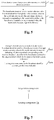
- Fig. 5 is a flowchart of a first processing method for D2D discovery according to an embodiment of the present disclosure. As shown in Fig. 5 , the method includes the following steps:
- the broadcaster terminal adds the mode indicator in a D2D discovery broadcast process, and then a receiver can judge whether the broadcast identifier sent by the broadcaster terminal belongs to the broadcaster terminal or a target terminal which the broadcaster terminal expects to discover according to the mode indicator, so that a technical basis is provided for the broadcaster terminal to actively find another terminal for D2D discovery.
- the problems of simplicity and poor flexibility of a D2D communication mode in the related technology are solved, flexibility and diversity of the D2D communication mode are enhanced, and user experiences are improved.
- the broadcast identifier may include a temporary code, allocated by a network side and matched with a current application ID, of the broadcaster terminal.
- the broadcast identifier may include an application ID of the target terminal.
- the broadcast identifier may include code A allocated by the network side and matched with the current application ID.
- the broadcast identifier may include the application ID of the target terminal.
- the application ID of the target terminal may specify one terminal, and may also specify a certain type of terminals. In such a manner, activity and flexibility of D2D discovery of the broadcaster terminal can further be enhanced.
- FIG. 6 is a flowchart of a second processing method for D2D discovery according to an embodiment of the present disclosure. As shown in Fig. 6 , the method includes the following steps:
- the target terminal on a receiving side receives the mode indicator sent by the broadcaster terminal in a D2D discovery broadcast process, judges whether the broadcast identifier sent by the broadcaster terminal belongs to the broadcaster terminal or the target terminal which the broadcaster terminal expects to discover according to the mode indicator, and then executes a corresponding matching process according to the judgment result.
- the target terminal judges whether the mode indicator is used for indicating that the terminal corresponding to the broadcast identifier is the broadcaster terminal or the target terminal which the broadcaster terminal expects to discover.
- the target terminal matches an application ID of the target terminal with the received broadcast identifier, and sends a mode indicator and a temporary code matched with the application ID of the target terminal through the radio resource under a condition of successful matching, wherein the temporary code belongs to a type of the broadcast identifier (as mentioned before, if the mode indicator indicates that the terminal corresponding to the broadcast identifier is the broadcaster terminal, the broadcast identifier may be a temporary code of the broadcaster terminal; and if the mode indicator indicates that the terminal corresponding to the broadcast identifier is the target terminal, the broadcast identifier may be the application ID of the target terminal). If the judgment result indicates that the terminal corresponding to the broadcast identifier is the broadcaster terminal, processing is performed according to a matching process in the related technology.
- UE B Under a condition that a broadcaster terminal is UE A and a target terminal is UE B, when UE B judges that the mode indicator sent by UE A indicates that the broadcast identifier corresponds to UE A (mode 1 is adopted for indicating such a mode in the embodiments of the present disclosure), UE B performs processing according to the matching process in the related technology, that is, discovery is implemented according to a discovery process shown in Fig.
- UE B judges that the mode indicator sent by UE A indicates that the broadcast identifier corresponds to UE B (mode 2 is adopted for indicating such a mode in the embodiments of the present disclosure)
- UE B matches an application ID of the target terminal with the received broadcast identifier, and sends the temporary code B matched with the application ID of the target terminal under the condition of successful matching.
- the temporary code B may be sent by broadcasting, and may also be directly sent to UE A in a unicast manner.
- a mode indicator used for indicating that the terminal corresponding to the broadcast identifier is a broadcaster terminal may also be sent together when the broadcast identifier is sent. For example, after UE B receives broadcast identifier (code) B sent by UE A and the matching is performed successfully, UE B may send code B to UE A in a broadcasting or unicast manner, and sends a mode indicator which is mode 1 together.
- the target terminal may further request a network side to allocate the temporary code matched with the application ID of the target terminal, if the temporary code has not been acquired.
- a first processing device for D2D discovery corresponding to the first processing method is provided, the device is configured to implement the abovementioned embodiment and exemplary implementation mode, and what has been described will not be elaborated.
- term "component”, used below, may implement a combination of software and/or hardware with a preset function.
- the device described in the following embodiment is preferably implemented with software, implementation with hardware or a combination of software and hardware is also possible and conceivable.
- Fig. 7 is a structure block diagram of a first processing device for D2D discovery according to an embodiment of the present disclosure. As shown in Fig. 7 , the processing device includes: an acquisition component 72 and a sending component 74. Each component will be described below in detail.
- the acquisition component 72 is configured to acquire a radio resource in a D2D discovery process; and the sending component 74 is coupled with the acquisition component 72, and is configured to send a mode indicator and a broadcast identifier through the radio resource acquired by the acquisition component 72, wherein the mode indicator is used for indicating whether a terminal corresponding to the broadcast identifier is a broadcaster terminal or a target terminal which the broadcaster terminal expects to discover.
- the broadcast identifier may include a temporary code, allocated by a network side and matched with a current application ID, of the broadcaster terminal; and under a condition that the mode indicator is used for indicating that the terminal corresponding to the broadcast identifier is the target terminal, the broadcast identifier may include an application ID of the target terminal. There may be one or more target terminals.
- a second processing device for D2D discovery corresponding to the second processing method is provided, the device is configured to implement the abovementioned embodiment and exemplary implementation mode, and that what has been described will not be elaborated.
- term "component”, used below, may implement a combination of software and/or hardware with a preset function.
- the device described in the following embodiment is preferably implemented with software, implementation with hardware or a combination of software and hardware is also possible and conceivable.
- Fig. 8 is a structure block diagram of a second processing device for D2D discovery according to an embodiment of the present disclosure. As shown in Fig. 8 , the processing device includes: a receiving component 82 and a matching component 84. Each component will be described below in detail.
- the receiving component 82 is configured to receive a mode indicator and a broadcast identifier sent by a broadcaster terminal through a radio resource, wherein the mode indicator is used for indicating whether a terminal corresponding to the received broadcast identifier is the broadcaster terminal or a target terminal which the broadcaster terminal expects to discover; and the matching component 84 is coupled with the receiving component 82, and is configured to match the broadcast identifier according to the mode indicator received by the receiving component 82.
- the matching component 84 may include: a judgment element 842, configured to judge whether the mode indicator is used for indicating that the terminal corresponding to the broadcast identifier is the broadcaster terminal or the target terminal which the broadcaster terminal expects to discover; a matching element 844, coupled with the judgment element 842 and configured to, if a judgment result of the judgment element 842 indicates the target terminal which the broadcaster terminal expects to discover, match an application ID of the target terminal with the received broadcast identifier; and a sending component 846, coupled with the matching element 844 and configured to send a mode indicator and a temporary code matched with the application ID of the target terminal through the radio resource under a condition of successful matching of the matching element 844, wherein the temporary code belongs to a broadcast identifier (as mentioned before, if the mode indicator indicates that the terminal corresponding to the broadcast identifier is the broadcaster terminal, the broadcast identifier may be a temporary code of the broadcaster terminal; and if the mode indicator indicates that the terminal corresponding to the broadcast identifie
- the matching component 84 may further include: an acquisition element 848, coupled with the matching element 844 and configured to request a network side to allocate the temporary code matched with the application ID of the target terminal if the target terminal has not acquired the temporary code matched with the application ID of the target terminal from a network under the condition of successful matching of the matching element 844.
- a terminal discovery solution is provided in the following exemplary embodiments, and the solution implements discovery between terminals by virtue of a direct interface between the terminals.
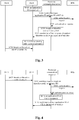
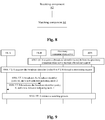
- Fig. 9 is a diagram of implementing a mode-2-based discovery process by UE A under a condition that UE B has acquired code B according to an exemplary embodiment of the present disclosure.
- Step S902 UE B acquires code B from a home proximity server by a broadcast request process shown in Fig. 2 , and UE B also performs monitoring on an allowed resource, an acquisition process of a monitoring resource being the same as Step S314.
- Step S904 UE A acquires code B of UE B from the home proximity server by a monitoring request process shown in Fig. 3 when UE A expects to discover whether UE B is in proximity or not. As shown in Fig. 2 , UE A starts monitoring code B of UE B, and in case of a success, UE A discovers UE B. In case of a failure, for example, code B is still not received after timeout of a timer, Step S906 is executed.
- Step S906 UE A applies for a broadcast resource from a network, and broadcasts code B of UE B together with a new indicator indicating that the broadcast mode is mode 2 or indicating that the code contained in the broadcast is the code of target UE.
- a process of applying for the broadcast resource is consistent with Step S214.
- UE A simultaneously applies for the monitoring resource by virtue of the process consistent with Step S314.
- Step S908 after monitoring the broadcast, UE B determines that it is mode-2-based discovery and UE A broadcasts the code of the target UE according to the new mode indicator which is contained, then UE B judges whether code B is matched with its own code B or not, and directly discards code B if code B is not matched with its own code, and if code B is matched with its own code, UE B broadcasts its own code B with a mode indicator indicating that the broadcast mode is mode 1 or indicating that the code contained in the broadcast is its own code.
- the process of applying for the broadcast resource is consistent with Step S214.
- Step S910 after monitoring the broadcast, UE A determines that it is mode-1-based discovery according to the mode indicator, which indicates that the received code is the code of the broadcast source, and since UE A has known that the code corresponds to UE B, UE B is discovered to be in proximity to UE A.
- Fig. 10 is a diagram of implementing a mode-2-based discovery process by UE A under a condition that UE B has yet not acquired code B according to an exemplary embodiment of the present disclosure.
- Step S1002 when UE A expects to discover whether UE B is in proximity to UE A or not, UE A initiates a monitoring request process shown in Fig. 3 , but acquires from a home proximity server of UE B a universal mask matching with UE B, based on which UE A can match a received code. If UE A and UE B belong to different PLMNs, communication between proximity servers of two PLMNs is also required in the process.
- Step S1004 UE A applies for a broadcast resource from a network, and broadcasts an application ID of UE B together with a new mode indicator, indicating that the broadcast mode is mode 2 or indicating that the ID contained in the broadcast is an ID of target UE.
- a process of applying for the broadcast resource is consistent with Step S214.
- UE A simultaneously applies for a monitoring resource by virtue of a process consistent with Step S314.
- Step S1006 after UE B has monitored the broadcast, UE B determines that it is mode-2-based discovery and UE A broadcasts the ID of the target UE according to the new mode indicator which is contained, then UE B judges whether the ID is matched with its own ID or not, and directly discards the ID if the ID is not matched with its own ID, and if the ID is matched with its own ID, when an available code B has been allocated from the network, Step S1008 is directly executed, otherwise UE B applies for corresponding code B from the home proximity server by a broadcast request process shown in Fig. 2 .
- Step S1008 UE B broadcasts the allocated code B together with a new mode indicator, indicating that the broadcast mode is mode 1 or indicating that its own code is contained in the broadcast.
- the process of applying for the broadcast resource is consistent with Step S214.
- Step S1010 after monitoring the broadcast, UE A determines that it is mode-1-based discovery according to the mode indicator, which indicates that the code of the broadcast source is received, UE A judges whether the received code is matched with the mask acquired in Step S1002 or not, and directly discards the code if the received code is not matched with the mask, and if the received code is matched with the mask, because UE A does not know the terminal corresponding to the code, it is needed to initiate a matching request process shown in Fig. 4 to acquire an application ID of UE B corresponding to the code to discover that UE B is in proximity to UE A.
- Fig. 11 is a diagram of a condition that targets which UE A expects to discover are users of a certain type of application in proximity according to an exemplary embodiment of the present disclosure. There may be multiple users of the applications of this type, and UE B is one of the users.
- Step S1102 when UE A expects to discover a user of a certain type of application, UE A initiates a monitoring request process shown in Fig. 3 .
- a home proximity server of UE A judges that monitoring targets are multiple users of a certain type of application, knows all PLMNs allowed to be monitored by the users according to subscription, requests proximity servers of these PLMNs to allocate masks corresponding to the application, and returns a mask list formed by the acquired mask corresponding to each PLMN and a mask which is allocated by the home proximity server of UE A and corresponds to the target application to UE A, so that UE A can match a monitored code.
- Step S1104 UE A applies for a broadcast resource from a network and broadcasts a target application ID together with a new mode indicator, indicating that the broadcast is mode 2 or indicating that the target application ID is contained in the broadcast.
- a process of applying for the broadcast resource is consistent with Step S214.
- UE A simultaneously applies for a monitoring resource by virtue of a process consistent with Step S314.
- Step S1106 after monitoring the broadcast, UE B determines that it is mode-2-based discovery and UE A broadcasts an ID of target UE according to the new mode indicator which is contained, then UE B judges whether the ID is matched with its own ID or not, and directly discards the ID if the ID is not matched with its own ID, and if the ID is matched with its own ID, when an available code B has been allocated from the network, and Step S1108 is directly executed, otherwise UE B applies for corresponding code B from the home proximity server by a broadcast request process shown in Fig. 2 .
- Step S1108 UE B broadcasts the allocated code B together with a new mode indicator, indicating that the broadcast is mode 1 or indicating that its own code is contained in the broadcast.
- the process of applying for the broadcast resource is consistent with Step S214.
- Step S1110 UE A monitors the broadcast on radio resources configured in each allowed PLMN according to configured information. If the received broadcast contains a code and a mode indicator, UE A determines that it is mode-1-based discovery according to the mode indicator, which indicates that its own code of the broadcast source is received, UE A judges whether the received code is matched with the mask, acquired in Step S1102, corresponding to the PLMN or not, and directly discards the code if the received code is not matched with the mask, and if the received code is matched with the mask, because UE A does not know the terminal corresponding to the code, it is needed to initiate a matching request process shown in Fig. 4 to acquire an application ID of UE B corresponding to the code to discover that UE B is in proximity to UE A.
- the solution in the embodiment may also be applicable to a discovery scenario where two terminals belong to different networks.
- software is further provided, which is configured to execute the technical solutions described in the abovementioned embodiments and exemplary embodiments.
- a storage medium in which the abovementioned software is stored, the storage medium including, but not limited to, a compact disc, a floppy disk, a hard disk, an erasable memory and the like.
- each component of each component or step of the present disclosure may be implemented by a universal computing device, and the components or steps may be concentrated on a single computing device or distributed on a network formed by a plurality of computing devices, and may optionally be implemented by programmable codes executable for the computing devices, so that the components or steps may be stored in a storage device for execution with the computing devices, the shown or described steps may be executed in sequences different from those described here in some circumstances, or may form each integrated circuit component respectively, or multiple components or steps therein may form a single integrated circuit component for implementation.
- the present disclosure is not limited to any specific hardware and software combination.
- the processing method for D2D discovery and device provided by the embodiments of the present disclosure have the following beneficial effects: the flexibility and diversity of the D2D communication mode are enhanced, and user experiences are improved.
Landscapes
- Engineering & Computer Science (AREA)
- Databases & Information Systems (AREA)
- Computer Networks & Wireless Communication (AREA)
- Signal Processing (AREA)
- Mobile Radio Communication Systems (AREA)
Applications Claiming Priority (2)
| Application Number | Priority Date | Filing Date | Title |
|---|---|---|---|
| CN201410134559.3A CN104980910A (zh) | 2014-04-03 | 2014-04-03 | D2d发现的处理方法及装置 |
| PCT/CN2014/084029 WO2015149463A1 (fr) | 2014-04-03 | 2014-08-08 | Procédé et appareil de traitement pour découverte d2d |
Publications (3)
| Publication Number | Publication Date |
|---|---|
| EP3128773A1 true EP3128773A1 (fr) | 2017-02-08 |
| EP3128773A4 EP3128773A4 (fr) | 2017-03-22 |
| EP3128773B1 EP3128773B1 (fr) | 2022-01-05 |
Family
ID=54239355
Family Applications (1)
| Application Number | Title | Priority Date | Filing Date |
|---|---|---|---|
| EP14888241.8A Active EP3128773B1 (fr) | 2014-04-03 | 2014-08-08 | Procédé et appareil de traitement pour découverte d2d |
Country Status (4)
| Country | Link |
|---|---|
| US (1) | US10104532B2 (fr) |
| EP (1) | EP3128773B1 (fr) |
| CN (1) | CN104980910A (fr) |
| WO (1) | WO2015149463A1 (fr) |
Families Citing this family (8)
| Publication number | Priority date | Publication date | Assignee | Title |
|---|---|---|---|---|
| CN104838697B (zh) | 2012-11-01 | 2019-10-11 | 英特尔公司 | 用于对等应用的网络辅助设备到设备发现 |
| CN105284166B (zh) * | 2013-06-28 | 2021-03-23 | 苹果公司 | 针对对等应用的网络辅助的设备对设备发现 |
| CN106465046B (zh) * | 2014-05-07 | 2020-05-01 | 交互数字专利控股公司 | 用于启用机器类型通信群组通信的群组通信的系统、方法和工具 |
| EP3208993B1 (fr) * | 2016-02-16 | 2022-04-06 | Saguna Networks Ltd. | Procédé, systèmes de dispositifs à circuits et code exécutable par ordinateur associé fonctionnellement pour prendre en charge l'informatique périphérique dans un réseau de communication |
| CN107295454B (zh) * | 2016-03-31 | 2022-11-22 | 中兴通讯股份有限公司 | 资源的配置方法及装置 |
| US10794983B1 (en) * | 2019-07-25 | 2020-10-06 | Cisco Technology, Inc. | Enhancing the accuracy of angle-of-arrival device locating through machine learning |
| CN112752239B (zh) * | 2019-10-29 | 2022-05-27 | 大唐移动通信设备有限公司 | 一种直连通信方法及设备 |
| CN115134814B (zh) * | 2021-03-26 | 2025-07-11 | 西安中诺通讯有限公司 | 一种d2d通信的发现方法和发现系统 |
Family Cites Families (8)
| Publication number | Priority date | Publication date | Assignee | Title |
|---|---|---|---|---|
| US8279851B2 (en) | 2008-08-15 | 2012-10-02 | Nokia Corporation | Apparatus, system, and method for obtaining local connectivity settings |
| CN101772199A (zh) * | 2008-11-24 | 2010-07-07 | 华为终端有限公司 | 一种d2d网络建立的方法和装置 |
| CN103200634B (zh) | 2012-01-05 | 2016-10-05 | 华为技术有限公司 | 小区间切换的方法及装置 |
| CN102547984B (zh) * | 2012-02-23 | 2015-03-11 | 华为技术有限公司 | 一种设备到设备通信中寻呼的方法及装置 |
| US9241330B2 (en) * | 2012-04-26 | 2016-01-19 | Industrial Technology Research Institute | Resource management method and apparatuses for device to device communications |
| GB2503508B (en) * | 2012-06-29 | 2014-09-17 | Broadcom Corp | Apparatus and method for peer discovery |
| EP2880877B1 (fr) | 2012-08-01 | 2019-02-27 | Nokia Solutions and Networks Oy | Procédés, produits de type programmes informatiques et appareils améliorant la découverte commandée par réseau dans des réseaux de communication mobile |
| CN103686718A (zh) * | 2012-08-31 | 2014-03-26 | 中兴通讯股份有限公司 | D2d设备的身份标识处理方法及装置 |
-
2014
- 2014-04-03 CN CN201410134559.3A patent/CN104980910A/zh active Pending
- 2014-08-08 WO PCT/CN2014/084029 patent/WO2015149463A1/fr not_active Ceased
- 2014-08-08 US US15/301,456 patent/US10104532B2/en active Active
- 2014-08-08 EP EP14888241.8A patent/EP3128773B1/fr active Active
Also Published As
| Publication number | Publication date |
|---|---|
| US10104532B2 (en) | 2018-10-16 |
| CN104980910A (zh) | 2015-10-14 |
| WO2015149463A1 (fr) | 2015-10-08 |
| EP3128773A4 (fr) | 2017-03-22 |
| US20170111781A1 (en) | 2017-04-20 |
| EP3128773B1 (fr) | 2022-01-05 |
Similar Documents
| Publication | Publication Date | Title |
|---|---|---|
| EP3128773B1 (fr) | Procédé et appareil de traitement pour découverte d2d | |
| CN115460685B (zh) | 基站、接入和移动性管理功能实体及其方法 | |
| EP3603143B1 (fr) | Procédé d'acquisition d'informations de zone disponible en tranche de réseau | |
| CN110249667B (zh) | 非3gpp接入上的终端接入5g网络的注册管理方法 | |
| US10757645B2 (en) | Access control in communications network comprising slices | |
| EP2978247A1 (fr) | Procédé d'enregistrement de terminal, procédé de découverte de terminal, terminal et dispositif | |
| US12432552B2 (en) | Handling application functions for key management in communication device-network relay scenarios | |
| EP3476100B1 (fr) | Sélection de version ip | |
| JP7121213B2 (ja) | N3gppアクセスを通じた公共警報メッセージ | |
| EP3200486B1 (fr) | Système, dispositif et procédé d'établissement de connexion | |
| CN102598732A (zh) | 附连到接入网络 | |
| KR20140006977A (ko) | 그룹 기반의 머신-투-머신 통신 | |
| CN113785552B (zh) | 会话管理功能选择 | |
| WO2016145735A1 (fr) | Procédé, appareil et dispositif de partage de données d2d | |
| US20160119769A1 (en) | Proximity service | |
| KR102233595B1 (ko) | 단말 간 근접 발견을 위한 방법 및 장치 | |
| KR20150084628A (ko) | 이동 통신에서 ProSe그룹 통신 또는 공공 안전을 지원하기 위한 보안 방안 및 시스템 | |
| US20170048897A1 (en) | Methods and Apparatuses for Notifying or Updating ProSe Temporary Identifier | |
| US20180070390A1 (en) | SYSTEM AND METHOD OF DETERMINING REAL-TIME LOCATION/STATUS OF VoWiFi USERS IN HETEROGENEOUS NETWORK ENVIRONMENT | |
| WO2015165224A1 (fr) | Procédé et appareil de traitement d'autorisation, serveur de proximité et serveur d'abonné domestique | |
| WO2015154406A1 (fr) | Procédé et appareil d'envoi d'informations de surveillance, et procédé et appareil de surveillance | |
| KR20140071862A (ko) | 호 처리 부하 제어 방법 및 장치 |
Legal Events
| Date | Code | Title | Description |
|---|---|---|---|
| STAA | Information on the status of an ep patent application or granted ep patent |
Free format text: STATUS: THE INTERNATIONAL PUBLICATION HAS BEEN MADE |
|
| PUAI | Public reference made under article 153(3) epc to a published international application that has entered the european phase |
Free format text: ORIGINAL CODE: 0009012 |
|
| STAA | Information on the status of an ep patent application or granted ep patent |
Free format text: STATUS: REQUEST FOR EXAMINATION WAS MADE |
|
| 17P | Request for examination filed |
Effective date: 20160923 |
|
| AK | Designated contracting states |
Kind code of ref document: A1 Designated state(s): AL AT BE BG CH CY CZ DE DK EE ES FI FR GB GR HR HU IE IS IT LI LT LU LV MC MK MT NL NO PL PT RO RS SE SI SK SM TR |
|
| AX | Request for extension of the european patent |
Extension state: BA ME |
|
| A4 | Supplementary search report drawn up and despatched |
Effective date: 20170216 |
|
| RIC1 | Information provided on ipc code assigned before grant |
Ipc: H04W 8/00 20090101AFI20170210BHEP |
|
| DAX | Request for extension of the european patent (deleted) | ||
| STAA | Information on the status of an ep patent application or granted ep patent |
Free format text: STATUS: EXAMINATION IS IN PROGRESS |
|
| 17Q | First examination report despatched |
Effective date: 20190320 |
|
| GRAP | Despatch of communication of intention to grant a patent |
Free format text: ORIGINAL CODE: EPIDOSNIGR1 |
|
| STAA | Information on the status of an ep patent application or granted ep patent |
Free format text: STATUS: GRANT OF PATENT IS INTENDED |
|
| INTG | Intention to grant announced |
Effective date: 20211020 |
|
| GRAS | Grant fee paid |
Free format text: ORIGINAL CODE: EPIDOSNIGR3 |
|
| GRAA | (expected) grant |
Free format text: ORIGINAL CODE: 0009210 |
|
| STAA | Information on the status of an ep patent application or granted ep patent |
Free format text: STATUS: THE PATENT HAS BEEN GRANTED |
|
| AK | Designated contracting states |
Kind code of ref document: B1 Designated state(s): AL AT BE BG CH CY CZ DE DK EE ES FI FR GB GR HR HU IE IS IT LI LT LU LV MC MK MT NL NO PL PT RO RS SE SI SK SM TR |
|
| REG | Reference to a national code |
Ref country code: GB Ref legal event code: FG4D |
|
| REG | Reference to a national code |
Ref country code: CH Ref legal event code: EP |
|
| REG | Reference to a national code |
Ref country code: AT Ref legal event code: REF Ref document number: 1461667 Country of ref document: AT Kind code of ref document: T Effective date: 20220115 |
|
| REG | Reference to a national code |
Ref country code: DE Ref legal event code: R096 Ref document number: 602014082101 Country of ref document: DE |
|
| REG | Reference to a national code |
Ref country code: IE Ref legal event code: FG4D |
|
| REG | Reference to a national code |
Ref country code: LT Ref legal event code: MG9D |
|
| REG | Reference to a national code |
Ref country code: NL Ref legal event code: MP Effective date: 20220105 |
|
| REG | Reference to a national code |
Ref country code: AT Ref legal event code: MK05 Ref document number: 1461667 Country of ref document: AT Kind code of ref document: T Effective date: 20220105 |
|
| PG25 | Lapsed in a contracting state [announced via postgrant information from national office to epo] |
Ref country code: NL Free format text: LAPSE BECAUSE OF FAILURE TO SUBMIT A TRANSLATION OF THE DESCRIPTION OR TO PAY THE FEE WITHIN THE PRESCRIBED TIME-LIMIT Effective date: 20220105 |
|
| PG25 | Lapsed in a contracting state [announced via postgrant information from national office to epo] |
Ref country code: SE Free format text: LAPSE BECAUSE OF FAILURE TO SUBMIT A TRANSLATION OF THE DESCRIPTION OR TO PAY THE FEE WITHIN THE PRESCRIBED TIME-LIMIT Effective date: 20220105 Ref country code: RS Free format text: LAPSE BECAUSE OF FAILURE TO SUBMIT A TRANSLATION OF THE DESCRIPTION OR TO PAY THE FEE WITHIN THE PRESCRIBED TIME-LIMIT Effective date: 20220105 Ref country code: PT Free format text: LAPSE BECAUSE OF FAILURE TO SUBMIT A TRANSLATION OF THE DESCRIPTION OR TO PAY THE FEE WITHIN THE PRESCRIBED TIME-LIMIT Effective date: 20220505 Ref country code: NO Free format text: LAPSE BECAUSE OF FAILURE TO SUBMIT A TRANSLATION OF THE DESCRIPTION OR TO PAY THE FEE WITHIN THE PRESCRIBED TIME-LIMIT Effective date: 20220405 Ref country code: LT Free format text: LAPSE BECAUSE OF FAILURE TO SUBMIT A TRANSLATION OF THE DESCRIPTION OR TO PAY THE FEE WITHIN THE PRESCRIBED TIME-LIMIT Effective date: 20220105 Ref country code: HR Free format text: LAPSE BECAUSE OF FAILURE TO SUBMIT A TRANSLATION OF THE DESCRIPTION OR TO PAY THE FEE WITHIN THE PRESCRIBED TIME-LIMIT Effective date: 20220105 Ref country code: ES Free format text: LAPSE BECAUSE OF FAILURE TO SUBMIT A TRANSLATION OF THE DESCRIPTION OR TO PAY THE FEE WITHIN THE PRESCRIBED TIME-LIMIT Effective date: 20220105 Ref country code: BG Free format text: LAPSE BECAUSE OF FAILURE TO SUBMIT A TRANSLATION OF THE DESCRIPTION OR TO PAY THE FEE WITHIN THE PRESCRIBED TIME-LIMIT Effective date: 20220405 |
|
| PG25 | Lapsed in a contracting state [announced via postgrant information from national office to epo] |
Ref country code: PL Free format text: LAPSE BECAUSE OF FAILURE TO SUBMIT A TRANSLATION OF THE DESCRIPTION OR TO PAY THE FEE WITHIN THE PRESCRIBED TIME-LIMIT Effective date: 20220105 Ref country code: LV Free format text: LAPSE BECAUSE OF FAILURE TO SUBMIT A TRANSLATION OF THE DESCRIPTION OR TO PAY THE FEE WITHIN THE PRESCRIBED TIME-LIMIT Effective date: 20220105 Ref country code: GR Free format text: LAPSE BECAUSE OF FAILURE TO SUBMIT A TRANSLATION OF THE DESCRIPTION OR TO PAY THE FEE WITHIN THE PRESCRIBED TIME-LIMIT Effective date: 20220406 Ref country code: FI Free format text: LAPSE BECAUSE OF FAILURE TO SUBMIT A TRANSLATION OF THE DESCRIPTION OR TO PAY THE FEE WITHIN THE PRESCRIBED TIME-LIMIT Effective date: 20220105 Ref country code: AT Free format text: LAPSE BECAUSE OF FAILURE TO SUBMIT A TRANSLATION OF THE DESCRIPTION OR TO PAY THE FEE WITHIN THE PRESCRIBED TIME-LIMIT Effective date: 20220105 |
|
| PG25 | Lapsed in a contracting state [announced via postgrant information from national office to epo] |
Ref country code: IS Free format text: LAPSE BECAUSE OF FAILURE TO SUBMIT A TRANSLATION OF THE DESCRIPTION OR TO PAY THE FEE WITHIN THE PRESCRIBED TIME-LIMIT Effective date: 20220505 |
|
| REG | Reference to a national code |
Ref country code: DE Ref legal event code: R097 Ref document number: 602014082101 Country of ref document: DE |
|
| PG25 | Lapsed in a contracting state [announced via postgrant information from national office to epo] |
Ref country code: SM Free format text: LAPSE BECAUSE OF FAILURE TO SUBMIT A TRANSLATION OF THE DESCRIPTION OR TO PAY THE FEE WITHIN THE PRESCRIBED TIME-LIMIT Effective date: 20220105 Ref country code: SK Free format text: LAPSE BECAUSE OF FAILURE TO SUBMIT A TRANSLATION OF THE DESCRIPTION OR TO PAY THE FEE WITHIN THE PRESCRIBED TIME-LIMIT Effective date: 20220105 Ref country code: RO Free format text: LAPSE BECAUSE OF FAILURE TO SUBMIT A TRANSLATION OF THE DESCRIPTION OR TO PAY THE FEE WITHIN THE PRESCRIBED TIME-LIMIT Effective date: 20220105 Ref country code: EE Free format text: LAPSE BECAUSE OF FAILURE TO SUBMIT A TRANSLATION OF THE DESCRIPTION OR TO PAY THE FEE WITHIN THE PRESCRIBED TIME-LIMIT Effective date: 20220105 Ref country code: DK Free format text: LAPSE BECAUSE OF FAILURE TO SUBMIT A TRANSLATION OF THE DESCRIPTION OR TO PAY THE FEE WITHIN THE PRESCRIBED TIME-LIMIT Effective date: 20220105 Ref country code: CZ Free format text: LAPSE BECAUSE OF FAILURE TO SUBMIT A TRANSLATION OF THE DESCRIPTION OR TO PAY THE FEE WITHIN THE PRESCRIBED TIME-LIMIT Effective date: 20220105 |
|
| PLBE | No opposition filed within time limit |
Free format text: ORIGINAL CODE: 0009261 |
|
| STAA | Information on the status of an ep patent application or granted ep patent |
Free format text: STATUS: NO OPPOSITION FILED WITHIN TIME LIMIT |
|
| PG25 | Lapsed in a contracting state [announced via postgrant information from national office to epo] |
Ref country code: AL Free format text: LAPSE BECAUSE OF FAILURE TO SUBMIT A TRANSLATION OF THE DESCRIPTION OR TO PAY THE FEE WITHIN THE PRESCRIBED TIME-LIMIT Effective date: 20220105 |
|
| 26N | No opposition filed |
Effective date: 20221006 |
|
| PG25 | Lapsed in a contracting state [announced via postgrant information from national office to epo] |
Ref country code: SI Free format text: LAPSE BECAUSE OF FAILURE TO SUBMIT A TRANSLATION OF THE DESCRIPTION OR TO PAY THE FEE WITHIN THE PRESCRIBED TIME-LIMIT Effective date: 20220105 |
|
| PG25 | Lapsed in a contracting state [announced via postgrant information from national office to epo] |
Ref country code: MC Free format text: LAPSE BECAUSE OF FAILURE TO SUBMIT A TRANSLATION OF THE DESCRIPTION OR TO PAY THE FEE WITHIN THE PRESCRIBED TIME-LIMIT Effective date: 20220105 |
|
| REG | Reference to a national code |
Ref country code: CH Ref legal event code: PL |
|
| PG25 | Lapsed in a contracting state [announced via postgrant information from national office to epo] |
Ref country code: LU Free format text: LAPSE BECAUSE OF NON-PAYMENT OF DUE FEES Effective date: 20220808 Ref country code: LI Free format text: LAPSE BECAUSE OF NON-PAYMENT OF DUE FEES Effective date: 20220831 Ref country code: CH Free format text: LAPSE BECAUSE OF NON-PAYMENT OF DUE FEES Effective date: 20220831 |
|
| REG | Reference to a national code |
Ref country code: BE Ref legal event code: MM Effective date: 20220831 |
|
| PG25 | Lapsed in a contracting state [announced via postgrant information from national office to epo] |
Ref country code: IT Free format text: LAPSE BECAUSE OF FAILURE TO SUBMIT A TRANSLATION OF THE DESCRIPTION OR TO PAY THE FEE WITHIN THE PRESCRIBED TIME-LIMIT Effective date: 20220105 Ref country code: IE Free format text: LAPSE BECAUSE OF NON-PAYMENT OF DUE FEES Effective date: 20220808 |
|
| PG25 | Lapsed in a contracting state [announced via postgrant information from national office to epo] |
Ref country code: BE Free format text: LAPSE BECAUSE OF NON-PAYMENT OF DUE FEES Effective date: 20220831 |
|
| PG25 | Lapsed in a contracting state [announced via postgrant information from national office to epo] |
Ref country code: HU Free format text: LAPSE BECAUSE OF FAILURE TO SUBMIT A TRANSLATION OF THE DESCRIPTION OR TO PAY THE FEE WITHIN THE PRESCRIBED TIME-LIMIT; INVALID AB INITIO Effective date: 20140808 |
|
| PG25 | Lapsed in a contracting state [announced via postgrant information from national office to epo] |
Ref country code: CY Free format text: LAPSE BECAUSE OF FAILURE TO SUBMIT A TRANSLATION OF THE DESCRIPTION OR TO PAY THE FEE WITHIN THE PRESCRIBED TIME-LIMIT Effective date: 20220105 |
|
| PG25 | Lapsed in a contracting state [announced via postgrant information from national office to epo] |
Ref country code: MK Free format text: LAPSE BECAUSE OF FAILURE TO SUBMIT A TRANSLATION OF THE DESCRIPTION OR TO PAY THE FEE WITHIN THE PRESCRIBED TIME-LIMIT Effective date: 20220105 |
|
| PG25 | Lapsed in a contracting state [announced via postgrant information from national office to epo] |
Ref country code: TR Free format text: LAPSE BECAUSE OF FAILURE TO SUBMIT A TRANSLATION OF THE DESCRIPTION OR TO PAY THE FEE WITHIN THE PRESCRIBED TIME-LIMIT Effective date: 20220105 |
|
| PG25 | Lapsed in a contracting state [announced via postgrant information from national office to epo] |
Ref country code: MT Free format text: LAPSE BECAUSE OF FAILURE TO SUBMIT A TRANSLATION OF THE DESCRIPTION OR TO PAY THE FEE WITHIN THE PRESCRIBED TIME-LIMIT Effective date: 20220105 |
|
| PGFP | Annual fee paid to national office [announced via postgrant information from national office to epo] |
Ref country code: GB Payment date: 20250619 Year of fee payment: 12 |
|
| PGFP | Annual fee paid to national office [announced via postgrant information from national office to epo] |
Ref country code: FR Payment date: 20250610 Year of fee payment: 12 |
|
| PGFP | Annual fee paid to national office [announced via postgrant information from national office to epo] |
Ref country code: DE Payment date: 20250611 Year of fee payment: 12 |