EP3130149B1 - Système d'appareils connectés - Google Patents
Système d'appareils connectés Download PDFInfo
- Publication number
- EP3130149B1 EP3130149B1 EP15714232.4A EP15714232A EP3130149B1 EP 3130149 B1 EP3130149 B1 EP 3130149B1 EP 15714232 A EP15714232 A EP 15714232A EP 3130149 B1 EP3130149 B1 EP 3130149B1
- Authority
- EP
- European Patent Office
- Prior art keywords
- identifier
- portable object
- devices
- programme
- receiver device
- Prior art date
- Legal status (The legal status is an assumption and is not a legal conclusion. Google has not performed a legal analysis and makes no representation as to the accuracy of the status listed.)
- Active
Links
Images
Classifications
-
- H—ELECTRICITY
- H04—ELECTRIC COMMUNICATION TECHNIQUE
- H04N—PICTORIAL COMMUNICATION, e.g. TELEVISION
- H04N21/00—Selective content distribution, e.g. interactive television or video on demand [VOD]
- H04N21/40—Client devices specifically adapted for the reception of or interaction with content, e.g. set-top-box [STB]; Operations thereof
- H04N21/41—Structure of client; Structure of client peripherals
- H04N21/4104—Peripherals receiving signals from specially adapted client devices
- H04N21/4126—The peripheral being portable, e.g. PDAs or mobile phones
- H04N21/41265—The peripheral being portable, e.g. PDAs or mobile phones having a remote control device for bidirectional communication between the remote control device and client device
-
- H—ELECTRICITY
- H04—ELECTRIC COMMUNICATION TECHNIQUE
- H04N—PICTORIAL COMMUNICATION, e.g. TELEVISION
- H04N21/00—Selective content distribution, e.g. interactive television or video on demand [VOD]
- H04N21/40—Client devices specifically adapted for the reception of or interaction with content, e.g. set-top-box [STB]; Operations thereof
- H04N21/41—Structure of client; Structure of client peripherals
- H04N21/422—Input-only peripherals, i.e. input devices connected to specially adapted client devices, e.g. global positioning system [GPS]
- H04N21/42204—User interfaces specially adapted for controlling a client device through a remote control device; Remote control devices therefor
- H04N21/42206—User interfaces specially adapted for controlling a client device through a remote control device; Remote control devices therefor characterized by hardware details
- H04N21/4222—Remote control device emulator integrated into a non-television apparatus, e.g. a PDA, media center or smart toy
-
- H—ELECTRICITY
- H04—ELECTRIC COMMUNICATION TECHNIQUE
- H04N—PICTORIAL COMMUNICATION, e.g. TELEVISION
- H04N21/00—Selective content distribution, e.g. interactive television or video on demand [VOD]
- H04N21/40—Client devices specifically adapted for the reception of or interaction with content, e.g. set-top-box [STB]; Operations thereof
- H04N21/43—Processing of content or additional data, e.g. demultiplexing additional data from a digital video stream; Elementary client operations, e.g. monitoring of home network or synchronising decoder's clock; Client middleware
- H04N21/436—Interfacing a local distribution network, e.g. communicating with another STB or one or more peripheral devices inside the home
- H04N21/43615—Interfacing a Home Network, e.g. for connecting the client to a plurality of peripherals
-
- H—ELECTRICITY
- H04—ELECTRIC COMMUNICATION TECHNIQUE
- H04N—PICTORIAL COMMUNICATION, e.g. TELEVISION
- H04N21/00—Selective content distribution, e.g. interactive television or video on demand [VOD]
- H04N21/40—Client devices specifically adapted for the reception of or interaction with content, e.g. set-top-box [STB]; Operations thereof
- H04N21/43—Processing of content or additional data, e.g. demultiplexing additional data from a digital video stream; Elementary client operations, e.g. monitoring of home network or synchronising decoder's clock; Client middleware
- H04N21/436—Interfacing a local distribution network, e.g. communicating with another STB or one or more peripheral devices inside the home
- H04N21/4363—Adapting the video stream to a specific local network, e.g. a Bluetooth® network
- H04N21/43637—Adapting the video stream to a specific local network, e.g. a Bluetooth® network involving a wireless protocol, e.g. Bluetooth®, RF or wireless LAN [IEEE 802.11]
-
- H—ELECTRICITY
- H04—ELECTRIC COMMUNICATION TECHNIQUE
- H04N—PICTORIAL COMMUNICATION, e.g. TELEVISION
- H04N21/00—Selective content distribution, e.g. interactive television or video on demand [VOD]
- H04N21/40—Client devices specifically adapted for the reception of or interaction with content, e.g. set-top-box [STB]; Operations thereof
- H04N21/43—Processing of content or additional data, e.g. demultiplexing additional data from a digital video stream; Elementary client operations, e.g. monitoring of home network or synchronising decoder's clock; Client middleware
- H04N21/442—Monitoring of processes or resources, e.g. detecting the failure of a recording device, monitoring the downstream bandwidth, the number of times a movie has been viewed, the storage space available from the internal hard disk
- H04N21/44231—Monitoring of peripheral device or external card, e.g. to detect processing problems in a handheld device or the failure of an external recording device
-
- H—ELECTRICITY
- H04—ELECTRIC COMMUNICATION TECHNIQUE
- H04N—PICTORIAL COMMUNICATION, e.g. TELEVISION
- H04N21/00—Selective content distribution, e.g. interactive television or video on demand [VOD]
- H04N21/40—Client devices specifically adapted for the reception of or interaction with content, e.g. set-top-box [STB]; Operations thereof
- H04N21/47—End-user applications
- H04N21/482—End-user interface for programme selection
Definitions
- the present invention relates to a set of devices comprising at least one receiving device and at least one portable object, said receiving device comprising means for receiving a multichannel signal capable of retaining part of the signal transmitted on a particular channel allowing to receive information in the form of a program, conversion means associated with propagation means for broadcasting said information and communication means, the set of devices further comprising a portable object comprising an electronic module for the operation of said object portable, the electronic module comprising at least one computing unit and a wireless communication circuit able to communicate with the communication means of the receiving device
- Receiving devices such as televisions or radios which receive video and / or sound information signals in order to restore them to users.
- the received signal is transmitted over a frequency band and the receiving apparatus is able to select a precise frequency from this frequency band.
- Signals are currently often digital. For a television set, these different signals correspond to the different channels while for a radio set, these different signals correspond to the different stations.
- the information received is in the form of a video and / or sound program.
- the user manipulates said receiving device or uses a remote control dedicated to the device to select the desired channel and thus see and / or listen to the program he wants.
- the user is able to program them to have a list of favorites, that is to say create shortcuts to directly reach his or her favorite channels or stations.
- the present invention therefore seeks to overcome the drawbacks of the prior art by providing a set of devices the connectivity of which is improved.
- the invention relates to a set of devices comprising at least one receiving device and at least one portable object, as defined in independent claim 1.
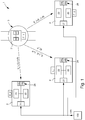
- a set of devices 1 according to the present invention is shown in figures 1 and 2 .
- Such a set of devices 1 comprises at least one receiving device 2 and at least one portable object 3.
- the reception apparatus 2 comprises reception means 21 such as a reception circuit, capable of receiving an analog or digital multichannel signal.
- the multichannel signal is an electromagnetic signal transmitted over a frequency band by a transmitter 100.
- the receiving apparatus is capable of retaining the part. of the signal transmitted on a particular channel, here a particular frequency, and to reject the parts of the signal transmitted on the other frequencies.
- the electromagnetic signal is emitted by an emitting source and can be transmitted by waves or cables.
- Each part of the signal transmitted on a particular frequency allows the user to receive information in the form of a program.
- Each particular frequency of the frequency band carries a frequency identifier (ID_Y).
- each program has an identifier (ID_X) linked to the program.
- This program identifier (ID_X) can be in the form of a code with several digits. This code is made up of several groups of digits each giving an indication.
- These indications can relate to the particular frequency on which the program is transmitted, the nature of the program that is to say if it is about sport, entertainment, culture, information, on the genre it that is to say the kind of sport: football, rugby, motor racing and even more precise information such as for example the type of program that is to say whether it is a national championship football match or a European Cup soccer match or a World Cup soccer match.
- the program identifier (ID_X) can be coded on a 12-digit code broken down into four groups of three digits (for example the identifier X is coded as follows: AAABBBCCCDDD with AAA corresponding to the string, BBB corresponding to the nature, CCC corresponding to the genre and DDD corresponding to the type), each group (AAA, BBB, CCC, DDD) corresponding to a type of information. These groups of three digits (AAA, BBB, CCC, DDD) can be part of a database.
- the reception apparatus 2 further comprises conversion means 22 such as a demodulator for converting the selected part of the signal transmitted on a particular frequency into an information signal which can be used by propagation means 23 such as a screen and /. or speakers.
- conversion means 22 such as a demodulator for converting the selected part of the signal transmitted on a particular frequency into an information signal which can be used by propagation means 23 such as a screen and /. or speakers.
- the receiving device 2 can be a digital or analog television set or a digital or analog radio set or a computer or a touchscreen tablet or any device capable of receiving a multichannel signal, of processing it and of converting it to broadcast it.
- the reception device 2 further comprises a communication circuit 24 making said device 2 capable of communicating with other devices, the communication module 24 comprising a communication circuit.
- the communication module 24 comprising a communication circuit.
- This wireless communication circuit is equipped with an interface using a protocol chosen from the list of the following protocols: Bluetooth Smart®, the WiFi protocol, near field communication (NFC) or other proprietary protocols or standards.
- the wireless communication circuit can be provided with several interfaces each using a protocol or a single interface capable of using several different protocols.
- reception apparatus 2 may further comprise control means 25.
- the portable object 3 comprises an electronic module 31 for the operation of said portable object.
- This electronic module comprises at least one computing unit 32 and a wireless communication circuit 33.
- This wireless communication circuit is provided with an interface using a protocol chosen from the list of the following protocols: Bluetooth Smart®, the WiFi protocol , near field communication (NFC) or other proprietary or standard protocols.
- the wireless communication circuit can be provided with several interfaces each using a protocol or a single interface capable of using several different protocols.
- the electronic module 31 may further include display means to allow the user to read information and control means to allow the user to act on the portable object.
- the portable object can be a watch or a bracelet or a mobile phone or a smartphone or a remote control.
- the portable object 3 is also provided with control means 34 such as push buttons or tactile keys and can be provided with display means 35.
- the display means can be used in the context of the use of a function. or can be used for several functions, and may be needles 35a and / or screens, for example of the LCD type 35b.
- said at least one reception device and said at least one portable object of the set of devices each comprise a specific label (E_i) linked to said set.
- This specific label is like an identifier that allows receiving devices and portable objects to recognize each other via a recognition protocol.
- the portable object 3 is configured so that its electronic module 31 and its communication circuit 33 regularly test, within its communication perimeter, the presence of reception devices on the basis of the specific label with a positive response. (Y) or a negative answer (N).
- the portable object When a presence test of a receiving device is confirmed, the portable object is configured to interact with it.
- the test for the presence of a reception device 2 is carried out in an area equivalent to the radius of action of the communication circuit of the portable object.
- the range of action will be around 10m while if near-field communication (NFC) is used, the range will rather be around 2 to 30cm.
- NFC near-field communication
- the portable object 3 is previously programmed with an identifier (ID_P) linked to the programs or to the channel.
- ID_P an identifier
- the portable object 3 acts on this receiving device by communicating the identifier linked to the programs or to the channel. by sending a signal provided with a command.
- this interaction between the portable object 3 and the receiving device 2 causes, on the part of the receiving device 2, a reaction consisting in modifying the particular frequency selected and scanning the different frequencies of the electromagnetic signal to select the frequency on which a program with the same identifier is being broadcast.
- the portable object is programmed with an identifier linked to sports programs and more particularly linked to the football genre.
- the example identifier coded as follows AAABBBCCCDDD (with AAA corresponding to the chain, BBB corresponding to the nature, CCC corresponding to the genre and DDD corresponding to the type) the part of the code CCC is the part which is programmed.
- the part of the programmed CCC code is communicated to the receiving device which will scan all the particular frequencies to select the particular frequency. on which, at the same time, a football-related sports program is underway.
- this interaction between the portable object 3 and the receiving device 2 causes, on the part of the receiving device 2, a reaction consisting in modifying the particular frequency by scanning the various frequencies of the electromagnetic signal to select the frequency linked to the programmed identifier.
- the reaction consists in modifying the particular channel by scanning the different channels of the multichannel signal to select the channel linked to the programmed identifier.
- the interaction between the portable object 3 with the receiving device 2 can be automatic so that the frequency change of the receiving device 2 takes place automatically without outside intervention.
- this interaction can be semi-automatic so as to have a so-called confirmation step in which the user is informed that a compatible reception device 2, that is to say belonging to the set of devices is detected. The user is then asked, via the display means, if he wants to interact with this reception device 2. The user then acts on the control means to confirm or deny the interaction.
- the portable object 3 is programmed to interact with only one reception device 2. Therefore, when the user wearing the portable object 3 passes next to this particular receiving device 2, the portable object 3 interacts with him while when he passes near another device 2 of the set 1, no interaction takes place.
- the identifier linked to the programs or to the channel, programmed in the watch 3 is entered manually by the user.
- the latter can then, via an application installed directly in the portable object 3 or on an application installed on an object of the smartphone or touch pad type, select the desired identifier.
- identifiers linked to the programs or to the channels are programmed automatically or manually in the watch 3. This multitude of identifiers is classified in order of preference.
- the portable object 2 then acts as follows.
- the portable object 3 When the portable object 3 is close to a reception device 2 belonging to the set of devices 1, the portable object 3 acts on this reception device 2 by communicating the first identifier linked to the programs or channels of the listing. This interaction between the portable object 3 and the receiving device 2 causes scanning of the different frequencies of the electromagnetic signal to select the particular frequency on which a program with the same identifier is broadcast.
- the portable object sends the second identifier of the list so that the receiving device scans the different frequencies. in order to select the particular frequency on which a program with the second identifier is running and so on. This operation is the same so that if the string of the first identifier is unavailable for some reason or not desired by the user then it is the string of the second identifier of the list which will be selected.
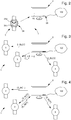
- a first method visible at figure 3 , is to say that the first nearby user has priority.
- the receiving device 2 is then configured to then block interactions with the other portable objects 2 via a blocking signal (S_BLOC).
- a second method, visible at figure 4 , to manage conflicts is to say that carriers are not necessarily interested in automatically having their preferred frequency selected on the receiving devices.
- This second method therefore consists in sending a notification via a signal (S_NOT) to all users indicating that there is a conflict between them.
- This notification further includes a response request that users must give via a signal (S_REP) so that the first to respond to this notification will have priority over the others. Interactions with other portable objects are then blocked.
- This blocking can be active until the particular frequency is changed by a user via commands on the receiving device or via a remote control. It is also possible that the blocking is active as long as the priority portable object 3 is nearby. If the user of the priority portable object 3 moves so that the receiving device 2 and the portable object 3 are out of range of each other then the blockage disappears.
- the detection by the portable object 3 of a compatible receiving device 2 can be done if said receiving device 2 is in standby mode, that is to say that it is powered on but not active.
- the portable object 3 acts on this reception device by sending an order to exit standby mode and switch to the device. active mode while communicating the identifier linked to the desired programs or channels.
Landscapes
- Engineering & Computer Science (AREA)
- Multimedia (AREA)
- Signal Processing (AREA)
- Computer Networks & Wireless Communication (AREA)
- Human Computer Interaction (AREA)
- Automation & Control Theory (AREA)
- Databases & Information Systems (AREA)
- Mobile Radio Communication Systems (AREA)
- Circuits Of Receivers In General (AREA)
- Two-Way Televisions, Distribution Of Moving Picture Or The Like (AREA)
Description
- La présente invention concerne un ensemble d'appareils comprenant au moins un appareil de réception et au moins un objet portable, ledit appareil de réception comprenant des moyens de réception d'un signal multicanal aptes à conserver une partie du signal émis sur un canal particulier permettant de recevoir des informations sous forme de programme, des moyens de conversion associés à des moyens de propagation pour diffuser lesdites informations et des moyens de communication, l'ensemble d'appareils comprenant en outre un objet portable comportant un module électronique pour le fonctionnement dudit objet portable, le module électronique comprenant au moins une unité de calcul et un circuit de communication sans fil apte à communiquer avec les moyens de communication de l'appareil de réception
- Il est connu des appareils de réception comme des téléviseurs ou des postes de radio recevant des signaux d'informations vidéo et/ou sonore pour les restituer à des utilisateurs. Le signal reçu est émis sur une bande de fréquence et l'appareil de réception est capable de sélectionner une fréquence précise parmi cette bande de fréquence. Les signaux sont actuellement souvent digitaux. Pour un téléviseur, ces différents signaux correspondent aux différentes chaines alors que pour un poste de radio, ces différents signaux correspondent aux différentes stations.
- Les informations reçues se présentent sous la forme de programme vidéo et/ou sonore.
- L'utilisateur manipule ledit appareil de réception ou utilise une télécommande dédiée à l'appareil pour sélectionner le canal désiré et ainsi voir et/ou écouter le programme qu'il souhaite.
- Afin d'améliorer l'usage de ces appareils de réception, l'utilisateur est capable de les programmer pour avoir une liste de favoris c'est-à-dire créer des raccourcis pour atteindre directement sa ou ses chaines ou stations préférées.
- Des exemples d'appareils connus de l'état de l'art sont décrits dans les documents
US2008081558 ,WO2008117105 ,US2007067808 etCN103686329 . - Toutefois, cela ne lui permet que d'atteindre sa ou ses chaines ou stations préférées et non pas son émission ou son type d'émission préféré de sorte qu'il doit toujours balayer l'ensemble des chaines ou stations pour voir si un programme lui convient.
- La présente invention cherche donc à pallier les inconvénients de l'art antérieur en fournissant un ensemble d'appareils dont la connectivité est améliorée.
- A cet effet, l'invention concerne un ensemble d'appareils comprenant au moins un appareil de réception et au moins un objet portable, tel que défini dans la revendication indépendante 1.
- Des réalisations avantageuses sont définies dans les revendications dépendantes 2 à 6.
- Les buts, avantages et caractéristiques du dispositif selon la présente invention apparaîtront plus clairement dans la description détaillée suivante d'au moins une forme de réalisation de l'invention donnée uniquement à titre d'exemple non limitatif et illustrée par les dessins annexés sur lesquels :
- Les
figures 1 et2 représentent schématiquement l'ensemble d'appareils selon la présente invention. - Les
figures 3 et 4 représentent schématiquement des méthodes de gestion de conflit selon la présente invention. - Un ensemble d'appareils 1 selon la présente invention est représenté aux
figures 1 et2 . Un tel ensemble d'appareils 1 comprend au moins un appareil de réception 2 et au moins un objet portable 3. - L'appareil de réception 2 comprend des moyens de réception 21 tel qu'un circuit de réception, capable de recevoir un signal multicanal analogique ou numérique.
- Dans le cas d'un signal analogique (utilisé dans le reste de la description), le signal multicanal (S_MC) est un signal électromagnétique émis sur une bande de fréquences par un émetteur 100. L'appareil de réception est capable de conserver la partie du signal émise sur un canal particulier, ici une fréquence particulière, et de rejeter les parties du signal émises sur les autres fréquences. Le signal électromagnétique est émis par une source émettrice et peut être transmis par ondes ou par câbles.
- Chaque partie du signal émise sur une fréquence particulière permet à l'utilisateur de recevoir des informations sous forme de programme. Chaque fréquence particulière de la bande de fréquence porte un identifiant (ID_Y) de fréquence. De plus, chaque programme porte un identifiant (ID_X) lié au programme. Cet identifiant programme (ID_X) peut se présenter sous forme d'un code à plusieurs chiffres. Ce code est composé de plusieurs groupes de chiffres donnant chacun une indication. Ces indications peuvent porter sur la fréquence particulière sur laquelle le programme est émis, la nature du programme c'est-à-dire s'il s'agit de sport, de divertissement, de culture, d'informations, sur le genre c'est-à-dire le genre de sport : football, rugby, course automobile et des informations encore plus précises comme par exemple le type de programme c'est-à-dire s'il s'agit un match de foot de championnat national ou un match de foot de coupe européenne ou un match de foot de coupe du monde.
- Par exemple, l'identifiant programme (ID_X) peut être codé sur un code à 12 chiffres décomposé en quatre groupes de trois chiffres (par exemple l'identifiant X est codé comme suit : AAABBBCCCDDD avec AAA correspondant à la chaine, BBB correspondant à la nature, CCC correspondant au genre et DDD correspondant au type), chaque groupe (AAA, BBB, CCC, DDD) correspondant à un type d'information. Ces groupes de trois chiffres (AAA, BBB, CCC, DDD) peuvent faire partie d'une base de données.
- L'appareil de réception 2 comprend en outre des moyens de conversion 22 comme un démodulateur pour convertir la partie sélectionnée du signal émis sur une fréquence particulière en un signal d'information qui pourra être utilisé par des moyens de propagation 23 comme un écran et/ou des haut-parleurs.
- On comprend ici que l'appareil de réception 2 peut être un téléviseur numérique ou analogique ou un poste de radio numérique ou analogique ou un ordinateur ou une tablette tactile ou tout appareil apte à recevoir un signal multicanal, à le traiter et à le convertir pour le diffuser.
- L'appareil de réception 2 comprend en outre un circuit de communication 24 rendant apte ledit appareil 2 à communiquer avec d'autres appareils, le module de communication 24 comportant un circuit de communication filaire 24a et/ou un circuit de communication sans fil 24b. Ce circuit de communication sans fil est muni d'une interface utilisant un protocole choisi parmi la liste des protocoles suivants : Bluetooth Smart®, le protocole WiFi, la communication en champ proche (en anglais near field communication, NFC) ou autres protocoles propriétaires ou standards.
- Bien entendu, le circuit de communication sans fil pourra être muni de plusieurs interfaces utilisant chacune un protocole ou une seule interface apte à utiliser plusieurs protocoles différents.
- De plus, l'appareil de réception 2 pourra comprendre en outre des moyens de commande 25.
- L'objet portable 3 comprend un module électronique 31 pour le fonctionnement dudit objet portable. Ce module électronique comprend au moins une unité de calcul 32 et un circuit de communication sans fil 33. Ce circuit de communication sans fil est muni d'une interface utilisant un protocole choisi parmi la liste des protocoles suivants : Bluetooth Smart®, le protocole WiFi, la communication en champ proche (en anglais near field communication, NFC) ou autres protocoles propriétaires ou standards.
- Bien entendu, le circuit de communication sans fil pourra être muni de plusieurs interfaces utilisant chacune un protocole ou une seule interface apte à utiliser plusieurs protocoles différents.
- Le module électronique 31 peut en outre comporter des moyens d'affichage pour permettre à l'utilisateur de lire des informations et des moyens de commande pour permettre à l'utilisateur d'agir sur l'objet portable
- Par exemple, l'objet portable peut être une montre ou un bracelet ou un téléphone portable ou un smartphone ou une télécommande. L'objet portable 3 est également muni de moyens de commande 34 comme des poussoirs ou des touches tactiles et peut être muni de moyens d'affichage 35. Les moyens d'affichage peuvent être utilisés dans le cadre de l'utilisation d'une fonction ou peuvent être utilisés dans le cadre de plusieurs fonctions, et peuvent être des aiguilles 35a et/ou des écrans par exemple du type LCD 35b.
- Avantageusement selon l'invention, ledit au moins un appareil de réception et ledit au moins un objet portable de l'ensemble d'appareils comprennent chacun une étiquette spécifique (E_i) lié audit ensemble. Cette étiquette spécifique est comme un identifiant qui permet aux appareils de réception et aux objets portables de se reconnaitre entre eux via un protocole de reconnaissance.
- En effet, l'objet portable 3 est configuré pour que son module électronique 31 et son circuit de communication 33 testent régulièrement, dans son périmètre de communication, la présente d'appareils de réception sur la base de l'étiquette spécifique avec une réponse positive (Y) ou une réponse négative (N).
- Lorsqu'un test de présence d'un appareil de réception est confirmé, l'objet portable est configuré pour interagir avec lui.
- Bien entendu, le test de présence d'un appareil de réception 2 est effectué dans une zone équivalente au rayon d'action du circuit de communication de l'objet portable. Par exemple, si le protocole Bluetooth Smart ® est utilisé, le rayon d'action sera d'environ 10m alors que si la communication en champ proche (en anglais nearfield communication, NFC) est utilisée, le rayon d'action sera plutôt autour de 2 à 30cm. On comprendra qu'il est possible en modifiant des composants ou des paramètres du circuit de communication 24 de l'objet portable 3, d'ajuster le rayon d'action dudit circuit de communication 24. Cela permettrait par exemple, d'avoir un circuit de communication 24 utilisant le protocole Bluetooth Smart ® et ayant une portée de 2m.
- En effet, avantageusement selon l'invention, l'objet portable 3 est préalablement programmé avec un identifiant (ID_P) lié aux programmes ou à la chaine.
- Par conséquent, lorsque l'objet portable 3 est proche d'un appareil de réception appartenant à l'ensemble d'appareils 1, l'objet portable 3 agit sur cet appareil de réception en communiquant l'identifiant lié aux programmes ou à la chaine par envoi d'un signal muni d'une commande.
- Si l'identifiant est lié à un programme, cette interaction entre l'objet portable 3 et l'appareil de réception 2 entraine, de la part de l'appareil de réception 2, une réaction consistant à modifier la fréquence particulière sélectionnée et à balayer les différentes fréquences du signal électromagnétique pour sélectionner la fréquence sur laquelle un programme avec le même identifiant est en cours de diffusion.
- Par exemple, l'objet portable est programmé avec un identifiant lié aux programmes de sport et plus particulièrement lié au genre football. Avec l'exemple d'identifiant codée comme suit AAABBBCCCDDD (avec AAA correspondant à la chaine, BBB correspondant à la nature, CCC correspondant au genre et DDD correspondant au type), la partie du code CCC est la partie qui est programmée. Lorsque l'objet portable est proche d'un appareil de réception appartenant à l'ensemble d'appareils, la partie du code CCC programmée est communiquée à l'appareil de réception qui va balayer l'ensemble des fréquences particulières pour sélectionner la fréquence particulière sur laquelle, au même instant, un programme de sport lié au football est en cours.
- Si l'identifiant est lié à une chaine c'est-à-dire à une fréquence particulière, cette interaction entre l'objet portable 3 et l'appareil de réception 2 entraine, de la part de l'appareil de réception 2, une réaction consistant à modifier la fréquence particulière en balayant les différentes fréquences du signal électromagnétique pour sélectionner la fréquence liée à l'identifiant programmé. Bien entendu, dans le cas d'un signal multicanal numérique, la réaction consiste à modifier le canal particulier en balayant les différents canaux du signal multicanal pour sélectionner le canal lié à l'identifiant programmé.
- L'interaction entre l'objet portable 3 avec l'appareil de réception 2 peut être automatique de sorte que le changement de fréquence de l'appareil de réception 2 se fasse automatiquement sans intervention extérieure.
- Toutefois, cette interaction peut être semi-automatique de sorte à avoir une étape dite de confirmation dans laquelle il est signalé à l'utilisateur qu'un appareil de réception 2 compatible c'est-à-dire appartenant à l'ensemble d'appareils est détecté. Il est alors demandé à l'utilisateur, via les moyens d'affichage, s'il veut interagir avec cet appareil de réception 2. L'utilisateur agit alors sur les moyens de commande pour confirmer ou infirmer l'interaction.
- Dans une première variante de l'invention, il peut être prévu d'avoir une fonction avec un identifiant supplémentaire qui est l'identifiant d'appareil. En effet, il peut être envisagé que l'objet portable 3 soit programmé pour n'interagir qu'avec un seul appareil de réception2. De ce fait, lorsque l'utilisateur portant l'objet portable 3 passe à côté de cet appareil de réception 2 particulier, l'objet portable 3 interagit avec lui alors que lorsqu'il passe à proximité d'un autre appareil 2 de l'ensemble 1, aucune interaction n'a lieu.
- Dans une seconde variante, il peut être envisagé que l'identifiant lié aux programmes ou à la chaine, programmé dans la montre 3 est entré manuellement par l'utilisateur. Ce dernier peut alors, via une application installée directement dans l'objet portable 3 ou sur une application installée sur un objet de type smartphone ou tablette tactile, sélectionner l'identifiant voulu.
- Dans une troisième variante, il peut être envisagé que plusieurs identifiants liés aux programmes ou aux chaines soient programmés automatiquement ou manuellement dans la montre 3. Cette multitude d'identifiants est classée par ordre de préférence. L'objet portable 2 agit alors comme suit.
- Lorsque l'objet portable 3 est proche d'un appareil de réception 2 appartenant à l'ensemble d'appareils 1, l'objet portable 3 agit sur cet appareil de réception 2 en communiquant le premier identifiant lié aux programmes ou aux chaines de la liste. Cette interaction entre l'objet portable 3 et l'appareil de réception 2 entraine un balayage des différentes fréquences du signal électromagnétique pour sélectionner la fréquence particulière sur laquelle est diffusé un programme avec le même identifiant.
- Toutefois, si à cet instant, il n'existe pas de fréquence particulière sur laquelle un programme avec le même identifiant est en cours, alors l'objet portable envoie le second identifiant de la liste pour que l'appareil de réception balaye les différentes fréquences afin de sélectionner la fréquence particulière sur laquelle un programme avec le second identifiant est en cours et ainsi de suite. Ce fonctionnement est le même de sorte que si la chaîne du premier identifiant est indisponible pour une quelconque raison ou non souhaitée par l'utilisateur alors c'est la chaine du second identifiant de la liste qui sera sélectionnée.
- Dans une quatrième variante, il est prévu que les différents conflits puissent être résolus. Effectivement, si plusieurs utilisateurs avec un objet portable selon l'invention se retrouvent à proximité d'un appareil de réception compatible, il faut savoir qui est prioritaire pour la sélection de la fréquence particulière.
- Pour cela, une première méthode, visible à la
figure 3 , consiste à dire que le premier utilisateur à proximité est prioritaire. L'appareil de réception 2 est alors configuré pour ensuite bloquer les interactions avec les autres objets portables 2 via un signal de blocage (S_BLOC). - Une seconde méthode, visible à la
figure 4 , pour gérer les conflits consiste à se dire que les porteurs ne sont pas forcément intéressés pour avoir automatiquement leur fréquence préférée sélectionnée sur les appareils de réception. Cette seconde méthode consiste donc à envoyer une notification via un signal (S_NOT) à tous les utilisateurs indiquant qu'il y a un conflit entre eux. Cette notification comprend en outre une demande de réponse que les utilisateurs doivent donner via un signal (S_REP) de sorte que le premier qui répond à cette notification sera prioritaire sur les autres. Les interactions avec les autres objets portables sont alors bloquées. - Ce blocage peut être actif jusqu'à ce que la fréquence particulière soit modifiée par un utilisateur via des commandes sur l'appareil de réception ou via une télécommande. Il est également possible que le blocage soit actif tant que l'objet portable 3 prioritaire se trouve à proximité. Si l'utilisateur de l'objet portable 3 prioritaire se déplace de sorte que l'appareil de réception 2 et l'objet portable 3 soient hors de portée l'un de l'autre alors le blocage disparait.
- Dans une autre variante, la détection par l'objet portable 3 d'un appareil de réception 2 compatible peut se faire si ledit appareil de réception 2 se trouve en mode veille c'est-à-dire qu'il se trouve sous tension mais non actif. Ainsi, lorsque l'objet portable 3 est proche d'un appareil de réception 2 appartenant à l'ensemble d'appareils 1, l'objet portable agit sur cet appareil de réception en envoyant un ordre de sortie du mode veille et de passage au mode actif tout en communiquant l'identifiant lié aux programmes ou aux chaines désirées.
Claims (6)
- Ensemble d'appareils (1) comprenant un appareil de réception (2) permettant de diffuser des programmes de télévision ou de radio, ledit appareil de réception (2) comprenant des moyens de réception (21) d'un signal multicanal (S_MC) aptes à conserver une partie du signal émis sur un canal particulier permettant de recevoir des informations sous forme de programme de télévision ou de radio, des moyens de conversion (22) associés à des moyens de propagation (23) pour diffuser lesdites informations et des moyens de communications (24), l'ensemble d'appareils comprenant en outre une montre, appelée objet portable (3), comportant un module électronique (31) pour le fonctionnement dudit objet portable, le module électronique comprenant au moins une unité de calcul (32) et un circuit de communication sans fil (33) apte à communiquer avec les moyens de communication (24) de l'appareil de réception,
caractérisé en ce que chaque canal particulier est identifié par un identifiant de fréquence (ID_Y), et chaque programme est identifié par au moins un identifiant (ID_X), l'identifiant (ID_X) étant présenté sous la forme d'un code composé de plusieurs groupes de chiffres donnant chacun une indication, telle que la fréquence, la nature, le genre ou le type de programme, l'objet portable étant préalablement ou manuellement programmé avec au moins un identifiant spécifique (ID_P) lié à un type de programme par au moins une desdites indications, et en ce que l'objet portable est capable de détecter, via le circuit de communication sans fil (33), la présence de l'appareil de réception et d'agir sur ledit appareil de réception (2) en lui communicant ledit identifiant spécifique (ID_P) pour modifier le canal particulier et sélectionner un canal particulier dont le programme en cours de diffusion présente au moins un identifiant (ID_X) comprenant des indications identiques auxdites indications de l'identifiant programmé (ID_P) dans l'objet portable (3). - Ensemble d'appareils (1) selon la revendication 1, caractérisé en ce que le signal multicanal est analogique ou numérique.
- Ensemble d'appareils (1) selon la revendication 1, caractérisé en ce que les moyens de communication sans fil (33) sont munis d'au moins une interface utilisant au moins un protocole.
- Ensemble d'appareils (1) selon la revendication 3, caractérisé en ce que les moyens de communication sans fil (33) sont munis d'au moins deux interfaces utilisant chacune un protocole.
- Ensemble d'appareils (1) selon les revendications 3 ou 4, caractérisé en ce que les protocoles sont choisis parmi la liste comprenant : Bluetooth Smart®, WiFi, NFC ou autres protocoles propriétaires ou standards.
- Ensemble d'appareils (1) selon l'une des revendications précédentes, caractérisé en ce que ledit objet portable (3) comprend en outre des moyens de commande (34) et des moyens d'affichage (35).
Applications Claiming Priority (2)
| Application Number | Priority Date | Filing Date | Title |
|---|---|---|---|
| EP14163936 | 2014-04-08 | ||
| PCT/EP2015/057595 WO2015155223A1 (fr) | 2014-04-08 | 2015-04-08 | Système connecté d'appareils |
Publications (2)
| Publication Number | Publication Date |
|---|---|
| EP3130149A1 EP3130149A1 (fr) | 2017-02-15 |
| EP3130149B1 true EP3130149B1 (fr) | 2021-10-27 |
Family
ID=50488981
Family Applications (1)
| Application Number | Title | Priority Date | Filing Date |
|---|---|---|---|
| EP15714232.4A Active EP3130149B1 (fr) | 2014-04-08 | 2015-04-08 | Système d'appareils connectés |
Country Status (5)
| Country | Link |
|---|---|
| US (1) | US10142669B2 (fr) |
| EP (1) | EP3130149B1 (fr) |
| JP (1) | JP6393778B2 (fr) |
| CN (1) | CN106170984B (fr) |
| WO (1) | WO2015155223A1 (fr) |
Families Citing this family (1)
| Publication number | Priority date | Publication date | Assignee | Title |
|---|---|---|---|---|
| WO2017180951A2 (fr) * | 2016-04-15 | 2017-10-19 | Scott Technologies, Inc. | Cartouche de batterie amovible pour masque facial |
Family Cites Families (14)
| Publication number | Priority date | Publication date | Assignee | Title |
|---|---|---|---|---|
| JP3049164B2 (ja) * | 1992-12-25 | 2000-06-05 | 株式会社ケンウッド | データ多重放送用チューナ |
| US20030110502A1 (en) * | 2001-10-31 | 2003-06-12 | Sony Corporation | System and method for automatically configuring TV to present programs on viewer-defined playlist |
| JP2005354324A (ja) * | 2004-06-09 | 2005-12-22 | Sanyo Electric Co Ltd | 携帯電話機、テレビ視聴装置、携帯型電子装置 |
| JP2005354424A (ja) * | 2004-06-10 | 2005-12-22 | Mitsubishi Electric Corp | Vpls装置、管理装置およびvplsシステム |
| US7344084B2 (en) | 2005-09-19 | 2008-03-18 | Sony Corporation | Portable video programs |
| US7983614B2 (en) * | 2006-09-29 | 2011-07-19 | Sony Ericsson Mobile Communications Ab | Handover for audio and video playback devices |
| US7864043B2 (en) | 2007-03-28 | 2011-01-04 | Sony Ericsson Mobile Communications Ab | Home locating network |
| US8499316B2 (en) * | 2007-05-11 | 2013-07-30 | Sony Corporation | Program identification using a portable communication device |
| JP2010166168A (ja) * | 2009-01-13 | 2010-07-29 | Koichi Sumida | 映像配信サーバ、映像配信方法、および映像配信システム |
| KR101657565B1 (ko) * | 2010-04-21 | 2016-09-19 | 엘지전자 주식회사 | 증강 원격제어장치 및 그 동작 방법 |
| US8910218B2 (en) * | 2010-07-15 | 2014-12-09 | Verizon Patent And Licensing Inc. | Method and apparatus for providing control of set-top boxes |
| JP5950151B2 (ja) * | 2012-02-28 | 2016-07-13 | ソニー株式会社 | 電子機器、電源制御方法、およびプログラム |
| KR20140125668A (ko) * | 2013-04-19 | 2014-10-29 | 삼성전자주식회사 | 방송 서비스의 제공 방법 및 장치 |
| CN103686329A (zh) | 2013-12-20 | 2014-03-26 | 乐视致新电子科技(天津)有限公司 | 同步控制操作的方法及系统、智能电视、穿戴式设备 |
-
2015
- 2015-04-08 CN CN201580017881.0A patent/CN106170984B/zh active Active
- 2015-04-08 US US15/302,522 patent/US10142669B2/en active Active
- 2015-04-08 JP JP2016559996A patent/JP6393778B2/ja active Active
- 2015-04-08 EP EP15714232.4A patent/EP3130149B1/fr active Active
- 2015-04-08 WO PCT/EP2015/057595 patent/WO2015155223A1/fr not_active Ceased
Non-Patent Citations (1)
| Title |
|---|
| None * |
Also Published As
| Publication number | Publication date |
|---|---|
| US10142669B2 (en) | 2018-11-27 |
| CN106170984A (zh) | 2016-11-30 |
| EP3130149A1 (fr) | 2017-02-15 |
| JP2017515364A (ja) | 2017-06-08 |
| JP6393778B2 (ja) | 2018-09-19 |
| CN106170984B (zh) | 2019-10-15 |
| US20170034561A1 (en) | 2017-02-02 |
| HK1231658A1 (zh) | 2017-12-22 |
| WO2015155223A1 (fr) | 2015-10-15 |
Similar Documents
| Publication | Publication Date | Title |
|---|---|---|
| US20250036431A1 (en) | Service widget display method, electronic device, and storage medium | |
| US9294869B2 (en) | Methods, systems and apparatus to affect RF transmission from a non-linked wireless client | |
| KR102301637B1 (ko) | 컨텐츠 재생을 위한 클라이언트, 컨텐츠 재생 방법, 컨텐츠 접속 제공 방법, 전자 장치의 컨텐츠 재생 선택 방법 및 컴퓨터 판독가능 기록매체 | |
| US8537930B2 (en) | Electronic device, electronic system, and method of providing information using the same | |
| EP3141986B1 (fr) | Dispositif numerique et procede de traitement de donnees l'utilisant | |
| CN110881080B (zh) | 主要依赖物理键与程序交互的电子设备 | |
| US20120122396A1 (en) | Method for fast device search based on short range communication module and mobile device for supporting the method | |
| US20190239072A1 (en) | Methods, systems, and media for authenticating a connection between a user device and a streaming media content device | |
| CN101438581A (zh) | 数字电视和/或音频接收设备及移动处理单元 | |
| EP3130149A1 (fr) | Système connecté d'appareils | |
| US7676246B2 (en) | Secure audio-visual communication device | |
| FR3047631A1 (fr) | Dispositif de commande d'un systeme de communication d'un aeronef | |
| CH709503B1 (fr) | Ensemble d'appareils pour la réception d'un signal multicanal. | |
| KR20120131663A (ko) | 복수개의 어플리케이션을 처리하는 디스플레이 장치 및 그 제어 방법 | |
| EP1152609B1 (fr) | Dispositif d'enregistrement de signaux vidéo télécommandé par un réseau de télécommunication | |
| WO2023045736A1 (fr) | Procédé de gestion de données distribuées, dispositif électronique et système | |
| FR3047630A1 (fr) | Dispositif de commande d'un systeme de communication d'un aeronef | |
| FR3041453A1 (fr) | Procede de commande d'une fonctionnalite d'un vehicule au moyen d'un terminal utilisateur et systeme de commande associe | |
| EP2883585B1 (fr) | Dispositif de jeu vidéo | |
| HK1231658B (zh) | 连接设备系统 | |
| EP1085752B1 (fr) | Procédé de réglage d'un téléviseur avec une télécommande configurable | |
| HK1111286A1 (en) | Digital television and/or audio reception device and mobile processing unit | |
| HK1111286B (en) | Digital television and/or audio reception device and mobile processing unit | |
| FR3047860A1 (fr) | Procede de communication entre un terminal portable communicant et un objet connecte, terminal et objet connecte le mettant en œuvre | |
| FR3006843A1 (fr) | Procede et dispositif de reception de chaine de diffusion, procede de commande de reproduction et dispositif de commande a distance |
Legal Events
| Date | Code | Title | Description |
|---|---|---|---|
| STAA | Information on the status of an ep patent application or granted ep patent |
Free format text: STATUS: THE INTERNATIONAL PUBLICATION HAS BEEN MADE |
|
| PUAI | Public reference made under article 153(3) epc to a published international application that has entered the european phase |
Free format text: ORIGINAL CODE: 0009012 |
|
| STAA | Information on the status of an ep patent application or granted ep patent |
Free format text: STATUS: REQUEST FOR EXAMINATION WAS MADE |
|
| 17P | Request for examination filed |
Effective date: 20161108 |
|
| AK | Designated contracting states |
Kind code of ref document: A1 Designated state(s): AL AT BE BG CH CY CZ DE DK EE ES FI FR GB GR HR HU IE IS IT LI LT LU LV MC MK MT NL NO PL PT RO RS SE SI SK SM TR |
|
| AX | Request for extension of the european patent |
Extension state: BA ME |
|
| DAV | Request for validation of the european patent (deleted) | ||
| DAX | Request for extension of the european patent (deleted) | ||
| STAA | Information on the status of an ep patent application or granted ep patent |
Free format text: STATUS: EXAMINATION IS IN PROGRESS |
|
| 17Q | First examination report despatched |
Effective date: 20191022 |
|
| REG | Reference to a national code |
Ref country code: DE Ref legal event code: R079 Ref document number: 602015074427 Country of ref document: DE Free format text: PREVIOUS MAIN CLASS: H04N0021410000 Ipc: H04N0021422000 |
|
| GRAP | Despatch of communication of intention to grant a patent |
Free format text: ORIGINAL CODE: EPIDOSNIGR1 |
|
| STAA | Information on the status of an ep patent application or granted ep patent |
Free format text: STATUS: GRANT OF PATENT IS INTENDED |
|
| RIC1 | Information provided on ipc code assigned before grant |
Ipc: H04N 21/4363 20110101ALI20200414BHEP Ipc: H04N 21/442 20110101ALI20200414BHEP Ipc: H04N 21/422 20110101AFI20200414BHEP Ipc: H04N 21/482 20110101ALI20200414BHEP Ipc: H04N 21/41 20110101ALI20200414BHEP Ipc: H04N 21/436 20110101ALI20200414BHEP |
|
| INTG | Intention to grant announced |
Effective date: 20200506 |
|
| GRAJ | Information related to disapproval of communication of intention to grant by the applicant or resumption of examination proceedings by the epo deleted |
Free format text: ORIGINAL CODE: EPIDOSDIGR1 |
|
| STAA | Information on the status of an ep patent application or granted ep patent |
Free format text: STATUS: EXAMINATION IS IN PROGRESS |
|
| INTC | Intention to grant announced (deleted) | ||
| GRAP | Despatch of communication of intention to grant a patent |
Free format text: ORIGINAL CODE: EPIDOSNIGR1 |
|
| STAA | Information on the status of an ep patent application or granted ep patent |
Free format text: STATUS: GRANT OF PATENT IS INTENDED |
|
| INTG | Intention to grant announced |
Effective date: 20210624 |
|
| GRAS | Grant fee paid |
Free format text: ORIGINAL CODE: EPIDOSNIGR3 |
|
| GRAA | (expected) grant |
Free format text: ORIGINAL CODE: 0009210 |
|
| STAA | Information on the status of an ep patent application or granted ep patent |
Free format text: STATUS: THE PATENT HAS BEEN GRANTED |
|
| AK | Designated contracting states |
Kind code of ref document: B1 Designated state(s): AL AT BE BG CH CY CZ DE DK EE ES FI FR GB GR HR HU IE IS IT LI LT LU LV MC MK MT NL NO PL PT RO RS SE SI SK SM TR |
|
| REG | Reference to a national code |
Ref country code: GB Ref legal event code: FG4D Free format text: NOT ENGLISH |
|
| REG | Reference to a national code |
Ref country code: CH Ref legal event code: EP |
|
| REG | Reference to a national code |
Ref country code: AT Ref legal event code: REF Ref document number: 1442964 Country of ref document: AT Kind code of ref document: T Effective date: 20211115 |
|
| REG | Reference to a national code |
Ref country code: DE Ref legal event code: R096 Ref document number: 602015074427 Country of ref document: DE |
|
| REG | Reference to a national code |
Ref country code: IE Ref legal event code: FG4D Free format text: LANGUAGE OF EP DOCUMENT: FRENCH |
|
| REG | Reference to a national code |
Ref country code: LT Ref legal event code: MG9D |
|
| REG | Reference to a national code |
Ref country code: NL Ref legal event code: MP Effective date: 20211027 |
|
| REG | Reference to a national code |
Ref country code: AT Ref legal event code: MK05 Ref document number: 1442964 Country of ref document: AT Kind code of ref document: T Effective date: 20211027 |
|
| PG25 | Lapsed in a contracting state [announced via postgrant information from national office to epo] |
Ref country code: RS Free format text: LAPSE BECAUSE OF FAILURE TO SUBMIT A TRANSLATION OF THE DESCRIPTION OR TO PAY THE FEE WITHIN THE PRESCRIBED TIME-LIMIT Effective date: 20211027 Ref country code: LT Free format text: LAPSE BECAUSE OF FAILURE TO SUBMIT A TRANSLATION OF THE DESCRIPTION OR TO PAY THE FEE WITHIN THE PRESCRIBED TIME-LIMIT Effective date: 20211027 Ref country code: FI Free format text: LAPSE BECAUSE OF FAILURE TO SUBMIT A TRANSLATION OF THE DESCRIPTION OR TO PAY THE FEE WITHIN THE PRESCRIBED TIME-LIMIT Effective date: 20211027 Ref country code: BG Free format text: LAPSE BECAUSE OF FAILURE TO SUBMIT A TRANSLATION OF THE DESCRIPTION OR TO PAY THE FEE WITHIN THE PRESCRIBED TIME-LIMIT Effective date: 20220127 Ref country code: AT Free format text: LAPSE BECAUSE OF FAILURE TO SUBMIT A TRANSLATION OF THE DESCRIPTION OR TO PAY THE FEE WITHIN THE PRESCRIBED TIME-LIMIT Effective date: 20211027 |
|
| PG25 | Lapsed in a contracting state [announced via postgrant information from national office to epo] |
Ref country code: IS Free format text: LAPSE BECAUSE OF FAILURE TO SUBMIT A TRANSLATION OF THE DESCRIPTION OR TO PAY THE FEE WITHIN THE PRESCRIBED TIME-LIMIT Effective date: 20220227 Ref country code: SE Free format text: LAPSE BECAUSE OF FAILURE TO SUBMIT A TRANSLATION OF THE DESCRIPTION OR TO PAY THE FEE WITHIN THE PRESCRIBED TIME-LIMIT Effective date: 20211027 Ref country code: PT Free format text: LAPSE BECAUSE OF FAILURE TO SUBMIT A TRANSLATION OF THE DESCRIPTION OR TO PAY THE FEE WITHIN THE PRESCRIBED TIME-LIMIT Effective date: 20220228 Ref country code: PL Free format text: LAPSE BECAUSE OF FAILURE TO SUBMIT A TRANSLATION OF THE DESCRIPTION OR TO PAY THE FEE WITHIN THE PRESCRIBED TIME-LIMIT Effective date: 20211027 Ref country code: NO Free format text: LAPSE BECAUSE OF FAILURE TO SUBMIT A TRANSLATION OF THE DESCRIPTION OR TO PAY THE FEE WITHIN THE PRESCRIBED TIME-LIMIT Effective date: 20220127 Ref country code: NL Free format text: LAPSE BECAUSE OF FAILURE TO SUBMIT A TRANSLATION OF THE DESCRIPTION OR TO PAY THE FEE WITHIN THE PRESCRIBED TIME-LIMIT Effective date: 20211027 Ref country code: LV Free format text: LAPSE BECAUSE OF FAILURE TO SUBMIT A TRANSLATION OF THE DESCRIPTION OR TO PAY THE FEE WITHIN THE PRESCRIBED TIME-LIMIT Effective date: 20211027 Ref country code: HR Free format text: LAPSE BECAUSE OF FAILURE TO SUBMIT A TRANSLATION OF THE DESCRIPTION OR TO PAY THE FEE WITHIN THE PRESCRIBED TIME-LIMIT Effective date: 20211027 Ref country code: GR Free format text: LAPSE BECAUSE OF FAILURE TO SUBMIT A TRANSLATION OF THE DESCRIPTION OR TO PAY THE FEE WITHIN THE PRESCRIBED TIME-LIMIT Effective date: 20220128 Ref country code: ES Free format text: LAPSE BECAUSE OF FAILURE TO SUBMIT A TRANSLATION OF THE DESCRIPTION OR TO PAY THE FEE WITHIN THE PRESCRIBED TIME-LIMIT Effective date: 20211027 |
|
| REG | Reference to a national code |
Ref country code: DE Ref legal event code: R097 Ref document number: 602015074427 Country of ref document: DE |
|
| PG25 | Lapsed in a contracting state [announced via postgrant information from national office to epo] |
Ref country code: SM Free format text: LAPSE BECAUSE OF FAILURE TO SUBMIT A TRANSLATION OF THE DESCRIPTION OR TO PAY THE FEE WITHIN THE PRESCRIBED TIME-LIMIT Effective date: 20211027 Ref country code: SK Free format text: LAPSE BECAUSE OF FAILURE TO SUBMIT A TRANSLATION OF THE DESCRIPTION OR TO PAY THE FEE WITHIN THE PRESCRIBED TIME-LIMIT Effective date: 20211027 Ref country code: RO Free format text: LAPSE BECAUSE OF FAILURE TO SUBMIT A TRANSLATION OF THE DESCRIPTION OR TO PAY THE FEE WITHIN THE PRESCRIBED TIME-LIMIT Effective date: 20211027 Ref country code: EE Free format text: LAPSE BECAUSE OF FAILURE TO SUBMIT A TRANSLATION OF THE DESCRIPTION OR TO PAY THE FEE WITHIN THE PRESCRIBED TIME-LIMIT Effective date: 20211027 Ref country code: DK Free format text: LAPSE BECAUSE OF FAILURE TO SUBMIT A TRANSLATION OF THE DESCRIPTION OR TO PAY THE FEE WITHIN THE PRESCRIBED TIME-LIMIT Effective date: 20211027 Ref country code: CZ Free format text: LAPSE BECAUSE OF FAILURE TO SUBMIT A TRANSLATION OF THE DESCRIPTION OR TO PAY THE FEE WITHIN THE PRESCRIBED TIME-LIMIT Effective date: 20211027 |
|
| PLBE | No opposition filed within time limit |
Free format text: ORIGINAL CODE: 0009261 |
|
| STAA | Information on the status of an ep patent application or granted ep patent |
Free format text: STATUS: NO OPPOSITION FILED WITHIN TIME LIMIT |
|
| 26N | No opposition filed |
Effective date: 20220728 |
|
| PG25 | Lapsed in a contracting state [announced via postgrant information from national office to epo] |
Ref country code: AL Free format text: LAPSE BECAUSE OF FAILURE TO SUBMIT A TRANSLATION OF THE DESCRIPTION OR TO PAY THE FEE WITHIN THE PRESCRIBED TIME-LIMIT Effective date: 20211027 |
|
| PG25 | Lapsed in a contracting state [announced via postgrant information from national office to epo] |
Ref country code: SI Free format text: LAPSE BECAUSE OF FAILURE TO SUBMIT A TRANSLATION OF THE DESCRIPTION OR TO PAY THE FEE WITHIN THE PRESCRIBED TIME-LIMIT Effective date: 20211027 |
|
| GBPC | Gb: european patent ceased through non-payment of renewal fee |
Effective date: 20220408 |
|
| REG | Reference to a national code |
Ref country code: BE Ref legal event code: MM Effective date: 20220430 |
|
| PG25 | Lapsed in a contracting state [announced via postgrant information from national office to epo] |
Ref country code: MC Free format text: LAPSE BECAUSE OF FAILURE TO SUBMIT A TRANSLATION OF THE DESCRIPTION OR TO PAY THE FEE WITHIN THE PRESCRIBED TIME-LIMIT Effective date: 20211027 Ref country code: LU Free format text: LAPSE BECAUSE OF NON-PAYMENT OF DUE FEES Effective date: 20220408 Ref country code: GB Free format text: LAPSE BECAUSE OF NON-PAYMENT OF DUE FEES Effective date: 20220408 |
|
| PG25 | Lapsed in a contracting state [announced via postgrant information from national office to epo] |
Ref country code: BE Free format text: LAPSE BECAUSE OF NON-PAYMENT OF DUE FEES Effective date: 20220430 |
|
| PG25 | Lapsed in a contracting state [announced via postgrant information from national office to epo] |
Ref country code: IE Free format text: LAPSE BECAUSE OF NON-PAYMENT OF DUE FEES Effective date: 20220408 |
|
| PG25 | Lapsed in a contracting state [announced via postgrant information from national office to epo] |
Ref country code: IT Free format text: LAPSE BECAUSE OF FAILURE TO SUBMIT A TRANSLATION OF THE DESCRIPTION OR TO PAY THE FEE WITHIN THE PRESCRIBED TIME-LIMIT Effective date: 20211027 |
|
| P01 | Opt-out of the competence of the unified patent court (upc) registered |
Effective date: 20230615 |
|
| PG25 | Lapsed in a contracting state [announced via postgrant information from national office to epo] |
Ref country code: HU Free format text: LAPSE BECAUSE OF FAILURE TO SUBMIT A TRANSLATION OF THE DESCRIPTION OR TO PAY THE FEE WITHIN THE PRESCRIBED TIME-LIMIT; INVALID AB INITIO Effective date: 20150408 |
|
| PG25 | Lapsed in a contracting state [announced via postgrant information from national office to epo] |
Ref country code: MK Free format text: LAPSE BECAUSE OF FAILURE TO SUBMIT A TRANSLATION OF THE DESCRIPTION OR TO PAY THE FEE WITHIN THE PRESCRIBED TIME-LIMIT Effective date: 20211027 Ref country code: CY Free format text: LAPSE BECAUSE OF FAILURE TO SUBMIT A TRANSLATION OF THE DESCRIPTION OR TO PAY THE FEE WITHIN THE PRESCRIBED TIME-LIMIT Effective date: 20211027 |
|
| PG25 | Lapsed in a contracting state [announced via postgrant information from national office to epo] |
Ref country code: MT Free format text: LAPSE BECAUSE OF FAILURE TO SUBMIT A TRANSLATION OF THE DESCRIPTION OR TO PAY THE FEE WITHIN THE PRESCRIBED TIME-LIMIT Effective date: 20211027 |
|
| PGFP | Annual fee paid to national office [announced via postgrant information from national office to epo] |
Ref country code: DE Payment date: 20250319 Year of fee payment: 11 |
|
| PGFP | Annual fee paid to national office [announced via postgrant information from national office to epo] |
Ref country code: CH Payment date: 20250501 Year of fee payment: 11 |
|
| PG25 | Lapsed in a contracting state [announced via postgrant information from national office to epo] |
Ref country code: TR Free format text: LAPSE BECAUSE OF FAILURE TO SUBMIT A TRANSLATION OF THE DESCRIPTION OR TO PAY THE FEE WITHIN THE PRESCRIBED TIME-LIMIT Effective date: 20211027 |
|
| PGFP | Annual fee paid to national office [announced via postgrant information from national office to epo] |
Ref country code: FR Payment date: 20260320 Year of fee payment: 12 |
|
| REG | Reference to a national code |
Ref country code: CH Ref legal event code: U11 Free format text: ST27 STATUS EVENT CODE: U-0-0-U10-U11 (AS PROVIDED BY THE NATIONAL OFFICE) Effective date: 20260501 |