EP3130162B1 - Opérations de recherche d2d adaptative - Google Patents
Opérations de recherche d2d adaptative Download PDFInfo
- Publication number
- EP3130162B1 EP3130162B1 EP14724795.1A EP14724795A EP3130162B1 EP 3130162 B1 EP3130162 B1 EP 3130162B1 EP 14724795 A EP14724795 A EP 14724795A EP 3130162 B1 EP3130162 B1 EP 3130162B1
- Authority
- EP
- European Patent Office
- Prior art keywords
- type
- discovery message
- discovery
- level discovery
- resource
- Prior art date
- Legal status (The legal status is an assumption and is not a legal conclusion. Google has not performed a legal analysis and makes no representation as to the accuracy of the status listed.)
- Active
Links
Images




Classifications
-
- H—ELECTRICITY
- H04—ELECTRIC COMMUNICATION TECHNIQUE
- H04W—WIRELESS COMMUNICATION NETWORKS
- H04W8/00—Network data management
- H04W8/005—Discovery of network devices, e.g. terminals
-
- H—ELECTRICITY
- H04—ELECTRIC COMMUNICATION TECHNIQUE
- H04W—WIRELESS COMMUNICATION NETWORKS
- H04W72/00—Local resource management
- H04W72/04—Wireless resource allocation
-
- H—ELECTRICITY
- H04—ELECTRIC COMMUNICATION TECHNIQUE
- H04W—WIRELESS COMMUNICATION NETWORKS
- H04W76/00—Connection management
- H04W76/10—Connection setup
- H04W76/14—Direct-mode setup
Definitions
- This invention relates generally to wireless communications and, more specifically, to device-to-device (D2D) communications.
- D2D device-to-device
- D2D communications allow wireless devices, typically referred to as UEs, to communicate with each other directly.
- UEs transmit data signals to each other over a direct link using cellular resources instead of having to communicate through a base station (such as an eNB).
- base station such as an eNB
- D2D users communicate directly while the base station retains control of the UEs and their communications.
- Proximity-based Services for D2D, which has identified services that could be provided by a 3GPP system based on UEs being in proximity to each other. See, e.g., 3GPP TR 22.803 V12.2.0 (2013-06 ).
- the objective is to study use cases and identify potential requirements for operator network controlled discovery and communications between UEs that are in proximity, under continuous network control, and under 3GPP network coverage.
- the identified areas include services related to commercial services and public safety that would be of interest to operators and users.
- LTE device-to-device proximity services both within and outside network coverage.
- discovery could be performed for non-public safety and public safety requirements, and direct communication could be performed at least for public safety requirements. See, e.g., 3GPP TR 36.843 V0.3.1 (2013-11 ).
- US2014/0094212A1 describes a method of a device-to-device discovery.
- the invention relates to a method, apparatus and computer program product as set forth in the claims.
- FIG. 1 shows a block diagram of an exemplary system in which the exemplary embodiments may be practiced.
- UE1 110-1 and UE2 110-2 are in wireless communication with a network 100.
- the discovering UE 110-2 is the UE that is discovering (e.g., monitoring) other UEs in order to discover other UEs in proximity.
- the discovering UE 110-2 is the UE that is discovering (e.g., monitoring) other UEs in order to discover other UEs in proximity.
- UE1 110-1 there is also a “discoverable” UE, which is mainly referred to as UE1 110-1 herein.
- the discoverable UE 110-1 is an announcing (e.g., transmitting) UE in order to allow other UEs in proximity to discover the discoverable UE.
- This terminology is from 3GPP, e.g., 3GPP TR 22.803.
- the discovering UE may also be referred to below as a monitoring UE and the discoverable UE may also be referred to below as an announcing UE, as also indicated in FIG. 1 .
- each UE 110 individually each UE is referred to as a UE 110 or specifically a UE 110-1 or 110-2.
- the elements in each UE 110 have a "-1" to associate the elements with UE 110-1 or a "-2" to associate the elements with UE 110-2.
- the "-1" and "-2" is dropped herein, e.g., when reference is made to an element in a UE 110 that is not necessarily specific to an element in a certain UE.
- each user equipment 110 includes one or more processors 120, one or more memories 125, and one or more transceivers 130 (each comprising a receiver, Rx, 132, and a transmitter, Tx, 133) interconnected through one or more buses 127.
- the one or more transceivers 130 are connected to one or more antennas 128.
- the one or more memories 125 include computer program code 129.
- the one or more memories 125 and the computer program code 129 are configured, with the one or more processors 120, to cause the user equipment 110 to perform one or more of the operations as described herein.
- an adaptive D2D module 123 performs adaptive D2D discovery operations as described herein and could be implemented in part or completely in computer program code 129 that is loaded into the one or more processors 120.
- the adaptive D2D module 123 could be implemented as hardware logic, e.g., in a processor or other hardware element such as a processor 120 that performs the adaptive D2D discovery operations as described herein.
- a combination of hardware and software elements e.g., the software elements implemented in the computer program code 129 by the one or more processors 120, may be used.
- Each UE 110 communicates with eNB 190 via a corresponding wireless link 111-1 or 111-2. Additionally, the UEs 110-1 and 110-2 may perform D2D discovery operations and corresponding communications via wireless link 112.
- the eNB 190 includes one or more processors 150, one or more memories 155, one or more network interfaces (N/W I/F(s)) 161, and one or more transceivers 160 (each comprising a receiver, Rx, 167 and a transmitter, Tx, 166) interconnected through one or more buses 157.
- the one or more transceivers 160 are connected to one or more antennas 158.
- the one or more memories 155 include computer program code 153.
- the adaptive D2D module 154 performs adaptive D2D discovery operations as described herein and could be implemented in part or completely in computer program code 153 that is loaded into the one or more processors 150.
- the one or more memories 155 and the computer program code 153 are configured to, with the one or more processors 150, cause the eNB 190 to perform one or more of the operations as described herein.
- the adaptive D2D module 154 could be implemented as hardware logic, e.g., in a processor or other hardware element such as a processor 150 that performs the adaptive D2D discovery operations as described herein.
- the combination of hardware and software elements, the software elements implemented by the one or more processors 150 may be used.
- the one or more network interfaces 161 communicate over one or more networks such as the networks 170 and 131.
- Two or more eNBs 190 communicate using, e.g., network 170.
- the network 170 may be wired or wireless or both and may implement, e.g., an X2 interface.
- the wireless network 100 may include a network control element (NCE) 140 that may include MME/SGW functionality, and which provides connectivity with a further network, such as a telephone network and/or a data communications network (e.g., the Internet).
- the eNB 190 is coupled via a network 131 to the NCE 140.
- the network 131 may be implemented as, e.g., an S1 interface.
- the NCE 140 includes one or more processors 175, one or more memories 171, and one or more network interfaces (N/W I/F(s)) 180, interconnected through one or more buses 185.
- the one or more memories 171 include computer program code 173.
- the computer readable memories 125, 155, and 171 may be of any type suitable to the local technical environment and may be implemented using any suitable data storage technology, such as semiconductor based memory devices, flash memory, magnetic memory devices and systems, optical memory devices and systems, fixed memory and removable memory.
- the processors 120, 150, and 175 may be of any type suitable to the local technical environment, and may include one or more of general purpose computers, special purpose computers, microprocessors, digital signal processors (DSPs) and processors based on a multi-core processor architecture, as non-limiting examples.
- the various embodiments of the user equipment 110 can include, but are not limited to, meter devices, cellular telephones such as smart phones, personal digital assistants (PDAs) having wireless communication capabilities, portable computers having wireless communication capabilities, image capture devices such as digital cameras having wireless communication capabilities, gaming devices having wireless communication capabilities, music storage and playback appliances having wireless communication capabilities, Internet appliances permitting wireless Internet access and browsing, tablets with wireless communication capabilities, as well as portable units or terminals that incorporate combinations of such functions.
- PDAs personal digital assistants
- portable computers having wireless communication capabilities
- image capture devices such as digital cameras having wireless communication capabilities
- gaming devices having wireless communication capabilities
- music storage and playback appliances having wireless communication capabilities
- Internet appliances permitting wireless Internet access and browsing, tablets with wireless communication capabilities, as well as portable units or terminals that incorporate combinations of such functions.
- the eNB 190 may be any base station (which allows wireless devices to connect to a network). Additionally, although cellular is used herein as an example, other wireless technologies such as Wi-Fi may be used.
- the exemplary embodiments herein are related to Proximity Services (ProSe) and D2D communications which have been studied in 3GPP for possible standardization in future releases (Rel-12/13 and beyond).
- this invention is related to D2D discovery for in-network coverage scenario, which is the focus in RAN2 (RAN WG2).
- the RAN WG2 is in charge of the radio interface architecture and protocols, the specification of the radio resource control protocol, the strategies of radio resource management and the services provided by the physical layer to the upper layers.
- Type 1 discovery is simple scheme with less control and signaling overhead as the resource pool for discovery signal transmission is allocated on a non-UE-specific basis with common control signaling and each UE selects one of multiple discovery resources from the discovery resource pool. However, collision may happen on type 1 discovery resources if two or more UEs select the same discovery resource for D2D discovery message transmission, which may impact the latency and reliability of D2D discovery.
- Type 2 discovery may provide certain benefits to support D2D discovery use cases with more reliability requirement (e.g. for public safety) and/or higher priority. See R2-134287, "Type 2B resource allocation for D2D discovery", 3GPP TSG-RAN2 Meeting #84, San Francisco, USA, November 11 - 15, 2013 .
- signaling overhead is one concern of type 2 discovery.
- Intel in R2-134287 points out that signaling overhead for type 2 discovery may not be significant if a UE is in RRC connected mode for normal LTE services or network assistance for D2D discovery.
- type 2 discovery There is another issue for type 2 discovery, from an eNB's control and resource utilization point of view, when the eNB 190 needs to advertise a type 2 resource pool as well as facilitating UEs 110 that are performing D2D discovery to find suitable resources to monitor. If a type 2 resource pool is determined by eNB dynamically based on a need for type 2 discovery, the frequent update on the type 2 resource pool may introduce additional control and signaling overhead. On the other hand, if a type 2 resource pool is pre-configured and reserved by the eNB in a semi-static way, and therefore the update of type 2 resource pool is not needed that often, the semi-static resource needs to be dimensioned to support a relative large number of D2D UEs.
- the semi-static resource may not be fully utilized if the number of D2D UEs who need type 2 discovery in the cell is low.
- An example of a semi-static reservation is that the reservation is for some set time period that is known, and might change at the end of a time period and before a new period starts.
- the eNB is configured by, e.g., OAM (operations, administration, and maintenance) type 2 resource pool, the update is only possible with reconfiguration by OAM. Yet other examples are possible.
- D2D discovery transmissions may support only a limited number of discovery information bits, e.g., such as a message of about 100 bits plus sequences. It is foreseeable that UE IDs, application related information (e.g., application ID, service ID, QoS, and the like), UE status or capability-related information (e.g., power status, mobility status, discovery range class, relay capability, D2D control capability, and the like) are the potential candidates for a D2D discovery message.
- a D2D UE 110 may also put some additional information (e.g., for commercial purposes to put some general advertising information) into a D2D discovery message in order to fully exploit D2D discovery services from a user service's point of view.
- an exemplary focus of certain exemplary embodiments herein is the problem of how to perform multiple discovery message transmissions in a smart and adaptive way to allow certain D2D UEs to put more information into D2D discovery messages.
- adaptive UE discovery operations are proposed for D2D discovery resource utilization, discovery message structure and corresponding transmission mechanisms, which provides more flexible D2D discovery with less network control and signaling overhead as compared to current techniques.
- Detailed proposals herein include but are not limited to the following non-limiting examples.
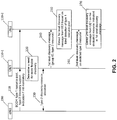
- FIG. 2 One implementation example is illustrated in FIG. 2 , in which it is assumed the eNB 190 broadcasts (reference 210) (on BCCH in this example) a type 1 resource pool and indication of support of type 2 discovery. Note that it may be mandatory for the eNB 190 to support of type 2 discovery. If it is not mandatory (the "if not mandatory" in block 210), then the eNB should broadcast an indication to indicate support of type 2 discovery or not.
- the UE1 110-1 based on a need for D2D discovery, determines the limited type 1 discovery message content cannot serve the intended D2D discovery service, therefore the UE1 110-1 determines (block 220) a need for more flexible discovery (e.g., than that supported by the offered resources by the eNB 190).
- the UE1 110-1 requests (and receives an indication of) dedicated type 2 discovery resource(s) (as part of reference 230, which is a type 2 discovery resource allocation procedure).
- UE1 110-1 may adapt D2D discovery message transmission such that a first (1st) level discovery message 240 is transmitted within a type 1 resource pool and includes for example D2D group ID ("group ID") and dedicated type 2 resource information ("dedicated type 2 resource”) for a second (2nd) level discovery message 260.
- group ID D2D group ID
- dedicated type 2 resource information dedicated type 2 resource information
- group ID is only used as an example, as other information to facilitate discovering UEs (e.g., UE2 110-2) to filter out unwanted discovery can be included here.
- the discovered UE e.g., UE 1 110-1, which is discovered by UE2 110-2
- the discovering UE e.g., UE2 110-2
- this information can be some index if type 2 resources are pre-defined (e.g., either hard-coded in standardization or type 2 resource pool is also advertised or broadcasted by eNB in a pre-defined format) or the information can be pre-defined resource assignment bits in both frequency and time domain (e.g., in frequency domain in a similar way of resource block assignment bits of DCI in PDCCH and in time domain with format of SFN and subframe number(s)).
- UE2 110-2 which is interested in D2D discovery, may scan the type 1 resource pool in order to find a D2D discovery message 240 from other UEs. Upon detecting (block 250) the first level discovery message from UE1 110-1, the UE2 110-2 determines based on group ID and/or other criteria that the UE 1 110-1 is from the same or interested D2D group and may be of interest for UE2 110-2 to be discovered. Then, UE2 110-2 may try to detect (block 270) the second level discovery message 270 from the UE1 110-1 on the dedicated resources indicated in the first level discovery message.
- the semi-static type 2 resource pool can also be used for the first level discovery message 240, providing that the semi-static type 2 resource pool is advertised or broadcasted by the eNB 190 so that UE2 110-2 will also blindly search the type 2 resource pool in order to find the first level discovery message 240 from the UE1 110-1.
- FIG. 3 a block diagram is shown of an exemplary logic flow diagram performed by a base station for adaptive D2D discovery operation.
- FIG. 3 further illustrates the operation of an exemplary method, a result of execution of computer program instructions embodied on a computer readable memory, and/or functions performed by logic implemented in hardware, in accordance with exemplary embodiments herein.
- the blocks in FIG. 3 may be considered to be interconnected means for performing the functions in the blocks.
- the blocks in FIG. 3 are performed by eNB 190, e.g., under control of the adaptive D2D module 154.
- the eNB 190 advertises hierarchical D2D discovery.
- Such advertisement may include the type 2 discovery support indication shown in FIG. 2 in reference 210.
- Such advertisement may also be explicit (block 320) such as by the eNB sending a single bit (e.g., the type 2 discovery support indication) indicating whether or not hierarchical D2D discovery is supported.
- Such advertisement may be implicit (block 330), such as by the eNB 190 indicating support for type 2 discovery but the eNB does not advertise a type 2 resource pool.
- a discoverable UE 110-1 that receives the indicated support for type 2 discovery but not a type 2 resource pool would therefore determine the eNB supports hierarchical D2D discovery.
- the eNB 190 advertises the type 1 resource pool to the discoverable UE 110-1 and to the discovering UE 110-2.
- the eNB 190 may also advertise (block 350) the type 2 resource pool (e.g., so the UE 110-2 can perform blind decoding of messages using resources in the type 2 resource pool) along with the advertisement of the type 1 resource pool.
- block 340 is performed in reference 210. Additionally, advertisement of the type 2 resource pool (block 350) may also be performed in reference 210.
- the eNB 190 may also advertise the type 2 resource pool (e.g., if mandatory or recommended if not mandatory) and also allocate (block 360) the type 2 discovery resources to the discoverable UE.
- the eNB 190 sends indication(s) of dedicated type 2 discovery resource(s) to discoverable UE (e.g., as part of a type 2 discovery resource allocation procedure).
- blocks 350, 360, and 370 are performed as part of reference 230, which is a type 2 discovery resource allocation procedure.
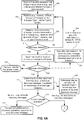
- this figure is a block diagram of an exemplary logic flow diagram performed by a discoverable user equipment for adaptive D2D discovery operation.
- This figure further illustrates the operation of an exemplary method, a result of execution of computer program instructions embodied on a computer readable memory, and/or functions performed by logic implemented in hardware, in accordance with exemplary embodiments herein.
- the blocks in FIG. 4 may be considered to be interconnected means for performing the functions in the blocks.
- the discoverable (also called the announcing) UE 110-1 performs the blocks in FIG. 4 , e.g., under control of the adaptive D2D module 123-1.
- the UE 110-1 announces itself to other discovering (also called monitoring) UEs 110-2 that are in proximity of the UE 110-1.
- the UE 110-1 receives from the eNB advertisement of hierarchical D2D discovery.
- this advertisement could be explicit (block 415) in that a received single bit indicates whether or not hierarchical D2D discovery is supported.
- the advertisement could be implicit (block 420) in that the UE 110-1 receives support for type 2 discovery but does not receive advertisement of type 2 resource pool. The UE 110-1 can determine therefore the hierarchical D2D discovery.
- the UE 110-1 receives from the eNB 190 an advertisement of the type 1 resource pool (see, e.g., reference 210 in FIG. 2 ).
- the UE 110-1 receives from the eNB 190 advertisement of a type 2 resource pool (e.g., if mandatory or recommended if not mandatory), as described previously.
- the UE 110-1 determines whether there is a need for more flexible discovery. For instance (block 435-1), the UE 110-1 could determine that the intended discovery message cannot fit into one discovery message that is pre-defined for a discovery message transmission on a type 1 or type 2 resource. As another example (block 435-2), the UE 110-1 could determine that the type 1 resource is not sufficient to serve the intended discovery service. The UE 110-1 could consider the type 1 resource not sufficient based on a detected collision rate of discovery messages on the type 1 resource (e.g., such collision rate being higher than a threshold).
- blocks 440 and 440 may be considered to determine whether only a first level discover message is to be transmitted or whether both first and second level discovery messages are to be transmitted.
- the UE 110-1 selects a resource from the type 1 (or type 2) pool.
- the UE 110-1 send (on selected resource from type 1 pool) the first level discovery message (e.g., with group ID but no indication of type 2 resource).
- Block 450 may alternatively entail the UE 110 sending on the type 2 resource the first level discovery messages. Note that for both the type 1 and type 2 resources, the discovering UE 110-2 likely has to perform blind decoding, using the information sent by the eNB 190 in block 340.
- the UE 110-1 proceeds with additional D2D discovery operations.
- first and second level discovery messages need to be used.
- the UE 110-1 requests dedicated type 2 discovery resource(s) (e.g., as part of a type 2 discovery resource allocation procedure).
- the UE 110-1 receives indication(s) of dedicated type 2 discovery resource(s) from the eNB (e.g., as part of a type 2 discovery resource allocation procedure). Blocks 460 and 465 are exemplified by reference 230 in FIG. 2 .
- the UE 110-1 determines whether a type 2 resource has been dedicated for transmitting the 1st level discovery message (e.g., in addition to a type 2 resource dedicated for transmitting the 2nd level message). Note that the UE 110-1 can select a resource from a pre-configured type 1 pool of resources (e.g., as indicated by the eNB 190), but the type 2 pool of resources are controlled by the eNB 190 and the eNB 190 will dedicate (e.g., allocate) resources to the UE 110-1 for the type 2 pool of resources.
- a type 2 resource has been dedicated for transmitting the 1st level discovery message (e.g., in addition to a type 2 resource dedicated for transmitting the 2nd level message). Note that the UE 110-1 can select a resource from a pre-configured type 1 pool of resources (e.g., as indicated by the eNB 190), but the type 2 pool of resources are controlled by the eNB 190 and the eNB 190 will dedicate (e.g., allocate
- the UE 110-1 determines both type 1 and type 2 resources are to be used for the first and second level discovery messages, in block 475, the UE 110-1 selects a resource from preconfigured type resource 1 pool and in block 480, the UE 1 10-1 sends (on the selected resource from the pre-configured type 1 resource pool) the first level discovery message (e.g., with group ID and indication of a type 2 resource to be used for the second level discovery message).
- An example of block 480 is shown in reference 240 of FIG. 2 .
- the UE 110-1 sends on dedicated type 2 resource(s) the second level discovery message.
- the dedicated type 2 resources were allocated by the eNB and indication(s) of the dedicated type 2 resource(s) were received by the UE 110-1 (received in block 430).
- the UE 110-1 determines that only type 2 resources will be used for sending the first and second discovery messages, the UE 110-1 sends (block 490) on first dedicated type 2 resource(s) the first level discovery message.
- the UE 110-1 may send the first level discovery message with an indication of a second dedicated type 2 resource.
- the UE 110-1 sends (block 495) on the second dedicated type 2 resource(s) the second level discovery message.
- the UE 110-1 in this example would have had to reserve multiple type 2 resources in block 460.
- the UE 110-1 performs one set of requests from the eNB (e.g., performed as part of a single type 2 discovery resource allocation procedure as illustrated by reference 230 of FIG. 2 ).
- the UE could perform multiple requests at different times (e.g., performed as part of multiple type 2 discovery resource allocation procedures). Both these examples are possible implementations, but the latter (multiple requests) may be more signaling efficient.
- Both blocks 485 and 495 proceed to block 497.
- the UE 110-1 proceeds with additional D2D discovery operations.
- FIG. 5 is a block diagram of an exemplary logic flow diagram performed by a discovering user equipment for adaptive D2D discovery operation.
- FIG. 5 illustrates the operation of an exemplary method, a result of execution of computer program instructions embodied on a computer readable memory, and/or functions performed by logic implemented in hardware, in accordance with exemplary embodiments herein.
- the blocks in FIG. 5 may be considered to be interconnected means for performing the functions in the blocks.
- the discovering (also called the monitoring) UE 110-2 performs the blocks in FIG. 5 , e.g., under control of the adaptive D2D module 123-2.
- the UE 110-2 monitors resources on type 1 (and/or type 2) resource pools to find a discoverable (also called announcing) UE 110-1 that is in proximity to the UE 110-2. Note that in FIG. 5 , it is assumed the UE 110-2 finds the UE 110-1 as being of interest and therefore proceeds with finding and decoding both first and second level discovery messages (as compared to only finding and decoding the first level discovery message, determining the UE 110-1 is not of interest, and then never finding or decoding the second level discovery message).
- the UE 110-2 in block 503 receives from the eNB 190 advertisement of a type 1 resource pool. As explained above, it is also possible the UE 110-2 receives optional advertisement of a type 2 resource pool.
- the UE 110-2 receives (e.g., monitors) 1st level discovery messages on the indicated Type 1 and/or Type 2 pool(s).
- An indication of a type 2 resource if present, is an indication of the dedicated type 2 resource to be used by the UE 110-1 in a subsequent transmission.
- the UE 110-2 detects a 1st level discovery message from the discoverable UE 110-1 The detection may be based on blind detection of type 1 resource pool (e.g., or based on blind detection of a type 2 resource pool). As described above, there could be only a first level discovery message transmitted from the UE 110-1 using one of a resource from the type 1 resource pool or a resource from the type 2 resource pool.
- the flow proceeds to block 512.
- the UE 110-2 determines whether the first level discovery message is of interest.
- One technique for determining whether the first level discovery message is of interest is shown in block 513 where it is determined whether filter information in the first discovery message corresponds to stored filter information in UE 110-2 that is deemed to be of interest. If there is a correspondence (e.g., a match), then the UE 110-2 determines the first level discovery message to be of interest.
- the filter information 590 may include one or more of the following: one or more of a group ID; application ID; service ID; UE ID; and/or other ID.
- the flow proceeds to block 515, where the UE 110-2 determines if a further discovery message (e.g., a second level discovery message) is available on resource(s) other than type 1 resources.
- a further discovery message e.g., a second level discovery message
- the flow proceeds to block 535.
- the discovering UE 1 10-2 receives on dedicated type 2 resource(s) from the discoverable UE 110-1 the second level discovery message.
- the dedicated type 2 resource(s) is/are the resource(s) indicated by the UE 110-1 in block 510.
- the discovering UE 110-2 detects the second level discovery message from the discoverable UE on the dedicated resource(s) indicated by discoverable UE.
- the UE 110-2 proceeds with additional D2D discovery operations based on the first level discovery message and the second level discovery message.
- FIG. 5 allows a single first level message to be received on either type 1 or type 2 resources, or allows first and second level messages to be received on type 1 and type 2 resources or only on type 2 resources.
Landscapes
- Engineering & Computer Science (AREA)
- Computer Networks & Wireless Communication (AREA)
- Signal Processing (AREA)
- Databases & Information Systems (AREA)
- Mobile Radio Communication Systems (AREA)
Claims (9)
- Procédé, comprenant :la détermination, par un équipement d'utilisateur de transmission (110-1), que de premier et second messages de découverte de niveau pour une découverte de dispositif à dispositif doivent être transmis;la demande (460), par l'équipement d'utilisateur de transmission (110-1), d'une ou plusieurs ressources pour la transmission d'au moins le second message de découverte de niveau et la réception (465) à partir d'un appareil de réseau (190) d'une indication d'une ou plusieurs ressources allouées d'un second type;la détermination (470), par l'équipement d'utilisateur de transmission (110-1), du fait de savoir si au moins l'une des une ou plusieurs ressources allouées du second type est dédiée à la transmission du premier message de découverte de niveau;la transmission (480), par l'équipement d'utilisateur de transmission (110-1), du premier message de découverte de niveau sur une ressource sélectionnée (475) d'un pool de ressources préconfigurées du premier type en réponse à une détermination que l'au moins une des une ou plusieurs ressources allouées n'est pas dédiée à la transmission du premier message de découverte de niveau ;la transmission (490), par l'équipement d'utilisateur de transmission (110-1), du premier message de découverte de niveau sur une première ressource sélectionnée des une ou plusieurs ressources allouées du second type en réponse à une détermination que l'au moins une des une ou plusieurs ressources allouées est dédiée à la transmission du premier message de découverte de niveau; etla transmission (495), par l'équipement d'utilisateur de transmission (110-1), du second message de découverte de niveau sur une seconde ressource sélectionnée des une ou plusieurs ressources allouées du second type.
- Procédé selon la revendication 1, dans lequel le premier message de découverte de niveau est transmis sur la première ressource sélectionnée des une ou plusieurs ressources allouées du second type, et dans lequel chacune de la première ressource sélectionnée utilisée pour transmettre le premier message de découverte de niveau et de la seconde ressource sélectionnée utilisée pour transmettre le second message de découverte de niveau est une même ressource du second type.
- Procédé selon la revendication 1, dans lequel le premier message de découverte de niveau est transmis sur la première ressource sélectionnée des une ou plusieurs ressources allouées du second type, et dans lequel la première ressource sélectionnée utilisée pour transmettre le premier message de découverte de niveau et la seconde ressource sélectionnée utilisée pour transmettre le second message de découverte de niveau sont des ressources différentes du second type.
- Procédé selon l'une quelconque des revendications 1 à 3, dans lequel le premier message de découverte de niveau est transmis sur la première ressource sélectionnée des une ou plusieurs ressources allouées du second type, et dans lequel la première ressource sélectionnée utilisée pour transmettre le premier message de découverte de niveau et la seconde ressource sélectionnée utilisée pour transmettre le second message de découverte de niveau sont indiquées à l'équipement utilisateur par une station de base.
- Procédé selon la revendication 1, dans lequel le premier message de découverte de niveau est transmis sur la ressource sélectionnée du premier type.
- Procédé selon la revendication 5, dans lequel le premier message de découverte de niveau est transmis sur la ressource sélectionnée du premier type chaque fois que le second message de découverte de niveau est déterminé comme étant nécessaire, ou chaque fois qu'une station de base n'alloue pas une ressource du second type pour la transmission du premier message de découverte de niveau, ou à la fois chaque fois que le second message de découverte de niveau est déterminé comme étant nécessaire et que la station de base n'alloue pas la ressource du second type pour la transmission du premier message de découverte de niveau.
- Équipement d'utilisateur de transmission (110-1), comprenant :un moyen pour déterminer que de premier et second messages de découverte de niveau pour une découverte de dispositif à dispositif doivent être transmis;un moyen pour demander (460) une ou plusieurs ressources pour la transmission d'au moins le second message de découverte de niveau et recevoir (465) à partir d'un appareil de réseau (190) une indication d'une ou plusieurs ressources allouées d'un second type;un moyen pour déterminer (470) si au moins l'une des une ou plusieurs ressources allouées du second type est dédiée à la transmission du premier message de découverte de niveau;un moyen pour transmettre (480) le premier message de découverte de niveau sur une ressource sélectionnée (475) d'un pool de ressources préconfigurées du premier type en réponse à une détermination que l'au moins une des une ou plusieurs ressources allouées n'est pas dédiée à la transmission du premier message de découverte de niveau ;un moyen pour transmettre (490) le premier message de découverte de niveau sur une première ressource sélectionnée des une ou plusieurs ressources allouées du second type en réponse à une détermination que l'au moins une des une ou plusieurs ressources allouées est dédiée à la transmission du premier message de découverte de niveau; etun moyen pour transmettre (495) le second message de découverte de niveau sur une seconde ressource sélectionnée des une ou plusieurs ressources allouées du second type.
- Équipement d'utilisateur de transmission selon la revendication 7, comprenant en outre un moyen pour exécuter le procédé selon l'une quelconque des revendications 2 à 6.
- Mémoire lisible par ordinateur stockant des instructions exécutables par ordinateur qui, lorsqu'elles sont exécutées par un processeur associé à un équipement d'utilisateur de transmission, amènent l'équipement d'utilisateur de transmission à effectuer chacune des étapes du procédé selon au moins l'une des revendications 1 à 7.
Applications Claiming Priority (1)
| Application Number | Priority Date | Filing Date | Title |
|---|---|---|---|
| PCT/IB2014/060656 WO2015155573A1 (fr) | 2014-04-11 | 2014-04-11 | Opérations de recherche d2d adaptative |
Publications (2)
| Publication Number | Publication Date |
|---|---|
| EP3130162A1 EP3130162A1 (fr) | 2017-02-15 |
| EP3130162B1 true EP3130162B1 (fr) | 2019-12-04 |
Family
ID=50733104
Family Applications (1)
| Application Number | Title | Priority Date | Filing Date |
|---|---|---|---|
| EP14724795.1A Active EP3130162B1 (fr) | 2014-04-11 | 2014-04-11 | Opérations de recherche d2d adaptative |
Country Status (4)
| Country | Link |
|---|---|
| US (1) | US9936376B2 (fr) |
| EP (1) | EP3130162B1 (fr) |
| CN (1) | CN106465086B (fr) |
| WO (1) | WO2015155573A1 (fr) |
Cited By (1)
| Publication number | Priority date | Publication date | Assignee | Title |
|---|---|---|---|---|
| US20230012726A1 (en) * | 2019-11-26 | 2023-01-19 | Nokia Technologies Oy | Facilitating Network Assisted Overhead Reduction in D2D Discovery Procedure |
Families Citing this family (6)
| Publication number | Priority date | Publication date | Assignee | Title |
|---|---|---|---|---|
| US20150326362A1 (en) * | 2014-05-08 | 2015-11-12 | Intel IP Corporation | Demodulation reference signal (dmrs) sequence design for device-to-device (d2d) discovery |
| WO2015194916A1 (fr) * | 2014-06-20 | 2015-12-23 | 엘지전자 주식회사 | Procédé de détermination de ressources pour la communication de dispositif à dispositif (d2d) dans un système de communication sans fil et appareil associé |
| KR102314442B1 (ko) * | 2015-02-06 | 2021-10-19 | 삼성전자주식회사 | D2d 네트워크에서 ue 디스커버리 방법 및 시스템 |
| EP3352511A4 (fr) | 2015-09-24 | 2018-10-03 | Ntt Docomo, Inc. | Dispositif d'utilisateur et procédé de transmission |
| CN113016218A (zh) * | 2019-01-04 | 2021-06-22 | 株式会社Ntt都科摩 | 无线通信方法及设备 |
| CN111800745B (zh) * | 2019-08-09 | 2022-02-01 | 维沃移动通信有限公司 | 组管理业务处理方法、用户设备和网络设备 |
Family Cites Families (8)
| Publication number | Priority date | Publication date | Assignee | Title |
|---|---|---|---|---|
| WO2010082084A1 (fr) | 2009-01-16 | 2010-07-22 | Nokia Corporation | Appareil et procédé de planification de ressources pour communications de dispositif à dispositif |
| US8571519B2 (en) * | 2009-05-07 | 2013-10-29 | Nokia Corporation | Method and apparatus for using pseudonyms |
| US20130064138A1 (en) * | 2011-09-12 | 2013-03-14 | Renesas Mobile Corporation | Mechanism for controlling device-to-device discovery procedcure |
| CN102857901A (zh) * | 2012-09-12 | 2013-01-02 | 中兴通讯股份有限公司 | 终端的发现、发现处理方法及装置 |
| KR20140042752A (ko) * | 2012-09-28 | 2014-04-07 | 한국전자통신연구원 | 단말 간 디스커버리 방법 및 장치 |
| US20140094212A1 (en) * | 2012-09-28 | 2014-04-03 | Electronics And Telecommunications Research Institute | Method of device to device discovery and apparatus thereof |
| US10154503B2 (en) * | 2014-01-27 | 2018-12-11 | Telefonaktiebolaget Lm Ericsson (Publ) | Network node, wireless device, methods therein, computer programs and computer-readable mediums comprising the computer programs, for adapting and adopting, respectively, an allocation of radio resources |
| US10219269B2 (en) * | 2014-01-30 | 2019-02-26 | Qualcomm Incorporated | Mixed size expression peer discovery in WWAN |
-
2014
- 2014-04-11 WO PCT/IB2014/060656 patent/WO2015155573A1/fr not_active Ceased
- 2014-04-11 CN CN201480079057.3A patent/CN106465086B/zh active Active
- 2014-04-11 US US15/303,098 patent/US9936376B2/en active Active
- 2014-04-11 EP EP14724795.1A patent/EP3130162B1/fr active Active
Non-Patent Citations (1)
| Title |
|---|
| None * |
Cited By (2)
| Publication number | Priority date | Publication date | Assignee | Title |
|---|---|---|---|---|
| US20230012726A1 (en) * | 2019-11-26 | 2023-01-19 | Nokia Technologies Oy | Facilitating Network Assisted Overhead Reduction in D2D Discovery Procedure |
| US12317099B2 (en) * | 2019-11-26 | 2025-05-27 | Nokia Technologies Oy | Facilitating network assisted overhead reduction in D2D discovery procedure |
Also Published As
| Publication number | Publication date |
|---|---|
| EP3130162A1 (fr) | 2017-02-15 |
| CN106465086B (zh) | 2019-08-20 |
| CN106465086A (zh) | 2017-02-22 |
| US20170034687A1 (en) | 2017-02-02 |
| US9936376B2 (en) | 2018-04-03 |
| WO2015155573A1 (fr) | 2015-10-15 |
Similar Documents
| Publication | Publication Date | Title |
|---|---|---|
| US10531435B2 (en) | Resource processing method and device | |
| EP2955967B1 (fr) | Procédé de communication sans fil, station de base et dispositif de communication sans fil | |
| US9432818B2 (en) | Controlling communication devices | |
| JP6562127B2 (ja) | UE、eNB、方法、及びプログラム | |
| KR102020350B1 (ko) | 무선이동통신시스템에서 d2d 통신을 지원/사용하는 단말기의 이동성을 지원하는 방안 | |
| JP6275252B2 (ja) | D2d信号の伝送方法及び装置 | |
| CN107040864B (zh) | 设备到设备d2d资源的配置方法及装置 | |
| US9479918B2 (en) | Methods, computer program products and apparatuses enabling to improve network controlled discovery in mobile communication networks | |
| US9936376B2 (en) | Adaptive D2D discovery operations | |
| AU2013228834B2 (en) | Communication control device, communication control method, and base station | |
| US20170223669A1 (en) | Device to Device Communication Method, System and Storage Medium Based on Network Sharing | |
| JP2018050337A (ja) | 装置間のためのカバレッジ遷移インジケータ | |
| US9467880B2 (en) | Management of device-to-device discovery signals and small cell discovery signals | |
| US10462766B2 (en) | Method and apparatus for paging between devices performing direct communication | |
| US10117255B2 (en) | Neighboring cell load information | |
| US20160205668A1 (en) | User terminal, network apparatus, and processor | |
| CN114902741A (zh) | 一种系统信息的传递方法和装置 | |
| CN107113900B (zh) | D2d通信的连接支持方法和无线设备 | |
| JP6487465B2 (ja) | デバイス・ツー・デバイス通信を改善するための方法、改善されたデバイス・ツー・デバイス通信に適合されるユーザ装置、デバイス・ツー・デバイス通信を改善するためのシステム及び移動通信ネットワーク、プログラム及びコンピュータプログラム製品 | |
| US20160174269A1 (en) | Methods and Apparatus for Device to Device Communication | |
| CN104272827A (zh) | 分配网络资源的方法、接入网络中的目标设备的方法、基站及终端设备 | |
| JPWO2014034389A1 (ja) | 移動通信システム、ユーザ端末及び通信制御方法 | |
| KR20150110426A (ko) | 연결 상태에서 d2d 전송을 모니터링하기 위한 장치 및 방법 | |
| KR102366259B1 (ko) | 단말간 통신을 위한 탐색 신호 송수신 방법 및 장치 | |
| WO2024065664A1 (fr) | Procédé et appareil de communication de liaison latérale, et dispositif, support de stockage et produit-programme |
Legal Events
| Date | Code | Title | Description |
|---|---|---|---|
| STAA | Information on the status of an ep patent application or granted ep patent |
Free format text: STATUS: THE INTERNATIONAL PUBLICATION HAS BEEN MADE |
|
| PUAI | Public reference made under article 153(3) epc to a published international application that has entered the european phase |
Free format text: ORIGINAL CODE: 0009012 |
|
| STAA | Information on the status of an ep patent application or granted ep patent |
Free format text: STATUS: REQUEST FOR EXAMINATION WAS MADE |
|
| 17P | Request for examination filed |
Effective date: 20161025 |
|
| AK | Designated contracting states |
Kind code of ref document: A1 Designated state(s): AL AT BE BG CH CY CZ DE DK EE ES FI FR GB GR HR HU IE IS IT LI LT LU LV MC MK MT NL NO PL PT RO RS SE SI SK SM TR |
|
| AX | Request for extension of the european patent |
Extension state: BA ME |
|
| DAX | Request for extension of the european patent (deleted) | ||
| STAA | Information on the status of an ep patent application or granted ep patent |
Free format text: STATUS: EXAMINATION IS IN PROGRESS |
|
| 17Q | First examination report despatched |
Effective date: 20180831 |
|
| GRAP | Despatch of communication of intention to grant a patent |
Free format text: ORIGINAL CODE: EPIDOSNIGR1 |
|
| STAA | Information on the status of an ep patent application or granted ep patent |
Free format text: STATUS: GRANT OF PATENT IS INTENDED |
|
| RAP1 | Party data changed (applicant data changed or rights of an application transferred) |
Owner name: NOKIA TECHNOLOGIES OY |
|
| RIC1 | Information provided on ipc code assigned before grant |
Ipc: H04W 8/00 20090101AFI20190805BHEP Ipc: H04W 76/14 20180101ALN20190805BHEP |
|
| INTG | Intention to grant announced |
Effective date: 20190904 |
|
| GRAS | Grant fee paid |
Free format text: ORIGINAL CODE: EPIDOSNIGR3 |
|
| GRAA | (expected) grant |
Free format text: ORIGINAL CODE: 0009210 |
|
| STAA | Information on the status of an ep patent application or granted ep patent |
Free format text: STATUS: THE PATENT HAS BEEN GRANTED |
|
| AK | Designated contracting states |
Kind code of ref document: B1 Designated state(s): AL AT BE BG CH CY CZ DE DK EE ES FI FR GB GR HR HU IE IS IT LI LT LU LV MC MK MT NL NO PL PT RO RS SE SI SK SM TR |
|
| REG | Reference to a national code |
Ref country code: GB Ref legal event code: FG4D |
|
| REG | Reference to a national code |
Ref country code: CH Ref legal event code: EP |
|
| REG | Reference to a national code |
Ref country code: AT Ref legal event code: REF Ref document number: 1211051 Country of ref document: AT Kind code of ref document: T Effective date: 20191215 |
|
| REG | Reference to a national code |
Ref country code: DE Ref legal event code: R096 Ref document number: 602014057778 Country of ref document: DE |
|
| REG | Reference to a national code |
Ref country code: IE Ref legal event code: FG4D |
|
| REG | Reference to a national code |
Ref country code: NL Ref legal event code: MP Effective date: 20191204 |
|
| REG | Reference to a national code |
Ref country code: LT Ref legal event code: MG4D |
|
| PG25 | Lapsed in a contracting state [announced via postgrant information from national office to epo] |
Ref country code: LT Free format text: LAPSE BECAUSE OF FAILURE TO SUBMIT A TRANSLATION OF THE DESCRIPTION OR TO PAY THE FEE WITHIN THE PRESCRIBED TIME-LIMIT Effective date: 20191204 Ref country code: GR Free format text: LAPSE BECAUSE OF FAILURE TO SUBMIT A TRANSLATION OF THE DESCRIPTION OR TO PAY THE FEE WITHIN THE PRESCRIBED TIME-LIMIT Effective date: 20200305 Ref country code: NO Free format text: LAPSE BECAUSE OF FAILURE TO SUBMIT A TRANSLATION OF THE DESCRIPTION OR TO PAY THE FEE WITHIN THE PRESCRIBED TIME-LIMIT Effective date: 20200304 Ref country code: SE Free format text: LAPSE BECAUSE OF FAILURE TO SUBMIT A TRANSLATION OF THE DESCRIPTION OR TO PAY THE FEE WITHIN THE PRESCRIBED TIME-LIMIT Effective date: 20191204 Ref country code: LV Free format text: LAPSE BECAUSE OF FAILURE TO SUBMIT A TRANSLATION OF THE DESCRIPTION OR TO PAY THE FEE WITHIN THE PRESCRIBED TIME-LIMIT Effective date: 20191204 Ref country code: BG Free format text: LAPSE BECAUSE OF FAILURE TO SUBMIT A TRANSLATION OF THE DESCRIPTION OR TO PAY THE FEE WITHIN THE PRESCRIBED TIME-LIMIT Effective date: 20200304 Ref country code: FI Free format text: LAPSE BECAUSE OF FAILURE TO SUBMIT A TRANSLATION OF THE DESCRIPTION OR TO PAY THE FEE WITHIN THE PRESCRIBED TIME-LIMIT Effective date: 20191204 |
|
| PG25 | Lapsed in a contracting state [announced via postgrant information from national office to epo] |
Ref country code: HR Free format text: LAPSE BECAUSE OF FAILURE TO SUBMIT A TRANSLATION OF THE DESCRIPTION OR TO PAY THE FEE WITHIN THE PRESCRIBED TIME-LIMIT Effective date: 20191204 Ref country code: RS Free format text: LAPSE BECAUSE OF FAILURE TO SUBMIT A TRANSLATION OF THE DESCRIPTION OR TO PAY THE FEE WITHIN THE PRESCRIBED TIME-LIMIT Effective date: 20191204 |
|
| PG25 | Lapsed in a contracting state [announced via postgrant information from national office to epo] |
Ref country code: AL Free format text: LAPSE BECAUSE OF FAILURE TO SUBMIT A TRANSLATION OF THE DESCRIPTION OR TO PAY THE FEE WITHIN THE PRESCRIBED TIME-LIMIT Effective date: 20191204 |
|
| PG25 | Lapsed in a contracting state [announced via postgrant information from national office to epo] |
Ref country code: NL Free format text: LAPSE BECAUSE OF FAILURE TO SUBMIT A TRANSLATION OF THE DESCRIPTION OR TO PAY THE FEE WITHIN THE PRESCRIBED TIME-LIMIT Effective date: 20191204 Ref country code: EE Free format text: LAPSE BECAUSE OF FAILURE TO SUBMIT A TRANSLATION OF THE DESCRIPTION OR TO PAY THE FEE WITHIN THE PRESCRIBED TIME-LIMIT Effective date: 20191204 Ref country code: PT Free format text: LAPSE BECAUSE OF FAILURE TO SUBMIT A TRANSLATION OF THE DESCRIPTION OR TO PAY THE FEE WITHIN THE PRESCRIBED TIME-LIMIT Effective date: 20200429 Ref country code: RO Free format text: LAPSE BECAUSE OF FAILURE TO SUBMIT A TRANSLATION OF THE DESCRIPTION OR TO PAY THE FEE WITHIN THE PRESCRIBED TIME-LIMIT Effective date: 20191204 Ref country code: ES Free format text: LAPSE BECAUSE OF FAILURE TO SUBMIT A TRANSLATION OF THE DESCRIPTION OR TO PAY THE FEE WITHIN THE PRESCRIBED TIME-LIMIT Effective date: 20191204 Ref country code: CZ Free format text: LAPSE BECAUSE OF FAILURE TO SUBMIT A TRANSLATION OF THE DESCRIPTION OR TO PAY THE FEE WITHIN THE PRESCRIBED TIME-LIMIT Effective date: 20191204 |
|
| PG25 | Lapsed in a contracting state [announced via postgrant information from national office to epo] |
Ref country code: IS Free format text: LAPSE BECAUSE OF FAILURE TO SUBMIT A TRANSLATION OF THE DESCRIPTION OR TO PAY THE FEE WITHIN THE PRESCRIBED TIME-LIMIT Effective date: 20200404 Ref country code: SK Free format text: LAPSE BECAUSE OF FAILURE TO SUBMIT A TRANSLATION OF THE DESCRIPTION OR TO PAY THE FEE WITHIN THE PRESCRIBED TIME-LIMIT Effective date: 20191204 Ref country code: SM Free format text: LAPSE BECAUSE OF FAILURE TO SUBMIT A TRANSLATION OF THE DESCRIPTION OR TO PAY THE FEE WITHIN THE PRESCRIBED TIME-LIMIT Effective date: 20191204 |
|
| REG | Reference to a national code |
Ref country code: DE Ref legal event code: R097 Ref document number: 602014057778 Country of ref document: DE |
|
| REG | Reference to a national code |
Ref country code: AT Ref legal event code: MK05 Ref document number: 1211051 Country of ref document: AT Kind code of ref document: T Effective date: 20191204 |
|
| PLBE | No opposition filed within time limit |
Free format text: ORIGINAL CODE: 0009261 |
|
| STAA | Information on the status of an ep patent application or granted ep patent |
Free format text: STATUS: NO OPPOSITION FILED WITHIN TIME LIMIT |
|
| PG25 | Lapsed in a contracting state [announced via postgrant information from national office to epo] |
Ref country code: DK Free format text: LAPSE BECAUSE OF FAILURE TO SUBMIT A TRANSLATION OF THE DESCRIPTION OR TO PAY THE FEE WITHIN THE PRESCRIBED TIME-LIMIT Effective date: 20191204 |
|
| 26N | No opposition filed |
Effective date: 20200907 |
|
| PG25 | Lapsed in a contracting state [announced via postgrant information from national office to epo] |
Ref country code: PL Free format text: LAPSE BECAUSE OF FAILURE TO SUBMIT A TRANSLATION OF THE DESCRIPTION OR TO PAY THE FEE WITHIN THE PRESCRIBED TIME-LIMIT Effective date: 20191204 Ref country code: MC Free format text: LAPSE BECAUSE OF FAILURE TO SUBMIT A TRANSLATION OF THE DESCRIPTION OR TO PAY THE FEE WITHIN THE PRESCRIBED TIME-LIMIT Effective date: 20191204 Ref country code: SI Free format text: LAPSE BECAUSE OF FAILURE TO SUBMIT A TRANSLATION OF THE DESCRIPTION OR TO PAY THE FEE WITHIN THE PRESCRIBED TIME-LIMIT Effective date: 20191204 Ref country code: AT Free format text: LAPSE BECAUSE OF FAILURE TO SUBMIT A TRANSLATION OF THE DESCRIPTION OR TO PAY THE FEE WITHIN THE PRESCRIBED TIME-LIMIT Effective date: 20191204 |
|
| REG | Reference to a national code |
Ref country code: CH Ref legal event code: PL |
|
| PG25 | Lapsed in a contracting state [announced via postgrant information from national office to epo] |
Ref country code: CH Free format text: LAPSE BECAUSE OF NON-PAYMENT OF DUE FEES Effective date: 20200430 Ref country code: LU Free format text: LAPSE BECAUSE OF NON-PAYMENT OF DUE FEES Effective date: 20200411 Ref country code: LI Free format text: LAPSE BECAUSE OF NON-PAYMENT OF DUE FEES Effective date: 20200430 Ref country code: IT Free format text: LAPSE BECAUSE OF FAILURE TO SUBMIT A TRANSLATION OF THE DESCRIPTION OR TO PAY THE FEE WITHIN THE PRESCRIBED TIME-LIMIT Effective date: 20191204 |
|
| REG | Reference to a national code |
Ref country code: BE Ref legal event code: MM Effective date: 20200430 |
|
| PG25 | Lapsed in a contracting state [announced via postgrant information from national office to epo] |
Ref country code: BE Free format text: LAPSE BECAUSE OF NON-PAYMENT OF DUE FEES Effective date: 20200430 |
|
| PG25 | Lapsed in a contracting state [announced via postgrant information from national office to epo] |
Ref country code: IE Free format text: LAPSE BECAUSE OF NON-PAYMENT OF DUE FEES Effective date: 20200411 |
|
| PGFP | Annual fee paid to national office [announced via postgrant information from national office to epo] |
Ref country code: GB Payment date: 20220303 Year of fee payment: 9 |
|
| PG25 | Lapsed in a contracting state [announced via postgrant information from national office to epo] |
Ref country code: TR Free format text: LAPSE BECAUSE OF FAILURE TO SUBMIT A TRANSLATION OF THE DESCRIPTION OR TO PAY THE FEE WITHIN THE PRESCRIBED TIME-LIMIT Effective date: 20191204 Ref country code: MT Free format text: LAPSE BECAUSE OF FAILURE TO SUBMIT A TRANSLATION OF THE DESCRIPTION OR TO PAY THE FEE WITHIN THE PRESCRIBED TIME-LIMIT Effective date: 20191204 Ref country code: CY Free format text: LAPSE BECAUSE OF FAILURE TO SUBMIT A TRANSLATION OF THE DESCRIPTION OR TO PAY THE FEE WITHIN THE PRESCRIBED TIME-LIMIT Effective date: 20191204 |
|
| PGFP | Annual fee paid to national office [announced via postgrant information from national office to epo] |
Ref country code: FR Payment date: 20220308 Year of fee payment: 9 |
|
| PG25 | Lapsed in a contracting state [announced via postgrant information from national office to epo] |
Ref country code: MK Free format text: LAPSE BECAUSE OF FAILURE TO SUBMIT A TRANSLATION OF THE DESCRIPTION OR TO PAY THE FEE WITHIN THE PRESCRIBED TIME-LIMIT Effective date: 20191204 |
|
| P01 | Opt-out of the competence of the unified patent court (upc) registered |
Effective date: 20230527 |
|
| GBPC | Gb: european patent ceased through non-payment of renewal fee |
Effective date: 20230411 |
|
| PG25 | Lapsed in a contracting state [announced via postgrant information from national office to epo] |
Ref country code: GB Free format text: LAPSE BECAUSE OF NON-PAYMENT OF DUE FEES Effective date: 20230411 |
|
| PG25 | Lapsed in a contracting state [announced via postgrant information from national office to epo] |
Ref country code: GB Free format text: LAPSE BECAUSE OF NON-PAYMENT OF DUE FEES Effective date: 20230411 Ref country code: FR Free format text: LAPSE BECAUSE OF NON-PAYMENT OF DUE FEES Effective date: 20230430 |
|
| PGFP | Annual fee paid to national office [announced via postgrant information from national office to epo] |
Ref country code: DE Payment date: 20250305 Year of fee payment: 12 |