EP3130868A1 - Système de pompe à chaleur - Google Patents
Système de pompe à chaleur Download PDFInfo
- Publication number
- EP3130868A1 EP3130868A1 EP16178654.6A EP16178654A EP3130868A1 EP 3130868 A1 EP3130868 A1 EP 3130868A1 EP 16178654 A EP16178654 A EP 16178654A EP 3130868 A1 EP3130868 A1 EP 3130868A1
- Authority
- EP
- European Patent Office
- Prior art keywords
- heat exchanger
- refrigerant
- heat
- water
- air
- Prior art date
- Legal status (The legal status is an assumption and is not a legal conclusion. Google has not performed a legal analysis and makes no representation as to the accuracy of the status listed.)
- Withdrawn
Links
Images
Classifications
-
- F—MECHANICAL ENGINEERING; LIGHTING; HEATING; WEAPONS; BLASTING
- F25—REFRIGERATION OR COOLING; COMBINED HEATING AND REFRIGERATION SYSTEMS; HEAT PUMP SYSTEMS; MANUFACTURE OR STORAGE OF ICE; LIQUEFACTION SOLIDIFICATION OF GASES
- F25B—REFRIGERATION MACHINES, PLANTS OR SYSTEMS; COMBINED HEATING AND REFRIGERATION SYSTEMS; HEAT PUMP SYSTEMS
- F25B13/00—Compression machines, plants or systems, with reversible cycle
-
- F—MECHANICAL ENGINEERING; LIGHTING; HEATING; WEAPONS; BLASTING
- F25—REFRIGERATION OR COOLING; COMBINED HEATING AND REFRIGERATION SYSTEMS; HEAT PUMP SYSTEMS; MANUFACTURE OR STORAGE OF ICE; LIQUEFACTION SOLIDIFICATION OF GASES
- F25B—REFRIGERATION MACHINES, PLANTS OR SYSTEMS; COMBINED HEATING AND REFRIGERATION SYSTEMS; HEAT PUMP SYSTEMS
- F25B47/00—Arrangements for preventing or removing deposits or corrosion, not provided for in another subclass
- F25B47/02—Defrosting cycles
- F25B47/022—Defrosting cycles hot gas defrosting
- F25B47/025—Defrosting cycles hot gas defrosting by reversing the cycle
-
- F—MECHANICAL ENGINEERING; LIGHTING; HEATING; WEAPONS; BLASTING
- F25—REFRIGERATION OR COOLING; COMBINED HEATING AND REFRIGERATION SYSTEMS; HEAT PUMP SYSTEMS; MANUFACTURE OR STORAGE OF ICE; LIQUEFACTION SOLIDIFICATION OF GASES
- F25B—REFRIGERATION MACHINES, PLANTS OR SYSTEMS; COMBINED HEATING AND REFRIGERATION SYSTEMS; HEAT PUMP SYSTEMS
- F25B2313/00—Compression machines, plants or systems with reversible cycle not otherwise provided for
- F25B2313/003—Indoor unit with water as a heat sink or heat source
-
- F—MECHANICAL ENGINEERING; LIGHTING; HEATING; WEAPONS; BLASTING
- F25—REFRIGERATION OR COOLING; COMBINED HEATING AND REFRIGERATION SYSTEMS; HEAT PUMP SYSTEMS; MANUFACTURE OR STORAGE OF ICE; LIQUEFACTION SOLIDIFICATION OF GASES
- F25B—REFRIGERATION MACHINES, PLANTS OR SYSTEMS; COMBINED HEATING AND REFRIGERATION SYSTEMS; HEAT PUMP SYSTEMS
- F25B2313/00—Compression machines, plants or systems with reversible cycle not otherwise provided for
- F25B2313/023—Compression machines, plants or systems with reversible cycle not otherwise provided for using multiple indoor units
- F25B2313/0232—Compression machines, plants or systems with reversible cycle not otherwise provided for using multiple indoor units with bypasses
- F25B2313/02322—Compression machines, plants or systems with reversible cycle not otherwise provided for using multiple indoor units with bypasses during defrosting
-
- F—MECHANICAL ENGINEERING; LIGHTING; HEATING; WEAPONS; BLASTING
- F25—REFRIGERATION OR COOLING; COMBINED HEATING AND REFRIGERATION SYSTEMS; HEAT PUMP SYSTEMS; MANUFACTURE OR STORAGE OF ICE; LIQUEFACTION SOLIDIFICATION OF GASES
- F25B—REFRIGERATION MACHINES, PLANTS OR SYSTEMS; COMBINED HEATING AND REFRIGERATION SYSTEMS; HEAT PUMP SYSTEMS
- F25B2313/00—Compression machines, plants or systems with reversible cycle not otherwise provided for
- F25B2313/023—Compression machines, plants or systems with reversible cycle not otherwise provided for using multiple indoor units
- F25B2313/0233—Compression machines, plants or systems with reversible cycle not otherwise provided for using multiple indoor units in parallel arrangements
Definitions
- the present invention relates to a heat pump system including both of a unit configured to heat or cool indoor air by heat exchange with refrigerant to perform air-heating/cooling and a unit configured to generate hot water for hot water supply or for air-heating by heat exchange with refrigerant.
- the following heat pump system has been known as a heat pump system capable of heating or cooling indoor air by heat exchange with refrigerant to perform air-conditioning in a room while generating hot water for hot water supply or for air-heating by heat exchange with refrigerant.
- a single-line refrigerant circuit (a heat pump cycle) is configured such that a first utilization unit including a direct expansion type utilization-side heat exchanger configured to exchange heat between refrigerant and indoor air and a second utilization unit including a direct expansion type water heat exchanger configured to exchange heat between refrigerant and water to generate hot water for hot water supply or for air-heating are connected in parallel to a heat source unit including a compressor, a four-way switching valve, and a heat-source-side heat exchanger configured to exchange heat between refrigerant and external air.
- a first utilization unit including a direct expansion type utilization-side heat exchanger configured to exchange heat between refrigerant and indoor air
- a second utilization unit including a direct expansion type water heat exchanger configured to exchange heat between refrigerant and water to generate hot water for hot water supply or for air-heating are connected in parallel to a heat source unit including a compressor, a four-way switching valve, and a heat-source-side heat exchanger configured to exchange heat between refrigerant and
- frost is caused on the heat-source-side heat exchanger configured to exchange heat with heat-source-unit-side external air in the operation in an air-heating cycle, i.e., in the operation in, e.g., a hot water generation operation mode for generating hot water for hot water supply or for air-heating, an air-heating operation mode, or a hot water generation air-heating operation mode.
- a so-called reverse cycle type defrosting control means is employed, which is configured to switch, when frost on the heat-source-side heat exchanger is detected, the refrigerant circuit from the air-heating cycle to an air-cooling cycle by the four-way switching valve to remove the frost (perform defrosting).
- PTLs 1 and 2 each disclose the system employing the reverse cycle type defrosting control means.
- defrosting when the temperature of water circulating in the water heat exchanger of the second utilization unit is equal to or higher than a predetermined temperature, defrosting is performed by the refrigerant supplied only to the water heat exchanger of the second utilization unit or supplied to both of the water heat exchanger of the second utilization unit and the utilization-side heat exchanger of the first utilization unit.
- the water temperature reaches equal to or lower than the predetermined temperature
- switching is performed such that the refrigerant flowing toward the water heat exchanger is blocked and that refrigerant is supplied only to the utilization-side heat exchanger of the first utilization unit. That is, in the air-source heat pump system incorporating the water heat exchanger, a defrosting method employing a logic different from that of a typical air-to-air heat pump system is employed to prevent freezing of water in the water heat exchanger.
- frost is caused on the heat-source-side heat exchanger of the heat source unit in the above-described heat pump system.
- low-pressure refrigerant is supplied to the water heat exchanger of the second utilization unit to perform defrosting. This is because the defrosting operation is performed using the heat absorbed from hot water of a water circuit connected to the water heat exchanger, and therefore, a defrosting operation time is shortened.
- the defrosting operation is typically performed with the maximum rotational speed of the compressor.
- a low pressure rapidly drops in the moment of switching to the defrosting operation, and easily reaches a lower pressure.
- a hot water temperature on a water circuit side decreases due to a heat absorption effect of low-pressure refrigerant. This might lead to freezing of water in the water heat exchanger.
- there is a risk of damaging the water heat exchanger Particularly in the case where the water heat exchanger is a plate type heat exchanger, tendency shows that the above-described case carries a high risk of causing damage due to easy detachment of a joint portion between plates.
- the present invention has been made to solve the above-described problems, and is intended to provide a heat pump system capable of reliably preventing freezing and damage of a water heat exchanger in a reverse cycle type defrosting operation and eliminating occurrence of heat loss on a water circuit side.
- the heat pump system of the present invention employs the following solution.
- the heat pump system apparatus including a heat source unit including a compressor, a four-way switching valve, and a heat-source-side heat exchanger configured to exchange heat between refrigerant and external air; a first utilization unit including a utilization-side heat exchanger configured to exchange heat between refrigerant and indoor air; a second utilization unit including a water heat exchanger configured to exchange heat between refrigerant and water to generate hot water for hot water supply or for air-heating; a single-line refrigerant circuit configured such that the first and second utilization units are connected in parallel to the heat source unit; and a defrosting control means configured to switch, when frost is caused on the heat-source-side heat exchanger, the refrigerant circuit from an air-heating cycle to an air-cooling cycle by the four-way switching valve to perform defrosting.
- a heat source unit including a compressor, a four-way switching valve, and a heat-source-side heat exchanger configured to exchange heat between refrigerant and external air
- a first utilization unit including
- the defrosting control means includes a means configured to block, in a defrosting operation, a refrigerant flow toward the water heat exchanger of the second utilization unit and to allow refrigerant to flow only toward the utilization-side heat exchanger of the first utilization unit.
- the refrigerant circuit is switched to the defrosting operation mode by switching from the air-heating cycle to the air-cooling cycle.
- the means configured to block the refrigerant flow toward the water heat exchanger of the second utilization unit blocks the refrigerant flow toward the water heat exchanger, and allows refrigerant to circulate only in the utilization-side heat exchanger of the first utilization unit. Accordingly, high-temperature high-pressure refrigerant discharged from the compressor is introduced into the heat-source-side heat exchanger through the four-way switching valve, and then, dissipates heat to melt the frost. After the refrigerant is condensed and liquefied, the pressure of the refrigerant is reduced, and then, the refrigerant is guided to the utilization-side heat exchanger of the first utilization unit. After the refrigerant is evaporated, the refrigerant is sucked into the compressor.
- a water temperature on a water circuit side to switch the defrosting operation mode is no longer required, and therefore, a control system can be simplified.
- occurrence of the heat loss due to utilization of heat of hot water on the water circuit side in the defrosting operation is eliminated, and as a result, energy can be saved.
- the means configured to block the refrigerant flow toward the water heat exchanger may include a refrigerant circuit shutoff valve provided at one or both of an outlet and an inlet of a refrigerant circuit connected to the water heat exchanger.
- the means configured to block the refrigerant flow toward the water heat exchanger is the refrigerant circuit shutoff valve provided at one or both of the outlet and inlet of the refrigerant circuit connected to the water heat exchanger.
- the refrigerant circuit shutoff valve provided at part of the refrigerant circuit provided with the water heat exchanger is closed to block the refrigerant flow. This prevents low-pressure refrigerant from circulating in the water heat exchanger, and therefore, freezing of water in the water heat exchanger and damage of the water heat exchanger due to freezing can be prevented.
- shutoff valve is merely provided at part of the refrigerant circuit provided with the water heat exchanger, freezing and damage of the water heat exchanger can be prevented, and the degree of freedom in selection of the water heat exchanger increases so that, e.g., a plate type heat exchanger which is easily frozen and damaged can be used.
- the heat pump system may be configured such that in the case of a system including a dedicated electronic expansion valve at part of the refrigerant circuit provided with the second utilization unit, the electronic expansion valve is also used as the refrigerant circuit shutoff valve.
- the electronic expansion valve is also used as the refrigerant circuit shutoff valve.
- the function of fully closing the electronic expansion valve is utilized so that part of the refrigerant circuit provided with the water heat exchanger can be shut off in the defrosting operation.
- the shutoff valves to be placed at the refrigerant circuit can be reduced, leading to a simple configuration and a lower cost.
- the heat pump system may be configured such that the means configured to block the refrigerant flow toward the water heat exchanger is closed to block the refrigerant flow at the same time that the four-way switching valve is switched by a signal of detection of frost caused on the heat-source-side heat exchanger or when a detection value of a low-pressure sensor provided at the heat source unit or a detection value of a pressure sensor provided at the second utilization unit falls below a predetermined value after switching of the four-way switching valve.
- the means configured to block the refrigerant flow toward the water heat exchanger is closed to block the refrigerant flow at the same time that the four-way switching valve is switched by the signal of detection of the frost caused on the heat-source-side heat exchanger or when the detection value of the low-pressure sensor provided at the heat source unit or the detection value of the pressure sensor provided at the second utilization unit falls below the predetermined value after switching of the four-way switching valve.
- the reverse cycle type defrosting control means even if the reverse cycle type defrosting control means is employed, low-pressure refrigerant does not circulate in the water heat exchanger of the second utilization unit in the defrosting operation. Consequently, it can be ensured that the risk of damaging the water heat exchanger due to freezing of water in the water heat exchanger is eliminated. Moreover, e.g., the control of monitoring, in the defrosting operation, the water temperature on the water circuit side to switch the defrosting operation mode is no longer required, and therefore, the control system can be simplified. In addition, occurrence of the heat loss due to utilization of heat of hot water on the water circuit side in the defrosting operation is eliminated, and as a result, energy can be saved.
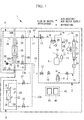
- Fig. 1 is a system diagram of a heat pump system of an embodiment of the present invention.
- Fig. 1 illustrates a system diagram of a heat pump system of the first embodiment of the present invention.
- a heat pump system 1 includes a heat source unit 2, a first utilization unit 3, and a second utilization unit 4.
- the heat pump system 1 is configured such that the first utilization unit 3 and the second utilization unit 4 are connected in parallel to the heat source unit 2.
- the heat source unit 2 includes a heat-source-side refrigerant circuit 15 (i.e., the heat source unit 2 is an outdoor unit).
- the heat-source-side refrigerant circuit 15 is configured such that a compressor 5 configured to compress refrigerant, a four-way switching valve 6 configured to switch a refrigerant flow direction, a heat-source-side heat exchanger 7 configured to exchange heat between refrigerant and external air, an air-heating electronic expansion valve (EEVH) 8 configured to insulate and expand refrigerant in an air-heating cycle, a receiver 9 configured to store liquid refrigerant, an air-cooling electronic expansion valve (EEVC) 10 configured to insulate and expand refrigerant in an air-cooling cycle, an accumulator 11 configured to separate liquid from the refrigerant sucked into the compressor 5 to suck only gas, and liquid- and gas-operated valves 12, 13 connected respectively to liquid and gas pipes 16, 17 connected between the first utilization unit 3 and the second utilization unit 4 are connected together via
- the heat source unit (the outdoor unit) 2 is also provided with an outdoor fan 18 configured to send external air to the heat-source-side heat exchanger 7.
- the heat source unit (the outdoor unit) 2 further includes a discharge temperature sensor 19 configured to detect the temperature of high-pressure refrigerant discharged from the compressor 5, a high-pressure sensor 20 configured to detect the pressure of high-pressure refrigerant discharged from the compressor 5, a suction temperature sensor 21 configured to detect the temperature of low-pressure refrigerant sucked into the compressor 5, a low-pressure sensor 22 configured to detect the pressure of low-pressure refrigerant sucked into the compressor 5, heat exchange temperature sensors 23, 24 configured to detect the temperature of the heat-source-side heat exchanger 7 at each position, and an external temperature sensor 25 configured to detect an external temperature, for example.
- the first utilization unit 3 is an indoor unit provided for air-conditioning (air-cooling/heating) in a room.
- a utilization-side heat exchanger 28 is, via refrigerant circuit shutoff valves 26, 27, connected to a branched liquid pipe 16A and a branched gas pipe 17A, the pipes 16A, 17A being branched respectively from the liquid and gas pipes 16, 17 connected to the liquid- and gas-operated valves 12, 13 of the heat source unit 2.
- the utilization-side heat exchanger 28 is a direct expansion type heat exchanger configured to exchange heat between refrigerant and indoor air sent by a not-shown indoor fan to heat or cool the indoor air.
- the first utilization unit (the indoor unit) 3 is also provided with a suction temperature sensor 29 configured to detect the temperature of air sucked from the room and heat exchange temperature sensors 30, 31, 32 configured to detect temperature at both ends and the center of the utilization-side heat exchanger 28.
- the second utilization unit 4 is a hot water indoor unit configured to generate hot water for hot water supply or for air-heating.
- the second utilization unit 4 includes a water heat exchanger (a refrigerant/water heat exchanger) 35 connected, via refrigerant circuit shutoff valves 33, 34, to a branched liquid pipe 16B and a branched gas pipe 17B, the pipes 16B, 17B being branched respectively from the liquid and gas pipes 16, 17 connected to the liquid- and gas-operated valves 12, 13 of the heat source unit 2.
- the water heat exchanger (the refrigerant/water heat exchanger) 35 is a direct expansion type heat exchanger configured to exchange heat between refrigerant and water, and examples of such a heat exchanger includes a plate type heat exchanger.
- a water circuit 36 including a water inlet pipe 36A and a water outlet pipe 36B is connected to a water flow path side of the water heat exchanger (the refrigerant/water heat exchanger) 35.
- the water supplied to a tank configured to store hot water or the water flowing through a hot water load circulates via a water circulation pump 37 provided at the water inlet pipe 36A.
- the second utilization unit (the hot water indoor unit) 4 is also provided with an inlet water temperature sensor 38 configured to detect the inlet water temperature of the water heat exchanger 35, an outlet water temperature sensor 39 configured to detect the outlet water temperature of the water heat exchanger 35, an outlet liquid pipe sensor 40 configured to detect the refrigerant temperature at the outlet of the water heat exchanger 35, and a pressure sensor 41 configured to detect the refrigerant pressure of the water heat exchanger 35.
- the first utilization unit (the indoor unit) 3 and the second utilization unit (the hot water indoor unit) 4 are, via the liquid pipe 16, the gas pipe 17, the branched liquid pipes 16A, 16B, and the branched gas pipes 17A, 17B, connected in parallel to the liquid- and gas-operated valves 12, 13 provided respectively at both ends of the heat-source-side refrigerant circuit 15 of the heat source unit (the outdoor unit) 2.
- the heat source unit 2 is also provided with a heat-source-side controller 43 configured to control operation of the heat pump system 1.
- the heat-source-side controller 43 includes an operation control means 44.
- the operation control means 44 Based on, e.g., detection values and set values of various sensors provided at the heat source unit 2, the first utilization unit 3, and the second utilization unit 4, the operation control means 44 optionally controls switching of the four-way switching valve 6 according to the rotational speed of the compressor 5 and the operation mode, the rotational speed of the outdoor fan 18, the opening degrees of the air-heating electronic expansion valve (EEVH) 8 and the air-cooling electronic expansion valve (EEVC) 10, opening/closing of the refrigerant circuit shutoff valves 26, 27, 33, 34, and the rotational speed of the water circulation pump 37, for example.
- the operation control means 44 suitably controls the heat pump system 1 according to each operation mode.
- the heat-source-side controller 43 is provided with a defrosting control means 45 configured to remove (defrost) front adhering to the heat-source-side heat exchanger 7 when the heat pump system 1 operates in the air-heating cycle.
- the heat pump system 1 can perform the air-cooling/heating operation of operating only the first utilization unit (the indoor unit) 3, the hot water generation operation of operating only the second utilization unit (the hot water indoor unit) 4 to generate hot water for hot water supply or for air-heating, and the hot water generation air-heating operation of simultaneously operating both of the first utilization unit (the indoor unit) 3 and the second utilization unit (the hot water indoor unit) 4, for example.
- Any of the air-heating operation mode, the hot water generation operation mode, and the hot water generation air-heating operation mode is performed in the air-heating cycle.
- the heat-source-side heat exchanger 7 functions as an evaporator
- the utilization-side heat exchanger 28 and the water heat exchanger (the refrigerant/water heat exchanger) 35 function as condensers (heat radiators).
- frost is caused on the heat-source-side heat exchanger 7 functioning as the evaporator for absorbing heat from external air to evaporate refrigerant, and for this reason, heat exchange is disturbed.
- frost is caused on the heat-source-side heat exchanger 7, the defrosting operation of removing such frost is performed.
- the defrosting operation employs a reverse cycle type defrosting method.
- the defrosting control means 45 detects frost on the heat-source-side heat exchanger 7
- the refrigerant circuit 42 is switched from the air-heating cycle to the air-cooling cycle by the four-way switching valve 6 such that high-temperature high-pressure refrigerant gas discharged from the compressor 5 is introduced into the heat-source-side heat exchanger 7 by the four-way switching valve 6. Heat of such refrigerant gas melts the frost.
- the refrigerant circuit 42 is switched from the air-heating cycle to the air-cooling cycle, and hot gas refrigerant is introduced into the heat-source-side heat exchanger 7 to melt frost.
- the refrigerant used for defrosting in the heat-source-side heat exchanger 7 dissipates heat, and therefore, is condensed and liquefied.
- the refrigerant is evaporated and gasified while circulating through the utilization-side heat exchanger 28 of the first utilization unit 3 and the water heat exchanger 35 of the second utilization unit 4.
- the refrigerant is sucked into the compressor 5 through the four-way switching valve 6.
- the defrosting operation when low-pressure refrigerant is supplied to the water heat exchanger 35 and is evaporated by exchanging heat with water, water is frozen in the water heat exchanger 35, leading to the risk of damaging the water heat exchanger 35.
- a control system configured to close the refrigerant circuit shutoff valves 33, 34 provided at part of the refrigerant circuit 42 provided with the water heat exchanger 35 of the second utilization unit 4 to block the flow of refrigerant toward the water heat exchanger 35 and to open the refrigerant circuit shutoff valves 26, 27 to allow refrigerant to flow only toward the utilization-side heat exchanger 28 of the first utilization unit 3 in the defrosting operation is added to the defrosting control means 45.
- the defrosting control means 45 has the following function. In the operation in the above-described air-heating operation mode, the hot water generation operation mode, and the hot water generation air-heating operation mode, when the temperature of the heat-source-side heat exchanger 7 detected by the heat exchange temperature sensor 23 is equal to or lower than a predetermined value, it is determined that frost is caused on the heat-source-side heat exchanger 7.
- the operation mode is switched to the defrosting operation mode by switching of the four-way switching valve 6 to the air-cooling cycle and control of the rotational speed of the compressor 5.
- the refrigerant circuit shutoff valves 33, 34 are closed, and the refrigerant circuit shutoff valves 26, 27 are opened.
- the defrosting operation is performed.
- the detection value of the heat exchange temperature sensor 23 reaches equal to or greater than the predetermined temperature and completion of defrosting is detected, the operation mode is switched back to the original operation mode.
- operation is performed in the state in which the refrigerant circuit shutoff valves 26, 27 are opened and the refrigerant circuit shutoff valves 33, 34 are closed.
- the four-way switching valve 6 is switched to an air-cooling cycle side, and the high-temperature high-pressure refrigerant discharged from the compressor 5 is guided to the heat-source-side heat exchanger 7 by the four-way switching valve 6.
- the refrigerant circuit 42 such refrigerant circulates back to the compressor 5 in way of the receiver 9, the air-cooling electronic expansion valve (EEVC) 10, the utilization-side heat exchanger 28, the four-way switching valve 6, and the accumulator 11.
- EEVC electronic expansion valve
- the utilization-side heat exchanger 28 acts as an evaporator. Accordingly, the air cooled by the utilization-side heat exchanger 28 is discharged into the room, and is used for air-cooling.
- the following system may be used in air-cooling.
- air-cooling in the room is performed in such a manner that the refrigerant circuit shutoff valves 26, 27 are opened to supply refrigerant to the utilization-side heat exchanger 28 to cool indoor air.
- air-cooling using chilled water is performed in such a manner that the refrigerant circuit shutoff valves 33, 34 are opened to generate chilled water at the water heat exchanger 35 to supply the chilled water to an air-cooling load side.
- the four-way switching valve 6 is switched to an air-heating cycle side, and the high-temperature high-pressure refrigerant discharged from the compressor 5 is guided to the utilization-side heat exchanger 28 by the four-way switching valve 6.
- the refrigerant circuit 42 such refrigerant circulates back to the compressor 5 in way of the receiver 9, the air-heating electronic expansion valve (EEVH) 8, the heat-source-side heat exchanger 7, the four-way switching valve 6, and the accumulator 11.
- EEVH electronic expansion valve
- the heat-source-side heat exchanger 7 acts as an evaporator. Accordingly, the air heated by heat dissipation in the utilization-side heat exchanger 28 is discharged into the room, and is used for air-heating.
- operation is performed in the state in which the refrigerant circuit shutoff valves 26, 27 are closed and the refrigerant circuit shutoff valves 33, 34 are opened.
- hot water for hot water supply or for air-heating is generated at the water heat exchanger 35.
- the four-way switching valve 6 is switched to the air-heating cycle side.
- the high-temperature high-pressure refrigerant discharged from the compressor 5 is first guided to the water heat exchanger 35 by the four-way switching valve 6.
- the refrigerant circuit 42 such refrigerant circulates back to the compressor 5 in way of the receiver 9, the air-heating electronic expansion valve (EEVH) 8, the heat-source-side heat exchanger 7, the four-way switching valve 6, and the accumulator 11.
- EEVH electronic expansion valve
- the water heat exchanger 35 acts as a condenser
- the heat-source-side heat exchanger 7 acts as an evaporator.
- the water circulating in the water circuit 36 is heated by heat dissipation in the water heat exchanger 35, and as a result, hot water having a predetermined temperature is generated.
- Such hot water is supplied to the hot water storage tank or the hot water load, and is used for hot water supply or air-heating using hot water.
- operation is performed in the state in which the refrigerant circuit shutoff valves 26, 27, 33, 34 are opened, and the four-way switching valve 6 is switched to the air-heating cycle side.
- the first utilization unit 3 and the second utilization unit 4 are connected in parallel to the heat-source-side refrigerant circuit 15 of the heat source unit 2.
- the high-temperature high-pressure refrigerant discharged from the compressor 5 is simultaneously guided to both of the utilization-side heat exchanger 28 and the water heat exchanger 35 by the four-way switching valve 6.
- the refrigerant simultaneously guided to the utilization-side heat exchanger 28 and the water heat exchanger 35 dissipates heat, and is condensed and liquefied in the utilization-side heat exchanger 28 and the water heat exchanger 35. Then, the refrigerant from the utilization-side heat exchanger 28 and the refrigerant from the water heat exchanger 35 are joined together at the liquid pipe 16, and are introduced into the receiver 9.
- such refrigerant circulates back to the compressor 5 in way of the air-heating electronic expansion valve (EEVH) 8, the heat-source-side heat exchanger 7, the four-way switching valve 6, and the accumulator 11. In this operation, indoor air is heated by the utilization-side heat exchanger 28 to perform air-heating. Meanwhile, hot water is generated at the water heat exchanger 35, and is used for hot water supply or air-heating using hot water.
- the refrigerant circuit 42 operates in the air-heating cycle.
- frost might be caused on the heat-source-side heat exchanger 7 of the heat source unit 2 exchanging heat with external air.
- frost can be detected by the defrosting control means 45 in such a manner that the heat exchange temperature sensor 23 provided at the heat-source-side heat exchanger 7 detects a temperature equal to or lower than a predetermined temperature.
- the defrosting control means 45 detects frost on the heat-source-side heat exchanger 7
- the refrigerant circuit 42 is switched to the air-cooling cycle by the four-way switching valve 6, and the rotational speed of the compressor 5 is changed to the rotational speed for the defrosting operation.
- the refrigerant circuit shutoff valves 26, 27 are opened, and the refrigerant circuit shutoff valves 33, 34 are closed. Accordingly, the flow of refrigerant toward the water heat exchanger 35 is blocked, and refrigerant flows only toward the utilization-side heat exchanger 28 of the first utilization unit 3. In this manner, the defrosting operation is started.
- the high-temperature high-pressure refrigerant gas discharged from the compressor 5 is guided to the heat-source-side heat exchanger 7 via the four-way switching valve 6.
- the refrigerant circulates, in the refrigerant circuit 42, back to the compressor 5 in way of the receiver 9, the air-cooling electronic expansion valve (EEVC) 10, the utilization-side heat exchanger 28, the four-way switching valve 6, and the accumulator 11.
- EEVC air-cooling electronic expansion valve
- the utilization-side heat exchanger 28 acts as an evaporator, chilled air is discharged into the room, and might disturb air-heating environment. For this reason, operation may be performed with the indoor fan of the first utilization unit 3 being stopped.
- the defrosting control means 45 detects completion of defrosting when the detection value of the heat exchange temperature sensor 23 exceeds a predetermined temperature, and terminates the defrosting operation.
- the defrosting control means 45 switches, e.g., the four-way switching valve 6 and the refrigerant circuit shutoff valves 26, 27, 33, 34 back to the state prior to the defrosting operation.
- the operation mode is switched back to the original operation mode, and operation in such an original mode is resumed.
- the reverse cycle type defrosting control means even if the reverse cycle type defrosting control means is employed, low-pressure refrigerant does not circulate in the water heat exchanger 35 of the second utilization unit 4 in the defrosting operation. Thus, it can be ensured that the risk of damaging the water heat exchanger 35 due to freezing of water in the water heat exchanger 35 is eliminated.
- the control of monitoring, during the defrosting operation the water temperature in the water circuit 36 to switch the defrosting operation mode is no longer required, and therefore, the control system can be simplified.
- the means configured to block the flow of refrigerant toward the water heat exchanger 35 includes the refrigerant circuit shutoff valves 33, 34 provided at the outlet and inlet of the refrigerant circuit 42 connected to the water heat exchanger 35.
- the defrosting control means 45 switches the operation mode to the defrosting operation in response to detection of frost on the heat-source-side heat exchanger 7
- the refrigerant circuit shutoff valves 33, 34 provided at part of the refrigerant circuit 42 provided with the water heat exchanger 35 are closed such that the flow of refrigerant toward the water heat exchanger 35 is blocked. This can prevent freezing of water in the water heat exchanger 35 and damage of the water heat exchanger 35 due to freezing.
- the shutoff valves 33, 34 are merely provided at part of the refrigerant circuit 42 provided with the water heat exchanger 35.
- the degree of freedom in selection of the water heat exchanger 35 increases so that, e.g., a plate type heat exchanger which is easily frozen and damaged can be used.
- the reverse cycle type defrosting control of switching the cycle to the air-cooling cycle i.e., the defrosting cycle
- the direct expansion type utilization-side heat exchanger (the indoor heat exchanger) 28 configured to exchange heat between refrigerant and indoor air serves as an evaporator
- the frost adhering to the heat-source-side heat exchanger 7 configured to exchange heat with external air
- a defrosting control method employed for a typical air-to-air heat pump type air conditioner Such a typical method can be used as it is.
- development of a new defrosting control method can be skipped.
- the refrigerant circuit shutoff valves 26, 27 are opened, and the refrigerant circuit shutoff valves 33, 34 are closed. In this manner, the flow of refrigerant toward the water heat exchanger 35 is blocked, and refrigerant flows only toward the utilization-side heat exchanger 28 of the first utilization unit 3.
- the refrigerant circuit shutoff valves 26, 27, 33, 34 provided in the refrigerant circuit 42 are not provided only for refrigerant circuit switching in the defrosting operation, but are also used for refrigerant circuit switching in other operation modes.
- the present invention is not limited to the aspect of the above-described first embodiment, and may have the following embodiments.
- the present invention is not limited to the aspects of the above-described embodiments, and modification can be optionally made without departing from the scope of the present invention.
- the case where the single first utilization unit (the indoor unit) 3 is connected has been described as an example.
- a multi-type heat pump system may be employed, which is configured such that a plurality of first utilization units (indoor units) 3 are connected in parallel.
Landscapes
- Engineering & Computer Science (AREA)
- Physics & Mathematics (AREA)
- Mechanical Engineering (AREA)
- Thermal Sciences (AREA)
- General Engineering & Computer Science (AREA)
- Air Conditioning Control Device (AREA)
- Heat-Pump Type And Storage Water Heaters (AREA)
Applications Claiming Priority (1)
| Application Number | Priority Date | Filing Date | Title |
|---|---|---|---|
| JP2015158201A JP2017036882A (ja) | 2015-08-10 | 2015-08-10 | ヒートポンプシステム |
Publications (1)
| Publication Number | Publication Date |
|---|---|
| EP3130868A1 true EP3130868A1 (fr) | 2017-02-15 |
Family
ID=56404001
Family Applications (1)
| Application Number | Title | Priority Date | Filing Date |
|---|---|---|---|
| EP16178654.6A Withdrawn EP3130868A1 (fr) | 2015-08-10 | 2016-07-08 | Système de pompe à chaleur |
Country Status (2)
| Country | Link |
|---|---|
| EP (1) | EP3130868A1 (fr) |
| JP (1) | JP2017036882A (fr) |
Cited By (2)
| Publication number | Priority date | Publication date | Assignee | Title |
|---|---|---|---|---|
| CN120313241A (zh) * | 2025-05-09 | 2025-07-15 | 广东纽恩泰新能源科技股份有限公司 | 空气源热泵系统及除霜方法 |
| US12480695B2 (en) | 2019-03-06 | 2025-11-25 | Mitsubishi Electric Corporation | Refrigeration cycle apparatus |
Families Citing this family (4)
| Publication number | Priority date | Publication date | Assignee | Title |
|---|---|---|---|---|
| JP2023113467A (ja) * | 2022-02-03 | 2023-08-16 | 伸和コントロールズ株式会社 | 温度制御システム、製造プラント、及び製造プラントにおける機器の設置方法 |
| JP7435671B1 (ja) * | 2022-08-25 | 2024-02-21 | 株式会社富士通ゼネラル | 冷凍装置 |
| DE112023006299T5 (de) * | 2023-04-24 | 2026-02-19 | Mitsubishi Electric Corporation | Klimaanlagenvorrichtung |
| WO2025224913A1 (fr) * | 2024-04-25 | 2025-10-30 | 三菱電機株式会社 | Climatiseur |
Citations (5)
| Publication number | Priority date | Publication date | Assignee | Title |
|---|---|---|---|---|
| JP2004218944A (ja) * | 2003-01-15 | 2004-08-05 | Matsushita Electric Ind Co Ltd | ヒートポンプ式冷暖房給湯装置 |
| JP2006046692A (ja) | 2004-07-30 | 2006-02-16 | Daikin Ind Ltd | ヒートポンプ式空気調和機 |
| JP2010196950A (ja) | 2009-02-24 | 2010-09-09 | Daikin Ind Ltd | ヒートポンプシステム |
| EP2378215A1 (fr) * | 2009-01-15 | 2011-10-19 | Mitsubishi Electric Corporation | Appareil de conditionnement d'air |
| WO2014103013A1 (fr) * | 2012-12-28 | 2014-07-03 | 三菱電機株式会社 | Système de pompe à chaleur |
Family Cites Families (1)
| Publication number | Priority date | Publication date | Assignee | Title |
|---|---|---|---|---|
| JP6141425B2 (ja) * | 2013-05-24 | 2017-06-07 | 三菱電機株式会社 | 冷凍サイクル装置 |
-
2015
- 2015-08-10 JP JP2015158201A patent/JP2017036882A/ja active Pending
-
2016
- 2016-07-08 EP EP16178654.6A patent/EP3130868A1/fr not_active Withdrawn
Patent Citations (6)
| Publication number | Priority date | Publication date | Assignee | Title |
|---|---|---|---|---|
| JP2004218944A (ja) * | 2003-01-15 | 2004-08-05 | Matsushita Electric Ind Co Ltd | ヒートポンプ式冷暖房給湯装置 |
| JP2006046692A (ja) | 2004-07-30 | 2006-02-16 | Daikin Ind Ltd | ヒートポンプ式空気調和機 |
| EP2378215A1 (fr) * | 2009-01-15 | 2011-10-19 | Mitsubishi Electric Corporation | Appareil de conditionnement d'air |
| JP2010196950A (ja) | 2009-02-24 | 2010-09-09 | Daikin Ind Ltd | ヒートポンプシステム |
| EP2402686A1 (fr) * | 2009-02-24 | 2012-01-04 | Daikin Industries, Ltd. | Système de pompe à chaleur |
| WO2014103013A1 (fr) * | 2012-12-28 | 2014-07-03 | 三菱電機株式会社 | Système de pompe à chaleur |
Cited By (2)
| Publication number | Priority date | Publication date | Assignee | Title |
|---|---|---|---|---|
| US12480695B2 (en) | 2019-03-06 | 2025-11-25 | Mitsubishi Electric Corporation | Refrigeration cycle apparatus |
| CN120313241A (zh) * | 2025-05-09 | 2025-07-15 | 广东纽恩泰新能源科技股份有限公司 | 空气源热泵系统及除霜方法 |
Also Published As
| Publication number | Publication date |
|---|---|
| JP2017036882A (ja) | 2017-02-16 |
Similar Documents
| Publication | Publication Date | Title |
|---|---|---|
| US11231199B2 (en) | Air-conditioning apparatus with leak detection control | |
| US11015828B2 (en) | Refrigeration system with utilization unit leak detection | |
| EP3130868A1 (fr) | Système de pompe à chaleur | |
| EP3418655B1 (fr) | Dispositif de réfrigération | |
| EP3467406B1 (fr) | Climatiseur | |
| JP5992089B2 (ja) | 空気調和装置 | |
| US20120291460A1 (en) | Heat pump device and refrigerant bypass method | |
| JP5053430B2 (ja) | 空気調和機 | |
| EP3650769B1 (fr) | Unité d'échange de chaleur pour conditionneur d'air et système de conditionnement d'air | |
| EP3073211B9 (fr) | Équipement de cycle de réfrigération | |
| JP2013119954A (ja) | ヒートポンプ式温水暖房機 | |
| EP2416078B1 (fr) | Dispositif de climatisation | |
| EP3136010A1 (fr) | Dispositif de conditionnement d'air | |
| JP2015064169A (ja) | 温水生成装置 | |
| KR20190005445A (ko) | 멀티형 공기조화기 | |
| WO2017175299A1 (fr) | Dispositif à cycle frigorifique | |
| JP6524670B2 (ja) | 空気調和装置 | |
| KR100821728B1 (ko) | 공기 조화 시스템 | |
| JP5515568B2 (ja) | ヒートポンプサイクル装置 | |
| JP2014085078A (ja) | 空気調和装置 | |
| EP3062041A1 (fr) | Dispositif de réfrigération | |
| JP2018080899A (ja) | 冷凍装置 | |
| JP6342727B2 (ja) | ヒートポンプ式チラー | |
| JP2018009768A (ja) | 冷凍システム | |
| KR101100009B1 (ko) | 공기 조화 시스템 |
Legal Events
| Date | Code | Title | Description |
|---|---|---|---|
| PUAI | Public reference made under article 153(3) epc to a published international application that has entered the european phase |
Free format text: ORIGINAL CODE: 0009012 |
|
| STAA | Information on the status of an ep patent application or granted ep patent |
Free format text: STATUS: THE APPLICATION HAS BEEN PUBLISHED |
|
| AK | Designated contracting states |
Kind code of ref document: A1 Designated state(s): AL AT BE BG CH CY CZ DE DK EE ES FI FR GB GR HR HU IE IS IT LI LT LU LV MC MK MT NL NO PL PT RO RS SE SI SK SM TR |
|
| AX | Request for extension of the european patent |
Extension state: BA ME |
|
| STAA | Information on the status of an ep patent application or granted ep patent |
Free format text: STATUS: REQUEST FOR EXAMINATION WAS MADE |
|
| 17P | Request for examination filed |
Effective date: 20170811 |
|
| RBV | Designated contracting states (corrected) |
Designated state(s): AL AT BE BG CH CY CZ DE DK EE ES FI FR GB GR HR HU IE IS IT LI LT LU LV MC MK MT NL NO PL PT RO RS SE SI SK SM TR |
|
| RAP1 | Party data changed (applicant data changed or rights of an application transferred) |
Owner name: MITSUBISHI HEAVY INDUSTRIES THERMAL SYSTEMS, LTD. |
|
| STAA | Information on the status of an ep patent application or granted ep patent |
Free format text: STATUS: EXAMINATION IS IN PROGRESS |
|
| 17Q | First examination report despatched |
Effective date: 20180122 |
|
| STAA | Information on the status of an ep patent application or granted ep patent |
Free format text: STATUS: THE APPLICATION IS DEEMED TO BE WITHDRAWN |
|
| 18D | Application deemed to be withdrawn |
Effective date: 20210202 |