EP3132487B1 - Elektrolytformulierungen - Google Patents
Elektrolytformulierungen Download PDFInfo
- Publication number
- EP3132487B1 EP3132487B1 EP15779267.2A EP15779267A EP3132487B1 EP 3132487 B1 EP3132487 B1 EP 3132487B1 EP 15779267 A EP15779267 A EP 15779267A EP 3132487 B1 EP3132487 B1 EP 3132487B1
- Authority
- EP
- European Patent Office
- Prior art keywords
- additives
- carbonate
- lithium
- battery
- anhydride
- Prior art date
- Legal status (The legal status is an assumption and is not a legal conclusion. Google has not performed a legal analysis and makes no representation as to the accuracy of the status listed.)
- Not-in-force
Links
Images

Classifications
-
- H—ELECTRICITY
- H01—ELECTRIC ELEMENTS
- H01M—PROCESSES OR MEANS, e.g. BATTERIES, FOR THE DIRECT CONVERSION OF CHEMICAL ENERGY INTO ELECTRICAL ENERGY
- H01M10/00—Secondary cells; Manufacture thereof
- H01M10/05—Accumulators with non-aqueous electrolyte
- H01M10/056—Accumulators with non-aqueous electrolyte characterised by the materials used as electrolytes, e.g. mixed inorganic/organic electrolytes
- H01M10/0564—Accumulators with non-aqueous electrolyte characterised by the materials used as electrolytes, e.g. mixed inorganic/organic electrolytes the electrolyte being constituted of organic materials only
- H01M10/0566—Liquid materials
- H01M10/0567—Liquid materials characterised by the additives
-
- H—ELECTRICITY
- H01—ELECTRIC ELEMENTS
- H01M—PROCESSES OR MEANS, e.g. BATTERIES, FOR THE DIRECT CONVERSION OF CHEMICAL ENERGY INTO ELECTRICAL ENERGY
- H01M10/00—Secondary cells; Manufacture thereof
- H01M10/05—Accumulators with non-aqueous electrolyte
- H01M10/052—Li-accumulators
- H01M10/0525—Rocking-chair batteries, i.e. batteries with lithium insertion or intercalation in both electrodes; Lithium-ion batteries
-
- H—ELECTRICITY
- H01—ELECTRIC ELEMENTS
- H01M—PROCESSES OR MEANS, e.g. BATTERIES, FOR THE DIRECT CONVERSION OF CHEMICAL ENERGY INTO ELECTRICAL ENERGY
- H01M10/00—Secondary cells; Manufacture thereof
- H01M10/05—Accumulators with non-aqueous electrolyte
- H01M10/056—Accumulators with non-aqueous electrolyte characterised by the materials used as electrolytes, e.g. mixed inorganic/organic electrolytes
- H01M10/0564—Accumulators with non-aqueous electrolyte characterised by the materials used as electrolytes, e.g. mixed inorganic/organic electrolytes the electrolyte being constituted of organic materials only
- H01M10/0566—Liquid materials
- H01M10/0568—Liquid materials characterised by the solutes
-
- H—ELECTRICITY
- H01—ELECTRIC ELEMENTS
- H01M—PROCESSES OR MEANS, e.g. BATTERIES, FOR THE DIRECT CONVERSION OF CHEMICAL ENERGY INTO ELECTRICAL ENERGY
- H01M10/00—Secondary cells; Manufacture thereof
- H01M10/05—Accumulators with non-aqueous electrolyte
- H01M10/056—Accumulators with non-aqueous electrolyte characterised by the materials used as electrolytes, e.g. mixed inorganic/organic electrolytes
- H01M10/0564—Accumulators with non-aqueous electrolyte characterised by the materials used as electrolytes, e.g. mixed inorganic/organic electrolytes the electrolyte being constituted of organic materials only
- H01M10/0566—Liquid materials
- H01M10/0569—Liquid materials characterised by the solvents
-
- H—ELECTRICITY
- H01—ELECTRIC ELEMENTS
- H01M—PROCESSES OR MEANS, e.g. BATTERIES, FOR THE DIRECT CONVERSION OF CHEMICAL ENERGY INTO ELECTRICAL ENERGY
- H01M4/00—Electrodes
- H01M4/02—Electrodes composed of, or comprising, active material
- H01M4/13—Electrodes for accumulators with non-aqueous electrolyte, e.g. for lithium-accumulators; Processes of manufacture thereof
- H01M4/134—Electrodes based on metals, Si or alloys
-
- H—ELECTRICITY
- H01—ELECTRIC ELEMENTS
- H01M—PROCESSES OR MEANS, e.g. BATTERIES, FOR THE DIRECT CONVERSION OF CHEMICAL ENERGY INTO ELECTRICAL ENERGY
- H01M4/00—Electrodes
- H01M4/02—Electrodes composed of, or comprising, active material
- H01M4/36—Selection of substances as active materials, active masses, active liquids
- H01M4/38—Selection of substances as active materials, active masses, active liquids of elements or alloys
- H01M4/386—Silicon or alloys based on silicon
-
- H—ELECTRICITY
- H01—ELECTRIC ELEMENTS
- H01M—PROCESSES OR MEANS, e.g. BATTERIES, FOR THE DIRECT CONVERSION OF CHEMICAL ENERGY INTO ELECTRICAL ENERGY
- H01M4/00—Electrodes
- H01M4/02—Electrodes composed of, or comprising, active material
- H01M4/36—Selection of substances as active materials, active masses, active liquids
- H01M4/38—Selection of substances as active materials, active masses, active liquids of elements or alloys
- H01M4/40—Alloys based on alkali metals
- H01M4/405—Alloys based on lithium
-
- H—ELECTRICITY
- H01—ELECTRIC ELEMENTS
- H01M—PROCESSES OR MEANS, e.g. BATTERIES, FOR THE DIRECT CONVERSION OF CHEMICAL ENERGY INTO ELECTRICAL ENERGY
- H01M4/00—Electrodes
- H01M4/02—Electrodes composed of, or comprising, active material
- H01M4/36—Selection of substances as active materials, active masses, active liquids
- H01M4/38—Selection of substances as active materials, active masses, active liquids of elements or alloys
- H01M4/46—Alloys based on magnesium or aluminium
-
- H—ELECTRICITY
- H01—ELECTRIC ELEMENTS
- H01M—PROCESSES OR MEANS, e.g. BATTERIES, FOR THE DIRECT CONVERSION OF CHEMICAL ENERGY INTO ELECTRICAL ENERGY
- H01M4/00—Electrodes
- H01M4/02—Electrodes composed of, or comprising, active material
- H01M4/36—Selection of substances as active materials, active masses, active liquids
- H01M4/48—Selection of substances as active materials, active masses, active liquids of inorganic oxides or hydroxides
- H01M4/50—Selection of substances as active materials, active masses, active liquids of inorganic oxides or hydroxides of manganese
- H01M4/505—Selection of substances as active materials, active masses, active liquids of inorganic oxides or hydroxides of manganese of mixed oxides or hydroxides containing manganese for inserting or intercalating light metals, e.g. LiMn2O4 or LiMn2OxFy
-
- H—ELECTRICITY
- H01—ELECTRIC ELEMENTS
- H01M—PROCESSES OR MEANS, e.g. BATTERIES, FOR THE DIRECT CONVERSION OF CHEMICAL ENERGY INTO ELECTRICAL ENERGY
- H01M4/00—Electrodes
- H01M4/02—Electrodes composed of, or comprising, active material
- H01M4/36—Selection of substances as active materials, active masses, active liquids
- H01M4/48—Selection of substances as active materials, active masses, active liquids of inorganic oxides or hydroxides
- H01M4/52—Selection of substances as active materials, active masses, active liquids of inorganic oxides or hydroxides of nickel, cobalt or iron
- H01M4/525—Selection of substances as active materials, active masses, active liquids of inorganic oxides or hydroxides of nickel, cobalt or iron of mixed oxides or hydroxides containing iron, cobalt or nickel for inserting or intercalating light metals, e.g. LiNiO2, LiCoO2 or LiCoOxFy
-
- H—ELECTRICITY
- H01—ELECTRIC ELEMENTS
- H01M—PROCESSES OR MEANS, e.g. BATTERIES, FOR THE DIRECT CONVERSION OF CHEMICAL ENERGY INTO ELECTRICAL ENERGY
- H01M2300/00—Electrolytes
- H01M2300/0017—Non-aqueous electrolytes
- H01M2300/0025—Organic electrolyte
- H01M2300/0028—Organic electrolyte characterised by the solvent
- H01M2300/0037—Mixture of solvents
-
- Y—GENERAL TAGGING OF NEW TECHNOLOGICAL DEVELOPMENTS; GENERAL TAGGING OF CROSS-SECTIONAL TECHNOLOGIES SPANNING OVER SEVERAL SECTIONS OF THE IPC; TECHNICAL SUBJECTS COVERED BY FORMER USPC CROSS-REFERENCE ART COLLECTIONS [XRACs] AND DIGESTS
- Y02—TECHNOLOGIES OR APPLICATIONS FOR MITIGATION OR ADAPTATION AGAINST CLIMATE CHANGE
- Y02E—REDUCTION OF GREENHOUSE GAS [GHG] EMISSIONS, RELATED TO ENERGY GENERATION, TRANSMISSION OR DISTRIBUTION
- Y02E60/00—Enabling technologies; Technologies with a potential or indirect contribution to GHG emissions mitigation
- Y02E60/10—Energy storage using batteries
Definitions
- the present invention is in the field of battery technology and, more particularly, electrolyte formulations that address challenges encountered during the use of silicon anodes in lithium ion batteries.
- Lithium ion batteries enjoy relatively widespread use, but research continues into improving the energy density, capacity, and cycle life of these batteries.
- silicon has been used as an anode material to improve the energy density of lithium ion cells.
- Silicon anodes can provide high energy density to lithium ion batteries due to the high theoretical capacity of silicon, which is 4200 mAh/g.
- the silicon particles that make up the anode can undergo larges changes in their volume during battery cycling. The volumetric changes on lithiation and delithiation cycles can be as large as about 300%
- silicon particles can fracture due to the large stresses in the material brought on by the large changes in volume during cycling. These fractures can result in electrically isolated particle fragments that can no longer contribute to the capacity during cycling. Even when silicon particles do not completely fracture, the large stresses in the anode material can result in cracks in the particle and delamination of the particle surface. These cracks and delaminations can result in portions of the active material being electrically isolated and unable to contribute to the capacity during cycling.
- the solid-electrolyte interphase (SEI) that forms on the surface of silicon anode particles tends to not be mechanically robust. The result is cracking and delamination of this thin SEI layer on the particles. Since SEI is formed during the battery cycling, more SEI is formed on each cycle to replace the cracked or delaminated SEI. But, this is not ideal because forming the SEI irreversibly consumes battery capacity and creates gas products. Generally, the SEI should be formed on the initial cycles and should not need to be reformed.
- Embodiments of the present invention are additives to electrolytes that enable the formation of comparatively more robust SEI films on silicon anodes.
- the SEI films in these embodiments are seen to be more robust in part because the batteries containing these materials have higher coulombic efficiency and longer cycle life that comparable batteries without such additives.
- Embodiments of the present invention include the methods of making such electrolytes using the additives disclosed herein, the methods of forming batteries including such electrolytes using the additives disclosed herein, and using batteries including such electrolytes using the additives disclosed herein.
- a “C-rate” refers to either (depending on context) the discharge current as a fraction or multiple relative to a "1 C" current value under which a battery (in a substantially fully charged state) would substantially fully discharge in one hour, or the charge current as a fraction or multiple relative to a "1 C” current value under which the battery (in a substantially fully discharged state) would substantially fully charge in one hour.
- Ranges presented herein are inclusive of their endpoints.
- the range 1 to 3 includes the values 1 and 3 as well as the intermediate values.
- a lithium ion battery formed in accordance with embodiments of the invention includes an anode, a cathode, and a separator that is disposed between the anode and the cathode.
- the battery also includes an electrolyte formulation, which is disposed between the anode and the cathode.
- the operation of the battery is based upon reversible intercalation and deintercalation of lithium ions into and from the host materials of the anode and the cathode.
- Other implementations of the battery are contemplated, such as those based on conversion chemistry.
- the voltage of the battery is based on redox potentials of the anode and the cathode, where lithium ions are accommodated or released at a lower potential in the anode and a higher potential in the cathode.
- Certain embodiments of the electrolyte formulation disclosed herein are suitable for use with both conventional cathode materials and with high voltage cathode materials.
- the cathode can include an active cathode material for high voltage operations at or above 4.2 V.
- Suitable high voltage cathode materials include those capable of stable operation up to about 6.0 V, up about 5.5 V, up to about 5.0 V, and up to about 4.5 V.
- Suitable high voltage cathode materials include phosphates, fluorophosphates, fluorosulfates, fluorosilicates, spinels, lithium-rich layered oxides, and composite layered oxides.
- Further examples of suitable cathode materials include: spinel structure lithium metal oxides, layered structure lithium metal oxides, lithium-rich layered structured lithium metal oxides, lithium metal silicates, lithium metal phosphates, metal fluorides, metal oxides, sulfur, and metal sulfides.
- a class of suitable high voltage spinels can be represented as: Li a (M1 b M2 c M3 d M4 e ) f O 4 , where M1, M2, M3, and M4 can be the same or different, M1 is Mn or Fe, M2 is Mn, Ni, Fe, Co, or Cu, M3 is a transition metal, such as Ti, V, Cr, Mn, Fe, Co, Ni, Zr, Nb, or Mo, and M4 is a transition metal or a main group element, optionally excluding elements of Group VIA and Group VIIA, 1.2 ⁇ a ⁇ 0.9 (or 1.2 > a > 0.9), 1.7 ⁇ b ⁇ 1.2 (or 1.7 > b > 1.2), 0.8 ⁇ c ⁇ 0.3 (or0.8 > c > 0.3), 0.1 ⁇ d ⁇ 0 (or 0.1 > d > 0), 0.1 ⁇ e ⁇ 0 (or 0.1 > e > 0), and 2.2
- a class of suitable high voltage, lithium-rich layered oxides can be represented as: Li(Li a M1 b M2 c M3 d M4 e ) f O 2 , where M1, M2, M3, and M4 can be the same or different, M1 is a transition metal, such as Mn, Fe, V, Co, or Ni, M2 is a transition metal, such as Mn, Fe, V, Co, or Ni, M3 is a transition metal, such as Mn, Fe, V, Co, or Ni, M4 is a transition metal or a main group element, optionally excluding elements of Group VIA and Group VIIA, 0.4 ⁇ a ⁇ 0.05 (or 0.4 > a > 0.05), 0.7 ⁇ b ⁇ 0.1 (or 0.7 > b > 0.1), 0.7 ⁇ c ⁇ 0.1 (or 0.7 > c > 0.1), 0.7 ⁇ d ⁇ 0.1 (or 0.7 > d > 0.1), 0.2 ⁇ e
- a class of suitable high voltage, composite layered oxides can be represented as: (Li 2 M1 a M2 b O 3 ) c (LiM3 d M4 e M5 f O 2 ) g , where M1, M2, M3, M4, and M5 can be the same or different, M1 is a transition metal, such as Mn, Fe, V, Co, or Ni, M2 is a transition metal, such as Mn, Fe, V, Co, or Ni, M3 is a transition metal, such as Mn, Fe, V, Co, or Ni, M4 is a transition metal, such as Mn, Fe, V, Co, or Ni, M5 is a transition metal or a main group element, optionally excluding elements of Group VIA and Group VIIA, 1.1 ⁇ a ⁇ 0 (or 1.1 > a > 0), 0.5 ⁇ b ⁇ 0 (or 0.5 > b > 0), 0.7 ⁇ c ⁇ 0 (or 0.7 >
- lithium containing salts for use in lithium ion batteries such as lithium hexafluorophosphate (LiPF 6 ), lithium perchlorate (LiClO 4 ), lithium tetrafluoroborate (LiBF 4 ), lithium trifluoromethane sulfonate (LiCF 3 SO 3 ), lithium bis(trifluoromethane sulfonyl) imide (LiN(CF 3 SO 2 ) 2 ), lithium bis(perfluoroethyl sulfonyl) imide (LiN(CF 3 CF 2 SO 2 ) 2 ), lithium bis(oxalato)borate (LiB(C 2 O 4 ) 2 ), lithium difluoro oxalato borate (LiF 2 BC 2 O 4 ), and combinations thereof.
- lithium hexafluorophosphate LiPF 6
- LiClO 4 lithium perchlorate
- LiBF 4 lithium tetrafluoroborate
- the electrolyte formulations disclosed herein can be prepared using a variety of techniques, such as by mixing the base electrolyte and the combinations of additives, dispersing the additives and/or combinations of additives within the base electrolyte, dissolving the additives and/or combinations of additives within the base electrolyte, or otherwise placing these components in contact with one another.
- the additives and/or combinations of additives can be provided in a liquid form, a powdered form (or another solid form), or a combination thereof.
- the additives and/or combinations of additives can be incorporated in the electrolyte solutions prior to, during, or subsequent to battery assembly.
- an electrolyte When an electrolyte includes a base conventional electrolyte, during initial battery cycling components within the base electrolyte can assist in the in-situ formation of a protective film in the form of a solid-electrolyte interface (SEI) on or next to the anode.
- SEI solid-electrolyte interface
- the anode SEI can decrease or inhibit reductive decomposition of the conventional electrolyte.
- the electrolyte formulations having the additives and/or combinations of additives disclosed herein can assist in the formation of more stable anode SEI.
- Electrolyte formulations including the additives and/or combinations of electrolyte additives disclosed herein can form comparatively robust SEI films on cathode surfaces. Certain of the electrolyte formulations can inhibit or prevent the decomposition of lithium salts (including, but not limited to, LiPF 6 ) at higher voltage and high temperature. The robust SEI films and stable lithium salts can mitigate gas generation in batteries containing these electrolyte formulations.
- Electrolyte formulations for silicon anodes contain ethylene carbonate (EC).
- EC plays an important role in the formation of a stable SEI on carbon anodes.
- EC also participates in SEI formation on silicon, but, as discussed above, the SEI formed on silicon anodes using conventional electrolytes (including EC) is not mechanically robust. The lack of mechanical robustness is evidenced by poor coulombic efficiency and cycle life.
- additives disclosed herein result in improved coulombic efficiency and cycle life when used in electrolyte formulations containing EC. Further, in certain embodiments additives provide performance improvements when used in non-EC containing formulations.
- Non-EC organic solvent for electrolytes are known, and include, but are not limited to, dimethyl carbonate, diethyl carbonate, ethyl methyl carbonate, and propylene carbonate.
- Some of the additives were chosen based on hypotheses concerning the effects the additive may have on the SEI layer on the silicon anode. Desired effects include improving the mechanical properties of the SEI, increasing the ratio of organic components to inorganic components in the SEI, increasing the thickness of the SEI, and/or improving the uniformity of the SEI.
- cathode materials may be suitable for use.
- suitable cathode materials include phosphates, fluorophosphates, fluorosulfates, fluorosilicates, spinels, Li-rich layered oxides, and composite layered oxides.
- Further examples of suitable cathode materials include: spinel structure lithium metal oxides, layered structure lithium metal oxides, lithium-rich layered structured lithium metal oxides, lithium metal silicates, lithium metal phosphates, metal fluorides, metal oxides, sulfur, and metal sulfides.
- Battery Cell Assembly Battery cells were formed in a high purity argon filled glove box (M-Braun, O 2 and humidity content ⁇ 0.1 ppm). A LiNi 0.4 Mn 0.4 CO 0.2 O 2 (NMC) cathode material and a silicon alloy anode were used. Each battery cell includes the composite cathode film, a polypropylene separator, and composite anode film. Electrolyte components were formulated and added to the battery cell.
- NMC//Si cells Formation.
- the formation cycle for NMC//Si cells was 12 hours open current voltage (OCV) hold, followed by a C/10 charge to 4.2V with a constant voltage (CV) hold to C/20, and then a C/10 discharge to 2.8V. Cycling was continued at C/5 charge to 4.2V with a CV hold to C/20 followed by a C/5 discharge to 2.8V.
- OCV open current voltage
- CV constant voltage
- Table 1 presents additives in EC-containing formulations that result in improved or similar coulombic efficiency (CE) and improved cycle life compared to an EC-based carbonate electrolyte (ethylene carbonate / ethyl methyl carbonate (EC/EMC)) without the additives.
- Additives were formulated in EC/EMC (1:2 by volume) with 1M LiPF 6 at the stated weight percent. All results are averages of two cells.
- Electrolyte formulations containing the listed additives in NMC//silicon cells resulted in up to a 3% improvement in capacity retention at Cycle 50 compared to EC/EMC control without the additives. Table 1.
- Table 2 presents additives in non-EC containing formulations that result in similar or improved coulombic efficiency (CE) and improved cycle life compared to a non-EC based electrolyte (propylene carbonate / ethyl methyl carbonate (PC/EMC)) without the additives.
- Additives were formulated in PC/EMC (1:4 by volume) with 1M LiPF 6 at the stated weight percent. All results are averages of two cells.
- Electrolyte formulations containing the listed additives in NMC//silicon cells resulted in up to a 30% improvement in capacity retention at cycle 50 compared to PC/EMC control without the additives. Table 2.
- Table 3 presents additives in non-EC containing formulations that result in similar coulombic efficiency (CE) and similar cycle life compared to an EC-based electrolyte (EC/EMC) without the additives. That is, the formulations that performed well from Table 2 are collected and compared to the control formulation of Table 1. The importance of this comparison is that the control formulation of Table 2 performs poorly as compared to the control formulation of Table 1. While it is important for the purposes of Table 2 to compare the additives to an identical formulation without the additives, it is more practical to ultimately compare the successful additives to the conventional EC/EMC control formulation. Notably, the additives in Table 3 do not appear to require EC to form the SEI as the solvent system for the additive electrolytes was PC/EMC. Table 3.
- Table 4 presents additives in EC-containing formulations that result in improved capacity retention at the 100th cycle and improved or comparable coulombic efficiency (CE) at the 100th cycle as compared to an EC-based carbonate electrolyte (ethylene carbonate / ethyl methyl carbonate (EC/EMC)) without the additives.
- Additives were formulated in EC/EMC (1:2 by volume) with 1M LiPF 6 at the stated weight percent. All results are averages of two cells.
- the data in Table 4 are sorted in order of decreasing capacity retention, with the control formulation having no additives listed first.
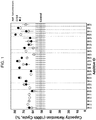
- Figure 1 graphically depicts the capacity retention results of Table 4, with the additives in Figure 1 identified by the ID numbers presented parenthetically in Table 4.
- Table 4 facilitates identification of concentration dependence or inverse dependence in the additives. The capacity retention of the control is labeled. Table 4. Performance of electrolyte additives in EC based electrolyte Additive Category Additive Name (Additive ID) Additive wt% Cap. Reten.
- Certain additives such as 2% lithium nitrate, 2% fluoroethylene carbonate, and 2% poly(methyl vinyl ether-alt-maleic anhydride), provide about 50% improvement in capacity retention at cycle 100 as compared to the EC/EMC control formulation without the additives.
- Certain other additive provide from about 13% improvement to about 47% improvement in capacity retention at cycle 100 as compared to the EC/EMC control formulation without the additives.
- Table 5 presents additives in non-EC containing formulations that result in similar or improved coulombic efficiency (CE) and improved cycle life compared to a non-EC based electrolyte (propylene carbonate / ethyl methyl carbonate (PC/EMC)) without the additives.
- Additives were formulated in PC/EMC (1:4 by volume) with 1M LiPF 6 at the stated weight percent. All results are averages of two cells.
- the data in Table 5 are sorted in order of decreasing capacity retention, with the control formulation having no additives listed first.
- Figure 2 graphically depicts the capacity retention results of Table 5, with the additives in Figure 2 identified by the ID numbers presented parenthetically in Table 5. Table 5 facilitates identification of concentration dependence or inverse dependence in the additives.
- Certain additives such as 2% lithium nitrate and 2% fluoroethylene carbonate, provide at least about 175% improvement in capacity retention at cycle 100 as compared to the PC/EMC control formulation without the additives.
- Several other additive provide from about 58% improvement to about 150% improvement in capacity retention at cycle 100 as compared to the PC/EMC control formulation without the additives.
- Table 6 presents additives in non-EC containing formulations that result in similar coulombic efficiency (CE) and similar cycle life compared to an EC-based electrolyte (EC/EMC) without the additives.
- Table 6 is similar to Table 3 in that it compares data from Table 5 with the control of Table 4 to provide a more practical comparison to a conventional formulation.
- the additives in Table 6 do not appear to require EC to form the SEI as the solvent system for the additive electrolytes was PC/EMC.
- Table 6 Additives in non-EC formulations compared to EC-based control Additive Category Additive Name Additive wt% Cap. Reten.
- useful additives share common chemical features that facilitate the formation of a mechanically robust SEI. Generally, no negative effect on overall cell capacity was observed with the use of the additive formulations of the embodiments disclosed herein as compared to the control electrolytes
- Tables 1 through 6 contain categories for additives. These categories are not intended to be limiting.
- the category names identify a common chemical trait among certain of the additives, but such category name does not necessarily identify the dominant, exclusive, or necessary chemical trait for the additive to improve performance.
- Anhydride is a category of additives, and it includes additives with anhydride functionality.
- glutaric anhydride, itaconic anhydride, succinic anhydride, and 2,3-dimethylmaleic anhydride are preferred anhydrides.
- a particularly preferred anhydride is phenylmaleic anhydride, which can be represented by the following formula:
- Anion receptor is a category of additives, and it includes additives that act as an anion receptor.
- additives that act as an anion receptor.
- triisopropyl borate and pentafluroophenyl borane are preferred anion receptors.
- B-containing is a category of additives, and it includes additives that contain boron.
- additives that contain boron For example, lithium difluoro(oxalato)borate, lithium difluoro(oxalato)borate, and vinylboronic acid pinacol ester are preferred B-containing additives.
- a particularly preferred B-containing additive is tris(pentafluorophenyl) borane, which can be represented by the following formula:
- Carbonate is a category of additives, and it includes additives with carbonate functionality.
- vinylene carbonate, 4,4-dimethyl-5-methylene-(1,3) dioxolan-2-one, and 6,7-dimethyl-2,4-dioxabicyclo[3.2.0]hept6-en-3-one are preferred carbonates.
- a particularly preferred carbonate is fluoroethylene carbonate, which can be represented by the following formula:
- Imide is a category of additives, and it includes additives with imide functionality.
- succinimide, N-(benzyloxycarbonyloxy)succinimide, and N-acetylcaprolactam are preferred imides.
- a particularly preferred imide is 1-acetyl-2-pyrrolidone, which can be represented by the following formula:
- “Inorganic” is a category of additives, and it includes additives with an inorganic species, such as an alkali metal.
- a particularly preferred inorganic is lithium nitrate (LiNO 3 ).
- Another particularly preferred inorganic is sodium perchlorate (NaClO 4 ).
- Isocyanate is a category of additives, and it includes additives with isocyanate functionality. For example, 3 - fluorophenyl isocyanate and 2,4,5-trifluorophenyl isocyanate are preferred isocyanates.
- lactone is a category of additives, and it includes additives with lactone functionality.
- a particularly preferred lactone is 3,6-dimethyl-1,4-dioxane-2,5-dione, which can be represented by the following formula:
- lactone is ⁇ -methylene- ⁇ -butyrolactone, which can be represented by the following formula:
- Polymer is a category of additives, and it includes polymeric additives.
- a particularly preferred polymer is poly(vinyl acetate).
- Another particularly preferred polymer is poly(1-vinylpyrrolidone-co-vinyl acetate).
- Another particularly preferred polymer is polyacrylonitrile.
- Strong Lewis base is a category of additives, and it includes additives that act as a weak Lewis base.
- a particularly preferred weak Lewis base is hexamethyl-phosphoramide, which can be represented by the following formula:
- Another particularly preferred weak Lewis base is tris(2,2,2-trifluoroethyl)phosphite, which can be represented by the following formula:
- lithium nitrate performed in an unexpected manner. While lithium nitrate has been used in conjunction with lithium anodes, it is unexpected that lithium nitrate would exhibit superior performance in conjunction with a silicon anode, and in particular in an electrolyte formulation that does not contain ethylene carbonate.
- Ionics (2013) 19:1795-1802 disclose the formation of a protective layer on the lithium anode to reduce reaction of lithium polysulfide with the lithium metal and to prevent damage to the lithium metal during cycling.
- a similar effect to reduce lithium metal reactivity with sulfur containing intermediates is expected in other lithium sulfur battery systems, such as those disclosed in US 7,358,012 .
- the lithium nitrate is not known as an SEI forming material on silicon, where the main function of the SEI is to prevent reduction of the bulk electrolyte solvents. It is not obvious to expect that lithium nitrate would provide a more mechanically robust SEI layer that would withstand the large volumetric changes of the silicon on charge and discharge.
- the amount of additives present in the electrolyte formulations disclosed herein is expressed in terms of a weight percent of the compound relative to a total weight of the electrolyte solution (or wt%).
- an amount of an additive can be in the range of about 0.01 wt% to about 5.0 wt%, such as from about 0.1 wt% to about 5.0 wt%, from about 0.1 wt% to about 2.0 wt%, from about 0.5 wt.% to about 2.0 wt%.
- a total amount of the additives can be in the range of about 0.01 wt% to about 5.0 wt%, such as from about 0.1 wt% to about 5.0 wt%, from about 0.1 wt% to about 2.0 wt%, from about 0.5 wt.% to about 2.0 wt%.
- the lithium-containing additives disclosed herein are present in concentrations below the concentration of the lithium salts present in the electrolyte solution that are the source of lithium ions for the battery cell. That is, the lithium ion source compound, such as LiPF 6 , is present in the electrolyte solution at a 1M concentration. Depending on the choice of organic solvent for an exact conversion, a 1M concentration of LiPF 6 is equal to about 14 wt%. Thus, a typical lithium salt is present at a concentration about 7 times to about 30 times greater than the concentration of the additives disclosed herein. Further, the lithium nitrate additive was not soluble in the organic solvent blends used herein at the concentrations used herein. In other words, the 2.0 wt% concentration of lithium nitrate exceeded the solubility limit for the organic solvent blend. This is a noteworthy contrast to the lithium ion source compound (LiPF 6 ) used in the electrolyte formulation.
Landscapes
- Chemical & Material Sciences (AREA)
- General Chemical & Material Sciences (AREA)
- Chemical Kinetics & Catalysis (AREA)
- Electrochemistry (AREA)
- Engineering & Computer Science (AREA)
- Inorganic Chemistry (AREA)
- Manufacturing & Machinery (AREA)
- Physics & Mathematics (AREA)
- Condensed Matter Physics & Semiconductors (AREA)
- General Physics & Mathematics (AREA)
- Materials Engineering (AREA)
- Secondary Cells (AREA)
- Battery Electrode And Active Subsutance (AREA)
Claims (13)
- Batterie mit:einer ersten Elektrode,einer zweiten Elektrode, die Silizium aufweist, undeiner Elektrolytlösung, formuliert aus einem Lithiumsalz, einem organischen Lösungsmittel und einem Additiv, wobei das Additiv Lithiumnitrat in einer Konzentration umfasst, die die Löslichkeitsgrenze für das organische Lösungsmittel überschreitet.
- Batterie nach Anspruch 1, wobei das organische Lösungsmittel nicht Ethylencarbonat ist.
- Batterie nach Anspruch 2, wobei das organische Lösungsmittel Propylencarbonat aufweist.
- Batterie nach Anspruch 1, wobei die erste Elektrode Lithium und Mangan aufweist.
- Batterie nach Anspruch 1, wobei die erste Elektrode Lithium, Mangan und Nickel aufweist.
- Batterie nach Anspruch 1, wobei die erste Elektrode Lithium, Mangan, Nickel und Kobalt aufweist.
- Batterie nach Anspruch 6, wobei die erste Elektrode LiNi0,4Mn0,4Co0,2O2 aufweist.
- Batterie nach Anspruch 1, wobei die zweite Elektrode eine Siliziumlegierung ist.
- Batterie nach Anspruch 1, wobei das Additiv mindestens 0,5 Gewichtsprozent Lithiumnitrat aufweist.
- Batterie nach Anspruch 9, wobei das organische Lösungsmittel nicht Ethylencarbonat ist.
- Batterie nach Anspruch 9, wobei das Additiv mindestens 1,0 Gewichtsprozent Lithiumnitrat aufweist.
- Batterie nach Anspruch 9, wobei das Additiv mindestens 2,0 Gewichtsprozent Lithiumnitrat aufweist.
- Batterie nach Anspruch 12, wobei die erste Elektrode LiNi0,4Mn0,4Co0,2O2 aufweist.
Applications Claiming Priority (2)
| Application Number | Priority Date | Filing Date | Title |
|---|---|---|---|
| US201461979693P | 2014-04-15 | 2014-04-15 | |
| PCT/US2015/025703 WO2015160773A1 (en) | 2014-04-15 | 2015-04-14 | Electrolyte formulations |
Publications (3)
| Publication Number | Publication Date |
|---|---|
| EP3132487A1 EP3132487A1 (de) | 2017-02-22 |
| EP3132487A4 EP3132487A4 (de) | 2017-10-04 |
| EP3132487B1 true EP3132487B1 (de) | 2018-11-21 |
Family
ID=54324486
Family Applications (1)
| Application Number | Title | Priority Date | Filing Date |
|---|---|---|---|
| EP15779267.2A Not-in-force EP3132487B1 (de) | 2014-04-15 | 2015-04-14 | Elektrolytformulierungen |
Country Status (6)
| Country | Link |
|---|---|
| US (1) | US20170033404A1 (de) |
| EP (1) | EP3132487B1 (de) |
| JP (2) | JP6349412B2 (de) |
| KR (2) | KR102268441B1 (de) |
| CN (1) | CN106575789B (de) |
| WO (1) | WO2015160773A1 (de) |
Families Citing this family (13)
| Publication number | Priority date | Publication date | Assignee | Title |
|---|---|---|---|---|
| US9287586B1 (en) * | 2015-01-16 | 2016-03-15 | Wildcat Discovery Technologies, Inc. | Electrolyte solutions for high energy cathode materials and methods for use |
| FR3053535A1 (fr) * | 2016-07-01 | 2018-01-05 | Commissariat A L'energie Atomique Et Aux Energies Alternatives | Cellules electrochimiques de batteries au lithium specifiques comprenant des electrolytes non aqueux a base d'au moins un solvant sulfone et/ou carbonate et au moins un additif de la famille des diesters cycliques |
| US10128537B2 (en) | 2016-08-30 | 2018-11-13 | Wildcat Discovery Technologies, Inc. | Electrolyte formulations for electrochemical cells containing a silicon electrode |
| DE102016217709A1 (de) | 2016-09-15 | 2018-03-15 | Robert Bosch Gmbh | Hybridsuperkondensator mit SEI-Additiven |
| EP3523848B1 (de) | 2016-10-05 | 2020-12-02 | Wacker Chemie AG | Lithium-ionen-batterien |
| JP6848330B2 (ja) * | 2016-10-21 | 2021-03-24 | 株式会社Gsユアサ | 非水電解質蓄電素子 |
| US9985316B1 (en) | 2017-02-24 | 2018-05-29 | Wildcat Discovery Technologies, Inc | Electrolyte additives |
| WO2019105544A1 (de) | 2017-11-29 | 2019-06-06 | Wacker Chemie Ag | Lithium-ionen-batterien |
| WO2020055180A1 (ko) | 2018-09-12 | 2020-03-19 | 주식회사 엘지화학 | 리튬 이차전지용 비수전해액 및 이를 포함하는 리튬 이차전지 |
| WO2020211938A1 (de) | 2019-04-17 | 2020-10-22 | Wacker Chemie Ag | Lithium-ionen-batterien |
| KR102515100B1 (ko) | 2019-12-12 | 2023-03-27 | 삼성에스디아이 주식회사 | 리튬 이차 전지용 전해액 및 이를 포함하는 리튬 이차 전지 |
| CN111477956A (zh) * | 2020-04-15 | 2020-07-31 | 珠海市赛纬电子材料股份有限公司 | 一种锂离子电池非水电解液添加剂、非水电解液及锂离子电池 |
| CN113675471A (zh) * | 2021-08-12 | 2021-11-19 | 湖州昆仑亿恩科电池材料有限公司 | 一种电池电解液以及包含其的电池 |
Family Cites Families (20)
| Publication number | Priority date | Publication date | Assignee | Title |
|---|---|---|---|---|
| US6060184A (en) * | 1998-07-09 | 2000-05-09 | Wilson Greatbatch Ltd. | Inorganic and organic nitrate additives for nonaqueous electrolyte in alkali metal electrochemical cells |
| US6136477A (en) * | 1998-10-22 | 2000-10-24 | Wilson Greatbatch Ltd. | Nitrate additives for nonaqueous electrolyte rechargeable cells |
| US6221534B1 (en) * | 1998-11-25 | 2001-04-24 | Wilson Greatbatch Ltd. | Alkali metal electrochemical cell having an improved cathode activated with a nonaqueous electrolyte having a carbonate additive |
| US6562515B2 (en) * | 2001-03-21 | 2003-05-13 | Wilson Greatbatch Ltd. | Electrochemical cell having an electrode with a nitrate additive in the electrode active mixture |
| JP3789439B2 (ja) * | 2003-03-03 | 2006-06-21 | Necラミリオンエナジー株式会社 | フィルム外装積層型組電池 |
| JP2005197002A (ja) * | 2003-12-26 | 2005-07-21 | Hitachi Ltd | リチウムイオン二次電池 |
| KR100823816B1 (ko) * | 2004-11-19 | 2008-04-21 | 마쯔시다덴기산교 가부시키가이샤 | 비수전해질 이차전지 |
| JP5095098B2 (ja) * | 2004-11-19 | 2012-12-12 | パナソニック株式会社 | 非水電解質二次電池 |
| WO2006077380A2 (en) * | 2005-01-18 | 2006-07-27 | Oxis Energy Limited | Improvements relating to electrolyte compositions for batteries using sulphur or sulphur compounds |
| JP4831987B2 (ja) * | 2005-03-31 | 2011-12-07 | 三洋電機株式会社 | 非水電解液二次電池の製造方法 |
| US7923148B2 (en) * | 2005-03-31 | 2011-04-12 | Sanyo Electric Co., Ltd. | Nonaqueous electrolyte secondary battery including a negative electrode containing silicon and an additive which retards oxidation of silicon during battery operation |
| US9786944B2 (en) * | 2008-06-12 | 2017-10-10 | Massachusetts Institute Of Technology | High energy density redox flow device |
| TWI372481B (en) * | 2008-06-17 | 2012-09-11 | Ind Tech Res Inst | Lithium battery |
| KR101123057B1 (ko) * | 2009-01-06 | 2012-03-20 | 주식회사 엘지화학 | 리튬 이차전지용 양극 활물질 |
| DE102010043111A1 (de) * | 2010-10-29 | 2012-05-03 | Robert Bosch Gmbh | Ex-situ-Herstellung einer Lithiumanodenschutzschicht |
| FR2977722B1 (fr) * | 2011-07-05 | 2014-03-14 | Commissariat Energie Atomique | Separateur d'electrodes pour accumulateur au lithium/soufre |
| US9748572B2 (en) * | 2012-06-18 | 2017-08-29 | Uchicago Argonne, Llc | Ultrasound assisted in-situ formation of carbon/sulfur cathodes |
| DE102013210631A1 (de) * | 2013-06-07 | 2014-12-11 | Volkswagen Aktiengesellschaft | Neue Elektrolytzusammensetzung für Hochenergieanoden |
| DE102014202180B4 (de) * | 2014-02-06 | 2024-11-14 | Volkswagen Aktiengesellschaft | Elektrolytzusammensetzungen für Lithium-Schwefel-Batterien |
| JP6435189B2 (ja) * | 2014-12-25 | 2018-12-05 | Fdk株式会社 | スパイラル型リチウム電池 |
-
2015
- 2015-04-14 KR KR1020187038047A patent/KR102268441B1/ko not_active Expired - Fee Related
- 2015-04-14 EP EP15779267.2A patent/EP3132487B1/de not_active Not-in-force
- 2015-04-14 WO PCT/US2015/025703 patent/WO2015160773A1/en not_active Ceased
- 2015-04-14 JP JP2016562942A patent/JP6349412B2/ja not_active Expired - Fee Related
- 2015-04-14 KR KR1020167030553A patent/KR20170028874A/ko not_active Ceased
- 2015-04-14 CN CN201580027576.XA patent/CN106575789B/zh not_active Expired - Fee Related
-
2016
- 2016-10-11 US US15/290,587 patent/US20170033404A1/en not_active Abandoned
-
2018
- 2018-06-01 JP JP2018106086A patent/JP6637110B2/ja active Active
Non-Patent Citations (1)
| Title |
|---|
| None * |
Also Published As
| Publication number | Publication date |
|---|---|
| EP3132487A1 (de) | 2017-02-22 |
| WO2015160773A1 (en) | 2015-10-22 |
| KR20190003831A (ko) | 2019-01-09 |
| CN106575789B (zh) | 2020-06-02 |
| US20170033404A1 (en) | 2017-02-02 |
| JP6637110B2 (ja) | 2020-01-29 |
| JP6349412B2 (ja) | 2018-06-27 |
| KR102268441B1 (ko) | 2021-06-22 |
| JP2017515269A (ja) | 2017-06-08 |
| KR20170028874A (ko) | 2017-03-14 |
| CN106575789A (zh) | 2017-04-19 |
| JP2018166104A (ja) | 2018-10-25 |
| EP3132487A4 (de) | 2017-10-04 |
Similar Documents
| Publication | Publication Date | Title |
|---|---|---|
| EP3132487B1 (de) | Elektrolytformulierungen | |
| EP1995817B1 (de) | Wiederaufladbare lithiumbatterie mit ionischer flüssigkeit | |
| EP3736828A1 (de) | Festelektrolytmaterial und batterie | |
| EP2973834B1 (de) | Batterie beinhaltend polymeradditive und herstellung davon | |
| CN110581303B (zh) | 固态电化学组件、固态电化学装置及其制备方法 | |
| JP2019509605A (ja) | 自動車用途のためのリチウムイオン電池 | |
| US20160380309A1 (en) | Long-life lithium-ion batteries | |
| EP2719009A1 (de) | Lithium-ionen-batteriezellen mit fluorkohlenstoff-elektrolyztzusätzen | |
| JP2009164082A (ja) | 非水電解質二次電池及びその製造方法 | |
| JP5811093B2 (ja) | 二次電池 | |
| US20230402654A1 (en) | Stabilized electrolytes for low-temperature batteries | |
| US20160079634A1 (en) | All-solid-state battery and method for producing the same, and method for restoring capacity of the same | |
| US20210184254A1 (en) | Nanoscale interfacial coating for stabilizing electrolyte with high-voltage cathode | |
| JP2011192561A (ja) | 非水電解液二次電池の製造方法 | |
| US8263261B2 (en) | Active material for non-aqueous electrolyte secondary battery, and non-aqueous electrolyte secondary battery comprising it | |
| JP2013246992A (ja) | リチウムイオン二次電池 | |
| US9425485B1 (en) | Electrolyte formulations for gas suppression and methods of use | |
| US20160285126A1 (en) | Electrolyte formulations for gas suppression and methods of use | |
| US20100015532A1 (en) | Negative electrode and non-aqueous electrolyte secondary battery using the same | |
| US20250300181A1 (en) | A slurry, an electrode, and a method for manufacturing an electrode for lithium-ion batteries | |
| JP7025681B2 (ja) | 非水系電解質二次電池 | |
| JP2021068621A (ja) | 固体電池、固体電池の正極活物質層製造用組成物、および固体電池の正極活物質層の製造方法 | |
| KR101639313B1 (ko) | 리튬 이차전지용 양극 및 이를 포함하는 리튬 이차전지 | |
| JP2009099522A (ja) | 非水電解質二次電池用活物質及びそれを用いた非水電解質二次電池 | |
| CN108242537B (zh) | 非水系二次电池用正极材料、非水系二次电池及非水系二次电池用正极材料的制造方法 |
Legal Events
| Date | Code | Title | Description |
|---|---|---|---|
| STAA | Information on the status of an ep patent application or granted ep patent |
Free format text: STATUS: THE INTERNATIONAL PUBLICATION HAS BEEN MADE |
|
| PUAI | Public reference made under article 153(3) epc to a published international application that has entered the european phase |
Free format text: ORIGINAL CODE: 0009012 |
|
| STAA | Information on the status of an ep patent application or granted ep patent |
Free format text: STATUS: REQUEST FOR EXAMINATION WAS MADE |
|
| 17P | Request for examination filed |
Effective date: 20161101 |
|
| AK | Designated contracting states |
Kind code of ref document: A1 Designated state(s): AL AT BE BG CH CY CZ DE DK EE ES FI FR GB GR HR HU IE IS IT LI LT LU LV MC MK MT NL NO PL PT RO RS SE SI SK SM TR |
|
| AX | Request for extension of the european patent |
Extension state: BA ME |
|
| DAV | Request for validation of the european patent (deleted) | ||
| DAX | Request for extension of the european patent (deleted) | ||
| A4 | Supplementary search report drawn up and despatched |
Effective date: 20170831 |
|
| RIC1 | Information provided on ipc code assigned before grant |
Ipc: H01M 10/0525 20100101AFI20170825BHEP Ipc: H01M 10/0567 20100101ALI20170825BHEP Ipc: H01M 4/525 20100101ALI20170825BHEP Ipc: H01M 4/38 20060101ALI20170825BHEP Ipc: H01M 4/505 20100101ALI20170825BHEP |
|
| GRAP | Despatch of communication of intention to grant a patent |
Free format text: ORIGINAL CODE: EPIDOSNIGR1 |
|
| STAA | Information on the status of an ep patent application or granted ep patent |
Free format text: STATUS: GRANT OF PATENT IS INTENDED |
|
| INTG | Intention to grant announced |
Effective date: 20180627 |
|
| GRAS | Grant fee paid |
Free format text: ORIGINAL CODE: EPIDOSNIGR3 |
|
| GRAA | (expected) grant |
Free format text: ORIGINAL CODE: 0009210 |
|
| STAA | Information on the status of an ep patent application or granted ep patent |
Free format text: STATUS: THE PATENT HAS BEEN GRANTED |
|
| RIN1 | Information on inventor provided before grant (corrected) |
Inventor name: CALDWELL, MARISSA Inventor name: CHENG, GANG Inventor name: STRAND, DEIDRE |
|
| AK | Designated contracting states |
Kind code of ref document: B1 Designated state(s): AL AT BE BG CH CY CZ DE DK EE ES FI FR GB GR HR HU IE IS IT LI LT LU LV MC MK MT NL NO PL PT RO RS SE SI SK SM TR |
|
| REG | Reference to a national code |
Ref country code: CH Ref legal event code: EP |
|
| REG | Reference to a national code |
Ref country code: IE Ref legal event code: FG4D |
|
| REG | Reference to a national code |
Ref country code: DE Ref legal event code: R096 Ref document number: 602015020117 Country of ref document: DE |
|
| REG | Reference to a national code |
Ref country code: AT Ref legal event code: REF Ref document number: 1068605 Country of ref document: AT Kind code of ref document: T Effective date: 20181215 |
|
| REG | Reference to a national code |
Ref country code: NL Ref legal event code: MP Effective date: 20181121 |
|
| REG | Reference to a national code |
Ref country code: AT Ref legal event code: MK05 Ref document number: 1068605 Country of ref document: AT Kind code of ref document: T Effective date: 20181121 |
|
| PG25 | Lapsed in a contracting state [announced via postgrant information from national office to epo] |
Ref country code: FI Free format text: LAPSE BECAUSE OF FAILURE TO SUBMIT A TRANSLATION OF THE DESCRIPTION OR TO PAY THE FEE WITHIN THE PRESCRIBED TIME-LIMIT Effective date: 20181121 Ref country code: BG Free format text: LAPSE BECAUSE OF FAILURE TO SUBMIT A TRANSLATION OF THE DESCRIPTION OR TO PAY THE FEE WITHIN THE PRESCRIBED TIME-LIMIT Effective date: 20190221 Ref country code: NO Free format text: LAPSE BECAUSE OF FAILURE TO SUBMIT A TRANSLATION OF THE DESCRIPTION OR TO PAY THE FEE WITHIN THE PRESCRIBED TIME-LIMIT Effective date: 20190221 Ref country code: LT Free format text: LAPSE BECAUSE OF FAILURE TO SUBMIT A TRANSLATION OF THE DESCRIPTION OR TO PAY THE FEE WITHIN THE PRESCRIBED TIME-LIMIT Effective date: 20181121 Ref country code: IS Free format text: LAPSE BECAUSE OF FAILURE TO SUBMIT A TRANSLATION OF THE DESCRIPTION OR TO PAY THE FEE WITHIN THE PRESCRIBED TIME-LIMIT Effective date: 20190321 Ref country code: AT Free format text: LAPSE BECAUSE OF FAILURE TO SUBMIT A TRANSLATION OF THE DESCRIPTION OR TO PAY THE FEE WITHIN THE PRESCRIBED TIME-LIMIT Effective date: 20181121 Ref country code: ES Free format text: LAPSE BECAUSE OF FAILURE TO SUBMIT A TRANSLATION OF THE DESCRIPTION OR TO PAY THE FEE WITHIN THE PRESCRIBED TIME-LIMIT Effective date: 20181121 Ref country code: LV Free format text: LAPSE BECAUSE OF FAILURE TO SUBMIT A TRANSLATION OF THE DESCRIPTION OR TO PAY THE FEE WITHIN THE PRESCRIBED TIME-LIMIT Effective date: 20181121 Ref country code: HR Free format text: LAPSE BECAUSE OF FAILURE TO SUBMIT A TRANSLATION OF THE DESCRIPTION OR TO PAY THE FEE WITHIN THE PRESCRIBED TIME-LIMIT Effective date: 20181121 |
|
| PG25 | Lapsed in a contracting state [announced via postgrant information from national office to epo] |
Ref country code: PT Free format text: LAPSE BECAUSE OF FAILURE TO SUBMIT A TRANSLATION OF THE DESCRIPTION OR TO PAY THE FEE WITHIN THE PRESCRIBED TIME-LIMIT Effective date: 20190321 Ref country code: AL Free format text: LAPSE BECAUSE OF FAILURE TO SUBMIT A TRANSLATION OF THE DESCRIPTION OR TO PAY THE FEE WITHIN THE PRESCRIBED TIME-LIMIT Effective date: 20181121 Ref country code: RS Free format text: LAPSE BECAUSE OF FAILURE TO SUBMIT A TRANSLATION OF THE DESCRIPTION OR TO PAY THE FEE WITHIN THE PRESCRIBED TIME-LIMIT Effective date: 20181121 Ref country code: SE Free format text: LAPSE BECAUSE OF FAILURE TO SUBMIT A TRANSLATION OF THE DESCRIPTION OR TO PAY THE FEE WITHIN THE PRESCRIBED TIME-LIMIT Effective date: 20181121 Ref country code: NL Free format text: LAPSE BECAUSE OF FAILURE TO SUBMIT A TRANSLATION OF THE DESCRIPTION OR TO PAY THE FEE WITHIN THE PRESCRIBED TIME-LIMIT Effective date: 20181121 Ref country code: GR Free format text: LAPSE BECAUSE OF FAILURE TO SUBMIT A TRANSLATION OF THE DESCRIPTION OR TO PAY THE FEE WITHIN THE PRESCRIBED TIME-LIMIT Effective date: 20190222 |
|
| PG25 | Lapsed in a contracting state [announced via postgrant information from national office to epo] |
Ref country code: CZ Free format text: LAPSE BECAUSE OF FAILURE TO SUBMIT A TRANSLATION OF THE DESCRIPTION OR TO PAY THE FEE WITHIN THE PRESCRIBED TIME-LIMIT Effective date: 20181121 Ref country code: PL Free format text: LAPSE BECAUSE OF FAILURE TO SUBMIT A TRANSLATION OF THE DESCRIPTION OR TO PAY THE FEE WITHIN THE PRESCRIBED TIME-LIMIT Effective date: 20181121 Ref country code: DK Free format text: LAPSE BECAUSE OF FAILURE TO SUBMIT A TRANSLATION OF THE DESCRIPTION OR TO PAY THE FEE WITHIN THE PRESCRIBED TIME-LIMIT Effective date: 20181121 Ref country code: IT Free format text: LAPSE BECAUSE OF FAILURE TO SUBMIT A TRANSLATION OF THE DESCRIPTION OR TO PAY THE FEE WITHIN THE PRESCRIBED TIME-LIMIT Effective date: 20181121 |
|
| REG | Reference to a national code |
Ref country code: DE Ref legal event code: R097 Ref document number: 602015020117 Country of ref document: DE |
|
| PG25 | Lapsed in a contracting state [announced via postgrant information from national office to epo] |
Ref country code: EE Free format text: LAPSE BECAUSE OF FAILURE TO SUBMIT A TRANSLATION OF THE DESCRIPTION OR TO PAY THE FEE WITHIN THE PRESCRIBED TIME-LIMIT Effective date: 20181121 Ref country code: SM Free format text: LAPSE BECAUSE OF FAILURE TO SUBMIT A TRANSLATION OF THE DESCRIPTION OR TO PAY THE FEE WITHIN THE PRESCRIBED TIME-LIMIT Effective date: 20181121 Ref country code: RO Free format text: LAPSE BECAUSE OF FAILURE TO SUBMIT A TRANSLATION OF THE DESCRIPTION OR TO PAY THE FEE WITHIN THE PRESCRIBED TIME-LIMIT Effective date: 20181121 Ref country code: SK Free format text: LAPSE BECAUSE OF FAILURE TO SUBMIT A TRANSLATION OF THE DESCRIPTION OR TO PAY THE FEE WITHIN THE PRESCRIBED TIME-LIMIT Effective date: 20181121 |
|
| PLBE | No opposition filed within time limit |
Free format text: ORIGINAL CODE: 0009261 |
|
| STAA | Information on the status of an ep patent application or granted ep patent |
Free format text: STATUS: NO OPPOSITION FILED WITHIN TIME LIMIT |
|
| 26N | No opposition filed |
Effective date: 20190822 |
|
| PG25 | Lapsed in a contracting state [announced via postgrant information from national office to epo] |
Ref country code: SI Free format text: LAPSE BECAUSE OF FAILURE TO SUBMIT A TRANSLATION OF THE DESCRIPTION OR TO PAY THE FEE WITHIN THE PRESCRIBED TIME-LIMIT Effective date: 20181121 |
|
| PGFP | Annual fee paid to national office [announced via postgrant information from national office to epo] |
Ref country code: GB Payment date: 20190417 Year of fee payment: 5 |
|
| REG | Reference to a national code |
Ref country code: CH Ref legal event code: PL |
|
| REG | Reference to a national code |
Ref country code: BE Ref legal event code: MM Effective date: 20190430 |
|
| PG25 | Lapsed in a contracting state [announced via postgrant information from national office to epo] |
Ref country code: MC Free format text: LAPSE BECAUSE OF FAILURE TO SUBMIT A TRANSLATION OF THE DESCRIPTION OR TO PAY THE FEE WITHIN THE PRESCRIBED TIME-LIMIT Effective date: 20181121 Ref country code: LU Free format text: LAPSE BECAUSE OF NON-PAYMENT OF DUE FEES Effective date: 20190414 |
|
| PG25 | Lapsed in a contracting state [announced via postgrant information from national office to epo] |
Ref country code: LI Free format text: LAPSE BECAUSE OF NON-PAYMENT OF DUE FEES Effective date: 20190430 Ref country code: CH Free format text: LAPSE BECAUSE OF NON-PAYMENT OF DUE FEES Effective date: 20190430 |
|
| PG25 | Lapsed in a contracting state [announced via postgrant information from national office to epo] |
Ref country code: BE Free format text: LAPSE BECAUSE OF NON-PAYMENT OF DUE FEES Effective date: 20190430 |
|
| PG25 | Lapsed in a contracting state [announced via postgrant information from national office to epo] |
Ref country code: TR Free format text: LAPSE BECAUSE OF FAILURE TO SUBMIT A TRANSLATION OF THE DESCRIPTION OR TO PAY THE FEE WITHIN THE PRESCRIBED TIME-LIMIT Effective date: 20181121 |
|
| PG25 | Lapsed in a contracting state [announced via postgrant information from national office to epo] |
Ref country code: IE Free format text: LAPSE BECAUSE OF NON-PAYMENT OF DUE FEES Effective date: 20190414 |
|
| PG25 | Lapsed in a contracting state [announced via postgrant information from national office to epo] |
Ref country code: FR Free format text: LAPSE BECAUSE OF NON-PAYMENT OF DUE FEES Effective date: 20190430 |
|
| GBPC | Gb: european patent ceased through non-payment of renewal fee |
Effective date: 20200414 |
|
| PG25 | Lapsed in a contracting state [announced via postgrant information from national office to epo] |
Ref country code: GB Free format text: LAPSE BECAUSE OF NON-PAYMENT OF DUE FEES Effective date: 20200414 |
|
| PG25 | Lapsed in a contracting state [announced via postgrant information from national office to epo] |
Ref country code: CY Free format text: LAPSE BECAUSE OF FAILURE TO SUBMIT A TRANSLATION OF THE DESCRIPTION OR TO PAY THE FEE WITHIN THE PRESCRIBED TIME-LIMIT Effective date: 20181121 |
|
| PG25 | Lapsed in a contracting state [announced via postgrant information from national office to epo] |
Ref country code: MT Free format text: LAPSE BECAUSE OF FAILURE TO SUBMIT A TRANSLATION OF THE DESCRIPTION OR TO PAY THE FEE WITHIN THE PRESCRIBED TIME-LIMIT Effective date: 20181121 Ref country code: HU Free format text: LAPSE BECAUSE OF FAILURE TO SUBMIT A TRANSLATION OF THE DESCRIPTION OR TO PAY THE FEE WITHIN THE PRESCRIBED TIME-LIMIT; INVALID AB INITIO Effective date: 20150414 |
|
| PG25 | Lapsed in a contracting state [announced via postgrant information from national office to epo] |
Ref country code: MK Free format text: LAPSE BECAUSE OF FAILURE TO SUBMIT A TRANSLATION OF THE DESCRIPTION OR TO PAY THE FEE WITHIN THE PRESCRIBED TIME-LIMIT Effective date: 20181121 |
|
| PGFP | Annual fee paid to national office [announced via postgrant information from national office to epo] |
Ref country code: DE Payment date: 20240429 Year of fee payment: 10 |
|
| REG | Reference to a national code |
Ref country code: DE Ref legal event code: R119 Ref document number: 602015020117 Country of ref document: DE |
|
| PG25 | Lapsed in a contracting state [announced via postgrant information from national office to epo] |
Ref country code: DE Free format text: LAPSE BECAUSE OF NON-PAYMENT OF DUE FEES Effective date: 20251104 |