EP3133155B1 - Hyperthermostabile endoglucanase - Google Patents
Hyperthermostabile endoglucanase Download PDFInfo
- Publication number
- EP3133155B1 EP3133155B1 EP16184425.3A EP16184425A EP3133155B1 EP 3133155 B1 EP3133155 B1 EP 3133155B1 EP 16184425 A EP16184425 A EP 16184425A EP 3133155 B1 EP3133155 B1 EP 3133155B1
- Authority
- EP
- European Patent Office
- Prior art keywords
- endoglucanase
- amino acid
- acid sequence
- hyperthermostable endoglucanase
- hyperthermostable
- Prior art date
- Legal status (The legal status is an assumption and is not a legal conclusion. Google has not performed a legal analysis and makes no representation as to the accuracy of the status listed.)
- Not-in-force
Links
- 108010059892 Cellulase Proteins 0.000 title claims description 181
- 230000000694 effects Effects 0.000 claims description 110
- 238000006460 hydrolysis reaction Methods 0.000 claims description 91
- 150000001413 amino acids Chemical class 0.000 claims description 81
- 230000007062 hydrolysis Effects 0.000 claims description 80
- 229920002134 Carboxymethyl cellulose Polymers 0.000 claims description 77
- 235000010948 carboxy methyl cellulose Nutrition 0.000 claims description 77
- 108010031186 Glycoside Hydrolases Proteins 0.000 claims description 63
- 239000002773 nucleotide Substances 0.000 claims description 61
- 125000003729 nucleotide group Chemical group 0.000 claims description 61
- 102000005744 Glycoside Hydrolases Human genes 0.000 claims description 60
- 229920001184 polypeptide Polymers 0.000 claims description 57
- 108090000765 processed proteins & peptides Proteins 0.000 claims description 57
- 102000004196 processed proteins & peptides Human genes 0.000 claims description 57
- 238000000034 method Methods 0.000 claims description 55
- 239000000758 substrate Substances 0.000 claims description 54
- 108091033319 polynucleotide Proteins 0.000 claims description 40
- 102000040430 polynucleotide Human genes 0.000 claims description 40
- 239000002157 polynucleotide Substances 0.000 claims description 40
- 229920002678 cellulose Polymers 0.000 claims description 35
- 239000001913 cellulose Substances 0.000 claims description 34
- 239000013604 expression vector Substances 0.000 claims description 33
- 239000000203 mixture Substances 0.000 claims description 30
- 230000003197 catalytic effect Effects 0.000 claims description 26
- 238000004519 manufacturing process Methods 0.000 claims description 25
- 239000001768 carboxy methyl cellulose Substances 0.000 claims description 18
- 239000008112 carboxymethyl-cellulose Substances 0.000 claims description 18
- 239000000463 material Substances 0.000 claims description 15
- 239000007857 degradation product Substances 0.000 claims description 14
- 241000206602 Eukaryota Species 0.000 claims description 2
- 125000003275 alpha amino acid group Chemical group 0.000 claims 10
- 108090000623 proteins and genes Proteins 0.000 description 69
- 108090000790 Enzymes Proteins 0.000 description 56
- 102000004190 Enzymes Human genes 0.000 description 55
- 229940088598 enzyme Drugs 0.000 description 46
- 239000000243 solution Substances 0.000 description 35
- 235000010980 cellulose Nutrition 0.000 description 34
- 108700026244 Open Reading Frames Proteins 0.000 description 33
- 108020004414 DNA Proteins 0.000 description 31
- 239000000872 buffer Substances 0.000 description 27
- 238000006243 chemical reaction Methods 0.000 description 26
- 102000004169 proteins and genes Human genes 0.000 description 25
- 239000002689 soil Substances 0.000 description 21
- 235000018102 proteins Nutrition 0.000 description 20
- 241000588724 Escherichia coli Species 0.000 description 19
- 235000001014 amino acid Nutrition 0.000 description 19
- 230000014509 gene expression Effects 0.000 description 17
- QKNYBSVHEMOAJP-UHFFFAOYSA-N 2-amino-2-(hydroxymethyl)propane-1,3-diol;hydron;chloride Chemical compound Cl.OCC(N)(CO)CO QKNYBSVHEMOAJP-UHFFFAOYSA-N 0.000 description 14
- 108010076504 Protein Sorting Signals Proteins 0.000 description 14
- 210000004027 cell Anatomy 0.000 description 14
- 108091028043 Nucleic acid sequence Proteins 0.000 description 13
- 239000011259 mixed solution Substances 0.000 description 13
- 235000000346 sugar Nutrition 0.000 description 13
- 150000008163 sugars Chemical class 0.000 description 13
- 229920002488 Hemicellulose Polymers 0.000 description 12
- FAPWRFPIFSIZLT-UHFFFAOYSA-M Sodium chloride Chemical compound [Na+].[Cl-] FAPWRFPIFSIZLT-UHFFFAOYSA-M 0.000 description 12
- 238000005259 measurement Methods 0.000 description 12
- 238000012258 culturing Methods 0.000 description 10
- 238000011533 pre-incubation Methods 0.000 description 10
- 241000196324 Embryophyta Species 0.000 description 9
- 101710121765 Endo-1,4-beta-xylanase Proteins 0.000 description 9
- 239000000523 sample Substances 0.000 description 9
- 239000006228 supernatant Substances 0.000 description 9
- 108010008885 Cellulose 1,4-beta-Cellobiosidase Proteins 0.000 description 8
- 125000000539 amino acid group Chemical group 0.000 description 8
- 239000007864 aqueous solution Substances 0.000 description 8
- 210000004748 cultured cell Anatomy 0.000 description 8
- 230000000813 microbial effect Effects 0.000 description 8
- IAYJZWFYUSNIPN-KFRZSCGFSA-N (2s,3r,4s,5s,6r)-2-[(2r,3s,4r,5r,6s)-4,5-dihydroxy-2-(hydroxymethyl)-6-(4-nitrophenoxy)oxan-3-yl]oxy-6-(hydroxymethyl)oxane-3,4,5-triol Chemical compound O[C@@H]1[C@@H](O)[C@H](O)[C@@H](CO)O[C@H]1O[C@@H]1[C@@H](CO)O[C@@H](OC=2C=CC(=CC=2)[N+]([O-])=O)[C@H](O)[C@H]1O IAYJZWFYUSNIPN-KFRZSCGFSA-N 0.000 description 7
- 239000002028 Biomass Substances 0.000 description 7
- 229920002097 Lichenin Polymers 0.000 description 7
- 210000004899 c-terminal region Anatomy 0.000 description 7
- 150000001875 compounds Chemical class 0.000 description 7
- 230000007071 enzymatic hydrolysis Effects 0.000 description 7
- 238000006047 enzymatic hydrolysis reaction Methods 0.000 description 7
- 239000007788 liquid Substances 0.000 description 7
- 244000005700 microbiome Species 0.000 description 7
- MLJYKRYCCUGBBV-YTWAJWBKSA-N 4-nitrophenyl beta-D-xyloside Chemical compound O[C@@H]1[C@@H](O)[C@H](O)CO[C@H]1OC1=CC=C([N+]([O-])=O)C=C1 MLJYKRYCCUGBBV-YTWAJWBKSA-N 0.000 description 6
- IFBHRQDFSNCLOZ-IIRVCBMXSA-N 4-nitrophenyl-α-d-galactoside Chemical compound O[C@@H]1[C@@H](O)[C@@H](O)[C@@H](CO)O[C@@H]1OC1=CC=C([N+]([O-])=O)C=C1 IFBHRQDFSNCLOZ-IIRVCBMXSA-N 0.000 description 6
- 229920002498 Beta-glucan Polymers 0.000 description 6
- 241000233866 Fungi Species 0.000 description 6
- 238000011161 development Methods 0.000 description 6
- 238000010586 diagram Methods 0.000 description 6
- 230000008569 process Effects 0.000 description 6
- 238000000746 purification Methods 0.000 description 6
- 239000011780 sodium chloride Substances 0.000 description 6
- 238000011282 treatment Methods 0.000 description 6
- 238000011144 upstream manufacturing Methods 0.000 description 6
- XLYOFNOQVPJJNP-UHFFFAOYSA-N water Substances O XLYOFNOQVPJJNP-UHFFFAOYSA-N 0.000 description 6
- 229920001221 xylan Polymers 0.000 description 6
- 150000004823 xylans Chemical class 0.000 description 6
- BTJIUGUIPKRLHP-UHFFFAOYSA-N 4-nitrophenol Chemical compound OC1=CC=C([N+]([O-])=O)C=C1 BTJIUGUIPKRLHP-UHFFFAOYSA-N 0.000 description 5
- 239000008351 acetate buffer Substances 0.000 description 5
- 108010047754 beta-Glucosidase Proteins 0.000 description 5
- 229940106157 cellulase Drugs 0.000 description 5
- 108010038658 exo-1,4-beta-D-xylosidase Proteins 0.000 description 5
- 238000012163 sequencing technique Methods 0.000 description 5
- 239000007787 solid Substances 0.000 description 5
- 239000013598 vector Substances 0.000 description 5
- DBTMGCOVALSLOR-DEVYUCJPSA-N (2s,3r,4s,5r,6r)-4-[(2s,3r,4s,5r,6r)-3,5-dihydroxy-6-(hydroxymethyl)-4-[(2s,3r,4s,5s,6r)-3,4,5-trihydroxy-6-(hydroxymethyl)oxan-2-yl]oxyoxan-2-yl]oxy-6-(hydroxymethyl)oxane-2,3,5-triol Chemical compound O[C@@H]1[C@@H](O)[C@H](O)[C@@H](CO)O[C@H]1O[C@@H]1[C@@H](O)[C@H](O[C@H]2[C@@H]([C@@H](CO)O[C@H](O)[C@@H]2O)O)O[C@H](CO)[C@H]1O DBTMGCOVALSLOR-DEVYUCJPSA-N 0.000 description 4
- FYGDTMLNYKFZSV-URKRLVJHSA-N (2s,3r,4s,5s,6r)-2-[(2r,4r,5r,6s)-4,5-dihydroxy-2-(hydroxymethyl)-6-[(2r,4r,5r,6s)-4,5,6-trihydroxy-2-(hydroxymethyl)oxan-3-yl]oxyoxan-3-yl]oxy-6-(hydroxymethyl)oxane-3,4,5-triol Chemical compound O[C@@H]1[C@@H](O)[C@H](O)[C@@H](CO)O[C@H]1OC1[C@@H](CO)O[C@@H](OC2[C@H](O[C@H](O)[C@H](O)[C@H]2O)CO)[C@H](O)[C@H]1O FYGDTMLNYKFZSV-URKRLVJHSA-N 0.000 description 4
- 108010084185 Cellulases Proteins 0.000 description 4
- 102000005575 Cellulases Human genes 0.000 description 4
- SRBFZHDQGSBBOR-IOVATXLUSA-N D-xylopyranose Chemical compound O[C@@H]1COC(O)[C@H](O)[C@H]1O SRBFZHDQGSBBOR-IOVATXLUSA-N 0.000 description 4
- 229920001503 Glucan Polymers 0.000 description 4
- 241000238631 Hexapoda Species 0.000 description 4
- 229920001543 Laminarin Polymers 0.000 description 4
- 239000005717 Laminarin Substances 0.000 description 4
- NBIIXXVUZAFLBC-UHFFFAOYSA-N Phosphoric acid Chemical compound OP(O)(O)=O NBIIXXVUZAFLBC-UHFFFAOYSA-N 0.000 description 4
- 240000004808 Saccharomyces cerevisiae Species 0.000 description 4
- 102000006995 beta-Glucosidase Human genes 0.000 description 4
- 239000000287 crude extract Substances 0.000 description 4
- 230000002255 enzymatic effect Effects 0.000 description 4
- 210000003527 eukaryotic cell Anatomy 0.000 description 4
- 230000001747 exhibiting effect Effects 0.000 description 4
- 239000000284 extract Substances 0.000 description 4
- 239000011536 extraction buffer Substances 0.000 description 4
- 102000039446 nucleic acids Human genes 0.000 description 4
- 108020004707 nucleic acids Proteins 0.000 description 4
- 150000007523 nucleic acids Chemical class 0.000 description 4
- 239000000843 powder Substances 0.000 description 4
- 210000001236 prokaryotic cell Anatomy 0.000 description 4
- 230000035484 reaction time Effects 0.000 description 4
- 230000006798 recombination Effects 0.000 description 4
- 238000005215 recombination Methods 0.000 description 4
- 230000003248 secreting effect Effects 0.000 description 4
- 238000012070 whole genome sequencing analysis Methods 0.000 description 4
- FWMNVWWHGCHHJJ-SKKKGAJSSA-N 4-amino-1-[(2r)-6-amino-2-[[(2r)-2-[[(2r)-2-[[(2r)-2-amino-3-phenylpropanoyl]amino]-3-phenylpropanoyl]amino]-4-methylpentanoyl]amino]hexanoyl]piperidine-4-carboxylic acid Chemical compound C([C@H](C(=O)N[C@H](CC(C)C)C(=O)N[C@H](CCCCN)C(=O)N1CCC(N)(CC1)C(O)=O)NC(=O)[C@H](N)CC=1C=CC=CC=1)C1=CC=CC=C1 FWMNVWWHGCHHJJ-SKKKGAJSSA-N 0.000 description 3
- 108020004705 Codon Proteins 0.000 description 3
- LFQSCWFLJHTTHZ-UHFFFAOYSA-N Ethanol Chemical compound CCO LFQSCWFLJHTTHZ-UHFFFAOYSA-N 0.000 description 3
- 229920000168 Microcrystalline cellulose Polymers 0.000 description 3
- 238000004458 analytical method Methods 0.000 description 3
- 238000011088 calibration curve Methods 0.000 description 3
- 238000005119 centrifugation Methods 0.000 description 3
- KRKNYBCHXYNGOX-UHFFFAOYSA-N citric acid Chemical compound OC(=O)CC(O)(C(O)=O)CC(O)=O KRKNYBCHXYNGOX-UHFFFAOYSA-N 0.000 description 3
- 238000010367 cloning Methods 0.000 description 3
- 238000006731 degradation reaction Methods 0.000 description 3
- 238000007865 diluting Methods 0.000 description 3
- 210000002472 endoplasmic reticulum Anatomy 0.000 description 3
- 238000005516 engineering process Methods 0.000 description 3
- 230000007613 environmental effect Effects 0.000 description 3
- 238000002474 experimental method Methods 0.000 description 3
- -1 glucose and xylose Chemical class 0.000 description 3
- 108010002430 hemicellulase Proteins 0.000 description 3
- RAXXELZNTBOGNW-UHFFFAOYSA-N imidazole Natural products C1=CNC=N1 RAXXELZNTBOGNW-UHFFFAOYSA-N 0.000 description 3
- 238000003780 insertion Methods 0.000 description 3
- 230000037431 insertion Effects 0.000 description 3
- 238000011068 loading method Methods 0.000 description 3
- 235000019813 microcrystalline cellulose Nutrition 0.000 description 3
- 239000008108 microcrystalline cellulose Substances 0.000 description 3
- 229940016286 microcrystalline cellulose Drugs 0.000 description 3
- 239000013612 plasmid Substances 0.000 description 3
- 239000000047 product Substances 0.000 description 3
- 238000000926 separation method Methods 0.000 description 3
- 239000000126 substance Substances 0.000 description 3
- LWFUFLREGJMOIZ-UHFFFAOYSA-N 3,5-dinitrosalicylic acid Chemical compound OC(=O)C1=CC([N+]([O-])=O)=CC([N+]([O-])=O)=C1O LWFUFLREGJMOIZ-UHFFFAOYSA-N 0.000 description 2
- 241000589158 Agrobacterium Species 0.000 description 2
- 241000203069 Archaea Species 0.000 description 2
- CURLTUGMZLYLDI-UHFFFAOYSA-N Carbon dioxide Chemical compound O=C=O CURLTUGMZLYLDI-UHFFFAOYSA-N 0.000 description 2
- 230000004544 DNA amplification Effects 0.000 description 2
- 238000007400 DNA extraction Methods 0.000 description 2
- 206010059866 Drug resistance Diseases 0.000 description 2
- 108010001817 Endo-1,4-beta Xylanases Proteins 0.000 description 2
- ZHNUHDYFZUAESO-UHFFFAOYSA-N Formamide Chemical compound NC=O ZHNUHDYFZUAESO-UHFFFAOYSA-N 0.000 description 2
- 108700007698 Genetic Terminator Regions Proteins 0.000 description 2
- WQZGKKKJIJFFOK-GASJEMHNSA-N Glucose Natural products OC[C@H]1OC(O)[C@H](O)[C@@H](O)[C@@H]1O WQZGKKKJIJFFOK-GASJEMHNSA-N 0.000 description 2
- DHMQDGOQFOQNFH-UHFFFAOYSA-N Glycine Chemical compound NCC(O)=O DHMQDGOQFOQNFH-UHFFFAOYSA-N 0.000 description 2
- UFHFLCQGNIYNRP-UHFFFAOYSA-N Hydrogen Chemical compound [H][H] UFHFLCQGNIYNRP-UHFFFAOYSA-N 0.000 description 2
- OUYCCCASQSFEME-QMMMGPOBSA-N L-tyrosine Chemical compound OC(=O)[C@@H](N)CC1=CC=C(O)C=C1 OUYCCCASQSFEME-QMMMGPOBSA-N 0.000 description 2
- 239000002202 Polyethylene glycol Substances 0.000 description 2
- MTCFGRXMJLQNBG-UHFFFAOYSA-N Serine Natural products OCC(N)C(O)=O MTCFGRXMJLQNBG-UHFFFAOYSA-N 0.000 description 2
- CDBYLPFSWZWCQE-UHFFFAOYSA-L Sodium Carbonate Chemical compound [Na+].[Na+].[O-]C([O-])=O CDBYLPFSWZWCQE-UHFFFAOYSA-L 0.000 description 2
- 238000002835 absorbance Methods 0.000 description 2
- 229910000147 aluminium phosphate Inorganic materials 0.000 description 2
- 229960000723 ampicillin Drugs 0.000 description 2
- AVKUERGKIZMTKX-NJBDSQKTSA-N ampicillin Chemical compound C1([C@@H](N)C(=O)N[C@H]2[C@H]3SC([C@@H](N3C2=O)C(O)=O)(C)C)=CC=CC=C1 AVKUERGKIZMTKX-NJBDSQKTSA-N 0.000 description 2
- 238000012197 amplification kit Methods 0.000 description 2
- PYMYPHUHKUWMLA-UHFFFAOYSA-N arabinose Natural products OCC(O)C(O)C(O)C=O PYMYPHUHKUWMLA-UHFFFAOYSA-N 0.000 description 2
- 230000001580 bacterial effect Effects 0.000 description 2
- 239000002585 base Substances 0.000 description 2
- SRBFZHDQGSBBOR-UHFFFAOYSA-N beta-D-Pyranose-Lyxose Natural products OC1COC(O)C(O)C1O SRBFZHDQGSBBOR-UHFFFAOYSA-N 0.000 description 2
- 238000004364 calculation method Methods 0.000 description 2
- 230000015556 catabolic process Effects 0.000 description 2
- 238000012790 confirmation Methods 0.000 description 2
- 238000012217 deletion Methods 0.000 description 2
- 230000037430 deletion Effects 0.000 description 2
- YERABYSOHUZTPQ-UHFFFAOYSA-P endo-1,4-beta-Xylanase Chemical compound C=1C=CC=CC=1C[N+](CC)(CC)CCCNC(C(C=1)=O)=CC(=O)C=1NCCC[N+](CC)(CC)CC1=CC=CC=C1 YERABYSOHUZTPQ-UHFFFAOYSA-P 0.000 description 2
- 238000001914 filtration Methods 0.000 description 2
- 239000008103 glucose Substances 0.000 description 2
- 239000001963 growth medium Substances 0.000 description 2
- 238000010438 heat treatment Methods 0.000 description 2
- 238000009396 hybridization Methods 0.000 description 2
- 230000003301 hydrolyzing effect Effects 0.000 description 2
- 238000007654 immersion Methods 0.000 description 2
- 238000010348 incorporation Methods 0.000 description 2
- 238000011534 incubation Methods 0.000 description 2
- 230000001939 inductive effect Effects 0.000 description 2
- 230000014759 maintenance of location Effects 0.000 description 2
- 239000002609 medium Substances 0.000 description 2
- 239000013642 negative control Substances 0.000 description 2
- 230000007935 neutral effect Effects 0.000 description 2
- 229920001542 oligosaccharide Polymers 0.000 description 2
- 150000002482 oligosaccharides Chemical class 0.000 description 2
- 239000002245 particle Substances 0.000 description 2
- 239000008363 phosphate buffer Substances 0.000 description 2
- 229920001223 polyethylene glycol Polymers 0.000 description 2
- 229920001282 polysaccharide Polymers 0.000 description 2
- 239000005017 polysaccharide Substances 0.000 description 2
- 150000004804 polysaccharides Chemical class 0.000 description 2
- 238000002360 preparation method Methods 0.000 description 2
- 238000012545 processing Methods 0.000 description 2
- 239000008213 purified water Substances 0.000 description 2
- 238000011160 research Methods 0.000 description 2
- 230000002441 reversible effect Effects 0.000 description 2
- 238000012216 screening Methods 0.000 description 2
- 230000035939 shock Effects 0.000 description 2
- CCEKAJIANROZEO-UHFFFAOYSA-N sulfluramid Chemical group CCNS(=O)(=O)C(F)(F)C(F)(F)C(F)(F)C(F)(F)C(F)(F)C(F)(F)C(F)(F)C(F)(F)F CCEKAJIANROZEO-UHFFFAOYSA-N 0.000 description 2
- OUYCCCASQSFEME-UHFFFAOYSA-N tyrosine Natural products OC(=O)C(N)CC1=CC=C(O)C=C1 OUYCCCASQSFEME-UHFFFAOYSA-N 0.000 description 2
- 238000000108 ultra-filtration Methods 0.000 description 2
- 108700026220 vif Genes Proteins 0.000 description 2
- 238000005406 washing Methods 0.000 description 2
- IFBHRQDFSNCLOZ-LDMBFOFVSA-N (2r,3s,4s,5s,6s)-2-(hydroxymethyl)-6-(4-nitrophenoxy)oxane-3,4,5-triol Chemical compound O[C@H]1[C@@H](O)[C@H](O)[C@@H](CO)O[C@H]1OC1=CC=C([N+]([O-])=O)C=C1 IFBHRQDFSNCLOZ-LDMBFOFVSA-N 0.000 description 1
- IFBHRQDFSNCLOZ-UHFFFAOYSA-N 2-(hydroxymethyl)-6-(4-nitrophenoxy)oxane-3,4,5-triol Chemical compound OC1C(O)C(O)C(CO)OC1OC1=CC=C([N+]([O-])=O)C=C1 IFBHRQDFSNCLOZ-UHFFFAOYSA-N 0.000 description 1
- MLJYKRYCCUGBBV-MMWGEVLESA-N 4-nitrophenyl alpha-L-arabinoside Chemical compound O[C@@H]1[C@@H](O)[C@@H](O)CO[C@H]1OC1=CC=C([N+]([O-])=O)C=C1 MLJYKRYCCUGBBV-MMWGEVLESA-N 0.000 description 1
- DUYYBTBDYZXISX-UKKRHICBSA-N 4-nitrophenyl-ara Chemical compound O[C@@H]1[C@@H](O)[C@H](CO)O[C@H]1OC1=CC=C([N+]([O-])=O)C=C1 DUYYBTBDYZXISX-UKKRHICBSA-N 0.000 description 1
- IFBHRQDFSNCLOZ-YBXAARCKSA-N 4-nitrophenyl-beta-D-galactoside Chemical compound O[C@@H]1[C@@H](O)[C@@H](O)[C@@H](CO)O[C@H]1OC1=CC=C([N+]([O-])=O)C=C1 IFBHRQDFSNCLOZ-YBXAARCKSA-N 0.000 description 1
- 239000004475 Arginine Substances 0.000 description 1
- 241000972773 Aulopiformes Species 0.000 description 1
- 241000894006 Bacteria Species 0.000 description 1
- 108091003079 Bovine Serum Albumin Proteins 0.000 description 1
- ZKTPOUXCUHYLDZ-SAYNGHPTSA-N C(CCCC[C@@H]1SC[C@@H]2NC(=O)N[C@H]12)(=O)NCCCCNC(=O)C1CCC(CC1)CN1C(C=CC1=O)=O Chemical compound C(CCCC[C@@H]1SC[C@@H]2NC(=O)N[C@H]12)(=O)NCCCCNC(=O)C1CCC(CC1)CN1C(C=CC1=O)=O ZKTPOUXCUHYLDZ-SAYNGHPTSA-N 0.000 description 1
- 229920003043 Cellulose fiber Polymers 0.000 description 1
- 235000005956 Cosmos caudatus Nutrition 0.000 description 1
- GUBGYTABKSRVRQ-CUHNMECISA-N D-Cellobiose Chemical compound O[C@@H]1[C@@H](O)[C@H](O)[C@@H](CO)O[C@H]1O[C@@H]1[C@@H](CO)OC(O)[C@H](O)[C@H]1O GUBGYTABKSRVRQ-CUHNMECISA-N 0.000 description 1
- 238000001712 DNA sequencing Methods 0.000 description 1
- 102100039371 ER lumen protein-retaining receptor 1 Human genes 0.000 description 1
- YQYJSBFKSSDGFO-UHFFFAOYSA-N Epihygromycin Natural products OC1C(O)C(C(=O)C)OC1OC(C(=C1)O)=CC=C1C=C(C)C(=O)NC1C(O)C(O)C2OCOC2C1O YQYJSBFKSSDGFO-UHFFFAOYSA-N 0.000 description 1
- 101710172229 Exo-1,4-beta-xylosidase xlnD Proteins 0.000 description 1
- 240000000731 Fagus sylvatica Species 0.000 description 1
- 235000010099 Fagus sylvatica Nutrition 0.000 description 1
- 229920001917 Ficoll Polymers 0.000 description 1
- WHUUTDBJXJRKMK-UHFFFAOYSA-N Glutamic acid Natural products OC(=O)C(N)CCC(O)=O WHUUTDBJXJRKMK-UHFFFAOYSA-N 0.000 description 1
- 239000004471 Glycine Substances 0.000 description 1
- 101710154606 Hemagglutinin Proteins 0.000 description 1
- 101000812437 Homo sapiens ER lumen protein-retaining receptor 1 Proteins 0.000 description 1
- 235000007340 Hordeum vulgare Nutrition 0.000 description 1
- 240000005979 Hordeum vulgare Species 0.000 description 1
- FFEARJCKVFRZRR-BYPYZUCNSA-N L-methionine Chemical compound CSCC[C@H](N)C(O)=O FFEARJCKVFRZRR-BYPYZUCNSA-N 0.000 description 1
- 241001598113 Laminaria digitata Species 0.000 description 1
- AYRXSINWFIIFAE-UHFFFAOYSA-N O6-alpha-D-Galactopyranosyl-D-galactose Natural products OCC1OC(OCC(O)C(O)C(O)C(O)C=O)C(O)C(O)C1O AYRXSINWFIIFAE-UHFFFAOYSA-N 0.000 description 1
- 101710093908 Outer capsid protein VP4 Proteins 0.000 description 1
- 101710135467 Outer capsid protein sigma-1 Proteins 0.000 description 1
- 101710083258 Probable exo-1,4-beta-xylosidase xlnD Proteins 0.000 description 1
- 101710176177 Protein A56 Proteins 0.000 description 1
- 108010026552 Proteome Proteins 0.000 description 1
- 241000522615 Pyrococcus horikoshii Species 0.000 description 1
- 102000007056 Recombinant Fusion Proteins Human genes 0.000 description 1
- 108010008281 Recombinant Fusion Proteins Proteins 0.000 description 1
- 238000012300 Sequence Analysis Methods 0.000 description 1
- 108091081024 Start codon Proteins 0.000 description 1
- 239000012505 Superdex™ Substances 0.000 description 1
- 108700005078 Synthetic Genes Proteins 0.000 description 1
- 108020005038 Terminator Codon Proteins 0.000 description 1
- RTAQQCXQSZGOHL-UHFFFAOYSA-N Titanium Chemical compound [Ti] RTAQQCXQSZGOHL-UHFFFAOYSA-N 0.000 description 1
- 239000002253 acid Substances 0.000 description 1
- 239000012445 acidic reagent Substances 0.000 description 1
- 238000001042 affinity chromatography Methods 0.000 description 1
- 239000002154 agricultural waste Substances 0.000 description 1
- 239000003513 alkali Substances 0.000 description 1
- BFNBIHQBYMNNAN-UHFFFAOYSA-N ammonium sulfate Chemical compound N.N.OS(O)(=O)=O BFNBIHQBYMNNAN-UHFFFAOYSA-N 0.000 description 1
- 229910052921 ammonium sulfate Inorganic materials 0.000 description 1
- 235000011130 ammonium sulphate Nutrition 0.000 description 1
- ODKSFYDXXFIFQN-UHFFFAOYSA-N arginine Natural products OC(=O)C(N)CCCNC(N)=N ODKSFYDXXFIFQN-UHFFFAOYSA-N 0.000 description 1
- 238000003556 assay Methods 0.000 description 1
- 239000011324 bead Substances 0.000 description 1
- WQZGKKKJIJFFOK-VFUOTHLCSA-N beta-D-glucose Chemical compound OC[C@H]1O[C@@H](O)[C@H](O)[C@@H](O)[C@@H]1O WQZGKKKJIJFFOK-VFUOTHLCSA-N 0.000 description 1
- GINJFDRNADDBIN-FXQIFTODSA-N bilanafos Chemical compound OC(=O)[C@H](C)NC(=O)[C@H](C)NC(=O)[C@@H](N)CCP(C)(O)=O GINJFDRNADDBIN-FXQIFTODSA-N 0.000 description 1
- 239000002551 biofuel Substances 0.000 description 1
- 238000010170 biological method Methods 0.000 description 1
- 230000015572 biosynthetic process Effects 0.000 description 1
- 229940098773 bovine serum albumin Drugs 0.000 description 1
- 239000007853 buffer solution Substances 0.000 description 1
- 239000001569 carbon dioxide Substances 0.000 description 1
- 229910002092 carbon dioxide Inorganic materials 0.000 description 1
- 239000006285 cell suspension Substances 0.000 description 1
- 239000003795 chemical substances by application Substances 0.000 description 1
- 238000004587 chromatography analysis Methods 0.000 description 1
- 238000003776 cleavage reaction Methods 0.000 description 1
- 230000000295 complement effect Effects 0.000 description 1
- 239000002299 complementary DNA Substances 0.000 description 1
- 239000012468 concentrated sample Substances 0.000 description 1
- 238000007796 conventional method Methods 0.000 description 1
- 239000012228 culture supernatant Substances 0.000 description 1
- 238000004925 denaturation Methods 0.000 description 1
- 230000036425 denaturation Effects 0.000 description 1
- 238000013461 design Methods 0.000 description 1
- 238000004090 dissolution Methods 0.000 description 1
- 239000012153 distilled water Substances 0.000 description 1
- 238000004520 electroporation Methods 0.000 description 1
- 108010091371 endoglucanase 1 Proteins 0.000 description 1
- 108010091384 endoglucanase 2 Proteins 0.000 description 1
- 108010092450 endoglucanase Z Proteins 0.000 description 1
- 238000006911 enzymatic reaction Methods 0.000 description 1
- 238000000605 extraction Methods 0.000 description 1
- 239000000706 filtrate Substances 0.000 description 1
- 239000002803 fossil fuel Substances 0.000 description 1
- 239000012634 fragment Substances 0.000 description 1
- 238000002523 gelfiltration Methods 0.000 description 1
- 238000012215 gene cloning Methods 0.000 description 1
- 238000012268 genome sequencing Methods 0.000 description 1
- DLRVVLDZNNYCBX-CQUJWQHSSA-N gentiobiose Chemical compound O[C@@H]1[C@@H](O)[C@H](O)[C@@H](CO)O[C@H]1OC[C@@H]1[C@@H](O)[C@H](O)[C@@H](O)C(O)O1 DLRVVLDZNNYCBX-CQUJWQHSSA-N 0.000 description 1
- 235000013922 glutamic acid Nutrition 0.000 description 1
- 239000004220 glutamic acid Substances 0.000 description 1
- ZDXPYRJPNDTMRX-UHFFFAOYSA-N glutamine Natural products OC(=O)C(N)CCC(N)=O ZDXPYRJPNDTMRX-UHFFFAOYSA-N 0.000 description 1
- 239000000185 hemagglutinin Substances 0.000 description 1
- 229940059442 hemicellulase Drugs 0.000 description 1
- 238000004128 high performance liquid chromatography Methods 0.000 description 1
- 230000002209 hydrophobic effect Effects 0.000 description 1
- 238000011419 induction treatment Methods 0.000 description 1
- 230000003993 interaction Effects 0.000 description 1
- 238000005342 ion exchange Methods 0.000 description 1
- BPHPUYQFMNQIOC-NXRLNHOXSA-N isopropyl beta-D-thiogalactopyranoside Chemical compound CC(C)S[C@@H]1O[C@H](CO)[C@H](O)[C@H](O)[C@H]1O BPHPUYQFMNQIOC-NXRLNHOXSA-N 0.000 description 1
- 229930027917 kanamycin Natural products 0.000 description 1
- 229960000318 kanamycin Drugs 0.000 description 1
- SBUJHOSQTJFQJX-NOAMYHISSA-N kanamycin Chemical compound O[C@@H]1[C@@H](O)[C@H](O)[C@@H](CN)O[C@@H]1O[C@H]1[C@H](O)[C@@H](O[C@@H]2[C@@H]([C@@H](N)[C@H](O)[C@@H](CO)O2)O)[C@H](N)C[C@@H]1N SBUJHOSQTJFQJX-NOAMYHISSA-N 0.000 description 1
- 229930182823 kanamycin A Natural products 0.000 description 1
- 229920005610 lignin Polymers 0.000 description 1
- 230000004807 localization Effects 0.000 description 1
- 238000002844 melting Methods 0.000 description 1
- 230000008018 melting Effects 0.000 description 1
- 239000012528 membrane Substances 0.000 description 1
- 108020004999 messenger RNA Proteins 0.000 description 1
- 229930182817 methionine Natural products 0.000 description 1
- 238000013508 migration Methods 0.000 description 1
- 230000005012 migration Effects 0.000 description 1
- 238000012986 modification Methods 0.000 description 1
- 230000004048 modification Effects 0.000 description 1
- 238000010369 molecular cloning Methods 0.000 description 1
- 150000002772 monosaccharides Chemical class 0.000 description 1
- 230000035772 mutation Effects 0.000 description 1
- 230000025308 nuclear transport Effects 0.000 description 1
- 230000002085 persistent effect Effects 0.000 description 1
- 125000001997 phenyl group Chemical group [H]C1=C([H])C([H])=C(*)C([H])=C1[H] 0.000 description 1
- 238000000053 physical method Methods 0.000 description 1
- 229920000036 polyvinylpyrrolidone Polymers 0.000 description 1
- 239000001267 polyvinylpyrrolidone Substances 0.000 description 1
- 235000013855 polyvinylpyrrolidone Nutrition 0.000 description 1
- 239000011148 porous material Substances 0.000 description 1
- 238000001556 precipitation Methods 0.000 description 1
- 239000002994 raw material Substances 0.000 description 1
- 230000009467 reduction Effects 0.000 description 1
- 230000000717 retained effect Effects 0.000 description 1
- 238000010839 reverse transcription Methods 0.000 description 1
- 235000019515 salmon Nutrition 0.000 description 1
- 238000005185 salting out Methods 0.000 description 1
- 238000005070 sampling Methods 0.000 description 1
- 230000007017 scission Effects 0.000 description 1
- 230000028327 secretion Effects 0.000 description 1
- 238000002864 sequence alignment Methods 0.000 description 1
- 238000004904 shortening Methods 0.000 description 1
- 229910000029 sodium carbonate Inorganic materials 0.000 description 1
- 239000002904 solvent Substances 0.000 description 1
- 239000004094 surface-active agent Substances 0.000 description 1
- 238000003786 synthesis reaction Methods 0.000 description 1
- 210000001519 tissue Anatomy 0.000 description 1
- 229910052719 titanium Inorganic materials 0.000 description 1
- 239000010936 titanium Substances 0.000 description 1
- 230000009466 transformation Effects 0.000 description 1
- 230000032258 transport Effects 0.000 description 1
- 238000010792 warming Methods 0.000 description 1
- 239000011534 wash buffer Substances 0.000 description 1
- 239000002023 wood Substances 0.000 description 1
Images


Classifications
-
- C—CHEMISTRY; METALLURGY
- C12—BIOCHEMISTRY; BEER; SPIRITS; WINE; VINEGAR; MICROBIOLOGY; ENZYMOLOGY; MUTATION OR GENETIC ENGINEERING
- C12N—MICROORGANISMS OR ENZYMES; COMPOSITIONS THEREOF; PROPAGATING, PRESERVING, OR MAINTAINING MICROORGANISMS; MUTATION OR GENETIC ENGINEERING; CULTURE MEDIA
- C12N9/00—Enzymes; Proenzymes; Compositions thereof; Processes for preparing, activating, inhibiting, separating or purifying enzymes
- C12N9/14—Hydrolases (3)
- C12N9/24—Hydrolases (3) acting on glycosyl compounds (3.2)
- C12N9/2402—Hydrolases (3) acting on glycosyl compounds (3.2) hydrolysing O- and S- glycosyl compounds (3.2.1)
- C12N9/2405—Glucanases
- C12N9/2434—Glucanases acting on beta-1,4-glucosidic bonds
- C12N9/2437—Cellulases (3.2.1.4; 3.2.1.74; 3.2.1.91; 3.2.1.150)
-
- C—CHEMISTRY; METALLURGY
- C12—BIOCHEMISTRY; BEER; SPIRITS; WINE; VINEGAR; MICROBIOLOGY; ENZYMOLOGY; MUTATION OR GENETIC ENGINEERING
- C12P—FERMENTATION OR ENZYME-USING PROCESSES TO SYNTHESISE A DESIRED CHEMICAL COMPOUND OR COMPOSITION OR TO SEPARATE OPTICAL ISOMERS FROM A RACEMIC MIXTURE
- C12P19/00—Preparation of compounds containing saccharide radicals
- C12P19/02—Monosaccharides
-
- C—CHEMISTRY; METALLURGY
- C12—BIOCHEMISTRY; BEER; SPIRITS; WINE; VINEGAR; MICROBIOLOGY; ENZYMOLOGY; MUTATION OR GENETIC ENGINEERING
- C12P—FERMENTATION OR ENZYME-USING PROCESSES TO SYNTHESISE A DESIRED CHEMICAL COMPOUND OR COMPOSITION OR TO SEPARATE OPTICAL ISOMERS FROM A RACEMIC MIXTURE
- C12P19/00—Preparation of compounds containing saccharide radicals
- C12P19/14—Preparation of compounds containing saccharide radicals produced by the action of a carbohydrase (EC 3.2.x), e.g. by alpha-amylase, e.g. by cellulase, hemicellulase
-
- C—CHEMISTRY; METALLURGY
- C12—BIOCHEMISTRY; BEER; SPIRITS; WINE; VINEGAR; MICROBIOLOGY; ENZYMOLOGY; MUTATION OR GENETIC ENGINEERING
- C12Y—ENZYMES
- C12Y302/00—Hydrolases acting on glycosyl compounds, i.e. glycosylases (3.2)
- C12Y302/01—Glycosidases, i.e. enzymes hydrolysing O- and S-glycosyl compounds (3.2.1)
- C12Y302/01004—Cellulase (3.2.1.4), i.e. endo-1,4-beta-glucanase
Definitions
- the present invention relates to a hyperthermostable endoglucanase, a polynucleotide encoding the hyperthermostable endoglucanase, an expression vector for expressing the hyperthermostable endoglucanase, a transformant into which the expression vector has been incorporated, and a method for producing a lignocellulose degradation product using the hyperthermostable endoglucanase.
- plant biomass which is a renewable energy source.
- the main components of plant biomass are cellulose, hemicellulose and lignin.
- Methods of hydrolyzing plant biomass include biological methods, physical methods and chemical methods, and biological hydrolysis methods using enzymes (cellulases) are currently the most widely used.
- Cellulose and hemicellulose can be hydrolyzed to form monosaccharides such as glucose and xylose, which can then be used as the raw materials for biofuels or chemical products.
- Lignocellulose is recalcitrant due to its highly complex structure, and is difficult to degrade and hydrolyze with a single enzyme. Accordingly, among the various polysaccharides, hydrolysis of cellulose generally requires three types of glycoside hydrolase enzymes, namely an endoglucanase (endo-1,4- ⁇ -D-glucanase, EC 3.2.1.4), an exo-type cellobiohydrolase (1,4- ⁇ -cellobiosidase or cellobiohydrolase, EC 3.2.1.91, EC 3.2.1.176), and a ⁇ -glucosidase (EC 3.2.1.21).
- thermostable enzyme by using a thermostable enzyme and performing the enzymatic hydrolysis process at a high temperature, for example 80°C or higher, the rate of the hydrolysis reaction can be increased, and the viscosity of the hydrolyzed biomass solution can be reduced, which is expected to enable a shortening of the hydrolysis reaction time and a reduction in the amount of enzyme required.
- a high temperature for example 80°C or higher
- the present invention has an object of providing a novel hyperthermostable endoglucanase that exhibits hydrolysis activity against a substrate of carboxymethyl cellulose (hereafter sometimes abbreviated as CMC) at least under conditions of 90°C and pH 5.5, a polynucleotide encoding the hyperthermostable endoglucanase, an expression vector for expressing the hyperthermostable endoglucanase, a transformant into which the expression vector has been incorporated, and a method for producing a lignocellulose degradation product using the hyperthermostable endoglucanase.
- CMC carboxymethyl cellulose
- the inventors of the present invention extracted DNA directly from the high-temperature soils of hot springs, and by carrying out large-scale metagenomic sequencing of the microbial flora that was difficult to culture, they succeeded in obtaining a hyperthermostable endoglucanase having a novel amino acid sequence, thus enabling them to complete the present invention.
- a hyperthermostable endoglucanase, a polynucleotide, an expression vector, a transformant, a method for producing a hyperthermostable endoglucanase, a glycoside hydrolase mixture, and a method for producing a lignocellulose degradation product according to the present invention have the aspects [1] to [8] described below.
- the hyperthermostable endoglucanase according to the present invention has hydrolysis activity against a substrate of CMC at least under conditions of 90°C and pH 5.5. For this reason, the hyperthermostable endoglucanase is suitable for hydrolysis processes of materials containing lignocellulose including cellulose under high-temperature conditions.
- polynucleotide according to the present invention an expression vector incorporating the polynucleotide, and a transformant into which the expression vector has been introduced can be used favorably in the production of the hyperthermostable endoglucanase according to the present invention.
- microorganisms including filamentous fungi, bacteria and Archaea are difficult to culture, and it is said that about 99% of the microorganisms inhabiting microbial environments such as soil are still unknown.
- the culturing of microorganisms that exist in high-temperature environments is extremely difficult, and it is thought that only a mere 0.1% or less of the microorganisms that exist in soils have been able to be isolated and cultured with currently available microbial culturing techniques.
- This difficulty in culturing microorganisms from high-temperature soils is one of the reasons hindering the development of thermostable enzymes.
- the inventors of the present invention extracted the genomic DNA (metagenomic DNA) of microbial groups from collected high-temperature hot spring soils (for example, hot spring water of 58 to 78°C containing soil, mud, biomat and biofilm and the like), and conducted shotgun sequencing and annotation of the metagenomic DNA, thus obtaining open reading frames (ORFs) encoding amino acid sequences similar to those of known endoglucanases (for example, amino acid sequences having 20% or higher sequence identity, and an expectation value (E-value) of less than 1e -20 ).
- ORFs open reading frames
- E-value expectation value
- primers were designed based on the nucleotide sequence information of the ORF, and gene candidates were cloned from the metagenomic DNA of the high-temperature hot spring soil by the PCR method.
- the PCR-cloned DNAs were incorporated into E. coli, and proteins encoded by these nucleotide sequences were expressed and subjected to functional screening by CMC hydrolysis activity assay.
- a hyperthermostable endoglucanase hereafter also referred to as "AR15G-11-7" having endoglucanase activity was obtained from the amino acid sequences encoded by these ORFs.
- the amino acid sequence of AR15G-11-7 is represented by SEQ ID NO: 2
- the nucleotide sequence encoding the amino acid sequence of AR15G-11-7 is represented by SEQ ID NO: 4.
- AR15G-11-7 exhibits hydrolysis activity against CMC, ⁇ -glucan, lichenan composed of a ⁇ -1,3-linked and ⁇ -1,4-linked glucan, the amorphous cellulose known as phosphoric acid swollen Avicel (PSA) and p-nitrophenyl- ⁇ -D-cellobioside (hereafter sometimes abbreviated as PNPC), but exhibits almost no hydrolysis activity against the crystalline cellulose known as Avicel, laminarin composed of a ⁇ -1,3-linked and ⁇ -1,6-linked glucan, xylan, p-nitrophenyl- ⁇ -D-xylopyranoside (hereafter sometimes abbreviated as PNPX) and p-nitrophenyl- ⁇ -D-glucopyranoside (hereafter sometimes abbreviated as PNPG).
- PSA phosphoric acid swollen Avicel
- PNPC p-nitrophenyl- ⁇ -D-cellobioside
- the amino acid sequence of AR15G-11-7 was searched against a database of known amino acid sequences, the amino acid sequence that showed the highest sequence identity was that of a cellulase uncultured organism (GenBank: AEC45566.1) (SEQ ID NO: 8) belonging to the known GH family 5, obtained by metagenomic techniques from the crater of the volcano Kamchatka, and the sequence identity (homology) with the GH5 (glycoside hydrolase family 5) catalytic domain was 76%. Based on the substrate specificity and the sequence identity of the amino acid sequence with that of known proteins, it was clear that AR15G-11-7 was a novel endoglucanase belonging to the GH5 family.
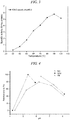
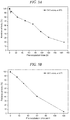
- AR15G-11-7 has hydrolysis activity against a substrate of CMC at least under conditions of 90°C and pH 5.5. Actually, as shown below in Example 1 ⁇ 10> and ⁇ 11>, AR15G-11-7 exhibits endoglucanase activity within a broad temperature range from 40 to 100°C, and across a pH range from 5 to 8, exhibits strong endoglucanase activity within a temperature range from 70 to 100°C and a pH range from 5 to 8, and exhibits extremely strong endoglucanase activity within a temperature range from 80 to 100°C and a pH range from 5 to 8.
- the expression “has activity” or “exhibits activity” means that the enzyme acts against at least one substrate, causing a significant difference in the amount of reducing ends or the color development reaction of the hydrolyzed substrate compared with a negative control.
- the expression “has endoglucanase activity” means that the enzyme acts against CMC at least under conditions of 90°C and pH 5.5, causing a significant difference in the amount of reducing ends or the color development reaction of the hydrolyzed CMC compared with a negative control.
- one or more amino acids can be deleted, substituted, or added, without impairing the bioactivity.
- one or more amino acids can be deleted, substituted, or added without impairing the glycoside hydrolase activity.
- the hyperthermostable endoglucanase according to the present invention is a hyperthermostable glycoside hydrolase having an endoglucanase catalytic domain including any one of the following (A) to (C):
- a "polypeptide in which an amino acid is deleted” means a polypeptide in which a portion of the amino acids that constitute the polypeptide is missing (removed).
- a "polypeptide in which an amino acid is substituted" means a polypeptide in which an amino acid that constitutes the polypeptide has been replaced with a different amino acid.
- a "polypeptide in which an amino acid is added” means a polypeptide in which a new amino acid has been inserted within the polypeptide.
- the number of amino acids deleted, substituted, or added in the amino acid sequence represented by SEQ ID NO: 1 or 2 is from 1 to 20, preferably from 1 to 10, and more preferably from 1 to 5.
- each amino acid sequence there are no particular limitations on the position(s) of the amino acid(s) that are deleted, substituted, or added, provided that the polypeptide including the modified amino acid sequence still has endoglucanase activity.
- sequence identity with the amino acid sequence represented by SEQ ID NO: 1 or 2 is not specifically limited, provided it is 95% or greater but less than 100%.
- sequence identity between a pair of amino acid sequences is determined by juxtaposing the two amino acid sequences, while inserting gaps in some parts of the sequences to account for insertions and deletions, so as to achieve the best match between corresponding amino acids, and then calculating the proportion of matched amino acids relative to the whole amino acid sequences, excluding gaps, in the resulting alignment.
- sequence identity between a pair of amino acid sequences can be determined using a variety of homology search software well known in the art.
- sequence identity values between amino acid sequences in the present invention were obtained by calculation on the basis of an alignment obtained from the publicly known homology search software BLASTP.
- polypeptides of (B) and (C) may be artificially designed, or may be homologs of AR15G-11 and AR15G-11-7 or the like, or partial proteins thereof.
- Each of the aforementioned polypeptides of (A) to (C) may be chemically synthesized based on the amino acid sequence, or may be generated by a protein expression system using the polynucleotide according to the present invention described below. Further, each of the polypeptides of (B) and (C) can also be artificially synthesized based on the polypeptide including the amino acid sequence represented by SEQ ID NO: 1 or 2, by using a gene recombination technique to introduce amino acid mutation(s).
- Each of the polypeptides of (A) to (C) has hydrolysis activity against a substrate of CMC at least under conditions of 90°C and pH 5.5.
- a hyperthermostable endoglucanase can be obtained by having any one of the polypeptides of (A) to (C) as the endoglucanase catalytic domain.
- the hyperthermostable endoglucanase according to the present invention acts against substrates composed of least one compound selected from the group consisting of compounds having ⁇ -1,3 linkages and ⁇ -1,4 linkages, and compounds having ⁇ -1,4 linkages.
- Examples of the compounds having ⁇ -1,3 linkages and ⁇ -1,4 linkages include lichenan and ⁇ -glucans.
- Examples of the compounds having ⁇ -1,4 linkages include crystalline celluloses such as CMC, PSA, cellobiose, Avicel, bacterial microcrystalline cellulose (hereafter sometimes abbreviated as BMCC) and filter paper.
- the hyperthermostable endoglucanase according to the present invention preferably acts against at least CMC substrates, and more preferably also acts against not only CMC, but also at least one other substrate selected from the group consisting of ⁇ -glucans, lichenan, PSA and PNPC.
- the hyperthermostable endoglucanase according to the present invention may also act against other substrates such as glucans.
- examples of other compounds which can act as a substrate for the hyperthermostable endoglucanase according to the present invention include xylan, PNPX, PNPG, p-nitrophenyl- ⁇ -L-arabinofuranoside, p-nitrophenyl- ⁇ -L-arabinopyranoside, p-nitropbenyl- ⁇ -L-arabinopyranoside, p-nitrophenyl- ⁇ -D-mannopyranoside, p-nitrophenyl- ⁇ -D-galactopyranoside, p-nitrophenyl- ⁇ -D-galactopyranoside, glucans composed of ⁇ -1,3 linkages, and oligosaccharides composed of ⁇ -1,6 linkages such as gentiobiose.
- the hyperthermostable endoglucanase according to the present invention exhibits CMC hydrolysis activity, at least under conditions of pH 5.5, and preferably within a temperature range from 80 to 100°C, more preferably within a temperature range from 70 to 100°C, and still more preferably within a broad temperature range from 40 to 100°C.
- the optimum temperature of the CMC hydrolysis activity of the hyperthermostable endoglucanase according to the present invention, under conditions at pH 5.5, is preferably within a range from 80 to 100°C.
- thermostable endoglucanase used in relation to the thermostable endoglucanase according to the present invention means that the enzyme has endoglucanase activity within a temperature range from 40 to 100°C.
- the optimum pH of the endoglucanase activity of the hyperthermostable endoglucanase according to the present invention varies depending on the reaction temperature and the substrate, but is typically within a range from pH 5.0 to 7.0.
- the optimum pH at 50°C is 5.4.
- the hyperthermostable endoglucanase according to the present invention preferably exhibits endoglucanase activity at least within a range from pH 5.0 to 7.0, and more preferably exhibits endoglucanase activity within a range from pH 5.0 to 8.0.
- the hyperthermostable endoglucanase according to the present invention may also have xylanase activity in addition to the endoglucanase activity.
- This xylanase activity of the hyperthermostable endoglucanase according to the present invention is preferably exhibited at least under conditions of 90°C and pH 5.5.
- the hyperthermostable endoglucanase according to the present invention may also have, in addition to the endoglucanase activity and xylanase activity, other glycoside hydrolase activity besides the endoglucanase activity and the xylanase activity.
- other glycoside hydrolase activity include ⁇ -xylosidase activity, ⁇ -glucosidase activity or cellobiohydrolase activity.
- the hyperthermostable endoglucanase according to the present invention may be an enzyme composed solely of the endoglucanase catalytic domain including any one of the aforementioned polypeptides of (A) to (C), or may be an enzyme that also includes other domains. Examples of these other domains include other domains of conventionally known glycoside hydrolases besides the enzyme catalytic domain.
- the hyperthermostable endoglucanase according to the present invention also includes enzymes obtained by substituting the enzyme catalytic domain in a publicly known glycoside hydrolase with any of the aforementioned polypeptides of (A) to (C).
- the hyperthermostable endoglucanase when the hyperthermostable endoglucanase according to the present invention includes one or more other domains besides the endoglucanase catalytic domain, the hyperthermostable endoglucanase preferably includes a cellulose-binding module.
- the cellulose-binding module may be positioned upstream (on the N-terminal side) or downstream (on the C-terminal side) of the endoglucanase catalytic domain. Further, the cellulose-binding module and the endoglucanase catalytic domain may be either bonded directly or bonded via a linker region of appropriate length.
- a cellulose-binding module preferably exists either upstream or downstream from the endoglucanase catalytic domain with a linker region positioned therebetween, and a hyperthermostable endoglucanase in which a cellulose-binding module exists upstream of the endoglucanase catalytic domain with a linker region positioned therebetween is particularly preferred.
- the cellulose binding module included in the hyperthermostable endoglucanase according to the present invention may be any region having the ability to bind cellulose, such as the ability to bind PSA or crystalline Avicel, and there are no particular limitations on the amino acid sequence of the module.
- the cellulose-binding module include the types of cellulose-binding modules present in known proteins, and appropriately modified versions thereof.
- the hyperthermostable endoglucanase according to the present invention includes both the endoglucanase catalytic domain and a cellulose-binding module, it is preferable that these are bonded via a linker sequence. There are no particular limitations on the amino acid sequence or the length and the like of the linker sequence.
- the hyperthermostable endoglucanase according to the present invention may also have, at either the N-terminal or the C-terminal, a signal peptide capable of migration to and localization within a specific region within a cell, or a signal peptide that causes secretion from a cell.
- a signal peptide capable of migration to and localization within a specific region within a cell
- a signal peptide that causes secretion from a cell examples of these types of signal peptides include apoplastic transport signal peptides, endoplasmic reticulum retention signal peptides, nuclear transport signal peptides, and secretory signal peptides.
- Specific examples of the endoplasmic reticulum retention signal peptides include signal peptides including an HDEL amino acid sequence.
- the hyperthermostable endoglucanase according to the present invention has a signal peptide at the N-terminal or C-terminal
- the hyperthermostable endoglucanase expressed within a transformant can be either secreted outside the cells or localized within the endoplasmic reticulum of the cells.
- the hyperthermostable endoglucanase according to the present invention may also have various types of tags added, for example at the N-terminal or the C-terminal of the hyperthermostable endoglucanase, so as to facilitate easy purification in the case of generation using an expression system.
- tags that may be used include the types of tags widely used in the expression or purification of recombinant proteins, such as His tags, HA (hemagglutinin) tags, Myc tags and Flag tags.
- one aspect of the hyperthermostable endoglucanase according to the present invention contains an endoglucanase catalytic domain including any one of the aforementioned polypeptides of (A) to (C); and also contains, according to need, at least one moiety selected from the group consisting of a cellulose-binding module positioned either upstream (on the N-terminal side) or downstream (on the C-terminal side) of the endoglucanase catalytic domain, a linker region, a signal peptide added to either the N-terminal or the C-terminal, and a tag added to either the N-terminal or the C-terminal.
- a cellulose-binding module positioned either upstream (on the N-terminal side) or downstream (on the C-terminal side) of the endoglucanase catalytic domain, a linker region, a signal peptide added to either the N-terminal or the C-terminal, and a tag added to either the N-terminal
- the polynucleotide according to the present invention encodes the hyperthermostable endoglucanase according to the present invention.
- the hyperthermostable endoglucanase can be produced by using the expression system of the host.
- the polynucleotide according to the present invention is a polynucleotide having a region encoding an endoglucanase catalytic domain, the region including any one of the following nucleotide sequences (a) to (d):
- a "polynucleotide in which a nucleotide is deleted” means a polynucleotide in which a portion of the nucleotides that constitute the polynucleotide is missing (removed).
- a "polynucleotide in which a nucleotide is substituted” means a polynucleotide in which a nucleotide that constitutes the polynucleotide has been replaced with a different nucleotide.
- a "polynucleotide in which a nucleotide is added” means a polynucleotide in which a new nucleotide has been inserted within the polynucleotide.
- the expression "stringent conditions” can be exemplified by the method disclosed in Molecular Cloning: A Laboratory Manual, Third Edition (Sambrook et al., Cold Spring Harbor Laboratory Press ).
- This example includes conditions in which hybridization is performed by incubation in a hybridization buffer composed of 6 ⁇ SSC (composition of 20 ⁇ SSC: 3 M sodium chloride, 0.3 M citric acid solution, pH 7.0), 5 ⁇ Denhardt's solution (composition of 100 ⁇ Denhardt's solution: 2% by mass of bovine serum albumin, 2% by mass of Ficoll, 2% by mass of polyvinylpyrrolidone), 0.5% by mass of SDS, 0.1 mg/mL of salmon sperm DNA, and 50% formamide, at a temperature of 42 to 70°C for a period of several hours to overnight.
- the washing buffer used in the washing performed after the incubation is preferably 1 ⁇ SSC solution containing 0.1% by mass of SDS, and is more preferably 0.1 ⁇ SSC
- the aforementioned nucleotide sequence of (a) may be either the nucleotide sequence represented by SEQ ID NO: 3 or 4, or a nucleotide sequence obtained by modifying the nucleotide sequence represented by SEQ ID NO: 3 or 4 to codons having a higher frequency of usage in the host without changing the amino acid sequence encoded by the nucleotide sequence. This modification of codons can be achieved using a known gene sequence variation technique or artificial gene synthesis.
- the polynucleotide including the nucleotide sequence represented by SEQ ID NO: 3 or 4 may be chemically synthesized based on the nucleotide sequence information, or may be obtained from the natural world using gene recombination techniques as either a full length gene that encodes AR15G-11-7 (hereafter sometimes referred to as the "AR15G-11-7 gene” or the "gene clone AR15G-11-7") or a partial region thereof including the endoglucanase catalytic domain (in the case of the AR15G-11-7 gene, a region encoding the partial region including the 295 amino acid residues from the tyrosine (Y) at position 32 through to the serine (S) at position 326 in SEQ ID NO: 2).
- the full length of the AR15G-11-7 gene or the partial region thereof can be obtained, for example, by collecting a sample containing microorganisms from the natural world, and conducting PCR using a genomic DNA recovered from the sample as a template, with a forward primer and a reverse primer designed by normal methods based on the nucleotide sequence represented by SEQ ID NO: 3 or 4.
- the cDNA synthesized by a reverse transcription reaction using mRNA recovered from the sample as a template may also be used as a template.
- the sample from which the nucleic acid used as a template is recovered is preferably a sample collected from a high-temperature environment such as a hot spring soil.
- sequence identity with the nucleotide sequence represented by SEQ ID NO: 3 or 4 is not specifically limited, provided it is 95% or greater but less than 100%.
- sequence identity between a pair of nucleotide sequences is determined by juxtaposing the two nucleotide sequences, while inserting gaps in some parts of the sequences to account for insertions and deletions, so as to achieve the best match between corresponding nucleotides, and then calculating the proportion of matched nucleotides relative to the whole nucleotide sequences, excluding gaps, in the resulting alignment.
- sequence identity between a pair of nucleotide sequences can be determined using a variety of homology search software well known in the art.
- sequence identity values between nucleotide sequences in the present invention were obtained by calculation on the basis of an alignment obtained from the publicly known homology search software BLASTN.
- each of the polynucleotides including an aforementioned nucleotide sequence of (b), (c) or (d) can be artificially synthesized by deleting, substituting, or adding one or a plurality of nucleotides in a polynucleotide including the nucleotide sequence represented by SEQ ID NO: 3 or 4.
- the nucleotide sequence of (b), (c) or (d) may also be a full length sequence of a homologous gene of the AR15G-11-7 gene or a partial sequence thereof.
- the homologous gene of the AR15G-11-7 gene can be obtained using the types of gene recombination techniques used in obtaining homologous genes of a gene for which the nucleotide sequence is already known.
- the polynucleotide according to the present invention may have only the region encoding the endoglucanase catalytic domain, or may also have, in addition to this region, one or more other regions such as a cellulose-binding module, a linker sequence, any of various types of signal peptides, or any of various types of tags or the like.
- one aspect of the polynucleotide according to the present invention contains a region encoding an endoglucanase catalytic domain, the region including any one of the aforementioned nucleotide sequences of (a) to (d), and also contains, according to need, a region encoding at least one moiety selected from the group consisting of a cellulose-binding module, a linker region, a signal peptide and a tag.
- the expression vector according to the present invention incorporates the aforementioned polynucleotide according to the present invention, and is capable of expressing, in a host cell, a polypeptide having hydrolysis activity against a substrate of CMC at least under conditions of 90°C and pH 5.5.
- the expression vector of the present invention is an expression vector into which the polynucleotide according to the present invention has been incorporated in a state capable of expressing the hyperthermostable endoglucanase according to the present invention. More specifically, an expression cassette composed, in order from the upstream side, of DNA having a promoter sequence, the aforementioned polynucleotide according to the present invention and DNA having a terminator sequence, must be incorporated into the expression vector. Incorporation of the polynucleotide into the expression vector can be achieved using known gene recombination techniques. Alternatively, incorporation of the polynucleotide into the expression vector may also be performed using a commercially available expression vector preparation kit.
- an "expression vector” is a vector including, in order from the upstream side, DNA having a promoter sequence, DNA having a sequence for incorporating foreign DNA, and DNA having a terminator sequence.
- the aforementioned expression vector may be a vector for introduction into a prokaryotic cell such as E. coli, or a vector for introduction into a eukaryotic cell such as a yeast, a filamentous fungus, an insect cultured cell, a mammalian cultured cell, or a plant cell. Any arbitrary widely used expression vector can be selected and used in accordance with the host.
- the expression vector according to the present invention is preferably an expression vector into which not only the aforementioned polynucleotide according to the present invention, but also a drug resistance gene or the like, has been incorporated. This facilitates the screening of host cells transformed by the expression vector and non-transformed host cells.
- Examples of the drug resistance gene include a kanamycin resistance gene, a hygromycin resistance gene and a bialaphos resistance gene.
- the transformant according to the present invention is a transformant into which the expression vector according to the present invention has been introduced.
- the hyperthermostable endoglucanase according to the present invention can be expressed in this transformant.
- the host into which the expression vector is introduced may be a prokaryotic cell such as E. coli, or a eukaryotic cell such as a yeast, a filamentous fungus, an insect cultured cell, a mammalian cultured cell, or a plant cell.
- examples of the transformant according to the present invention include E. coli, a yeast, a filamentous fungus, an insect cultured cell, a mammalian cultured cell or a plant cell into which the expression vector according to the present invention has been introduced.
- the hyperthermostable endoglucanase according to the present invention can be generated more easily and in large amounts.
- proteins are glycosylated in eukaryotic cells
- a hyperthermostable endoglucanase can be generated which exhibits superior thermal stability to that achieved by using a transformant of a prokaryotic cell.
- the method used for preparing the transformant using the expression vector there are no particular limitations on the method used for preparing the transformant using the expression vector, and the types of methods typically used in the preparation of transformants can be employed. Examples of methods that can be used include a heat shock method, an Agrobacterium method, a particle gun method, an electroporation method, and a PEG (polyethylene glycol) method. Of these, if the host is a plant cell, a particle gun method or an Agrobacterium method is preferred.
- the obtained transformant can generally be cultured by a conventional method in a similar manner to that of the non-transformed host.
- the method for producing a hyperthermostable endoglucanase according to the present invention is a method for generating a hyperthermostable endoglucanase in the aforementioned transformant according to the present invention.
- the hyperthermostable endoglucanase according to the present invention can be expressed in the transformant by conducting an induction treatment suitable for the respective expression-inducing condition.
- the hyperthermostable endoglucanase generated by the transformant may be used in a state where it is retained inside the transformant, or may be extracted from the transformant and purified.
- the method used for extracting and purifying the hyperthermostable endoglucanase according to the present invention from the transformant is not particularly limited, provided the method does not impair the glycoside hydrolase activity of the hyperthermostable endoglucanase, and extraction can be carried out by methods commonly used for extracting polypeptides from cells or biological tissue.
- Examples of the method include a method in which the transformant is immersed in an appropriate extraction buffer to extract the hyperthermostable endoglucanase, and the resulting liquid extract and the solid residue are then separated.
- the extraction buffer preferably contains a solubilizing agent such as a surfactant. If the transformant is a plant, then the transformant may be shredded or crushed prior to immersion in the extraction buffer.
- a known solid-liquid separation treatment such as a filtration method, pressurized filtration method or centrifugation treatment may be used, or the extraction buffer containing the immersed transformant may be squeezed.
- the hyperthermostable endoglucanase in the liquid extract can be purified by a known purification method such as a salting-out method, ultrafiltration method, or chromatography method.
- the hyperthermostable endoglucanase according to the present invention is expressed in the transformant in a state having a secretory signal peptide, then a solution containing the hyperthermostable endoglucanase can be readily obtained by culturing the transformant and then collecting the culture medium supernatant obtained by removal of the transformant from the obtained culture. Further, if the hyperthermostable endoglucanase according to the present invention has a tag such as a His tag, then the hyperthermostable endoglucanase in the liquid extract or in the culture supernatant can be easily purified by an affinity chromatography method using the tag.
- the method for producing a hyperthermostable endoglucanase according to the present invention includes generating the hyperthermostable endoglucanase within the transformant according to the present invention, and also includes, according to need, extracting the hyperthermostable endoglucanase from the transformant and purifying the hyperthermostable endoglucanase.
- the glycoside hydrolase mixture according to the present invention includes the aforementioned hyperthermostable endoglucanase according to the present invention or a hyperthermostable endoglucanase produced by the method for producing a hyperthermostable endoglucanase according to the present invention, and at least one other glycoside hydrolase.
- the hyperthermostable endoglucanase produced by the aforementioned method for producing a hyperthermostable endoglucanase according to the present invention may be in a state where it is incorporated inside the transformant, or may be extracted from the transformant and purified.
- hyperthermostable endoglucanase according to the present invention as a mixture with one or more other glycoside hydrolases in a polysaccharide hydrolysis reaction, materials composed of lignocellulose containing persistent cellulose can be degraded more efficiently.
- the other glycoside hydrolase besides the aforementioned hyperthermostable endoglucanase included in the glycoside hydrolase mixture has lignocellulose hydrolysis activity.
- the other glycoside hydrolase besides the hyperthermostable endoglucanase included in the glycoside hydrolase mixture include hemicellulases such as xylanases and ⁇ -xylosidases, as well as cellobiohydrolases, ⁇ -glucosidases and endoglucanases.
- the glycoside hydrolase mixture according to the present invention is preferably a mixture containing at least one glycoside hydrolase selected from among hemicellulases and endoglucanases in addition to the hyperthermostable endoglucanase, and is more preferably a mixture containing both a hemicellulase and an endoglucanase in addition to the hyperthermostable endoglucanase.
- the glycoside hydrolase mixture according to the present invention is preferably a mixture containing at least one glycoside hydrolase selected from the group consisting of xylanases, ⁇ -xylosidases, cellobiohydrolases and ⁇ -glucosidases in addition to the hyperthermostable endoglucanase, and is more preferably a mixture containing all of a xylanase, a ⁇ -xylosidase a cellobiohydrolase and a ⁇ -glucosidase in addition to the hyperthermostable endoglucanase.
- the other glycoside hydrolase included in the glycoside hydrolase mixture is preferably a thermostable glycoside hydrolase having glycoside hydrolase activity at least at 90°C, and is more preferably a thermostable glycoside hydrolase having glycoside hydrolase activity at 40 to 100°C.
- the glycoside hydrolase mixture contains only thermostable glycoside hydrolases, then by using the glycoside hydrolase mixture in a hydrolysis treatment of a material composed of lignocellulose containing cellulose, it becomes possible to conduct the lignocellulose hydrolysis reaction in a high-temperature environment in which the hydrolysis temperature is from 40 to 100°C (namely, a high-temperature hydrolysis). With this high-temperature hydrolysis, the amount of enzymes and the time required for the hydrolysis can be reduced markedly, and the hydrolysis costs can be cut dramatically.
- the method for producing a lignocellulose degradation product according to the present invention is a method for obtaining a lignocellulose degradation product by producing oligosaccharides by hydrolyzing a material composed of lignocellulose containing cellulose with the hyperthermostable endoglucanase according to the present invention.
- the method of the present invention is a method for producing a lignocellulose degradation product containing hemicellulose or cellulose degradation products by bringing a material composed of lignocellulose containing hemicellulose or cellulose into contact with the hyperthermostable endoglucanase according to the present invention, the transformant according to the present invention, a hyperthermostable endoglucanase produced using the method for producing a hyperthermostable endoglucanase according to the present invention, or the glycoside hydrolase mixture according to the present invention.
- hemicellulose or cellulose degradation products means products generated by the cleavage of glycosidic linkages within the hemicellulose or cellulose.
- the material composed of lignocellulose containing hemicellulose or cellulose there are no particular limitations on the material composed of lignocellulose containing hemicellulose or cellulose, provided the material contains hemicellulose or cellulose.
- specific examples of the material include cellulosic biomass such as weeds and agricultural waste materials, or used paper or the like.
- the material is preferably subjected to a mechanical treatment such as crushing or shredding, a chemical treatment with acid or alkali or the like, or a treatment such as immersion or dissolution in an appropriate buffer, prior to being brought into contact with the hyperthermostable endoglucanase according to the present invention.
- the reaction conditions for the hydrolysis reaction of the material composed of lignocellulose containing hemicellulose or cellulose by the hyperthermostable endoglucanase according to the present invention may be any conditions under which the hyperthermostable endoglucanase exhibits endoglucanase activity. Conditions under which the hyperthermostable endoglucanase exhibits endoglucanase activity and xylanase activity are preferred.
- the reaction is preferably conducted at a temperature of 40 to 100°C and a pH of 5.0 to 8.0, is more preferably conducted at a temperature of 70 to 100°C and a pH of 5.0 to 7.0, and is still more preferably conducted at a temperature of 80 to 100°C and a pH of 5.0 to 7.0.
- the reaction time for the hydrolysis reaction may be adjusted appropriately with due consideration of the type, the method of pretreatment, and the amount and the like of the material supplied to the hydrolysis reaction.
- the hydrolysis reaction may be performed for a reaction time of 10 minutes to 100 hours, but in the case of degradation of a cellulosic biomass, the hydrolysis reaction is typically performed for a reaction time of 1 to 100 hours.
- glycoside hydrolase in addition to the hyperthermostable endoglucanase according to the present invention.
- This other glycoside hydrolase may be similar to the glycoside hydrolases mentioned above for inclusion in the aforementioned glycoside hydrolase mixture, and is preferably a thermostable glycoside hydrolase having glycoside hydrolase activity at least at 90°C, and preferably at least at temperatures of 40 to 100°C.
- One aspect of the aforementioned method for producing a lignocellulose degradation product uses the hyperthermostable endoglucanase according to the present invention, the transformant according to the present invention, or a hyperthermostable endoglucanase produced by the method for producing a hyperthermostable endoglucanase according to the present invention, whereas another aspect of the method uses the aforementioned glycoside hydrolase mixture.
- soil DNA was collected from neutral to weakly alkaline hot springs, and nucleotide sequencing was conducted of the metagenomic DNA of the microbial flora contained in the soils.
- the soil samples from neutral to weakly alkaline hot springs were obtained by collecting hot spring water containing soil, mud and biomat from five sampling points (metagenomic DNA samples N2, AR19, AR15, OJ1 and HI) at 3 locations in Japan having gushing high-temperature outdoor hot springs. These hot spring soil samples each had a temperature within a range from 58 to 78°C and a pH within a range from 7.2 to 8 at the time of collection.
- DNA was extracted from 10 g of each of the collected hot spring soil samples by using a DNA extraction kit (ISOIL Large for Beads ver. 2, manufactured by Nippon Gene Co., Ltd.). Five ⁇ g of the extracted DNA was subjected to shotgun sequencing of the metagenomic DNA using a sequencer GS FLX Titanium 454 manufactured by Roche Diagnostics Ltd. The remaining DNA was used for PCR cloning of endoglucanase genes.
- ISOIL Large for Beads ver. 2, manufactured by Nippon Gene Co., Ltd. Five ⁇ g of the extracted DNA was subjected to shotgun sequencing of the metagenomic DNA using a sequencer GS FLX Titanium 454 manufactured by Roche Diagnostics Ltd. The remaining DNA was used for PCR cloning of endoglucanase genes.
- Metagenomic DNA sequencing of the hot spring soil sample AR15 yielded a whole genome sequence (WGS) data set having an average read length of 370 bp, a total read number of 5,419,406, and a total quantity of sequenced genomes of 2,007,725,040 bp.
- WGS whole genome sequence
- ORF open reading frames
- the collected nucleotide sequences included the genes of glycoside hydrolases such as cellulases, endohemicellulases, and debranching enzymes.
- ORFs were predicted as being endoglucanase genes.
- the GH family classification results for these 106 ORFs are shown in Table 1.
- Table 1 From the AR15 metagenome, 13 full-length ORFs of endoglucanase genes belonging to the GH5 family, 4 full-length ORFs of endoglucanase genes belonging to the GH9 family, and 4 full-length ORFs of endoglucanase genes belonging to the GH12 family were obtained.
- the open reading frame AR15G-11 was a nucleotide sequence encoding a polypeptide (SEQ ID NO: 1) composed of 353 amino acid residues, and was a full-length sequence (SEQ ID NO: 3) wherein the amino acid residue at position 1 of the polypeptide was a start codon methionine (M), and the 3' end of the nucleotide sequence ended with a termination codon. Based on the sequence homology of the motif, it was predicted that the 295 amino acid residues from the tyrosine (Y) at position 32 through to the serine (S) at position 326 in the amino acid sequence encoded by the open reading frame AR15G-11 represented the GH5 catalytic domain.
- FIG. 1 shows the alignment of the amino acid sequence (SEQ ID NO: 1) of the polypeptide encoded by the open reading frame AR15G-11 and the amino acid sequence (SEQ ID NO: 8) of the cellulase uncultured organism (GenBank: AEC45566.1) belonging to GH family 5.
- the amino acids shown in white on black are the amino acid residues identical to both amino acid sequences, and "-" indicates a gap in a sequence.
- PCR was conducted using a hot spring soil DNA that had been amplified using a genomic DNA amplification kit (GenomiPhi V2 DNA Amplification Kit, manufactured by GE Healthcare, Inc.) as a template.
- the nucleotide sequence represented by SEQ ID NO: 5 is homologous (identical) with the partial sequence composed of the nucleotides from positions 1 to 20 of the nucleotide sequence represented by SEQ ID NO: 3. Further, the nucleotide sequence represented by SEQ ID NO: 6 is complementary with the partial sequence composed of the nucleotides from positions 1,044 to 1,062 of the nucleotide sequence represented by SEQ ID NO: 3.
- the amplified PCR product was inserted into a pET101/D-TOPO vector of a Champion pET Directional TOPO Expression Kit (manufactured by Life Technologies Inc.), and transformed into a One Shot TOP10 strain.
- Positive clones were selected by colony PCR and cultured in an LB liquid medium containing 100 mg/L of ampicillin at a temperature of 37°C and 200 rpm for 17 to 20 hours, and then plasmids were prepared using a miniprep kit (Wizard plus SV Minipreps DNA Purification System, manufactured by Promega Corporation). Sequence confirmation of the prepared plasmids was performed using a sequencer (3730 DNA Analyzer, manufactured by Life Technologies Corporation).
- PCR cloning was used to obtain the gene clone AR15G-11-3 and the gene clone AR15G-11-7 from the open reading frame AR15G-11 (SEQ ID NO: 3).
- the nucleotide sequence (SEQ ID NO: 4) of the endoglucanase candidate gene clone AR15G-11-7 included 1,062 bp in a similar manner to the open reading frame AR15G-11 (SEQ ID NO: 3), but differed at two nucleotides.
- nucleotide at position 896 was A in the open reading frame AR15G-11, but was G in the cloned AR15G-11-7 gene
- nucleotide at position 932 was A in the open reading frame AR15G-11, but was G in the AR15G-11-7 gene.
- amino acid residue at position 299 was a glutamine (Q) in the polypeptide encoded by the open reading frame AR15G-11, but was an arginine (R) in the polypeptide encoded by the AR15G-11-7 gene
- amino acid residue at position 311 was a glutamic acid (E) in the polypeptide encoded by the open reading frame AR15G-11, but was a glycine (G) in the polypeptide encoded by the AR15G-11-7 gene.
- the heat shock method was used to introduce the plasmid having the target gene into E. coli for protein expression.
- the Rosetta-gamiB (DE3) pLysS strain (manufactured by Merck & Co., Inc.) was used as the competent cell for the transformation.
- a bacterial cell suspension obtained by performing culturing and centrifugation in the same manner as described above was subjected to 7 or 8 cycles of a process consisting of 5 minutes disrupting and then 5 minutes of rest using an ultrasonic disrupter Astrason 3000 (manufactured by MISONIX Inc.), thus obtaining a crude extract of the gene recombinant E. coli containing the target protein.
- NaCl was added to the gene recombinant E. coli homogeneous supernatant to achieve a final concentration of 500 mM, the resulting mixture was loaded onto an affinity column HisTrap FF (manufactured by GE Healthcare, Inc.) equilibrated with a 50 mM Tris-HCl buffer (pH 8.0) containing 500 mM of NaCl, and a medium-high pressure liquid chromatography system AKTA design (manufactured by GE Healthcare, Inc.) was used to fractionate proteins with a concentration gradient of 0 to 100% in a 50 mM Tris-HCl buffer (pH 8.0) containing 500 mM of NaCl and 500 mM of imidazole.
- HisTrap FF manufactured by GE Healthcare, Inc.
- AKTA design manufactured by GE Healthcare, Inc.
- the fractions exhibiting CMC hydrolysis activity were pooled, and a centrifugal ultrafiltration membrane VIVASPIN 20 (manufactured by Sartorius stedim Biotech SA) was used to exchange the buffer to a 50 mM Tris-HCl buffer (pH 8.0) containing 750 mM of ammonium sulfate.
- the fractions with CMC hydrolysis activity following the buffer exchange were loaded onto a hydrophobic interaction separation column HiTrap Phenyl HP (manufactured by GE Healthcare, Inc.) equilibrated with the same buffer solution, and the proteins were fractionated with a concentration gradient of 0 to 100% in a 50 mM Tris-HCl buffer (pH 8.0).
- the fractions exhibiting CMC hydrolysis activity were pooled and then concentrated using the VIVASPIN 20 until the liquid volume reached about 8 mL.
- the concentrated sample was loaded onto a gel filtration column Hiload 26/60 superdex 200 pg (manufactured by GE Healthcare, Inc.) equilibrated with a 50 mM Tris-HCl buffer (pH 8.0) containing 150 mM of NaCl, and was fractionated by passing a volume of the same buffer equivalent to 1 to 1.5 times the column volume through the column at a flow rate of 2 to 3 mL/min.
- the fractions exhibiting CMC hydrolysis activity were pooled, a buffer exchange to a 50 mM Tris-HCl buffer (pH 8.0) and subsequent concentration were performed using the VIVASPIN 20, and using an ion exchange column HiTrap Q HP (manufactured by GE Healthcare, Inc.), the proteins were fractionated with a concentration gradient of 0 to 50% in a 50 mM Tris-HCl buffer (pH 8.0) containing 1 M NaCl.
- the fractions exhibiting CMC hydrolysis activity were once again pooled, and a buffer exchange to a 50 mM Tris-HCl buffer (pH 8.0) and subsequent concentration were performed, yielding a purified enzyme with a final concentration of about 1 mg/mL.
- CMC carboxymethyl cellulose, manufactured by Sigma-Aldrich Co. LLC.
- the CMC hydrolysis activity of the enzyme protein (AR15G-11-7) encoded by the AR15G-11-7 gene was investigated.
- the crude enzyme solution obtained in section ⁇ 7> above, or a purified enzyme solution prepared by diluting the purified enzyme obtained in section ⁇ 7> above with a 0.05 M Tris-HCl buffer (pH 8.0) to obtain a concentration of 0.2 mg/mL was used.
- a mixed solution containing 50 ⁇ L of a 1% by mass CMC aqueous solution, 25 ⁇ L of a 200 mM acetate buffer (pH 5.5) and 25 ⁇ L of either the crude enzyme solution or the purified enzyme solution was reacted for either 10 or 15 minutes.
- a mixed solution prepared by replacing the crude enzyme solution or purified enzyme solution with a 50 mM Tris-HCl buffer (pH 8.0) and then reacting under the same conditions was used as a control. Further, the substrate solution and the mixed solution containing the buffer and the enzyme solution were held separately at the reaction temperature for five minutes (pre-incubation) before being mixed to initiate the reaction.
- DAS solution 3,5-dinitrosalicylic acid reagent
- the amount of reducing sugars in the supernatant was determined by measuring the absorbance at 540 nm using a spectrophotometer, calculating the amount of reducing sugars using a calibration curve prepared with glucose, and then calculating the amount of reducing sugars produced by the enzymatic hydrolysis based on the difference from the control.
- the enzymatic activity for producing 1 ⁇ mol of reducing sugars per minute was defined as 1 U, and the value obtained by dividing this activity by the amount of protein was defined as the specific activity (U/mg).
- the hydrolysis activity of the enzyme protein (AR15G-11-7) encoded by the AR15G-11-7 gene against various cellulose substrates and hemicellulose substrates was investigated.
- the crude enzyme solution obtained in section ⁇ 7> above was used.
- the substrates Avicel powder (microcrystalline cellulose powder, manufactured by Merck & Co., Inc.), PSA, CMC, barley-derived ⁇ -glucan (manufactured by Megazyme, Inc.), xylan (derived from beech wood, manufactured by Sigma-Aldrich Co. LLC.), lichenan (manufactured by MP Biomedicals, LLC), laminarin (derived from Laminaria digitata , manufactured by Sigma-Aldrich Co.
- PNPC manufactured by Sigma-Aldrich Co. LLC.
- PNPX manufactured by Sigma-Aldrich Co. LLC.
- PNPG manufactured by Sigma-Aldrich Co. LLC.
- the PSA was prepared by first dissolving Avicel powder (microcrystalline cellulose powder, manufactured by Merck & Co., Inc.) in a phosphoric acid solution, subsequently adding sterilized distilled water to cause precipitation, and then washing until a pH of 5 or greater was obtained.
- the PSA used in the experiments described below was all prepared by this method.
- reaction solution composed of a mixed solution containing 25 ⁇ L of a 200 mM acetate buffer (pH 5.5), 7 ⁇ L of the crude enzyme solution and 18 ⁇ L of purified water was pre-incubated at 90°C for 5 minutes.
- the substrate solution (either a 1% by mass aqueous solution of Avicel powder, PSA, CMC, ⁇ -glucan, xylan, lichenan or laminarin, or a 3.4 mM aqueous solution of PNPC, PNPG or PNPX) that had also been pre-incubated in the manner described above was added to the reaction solution, and the resulting mixed solution was incubated at 90°C for 15 minutes to allow the enzyme reaction to proceed.
- a mixed solution prepared by replacing the crude enzyme solution with a 50 mM Tris-HCl buffer (pH 8.0) and then reacting under the same conditions was used as a control.
- the amount of reducing sugars produced by the hydrolysis was determined in the same manner as that described above in section ⁇ 8> when investigating the CMC hydrolysis activity of AR15G-11-7.
- a calibration curve prepared with xylose was used.
- the hydrolysis activity against each substrate was calculated as a relative value (relative activity, %) relative to a value of 100% for the CMC hydrolysis activity, namely a relative value (%) for the amount of reducing sugars or amount of p-nitrophenol produced by the reaction, when the amount of reducing sugars produced by reaction using CMC as the substrate was deemed to be 100%.
- the relative values (%) for the hydrolysis activity against each of the substrates are shown in FIG. 2 .
- the temperature dependency of the CMC hydrolysis activity of the enzyme protein was investigated.
- a purified enzyme solution prepared by diluting the purified enzyme obtained in section ⁇ 7> above with a 0.05 M Tris-HCl buffer (pH 8.0) to 0.2 mg/mL was used.
- a mixed solution containing 25 ⁇ L of a 200 mM acetate buffer (pH 5.5), 25 ⁇ L of the purified enzyme solution and 50 ⁇ L of a 1% by mass CMC aqueous solution was reacted for 10 minutes at a temperature of 30, 40, 50, 60, 70, 80, 90 or 100°C.
- the amount of reducing sugars produced by the enzymatic hydrolysis was calculated in the same manner as that described above in section ⁇ 8>.
- the enzymatic activity for producing 1 ⁇ mol of reducing sugars per minute was defined as 1 U, and the value obtained by dividing this activity by the amount of protein was defined as the specific activity (U/mg).
- AR15G-11-7 exhibited CMC hydrolysis activity in a temperature range from 40 to 100°C.
- the optimum temperature (T opt ) at which the highest activity was observed was 90°C at pH 5.5.
- the pH dependency of the CMC hydrolysis activity of the enzyme protein was investigated.
- a purified enzyme solution prepared by diluting the purified enzyme obtained in section ⁇ 7> above with a 0.05 M Tris-HCl buffer (pH 8.0) to 0.2 mg/mL was used.
- a 200 mM Mcllvaine's buffer (MB) (pH 4.0 to 8.0)
- a 200 mM acetate buffer (SAB) (pH 4.0, 5.5, 6.0)
- PB 200 mM phosphate buffer
- a mixed solution containing 25 ⁇ L of one of the buffers, 25 ⁇ L of the purified enzyme solution and 50 ⁇ L of a 1% by mass CMC aqueous solution was reacted at 50°C for 10 minutes.
- the amount of reducing sugars produced by the enzymatic hydrolysis was calculated in the same manner as that described above in section ⁇ 8>.
- the CMC hydrolysis activity at each pH was calculated as a relative value (relative activity, %) relative to a value of 100% for the CMC hydrolysis activity at pH 5.5, namely a relative value (%) for the amount of reducing sugars produced by the reaction, when the amount of reducing sugars produced by reaction at pH 5.5 was deemed to be 100%.
- the relative values (%) for the CMC hydrolysis activity at each of the pH levels, relative to a value of 100% for the CMC hydrolysis activity at pH 5.5, are shown in FIG. 4 .
- the actual measured values for the pH of the mixed solution of the substrate, the buffer and the enzyme were plotted.
- AR15G-11-7 exhibited CMC hydrolysis activity in a range from pH 5 to 8.
- the optimum pH at 50°C was pH 5.4 (actual measured value for the mixed solution of the substrate, the buffer and the enzyme).
- the enzyme protein was subjected to preliminary heating (pre-incubation), either at 80°C for 0 to 168 hours, or at 90°C for 0 to 120 minutes, and the pre-incubation time taken for the enzymatic activity to decrease to 50% of that of an untreated sample (pre-incubation time: 0 hours) (namely, the half life: T half ) was determined.
- pre-incubation time 0 hours
- T half the half life
- a mixed solution containing 25 ⁇ L of a 200 mM acetate buffer (pH 5.5), 7 ⁇ L of the crude enzyme solution and 18 ⁇ L of purified water was pre-incubated, either at 80°C for 0, 3, 6, 24, 48, 72, 96, 121 or 168 hours, or at 90°C for 0, 15, 30, 60 or 120 minutes.
- Measurement of the CMC hydrolysis activity was performed by separately heating the pre-incubated mixed solution and a 1% by mass CMC aqueous solution at 90°C for 5 minutes, subsequently adding an equal volume of the 1% by mass CMC aqueous solution to the mixed solution, and then allowing the reaction to proceed at 90°C for 15 minutes.
- the amount of reducing sugars produced by the enzymatic hydrolysis was determined in the same manner as that described above in section ⁇ 8>.
- Each of the above measurements was performed for three independent experiments, and a mean value and a standard error were determined.
- the CMC hydrolysis activity was calculated as a relative value (%), relative to a value of 100% for the activity of an untreated sample.
- the relative values (%) for the CMC hydrolysis activity at the various pre-incubation times are shown in FIG. 5 .
- the results for the pre-incubation at 80°C are shown in FIG. 5A
- the results for the pre-incubation at 90°C are shown in FIG. 5B .
- the half life T half values for the AR15G-11-7 at pre-incubations temperatures of 80°C and 90°C were about 90 hours and about 50 minutes respectively.
Landscapes
- Chemical & Material Sciences (AREA)
- Organic Chemistry (AREA)
- Life Sciences & Earth Sciences (AREA)
- Engineering & Computer Science (AREA)
- Zoology (AREA)
- Wood Science & Technology (AREA)
- Health & Medical Sciences (AREA)
- Genetics & Genomics (AREA)
- Bioinformatics & Cheminformatics (AREA)
- General Health & Medical Sciences (AREA)
- Biochemistry (AREA)
- General Engineering & Computer Science (AREA)
- Microbiology (AREA)
- Biotechnology (AREA)
- Chemical Kinetics & Catalysis (AREA)
- General Chemical & Material Sciences (AREA)
- Biomedical Technology (AREA)
- Molecular Biology (AREA)
- Medicinal Chemistry (AREA)
- Micro-Organisms Or Cultivation Processes Thereof (AREA)
- Enzymes And Modification Thereof (AREA)
- Preparation Of Compounds By Using Micro-Organisms (AREA)
Claims (8)
- Hyperthermostabile Endoglukanase, aufweisend eine katalytische Domäne einer Endoglukanase, umfassend:(A) ein Polypeptid umfassend eine Aminosäuresequenz gemäß SEQ ID NO: 1 oder 2, und aufweisend eine Hydrolyseaktivität gegen ein Substrat aus Carboxymethylzellulose, wenigstens bei Bedingungen einer Temperatur von 40 bis 100° C und einem pH-Wert von 5 bis 8, wobei die optimale Temperatur 90°C bei einem pH-Wert von 5.5 ist,(B) ein Polypeptid umfassend eine Aminosäuresequenz, bei der 1 bis 20 Aminosäuren entfernt, ersetzt oder der Aminosäuresequenz gemäß der SEQ ID NO: 1 oder 2 hinzugefügt wurden, und aufweisend eine Hydrolyseaktivität gegen ein Substrat aus Carboxymethylzellulose, wenigstens bei Bedingungen von 90 °C und einem pH-Wert von 5.5 oder(C) ein Polypeptid aufweisend eine Aminosäuresequenz, die eine Sequenzidentität von 95 % oder mehr mit der Aminosäuresequenz gemäß der SEQ ID NO: 1 oder 2 hat, und aufweisend eine Hydrolyseaktivität gegen ein Substrat aus Carboxymethylzellulose wenigstens bei Bedingungen von 90 °C und einem pH-Wert von 5, 5.
- Polynukleotid, aufweisend eine Region, die eine katalytische Domäne einer Endoglukanase kodiert, wobei die Region umfasst:(a) eine Nukleotidsequenz kodierend ein Polypeptid umfassend eine Aminosäuresequenz gemäß SEQ ID NO: 1 oder 2, und aufweisend eine Hydrolyseaktivität gegen ein Substrat aus Carboxymethylzellulose wenigstens bei Bedingungen einer Temperatur von 40 bis 100 °C und einem pH-Wert von 5 bis 8, wobei die optimale Temperatur 90 °C bei einem pH-Wert von 5.5 ist,(b) eine Nukleotidsequenz kodierend ein Polypeptid umfassend eine Aminosäuresequenz, bei der 1 bis 20 Aminosäuren entfernt, ersetzt oder in der Aminosäuresequenz gemäß der SEQ ID NO: 1 oder 2 hinzugefügt wurden, und aufweisend eine Hydrolyseaktivität gegen ein Substrat aus Carboxymethylzellulose wenigstens bei Bedingungen von 90 °C und einem pH-Wert von 5.5,(c) eine Nukleotidsequenz kodierend ein Polypeptid, welches eine Aminosäuresequenz umfasst, die eine Sequenzidentität von 95 % oder mehr mit der Aminosäuresequenz gemäß der SEQ ID NO: 1 oder 2 aufweist, und aufweisend eine Hydrolyseaktivität gegen ein Substrat aus Carboxymethylzellulose wenigstens bei Bedingungen von 90 °C und einem pH-Wert von 5.5, oder(d) eine Nukleotidsequenz, die eine Sequenzidentität von 95 % oder mehr mit einer Nukleotidsequenz gemäß der SEQ ID NO: 3 oder 4 aufweist, und die ein Polypeptid kodiert, das eine Hydrolyseaktivität gegen ein Substrat aus Carboxymethylzellulose hat, wenigstens bei Bedingungen von 90 °C und einem pH-Wert von 5.5.
- Expressionsvektor, der das Polynukleotid gemäß Anspruch 2 beinhaltet, wobei der Expressionsvektor in der Lage ist, in einer Wirtszelle ein Polypeptid mit einer Endoglukanase-Aktivität zu exprimieren.
- Transformant umfassend den Expressionsvektor gemäß Anspruch 3.
- Transformant gemäß Anspruch 4, welcher ein Eukaryot ist.
- Verfahren zur Herstellung einer hyperthermostabilen Endoglukanase, wobei das Verfahren die Erzeugung der hyperthermostabilen Endoglukanase in dem Transformanten gemäß Anspruch 4 oder 5 umfasst.
- Glycosid-Hydrolase-Mischung, umfassend die hyperthermostabile Endoglukanase gemäß Anspruch 1, eine hyperthermostabile Endoglukanase, kodiert durch das Polynukleotid gemäß Anspruch 2, oder eine hyperthermostabile Endoglukanase, erzeugt mit einem Verfahren zur Herstellung einer hyperthermostabilen Endoglukanase gemäß Anspruch 6, und mindestens eine weitere Glycosid-Hydrolase.
- Verfahren zur Herstellung eines Lignozellulose-Abbauproduktes, wobei das Verfahren die Erzeugung des Lignozellulose-Abbauproduktes umfasst durch In-Kontakt-bringen eines Lignozellulose enthaltenden Materials mit der hyperthermostabilen Endoglukanase gemäß Anspruch 1, einer hyperthermostabilen Endoglukanase, kodiert durch das Polynukleotid gemäß Anspruch 2, dem Transformanten gemäß Anspruch 4 oder 5, einer hyperthermostabilen Endoglukanase, erzeugt mit einem Verfahren zur Herstellung einer hyperthermostabilen Endoglukanase gemäß Anspruch 6, oder der Glycosid-Hydrolase-Mischung gemäß Anspruch 7.
Applications Claiming Priority (1)
| Application Number | Priority Date | Filing Date | Title |
|---|---|---|---|
| JP2015163721A JP6244597B2 (ja) | 2015-08-21 | 2015-08-21 | 超耐熱性エンドグルカナーゼ |
Publications (2)
| Publication Number | Publication Date |
|---|---|
| EP3133155A1 EP3133155A1 (de) | 2017-02-22 |
| EP3133155B1 true EP3133155B1 (de) | 2018-11-28 |
Family
ID=56737978
Family Applications (1)
| Application Number | Title | Priority Date | Filing Date |
|---|---|---|---|
| EP16184425.3A Not-in-force EP3133155B1 (de) | 2015-08-21 | 2016-08-17 | Hyperthermostabile endoglucanase |
Country Status (3)
| Country | Link |
|---|---|
| US (1) | US9896675B2 (de) |
| EP (1) | EP3133155B1 (de) |
| JP (1) | JP6244597B2 (de) |
Family Cites Families (8)
| Publication number | Priority date | Publication date | Assignee | Title |
|---|---|---|---|---|
| US5275944A (en) | 1989-09-26 | 1994-01-04 | Midwest Research Institute | Thermostable purified endoglucanas from acidothermus cellulolyticus ATCC 43068 |
| CN1182451A (zh) | 1995-03-17 | 1998-05-20 | 诺沃挪第克公司 | 新的内切葡聚糖酶 |
| US20030068805A1 (en) | 1995-03-17 | 2003-04-10 | Susan Madrid | Endo beta-1,4-glucanase from aspergillus |
| AU2001264212A1 (en) | 2000-06-15 | 2001-12-24 | Prokaria Ehf. | Thermostable cellulase |
| CN101460616A (zh) * | 2006-03-30 | 2009-06-17 | 诺维信股份有限公司 | 具有内切葡聚糖酶活性的多肽和编码该多肽的多核苷酸 |
| US8017373B2 (en) * | 2006-08-31 | 2011-09-13 | Iogen Energy Corporation | Process for enzymatic hydrolysis of pretreated lignocellulosic feedstocks |
| BRPI0816177B1 (pt) * | 2007-08-30 | 2018-07-17 | Iogen Energy Corp | processo para a conversão de uma matéria-prima lignocelulósica pré-tratada em açúcares solúveis |
| JP2015136324A (ja) * | 2014-01-22 | 2015-07-30 | 本田技研工業株式会社 | 糖化酵素組成物 |
-
2015
- 2015-08-21 JP JP2015163721A patent/JP6244597B2/ja active Active
-
2016
- 2016-08-16 US US15/238,370 patent/US9896675B2/en not_active Expired - Fee Related
- 2016-08-17 EP EP16184425.3A patent/EP3133155B1/de not_active Not-in-force
Non-Patent Citations (1)
| Title |
|---|
| None * |
Also Published As
| Publication number | Publication date |
|---|---|
| JP6244597B2 (ja) | 2017-12-13 |
| EP3133155A1 (de) | 2017-02-22 |
| US9896675B2 (en) | 2018-02-20 |
| JP2017038573A (ja) | 2017-02-23 |
| US20170051264A1 (en) | 2017-02-23 |
Similar Documents
| Publication | Publication Date | Title |
|---|---|---|
| US9512414B2 (en) | Thermostable beta-glucosidase | |
| EP2990482B1 (de) | Thermostabile xylanase aus der gh-familie 10 | |
| EP3031912B1 (de) | Thermostabile ss-xylosidase | |
| US10260057B2 (en) | Thermostable cellobiohydrolase | |
| US9598681B2 (en) | Thermostable β-xylosidase belonging to GH family 3 | |
| US9976132B2 (en) | Thermostable cellobiohydrolase | |
| US9896675B2 (en) | Hyperthermostable endoglucanase | |
| EP3095858B1 (de) | Thermostabile glykosidhydrolase | |
| EP2982751B1 (de) | Hyperthermostabile endoglucanase aus der gh-familie 12 | |
| EP3133156B1 (de) | Hyperthermostabile endoglucanase | |
| EP2980210A1 (de) | Thermostabile xylanase aus der gh-familie 10 | |
| EP2982750B1 (de) | Hyperthermostabile endoglucanase aus der gh-familie 12 | |
| JP6531974B2 (ja) | 耐熱性セロビオハイドロラーゼ | |
| JP2015136324A (ja) | 糖化酵素組成物 |
Legal Events
| Date | Code | Title | Description |
|---|---|---|---|
| PUAI | Public reference made under article 153(3) epc to a published international application that has entered the european phase |
Free format text: ORIGINAL CODE: 0009012 |
|
| STAA | Information on the status of an ep patent application or granted ep patent |
Free format text: STATUS: REQUEST FOR EXAMINATION WAS MADE |
|
| 17P | Request for examination filed |
Effective date: 20160817 |
|
| AK | Designated contracting states |
Kind code of ref document: A1 Designated state(s): AL AT BE BG CH CY CZ DE DK EE ES FI FR GB GR HR HU IE IS IT LI LT LU LV MC MK MT NL NO PL PT RO RS SE SI SK SM TR |
|
| AX | Request for extension of the european patent |
Extension state: BA ME |
|
| STAA | Information on the status of an ep patent application or granted ep patent |
Free format text: STATUS: EXAMINATION IS IN PROGRESS |
|
| 17Q | First examination report despatched |
Effective date: 20171116 |
|
| GRAP | Despatch of communication of intention to grant a patent |
Free format text: ORIGINAL CODE: EPIDOSNIGR1 |
|
| STAA | Information on the status of an ep patent application or granted ep patent |
Free format text: STATUS: GRANT OF PATENT IS INTENDED |
|
| INTG | Intention to grant announced |
Effective date: 20180612 |
|
| GRAS | Grant fee paid |
Free format text: ORIGINAL CODE: EPIDOSNIGR3 |
|
| GRAA | (expected) grant |
Free format text: ORIGINAL CODE: 0009210 |
|
| STAA | Information on the status of an ep patent application or granted ep patent |
Free format text: STATUS: THE PATENT HAS BEEN GRANTED |
|
| AK | Designated contracting states |
Kind code of ref document: B1 Designated state(s): AL AT BE BG CH CY CZ DE DK EE ES FI FR GB GR HR HU IE IS IT LI LT LU LV MC MK MT NL NO PL PT RO RS SE SI SK SM TR |
|
| REG | Reference to a national code |
Ref country code: CH Ref legal event code: EP |
|
| REG | Reference to a national code |
Ref country code: AT Ref legal event code: REF Ref document number: 1070244 Country of ref document: AT Kind code of ref document: T Effective date: 20181215 |
|
| REG | Reference to a national code |
Ref country code: DE Ref legal event code: R096 Ref document number: 602016007540 Country of ref document: DE |
|
| REG | Reference to a national code |
Ref country code: IE Ref legal event code: FG4D |
|
| REG | Reference to a national code |
Ref country code: NL Ref legal event code: MP Effective date: 20181128 |
|
| REG | Reference to a national code |
Ref country code: LT Ref legal event code: MG4D |
|
| REG | Reference to a national code |
Ref country code: AT Ref legal event code: MK05 Ref document number: 1070244 Country of ref document: AT Kind code of ref document: T Effective date: 20181128 |
|
| PG25 | Lapsed in a contracting state [announced via postgrant information from national office to epo] |
Ref country code: HR Free format text: LAPSE BECAUSE OF FAILURE TO SUBMIT A TRANSLATION OF THE DESCRIPTION OR TO PAY THE FEE WITHIN THE PRESCRIBED TIME-LIMIT Effective date: 20181128 Ref country code: LT Free format text: LAPSE BECAUSE OF FAILURE TO SUBMIT A TRANSLATION OF THE DESCRIPTION OR TO PAY THE FEE WITHIN THE PRESCRIBED TIME-LIMIT Effective date: 20181128 Ref country code: LV Free format text: LAPSE BECAUSE OF FAILURE TO SUBMIT A TRANSLATION OF THE DESCRIPTION OR TO PAY THE FEE WITHIN THE PRESCRIBED TIME-LIMIT Effective date: 20181128 Ref country code: NO Free format text: LAPSE BECAUSE OF FAILURE TO SUBMIT A TRANSLATION OF THE DESCRIPTION OR TO PAY THE FEE WITHIN THE PRESCRIBED TIME-LIMIT Effective date: 20190228 Ref country code: ES Free format text: LAPSE BECAUSE OF FAILURE TO SUBMIT A TRANSLATION OF THE DESCRIPTION OR TO PAY THE FEE WITHIN THE PRESCRIBED TIME-LIMIT Effective date: 20181128 Ref country code: BG Free format text: LAPSE BECAUSE OF FAILURE TO SUBMIT A TRANSLATION OF THE DESCRIPTION OR TO PAY THE FEE WITHIN THE PRESCRIBED TIME-LIMIT Effective date: 20190228 Ref country code: IS Free format text: LAPSE BECAUSE OF FAILURE TO SUBMIT A TRANSLATION OF THE DESCRIPTION OR TO PAY THE FEE WITHIN THE PRESCRIBED TIME-LIMIT Effective date: 20190328 Ref country code: FI Free format text: LAPSE BECAUSE OF FAILURE TO SUBMIT A TRANSLATION OF THE DESCRIPTION OR TO PAY THE FEE WITHIN THE PRESCRIBED TIME-LIMIT Effective date: 20181128 Ref country code: AT Free format text: LAPSE BECAUSE OF FAILURE TO SUBMIT A TRANSLATION OF THE DESCRIPTION OR TO PAY THE FEE WITHIN THE PRESCRIBED TIME-LIMIT Effective date: 20181128 |
|
| PG25 | Lapsed in a contracting state [announced via postgrant information from national office to epo] |
Ref country code: RS Free format text: LAPSE BECAUSE OF FAILURE TO SUBMIT A TRANSLATION OF THE DESCRIPTION OR TO PAY THE FEE WITHIN THE PRESCRIBED TIME-LIMIT Effective date: 20181128 Ref country code: GR Free format text: LAPSE BECAUSE OF FAILURE TO SUBMIT A TRANSLATION OF THE DESCRIPTION OR TO PAY THE FEE WITHIN THE PRESCRIBED TIME-LIMIT Effective date: 20190301 Ref country code: SE Free format text: LAPSE BECAUSE OF FAILURE TO SUBMIT A TRANSLATION OF THE DESCRIPTION OR TO PAY THE FEE WITHIN THE PRESCRIBED TIME-LIMIT Effective date: 20181128 Ref country code: AL Free format text: LAPSE BECAUSE OF FAILURE TO SUBMIT A TRANSLATION OF THE DESCRIPTION OR TO PAY THE FEE WITHIN THE PRESCRIBED TIME-LIMIT Effective date: 20181128 Ref country code: PT Free format text: LAPSE BECAUSE OF FAILURE TO SUBMIT A TRANSLATION OF THE DESCRIPTION OR TO PAY THE FEE WITHIN THE PRESCRIBED TIME-LIMIT Effective date: 20190328 |
|
| PG25 | Lapsed in a contracting state [announced via postgrant information from national office to epo] |
Ref country code: NL Free format text: LAPSE BECAUSE OF FAILURE TO SUBMIT A TRANSLATION OF THE DESCRIPTION OR TO PAY THE FEE WITHIN THE PRESCRIBED TIME-LIMIT Effective date: 20181128 |
|
| PG25 | Lapsed in a contracting state [announced via postgrant information from national office to epo] |
Ref country code: DK Free format text: LAPSE BECAUSE OF FAILURE TO SUBMIT A TRANSLATION OF THE DESCRIPTION OR TO PAY THE FEE WITHIN THE PRESCRIBED TIME-LIMIT Effective date: 20181128 Ref country code: IT Free format text: LAPSE BECAUSE OF FAILURE TO SUBMIT A TRANSLATION OF THE DESCRIPTION OR TO PAY THE FEE WITHIN THE PRESCRIBED TIME-LIMIT Effective date: 20181128 Ref country code: CZ Free format text: LAPSE BECAUSE OF FAILURE TO SUBMIT A TRANSLATION OF THE DESCRIPTION OR TO PAY THE FEE WITHIN THE PRESCRIBED TIME-LIMIT Effective date: 20181128 Ref country code: PL Free format text: LAPSE BECAUSE OF FAILURE TO SUBMIT A TRANSLATION OF THE DESCRIPTION OR TO PAY THE FEE WITHIN THE PRESCRIBED TIME-LIMIT Effective date: 20181128 |
|
| REG | Reference to a national code |
Ref country code: DE Ref legal event code: R097 Ref document number: 602016007540 Country of ref document: DE |
|
| PG25 | Lapsed in a contracting state [announced via postgrant information from national office to epo] |
Ref country code: SK Free format text: LAPSE BECAUSE OF FAILURE TO SUBMIT A TRANSLATION OF THE DESCRIPTION OR TO PAY THE FEE WITHIN THE PRESCRIBED TIME-LIMIT Effective date: 20181128 Ref country code: SM Free format text: LAPSE BECAUSE OF FAILURE TO SUBMIT A TRANSLATION OF THE DESCRIPTION OR TO PAY THE FEE WITHIN THE PRESCRIBED TIME-LIMIT Effective date: 20181128 Ref country code: RO Free format text: LAPSE BECAUSE OF FAILURE TO SUBMIT A TRANSLATION OF THE DESCRIPTION OR TO PAY THE FEE WITHIN THE PRESCRIBED TIME-LIMIT Effective date: 20181128 Ref country code: EE Free format text: LAPSE BECAUSE OF FAILURE TO SUBMIT A TRANSLATION OF THE DESCRIPTION OR TO PAY THE FEE WITHIN THE PRESCRIBED TIME-LIMIT Effective date: 20181128 |
|
| PLBE | No opposition filed within time limit |
Free format text: ORIGINAL CODE: 0009261 |
|
| STAA | Information on the status of an ep patent application or granted ep patent |
Free format text: STATUS: NO OPPOSITION FILED WITHIN TIME LIMIT |
|
| PG25 | Lapsed in a contracting state [announced via postgrant information from national office to epo] |
Ref country code: SI Free format text: LAPSE BECAUSE OF FAILURE TO SUBMIT A TRANSLATION OF THE DESCRIPTION OR TO PAY THE FEE WITHIN THE PRESCRIBED TIME-LIMIT Effective date: 20181128 |
|
| 26N | No opposition filed |
Effective date: 20190829 |
|
| PG25 | Lapsed in a contracting state [announced via postgrant information from national office to epo] |
Ref country code: TR Free format text: LAPSE BECAUSE OF FAILURE TO SUBMIT A TRANSLATION OF THE DESCRIPTION OR TO PAY THE FEE WITHIN THE PRESCRIBED TIME-LIMIT Effective date: 20181128 |
|
| PG25 | Lapsed in a contracting state [announced via postgrant information from national office to epo] |
Ref country code: MC Free format text: LAPSE BECAUSE OF FAILURE TO SUBMIT A TRANSLATION OF THE DESCRIPTION OR TO PAY THE FEE WITHIN THE PRESCRIBED TIME-LIMIT Effective date: 20181128 Ref country code: LU Free format text: LAPSE BECAUSE OF NON-PAYMENT OF DUE FEES Effective date: 20190817 Ref country code: LI Free format text: LAPSE BECAUSE OF NON-PAYMENT OF DUE FEES Effective date: 20190831 Ref country code: CH Free format text: LAPSE BECAUSE OF NON-PAYMENT OF DUE FEES Effective date: 20190831 |
|
| REG | Reference to a national code |
Ref country code: BE Ref legal event code: MM Effective date: 20190831 |
|
| PG25 | Lapsed in a contracting state [announced via postgrant information from national office to epo] |
Ref country code: IE Free format text: LAPSE BECAUSE OF NON-PAYMENT OF DUE FEES Effective date: 20190817 |
|
| PG25 | Lapsed in a contracting state [announced via postgrant information from national office to epo] |
Ref country code: BE Free format text: LAPSE BECAUSE OF NON-PAYMENT OF DUE FEES Effective date: 20190831 |
|
| PGFP | Annual fee paid to national office [announced via postgrant information from national office to epo] |
Ref country code: DE Payment date: 20200804 Year of fee payment: 5 |
|
| GBPC | Gb: european patent ceased through non-payment of renewal fee |
Effective date: 20200817 |
|
| PG25 | Lapsed in a contracting state [announced via postgrant information from national office to epo] |
Ref country code: CY Free format text: LAPSE BECAUSE OF FAILURE TO SUBMIT A TRANSLATION OF THE DESCRIPTION OR TO PAY THE FEE WITHIN THE PRESCRIBED TIME-LIMIT Effective date: 20181128 |
|
| PG25 | Lapsed in a contracting state [announced via postgrant information from national office to epo] |
Ref country code: HU Free format text: LAPSE BECAUSE OF FAILURE TO SUBMIT A TRANSLATION OF THE DESCRIPTION OR TO PAY THE FEE WITHIN THE PRESCRIBED TIME-LIMIT; INVALID AB INITIO Effective date: 20160817 Ref country code: MT Free format text: LAPSE BECAUSE OF FAILURE TO SUBMIT A TRANSLATION OF THE DESCRIPTION OR TO PAY THE FEE WITHIN THE PRESCRIBED TIME-LIMIT Effective date: 20181128 |
|
| PG25 | Lapsed in a contracting state [announced via postgrant information from national office to epo] |
Ref country code: GB Free format text: LAPSE BECAUSE OF NON-PAYMENT OF DUE FEES Effective date: 20200817 |
|
| PGFP | Annual fee paid to national office [announced via postgrant information from national office to epo] |
Ref country code: FR Payment date: 20210714 Year of fee payment: 6 |
|
| REG | Reference to a national code |
Ref country code: DE Ref legal event code: R119 Ref document number: 602016007540 Country of ref document: DE |
|
| PG25 | Lapsed in a contracting state [announced via postgrant information from national office to epo] |
Ref country code: MK Free format text: LAPSE BECAUSE OF FAILURE TO SUBMIT A TRANSLATION OF THE DESCRIPTION OR TO PAY THE FEE WITHIN THE PRESCRIBED TIME-LIMIT Effective date: 20181128 |
|
| PG25 | Lapsed in a contracting state [announced via postgrant information from national office to epo] |
Ref country code: DE Free format text: LAPSE BECAUSE OF NON-PAYMENT OF DUE FEES Effective date: 20220301 |
|
| PG25 | Lapsed in a contracting state [announced via postgrant information from national office to epo] |
Ref country code: FR Free format text: LAPSE BECAUSE OF NON-PAYMENT OF DUE FEES Effective date: 20220831 |