EP3136778B1 - Procédé de traitement d'informations, station de base et équipement d'utilisateur - Google Patents
Procédé de traitement d'informations, station de base et équipement d'utilisateur Download PDFInfo
- Publication number
- EP3136778B1 EP3136778B1 EP14891879.0A EP14891879A EP3136778B1 EP 3136778 B1 EP3136778 B1 EP 3136778B1 EP 14891879 A EP14891879 A EP 14891879A EP 3136778 B1 EP3136778 B1 EP 3136778B1
- Authority
- EP
- European Patent Office
- Prior art keywords
- subband
- subband group
- group
- csi
- groups
- Prior art date
- Legal status (The legal status is an assumption and is not a legal conclusion. Google has not performed a legal analysis and makes no representation as to the accuracy of the status listed.)
- Active
Links
Images





Classifications
-
- H—ELECTRICITY
- H04—ELECTRIC COMMUNICATION TECHNIQUE
- H04L—TRANSMISSION OF DIGITAL INFORMATION, e.g. TELEGRAPHIC COMMUNICATION
- H04L5/00—Arrangements affording multiple use of the transmission path
- H04L5/0001—Arrangements for dividing the transmission path
- H04L5/0014—Three-dimensional division
- H04L5/0023—Time-frequency-space
-
- H—ELECTRICITY
- H04—ELECTRIC COMMUNICATION TECHNIQUE
- H04B—TRANSMISSION
- H04B7/00—Radio transmission systems, i.e. using radiation field
- H04B7/02—Diversity systems; Multi-antenna system, i.e. transmission or reception using multiple antennas
- H04B7/04—Diversity systems; Multi-antenna system, i.e. transmission or reception using multiple antennas using two or more spaced independent antennas
- H04B7/0413—MIMO systems
-
- H—ELECTRICITY
- H04—ELECTRIC COMMUNICATION TECHNIQUE
- H04B—TRANSMISSION
- H04B7/00—Radio transmission systems, i.e. using radiation field
- H04B7/02—Diversity systems; Multi-antenna system, i.e. transmission or reception using multiple antennas
- H04B7/04—Diversity systems; Multi-antenna system, i.e. transmission or reception using multiple antennas using two or more spaced independent antennas
- H04B7/0413—MIMO systems
- H04B7/0456—Selection of precoding matrices or codebooks, e.g. using matrices antenna weighting
-
- H—ELECTRICITY
- H04—ELECTRIC COMMUNICATION TECHNIQUE
- H04B—TRANSMISSION
- H04B7/00—Radio transmission systems, i.e. using radiation field
- H04B7/02—Diversity systems; Multi-antenna system, i.e. transmission or reception using multiple antennas
- H04B7/04—Diversity systems; Multi-antenna system, i.e. transmission or reception using multiple antennas using two or more spaced independent antennas
- H04B7/06—Diversity systems; Multi-antenna system, i.e. transmission or reception using multiple antennas using two or more spaced independent antennas at the transmitting station
- H04B7/0613—Diversity systems; Multi-antenna system, i.e. transmission or reception using multiple antennas using two or more spaced independent antennas at the transmitting station using simultaneous transmission
- H04B7/0615—Diversity systems; Multi-antenna system, i.e. transmission or reception using multiple antennas using two or more spaced independent antennas at the transmitting station using simultaneous transmission of weighted versions of same signal
- H04B7/0619—Diversity systems; Multi-antenna system, i.e. transmission or reception using multiple antennas using two or more spaced independent antennas at the transmitting station using simultaneous transmission of weighted versions of same signal using feedback from receiving side
- H04B7/0621—Feedback content
- H04B7/0626—Channel coefficients, e.g. channel state information [CSI]
-
- H—ELECTRICITY
- H04—ELECTRIC COMMUNICATION TECHNIQUE
- H04B—TRANSMISSION
- H04B7/00—Radio transmission systems, i.e. using radiation field
- H04B7/02—Diversity systems; Multi-antenna system, i.e. transmission or reception using multiple antennas
- H04B7/04—Diversity systems; Multi-antenna system, i.e. transmission or reception using multiple antennas using two or more spaced independent antennas
- H04B7/06—Diversity systems; Multi-antenna system, i.e. transmission or reception using multiple antennas using two or more spaced independent antennas at the transmitting station
- H04B7/0613—Diversity systems; Multi-antenna system, i.e. transmission or reception using multiple antennas using two or more spaced independent antennas at the transmitting station using simultaneous transmission
- H04B7/0615—Diversity systems; Multi-antenna system, i.e. transmission or reception using multiple antennas using two or more spaced independent antennas at the transmitting station using simultaneous transmission of weighted versions of same signal
- H04B7/0619—Diversity systems; Multi-antenna system, i.e. transmission or reception using multiple antennas using two or more spaced independent antennas at the transmitting station using simultaneous transmission of weighted versions of same signal using feedback from receiving side
- H04B7/0621—Feedback content
- H04B7/0632—Channel quality parameters, e.g. channel quality indicator [CQI]
-
- H—ELECTRICITY
- H04—ELECTRIC COMMUNICATION TECHNIQUE
- H04L—TRANSMISSION OF DIGITAL INFORMATION, e.g. TELEGRAPHIC COMMUNICATION
- H04L5/00—Arrangements affording multiple use of the transmission path
- H04L5/003—Arrangements for allocating sub-channels of the transmission path
- H04L5/0048—Allocation of pilot signals, i.e. of signals known to the receiver
-
- H—ELECTRICITY
- H04—ELECTRIC COMMUNICATION TECHNIQUE
- H04W—WIRELESS COMMUNICATION NETWORKS
- H04W24/00—Supervisory, monitoring or testing arrangements
- H04W24/10—Scheduling measurement reports ; Arrangements for measurement reports
-
- H—ELECTRICITY
- H04—ELECTRIC COMMUNICATION TECHNIQUE
- H04W—WIRELESS COMMUNICATION NETWORKS
- H04W72/00—Local resource management
- H04W72/04—Wireless resource allocation
- H04W72/044—Wireless resource allocation based on the type of the allocated resource
- H04W72/0453—Resources in frequency domain, e.g. a carrier in FDMA
-
- H—ELECTRICITY
- H04—ELECTRIC COMMUNICATION TECHNIQUE
- H04W—WIRELESS COMMUNICATION NETWORKS
- H04W72/00—Local resource management
- H04W72/20—Control channels or signalling for resource management
- H04W72/23—Control channels or signalling for resource management in the downlink direction of a wireless link, i.e. towards a terminal
-
- H—ELECTRICITY
- H04—ELECTRIC COMMUNICATION TECHNIQUE
- H04L—TRANSMISSION OF DIGITAL INFORMATION, e.g. TELEGRAPHIC COMMUNICATION
- H04L5/00—Arrangements affording multiple use of the transmission path
- H04L5/003—Arrangements for allocating sub-channels of the transmission path
- H04L5/0053—Allocation of signalling, i.e. of overhead other than pilot signals
- H04L5/0057—Physical resource allocation for CQI
Definitions
- the present invention relates to the communications field, and in particular, to an information processing method, a base station, and user equipment.
- base stations In current wireless communications systems such as Long Term Evolution (Long Term Evolution, LTE) and Long Term Evolution-Advanced (Long Term Evolution-Advanced, LTE-A) communications systems, base stations (for example, eNBs) generally use a Multiple-Input Multiple-Output (Multiple-Input Multiple-Output, MIMO) technology based on multiple antennas.
- MIMO Multiple-Input Multiple-Output
- the MIMO technology may be used to concurrently transmit data of multiple layers (layers) in a same time-frequency resource in space or transmit a data stream at multiple layers in space, so that a compromise is achieved between multiplexing and diversity.
- the multi-antenna MIMO technology provides additional resources and degrees of freedom in a space domain. Both theoretical research and engineering practice fully prove that the spectral efficiency of a wireless communications system can be greatly improved by using these resources and degrees of freedom.
- WO2011/013986A2 refers to an apparatus and method for transmitting channel state information in a mobile communication system.
- a receiver When concurrent data of multiple streams is concurrently transmitted in space, a receiver needs to demodulate the concurrent data of multiple layers.
- coherent demodulation based on a reference signal is used, and a receiver needs to estimate downlink channel state information by using a specific reference signal, and feed back corresponding information to a base station. Therefore, a channel state information reference signal (Channel state information reference signal, CSI-RS) for estimating downlink channel state information is critical in a multi-antenna MIMO wireless communications system. In particular, when there are more antennas, higher requirements are imposed on reference signal design.
- CSI-RS Channel state information reference signal
- LTE Release 8 (Release 8, Rel-8) system
- a demodulation reference signal in use is a cell-specific reference signal (Cell-Specific Reference Signal, CRS) based on an antenna port.
- CRS Cell-Specific Reference Signal
- CSI-RS signals actually used may be configured according to requirements, but a maximum quantity of antenna ports cannot exceed eight that is currently defined in a protocol. In actual use, generally, a quantity of required CSI-RS antenna ports depends on a quantity of physical antennas.
- a quantity of antennas far exceeds 8 that is currently defined in a system.
- a maximum quantity of antennas on a base station side may reach 12, 32, or 64.
- Theoretical research proves that if the quantity of antennas on the base station side is greater, a greater performance gain can be achieved in the system.
- the system needs to extend a method for transmitting and using a CSI-RS reference signal. Currently, due to a maximum of eight CSI-RS antenna ports, more transmit antennas cannot be supported.
- Embodiments of the present invention provide a base station, user equipment, and an information processing method, which can support more transmit antennas without increasing resource consumption.
- a base station comprising:
- each subband group in the multiple subband groups comprises multiple subbands, and each subband comprises one physical resource block or multiple continuous physical resource blocks in a frequency domain, wherein the multiple subbands comprised in each subband group are continuous in the frequency domain.
- the base station further comprises:
- the transmitting unit is further configured to:
- a user equipment comprising:
- each subband group in the multiple subband groups comprises multiple subbands, and each subband comprises one physical resource block or multiple continuous physical resource blocks in a frequency domain, wherein the multiple subbands comprised in each subband group are continuous in the frequency domain.
- the acquiring unit is specifically configured to: obtain the channel state information through estimation according to the reference signal corresponding to each subband group in the multiple subband groups, wherein the channel state information comprises channel state information corresponding to at least one subband group in the multiple subband groups and/or channel state information corresponding to each subband in the at least one subband group.
- the receiving unit is further configured to receive the CSI-RS transmitted by the base station by using second bearer REs in each subband in each subband group, wherein the second bearer REs are REs originally occupied by the CSI-RS and are different from the first bearer REs, wherein the reference signal corresponding to each subband group in the multiple subband groups and the CSI-RS transmitted by using the second bearer REs are transmitted in a same antenna direction; and the acquiring unit is specifically configured to obtain the channel state information through estimation according to the reference signal corresponding to each subband group in the multiple subband groups and the CSI-RS received in the second bearer REs.
- a information processing method comprising:
- each subband group in the multiple subband groups comprises multiple subbands, and each subband comprises one physical resource block or multiple continuous physical resource blocks in a frequency domain, wherein the multiple subbands comprised in each subband group are continuous in the frequency domain.
- the method further comprises:
- the method further comprises:
- a information transmission method comprising:
- each subband group in the multiple subband groups comprises multiple subbands, and each subband comprises one physical resource block or multiple continuous physical resource blocks in a frequency domain, wherein the multiple subbands comprised in each subband group are continuous in the frequency domain.
- the obtaining channel state information through estimation according to the reference signal corresponding to each subband group in the multiple subband groups comprises: obtaining the channel state information through estimation according to the reference signal corresponding to each subband group in the multiple subband groups, wherein the channel state information comprises channel state information corresponding to at least one subband group in the multiple subband groups and/or channel state information corresponding to each subband in the at least one subband group.
- the method further comprises: receiving the CSI-RS transmitted by the base station by using second bearer REs in each subband in each subband group, wherein the second bearer REs are REs originally occupied by the CSI-RS and are different from the first bearer REs, wherein the reference signal corresponding to each subband group in the multiple subband groups and the CSI-RS transmitted by using the second bearer REs are transmitted in a same antenna direction by the base station; and the obtaining channel state information through estimation according to the reference signal corresponding to each subband group in the multiple subband groups comprises: obtaining the channel state information through estimation according to the reference signal corresponding to each subband group in the multiple subband groups and the CSI-RS received in the second bearer REs.
- multiple subband groups are obtained by dividing physical resource blocks corresponding to the REs occupied by the CSI-RS; a reference signal corresponding to each subband group is obtained by performing a precoding operation on a CSI-RS originally carried in first bearer REs in each subband in each subband group, and different precoding is used when precoding operations are performed on the CSI-RS originally carried in the first bearer REs in different subband groups; and the reference signal corresponding to each subband group in the multiple subband groups is transmitted by using the first bearer REs in each subband group.
- reference signals corresponding to different subband groups may correspond to different antenna ports. Therefore, without increasing resource consumption, a quantity of antenna ports can be increased, and more transmit antennas can be supported. In addition, because new resources are not used, backward compatibility with legacy UE can be achieved.
- FIG. 1 is a schematic flowchart of an information processing method 100 according to an embodiment of the present invention. As shown in FIG. 1 , the method 100 includes:
- multiple subband groups may be obtained by dividing all or some physical resource blocks corresponding to REs occupied by CSI-RS corresponding to an antenna port, where each subband group may include at least one subband, and each subband may include at least one physical resource block; a reference signal corresponding to each subband group in the multiple subband groups is determined, where the reference signal corresponding to each subband group may be obtained by performing a precoding operation on a CSI-RS originally carried in first bearer REs in each subband in each subband group, and different precoding is used (that is, different precoding vectors or matrices are used) when precoding operations are performed on the CSI-RS originally carried in the first bearer REs in different subband groups; after the reference signal corresponding to each subband group in the multiple subband groups is determined, the reference signal corresponding to each subband group in the multiple subband groups may be transmitted by using the first bearer REs in each subband group in the multiple subband groups.
- the CSI-RS originally carried in the bearer REs refers to
- the reference signal corresponding to each subband group in the multiple subband groups may be preconfigured, where the preconfigured reference signal corresponding to each subband group in the multiple subband groups may also be generated based on the following principle:
- the reference signal corresponding to each subband group is obtained by performing a precoding operation on the CSI-RS originally carried in the first bearer REs in each subband in each subband group, and different precoding is used when precoding operations are performed on the CSI-RS originally carried in the first bearer REs in different subband groups.
- each subband included in the multiple subband groups may also be preconfigured, where the subbands included in the multiple subband groups are also preconfigured based on the following principle:
- the multiple subband groups are obtained by dividing multiple physical resource blocks corresponding to the REs originally occupied by the CSI-RS, each subband group in the multiple subband groups includes at least one subband, and each subband includes at least one physical resource block.
- multiple subband groups are obtained by dividing physical resource blocks corresponding to the REs occupied by the CSI-RS; a reference signal corresponding to each subband group is obtained by performing a precoding operation on a CSI-RS originally carried in first bearer REs in each subband in each subband group, and different precoding is used when precoding operations are performed on the CSI-RS originally carried in the first bearer REs in different subband groups; and the reference signal corresponding to each subband group in the multiple subband groups is transmitted by using the first bearer REs in each subband group.
- reference signals corresponding to different subband groups may correspond to different antenna ports. Therefore, without increasing resource consumption, a quantity of antenna ports can be increased, and more transmit antennas can be supported. In addition, because new resources are not used, backward compatibility with legacy user equipment (User Equipment, UE) can be achieved.
- UE User Equipment
- the CSI-RS in this embodiment of the present invention may be a CSI-RS defined in Release Rel-10 of an LTE protocol.
- a physical resource block corresponding to REs originally occupied by a CSI-RS means that, as long as a base station transmits the CSI-RS in some REs in a certain physical resource block in the prior art, it may be considered that the physical resource block is a physical resource block corresponding to the REs originally occupied by the CSI-RS.
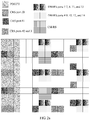
- FIG. 2a shows a case of signal transmission in a physical resource block in a subframe (including 12 subcarriers in a frequency domain or including 14 OFDM symbols in a time domain) in the prior art.
- a CSI-RS is transmitted, but also a physical downlink control channel (Physical Downlink Control Channel, PDCCH), a signal corresponding to a CRS port, and a signal corresponding to a demodulation reference signal (Demodulation Reference Signal, DM-RS) port are transmitted.
- PDCCH Physical Downlink Control Channel
- DM-RS Demodulation Reference Signal
- the physical resource block may be still referred to as a physical resource block corresponding to the REs originally occupied by the CSI-RS.
- FIG. 2 does not specifically show the CSI-RS port that the REs occupied by the CSI-RS corresponds to, it should be understood that, in a physical resource block, one CSI-RS may be transmitted, or multiple CSI-RSs may be transmitted.
- CP extended cyclic prefix
- that different precoding is used when precoding operations are performed on the CSI-RS originally carried in the first bearer REs in different subband groups may be that precoding pointing to different spatial directions is used, where the precoding may be a precoding vector or may be a precoding matrix or the like.
- P i indicates the i th spatial precoding vector
- P i ( m ) is a weighting factor in the vector and mapped to the m th antenna array element
- K indicates a quantity of antenna array elements
- ⁇ indicates a wavelength of a transmit signal
- ⁇ i indicates an angle that points to the i th spatial direction
- d indicates a spacing between antennas.
- the formula (1) shows how to obtain K precoding vectors that point to different spatial directions. Certainly, for the uniform linear array having K antenna array elements, less than K precoding vectors that point to different spatial directions may also be obtained.
- FIG. 3a to FIG. 3c show antenna patterns of eight array elements, formed by precoding vectors that point to four different spatial directions.
- spatial beams with different spatial directions may be obtained by adjusting a precoding vector (for example, by adjusting ⁇ i ).
- FIG. 3a is a polar-coordinate antenna pattern of eight array elements that point to four directions sparsely
- FIG. 3b is a polar-coordinate antenna pattern of eight array elements that point to four directions relatively densely
- FIG. 3c is a polar-coordinate antenna pattern of eight array elements that point to four directions densely.
- codebooks of four antennas and eight antennas in LTE may also be used to select to point to different spatial directions.
- the precoding in this embodiment of the present invention may include the precoding vector represented by the formula (1) or may include a codebook in the existing LTE protocol. It should also be understood that, as a citation to the prior art, use of other precoding vectors for generating a reference signal corresponding to a subband group is not limited in the present invention.
- the method 100 may further include:
- the user equipment may obtain the channel state information by performing channel estimation according to the reference signal corresponding to each subband group in the multiple subband groups and transmitted by the base station, and then transmit, to the base station by using the feedback information, the channel state information obtained through channel estimation according to the reference signal corresponding to each subband group in the multiple subband groups; the base station may acquire the channel state of the user equipment according to the feedback information, and therefore may further perform transmission scheduling of a downlink traffic channel according to the channel state of the user equipment.
- the implementation manners are hereinafter described in detail with reference to several embodiments.
- each subband group in the multiple subband groups includes multiple subbands, and each subband includes one physical resource block or multiple continuous physical resource blocks in the frequency domain, where the multiple subbands included in each subband group are discrete in the frequency domain.
- multiple physical resource blocks (in FIG. 5 , all physical resource blocks corresponding to resource elements occupied by CSI-RS (all the physical resource blocks are all PRBs in a system bandwidth) are used as an example for description) corresponding to resource elements occupied by CSI-RS corresponding to a certain antenna port may be divided into M physical resource block sets, where physical resource blocks included in each physical resource block set are continuous in the frequency domain; each physical resource block set is divided into K subbands, where each subband may include one physical resource block or multiple continuous physical resource blocks in the frequency domain, and the i th subbands in all physical resource block sets may constitute the i th subband group, where a value of i ranges from 1 to K; then, different beams may be allocated to each subband group, that is, different precoding vectors or matrices are used to perform precoding operations on the CSI-RS originally carried in each subband group, or in other words, different precoding vectors or matrices are used to perform weighting processing
- FIG. 5 only a case in which multiple subbands included in each subband group are discrete in the frequency domain is described by using an example.
- a resource division manner in this embodiment should not be limited, and other resource division manners may also be available in this embodiment.
- a quantity of subbands included in each physical resource block set is not exactly the same, and therefore, a quantity of subbands included in a subband group is also not exactly the same.
- the following uses an LTE system with a system bandwidth of 20 MHz as an example to describe a manner of dividing the physical resource blocks corresponding to the REs originally occupied by the CSI-RS in this embodiment, where there are 100 PRBs in total in the LTE system with the system bandwidth of 20 MHz, and there is a CSI-RS signal in all the 100 PRBs.
- the following uses an example to describe how to divide the PRBs into subband groups. For ease of description, the following also introduces a concept of a physical resource block set, which is referred to as a set for short.
- the system bandwidth of 100 PRBs may be divided into eight subband groups.
- the 100 PRBs are divided into 13 sets; the first 12 sets each include eight PRBs, where each set is divided into eight subbands, and each subband includes one PRB; the 13th set has four PRBs and is divided into four subbands, where each subband includes one PRB. Therefore, a subband group 1 may include a first subband of each set in set 1 to set 13; a subband group 2 may include a second subband of each set in set 1 to set 13; a subband group 3 may include a third subband of each set in set 1 to set 13; a subband group 4 may include a fourth subband of each set in set 1 to set 13.
- a subband group 5 includes a fifth subband of each set in set 1 to set 12; a subband group 6 includes a sixth subband of each set in set 1 to set 12; a subband group 7 includes a seventh subband of each set in set 1 to set 12; and a subband group 8 includes an eighth subband of each set in set 1 to set 12.
- the system bandwidth of 100 PRBs may be divided into four subband groups.
- the system bandwidth of 100 PRBs is divided into 13 sets; each set in the first 12 sets includes eight PRBs, where each set includes four subbands, and each subband includes two PRBs; the 13th set has four PRBs and includes four subbands, where each subband includes one PRB.
- a subband group 1 includes a first subband (including two PRBs) of each set in set 1 to set 12 and a first subband (including one PRB) of set 13;
- a subband group 2 includes a second subband (including two PRBs) of each set in set 1 to set 12 and a second subband (including one PRB) of set 13;
- a subband group 3 includes a third subband (including two PRBs) of each set in set 1 to set 12 and a third subband (including one PRB) of set 13;
- a subband group 4 includes a fourth subband (including two PRBs) of each set in set 1 to set 12 and a fourth subband (including one PRB) of set 13.
- the system bandwidth of 100 PRBs may be divided into eight subband groups.
- the system bandwidth of 100 PRBs is divided into 12 sets, where each set includes eight PRBs, and the last four PRBs are discarded. Therefore, each set may include 12 subbands, where each subband includes one physical resource block. Therefore, a subband group 1 may include a first subband of each set in set 1 to set 12; a subband group 2 may include a second subband of each set in set 1 to set 12, and so on.
- the foregoing has described in detail how to divide the physical resource blocks corresponding to the REs originally occupied by the CSI-RS.
- the following describes a processing behavior of the user equipment in this case after the user equipment receives the reference signal corresponding to each subband group and transmitted by the base station by using the first REs in each subband group in the multiple subband groups.
- the user equipment may perform channel estimation on each physical resource block in each subband group to obtain an SINR corresponding to each frequency domain physical resource block in each subband group; perform averaging processing on SINRs corresponding to all physical resource blocks in each subband group to obtain an SINR corresponding to each subband group; determine, according to the SINR corresponding to each subband group, at least one subband group from the multiple subband groups, where an SINR corresponding to each subband group in the at least one subband group is greater than an SINR corresponding to other subband groups than the at least one subband group; obtain, according to the SINR corresponding to the at least one subband group, a channel quality indicator (Channel Quality Indicator, CQI) corresponding to the at least one subband group; and feed back, to the base station, the CQI corresponding to the at least one subband group.
- the user equipment may feed back a subband group index value of the at least one subband group and a corresponding CQI value.
- the user equipment may determine one subband group from the multiple subband groups, where an SINR corresponding to the one subband group is greater than an SINR corresponding to any other subband group; obtain, according to the SINR corresponding to the one subband group, a CQI corresponding to the one subband group; and feed back, to the base station, the CQI corresponding to the one subband group.
- the user equipment may feed back a subband group index value of the one subband group and a corresponding CQI value.
- the user equipment may further obtain, according to an SINR value corresponding to a physical resource block of each subband in each subband group in the at least one subband group, an SINR value corresponding to each subband in each subband group in the at least one subband group; obtain, according to the SINR value corresponding to each subband in each subband group in the at least one subband group, a CQI corresponding to each subband in each subband group in the at least one subband group; and feed back, to the base station, the CQI corresponding to each subband in each subband group in the at least one subband group.
- the user equipment may feed back an index value of each subband in the at least one subband group and a corresponding CQI value.
- the base station may determine a spatial position in a corresponding direction of a uniform linear array in which the user equipment is located, and determine signal strength in the position. Therefore, the base station may perform transmission scheduling of the downlink traffic channel according to information of the spatial position of the user equipment (namely, the specific spatial position and strength).
- the base station may perform scheduling for the user equipment with reference to both the CQI value corresponding to the at least one subband group and the CQI corresponding to each subband in the at least subband group. In this way, the channel state can be better used, and system performance can be improved.
- the CQI corresponding to the at least one subband group and determined by the user equipment is obtained from an average SINR of physical resource blocks included in the discrete subbands, and therefore can reflect a channel state of the entire system bandwidth; however, the user equipment feeds back, to the base station, the CQI corresponding to the subband included in each subband group in the at least one subband group, and the CQI can reflect a channel state corresponding to the subband because the CQI corresponding to the subband is obtained through channel estimation according to the reference signal carried in the subband.
- each subband group in the multiple subband groups includes multiple subbands, and each subband includes one physical resource block or multiple continuous physical resource blocks in the frequency domain, where the multiple subbands included in each subband group are continuous in the frequency domain.
- multiple physical resource blocks (in FIG. 6 , all physical resource blocks corresponding to resource elements occupied by CSI-RS (all the physical resource blocks are all PRBs in a system bandwidth) are used as an example for description) corresponding to resource elements originally occupied by CSI-RS corresponding to a certain antenna port may be divided into K physical resource block sets, where physical resource blocks included in each physical resource block set are continuous in the frequency domain; each physical resource block set is divided into M subbands, where each subband may include one physical resource block or multiple continuous physical resource blocks in the frequency domain; therefore, all subbands in each set may be allocated to a subband group, and multiple subbands included in each subband group can be continuous in the frequency domain; then different beams may be allocated to each subband group, that is, different precoding vectors or matrices are used to perform precoding operations on the CSI-RS originally carried in each subband group, or in other words, different precoding vectors or matrices are used to perform weighting processing on an
- the following uses an LTE system with a system bandwidth of 20 MHz as an example to describe a case in which physical resource blocks included in each subband group are continuous.
- the following uses an example to describe how to divide the PRBs into subband groups.
- the 100 PRBs are divided into 13 sets, where sizes of different sets may be equal or may be unequal.
- the 100 PRBs may be divided into 13 sets, where sizes of the first 12 sets are eight PRBs, and a size of the 13th set is four PRBs; certainly, the 100 PRBs may also be divided into 12 sets, where sizes of the first 11 sets are eight PRBs, and a size of the twelfth set is 12 PRBs; or the 100 PRBs may be divided into eight sets, where sizes of the first seven sets are 12 PRBs, and a size of the eighth set is 16 PRBs. How to divide the entire system bandwidth depends on a size of the entire system band and a quantity of antenna ports that need to be supported.
- a subband may include one physical resource block or may include multiple physical resource blocks. Quantities of subbands in different sets may be equal or unequal, and quantities of physical resource blocks included in different subbands in any set may be equal or unequal.
- the foregoing has described in detail a manner of dividing physical resource blocks that are continuously distributed in the frequency domain and included in the subband group.
- the following describes a processing behavior of the user equipment in this case after the user equipment receives the reference signal corresponding to each subband group and transmitted by the base station by using each subband group in the multiple subband groups.
- the user equipment may perform channel estimation on each physical resource block in each subband group to obtain an SINR corresponding to each physical resource block in each subband group; perform averaging processing on SINRs corresponding to all physical resource blocks in each subband group to obtain an SINR corresponding to each subband group; determine, according to the SINR corresponding to each subband group, at least one subband group from the multiple subband groups, where an SINR corresponding to each subband group in the at least one subband group is greater than an SINR corresponding to other subband groups than the at least one subband group; obtain, according to the SINR corresponding to the at least one subband group, a CQI corresponding to the at least one subband group; and feed back, to the base station, the CQI corresponding to the at least one subband group.
- the user equipment may feed back a subband group index value of the at least one subband group and a corresponding CQI value.
- the user equipment may determine one subband group from the multiple subband groups, where an SINR corresponding to the one subband group is greater than an SINR corresponding to any other subband group; obtain, according to the SINR corresponding to the one subband group, a CQI corresponding to the one subband group; and feed back, to the base station, the CQI corresponding to the one subband group.
- the user equipment may feed back a subband group index value of the one subband group and a corresponding CQI value.
- the user equipment may further obtain, according to an SINR value corresponding to a physical resource block of each subband in each subband group in the at least one subband group, an SINR value corresponding to each subband in each subband group in the at least one subband group; obtain, according to the SINR value corresponding to each subband in each subband group in the at least one subband group, a CQI corresponding to each subband in each subband group in the at least one subband group; and feed back, to the base station, the CQI corresponding to each subband in each subband group in the at least one subband group.
- the user equipment may feed back an index value of each subband in the at least one subband group and a corresponding CQI value.
- the base station After receiving the CQI value corresponding to the at least one subband group and fed back by the user equipment, the base station determines a spatial position in a corresponding direction of a uniform linear array in which the user equipment is located, and determines signal strength in the position. Therefore, the base station may perform transmission scheduling of the downlink traffic channel according to information of the spatial position of the user equipment (namely, the specific spatial position and strength).
- the base station may perform scheduling for the user equipment with reference to both the CQI value corresponding to the at least one subband group and the CQI corresponding to each subband in the at least subband group. In this way, the channel state can be better used, and system performance can be improved.
- a frequency domain range of the subband group is large, and a CQI obtained from an average SINR of physical resource blocks included in the subband group may reflect channel states in a large frequency domain range; however, the user equipment feeds back, to the base station, the CQI corresponding to the subband included in each subband group in the at least one subband group, and the CQI can reflect channel states in a relatively small frequency domain range because a frequency domain range of the subband is relatively small and the CQI is obtained through channel estimation according to the reference signal carried in the subband.
- the reference signal corresponding to each subband group in the multiple subband groups may be transmitted by using the resource originally occupied by the CSI-RS; the CSI-RS may also be transmitted when the reference signal corresponding to each subband group in the multiple subband groups is transmitted.
- the CSI-RS is transmitted to the user equipment by using second bearer REs in each subband in each subband group in the multiple subband groups, where the second bearer REs are REs originally occupied by the CSI-RS and are different from the first bearer REs for transmitting the reference signal corresponding to each subband group in the multiple subband groups; where the reference signal corresponding to each subband group in the multiple subband groups and the CSI-RS transmitted by using the second bearer REs are transmitted in a same antenna direction.
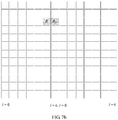
- the RE corresponding to the sixth OFDM symbol and the third subcarrier may be used to transmit a precoded reference signal, and the RE corresponding to the seventh OFDM symbol and the third subcarrier may be still used to transmit an original CSI-RS, for example, as shown in FIG. 7b .
- the base station may transmit the precoded reference signal according to a manner of Embodiment A or according to a manner of Embodiment B, which is not further described herein for brevity.
- the user equipment may perform subtraction between a channel estimation value obtained by performing channel estimation on the reference signal corresponding to the first bearer REs in each subband group in the multiple subband groups and a channel estimation value obtained by performing channel estimation on the reference signal in the second bearer REs in each subband group, to obtain a channel estimation value difference corresponding to each subband group, where the channel estimation values are SINRs and the channel estimation value difference is an SINR difference, or the channel estimation values are CQIs and the channel estimation value difference is a CQI difference.
- the user equipment may perform channel estimation on the first bearer REs in each subband in each subband group to obtain an SINR or a CQI, perform channel estimation on the second bearer REs in each subband in each subband group to obtain an SINR or a CQI, perform subtraction between the two obtained CQIs to obtain a CQI difference corresponding to each subband, or perform subtraction between the two obtained SINRs to obtain an SINR difference corresponding to each subband, and perform averaging processing on SINR differences or CQI differences corresponding to all subbands in each subband group to obtain a CQI difference or an SINR difference corresponding to each subband group.
- the user equipment may determine at least one subband group according to the channel estimation value difference corresponding to each subband group, and determine the channel state information, where a channel estimation value difference of the at least one subband group is greater than channel estimation value differences of other subband groups, and the channel state information includes a CQI difference corresponding to each subband group in the at least one subband group. Therefore, the user equipment may feed back, to the base station, the CQI difference corresponding to each subband group in the at least one subband group, and specifically may feed back a subband group index and a corresponding CQI difference.
- the user equipment may further feed back, to the base station, a CQI difference corresponding to each subband in the at least one subband group.
- the base station After receiving the CQI value corresponding to the at least one subband group and/or the CQI difference corresponding to each subband in the at least one subband group that are/is fed back by the user equipment, the base station determines the channel state of the user equipment, and therefore may further perform transmission scheduling of the downlink traffic channel according to the channel state of the user equipment.
- the reference signal corresponding to each subband group in the multiple subband groups and the CSI-RS transmitted in the second bearer REs may be transmitted in different subframes or may be transmitted in a same subframe.
- the reference signal corresponding to each subband group in the multiple subband groups has a same time domain channel response feature as much as possible, so that channel information in the frequency domain is estimated more accurately.
- transmission in different subframes brings flexibility to resource allocation and scheduling to some extent, and is also an effective solution when the UE is located in a relatively static channel environment. Specifically, whether to perform transmission in a same subframe or in different subframes may be determined according to a specific condition.
- the reference signal corresponding to each subband group in the multiple subband groups and the CSI-RS may be transmitted in different bearer REs in a same antenna direction.
- the reference signal corresponding to each subband group in the multiple subband groups and the CSI-RS may be transmitted in different antenna directions, which is hereinafter described in detail with reference to Embodiment D.
- the original CSI-RS is transmitted by using third bearer REs, where the CSI-RS is transmitted in a first antenna direction, the reference signal corresponding to each subband group in the multiple subband groups is transmitted in a second antenna direction, the third bearer REs are resource elements originally occupied by the CSI-RS, and the third bearer REs are different from the first bearer REs.
- This embodiment of the present invention may be applied to co-polarized and cross-polarized antenna arrays.
- the following first provides diagrams of two co-polarized and cross-polarized 2D antenna arrays.
- FIG. 8a which is a co-polarized 2D antenna
- the antenna has N array elements in a horizontal direction, and has K array elements in a vertical direction.
- FIG. 8b is an antenna array with 45-degree cross-polarization, where N array elements in a horizontal direction refer to a quantity of co-polarized array elements.
- loose coupling for example, 15-20 dB isolation
- two groups of co-polarized antennas may be considered.
- co-polarized antenna array elements shown in FIG. 8a are used as an example for description.
- an antenna configuration on a base station side may be considered as a row in FIG. 8a , with N ports in total.
- antenna configurations that may be supported in LTE to Release Rel-11 are 1, 2, 4, and 8 respectively.
- a maximum quantity is eight antennas, arranged in a horizontal direction. An advantage of this is that a spatial resolution of maximum eight antennas may be achieved in the horizontal direction.
- N CSI-RS antenna ports are configured in a direction, for example, in the horizontal direction.
- N is not greater than 8
- configurations of the existing eight CSI-RS antenna ports may be directly used; when N is greater than 8, new antenna ports may be added on a basis of the configuration manner of the existing eight CSI-RS antenna ports.
- the N CSI-RS ports in the horizontal direction respectively use different time-frequency resources.
- all K ports in the vertical direction corresponding to each CSI-RS port in the horizontal direction are generated in a manner of mapping different subband groups to different antenna port numbers according to CSI-RS full bandwidth signals.
- the user equipment may obtain, according to the reference signal corresponding to each subband group in the multiple subband groups, a CQI in the first direction and corresponding to each subband group in at least one subband group, and further, may obtain a CQI in the first direction and corresponding to each subband in each subband group in the at least one subband group; and obtain at least one of a precoding matrix indicator (Precoding Matrix Indicator, PMI), a rank indicator (Rank Indicator, RI), and a CQI in the second direction, and feed back the obtained channel state information to the base station.
- a precoding matrix indicator Precoding Matrix Indicator, PMI
- rank indicator Rank Indicator
- CQI CQI in the second direction
- the base station determines the channel state of the user equipment, and therefore may perform transmission scheduling of the downlink traffic channel according to the channel state of the user equipment.
- Embodiments A, B, C, and D are only specific embodiments of the present invention, and should not constitute any limitation to the scope of the present invention.
- This embodiment of the present invention may further have other variants, for example, Embodiment C and Embodiment D may be combined, that is, when the reference signal corresponding to each subband group in the multiple subband groups is transmitted by using the first bearer REs, the CSI-RS is transmitted in the second bearer REs in an antenna direction same as an antenna direction for transmitting the reference signal corresponding to each subband group in the multiple subband groups, and the CSI-RS is transmitted in the third bearer REs in an antenna direction different from the antenna direction for transmitting the reference signal corresponding to each subband group in the multiple subband groups.
- the behavior of the user equipment may be obtained with reference to the behaviors of the user equipment in Embodiment C and Embodiment D.
- multiple subband groups are obtained by dividing physical resource blocks corresponding to the REs occupied by the CSI-RS; a reference signal corresponding to each subband group is obtained by performing a precoding operation on a CSI-RS originally carried in first bearer REs in each subband in each subband group, and different precoding is used when precoding operations are performed on the CSI-RS originally carried in the first bearer REs in different subband groups; and the reference signal corresponding to each subband group in the multiple subband groups is transmitted by using the first bearer REs in each subband group.
- reference signals corresponding to different subband groups may correspond to different antenna ports. Therefore, without increasing resource consumption, a quantity of antenna ports can be increased, and more transmit antennas can be supported. In addition, because new resources are not used, backward compatibility with legacy UE can be achieved.
- FIG. 9 is a schematic flowchart of an information transmission method 200 according to an embodiment of the present invention. As shown in FIG. 9 , the method 200 includes:
- multiple subband groups are obtained by dividing physical resource blocks corresponding to the REs occupied by the CSI-RS; a reference signal corresponding to each subband group is obtained by performing a precoding operation on a CSI-RS originally carried in first bearer REs in each subband in each subband group, and different precoding is used when precoding operations are performed on the CSI-RS originally carried in the first bearer REs in different subband groups; the reference signal corresponding to each subband group in the multiple subband groups is transmitted by using the first bearer REs in each subband group; and user equipment obtains channel state information through channel estimation according to the signal corresponding to each subband group, and feeds back the channel state information to a base station.
- reference signals corresponding to different subband groups may correspond to different antenna ports. Therefore, without increasing resource consumption, a quantity of antenna ports can be increased, and more transmit antennas can be supported. In addition, because new resources are not used, backward compatibility with legacy user equipment UE can be achieved.
- the CSI-RS is a CSI-RS defined in Rel-10 of an LTE protocol.
- each subband group in the multiple subband groups includes multiple subbands, and each subband includes one physical resource block or multiple continuous physical resource blocks in a frequency domain, where the multiple subbands included in each subband group are discrete in the frequency domain.
- each subband group in the multiple subband groups includes multiple subbands, and each subband includes one physical resource block or multiple continuous physical resource blocks in a frequency domain, where the multiple subbands included in each subband group are discrete in the frequency domain.
- the user equipment may perform channel estimation on each physical resource block in each subband group to obtain an SINR corresponding to each frequency domain physical resource block in each subband group; perform averaging processing on SINRs corresponding to all physical resource blocks in each subband group to obtain an SINR corresponding to each subband group; determine, according to the SINR corresponding to each subband group, at least one subband group from the multiple subband groups, where an SINR corresponding to each subband group in the at least one subband group is greater than an SINR corresponding to other subband groups than the at least one subband group; obtain, according to the SINR corresponding to the at least one subband group, a channel quality indicator (Channel Quality Indicator, CQI) corresponding to the at least one subband group; and feed back, to the base station, the CQI corresponding to the at least one subband group.
- the user equipment may feed back a subband group index value of the at least one subband group and a corresponding CQI value.
- the user equipment may determine one subband group from the multiple subband groups, where an SINR corresponding to the one subband group is greater than an SINR corresponding to any other subband group; obtain, according to the SINR corresponding to the one subband group, a CQI corresponding to the one subband group; and feed back, to the base station, the CQI corresponding to the one subband group.
- the user equipment may feed back a subband group index value of the one subband group and a corresponding CQI value.
- the user equipment may further obtain, according to an SINR value corresponding to a physical resource block of each subband in each subband group in the at least one subband group, an SINR value corresponding to each subband in each subband group in the at least one subband group; obtain, according to the SINR value corresponding to each subband in each subband group in the at least one subband group, a CQI corresponding to each subband in each subband group in the at least one subband group; and feed back, to the base station, the CQI corresponding to each subband in each subband group in the at least one subband group.
- the user equipment may feed back an index value of each subband in the at least one subband group and a corresponding CQI value.
- the base station may determine a spatial position in a corresponding direction of a uniform linear array in which the user equipment is located, and determine signal strength in the position. Therefore, the base station may perform transmission scheduling of a downlink traffic channel according to information of the spatial position of the user equipment (namely, the specific spatial position and strength).
- the base station may perform scheduling for the user equipment with reference to both the CQI value corresponding to the at least one subband group and the CQI corresponding to each subband in the at least subband group. In this way, a channel state can be better used, and system performance can be improved.
- the CQI corresponding to the at least one subband group and determined by the user equipment is obtained from an average SINR of physical resource blocks included in the discrete subbands, and therefore can reflect a channel state of the entire system bandwidth; however, the user equipment feeds back, to the base station, the CQI corresponding to the subband included in each subband group in the at least one subband group, and the CQI can reflect a channel state corresponding to the subband because the CQI corresponding to the subband is obtained through channel estimation according to the reference signal carried in the subband.
- each subband group in the multiple subband groups includes multiple subbands, and each subband includes one physical resource block or multiple continuous physical resource blocks in a frequency domain, where the multiple subbands included in each subband group are continuous in the frequency domain.
- each subband group in the multiple subband groups includes multiple subbands, and each subband includes one physical resource block or multiple continuous physical resource blocks in a frequency domain, where the multiple subbands included in each subband group are continuous in the frequency domain.
- the user equipment may perform channel estimation on each physical resource block in each subband group to obtain an SINR corresponding to each physical resource block in each subband group; perform averaging processing on SINRs corresponding to all physical resource blocks in each subband group to obtain an SINR corresponding to each subband group; determine, according to the SINR corresponding to each subband group, at least one subband group from the multiple subband groups, where an SINR corresponding to each subband group in the at least one subband group is greater than an SINR corresponding to other subband groups than the at least one subband group; obtain, according to the SINR corresponding to the at least one subband group, a CQI corresponding to the at least one subband group; and feed back, to the base station, the CQI corresponding to the at least one subband group.
- the user equipment may feed back a subband group index value of the at least one subband group and a corresponding CQI value.
- the user equipment may determine one subband group from the multiple subband groups, where an SINR corresponding to the one subband group is greater than an SINR corresponding to any other subband group; obtain, according to the SINR corresponding to the one subband group, a CQI corresponding to the one subband group; and feed back, to the base station, the CQI corresponding to the one subband group.
- the user equipment may feed back a subband group index value of the one subband group and a corresponding CQI value.
- the user equipment may further obtain, according to an SINR value corresponding to a physical resource block of each subband in each subband group in the at least one subband group, an SINR value corresponding to each subband in each subband group in the at least one subband group; obtain, according to the SINR value corresponding to each subband in each subband group in the at least one subband group, a CQI corresponding to each subband in each subband group in the at least one subband group; and feed back, to the base station, the CQI corresponding to each subband in each subband group in the at least one subband group.
- the user equipment may feed back an index value of each subband in the at least one subband group and a corresponding CQI value.
- the base station may determine a spatial position in a corresponding direction of a uniform linear array in which the user equipment is located, and determine signal strength in the position. Therefore, the base station may perform transmission scheduling of a downlink traffic channel according to information of the spatial position of the user equipment (namely, the specific spatial position and strength).
- the base station may perform scheduling for the user equipment with reference to both the CQI value corresponding to the at least one subband group and the CQI corresponding to each subband in the at least subband group. In this way, a channel state can be better used, and system performance can be improved.
- a frequency domain range of the subband group is large, and a CQI obtained from an average SINR of physical resource blocks included in the subband group may reflect channel states in a large frequency domain range; however, the user equipment feeds back, to the base station, the CQI corresponding to the subband included in each subband group in the at least one subband group, and the CQI can reflect channel states in a relatively small frequency domain range because a frequency domain range of the subband is relatively small and the CQI is obtained through channel estimation according to the reference signal carried in the subband.
- the method 200 may further include:
- the user equipment may perform subtraction between a channel estimation value obtained by performing channel estimation on the reference signal carried in the first bearer REs in each subband in each subband group in the multiple subband groups and a channel estimation value obtained by performing channel estimation on the reference signal carried in the second bearer REs in each subband group, to obtain a channel estimation value difference corresponding to each subband group, where the channel estimation values are SINRs and the channel estimation value difference is an SINR difference, or the channel estimation values are CQIs and the channel estimation value difference is a CQI difference; and determine at least one subband group according to the channel estimation value difference corresponding to each subband group, and determine the channel state information, where a channel estimation value difference of the at least one subband group is greater than channel estimation value differences of other subband groups, and the channel state information includes a CQI difference corresponding to each subband group in the at least one subband group.
- the channel state information includes a CQI difference corresponding to each subband in each subband group in the at least one subband group, where the CQI corresponding to each subband in each subband group in the at least one subband group is obtained by performing subtraction between a channel estimation value obtained by performing channel estimation according to the first bearer REs in each subband and a channel estimation value obtained by performing channel estimation according to the second bearer REs.
- the reference signal corresponding to each subband group in the multiple subband groups and the CSI-RS transmitted in the second bearer REs may be transmitted in different subframes or may be transmitted in a same subframe.
- the reference signal corresponding to each subband group in the multiple subband groups has a same time domain channel response feature as much as possible, so that channel information in the frequency domain is estimated more accurately.
- transmission in different subframes brings flexibility to resource allocation and scheduling to some extent, and is also an effective solution when the UE is located in a relatively static channel environment. Specifically, whether to perform transmission in a same subframe or in different subframes may be determined according to a specific condition.
- the method 200 may further include:
- the user equipment may obtain, according to the reference signal corresponding to each subband group in the multiple subband groups, a CQI in the first direction and corresponding to each subband group in at least one subband group; and obtain, according to the CSI-RS, at least one of a PMI, an RI, and a CQI in the second direction.
- multiple subband groups are obtained by dividing physical resource blocks corresponding to the REs occupied by the CSI-RS; a reference signal corresponding to each subband group is obtained by performing a precoding operation on a CSI-RS originally carried in first bearer REs in each subband in each subband group, and different precoding is used when precoding operations are performed on the CSI-RS originally carried in the first bearer REs in different subband groups; the reference signal corresponding to each subband group in the multiple subband groups is transmitted by using the first bearer REs in each subband group; and user equipment obtains channel state information through channel estimation according to the signal corresponding to each subband group, and feeds back the channel state information to a base station.
- reference signals corresponding to different subband groups may correspond to different antenna ports. Therefore, without increasing resource consumption, a quantity of antenna ports can be increased, and more transmit antennas can be supported. In addition, because new resources are not used, backward compatibility with legacy user equipment UE can be achieved.
- FIG. 10 is a schematic block diagram of a base station 300 according to an embodiment of the present invention. As shown in FIG. 10 , the base station 300 includes:
- the first determining unit 310 may obtain multiple subband groups by dividing multiple physical resource blocks (all or some physical resource blocks) corresponding to REs occupied by CSI-RS corresponding to a certain antenna port, where each subband group may include at least one subband, and each subband may include at least one physical resource block; the second determining unit 320 may determine a reference signal corresponding to each subband group in the multiple subband groups, where the reference signal corresponding to each subband group may be obtained by performing a precoding operation on a CSI-RS originally carried in first bearer REs in each subband in each subband group, and different precoding is used (that is, different precoding vectors or matrices are used) when precoding operations are performed on the CSI-RS originally carried in the first bearer REs in different subband groups; after the second determining unit 320 determines the reference signal corresponding to each subband group in the multiple subband groups, the transmitting unit 330 may transmit the reference signal corresponding to each subband group in the multiple subband groups, and specifically
- the reference signal corresponding to each subband group in the multiple subband groups may be preconfigured in the second determining unit 320, where the preconfigured reference signal corresponding to each subband group in the multiple subband groups may also be generated based on the following principle:
- the reference signal corresponding to each subband group is obtained by performing a precoding operation on the CSI-RS originally carried in the first bearer REs in each subband in each subband group, and different precoding is used when precoding operations are performed on the CSI-RS originally carried in the first bearer REs in different subband groups.
- each subband included in the multiple subband groups may also be preconfigured, where the subbands included in the multiple subband groups are also preconfigured based on the following principle:
- the multiple subband groups are obtained by dividing multiple physical resource blocks corresponding to the REs originally occupied by the CSI-RS, each subband group in the multiple subband groups includes at least one subband, and each subband includes at least one physical resource block.
- multiple subband groups are obtained by dividing physical resource blocks corresponding to the REs occupied by the CSI-RS; a reference signal corresponding to each subband group is obtained by performing a precoding operation on a CSI-RS originally carried in first bearer REs in each subband in each subband group, and different precoding is used when precoding operations are performed on the CSI-RS originally carried in the first bearer REs in different subband groups; and the reference signal corresponding to each subband group in the multiple subband groups is transmitted by using the first bearer REs in each subband group.
- reference signals corresponding to different subband groups may correspond to different antenna ports. Therefore, without increasing resource consumption, a quantity of antenna ports can be increased, and more transmit antennas can be supported. In addition, because new resources are not used, backward compatibility with legacy UE can be achieved.
- the CSI-RS in this embodiment of the present invention may be a CSI-RS defined in Release Rel-10 of an LTE protocol.
- a physical resource block corresponding to REs originally occupied by a CSI-RS means that, as long as a base station transmits the CSI-RS in some REs in a certain physical resource block in the prior art, it may be considered that the physical resource block is a physical resource block corresponding to the REs originally occupied by the CSI-RS.
- that different precoding is used when precoding operations are performed on the CSI-RS originally carried in the first bearer REs in different subband groups may be that precoding pointing to different spatial directions is used, where the precoding may be a precoding vector or may be a precoding matrix or the like.
- the base station 300 may further include:
- the user equipment may obtain the channel state information by performing channel estimation according to the reference signal corresponding to each subband group in the multiple subband groups and transmitted by the base station, and then transmit, to the base station by using the feedback information, the channel state information obtained through channel estimation according to the reference signal corresponding to each subband group in the multiple subband groups; the receiving unit 340 of the base station receives the feedback information, and the acquiring unit 350 may acquire the channel state of the user equipment according to the feedback information, so that the base station 300 may further perform transmission scheduling of a downlink traffic channel according to the channel state of the user equipment.
- Each subband group in the multiple subband groups includes multiple subbands, and each subband includes one physical resource block or multiple continuous physical resource blocks in a frequency domain, where the multiple subbands included in each subband group are discrete in the frequency domain.
- each subband includes one physical resource block or multiple continuous physical resource blocks in a frequency domain, where the multiple subbands included in each subband group are discrete in the frequency domain.
- the base station 300 includes:
- the user equipment may perform channel estimation on each physical resource block in each subband group to obtain an SINR corresponding to each frequency domain physical resource block in each subband group; perform averaging processing on SINRs corresponding to all physical resource blocks in each subband group to obtain an SINR corresponding to each subband group; determine, according to the SINR corresponding to each subband group, the at least one subband group from the multiple subband groups, where an SINR corresponding to each subband group in the at least one subband group is greater than an SINR corresponding to other subband groups than the at least one subband group; obtain, according to the SINR corresponding to the at least one subband group, a channel quality indicator (Channel Quality Indicator, CQI) corresponding to the at least one subband group; and feed back, to the base station, the CQI corresponding to the at least one subband group.
- the user equipment may feed back a subband group index value of the at least one subband group and a corresponding CQI value.
- the user equipment may determine one subband group from the multiple subband groups, where an SINR corresponding to the one subband group is greater than an SINR corresponding to any other subband group; obtain, according to the SINR corresponding to the one subband group, a CQI corresponding to the one subband group; and feed back, to the base station, the CQI corresponding to the subband group.
- the user equipment may feed back a subband group index value of the one subband group and a corresponding CQI value.
- the user equipment may further obtain, according to an SINR value corresponding to a physical resource block of each subband in each subband group in the at least one subband group, an SINR value corresponding to each subband in each subband group in the at least one subband group; obtain, according to the SINR value corresponding to each subband in each subband group in the at least one subband group, a CQI corresponding to each subband in each subband group in the at least one subband group; and feed back, to the base station, the CQI corresponding to each subband in each subband group in the at least one subband group.
- the user equipment may feed back an index value of each subband in the at least one subband group and a corresponding CQI value.
- the first acquiring unit 351 may determine a spatial position in a corresponding direction of a uniform linear array in which the user equipment is located, and determine signal strength in the position. Therefore, the base station may perform transmission scheduling of the downlink traffic channel according to information of the spatial position of the user equipment (namely, the specific spatial position and strength).
- the first acquiring unit 351 may acquire the CQI value corresponding to the at least one subband group and the CQI corresponding to each subband in the at least subband group, so that the base station may perform scheduling for the user equipment with reference to both the CQI value corresponding to the at least one subband group and the CQI corresponding to each subband in the at least subband group. In this way, the channel state can be better used, and system performance can be improved.
- the CQI corresponding to the at least one subband group and determined by the user equipment is obtained from an average SINR of physical resource blocks included in the discrete subbands, and therefore can reflect a channel state of the entire system bandwidth; however, the user equipment feeds back, to the base station, the CQI corresponding to the subband included in each subband group in the at least one subband group, and the CQI can reflect a channel state corresponding to the subband because the CQI corresponding to the subband is obtained through channel estimation according to the reference signal carried in the subband.
- each subband group in the multiple subband groups includes multiple subbands, and each subband includes one physical resource block or multiple continuous physical resource blocks in a frequency domain, where the multiple subbands included in each subband group are continuous in the frequency domain.
- each subband includes one physical resource block or multiple continuous physical resource blocks in a frequency domain, where the multiple subbands included in each subband group are continuous in the frequency domain.
- the base station 300 includes:
- the user equipment may perform channel estimation on each physical resource block in each subband group to obtain an SINR corresponding to each frequency domain physical resource block in each subband group; perform averaging processing on SINRs corresponding to all physical resource blocks in each subband group to obtain an SINR corresponding to each subband group; determine, according to the SINR corresponding to each subband group, the at least one subband group from the multiple subband groups, where an SINR corresponding to each subband group in the at least one subband group is greater than an SINR corresponding to other subband groups than the at least one subband group; obtain, according to the SINR corresponding to the at least one subband group, a channel quality indicator (Channel Quality Indicator, CQI) corresponding to the at least one subband group; and feed back, to the base station, the CQI corresponding to the at least one subband group.
- the user equipment may feed back a subband group index value of the at least one subband group and a corresponding CQI value.
- the user equipment may determine one subband group from the multiple subband groups, where an SINR corresponding to the one subband group is greater than an SINR corresponding to any other subband group; obtain, according to the SINR corresponding to the one subband group, a CQI corresponding to the one subband group; and feed back, to the base station, the CQI corresponding to the at least one subband group.
- the user equipment may feed back a subband group index value of the one subband group and a corresponding CQI value.
- the user equipment may further obtain, according to an SINR value corresponding to a physical resource block of each subband in each subband group in the at least one subband group, an SINR value corresponding to each subband in each subband group in the at least one subband group; obtain, according to the SINR value corresponding to each subband in each subband group in the at least one subband group, a CQI corresponding to each subband in each subband group in the at least one subband group; and feed back, to the base station, the CQI corresponding to each subband in each subband group in the at least one subband group.
- the user equipment may feed back an index value of each subband in the at least one subband group and a corresponding CQI value.
- the first acquiring unit 351 may determine a spatial position in a corresponding direction of a uniform linear array in which the user equipment is located, and determine signal strength in the position. Therefore, the base station may perform transmission scheduling of the downlink traffic channel according to information of the spatial position of the user equipment (namely, the specific spatial position and strength).
- the first acquiring unit 351 may acquire the CQI value corresponding to the at least one subband group and the CQI corresponding to each subband in the at least subband group, so that the base station may perform scheduling for the user equipment with reference to both the CQI value corresponding to the at least one subband group and the CQI corresponding to each subband in the at least subband group. In this way, the channel state can be better used, and system performance can be improved.
- a frequency domain range of the subband group is large, and a CQI obtained from an average SINR of physical resource blocks included in the subband group may reflect channel states in a large frequency domain range; however, the user equipment feeds back, to the base station, the CQI corresponding to the subband included in each subband group in the at least one subband group, and the CQI can reflect channel states in a relatively small frequency domain range because a frequency domain range of the subband is relatively small and the CQI is obtained through channel estimation according to the reference signal carried in the subband.
- the transmitting unit 330 is further configured to:
- the base station 300 further includes:
- the base station may transmit the reference signal corresponding to each subband group in the multiple subband groups according to a manner of Embodiment A or according to a manner of Embodiment B, which is not further described herein for brevity.
- the user equipment may perform subtraction between a channel estimation value obtained by performing channel estimation on the reference signal corresponding to the first bearer REs in each subband group in the multiple subband groups and a channel estimation value obtained by performing channel estimation on the reference signal in the second bearer REs in each subband group, to obtain a channel estimation value difference corresponding to each subband group, where the channel estimation values are SINRs and the channel estimation value difference is an SINR difference, or the channel estimation values are CQIs and the channel estimation value difference is a CQI difference.
- the user equipment may perform channel estimation on the first bearer REs in each subband in each subband group to obtain an SINR or a CQI, perform channel estimation on the second bearer REs in each subband in each subband group to obtain an SINR or a CQI, perform subtraction between the two obtained CQIs to obtain a CQI difference corresponding to each subband, or perform subtraction between the two obtained SINRs to obtain an SINR difference corresponding to each subband, and perform averaging processing on SINR differences or CQI differences corresponding to all subbands in each subband group to obtain a CQI difference or an SINR difference corresponding to each subband group.
- the user equipment may determine at least one subband group according to the channel estimation value difference corresponding to each subband group, and determine the channel state information, where a channel estimation value difference of the at least one subband group is greater than channel estimation value differences of other subband groups, and the channel state information includes a CQI difference corresponding to each subband group in the at least one subband group. Therefore, the user equipment may feed back, to the base station, the CQI difference corresponding to each subband group in the at least one subband group, and specifically may feed back a subband group index and a corresponding CQI difference.
- the user equipment may further feed back, to the base station, a CQI difference corresponding to each subband in the at least one subband group.
- the second acquiring unit 352 determines the channel state of the user equipment, and therefore the base station may further perform transmission scheduling of the downlink traffic channel according to the channel state of the user equipment.
- the reference signal corresponding to each subband group in the multiple subband groups and the CSI-RS transmitted in the second bearer REs may be transmitted in different subframes or may be transmitted in a same subframe.
- the reference signal corresponding to each subband group in the multiple subband groups has a same time domain channel response feature as much as possible, so that channel information in the frequency domain is estimated more accurately.
- transmission in different subframes brings flexibility to resource allocation and scheduling to some extent, and is also an effective solution when the UE is located in a relatively static channel environment. Specifically, whether to perform transmission in a same subframe or in different subframes may be determined according to a specific condition.
- the transmitting unit 330 is further configured to:
- the base station 300 further includes:
- This embodiment of the present invention may be applied to co-polarized and cross-polarized antenna arrays.
- reference may be made to the related description in the method 100.
- the user equipment may obtain, according to the reference signal corresponding to each subband group in the multiple subband groups, a CQI in the first direction and corresponding to each subband group in at least one subband group, and further, may obtain a CQI in the first direction and corresponding to each subband in each subband group in the at least one subband group; and obtain at least one of a precoding matrix indicator (Precoding Matrix Indicator, PMI), a rank indicator (Rank Indicator, RI), and a CQI in the second direction, and feed back the obtained channel state information to the base station.
- a precoding matrix indicator Precoding Matrix Indicator, PMI
- rank indicator Rank Indicator
- CQI CQI in the second direction
- the third acquiring unit 353 determines the channel state of the user equipment, so that the base station may perform transmission scheduling of the downlink traffic channel according to the channel state of the user equipment.
- the receiving unit 340 and the acquiring unit 350 shown in FIG. 11 may respectively include the first receiving unit 341 and the first acquiring unit 351, and/or respectively include the second receiving unit 342 and the second acquiring unit 352, and/or respectively include the third receiving unit 343 and the third acquiring unit 353.
- the base station 300 may correspond to the base station in the method of the embodiment of the present invention, and may implement corresponding functions of the base station in the method, which is not further described herein for brevity.
- multiple subband groups are obtained by dividing physical resource blocks corresponding to the REs occupied by the CSI-RS; a reference signal corresponding to each subband group is obtained by performing a precoding operation on a CSI-RS originally carried in first bearer REs in each subband in each subband group, and different precoding is used when precoding operations are performed on the CSI-RS originally carried in the first bearer REs in different subband groups; and the reference signal corresponding to each subband group in the multiple subband groups is transmitted by using the first bearer REs in each subband group.
- reference signals corresponding to different subband groups may correspond to different antenna ports. Therefore, without increasing resource consumption, a quantity of antenna ports can be increased, and more transmit antennas can be supported. In addition, because new resources are not used, backward compatibility with legacy UE can be achieved.
- FIG. 13 is a schematic block diagram of user equipment 400 according to an embodiment of the present invention. As shown in FIG. 13 , the user equipment 400 includes:
- multiple subband groups are obtained by dividing physical resource blocks corresponding to the REs occupied by the CSI-RS; a reference signal corresponding to each subband group is obtained by performing a precoding operation on a CSI-RS originally carried in first bearer REs in each subband in each subband group, and different precoding is used when precoding operations are performed on the CSI-RS originally carried in the first bearer REs in different subband groups; the reference signal corresponding to each subband group in the multiple subband groups is transmitted by using the first bearer REs in each subband group; and user equipment obtains channel state information through channel estimation according to the signal corresponding to each subband group, and feeds back the channel state information to a base station.
- reference signals corresponding to different subband groups may correspond to different antenna ports. Therefore, without increasing resource consumption, a quantity of antenna ports can be increased, and more transmit antennas can be supported. In addition, because new resources are not used, backward compatibility with legacy user equipment UE can be achieved.
- the CSI-RS is a CSI-RS defined in Rel-10 of an LTE protocol.
- the following describes the user equipment 400 according to the embodiment of the present invention with reference to several embodiments.
- each subband group in the multiple subband groups includes multiple subbands, and each subband includes one physical resource block or multiple continuous physical resource blocks in a frequency domain, where the multiple subbands included in each subband group are discrete in the frequency domain.
- each subband group in the multiple subband groups includes multiple subbands, and each subband includes one physical resource block or multiple continuous physical resource blocks in a frequency domain, where the multiple subbands included in each subband group are discrete in the frequency domain.
- the acquiring unit 420 is specifically configured to obtain the channel state information through estimation according to the reference signal corresponding to each subband group in the multiple subband groups, where the channel state information includes channel state information corresponding to at least one subband group in the multiple subband groups and/or channel state information corresponding to each subband in the at least one subband group.
- the acquiring unit 420 performs channel estimation on each physical resource block in each subband group to obtain a signal to interference plus noise ratio SINR corresponding to each physical resource block in each subband group; performs averaging processing on SINRs corresponding to all physical resource blocks in each subband group to obtain an SINR corresponding to each subband group; determines, according to the SINR corresponding to each subband group, the at least one subband group from the multiple subband groups, where an SINR corresponding to each subband group in the at least one subband group is greater than an SINR corresponding to other subband groups than the at least one subband group; and obtains, according to the SINR corresponding to the at least one subband group, a CQI corresponding to the at least one subband group, where the channel state information includes the CQI corresponding to the at least one subband group.
- the acquiring unit 420 may determine one subband group from the multiple subband groups, where an SINR corresponding to the one subband group is greater than an SINR corresponding to any other subband group; and obtain, according to the SINR corresponding to the one subband group, a CQI corresponding to the one subband group.
- the transmitting unit 430 feeds back, to the base station, the CQI corresponding to the one subband group. Specifically, the transmitting unit 430 may feed back a subband group index value of the one subband group and a corresponding CQI value.
- the acquiring unit 420 may further obtain, according to an SINR value corresponding to a physical resource block of each subband in each subband group in the at least one subband group, an SINR value corresponding to each subband in each subband group in the at least one subband group; and obtain, according to the SINR value corresponding to each subband in each subband group in the at least one subband group, a CQI corresponding to each subband in each subband group in the at least one subband group.
- the transmitting unit 430 feeds back, to the base station, the CQI corresponding to each subband in each subband group in the at least one subband group. Specifically, the transmitting unit 430 may feed back an index value of each subband in the at least one subband group and a corresponding CQI value.
- the base station may determine a spatial position in a corresponding direction of a uniform linear array in which the user equipment is located, and determine signal strength in the position. Therefore, the base station may perform transmission scheduling of a downlink traffic channel according to information of the spatial position of the user equipment (namely, the specific spatial position and strength).
- the base station may perform scheduling for the user equipment with reference to both the CQI value corresponding to the at least one subband group and the CQI corresponding to each subband in the at least subband group. In this way, a channel state can be better used, and system performance can be improved.
- the CQI corresponding to the at least one subband group and determined by the user equipment is obtained from an average SINR of physical resource blocks included in the discrete subbands, and therefore can reflect a channel state of the entire system bandwidth; however, the user equipment feeds back, to the base station, the CQI corresponding to the subband included in each subband group in the at least one subband group, and the CQI can reflect a channel state corresponding to the subband because the CQI corresponding to the subband is obtained through channel estimation according to the reference signal carried in the subband.
- each subband group in the multiple subband groups includes multiple subbands, and each subband includes one physical resource block or multiple continuous physical resource blocks in a frequency domain, where the multiple subbands included in each subband group are continuous in the frequency domain.
- each subband group in the multiple subband groups includes multiple subbands, and each subband includes one physical resource block or multiple continuous physical resource blocks in a frequency domain, where the multiple subbands included in each subband group are continuous in the frequency domain.
- the acquiring unit 420 is specifically configured to obtain the channel state information through estimation according to the reference signal corresponding to each subband group in the multiple subband groups, where the channel state information includes channel state information corresponding to at least one subband group in the multiple subband groups and/or channel state information corresponding to each subband in the at least one subband group.
- the acquiring unit performs channel estimation on each physical resource block in each subband group to obtain a signal to interference plus noise ratio SINR corresponding to each physical resource block in each subband group; performs averaging processing on SINRs corresponding to all physical resource blocks in each subband group to obtain an SINR corresponding to each subband group; determines, according to the SINR corresponding to each subband group, the at least one subband group from the multiple subband groups, where an SINR corresponding to each subband group in the at least one subband group is greater than an SINR corresponding to other subband groups than the at least one subband group; and obtains, according to the SINR corresponding to the at least one subband group, a CQI corresponding to the at least one subband group, where the channel state information includes the CQI corresponding to the at least one subband group.
- the acquiring unit 420 may determine one subband group from the multiple subband groups, where an SINR corresponding to the one subband group is greater than an SINR corresponding to any other subband group; and obtain, according to the SINR corresponding to the one subband group, a CQI corresponding to the one subband group.
- the transmitting unit 430 feeds back, to the base station, the CQI corresponding to the one subband group. Specifically, the transmitting unit 430 may feed back a subband group index value of the one subband group and a corresponding CQI value.
- the acquiring unit 340 may further obtain, according to an SINR value corresponding to a physical resource block of each subband in each subband group in the at least one subband group, an SINR value corresponding to each subband in each subband group in the at least one subband group; and obtain, according to the SINR value corresponding to each subband in each subband group in the at least one subband group, a CQI corresponding to each subband in each subband group in the at least one subband group.
- the transmitting unit 430 feeds back, to the base station, the CQI corresponding to each subband in each subband group in the at least one subband group. Specifically, the transmitting unit 430 may feed back an index value of each subband in the at least one subband group and a corresponding CQI value.
- the base station may determine a spatial position in a corresponding direction of a uniform linear array in which the user equipment is located, and determine signal strength in the position. Therefore, the base station may perform transmission scheduling of a downlink traffic channel according to information of the spatial position of the user equipment (namely, the specific spatial position and strength).
- the base station may perform scheduling for the user equipment with reference to both the CQI value corresponding to the at least one subband group and the CQI corresponding to each subband in the at least subband group. In this way, a channel state can be better used, and system performance can be improved.
- a frequency domain range of the subband group is large, and a CQI obtained from an average SINR of physical resource blocks included in the subband group may reflect channel states in a large frequency domain range; however, the user equipment feeds back, to the base station, the CQI corresponding to the subband included in each subband group in the at least one subband group, and the CQI can reflect channel states in a relatively small frequency domain range because a frequency domain range of the subband is relatively small and the CQI is obtained through channel estimation according to the reference signal carried in the subband.
- the receiving unit 410 is further configured to receive the CSI-RS transmitted by the base station by using second bearer REs in each subband in each subband group, where the second bearer REs are REs originally occupied by the CSI-RS and are different from the first bearer REs, where the reference signal corresponding to each subband group in the multiple subband groups and the CSI-RS transmitted by using the second bearer REs are transmitted in a same antenna direction; and the acquiring unit 420 is specifically configured to obtain the channel state information through estimation according to the reference signal corresponding to each subband group in the multiple subband groups and the CSI-RS received in the second bearer REs.
- the acquiring unit 420 may perform subtraction between a channel estimation value obtained by performing channel estimation on the reference signal carried in the first bearer REs in each subband in each subband group in the multiple subband groups and a channel estimation value obtained by performing channel estimation on the reference signal carried in the second bearer REs in each subband group, to obtain a channel estimation value difference corresponding to each subband group, where the channel estimation values are SINRs and the channel estimation value difference is an SINR difference, or the channel estimation values are CQIs and the channel estimation value difference is a CQI difference; and determine at least one subband group according to the channel estimation value difference corresponding to each subband group, and determine the channel state information, where a channel estimation value difference of the at least one subband group is greater than channel estimation value differences of other subband groups, and the channel state information includes a CQI difference corresponding to each subband group in the at least one subband group.
- the channel state information includes a CQI difference corresponding to each subband in each subband group in the at least one subband group, where the CQI corresponding to each subband in each subband group in the at least one subband group is obtained by performing subtraction between a channel estimation value obtained by performing channel estimation according to the first bearer REs in each subband and a channel estimation value obtained by performing channel estimation according to the second bearer REs.
- the reference signal corresponding to each subband group in the multiple subband groups and the CSI-RS transmitted in the second bearer REs may be transmitted in different subframes or may be transmitted in a same subframe.
- the reference signal corresponding to each subband group in the multiple subband groups has a same time domain channel response feature as much as possible, so that channel information in the frequency domain is estimated more accurately.
- transmission in different subframes brings flexibility to resource allocation and scheduling to some extent, and is also an effective solution when the UE is located in a relatively static channel environment. Specifically, whether to perform transmission in a same subframe or in different subframes may be determined according to a specific condition.
- the receiving unit 410 is further configured to receive, in third bearer REs, the CSI-RS transmitted by the base station, where the reference signal corresponding to each subband group in the multiple subband groups is transmitted in a first antenna direction by the base station, the CSI-RS is transmitted in a second antenna direction by the base station by using the third bearer REs, and the third bearer REs are REs originally occupied by the CSI-RS and are different from the first bearer REs; and the acquiring unit 420 is specifically configured to obtain the channel state information through estimation according to the reference signal corresponding to each subband group in the multiple subband groups and the CSI-RS received in the third bearer REs.
- the acquiring unit 420 may obtain, according to the reference signal corresponding to each subband group in the multiple subband groups, a CQI in the first direction and corresponding to each subband group in at least one subband group; and obtain, according to the CSI-RS, at least one of a PMI, an RI, and a CQI in the second direction.
- the user equipment 400 may correspond to the user equipment in the method of the embodiment of the present invention, and may implement corresponding functions of the user equipment in the method, which is not further described herein for brevity.
- multiple subband groups are obtained by dividing physical resource blocks corresponding to the REs occupied by the CSI-RS; a reference signal corresponding to each subband group is obtained by performing a precoding operation on a CSI-RS originally carried in first bearer REs in each subband in each subband group, and different precoding is used when precoding operations are performed on the CSI-RS originally carried in the first bearer REs in different subband groups; the reference signal corresponding to each subband group in the multiple subband groups is transmitted by using the first bearer REs in each subband group; and user equipment obtains channel state information through channel estimation according to the signal corresponding to each subband group, and feeds back the channel state information to a base station.
- reference signals corresponding to different subband groups may correspond to different antenna ports. Therefore, without increasing resource consumption, a quantity of antenna ports can be increased, and more transmit antennas can be supported. In addition, because new resources are not used, backward compatibility with legacy user equipment UE can be achieved.
- FIG. 14 is a schematic block diagram of a base station 500 according to an embodiment of the present invention.
- the base station 500 includes a network interface 510, a bus 520, a processor 530, and a memory 540.
- the network interface 510 is configured to implement communication connection to at least one other network element;
- the bus 520 is configured to implement connection and communication between internal components of the base station;
- the memory 540 is configured to store program code;
- the processor 530 is configured to invoke the program code stored in the memory 540 to perform the following operations:
- multiple subband groups may be obtained by dividing all or some physical resource blocks corresponding to REs occupied by CSI-RS corresponding to a certain antenna port, where each subband group may include at least one subband, and each subband may include at least one physical resource block; a reference signal corresponding to each subband group in the multiple subband groups is determined, where the reference signal corresponding to each subband group may be obtained by performing a precoding operation on a CSI-RS originally carried in first bearer REs in each subband in each subband group, and different precoding is used (that is, different precoding vectors or matrices are used) when precoding operations are performed on the CSI-RS originally carried in the first bearer REs in different subband groups; after the reference signal corresponding to each subband group in the multiple subband groups is determined, the reference signal corresponding to each subband group in the multiple subband groups may be transmitted by using the first bearer REs in each subband group in the multiple subband groups.
- the CSI-RS originally carried in the bearer REs refer
- the reference signal corresponding to each subband group in the multiple subband groups may be preconfigured in the memory 540, where the preconfigured reference signal corresponding to each subband group in the multiple subband groups may also be generated based on the following principle:
- the reference signal corresponding to each subband group is obtained by performing a precoding operation on the CSI-RS originally carried in the first bearer REs in each subband in each subband group, and different precoding is used when precoding operations are performed on the CSI-RS originally carried in the first bearer REs in different subband groups.
- each subband included in the multiple subband groups may also be preconfigured in the memory 540, where the subbands included in the multiple subband groups are also preconfigured based on the following principle:
- the multiple subband groups are obtained by dividing multiple physical resource blocks corresponding to the REs originally occupied by the CSI-RS, each subband group in the multiple subband groups includes at least one subband, and each subband includes at least one physical resource block.
- multiple subband groups are obtained by dividing physical resource blocks corresponding to the REs occupied by the CSI-RS; a reference signal corresponding to each subband group is obtained by performing a precoding operation on a CSI-RS originally carried in first bearer REs in each subband in each subband group, and different precoding is used when precoding operations are performed on the CSI-RS originally carried in the first bearer REs in different subband groups; and the reference signal corresponding to each subband group in the multiple subband groups is transmitted by using the first bearer REs in each subband group.
- reference signals corresponding to different subband groups may correspond to different antenna ports. Therefore, without increasing resource consumption, a quantity of antenna ports can be increased, and more transmit antennas can be supported. In addition, because new resources are not used, backward compatibility with legacy UE can be achieved.
- the CSI-RS in this embodiment of the present invention may be a CSI-RS defined in Release Rel-10 of an LTE protocol.
- a physical resource block corresponding to REs originally occupied by a CSI-RS means that, as long as a base station transmits the CSI-RS in some REs in a certain physical resource block in the prior art, it may be considered that the physical resource block is a physical resource block corresponding to the REs originally occupied by the CSI-RS.
- that different precoding is used when precoding operations are performed on the CSI-RS originally carried in the first bearer REs in different subband groups may be that precoding pointing to different spatial directions is used, where the precoding may be a precoding vector or may be a precoding matrix or the like.
- the processor 530 is configured to invoke the program code stored in the memory 540 to further perform the following operations:
- Each subband includes one physical resource block or multiple continuous physical resource blocks in a frequency domain, where the multiple subbands included in each subband group are continuous in the frequency domain.
- the processor 530 is configured to invoke the program code stored in the memory 540 to further perform the following operations: receiving, through the network interface 510, feedback information transmitted by the user equipment, where the feedback information is channel state information obtained by the user equipment according to the reference signal corresponding to each subband group in the multiple subband groups, where the channel state information includes channel state information corresponding to at least one subband group and/or channel state information corresponding to each subband in the at least one subband group; and acquiring the channel state of the user equipment according to the feedback information.
- the user equipment may perform channel estimation on each physical resource block in each subband group to obtain an SINR corresponding to each frequency domain physical resource block in each subband group; perform averaging processing on SINRs corresponding to all physical resource blocks in each subband group to obtain an SINR corresponding to each subband group; determine, according to the SINR corresponding to each subband group, the at least one subband group from the multiple subband groups, where an SINR corresponding to each subband group in the at least one subband group is greater than an SINR corresponding to other subband groups than the at least one subband group; obtain, according to the SINR corresponding to the at least one subband group, a channel quality indicator (Channel Quality Indicator, CQI) corresponding to the at least one subband group; and feed back, to the base station, the CQI corresponding to the at least one subband group.
- the user equipment may feed back a subband group index value of the at least one subband group and a corresponding CQI value.
- the user equipment may determine one subband group from the multiple subband groups, where an SINR corresponding to the one subband group is greater than an SINR corresponding to any other subband group; obtain, according to the SINR corresponding to the one subband group, a CQI corresponding to the one subband group; and feed back, to the base station, the CQI corresponding to the one subband group.
- the user equipment may feed back a subband group index value of the one subband group and a corresponding CQI value.
- the user equipment may further obtain, according to an SINR value corresponding to a physical resource block of each subband in each subband group in the at least one subband group, an SINR value corresponding to each subband in each subband group in the at least one subband group; obtain, according to the SINR value corresponding to each subband in each subband group in the at least one subband group, a CQI corresponding to each subband in each subband group in the at least one subband group; and feed back, to the base station, the CQI corresponding to each subband in each subband group in the at least one subband group.
- the user equipment may feed back an index value of each subband in the at least one subband group and a corresponding CQI value.
- the base station may determine a spatial position in a corresponding direction of a uniform linear array in which the user equipment is located, and determine signal strength in the position. Therefore, the base station may perform transmission scheduling of a downlink traffic channel according to information of the spatial position of the user equipment (namely, the specific spatial position and strength).
- the base station may perform scheduling for the user equipment with reference to both the CQI value corresponding to the at least one subband group and the CQI corresponding to each subband in the at least subband group. In this way, the channel state can be better used, and system performance can be improved.
- the CQI corresponding to the at least one subband group and determined by the user equipment is obtained from an average SINR of physical resource blocks included in the discrete subbands, and therefore can reflect a channel state of the entire system bandwidth; however, the user equipment feeds back, to the base station, the CQI corresponding to the subband included in each subband group in the at least one subband group, and the CQI can reflect a channel state corresponding to the subband because the CQI corresponding to the subband is obtained through channel estimation according to the reference signal carried in the subband.
- each subband group in the multiple subband groups includes multiple subbands, and each subband includes one physical resource block or multiple continuous physical resource blocks in a frequency domain, where the multiple subbands included in each subband group are continuous in the frequency domain.
- each subband includes one physical resource block or multiple continuous physical resource blocks in a frequency domain, where the multiple subbands included in each subband group are continuous in the frequency domain.
- the processor 530 is configured to invoke the program code stored in the memory 540 to further perform the following operations: receiving, through the network interface, feedback information transmitted by the user equipment, where the feedback information is channel state information obtained by the user equipment according to the reference signal corresponding to each subband group in the multiple subband groups, where the channel state information includes channel state information corresponding to at least one subband group and/or channel state information corresponding to each subband in the at least one subband group; and acquiring the channel state of the user equipment according to the feedback information.
- the user equipment may perform channel estimation on each physical resource block in each subband group to obtain an SINR corresponding to each physical resource block in each subband group; perform averaging processing on SINRs corresponding to all physical resource blocks in each subband group to obtain an SINR corresponding to each subband group; determine, according to the SINR corresponding to each subband group, the at least one subband group from the multiple subband groups, where an SINR corresponding to each subband group in the at least one subband group is greater than an SINR corresponding to other subband groups than the at least one subband group; obtain, according to the SINR corresponding to the at least one subband group, a CQI corresponding to the at least one subband group; and feed back, to the base station, the CQI corresponding to the at least one subband group.
- the user equipment may feed back a subband group index value of the at least one subband group and a corresponding CQI value.
- the user equipment may determine one subband group from the multiple subband groups, where an SINR corresponding to the one subband group is greater than an SINR corresponding to any other subband group; obtain, according to the SINR corresponding to the one subband group, a CQI corresponding to the one subband group; and feed back, to the base station, the CQI corresponding to the one subband group.
- the user equipment may feed back a subband group index value of the one subband group and a corresponding CQI value.
- the user equipment may further obtain, according to an SINR value corresponding to a physical resource block of each subband in each subband group in the at least one subband group, an SINR value corresponding to each subband in each subband group in the at least one subband group; obtain, according to the SINR value corresponding to each subband in each subband group in the at least one subband group, a CQI corresponding to each subband in each subband group in the at least one subband group; and feed back, to the base station, the CQI corresponding to each subband in each subband group in the at least one subband group.
- the user equipment may feed back an index value of each subband in the at least one subband group and a corresponding CQI value.
- the base station may determine a spatial position in a corresponding direction of a uniform linear array in which the user equipment is located, and determine signal strength in the position. Therefore, the base station may perform transmission scheduling of a downlink traffic channel according to information of the spatial position of the user equipment (namely, the specific spatial position and strength).
- the base station may perform scheduling for the user equipment with reference to both the CQI value corresponding to the at least one subband group and the CQI corresponding to each subband in the at least subband group. In this way, the channel state can be better used, and system performance can be improved.
- a frequency domain range of the subband group is large, and a CQI obtained from an average SINR of physical resource blocks included in the subband group may reflect channel states in a large frequency domain range; however, the user equipment feeds back, to the base station, the CQI corresponding to the subband included in each subband group in the at least one subband group, and the CQI can reflect channel states in a relatively small frequency domain range because a frequency domain range of the subband is relatively small and the CQI is obtained through channel estimation according to the reference signal carried in the subband.
- the processor 530 is configured to invoke the program code stored in the memory 540 to further perform the following operation: transmitting the CSI-RS in second bearer REs in each subband in each subband group to the user equipment through the network interface 510, where the second bearer REs are REs originally occupied by the CSI-RS and are different from the first bearer REs; where the reference signal corresponding to each subband group in the multiple subband groups and the CSI-RS transmitted by using the second bearer REs are transmitted in a same antenna direction.
- the base station may transmit the reference signal corresponding to each subband group in the multiple subband groups according to a manner of Embodiment A or according to a manner of Embodiment B, which is not further described herein for brevity.
- the user equipment may perform subtraction between a channel estimation value obtained by performing channel estimation on the reference signal corresponding to the first bearer REs in each subband group in the multiple subband groups and a channel estimation value obtained by performing channel estimation on the reference signal in the second bearer REs in each subband group, to obtain a channel estimation value difference corresponding to each subband group, where the channel estimation values are SINRs and the channel estimation value difference is an SINR difference, or the channel estimation values are CQIs and the channel estimation value difference is a CQI difference.
- the user equipment may perform channel estimation on the first bearer REs in each subband in each subband group to obtain an SINR or a CQI, perform channel estimation on the second bearer REs in each subband in each subband group to obtain an SINR or a CQI, perform subtraction between the two obtained CQIs to obtain a CQI difference corresponding to each subband, or perform subtraction between the two obtained SINRs to obtain an SINR difference corresponding to each subband, and perform averaging processing on SINR differences or CQI differences corresponding to all subbands in each subband group to obtain a CQI difference or an SINR difference corresponding to each subband group.
- the user equipment may determine at least one subband group according to the channel estimation value difference corresponding to each subband group, and determine the channel state information, where a channel estimation value difference of the at least one subband group is greater than channel estimation value differences of other subband groups, and the channel state information includes a CQI difference corresponding to each subband group in the at least one subband group. Therefore, the user equipment may feed back, to the base station, the CQI difference corresponding to each subband group in the at least one subband group, and specifically may feed back a subband group index and a corresponding CQI difference.
- the user equipment may further feed back, to the base station, a CQI difference corresponding to each subband in the at least one subband group.
- the base station may determine the channel state of the user equipment, and therefore may perform transmission scheduling of a downlink traffic channel according to the channel state of the user equipment.
- the reference signal corresponding to each subband group in the multiple subband groups and the CSI-RS transmitted in the second bearer REs may be transmitted in different subframes or may be transmitted in a same subframe.
- the reference signal corresponding to each subband group in the multiple subband groups has a same time domain channel response feature as much as possible, so that channel information in the frequency domain is estimated more accurately.
- transmission in different subframes brings flexibility to resource allocation and scheduling to some extent, and is also an effective solution when the UE is located in a relatively static channel environment. Specifically, whether to perform transmission in a same subframe or in different subframes may be determined according to a specific condition.
- the processor 530 is configured to invoke the program code stored in the memory 540 to further perform the following operation: transmitting the CSI-RS in third bearer REs through the network interface; where the reference signal corresponding to each subband group in the multiple subband groups is transmitted in a first antenna direction, the CSI-RS is transmitted in a second antenna direction, the third bearer REs are REs originally occupied by the CSI-RS, and the third bearer REs are different from the first bearer REs.
- the processor 530 is configured to invoke the program code stored in the memory 540 to perform the following operations:
- the channel state information includes a CQI in the first direction and corresponding to each subband group in at least one subband group, and/or includes at least one of a PMI, an RI, and a CQI in the second direction.
- the processor may also be referred to as a CPU.
- the memory may include a read-only memory and a random access memory, and provide an instruction and a signal to the processor.
- a part of the memory may further include a non-volatile random access memory (NVRAM).
- the bus further includes a power bus, a control bus, and a status signal bus in addition to a signal bus.
- the base station 500 may correspond to the base station in the method of the embodiment of the present invention, and may implement corresponding functions of the base station in the method, which is not further described herein for brevity.
- multiple subband groups are obtained by dividing physical resource blocks corresponding to the REs occupied by the CSI-RS; a reference signal corresponding to each subband group is obtained by performing a precoding operation on a CSI-RS originally carried in first bearer REs in each subband in each subband group, and different precoding is used when precoding operations are performed on the CSI-RS originally carried in the first bearer REs in different subband groups; and the reference signal corresponding to each subband group in the multiple subband groups is transmitted by using the first bearer REs in each subband group.
- reference signals corresponding to different subband groups may correspond to different antenna ports. Therefore, without increasing resource consumption, a quantity of antenna ports can be increased, and more transmit antennas can be supported. In addition, because new resources are not used, backward compatibility with legacy UE can be achieved.
- FIG. 15 is a schematic block diagram of user equipment 600 according to an embodiment of the present invention.
- the user equipment 600 includes a network interface 610, a bus 620, a processor 630, and a memory 640.
- the network interface 610 is configured to implement communication connection to at least one other network element;
- the bus is configured to implement connection and communication between internal components of the user equipment;
- the memory 640 is configured to store program code;
- the processor 630 is configured to invoke the program code stored in the memory 640 to perform the following operations:
- multiple subband groups are obtained by dividing physical resource blocks corresponding to the REs occupied by the CSI-RS; a reference signal corresponding to each subband group is obtained by performing a precoding operation on a CSI-RS originally carried in first bearer REs in each subband in each subband group, and different precoding is used when precoding operations are performed on the CSI-RS originally carried in the first bearer REs in different subband groups; the reference signal corresponding to each subband group in the multiple subband groups is transmitted by using the first bearer REs in each subband group; and user equipment obtains channel state information through channel estimation according to the signal corresponding to each subband group, and feeds back the channel state information to a base station.
- reference signals corresponding to different subband groups may correspond to different antenna ports. Therefore, without increasing resource consumption, a quantity of antenna ports can be increased, and more transmit antennas can be supported. In addition, because new resources are not used, backward compatibility with legacy user equipment UE can be achieved.
- the CSI-RS is a CSI-RS defined in Rel-10 of an LTE protocol.
- the following describes the user equipment 600 according to the embodiment of the present invention with reference to several embodiments.
- each subband group in the multiple subband groups includes multiple subbands, and each subband includes one physical resource block or multiple continuous physical resource blocks in a frequency domain, where the multiple subbands included in each subband group are discrete in the frequency domain.
- each subband group in the multiple subband groups includes multiple subbands, and each subband includes one physical resource block or multiple continuous physical resource blocks in a frequency domain, where the multiple subbands included in each subband group are discrete in the frequency domain.
- the processor 630 is configured to invoke the program code stored in the memory 640 to specifically perform the following operation: obtaining the channel state information through estimation according to the reference signal corresponding to each subband group in the multiple subband groups, where the channel state information includes channel state information corresponding to at least one subband group in the multiple subband groups and/or channel state information corresponding to each subband in the at least one subband group.
- the user equipment may perform channel estimation on each physical resource block in each subband group to obtain an SINR corresponding to each frequency domain physical resource block in each subband group; perform averaging processing on SINRs corresponding to all physical resource blocks in each subband group to obtain an SINR corresponding to each subband group; determine, according to the SINR corresponding to each subband group, the at least one subband group from the multiple subband groups, where an SINR corresponding to each subband group in the at least one subband group is greater than an SINR corresponding to other subband groups than the at least one subband group; obtain, according to the SINR corresponding to the at least one subband group, a channel quality indicator (Channel Quality Indicator, CQI) corresponding to the at least one subband group; and feed back, to the base station, the CQI corresponding to the at least one subband group.
- the user equipment may feed back a subband group index value of the at least one subband group and a corresponding CQI value.
- the user equipment may determine one subband group from the multiple subband groups, where an SINR corresponding to the one subband group is greater than an SINR corresponding to any other subband group; obtain, according to the SINR corresponding to the one subband group, a CQI corresponding to the one subband group; and feed back, to the base station, the CQI corresponding to the one subband group.
- the user equipment may feed back a subband group index value of the one subband group and a corresponding CQI value.
- the user equipment may further obtain, according to an SINR value corresponding to a physical resource block of each subband in each subband group in the at least one subband group, an SINR value corresponding to each subband in each subband group in the at least one subband group; obtain, according to the SINR value corresponding to each subband in each subband group in the at least one subband group, a CQI corresponding to each subband in each subband group in the at least one subband group; and feed back, to the base station, the CQI corresponding to each subband in each subband group in the at least one subband group.
- the user equipment may feed back an index value of each subband in the at least one subband group and a corresponding CQI value.
- the base station may determine a spatial position in a corresponding direction of a uniform linear array in which the user equipment is located, and determine signal strength in the position. Therefore, the base station may perform transmission scheduling of a downlink traffic channel according to information of the spatial position of the user equipment (namely, the specific spatial position and strength).
- the base station may perform scheduling for the user equipment with reference to both the CQI value corresponding to the at least one subband group and the CQI corresponding to each subband in the at least subband group. In this way, a channel state can be better used, and system performance can be improved.
- the CQI corresponding to the at least one subband group and determined by the user equipment is obtained from an average SINR of physical resource blocks included in the discrete subbands, and therefore can reflect a channel state of the entire system bandwidth; however, the user equipment feeds back, to the base station, the CQI corresponding to the subband included in each subband group in the at least one subband group, and the CQI can reflect a channel state corresponding to the subband because the CQI corresponding to the subband is obtained through channel estimation according to the reference signal carried in the subband.
- each subband group in the multiple subband groups includes multiple subbands, and each subband includes one physical resource block or multiple continuous physical resource blocks in a frequency domain, where the multiple subbands included in each subband group are continuous in the frequency domain.
- each subband group in the multiple subband groups includes multiple subbands, and each subband includes one physical resource block or multiple continuous physical resource blocks in a frequency domain, where the multiple subbands included in each subband group are continuous in the frequency domain.
- the processor 630 is configured to invoke the program code stored in the memory 640 to specifically perform the following operation: obtaining the channel state information through estimation according to the reference signal corresponding to each subband group in the multiple subband groups, where the channel state information includes channel state information corresponding to at least one subband group in the multiple subband groups and/or channel state information corresponding to each subband in the at least one subband group.
- the user equipment may perform channel estimation on each physical resource block in each subband group to obtain an SINR corresponding to each frequency domain physical resource block in each subband group; perform averaging processing on SINRs corresponding to all physical resource blocks in each subband group to obtain an SINR corresponding to each subband group; determine, according to the SINR corresponding to each subband group, the at least one subband group from the multiple subband groups, where an SINR corresponding to each subband group in the at least one subband group is greater than an SINR corresponding to other subband groups than the at least one subband group; obtain, according to the SINR corresponding to the at least one subband group, a channel quality indicator (Channel Quality Indicator, CQI) corresponding to the at least one subband group; and feed back, to the base station, the CQI corresponding to the at least one subband group.
- the user equipment may feed back a subband group index value of the at least one subband group and a corresponding CQI value.
- the user equipment may determine one subband group from the multiple subband groups, where an SINR corresponding to the one subband group is greater than an SINR corresponding to any other subband group; obtain, according to the SINR corresponding to the one subband group, a CQI corresponding to the one subband group; and feed back, to the base station, the CQI corresponding to the one subband group.
- the user equipment may feed back a subband group index value of the one subband group and a corresponding CQI value.
- the user equipment may further obtain, according to an SINR value corresponding to a physical resource block of each subband in each subband group in the at least one subband group, an SINR value corresponding to each subband in each subband group in the at least one subband group; obtain, according to the SINR value corresponding to each subband in each subband group in the at least one subband group, a CQI corresponding to each subband in each subband group in the at least one subband group; and feed back, to the base station, the CQI corresponding to each subband in each subband group in the at least one subband group.
- the user equipment may feed back an index value of each subband in the at least one subband group and a corresponding CQI value.
- the base station may determine a spatial position in a corresponding direction of a uniform linear array in which the user equipment is located, and determine signal strength in the position. Therefore, the base station may perform transmission scheduling of a downlink traffic channel according to information of the spatial position of the user equipment (namely, the specific spatial position and strength).
- the base station may perform scheduling for the user equipment with reference to both the CQI value corresponding to the at least one subband group and the CQI corresponding to each subband in the at least subband group. In this way, a channel state can be better used, and system performance can be improved.
- a frequency domain range of the subband group is large, and a CQI obtained from an average SINR of physical resource blocks included in the subband group may reflect channel states in a large frequency domain range; however, the user equipment feeds back, to the base station, the CQI corresponding to the subband included in each subband group in the at least one subband group, and the CQI can reflect channel states in a relatively small frequency domain range because a frequency domain range of the subband is relatively small and the CQI is obtained through channel estimation according to the reference signal carried in the subband.
- the processor 630 is configured to invoke the program code stored in the memory 640 to perform the following operations:
- the user equipment may perform subtraction between a channel estimation value obtained by performing channel estimation on the reference signal carried in the first bearer REs in each subband in each subband group in the multiple subband groups and a channel estimation value obtained by performing channel estimation on the reference signal carried in the second bearer REs in each subband group, to obtain a channel estimation value difference corresponding to each subband group, where the channel estimation values are SINRs and the channel estimation value difference is an SINR difference, or the channel estimation values are CQIs and the channel estimation value difference is a CQI difference; and determine at least one subband group according to the channel estimation value difference corresponding to each subband group, and determine the channel state information, where a channel estimation value difference of the at least one subband group is greater than channel estimation value differences of other subband groups, and the channel state information includes a CQI difference corresponding to each subband group in the at least one subband group.
- the channel state information includes a CQI difference corresponding to each subband in each subband group in the at least one subband group, where the CQI corresponding to each subband in each subband group in the at least one subband group is obtained by performing subtraction between a channel estimation value obtained by performing channel estimation according to the first bearer REs in each subband and a channel estimation value obtained by performing channel estimation according to the second bearer REs.
- the reference signal corresponding to each subband group in the multiple subband groups and the CSI-RS transmitted in the second bearer REs may be transmitted in different subframes or may be transmitted in a same subframe.
- the reference signal corresponding to each subband group in the multiple subband groups has a same time domain channel response feature as much as possible, so that channel information in the frequency domain is estimated more accurately.
- transmission in different subframes brings flexibility to resource allocation and scheduling to some extent, and is also an effective solution when the UE is located in a relatively static channel environment. Specifically, whether to perform transmission in a same subframe or in different subframes may be determined according to a specific condition.
- the processor 630 is configured to invoke the program code stored in the memory 640 to perform the following operations:
- a CQI in the first direction and corresponding to each subband group in at least one subband group may be obtained according to the reference signal corresponding to each subband group in the multiple subband groups; and at least one of a PMI, an RI, and a CQI in the second direction may be obtained according to the CSI-RS.
- the processor may also be referred to as a CPU.
- the memory may include a read-only memory and a random access memory, and provide an instruction and a signal to the processor.
- a part of the memory may further include a non-volatile random access memory (NVRAM).
- the bus further includes a power bus, a control bus, and a status signal bus in addition to a signal bus.
- the user equipment 600 may correspond to the user equipment in the method of the embodiment of the present invention, and may implement corresponding functions of the user equipment in the method, which is not further described herein for brevity.
- multiple subband groups are obtained by dividing physical resource blocks corresponding to the REs occupied by the CSI-RS; a reference signal corresponding to each subband group is obtained by performing a precoding operation on a CSI-RS originally carried in first bearer REs in each subband in each subband group, and different precoding is used when precoding operations are performed on the CSI-RS originally carried in the first bearer REs in different subband groups; the reference signal corresponding to each subband group in the multiple subband groups is transmitted by using the first bearer REs in each subband group; and user equipment obtains channel state information through channel estimation according to the signal corresponding to each subband group, and feeds back the channel state information to a base station.
- reference signals corresponding to different subband groups may correspond to different antenna ports. Therefore, without increasing resource consumption, a quantity of antenna ports can be increased, and more transmit antennas can be supported. In addition, because new resources are not used, backward compatibility with legacy user equipment UE can be achieved.
- the disclosed system, apparatus, and method may be implemented in other manners.
- the described apparatus embodiment is merely exemplary.
- the unit division is merely logical function division and may be other division in actual implementation.
- a plurality of units or components may be combined or integrated into another system, or some features may be ignored or not performed.
- the displayed or discussed mutual couplings or direct couplings or communication connections may be implemented by using some interfaces.
- the indirect couplings or communication connections between the apparatuses or units may be implemented in electronic, mechanical, or other forms.
- the units described as separate parts may or may not be physically separate, and parts displayed as units may or may not be physical units, may be located in one position, or may be distributed on a plurality of network units. Some or all of the units may be selected according to actual needs to achieve the objectives of the solutions of the embodiments.
- functional units in the embodiments of the present invention may be integrated into one processing unit, or each of the units may exist alone physically, or two or more units are integrated into one unit.
- the functions When the functions are implemented in the form of a software functional unit and sold or used as an independent product, the functions may be stored in a computer-readable storage medium. Based on such an understanding, the technical solutions of the present invention essentially, or the part contributing to the prior art, or some of the technical solutions may be implemented in a form of a software product.
- the software product is stored in a storage medium, and includes several instructions for instructing a computer device (which may be a personal computer, a server, or a network device) to perform all or some of the steps of the methods described in the embodiments of the present invention.
- the foregoing storage medium includes: any medium that can store program code, such as a USB flash drive, a removable hard disk, a read-only memory (ROM, Read-Only Memory), a random access memory (RAM, Random Access Memory), a magnetic disk, or an optical disc.
- program code such as a USB flash drive, a removable hard disk, a read-only memory (ROM, Read-Only Memory), a random access memory (RAM, Random Access Memory), a magnetic disk, or an optical disc.
Landscapes
- Engineering & Computer Science (AREA)
- Signal Processing (AREA)
- Computer Networks & Wireless Communication (AREA)
- Mobile Radio Communication Systems (AREA)
Claims (17)
- Station de base (300), comprenant :une première unité de détermination (310), configurée pour déterminer de multiples groupes de sous-bandes, les multiples groupes de sous-bandes étant obtenus en divisant de multiples blocs de ressources physiques correspondant à des éléments de ressource (RE) initialement occupés par un signal de référence d'information d'état de canal (CSI-RS), et chaque groupe de sous-bandes des multiples groupes de sous-bandes comprenant au moins une sous-bande ;une seconde unité de détermination (320), configurée pour déterminer un signal de référence correspondant à chaque groupe de sous-bandes des multiples groupes de sous-bandes, le signal de référence correspondant à chaque groupe de sous-bandes étant généré en réalisant une opération de précodage sur le CSI-RS initialement transporté dans des premiers RE porteurs dans chaque sous-bande dans chaque groupe de sous-bandes, et un précodage différent étant utilisé quand des opérations de précodage sont réalisées sur le CSI-RS initialement transporté dans les premiers RE porteurs dans différents groupes de sous-bandes, et pour chaque groupe de sous-bandes, un pointage de précodage vers une direction spatiale différente étant utilisé ; etune unité d'émission (330), configurée pour émettre, au moyen des premiers RE porteurs dans chaque groupe de sous-bandes des multiples groupes de sous-bandes, le signal de référence correspondant à chaque groupe de sous-bandes.
- Station de base selon la revendication 1, dans laquelle chaque groupe de sous-bandes des multiples groupes de sous-bandes comprend de multiples sous-bandes, et chaque sous-bande comprend un bloc de ressources physiques ou de multiples blocs de ressources physiques continus dans un domaine de fréquence, les multiples sous-bandes comprises dans chaque groupe de sous-bandes étant continues dans le domaine de fréquence.
- Station de base selon la revendication 1 ou 2, la station de base comprenant en outre :une première unité de réception (341), configurée pour recevoir une information de retour émise par un équipement d'utilisateur, l'information de retour comprenant une information d'état de canal obtenue par l'équipement d'utilisateur selon le signal de référence correspondant à chaque groupe de sous-bandes des multiples groupes de sous-bandes, l'information d'état de canal comprenant une information d'état de canal correspondant à au moins un groupe de sous-bandes et/ou une information d'état de canal correspondant à chaque sous-bande dans l'au moins un groupe de sous-bandes ; etune première unité d'acquisition (351), configurée pour acquérir un état de canal de l'équipement d'utilisateur selon l'information de retour.
- Station de base selon l'une quelconque des revendications 1 à 3, dans laquelle l'unité d'émission (330) est en outre configurée pour :émettre le CSI-RS vers un équipement d'utilisateur au moyen de seconds RE porteurs dans chaque sous-bande dans chaque groupe de sous-bandes, les seconds RE porteurs étant des RE initialement occupés par le CSI-RS et étantdifférents des premiers RE porteurs ;le signal de référence correspondant à chaque groupe de sous-bandes des multiples groupes de sous-bandes et le CSI-RS émis au moyen des seconds RE porteurs étant émis dans une même direction d'antenne.
- Équipement d'utilisateur (400), comprenant :une unité de réception (410), configurée pour recevoir, dans des premiers éléments de ressources (RE) porteurs dans chaque groupe de sous-bandes des multiples groupes de sous-bandes, un signal de référence émis par une station de base et correspondant à chaque groupe de sous-bandes, les multiples groupes de sous-bandes étant obtenus en divisant de multiples blocs de ressources physiques correspondant à des RE initialement occupés par un signal de référence d'information d'état de canal (CSI-RS), le signal de référence correspondant à chaque groupe de sous-bandes des multiples groupes de sous-bandes étant généré en réalisant une opération de précodage sur le CSI-RS initialement transporté dans les premiers RE porteurs dans chaque sous-bande dans chaque groupe de sous-bandes, et un précodage différent étant utilisé quand des opérations de précodage sont réalisées sur le CSI-RS initialement transporté dans les premiers RE porteurs dans différents groupes de sous-bandes, et pour chaque groupe de sous-bandes, un pointage de précodage vers une direction spatiale différente étant utilisé ;une unité d'acquisition (420), configurée pour obtenir une information d'état de canal au moyen d'une estimation selon le signal de référence correspondant à chaque groupe de sous-bandes des multiples groupes de sous-bandes ; etune unité d'émission (430), configurée pour émettre une information de retour vers la station de base, l'information de retour comprenant l'information d'état de canal.
- Équipement d'utilisateur selon la revendication 5, dans lequel chaque groupe de sous-bandes des multiples groupes de sous-bandes comprend de multiples sous-bandes, et chaque sous-bande comprend un bloc de ressources physiques ou de multiples blocs de ressources physiques continus dans un domaine de fréquence, les multiples sous-bandes comprises dans chaque groupe de sous-bandes étant continues dans le domaine de fréquence.
- Équipement d'utilisateur selon la revendication 5 ou 6, dans lequel l'unité d'acquisition (420) est spécifiquement configurée pour :
obtenir l'information d'état de canal au moyen d'une estimation selon le signal de référence correspondant à chaque groupe de sous-bandes des multiples groupes de sous-bandes, l'information d'état de canal comprenant une information d'état de canal correspondant à au moins un groupe de sous-bandes des multiples groupes de sous-bandes et/ou une information d'état de canal correspondant à chaque sous-bande dans l'au moins un groupe de sous-bandes. - Équipement d'utilisateur selon l'une quelconque des revendications 5 à 7, dans lequel :l'unité de réception (410) est en outre configurée pour recevoir le CSI-RS émis par la station de base au moyen de seconds RE porteurs dans chaque sous-bande dans chaque groupe de sous-bandes, les seconds RE porteurs étant des RE initialement occupés par le CSI-RS et étant différents des premiers RE porteurs, le signal de référence correspondant à chaque groupe de sous-bandes des multiples groupes de sous-bandes et le CSI-RS émis au moyen des seconds RE porteurs étant émis dans une même direction d'antenne ; etl'unité d'acquisition (420) est spécifiquement configurée pour obtenir l'information d'état de canal au moyen d'une estimation selon le signal de référence correspondant à chaque groupe de sous-bandes des multiples groupes de sous-bandes et le CSI-RS reçu dans les seconds RE porteurs.
- Procédé de traitement d'informations (100) réalisé par une station de base, consistant à :déterminer (S110) de multiples groupes de sous-bandes, les multiples groupes de sous-bandes étant obtenus en divisant de multiples blocs de ressources physiques correspondant à des éléments de ressource (RE) initialement occupés par un signal de référence d'information d'état de canal (CSI-RS), et chaque groupe de sous-bandes des multiples groupes de sous-bandes comprenant au moins une sous-bande ;déterminer (S120) un signal de référence correspondant à chaque groupe de sous-bandes des multiples groupes de sous-bandes, le signal de référence correspondant à chaque groupe de sous-bandes étant généré en réalisant une opération de précodage sur le CSI-RS initialement transporté dans des premiers RE porteurs dans chaque sous-bande dans chaque groupe de sous-bandes, et un précodage différent étant utilisé quand des opérations de précodage sont réalisées sur le CSI-RS initialement transporté dans les premiers RE porteurs dans différents groupes de sous-bandes, et pour chaque groupe de sous-bandes, un pointage de précodage vers une direction spatiale différente étant utilisé ; etémettre (S130), au moyen des premiers RE porteurs dans chaque groupe de sous-bandes des multiples groupes de sous-bandes, le signal de référence correspondant à chaque groupe de sous-bandes.
- Procédé selon la revendication 9, dans lequel chaque groupe de sous-bandes des multiples groupes de sous-bandes comprend de multiples sous-bandes, et chaque sous-bande comprend un bloc de ressources physiques ou de multiples blocs de ressources physiques continus dans un domaine de fréquence, les multiples sous-bandes comprises dans chaque groupe de sous-bandes étant continues dans le domaine de fréquence.
- Procédé selon la revendication 9 ou 10, le procédé consistant en outre à :recevoir (S140) une information de retour émise par un équipement d'utilisateur, l'information de retour étant une information d'état de canal obtenue par l'équipement d'utilisateur selon le signal de référence correspondant à chaque groupe de sous-bandes des multiples groupes de sous-bandes, l'information d'état de canal comprenant une information d'état de canal correspondant à au moins un groupe de sous-bandes et/ou une information d'état de canal correspondant à chaque sous-bande dans l'au moins un groupe de sous-bandes ; etacquérir (S150) un état de canal de l'équipement d'utilisateur selon l'information de retour.
- Procédé selon l'une quelconque des revendications 9 à 11, le procédé consistant en outre à :émettre le CSI-RS vers un équipement d'utilisateur au moyen de seconds RE porteurs dans chaque sous-bande dans chaque groupe de sous-bandes, les seconds RE porteurs étant des RE initialement occupés par le CSI-RS et étant différents des premiers RE porteurs ;le signal de référence correspondant à chaque groupe de sous-bandes des multiples groupes de sous-bandes et le CSI-RS émis au moyen des seconds RE porteurs étant émis dans une même direction d'antenne.
- Procédé d'émission d'informations (200) réalisé par un équipment d'utilisateur, consistant à :recevoir (S210), dans des premiers éléments de ressources (RE) porteurs dans chaque groupe de sous-bandes des multiples groupes de sous-bandes, un signal de référence émis par une station de base et correspondant à chaque groupe de sous-bandes, les multiples groupes de sous-bandes étant obtenus en divisant de multiples blocs de ressources physiques correspondant à des RE initialement occupés par un signal de référence d'information d'état de canal (CSI-RS), le signal de référence correspondant à chaque groupe de sous-bandes des multiples groupes de sous-bandes étant généré en réalisant une opération de précodage sur le CSI-RS initialement transporté dans les premiers RE porteurs dans chaque sous-bande dans chaque groupe de sous-bandes, et un précodage différent étant utilisé quand des opérations de précodage sont réalisées sur le CSI-RS initialement transporté dans les premiers RE porteurs dans différents groupes de sous-bandes, et pour chaque groupe de sous-bandes, un pointage de précodage vers une direction spatiale différente étant utilisé ;obtenir (S220) une information d'état de canal au moyen d'une estimation selon le signal de référence correspondant à chaque groupe de sous-bandes des multiples groupes de sous-bandes ; etémettre (S230) une information de retour vers la station de base, l'information de retour comprenant l'information d'état de canal.
- Procédé selon la revendication 13, dans lequel chaque groupe de sous-bandes des multiples groupes de sous-bandes comprend de multiples sous-bandes, et chaque sous-bande comprend un bloc de ressources physiques ou de multiples blocs de ressources physiques continus dans un domaine de fréquence, les multiples sous-bandes comprises dans chaque groupe de sous-bandes étant continues dans le domaine de fréquence.
- Procédé selon la revendication 13 ou 14, dans lequel l'obtention d'une information d'état de canal au moyen d'une estimation selon le signal de référence correspondant à chaque groupe de sous-bandes des multiples groupes de sous-bandes, consiste à :
obtenir l'information d'état de canal au moyen d'une estimation selon le signal de référence correspondant à chaque groupe de sous-bandes des multiples groupes de sous-bandes, l'information d'état de canal comprenant une information d'état de canal correspondant à au moins un groupe de sous-bandes des multiples groupes de sous-bandes et/ou une information d'état de canal correspondant à chaque sous-bande dans l'au moins un groupe de sous-bandes. - Procédé selon l'une quelconque des revendications 13 à 15, le procédé consistant en outre à :recevoir le CSI-RS émis par la station de base au moyen de seconds RE porteurs dans chaque sous-bande dans chaque groupe de sous-bandes, les seconds RE porteurs étant des RE initialement occupés par le CSI-RS et étant différents des premiers RE porteurs, le signal de référence correspondant à chaque groupe de sous-bandes des multiples groupes de sous-bandes et le CSI-RS émis au moyen des seconds RE porteurs étant émis dans une même direction d'antenne par la station de base; etl'obtention d'une information d'état de canal au moyen d'une estimation selon le signal de référence correspondant à chaque groupe de sous-bandes des multiples groupes de sous-bandes consistant en outre à : obtenir l'information d'état de canal au moyen d'une estimation selon le signal de référence correspondant à chaque groupe de sous-bandes des multiples groupes de sous-bandes et le CSI-RS reçu dans les seconds RE porteurs.
- Support de stockage lisible par ordinateur comprenant des instructions qui, lorsqu'elles sont exécutées par un ordinateur, amènent l'ordinateur à réaliser le procédé selon l'une quelconque des revendications 13 à 16.
Applications Claiming Priority (1)
| Application Number | Priority Date | Filing Date | Title |
|---|---|---|---|
| PCT/CN2014/077698 WO2015172393A1 (fr) | 2014-05-16 | 2014-05-16 | Procédé de traitement d'informations, station de base et équipement d'utilisateur |
Publications (3)
| Publication Number | Publication Date |
|---|---|
| EP3136778A1 EP3136778A1 (fr) | 2017-03-01 |
| EP3136778A4 EP3136778A4 (fr) | 2017-05-03 |
| EP3136778B1 true EP3136778B1 (fr) | 2020-01-01 |
Family
ID=54479209
Family Applications (1)
| Application Number | Title | Priority Date | Filing Date |
|---|---|---|---|
| EP14891879.0A Active EP3136778B1 (fr) | 2014-05-16 | 2014-05-16 | Procédé de traitement d'informations, station de base et équipement d'utilisateur |
Country Status (4)
| Country | Link |
|---|---|
| US (2) | US10153813B2 (fr) |
| EP (1) | EP3136778B1 (fr) |
| CN (1) | CN106465170B (fr) |
| WO (1) | WO2015172393A1 (fr) |
Families Citing this family (17)
| Publication number | Priority date | Publication date | Assignee | Title |
|---|---|---|---|---|
| CN105490787B (zh) * | 2014-09-15 | 2019-06-14 | 中兴通讯股份有限公司 | 下行导频的发送方法、检测方法、装置及基站、终端 |
| CN105991483B (zh) * | 2015-01-28 | 2020-08-07 | 索尼公司 | 无线通信设备和无线通信方法 |
| US10237857B2 (en) * | 2016-04-19 | 2019-03-19 | Qualcomm Incorporated | Beam reference signal based narrowband channel measurement and CQI reporting |
| KR102231269B1 (ko) * | 2016-11-04 | 2021-03-23 | 엘지전자 주식회사 | 무선 통신 시스템에서 기지국의 주파수 대역을 이용한 통신 방법 및 상기 방법을 이용하는 장치 |
| WO2018082016A1 (fr) | 2016-11-04 | 2018-05-11 | Qualcomm Incorporated | Procédés et appareil de réglage de paramètres relatifs à des csi de sous-bande |
| EP3596839A1 (fr) * | 2017-04-10 | 2020-01-22 | Telefonaktiebolaget LM Ericsson (publ) | Gestion de faisceau spécifique à un dispositif d'un dispositif sans fil |
| US10924162B2 (en) | 2017-05-05 | 2021-02-16 | At&T Intellectual Property I, L.P. | Facilitation of incremental feedback for 5G or other next generation network |
| WO2018201456A1 (fr) * | 2017-05-05 | 2018-11-08 | Qualcomm Incorporated | Configuration de bande partielle pour informations d'état de canal |
| CN109150265B (zh) | 2017-06-15 | 2021-08-31 | 华为技术有限公司 | 发送和接收参考信号的方法、网络设备和终端设备 |
| US10673674B2 (en) | 2017-07-12 | 2020-06-02 | Qualcomm Incorporated | Techniques and apparatuses for multiplexing schemes for millimeter wave downlink single carrier waveforms |
| CN112655253A (zh) * | 2018-09-21 | 2021-04-13 | Oppo广东移动通信有限公司 | 信号传输的方法、终端设备和网络设备 |
| CN111132216B (zh) * | 2018-10-31 | 2023-03-24 | 维沃移动通信有限公司 | 信息上报方法、终端及网络设备 |
| CN111106917B (zh) * | 2019-11-04 | 2023-06-16 | 中兴通讯股份有限公司 | 指示方法、指示信息接收方法、装置、通信节点及介质 |
| WO2021255497A1 (fr) * | 2020-06-16 | 2021-12-23 | Telefonaktiebolaget Lm Ericsson (Publ) | Adaptation de liaison à boucle extérieure rapide |
| US11985085B2 (en) * | 2021-01-26 | 2024-05-14 | Samsung Electronics Co., Ltd. | Method and apparatus for communications in a distributed antenna system |
| CN118575549A (zh) * | 2022-01-27 | 2024-08-30 | 高通股份有限公司 | 下行链路信号的时间和空间预译码 |
| CN121012726A (zh) * | 2024-05-24 | 2025-11-25 | 北京三星通信技术研究有限公司 | 由无线通信系统中的节点执行的方法、电子设备及存储介质 |
Family Cites Families (8)
| Publication number | Priority date | Publication date | Assignee | Title |
|---|---|---|---|---|
| US7724777B2 (en) * | 2004-06-18 | 2010-05-25 | Qualcomm Incorporated | Quasi-orthogonal multiplexing for a multi-carrier communication system |
| CN101877884A (zh) * | 2009-04-30 | 2010-11-03 | 华为技术有限公司 | 信息传输方法及通信装置 |
| KR101639407B1 (ko) * | 2009-07-30 | 2016-07-13 | 엘지전자 주식회사 | 이동통신 시스템에서 채널상태정보를 전송하는 장치 및 그 방법 |
| WO2012002673A2 (fr) * | 2010-06-29 | 2012-01-05 | 엘지전자 주식회사 | Procédé et dispositif d'émission/réception d'informations d'état de canal dans un système de communication sans fil |
| US9252930B2 (en) * | 2011-01-07 | 2016-02-02 | Futurewei Technologies, Inc. | Reference signal transmission and reception method and equipment |
| CN102263583A (zh) * | 2011-08-19 | 2011-11-30 | 电信科学技术研究院 | 一种发送和接收csi的方法、系统及设备 |
| CN103297153B (zh) * | 2012-02-28 | 2015-12-09 | 华为技术有限公司 | 功率测量方法、信号测量方法和设备 |
| EP2896240B1 (fr) * | 2012-09-11 | 2017-12-27 | LG Electronics Inc. | Procédé et appareil de transmission de signaux de référence d'informations d'état de canal dans un système de communication sans fil |
-
2014
- 2014-05-16 EP EP14891879.0A patent/EP3136778B1/fr active Active
- 2014-05-16 CN CN201480078773.XA patent/CN106465170B/zh active Active
- 2014-05-16 WO PCT/CN2014/077698 patent/WO2015172393A1/fr not_active Ceased
-
2016
- 2016-11-15 US US15/352,024 patent/US10153813B2/en active Active
-
2018
- 2018-11-15 US US16/191,969 patent/US10637538B2/en active Active
Non-Patent Citations (1)
| Title |
|---|
| None * |
Also Published As
| Publication number | Publication date |
|---|---|
| CN106465170B (zh) | 2020-05-19 |
| WO2015172393A1 (fr) | 2015-11-19 |
| CN106465170A (zh) | 2017-02-22 |
| EP3136778A1 (fr) | 2017-03-01 |
| US10153813B2 (en) | 2018-12-11 |
| US10637538B2 (en) | 2020-04-28 |
| US20190089421A1 (en) | 2019-03-21 |
| US20170063436A1 (en) | 2017-03-02 |
| EP3136778A4 (fr) | 2017-05-03 |
Similar Documents
| Publication | Publication Date | Title |
|---|---|---|
| US10637538B2 (en) | Information processing method, base station, and user equipment | |
| EP3267593B1 (fr) | Procédé d'acquisition d'informations d'état de canal, et procédé et appareil de renvoi d'informations d'état de canal | |
| US10735064B2 (en) | Method for determining precoding matrix indicator, user equipment, and base station | |
| CA2981136C (fr) | Dispositif et procede d'attribution de ressources dans un systeme d'antennes a grande echelle | |
| CN106537814B (zh) | 二维天线阵列移动通信系统中的信道反馈方法和装置 | |
| EP3635902B1 (fr) | Mesures d'interférence et rétroaction d'informations d'état de canal pour entrées et sorties multiples à utilisateurs multiples | |
| EP3031234B1 (fr) | Procédé et appareil d'émission et de réception d'informations de rétroaction dans un système de communication entre mobiles basé sur un mimo bidimensionnel massif | |
| EP2930873B1 (fr) | Procédé pour rapporter des informations d'état de canal, équipement utilisateur et station de base | |
| KR101978776B1 (ko) | 다수의 안테나를 사용하는 이동통신 시스템에서 피드백 송수신 방법 및 장치 | |
| EP3439193B1 (fr) | Procédé, station de base et dispositif de terminal pour une rétroaction d'informations d'état de canal | |
| EP3566327A1 (fr) | Précodage d'une transmission à partir d'un réseau d'antennes à panneaux multiples | |
| EP2696620B1 (fr) | Terminal, station de base, et procédé de communication | |
| KR20180119601A (ko) | 첨단 무선 통신 시스템의 csi 보고를 위한 프리코더 코드북 | |
| CN107689823A (zh) | 信道状态信息反馈的方法以及一种用户设备和基站 | |
| CN109565388B (zh) | 发送csi-rs的方法和基站 |
Legal Events
| Date | Code | Title | Description |
|---|---|---|---|
| STAA | Information on the status of an ep patent application or granted ep patent |
Free format text: STATUS: THE INTERNATIONAL PUBLICATION HAS BEEN MADE |
|
| PUAI | Public reference made under article 153(3) epc to a published international application that has entered the european phase |
Free format text: ORIGINAL CODE: 0009012 |
|
| STAA | Information on the status of an ep patent application or granted ep patent |
Free format text: STATUS: REQUEST FOR EXAMINATION WAS MADE |
|
| 17P | Request for examination filed |
Effective date: 20161125 |
|
| AK | Designated contracting states |
Kind code of ref document: A1 Designated state(s): AL AT BE BG CH CY CZ DE DK EE ES FI FR GB GR HR HU IE IS IT LI LT LU LV MC MK MT NL NO PL PT RO RS SE SI SK SM TR |
|
| AX | Request for extension of the european patent |
Extension state: BA ME |
|
| A4 | Supplementary search report drawn up and despatched |
Effective date: 20170404 |
|
| RIC1 | Information provided on ipc code assigned before grant |
Ipc: H04W 24/10 20090101AFI20170329BHEP |
|
| DAX | Request for extension of the european patent (deleted) | ||
| REG | Reference to a national code |
Ref country code: DE Ref legal event code: R079 Ref document number: 602014059520 Country of ref document: DE Free format text: PREVIOUS MAIN CLASS: H04W0024100000 Ipc: H04L0005000000 |
|
| GRAP | Despatch of communication of intention to grant a patent |
Free format text: ORIGINAL CODE: EPIDOSNIGR1 |
|
| STAA | Information on the status of an ep patent application or granted ep patent |
Free format text: STATUS: GRANT OF PATENT IS INTENDED |
|
| RIC1 | Information provided on ipc code assigned before grant |
Ipc: H04L 5/00 20060101AFI20190712BHEP |
|
| INTG | Intention to grant announced |
Effective date: 20190808 |
|
| GRAS | Grant fee paid |
Free format text: ORIGINAL CODE: EPIDOSNIGR3 |
|
| GRAA | (expected) grant |
Free format text: ORIGINAL CODE: 0009210 |
|
| STAA | Information on the status of an ep patent application or granted ep patent |
Free format text: STATUS: THE PATENT HAS BEEN GRANTED |
|
| AK | Designated contracting states |
Kind code of ref document: B1 Designated state(s): AL AT BE BG CH CY CZ DE DK EE ES FI FR GB GR HR HU IE IS IT LI LT LU LV MC MK MT NL NO PL PT RO RS SE SI SK SM TR |
|
| REG | Reference to a national code |
Ref country code: GB Ref legal event code: FG4D |
|
| REG | Reference to a national code |
Ref country code: CH Ref legal event code: EP Ref country code: AT Ref legal event code: REF Ref document number: 1221155 Country of ref document: AT Kind code of ref document: T Effective date: 20200115 |
|
| REG | Reference to a national code |
Ref country code: DE Ref legal event code: R096 Ref document number: 602014059520 Country of ref document: DE |
|
| REG | Reference to a national code |
Ref country code: IE Ref legal event code: FG4D |
|
| REG | Reference to a national code |
Ref country code: NL Ref legal event code: MP Effective date: 20200101 |
|
| REG | Reference to a national code |
Ref country code: LT Ref legal event code: MG4D |
|
| PG25 | Lapsed in a contracting state [announced via postgrant information from national office to epo] |
Ref country code: PT Free format text: LAPSE BECAUSE OF FAILURE TO SUBMIT A TRANSLATION OF THE DESCRIPTION OR TO PAY THE FEE WITHIN THE PRESCRIBED TIME-LIMIT Effective date: 20200527 Ref country code: CZ Free format text: LAPSE BECAUSE OF FAILURE TO SUBMIT A TRANSLATION OF THE DESCRIPTION OR TO PAY THE FEE WITHIN THE PRESCRIBED TIME-LIMIT Effective date: 20200101 Ref country code: FI Free format text: LAPSE BECAUSE OF FAILURE TO SUBMIT A TRANSLATION OF THE DESCRIPTION OR TO PAY THE FEE WITHIN THE PRESCRIBED TIME-LIMIT Effective date: 20200101 Ref country code: NL Free format text: LAPSE BECAUSE OF FAILURE TO SUBMIT A TRANSLATION OF THE DESCRIPTION OR TO PAY THE FEE WITHIN THE PRESCRIBED TIME-LIMIT Effective date: 20200101 Ref country code: LT Free format text: LAPSE BECAUSE OF FAILURE TO SUBMIT A TRANSLATION OF THE DESCRIPTION OR TO PAY THE FEE WITHIN THE PRESCRIBED TIME-LIMIT Effective date: 20200101 Ref country code: RS Free format text: LAPSE BECAUSE OF FAILURE TO SUBMIT A TRANSLATION OF THE DESCRIPTION OR TO PAY THE FEE WITHIN THE PRESCRIBED TIME-LIMIT Effective date: 20200101 Ref country code: NO Free format text: LAPSE BECAUSE OF FAILURE TO SUBMIT A TRANSLATION OF THE DESCRIPTION OR TO PAY THE FEE WITHIN THE PRESCRIBED TIME-LIMIT Effective date: 20200401 |
|
| PG25 | Lapsed in a contracting state [announced via postgrant information from national office to epo] |
Ref country code: BG Free format text: LAPSE BECAUSE OF FAILURE TO SUBMIT A TRANSLATION OF THE DESCRIPTION OR TO PAY THE FEE WITHIN THE PRESCRIBED TIME-LIMIT Effective date: 20200401 Ref country code: HR Free format text: LAPSE BECAUSE OF FAILURE TO SUBMIT A TRANSLATION OF THE DESCRIPTION OR TO PAY THE FEE WITHIN THE PRESCRIBED TIME-LIMIT Effective date: 20200101 Ref country code: GR Free format text: LAPSE BECAUSE OF FAILURE TO SUBMIT A TRANSLATION OF THE DESCRIPTION OR TO PAY THE FEE WITHIN THE PRESCRIBED TIME-LIMIT Effective date: 20200402 Ref country code: SE Free format text: LAPSE BECAUSE OF FAILURE TO SUBMIT A TRANSLATION OF THE DESCRIPTION OR TO PAY THE FEE WITHIN THE PRESCRIBED TIME-LIMIT Effective date: 20200101 Ref country code: IS Free format text: LAPSE BECAUSE OF FAILURE TO SUBMIT A TRANSLATION OF THE DESCRIPTION OR TO PAY THE FEE WITHIN THE PRESCRIBED TIME-LIMIT Effective date: 20200501 Ref country code: LV Free format text: LAPSE BECAUSE OF FAILURE TO SUBMIT A TRANSLATION OF THE DESCRIPTION OR TO PAY THE FEE WITHIN THE PRESCRIBED TIME-LIMIT Effective date: 20200101 |
|
| REG | Reference to a national code |
Ref country code: DE Ref legal event code: R097 Ref document number: 602014059520 Country of ref document: DE |
|
| PG25 | Lapsed in a contracting state [announced via postgrant information from national office to epo] |
Ref country code: ES Free format text: LAPSE BECAUSE OF FAILURE TO SUBMIT A TRANSLATION OF THE DESCRIPTION OR TO PAY THE FEE WITHIN THE PRESCRIBED TIME-LIMIT Effective date: 20200101 Ref country code: EE Free format text: LAPSE BECAUSE OF FAILURE TO SUBMIT A TRANSLATION OF THE DESCRIPTION OR TO PAY THE FEE WITHIN THE PRESCRIBED TIME-LIMIT Effective date: 20200101 Ref country code: SM Free format text: LAPSE BECAUSE OF FAILURE TO SUBMIT A TRANSLATION OF THE DESCRIPTION OR TO PAY THE FEE WITHIN THE PRESCRIBED TIME-LIMIT Effective date: 20200101 Ref country code: DK Free format text: LAPSE BECAUSE OF FAILURE TO SUBMIT A TRANSLATION OF THE DESCRIPTION OR TO PAY THE FEE WITHIN THE PRESCRIBED TIME-LIMIT Effective date: 20200101 Ref country code: RO Free format text: LAPSE BECAUSE OF FAILURE TO SUBMIT A TRANSLATION OF THE DESCRIPTION OR TO PAY THE FEE WITHIN THE PRESCRIBED TIME-LIMIT Effective date: 20200101 Ref country code: SK Free format text: LAPSE BECAUSE OF FAILURE TO SUBMIT A TRANSLATION OF THE DESCRIPTION OR TO PAY THE FEE WITHIN THE PRESCRIBED TIME-LIMIT Effective date: 20200101 |
|
| PLBE | No opposition filed within time limit |
Free format text: ORIGINAL CODE: 0009261 |
|
| STAA | Information on the status of an ep patent application or granted ep patent |
Free format text: STATUS: NO OPPOSITION FILED WITHIN TIME LIMIT |
|
| REG | Reference to a national code |
Ref country code: AT Ref legal event code: MK05 Ref document number: 1221155 Country of ref document: AT Kind code of ref document: T Effective date: 20200101 |
|
| 26N | No opposition filed |
Effective date: 20201002 |
|
| PG25 | Lapsed in a contracting state [announced via postgrant information from national office to epo] |
Ref country code: AT Free format text: LAPSE BECAUSE OF FAILURE TO SUBMIT A TRANSLATION OF THE DESCRIPTION OR TO PAY THE FEE WITHIN THE PRESCRIBED TIME-LIMIT Effective date: 20200101 Ref country code: IT Free format text: LAPSE BECAUSE OF FAILURE TO SUBMIT A TRANSLATION OF THE DESCRIPTION OR TO PAY THE FEE WITHIN THE PRESCRIBED TIME-LIMIT Effective date: 20200101 Ref country code: MC Free format text: LAPSE BECAUSE OF FAILURE TO SUBMIT A TRANSLATION OF THE DESCRIPTION OR TO PAY THE FEE WITHIN THE PRESCRIBED TIME-LIMIT Effective date: 20200101 Ref country code: LI Free format text: LAPSE BECAUSE OF NON-PAYMENT OF DUE FEES Effective date: 20200531 Ref country code: CH Free format text: LAPSE BECAUSE OF NON-PAYMENT OF DUE FEES Effective date: 20200531 |
|
| PG25 | Lapsed in a contracting state [announced via postgrant information from national office to epo] |
Ref country code: PL Free format text: LAPSE BECAUSE OF FAILURE TO SUBMIT A TRANSLATION OF THE DESCRIPTION OR TO PAY THE FEE WITHIN THE PRESCRIBED TIME-LIMIT Effective date: 20200101 Ref country code: SI Free format text: LAPSE BECAUSE OF FAILURE TO SUBMIT A TRANSLATION OF THE DESCRIPTION OR TO PAY THE FEE WITHIN THE PRESCRIBED TIME-LIMIT Effective date: 20200101 |
|
| REG | Reference to a national code |
Ref country code: BE Ref legal event code: MM Effective date: 20200531 |
|
| PG25 | Lapsed in a contracting state [announced via postgrant information from national office to epo] |
Ref country code: LU Free format text: LAPSE BECAUSE OF NON-PAYMENT OF DUE FEES Effective date: 20200516 |
|
| PG25 | Lapsed in a contracting state [announced via postgrant information from national office to epo] |
Ref country code: IE Free format text: LAPSE BECAUSE OF NON-PAYMENT OF DUE FEES Effective date: 20200516 Ref country code: FR Free format text: LAPSE BECAUSE OF NON-PAYMENT OF DUE FEES Effective date: 20200531 |
|
| PG25 | Lapsed in a contracting state [announced via postgrant information from national office to epo] |
Ref country code: BE Free format text: LAPSE BECAUSE OF NON-PAYMENT OF DUE FEES Effective date: 20200531 |
|
| REG | Reference to a national code |
Ref country code: DE Ref legal event code: R081 Ref document number: 602014059520 Country of ref document: DE Owner name: HONOR DEVICE CO., LTD., SHENZHEN, CN Free format text: FORMER OWNER: HUAWEI TECHNOLOGIES CO., LTD., SHENZHEN, GUANGDONG, CN |
|
| REG | Reference to a national code |
Ref country code: GB Ref legal event code: 732E Free format text: REGISTERED BETWEEN 20210812 AND 20210818 |
|
| PG25 | Lapsed in a contracting state [announced via postgrant information from national office to epo] |
Ref country code: TR Free format text: LAPSE BECAUSE OF FAILURE TO SUBMIT A TRANSLATION OF THE DESCRIPTION OR TO PAY THE FEE WITHIN THE PRESCRIBED TIME-LIMIT Effective date: 20200101 Ref country code: MT Free format text: LAPSE BECAUSE OF FAILURE TO SUBMIT A TRANSLATION OF THE DESCRIPTION OR TO PAY THE FEE WITHIN THE PRESCRIBED TIME-LIMIT Effective date: 20200101 Ref country code: CY Free format text: LAPSE BECAUSE OF FAILURE TO SUBMIT A TRANSLATION OF THE DESCRIPTION OR TO PAY THE FEE WITHIN THE PRESCRIBED TIME-LIMIT Effective date: 20200101 |
|
| PG25 | Lapsed in a contracting state [announced via postgrant information from national office to epo] |
Ref country code: MK Free format text: LAPSE BECAUSE OF FAILURE TO SUBMIT A TRANSLATION OF THE DESCRIPTION OR TO PAY THE FEE WITHIN THE PRESCRIBED TIME-LIMIT Effective date: 20200101 Ref country code: AL Free format text: LAPSE BECAUSE OF FAILURE TO SUBMIT A TRANSLATION OF THE DESCRIPTION OR TO PAY THE FEE WITHIN THE PRESCRIBED TIME-LIMIT Effective date: 20200101 |
|
| PGFP | Annual fee paid to national office [announced via postgrant information from national office to epo] |
Ref country code: DE Payment date: 20250402 Year of fee payment: 12 |
|
| PGFP | Annual fee paid to national office [announced via postgrant information from national office to epo] |
Ref country code: GB Payment date: 20260324 Year of fee payment: 13 |