EP3137526B1 - Verfahren zur herstellung eines polyurethanschaumstoffs durch mikroguss - Google Patents
Verfahren zur herstellung eines polyurethanschaumstoffs durch mikroguss Download PDFInfo
- Publication number
- EP3137526B1 EP3137526B1 EP15717177.8A EP15717177A EP3137526B1 EP 3137526 B1 EP3137526 B1 EP 3137526B1 EP 15717177 A EP15717177 A EP 15717177A EP 3137526 B1 EP3137526 B1 EP 3137526B1
- Authority
- EP
- European Patent Office
- Prior art keywords
- polyol
- liquid
- mdi
- weight
- ethylene oxide
- Prior art date
- Legal status (The legal status is an assumption and is not a legal conclusion. Google has not performed a legal analysis and makes no representation as to the accuracy of the status listed.)
- Active
Links
Images

Classifications
-
- C—CHEMISTRY; METALLURGY
- C08—ORGANIC MACROMOLECULAR COMPOUNDS; THEIR PREPARATION OR CHEMICAL WORKING-UP; COMPOSITIONS BASED THEREON
- C08G—MACROMOLECULAR COMPOUNDS OBTAINED OTHERWISE THAN BY REACTIONS ONLY INVOLVING UNSATURATED CARBON-TO-CARBON BONDS
- C08G18/00—Polymeric products of isocyanates or isothiocyanates
- C08G18/06—Polymeric products of isocyanates or isothiocyanates with compounds having active hydrogen
- C08G18/70—Polymeric products of isocyanates or isothiocyanates with compounds having active hydrogen characterised by the isocyanates or isothiocyanates used
- C08G18/72—Polyisocyanates or polyisothiocyanates
- C08G18/74—Polyisocyanates or polyisothiocyanates cyclic
- C08G18/76—Polyisocyanates or polyisothiocyanates cyclic aromatic
- C08G18/7657—Polyisocyanates or polyisothiocyanates cyclic aromatic containing two or more aromatic rings
- C08G18/7664—Polyisocyanates or polyisothiocyanates cyclic aromatic containing two or more aromatic rings containing alkylene polyphenyl groups
- C08G18/7671—Polyisocyanates or polyisothiocyanates cyclic aromatic containing two or more aromatic rings containing alkylene polyphenyl groups containing only one alkylene bisphenyl group
-
- C—CHEMISTRY; METALLURGY
- C08—ORGANIC MACROMOLECULAR COMPOUNDS; THEIR PREPARATION OR CHEMICAL WORKING-UP; COMPOSITIONS BASED THEREON
- C08G—MACROMOLECULAR COMPOUNDS OBTAINED OTHERWISE THAN BY REACTIONS ONLY INVOLVING UNSATURATED CARBON-TO-CARBON BONDS
- C08G18/00—Polymeric products of isocyanates or isothiocyanates
- C08G18/06—Polymeric products of isocyanates or isothiocyanates with compounds having active hydrogen
- C08G18/28—Polymeric products of isocyanates or isothiocyanates with compounds having active hydrogen characterised by the compounds used containing active hydrogen
- C08G18/40—High-molecular-weight compounds
- C08G18/48—Polyethers
- C08G18/4833—Polyethers containing oxyethylene units
- C08G18/4837—Polyethers containing oxyethylene units and other oxyalkylene units
-
- B—PERFORMING OPERATIONS; TRANSPORTING
- B29—WORKING OF PLASTICS; WORKING OF SUBSTANCES IN A PLASTIC STATE IN GENERAL
- B29D—PRODUCING PARTICULAR ARTICLES FROM PLASTICS OR FROM SUBSTANCES IN A PLASTIC STATE
- B29D30/00—Producing pneumatic or solid tyres or parts thereof
- B29D30/06—Pneumatic tyres or parts thereof (e.g. produced by casting, moulding, compression moulding, injection moulding, centrifugal casting)
-
- C—CHEMISTRY; METALLURGY
- C08—ORGANIC MACROMOLECULAR COMPOUNDS; THEIR PREPARATION OR CHEMICAL WORKING-UP; COMPOSITIONS BASED THEREON
- C08G—MACROMOLECULAR COMPOUNDS OBTAINED OTHERWISE THAN BY REACTIONS ONLY INVOLVING UNSATURATED CARBON-TO-CARBON BONDS
- C08G18/00—Polymeric products of isocyanates or isothiocyanates
- C08G18/06—Polymeric products of isocyanates or isothiocyanates with compounds having active hydrogen
- C08G18/08—Processes
- C08G18/10—Prepolymer processes involving reaction of isocyanates or isothiocyanates with compounds having active hydrogen in a first reaction step
-
- C—CHEMISTRY; METALLURGY
- C08—ORGANIC MACROMOLECULAR COMPOUNDS; THEIR PREPARATION OR CHEMICAL WORKING-UP; COMPOSITIONS BASED THEREON
- C08G—MACROMOLECULAR COMPOUNDS OBTAINED OTHERWISE THAN BY REACTIONS ONLY INVOLVING UNSATURATED CARBON-TO-CARBON BONDS
- C08G18/00—Polymeric products of isocyanates or isothiocyanates
- C08G18/06—Polymeric products of isocyanates or isothiocyanates with compounds having active hydrogen
- C08G18/08—Processes
- C08G18/14—Manufacture of cellular products
-
- C—CHEMISTRY; METALLURGY
- C08—ORGANIC MACROMOLECULAR COMPOUNDS; THEIR PREPARATION OR CHEMICAL WORKING-UP; COMPOSITIONS BASED THEREON
- C08G—MACROMOLECULAR COMPOUNDS OBTAINED OTHERWISE THAN BY REACTIONS ONLY INVOLVING UNSATURATED CARBON-TO-CARBON BONDS
- C08G18/00—Polymeric products of isocyanates or isothiocyanates
- C08G18/06—Polymeric products of isocyanates or isothiocyanates with compounds having active hydrogen
- C08G18/08—Processes
- C08G18/16—Catalysts
- C08G18/18—Catalysts containing secondary or tertiary amines or salts thereof
- C08G18/20—Heterocyclic amines; Salts thereof
- C08G18/2081—Heterocyclic amines; Salts thereof containing at least two non-condensed heterocyclic rings
-
- C—CHEMISTRY; METALLURGY
- C08—ORGANIC MACROMOLECULAR COMPOUNDS; THEIR PREPARATION OR CHEMICAL WORKING-UP; COMPOSITIONS BASED THEREON
- C08G—MACROMOLECULAR COMPOUNDS OBTAINED OTHERWISE THAN BY REACTIONS ONLY INVOLVING UNSATURATED CARBON-TO-CARBON BONDS
- C08G18/00—Polymeric products of isocyanates or isothiocyanates
- C08G18/06—Polymeric products of isocyanates or isothiocyanates with compounds having active hydrogen
- C08G18/28—Polymeric products of isocyanates or isothiocyanates with compounds having active hydrogen characterised by the compounds used containing active hydrogen
- C08G18/40—High-molecular-weight compounds
- C08G18/48—Polyethers
- C08G18/4833—Polyethers containing oxyethylene units
-
- C—CHEMISTRY; METALLURGY
- C08—ORGANIC MACROMOLECULAR COMPOUNDS; THEIR PREPARATION OR CHEMICAL WORKING-UP; COMPOSITIONS BASED THEREON
- C08J—WORKING-UP; GENERAL PROCESSES OF COMPOUNDING; AFTER-TREATMENT NOT COVERED BY SUBCLASSES C08B, C08C, C08F, C08G or C08H
- C08J9/00—Working-up of macromolecular substances to porous or cellular articles or materials; After-treatment thereof
- C08J9/04—Working-up of macromolecular substances to porous or cellular articles or materials; After-treatment thereof using blowing gases generated by a previously added blowing agent
- C08J9/12—Working-up of macromolecular substances to porous or cellular articles or materials; After-treatment thereof using blowing gases generated by a previously added blowing agent by a physical blowing agent
- C08J9/125—Water, e.g. hydrated salts
-
- C—CHEMISTRY; METALLURGY
- C08—ORGANIC MACROMOLECULAR COMPOUNDS; THEIR PREPARATION OR CHEMICAL WORKING-UP; COMPOSITIONS BASED THEREON
- C08J—WORKING-UP; GENERAL PROCESSES OF COMPOUNDING; AFTER-TREATMENT NOT COVERED BY SUBCLASSES C08B, C08C, C08F, C08G or C08H
- C08J9/00—Working-up of macromolecular substances to porous or cellular articles or materials; After-treatment thereof
- C08J9/22—After-treatment of expandable particles; Forming foamed products
- C08J9/228—Forming foamed products
-
- B—PERFORMING OPERATIONS; TRANSPORTING
- B29—WORKING OF PLASTICS; WORKING OF SUBSTANCES IN A PLASTIC STATE IN GENERAL
- B29K—INDEXING SCHEME ASSOCIATED WITH SUBCLASSES B29B, B29C OR B29D, RELATING TO MOULDING MATERIALS OR TO MATERIALS FOR MOULDS, REINFORCEMENTS, FILLERS OR PREFORMED PARTS, e.g. INSERTS
- B29K2105/00—Condition, form or state of moulded material or of the material to be shaped
- B29K2105/04—Condition, form or state of moulded material or of the material to be shaped cellular or porous
-
- B—PERFORMING OPERATIONS; TRANSPORTING
- B29—WORKING OF PLASTICS; WORKING OF SUBSTANCES IN A PLASTIC STATE IN GENERAL
- B29K—INDEXING SCHEME ASSOCIATED WITH SUBCLASSES B29B, B29C OR B29D, RELATING TO MOULDING MATERIALS OR TO MATERIALS FOR MOULDS, REINFORCEMENTS, FILLERS OR PREFORMED PARTS, e.g. INSERTS
- B29K2875/00—Use of PU, i.e. polyureas or polyurethanes or derivatives thereof, as mould material
-
- C—CHEMISTRY; METALLURGY
- C08—ORGANIC MACROMOLECULAR COMPOUNDS; THEIR PREPARATION OR CHEMICAL WORKING-UP; COMPOSITIONS BASED THEREON
- C08G—MACROMOLECULAR COMPOUNDS OBTAINED OTHERWISE THAN BY REACTIONS ONLY INVOLVING UNSATURATED CARBON-TO-CARBON BONDS
- C08G2110/00—Foam properties
- C08G2110/0083—Foam properties prepared using water as the sole blowing agent
-
- C—CHEMISTRY; METALLURGY
- C08—ORGANIC MACROMOLECULAR COMPOUNDS; THEIR PREPARATION OR CHEMICAL WORKING-UP; COMPOSITIONS BASED THEREON
- C08G—MACROMOLECULAR COMPOUNDS OBTAINED OTHERWISE THAN BY REACTIONS ONLY INVOLVING UNSATURATED CARBON-TO-CARBON BONDS
- C08G2350/00—Acoustic or vibration damping material
-
- C—CHEMISTRY; METALLURGY
- C08—ORGANIC MACROMOLECULAR COMPOUNDS; THEIR PREPARATION OR CHEMICAL WORKING-UP; COMPOSITIONS BASED THEREON
- C08G—MACROMOLECULAR COMPOUNDS OBTAINED OTHERWISE THAN BY REACTIONS ONLY INVOLVING UNSATURATED CARBON-TO-CARBON BONDS
- C08G2380/00—Tyres
Definitions
- the invention relates to processes for manufacturing polymer foams.
- It relates more particularly to the formulation of polyurethanes, polyurethane foam manufacturing processes and in particular to the use of such foams to reduce the noise emitted by the tires during the running of the vehicles.
- a polyurethane in general, is the reaction product (condensation) of a polyisocyanate (compound carrying at least two isocyanate functions -NCO) and a polyol (compound carrying at least two alcohol functions -ROH), the polyol used having generally its functions alcohol fixed either on polyethers or on polyesters.
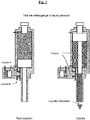
- the PU foam is produced in situ, directly in the vulcanized tire, by "microcolded” (that is to say at very low flow rates) simultaneous reagents, urethane prepolymer and water, in the cavity of the casing. pneumatic in rotation.
- the reactive liquid (liquid component A) based on MDI and polyol expands immediately in contact with the foaming agent (water, liquid component B) into a foam which rapidly solidifies on the inner surface of the tire, light foam and effectively absorbing noise.
- the method described makes it possible in particular to put in place the PU foam in a single step, without requiring all the prior operations (already known from the prior art) for preparing a foam, cutting to the desired dimensions and then bonding the foam to the foam. inside the tire.
- the physical properties of the PU foam, in particular its acoustic performance, can be adjusted by the specific formulation chosen, the amount of foam applied. A great freedom of forms is possible without prohibitive cost since the reactive liquid can be deposited according to a predefined drawing.
- the process of the invention is advantageously used for the continuous casting of the precursor foaming liquid directly into the cavity of a tire casing in rotation on itself, for the formation and in situ deposition of the PU foam at the same time. interior of said cavity.
- any range of values designated by the expression "between a and b" represents the range of values from more than a to less than b (i.e., terminals a and b excluded) while any range of values designated by the expression “from a to b” means the range from a to b (i.e., including the strict limits a and b).
- the process of the invention is therefore characterized in that the amount of polyol with a high content of ethylene oxide in the liquid B is particularly high compared to the teachings of the prior art, since it represents between 25 % and 75% by weight of the total of said polyol, that is to say of the total of said polyol used in the liquids A and B.
- this amount of said polyol in the liquid B represents between 30% and 70%, more preferably still between 35% and 55% by weight of the total of said polyol.
- the quantity of water, as foaming agent, in the liquid B is in turn preferably between 2% and 10%, more preferably in a range of 3% to 8%, in particular in a range of 4%. % to 6% (% by total weight of liquid B).
- This quantity of water is especially adjusted in such a way that the NCO index (or stoichiometric index), during foaming, is between 0.7 and 1.3, preferably between 0.8 and 1.2.
- This index widely used in the technology of PU foams, in particular expanded with water, represents the molar ratio [NCO] / [OH] including the OH functions (ie twice the number of moles H 2 O) provided by the water; it is equal to 1 when it is in the stoichiometric proportions.
- the hydroxyl number (" OH Number ”) of the polyol (I OH , expressed in mg of KOH / g of polyol, measured according to DIN 53240-2) may vary according to the specific applications concerned.
- this index I OH is preferably between 10 and 180, more preferably between 20 and 120 mg of KOH / g, this for the search for an optimized compromise between rigidity (or flexibility) and other properties (in particular in traction, elongation and remanent deformation) of this foam.
- the number-average molecular mass (denoted "Mn”) of said polyol is preferably between 1000 and 12000 g / mol, more preferably between 2000 and 8000 g / mol, this mass Mn being calculated in a known way from two supplier data, the hydroxyl number above and the functionality Fn of the initiator of the polyol (number of hydroxyl groups per molecule, easily determined for example by NMR analysis of the prepolymer, Mn being then equal to 56100 * Fn / I OH ).
- the molar ratio of MDI (total) to said polyol (total) is preferably between 2 and 10, more preferably between 3 and 6, in particular between 4 and 5.
- the weight ratio (liquid B / liquid A) is preferably greater than 0.25, more preferably between 0.3 and 1.0, in particular in a range from 0.35 to 0.70.
- the total flow of the two liquids A and B, during mixing is between 0.1 and 1 liter / min (ie between 2 and 20 g / s).
- the MDI is the only diisocyanate or, if several diisocyanate compounds are present, constitutes the majority diisocyanate by weight, preferably representing in the latter case more than 50% of the total weight of the diisocyanate compounds. If several diisocyanates are present, the MDI is more preferably still more than 70%, in particular more than 90% by weight of the total of the diisocyanate compounds.
- TDI toluene diisocyanate, usually used as a mixture of 2,4 and 2,6 isomers.
- the MDI in particular 4,4'-MDI, is the only diisocyanate constituting the PU foam of the tire of the invention.
- All isomers of MDI (in particular 2,2'-MDI, 2,4'-MDI, 4,4'-MDI) and their mixtures, as well as so-called polymeric MDIs comprising, in addition to MDI, oligomers of the following formula are usable. (with n equal to or greater than 1): or mixtures of said polymeric MDI and MDI above.
- the carbodiimide / uretonimine, allophanate, urethane, urea and oxazolidone compounds obtained by partially reacting MDI with itself or with hydroxyl, amine or epoxidized compounds are also included.
- the MDI used is 4,4'-MDI (4,4'-diphenylmethane diisocyanate), as a reminder of the formula: or, if more MDI (diphenylmethane diisocyanates) are used, constitutes the majority MDI by weight, preferably representing in the latter case more than 50% of the total weight of the MDI compounds; more preferably still, if more MDI are present, 4,4'-MDI represents more than 70%, in particular more than 90% by weight of the total of MDI compounds.
- the polyol with a high ethylene oxide content is the only polyol constituting the PU foam. of the tire of the invention, or, if several polyols are present, is the majority polyol by weight, preferably in the latter case more than 50% by weight of the total polyols used.
- the polyol with a high content of ethylene oxide preferably represents more than 70%, more preferably more than 90% by weight of the total of the polyols.
- polyethers such as polyether polyols based on propylene oxide or butylene oxide, other epoxide monomers, polyester polyols, polycarbonates, polyoxytetramethylene glycols or polyols of hybrid structure based on more than one of the abovementioned monomers.
- the polyol with a high content of ethylene oxide is the only polyol constituting the foam. COULD.
- the high ethylene oxide polyol is a polyol polymerized statistically with ethylene oxide and propylene oxide, with more preferentially between 50% and 90% by weight of oxide of ethylene oxide.
- Such preferred polyols or polyethers are well known and commercially available, for example from the company BASF under the trade name "Lupranol 2048", from Dow under the trade name “Voranol CP1421”, or from the company Bayer. under the trade name "Desmophen 41WB01".
- This high-pressure technology does not require rinsing after casting, rinsing solvents, or rinsing residues.
- the risks of material loss are eliminated, and the resulting manufacturing costs are significantly reduced compared to a conventional low pressure machine as described for example in the application WO 2013/182477 supra.
- the mixing pressure of the liquids A and B in the high-pressure mixing head is preferably greater than 50 bar, more preferably greater than 100 bar.
- the mixing temperature it is preferably between 20 ° C. and 80 ° C., more preferably between 25 ° C. and 75 ° C.
- the initial composition of the PU foam may also comprise other additives customary for this type of application, such as, for example, precursors of foaming agents other than water (for example directly a gas such as CO 2 ), chain extenders, crosslinking agents, fillers for example of the mineral type such as silica, talc, chalk, calcium or barium salts, having a thixotropic effect, stabilizing agents, for example of the alkanolamine type, amines aromatic primers, low molecular weight triols such as glycerol, aliphatic primary amines, catalysts such as tertiary amines, surfactants, antioxidants, rheology modifying agents, viscosity regulators or thickening agents (see for example application WO 2013/023125 ) such as polyethylene oxides or high molecular weight cellulose ethers, dyes or pigments.
- precursors of foaming agents other than water for example directly a gas such as CO 2
- chain extenders for example of the mineral type such as
- the polyurethane foam thus formed has a bulk density at the core, measured according to ISO 845, which is preferably between 0.020 and 0.070 g / cm 3 , more preferably in a range of 0.030 to 0.060 g / cm 3 .
- the final PU foam could be prepared beforehand and then cut to the desired dimensions, for example in the form of narrower strips or strips, finally glued to the inside of a vulcanized tire by any appropriate means, for example using a adhesive composition or a double-sided adhesive, in a manner known per se.
- the process of the invention is advantageously used for casting the precursor foaming liquid directly into the cavity of a tire casing in rotation on itself, for forming and in situ deposition of the PU foam inside. of said cavity, as explained in detail in the following tests.
- the figure 2 annexed schematically shows an example of a radial tire cut for a radial carcass reinforcement motor vehicle, in the cured (that is to say vulcanized) state, that can be produced by the method of the invention .
- This tire 1 comprises an upper zone 2 reinforced by a crown reinforcement or belt 6, two sidewalls 3 and two inextensible beads 4, each of these beads 4 being reinforced with a rod 5.
- the crown zone 2 delimited laterally by two shoulders (2a , 2b) is surmounted by a tread (not shown in this schematic figure, for simplification), the belt 6 being for example constituted by at least two superposed crossed plies reinforced by metal cables.
- a carcass reinforcement 7 is wound around the two rods 5 in each bead 4, the upturn 8 of this armature 7 being for example arranged to the outside of the tires which are here shown mounted on their rim 9.
- the carcass reinforcement 7 is in known manner constituted of at least one sheet reinforced by so-called "radial” cables, for example textile or metal, that is to say that these cables are arranged substantially parallel to each other and s' extend from one bead to the other so as to form an angle of between 80 ° and 90 ° with the median circumferential plane (plane perpendicular to the axis of rotation of the tire which is situated halfway between the two beads 4 and goes through the middle of the crown frame 6).
- radial cables for example textile or metal
- This tire 1 also comprises, in a well known manner, an inner liner layer 10 (commonly called “ inner liner “ or “ inner liner ”) which defines the radially inner face of the tire, in contact with the inflation cavity 11.
- inner liner layer 10 commonly called “ inner liner “ or “ inner liner ”
- airtight layer 10 allows inflation and pressure maintenance of the tire 1; its sealing properties enable it to guarantee a relatively low rate of pressure loss, making it possible to maintain the inflated tire, in a normal operating state, for a sufficient duration, normally of several weeks or several months.
- This tire is characterized in that its inner wall 10 is at least partly covered, on the side of the cavity 11, with a layer 12 of PU foam capable of partially absorbing the cavity noise.
- this layer of PU foam was manufactured in situ by direct casting of the reagents inside the cavity 11 of rotating tires, on the airtight layer 10.
- the foaming liquid was cast in situ in the cavity of "MICHELIN” brand tires ("Primacy HP"), dimensions 255/45 R18, kept in rotation (30 revolutions / min) around their horizontal axis, in the form of a substantially cylindrical continuous bead (12) (diameter of about 30 mm) wound 3 times under the top (as schematically illustrated in FIG. figure 1 ) at an angle of between 1.5 and 2.0 degrees to the circumferential direction of the bandage.
- the foam thus produced in situ (bulk density at core equal to about 45 g / dm 3 ) also had excellent adhesion to the inner liner (coated with whitewash) of the tire.
- the tires thus prepared were inflated to 2.5 bar and subjected to a rolling test and sound absorption test as described below, and compared to control tires strictly identical except for the absence of PU foam in the cavity of these control tires.
- the cavity noise is that measured (averaged) in a frequency range extending from 180 to 230 Hz, characteristic of the resonance of the air cavity contained in the tire. At a speed of 60 km / h, it was found that this cavity noise was reduced by about 2.5 dB (A) compared to the control bandages. This result is expressed in acoustic energy (dB (A)) which corresponds to the integration of the acoustic pressure as a function of the frequency over the frequency domain considered.
Landscapes
- Chemical & Material Sciences (AREA)
- Health & Medical Sciences (AREA)
- Chemical Kinetics & Catalysis (AREA)
- Medicinal Chemistry (AREA)
- Polymers & Plastics (AREA)
- Organic Chemistry (AREA)
- Engineering & Computer Science (AREA)
- Materials Engineering (AREA)
- Mechanical Engineering (AREA)
- Manufacturing & Machinery (AREA)
- Polyurethanes Or Polyureas (AREA)
Claims (15)
- Verfahren zur Herstellung eines Polyurethanschaumstoffs auf Basis von MDI (Diphenylmethandiisocyanat) und einem Polyol mit hohem Ethylenoxid-Gehalt, das einen Ethylenoxid-Gehalt von mehr als 50 % (Gew.-%) aufweist, bei dem man unter Druck:- eine als Flüssigkeit A bezeichnete erste reaktive Flüssigkeit, die einerseits ein Urethan-Prepolymer auf Basis eines ersten Teils des MDI und eines ersten Teils dieses Polyols und andererseits den zweiten Teil des MDI in freiem Zustand umfasst, wobei das Prepolymer in diesem zweiten Teil von MDI in freiem Zustand gelöst ist;- mit einer als Flüssigkeit B bezeichneten zweiten reaktiven Flüssigkeit, die den zweiten Teil dieses Polyols und Wasser als Treibmittel umfasst,mischt, wodurch eine schäumende Flüssigkeit, bei der es sich um eine Polyurethanschaumstoff-Vorstufe handelt, gebildet wird,
dadurch gekennzeichnet, dass die Menge dieses Polyols mit hohem Ethylenoxid-Gehalt in der Flüssigkeit B zwischen 25 und 75 Gew.-% der Gesamtheit dieses Polyols ausmacht. - Verfahren nach Anspruch 1, bei dem die Menge des Polyols in der Flüssigkeit B zwischen 30 und 70 Gew.-%, vorzugsweise zwischen 35 und 55 Gew.-%, der Gesamtheit des Polyols ausmacht.
- Verfahren nach Anspruch 1 oder 2, bei dem die Wassermenge in der Flüssigkeit B zwischen 2 und 10 Gew.-%, vorzugsweise in einem Bereich von 3 bis 8 Gew.-%, liegt.
- Verfahren nach einem der Ansprüche 1 bis 3, bei dem die Hydroxylzahl des Polyols zwischen 10 und 180 mg KOH/g, vorzugsweise zwischen 20 und 120 mg KOH/g, liegt.
- Verfahren nach einem der Ansprüche 1 bis 4, bei dem das zahlenmittlere Molekulargewicht (Mn) des Polyols zwischen 1000 und 12000 g/mol, vorzugsweise zwischen 2000 und 8000 g/mol, liegt.
- Verfahren nach einem der Ansprüche 1 bis 5, bei dem das Molverhältnis von MDI zu dem Polyol zwischen 2 und 10, vorzugsweise zwischen 3 und 6, liegt.
- Verfahren nach einem der Ansprüche 1 bis 6, bei dem der NCO-Index bei der Verschäumung zwischen 0,7 und 1,3, vorzugsweise zwischen 0,8 und 1,2, liegt.
- Verfahren nach einem der Ansprüche 1 bis 7, bei dem das Gewichtsverhältnis (Flüssigkeit B/Flüssigkeit A) größer als 0,25 ist und vorzugsweise zwischen 0,3 und 1,0 liegt.
- Verfahren nach einem der Ansprüche 1 bis 8, bei dem das MDI das einzige verwendete Diisocyanat ist oder bei Verwendung von mehreren Diisocyanaten das gewichtsmäßig überwiegende Diisocyanat darstellt.
- Verfahren nach einem der Ansprüche 1 bis 9, bei dem es sich bei dem MDI um 4,4'-Diphenylmethandiisocyanat handelt.
- Verfahren nach einem der Ansprüche 1 bis 10, bei dem der Ethylenoxid-Gehalt des Polyols größer als 70 %, vorzugsweise größer als 90 %, ist.
- Verfahren nach einem der Ansprüche 1 bis 11, bei dem die Gesamtströmungsrate der beiden Flüssigkeiten A und B beim Mischen zwischen 0,1 und 1 Liter/min liegt.
- Verfahren nach einem der Ansprüche 1 bis 12, bei dem das Mischen der Flüssigkeiten A und B durch Hochdruck-Gegenstrom erfolgt und der Mischdruck größer als 50 bar, vorzugweise größer als 100 bar, ist.
- Verfahren nach einem der Ansprüche 1 bis 13, bei dem die Mischtemperatur zwischen 20 °C und 80 °C, vorzugsweise zwischen 25 °C und 75 °C, liegt.
- Verfahren nach einem der Ansprüche 1 bis 14, bei dem die schäumende Flüssigkeit, bei der es sich um eine Polyurethanschaumstoff-Vorstufe handelt, in den Hohlraum eines sich um sich selbst drehenden Reifenmantels gegossen wird, wodurch der Polyurethanschaumstoff in dem Hohlraum in situ gebildet und abgeschieden wird.
Applications Claiming Priority (2)
| Application Number | Priority Date | Filing Date | Title |
|---|---|---|---|
| FR1453898A FR3020365B1 (fr) | 2014-04-29 | 2014-04-29 | Procede de fabrication par microcoulee d'une mousse de polyurethane |
| PCT/EP2015/058599 WO2015165776A1 (fr) | 2014-04-29 | 2015-04-21 | Procédé de fabrication par microcoulée d'une mousse de polyuréthane |
Publications (2)
| Publication Number | Publication Date |
|---|---|
| EP3137526A1 EP3137526A1 (de) | 2017-03-08 |
| EP3137526B1 true EP3137526B1 (de) | 2019-01-02 |
Family
ID=51168176
Family Applications (1)
| Application Number | Title | Priority Date | Filing Date |
|---|---|---|---|
| EP15717177.8A Active EP3137526B1 (de) | 2014-04-29 | 2015-04-21 | Verfahren zur herstellung eines polyurethanschaumstoffs durch mikroguss |
Country Status (7)
| Country | Link |
|---|---|
| US (1) | US10323118B2 (de) |
| EP (1) | EP3137526B1 (de) |
| JP (1) | JP6566967B2 (de) |
| KR (1) | KR102292910B1 (de) |
| CN (1) | CN106232657A (de) |
| FR (1) | FR3020365B1 (de) |
| WO (1) | WO2015165776A1 (de) |
Families Citing this family (4)
| Publication number | Priority date | Publication date | Assignee | Title |
|---|---|---|---|---|
| US10434704B2 (en) * | 2017-08-18 | 2019-10-08 | Ppg Industries Ohio, Inc. | Additive manufacturing using polyurea materials |
| CN108774392A (zh) * | 2018-06-13 | 2018-11-09 | 江苏唯源橡塑制品有限公司 | 一种发泡均匀的pu配方及其工艺 |
| CN112109268B (zh) * | 2020-09-10 | 2022-04-19 | 美瑞新材料股份有限公司 | 一种tpu发泡珠粒的制备方法及其产品 |
| WO2025015588A1 (zh) * | 2023-07-20 | 2025-01-23 | 李煌宝 | 减噪轮胎 |
Family Cites Families (17)
| Publication number | Priority date | Publication date | Assignee | Title |
|---|---|---|---|---|
| GB9301428D0 (en) * | 1993-01-25 | 1993-03-17 | Ici Plc | Polyurethane foams |
| US5418261A (en) * | 1993-01-25 | 1995-05-23 | Imperial Chemical Industries Plc | Polyurethane foams |
| DE4411781A1 (de) * | 1994-04-06 | 1995-10-12 | Basf Ag | Verfahren zur Herstellung von Fluorchlorkohlenwasserstoff freien hochelastischen Polyurethan-Weichschaumstoffen und hierfür verwendbare, mit Urethangruppen modifizierte Polyisocyanatmischungen auf Diphenylmethan-diisocyanatbasis |
| JP3367090B2 (ja) * | 1995-02-27 | 2003-01-14 | 日本ポリウレタン工業株式会社 | 水発泡自己スキン形成ポリウレタンフォーム |
| JPH08253549A (ja) * | 1995-03-14 | 1996-10-01 | Mitsubishi Kagaku Dow Kk | 連続気泡硬質ポリウレタンフォームの製造方法 |
| JP3587051B2 (ja) * | 1998-03-10 | 2004-11-10 | 日本ポリウレタン工業株式会社 | 軟質ポリウレタンフォームの製造方法 |
| JP3612698B2 (ja) * | 1998-03-10 | 2005-01-19 | 日本ポリウレタン工業株式会社 | 軟質ポリウレタンフォームの製造方法 |
| CZ301020B6 (cs) * | 1998-09-10 | 2009-10-14 | The Dow Chemical Company | Zpusob výroby Mannichova polyolu |
| JP2000143855A (ja) * | 1998-09-11 | 2000-05-26 | Nippon Polyurethane Ind Co Ltd | ポリウレタンフォ―ム |
| EP1101782B1 (de) * | 1999-11-16 | 2006-06-21 | C.U.E., Inc. | Mikrozellulärer Hochleistungsschaum und Herstellungsverfahren und Vorrichtung dafür |
| US20040251571A1 (en) * | 1999-11-16 | 2004-12-16 | Serman Carl J. | High performance microcellular foam and manufacturing method and apparatus thereof |
| DE10105559A1 (de) * | 2001-02-06 | 2002-08-08 | Basf Ag | Verfahren zur Herstellung von niedrigdichten hydrophilen Polyurethanweichschaumstoffen |
| JP2013500885A (ja) * | 2009-08-07 | 2013-01-10 | バイエル・マテリアルサイエンス・アクチェンゲゼルシャフト | 高速高分子反応系を加工するための装置 |
| DE102011050014A1 (de) * | 2011-04-29 | 2012-10-31 | Bayer Materialscience Aktiengesellschaft | Polyurethanschaum und Verfahren zu seiner Herstellung |
| CN103732645A (zh) | 2011-08-11 | 2014-04-16 | 亨斯迈石油化学有限责任公司 | 增稠剂作为聚氨酯胺催化剂稀释剂的用途 |
| FR2991686B1 (fr) * | 2012-06-08 | 2015-05-01 | Michelin & Cie | Bandage pneumatique dont la paroi interne est pourvue d'une couche de mousse polyurethane specifique |
| PL2870188T3 (pl) * | 2012-07-04 | 2017-03-31 | Basf Se | Wytwarzanie tworzyw piankowych o ulepszonych właściwościach |
-
2014
- 2014-04-29 FR FR1453898A patent/FR3020365B1/fr not_active Expired - Fee Related
-
2015
- 2015-04-21 KR KR1020167029883A patent/KR102292910B1/ko active Active
- 2015-04-21 CN CN201580022394.3A patent/CN106232657A/zh active Pending
- 2015-04-21 US US15/307,218 patent/US10323118B2/en active Active
- 2015-04-21 JP JP2016565475A patent/JP6566967B2/ja active Active
- 2015-04-21 EP EP15717177.8A patent/EP3137526B1/de active Active
- 2015-04-21 WO PCT/EP2015/058599 patent/WO2015165776A1/fr not_active Ceased
Non-Patent Citations (1)
| Title |
|---|
| None * |
Also Published As
| Publication number | Publication date |
|---|---|
| JP2017514958A (ja) | 2017-06-08 |
| KR102292910B1 (ko) | 2021-08-26 |
| WO2015165776A1 (fr) | 2015-11-05 |
| FR3020365A1 (fr) | 2015-10-30 |
| CN106232657A (zh) | 2016-12-14 |
| EP3137526A1 (de) | 2017-03-08 |
| FR3020365B1 (fr) | 2017-10-27 |
| US20170051098A1 (en) | 2017-02-23 |
| US10323118B2 (en) | 2019-06-18 |
| KR20170003539A (ko) | 2017-01-09 |
| JP6566967B2 (ja) | 2019-08-28 |
Similar Documents
| Publication | Publication Date | Title |
|---|---|---|
| EP2859029B1 (de) | Reifen mit einer innenwand mit einer schicht aus spezifischem polyurethanschaum | |
| EP3137526B1 (de) | Verfahren zur herstellung eines polyurethanschaumstoffs durch mikroguss | |
| EP2318202B1 (de) | Selbstabdichtende zusammensetzung für einen aufblasbaren artikel | |
| EP2125949B1 (de) | Pneumatisches objekt | |
| EP2459400B1 (de) | Luftreifen mit integrierter selbstverschliessender lage | |
| EP2900863B1 (de) | In-situ-gummiertes kabel mit einer zusammensetzung mit einem organischen polysulfid | |
| EP2307489B1 (de) | Verfahren zur herstellung einer selbstheilenden zusammensetzung | |
| FR2934603A1 (fr) | Composition auto-obturante pour objet pneumatique. | |
| EP2358775B1 (de) | Druckluftobjekt mit gasdichter schicht mit einem speziellen thermoplastischen sibs-elastomer | |
| EP3541633B1 (de) | Reifen mit lauffläche enthaltend ein thermoplastisches elastomer und ein vernetzungssystem enthaltend ein oder mehrerer peroxyde | |
| FR2997410A1 (fr) | Cable gomme in situ comprenant une composition comprenant un copolymere de styrene-butadiene. | |
| FR2949714A1 (fr) | Bandage pneumatique avec couche auto-obturante integree. | |
| EP3727875A1 (de) | Kautschukzusammensetzung | |
| EP3728338B1 (de) | Kautschukzusammensetzung |
Legal Events
| Date | Code | Title | Description |
|---|---|---|---|
| STAA | Information on the status of an ep patent application or granted ep patent |
Free format text: STATUS: THE INTERNATIONAL PUBLICATION HAS BEEN MADE |
|
| PUAI | Public reference made under article 153(3) epc to a published international application that has entered the european phase |
Free format text: ORIGINAL CODE: 0009012 |
|
| STAA | Information on the status of an ep patent application or granted ep patent |
Free format text: STATUS: REQUEST FOR EXAMINATION WAS MADE |
|
| 17P | Request for examination filed |
Effective date: 20161129 |
|
| AK | Designated contracting states |
Kind code of ref document: A1 Designated state(s): AL AT BE BG CH CY CZ DE DK EE ES FI FR GB GR HR HU IE IS IT LI LT LU LV MC MK MT NL NO PL PT RO RS SE SI SK SM TR |
|
| AX | Request for extension of the european patent |
Extension state: BA ME |
|
| RAP1 | Party data changed (applicant data changed or rights of an application transferred) |
Owner name: COMPAGNIE GENERALE DES ETABLISSEMENTS MICHELIN |
|
| RAP1 | Party data changed (applicant data changed or rights of an application transferred) |
Owner name: COMPAGNIE GENERALE DES ETABLISSEMENTS MICHELIN |
|
| DAV | Request for validation of the european patent (deleted) | ||
| DAX | Request for extension of the european patent (deleted) | ||
| STAA | Information on the status of an ep patent application or granted ep patent |
Free format text: STATUS: EXAMINATION IS IN PROGRESS |
|
| 17Q | First examination report despatched |
Effective date: 20170915 |
|
| GRAP | Despatch of communication of intention to grant a patent |
Free format text: ORIGINAL CODE: EPIDOSNIGR1 |
|
| STAA | Information on the status of an ep patent application or granted ep patent |
Free format text: STATUS: GRANT OF PATENT IS INTENDED |
|
| INTG | Intention to grant announced |
Effective date: 20180316 |
|
| GRAJ | Information related to disapproval of communication of intention to grant by the applicant or resumption of examination proceedings by the epo deleted |
Free format text: ORIGINAL CODE: EPIDOSDIGR1 |
|
| STAA | Information on the status of an ep patent application or granted ep patent |
Free format text: STATUS: EXAMINATION IS IN PROGRESS |
|
| GRAP | Despatch of communication of intention to grant a patent |
Free format text: ORIGINAL CODE: EPIDOSNIGR1 |
|
| STAA | Information on the status of an ep patent application or granted ep patent |
Free format text: STATUS: GRANT OF PATENT IS INTENDED |
|
| INTC | Intention to grant announced (deleted) | ||
| INTG | Intention to grant announced |
Effective date: 20180814 |
|
| RAP1 | Party data changed (applicant data changed or rights of an application transferred) |
Owner name: COMPAGNIE GENERALE DES ETABLISSEMENTS MICHELIN |
|
| GRAS | Grant fee paid |
Free format text: ORIGINAL CODE: EPIDOSNIGR3 |
|
| GRAA | (expected) grant |
Free format text: ORIGINAL CODE: 0009210 |
|
| STAA | Information on the status of an ep patent application or granted ep patent |
Free format text: STATUS: THE PATENT HAS BEEN GRANTED |
|
| AK | Designated contracting states |
Kind code of ref document: B1 Designated state(s): AL AT BE BG CH CY CZ DE DK EE ES FI FR GB GR HR HU IE IS IT LI LT LU LV MC MK MT NL NO PL PT RO RS SE SI SK SM TR |
|
| REG | Reference to a national code |
Ref country code: GB Ref legal event code: FG4D Free format text: NOT ENGLISH |
|
| REG | Reference to a national code |
Ref country code: CH Ref legal event code: EP Ref country code: AT Ref legal event code: REF Ref document number: 1084269 Country of ref document: AT Kind code of ref document: T Effective date: 20190115 |
|
| REG | Reference to a national code |
Ref country code: IE Ref legal event code: FG4D Free format text: LANGUAGE OF EP DOCUMENT: FRENCH |
|
| REG | Reference to a national code |
Ref country code: DE Ref legal event code: R096 Ref document number: 602015022736 Country of ref document: DE |
|
| REG | Reference to a national code |
Ref country code: NL Ref legal event code: MP Effective date: 20190102 |
|
| REG | Reference to a national code |
Ref country code: LT Ref legal event code: MG4D |
|
| REG | Reference to a national code |
Ref country code: AT Ref legal event code: MK05 Ref document number: 1084269 Country of ref document: AT Kind code of ref document: T Effective date: 20190102 |
|
| PG25 | Lapsed in a contracting state [announced via postgrant information from national office to epo] |
Ref country code: NL Free format text: LAPSE BECAUSE OF FAILURE TO SUBMIT A TRANSLATION OF THE DESCRIPTION OR TO PAY THE FEE WITHIN THE PRESCRIBED TIME-LIMIT Effective date: 20190102 |
|
| PG25 | Lapsed in a contracting state [announced via postgrant information from national office to epo] |
Ref country code: NO Free format text: LAPSE BECAUSE OF FAILURE TO SUBMIT A TRANSLATION OF THE DESCRIPTION OR TO PAY THE FEE WITHIN THE PRESCRIBED TIME-LIMIT Effective date: 20190402 Ref country code: PT Free format text: LAPSE BECAUSE OF FAILURE TO SUBMIT A TRANSLATION OF THE DESCRIPTION OR TO PAY THE FEE WITHIN THE PRESCRIBED TIME-LIMIT Effective date: 20190502 Ref country code: FI Free format text: LAPSE BECAUSE OF FAILURE TO SUBMIT A TRANSLATION OF THE DESCRIPTION OR TO PAY THE FEE WITHIN THE PRESCRIBED TIME-LIMIT Effective date: 20190102 Ref country code: SE Free format text: LAPSE BECAUSE OF FAILURE TO SUBMIT A TRANSLATION OF THE DESCRIPTION OR TO PAY THE FEE WITHIN THE PRESCRIBED TIME-LIMIT Effective date: 20190102 Ref country code: ES Free format text: LAPSE BECAUSE OF FAILURE TO SUBMIT A TRANSLATION OF THE DESCRIPTION OR TO PAY THE FEE WITHIN THE PRESCRIBED TIME-LIMIT Effective date: 20190102 Ref country code: PL Free format text: LAPSE BECAUSE OF FAILURE TO SUBMIT A TRANSLATION OF THE DESCRIPTION OR TO PAY THE FEE WITHIN THE PRESCRIBED TIME-LIMIT Effective date: 20190102 Ref country code: LT Free format text: LAPSE BECAUSE OF FAILURE TO SUBMIT A TRANSLATION OF THE DESCRIPTION OR TO PAY THE FEE WITHIN THE PRESCRIBED TIME-LIMIT Effective date: 20190102 |
|
| PG25 | Lapsed in a contracting state [announced via postgrant information from national office to epo] |
Ref country code: HR Free format text: LAPSE BECAUSE OF FAILURE TO SUBMIT A TRANSLATION OF THE DESCRIPTION OR TO PAY THE FEE WITHIN THE PRESCRIBED TIME-LIMIT Effective date: 20190102 Ref country code: RS Free format text: LAPSE BECAUSE OF FAILURE TO SUBMIT A TRANSLATION OF THE DESCRIPTION OR TO PAY THE FEE WITHIN THE PRESCRIBED TIME-LIMIT Effective date: 20190102 Ref country code: LV Free format text: LAPSE BECAUSE OF FAILURE TO SUBMIT A TRANSLATION OF THE DESCRIPTION OR TO PAY THE FEE WITHIN THE PRESCRIBED TIME-LIMIT Effective date: 20190102 Ref country code: GR Free format text: LAPSE BECAUSE OF FAILURE TO SUBMIT A TRANSLATION OF THE DESCRIPTION OR TO PAY THE FEE WITHIN THE PRESCRIBED TIME-LIMIT Effective date: 20190403 Ref country code: IS Free format text: LAPSE BECAUSE OF FAILURE TO SUBMIT A TRANSLATION OF THE DESCRIPTION OR TO PAY THE FEE WITHIN THE PRESCRIBED TIME-LIMIT Effective date: 20190502 Ref country code: BG Free format text: LAPSE BECAUSE OF FAILURE TO SUBMIT A TRANSLATION OF THE DESCRIPTION OR TO PAY THE FEE WITHIN THE PRESCRIBED TIME-LIMIT Effective date: 20190402 |
|
| REG | Reference to a national code |
Ref country code: DE Ref legal event code: R097 Ref document number: 602015022736 Country of ref document: DE |
|
| PG25 | Lapsed in a contracting state [announced via postgrant information from national office to epo] |
Ref country code: EE Free format text: LAPSE BECAUSE OF FAILURE TO SUBMIT A TRANSLATION OF THE DESCRIPTION OR TO PAY THE FEE WITHIN THE PRESCRIBED TIME-LIMIT Effective date: 20190102 Ref country code: DK Free format text: LAPSE BECAUSE OF FAILURE TO SUBMIT A TRANSLATION OF THE DESCRIPTION OR TO PAY THE FEE WITHIN THE PRESCRIBED TIME-LIMIT Effective date: 20190102 Ref country code: IT Free format text: LAPSE BECAUSE OF FAILURE TO SUBMIT A TRANSLATION OF THE DESCRIPTION OR TO PAY THE FEE WITHIN THE PRESCRIBED TIME-LIMIT Effective date: 20190102 Ref country code: RO Free format text: LAPSE BECAUSE OF FAILURE TO SUBMIT A TRANSLATION OF THE DESCRIPTION OR TO PAY THE FEE WITHIN THE PRESCRIBED TIME-LIMIT Effective date: 20190102 Ref country code: CZ Free format text: LAPSE BECAUSE OF FAILURE TO SUBMIT A TRANSLATION OF THE DESCRIPTION OR TO PAY THE FEE WITHIN THE PRESCRIBED TIME-LIMIT Effective date: 20190102 Ref country code: AT Free format text: LAPSE BECAUSE OF FAILURE TO SUBMIT A TRANSLATION OF THE DESCRIPTION OR TO PAY THE FEE WITHIN THE PRESCRIBED TIME-LIMIT Effective date: 20190102 Ref country code: AL Free format text: LAPSE BECAUSE OF FAILURE TO SUBMIT A TRANSLATION OF THE DESCRIPTION OR TO PAY THE FEE WITHIN THE PRESCRIBED TIME-LIMIT Effective date: 20190102 Ref country code: SK Free format text: LAPSE BECAUSE OF FAILURE TO SUBMIT A TRANSLATION OF THE DESCRIPTION OR TO PAY THE FEE WITHIN THE PRESCRIBED TIME-LIMIT Effective date: 20190102 |
|
| PLBE | No opposition filed within time limit |
Free format text: ORIGINAL CODE: 0009261 |
|
| STAA | Information on the status of an ep patent application or granted ep patent |
Free format text: STATUS: NO OPPOSITION FILED WITHIN TIME LIMIT |
|
| PG25 | Lapsed in a contracting state [announced via postgrant information from national office to epo] |
Ref country code: SM Free format text: LAPSE BECAUSE OF FAILURE TO SUBMIT A TRANSLATION OF THE DESCRIPTION OR TO PAY THE FEE WITHIN THE PRESCRIBED TIME-LIMIT Effective date: 20190102 |
|
| REG | Reference to a national code |
Ref country code: CH Ref legal event code: PL |
|
| 26N | No opposition filed |
Effective date: 20191003 |
|
| REG | Reference to a national code |
Ref country code: BE Ref legal event code: MM Effective date: 20190430 |
|
| GBPC | Gb: european patent ceased through non-payment of renewal fee |
Effective date: 20190421 |
|
| PG25 | Lapsed in a contracting state [announced via postgrant information from national office to epo] |
Ref country code: LU Free format text: LAPSE BECAUSE OF NON-PAYMENT OF DUE FEES Effective date: 20190421 Ref country code: MC Free format text: LAPSE BECAUSE OF FAILURE TO SUBMIT A TRANSLATION OF THE DESCRIPTION OR TO PAY THE FEE WITHIN THE PRESCRIBED TIME-LIMIT Effective date: 20190102 |
|
| PG25 | Lapsed in a contracting state [announced via postgrant information from national office to epo] |
Ref country code: CH Free format text: LAPSE BECAUSE OF NON-PAYMENT OF DUE FEES Effective date: 20190430 Ref country code: GB Free format text: LAPSE BECAUSE OF NON-PAYMENT OF DUE FEES Effective date: 20190421 Ref country code: LI Free format text: LAPSE BECAUSE OF NON-PAYMENT OF DUE FEES Effective date: 20190430 |
|
| PG25 | Lapsed in a contracting state [announced via postgrant information from national office to epo] |
Ref country code: SI Free format text: LAPSE BECAUSE OF FAILURE TO SUBMIT A TRANSLATION OF THE DESCRIPTION OR TO PAY THE FEE WITHIN THE PRESCRIBED TIME-LIMIT Effective date: 20190102 Ref country code: BE Free format text: LAPSE BECAUSE OF NON-PAYMENT OF DUE FEES Effective date: 20190430 |
|
| PG25 | Lapsed in a contracting state [announced via postgrant information from national office to epo] |
Ref country code: TR Free format text: LAPSE BECAUSE OF FAILURE TO SUBMIT A TRANSLATION OF THE DESCRIPTION OR TO PAY THE FEE WITHIN THE PRESCRIBED TIME-LIMIT Effective date: 20190102 |
|
| PG25 | Lapsed in a contracting state [announced via postgrant information from national office to epo] |
Ref country code: IE Free format text: LAPSE BECAUSE OF NON-PAYMENT OF DUE FEES Effective date: 20190421 |
|
| PG25 | Lapsed in a contracting state [announced via postgrant information from national office to epo] |
Ref country code: CY Free format text: LAPSE BECAUSE OF FAILURE TO SUBMIT A TRANSLATION OF THE DESCRIPTION OR TO PAY THE FEE WITHIN THE PRESCRIBED TIME-LIMIT Effective date: 20190102 |
|
| PG25 | Lapsed in a contracting state [announced via postgrant information from national office to epo] |
Ref country code: MT Free format text: LAPSE BECAUSE OF FAILURE TO SUBMIT A TRANSLATION OF THE DESCRIPTION OR TO PAY THE FEE WITHIN THE PRESCRIBED TIME-LIMIT Effective date: 20190102 Ref country code: HU Free format text: LAPSE BECAUSE OF FAILURE TO SUBMIT A TRANSLATION OF THE DESCRIPTION OR TO PAY THE FEE WITHIN THE PRESCRIBED TIME-LIMIT; INVALID AB INITIO Effective date: 20150421 |
|
| PG25 | Lapsed in a contracting state [announced via postgrant information from national office to epo] |
Ref country code: MK Free format text: LAPSE BECAUSE OF FAILURE TO SUBMIT A TRANSLATION OF THE DESCRIPTION OR TO PAY THE FEE WITHIN THE PRESCRIBED TIME-LIMIT Effective date: 20190102 |
|
| PGFP | Annual fee paid to national office [announced via postgrant information from national office to epo] |
Ref country code: DE Payment date: 20250422 Year of fee payment: 11 |
|
| PGFP | Annual fee paid to national office [announced via postgrant information from national office to epo] |
Ref country code: FR Payment date: 20250425 Year of fee payment: 11 |