EP3138343B1 - Procédé et système d'attribution de ressources radio pour l'émission en liaison montante dans les réseaux cellulaires - Google Patents
Procédé et système d'attribution de ressources radio pour l'émission en liaison montante dans les réseaux cellulaires Download PDFInfo
- Publication number
- EP3138343B1 EP3138343B1 EP14726892.4A EP14726892A EP3138343B1 EP 3138343 B1 EP3138343 B1 EP 3138343B1 EP 14726892 A EP14726892 A EP 14726892A EP 3138343 B1 EP3138343 B1 EP 3138343B1
- Authority
- EP
- European Patent Office
- Prior art keywords
- prb
- allocation
- last
- radio resource
- radio resources
- Prior art date
- Legal status (The legal status is an assumption and is not a legal conclusion. Google has not performed a legal analysis and makes no representation as to the accuracy of the status listed.)
- Active
Links
Images
Classifications
-
- H—ELECTRICITY
- H04—ELECTRIC COMMUNICATION TECHNIQUE
- H04W—WIRELESS COMMUNICATION NETWORKS
- H04W72/00—Local resource management
- H04W72/12—Wireless traffic scheduling
- H04W72/1263—Mapping of traffic onto schedule, e.g. scheduled allocation or multiplexing of flows
- H04W72/1268—Mapping of traffic onto schedule, e.g. scheduled allocation or multiplexing of flows of uplink data flows
-
- H—ELECTRICITY
- H04—ELECTRIC COMMUNICATION TECHNIQUE
- H04W—WIRELESS COMMUNICATION NETWORKS
- H04W72/00—Local resource management
- H04W72/50—Allocation or scheduling criteria for wireless resources
- H04W72/54—Allocation or scheduling criteria for wireless resources based on quality criteria
-
- H—ELECTRICITY
- H04—ELECTRIC COMMUNICATION TECHNIQUE
- H04W—WIRELESS COMMUNICATION NETWORKS
- H04W24/00—Supervisory, monitoring or testing arrangements
- H04W24/08—Testing, supervising or monitoring using real traffic
-
- H—ELECTRICITY
- H04—ELECTRIC COMMUNICATION TECHNIQUE
- H04W—WIRELESS COMMUNICATION NETWORKS
- H04W72/00—Local resource management
- H04W72/50—Allocation or scheduling criteria for wireless resources
- H04W72/54—Allocation or scheduling criteria for wireless resources based on quality criteria
- H04W72/542—Allocation or scheduling criteria for wireless resources based on quality criteria using measured or perceived quality
Definitions
- the solution according to one ore more embodiments of the invention generally relates to wireless communications networks, such as cellular networks. More particularly, the proposed solution relates to radio resources management for cellular networks, such as cellular networks based on LTE (" Long Term Evolution ")/LTE-Advanced, WiMAX ( "Worldwide Interoperability for Microwave Access” ) and any other OFDMA (" Orthogonal Frequency Division Multiple Access ”) based technologies.
- LTE Long Term Evolution
- WiMAX "Worldwide Interoperability for Microwave Access”
- OFDMA Orthogonal Frequency Division Multiple Access
- the cellular networks conceived for allowing high-speed transmission of data streams between a fixed-location transceiver base station (e.g., eNodeB in LTE/LTE-Advanced technology) defining a respective network cell, and user equipments (e.g., user terminals, such as cellular phones) within the network cell, have experimented a significant growth in terms of performance.
- a fixed-location transceiver base station e.g., eNodeB in LTE/LTE-Advanced technology
- user equipments e.g., user terminals, such as cellular phones
- a common issue affecting most of the cellular networks is radio resources allocation among the data streams (so that corresponding radio frequency data signals, or data signals, are allowed to propagate between the base station and the user equipments).
- the radio resources allocation may be different for transmissions taking place from the base station to the user equipment (downlink transmissions) and for transmissions taking place from the user terminal to the base station (uplink transmissions).
- US7778217 discloses an uplink scheduling system and method in a wireless broadband internet communication system comprising: calculating priorities of mobile stations taking into account headroom size indicating transmission power additionally available for each of the mobile stations; and determining a transmission format of a mobile station selected to be preferentially allocated a slot as a result of the priority calculation, taking into account headroom size reported by the selected mobile station and a margin determined depending on a variation in channel state between the selected mobile station and a base station.
- US2010/0271963 discloses a base station in an OFDMA system which determines a modulation and coding scheme to use for a packet of a certain size to be transmitted by a mobile station.
- the base station schedules transmissions by mobile stations and transmits packets.
- the base station includes a processing unit which determines a number of time-frequency resources required to transmit the packet for a modulation and coding scheme, determines a SINR based on the number of time-frequency resources used and available power at the mobile station, determines a transmission rate as a ratio of the packet size transmitted to the number of time-frequency resources used, sets a rate to zero if the determined SINR is lower than a threshold SINR required for the modulation and coding scheme, and selects the modulation and coding scheme with a highest transmission rate.
- the base station includes a memory storing modulation and coding schemes.
- WO2012177189 discloses a method and a device for scheduling uplink transmission in a cellular radio system for a number of user equipments transmitting data over an air-interface, wherein each user equipment is associated with an individual uplink load factor.
- a cost function is formed based on the load factor for each user equipment that is to be scheduled for uplink transmission, wherein the cost function is approximated by a quadratic function.
- the throughput of all scheduled user equipments is maximized using a convex optimization of the sum of the individual cost functions, and the grant for uplink transmission is scheduled in accordance with the optimized cost functions.
- the Applicant has tackled the problem of devising a simple and effective solution aimed at radio resources allocation among data streams in uplink transmission.
- one aspect of the solution according to embodiments of the present invention relates to a method for allocating, in a wireless communications network, radio resources for uplink transmissions.
- the method comprises:
- the position of the last radio resource is between minimum and maximum allowed positions
- said selecting the last radio resource of the allocation group further comprises:
- the method further comprises, if the signal to interference-plus-noise ratio per radio resource is higher than the predetermined signal to interference-plus-noise ratio:
- said selecting the last radio resource of the allocation group further comprises:
- said selecting the last radio resource of the allocation group further comprises stopping any ongoing iteration or repetition, and allocating the radio resources of the allocation group from said first radio resource to the radio resources at said minimum last position.
- the position of the last radio resource is, at each iteration and at each repetition, in an average position between the respective minimum and maximum allowed positions.
- said history transmissions information comprises an interference-plus-noise ratio estimate over all radio resources available for allocation based on a previous transmission
- said estimating a signal to interference-plus-noise ratio per radio resource comprises multiplying said signal to interference-plus-noise ratio estimate over all radio resources available for allocation by a scaling factor taking into account the number of radio resources of the allocation group.
- said scaling factor is the multiplicative inverse of the number of radio resources of the allocation group.
- said scaling factor depends on the ratio between a first transmission power that would be used for transmission on each radio resource of said number of radio resources of the allocation group, and a second transmission power that would be used for transmission on a single radio resource of said number of radio resources.
- said first and second transmission powers are calculated according to network parameters and to path loss estimates.
- the radio resources are distributed over transmission time intervals, the method being executed at each transmission time interval.
- a wireless communications network comprising a station providing radio coverage over a network cell, said station comprising an allocation unit for determining allocation of radio resources for uplink transmissions.
- the allocation unit is configured for:
- the wireless communications network is a cellular network based on LTE/LTE-Advanced technology.
- the proposed solution allows allocation of an optimal number of radio resources, which takes into account both radio channel quality and user equipment transmission power (e.g., by means of " Signal to Interference-plus-Noise Ratio" and path loss estimates, as well as cellular network parameters).
- the proposed solution can be run at any point of the cellular network providing for radio resources allocation functionalities (such as eNodeBs of cellular networks based on LTE/LTE-Advanced).
- the proposed solution can be run at a separate entity wherein Level-2 processing is carried out (e.g. a base-band processing entity, or a MAC processing entity).
- the proposed solution can be run at an external node of the " Radio Access Network " (RAN), for example in the case of " Cognitive-RAN " (C-RAN) deployment.
- RAN Radio Access Network
- C-RAN Cognitive-RAN
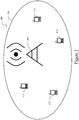
- the cellular network 100 (e.g. , compliant with the 3GPP LTE/LTE-Advanced standard) comprises a plurality (only one depicted in the figure) of fixed-location transceiver nodes or base stations (e.g. , eNodeBs), such as the base station 105.
- base stations e.g. , eNodeBs
- One or more base stations, such as the base station 105 provide for radio coverage over a geographic area, also referred to as network cell, such as the network cell 110 , for allowing user equipments (UEs) within the network cell (such as the UEs 115 - e.g. , mobile phones - within the network cell 110 ) to exchange data streams (e.g. , web browsing, e-mailing, voice and/or multimedia data streams).
- UEs user equipments
- the base station and the UEs form, together, the radio access network.
- the radio access network is generally communicably coupled with one or more core networks (not shown), which may be coupled with other networks, such as Internet and/or public switched telephone networks (not illustrated).
- the base station 105 (e.g., through an allocation unit thereof) is configured to autonomously implement an allocation algorithm aimed at proper radio resources allocation among the data streams in the network cell 110 , for transmission thereof from the UEs 115 to the base station 105 (uplink transmission).
- an allocation algorithm aimed at proper radio resources allocation among the data streams in the network cell 110 , for transmission thereof from the UEs 115 to the base station 105 (uplink transmission).
- propagation of corresponding radio frequency data signals (or data signals) is allowed (from the UEs 115 to the base station 105 , in the scenario herein considered).
- radio resources allocation according to 3GPP LTE/LTE-Advanced specifications will be considered by way of example only.
- radio resources are allocated in time/frequency domain.
- time domain radio resources are distributed every " Transmission Time Internal " (TTI), each one lasting 1 ms and comprising two time slots of 0.5 ms, whereas in frequency domain the whole bandwidth is divided into 180-kHz sub-channels (corresponding to 12 consecutive and equally spaced subcarriers).
- TTI Transmission Time Internal
- a time/frequency radio resource spanning over one TTI lasting 1.0 ms in time domain and over one sub-channel in frequency domain, will be referred to as " Physical Resources Block " (PRB), and corresponds to the smallest radio resource that can be allocated to a UE for data transmission.
- PRB Physical Resources Block
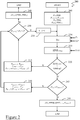
- FIG 2 it schematically shows a flow chart illustrating an activity flow of an allocation algorithm 200 according to an embodiment of the invention.
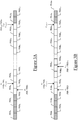
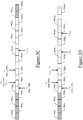
- Figures 3A-3D schematically show exemplary position and allocation variables configurations at corresponding iterations of the allocation algorithm 200.
- the available PRBs range with continuity from a first available PRB PRB 4 to a last available PRB PRB 47
- the non-available PRBs range from PRB PRB 0 to PRB PRB 3 and from PRB PRB 48 to PRB PRB 49 .
- k also denotes the positional index of the succession of PRBs PRB k ( i.e., the PRB PRB k is the PRB in the k-th position of the succession).
- the allocation algorithm 200 is intended to determine, between the first PRB 4 and last PRB 47 available PRBs, allocation of a group of (e.g., a number of two or more) adjacent available PRBs PRB k (hereinafter, allocation group). As will be best discussed below, determining an optimal allocation group may require a number of repetitions, or iterations, i , wherein, at each i-th iteration, a new, potential allocation group AG (i) is considered and allocation thereof is assessed.
- allocation group e.g., a number of two or more adjacent available PRBs PRB k
- the allocation algorithm 200 takes advantage of a number of positional P F , P S , P L(i) , P Lmin(i) , P Lmax(i) and allocation PRB F , PRB S , PRB L(i) variables, as indicated below:
- Initialization performed at the activity block 205 should not be construed limitatively. Indeed, any other initialization criterion may be chosen according to specific design parameters (e.g. , implementation of the cellular network 100 , and/or standard specifications), so that other available PRBs PRB k might be chosen as first PRB F , lowest last PRB S and last PRB L(0) allocation PRBs of the allocation group AG (0) , and other positions of the succession might be chosen as maximum P Lmax(0) and minimum P Lmin(0) allowed positions in the allocation group AG (0) . Particularly, initialization performed at the activity block 205 may be based on partial-exploitation of all available PRBs PRB k .
- the first PRB F , lowest last PRB S and last PRB L(0) allocation PRBs may be chosen among the available PRBs PRB k in the second half of the succession (e.g. , from the available PRB PRB 25 to the available PRB PRB 49 ) in which case the resulting allocation could be sub-optimal (as an optimal allocation should have included available PRBs PRB k in the first half of the succession) but would advantageously require shorter processing time.
- This is conceptually shown, in the figure, by loop connection (through the activity 225,235 and decision 230 blocks) between the decision 220 and activity 210 blocks.
- SINR PRB(i) estimate an estimate of a " Signal to Interference-plus-Noise Ratio " (SINR) per PRB (hereinafter, SINR PRB(i) estimate) is performed, i.e. the estimate, at the i-th iteration, of the ratio between the power of the data stream transmitted from a UE 115 to the base station 105 , and the power of interfering data streams (transmitted from all other UEs 115 within the network cell 110 to the base station 105 ) added to the power of background noise, assuming that transmission on a single allocation PRB among the Q (i) allocation PRBs of the allocation group AG (i) is performed.
- SINR PRB(i) estimate the estimate, at the i-th iteration, of the ratio between the power of the data stream transmitted from a UE 115 to the base station 105 , and the power of interfering data streams (transmitted from all other UEs 115 within the network cell 110 to the base station 105 ) added to
- a scaling factor ⁇ (i) (that, as a result of allocation group AG (i) changing/updating at each i-th iteration, depends on the ongoing i-th iteration) is first calculated at the activity block 210.
- Determination of the path loss estimates P L are based (as usual) by taking into account power measures (performed by the UE 115 ) of reference signals - specifically, the path loss estimates P L depend on the ratio between transmitted and received powers of said reference signals. As illustrated in Figure 2 , the path loss estimates P L are input to the activity block 210.
- the transmission powers T Q(i) and T PRB(i) are determined according to the number Q (i) of allocation PRBs of the allocation group AG (i) , to the path loss estimates P L and to the network parameters NP - as conceptually illustrated in Figure 2 , wherein also the network parameters NP are input to the activity block 210.
- said scaling factor ⁇ (i) is multiplied by (i.e., applied to) a SINR estimate, the latter indicating the " Signal to Interference-plus-Noise Ratio" estimated in uplink transmission between the UE 115 and the base station 105.
- a SINR estimate relates to previous data streams transmissions ( e.g. , the transmission before the transmission that will take place according to the ongoing radio resources allocation).
- the SINR estimate carries history transmission information with it, so that the SINR PRB(i) estimate, which in turn depends on the SINR estimate, is advantageously based on said history transmission information.
- the SINR estimate per se well known in the art, is not limiting for the invention, and substantially depends on the ratio between the power of the data signals and the sum of the power of interfering signals and the power of background noise.
- the SINR estimate may be determined ( e.g. , preliminarily at base station 105 side - such as during a previous transmission from the UE 115 to the base station 105 - and input to the activity block 215 , as illustrated) according to an average number of the PRBs used for transmission, according to the maximum transmission power associated with the UE 115 , and/or according to the transmission power that the UE 115 would use for transmission on a single PRB based on the path loss estimates P L .
- the present embodiment is herein discussed under the exemplary and not limiting assumption that the SINR estimate is normalized to the case of transmission of a single PRB.
- a check is performed for assessing whether the SINR PRB(i) estimate, related to the (current) number Q (i) of allocation PRBs of the (current) allocation group AG (i) , is higher than a threshold SINR estimate (hereinafter, SINR TH estimate) - indicating that, by allocating the Q (i) allocation PRBs of the allocation group AG (i) , desired transmission quality in terms of " Signal to Interference-plus-Noise Ratio " can be achieved - or not.
- the threshold SINR TH estimate is derived from a threshold parameter (not indicated) multiplied by the scaling factor ⁇ (i) .
- exit branch N of the decision block 220 the (following) (i+1)-th iteration is started (by defining the following allocation group AG (i + 1) and the position P L(i + 1) of the last allocation PRB PRB L(i + 1) ) , and the steps performed at the activities blocks 210 and 215 are repeated/iterated for the allocation group AG (i + 1) , unless (as better discussed below) the first PPB F and last PRB L(i + 1) allocation PRBs identify the narrowest allocation group AG (i + 1) .
- each following allocation group AG (i + 1) is progressively narrowed (with respect to the previous allocation group AG (i) ) by lowering the maximum upper boundary thereof ( i.e., the maximum allowed position P Lmax(i + 1) ) for the same minimum upper boundary ( i.e., the minimum allowed position P Lmin(i + 1) ) and by setting, according to a bisection criterion, the position P L(i + 1) of the last allocation PRB PRB L(i + 1) of the allocation group AG (i + 1) between ( e.g. , in the middle of) the minimum upper boundary and the lowered maximum upper boundary.
- the (adjacent) immediately preceding or following integer positions may be chosen according to any proper criterion.
- the immediately following integer may be chosen, so as to consider the widest possible allocation group AG (i) .
- the immediately preceding integer may instead be chosen.
- a check is performed for assessing whether the first PRB F and last PRB L(i + 1) allocation PRBs identify the narrowest allocation group AG (i + 1) , namely if the position P L(i + 1) of the last allocation PRB PRB L(i + 1) of the allocation group AG (i + 1) follows the lowest last allocation PRB PRB S by a predefined number ( e.g., 1) of positions i.e.: P L i + 1 > P S + 1
- Steps 210-215 are performed for each (i + 1)-th iteration as long as P L(i + 1) > ( P S +1) . Otherwise, exit branch N of the decision block 230 , iterations are stopped (as the narrowest allocation group AG (i + 1) has been considered) and the Q (i + 1) allocation PRBs of the allocation group AG (i + 1) are allocated (activity block 240 ), thereafter the allocation algorithm 200 ends.
- the narrowest allocation group AG (i + 1) comprises the first PRB 4 and second PRB 5 available PRBs, thus the first PRB 4 and second PRBs available PRBs would be allocated at the activity block 240.
- steps at blocks 210-240 are performed until SINR PRB(i) > SINR TH .
- the SINR PRB(i) estimate related to the (current) number Q (i) of allocation PRBs of the allocation group AG (i)
- the SINR TH estimate (exit branch Y ) - indicating that the desired transmission quality in terms of " Signal to Interference-plus-Noise Ratio " are met by the Q (i) allocation PRBs of the allocation group AG (i) -
- another check is performed (decision block 245 ) for assessing whether the number Q (i) of allocation PRBs that meet " Signal to Interference-plus-Noise Ratio" requirements is the highest possible (thus optimal in terms of transmission capabilities) in the range between the position P F of the first allocation PRB PRB F and the maximum allowed position P Lmax(i) , namely if the position P L(i) of the
- exit branch N of the decision block 245 a new (i + 1)-th iteration is started (by identifying the following allocation group AG (i + 1) and the position P L(i + 1) of the last allocation PRB PRB L(i + 1) at the activity block 250 ), and the steps performed at activities 230,235,210-215 and decision 220,245 blocks are repeated/iterated for the allocation group AG (i + 1) , unless (as discussed above) the first PRB F and last PRB L(i + 1) allocation PRBs of the allocation group AG (i + 1) identify the narrowest allocation group AG (i + 1) (decision block 230 ), or the SINR PRB(i) estimate is lower than the SINR TH estimate).
- each following allocation group AG (i + 1) is progressively widened by increasing the position P L(i + 1) of the last allocation PRB PRB L(i + 1) of the allocation group AG (i + 1) with respect to the position P L(i) of the last allocation PRB PPB L(i) .
- optimal allocation group can be dichotomously determined by progressively narrowing and widening the allocation group based on " Signal to Interference-plus-Noise Ratio" requirements and on history transmission information (indeed, as discussed above, the SINR estimate is based on previous transmissions).
- the solution according to an embodiment of the invention lends itself to be implemented through an equivalent method (by using similar steps, removing some steps being not essential, or adding further optional steps); moreover, the steps may be performed in different order, concurrently or in an interleaved way (at least partly).
- any component thereof may be separated into several elements, or two or more components may be combined into a single element; in addition, each component may be replicated for supporting the execution of the corresponding operations in parallel. It should also be noted that any interaction between different components generally does not need to be continuous (unless otherwise indicated), and it may be both direct and indirect through one or more intermediaries.
- the proposed allocation algorithm may be applied also to other open or proprietary communication protocols, for example, WiMAX and other OFDMA based systems, among them.
- the proposed solution may be applied to any cellular network providing radio resources arranged in frequency slots.
Landscapes
- Engineering & Computer Science (AREA)
- Computer Networks & Wireless Communication (AREA)
- Signal Processing (AREA)
- Quality & Reliability (AREA)
- Mobile Radio Communication Systems (AREA)
Claims (13)
- Procédé (200) destiné à attribuer, dans un réseau (100) de communications sans fil, des ressources radio (PRBk) pour des émissions en liaison montante, ledit procédé comprenant les étapes consistant à:sélectionner (205), parmi lesdites ressources radio (PRBk), un groupe d'attribution (AG(i)) comportant une suite ordonnée de ressources radio disponibles pour l'attribution allant d'une première ressource radio (PRBF) à une dernière ressource radio (PRBL(i)),réaliser de façon itérative les opérations suivantes:sélectionner (225) la dernière ressource radio (PRBL(i)) du groupe d'attribution (AG(i)), chaque dernière ressource radio (PRBL(i)) prenant, à chaque itération, une position (PL(i)) dans la suite ordonnée plus basse que la position prise dans la suite ordonnée par la dernière ressource radio (PRBL(i)) lors de l'itération respective précédente,estimer (210, 215) un rapport signal-brouillage plus bruit par ressource radio (SINRPRB(i)) du groupe d'attribution (AG(i)) en fonction d'un nombre de ressources radio (Q(i) du groupe d'attribution (AG(i), de la première (PRBF) à la dernière (PRBL(i)) ressource radio du groupe d'attribution (AG(i)) et en fonction d'informations d'historique d'émissions, etjusqu'à ce que (220) le rapport signal-brouillage plus bruit par ressource radio (SINRPRB(i)) soit supérieur à un rapport signal-brouillage plus bruit prédéterminé (SINRTH),attribuer (240, 255) les ressources radio allant de ladite première (PRBF) à ladite dernière ressource radio (PRBL(i)) du groupe d'attribution (AG(i)).
- Procédé selon la revendication 1, dans lequel, à chaque itération, la position (PL(i)) de la dernière ressource radio (PRBL(i)) se situe entre une position minimum (PLmin(i)) et une position maximum (PLmax(i)) autorisées, et dans lequel ladite opération consistant à sélectionner (225) la dernière ressource radio (PRBL(i)) du groupe d'attribution (AG(i)) comprend en outre l'étape consistant à :définir (225), à chaque itération, la position maximum (PLmax(i)) autorisée, au niveau de la position (PL(i)) de la dernière ressource radio (PRBL(i)) lors de l'itération respective précédente.
- Procédé selon la revendication 2, comprenant en outre, si le rapport signal-brouillage plus bruit par ressource radio (SINRPRB(i)) est supérieur au rapport signal-brouillage plus bruit par ressource radio (SINRTH) prédéterminé :la répétition des opérations suivantes :sélectionner (250) la dernière ressource radio (PRBL(i)) du groupe d'attribution (AG(i)), chaque dernière ressource radio (PRBL(i)) prenant, à chaque itération, une position (PL(i)) dans la suite ordonnée plus haute que la position prise dans la suite ordonnée par la dernière ressource radio (PREL(i)) lors de l'itération/la répétition respective précédente, etestimer (210, 215) le rapport signal-brouillage plus bruit par ressource radio (SINRPRB(i)) en fonction du nombre de ressources radio (Q(i) du groupe d'attribution (AG(i), allant de la première (PRBF) à la dernière (PRBL(i)) des ressources radio du groupe d'attribution (AG(i)),jusqu'à ce que (245) la position (PL(i)) de la dernière ressource radio (PRBL(i)) soit plus haute que ladite position maximum (PLmax(i)) autorisée d'un nombre prédéfini de positions.
- Procédé selon la revendication 3, dans lequel, à chaque répétition, ladite sélection (250) de la dernière ressource radio (PRBL(i)) du groupe d'attribution (AG(i)) comprend en outre l'étape suivante:définir (250), à chaque répétition, la position minimum (PLmin(i)) autorisée, au niveau de la position (PL(i)) de la dernière ressource radio (PRBL(i)) lors de l'itération/la répétition respective précédente.
- Procédé (200) selon l'une quelconque des revendications 2 à 4, dans lequel si (230) la position (PL(i)) de la dernière ressource radio (PRBL(i)) n'est pas plus haute qu'une dernière position minimum (Ps), ladite sélection (225, 250) de la dernière ressource radio (PRBL(i)) du groupe d'attribution (AG(i)) comprend en outre les étapes suivantesarrêter toute itération ou répétition (230) en cours, etattribuer les ressources radio du groupe d'attribution (AG(i)) allant de ladite première ressource radio (PRBF) aux ressources radio (PRBK) à ladite dernière position minimum (Ps).
- Procédé (200) selon l'une quelconque des revendications 2 à 5, dans lequel la position (PL(i)) de la dernière ressource radio (PRBL(i)) est, à chaque itération, et à chaque répétition, dans une position moyenne entre les positions minimum (PLmin(i)) et maximum (PLmax(i)) respectives autorisées.
- Procédé (200) selon l'une quelconque des revendications précédentes, dans lequel lesdites informations d'historique d'émissions comprennent une estimation du rapport signal-brouillage plus bruit (SINR) sur toutes les ressources radio disponibles pour l'attribution (PRBk) sur la base d'une émission précédente, et dans lequel ladite estimation (210, 215) d'un rapport signal-brouillage plus bruit par ressource radio (SINRPRB(i)) comprend la multiplication (215) dudit rapport signal-brouillage plus bruit par ressource radio (SINR) sur toutes les ressources radio disponibles pour l'attribution (PRBk) par un facteur d'échelle (γ(i)) prenant en compte le nombre Q(i) de ressources radio (PRBF) du groupe d'attribution (AG(i)).
- Procédé (200) selon la revendication 7, dans lequel ledit facteur d'échelle (γ(i)) est l'inverse multiplicatif du nombre Q(i) des ressources radio du groupe d'attribution (AG(i)).
- Procédé (200) selon la revendication 7, dans lequel ledit facteur d'échelle (γ(i) ) dépend du rapport entre une première puissance d'émission TQ(i) qui serait utilisée pour l'émission sur chaque ressource radio dudit nombre (Q(i) de ressources radio du groupe d'attribution (AG(i)), et une seconde puissance d'émission TPRB(i), qui serait utilisée pour l'émission sur une seule ressource radio dudit nombre Q(i) de ressources radio.
- Procédé (200) selon la revendication 9, dans lequel lesdites première TQ(i) et seconde TPRB(i) puissances d'émission sont calculées en fonction des paramètres du réseau (NP) et des estimations d'affaiblissement de propagation (PL).
- Procédé (200) selon l'une quelconque des revendications précédentes, dans lequel les ressources radio sont réparties sur des intervalles temporels d'émission et dans lequel le procédé (200) est exécuté sur chaque intervalle temporel d'émission.
- Réseau de communications sans fil (100) comprenant une station (105) fournissant une couverture radio sur une cellule du réseau (100), ladite station (105) comprenant une unité d'attribution destinée à déterminer l'attribution de ressources radio (PRBk) pour des émissions en liaison montante, ladite unité d'attribution étant configurée pour:sélectionner (205), parmi lesdites ressources radio (PRBk), un groupe d'attribution (AG(i)) comprenant une suite ordonnée de ressources radio disponibles pour l'attribution allant d'une première ressource radio (PRBF) à une dernière ressource radio (PRBL(i)),réaliser de façon itérative les opérations suivantes:sélectionner (225) la dernière ressource radio (PRBL(i)) du groupe d'attribution (AG(i)), chaque dernière ressource radio (PRBL(i)) prenant, à chaque itération, une position (PL(i)) dans la suite ordonnée plus basse que la position prise dans la suite ordonnée par la dernière ressource radio (PRBL(i)) lors de l'itération respective précédente,estimer (210, 215) un rapport signal-brouillage plus bruit par ressource radio (SINRPRB(i)) du groupe d'attribution (AG(i)) en fonction d'un nombre de ressources radio Q(i) du groupe d'attribution (AG(i)), allant de la première (PRBF) à la dernière (PRBL(i)) ressource radio du groupe d'attribution (AG(i)) et en fonction d'informations d'historique d'émissions, jusqu'à ce que (220) le rapport signal-brouillage plus bruit par ressource radio (SINRPRB(i)) soit supérieur à un rapport signal-brouillage plus bruit prédéterminé (SINRTH), etattribuer (240, 255) les ressources radio allant de ladite première (PRBF) à ladite dernière ressource radio (PRBL(i)) du groupe d'attribution (AG(i)).
- Réseau de communications sans fil (100) selon la revendication 12, dans lequel le réseau de communications sans fil est un réseau cellulaire basé sur la technologie LTE/LTE-Advanced.
Applications Claiming Priority (1)
| Application Number | Priority Date | Filing Date | Title |
|---|---|---|---|
| PCT/EP2014/058889 WO2015165536A1 (fr) | 2014-04-30 | 2014-04-30 | Procédé et système d'attribution de ressources radio pour l'émission en liaison montante dans les réseaux cellulaires |
Publications (2)
| Publication Number | Publication Date |
|---|---|
| EP3138343A1 EP3138343A1 (fr) | 2017-03-08 |
| EP3138343B1 true EP3138343B1 (fr) | 2018-03-21 |
Family
ID=50841744
Family Applications (1)
| Application Number | Title | Priority Date | Filing Date |
|---|---|---|---|
| EP14726892.4A Active EP3138343B1 (fr) | 2014-04-30 | 2014-04-30 | Procédé et système d'attribution de ressources radio pour l'émission en liaison montante dans les réseaux cellulaires |
Country Status (4)
| Country | Link |
|---|---|
| US (1) | US10172147B2 (fr) |
| EP (1) | EP3138343B1 (fr) |
| CN (1) | CN106416407B (fr) |
| WO (1) | WO2015165536A1 (fr) |
Families Citing this family (5)
| Publication number | Priority date | Publication date | Assignee | Title |
|---|---|---|---|---|
| WO2016078083A1 (fr) * | 2014-11-21 | 2016-05-26 | 华为技术有限公司 | Procédé, appareil et dispositif pour déterminer une technique de modulation et de codage |
| JP6168424B2 (ja) * | 2015-09-08 | 2017-07-26 | パナソニックIpマネジメント株式会社 | コントローラ及び基地局 |
| US10660045B2 (en) * | 2016-08-17 | 2020-05-19 | Telefonaktiebolaget Lm Ericsson (Publ) | Discriminating between communication apparatuses based on their transmitted power |
| WO2021188022A1 (fr) * | 2020-03-17 | 2021-09-23 | Telefonaktiebolaget Lm Ericsson (Publ) | Attribution de ressource radio |
| CN113573351B (zh) * | 2021-07-27 | 2023-05-16 | 中国联合网络通信集团有限公司 | 无线资源利用率确定方法、装置、电子设备及存储介质 |
Family Cites Families (9)
| Publication number | Priority date | Publication date | Assignee | Title |
|---|---|---|---|---|
| KR100735241B1 (ko) | 2005-07-19 | 2007-07-03 | 삼성전자주식회사 | 통신 시스템에서 업링크 스케쥴링 시스템 및 방법 |
| US8009581B2 (en) * | 2006-06-12 | 2011-08-30 | Telefonaktiebolaget Lm Ericsson (Publ) | Method in a scheduler for reducing inter-cell interference |
| CN102282902B (zh) * | 2009-01-14 | 2015-12-16 | 瑞典爱立信有限公司 | 无线通信系统中的方法和设备 |
| US8144720B2 (en) | 2009-04-24 | 2012-03-27 | Telefonaktiebolaget L M Ericsson (Publ) | Uplink radio resource allocation in the presence of power limited users |
| EP2638648B1 (fr) * | 2010-11-10 | 2018-05-30 | Telefonaktiebolaget LM Ericsson (publ) | Procédé et agencement pour réduction de variance de brouillage dans un système de communication sans fil |
| CN102647796B (zh) * | 2011-02-21 | 2015-05-20 | 中兴通讯股份有限公司 | 上行资源配置方法及装置 |
| US9265066B2 (en) | 2011-06-20 | 2016-02-16 | Telefonaktiebolaget L M Ericsson | Methods and devices for scheduling uplink transmission in a cellular radio system |
| CN102917455B (zh) | 2011-08-01 | 2018-04-06 | 中兴通讯股份有限公司 | 一种上行半静态调度资源分配方法和装置 |
| JP2013118586A (ja) * | 2011-12-05 | 2013-06-13 | Sharp Corp | 基地局装置、無線通信システム、無線通信装置、周波数帯域割り当て方法およびプログラム |
-
2014
- 2014-04-30 EP EP14726892.4A patent/EP3138343B1/fr active Active
- 2014-04-30 WO PCT/EP2014/058889 patent/WO2015165536A1/fr not_active Ceased
- 2014-04-30 US US15/306,580 patent/US10172147B2/en active Active
- 2014-04-30 CN CN201480079401.9A patent/CN106416407B/zh active Active
Also Published As
| Publication number | Publication date |
|---|---|
| US20170048881A1 (en) | 2017-02-16 |
| WO2015165536A1 (fr) | 2015-11-05 |
| CN106416407B (zh) | 2019-09-03 |
| EP3138343A1 (fr) | 2017-03-08 |
| CN106416407A (zh) | 2017-02-15 |
| US10172147B2 (en) | 2019-01-01 |
Similar Documents
| Publication | Publication Date | Title |
|---|---|---|
| US8924983B2 (en) | Method and device for processing inter-subframe service load balancing and processing inter-cell interference | |
| EP2245757B1 (fr) | Procédé et système de réduction de brouillage intercellulaire | |
| US8797983B2 (en) | Apparatuses and methods for allocating spectrum resources in a wireless communication network | |
| EP2916479B1 (fr) | Procédé et appareil de configuration de ressource srs pour cellules coopérantes | |
| EP2509372A1 (fr) | Procede de reglage de polarisation de puissance de canal, appareil et station de base | |
| US8442002B2 (en) | Method for operating a multi-cell radio system and a multi-cell radio system | |
| EP2734006B1 (fr) | Allocation de ressource pour garantir une satisfaction minimale dans des réseaux à antennes multiples multi-service | |
| CN102239717A (zh) | 在无线通信网络中优化带宽分配的方法 | |
| KR20090123880A (ko) | 무선 통신 시스템에서의 동일채널 간섭의 특징화 | |
| EP3138343B1 (fr) | Procédé et système d'attribution de ressources radio pour l'émission en liaison montante dans les réseaux cellulaires | |
| US20100177670A1 (en) | Resource allocation in a communication system | |
| Rebekka et al. | An optimal and priority based rate guaranteed radio resource allocation scheme for lte downlink | |
| US20180317249A1 (en) | Scheduling method and system | |
| US20140044033A1 (en) | Apparatus and Method for Communication with a Number of User Equipments Using OFDMA | |
| EP3797540B1 (fr) | Dispositif client, noeud d'accès au réseau et procédés pour une planification efficace de trafic de données | |
| Hendaoui et al. | QoS aware pre-emption: A new proposition for LTE downlink schedulers | |
| Krasilov et al. | Efficient User Grouping for Grant-Free URLLC | |
| Kim et al. | Scheduling Based on Maximum PF Selection with Contiguity Constraint for SC-FDMA in LTE Uplink. | |
| Rahimzadeh et al. | Saturation throughput analysis of a cognitive IEEE 802.11-based WLAN overlaid on an IEEE 802.16 e WiMAX | |
| Sarigiannidis et al. | On effectively determining the downlink-to-uplink sub-frame width ratio for mobile wimax networks using spline extrapolation | |
| Alotaibi et al. | Packet scheduling bandwidth type-based mechanism for lte | |
| Sirhan | Packet Scheduling Algorithms in LTE/LTE-A cellular Networks: Multi-agent Q-learning Approach | |
| Asheralieva et al. | Resource allocation algorithm for cognitive radio network with heterogeneous user traffic | |
| CHANG | Dynamic traffic split scheme in an integrated LTE and HSDPA networks | |
| Shoukry et al. | Distributed downlink radio resource management in multi-cell IEEE 802.16 e systems |
Legal Events
| Date | Code | Title | Description |
|---|---|---|---|
| PUAI | Public reference made under article 153(3) epc to a published international application that has entered the european phase |
Free format text: ORIGINAL CODE: 0009012 |
|
| 17P | Request for examination filed |
Effective date: 20161121 |
|
| AK | Designated contracting states |
Kind code of ref document: A1 Designated state(s): AL AT BE BG CH CY CZ DE DK EE ES FI FR GB GR HR HU IE IS IT LI LT LU LV MC MK MT NL NO PL PT RO RS SE SI SK SM TR |
|
| AX | Request for extension of the european patent |
Extension state: BA ME |
|
| DAX | Request for extension of the european patent (deleted) | ||
| GRAP | Despatch of communication of intention to grant a patent |
Free format text: ORIGINAL CODE: EPIDOSNIGR1 |
|
| INTG | Intention to grant announced |
Effective date: 20171013 |
|
| RIC1 | Information provided on ipc code assigned before grant |
Ipc: H04W 72/12 20090101AFI20171002BHEP Ipc: H04W 72/08 20090101ALN20171002BHEP |
|
| GRAS | Grant fee paid |
Free format text: ORIGINAL CODE: EPIDOSNIGR3 |
|
| GRAA | (expected) grant |
Free format text: ORIGINAL CODE: 0009210 |
|
| AK | Designated contracting states |
Kind code of ref document: B1 Designated state(s): AL AT BE BG CH CY CZ DE DK EE ES FI FR GB GR HR HU IE IS IT LI LT LU LV MC MK MT NL NO PL PT RO RS SE SI SK SM TR |
|
| REG | Reference to a national code |
Ref country code: GB Ref legal event code: FG4D |
|
| REG | Reference to a national code |
Ref country code: CH Ref legal event code: EP |
|
| REG | Reference to a national code |
Ref country code: AT Ref legal event code: REF Ref document number: 982465 Country of ref document: AT Kind code of ref document: T Effective date: 20180415 |
|
| REG | Reference to a national code |
Ref country code: IE Ref legal event code: FG4D |
|
| REG | Reference to a national code |
Ref country code: DE Ref legal event code: R096 Ref document number: 602014022607 Country of ref document: DE |
|
| REG | Reference to a national code |
Ref country code: FR Ref legal event code: PLFP Year of fee payment: 5 |
|
| REG | Reference to a national code |
Ref country code: NL Ref legal event code: MP Effective date: 20180321 |
|
| PG25 | Lapsed in a contracting state [announced via postgrant information from national office to epo] |
Ref country code: LT Free format text: LAPSE BECAUSE OF FAILURE TO SUBMIT A TRANSLATION OF THE DESCRIPTION OR TO PAY THE FEE WITHIN THE PRESCRIBED TIME-LIMIT Effective date: 20180321 Ref country code: CY Free format text: LAPSE BECAUSE OF FAILURE TO SUBMIT A TRANSLATION OF THE DESCRIPTION OR TO PAY THE FEE WITHIN THE PRESCRIBED TIME-LIMIT Effective date: 20180321 Ref country code: HR Free format text: LAPSE BECAUSE OF FAILURE TO SUBMIT A TRANSLATION OF THE DESCRIPTION OR TO PAY THE FEE WITHIN THE PRESCRIBED TIME-LIMIT Effective date: 20180321 Ref country code: FI Free format text: LAPSE BECAUSE OF FAILURE TO SUBMIT A TRANSLATION OF THE DESCRIPTION OR TO PAY THE FEE WITHIN THE PRESCRIBED TIME-LIMIT Effective date: 20180321 Ref country code: NO Free format text: LAPSE BECAUSE OF FAILURE TO SUBMIT A TRANSLATION OF THE DESCRIPTION OR TO PAY THE FEE WITHIN THE PRESCRIBED TIME-LIMIT Effective date: 20180621 |
|
| REG | Reference to a national code |
Ref country code: LT Ref legal event code: MG4D |
|
| REG | Reference to a national code |
Ref country code: AT Ref legal event code: MK05 Ref document number: 982465 Country of ref document: AT Kind code of ref document: T Effective date: 20180321 |
|
| PG25 | Lapsed in a contracting state [announced via postgrant information from national office to epo] |
Ref country code: RS Free format text: LAPSE BECAUSE OF FAILURE TO SUBMIT A TRANSLATION OF THE DESCRIPTION OR TO PAY THE FEE WITHIN THE PRESCRIBED TIME-LIMIT Effective date: 20180321 Ref country code: GR Free format text: LAPSE BECAUSE OF FAILURE TO SUBMIT A TRANSLATION OF THE DESCRIPTION OR TO PAY THE FEE WITHIN THE PRESCRIBED TIME-LIMIT Effective date: 20180622 Ref country code: SE Free format text: LAPSE BECAUSE OF FAILURE TO SUBMIT A TRANSLATION OF THE DESCRIPTION OR TO PAY THE FEE WITHIN THE PRESCRIBED TIME-LIMIT Effective date: 20180321 Ref country code: LV Free format text: LAPSE BECAUSE OF FAILURE TO SUBMIT A TRANSLATION OF THE DESCRIPTION OR TO PAY THE FEE WITHIN THE PRESCRIBED TIME-LIMIT Effective date: 20180321 Ref country code: BG Free format text: LAPSE BECAUSE OF FAILURE TO SUBMIT A TRANSLATION OF THE DESCRIPTION OR TO PAY THE FEE WITHIN THE PRESCRIBED TIME-LIMIT Effective date: 20180621 |
|
| PG25 | Lapsed in a contracting state [announced via postgrant information from national office to epo] |
Ref country code: AL Free format text: LAPSE BECAUSE OF FAILURE TO SUBMIT A TRANSLATION OF THE DESCRIPTION OR TO PAY THE FEE WITHIN THE PRESCRIBED TIME-LIMIT Effective date: 20180321 Ref country code: ES Free format text: LAPSE BECAUSE OF FAILURE TO SUBMIT A TRANSLATION OF THE DESCRIPTION OR TO PAY THE FEE WITHIN THE PRESCRIBED TIME-LIMIT Effective date: 20180321 Ref country code: EE Free format text: LAPSE BECAUSE OF FAILURE TO SUBMIT A TRANSLATION OF THE DESCRIPTION OR TO PAY THE FEE WITHIN THE PRESCRIBED TIME-LIMIT Effective date: 20180321 Ref country code: RO Free format text: LAPSE BECAUSE OF FAILURE TO SUBMIT A TRANSLATION OF THE DESCRIPTION OR TO PAY THE FEE WITHIN THE PRESCRIBED TIME-LIMIT Effective date: 20180321 Ref country code: NL Free format text: LAPSE BECAUSE OF FAILURE TO SUBMIT A TRANSLATION OF THE DESCRIPTION OR TO PAY THE FEE WITHIN THE PRESCRIBED TIME-LIMIT Effective date: 20180321 Ref country code: PL Free format text: LAPSE BECAUSE OF FAILURE TO SUBMIT A TRANSLATION OF THE DESCRIPTION OR TO PAY THE FEE WITHIN THE PRESCRIBED TIME-LIMIT Effective date: 20180321 |
|
| PG25 | Lapsed in a contracting state [announced via postgrant information from national office to epo] |
Ref country code: SK Free format text: LAPSE BECAUSE OF FAILURE TO SUBMIT A TRANSLATION OF THE DESCRIPTION OR TO PAY THE FEE WITHIN THE PRESCRIBED TIME-LIMIT Effective date: 20180321 Ref country code: CZ Free format text: LAPSE BECAUSE OF FAILURE TO SUBMIT A TRANSLATION OF THE DESCRIPTION OR TO PAY THE FEE WITHIN THE PRESCRIBED TIME-LIMIT Effective date: 20180321 Ref country code: SM Free format text: LAPSE BECAUSE OF FAILURE TO SUBMIT A TRANSLATION OF THE DESCRIPTION OR TO PAY THE FEE WITHIN THE PRESCRIBED TIME-LIMIT Effective date: 20180321 Ref country code: AT Free format text: LAPSE BECAUSE OF FAILURE TO SUBMIT A TRANSLATION OF THE DESCRIPTION OR TO PAY THE FEE WITHIN THE PRESCRIBED TIME-LIMIT Effective date: 20180321 |
|
| REG | Reference to a national code |
Ref country code: CH Ref legal event code: PL |
|
| REG | Reference to a national code |
Ref country code: BE Ref legal event code: MM Effective date: 20180430 |
|
| PG25 | Lapsed in a contracting state [announced via postgrant information from national office to epo] |
Ref country code: PT Free format text: LAPSE BECAUSE OF FAILURE TO SUBMIT A TRANSLATION OF THE DESCRIPTION OR TO PAY THE FEE WITHIN THE PRESCRIBED TIME-LIMIT Effective date: 20180723 |
|
| REG | Reference to a national code |
Ref country code: DE Ref legal event code: R097 Ref document number: 602014022607 Country of ref document: DE |
|
| REG | Reference to a national code |
Ref country code: IE Ref legal event code: MM4A |
|
| PLBE | No opposition filed within time limit |
Free format text: ORIGINAL CODE: 0009261 |
|
| STAA | Information on the status of an ep patent application or granted ep patent |
Free format text: STATUS: NO OPPOSITION FILED WITHIN TIME LIMIT |
|
| PG25 | Lapsed in a contracting state [announced via postgrant information from national office to epo] |
Ref country code: DK Free format text: LAPSE BECAUSE OF FAILURE TO SUBMIT A TRANSLATION OF THE DESCRIPTION OR TO PAY THE FEE WITHIN THE PRESCRIBED TIME-LIMIT Effective date: 20180321 Ref country code: LU Free format text: LAPSE BECAUSE OF NON-PAYMENT OF DUE FEES Effective date: 20180430 Ref country code: MC Free format text: LAPSE BECAUSE OF FAILURE TO SUBMIT A TRANSLATION OF THE DESCRIPTION OR TO PAY THE FEE WITHIN THE PRESCRIBED TIME-LIMIT Effective date: 20180321 |
|
| 26N | No opposition filed |
Effective date: 20190102 |
|
| PG25 | Lapsed in a contracting state [announced via postgrant information from national office to epo] |
Ref country code: LI Free format text: LAPSE BECAUSE OF NON-PAYMENT OF DUE FEES Effective date: 20180430 Ref country code: CH Free format text: LAPSE BECAUSE OF NON-PAYMENT OF DUE FEES Effective date: 20180430 Ref country code: BE Free format text: LAPSE BECAUSE OF NON-PAYMENT OF DUE FEES Effective date: 20180430 |
|
| PG25 | Lapsed in a contracting state [announced via postgrant information from national office to epo] |
Ref country code: IE Free format text: LAPSE BECAUSE OF NON-PAYMENT OF DUE FEES Effective date: 20180430 |
|
| PG25 | Lapsed in a contracting state [announced via postgrant information from national office to epo] |
Ref country code: SI Free format text: LAPSE BECAUSE OF FAILURE TO SUBMIT A TRANSLATION OF THE DESCRIPTION OR TO PAY THE FEE WITHIN THE PRESCRIBED TIME-LIMIT Effective date: 20180321 |
|
| PG25 | Lapsed in a contracting state [announced via postgrant information from national office to epo] |
Ref country code: MT Free format text: LAPSE BECAUSE OF NON-PAYMENT OF DUE FEES Effective date: 20180430 |
|
| PG25 | Lapsed in a contracting state [announced via postgrant information from national office to epo] |
Ref country code: TR Free format text: LAPSE BECAUSE OF FAILURE TO SUBMIT A TRANSLATION OF THE DESCRIPTION OR TO PAY THE FEE WITHIN THE PRESCRIBED TIME-LIMIT Effective date: 20180321 |
|
| PG25 | Lapsed in a contracting state [announced via postgrant information from national office to epo] |
Ref country code: HU Free format text: LAPSE BECAUSE OF FAILURE TO SUBMIT A TRANSLATION OF THE DESCRIPTION OR TO PAY THE FEE WITHIN THE PRESCRIBED TIME-LIMIT; INVALID AB INITIO Effective date: 20140430 Ref country code: MK Free format text: LAPSE BECAUSE OF NON-PAYMENT OF DUE FEES Effective date: 20180321 |
|
| PG25 | Lapsed in a contracting state [announced via postgrant information from national office to epo] |
Ref country code: IS Free format text: LAPSE BECAUSE OF FAILURE TO SUBMIT A TRANSLATION OF THE DESCRIPTION OR TO PAY THE FEE WITHIN THE PRESCRIBED TIME-LIMIT Effective date: 20180721 |
|
| P01 | Opt-out of the competence of the unified patent court (upc) registered |
Effective date: 20230527 |
|
| P02 | Opt-out of the competence of the unified patent court (upc) changed |
Effective date: 20230530 |
|
| PGFP | Annual fee paid to national office [announced via postgrant information from national office to epo] |
Ref country code: DE Payment date: 20250417 Year of fee payment: 12 |
|
| PGFP | Annual fee paid to national office [announced via postgrant information from national office to epo] |
Ref country code: GB Payment date: 20250424 Year of fee payment: 12 |
|
| PGFP | Annual fee paid to national office [announced via postgrant information from national office to epo] |
Ref country code: IT Payment date: 20250430 Year of fee payment: 12 |
|
| PGFP | Annual fee paid to national office [announced via postgrant information from national office to epo] |
Ref country code: FR Payment date: 20250428 Year of fee payment: 12 |