EP3138847B1 - Metallocenverbindung, katalysatorzusammensetzung damit und verfahren zur herstellung von polyolefin damit - Google Patents
Metallocenverbindung, katalysatorzusammensetzung damit und verfahren zur herstellung von polyolefin damit Download PDFInfo
- Publication number
- EP3138847B1 EP3138847B1 EP15880200.9A EP15880200A EP3138847B1 EP 3138847 B1 EP3138847 B1 EP 3138847B1 EP 15880200 A EP15880200 A EP 15880200A EP 3138847 B1 EP3138847 B1 EP 3138847B1
- Authority
- EP
- European Patent Office
- Prior art keywords
- group
- chemical formula
- metallocene compound
- catalyst composition
- same
- Prior art date
- Legal status (The legal status is an assumption and is not a legal conclusion. Google has not performed a legal analysis and makes no representation as to the accuracy of the status listed.)
- Active
Links
- SBUHQSOUWIMGTO-UHFFFAOYSA-N CC(C1)C=Cc2c1c(Cc1ccccc1-1)c-1[n]2Cc1ccccc1C(F)(F)F Chemical compound CC(C1)C=Cc2c1c(Cc1ccccc1-1)c-1[n]2Cc1ccccc1C(F)(F)F SBUHQSOUWIMGTO-UHFFFAOYSA-N 0.000 description 1
Classifications
-
- C—CHEMISTRY; METALLURGY
- C08—ORGANIC MACROMOLECULAR COMPOUNDS; THEIR PREPARATION OR CHEMICAL WORKING-UP; COMPOSITIONS BASED THEREON
- C08F—MACROMOLECULAR COMPOUNDS OBTAINED BY REACTIONS ONLY INVOLVING CARBON-TO-CARBON UNSATURATED BONDS
- C08F10/00—Homopolymers and copolymers of unsaturated aliphatic hydrocarbons having only one carbon-to-carbon double bond
- C08F10/02—Ethene
-
- C—CHEMISTRY; METALLURGY
- C07—ORGANIC CHEMISTRY
- C07F—ACYCLIC, CARBOCYCLIC OR HETEROCYCLIC COMPOUNDS CONTAINING ELEMENTS OTHER THAN CARBON, HYDROGEN, HALOGEN, OXYGEN, NITROGEN, SULFUR, SELENIUM OR TELLURIUM
- C07F17/00—Metallocenes
-
- C—CHEMISTRY; METALLURGY
- C07—ORGANIC CHEMISTRY
- C07F—ACYCLIC, CARBOCYCLIC OR HETEROCYCLIC COMPOUNDS CONTAINING ELEMENTS OTHER THAN CARBON, HYDROGEN, HALOGEN, OXYGEN, NITROGEN, SULFUR, SELENIUM OR TELLURIUM
- C07F7/00—Compounds containing elements of Groups 4 or 14 of the Periodic Table
-
- C—CHEMISTRY; METALLURGY
- C07—ORGANIC CHEMISTRY
- C07F—ACYCLIC, CARBOCYCLIC OR HETEROCYCLIC COMPOUNDS CONTAINING ELEMENTS OTHER THAN CARBON, HYDROGEN, HALOGEN, OXYGEN, NITROGEN, SULFUR, SELENIUM OR TELLURIUM
- C07F7/00—Compounds containing elements of Groups 4 or 14 of the Periodic Table
- C07F7/02—Silicon compounds
- C07F7/08—Compounds having one or more C—Si linkages
- C07F7/0803—Compounds with Si-C or Si-Si linkages
-
- C—CHEMISTRY; METALLURGY
- C08—ORGANIC MACROMOLECULAR COMPOUNDS; THEIR PREPARATION OR CHEMICAL WORKING-UP; COMPOSITIONS BASED THEREON
- C08F—MACROMOLECULAR COMPOUNDS OBTAINED BY REACTIONS ONLY INVOLVING CARBON-TO-CARBON UNSATURATED BONDS
- C08F110/00—Homopolymers of unsaturated aliphatic hydrocarbons having only one carbon-to-carbon double bond
- C08F110/02—Ethene
-
- C—CHEMISTRY; METALLURGY
- C08—ORGANIC MACROMOLECULAR COMPOUNDS; THEIR PREPARATION OR CHEMICAL WORKING-UP; COMPOSITIONS BASED THEREON
- C08F—MACROMOLECULAR COMPOUNDS OBTAINED BY REACTIONS ONLY INVOLVING CARBON-TO-CARBON UNSATURATED BONDS
- C08F210/00—Copolymers of unsaturated aliphatic hydrocarbons having only one carbon-to-carbon double bond
- C08F210/16—Copolymers of ethene with alpha-alkenes, e.g. EP rubbers
-
- C—CHEMISTRY; METALLURGY
- C08—ORGANIC MACROMOLECULAR COMPOUNDS; THEIR PREPARATION OR CHEMICAL WORKING-UP; COMPOSITIONS BASED THEREON
- C08F—MACROMOLECULAR COMPOUNDS OBTAINED BY REACTIONS ONLY INVOLVING CARBON-TO-CARBON UNSATURATED BONDS
- C08F4/00—Polymerisation catalysts
- C08F4/42—Metals; Metal hydrides; Metallo-organic compounds; Use thereof as catalyst precursors
- C08F4/44—Metals; Metal hydrides; Metallo-organic compounds; Use thereof as catalyst precursors selected from light metals, zinc, cadmium, mercury, copper, silver, gold, boron, gallium, indium, thallium, rare earths or actinides
- C08F4/60—Metals; Metal hydrides; Metallo-organic compounds; Use thereof as catalyst precursors selected from light metals, zinc, cadmium, mercury, copper, silver, gold, boron, gallium, indium, thallium, rare earths or actinides together with refractory metals, iron group metals, platinum group metals, manganese, rhenium technetium or compounds thereof
- C08F4/62—Refractory metals or compounds thereof
- C08F4/64—Titanium, zirconium, hafnium or compounds thereof
- C08F4/659—Component covered by group C08F4/64 containing a transition metal-carbon bond
- C08F4/65908—Component covered by group C08F4/64 containing a transition metal-carbon bond in combination with an ionising compound other than alumoxane, e.g. (C6F5)4B-X+
-
- C—CHEMISTRY; METALLURGY
- C08—ORGANIC MACROMOLECULAR COMPOUNDS; THEIR PREPARATION OR CHEMICAL WORKING-UP; COMPOSITIONS BASED THEREON
- C08F—MACROMOLECULAR COMPOUNDS OBTAINED BY REACTIONS ONLY INVOLVING CARBON-TO-CARBON UNSATURATED BONDS
- C08F4/00—Polymerisation catalysts
- C08F4/42—Metals; Metal hydrides; Metallo-organic compounds; Use thereof as catalyst precursors
- C08F4/44—Metals; Metal hydrides; Metallo-organic compounds; Use thereof as catalyst precursors selected from light metals, zinc, cadmium, mercury, copper, silver, gold, boron, gallium, indium, thallium, rare earths or actinides
- C08F4/60—Metals; Metal hydrides; Metallo-organic compounds; Use thereof as catalyst precursors selected from light metals, zinc, cadmium, mercury, copper, silver, gold, boron, gallium, indium, thallium, rare earths or actinides together with refractory metals, iron group metals, platinum group metals, manganese, rhenium technetium or compounds thereof
- C08F4/62—Refractory metals or compounds thereof
- C08F4/64—Titanium, zirconium, hafnium or compounds thereof
- C08F4/659—Component covered by group C08F4/64 containing a transition metal-carbon bond
- C08F4/65912—Component covered by group C08F4/64 containing a transition metal-carbon bond in combination with an organoaluminium compound
-
- C—CHEMISTRY; METALLURGY
- C08—ORGANIC MACROMOLECULAR COMPOUNDS; THEIR PREPARATION OR CHEMICAL WORKING-UP; COMPOSITIONS BASED THEREON
- C08F—MACROMOLECULAR COMPOUNDS OBTAINED BY REACTIONS ONLY INVOLVING CARBON-TO-CARBON UNSATURATED BONDS
- C08F4/00—Polymerisation catalysts
- C08F4/42—Metals; Metal hydrides; Metallo-organic compounds; Use thereof as catalyst precursors
- C08F4/44—Metals; Metal hydrides; Metallo-organic compounds; Use thereof as catalyst precursors selected from light metals, zinc, cadmium, mercury, copper, silver, gold, boron, gallium, indium, thallium, rare earths or actinides
- C08F4/60—Metals; Metal hydrides; Metallo-organic compounds; Use thereof as catalyst precursors selected from light metals, zinc, cadmium, mercury, copper, silver, gold, boron, gallium, indium, thallium, rare earths or actinides together with refractory metals, iron group metals, platinum group metals, manganese, rhenium technetium or compounds thereof
- C08F4/62—Refractory metals or compounds thereof
- C08F4/64—Titanium, zirconium, hafnium or compounds thereof
- C08F4/659—Component covered by group C08F4/64 containing a transition metal-carbon bond
- C08F4/6592—Component covered by group C08F4/64 containing a transition metal-carbon bond containing at least one cyclopentadienyl ring, condensed or not, e.g. an indenyl or a fluorenyl ring
-
- C—CHEMISTRY; METALLURGY
- C08—ORGANIC MACROMOLECULAR COMPOUNDS; THEIR PREPARATION OR CHEMICAL WORKING-UP; COMPOSITIONS BASED THEREON
- C08F—MACROMOLECULAR COMPOUNDS OBTAINED BY REACTIONS ONLY INVOLVING CARBON-TO-CARBON UNSATURATED BONDS
- C08F4/00—Polymerisation catalysts
- C08F4/42—Metals; Metal hydrides; Metallo-organic compounds; Use thereof as catalyst precursors
- C08F4/44—Metals; Metal hydrides; Metallo-organic compounds; Use thereof as catalyst precursors selected from light metals, zinc, cadmium, mercury, copper, silver, gold, boron, gallium, indium, thallium, rare earths or actinides
- C08F4/60—Metals; Metal hydrides; Metallo-organic compounds; Use thereof as catalyst precursors selected from light metals, zinc, cadmium, mercury, copper, silver, gold, boron, gallium, indium, thallium, rare earths or actinides together with refractory metals, iron group metals, platinum group metals, manganese, rhenium technetium or compounds thereof
- C08F4/62—Refractory metals or compounds thereof
- C08F4/64—Titanium, zirconium, hafnium or compounds thereof
- C08F4/659—Component covered by group C08F4/64 containing a transition metal-carbon bond
- C08F4/6592—Component covered by group C08F4/64 containing a transition metal-carbon bond containing at least one cyclopentadienyl ring, condensed or not, e.g. an indenyl or a fluorenyl ring
- C08F4/65922—Component covered by group C08F4/64 containing a transition metal-carbon bond containing at least one cyclopentadienyl ring, condensed or not, e.g. an indenyl or a fluorenyl ring containing at least two cyclopentadienyl rings, fused or not
- C08F4/65927—Component covered by group C08F4/64 containing a transition metal-carbon bond containing at least one cyclopentadienyl ring, condensed or not, e.g. an indenyl or a fluorenyl ring containing at least two cyclopentadienyl rings, fused or not two cyclopentadienyl rings being mutually bridged
-
- C—CHEMISTRY; METALLURGY
- C07—ORGANIC CHEMISTRY
- C07B—GENERAL METHODS OF ORGANIC CHEMISTRY; APPARATUS THEREFOR
- C07B2200/00—Indexing scheme relating to specific properties of organic compounds
- C07B2200/11—Compounds covalently bound to a solid support
-
- C—CHEMISTRY; METALLURGY
- C07—ORGANIC CHEMISTRY
- C07F—ACYCLIC, CARBOCYCLIC OR HETEROCYCLIC COMPOUNDS CONTAINING ELEMENTS OTHER THAN CARBON, HYDROGEN, HALOGEN, OXYGEN, NITROGEN, SULFUR, SELENIUM OR TELLURIUM
- C07F7/00—Compounds containing elements of Groups 4 or 14 of the Periodic Table
- C07F7/02—Silicon compounds
- C07F7/08—Compounds having one or more C—Si linkages
- C07F7/0803—Compounds with Si-C or Si-Si linkages
- C07F7/081—Compounds with Si-C or Si-Si linkages comprising at least one atom selected from the elements N, O, halogen, S, Se or Te
- C07F7/0812—Compounds with Si-C or Si-Si linkages comprising at least one atom selected from the elements N, O, halogen, S, Se or Te comprising a heterocyclic ring
-
- C—CHEMISTRY; METALLURGY
- C08—ORGANIC MACROMOLECULAR COMPOUNDS; THEIR PREPARATION OR CHEMICAL WORKING-UP; COMPOSITIONS BASED THEREON
- C08F—MACROMOLECULAR COMPOUNDS OBTAINED BY REACTIONS ONLY INVOLVING CARBON-TO-CARBON UNSATURATED BONDS
- C08F2420/00—Metallocene catalysts
- C08F2420/06—Cp analog where at least one of the carbon atoms of the non-coordinating part of the condensed ring is replaced by a heteroatom
-
- C—CHEMISTRY; METALLURGY
- C08—ORGANIC MACROMOLECULAR COMPOUNDS; THEIR PREPARATION OR CHEMICAL WORKING-UP; COMPOSITIONS BASED THEREON
- C08F—MACROMOLECULAR COMPOUNDS OBTAINED BY REACTIONS ONLY INVOLVING CARBON-TO-CARBON UNSATURATED BONDS
- C08F2420/00—Metallocene catalysts
- C08F2420/07—Heteroatom-substituted Cp, i.e. Cp or analog where at least one of the substituent of the Cp or analog ring is or contains a heteroatom
-
- C—CHEMISTRY; METALLURGY
- C08—ORGANIC MACROMOLECULAR COMPOUNDS; THEIR PREPARATION OR CHEMICAL WORKING-UP; COMPOSITIONS BASED THEREON
- C08F—MACROMOLECULAR COMPOUNDS OBTAINED BY REACTIONS ONLY INVOLVING CARBON-TO-CARBON UNSATURATED BONDS
- C08F2420/00—Metallocene catalysts
- C08F2420/10—Heteroatom-substituted bridge, i.e. Cp or analog where the bridge linking the two Cps or analogs is substituted by at least one group that contains a heteroatom
-
- C—CHEMISTRY; METALLURGY
- C08—ORGANIC MACROMOLECULAR COMPOUNDS; THEIR PREPARATION OR CHEMICAL WORKING-UP; COMPOSITIONS BASED THEREON
- C08F—MACROMOLECULAR COMPOUNDS OBTAINED BY REACTIONS ONLY INVOLVING CARBON-TO-CARBON UNSATURATED BONDS
- C08F4/00—Polymerisation catalysts
- C08F4/42—Metals; Metal hydrides; Metallo-organic compounds; Use thereof as catalyst precursors
- C08F4/44—Metals; Metal hydrides; Metallo-organic compounds; Use thereof as catalyst precursors selected from light metals, zinc, cadmium, mercury, copper, silver, gold, boron, gallium, indium, thallium, rare earths or actinides
- C08F4/60—Metals; Metal hydrides; Metallo-organic compounds; Use thereof as catalyst precursors selected from light metals, zinc, cadmium, mercury, copper, silver, gold, boron, gallium, indium, thallium, rare earths or actinides together with refractory metals, iron group metals, platinum group metals, manganese, rhenium technetium or compounds thereof
- C08F4/62—Refractory metals or compounds thereof
- C08F4/64—Titanium, zirconium, hafnium or compounds thereof
- C08F4/659—Component covered by group C08F4/64 containing a transition metal-carbon bond
- C08F4/65916—Component covered by group C08F4/64 containing a transition metal-carbon bond supported on a carrier, e.g. silica, MgCl2, polymer
Definitions
- the present disclosure relates to a novel metallocene compound, a catalyst composition including the same, and a method of preparing a polyolefin using the same.
- CGC Constrained-Geometry Catalyst
- a Group 4 transition metal compound having one or two cyclopentadienyl groups as a ligand may be used as a catalyst for olefin polymerization by activating it with methylaluminoxane or a boron compound.
- Such catalyst shows unique characteristics that a traditional Zeigler-Natta catalyst cannot realize.
- a polymer obtained by using such catalyst has a narrow molecular weight distribution and higher reactivity for a second monomer such as alpha-olefin or cycloolefin, and distribution of the second monomer in the polymer is even. Furthermore, it is possible to control the stereoselectivity of the polymer in the polymerization of alpha-olefin by changing the substituent of the cyclopentadienyl ligand in the metallocene catalyst, and it is easy to control the degree of copolymerization, the molecular weight, and the distribution of the second monomer upon copolymerization of ethylene and other olefins.
- the metallocene catalyst is more expensive than the Zeigler-Natta catalyst, it must have good activity for its economic cost. If the metallocene catalyst has high reactivity for the second monomer, there is an advantage that a polymer including a large amount of the second monomer may be obtained by using only a small amount of the second monomer.
- bridged catalyst generally has high reactivity for the second monomer.
- the bridged catalysts developed until now may be classified into three types according the type of the bridge.
- One is a catalyst of which two cyclopentadienyl ligands are connected with an alkylene dibridge by the reaction of an electrophile such as an alkyl halide and indene or fluorene
- another is a silicone-bridged catalyst of which the ligands are connected with -SiR 2 -
- the other is a methylene-bridged catalyst which is obtained by the reaction of fulvene and indene or fluorene.
- WO 2015/016422 A1 and US 2009/062488 A1 disclose polyolefins having a weight average molecular weight of 50,000 to 5,000,000 g/mol.
- the present invention provides a metallocene compound having excellent activity and that is capable of producing a polyolefin having a high molecular weight, a catalyst composition including the same, and a method of preparing a polyolefin using the same.
- the present invention provides a metallocene compound which shows high polymerization activity even when it is supported on a support and is able to polymerize an olefin-based polymer having an ultra-high molecular weight, a catalyst composition including the same, and a method of preparing an olefin-based polymer using the same.
- the present invention provides a metallocene compound represented by the following Chemical Formula 1:
- the present invention provides a catalyst composition including the metallocene compound.
- the present invention also provides a method of preparing a polyolefin, including the step of polymerizing olefin-based monomers in the presence of the catalyst composition.
- polyolefin prepared by the preparation method.
- a metallocene compound according to the present invention or a catalyst composition including the same may be used for the preparation of a polyolefin, may have excellent activity, and may produce a polyolefin having a high molecular weight.
- a polyolefin having an ultra-high molecular weight may be polymerized because the metallocene compound shows high polymerization activity even when it is supported on a support.
- the activity of the catalyst may be maintained for a long residence time in a reactor because of its long lifetime.
- the terms "the first”, “the second”, and the like are used to describe a variety of components, and these terms are merely employed to differentiate a certain component from other components.
- a metallocene compound according to the present invention is characterized in that it is represented by the following Chemical Formula 1:
- Chemical Formula 2a or Chemical Formula 2b is used in any one of C 1 and C 2 in Chemical Formula 1, and a cyclopentadiene-based substituent group with lower steric hindrance may be used in the other of C 1 and C 2 , thereby producing a polyolefin having a high molecular weight and maintaining excellent copolymerization ability and hydrogen reactivity.
- the C1 to C20 alkyl group may include a linear or branched alkyl group, and specifically, it may be a methyl group, an ethyl group, a propyl group, an isopropyl group, an n-butyl group, a tert-butyl group, a pentyl group, a hexyl group, a heptyl group, an octyl group, or the like, but is not limited thereto.
- the C2 to C20 alkenyl group may include a linear or branched alkenyl group, and specifically, it may be an allyl group, an ethenyl group, a propenyl group, a butenyl group, a pentenyl group, or the like, but is not limited thereto.
- the C6 to C20 aryl group may include a single ring aryl group or a condensed ring aryl group, and specifically, it may be a phenyl group, a biphenyl group, a naphthyl group, a phenanthrenyl group, a fluorenyl group, or the like, but is not limited thereto.
- the C5 to C20 heteroaryl group may include a single ring heteroaryl group or a condensed ring heteroaryl group, and specifically, it may be a carbazolyl group, a pyridyl group, a quinoline group, an isoquinoline group, a thiophenyl group, a furanyl group, an imidazole group, an oxazolyl group, a thiazolyl group, a triazine group, a tetrahydropyranyl group, a tetrahydrofuranyl group, or the like, but is not limited thereto.
- the C1 to C20 alkoxy group may be a methoxy group, an ethoxy group, a phenyloxy group, a cyclohexyloxy group, or the like, but is not limited thereto.
- the C2 to C20 alkoxyalkyl group may be prepared by substituting one or more hydrogens of the above described C1 to C20 alkyl group with the above described alkoxy group, and for example, it may be a tert-butoxyhexyl group, or the like, but is not limited thereto.
- the C1 to C20 haloalkyl group may be prepared by substituting one or more hydrogens of the above described C1 to C20 alkyl group with a halogen, and for example, it may be a fluoroalkyl group, namely, CF 3 , CF 3 CH 2 , CF 3 CF 2 , CFH 2 or the like, but is not limited thereto.
- the Group 4 transition metal may be titanium, zirconium, hafnium, or the like, but is not limited thereto.
- R 1 to R 31 and R 1' to R 13' in Chemical Formulae 2a, 2b, 3a, 3b, and 3c are each independently hydrogen, a methyl group, an ethyl group, a propyl group, an isopropyl group, an n-butyl group, a tert-butyl group, a pentyl group, a hexyl group, a heptyl group, an octyl group, a phenyl group, a halogen group, a trimethylsilyl group, a triethylsilyl group, a tripropylsilyl group, a tributylsilyl group, a triisopropylsilyl group, a trimethylsilylmethyl group, a methoxy group, an ethoxy group, a fluoroalkyl group, or the like, but is not limited there
- Q 1 and Q 2 in Chemical Formula 1 are each independently hydrogen, a methyl group, an ethyl group, a propyl group, an isopropyl group, an n-butyl group, a tert-butyl group, a methoxymethyl group, a tert-butoxymethyl group, a tert-butoxyhexyl group, a 1-ethoxyethyl group, a 1-methyl-1-methoxyethyl group, a tetrahydropyranyl group, or a tetrahydrofuranyl group, but is not limited thereto.
- B in Chemical Formula 1 is preferably silicon, but is not limited thereto.
- the metallocene compound of Chemical Formula 1 includes a structure in which an indenoindole derivative and a cyclopentadiene derivative are asymmetrically crosslinked by a bridge, and has an unshared electron pair acting as a Lewis base in the ligand structure, the metallocene compound may show high polymerization activity even when it is supported on the surface of a support having a Lewis acid characteristic. Further, the metallocene compound has high activity because of including the electronrich indenoindole group and the cyclopentadiene group, and maintains excellent copolymerization ability and high activity because of proper steric hindrance and an electronic effect of the ligand.
- the metallocene compound may be used to prepare a polyolefin having an ultra high molecular weight because a nitrogen atom of the indenoindole derivative stabilizes the beta-hydrogen of a growing polymer chain by hydrogen bonding and inhibits beta-hydrogen elimination.
- R 9 to R 13 and R 9' to R 13' in the metallocene compound of Chemical Formula 1 may include a C1 to C20 haloalkyl group, for example, a fluoroalkyl group, namely CF 3 or the like, which acts like the nitrogen atom of the indenoindole derivative to stabilize the beta-hydrogen of the growing polymer chain by hydrogen bonding, to further inhibit beta-hydrogen elimination, and to achieve more effective polymerization of a polyolefin having an ultra-high molecular weight.
- a C1 to C20 haloalkyl group for example, a fluoroalkyl group, namely CF 3 or the like, which acts like the nitrogen atom of the indenoindole derivative to stabilize the beta-hydrogen of the growing polymer chain by hydrogen bonding, to further inhibit beta-hydrogen elimination, and to achieve more effective polymerization of a polyolefin having an ultra-high molecular weight.
- a substituent such as a stronger hydrogen bond acceptor, CF 3 etc., is introduced while maintaining the basic skeleton of the catalyst, in which the indenoindole derivative and the cyclopentadiene derivative are asymmetrically crosslinked by a bridge, so as to stabilize the beta-hydrogen by hydrogen bonding and to increase the effect of inhibiting beta-hydrogen elimination, thereby polymerizing a polyolefin having an ultra-high molecular weight.
- the compound represented by Chemical Formula 2a is a compound represented by the following structural formula.
- the compound represented by Chemical Formula 2b is a compound represented by the following structural formula.
- the compound represented by Chemical Formula 3a is a compound represented by any one of the following structural formulae.
- the compound represented by Chemical Formula 3b is a compound represented by the following structural formula.
- the compound represented by Chemical Formula 3c is a compound represented by the following structural formula.
- a specific example of the compound represented by Chemical Formula 1 may be a compound represented by the following structural formula, but is not limited thereto.
- the metallocene compound according to the present invention may have excellent activity and may polymerize a polyolefin having a high molecular weight.
- the metallocene compound may exhibit high polymerization activity when it is used in a non-supported form without using a separate support and also used in the form of being supported on a support.
- the metallocene compound may be used to prepare an ultra-high-molecular-weight polyolefin having a high average molecular weight even in the absence of hydrogen.
- the metallocene compound according to the present invention may polymerize a polyolefin having an ultra-high molecular weight while still having high activity, even when the polymerization reaction is carried out in the presence of hydrogen in order to prepare a polyolefin having a high molecular weight and a wide molecular weight distribution at the same time. Therefore, the metallocene compound may prepare a polyolefin satisfying the high molecular characteristic without a decrease in activity even when the metallocene compound is heterogeneously used together with a catalyst having different characteristics, and thus the olefin-based polymer having a high molecular weight and a wide molecular weight distribution may be easily prepared.
- the metallocene compound of Chemical Formula 1 may be obtained by connecting an indenoindole derivative (C1) and a cyclopentadiene derivative (C2) with a bridge compound to prepare a ligand compound, and carrying out metallation by adding a metal precursor compound, but is not limited thereto.
- a halogenated compound of a bridge compound may be mixed therewith and then this mixture may be reacted to prepare the ligand compound.
- the reaction mixture may be filtered and dried under reduced pressure to obtain the metallocene compound represented by Chemical Formula 1.
- the present invention also provides a catalyst composition including the metallocene compound and a cocatalyst.
- the catalyst composition according to the present invention may further include one or more of cocatalyst compounds represented by the following Chemical Formula 4, Chemical Formula 5, and Chemical Formula 6, in addition to the metallocene compound: [Chemical Formula 4] -[Al(R 32 )-O] n - wherein, in Chemical Formula 4,
- Examples of the compound represented by Chemical Formula 4 may include methylaluminoxane, ethylaluminoxane, isobutylaluminoxane, butylaluminoxane, or the like, and a more preferred compound may be methylaluminoxane.
- Examples of the compound represented by Chemical Formula 5 may include trimethylaluminum, triethylaluminum, triisobutylaluminum, tripropylaluminum, tributylaluminum, dimethylchloroaluminum, triisopropylaluminum, tri-s-butylaluminum, tricyclopentylaluminum, tripentylaluminum, triisopentylaluminum, trihexylaluminum, trioctylaluminum, ethyldimethylaluminum, methyldiethylaluminum, triphenylaluminum, tri-p-tolylaluminum, dimethylaluminummethoxide, dimethylaluminumethoxide, trimethylboron, triethylboron, triisobutylboron, tripropylboron, tributylboron, or the like, and a more preferred compound may be selected from trimethylaluminum, tri
- Examples of the compound represented by Chemical Formula 6 may include triethylammonium tetraphenylboron, tributylammonium tetraphenylboron, trimethylammonium tetraphenylboron, tripropylammonium tetraphenylboron, trimethylammonium tetra(p-tolyl)boron, trimethylammonium tetra(o,p-dimethylphenyl)boron, tributylammonium tetra(p-trifluoromethylphenyl)boron, trimethylammonium tetra(p-trifluoromethylphenyl)boron, tributylammonium tetrapentafluorophenylboron, N,N-diethylanilinium tetraphenylboron, N,N-diethylanilinium tetrapentafluorophenylboron, diethylammonium tetrap
- Alumoxane may be preferably used, and an alkyl alumoxane, methylalumoxane (MAO), may be more preferably used.
- MAO methylalumoxane
- the catalyst composition according to the present invention may be prepared by a first method including the steps of 1) contacting the metallocene compound represented by Chemical Formula 1 with the compound represented by Chemical Formula 4 or Chemical Formula 5 to obtain a mixture; and 2) adding the compound represented by Chemical Formula 6 to the mixture.
- the catalyst composition according to the present invention may be prepared by a second method of contacting the metallocene compound represented by Chemical Formula 1 with the compound represented by Chemical Formula 4.
- a molar ratio of the metallocene compound represented by Chemical Formula 1/the compound represented by Chemical Formula 4 or Chemical Formula 5 is preferably 1/5,000 to 1/2, more preferably 1/1,000 to 1/10, and most preferably 1/500 to 1/20.
- the molar ratio of the metallocene compound represented by Chemical Formula 1/the compound represented by Chemical Formula 4 or Chemical Formula 5 exceeds 1/2, there is a problem that an amount of the alkylating agent is very small and the metal compound is not completely alkylated, and when the molar ratio is less than 1/5,000, the alkylation of the metal compound is accomplished, but there is a problem that the alkylated metal compound is not completely activated due to the side reaction between the remaining excess alkylating agent and the activator of Chemical Formula 6.
- the molar ratio of the metallocene compound represented by Chemical Formula 1/the compound represented by Chemical Formula 6 is preferably 1/25 to 1, more preferably 1/10 to 1, and most preferably 1/5 to 1.
- the molar ratio of the metallocene compound represented by Chemical Formula 1/the compound represented by Chemical Formula 4 is preferably 1/10,000 to 1/10, more preferably 1/5,000 to 1/100, and most preferably 1/3,000 to 1/500.
- the molar ratio exceeds 1/10, there is a problem that the activity of the prepared catalyst composition is deteriorated because the amount of the activator is relatively small and the metal compound is not completely activated, and when the molar ratio is less than 1/10,000, the activation of the metal compound is completely accomplished, but there is a problem that the cost of the catalyst composition is not economical or the purity of the polymer to be prepared is decreased due to the remaining excess activator.
- a hydrocarbon solvent such as pentane, hexane, heptane, etc., or an aromatic solvent such as benzene, toluene, etc., may be used.
- the catalyst composition may include the metallocene compound and the cocatalyst compound in the form of being supported on a support.
- the metallocene compound and the cocatalyst compound are used in the form of being supported on the support, the metallocene compound may be included in an amount of about 0.5 to about 20 parts by weight and the cocatalyst may be included in an amount of about 1 to about 1,000 parts by weight, based on 100 parts by weight of the support.
- the metallocene compound may be included in an amount of about 1 to about 15 parts by weight and the cocatalyst may be included in an amount of about 10 to about 500 parts by weight, based on 100 parts by weight of the support.
- the metallocene compound may be included in an amount of about 1 to about 100 parts by weight and the cocatalyst may be included in an amount of about 40 to about 150 parts by weight, based on 100 parts by weight of the support.
- the support is a metal, a metal salt, or a metal oxide which is commonly used in a supported catalyst, there is no limitation in the constitution.
- the support may include any one support selected from the group consisting of silica, silica-alumina, and silica-magnesia.
- the support may be dried at as high temperature, and generally it may include an oxide, a carbonate, a sulfate, or a nitrate of a metal, such as Na 2 O, K 2 CO 3 , BaSO 4 , Mg(NO 3 ) 2 , etc.
- the amount of hydroxy groups on the surface of the support is as small as possible, but it is practically difficult to eliminate all of hydroxy groups.
- the amount of hydroxy groups may be controlled by the preparation method, the preparation conditions, the drying conditions (temperature, time, drying method, etc.) of the support, and the amount of hydroxy groups is preferably 0.1 mmol/g to 10 mmol/g, more preferably 0.1 mmol/g to 1 mmol/g, and more preferably 0.1 mmol/g to 0.5 mmol/g.
- a support from which hydroxy groups are chemically eliminated while preserving highly reactive siloxane groups participating in supporting, may be used.
- the present invention provides a method of preparing a polyolefin, including the step of polymerizing olefin-based monomers in the presence of the catalyst composition including the metallocene compound, and a polyolefin prepared by the preparation method.
- the polymerization reaction may be carried out according to a solution polymerization process, a slurry process, or a gas phase process by using a continuous slurry polymerization reactor, a loop slurry reactor, a gas phase reactor, or a solution reactor. Furthermore, the reaction may be homopolymerization of an olefin-based monomer or copolymerization of two or more monomers.
- the polymerization of the olefin-based monomer may be carried out at a temperature of about 25 °C to about 500 °C and at a pressure of about 1 kgf/cm 2 to about 100 kgf/cm 2 for about 1 h to about 24 h.
- the polymerization of the olefin-based monomer may be carried out at a temperature of about 25 °C to about 500 °C, preferably about 25 °C to about 200 °C, and more preferably about 50 °C to about 100 °C.
- reaction pressure may be about 1 kgf/cm 2 to about 100 kgf/cm 2 , preferably about 1 kgf/cm 2 to about 50 kgf/cm 2 , and more preferably about 5 kgf/cm 2 to about 40 kgf/cm 2 .
- a paraffin-based solvent and an aromatic solvent may be used.
- the solution polymerization process may be carried out, for example, in the presence of one or more solvents selected from the group consisting of benzene, toluene, xylene, isobutane, pentane, hexane, and heptane.
- olefin-based monomer may include ethylene, propylene, 1-butene, 1-pentene, 4-methyl-1-pentene, 1-hexene, 1-heptene, 1-octene, 1-decene, 1-undecene, 1-dodecene, 1-tetradecene, 1-hexadecene, 1-eicosene, or the like, and the olefin-based monomer may be a copolymer prepared by copolymerizing two or more of the monomers.
- the polyolefin may be a polyethylene polymer, but is not limited thereto.
- the content of a comonomer, alpha-olefin is not particularly limited, and it may be adequately selected according to the use or purpose of the polyolefin. More specifically, the content may be more than 0 mol% and 99 mol% or less.
- the polyolefin to be prepared may exhibit a high molecular weight.
- a weight average molecular weight (Mw) of the polyolefin may be about 50,000 g/mol to about 5,000,000 g/mol, or about 70,000 g/mol to about 4,500,000 g/mol.
- Mw weight average molecular weight
- the polyolefin is prepared by using the catalyst composition which is prepared by supporting the metallocene compound on a support, it is possible to prepare a polyolefin having a high molecular weight of about 500,000 g/mol or more, for example, about 500,000 g/mol to about 5,000,000 g/mol, or about 500,000 g/mol to about 4,500,000 g/mol.
- a molecular weight distribution (Mw/Mn) of the polyolefin may be about 1.5 to about 20, and preferably about 2.0 to about 10.
- the density of the polyolefin may be about 0.85 g/cm 3 to about 0.96 g/cm 3 , and preferably about 0.90 g/cm 3 to about 0.95 g/cm 3 .
- the polyolefin shows an ultra-high molecular weight, thereby being applied to a variety of fields according to its use.
- a silica support was prepared by dehydrating silica (SYLOPOL 948, produced by Grace Davison Co.) at 400 °C under vacuum for 12 h.
- a 300 mL Andrew bottle was prepared and assembled with an impeller part, and then air in the bottle was replaced by argon in a glove box. After adding 70 mL of toluene to the Andrew bottle, 10 mL of an MAO (10 wt% in toluene) solution was added thereto. 20 ⁇ mol of the metallocene compound catalyst prepared in Preparation Example 1 was added to a separate 100 mL flask, and dissolved in 20 mL of toluene. 5 mL (5 ⁇ mol) of the catalyst solution was taken and injected into the Andrew bottle, followed by agitation for 5 min. The Andrew bottle was immersed in an oil bath heated to 90 °C and a mechanical stirrer was fixed at the upper part of the bottle.
- the air in the bottle was purged with ethylene gas 3 times, and pressure was slowly raised up to 50 psig by opening an ethylene valve.
- the reaction was allowed to continue for 30 min while operating the mechanical stirrer at 500 rpm while maintaining the pressure by continuously providing ethylene of as much as was consumed.
- the gas in the reactor was slowly vented after locking the ethylene valve and stopping agitation.
- the reactant was poured in 400 mL of an ethanol/HCl aqueous solution mixture, and the mixture was agitated for about 2 h.
- the polymer obtained by filtration was dried at 65 °C for 20 h in a vacuum oven. The obtained polymer was weighed to calculate the activity of the catalyst, and used for additional analysis.
- MAO premix polymerization was performed by using 5 mL (2.5 ⁇ mol) of a catalyst solution which was prepared by adding 10 ⁇ mol of the metallocene compound catalyst of Preparation Example 1 in a separate 100 mL-flask and dissolving the metallocene compound catalyst in 20 mL of MAO (10 wt% in toluene).
- a 300 mL Andrew bottle was prepared and assembled with an impeller part, and then air in the bottle was replaced by argon in a glove box. After adding 70 mL of toluene to the Andrew bottle, 10 mL of an MAO (10 wt% in toluene) solution was added thereto. 20 ⁇ mol of the metallocene compound catalyst prepared in Preparation Example 1 was added to a separate 100 mL flask, and dissolved in 20 mL of toluene. 5 mL (5 ⁇ mol) of the catalyst solution was taken and injected into the Andrew bottle, followed by agitation for 5 min. The Andrew bottle was immersed in an oil bath heated to 90 °C and a mechanical stirrer was fixed at the upper part of the bottle.
- MAO premix polymerization was performed by using 5 mL (2.5 ⁇ mol) of a catalyst solution which was prepared by adding 10 ⁇ mol of the metallocene compound catalyst of Preparation Example 1 in a separate 100 mL-flask and dissolving the metallocene compound catalyst in 20 mL of MAO (10 wt% in toluene).
- a polymerization process was carried out in the same manner as in Polymerization Preparation Example 1, except that 20 ⁇ mol of the metallocene compound catalyst of Preparation Example 1 was added, and dissolved in 20 mL of toluene, and then 2.5 mL (2.5 ⁇ mol) of the catalyst solution was taken and injected.
- a polymerization process was carried out in the same manner as in Polymerization Preparation Example 2, except that 20 ⁇ mol of the metallocene compound catalyst of Preparation Example 1 was added, and dissolved in 20 mL of toluene, and then 2.5 mL (2.5 ⁇ mol) of the catalyst solution was taken and injected.
Landscapes
- Chemical & Material Sciences (AREA)
- Organic Chemistry (AREA)
- Health & Medical Sciences (AREA)
- Chemical Kinetics & Catalysis (AREA)
- Medicinal Chemistry (AREA)
- Polymers & Plastics (AREA)
- Crystallography & Structural Chemistry (AREA)
- Engineering & Computer Science (AREA)
- Materials Engineering (AREA)
- Transition And Organic Metals Composition Catalysts For Addition Polymerization (AREA)
- Addition Polymer Or Copolymer, Post-Treatments, Or Chemical Modifications (AREA)
Claims (10)
- Metallocenverbindung, dargestellt durch die folgende chemische Formel 1:
 wobei Q1 und Q2 gleich oder verschieden voneinander sind und jeweils unabhängig Wasserstoff, ein Halogen, eine C1-C20-Alkylgruppe, eine C2-C20-Alkenylgruppe, eine C2-C20-Alkoxyalkylgruppe, eine C6-C20-Arylgruppe, eine C7-C20-Alkylarylgruppe oder eine C7-C20-Arylalkylgruppe sind;B Kohlenstoff, Silicium oder Germanium ist;M ein Übergangsmetall der Gruppe 4 ist;X1 und X2 gleich oder verschieden voneinander sind und jeweils unabhängig ein Halogen, eine C1-C20-Alkylgruppe, eine C2-C20-Alkenylgruppe, eine C6-C20-Arylgruppe, eine Nitrogruppe, eine Amidogruppe, eine C1-C20-Alkylsilylgruppe, eine C1-C20-Alkoxygruppe oder eine C1-C20-Sulfonatgruppe sind; undeines von C1 und C2 durch die folgende chemische Formel 2a oder chemische Formel 2b dargestellt ist, und das andere von C1 und C2 durch irgendeine der folgenden chemischen Formel 3a, chemischen Formel 3b oder chemischen Formel 3c dargestellt ist,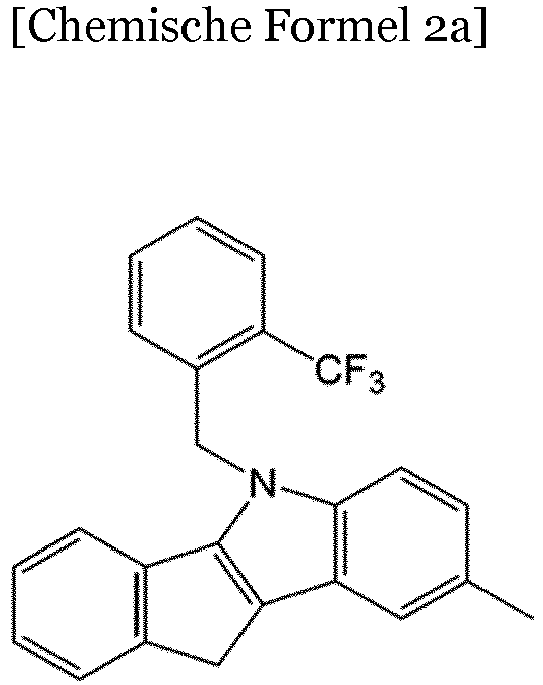


- Metallocenverbindung nach Anspruch 1, wobei Q1 und Q2 in chemischer Formel 1 jeweils unabhängig Wasserstoff, eine Methylgruppe, eine Ethylgruppe, eine Propylgruppe, eine Isopropylgruppe, eine n-Butylgruppe, eine tert-Butylgruppe, eine Methoxymethylgruppe, eine tert-Butoxymethylgruppe, eine tert-Butoxyhexylgruppe, eine 1-Ethoxyethylgruppe, eine 1-Methyl-1-methoxyethylgruppe, eine Tetrahydropyranylgruppe oder eine Tetrahydrofuranylgruppe sind.
- Metallocenverbindung nach Anspruch 1, wobei die durch chemische Formel 1 dargestellte Verbindung die folgende Strukturformel aufweist:

- Katalysatorzusammensetzung, umfassend die Metallocenverbindung nach Anspruch 1 und einen Cokatalysator.
- Katalysatorzusammensetzung nach Anspruch 4, wobei der Cokatalysator eine oder mehrere Verbindungen umfasst, die durch die folgende chemische Formel 4, chemische Formel 5 und chemische Formel 6 dargestellt sind:
[Chemische Formel 4] -[Al(R32)-O]n-,
wobei in chemischer Formel 4R32 gleich oder verschieden voneinander ist und jeweils unabhängig ein Halogen; ein Kohlenwasserstoff mit 1 bis 20 Kohlenstoffatomen; oder ein Halogen-substituierter Kohlenwasserstoff mit 1 bis 20 Kohlenstoffatomen ist; undn eine ganze Zahl von 2 oder mehr ist,
[Chemische Formel 5] J(R32)3,
wobei in chemischer Formel 5R32 gleich wie in chemischer Formel 4 definiert ist, undJ Aluminium oder Bor ist,
[Chemische Formel 6] [E-H]+[ZA'4]- oder [E]+[ZA'4]-,
wobei in chemischer Formel 6E eine neutrale oder kationische Lewissäure ist;H ein Wasserstoffatom ist;Z ein Element der Gruppe 13 ist; undA gleich oder verschieden voneinander ist und jeweils unabhängig eine Arylgruppe mit 6 bis 20 Kohlenstoffatomen oder eine Alkylgruppe mit 1 bis 20 Kohlenstoffatomen ist, von denen ein oder mehrere Wasserstoffatome unsubstituiert oder substituiert sind mit einem Halogen, einem Kohlenwasserstoff mit 1 bis 20 Kohlenstoffatomen, Alkoxy oder Phenoxy. - Katalysatorzusammensetzung nach Anspruch 4, wobei die Katalysatorzusammensetzung in der Form ist, dass sie auf einem Träger geträgert ist.
- Katalysatorzusammensetzung nach Anspruch 6, wobei der Träger einer oder mehrere ist, ausgewählt aus der Gruppe bestehend aus Silica, Silica-Alumina und Silica-Magnesia.
- Verfahren zum Herstellen eines Polyolefins, umfassend den Schritt eines Polymerisierens von Monomeren auf Olefinbasis in der Gegenwart der Katalysatorzusammensetzung nach Anspruch 4.
- Verfahren nach Anspruch 8, wobei das Polymerisieren durch ein Lösungspolymerisationsverfahren, ein Slurryverfahren oder ein Gasphasenverfahren durchgeführt wird.
- Verfahren nach Anspruch 8, wobei das Monomer auf Olefinbasis ein oder mehrere Monomere umfasst, ausgewählt aus der Gruppe bestehend aus Ethylen, Propylen, 1-Buten, 1-Penten, 4-Methyl-1-penten, 1-Hexen, 1-Hepten, 1-Octen, 1-Decen, 1-Undecen, 1-Dodecen, 1-Tetradecen, 1-Hexadecen und 1-Eicosen.
Applications Claiming Priority (1)
| Application Number | Priority Date | Filing Date | Title |
|---|---|---|---|
| PCT/KR2015/000926 WO2016122018A1 (ko) | 2015-01-28 | 2015-01-28 | 메탈로센 화합물, 이를 포함하는 촉매 조성물, 및 이를 이용하는 폴리올레핀의 제조방법 |
Publications (3)
| Publication Number | Publication Date |
|---|---|
| EP3138847A1 EP3138847A1 (de) | 2017-03-08 |
| EP3138847A4 EP3138847A4 (de) | 2017-12-27 |
| EP3138847B1 true EP3138847B1 (de) | 2020-01-15 |
Family
ID=56543620
Family Applications (1)
| Application Number | Title | Priority Date | Filing Date |
|---|---|---|---|
| EP15880200.9A Active EP3138847B1 (de) | 2015-01-28 | 2015-01-28 | Metallocenverbindung, katalysatorzusammensetzung damit und verfahren zur herstellung von polyolefin damit |
Country Status (5)
| Country | Link |
|---|---|
| US (1) | US9994652B2 (de) |
| EP (1) | EP3138847B1 (de) |
| JP (1) | JP6450393B2 (de) |
| CN (1) | CN106536534B (de) |
| WO (1) | WO2016122018A1 (de) |
Families Citing this family (10)
| Publication number | Priority date | Publication date | Assignee | Title |
|---|---|---|---|---|
| WO2016122017A1 (ko) * | 2015-01-28 | 2016-08-04 | 주식회사 엘지화학 | 메탈로센 화합물, 이를 포함하는 촉매 조성물 및 이를 이용하는 올레핀계 중합체의 제조방법 |
| US20180079843A1 (en) * | 2015-02-06 | 2018-03-22 | Petrochina Company Limited | Metallocene complex with a heteroatom-containing pi-ligand and preparation method therefor, catalyst system containing the same and use thereof |
| KR102073252B1 (ko) | 2016-12-05 | 2020-02-04 | 주식회사 엘지화학 | 올레핀 공중합체 합성용 촉매 조성물 및 올레핀 공중합체의 제조 방법 |
| WO2018117403A1 (ko) * | 2016-12-19 | 2018-06-28 | 주식회사 엘지화학 | 혼성 담지 메탈로센 촉매 및 이를 이용한 폴리올레핀의 제조 방법 |
| KR102073253B1 (ko) | 2016-12-19 | 2020-02-04 | 주식회사 엘지화학 | 혼성 담지 메탈로센 촉매 및 이를 이용한 폴리올레핀의 제조 방법 |
| KR102427756B1 (ko) * | 2018-12-10 | 2022-08-01 | 주식회사 엘지화학 | 폴리에틸렌 및 이의 염소화 폴리에틸렌 |
| KR102252430B1 (ko) | 2018-12-10 | 2021-05-14 | 주식회사 엘지화학 | 폴리에틸렌 및 이의 염소화 폴리에틸렌 |
| KR102427755B1 (ko) | 2018-12-10 | 2022-08-01 | 주식회사 엘지화학 | 폴리에틸렌 및 이의 염소화 폴리에틸렌 |
| KR102812372B1 (ko) * | 2019-09-18 | 2025-05-23 | 주식회사 엘지화학 | 고내압성을 갖는 가교화 폴리에틸렌 파이프 |
| EP4015542B1 (de) * | 2020-06-10 | 2025-11-12 | LG Chem, Ltd. | Polyethylen und chloriertes polyethylen davon |
Family Cites Families (19)
| Publication number | Priority date | Publication date | Assignee | Title |
|---|---|---|---|---|
| US5064802A (en) | 1989-09-14 | 1991-11-12 | The Dow Chemical Company | Metal complex compounds |
| DE69130320T2 (de) | 1990-07-24 | 1999-04-08 | Mitsui Chemicals Inc | Katalysator für alpha-olefinpolymerisation und herstellung von poly(alpha)olefinen damit |
| AU1870999A (en) | 1997-11-12 | 1999-05-31 | Montell Technology Company B.V. | Metallocenes and catalysts for olefin-polymerisation |
| US6908972B2 (en) * | 2002-04-16 | 2005-06-21 | Equistar Chemicals, Lp | Method for making polyolefins |
| KR20050024287A (ko) | 2002-05-31 | 2005-03-10 | 에퀴스타 케미칼즈, 엘피 | 용액 상태의 고온 올레핀 중합 방법 |
| US6756455B2 (en) * | 2002-05-31 | 2004-06-29 | Equistar Chemicals, Lp | High-temperature solution process for polyolefin manufacture |
| US6683150B1 (en) | 2002-12-19 | 2004-01-27 | Equistar Chemicals, Lp | High molecular weight polypropylene process |
| KR100579843B1 (ko) | 2003-04-01 | 2006-05-12 | 주식회사 엘지화학 | 혼성 담지 메탈로센 촉매 및 그의 제조방법과 이를 이용한폴리올레핀의 제조방법 |
| US6958377B2 (en) * | 2003-10-15 | 2005-10-25 | Equistar Chemicals, Lp | Olefin polymerization process |
| KR100690345B1 (ko) | 2004-09-03 | 2007-03-09 | 주식회사 엘지화학 | 담지 메탈로센 촉매, 그 제조방법 및 이를 이용한폴리올레핀의 제조방법 |
| US7189675B2 (en) | 2005-03-07 | 2007-03-13 | Equistar Chemicals, Lp | Olefin polymerization catalyst on plasma-contacted support |
| US7781549B2 (en) | 2007-09-04 | 2010-08-24 | Equistar Chemicals, Lp | Olefin polymerization process |
| US7655740B2 (en) * | 2007-09-04 | 2010-02-02 | Equistar Chemicals, Lp | Olefin polymerization process |
| KR101154507B1 (ko) | 2009-07-31 | 2012-06-13 | 주식회사 엘지화학 | 메탈로센 화합물, 이를 포함하는 촉매 조성물 및 이를 이용하여 제조된 올레핀계 중합체 |
| SG192089A1 (en) * | 2011-01-27 | 2013-08-30 | Lg Chemical Ltd | Olefin block copolymer |
| KR101623485B1 (ko) | 2013-08-01 | 2016-05-23 | 주식회사 엘지화학 | 메탈로센 화합물, 이를 포함하는 촉매 조성물 및 이를 이용하는 올레핀계 중합체의 제조방법 |
| KR101650092B1 (ko) | 2013-08-01 | 2016-08-22 | 주식회사 엘지화학 | 메탈로센 화합물, 이를 포함하는 촉매 조성물 및 이를 이용하는 올레핀계 중합체의 제조방법 |
| KR101709688B1 (ko) | 2013-09-30 | 2017-02-23 | 주식회사 엘지화학 | 폴리올레핀의 제조 방법 및 이로부터 제조된 폴리올레핀 |
| KR101769097B1 (ko) * | 2013-11-21 | 2017-08-17 | 주식회사 엘지화학 | 메탈로센 화합물, 이를 포함하는 촉매 조성물, 및 이를 이용하는 폴리올레핀의 제조방법 |
-
2015
- 2015-01-28 US US15/316,829 patent/US9994652B2/en active Active
- 2015-01-28 EP EP15880200.9A patent/EP3138847B1/de active Active
- 2015-01-28 CN CN201580037437.5A patent/CN106536534B/zh active Active
- 2015-01-28 JP JP2016547526A patent/JP6450393B2/ja active Active
- 2015-01-28 WO PCT/KR2015/000926 patent/WO2016122018A1/ko not_active Ceased
Non-Patent Citations (1)
| Title |
|---|
| None * |
Also Published As
| Publication number | Publication date |
|---|---|
| US20170107307A1 (en) | 2017-04-20 |
| JP2018510121A (ja) | 2018-04-12 |
| EP3138847A4 (de) | 2017-12-27 |
| US9994652B2 (en) | 2018-06-12 |
| CN106536534B (zh) | 2021-03-12 |
| JP6450393B2 (ja) | 2019-01-09 |
| EP3138847A1 (de) | 2017-03-08 |
| CN106536534A (zh) | 2017-03-22 |
| WO2016122018A1 (ko) | 2016-08-04 |
Similar Documents
| Publication | Publication Date | Title |
|---|---|---|
| US9994652B2 (en) | Metallocene compound, catalyst composition including the same, and method of preparing polyolefin using the same | |
| KR101769097B1 (ko) | 메탈로센 화합물, 이를 포함하는 촉매 조성물, 및 이를 이용하는 폴리올레핀의 제조방법 | |
| KR101650092B1 (ko) | 메탈로센 화합물, 이를 포함하는 촉매 조성물 및 이를 이용하는 올레핀계 중합체의 제조방법 | |
| US9725472B2 (en) | Metallocene compound, a catalyst composition comprising the same, and a method of preparing an olefinic polymer by using the same | |
| EP3173429B1 (de) | Metallocenverbindung, metallocengestützter katalysator und verfahren zur herstellung von polyolefin damit | |
| KR101691626B1 (ko) | 메탈로센 화합물, 이를 포함하는 촉매 조성물 및 이를 이용하는 올레핀계 중합체의 제조방법 | |
| EP3184556B1 (de) | Metallocen-geträgerter katalysator und verfahren zur herstellung von polyolefin damit | |
| US9994653B2 (en) | Metallocene compound, catalyst composition including the same, and method of preparing olefin-based polymer using the same | |
| EP3255069A1 (de) | Geträgerter metallocenkatalysator und verfahren zur herstellung von polyolefin damit | |
| US10385146B2 (en) | Metallocene compound | |
| KR102733546B1 (ko) | 전이 금속 화합물, 이의 제조방법, 및 이를 포함하는 촉매 조성물 | |
| KR20220101482A (ko) | 신규한 메탈로센 화합물, 이를 포함하는 촉매 조성물 및 이를 이용한 올레핀 중합체의 제조 방법 |
Legal Events
| Date | Code | Title | Description |
|---|---|---|---|
| STAA | Information on the status of an ep patent application or granted ep patent |
Free format text: STATUS: THE INTERNATIONAL PUBLICATION HAS BEEN MADE |
|
| PUAI | Public reference made under article 153(3) epc to a published international application that has entered the european phase |
Free format text: ORIGINAL CODE: 0009012 |
|
| STAA | Information on the status of an ep patent application or granted ep patent |
Free format text: STATUS: REQUEST FOR EXAMINATION WAS MADE |
|
| 17P | Request for examination filed |
Effective date: 20161128 |
|
| AK | Designated contracting states |
Kind code of ref document: A1 Designated state(s): AL AT BE BG CH CY CZ DE DK EE ES FI FR GB GR HR HU IE IS IT LI LT LU LV MC MK MT NL NO PL PT RO RS SE SI SK SM TR |
|
| AX | Request for extension of the european patent |
Extension state: BA ME |
|
| A4 | Supplementary search report drawn up and despatched |
Effective date: 20171128 |
|
| RIC1 | Information provided on ipc code assigned before grant |
Ipc: C07F 17/00 20060101AFI20171122BHEP Ipc: C07F 7/00 20060101ALI20171122BHEP Ipc: C08F 4/6592 20060101ALI20171122BHEP |
|
| DAX | Request for extension of the european patent (deleted) | ||
| STAA | Information on the status of an ep patent application or granted ep patent |
Free format text: STATUS: EXAMINATION IS IN PROGRESS |
|
| 17Q | First examination report despatched |
Effective date: 20180822 |
|
| GRAP | Despatch of communication of intention to grant a patent |
Free format text: ORIGINAL CODE: EPIDOSNIGR1 |
|
| STAA | Information on the status of an ep patent application or granted ep patent |
Free format text: STATUS: GRANT OF PATENT IS INTENDED |
|
| INTG | Intention to grant announced |
Effective date: 20191029 |
|
| GRAS | Grant fee paid |
Free format text: ORIGINAL CODE: EPIDOSNIGR3 |
|
| GRAA | (expected) grant |
Free format text: ORIGINAL CODE: 0009210 |
|
| STAA | Information on the status of an ep patent application or granted ep patent |
Free format text: STATUS: THE PATENT HAS BEEN GRANTED |
|
| AK | Designated contracting states |
Kind code of ref document: B1 Designated state(s): AL AT BE BG CH CY CZ DE DK EE ES FI FR GB GR HR HU IE IS IT LI LT LU LV MC MK MT NL NO PL PT RO RS SE SI SK SM TR |
|
| REG | Reference to a national code |
Ref country code: CH Ref legal event code: EP Ref country code: GB Ref legal event code: FG4D |
|
| REG | Reference to a national code |
Ref country code: IE Ref legal event code: FG4D |
|
| REG | Reference to a national code |
Ref country code: DE Ref legal event code: R096 Ref document number: 602015045821 Country of ref document: DE |
|
| REG | Reference to a national code |
Ref country code: AT Ref legal event code: REF Ref document number: 1225062 Country of ref document: AT Kind code of ref document: T Effective date: 20200215 |
|
| REG | Reference to a national code |
Ref country code: NL Ref legal event code: MP Effective date: 20200115 |
|
| REG | Reference to a national code |
Ref country code: LT Ref legal event code: MG4D |
|
| PG25 | Lapsed in a contracting state [announced via postgrant information from national office to epo] |
Ref country code: FI Free format text: LAPSE BECAUSE OF FAILURE TO SUBMIT A TRANSLATION OF THE DESCRIPTION OR TO PAY THE FEE WITHIN THE PRESCRIBED TIME-LIMIT Effective date: 20200115 Ref country code: NO Free format text: LAPSE BECAUSE OF FAILURE TO SUBMIT A TRANSLATION OF THE DESCRIPTION OR TO PAY THE FEE WITHIN THE PRESCRIBED TIME-LIMIT Effective date: 20200415 Ref country code: RS Free format text: LAPSE BECAUSE OF FAILURE TO SUBMIT A TRANSLATION OF THE DESCRIPTION OR TO PAY THE FEE WITHIN THE PRESCRIBED TIME-LIMIT Effective date: 20200115 Ref country code: NL Free format text: LAPSE BECAUSE OF FAILURE TO SUBMIT A TRANSLATION OF THE DESCRIPTION OR TO PAY THE FEE WITHIN THE PRESCRIBED TIME-LIMIT Effective date: 20200115 Ref country code: PT Free format text: LAPSE BECAUSE OF FAILURE TO SUBMIT A TRANSLATION OF THE DESCRIPTION OR TO PAY THE FEE WITHIN THE PRESCRIBED TIME-LIMIT Effective date: 20200607 |
|
| PG25 | Lapsed in a contracting state [announced via postgrant information from national office to epo] |
Ref country code: IS Free format text: LAPSE BECAUSE OF FAILURE TO SUBMIT A TRANSLATION OF THE DESCRIPTION OR TO PAY THE FEE WITHIN THE PRESCRIBED TIME-LIMIT Effective date: 20200515 Ref country code: BG Free format text: LAPSE BECAUSE OF FAILURE TO SUBMIT A TRANSLATION OF THE DESCRIPTION OR TO PAY THE FEE WITHIN THE PRESCRIBED TIME-LIMIT Effective date: 20200415 Ref country code: HR Free format text: LAPSE BECAUSE OF FAILURE TO SUBMIT A TRANSLATION OF THE DESCRIPTION OR TO PAY THE FEE WITHIN THE PRESCRIBED TIME-LIMIT Effective date: 20200115 Ref country code: GR Free format text: LAPSE BECAUSE OF FAILURE TO SUBMIT A TRANSLATION OF THE DESCRIPTION OR TO PAY THE FEE WITHIN THE PRESCRIBED TIME-LIMIT Effective date: 20200416 Ref country code: SE Free format text: LAPSE BECAUSE OF FAILURE TO SUBMIT A TRANSLATION OF THE DESCRIPTION OR TO PAY THE FEE WITHIN THE PRESCRIBED TIME-LIMIT Effective date: 20200115 Ref country code: LV Free format text: LAPSE BECAUSE OF FAILURE TO SUBMIT A TRANSLATION OF THE DESCRIPTION OR TO PAY THE FEE WITHIN THE PRESCRIBED TIME-LIMIT Effective date: 20200115 |
|
| REG | Reference to a national code |
Ref country code: CH Ref legal event code: PL |
|
| REG | Reference to a national code |
Ref country code: BE Ref legal event code: MM Effective date: 20200131 |
|
| REG | Reference to a national code |
Ref country code: DE Ref legal event code: R097 Ref document number: 602015045821 Country of ref document: DE |
|
| PG25 | Lapsed in a contracting state [announced via postgrant information from national office to epo] |
Ref country code: MC Free format text: LAPSE BECAUSE OF FAILURE TO SUBMIT A TRANSLATION OF THE DESCRIPTION OR TO PAY THE FEE WITHIN THE PRESCRIBED TIME-LIMIT Effective date: 20200115 Ref country code: LU Free format text: LAPSE BECAUSE OF NON-PAYMENT OF DUE FEES Effective date: 20200128 Ref country code: CZ Free format text: LAPSE BECAUSE OF FAILURE TO SUBMIT A TRANSLATION OF THE DESCRIPTION OR TO PAY THE FEE WITHIN THE PRESCRIBED TIME-LIMIT Effective date: 20200115 Ref country code: LT Free format text: LAPSE BECAUSE OF FAILURE TO SUBMIT A TRANSLATION OF THE DESCRIPTION OR TO PAY THE FEE WITHIN THE PRESCRIBED TIME-LIMIT Effective date: 20200115 Ref country code: ES Free format text: LAPSE BECAUSE OF FAILURE TO SUBMIT A TRANSLATION OF THE DESCRIPTION OR TO PAY THE FEE WITHIN THE PRESCRIBED TIME-LIMIT Effective date: 20200115 Ref country code: SK Free format text: LAPSE BECAUSE OF FAILURE TO SUBMIT A TRANSLATION OF THE DESCRIPTION OR TO PAY THE FEE WITHIN THE PRESCRIBED TIME-LIMIT Effective date: 20200115 Ref country code: RO Free format text: LAPSE BECAUSE OF FAILURE TO SUBMIT A TRANSLATION OF THE DESCRIPTION OR TO PAY THE FEE WITHIN THE PRESCRIBED TIME-LIMIT Effective date: 20200115 Ref country code: EE Free format text: LAPSE BECAUSE OF FAILURE TO SUBMIT A TRANSLATION OF THE DESCRIPTION OR TO PAY THE FEE WITHIN THE PRESCRIBED TIME-LIMIT Effective date: 20200115 Ref country code: SM Free format text: LAPSE BECAUSE OF FAILURE TO SUBMIT A TRANSLATION OF THE DESCRIPTION OR TO PAY THE FEE WITHIN THE PRESCRIBED TIME-LIMIT Effective date: 20200115 Ref country code: DK Free format text: LAPSE BECAUSE OF FAILURE TO SUBMIT A TRANSLATION OF THE DESCRIPTION OR TO PAY THE FEE WITHIN THE PRESCRIBED TIME-LIMIT Effective date: 20200115 |
|
| REG | Reference to a national code |
Ref country code: AT Ref legal event code: MK05 Ref document number: 1225062 Country of ref document: AT Kind code of ref document: T Effective date: 20200115 |
|
| PLBE | No opposition filed within time limit |
Free format text: ORIGINAL CODE: 0009261 |
|
| STAA | Information on the status of an ep patent application or granted ep patent |
Free format text: STATUS: NO OPPOSITION FILED WITHIN TIME LIMIT |
|
| PG25 | Lapsed in a contracting state [announced via postgrant information from national office to epo] |
Ref country code: BE Free format text: LAPSE BECAUSE OF NON-PAYMENT OF DUE FEES Effective date: 20200131 Ref country code: CH Free format text: LAPSE BECAUSE OF NON-PAYMENT OF DUE FEES Effective date: 20200131 Ref country code: LI Free format text: LAPSE BECAUSE OF NON-PAYMENT OF DUE FEES Effective date: 20200131 |
|
| 26N | No opposition filed |
Effective date: 20201016 |
|
| PG25 | Lapsed in a contracting state [announced via postgrant information from national office to epo] |
Ref country code: AT Free format text: LAPSE BECAUSE OF FAILURE TO SUBMIT A TRANSLATION OF THE DESCRIPTION OR TO PAY THE FEE WITHIN THE PRESCRIBED TIME-LIMIT Effective date: 20200115 Ref country code: IE Free format text: LAPSE BECAUSE OF NON-PAYMENT OF DUE FEES Effective date: 20200128 |
|
| PG25 | Lapsed in a contracting state [announced via postgrant information from national office to epo] |
Ref country code: SI Free format text: LAPSE BECAUSE OF FAILURE TO SUBMIT A TRANSLATION OF THE DESCRIPTION OR TO PAY THE FEE WITHIN THE PRESCRIBED TIME-LIMIT Effective date: 20200115 Ref country code: PL Free format text: LAPSE BECAUSE OF FAILURE TO SUBMIT A TRANSLATION OF THE DESCRIPTION OR TO PAY THE FEE WITHIN THE PRESCRIBED TIME-LIMIT Effective date: 20200115 |
|
| PG25 | Lapsed in a contracting state [announced via postgrant information from national office to epo] |
Ref country code: TR Free format text: LAPSE BECAUSE OF FAILURE TO SUBMIT A TRANSLATION OF THE DESCRIPTION OR TO PAY THE FEE WITHIN THE PRESCRIBED TIME-LIMIT Effective date: 20200115 Ref country code: MT Free format text: LAPSE BECAUSE OF FAILURE TO SUBMIT A TRANSLATION OF THE DESCRIPTION OR TO PAY THE FEE WITHIN THE PRESCRIBED TIME-LIMIT Effective date: 20200115 Ref country code: CY Free format text: LAPSE BECAUSE OF FAILURE TO SUBMIT A TRANSLATION OF THE DESCRIPTION OR TO PAY THE FEE WITHIN THE PRESCRIBED TIME-LIMIT Effective date: 20200115 |
|
| PG25 | Lapsed in a contracting state [announced via postgrant information from national office to epo] |
Ref country code: MK Free format text: LAPSE BECAUSE OF FAILURE TO SUBMIT A TRANSLATION OF THE DESCRIPTION OR TO PAY THE FEE WITHIN THE PRESCRIBED TIME-LIMIT Effective date: 20200115 Ref country code: AL Free format text: LAPSE BECAUSE OF FAILURE TO SUBMIT A TRANSLATION OF THE DESCRIPTION OR TO PAY THE FEE WITHIN THE PRESCRIBED TIME-LIMIT Effective date: 20200115 |
|
| PGFP | Annual fee paid to national office [announced via postgrant information from national office to epo] |
Ref country code: GB Payment date: 20251222 Year of fee payment: 12 |
|
| PGFP | Annual fee paid to national office [announced via postgrant information from national office to epo] |
Ref country code: FR Payment date: 20251223 Year of fee payment: 12 |
|
| PGFP | Annual fee paid to national office [announced via postgrant information from national office to epo] |
Ref country code: DE Payment date: 20251222 Year of fee payment: 12 |
|
| PGFP | Annual fee paid to national office [announced via postgrant information from national office to epo] |
Ref country code: IT Payment date: 20251223 Year of fee payment: 12 |