EP3140101B1 - Procédé d'assemblage de plusieurs parties d'une pièce et outil d'assemblage - Google Patents
Procédé d'assemblage de plusieurs parties d'une pièce et outil d'assemblage Download PDFInfo
- Publication number
- EP3140101B1 EP3140101B1 EP15709958.1A EP15709958A EP3140101B1 EP 3140101 B1 EP3140101 B1 EP 3140101B1 EP 15709958 A EP15709958 A EP 15709958A EP 3140101 B1 EP3140101 B1 EP 3140101B1
- Authority
- EP
- European Patent Office
- Prior art keywords
- workpiece
- joining
- damage
- joined
- workpiece parts
- Prior art date
- Legal status (The legal status is an assumption and is not a legal conclusion. Google has not performed a legal analysis and makes no representation as to the accuracy of the status listed.)
- Active
Links
Images

Classifications
-
- B—PERFORMING OPERATIONS; TRANSPORTING
- B29—WORKING OF PLASTICS; WORKING OF SUBSTANCES IN A PLASTIC STATE IN GENERAL
- B29C—SHAPING OR JOINING OF PLASTICS; SHAPING OF MATERIAL IN A PLASTIC STATE, NOT OTHERWISE PROVIDED FOR; AFTER-TREATMENT OF THE SHAPED PRODUCTS, e.g. REPAIRING
- B29C65/00—Joining or sealing of preformed parts, e.g. welding of plastics materials; Apparatus therefor
- B29C65/82—Testing the joint
- B29C65/8292—Testing the joint by the use of ultrasonic, sonic or infrasonic waves
-
- B—PERFORMING OPERATIONS; TRANSPORTING
- B29—WORKING OF PLASTICS; WORKING OF SUBSTANCES IN A PLASTIC STATE IN GENERAL
- B29C—SHAPING OR JOINING OF PLASTICS; SHAPING OF MATERIAL IN A PLASTIC STATE, NOT OTHERWISE PROVIDED FOR; AFTER-TREATMENT OF THE SHAPED PRODUCTS, e.g. REPAIRING
- B29C65/00—Joining or sealing of preformed parts, e.g. welding of plastics materials; Apparatus therefor
- B29C65/02—Joining or sealing of preformed parts, e.g. welding of plastics materials; Apparatus therefor by heating, with or without pressure
- B29C65/08—Joining or sealing of preformed parts, e.g. welding of plastics materials; Apparatus therefor by heating, with or without pressure using ultrasonic vibrations
-
- B—PERFORMING OPERATIONS; TRANSPORTING
- B29—WORKING OF PLASTICS; WORKING OF SUBSTANCES IN A PLASTIC STATE IN GENERAL
- B29C—SHAPING OR JOINING OF PLASTICS; SHAPING OF MATERIAL IN A PLASTIC STATE, NOT OTHERWISE PROVIDED FOR; AFTER-TREATMENT OF THE SHAPED PRODUCTS, e.g. REPAIRING
- B29C65/00—Joining or sealing of preformed parts, e.g. welding of plastics materials; Apparatus therefor
- B29C65/56—Joining or sealing of preformed parts, e.g. welding of plastics materials; Apparatus therefor using mechanical means or mechanical connections, e.g. form-fits
- B29C65/60—Riveting or staking
- B29C65/601—Riveting or staking using extra riveting elements, i.e. the rivets being non-integral with the parts to be joined
- B29C65/602—Riveting or staking using extra riveting elements, i.e. the rivets being non-integral with the parts to be joined using hollow rivets
-
- B—PERFORMING OPERATIONS; TRANSPORTING
- B29—WORKING OF PLASTICS; WORKING OF SUBSTANCES IN A PLASTIC STATE IN GENERAL
- B29C—SHAPING OR JOINING OF PLASTICS; SHAPING OF MATERIAL IN A PLASTIC STATE, NOT OTHERWISE PROVIDED FOR; AFTER-TREATMENT OF THE SHAPED PRODUCTS, e.g. REPAIRING
- B29C65/00—Joining or sealing of preformed parts, e.g. welding of plastics materials; Apparatus therefor
- B29C65/56—Joining or sealing of preformed parts, e.g. welding of plastics materials; Apparatus therefor using mechanical means or mechanical connections, e.g. form-fits
- B29C65/60—Riveting or staking
- B29C65/601—Riveting or staking using extra riveting elements, i.e. the rivets being non-integral with the parts to be joined
- B29C65/603—Riveting or staking using extra riveting elements, i.e. the rivets being non-integral with the parts to be joined the rivets being pushed in blind holes
-
- B—PERFORMING OPERATIONS; TRANSPORTING
- B29—WORKING OF PLASTICS; WORKING OF SUBSTANCES IN A PLASTIC STATE IN GENERAL
- B29C—SHAPING OR JOINING OF PLASTICS; SHAPING OF MATERIAL IN A PLASTIC STATE, NOT OTHERWISE PROVIDED FOR; AFTER-TREATMENT OF THE SHAPED PRODUCTS, e.g. REPAIRING
- B29C65/00—Joining or sealing of preformed parts, e.g. welding of plastics materials; Apparatus therefor
- B29C65/82—Testing the joint
-
- B—PERFORMING OPERATIONS; TRANSPORTING
- B29—WORKING OF PLASTICS; WORKING OF SUBSTANCES IN A PLASTIC STATE IN GENERAL
- B29C—SHAPING OR JOINING OF PLASTICS; SHAPING OF MATERIAL IN A PLASTIC STATE, NOT OTHERWISE PROVIDED FOR; AFTER-TREATMENT OF THE SHAPED PRODUCTS, e.g. REPAIRING
- B29C65/00—Joining or sealing of preformed parts, e.g. welding of plastics materials; Apparatus therefor
- B29C65/82—Testing the joint
- B29C65/8261—Testing the joint by the use of thermal means
-
- B—PERFORMING OPERATIONS; TRANSPORTING
- B29—WORKING OF PLASTICS; WORKING OF SUBSTANCES IN A PLASTIC STATE IN GENERAL
- B29C—SHAPING OR JOINING OF PLASTICS; SHAPING OF MATERIAL IN A PLASTIC STATE, NOT OTHERWISE PROVIDED FOR; AFTER-TREATMENT OF THE SHAPED PRODUCTS, e.g. REPAIRING
- B29C66/00—General aspects of processes or apparatus for joining preformed parts
- B29C66/01—General aspects dealing with the joint area or with the area to be joined
- B29C66/05—Particular design of joint configurations
- B29C66/10—Particular design of joint configurations particular design of the joint cross-sections
- B29C66/11—Joint cross-sections comprising a single joint-segment, i.e. one of the parts to be joined comprising a single joint-segment in the joint cross-section
- B29C66/112—Single lapped joints
- B29C66/1122—Single lap to lap joints, i.e. overlap joints
-
- B—PERFORMING OPERATIONS; TRANSPORTING
- B29—WORKING OF PLASTICS; WORKING OF SUBSTANCES IN A PLASTIC STATE IN GENERAL
- B29C—SHAPING OR JOINING OF PLASTICS; SHAPING OF MATERIAL IN A PLASTIC STATE, NOT OTHERWISE PROVIDED FOR; AFTER-TREATMENT OF THE SHAPED PRODUCTS, e.g. REPAIRING
- B29C66/00—General aspects of processes or apparatus for joining preformed parts
- B29C66/01—General aspects dealing with the joint area or with the area to be joined
- B29C66/05—Particular design of joint configurations
- B29C66/20—Particular design of joint configurations particular design of the joint lines, e.g. of the weld lines
- B29C66/21—Particular design of joint configurations particular design of the joint lines, e.g. of the weld lines said joint lines being formed by a single dot or dash or by several dots or dashes, i.e. spot joining or spot welding
-
- B—PERFORMING OPERATIONS; TRANSPORTING
- B29—WORKING OF PLASTICS; WORKING OF SUBSTANCES IN A PLASTIC STATE IN GENERAL
- B29C—SHAPING OR JOINING OF PLASTICS; SHAPING OF MATERIAL IN A PLASTIC STATE, NOT OTHERWISE PROVIDED FOR; AFTER-TREATMENT OF THE SHAPED PRODUCTS, e.g. REPAIRING
- B29C66/00—General aspects of processes or apparatus for joining preformed parts
- B29C66/40—General aspects of joining substantially flat articles, e.g. plates, sheets or web-like materials; Making flat seams in tubular or hollow articles; Joining single elements to substantially flat surfaces
- B29C66/41—Joining substantially flat articles ; Making flat seams in tubular or hollow articles
-
- B—PERFORMING OPERATIONS; TRANSPORTING
- B29—WORKING OF PLASTICS; WORKING OF SUBSTANCES IN A PLASTIC STATE IN GENERAL
- B29C—SHAPING OR JOINING OF PLASTICS; SHAPING OF MATERIAL IN A PLASTIC STATE, NOT OTHERWISE PROVIDED FOR; AFTER-TREATMENT OF THE SHAPED PRODUCTS, e.g. REPAIRING
- B29C66/00—General aspects of processes or apparatus for joining preformed parts
- B29C66/70—General aspects of processes or apparatus for joining preformed parts characterised by the composition, physical properties or the structure of the material of the parts to be joined; Joining with non-plastics material
- B29C66/72—General aspects of processes or apparatus for joining preformed parts characterised by the composition, physical properties or the structure of the material of the parts to be joined; Joining with non-plastics material characterised by the structure of the material of the parts to be joined
- B29C66/721—Fibre-reinforced materials
-
- B—PERFORMING OPERATIONS; TRANSPORTING
- B29—WORKING OF PLASTICS; WORKING OF SUBSTANCES IN A PLASTIC STATE IN GENERAL
- B29C—SHAPING OR JOINING OF PLASTICS; SHAPING OF MATERIAL IN A PLASTIC STATE, NOT OTHERWISE PROVIDED FOR; AFTER-TREATMENT OF THE SHAPED PRODUCTS, e.g. REPAIRING
- B29C66/00—General aspects of processes or apparatus for joining preformed parts
- B29C66/80—General aspects of machine operations or constructions and parts thereof
- B29C66/81—General aspects of the pressing elements, i.e. the elements applying pressure on the parts to be joined in the area to be joined, e.g. the welding jaws or clamps
- B29C66/814—General aspects of the pressing elements, i.e. the elements applying pressure on the parts to be joined in the area to be joined, e.g. the welding jaws or clamps characterised by the design of the pressing elements, e.g. of the welding jaws or clamps
- B29C66/8141—General aspects of the pressing elements, i.e. the elements applying pressure on the parts to be joined in the area to be joined, e.g. the welding jaws or clamps characterised by the design of the pressing elements, e.g. of the welding jaws or clamps characterised by the surface geometry of the part of the pressing elements, e.g. welding jaws or clamps, coming into contact with the parts to be joined
- B29C66/81411—General aspects of the pressing elements, i.e. the elements applying pressure on the parts to be joined in the area to be joined, e.g. the welding jaws or clamps characterised by the design of the pressing elements, e.g. of the welding jaws or clamps characterised by the surface geometry of the part of the pressing elements, e.g. welding jaws or clamps, coming into contact with the parts to be joined characterised by its cross-section, e.g. transversal or longitudinal, being non-flat
- B29C66/81421—General aspects of the pressing elements, i.e. the elements applying pressure on the parts to be joined in the area to be joined, e.g. the welding jaws or clamps characterised by the design of the pressing elements, e.g. of the welding jaws or clamps characterised by the surface geometry of the part of the pressing elements, e.g. welding jaws or clamps, coming into contact with the parts to be joined characterised by its cross-section, e.g. transversal or longitudinal, being non-flat being convex or concave
- B29C66/81423—General aspects of the pressing elements, i.e. the elements applying pressure on the parts to be joined in the area to be joined, e.g. the welding jaws or clamps characterised by the design of the pressing elements, e.g. of the welding jaws or clamps characterised by the surface geometry of the part of the pressing elements, e.g. welding jaws or clamps, coming into contact with the parts to be joined characterised by its cross-section, e.g. transversal or longitudinal, being non-flat being convex or concave being concave
-
- B—PERFORMING OPERATIONS; TRANSPORTING
- B29—WORKING OF PLASTICS; WORKING OF SUBSTANCES IN A PLASTIC STATE IN GENERAL
- B29C—SHAPING OR JOINING OF PLASTICS; SHAPING OF MATERIAL IN A PLASTIC STATE, NOT OTHERWISE PROVIDED FOR; AFTER-TREATMENT OF THE SHAPED PRODUCTS, e.g. REPAIRING
- B29C66/00—General aspects of processes or apparatus for joining preformed parts
- B29C66/80—General aspects of machine operations or constructions and parts thereof
- B29C66/81—General aspects of the pressing elements, i.e. the elements applying pressure on the parts to be joined in the area to be joined, e.g. the welding jaws or clamps
- B29C66/814—General aspects of the pressing elements, i.e. the elements applying pressure on the parts to be joined in the area to be joined, e.g. the welding jaws or clamps characterised by the design of the pressing elements, e.g. of the welding jaws or clamps
- B29C66/8141—General aspects of the pressing elements, i.e. the elements applying pressure on the parts to be joined in the area to be joined, e.g. the welding jaws or clamps characterised by the design of the pressing elements, e.g. of the welding jaws or clamps characterised by the surface geometry of the part of the pressing elements, e.g. welding jaws or clamps, coming into contact with the parts to be joined
- B29C66/81431—General aspects of the pressing elements, i.e. the elements applying pressure on the parts to be joined in the area to be joined, e.g. the welding jaws or clamps characterised by the design of the pressing elements, e.g. of the welding jaws or clamps characterised by the surface geometry of the part of the pressing elements, e.g. welding jaws or clamps, coming into contact with the parts to be joined comprising a single cavity, e.g. a groove
-
- B—PERFORMING OPERATIONS; TRANSPORTING
- B29—WORKING OF PLASTICS; WORKING OF SUBSTANCES IN A PLASTIC STATE IN GENERAL
- B29C—SHAPING OR JOINING OF PLASTICS; SHAPING OF MATERIAL IN A PLASTIC STATE, NOT OTHERWISE PROVIDED FOR; AFTER-TREATMENT OF THE SHAPED PRODUCTS, e.g. REPAIRING
- B29C66/00—General aspects of processes or apparatus for joining preformed parts
- B29C66/80—General aspects of machine operations or constructions and parts thereof
- B29C66/83—General aspects of machine operations or constructions and parts thereof characterised by the movement of the joining or pressing tools
- B29C66/832—Reciprocating joining or pressing tools
- B29C66/8322—Joining or pressing tools reciprocating along one axis
-
- G—PHYSICS
- G01—MEASURING; TESTING
- G01N—INVESTIGATING OR ANALYSING MATERIALS BY DETERMINING THEIR CHEMICAL OR PHYSICAL PROPERTIES
- G01N29/00—Investigating or analysing materials by the use of ultrasonic, sonic or infrasonic waves; Visualisation of the interior of objects by transmitting ultrasonic or sonic waves through the object
- G01N29/04—Analysing solids
- G01N29/043—Analysing solids in the interior, e.g. by shear waves
-
- G—PHYSICS
- G01—MEASURING; TESTING
- G01N—INVESTIGATING OR ANALYSING MATERIALS BY DETERMINING THEIR CHEMICAL OR PHYSICAL PROPERTIES
- G01N29/00—Investigating or analysing materials by the use of ultrasonic, sonic or infrasonic waves; Visualisation of the interior of objects by transmitting ultrasonic or sonic waves through the object
- G01N29/14—Investigating or analysing materials by the use of ultrasonic, sonic or infrasonic waves; Visualisation of the interior of objects by transmitting ultrasonic or sonic waves through the object using acoustic emission techniques
-
- G—PHYSICS
- G01—MEASURING; TESTING
- G01N—INVESTIGATING OR ANALYSING MATERIALS BY DETERMINING THEIR CHEMICAL OR PHYSICAL PROPERTIES
- G01N29/00—Investigating or analysing materials by the use of ultrasonic, sonic or infrasonic waves; Visualisation of the interior of objects by transmitting ultrasonic or sonic waves through the object
- G01N29/22—Details, e.g. general constructional or apparatus details
- G01N29/26—Arrangements for orientation or scanning by relative movement of the head and the sensor
- G01N29/262—Arrangements for orientation or scanning by relative movement of the head and the sensor by electronic orientation or focusing, e.g. with phased arrays
-
- B—PERFORMING OPERATIONS; TRANSPORTING
- B29—WORKING OF PLASTICS; WORKING OF SUBSTANCES IN A PLASTIC STATE IN GENERAL
- B29C—SHAPING OR JOINING OF PLASTICS; SHAPING OF MATERIAL IN A PLASTIC STATE, NOT OTHERWISE PROVIDED FOR; AFTER-TREATMENT OF THE SHAPED PRODUCTS, e.g. REPAIRING
- B29C66/00—General aspects of processes or apparatus for joining preformed parts
- B29C66/80—General aspects of machine operations or constructions and parts thereof
- B29C66/81—General aspects of the pressing elements, i.e. the elements applying pressure on the parts to be joined in the area to be joined, e.g. the welding jaws or clamps
- B29C66/812—General aspects of the pressing elements, i.e. the elements applying pressure on the parts to be joined in the area to be joined, e.g. the welding jaws or clamps characterised by the composition, by the structure, by the intensive physical properties or by the optical properties of the material constituting the pressing elements, e.g. constituting the welding jaws or clamps
- B29C66/8124—General aspects of the pressing elements, i.e. the elements applying pressure on the parts to be joined in the area to be joined, e.g. the welding jaws or clamps characterised by the composition, by the structure, by the intensive physical properties or by the optical properties of the material constituting the pressing elements, e.g. constituting the welding jaws or clamps characterised by the structure of the material constituting the pressing elements, e.g. constituting the welding jaws or clamps
-
- B—PERFORMING OPERATIONS; TRANSPORTING
- B29—WORKING OF PLASTICS; WORKING OF SUBSTANCES IN A PLASTIC STATE IN GENERAL
- B29L—INDEXING SCHEME ASSOCIATED WITH SUBCLASS B29C, RELATING TO PARTICULAR ARTICLES
- B29L2031/00—Other particular articles
- B29L2031/30—Vehicles, e.g. ships or aircraft, or body parts thereof
- B29L2031/3005—Body finishings
-
- B—PERFORMING OPERATIONS; TRANSPORTING
- B29—WORKING OF PLASTICS; WORKING OF SUBSTANCES IN A PLASTIC STATE IN GENERAL
- B29L—INDEXING SCHEME ASSOCIATED WITH SUBCLASS B29C, RELATING TO PARTICULAR ARTICLES
- B29L2031/00—Other particular articles
- B29L2031/30—Vehicles, e.g. ships or aircraft, or body parts thereof
- B29L2031/3055—Cars
-
- G—PHYSICS
- G01—MEASURING; TESTING
- G01N—INVESTIGATING OR ANALYSING MATERIALS BY DETERMINING THEIR CHEMICAL OR PHYSICAL PROPERTIES
- G01N2291/00—Indexing codes associated with group G01N29/00
- G01N2291/26—Scanned objects
- G01N2291/263—Surfaces
- G01N2291/2638—Complex surfaces
Definitions
- the invention relates to a method for joining body components, as well as a joining tool.
- non-destructive testing at least on a random basis, is essential.
- body construction non-destructive testing of joined workpieces takes place after production.
- a randomly selected vehicle is usually removed and checked by hand.
- all joined workpieces or joining points of each vehicle are never checked; instead, non-destructive testing is always carried out on individual vehicles and at individual joining points.
- the US 5 260 766 A discloses a method for joining two plastic sheets by heat, e.g. for producing food packaging in the food industry.
- the two plastic sheets are joined together by a heat seal, with a lighting device being provided in the tool for producing the heat seal, which can shine through the heat seal produced.
- the lighting is part of a testing device that can detect food residues trapped in the heat seal.
- the JP 2004 001071 A shows a method for joining two components using an intermediate layer between the components, which melts when exposed to a laser, thereby bonding the two components together.
- an ultrasound detector can be provided to detect the thickness of the intermediate layer. The laser beam is adjusted to melt this layer based on the thickness determined.
- the US 2007/0034313 A1 discloses a device for applying a fiber-reinforced tape to a workpiece, the device comprising an optical inspection device that can examine the tape applied to the workpiece for defects.
- the invention is based on the object of providing a possibility for checking joined workpieces, which can be integrated into production without great expense and time.
- each of the workpiece parts to be joined and the joined workpieces can be tested, so that the quality control of the workpieces is significantly improved, in contrast to random testing.
- the workpiece parts can be inspected immediately before joining and the joined workpiece can be inspected immediately after joining, in particular by means of a testing device provided in the joining tool, so that any new damage that occurs can be attributed without a doubt to the joining process.
- At least one of the plurality of workpiece parts is made of a fiber-reinforced plastic, so that the joined workpiece part can benefit from the advantages of a fiber-reinforced plastic.
- this workpiece part or the joined workpiece is sorted out so that components with excessive damage are identified as early as possible and not reused.
- Typical damage to a fiber-reinforced plastic that occurs during joining is delamination or interfiber breaks.
- the damage to the workpiece parts before joining is compared with the damage to the joined workpiece after joining, the damage caused by joining is determined and the joined workpiece is sorted out if the damage caused by joining is critical.
- the workpiece parts used in automobile body construction usually already have a certain degree of irregularities, for example due to the introduction of holes. It is therefore not possible to set an absolute level of damage for quality control of a joined workpiece as a limit for critical damage.
- conclusions can be drawn about the damage caused by joining itself, so that this can be assessed separately. In this way, the assessment of the damage caused by joining becomes much more differentiated.
- damage is considered critical if the damage caused by joining exceeds the size of the irregularities before joining to a critical extent, especially if the irregularities classified as non-critical before joining have increased in size by more than twice the damage caused by joining.
- the ratio of the size of the irregularities before joining to the damage after joining can be defined as a limit value.
- the workpiece parts and/or the joined workpiece are tested using air ultrasound, contact ultrasound, acoustic emission, thermography and/or another non-destructive method. These methods are tried and tested and are known, so their use is cost-effective.
- the joining tool comprises a punch and a die, wherein the workpiece parts are checked for damage when the punch is seated on the workpiece part and/or the The joined workpiece is checked for damage when the joining tool is completely closed.
- the workpiece parts can be checked for damage in one-sided joining processes if the punch is resting on one of the workpiece parts or is positioned at a distance of less than 3.0 mm from one of the workpiece parts. In this way, the workpiece part can also be checked without contact.
- a coupling agent is automatically fed between the stamp and one of the workpiece parts, thereby improving the quality of the inspection.
- step d the coupling agent between the punch and the workpiece is automatically removed so that the joined workpiece is free of coupling agent residues.
- the assessment of whether damage is critical can be carried out automatically, in particular by comparing the samples obtained during the tests with each other and/or with a limit sample, which can significantly reduce the personnel effort required for the test and thus the costs incurred.
- the comparison of the samples obtained with each other and/or with a limit sample can be carried out using image processing software, whereby the size of the differences between the samples obtained or between the samples obtained and the limit sample can be used as a measure of the damage.
- the samples obtained during testing are stored in a database together with information about the end product, for example the chassis number of vehicles in which the joined workpiece was installed. In this way, it is possible to prove the quality of the joined workpiece in the event of subsequent complaints from the buyer.
- the object is further achieved by a joining tool according to claim 13.
- the joining tool makes it possible to Workpiece parts or the joined workpiece to carry out an inspection of the workpiece parts and/or the joined workpiece. In addition, an inspection of the workpiece parts and/or the workpiece is possible directly in the production facility.
- the testing device is designed for testing by means of air ultrasound, contact ultrasound, acoustic emission and/or another non-destructive method; in particular, the testing device is a phased array ultrasound head, whereby known, inexpensive and high-quality testing devices can be used.
- the joining tool can be a semi-hollow punch riveting tool.
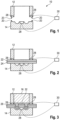
- FIG. 1 A joining tool 10 for joining several workpiece parts, in particular body components, is shown schematically in section.
- the joining tool 10 can be a forming tool, for example a semi-hollow punch riveting tool.
- the joining tool 10 can also be designed for joining workpiece parts made of fiber-reinforced plastic.
- the joining tool 10 has a punch 12 and a die 14, wherein the punch 12 is displaceable relative to the die 14.
- the punch 12 is cylindrical and hollow, for example, and serves to guide a bolt 16 ( Figure 3 ).
- the surface of the punch 12 facing the die and the side of the die 14 facing the punch 12 form workpiece contact surfaces 20 on which When using the joining tool 10, the workpiece parts 22, 24 to be joined ( Figure 2 ) or the joined workpiece 26 ( Figure 3 ) issue.
- At least one testing device 28 is provided on the workpiece contact surfaces 20 on both the punch 12 and the die 14.
- the testing device 28 is designed for testing by means of air ultrasound, contact ultrasound, acoustic emission and/or another non-destructive method.
- the test device 28 is, for example, a phased array ultrasound head.
- a testing device 28 is provided only on the punch 12 or only on the die 14.
- test devices 28 also results from the geometry of the workpiece contact surfaces 20 and the workpiece parts 22, 24 to be tested or the joining points.
- test devices 28 are connected to an evaluation unit 30, for example a control of the joining tool 10. In the drawings, this is indicated by a dashed line.
- the testing device 28, together with the evaluation unit 30, can check the workpiece parts 22, 24 to be joined and/or the joined workpiece 26 for damage.
- the workpiece parts 22, 24 to be joined are placed in the joining tool 10.
- At least one of the workpiece parts 22, 24 can be made of a fiber-reinforced plastic.
- a coupling agent (not shown), for example contact gel, can be automatically fed between the stamp 12 and one of the workpiece parts 22, 24.
- the applied contact agent can also be removed automatically after joining.
- the joining tool 10 is now closed so that the punch 12 rests on the workpiece part 22 closest to it. This position is shown in Figure 2 In this position, the test devices 28 are now the workpiece parts 22 and 24 respectively and can check the workpiece parts 22, 24 in the joining tool 10 for damage.
- the testing of the workpiece parts 22, 24 and subsequently of the joined workpiece 26 is carried out by means of air ultrasound, contact ultrasound, acoustic emission, thermography and/or another non-destructive method.
- test devices 28 are phased array ultrasound heads
- the test produces a sample of the tested workpiece part 22, 24, which can then be transmitted to the evaluation unit 30.
- the samples of the workpiece parts 22, 24 obtained during the test are stored in the evaluation unit 30.
- An assessment of whether damage, i.e. irregularity of the workpiece parts 22, 24, is critical can be made, for example, by comparing the obtained pattern with a limit pattern stored in the memory of the evaluation unit 30 and the damage is considered critical if the obtained pattern differs from the corresponding limit pattern beyond a certain extent.
- This assessment can be carried out automatically by the evaluation unit 30.
- this workpiece part 22, 24 is sorted out.
- a rivet 32 is inserted into the workpiece parts 22, 24 by means of a bolt 16, as in Figure 3 can be recognized.
- the joined workpiece 26 is obtained from the two workpiece parts 22, 24.
- the Figure 3 The position of the joining tool 10 shown corresponds to the completely closed position in which the joined workpiece 26 is checked for damage by the testing devices 28.
- the inspection of the joined workpiece 26 is therefore carried out immediately after joining.
- the patterns obtained during the inspection of the joined workpiece 26 can also be transmitted to the evaluation unit 30, in which they are compared with a limit pattern for joined workpieces that is stored in the evaluation unit 30.
- the patterns of the individual workpiece parts 22, 24 can also be compared with the pattern of the joined workpiece 26 and the damage caused by the joining can be deduced from the differences in the patterns.
- the comparison of the obtained patterns with each other and/or with a boundary pattern can be done by means of image processing software, whereby the size of the differences between the obtained patterns with each other or between the obtained patterns and the boundary pattern can be used as a measure of the damage.
- the joined workpiece 26 is also sorted out.
- the size ratio of the two types of damage to each other can be defined as a limit value.
- a damage is considered critical if the damage caused by joining exceeds the size of the initial damage to a critical extent, especially if the damage considered non-critical
- the initial damage classified as such has increased in size by more than two times due to the damage caused by the joining process.
- Typical damages in a fiber-reinforced plastic that occur during joining are delamination or interfiber breaks.
- the obtained pattern of the joined workpiece 26 can also be stored in the evaluation unit 30.
- the obtained pattern of the joined workpiece 26 can be stored in a database together with the patterns of the individual workpiece parts 22, 24 and linked to information about the end product in which the joined workpiece 26 was used.
- the information about the product can be, for example, the chassis number of the vehicle in which the joined workpiece 26 was installed, so that in the event of complaints, the patterns of the workpiece parts 22, 24 and the joined workpiece 26 can be used.
- the joining tool 10 is a different joining tool than the semi-hollow punch rivet pliers shown.
- the joining tool 10 checks the workpiece parts 22, 24 for damage in one-sided joining processes when the punch 12 sits on one of the workpiece parts 22, 24 or is positioned at a distance of less than 3.0 mm from one of the workpiece parts 22, 24.
Landscapes
- Mechanical Engineering (AREA)
- Engineering & Computer Science (AREA)
- Physics & Mathematics (AREA)
- Chemical & Material Sciences (AREA)
- Pathology (AREA)
- Analytical Chemistry (AREA)
- Biochemistry (AREA)
- General Health & Medical Sciences (AREA)
- General Physics & Mathematics (AREA)
- Immunology (AREA)
- Life Sciences & Earth Sciences (AREA)
- Health & Medical Sciences (AREA)
- Acoustics & Sound (AREA)
- Thermal Sciences (AREA)
- Lining Or Joining Of Plastics Or The Like (AREA)
- Pressure Welding/Diffusion-Bonding (AREA)
- Insertion Pins And Rivets (AREA)
Claims (15)
- Procédé d'assemblage de composants de carrosserie (22, 24) en matières plastiques renforcées par des fibres dans lequela) les parties de pièce (22, 24) sont placées dans un outil d'assemblage (10),b) les parties de pièce (22, 24) sont contrôlées dans l'outil d'assemblage (10) pour vérifier qu'elles ne sont pas endommagées,c) les parties de pièce (22, 24) sont assemblées par l'outil d'assemblage (10), etd) la pièce assemblée (26) est contrôlée dans l'outil d'assemblage (10) pour vérifier qu'elle n'est pas endommagée.
- Procédé selon la revendication 1, caractérisé en ce que les parties de pièce (22, 24) sont contrôlées immédiatement avant et la pièce assemblée (26) immédiatement après l'assemblage, notamment par un dispositif de contrôle (28) prévu dans l'outil d'assemblage (10).
- Procédé selon la revendication 1 ou 2, caractérisé en ce qu'au moins une des plusieurs parties de pièce (22, 24) est fabriquée à partir d'une matière plastique renforcée par des fibres.
- Procédé selon l'une quelconque des revendications précédentes, caractérisé en ce que, lorsqu'un endommagement critique d'une des parties de pièce (22, 24) ou de la pièce assemblée (26) est détecté, cette partie de pièce (22, 24) ou la pièce assemblée (26) est rejetée.
- Procédé selon l'une quelconque des revendications précédentes, caractérisé en ce que les endommagements des parties de pièce (22, 24) avant l'assemblage sont comparés aux endommagements de la pièce assemblée (26) après l'assemblage, l'endommagement causé par l'assemblage est déterminé, et la pièce assemblée (26) est rejetée si l'endommagement causé par l'assemblage est critique.
- Procédé selon l'une quelconque des revendications précédentes, caractérisé en ce que les parties de pièce (22, 24) et/ou la pièce assemblée (26) sont contrôlées par ultrasons aériens, ultrasons de contact, émission acoustique, thermographie et/ou toute autre méthode non destructive.
- Procédé selon l'une quelconque des revendications précédentes, caractérisé en ce que l'outil d'assemblage (10) présente un poinçon (12) et une matrice (14), les parties de pièce (22, 24) étant contrôlées pour vérifier qu'elles ne sont pas endommagées lorsque le poinçon (12) repose sur l'une des parties de pièce (22, 24) et/ou la pièce assemblée (26) étant contrôlée pour vérifier qu'elle n'est pas endommagée lorsque l'outil d'assemblage (10) est complètement fermé.
- Procédé selon l'une quelconque des revendications 1 à 6, caractérisé en ce que l'outil d'assemblage (10) contrôle si les parties de pièce (22, 24) sont endommagées dans le cas de procédés d'assemblage unilatéraux, lorsque le poinçon (12) repose sur l'une des parties de pièce (22, 24) ou est positionné à une distance inférieure à 3,0 mm de l'une des parties de pièce (22, 24).
- Procédé selon la revendication 7 ou 8, caractérisé en ce qu'avant l'étape b), un moyen de couplage entre le poinçon (12) et l'une des parties de pièce (22, 24) est alimenté de manière automatisée.
- Procédé selon la revendication 9, caractérisé en ce qu'après l'étape d), le moyen de couplage entre le poinçon (12) et la pièce assemblée (26) est évacué de manière automatisée.
- Procédé selon l'une quelconque des revendications précédentes, caractérisé en ce que l'évaluation de si un endommagement est critique est effectuée de manière automatisée, notamment par comparaison des motifs obtenus par les contrôles entre eux et/ou avec un motif limite.
- Procédé selon l'une quelconque des revendications précédentes, caractérisé en ce que les motifs obtenus lors du contrôle sont stockés dans une base de données conjointement avec des informations sur le produit final dans lequel la pièce assemblée (26) a été utilisée.
- Outil d'assemblage pour assembler plusieurs parties de pièce (22, 24) en matière plastique renforcée par des fibres, avec au moins un dispositif de contrôle (28) qui est réalisé sur l'une des surfaces d'appui de pièce (20) de l'outil d'assemblage (10), caractérisé en ce que l'outil d'assemblage (10) est un outil de formage avec un poinçon (12) et une matrice (14), l'au moins un dispositif de contrôle (28) étant prévu dans le poinçon (12) et/ou la matrice (14), le dispositif de contrôle (28) étant réalisé pour contrôler que les parties de pièce (22, 24) ne sont pas endommagées dans l'outil d'assemblage (10) avant l'assemblage et pour contrôler que la pièce assemblée (26) n'est pas endommagée dans l'outil d'assemblage (10), le dispositif de contrôle (28) étant en outre réalisé pour effectuer un contrôle des parties de pièce (22, 24) et de la pièce assemblée (26) sans étapes de transport supplémentaires des parties de pièce (22, 24) ou de la pièce assemblée (26).
- Outil d'assemblage selon la revendication 13, caractérisé en ce que le dispositif de contrôle (28) est réalisé pour un contrôle par ultrasons aériens, par ultrasons de contact, par émission acoustique et/ou par une autre méthode non destructive, notamment est une tête ultrasonique à réseau en phase.
- Outil d'assemblage selon la revendication 13 ou 14, caractérisé en ce que l'outil d'assemblage (10) est une pince à rivets semi-creux.
Applications Claiming Priority (2)
| Application Number | Priority Date | Filing Date | Title |
|---|---|---|---|
| DE102014208512.8A DE102014208512A1 (de) | 2014-05-07 | 2014-05-07 | Verfahren zum Fügen von mehreren Werkstückteilen sowie Fügewerkzeug |
| PCT/EP2015/055427 WO2015169492A1 (fr) | 2014-05-07 | 2015-03-16 | Procédé d'assemblage de plusieurs parties d'une pièce et outil d'assemblage |
Publications (2)
| Publication Number | Publication Date |
|---|---|
| EP3140101A1 EP3140101A1 (fr) | 2017-03-15 |
| EP3140101B1 true EP3140101B1 (fr) | 2024-08-28 |
Family
ID=52682747
Family Applications (1)
| Application Number | Title | Priority Date | Filing Date |
|---|---|---|---|
| EP15709958.1A Active EP3140101B1 (fr) | 2014-05-07 | 2015-03-16 | Procédé d'assemblage de plusieurs parties d'une pièce et outil d'assemblage |
Country Status (5)
| Country | Link |
|---|---|
| US (1) | US10315364B2 (fr) |
| EP (1) | EP3140101B1 (fr) |
| CN (1) | CN105916660B (fr) |
| DE (1) | DE102014208512A1 (fr) |
| WO (1) | WO2015169492A1 (fr) |
Families Citing this family (5)
| Publication number | Priority date | Publication date | Assignee | Title |
|---|---|---|---|---|
| DE102017113430A1 (de) * | 2017-06-19 | 2018-12-20 | Deutsches Zentrum für Luft- und Raumfahrt e.V. | Verfahren und Vorrichtung zum Überprüfen einer Fügeoberfläche |
| DE102018213372A1 (de) * | 2018-08-09 | 2020-02-13 | Bayerische Motoren Werke Aktiengesellschaft | Verfahren und Vorrichtung zum Ultraschall-Punktschweißen |
| DE102018214827A1 (de) * | 2018-08-31 | 2020-03-05 | Kautex Textron Gmbh & Co. Kg | Verfahren zum Prüfen einer Anbindung eines Einbauteils in einem als Hohlkörper ausgebildeten Kunststoffformteil |
| DE102018132240A1 (de) * | 2018-12-14 | 2020-06-18 | Christian Walther | Prüfvorrichtung, Tiefziehanlage mit Prüfvorrichtung und Prüfverfahren |
| JP7342646B2 (ja) * | 2019-11-20 | 2023-09-12 | 株式会社Ihi | 検査方法および検査装置 |
Citations (1)
| Publication number | Priority date | Publication date | Assignee | Title |
|---|---|---|---|---|
| US20070034313A1 (en) * | 2005-08-11 | 2007-02-15 | The Boeing Company | Systems and methods for in-process vision inspection for automated machines |
Family Cites Families (11)
| Publication number | Priority date | Publication date | Assignee | Title |
|---|---|---|---|---|
| US5260766A (en) * | 1992-04-02 | 1993-11-09 | Armitage Mark H | Apparatus for detection of an imperfect seal and method therefore |
| DE19834797C2 (de) * | 1998-08-01 | 2002-04-25 | Christian Kuerten | Verfahren und Vorrichtung zur zustandsabhängigen Prozeßführung bei der Verarbeitung von Kunststoffen |
| JP2004001071A (ja) * | 2002-03-22 | 2004-01-08 | Fine Device:Kk | レーザ透過性部材間の接合方法 |
| AT413665B (de) | 2002-09-06 | 2006-04-15 | Fronius Int Gmbh | Verfahren zur qualitätsüberwachung von punktschweissungen |
| US7713473B2 (en) * | 2005-06-30 | 2010-05-11 | Ethicon, Inc. | Sterilization system and vaporizer therefor |
| US7712369B2 (en) * | 2007-11-27 | 2010-05-11 | The Boeing Company | Array-based system and method for inspecting a workpiece with backscattered ultrasonic signals |
| WO2009088723A1 (fr) * | 2008-01-09 | 2009-07-16 | Dow Global Technologies Inc. | Dispositif et procédé d'évaluation de l'usinabilité de stratifiés |
| US20120031055A1 (en) * | 2010-08-09 | 2012-02-09 | Weder Donald E | Packaging containers having conformation induction members and methods of making and using same |
| BR112013014007B1 (pt) | 2010-12-21 | 2020-05-12 | Bielomatik Leuze Gmbh + Co Kg | Método para garantia de qualidade de componentes plásticos soldados |
| US9063059B2 (en) * | 2011-05-10 | 2015-06-23 | Edison Welding Institute, Inc. | Three-dimensional matrix phased array spot weld inspection system |
| DE102012103753A1 (de) * | 2012-04-27 | 2013-10-31 | Deutsches Zentrum für Luft- und Raumfahrt e.V. | Überwachung eines Herstellungsprozesses |
-
2014
- 2014-05-07 DE DE102014208512.8A patent/DE102014208512A1/de not_active Withdrawn
-
2015
- 2015-03-16 CN CN201580005001.8A patent/CN105916660B/zh not_active Expired - Fee Related
- 2015-03-16 WO PCT/EP2015/055427 patent/WO2015169492A1/fr not_active Ceased
- 2015-03-16 EP EP15709958.1A patent/EP3140101B1/fr active Active
-
2016
- 2016-11-03 US US15/342,193 patent/US10315364B2/en active Active
Patent Citations (1)
| Publication number | Priority date | Publication date | Assignee | Title |
|---|---|---|---|---|
| US20070034313A1 (en) * | 2005-08-11 | 2007-02-15 | The Boeing Company | Systems and methods for in-process vision inspection for automated machines |
Also Published As
| Publication number | Publication date |
|---|---|
| EP3140101A1 (fr) | 2017-03-15 |
| WO2015169492A1 (fr) | 2015-11-12 |
| CN105916660A (zh) | 2016-08-31 |
| US10315364B2 (en) | 2019-06-11 |
| DE102014208512A1 (de) | 2015-11-12 |
| US20170066184A1 (en) | 2017-03-09 |
| CN105916660B (zh) | 2021-10-12 |
Similar Documents
| Publication | Publication Date | Title |
|---|---|---|
| EP3044571B1 (fr) | Procédé et dispositif de vérification d'un système d'inspection servant à détecter des défauts de surfaces | |
| EP3140101B1 (fr) | Procédé d'assemblage de plusieurs parties d'une pièce et outil d'assemblage | |
| DE102009049155B4 (de) | Verfahren zur Ermittlung der Kantenrissempfindlichkeit eines Blechmaterials und Vorrichtung zum Herstellen eines Prüflings aus diesem Blechmaterial | |
| EP3475675B1 (fr) | Procede de controle mecanique d'une structure d'un seul tenant a l'aide de corps de controle fabriques selon un procede d'impression 3d | |
| DE102014201273A1 (de) | Verfahren zur automatisierten Qualitätskontrolle bei der Serienherstellung von Blechformteilen und Anlage zur Serienherstellung von Blechformteilen | |
| DE102020108680B4 (de) | Verfahren und Anordnung zur Oberflächenbearbeitung eines Werkstücks | |
| DE102012100096B4 (de) | Umformwerkzeug mit akustischer Qualitätskontrolle | |
| AT518154B1 (de) | Verfahren und Vorrichtung zum Trennen eines Werkstückes | |
| DE102009038746B3 (de) | Verfahren und Vorrichtung zur Qualitätsprüfung eines umgeformten thermoplastischen faserverstärkten Kunststoffbauteils | |
| DE10056859A1 (de) | Vorrichtung und Verfahren zur akustischen Qualitätsprüfung von kalten Umformfügeverbindungen | |
| DE102015006419A1 (de) | Verfahren und Vorrichtung zum Überwachen eines Fügevorgangs | |
| EP4015137B1 (fr) | Procédé de fabrication de composants soudés | |
| EP3021997B1 (fr) | Dispositif de correction de surface d'étanchéité pour bouchons filetés, et système et procédé | |
| EP4237834B1 (fr) | Évaluation automatisée de vis usées | |
| DE102010011762A1 (de) | Verfahren zur Kontrolle mechanischer Bauteileigenschaften thermomechanisch umgeformter Blechbauteile | |
| EP3178583A2 (fr) | Dispositif de rivetage par sertissage et procédé de rivetage par sertissage au moyen d'une oscillation soutenant la force exercée sur le poinçon | |
| EP4155852B1 (fr) | Circuit processeur et procédé de surveillance d'un processus d'assemblage de pièces dans un automate d'assemblage ainsi que automate d'assemblage | |
| DE102017213323A1 (de) | Fügevorrichtung und Verfahren zum Verbinden von Bauteilen | |
| DE102017222449A1 (de) | Messendes Blindnietsetzgerät und Verfahren zum Setzen eines Blindniets | |
| DE102020005670A1 (de) | Verfahren und Vorrichtung zur Herstellung von Proben aus metallischen Werkstoffen mit bekannten plastischen Vordehnungen für die Werkstoffcharakterisierung | |
| DE102019110581A1 (de) | Verfahren zum Prüfen flächiger Bauteile | |
| EP2998733A1 (fr) | Identification d'assemblages rives defectueux par ultrasons | |
| EP1136176A2 (fr) | Procédé de détermination d'un paramètre d'au moins un pièce d'assemblage | |
| DE102019004862A1 (de) | Verfahren zum automatischen Prüfen wenigstens einer Schweißnaht | |
| DE102022118645A1 (de) | Verfahren zur Herstellung einer Falzklebeverbindung |
Legal Events
| Date | Code | Title | Description |
|---|---|---|---|
| STAA | Information on the status of an ep patent application or granted ep patent |
Free format text: STATUS: THE INTERNATIONAL PUBLICATION HAS BEEN MADE |
|
| PUAI | Public reference made under article 153(3) epc to a published international application that has entered the european phase |
Free format text: ORIGINAL CODE: 0009012 |
|
| STAA | Information on the status of an ep patent application or granted ep patent |
Free format text: STATUS: REQUEST FOR EXAMINATION WAS MADE |
|
| 17P | Request for examination filed |
Effective date: 20161004 |
|
| AK | Designated contracting states |
Kind code of ref document: A1 Designated state(s): AL AT BE BG CH CY CZ DE DK EE ES FI FR GB GR HR HU IE IS IT LI LT LU LV MC MK MT NL NO PL PT RO RS SE SI SK SM TR |
|
| AX | Request for extension of the european patent |
Extension state: BA ME |
|
| DAV | Request for validation of the european patent (deleted) | ||
| DAX | Request for extension of the european patent (deleted) | ||
| STAA | Information on the status of an ep patent application or granted ep patent |
Free format text: STATUS: EXAMINATION IS IN PROGRESS |
|
| 17Q | First examination report despatched |
Effective date: 20200713 |
|
| P01 | Opt-out of the competence of the unified patent court (upc) registered |
Effective date: 20230502 |
|
| GRAP | Despatch of communication of intention to grant a patent |
Free format text: ORIGINAL CODE: EPIDOSNIGR1 |
|
| STAA | Information on the status of an ep patent application or granted ep patent |
Free format text: STATUS: GRANT OF PATENT IS INTENDED |
|
| INTG | Intention to grant announced |
Effective date: 20240513 |
|
| RIN1 | Information on inventor provided before grant (corrected) |
Inventor name: WILHELM, MAXIMILIAN Inventor name: WAGNER, JULIA |
|
| GRAS | Grant fee paid |
Free format text: ORIGINAL CODE: EPIDOSNIGR3 |
|
| GRAA | (expected) grant |
Free format text: ORIGINAL CODE: 0009210 |
|
| STAA | Information on the status of an ep patent application or granted ep patent |
Free format text: STATUS: THE PATENT HAS BEEN GRANTED |
|
| AK | Designated contracting states |
Kind code of ref document: B1 Designated state(s): AL AT BE BG CH CY CZ DE DK EE ES FI FR GB GR HR HU IE IS IT LI LT LU LV MC MK MT NL NO PL PT RO RS SE SI SK SM TR |
|
| REG | Reference to a national code |
Ref country code: GB Ref legal event code: FG4D Free format text: NOT ENGLISH |
|
| REG | Reference to a national code |
Ref country code: CH Ref legal event code: EP |
|
| REG | Reference to a national code |
Ref country code: DE Ref legal event code: R096 Ref document number: 502015016933 Country of ref document: DE |
|
| REG | Reference to a national code |
Ref country code: IE Ref legal event code: FG4D Free format text: LANGUAGE OF EP DOCUMENT: GERMAN |
|
| REG | Reference to a national code |
Ref country code: LT Ref legal event code: MG9D |
|
| PG25 | Lapsed in a contracting state [announced via postgrant information from national office to epo] |
Ref country code: NO Free format text: LAPSE BECAUSE OF FAILURE TO SUBMIT A TRANSLATION OF THE DESCRIPTION OR TO PAY THE FEE WITHIN THE PRESCRIBED TIME-LIMIT Effective date: 20241128 |
|
| PG25 | Lapsed in a contracting state [announced via postgrant information from national office to epo] |
Ref country code: NL Free format text: LAPSE BECAUSE OF FAILURE TO SUBMIT A TRANSLATION OF THE DESCRIPTION OR TO PAY THE FEE WITHIN THE PRESCRIBED TIME-LIMIT Effective date: 20240828 Ref country code: PL Free format text: LAPSE BECAUSE OF FAILURE TO SUBMIT A TRANSLATION OF THE DESCRIPTION OR TO PAY THE FEE WITHIN THE PRESCRIBED TIME-LIMIT Effective date: 20240828 Ref country code: GR Free format text: LAPSE BECAUSE OF FAILURE TO SUBMIT A TRANSLATION OF THE DESCRIPTION OR TO PAY THE FEE WITHIN THE PRESCRIBED TIME-LIMIT Effective date: 20241129 Ref country code: PT Free format text: LAPSE BECAUSE OF FAILURE TO SUBMIT A TRANSLATION OF THE DESCRIPTION OR TO PAY THE FEE WITHIN THE PRESCRIBED TIME-LIMIT Effective date: 20241230 Ref country code: FI Free format text: LAPSE BECAUSE OF FAILURE TO SUBMIT A TRANSLATION OF THE DESCRIPTION OR TO PAY THE FEE WITHIN THE PRESCRIBED TIME-LIMIT Effective date: 20240828 |
|
| PG25 | Lapsed in a contracting state [announced via postgrant information from national office to epo] |
Ref country code: BG Free format text: LAPSE BECAUSE OF FAILURE TO SUBMIT A TRANSLATION OF THE DESCRIPTION OR TO PAY THE FEE WITHIN THE PRESCRIBED TIME-LIMIT Effective date: 20240828 |
|
| PG25 | Lapsed in a contracting state [announced via postgrant information from national office to epo] |
Ref country code: LV Free format text: LAPSE BECAUSE OF FAILURE TO SUBMIT A TRANSLATION OF THE DESCRIPTION OR TO PAY THE FEE WITHIN THE PRESCRIBED TIME-LIMIT Effective date: 20240828 |
|
| REG | Reference to a national code |
Ref country code: NL Ref legal event code: MP Effective date: 20240828 |
|
| PG25 | Lapsed in a contracting state [announced via postgrant information from national office to epo] |
Ref country code: IS Free format text: LAPSE BECAUSE OF FAILURE TO SUBMIT A TRANSLATION OF THE DESCRIPTION OR TO PAY THE FEE WITHIN THE PRESCRIBED TIME-LIMIT Effective date: 20241228 |
|
| PG25 | Lapsed in a contracting state [announced via postgrant information from national office to epo] |
Ref country code: HR Free format text: LAPSE BECAUSE OF FAILURE TO SUBMIT A TRANSLATION OF THE DESCRIPTION OR TO PAY THE FEE WITHIN THE PRESCRIBED TIME-LIMIT Effective date: 20240828 |
|
| PG25 | Lapsed in a contracting state [announced via postgrant information from national office to epo] |
Ref country code: ES Free format text: LAPSE BECAUSE OF FAILURE TO SUBMIT A TRANSLATION OF THE DESCRIPTION OR TO PAY THE FEE WITHIN THE PRESCRIBED TIME-LIMIT Effective date: 20240828 Ref country code: RS Free format text: LAPSE BECAUSE OF FAILURE TO SUBMIT A TRANSLATION OF THE DESCRIPTION OR TO PAY THE FEE WITHIN THE PRESCRIBED TIME-LIMIT Effective date: 20241128 |
|
| PG25 | Lapsed in a contracting state [announced via postgrant information from national office to epo] |
Ref country code: RS Free format text: LAPSE BECAUSE OF FAILURE TO SUBMIT A TRANSLATION OF THE DESCRIPTION OR TO PAY THE FEE WITHIN THE PRESCRIBED TIME-LIMIT Effective date: 20241128 Ref country code: PT Free format text: LAPSE BECAUSE OF FAILURE TO SUBMIT A TRANSLATION OF THE DESCRIPTION OR TO PAY THE FEE WITHIN THE PRESCRIBED TIME-LIMIT Effective date: 20241230 Ref country code: PL Free format text: LAPSE BECAUSE OF FAILURE TO SUBMIT A TRANSLATION OF THE DESCRIPTION OR TO PAY THE FEE WITHIN THE PRESCRIBED TIME-LIMIT Effective date: 20240828 Ref country code: NO Free format text: LAPSE BECAUSE OF FAILURE TO SUBMIT A TRANSLATION OF THE DESCRIPTION OR TO PAY THE FEE WITHIN THE PRESCRIBED TIME-LIMIT Effective date: 20241128 Ref country code: NL Free format text: LAPSE BECAUSE OF FAILURE TO SUBMIT A TRANSLATION OF THE DESCRIPTION OR TO PAY THE FEE WITHIN THE PRESCRIBED TIME-LIMIT Effective date: 20240828 Ref country code: LV Free format text: LAPSE BECAUSE OF FAILURE TO SUBMIT A TRANSLATION OF THE DESCRIPTION OR TO PAY THE FEE WITHIN THE PRESCRIBED TIME-LIMIT Effective date: 20240828 Ref country code: IS Free format text: LAPSE BECAUSE OF FAILURE TO SUBMIT A TRANSLATION OF THE DESCRIPTION OR TO PAY THE FEE WITHIN THE PRESCRIBED TIME-LIMIT Effective date: 20241228 Ref country code: HR Free format text: LAPSE BECAUSE OF FAILURE TO SUBMIT A TRANSLATION OF THE DESCRIPTION OR TO PAY THE FEE WITHIN THE PRESCRIBED TIME-LIMIT Effective date: 20240828 Ref country code: GR Free format text: LAPSE BECAUSE OF FAILURE TO SUBMIT A TRANSLATION OF THE DESCRIPTION OR TO PAY THE FEE WITHIN THE PRESCRIBED TIME-LIMIT Effective date: 20241129 Ref country code: FI Free format text: LAPSE BECAUSE OF FAILURE TO SUBMIT A TRANSLATION OF THE DESCRIPTION OR TO PAY THE FEE WITHIN THE PRESCRIBED TIME-LIMIT Effective date: 20240828 Ref country code: ES Free format text: LAPSE BECAUSE OF FAILURE TO SUBMIT A TRANSLATION OF THE DESCRIPTION OR TO PAY THE FEE WITHIN THE PRESCRIBED TIME-LIMIT Effective date: 20240828 Ref country code: BG Free format text: LAPSE BECAUSE OF FAILURE TO SUBMIT A TRANSLATION OF THE DESCRIPTION OR TO PAY THE FEE WITHIN THE PRESCRIBED TIME-LIMIT Effective date: 20240828 |
|
| PG25 | Lapsed in a contracting state [announced via postgrant information from national office to epo] |
Ref country code: RO Free format text: LAPSE BECAUSE OF FAILURE TO SUBMIT A TRANSLATION OF THE DESCRIPTION OR TO PAY THE FEE WITHIN THE PRESCRIBED TIME-LIMIT Effective date: 20240828 Ref country code: DK Free format text: LAPSE BECAUSE OF FAILURE TO SUBMIT A TRANSLATION OF THE DESCRIPTION OR TO PAY THE FEE WITHIN THE PRESCRIBED TIME-LIMIT Effective date: 20240828 Ref country code: SM Free format text: LAPSE BECAUSE OF FAILURE TO SUBMIT A TRANSLATION OF THE DESCRIPTION OR TO PAY THE FEE WITHIN THE PRESCRIBED TIME-LIMIT Effective date: 20240828 |
|
| PG25 | Lapsed in a contracting state [announced via postgrant information from national office to epo] |
Ref country code: EE Free format text: LAPSE BECAUSE OF FAILURE TO SUBMIT A TRANSLATION OF THE DESCRIPTION OR TO PAY THE FEE WITHIN THE PRESCRIBED TIME-LIMIT Effective date: 20240828 |
|
| PG25 | Lapsed in a contracting state [announced via postgrant information from national office to epo] |
Ref country code: CZ Free format text: LAPSE BECAUSE OF FAILURE TO SUBMIT A TRANSLATION OF THE DESCRIPTION OR TO PAY THE FEE WITHIN THE PRESCRIBED TIME-LIMIT Effective date: 20240828 |
|
| PG25 | Lapsed in a contracting state [announced via postgrant information from national office to epo] |
Ref country code: SK Free format text: LAPSE BECAUSE OF FAILURE TO SUBMIT A TRANSLATION OF THE DESCRIPTION OR TO PAY THE FEE WITHIN THE PRESCRIBED TIME-LIMIT Effective date: 20240828 Ref country code: IT Free format text: LAPSE BECAUSE OF FAILURE TO SUBMIT A TRANSLATION OF THE DESCRIPTION OR TO PAY THE FEE WITHIN THE PRESCRIBED TIME-LIMIT Effective date: 20240828 |
|
| REG | Reference to a national code |
Ref country code: DE Ref legal event code: R097 Ref document number: 502015016933 Country of ref document: DE |
|
| PLBE | No opposition filed within time limit |
Free format text: ORIGINAL CODE: 0009261 |
|
| STAA | Information on the status of an ep patent application or granted ep patent |
Free format text: STATUS: NO OPPOSITION FILED WITHIN TIME LIMIT |
|
| 26N | No opposition filed |
Effective date: 20250530 |
|
| PG25 | Lapsed in a contracting state [announced via postgrant information from national office to epo] |
Ref country code: SE Free format text: LAPSE BECAUSE OF FAILURE TO SUBMIT A TRANSLATION OF THE DESCRIPTION OR TO PAY THE FEE WITHIN THE PRESCRIBED TIME-LIMIT Effective date: 20240828 |
|
| REG | Reference to a national code |
Ref country code: DE Ref legal event code: R119 Ref document number: 502015016933 Country of ref document: DE |
|
| PG25 | Lapsed in a contracting state [announced via postgrant information from national office to epo] |
Ref country code: MC Free format text: LAPSE BECAUSE OF FAILURE TO SUBMIT A TRANSLATION OF THE DESCRIPTION OR TO PAY THE FEE WITHIN THE PRESCRIBED TIME-LIMIT Effective date: 20240828 |
|
| REG | Reference to a national code |
Ref country code: CH Ref legal event code: H13 Free format text: ST27 STATUS EVENT CODE: U-0-0-H10-H13 (AS PROVIDED BY THE NATIONAL OFFICE) Effective date: 20251023 |
|
| PG25 | Lapsed in a contracting state [announced via postgrant information from national office to epo] |
Ref country code: LU Free format text: LAPSE BECAUSE OF NON-PAYMENT OF DUE FEES Effective date: 20250316 |
|
| GBPC | Gb: european patent ceased through non-payment of renewal fee |
Effective date: 20250316 |
|
| REG | Reference to a national code |
Ref country code: BE Ref legal event code: MM Effective date: 20250331 |
|
| PG25 | Lapsed in a contracting state [announced via postgrant information from national office to epo] |
Ref country code: DE Free format text: LAPSE BECAUSE OF NON-PAYMENT OF DUE FEES Effective date: 20251001 |
|
| PG25 | Lapsed in a contracting state [announced via postgrant information from national office to epo] |
Ref country code: GB Free format text: LAPSE BECAUSE OF NON-PAYMENT OF DUE FEES Effective date: 20250316 |
|
| PG25 | Lapsed in a contracting state [announced via postgrant information from national office to epo] |
Ref country code: FR Free format text: LAPSE BECAUSE OF NON-PAYMENT OF DUE FEES Effective date: 20250331 |
|
| PG25 | Lapsed in a contracting state [announced via postgrant information from national office to epo] |
Ref country code: BE Free format text: LAPSE BECAUSE OF NON-PAYMENT OF DUE FEES Effective date: 20250331 |
|
| PG25 | Lapsed in a contracting state [announced via postgrant information from national office to epo] |
Ref country code: CH Free format text: LAPSE BECAUSE OF NON-PAYMENT OF DUE FEES Effective date: 20250331 |
|
| PG25 | Lapsed in a contracting state [announced via postgrant information from national office to epo] |
Ref country code: IE Free format text: LAPSE BECAUSE OF NON-PAYMENT OF DUE FEES Effective date: 20250316 |