EP3140980B1 - System, basisstation, und verfahren zur aktivierung der nutzung von ressourcen für eine d2d-entdeckung - Google Patents
System, basisstation, und verfahren zur aktivierung der nutzung von ressourcen für eine d2d-entdeckung Download PDFInfo
- Publication number
- EP3140980B1 EP3140980B1 EP14891434.4A EP14891434A EP3140980B1 EP 3140980 B1 EP3140980 B1 EP 3140980B1 EP 14891434 A EP14891434 A EP 14891434A EP 3140980 B1 EP3140980 B1 EP 3140980B1
- Authority
- EP
- European Patent Office
- Prior art keywords
- resources
- user equipment
- discovery
- type
- message
- Prior art date
- Legal status (The legal status is an assumption and is not a legal conclusion. Google has not performed a legal analysis and makes no representation as to the accuracy of the status listed.)
- Not-in-force
Links
Images




Classifications
-
- H—ELECTRICITY
- H04—ELECTRIC COMMUNICATION TECHNIQUE
- H04W—WIRELESS COMMUNICATION NETWORKS
- H04W4/00—Services specially adapted for wireless communication networks; Facilities therefor
- H04W4/06—Selective distribution of broadcast services, e.g. multimedia broadcast multicast service [MBMS]; Services to user groups; One-way selective calling services
-
- H—ELECTRICITY
- H04—ELECTRIC COMMUNICATION TECHNIQUE
- H04L—TRANSMISSION OF DIGITAL INFORMATION, e.g. TELEGRAPHIC COMMUNICATION
- H04L12/00—Data switching networks
- H04L12/64—Hybrid switching systems
- H04L12/6418—Hybrid transport
-
- H—ELECTRICITY
- H04—ELECTRIC COMMUNICATION TECHNIQUE
- H04L—TRANSMISSION OF DIGITAL INFORMATION, e.g. TELEGRAPHIC COMMUNICATION
- H04L47/00—Traffic control in data switching networks
- H04L47/70—Admission control; Resource allocation
-
- H—ELECTRICITY
- H04—ELECTRIC COMMUNICATION TECHNIQUE
- H04L—TRANSMISSION OF DIGITAL INFORMATION, e.g. TELEGRAPHIC COMMUNICATION
- H04L65/00—Network arrangements, protocols or services for supporting real-time applications in data packet communication
- H04L65/60—Network streaming of media packets
- H04L65/61—Network streaming of media packets for supporting one-way streaming services, e.g. Internet radio
- H04L65/611—Network streaming of media packets for supporting one-way streaming services, e.g. Internet radio for multicast or broadcast
-
- H—ELECTRICITY
- H04—ELECTRIC COMMUNICATION TECHNIQUE
- H04W—WIRELESS COMMUNICATION NETWORKS
- H04W68/00—User notification, e.g. alerting and paging, for incoming communication, change of service or the like
- H04W68/005—Transmission of information for alerting of incoming communication
-
- H—ELECTRICITY
- H04—ELECTRIC COMMUNICATION TECHNIQUE
- H04W—WIRELESS COMMUNICATION NETWORKS
- H04W76/00—Connection management
- H04W76/10—Connection setup
- H04W76/14—Direct-mode setup
-
- H—ELECTRICITY
- H04—ELECTRIC COMMUNICATION TECHNIQUE
- H04W—WIRELESS COMMUNICATION NETWORKS
- H04W8/00—Network data management
- H04W8/005—Discovery of network devices, e.g. terminals
Definitions
- Embodiments of the invention relate to mobile communication systems. Embodiments of the invention relate in particular to techniques for enabling usage of allocated resources for device-to-device discovery and/or device-to-device communication in mobile communication networks.
- Examples for mobile communication systems include cellular-based wireless communication networks.
- Such networks include various network nodes.
- the network nodes may include base stations which respectively provide coverage for a radio cell.
- a user equipment of a mobile communication network may be a Proximity Service (ProSe) enabled device.
- ProSe Proximity Service
- Several ProSe enabled user equipments which are located in proximity to each other are operative to perform device-to-device (D2D) communication.
- D2D communication allows user equipments of a mobile communication network to directly communicate with each other when the user equipments are located in proximity to each other.
- D2D communication has a wide variety of applications, including public safety and other use cases. Emergency calls are one example for public safety use cases of D2D communication.
- Direct data or voice communication between user equipments is another example for use cases of D2D communication.
- ProSe enabled user equipments located in proximity to each other may engage in data or voice communication.
- a user equipment In order to perform D2D communication, a user equipment must be capable of detecting one or several other user equipments which are located in proximity to the user equipment.
- the resources e.g. the subcarrier frequencies, slots and/or symbols which the user equipment may use for the D2D discovery may be allocated to the user equipment by a base station.
- the resources e.g. the subcarrier frequencies, slots and/or symbols which the user equipment may use for the D2D communication may be allocated to the user equipment by a base station.
- the base station may allocate resources for the D2D discovery and/or for the D2D communication in a manner which is not specific to a particular user equipment, e.g. by broadcasting the information on the allocated resources to a group of user equipments. In the art, this technique is also referred to as allocation of "type 1 D2D discovery resources". D2D discovery resources allocated in a manner which is not specific for a user equipment are also referred to as "type 1 D2D discovery resources" in the art.
- the D2D resources are allocated specifically to each user equipment. Examples for such use cases are D2D discovery and communication at advertisement points, e.g. at a mall or a retail shop, D2D discovery and communication at vending machines, or other commercial or public safety use cases.
- the specific allocation of resources may also be attractive to accommodate different service types or public safety use cases. In the art, this technique is also referred to as allocation of "type 2 D2D discovery resources". D2D discovery resources allocated in a manner which is specific for a user equipment are also referred to as "type 2 D2D discovery resources" in the art.
- the network side e.g. the EUTRAN network
- the network side e.g. the EUTRAN network
- the resources actually used for the D2D discovery and/or communication may become too high and it may be challenging to accommodate the needs of D2D discovery which should be prioritized, e.g. for public safety reasons.
- a dedicated signaling for authorizing the usage of D2D discovery resources may significantly increase the network loads and communication overheads if it is performed with every ProSe enabled user equipment located in the cell.
- the document US 2014/0056220 A1 describes a method and apparatus for performing device-to-device discovery.
- an enabling signaling is introduced to selectively enable a user equipment to use resources allocated for a device-to-device discovery signal transmission.
- Information on the allocated resources is provided to the user equipment before the user equipment receives a message which enables the user equipment to use the previously allocated resources.
- the information on the allocated resources may be transmitted in a broadcast or multicast message, e.g. a system information block, SIB, and the message may be a radio resource control, RRC, signaling message, for example, to selectively authorize one or several user equipments in a cell to use type 1 device-to-device discovery resources which were previously allocated.
- SIB system information block
- RRC radio resource control
- the control of the cellular communication network over the usage of the allocated resources may be improved.
- the load on the access network may be kept moderate compared to a dedicated signaling which has the sole purpose of enabling user equipments to use the allocated resources.
- a node of the cellular communication network may also be configured to transmit a system information block, SIB, to all connected user equipments or to a group of connected user equipments to enable the user equipments to use the allocated resources.
- SIB system information block
- the enabling signaling may be used to selectively enable and disable a user equipment to use type 1 device-to-device discovery resources and/or type 2 device-to-device discovery resources.
- a user equipment comprises a wireless interface configured for communication with a cellular communication network.
- the wireless interface is configured to receive information on resources allocated for a device-to-device discovery signal transmission.
- the user equipment comprises a processing device coupled to the wireless interface.
- the processing device is configured to determine whether a message received at the wireless interface enables the user equipment to use the allocated resources.
- the processing device is configured to control the wireless interface to transmit a device-to-device discovery signal using the allocated resources depending on whether the message enables the user equipment to use the allocated resources.
- the user equipment of an example may be configured to request the cellular communication network to enable the user equipment to use the type 1 device-to-device discovery resources, which allows the cellular communication network to keep track of the number of user equipments which actually use resources of the pool of type 1 device-to-device discovery resources.
- the message may be a RRC signaling message.
- the RRC signaling message may include one indicator bit or several indicator bits which indicate(s) whether the user equipment is enabled or disabled to use the allocated resources for the device-to-device discovery signal transmission.
- the message may be a RRC connection establishment signaling message. This allows the user equipment to be enabled or disabled to use the allocated resources for the device-to-device discovery signal transmission when the user equipment connects to the cellular communication network. No dedicated signaling in addition to the RRC connection establishment signaling which must be performed at any rate is required, thereby reducing signaling overheads.
- the message may be a RRC connection release signaling message. This allows the cellular communication network to enable the user equipment to use the allocated resources for the device-to-device discovery signal transmission even when the user equipment enters idle mode.
- the message may be a RRC connection reject signaling message. This allows the cellular communication network to enable the user equipment to use the allocated resources for the device-to-device discovery signal transmission even when the user equipment remains in idle mode and is not allowed to become connected.
- the processing device may be configured to control the wireless interface to transmit the device-to-device discovery signal using the allocated resources while the user equipment is in idle mode, when the RRC connection release signaling message or the RRC connection reject signaling message indicates that the user equipment is enabled to use the allocated resources for the device-to-device discovery.
- the message may be a RRC connection establishment signaling message.
- the RRC signaling message may include one bit or several bits which indicate(s) whether the user equipment is enabled to use type 1 device-to-device discovery resources and/or type 2 device-to-device discovery resources.
- the user equipment may be operative to transmit a further RRC signaling message to the cellular communication network to request the cellular communication network to enable the user equipment to use the allocated resources.
- the further RRC signaling message is a RRC connection request message.
- the further RRC signaling message may include a context for the request.
- the context may be a service type, which allows the cellular communication network to prioritize the user equipment.
- the context may indicate whether the user equipment requests the usage of the device-to-device discovery signal transmission resources to be enabled for a public safety communication.
- the message received by the user equipment may indicate that the user equipment is not enabled to use the previously allocated device-to-device discovery signal transmission resources, but may enable the user equipment to user other resources for the device-to-device discovery signal transmission.
- the other resources may be type 2 device-to-device discovery resources.
- the message may include parameters which define the validity for the usage of the other resources.
- the parameters may comprise information on a validity period and/or validity area.
- the processing device may be configured to determine whether the message comprises information on other allocated resources different from the allocated resources.
- the processing device may be configured to selectively control the wireless interface to transmit the device-to-device discovery signal using the other allocated resources when the message comprises the information on the other allocated resources.
- the user equipment may be operative to receive a further message with information on further resources different from the originally allocated resources.
- the further resources may be type 2 device-to-device discovery resources.
- the further message may include parameters which define the validity for the usage of the further resources.
- the parameters may comprise information on a validity period and/or validity area. The user equipment may automatically fall back to the allocated resources when the validity period has expired and/or the user equipment leaves the validity area.
- the message which indicates whether the user equipment is enabled to use the allocated resources for the device-to-device discovery signal transmission may be a broadcast or multicast message. This allows the cellular communication network to disable the use of the allocated type 1 resources by all connected user equipment or by a group of connected user equipments, with very little load on the air interface. This also allows the cellular communication network to enable the use of the allocated type 1 resources by all connected user equipment or by a group of connected user equipments, with very little load on the air interface.
- the information on the allocated resources is included in a broadcast message or in a multicast message.
- the broadcast message or multicast message may comprise a system information block which includes the information on the allocated resources.
- a cellular communication network node comprises a wireless interface configured to broadcast information on resources allocated for a device-to-device discovery signal transmission.
- the cellular communication network node comprises a control device coupled to the wireless interface.
- the control device is configured to determine whether a user equipment is to be enabled to use the allocated resources for the device-to-device discovery signal transmission.
- the control device is configured to control the wireless interface to selectively transmit a RRC signaling message to the user equipment which indicates whether the user equipment is enabled to use the allocated resources for the device-to-device discovery signal transmission.
- the cellular communication network node may be a base station.
- the base station may be an evolved NodeB (eNodeB).
- eNodeB evolved NodeB
- the base station and the user equipment may be operative to communicate with each other over an evolved UTRA (E-UTRA) air interface.
- E-UTRA evolved UTRA
- the cellular communication network node is configured to perform an enabling signaling for enabling a user equipment to user previously allocated device-to-device discovery resources. This enhanced the control which the cellular communication network has over the usage of the allocated resources.
- the cellular communication network node may be configured to transmit the information on the resources allocated for the device-to-device discovery signal transmission in a broadcast message or a multicast message.
- the cellular communication network node may be configured to generate and transmit a system information block, SIB, which includes the information on the resources allocated for the device-to-device discovery signal transmission in a broadcast message or a multicast message.
- SIB system information block
- the cellular communication network node may be configured to monitor how many user equipments are enabled to user the resources allocated for the device-to-device discovery signal transmission.
- the control device may be configured to selective enable the user equipment to use the resources allocated for the device-to-device discovery signal transmission depending on how many user equipments are presently enabled to use these resources and/or depending on other criteria.
- the cellular communication network node may be configured to evaluate a service level or other context, e.g. indicator for public safety, of the user equipment.
- the cellular communication network node may be configured to determine whether the user equipment shall be enabled or shall not be enables to user a resource from the pool for the resources allocated for the device-to-device discovery signal transmission.
- the cellular communication network node may be configured to determine whether the user equipment shall be enabled to use type 2 device-to-device discovery resources instead of the type 1 device-to-device discovery resources, and may transmit the message to indicate the type 2 device-to-device discovery resources.
- the cellular communication network node may be configured to selectively allocate user equipment specific, i.e. type 2, device-to-device discovery resources to the user equipment if the user equipment has a service level which causes the user equipment to be prioritized over other user equipments.
- the cellular communication network node may be configured to selectively allocate user equipment specific, i.e. type 2, device-to-device discovery resources to the user equipment if the user equipment performs public safety communication.
- the cellular communication network node may be configured to transmit the message such that it indicates whether the user equipment is enabled to use type 1 device-to-device discovery resources and/or type 2 device-to-device discovery resources.
- the control device of the cellular communication network node may be configured to transmit the message with an indicator to enable or disable the user equipment to user the allocated resources for the device-to-device discovery signal transmission in response to receiving a further message from the user equipment.
- the further message may comprise information on a context, e.g. a service level or information on public safety related communication, for the user equipment.
- the cellular communication network node may be configured such that the message which is transmitted to enable the user equipment to use the allocated resources for the device-to-device discovery signal transmission is a RRC signaling message, e.g. a RRC connection establishment signaling message, a RRC connection reconfiguration signaling message, or a RRC connection release signaling message, as explained with reference to the user equipment according to embodiments.
- a RRC signaling message e.g. a RRC connection establishment signaling message, a RRC connection reconfiguration signaling message, or a RRC connection release signaling message, as explained with reference to the user equipment according to embodiments.
- the cellular communication network node may be configured to determine whether all connected user equipment or a group of connected user equipment is to be enabled or is to be disabled to use the allocated resources for the device-to-device discovery signal transmission.
- the cellular communication network node may be configured to transmit a system information block, SIB, which indicates that all connected user equipments or a group of connected user equipments is enabled or is disabled to use the allocated resources for the device-to-device discovery signal transmission.
- SIB system information block
- a communication system comprises the cellular communication network and one or several user equipments according to an embodiment.
- a method of enabling usage of resources for a device-to-device discovery comprises receiving, by a user equipment, information on resources allocated for a device-to-device discovery signal transmission.
- the method comprises determining, by the user equipment, whether a message received from a cellular communication network enables the user equipment to use the allocated resources.
- the method comprises controlling the wireless interface to transmit a device-to-device discovery signal using the allocated resources when the message enables the user equipment to use the allocated resources.
- the method may be performed by the user equipment according to any one of the example described herein.
- a communication system which comprises a base station according to an embodiment and at least one user equipment according to an embodiment.
- the allocated resources for the device-to-device discovery signal transmission may be periodic uplink resources.
- the periodic uplink resources may be divided into time-frequency resources.
- the periodic uplink resources may be divided into time-frequency resources according to frequency division multiplexing (FDM) and/or time division multiplexing (TDM).
- FDM frequency division multiplexing
- TDM time division multiplexing
- a user equipment may be enabled to use allocated resources for the device-to-device discovery signal transmission.
- the cellular communication network may control how many user equipments actually use type 1 device-to-device discovery resources.
- the signaling overhead required to implement this control may be kept moderate by including enable/disable indicator bits in RRC signaling messages or a SIB.
- D2D device-to-device
- LTE Long Term Evolution
- a user equipment may receive information on the allocated resources also from a repeater relay or another user equipment which acts as a group head for D2D communication, for example.
- FIG. 1 shows a communication system 1 according to an embodiment.
- the communication system 1 includes a mobile communication system which is configured as a cellular communication network.
- the cellular communication network may comprise a plurality of base stations 11, 18.
- the base stations 11, 18 may communicate with each other via wireless radio communications or via an operator core network.
- the cellular communication network may be a Long Term Evolution (LTE) network.
- a radio access network (RAN) of the cellular communication network may be an evolved UTRAN (E-UTRAN), with the base station 11, 18 being an evolved Node B (eNodeB).
- E-UTRAN evolved UTRAN
- eNodeB evolved Node B
- the base stations 11, 18 may be connected to a Mobility Management Entity (MME) and/or Serving Gateway (S-GW) in the operator core network.
- MME Mobility Management Entity
- S-GW Serving Gateway
- the base station 11 provides a radio cell 9 in which user equipments (UEs) 2, 3, 4, 5 may communicate directly with the base station 11 via radio communication 8.
- the UEs 2, 3, 4, 5 may respectively have a wireless interface for communication with the E-UTRAN.
- the base station 18 provides another radio cell 19.
- At least one of the UEs 2, 3, 4, 5 is capable of performing a D2D discovery for D2D communication.
- D2D communication refers to a radio communication between UEs which is performed directly between the UEs.
- the radio signals 6, 7 transmitted in the D2D communication may not be processed by the base stations 11, 18.
- the radio signals 6, 7 transmitted in the D2D communication may not pass the RAN of the communication network.
- the radio signals 6, 7 transmitted in the D2D communication may not be processed by a core network of the wireless cellular communication network.
- the UEs which are configured for D2D communication may use the same wireless interface for communicating with the RAN and for D2D communication.
- a UE configured for D2D discovery and D2D communication may also be referred to as Proximity Service (ProSe)-enabled UE in the art.
- ProSe Proximity Service
- a UE capable of performing D2D communication may be configured to perform a D2D discovery.
- a UE may discover at least one further UE located in proximity of the UE and configured to engage in D2D communication with the UE.
- the D2D discovery may include a radio signaling between UEs which is performed directly between the UEs.
- the radio signals transmitted in the D2D discovery may not be processed by the base station 11.
- the radio signals transmitted in the D2D discovery may not pass through the RAN of the communication network.
- the radio signals transmitted in the D2D discovery may not be processed by a core network of the wireless cellular communication network.
- the UEs which are configured for D2D communication may use the same wireless interface for communicating with the RAN and for D2D discovery.
- the UEs 2, 3, 4 which are configured for D2D communication may use allocated resources for a D2D discovery signal transmission.
- the allocated resources for the D2D discovery signal transmission may be allocated to the UEs 2, 3, 4 by the base station 11, by a repeater relay or by another UE.
- the allocated resources for the D2D discovery signal transmission may respectively be allocated by the base station 11 by a broadcast or multicast message.
- the UEs 2, 3, 4 may respectively receive information on the allocated resources for the D2D discovery signal transmission in a system information block (SIB) which may be transmitted by the cellular communication network.
- SIB system information block
- the UEs 2, 3, 4 may be configured to request authorization to use the allocated resources for the D2D discovery signal transmission before they transmit a D2D discovery signal.
- the allocated resources may be used at least for D2D discovery, for example.
- the allocated resources may be periodic uplink resources.
- the allocated resources may be divided in the time domain, e.g. according to time division multiplexing (TDM), and/or in the frequency domain, e.g. according to frequency division multiplexing (FDM).
- TDM time division multiplexing
- FDM frequency division multiplexing
- the UEs 2, 3, 4 may use at least one physical resource block for the D2D discovery and/or D2D communication which would otherwise be used for uplink communication with the base station of the serving cell.
- the base station 11, 18 is configured to enable a UE 2 to select s resource from the allocated resources for D2D discovery signal transmission.
- the base station 11, 18 may be configured to transmit a RRC signaling message which includes at least one enable/disable indicator bit to the UE 2, to thereby indicate whether the UE is enabled to use the allocated resources for the D2D discovery signal transmission.
- the UE 2 may request the base station 11, 18 to enable it to use the allocated resources for the D2D discovery signal transmission.
- the UE 2 may transmit a RRC signaling message, e.g. a RRC Connection request message, to the base station 11, 18, which includes at least one indicator bit to indicate that the UE 2 requests to be enabled to use the allocated resources.
- the base station 11, 18 may be configured to transmit a SIB which includes at least one enable/disable indicator bit to several connected UEs 2, 3, 4, to thereby indicate that the UEs 2, 3, 4 are all enabled or disabled to use the allocated resources for the D2D discovery signal transmission.
- the base station 11, 18 may be configured to control the usage of the allocated resources for D2D discovery signal transmission based on any one or several criteria.
- the base station 11, 18 may monitor a number of UEs which are presently enabled to use the allocated resources for the D2D discovery signal transmission.
- the base station 11, 18 may respond to a request from a UE 2 by allowing or not allowing the UE 2 to select a resource from the allocated resources for the D2D discovery signal transmission, depending on the total number of UEs which are presently enabled to use the allocated resources for the D2D discovery signal transmission.
- the base station 11, 18 may take a decision on whether the UE 2 is permitted to select a resource from the allocated resources for the D2D discovery signal transmission depending on a service level of the UE 2 and/or depending on whether the UE 2 performs public safety communication.
- the base station 11, 18 may allocate other resources to the UE 2. These other resources may be type 2 D2D discovery resources, which are allocated on a UE-specific basis. The base station 11 18 may take a decision on whether type 2 D2D discovery resources are allocated to the UE 2 depending on a service level of the UE 2 and/or depending on whether the UE 2 performs public safety communication.
- enabling signaling for enabling or disabling usage of the resources allocated for the D2D discovery signal transmission may be used, as will be explained in more detail with reference to FIG. 3 to FIG. 14 .
- FIG. 2 is a schematic block diagram of a communication system 1 according to an embodiment.
- the base station 11 of the RAN 10 is connected to a node 15 of the RAN or the core network (CN).
- the node 15 may be an MME or S-GW.
- the UE 2 has a wireless interface 20.
- the wireless interface 20 may be configured to communicate with the RAN 10.
- the wireless interface 20 may be configured for communication over the E-UTRA air interface.
- the UE 2 has a processing device 24 connected to the wireless interface 20.
- the processing device 24 may comprise one or several microprocessors, one or several microcontrollers, one or several processors, one or several controllers, one or several application specific integrated circuits (ASICs) and/or a combination of such devices.
- ASICs application specific integrated circuits
- the processing device 24 may be configured to retrieve information on the allocated resources for a D2D discovery signal transmission from a broadcast message received at the wireless interface 20.
- the processing device 24 may be configured to determine whether a message received from the base station 11 at the wireless interface 20 includes enabler signaling which enables the UE 2 to use the allocated resources for the D2D discovery signal transmission.
- the processing device 24 may be configured to execute a wide variety of other functions which allow the mobile communication network to control the usage of the allocated resources by the UE 2 for D2D discovery and/or D2D communication.
- the processing device 24 may be configured to control the wireless interface 20 to detect a further UE 3 located in proximity to the UE 2.
- the processing device 24 may be configured to control the wireless interface 20 to control a transmitter path 23 of the wireless interface 20 to transmit a D2D discovery signal to the further UE 3 via an antenna 21 to indicate that the UE 2 is looking for a further UE for D2D communication and/or to indicate that the UE 2 would be capable of performing D2D communication.
- the processing device 24 may be configured to use resources selected from the pool of the allocated resources for the D2D discovery signal transmission.
- the processing device 24 may be coupled to a receiver path 22 of the wireless interface 20 to process a message received from the further UE 3.
- the message received from the further UE 3 may indicate that the further UE 3 would be suitable for D2D communication.
- the base station 11 includes a wireless interface 12.
- the wireless interface 12 may be configured to communicate with the UE 2.
- the wireless interface 12 may be configured for communication over the E-UTRA air interface.
- a control device 13 of the base station 11 may control the wireless interface 12 to allocate resources for the D2D discovery and to transmit a message to the UE 2 which enables the UE 2 to use the allocated resources for the D2D discovery signal transmission.
- the control device 13 may comprise one or several microprocessors, one or several microcontrollers, one or several processors, one or several controllers, one or several application specific integrated circuits (ASICs) and/or a combination of such devices.
- the control device 13 may control the wireless interface 12 to transmit a broadcast or multicast message which includes information on the allocated resources for the D2D discovery signal transmission.
- the control device 13 may control the wireless interface 12 to transmit a RRC signaling message or a SIB message which includes one enabler bit or several enabler bits to indicate whether the UE 2 is enabled to select a resource from the allocated resources for the D2D discovery signal transmission.
- the control device 13 may control a usage of the allocated resources for D2D discovery signal transmission according to various criteria.
- the control device 13 may monitor how many connected and/or idle UEs are enabled to use the allocated resources for the D2D discovery signal transmission.
- the control device 13 may take a decision on whether a requesting UE shall be allowed to use the allocated type 1 D2D discovery resources and/or specifically allocated type 2 D2D discovery resources based on a service level or other context of the requesting UE.
- FIG. 3 is a flow chart of a method 30 according to an example The method 30 may be performed by a UE according to an example At 31, the UE receives a D2D resource allocation message from a cellular communication network.
- the D2D resource allocation message may be a broadcast message or a multicast message.
- Information on allocated resources for a D2D discovery signal transmission may be included in a SIB.
- the UE may request a base station to enable the UE to use the allocated resources for the D2D discovery signal transmission.
- the UE may request a connection with the cellular communication network to request the base station to enable the UE to use the allocated resources for the D2D discovery signal transmission.
- the UE may monitor a trigger event, e.g. an emergency call scenario, which causes the UE to request the base station to enable the UE to use the allocated resources for the D2D discovery signal transmission.
- the request may be included in a RRC connection request message.
- the RRC connection request message may include a context for the request, e.g. a service level of the UE and/or an indicator whether the D2D communication is required for a public safety communication.
- the RRC connection request message may include a cause which is indicative for an authorization to use the allocated resources for the D2D discovery signal transmission.
- a cause which is indicative for an authorization to use the allocated resources for the D2D discovery signal transmission.
- an EstablismentCause of the RRC connection request message may be set to indicate that the cause for the RRC connection request message is that the UE seeks authorization to use the allocated D2D discovery resources for the D2D discovery signal transmission.
- An EstablishmentCause "D2D discovery resource" may be defined for this purpose.
- the UE may transmit a D2D discovery signal using a resource selected from the allocated resources for the D2D discovery signal transmission, provided that the base station permits the UE to select a resources from these allocated resources for the D2D discovery signal transmission.
- the base station does not permit the UE to select a resource from these allocated resources for the D2D discovery signal transmission, the UE does not use any one of these resources for transmitting the D2D discovery signal.
- the base station allocates other resources to the UE, e.g. type 2 D2D discovery resources, the UE may transmit the D2D discovery signal using these other resources.
- FIG. 4 is a flow chart of a method 40.
- the method 40 may be performed by a base station according to an embodiment.
- the base station transmits a multicast or broadcast message to allocated resources for the D2D discovery signal transmission to a plurality of UEs.
- the base station may transmit the information on the allocated resources for the D2D discovery signal transmission in a SIB. While the UEs are provided with the information on the type 1 D2D discovery resources by the message transmitted at 41, the UEs are not authorized to use a resource from this resource pool unless they obtain authorization from the base station.
- the base station receives a request from a UE, with which the UE requests the base station to enable the UE to use the allocated resources for the D2D discovery signal transmission.
- the base station may determine whether the UE is to be prioritized over other UEs. For illustration, the base may determine whether the UE has a service level higher than a service level of other UEs. The base station may determine whether the UE performs public safety communication. If the UE is to be prioritized over other UEs, the method may proceed to step 44. At step 44, the base station may allocate other resources different from the type 1 D2D discovery resources to the UE. At step 44, the base station may allocate type 2 D2D discovery resources to the UE and may disable the UE to use the type 1 D2D discovery resources. The base station may transmit a RRC signaling message to the UE to allocate the type 2 D2D discovery resources for the D2D discovery signal transmission to the UE.
- the base station determines whether the usage of the type 1 D2D discovery resources is already high.
- the base station may determine a number of UEs which are presently enabled to use a resource from the type 1 D2D discovery resources to a threshold. If the base station determines that the usage of the type 1 D2D discovery resources is not too high and the UE may be enabled to use a resource selected from the type 1 D2D discovery resources, the method proceeds to step 46.
- the base station may transmit a message to the UE to enable the UE to use a resource selected from the type 1 D2D discovery resources.
- the message may comprise validity information and may define a validity period and/or validity area, for example.
- the base station may allocate a type 2 D2D discovery resource to the UE at step 44.
- the base station may inform the UE that it is not enabled to select a resource of the type 1 D2D discovery resources for the transmission of the D2D discovery signal, and that it is not enabled to use a type 2 D2D discovery resource for the transmission of the D2D discovery signal.
- the message transmitted at step 44 or at step 46 may be a RRC signaling message.
- the message may be a RRC connection setup message, a RRC reconfiguration message, a RRC connection reject message, a RRC connection release message, or another RRC message.
- the message may include any information element required according to 3GPP TS 25.331 or 3GPP TS 36.331, but with one or several additional indicator bits which indicate whether the UE is enabled to use type 1 D2D discovery resources and/or type 2 D2D discovery resources.
- the message may include any information element required according to 3GPP TS 25.331 V12.1.0 (2014-03) entitled “3rd Generation Partnership Project; Technical Specification Group Radio Access Network; Radio Resource Control (RRC); Protocol specification (Release 12) ", but with one or several additional indicator bits which indicate whether the UE is enabled to use type 1 D2D discovery resources and/or type 2 D2D discovery resources.
- 3GPP TS 25.331 V12.1.0 2014-03 entitled "3rd Generation Partnership Project; Technical Specification Group Radio Access Network; Radio Resource Control (RRC); Protocol specification (Release 12) ", but with one or several additional indicator bits which indicate whether the UE is enabled to use type 1 D2D discovery resources and/or type 2 D2D discovery resources.
- the message may include any information element required according to 3GPP TS 36.331 V12.1.0 (2014-03) entitled "3rd Generation Partnership Project; Technical Specification Group Radio Access Network; Evolved Universal Terrestrial Radio Access (E-UTRA); Radio Resource Control (RRC); Protocol specification (Release 12) ", but with one or several additional indicator bits which indicate whether the UE is enabled to use type 1 D2D discovery resources and/or type 2 D2D discovery resources.
- 3GPP TS 36.331 V12.1.0 2014-03 entitled "3rd Generation Partnership Project; Technical Specification Group Radio Access Network; Evolved Universal Terrestrial Radio Access (E-UTRA); Radio Resource Control (RRC); Protocol specification (Release 12) ", but with one or several additional indicator bits which indicate whether the UE is enabled to use type 1 D2D discovery resources and/or type 2 D2D discovery resources.
- the message which indicates whether the UE is enabled to use type 1 D2D discovery resources and/or type 2 D2D discovery resources may include an indication of the resource, in particular when the UE is allocated the type 2 D2D discovery resource at step 44.
- the message which indicates whether the UE is enabled to use type 1 D2D discovery resources and/or type 2 D2D discovery resources may include a validity time.
- the UE When receiving such an enabling signaling, the UE will use the resource for the D2D signal discovery transmission when it gets connected.
- the UE may use the resource even when it remains or enters idle mode, e.g. when the enabler signaling is included in a RRC connection reject or a RRC connection release message.
- the message may include only one enabler bit.
- the enabler bit may indicate whether the UE is enabled to use the type 1 D2D discovery resources.
- the enabler bit may indicate whether the UE is enabled to use the type 2 D2D discovery resources.
- the enabler bit may indicate whether the UE is enabled to use both the type 1 D2D discovery resources and the type 2 D2D discovery resources.
- the UE When the UE is enabled to use only one of the type 1 D2D discovery resources or the type 2 D2D discovery resources, only a resource selected from the respective pool of resources may be used by the UE.
- the message transmitted at step 44 or step 46 may also be a system information message, which may include information that all connected UEs or a group of connected UEs are respectively enabled or disabled to use the type 1 D2D discovery resources and/or the type 2 D2D discovery resources.
- the SIB may also include information on the respective resource and validity time.
- the base station may also use a dedicated signaling to indicate a discovery resource to a UE.
- the dedicated signaling will overwrite the information included in the RRC setup procedure and/or in a SIB.
- the base station disables a resource from the dedicated signaling, the UE may fall back to use the resource signaled in SIB or in the RRC setup procedure.
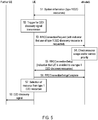
- FIG. 5 is a diagram which illustrates signaling in a communication system according to an embodiment.
- the eNodeB transmits system information 51.
- the system information 51 may comprise a SIB.
- the system information may define resources allocated for a D2D discovery signal transmission.
- the UE may detect a trigger event 52 which causes the UE to request to be enabled to use the resources allocated for the D2D discovery signal transmission.
- the trigger event 52 may be a user input action or the initiation of public safety communication.
- the UE performs a RRC connection setup with the eNodeB.
- the UE may transmit a RRC connection request message 53 to the eNodeB.
- the RRC connection request message 53 may include an information element which indicates that the UE requests to be enabled to use the resources allocated for the D2D discovery signal transmission.
- the information element may be an EstablishmentCause of the RRC connection request message 53 of 3GPP TS 25.331 or 3GPP TS 36.331 which indicates that purpose for the RRC connection request message 53 is that the UE requests to be enabled to use the allocated resources for the D2D discovery signal transmission.
- the RRC connection request message 53 may include an information element which defines a context for the request, e.g. a service level or whether the D2D discovery is to be performed for public safety communication.
- the eNodeB may perform an evaluation 54 to determine whether the UE may be enabled to use the allocated type 1 D2D resources and/or whether type 2 D2D resources are to be allocated to the UE.
- the eNodeB may perform the evaluation 54 taking into account the usage of the type 1 D2D resources, e.g. the total number of UEs which has been enabled to use a resource from the pool of type 1 D2D resources, and/or a service priority.
- the service priority may be based on the service level or whether the communication is public safety communication.
- the eNodeB may transmit a RRC connection setup message 55 which includes one indicator bit or several indicator bits to indicate that the UE may use a resource from the allocated type 1 D2D resources for the D2D discovery signal transmission.
- the UE transmits a RRC connection setup complete message 56 to the eNodeB.
- the UE When in connected mode, the UE performs a selection 57 to select a resource from the allocated type 1 D2D resources for the D2D discovery signal transmission.
- the UE transmits a D2D discovery signal 58 using the selected resource which is taken from the pool of the allocated type 1 D2D resources.
- FIG. 6 is a diagram which illustrates signaling in a communication system according to an embodiment.
- the eNodeB determines in the evaluation 54 that the UE shall not be enabled to use a resource from the allocated type 1 D2D resources, but shall be enabled to use a resource from type 2 D2D resources. This may be the case when the eNodeB determines that the usage of the allocated type 1 D2D resources meets a pre-defined criterion and/or that the UE shall be prioritized due to its service level or as a public safety user.
- the eNodeB the eNodeB may transmit a RRC connection setup message 55 which includes one indicator bit or several indicator bits to indicate that the UE is not enabled to use a resource from the allocated type 1 D2D resources for the D2D discovery signal transmission.
- the RRC connection setup message 55 may indicate that the UE is enabled to user a resource from type 2 D2D resources.
- One or several parameters of the resource may be defined in the RRC connection setup message 55.
- a validity time of the resource may also be defined in the RRC connection setup message 55.
- the UE transmits a D2D discovery signal 68 using the allocated resource from type 2 D2D resources.
- the RRC connection setup message 55 may include one indicator bit or several indicator bits which indicate that the UE may neither use a resource from the type 1 D2D resources nor a specifically allocated resource from the type 2 D2D resources for the D2D discovery signal transmission.
- the enabler signaling which enables or disables a UE to use type 1 D2D resources and/or type 2 D2D resources may be implemented in a variety of other ways, as will be illustrated in more detail with reference to FIG. 7 to FIG. 14 .
- FIG. 7 is a diagram which illustrates signaling in a communication system according to an embodiment.
- the eNodeB may perform an evaluation 54 to determine whether the UE may be enabled to use the allocated type 1 D2D resources and/or whether type 2 D2D resources are to be allocated to the UE.
- the eNodeB may transmit a RRC connection reconfiguration message 71 which includes one indicator bit or several indicator bits to indicate that the UE may use a resource from the allocated type 1 D2D resources for the D2D discovery signal transmission.
- the UE may transmit the RRC connection setup complete message 72 to the eNodeB.
- the UE may perform a selection 57 and may transmit a D2D discovery signal, as explained with reference to FIG. 5 .
- the base station may also enable the UE to use the allocated type 1 D2D resources and/or type 2 D2D resources for the D2D discovery signal transmission when the UE remains in or enters idle mode.
- the base station may include enabler signaling in a RRC connection reject message and/or a RRC connection release message for this purpose, as will be explained in more detail with reference to FIG. 8 and FIG. 9 .
- FIG. 8 is a diagram which illustrates signaling in a communication system according to an embodiment.
- the eNodeB may transmit a RRC connection reject message 59 which includes one indicator bit or several indicator bits to indicate that the UE may use a resource from the allocated type 1 D2D resources for the D2D discovery signal transmission.
- the UE While in idle mode, the UE performs a selection 57 to select a resource from the allocated type 1 D2D resources for the D2D discovery signal transmission.
- the UE transmits a D2D discovery signal 58 using the selected resource which is taken from the pool of the allocated type 1 D2D resources.
- FIG. 9 is a diagram which illustrates signaling in a communication system according to an embodiment.
- a conventional RRC connection establishment procedure may be performed by transmitting a RRC connection request message 83, a RRC connection setup message 85, and a RRC connection setup complete message 89.
- the RRC connection request message 83 may, but does not need to include any indication that the UE requests to be enabled to use a resource from the pool of allocated type 1 D2D resources.
- the RRC connection setup message 85 may but does not need to include enabler signaling which enables the UE to use a resource from the pool of allocated type 1 D2D resources.
- the eNodeB may transmit a RRC connection release message 87 which includes enabler signaling which enables the UE to use a resource from the pool of allocated type 1 D2D resources.
- the RRC connection release message 87 may include one indicator bit or several indicator bits which indicate that the UE is enabled to use a resource from the pool of allocated type 1 D2D resources.
- the RRC connection release message 87 may also indicate that the UE is enabled to use a resource from a pool of type 2 D2D resources which is allocated on a per-UE basis, or that the UE is neither enabled to use a resource from the type 1 D2D resources nor from the type 2 D2D resources.
- the UE While in idle mode, the UE performs a selection 57 to select a resource from the allocated type 1 D2D resources for the D2D discovery signal transmission.
- the UE transmits a D2D discovery signal 58 using the selected resource which is taken from the pool of the allocated type 1 D2D resources.
- FIG. 10 illustrates a RRC signaling message 90 which may be transmitted from the eNodeB to the UE.
- the RRC signaling message 90 may be a RRC connection setup message, a RRC connection reconfiguration message, a RRC connection reject message, or a RRC connection release message, for example.
- the RRC signaling message 90 includes at least one indicator bit 92 which can be set to a first value to indicate that the UE is enabled to select a resource from the allocated resources for the D2D discovery signal transmission and to second value different from the first value to indicate that the UE is not enabled to select a resource from the allocated resources for the D2D discovery signal transmission.
- the RRC signaling message 90 may include a single indicator bit 92 which enables or disables the usage of the type 1 D2D discovery resources.
- the RRC signaling message 90 may include several indicator bits 92 which enables or disables the usage of the type 1 D2D discovery resources.
- the RRC signaling message 90 may include other data 91, e.g. the information elements required for the respective RRC signaling message 90 according to 3GPP TS 25.331 or 3GPP TS 26.331.
- FIG. 11 illustrates a RRC signaling message 90 which may be transmitted from the eNodeB to the UE.
- the RRC signaling message 90 may be a RRC connection setup message, a RRC connection reconfiguration message, a RRC connection reject message, or a RRC connection release message, for example.
- the RRC signaling message 90 includes at least one indicator bit 92 which can be set to a first value to indicate that the UE is enabled to select a resource from the allocated resources for the D2D discovery signal transmission and to second value different from the first value to indicate that the UE is not enabled to select a resource from the allocated resources for the D2D discovery signal transmission.
- the RRC signaling message 90 includes one parameter or several parameters 93.
- the parameter(s) 93 may include a resource index which indicates a resource taken from a pool of type 2 D2D discovery resources in the time or frequency domain.
- the parameter(s) 93 may include a validity time which defines a time period for which the UE may use the type 2 D2D discovery resource for the D2D discovery signal transmission.
- the parameter(s) 93 may include a validity area which defines in which area the UE may use the type 2 D2D discovery resource for the D2D discovery signal transmission.
- the UE may actively request that it will be enabled to use the allocated type 1 D2D resources for D2D discovery signal transmission.
- the base station may transmit system information as a broadcast or multicast message to all connected UEs or a group of connected UEs, to enable or disable the use of a resource from the allocated pool of type 1 D2D resources and/or of a type 2 D2D resource for all of these UEs. This may be useful for example when the cellular network experiences a high load on the EUTRAN side. The D2D discovery can then be disabled for all UEs, while reducing signaling.
- FIG. 12 is a diagram which illustrates signaling in a communication system according to an embodiment.
- the eNodeB transmits system information 101 as a broadcast or multicast message.
- the system information 101 includes one indicator bit or several indicator bits which indicate(s) that the UEs are enabled or disabled to use allocated resources for the D2D discovery.
- the system information 101 may include enabler signaling which enables or disables the use of allocated resources from the pool of type 1 D2D resources.
- the system information 101 may include enabler signaling which enables or disables the use of allocated resources from the pool of type 2 D2D resources.
- the system information 101 may include enabler signaling which enables or disables the use of allocated resources from both the pool of type 1 D2D resources and the pool of type 2 D2D resources.
- the system information 101 may be transmitted to collectively enable or disable the D2D discovery for several UEs.
- the UE may perform a selection 57 to select a resource and may transmit a D2D discovery signal 58, as explained with reference to FIG. 5 .
- the system information 101 includes an indicator bit or several indicator bits which disables the UE and the further UE to select a resource from the type 1 D2D resources for the D2D discovery signal transmission, the UE may not transmit the D2D discovery signal 58.
- FIG. 13 is a flow chart of a method 110 according to an embodiment.
- the method 110 may be performed by the base station according to an embodiment.
- the base station may monitor a load on the EUTRA air interface.
- the base station may determine whether the load fulfills a predefined criterion.
- the base station may determine whether the load is so high that the D2D discovery should be disabled for a plurality of UEs.
- the base station may transmit a system information message to disable the D2D discovery for several UEs or for all connected UEs.
- the base station may continue to enables individual UEs to use type 1 D2D discovery resources and/or type 2 D2D discovery resources.
- the techniques described with reference to FIG. 1 to FIG. 11 may be used at step 114.
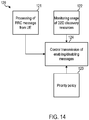
- FIG. 14 is a functional block diagram 120 of a base station according to an embodiment.
- the modules may be implemented in hardware, software, firmware, or a combination thereof.
- the base station may comprise a processing module 121 for processing a RRC message received from a UE.
- the processing module 121 may be configured to determine whether the UE requests authorization to use resources allocated for the D2D discovery signal transmission and which were previously transmitted to the UE, e.g. in a SIB.
- the base station may comprise a monitoring module 122 which monitors a usage of the resources allocated for the D2D discovery signal transmission.
- the monitoring module 122 may monitor a number of UEs which are presently enabled to select a resource from the pool of the resources allocated for the D2D discovery signal transmission.
- the base station may comprise a priority policy module 123 which determines whether the UE shall be treated preferentially, e.g. because of its service level or because it is a pubic safety user.
- the base station may comprise an evaluation module 124 which determines whether the UE shall be enabled to use a resource from the type 1 D2D discovery resources allocated for the D2D discovery signal transmission and/or shall be enabled to use a resource from the type 2 D2D discovery resources.
- the evaluation module 124 may take this decision based on the current usage of the resources allocated for the D2D discovery signal transmission and/or based on whether the UE is to be treated preferentially.
- the base station may start enabling UEs to select a resource from the pool of type 1 D2D discovery resources allocated for the D2D discovery signal transmission as long as the total number of UEs which are presently enabled to use such a resource is less than a threshold. Once the total number of UEs which are presently enabled to use such a resource is greater than or exceeds the threshold, the base station may start allocated resources from the pool of type 2 D2D discovery resources and/or may refuse to enable the UE to perform any D2D discovery. Priority users having a high service level and/or public safety users may generally be allocated resources from the pool of type 2 D2D discovery resources. When a high load on the air interface is detected, a SIB may be transmitted to disable the use of the allocated resources for several UEs or for all connected UEs.
- the D2D discovery and/or the D2D communication performed by a UE may include the transmission and/or reception of messages which takes place over the same interface with which the UE communicates with the RAN.
- resources may be allocated to the UE not only directly by a base station, but also by another UE which acts as a group head for a D2D communication group, or by a repeater relay.
- RRC connection establishment signaling, RRC connection reconfiguration signaling, and/or RRC connection release signaling may be used by the eNodeB to enable the UE to use type 1 D2D discovery resources and/or type 2 D2D discovery resources, other messages may be used for these control operation.
- Embodiments of the invention provide a mobile communication network with enhanced control over the usage of allocated resources by a UE for D2D discovery and/or D2D communication.
Landscapes
- Engineering & Computer Science (AREA)
- Computer Networks & Wireless Communication (AREA)
- Signal Processing (AREA)
- Multimedia (AREA)
- Databases & Information Systems (AREA)
- Mobile Radio Communication Systems (AREA)
Claims (13)
- Kommunikationssystem, umfassend:
eine Benutzereinrichtung, die umfasst:eine drahtlose Schnittstelle (20), die für Kommunikation mit einem zellularen Kommunikationsnetzwerk (10, 11, 15, 18) konfiguriert ist, wobei die drahtlose Schnittstelle (20) zum Empfangen von Informationen (51) über Ressourcen konfiguriert ist, die für eine Vorrichtung-zu-Vorrichtung-Erkennungssignalübertragung (58) zugewiesen sind; undeine Verarbeitungsvorrichtung (24), die mit der drahtlosen Schnittstelle (20) gekoppelt ist, wobei die Verarbeitungsvorrichtung (24) konfiguriert ist zum:Bestimmen, ob eine Funkressourcensteuerungs-,RRC-,Signalisierungsnachricht (55; 59; 65; 71; 87; 101), die an der drahtlosen Schnittstelle (20) empfangen wird, die Benutzereinrichtung (2-4) zum Verwenden der zugewiesenen Ressourcen befähigt; undSteuern der drahtlosen Schnittstelle (20) zum Senden eines Vorrichtung-zu-Vorrichtung-Erkennungssignals unter Verwendung der zugewiesenen Ressourcen in Abhängigkeit davon, ob die Nachricht (55; 59; 65; 71; 87; 101) die Benutzereinrichtung (2-4) zum Verwenden der zugewiesenen Ressourcen befähigt; undeine Basisstation, die mit dem zellularen Netzwerk verbunden ist, wobei die Basisstation umfasst:eine weitere drahtlose Schnittstelle (12), die so konfiguriert ist, dass sie per Broadcast Informationen (51) über Ressourcen sendet, die für eine Vorrichtung-zu-Vorrichtung-Erkennungssignalübertragung zugewiesen sind, undeine Steuervorrichtung (13), die mit der weiteren drahtlosen Schnittstelle (12) gekoppelt ist, wobei die Steuervorrichtung (13) konfiguriert ist zum:Bestimmen, ob die Benutzereinrichtung (2-4) zum Verwenden der zugewiesenen Ressourcen für die Vorrichtung-zu-Vorrichtung-Erkennungssignalübertragung (58) befähigt ist, undSteuern der drahtlosen Schnittstelle (12) zum Senden einer Funkressourcensteuerungs-,RRC-,Signalisierungsnachricht (55; 59; 65; 71; 87), die anzeigt, ob die Benutzereinrichtung zum Verwenden der zugewiesenen Ressourcen für die Vorrichtung-zu-Vorrichtung-Erkennungssignalübertragung befähigt ist,dadurch gekennzeichnet, dass die Steuervorrichtung konfiguriert ist zum:Bestimmen, ob die Benutzereinrichtung (2-4) gegenüber anderen Benutzereinrichtungen priorisiert werden soll, und,wenn die Benutzereinrichtung (2-4) gegenüber anderen Benutzereinrichtungen priorisiert werden soll, Erzeugen einer Nachricht, die i) der Benutzereinrichtung Ressourcen zuweist, die von D2D-Erkennungsressourcen vom Typ 1 verschieden sind, ii) der Benutzereinrichtung D2D-Erkennungsressourcen vom Typ 2 zuweist, oder iii) der Benutzereinrichtung das Verwenden von D2D-Erkennungsressourcen vom Typ 1 verunmöglicht, und,wenn die Benutzereinrichtung (2-4) gegenüber anderen Benutzereinrichtungen nicht priorisiert werden soll, Bestimmen eines Nutzungsgrads der D2D-Erkennungsressourcen vom Typ 1, und, wenn der Nutzungsgrad unter einem Schwellengrad liegt, Erzeugen einer Nachricht, welche die Benutzereinrichtung (2-4) zum Verwenden einer D2D-Erkennungsressource vom Typ 1 befähigt, und,wenn der Nutzungsgrad über dem Schwellengrad liegt, Erzeugen einer Nachricht, die der Benutzereinrichtung (2-4) eine D2D-Erkennungsressource vom Typ 2 zuweist oder der Benutzereinrichtung (2-4) das Auswählen einer D2D-Erkennungsressource vom Typ 1 für die Übertragung eines D2D-Erkennungssignals und Verwenden einer D2D-Erkennungsressource vom Typ 2 für die Übertragung eines D2D-Erkennungssignals verunmöglicht. - Kommunikationssystem nach Anspruch 1,
wobei die Nachricht (55; 59; 65) eine RRC-Verbindungsherstellungssignalisierungsnachricht ist. - Kommunikationssystem nach Anspruch 1,
wobei die Nachricht (55; 59; 65) eine RRC-Verbindungsfreigabesignalisierungsnachricht ist, und
wobei die Verarbeitungsvorrichtung (24) so konfiguriert ist, dass sie die drahtlose Schnittstelle (20) zum Senden des Vorrichtung-zu-Vorrichtung-Erkennungssignals (58; 68) unter Verwendung der zugewiesenen Ressourcen steuert, während die Benutzereinrichtung (2-4) im Ruhemodus ist. - Kommunikationssystem nach einem der Ansprüche 1 bis 3,
wobei die Verarbeitungsvorrichtung (24) so konfiguriert ist, dass sie eine weitere RRC-Signalisierungsnachricht (53) an das zellulare Kommunikationsnetzwerk (10, 11, 15, 18) sendet, um das zellulare Kommunikationsnetzwerk (10, 11, 15, 18) zum Befähigen der Benutzereinrichtung (2-4) zum Verwenden der zugewiesenen Ressourcen aufzufordern. - Kommunikationssystem nach Anspruch 4,
wobei die weitere RRC-Signalisierungsnachricht (53) eine RRC-Verbindungsanforderungsnachricht ist - Kommunikationssystem nach einem der Ansprüche 1 bis 5,
wobei die RRC-Signalisierungsnachricht (55; 59; 65; 71; 87) mindestens ein Bit (92) umfasst, das anzeigt, ob die Benutzereinrichtung (2-4) zum Verwenden von Vorrichtung-zu-Vorrichtung-Erkennungsressourcen vom Typ 1 und/oder Vorrichtung-zu-Vorrichtung-Erkennungsressourcen vom Typ 2 befähigt ist. - Kommunikation nach einem der vorhergehenden Ansprüche,
wobei die Informationen über die zugewiesenen Ressourcen in einer Broadcast-Nachricht (51) oder eine Multicast-Nachricht umfasst sind. - Kommunikation nach einem der vorhergehenden Ansprüche,
wobei die Vorrichtung (24) konfiguriert ist zum:Bestimmen, ob die Nachricht (65) Informationen über andere zugewiesene Ressourcen umfasst, die von den zugewiesenen Ressourcen verschieden sind, undselektiven Steuern der drahtlosen Schnittstelle (20) zum Senden des Vorrichtung-zu-Vorrichtung-Erkennungssignals (68) unter Verwendung der anderen zugewiesenen Ressourcen, wenn die Nachricht (65) die Informationen über die anderen zugewiesenen Ressourcen umfasst. - Kommunikationssystem nach Anspruch 8,
wobei die Funkressourcensteuerungs-,RRC-,Signalisierungsnachricht (65), welche die Informationen über die anderen Ressourcen umfasst, mindestens einen Parameter (93) der anderen zugewiesenen Ressourcen umfasst. - Knoten eines zellulares Kommunikationsnetzwerks, umfassend:eine drahtlose Schnittstelle (12), die so konfiguriert ist, dass sie per Broadcast Informationen (51) über Ressourcen sendet, die für eine Vorrichtung-zu-Vorrichtung-Erkennungssignalübertragung zugewiesen sind,eine Steuervorrichtung (13), die mit der drahtlosen Schnittstelle (12) gekoppelt ist, wobei die Steuervorrichtung (13) konfiguriert ist zum:Bestimmen, ob eine Benutzereinrichtung (2-4) zum Verwenden der zugewiesenen Ressourcen für die Vorrichtung-zu-Vorrichtung-Erkennungssignalübertragung (58) befähigt ist, undSteuern der drahtlosen Schnittstelle (12) zum Senden einer Funkressourcensteuerungs-,RRC-,Signalisierungsnachricht (55; 59; 65; 71; 87), die anzeigt, ob die Benutzereinrichtung zum Verwenden der zugewiesenen Ressourcen für die Vorrichtung-zu-Vorrichtung-Erkennungssignalübertragung befähigt ist,dadurch gekennzeichnet, dass die Steuervorrichtung konfiguriert ist zum:Bestimmen, ob die Benutzereinrichtung (2-4) gegenüber anderen Benutzereinrichtungen priorisiert werden soll, und,wenn die Benutzereinrichtung (2-4) gegenüber anderen Benutzereinrichtungen priorisiert werden soll, Erzeugen einer Nachricht, die i) der Benutzereinrichtung Ressourcen zuweist, die von D2D-Erkennungsressourcen vom Typ 1 verschieden sind, ii) der Benutzereinrichtung D2D-Erkennungsressourcen vom Typ 2 zuweist, oder iii) der Benutzereinrichtung das Verwenden von D2D-Erkennungsressourcen vom Typ 1 verunmöglicht, und,wenn die Benutzereinrichtung (2-4) gegenüber anderen Benutzereinrichtungen nicht priorisiert werden soll, Bestimmen eines Nutzungsgrads der D2D-Erkennungsressourcen vom Typ 1, und, wenn der Nutzungsgrad unter einem Schwellengrad liegt, Erzeugen einer Nachricht, welche die Benutzereinrichtung (2-4) zum Verwenden einer D2D-Erkennungsressource vom Typ 1 befähigt, und,wenn der Nutzungsgrad über dem Schwellengrad liegt, Erzeugen einer Nachricht, die der Benutzereinrichtung (2-4) eine D2D-Erkennungsressource vom Typ 2 zuweist oder der Benutzereinrichtung (2-4) das Auswählen einer D2D-Erkennungsressource vom Typ 1 für die Übertragung eines D2D-Erkennungssignals und Verwenden einer D2D-Erkennungsressource vom Typ 2 für die Übertragung eines D2D-Erkennungssignals verunmöglicht.
- Knoten eines zellularen Kommunikationsnetzwerks nach Anspruch 10,
wobei die Steuervorrichtung (13) so konfiguriert ist, dass sie die RRC-Signalisierungsnachricht (65) derart erzeugt, dass sie Informationen über andere zugewiesene Ressourcen umfasst, die von den zugewiesenen Ressourcen verschieden sind. - Knoten eines zellularen Kommunikationsnetzwerks nach Anspruch 10 oder 11, wobei die Steuervorrichtung (13) so konfiguriert ist, dass sie mindestens eines von Folgenden beurteilt:- eine Last an einer Luftschnittstelle des zellularen Kommunikationsnetzwerks;- einen Dienstlevel der Benutzereinrichtung (2-4); und/oder- ob die Benutzereinrichtung (2-4) ein Benutzer der öffentlichen Sicherheit ist,um zu bestimmen, ob die Benutzereinrichtung (2-4) zum Verwenden der zugewiesenen Ressourcen für die Vorrichtung-zu-Vorrichtung-Erkennungssignalübertragung (58) befähigt werden soll.
- Verfahren für einen Knoten eines zellulares Kommunikationsnetzwerks, umfassend:- Senden per Broadcast von Informationen (51) über Ressourcen, die für eine Vorrichtung-zu-Vorrichtung-Erkennungssignalübertragung zugewiesen sind,- Bestimmen, ob eine Benutzereinrichtung (2-4) zum Verwenden der zugewiesenen Ressourcen für die Vorrichtung-zu-Vorrichtung-Erkennungssignalübertragung (58) befähigt ist, und- Senden einer Funkressourcensteuerungs-,RRC-,Signalisierungsnachricht (55; 59; 65; 71; 87), die anzeigt, ob die Benutzereinrichtung zum Verwenden der zugewiesenen Ressourcen für die Vorrichtung-zu-Vorrichtung-Erkennungssignalübertragung befähigt ist,dadurch gekennzeichnet, dass das Verfahren ferner umfasst:- Bestimmen, ob die Benutzereinrichtung (2-4) gegenüber anderen Benutzereinrichtungen priorisiert werden soll, und,
wenn die Benutzereinrichtung (2-4) gegenüber anderen Benutzereinrichtungen priorisiert werden soll, Erzeugen einer Nachricht, die i) der Benutzereinrichtung Ressourcen zuweist, die von D2D-Erkennungsressourcen vom Typ 1verschieden sind, ii) der Benutzereinrichtung D2D-Erkennungsressourcen vom Typ 2 zuweist, oder iii) der Benutzereinrichtung das Verwenden von D2D-Erkennungsressourcen vom Typ 1 verunmöglicht, und,
wenn die Benutzereinrichtung (2-4) gegenüber anderen Benutzereinrichtungen nicht priorisiert werden soll, Bestimmen eines Nutzungsgrads der D2D-Erkennungsressourcen vom Typ 1, und,
wenn der Nutzungsgrad unter einem Schwellengrad liegt, Erzeugen einer Nachricht, welche die Benutzereinrichtung (2-4) zum Verwenden einer Ressource befähigt, die aus einer D2D-Erkennungsressource vom Typ 1 ausgewählt ist, und
wenn der Nutzungsgrad über dem Schwellengrad liegt, Erzeugen einer Nachricht, die der Benutzereinrichtung (2-4) eine D2D-Erkennungsressource vom Typ 2 zuweist oder der Benutzereinrichtung (2-4) das Auswählen einer D2D-Erkennungsressource für die Übertragung eines D2D-Erkennungssignals und Verwenden einer D2D-Erkennungsressource vom Typ 2 für die Übertragung eines D2D-Erkennungssignals verunmöglicht.
Applications Claiming Priority (1)
| Application Number | Priority Date | Filing Date | Title |
|---|---|---|---|
| PCT/CN2014/077121 WO2015168924A1 (en) | 2014-05-09 | 2014-05-09 | User equipment, base station, and method of enabling usage of resources for a device-to-device discovery |
Publications (3)
| Publication Number | Publication Date |
|---|---|
| EP3140980A1 EP3140980A1 (de) | 2017-03-15 |
| EP3140980A4 EP3140980A4 (de) | 2018-01-10 |
| EP3140980B1 true EP3140980B1 (de) | 2020-08-19 |
Family
ID=54369094
Family Applications (1)
| Application Number | Title | Priority Date | Filing Date |
|---|---|---|---|
| EP14891434.4A Not-in-force EP3140980B1 (de) | 2014-05-09 | 2014-05-09 | System, basisstation, und verfahren zur aktivierung der nutzung von ressourcen für eine d2d-entdeckung |
Country Status (4)
| Country | Link |
|---|---|
| US (1) | US9578667B2 (de) |
| EP (1) | EP3140980B1 (de) |
| CN (1) | CN106464703B (de) |
| WO (1) | WO2015168924A1 (de) |
Families Citing this family (19)
| Publication number | Priority date | Publication date | Assignee | Title |
|---|---|---|---|---|
| ES2853674T3 (es) | 2013-10-08 | 2021-09-17 | Huawei Tech Co Ltd | Método y aparato para evitar colisiones entre un descubrimiento abierto y un recurso celular |
| WO2015113311A1 (en) * | 2014-01-30 | 2015-08-06 | Nokia Technologies Oy | Device to device discovery resource allocation |
| US9578484B2 (en) * | 2014-03-24 | 2017-02-21 | Intel IP Corporation | Apparatuses, systems, and methods for differentiation of payload size for D2D discovery |
| US10462807B2 (en) * | 2014-05-09 | 2019-10-29 | Telefonaktiebolaget Lm Ericsson (Publ) | Methods, apparatus, and systems for determining communication priority |
| US10039119B2 (en) * | 2014-05-23 | 2018-07-31 | Telefonaktiebolaget Lm Ericsson (Publ) | Devices and methods for D2D transmission |
| WO2015194916A1 (ko) * | 2014-06-20 | 2015-12-23 | 엘지전자 주식회사 | 무선 통신 시스템에서 단말 간 직접 통신을 위한 자원을 결정하는 방법 및 이를 위한 장치 |
| EP3162137B1 (de) * | 2014-06-26 | 2021-03-10 | Nokia Solutions and Networks Oy | Funkressourcenzuweisung für näherungsdienste |
| US10470162B2 (en) * | 2014-10-14 | 2019-11-05 | Lg Electronics Inc. | Resource pool selecting method performed by terminal in wireless communication system and terminal using the method |
| WO2016072502A1 (ja) * | 2014-11-07 | 2016-05-12 | 京セラ株式会社 | ユーザ端末 |
| US9807713B2 (en) * | 2014-11-14 | 2017-10-31 | Telefonaktiebolaget Lm Ericsson (Publ) | Synchronization in communications networks |
| EP3235313B1 (de) * | 2014-12-19 | 2021-04-14 | Sony Corporation | Benutzergerät, funkzugangsnetzwerkknoten und verfahren zur bestimmung einer relativen position von benutzergeräten |
| US9894698B2 (en) * | 2015-05-13 | 2018-02-13 | Industrial Technology Research Institute | Communication system, base station, user equipment, and discovery method for device-to-device communication |
| WO2017005293A1 (en) * | 2015-07-06 | 2017-01-12 | Huawei Technologies Co., Ltd. | Devices and methods for network-assisted d2d communication |
| WO2017049536A1 (zh) * | 2015-09-24 | 2017-03-30 | 华为技术有限公司 | 数据传输装置、方法及系统 |
| JP6627889B2 (ja) | 2016-01-08 | 2020-01-08 | 富士通株式会社 | 無線通信装置、無線通信システムおよび処理方法 |
| US11457431B2 (en) * | 2018-08-03 | 2022-09-27 | FG Innovation Company Limited | Sidelink radio resource allocation |
| CN112543425B (zh) * | 2019-09-20 | 2022-04-29 | 华为技术有限公司 | 通信方法及装置 |
| CN113993215B (zh) | 2020-02-11 | 2023-08-04 | Oppo广东移动通信有限公司 | 一种时域资源的确定方法及装置、终端设备 |
| EP4284115B1 (de) | 2020-04-08 | 2026-02-04 | Guangdong Oppo Mobile Telecommunications Corp., Ltd. | Verfahren und vorrichtung zur bestimmung von zeitbereichsressourcen |
Family Cites Families (14)
| Publication number | Priority date | Publication date | Assignee | Title |
|---|---|---|---|---|
| CN104584670B (zh) * | 2012-08-23 | 2019-04-19 | 交互数字专利控股公司 | 用于执行装置到装置发现的方法和设备 |
| CN103731902B (zh) * | 2012-10-12 | 2018-09-04 | 中兴通讯股份有限公司 | 直连通信目标终端信息的查询方法及装置 |
| US10531269B2 (en) * | 2012-11-01 | 2020-01-07 | Intel Corporation | Network assisted device-to-device discovery for peer-to-peer applications |
| GB2507546B (en) * | 2012-11-02 | 2015-06-10 | Broadcom Corp | Mobile communications networks |
| US9844083B2 (en) * | 2012-12-24 | 2017-12-12 | Nokia Technologies Oy | Method and network element for controlling UE's state transition in proximity wireless communication |
| WO2014116083A1 (en) * | 2013-01-28 | 2014-07-31 | Samsung Electronics Co., Ltd. | Method and apparatus for device to device communication |
| KR20140117963A (ko) * | 2013-03-27 | 2014-10-08 | 한국전자통신연구원 | 차세대 이동통신 시스템에서 트래픽 제어 방법 및 그 장치 |
| CN103179669B (zh) * | 2013-04-22 | 2015-08-19 | 西安电子科技大学 | 一种长期演进系统中d2d通信的资源分配方法 |
| US9456330B2 (en) * | 2013-08-09 | 2016-09-27 | Alcatel Lucent | Two-stage device-to-device (D2D) discovery procedures |
| US9392615B2 (en) * | 2013-08-20 | 2016-07-12 | Google Technology Holdings LLC | Methods and devices for allocating resources in device-to-device communication |
| US10149280B2 (en) * | 2014-01-21 | 2018-12-04 | Qualcomm Incorporated | Device-to-device discovery signaling for radio resource allocation |
| US9655163B2 (en) * | 2014-03-11 | 2017-05-16 | Innovative Sonic Corporation | Method and apparatus for implementing a device-to-device (D2D) service in a wireless communication system |
| US9930643B2 (en) * | 2014-05-02 | 2018-03-27 | Qualcomm Incorporated | Resource allocation control for long term evolution device-to-device discovery |
| US9661653B2 (en) * | 2014-05-08 | 2017-05-23 | Intel IP Corporation | Device to-device (D2D) communications |
-
2014
- 2014-05-09 EP EP14891434.4A patent/EP3140980B1/de not_active Not-in-force
- 2014-05-09 WO PCT/CN2014/077121 patent/WO2015168924A1/en not_active Ceased
- 2014-05-09 CN CN201480078702.XA patent/CN106464703B/zh not_active Expired - Fee Related
- 2014-08-25 US US14/467,379 patent/US9578667B2/en not_active Expired - Fee Related
Non-Patent Citations (1)
| Title |
|---|
| None * |
Also Published As
| Publication number | Publication date |
|---|---|
| EP3140980A4 (de) | 2018-01-10 |
| CN106464703B (zh) | 2019-11-26 |
| US9578667B2 (en) | 2017-02-21 |
| WO2015168924A1 (en) | 2015-11-12 |
| US20150327311A1 (en) | 2015-11-12 |
| CN106464703A (zh) | 2017-02-22 |
| EP3140980A1 (de) | 2017-03-15 |
Similar Documents
| Publication | Publication Date | Title |
|---|---|---|
| US9578667B2 (en) | User equipment, base station, and method of enabling usage of resources for a device-to-device discovery | |
| US10368339B2 (en) | Method for device-to-device resource allocation, user equipment and base station | |
| US10064193B2 (en) | Method, base station and user equipment for adapting device-to-device resource allocation | |
| US9848454B2 (en) | Switching mode of operation in D2D communications | |
| WO2015114418A1 (en) | Synchronization method for a device-to-device discovery and/or a device-to-device communication, user equipment, and synchronization control unit | |
| US11463951B2 (en) | User equipment, communication system, and method of controlling a user equipment | |
| US20150264663A1 (en) | Method and apparatus for allocating discovery resource pools in a wireless communication system | |
| CN107409408B (zh) | 用户装置、移动通信系统以及通信控制方法 | |
| CN104883217B (zh) | 一种传输卫星报文的方法、系统和设备 | |
| US10917896B2 (en) | User equipment, communication system, and method of controlling a user equipment | |
| EP3165049A1 (de) | Verfahren und vorrichtungen zur bereitstellung von systeminformationen eines zellularen kommunikationsnetzwerks | |
| WO2013088398A1 (en) | Device to Device Communication | |
| US9838949B2 (en) | Terminal discovery method, terminal, server, base station, management entity, and system | |
| JP6092822B2 (ja) | 移動局、基地局、規制制御方法及び報知情報送信方法 | |
| WO2016008149A1 (en) | Title of the invention | |
| CN104780525A (zh) | 调整用于终端到终端通信的传输功率的方法、用户设备、终端到终端通信组的组头和通信系统 | |
| US20180084565A1 (en) | Bearer setup method and apparatus | |
| WO2014166050A1 (en) | Methods and devices for ue measurements and reporting | |
| JP6659818B2 (ja) | ユーザ機器、通信システム、及びユーザ機器を制御する方法 |
Legal Events
| Date | Code | Title | Description |
|---|---|---|---|
| STAA | Information on the status of an ep patent application or granted ep patent |
Free format text: STATUS: THE INTERNATIONAL PUBLICATION HAS BEEN MADE |
|
| PUAI | Public reference made under article 153(3) epc to a published international application that has entered the european phase |
Free format text: ORIGINAL CODE: 0009012 |
|
| STAA | Information on the status of an ep patent application or granted ep patent |
Free format text: STATUS: REQUEST FOR EXAMINATION WAS MADE |
|
| 17P | Request for examination filed |
Effective date: 20161102 |
|
| AK | Designated contracting states |
Kind code of ref document: A1 Designated state(s): AL AT BE BG CH CY CZ DE DK EE ES FI FR GB GR HR HU IE IS IT LI LT LU LV MC MK MT NL NO PL PT RO RS SE SI SK SM TR |
|
| AX | Request for extension of the european patent |
Extension state: BA ME |
|
| DAX | Request for extension of the european patent (deleted) | ||
| A4 | Supplementary search report drawn up and despatched |
Effective date: 20171208 |
|
| RIC1 | Information provided on ipc code assigned before grant |
Ipc: H04L 29/08 20060101AFI20171204BHEP |
|
| REG | Reference to a national code |
Ref country code: DE Ref legal event code: R079 Ref document number: 602014069293 Country of ref document: DE Free format text: PREVIOUS MAIN CLASS: H04L0029080000 Ipc: H04W0004060000 |
|
| GRAP | Despatch of communication of intention to grant a patent |
Free format text: ORIGINAL CODE: EPIDOSNIGR1 |
|
| STAA | Information on the status of an ep patent application or granted ep patent |
Free format text: STATUS: GRANT OF PATENT IS INTENDED |
|
| RIC1 | Information provided on ipc code assigned before grant |
Ipc: H04W 8/00 20090101ALI20200219BHEP Ipc: H04L 12/64 20060101ALI20200219BHEP Ipc: H04W 76/14 20180101ALI20200219BHEP Ipc: H04W 4/06 20090101AFI20200219BHEP |
|
| INTG | Intention to grant announced |
Effective date: 20200309 |
|
| GRAS | Grant fee paid |
Free format text: ORIGINAL CODE: EPIDOSNIGR3 |
|
| GRAA | (expected) grant |
Free format text: ORIGINAL CODE: 0009210 |
|
| STAA | Information on the status of an ep patent application or granted ep patent |
Free format text: STATUS: THE PATENT HAS BEEN GRANTED |
|
| AK | Designated contracting states |
Kind code of ref document: B1 Designated state(s): AL AT BE BG CH CY CZ DE DK EE ES FI FR GB GR HR HU IE IS IT LI LT LU LV MC MK MT NL NO PL PT RO RS SE SI SK SM TR |
|
| REG | Reference to a national code |
Ref country code: CH Ref legal event code: EP |
|
| REG | Reference to a national code |
Ref country code: DE Ref legal event code: R096 Ref document number: 602014069293 Country of ref document: DE |
|
| REG | Reference to a national code |
Ref country code: AT Ref legal event code: REF Ref document number: 1305323 Country of ref document: AT Kind code of ref document: T Effective date: 20200915 |
|
| REG | Reference to a national code |
Ref country code: IE Ref legal event code: FG4D |
|
| REG | Reference to a national code |
Ref country code: LT Ref legal event code: MG4D |
|
| REG | Reference to a national code |
Ref country code: NL Ref legal event code: MP Effective date: 20200819 |
|
| PG25 | Lapsed in a contracting state [announced via postgrant information from national office to epo] |
Ref country code: FI Free format text: LAPSE BECAUSE OF FAILURE TO SUBMIT A TRANSLATION OF THE DESCRIPTION OR TO PAY THE FEE WITHIN THE PRESCRIBED TIME-LIMIT Effective date: 20200819 Ref country code: SE Free format text: LAPSE BECAUSE OF FAILURE TO SUBMIT A TRANSLATION OF THE DESCRIPTION OR TO PAY THE FEE WITHIN THE PRESCRIBED TIME-LIMIT Effective date: 20200819 Ref country code: LT Free format text: LAPSE BECAUSE OF FAILURE TO SUBMIT A TRANSLATION OF THE DESCRIPTION OR TO PAY THE FEE WITHIN THE PRESCRIBED TIME-LIMIT Effective date: 20200819 Ref country code: PT Free format text: LAPSE BECAUSE OF FAILURE TO SUBMIT A TRANSLATION OF THE DESCRIPTION OR TO PAY THE FEE WITHIN THE PRESCRIBED TIME-LIMIT Effective date: 20201221 Ref country code: HR Free format text: LAPSE BECAUSE OF FAILURE TO SUBMIT A TRANSLATION OF THE DESCRIPTION OR TO PAY THE FEE WITHIN THE PRESCRIBED TIME-LIMIT Effective date: 20200819 Ref country code: GR Free format text: LAPSE BECAUSE OF FAILURE TO SUBMIT A TRANSLATION OF THE DESCRIPTION OR TO PAY THE FEE WITHIN THE PRESCRIBED TIME-LIMIT Effective date: 20201120 Ref country code: NO Free format text: LAPSE BECAUSE OF FAILURE TO SUBMIT A TRANSLATION OF THE DESCRIPTION OR TO PAY THE FEE WITHIN THE PRESCRIBED TIME-LIMIT Effective date: 20201119 Ref country code: BG Free format text: LAPSE BECAUSE OF FAILURE TO SUBMIT A TRANSLATION OF THE DESCRIPTION OR TO PAY THE FEE WITHIN THE PRESCRIBED TIME-LIMIT Effective date: 20201119 |
|
| REG | Reference to a national code |
Ref country code: AT Ref legal event code: MK05 Ref document number: 1305323 Country of ref document: AT Kind code of ref document: T Effective date: 20200819 |
|
| PG25 | Lapsed in a contracting state [announced via postgrant information from national office to epo] |
Ref country code: NL Free format text: LAPSE BECAUSE OF FAILURE TO SUBMIT A TRANSLATION OF THE DESCRIPTION OR TO PAY THE FEE WITHIN THE PRESCRIBED TIME-LIMIT Effective date: 20200819 Ref country code: RS Free format text: LAPSE BECAUSE OF FAILURE TO SUBMIT A TRANSLATION OF THE DESCRIPTION OR TO PAY THE FEE WITHIN THE PRESCRIBED TIME-LIMIT Effective date: 20200819 Ref country code: LV Free format text: LAPSE BECAUSE OF FAILURE TO SUBMIT A TRANSLATION OF THE DESCRIPTION OR TO PAY THE FEE WITHIN THE PRESCRIBED TIME-LIMIT Effective date: 20200819 Ref country code: PL Free format text: LAPSE BECAUSE OF FAILURE TO SUBMIT A TRANSLATION OF THE DESCRIPTION OR TO PAY THE FEE WITHIN THE PRESCRIBED TIME-LIMIT Effective date: 20200819 Ref country code: IS Free format text: LAPSE BECAUSE OF FAILURE TO SUBMIT A TRANSLATION OF THE DESCRIPTION OR TO PAY THE FEE WITHIN THE PRESCRIBED TIME-LIMIT Effective date: 20201219 |
|
| PG25 | Lapsed in a contracting state [announced via postgrant information from national office to epo] |
Ref country code: RO Free format text: LAPSE BECAUSE OF FAILURE TO SUBMIT A TRANSLATION OF THE DESCRIPTION OR TO PAY THE FEE WITHIN THE PRESCRIBED TIME-LIMIT Effective date: 20200819 Ref country code: SM Free format text: LAPSE BECAUSE OF FAILURE TO SUBMIT A TRANSLATION OF THE DESCRIPTION OR TO PAY THE FEE WITHIN THE PRESCRIBED TIME-LIMIT Effective date: 20200819 Ref country code: EE Free format text: LAPSE BECAUSE OF FAILURE TO SUBMIT A TRANSLATION OF THE DESCRIPTION OR TO PAY THE FEE WITHIN THE PRESCRIBED TIME-LIMIT Effective date: 20200819 Ref country code: DK Free format text: LAPSE BECAUSE OF FAILURE TO SUBMIT A TRANSLATION OF THE DESCRIPTION OR TO PAY THE FEE WITHIN THE PRESCRIBED TIME-LIMIT Effective date: 20200819 Ref country code: CZ Free format text: LAPSE BECAUSE OF FAILURE TO SUBMIT A TRANSLATION OF THE DESCRIPTION OR TO PAY THE FEE WITHIN THE PRESCRIBED TIME-LIMIT Effective date: 20200819 |
|
| REG | Reference to a national code |
Ref country code: DE Ref legal event code: R097 Ref document number: 602014069293 Country of ref document: DE |
|
| PG25 | Lapsed in a contracting state [announced via postgrant information from national office to epo] |
Ref country code: AL Free format text: LAPSE BECAUSE OF FAILURE TO SUBMIT A TRANSLATION OF THE DESCRIPTION OR TO PAY THE FEE WITHIN THE PRESCRIBED TIME-LIMIT Effective date: 20200819 Ref country code: AT Free format text: LAPSE BECAUSE OF FAILURE TO SUBMIT A TRANSLATION OF THE DESCRIPTION OR TO PAY THE FEE WITHIN THE PRESCRIBED TIME-LIMIT Effective date: 20200819 Ref country code: ES Free format text: LAPSE BECAUSE OF FAILURE TO SUBMIT A TRANSLATION OF THE DESCRIPTION OR TO PAY THE FEE WITHIN THE PRESCRIBED TIME-LIMIT Effective date: 20200819 |
|
| PLBE | No opposition filed within time limit |
Free format text: ORIGINAL CODE: 0009261 |
|
| STAA | Information on the status of an ep patent application or granted ep patent |
Free format text: STATUS: NO OPPOSITION FILED WITHIN TIME LIMIT |
|
| PG25 | Lapsed in a contracting state [announced via postgrant information from national office to epo] |
Ref country code: SK Free format text: LAPSE BECAUSE OF FAILURE TO SUBMIT A TRANSLATION OF THE DESCRIPTION OR TO PAY THE FEE WITHIN THE PRESCRIBED TIME-LIMIT Effective date: 20200819 |
|
| 26N | No opposition filed |
Effective date: 20210520 |
|
| PG25 | Lapsed in a contracting state [announced via postgrant information from national office to epo] |
Ref country code: IT Free format text: LAPSE BECAUSE OF FAILURE TO SUBMIT A TRANSLATION OF THE DESCRIPTION OR TO PAY THE FEE WITHIN THE PRESCRIBED TIME-LIMIT Effective date: 20200819 |
|
| PGFP | Annual fee paid to national office [announced via postgrant information from national office to epo] |
Ref country code: FR Payment date: 20210421 Year of fee payment: 8 Ref country code: DE Payment date: 20210421 Year of fee payment: 8 |
|
| PG25 | Lapsed in a contracting state [announced via postgrant information from national office to epo] |
Ref country code: SI Free format text: LAPSE BECAUSE OF FAILURE TO SUBMIT A TRANSLATION OF THE DESCRIPTION OR TO PAY THE FEE WITHIN THE PRESCRIBED TIME-LIMIT Effective date: 20200819 |
|
| PGFP | Annual fee paid to national office [announced via postgrant information from national office to epo] |
Ref country code: GB Payment date: 20210422 Year of fee payment: 8 |
|
| REG | Reference to a national code |
Ref country code: CH Ref legal event code: PL |
|
| PG25 | Lapsed in a contracting state [announced via postgrant information from national office to epo] |
Ref country code: LI Free format text: LAPSE BECAUSE OF NON-PAYMENT OF DUE FEES Effective date: 20210531 Ref country code: MC Free format text: LAPSE BECAUSE OF FAILURE TO SUBMIT A TRANSLATION OF THE DESCRIPTION OR TO PAY THE FEE WITHIN THE PRESCRIBED TIME-LIMIT Effective date: 20200819 Ref country code: LU Free format text: LAPSE BECAUSE OF NON-PAYMENT OF DUE FEES Effective date: 20210509 Ref country code: CH Free format text: LAPSE BECAUSE OF NON-PAYMENT OF DUE FEES Effective date: 20210531 |
|
| REG | Reference to a national code |
Ref country code: BE Ref legal event code: MM Effective date: 20210531 |
|
| PG25 | Lapsed in a contracting state [announced via postgrant information from national office to epo] |
Ref country code: IE Free format text: LAPSE BECAUSE OF NON-PAYMENT OF DUE FEES Effective date: 20210509 |
|
| PG25 | Lapsed in a contracting state [announced via postgrant information from national office to epo] |
Ref country code: BE Free format text: LAPSE BECAUSE OF NON-PAYMENT OF DUE FEES Effective date: 20210531 |
|
| REG | Reference to a national code |
Ref country code: DE Ref legal event code: R119 Ref document number: 602014069293 Country of ref document: DE |
|
| GBPC | Gb: european patent ceased through non-payment of renewal fee |
Effective date: 20220509 |
|
| PG25 | Lapsed in a contracting state [announced via postgrant information from national office to epo] |
Ref country code: FR Free format text: LAPSE BECAUSE OF NON-PAYMENT OF DUE FEES Effective date: 20220531 |
|
| PG25 | Lapsed in a contracting state [announced via postgrant information from national office to epo] |
Ref country code: HU Free format text: LAPSE BECAUSE OF FAILURE TO SUBMIT A TRANSLATION OF THE DESCRIPTION OR TO PAY THE FEE WITHIN THE PRESCRIBED TIME-LIMIT; INVALID AB INITIO Effective date: 20140509 Ref country code: GB Free format text: LAPSE BECAUSE OF NON-PAYMENT OF DUE FEES Effective date: 20220509 Ref country code: DE Free format text: LAPSE BECAUSE OF NON-PAYMENT OF DUE FEES Effective date: 20221201 |
|
| PG25 | Lapsed in a contracting state [announced via postgrant information from national office to epo] |
Ref country code: CY Free format text: LAPSE BECAUSE OF FAILURE TO SUBMIT A TRANSLATION OF THE DESCRIPTION OR TO PAY THE FEE WITHIN THE PRESCRIBED TIME-LIMIT Effective date: 20200819 |
|
| PG25 | Lapsed in a contracting state [announced via postgrant information from national office to epo] |
Ref country code: MK Free format text: LAPSE BECAUSE OF FAILURE TO SUBMIT A TRANSLATION OF THE DESCRIPTION OR TO PAY THE FEE WITHIN THE PRESCRIBED TIME-LIMIT Effective date: 20200819 |
|
| PG25 | Lapsed in a contracting state [announced via postgrant information from national office to epo] |
Ref country code: MT Free format text: LAPSE BECAUSE OF FAILURE TO SUBMIT A TRANSLATION OF THE DESCRIPTION OR TO PAY THE FEE WITHIN THE PRESCRIBED TIME-LIMIT Effective date: 20200819 |
|
| PG25 | Lapsed in a contracting state [announced via postgrant information from national office to epo] |
Ref country code: TR Free format text: LAPSE BECAUSE OF FAILURE TO SUBMIT A TRANSLATION OF THE DESCRIPTION OR TO PAY THE FEE WITHIN THE PRESCRIBED TIME-LIMIT Effective date: 20200819 |