EP3141063B1 - Ressourcenzuteilungssystem und -verfahren zur implementierung von vorrichtung-zu-vorrichtung-kommunikationen in drahtloskommunikationsnetzwerken - Google Patents
Ressourcenzuteilungssystem und -verfahren zur implementierung von vorrichtung-zu-vorrichtung-kommunikationen in drahtloskommunikationsnetzwerken Download PDFInfo
- Publication number
- EP3141063B1 EP3141063B1 EP14728465.7A EP14728465A EP3141063B1 EP 3141063 B1 EP3141063 B1 EP 3141063B1 EP 14728465 A EP14728465 A EP 14728465A EP 3141063 B1 EP3141063 B1 EP 3141063B1
- Authority
- EP
- European Patent Office
- Prior art keywords
- communication
- communications
- resources
- cell
- user equipment
- Prior art date
- Legal status (The legal status is an assumption and is not a legal conclusion. Google has not performed a legal analysis and makes no representation as to the accuracy of the status listed.)
- Active
Links
Images



Classifications
-
- H—ELECTRICITY
- H04—ELECTRIC COMMUNICATION TECHNIQUE
- H04W—WIRELESS COMMUNICATION NETWORKS
- H04W72/00—Local resource management
- H04W72/50—Allocation or scheduling criteria for wireless resources
- H04W72/54—Allocation or scheduling criteria for wireless resources based on quality criteria
- H04W72/541—Allocation or scheduling criteria for wireless resources based on quality criteria using the level of interference
-
- H—ELECTRICITY
- H04—ELECTRIC COMMUNICATION TECHNIQUE
- H04W—WIRELESS COMMUNICATION NETWORKS
- H04W72/00—Local resource management
- H04W72/12—Wireless traffic scheduling
-
- H—ELECTRICITY
- H04—ELECTRIC COMMUNICATION TECHNIQUE
- H04W—WIRELESS COMMUNICATION NETWORKS
- H04W72/00—Local resource management
- H04W72/50—Allocation or scheduling criteria for wireless resources
- H04W72/54—Allocation or scheduling criteria for wireless resources based on quality criteria
- H04W72/542—Allocation or scheduling criteria for wireless resources based on quality criteria using measured or perceived quality
-
- H—ELECTRICITY
- H04—ELECTRIC COMMUNICATION TECHNIQUE
- H04W—WIRELESS COMMUNICATION NETWORKS
- H04W92/00—Interfaces specially adapted for wireless communication networks
- H04W92/16—Interfaces between hierarchically similar devices
- H04W92/18—Interfaces between hierarchically similar devices between terminal devices
Definitions
- the present invention refers to communication systems. More particularly, the present invention relates to the field of wireless or mobile telecommunication networks. Even more particularly, the present invention relates to a resource allocation system and method adapted to implement Device-to-Device communications in wireless communication networks.
- a mobile (cellular) telecommunication network communications among mobile communication devices (e.g., mobile telephones, smartphones and tablets) - generally referred to as User Equipment, or UE in brief - pass through the telecommunication network: two UE, connected to respective "serving" radio transceivers of the network (e.g., radio transceivers of a same or different eNodeB - evolved Node B - in the 3GPP Long Term Evolution (LTE)/LTE Advanced (LTE-A) systems), communicate with each other by means of physical communication channel(s) that are set-up and terminated between the radio transceivers and the UE.
- LTE Long Term Evolution
- LTE-A LTE Advanced
- INFRA infrastructure-based
- D2D communication This direct radio communication among UE is commonly referred to as “Device-to-Device”, or D2D, communication and is based on D2D communication links directly established by two (or more) UE.
- D2D communication differs from the traditional INFRA communication in that the information is exchanged through physical communication channels that are set-up and terminated between the UE directly, without passing through the network.
- the D2D communication links between UE communicating directly among them are generally established over frequencies comprised in a communication frequency range used in the INFRA communications.
- non-negligible interference may be experienced by UE performing INFRA communications in the proximities of UEs performing D2D communications and, particularly, when the UEs perform communications over the same and/or neighboring frequencies used for D2D communications, and, vice-versa UEs performing D2D communications may experience interference due to nearby UEs performing INFRA communications over the same or neighboring frequencies.
- This mutual interference experienced by UE performing INFRA communications and UE performing D2D communications causes an overall degradation of both the INFRA and D2D communications.
- communication (radio) resources such as physical resource elements comprised in Physical Resource Blocks - PRBs or RBs - in the LTE/LTE-A systems, have to be carefully allocated among UEs performing INFRA communication and D2D communication in order to achieve satisfying network operation performance (e.g., in terms of Quality of Service or QoS, network capacity, energy efficiency, throughput, etc. ) .
- network operation performance e.g., in terms of Quality of Service or QoS, network capacity, energy efficiency, throughput, etc.
- Doppler, Yu, Ribeiro, Janis, "Mode selection for Device-to-Device Communication underlaying an LTE-Advanced Network", Wireless Communications and Networking Conference (WCNC), 2010 IEEE, 18-21 April 2010 discloses a mode selection scheme for selecting between INFRA or D2D communications according to respective achievable throughputs.
- MINLP Mixed Integer Non linear Program
- WO 2013/008167 discloses methods, apparatus and computer program products that facilitate scheduling in a hybrid communication network with varying types of devices, such as D2D mobile terminals and other, such as cellular, mobile terminals.
- a D2D scheduling activity factor is calculated by a network node based at least in part on a total number of both D2D mobile terminals and other mobile terminals, and the scheduling activity factor is sent to at least one D2D mobile terminal.
- the D2D mobile terminal uses the scheduling activity factor to determine when to transmit locally measured signal to interference plus noise ratio (SINR) information to a network node.
- SINR signal to interference plus noise ratio
- the D2D mobile terminal may be scheduled by the network node separately from other mobile terminals based at least in part on the SINR information.
- US 2013/0322413 discloses a method for the use in a first Wireless Transmit/Receive Unit (WTRU) including transmitting a request for D2D communication resources to an enhanced Node B.
- the first WTRU may receive an allocation of resources for multiple TTI to be used for D2D communications from the enhanced Node B.
- the first WTRU may schedule D2D communications with a second WTRU to be performed during the allocated resources.
- the first WTRU may perform D2D communications with the second WTRU using half duplex communications during the allocated resources.
- US 2010/0261469 discloses a method that comprises measuring a first link quality of a first link based at least in part on a first power value; measuring a second link quality of a second link based at least in part on a second power value; and determining a suitable D2D mode for a D2D connection based at least in part on the first link quality, the second link quality, and one or more D2D UE constraints.
- the Applicant has coped with the problem of devising a system and method adapted to select between D2D and INFRA communications whichever provides the best communication efficiency (according to one or more communication parameters, such as for example a throughput) for every communicating UE and, at the same time, also adapted to provide an allocation of communication resources in order to obtain best network operation performance according to available communication resources (avoiding interferences among UE regardless of whether they are communicating through INFRA or D2D communication within the mobile communication network).
- one aspect of the present invention proposes a method for allocating communication resources for communications performed by user equipment in a mobile communication network.
- the method comprises the following steps. Receiving a first indication about an amount of available communication resources; obtaining information about interfering communications between user equipment; for each communication between user equipment to which communication resources have to be allocated: receiving a second indication about an available communication rate for an infrastructure-based communication and for a device-to-device communication; receiving a third indication about a requested communication rate for said each communication; making a selection between an infrastructure-based communication type or a device-to-device communication type based on the first, second and third indications and the information about interfering communications, and allocating communication resources to each communication on the basis of the selection between an infrastructure-based communication type or a device-to-device communication type.
- the steps of receiving a first indication about an amount of available communication resources; obtaining information about interfering communications between user equipment; receiving a second indication about an available communication rate for an infrastructure-based communication and for a device-to-device communication; receiving a third indication about a requested communication rate for said each communication, and making a selection between an infrastructure-based communication type or a device-to-device communication, are performed with a periodicity longer than a periodicity at which the step of allocating communication resources to each communication on the basis of the selection is performed.
- each communication comprises a plurality of data packets and the periodicity of the step of allocating communication resources to each communication on the basis of the selection corresponds to a duration of a transmission in the mobile communication network.
- said obtaining information about interfering communications is based on information on position and power measurements of the user equipment within the mobile communication network.
- said obtaining information about interfering communications comprises building a conflict graph based on information on position and power measurements of the user equipment within the mobile communication network, the conflict graph indicating interference between couples of communicating user equipment.
- the method further comprises generating a modified conflict graph by modifying the conflict graph on the basis of said selection between an infrastructure-based communication type or a device-to-device communication type.
- said allocating communication resources is further based on said modified conflict graph.
- the first indication and the second indication are based on usage metrics of the communication resources regarding ongoing communications.
- the first indication and the second indication are further based on information about communication resources actually allocated by the step of allocating communication resources.
- the mobile communication network comprises a plurality of cells which are portions of a coverage area of the mobile communication network, and wherein the method is configured for allocating communication resources for communications performed by user equipment within a selected group of cells.
- the method further comprises, for each adjacent cells of said selected group of cells, defining an interference region, comprising a portion of each adjacent cell of said group of cells, in which device-to-device communications between user equipment of different cells may experience interferences due to other user equipment within the interference region that perform infrastructure-based communications and viceversa infrastructure-based communications may experience interferences due to device-to-device communications.
- the method further comprises generating a list of user equipment comprised within the interference region, and indicating communication resources to be allocated to the user equipment of the list in a non-interfering way within the interference region.
- the mobile communication network for managing communication of user equipment.
- the mobile communication network comprising a coverage area divided into a plurality of cells, each cell being provided with a radio communication station for managing communications of user equipment the cell.
- the mobile communication network further comprises a communication system configured for implementing the method mentioned above.
- the communication system comprises at least one link selection module configured for making said selection between an infrastructure-based communication type or a device-to-device communication, and at least one scheduler module configured for performing said allocating communication resources to each communication, the at least one link selection module being coupled with the at least one scheduler module for allocating communication resources according to said selection.
- At least one link selection module comprises a link selection module configured for making said selection between an infrastructure-based communication type or a device-to-device communication for communications taking place in a selected group of cells of the mobile communication network, and wherein the at least one scheduler module comprises a plurality of scheduler modules each scheduler module being configured for performing said allocating communication resources to each communication in a respective cell of the mobile communication network.
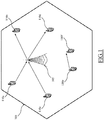
- Figure 1 is a schematic view of a cell 100 of a mobile communication network in which an embodiment of the present invention can be implemented.
- the cell 100 (schematically represented, for the sake of simplicity, by a hexagonal area in Figure 1 ) is a portion of a coverage area of the mobile communication network in which one or more radio transceivers (not shown) of a radio communication station, such as an evolved Node B, or eNodeB 105 in 3GPP Long Term Evolution (LTE)/LTE Advanced (LTE-A) systems, manage communications (i.e., transmission and/or reception of information, such as binary data packets) of user equipment or UE (e.g., mobile telephones, smartphones and tablets), such as the six UE 110a, 110b, 110c, 110d, 110e and 110f within the cell 100 in the example of Figure 1 .
- the eNodeB 105 allocate communication resources, in terms of portions of an available communication transmission band (indicated as physical resource blocks - PRBs or RBs), for the communications of the UE 110a-f.
- UE 110a and UE 110b are assumed to be involved in an "infrastructure-based", or INFRA, communication with respective UE (not shown) outside the cell 100 through the eNodeB 105.
- the UE 110a transmits information (to be sent to a receiver UE outside the cell 100 ) to the eNodeB 105 via an uplink channel comprised in a portion of communication resources (uplink resources) generally allocated by the eNodeB 105 for receiving data from the UE 110a, 110b, 110c, 110d, 110e and 110f within the cell 100.
- uplink resources uplink resources
- the UE 110b receives information (sent by a transmitter UE outside the cell 100 ) from the eNodeB 105 via a downlink channel comprised in a portion of communication resources (downlink resources) generally allocated by the eNodeB 105 for providing data to the UE 110 within the cell 100.
- the UE 110c and the UE 110d are assumed to be involved in an INFRA communication with one another through the eNodeB 105.
- the UE 110c transmits information (i.e., in the form of data packets) via an uplink channel to the eNodeB 105, while the UE 110d receives such information (i.e., again in the form of data packets) via a downlink channel from the eNodeB 105.
- the UE 110e and the UE 110f are assumed to be involved in a Device-to-Device, or D2D, communication (i.e., UE 110e and UE 110f exchange information directly, without having to pass through the eNodeB 105 ).
- the UE 110e and the UE 110f may transmit/receive information to/from the other via either an uplink or downlink channel (as described in greater detail in the following).
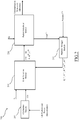
- FIG. 2 it is a schematic block diagram of a portion of a communication system 200 according to an embodiment of the present invention for managing communication in the cell 1 00.
- the communication system 200 is adapted to manage the selection between communication types (i.e., INFRA communication or D2D communication) and the allocation of communication resources (e.g., by means of a scheduling of communication data packets over resource blocks) for all the communication of the UE 110a-f in the cell 100.
- communication types i.e., INFRA communication or D2D communication
- allocation of communication resources e.g., by means of a scheduling of communication data packets over resource blocks
- the communication system 200 comprises a conflict graph (CG) builder module 205 that may be a module/function located in an eNodeB of the mobile communication network such as the eNodeB 105 in the cell 100 and configured to compute a conflict graph CG based on positions and transmission powers of all the UE 110 inside the cell 100.
- CG conflict graph
- the transmission powers of all the UE 110a-f inside the cell 100 are known to, and provided by, the eNodeB 105, while the position of the UE 110a-f may be obtained by means of a known positioning technique (e.g., using GPS signals, network signals or a combination thereof).
- the conflict graph CG is a graph where a communication (already active or to be established) between any two UE, such as the UE 110c and 110d, and the UE 110e and 110f in the example of Figure 1 , is indicated as a graph node, and a graph edge connecting two nodes denotes a conflict between the corresponding communications (i.e., such communications provoke reciprocal interferences).
- An edge between two graph nodes implies that a separate allocation of resources is required for preventing a conflict between the two communications represented by such nodes.
- the communication system 200 also comprises a statistic manager module 210 that may be a module/function located in an eNodeB of the mobile communication network such as the eNodeB 105 in the cell 100 and configured to provide indications regarding available communication rates, or simply rates (e.g., expressed as bit per second bps), for INFRA and D2D communications and amounts of available downlink/uplink resources (i.e., resources available for downlink/uplink channels) for INFRA and D2D communications based upon information Load D / U about downlink/uplink communication resources actually allocated and usage metrics Statistics D / U of the downlink/uplink communication resources (i.e., statistics data regarding ongoing communication managed by the communication system, for example obtained from the Channel Quality Indication provided by the UE 110a-f to the eNodeB 105 ) thereof under the viewpoint of both downlink and uplink channels.
- the statistic manager module 210 provides indications regarding:
- the statistic manager module 210 provides indications regarding:
- the rate R i D 2 ⁇ D is the rate that the communication c i would have if performed as a D2D communication; it should be noted that the rate R i D 2 ⁇ D is equal to zero if the UE involved in the communication c i are beyond a D2D range within which such UE are capable of performing a D2D communication.
- the rates R i UL and R i DL are the rates (for the uplink channel and the downlink channel, respectively) that the communication c i would have if performed as an INFRA communication.
- the communication system 200 comprises a link selection module 215, which is configured and operable to select the communication type (i.e., D2D or INFRA communication) between two (or more) UEs 105.
- the link selection module 215 may be a module/function located in an eNodeB of the mobile communication network such as the eNodeB 105 in the cell 100.
- the link selection module 215 is coupled with the CG builder module 205 for receiving the conflict graph as an input.
- the link selection module 215 is coupled with the statistic manager module 210 for receiving therefrom the aforementioned indications M DL , M UL , R i D 2 ⁇ D , R i UL , and R i DL as inputs.
- the link selection module 215 receives a requested rate A i for the considered communication c i , as a further input; such requested rate A i may be provided by the Evolved Packet Core (EPC - not detailed in Figure 2 ) of the communication system 200 according to a communication traffic in the mobile telecommunication network.
- EPC Evolved Packet Core
- the link selection module 215 selects whether to establish, or switch to if already active, the communication c i as an INFRA communication or as a D2D communication on the basis of the received inputs (as described in the following).
- the link selection module 215 provides as output a communication command which determines whether the communication c i has to be established as, or switched to if already active, an INFRA communication or a D2D communication.
- a single binary variable is provided that defines if the D2D communication is to be established via downlink or uplink - e.g., the single binary variable set to 1 corresponds to uplink, while the single binary variable set to 0 corresponds to downlink.
- the link selection module 215 further provides as output also a modified conflict graph ( CG '), corresponding to the conflict graph CG modified in order to take into account the communication command (e.g., if a communication c i of the D2D-type was interfering with other communications, by switching such communication c i from D2D communication to INFRA communication the edge in the CG is deleted, since the LTE/LTE-A standard already guarantees that communication resource sharing between UE performing INFRA communication is avoided according to).
- CG ' modified conflict graph
- the link selection module 215 further provides as output also a restrictions command RS .
- the restrictions command RS comprises a set of restrictions regarding the communication resources in use within the cell 100.
- the restrictions command RS is provided in the format ⁇ [UE_group],[PRBs] ⁇ , where UE_group denote (e.g., lists) any set of UE (e.g., UE performing D2D communication, UE exploiting uplink and/or downlink channels, UE located along cell edges etc. ) and PRBs denote the resources that should be associated with that set of UE (e.g., communication resources that are reserved for the corresponding UE listed in the UE_group, as described in the following).
- the communication system 200 also comprises a packet scheduler module 220, configured to allocate communication resources on the basis of the outputs of the link selection module 215 (as described in the following).
- the packet scheduler module 220 is coupled with the link selection module 215 for receiving as inputs the outputs of the link selection module 215.
- the packet scheduler module 220 may be a module/function located in an eNodeB of the mobile communication network such as the eNodeB 105 in the cell 100
- the packet scheduler module 220 receives as an input an indication Q i regarding the amount of data to be transmitted during the communication c i .
- the indication Q i is directly provided to the packet scheduler module by the eNodeB 105, which manages the amount of data, transmitted through downlink channels and knows the amount of data transmitted through uplink channels from Buffer Status Reports (BSR) provided by the UE 110a-f within the cell 100.
- BSR Buffer Status Reports
- the packet scheduler module 220 performs the allocation of the communication resources for each communication c i within the memory cell 100.
- the packet scheduler module 220 schedules in which resource block each data packet belonging to the communication c i has to be exchanged (i.e., transmitted and/or received); therefore, the allocation of communication resources is often indicated as packet scheduling.
- Such a packet scheduling is then provided to the UE 110a-f within the cell 100, which then communicate accordingly.
- the packet scheduler module 220 outputs the information about actually allocated communication resources Load D / U that are provided to the statistic manager module 210.
- the link selection module 215, the packet scheduler module 220 and the statistic manager module 210 form a feedback loop that allows increasing the efficiency of the operation of selection and the packet scheduling of each communication c i on the basis of the actually allocated communication resources Load D / U and on the basis of the usage metrics Statistics D / U (i.e., an actual state and past states of the mobile communication network).
- the CG builder module 205, the statistic module 210 and the link selection module 215 provide their outputs with a link selection period TLS greater than a Transmission Time Interval or TTI (which is the duration of a transmission of a data packet over uplink or downlink channels) since the selection between INFRA communication and the D2D communication, particularly in case of a switching of communication type involve a certain overhead time, and it would be computationally hard performing it with a TTI periodicity.
- TTI Transmission Time Interval
- the link selection module 215 operating with a periodicity equal to the link selection period TLS, longer than a Transmission Time Interval TTI, a frequent switching between INFRA and D2D types for an ongoing communication is avoided; such a frequent switching between INFRA and D2D communication types would be detrimental for such ongoing communication.
- fragments e.g., one or more data packets
- fragments of the ongoing communication would be sent to the eNodeB during INFRA-type communication
- fragments of the ongoing communication would be sent to the receiver UE during D2D-type communication; therefore, part of the fragments of the ongoing communication would be unattainable by the eNodeB and/or by the receiver UE, thereby requiring a retransmission of such fragments to one between the eNodeB (for INFRA-type communication) or to the receiver UE (for the D2D-type communication) in order to allow a correct reassembly of the ongoing communication (consequently lowering a quality of the communication and increasing the workload for the mobile communication network).
- the link selection period TLS has a duration of the order of one hundred of millisecond, greater than a TTI (which has a duration of 1ms in LTE/LTE-A).
- the packet scheduler module 220 provides its outputs with a periodicity equal to one TTI, which allows the eNodeB 105 properly managing each communication c i in the memory cell 100 in real time (i.e., without causing delays in the communication c i ).
- the link selection module 215 determines which, between D2D communication and INFRA communication, is better for two UE, such as the UE 110c and 110d, and the UE 110e and 110f within the cell 100, according to a criterion aimed at optimizing one (or more) parameter of interest of the communication (e.g., a throughput).
- the link selection module 215 also determines on which channel (i.e., downlink or uplink channel) allocate the D2D communications according to the same criterion.
- the link selection module 215 is aware of:
- the link selection module 215 is aware of any possibly conflicting communications within the cell 100.
- the link selection module 215 performs the selection of the communication type not only by evaluating the available communication resources (or channel condition) but also evaluating separately the available downlink and uplink resources, or space (conversely, should only the channel condition be considered, then a D2D communication could be switched to an INFRA communication also in case of no available downlink resources).
- the link selection module 215 selects the communication type by solving an optimization problem.
- an objective function of such an optimization problem may be expressed as: max ⁇ i ⁇ I x i D 2 ⁇ D ⁇ UL ⁇ R i D 2 ⁇ D + x i D 2 ⁇ D ⁇ DL ⁇ R i D 2 ⁇ D + x i UL ⁇ min R i UL R i DL , wherein the variables x i D 2 ⁇ D ⁇ UL , x i D 2 ⁇ D ⁇ DL e x i UL ⁇ R + represent an allocated communication resource to the communication c i performed as a D2D communication on the uplink channel, as a D2D communication on the downlink channel and as an INFRA communication, respectively.
- the objective function (1) is solved according to the following constraints: d i ⁇ d i DL ; d i ⁇ d i UL , inequalities (2) and (3) define that a generic communication c i is performed as D2D communication (either on downlink channel or on uplink channel) only if the first binary variable is equal to one; d i UL + d i DL ⁇ 1 , inequality (4) defines that only one between the downlink channel and the uplink channel may be selected for the communication c i of the D2D-type; n D 2 ⁇ D ⁇ DL + ⁇ i ⁇ I x i UL ⁇ R i UL R i DL ⁇ M DL , where n D2D-DL ( ⁇ R + ) represents the communication resources allocable for performing D2D communication on the downlink channel, ⁇ i ⁇ I x i UL ⁇ R i UL R i DL represents the communication resources allocable for
- the packet scheduler module 220 preferably comprises two scheduler branches (not shown in Figure 2 ) each of which managing the allocation of a respective part of the communication resources. Namely, an uplink scheduler branch is dedicated to uplink resources allocation and a downlink scheduler branch dedicated to downlink resources allocation.
- Each scheduler branch allocates the respective uplink/downlink resources by applying a predetermined allocation scheme, such as for example the Maximum Carrier-to-Interference Ratio (MaxC/I) scheduling, the Round Robin (RR) scheduling, or the Proportionally Fair (PF) scheduling, combined with the outputs d i , d i UL , d i DL , RS and CG' provided by the link selection module 215 at each link selection period TLS and combined with the indication Q i (regarding the amount of data to be transmitted) received at each TTI.
- a predetermined allocation scheme such as for example the Maximum Carrier-to-Interference Ratio (MaxC/I) scheduling, the Round Robin (RR) scheduling, or the Proportionally Fair (PF) scheduling
- the scheduler branches may share the same downlink/uplink resources between UE 110a, 110b, 110c and 110d involved in INFRA communications and UE 110e and 110f involved in D2D communication that do not interfere with each others (while downlink/uplink resource sharing between UE 110a, 110b, 110c and 110d involved in INFRA communication is avoided according to LTE/LTE-A standard).
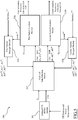
- FIG. 3 it is a schematic flowchart of a resource allocation operation according to an embodiment of the present invention for the communication system 200.
- the packet scheduler module 220 receives an input list L1 of all the I communications c i taking place in the cell 100 in the next TTI, then at step (decision block) 310 the packet scheduler module 220 checks whether it is possible to allocate mutually exclusive resources to all the I communications c i taking place in the cell 100. In the affirmative case (exit branch Y of decision block 310 ), such allocation of mutually exclusive resources is done at step 315; the allocation of mutually exclusive resources ensures the maximum throughput and the minimum interference attainable between the I communications c i and, and the operation ends at step 320.
- step 325 ordered list L2 of the I communications c i taking place in the cell 100 is generated by the packet scheduler module 220.
- the ordering of the ordered list L2 may be implemented according to any suitable allocation schemes (e.g., MaxC/I, PF or RR scheduling mentioned above).
- the packet scheduler module 220 allocates the communication resources to any communication c i taking into account the communication type indicated in the binary data d i and d i UL , d i DL , the modified conflict graph CG' and the restrictions command RS.
- step (decision block) 335 the packet scheduler module 220 verifies if there are communication resources available for allocation. In the negative case (exit branch N of decision block 335 ), the allocation operation ends at step 320.
- the packet scheduler module 220 at step (decision block) 340 verifies if the end of the ordered list L2 of the I communications c i taking place in the cell 100 has been reached.
- the packet scheduler module 220 at step 345 extracts the next communication c i + 1 from the ordered list L2 and the operations return at step 330, for allocating communication resources to the next communication c i + 1 .
- the packet scheduler module 220 repeats the above operations for the subsequent TTIs.
- the inputs d i , d i UL , d i DL , RS and CG' do not change.
- the inputs d i , d i UL , d i DL , RS and CG' to the packet scheduler module 220 may change.
- the communication system may be configured to handle D2D communications also between two UEs located in different cells.
- FIG 4 it is a schematic view of a pair of cells 400a e 400b of a mobile communication network in which an embodiment of the present invention may be implemented.
- the two cells are assumed to be adjacent cells, but the solution is not limited to pairs of adjacent cells (e.g., in the case of small cells).
- communications within a first cell 400a of the pair of adjacent cells 400a are managed by a first eNodeB 405a, while communications within the second cell 400b of the pair of adjacent cells 400a are managed by a second eNodeB 405b.
- Two UE namely a first UE 410a, within the first cell 400a, and a second UE 410b, within the second cell 400b, are involved in an inter-cell D2D communication.
- a third UE 410c within the second cell 400b may cause interference to the inter-cell D2D communication between UE 410a and 410b and, viceversa, UE 410a and 410b in D2D communication may cause interference to a communication performed by the third UE 410c.
- inter-cell D2D communications are managed over a selected group of cells of the mobile communication network , e.g. a selected group of cells may comprise a central cell and all the adjacent cells (i.e., generally 6 cells) adjacent to the central cell.
- FIG. 5 it is a schematic block diagram of a communication system 500 according to an embodiment of the present invention for managing communications in a plurality of cells of the mobile communication networks, such as the cells 400a and 400b.
- the communication system 500 comprises an enlarged CG builder module 505 adapted to provide an enlarged conflict graph CGe based on the position of the users inside adjacent cells, such as the first cell 400a and the second cell 400b in the example of Figure 4 , and their respective transmission powers.
- the enlarged CG builder module 505 receives UE position and transmission power information from all the cells in the mobile communication network or from the selected group of cells (e.g., seven cells of which one cell is a central cell of the group and the remaining six cells are adjacent to the central cell) of the mobile communication network.
- the selected group of cells e.g., seven cells of which one cell is a central cell of the group and the remaining six cells are adjacent to the central cell
- the enlarged CG builder module 505 may be a module/function part of the Evolved Packet Core (EPC - not shown) of the communication system 500 connected to all the eNodeBs of the mobile communication network, or may be a module/function comprised in an eNodeB, such as the eNodeB 400a or 400b of the example of Figure 4 , of the selected group of cells of the mobile communication network mentioned above.
- EPC Evolved Packet Core
- a multi-cell link selection module 515 is provided to perform the selection of the communication type for the UE 405a, 405b and 405c, comprised in adjacent cells, i.e. the cells 400a and 400b in the example of Figure 4 .
- the multi-cell link selection module 515 receives UE position transmission power information from all the cells in the mobile communication network.
- the multi-cell link selection module 515 may be comprised in an Evolved Packet Core (EPC - not shown) of the communication system 500 connected to all the eNodeBs of the mobile communication network, or may be a module/function comprised in an eNodeB, such as the eNodeB 400a or 400b of the example of Figure 4 , of the selected group of cells of the mobile communication network mentioned above.
- EPC Evolved Packet Core
- the communication system 500 comprises a packet scheduler module for managing the allocation of communication resources and a statistics manager module for providing indications about amounts of available communication resources and rates in each respective cell of the mobile communication network.
- the communication system comprises a first packet scheduler module 520a for managing the allocation of communication resources in the first cell 400a and a first statistics manager module 510a for providing indications about amounts of available communication resources MA DL and MA UL , and rates RA i D 2 ⁇ D , RA i UL , and RA i DL based on communication resources actually allocated Load A D / U (provided by the first packet scheduler module 520a to which is coupled) and usage metrics Statistics A D / U of the communication resources for the first cell 400a.
- the communication system 500 comprises a second packet scheduler module 520b for managing the allocation of communication resources in the second cell 400b and a second statistics manager module 510b for providing indications about amounts of available communication resources MB DL and MB UL , and rates RB i D 2 ⁇ D , RB i UL , and RB i DL based on communication resources actually allocated Load B D / U (provided by the second packet scheduler module 520b to which is coupled) and usage metrics Statistics B D / U of the communication resources for the second cell 400b.
- the multi-cell link selection module 515 is coupled with the enlarged CG builder module 505 for receiving the enlarged conflict graph CGe as an input.
- the multi-cell link selection module 515 is coupled with the first statistic manager module 510a for receiving corresponding indications MA DL , MA UL , RA i D 2 ⁇ D , RA i UL a, and RA i DL (referred to the first cell 400a) as inputs.
- multi-cell link selection module 515 is coupled with the second statistic manager module 510b for receiving corresponding indications MB DL , MB UL , RB i D 2 ⁇ D , RB i UL , and RB i DL (referred to the second cell 400b) as inputs. Finally, the multi-cell link selection module 515 receives a requested rate A i for the communication c i , as a further input.
- the multi-cell link selection module 515 selects whether to establish the communication c i as an INFRA communication or as a D2D communication based on the received inputs (similarly as described above) for the UE 410a, 410b and 410c in both the cells 400a and 400b.
- the multi-cell link selection module 515 is connected to both the first packet scheduler module 520a and the second packet scheduler module 520b for providing them a respective communication command which determines whether the communication c i has to be established as, or switched to if already active, an INFRA communication or a D2D communication.
- the communication command for the first packet scheduler module 520a comprises a first binary variable dA i (e.g., a bit) that defines if the communication c i is an INFRA or D2D communication in the first cell 400a and, if the D2D communication is selected, a second binary variable dA i UL and a third binary variable dA i DL that defines if the D2D communication has to be established via downlink or uplink channels in the first cell 400a.
- dA i e.g., a bit
- the communication command for the second packet scheduler module 520b comprises a fourth binary variable dB i (e.g., a bit) that defines if the communication c i is an INFRA or D2D communication in the second cell 400b and, if the D2D communication is selected, a fifth binary variable dB i UL and a sixth binary variable dA i DL that defines if the D2D communication has to be established via downlink or uplink channels in the second cell 400b.
- dB i e.g., a bit
- the link selection module 515 selecting the INFRA-type for a communication c i will provide a communication command referred to such communication c i only for the cell 405a or 405b in which there is/are the UE that perform (or will perform) such communication c i .
- the multi-cell link selection module 515 also provides to both the first packet scheduler module 520a and the second packet scheduler module 520b a modified enlarged conflict Graph ( CGe' ) modified in order to take into account the communication commands provided.
- CGe' modified enlarged conflict Graph
- the multi-cell link selection module 515 provides as output also a first restrictions command RS A and a second restrictions command RS B to the first packet scheduler module 520a and the second packet scheduler module 520b, respectively.
- each one of the restrictions commands RS A and RS B comprises a set of restrictions regarding the communication resources to be allocated to a UE_group listing UE, such as he UE 410a, 410b and 410c, near boundaries (e.g., within an interference region 420 described below) of two (or more) adjacent cells, such as the first cell 400a and the second cell 405b .
- the enlarged CG builder module 505, the statistic modules 510a and 510b and the multi-cell link selection module 515 provide their outputs with a link selection period TLS greater than a TTI as explained above with reference to the single-cell scenario of Figure 1 .
- the link selection period TLS has a duration in the order of hundred of milliseconds, greater than a TTI (1ms) in LTE/LTE-A.
- the packet scheduler modules 520a and 520b provides their outputs with a periodicity equal to the TTI, as explained above with reference to the single-cell scenario of Figure 1 .
- a scenario for the communication system 500 is the management of a D2D communication between the two UE 410a and 410b within two adjacent cells 400a and 400b and served by different eNodeBs 405a and 405b, respectively (as shown in Figure 4 ).
- the communication system 500 coordinates the allocation of communication resources between the two cells 400a and 400b in order to reduce possible interference between the UE 410a, 410b and 410c (and any other UE within the cells 400a and 400b, not shown).
- the coordination of communication resources allocation is performed by the multi-cell link selection module 515 by coordinating the operation of the two packet scheduler modules 520a and 520b, thus with a periodicity equal to the link selection period TLS.
- the first UE 410a within the first cell 400a is transmitting to the second UE 410b within the second cell 405b by performing a D2D communication c ab .
- the third UE 410c within the second cell 400b is one of the possible interferer to D2D communication c ab , particularly for the second UE 410b (under the assumption that a sharing of communication resources between D2D communications and INFRA communications is allowed in the second cell 400b ).
- the dashed circle enclosing the second UE 410b and the third UE 410c represents an "interference radius" 415 of the third UE 410c. Within such interference radius, INFRA communications c int performed by the third UE 410c may interfere with communication c ab performed between the first and the second UE 410a and 410b.
- the communication system 500 in order to reduce interferences is configured to allocate every possible interfering communication c int (i.e., a node connected by an edge to the node representing the D2D communication c ab in the enlarged conflict graph CGe ) on communication resources different from the communication resources allocated to the D2D communication c ab .
- every possible interfering communication c int i.e., a node connected by an edge to the node representing the D2D communication c ab in the enlarged conflict graph CGe
- an "interference region" 420 (represented in Figure 4 by a solid black rectangle) is defined as the region in which D2D communications between UE of different cells, such as the UE 410a and 410b, may experience interferences due to other UE within the interference region 420 that performs INFRA communications, such as in case of the third UE 410c in the second cell 400b, and viceversa INFRA communications may experience interferences due to D2D communications.
- the interference region 420 extends over both the cells 400a and 400b and thus comprises a first cell 400a portion 420 A and a first cell 400a portion 420 B .
- the multi-cell link selection module 515 determines any possible interfering communication c int from the analysis of the modified enlarged conflict graph CGe' provided by the enlarged CG builder module 505 and provides the restrictions commands RS A and RS B both comprising UE_group listing sets of UE, such as the UE 405a, 405b and 405c comprised within the interference region 420 and PRBs indicating communication resources to be allocated to the UE of the UE_group in a non-interfering way within the interference region 420.
- the packet scheduler modules 520a and 520b allocate the D2D communication c ab and the INFRA communication c int according to the restrictions commands RS A and RS B .
- the packet scheduler modules 520a and 520b may allocate the communication resources PRB A and PRB B for the D2D communication c ab and the INFRA communication c int , respectively, having a maximum possible distance (in frequency) one with respect to the other.
- the first packet scheduler module 520a allocates communication resources for the first UE 410a, which transmits data packets to the second UE 410b from within the portion 420 A of the interference region 420, on communication resources PRB A 605 located in an initial portion of the transmission band 610 available for the communications in the first cell 405a.
- the second packet scheduler module 520b allocates communication resources for the third UE 410c, which transmits data packets from within the portion 420 B of the interference region 420, on communication resources PRB B 615 located in a final portion of the transmission band 620 available for the communications in the first cell 405a.
- a global packet scheduler module may be provided for managing the allocation of resources of UE in all the cells of the mobile communication network or for managing a selected group of cells thereof.
- the embodiments of the present invention herein described may manage efficiently communications resources allocation in order to improve the operation of the mobile communication network taking advantages introduced by the availability of D2D communication (e.g., cell offloading and reduction of used spectrum, and a lower latency with respect to the INFRA communication), without incurring in the drawbacks associated with the coexistence of D2D communications and INFRA communications (e.g., interferences between D2D communications and INFRA communications and D2D communications not controlled by the communication system).
- D2D communication e.g., cell offloading and reduction of used spectrum, and a lower latency with respect to the INFRA communication
Landscapes
- Engineering & Computer Science (AREA)
- Computer Networks & Wireless Communication (AREA)
- Signal Processing (AREA)
- Quality & Reliability (AREA)
- Mobile Radio Communication Systems (AREA)
Claims (13)
- Verfahren zur Zuweisung von Kommunikationsressourcen für Kommunikationen (ci), die von einer Benutzerausrüstung (110a-f; 410a-c) in einem Mobilkommunikationsnetzwerk durchgeführt werden, wobei das Verfahren in einem Kommunikationssystem (200) des Mobilkommunikationsnetzwerks umfasst:Schritt a) Empfangen einer ersten Angabe (MDL, MUL) über eine Menge verfügbarer Kommunikationsressourcen;Schritt b) Erhalten von Informationen über zwischen Benutzerausrüstungen interferierende Kommunikationen;für jede Kommunikation zwischen Benutzerausrüstungen, denen Kommunikationsressourcen zuzuweisen sind:Schritt c) Empfangen einer zweiten Angabe (Ri D2D, Ri UL, Ri DL) über eine verfügbare Kommunikationsrate für eine infrastrukturbasierte Kommunikation und für eine Vorrichtung-zu-Vorrichtung-Kommunikation;Schritt d) Empfangen einer dritten Angabe (Ai) über eine angeforderte Kommunikationsrate für jede der Kommunikationen;Schritt e) Treffen einer Auswahl (215; 515) zwischen einer infrastrukturbasierten Kommunikationsart oder einer Vorrichtung-zu-Vorrichtung-Kommunikationsart basierend auf der ersten, zweiten und dritten Angabe und den Informationen über interferierende Kommunikationen, undSchritt f) Zuweisen (305-345) von Kommunikationsressourcen zu jeder Kommunikation basierend auf der Auswahl zwischen einer infrastrukturbasierten Kommunikationsart oder einer Vorrichtung-zu-Vorrichtung-Kommunikationsart,wobei die Schritte a), b), c), d) und e) mit einer Periodizität (TLS) durchgeführt werden, die länger ist als eine Periodizität (TTI), mit der der Schritt f) durchgeführt wird,
wobei jede Kommunikation mehrere Datenpakete umfasst und die Periodizität (TTI) des Schritts f) einer Dauer einer Übertragung in dem Mobilkommunikationsnetzwerk entspricht. - Verfahren nach einem der vorhergehenden Ansprüche, wobei das Erhalten von Informationen über interferierende Kommunikationen auf Informationen über Positions- und Leistungsmessungen der Benutzerausrüstung innerhalb des Mobilkommunikationsnetzwerks basiert.
- Verfahren nach Anspruch 2, wobei das Erhalten von Informationen über interferierende Kommunikationen umfasst:- Aufbauen (205; 505) eines Konfliktgraphen (CG; CGe) basierend auf Informationen über Positions- und Leistungsmessungen der Benutzerausrüstung innerhalb des Mobilkommunikationsnetzwerks, wobei der Konfliktgraph eine Interferenz zwischen Paaren von kommunizierenden Benutzerausrüstungen angibt.
- Verfahren nach Anspruch 3, ferner umfassend:- Erzeugen (215; 515) eines modifizierten Konfliktgraphen (CG'; CG'e) durch Modifizieren des Konfliktgraphen basierend auf der Auswahl zwischen einer infrastrukturbasierten Kommunikationsart oder einer Vorrichtung-zu-Vorrichtung-Kommunikationsart.
- Verfahren nach Anspruch 4, wobei das Zuweisen von Kommunikationsressourcen ferner auf dem modifizierten Konfliktgraphen basiert (220; 520a, 520b).
- Verfahren nach einem der vorhergehenden Ansprüche, wobei die erste Angabe und die zweite Angabe auf Nutzungsmetriken (StatistikD/U) der Kommunikationsressourcen in Bezug auf laufende Kommunikationen basieren.
- Verfahren nach Anspruch 6, wobei die erste Angabe und die zweite Angabe ferner auf Informationen (LastD/U) über Kommunikationsressourcen basieren (210; 510a, 510b), die tatsächlich durch den Schritt des Zuweisens von Kommunikationsressourcen zugewiesen wurden.
- Verfahren nach einem der vorhergehenden Ansprüche, wobei das Mobilkommunikationsnetzwerk mehrere Zellen (400a, 400b) umfasst, die Teile eines Versorgungsbereichs des Mobilkommunikationsnetzwerks sind, und wobei das Verfahren konfiguriert ist zum Zuweisen von Kommunikationsressourcen für Kommunikationen, die von Benutzerausrüstungen innerhalb einer ausgewählten Gruppe von Zellen durchgeführt werden.
- Verfahren nach Anspruch 8, ferner umfassend, für jede benachbarte Zelle (400a, 400b) der ausgewählten Gruppe von Zellen:- Definieren eines Interferenzbereichs (420), der einen Teil (420A, 420B) jeder benachbarten Zelle der Gruppe von Zellen umfasst, in dem Vorrichtung-zu-Vorrichtung-Kommunikationen zwischen Benutzerausrüstungen verschiedener Zellen aufgrund anderer Benutzerausrüstungen innerhalb in der Interferenzregion, in der infrastrukturbasierte Kommunikation ausgeführt wird, Interferenzen erfahren können, und umgekehrt infrastrukturbasierte Kommunikation aufgrund von Vorrichtung-zu-Vorrichtung-Kommunikationen Interferenzen erfahren können.
- Verfahren nach Anspruch 9, ferner umfassend:- Erzeugen einer Liste von Benutzerausrüstungen, die innerhalb des Interferenzbereichs enthalten sind, und- Angeben von Kommunikationsressourcen, die der Benutzerausrüstung auf der Liste auf eine nicht interferierende Weise innerhalb des Interferenzbereichs zuzuweisen sind.
- Mobilkommunikationsnetzwerk zur Verwaltung einer Kommunikation von Benutzerausrüstungen (110a-f; 410a-c), wobei das Mobilkommunikationsnetzwerk einen Abdeckungsbereich umfasst, der in mehrere Zellen (100; 400a, 400b) unterteilt ist, wobei jede Zelle mit einer Funkkommunikationsstation zur Verwaltung von Kommunikationen von Benutzerausrüstungen in der Zelle versehen ist, wobei
das Mobilkommunikationsnetzwerk ferner ein Kommunikationssystem umfasst, das zum Implementieren des Verfahrens nach einem der Ansprüche 1 bis 10 konfiguriert ist. - Mobilkommunikationsnetzwerk nach Anspruch 11, wobei das Kommunikationssystem mindestens ein Verbindungsauswahlmodul (215; 515) umfasst, das konfiguriert ist, eine Auswahl zwischen einer infrastrukturbasierten Kommunikationsart oder einer Vorrichtung-zu-Vorrichtung-Kommunikation zu treffen, und mindestens ein Planungsmodul (220; 520a, 520b), das zum Durchführen der Zuweisung von Kommunikationsressourcen zu jeder Kommunikation konfiguriert ist, wobei das mindestens eine Verbindungsauswahlmodul mit dem mindestens einem Planungsmodul zum Zuweisen von Kommunikationsressourcen gemäß der Auswahl gekoppelt ist.
- Mobilkommunikationsnetzwerk nach Anspruch 12, wobei mindestens ein Verbindungsauswahlmodul ein Verbindungsauswahlmodul (515) umfasst, das zum Treffen der Auswahl zwischen einer infrastrukturbasierten Kommunikationsart oder einer Vorrichtung-zu-Vorrichtung-Kommunikation für in einer ausgewählten Gruppe von Zellen des Mobilkommunikationsnetzwerks stattfindende Kommunikationen konfiguriert ist, und wobei das mindestens eine Planungsmodul mehrere Planungsmodule (520a, 520b) umfasst, wobei jedes Planungsmodul zum Durchführen des Zuweisens von Kommunikationsressourcen zu jeder Kommunikation in einer jeweiligen Zelle (400a; 400b) des Mobilkommunikationsnetzwerks konfiguriert ist.
Applications Claiming Priority (1)
| Application Number | Priority Date | Filing Date | Title |
|---|---|---|---|
| PCT/EP2014/059490 WO2015169380A1 (en) | 2014-05-08 | 2014-05-08 | Resource allocation system and method adapted to implement device-to-device communications in wireless communication networks |
Publications (2)
| Publication Number | Publication Date |
|---|---|
| EP3141063A1 EP3141063A1 (de) | 2017-03-15 |
| EP3141063B1 true EP3141063B1 (de) | 2019-09-11 |
Family
ID=50896235
Family Applications (1)
| Application Number | Title | Priority Date | Filing Date |
|---|---|---|---|
| EP14728465.7A Active EP3141063B1 (de) | 2014-05-08 | 2014-05-08 | Ressourcenzuteilungssystem und -verfahren zur implementierung von vorrichtung-zu-vorrichtung-kommunikationen in drahtloskommunikationsnetzwerken |
Country Status (6)
| Country | Link |
|---|---|
| US (1) | US10349421B2 (de) |
| EP (1) | EP3141063B1 (de) |
| JP (1) | JP6466568B2 (de) |
| KR (1) | KR102173747B1 (de) |
| CN (1) | CN106605442B (de) |
| WO (1) | WO2015169380A1 (de) |
Families Citing this family (7)
| Publication number | Priority date | Publication date | Assignee | Title |
|---|---|---|---|---|
| JP6424853B2 (ja) * | 2016-03-18 | 2018-11-21 | 株式会社デンソー | 通信制御装置 |
| WO2018010123A1 (zh) | 2016-07-13 | 2018-01-18 | 华为技术有限公司 | 通信方法、网络设备和终端设备 |
| US10681677B2 (en) * | 2016-12-27 | 2020-06-09 | Intel Corporation | Coordinated transmissions among virtual access points (VAPS) |
| EP3648507A1 (de) | 2018-10-30 | 2020-05-06 | Tata Consultancy Services Limited | Systeme und verfahren zur bestimmung von tcp-transfertypen in lte-a-kommunikationsnetzen und handhabung dafür |
| CN110149125A (zh) * | 2019-04-16 | 2019-08-20 | 中国地质大学(武汉) | 无线干扰管理中的非合作噪声处理方法、设备及存储设备 |
| US11617163B2 (en) * | 2019-10-23 | 2023-03-28 | Qualcomm Incorporated | Avoiding collisions with reference signals |
| US12238752B2 (en) * | 2019-12-16 | 2025-02-25 | Telefonaktiebolaget Lm Ericsson (Publ) | Reliable device-to-device communication |
Family Cites Families (18)
| Publication number | Priority date | Publication date | Assignee | Title |
|---|---|---|---|---|
| KR101498968B1 (ko) * | 2007-07-05 | 2015-03-12 | 삼성전자주식회사 | 통신시스템에서 피어 투 피어 통신을 위한 자원 결정 방법및 장치 |
| KR101375481B1 (ko) * | 2007-07-06 | 2014-03-19 | 삼성전자주식회사 | 통신 시스템에서 통신 모드 결정 방법 및 장치 |
| US8411584B1 (en) * | 2008-03-31 | 2013-04-02 | Olympus Corporation | Wireless resource allocation system and method |
| US9351340B2 (en) * | 2009-04-08 | 2016-05-24 | Nokia Technologies Oy | Apparatus and method for mode selection for device-to-device communications |
| KR101335869B1 (ko) * | 2009-08-12 | 2013-12-02 | 엘지전자 주식회사 | 무선 통신 시스템에서 논리채널에 대한 자원 할당 방법 및 장치 |
| US9432818B2 (en) * | 2010-02-11 | 2016-08-30 | Nokia Solutions And Networks Oy | Controlling communication devices |
| US8428629B2 (en) * | 2010-03-31 | 2013-04-23 | Qualcomm Incorporated | Methods and apparatus for determining a communications mode and/or using a determined communications mode |
| JP5469555B2 (ja) * | 2010-07-15 | 2014-04-16 | 株式会社メガチップス | 通信装置および通信装置の動作方法 |
| US9125219B2 (en) * | 2010-09-03 | 2015-09-01 | Electronics And Telecommunications Research Institute | Method for selecting communication channel in communication device of wideband wireless communication system and apparatus thereof |
| CN102088736B (zh) * | 2011-01-14 | 2017-02-22 | 北京邮电大学 | 一种基于用户位置列表的d2d用户对选择复用多个蜂窝用户资源的方法 |
| CN103688587A (zh) | 2011-07-11 | 2014-03-26 | 美国博通公司 | 为了设备到设备通信目的的蜂窝通信网络中的分组调度 |
| US9854044B2 (en) | 2011-09-30 | 2017-12-26 | Telefonaktiebolaget Lm Ericsson (Publ) | Method and arrangement for handling device-to-device communication in a wireless communications network |
| US8953478B2 (en) * | 2012-01-27 | 2015-02-10 | Intel Corporation | Evolved node B and method for coherent coordinated multipoint transmission with per CSI-RS feedback |
| WO2013170482A1 (en) * | 2012-05-18 | 2013-11-21 | Nokia Corporation | Method and apparatus for switch |
| TWI620459B (zh) | 2012-05-31 | 2018-04-01 | 內數位專利控股公司 | 在蜂巢式通訊系統中賦能直鏈通訊排程及控制方法 |
| CN103220724B (zh) * | 2013-04-25 | 2015-07-01 | 北京邮电大学 | 一种蜂窝与d2d通信混合系统中d2d用户频谱接入方法 |
| US10314092B2 (en) * | 2013-08-16 | 2019-06-04 | Lg Electronics Inc. | Signal transmission method in device-to-device communication and apparatus therefor |
| JP2015170872A (ja) * | 2014-03-05 | 2015-09-28 | 株式会社日立製作所 | 基地局及び無線通信方法 |
-
2014
- 2014-05-08 EP EP14728465.7A patent/EP3141063B1/de active Active
- 2014-05-08 WO PCT/EP2014/059490 patent/WO2015169380A1/en not_active Ceased
- 2014-05-08 US US15/307,971 patent/US10349421B2/en active Active
- 2014-05-08 JP JP2017510727A patent/JP6466568B2/ja active Active
- 2014-05-08 KR KR1020167032192A patent/KR102173747B1/ko active Active
- 2014-05-08 CN CN201480079587.8A patent/CN106605442B/zh active Active
Non-Patent Citations (1)
| Title |
|---|
| None * |
Also Published As
| Publication number | Publication date |
|---|---|
| EP3141063A1 (de) | 2017-03-15 |
| JP6466568B2 (ja) | 2019-02-06 |
| US10349421B2 (en) | 2019-07-09 |
| KR102173747B1 (ko) | 2020-11-04 |
| JP2017515439A (ja) | 2017-06-08 |
| US20170055270A1 (en) | 2017-02-23 |
| CN106605442B (zh) | 2020-03-24 |
| CN106605442A (zh) | 2017-04-26 |
| KR20170009867A (ko) | 2017-01-25 |
| WO2015169380A1 (en) | 2015-11-12 |
Similar Documents
| Publication | Publication Date | Title |
|---|---|---|
| AU2021202983B2 (en) | Inter-cell fractional frequency reuse scheduler | |
| CN107852746B (zh) | 用于信道接入过程的方法以及用户设备 | |
| EP3141063B1 (de) | Ressourcenzuteilungssystem und -verfahren zur implementierung von vorrichtung-zu-vorrichtung-kommunikationen in drahtloskommunikationsnetzwerken | |
| US9100832B2 (en) | Method and apparatus for self organized network | |
| EP2816833B1 (de) | Funkressourcensteuerung für Dual-Access-Technology-Zellen | |
| EP3619934B1 (de) | Ermöglichung des austauschs von informationen auf funkrahmenkonfiguration in nachbarzellen | |
| US11871439B2 (en) | Inter-cell fractional frequency reuse scheduler | |
| EP3132555B1 (de) | Uplink-basierte auswahl einer konfiguration der downlink-konnektivität | |
| US9560545B1 (en) | Systems and methods for managing communication between an access node and a relay node | |
| Narmanlioglu et al. | Interference coordination in SDN-based heterogeneous mobile networks | |
| US9608794B2 (en) | Systems and methods for scheduling transmissions between an access node and wireless devices | |
| Xu | A Distributed Mode Selection Scheme for Device-to-Device Communications | |
| de Dieu Hagenimana et al. | QoS for Device-to-Device communication in 4G LTE-A network. | |
| EP3178278B1 (de) | Systeme und verfahren zur kommunikationsplanung an einem zugangsknoten | |
| Mahdi | The integration of device-to-device communication in future cellular systems | |
| Arribas | Optimization Methods for Efficient Relay Techniques in Cellular Networks | |
| Arribas Gimeno | Optimization methods for efficient relay techniques in cellular networks | |
| Suzuki et al. | Heterogeneous wireless networks for reliable communications | |
| Kim et al. | Error Probability Based Resource Allocation for Device-to-Device Communications Underlaying Cellular Networks |
Legal Events
| Date | Code | Title | Description |
|---|---|---|---|
| STAA | Information on the status of an ep patent application or granted ep patent |
Free format text: STATUS: THE INTERNATIONAL PUBLICATION HAS BEEN MADE |
|
| PUAI | Public reference made under article 153(3) epc to a published international application that has entered the european phase |
Free format text: ORIGINAL CODE: 0009012 |
|
| STAA | Information on the status of an ep patent application or granted ep patent |
Free format text: STATUS: REQUEST FOR EXAMINATION WAS MADE |
|
| 17P | Request for examination filed |
Effective date: 20161205 |
|
| AK | Designated contracting states |
Kind code of ref document: A1 Designated state(s): AL AT BE BG CH CY CZ DE DK EE ES FI FR GB GR HR HU IE IS IT LI LT LU LV MC MK MT NL NO PL PT RO RS SE SI SK SM TR |
|
| AX | Request for extension of the european patent |
Extension state: BA ME |
|
| DAX | Request for extension of the european patent (deleted) | ||
| STAA | Information on the status of an ep patent application or granted ep patent |
Free format text: STATUS: EXAMINATION IS IN PROGRESS |
|
| 17Q | First examination report despatched |
Effective date: 20171031 |
|
| GRAP | Despatch of communication of intention to grant a patent |
Free format text: ORIGINAL CODE: EPIDOSNIGR1 |
|
| STAA | Information on the status of an ep patent application or granted ep patent |
Free format text: STATUS: GRANT OF PATENT IS INTENDED |
|
| INTG | Intention to grant announced |
Effective date: 20181205 |
|
| GRAJ | Information related to disapproval of communication of intention to grant by the applicant or resumption of examination proceedings by the epo deleted |
Free format text: ORIGINAL CODE: EPIDOSDIGR1 |
|
| STAA | Information on the status of an ep patent application or granted ep patent |
Free format text: STATUS: EXAMINATION IS IN PROGRESS |
|
| GRAP | Despatch of communication of intention to grant a patent |
Free format text: ORIGINAL CODE: EPIDOSNIGR1 |
|
| STAA | Information on the status of an ep patent application or granted ep patent |
Free format text: STATUS: GRANT OF PATENT IS INTENDED |
|
| INTC | Intention to grant announced (deleted) | ||
| INTG | Intention to grant announced |
Effective date: 20190430 |
|
| GRAS | Grant fee paid |
Free format text: ORIGINAL CODE: EPIDOSNIGR3 |
|
| GRAA | (expected) grant |
Free format text: ORIGINAL CODE: 0009210 |
|
| STAA | Information on the status of an ep patent application or granted ep patent |
Free format text: STATUS: THE PATENT HAS BEEN GRANTED |
|
| AK | Designated contracting states |
Kind code of ref document: B1 Designated state(s): AL AT BE BG CH CY CZ DE DK EE ES FI FR GB GR HR HU IE IS IT LI LT LU LV MC MK MT NL NO PL PT RO RS SE SI SK SM TR |
|
| REG | Reference to a national code |
Ref country code: GB Ref legal event code: FG4D |
|
| REG | Reference to a national code |
Ref country code: CH Ref legal event code: EP |
|
| REG | Reference to a national code |
Ref country code: AT Ref legal event code: REF Ref document number: 1180135 Country of ref document: AT Kind code of ref document: T Effective date: 20190915 |
|
| REG | Reference to a national code |
Ref country code: DE Ref legal event code: R096 Ref document number: 602014053411 Country of ref document: DE Ref country code: IE Ref legal event code: FG4D |
|
| REG | Reference to a national code |
Ref country code: NL Ref legal event code: MP Effective date: 20190911 |
|
| REG | Reference to a national code |
Ref country code: LT Ref legal event code: MG4D |
|
| PG25 | Lapsed in a contracting state [announced via postgrant information from national office to epo] |
Ref country code: SE Free format text: LAPSE BECAUSE OF FAILURE TO SUBMIT A TRANSLATION OF THE DESCRIPTION OR TO PAY THE FEE WITHIN THE PRESCRIBED TIME-LIMIT Effective date: 20190911 Ref country code: BG Free format text: LAPSE BECAUSE OF FAILURE TO SUBMIT A TRANSLATION OF THE DESCRIPTION OR TO PAY THE FEE WITHIN THE PRESCRIBED TIME-LIMIT Effective date: 20191211 Ref country code: LT Free format text: LAPSE BECAUSE OF FAILURE TO SUBMIT A TRANSLATION OF THE DESCRIPTION OR TO PAY THE FEE WITHIN THE PRESCRIBED TIME-LIMIT Effective date: 20190911 Ref country code: HR Free format text: LAPSE BECAUSE OF FAILURE TO SUBMIT A TRANSLATION OF THE DESCRIPTION OR TO PAY THE FEE WITHIN THE PRESCRIBED TIME-LIMIT Effective date: 20190911 Ref country code: FI Free format text: LAPSE BECAUSE OF FAILURE TO SUBMIT A TRANSLATION OF THE DESCRIPTION OR TO PAY THE FEE WITHIN THE PRESCRIBED TIME-LIMIT Effective date: 20190911 Ref country code: NO Free format text: LAPSE BECAUSE OF FAILURE TO SUBMIT A TRANSLATION OF THE DESCRIPTION OR TO PAY THE FEE WITHIN THE PRESCRIBED TIME-LIMIT Effective date: 20191211 |
|
| PG25 | Lapsed in a contracting state [announced via postgrant information from national office to epo] |
Ref country code: GR Free format text: LAPSE BECAUSE OF FAILURE TO SUBMIT A TRANSLATION OF THE DESCRIPTION OR TO PAY THE FEE WITHIN THE PRESCRIBED TIME-LIMIT Effective date: 20191212 Ref country code: LV Free format text: LAPSE BECAUSE OF FAILURE TO SUBMIT A TRANSLATION OF THE DESCRIPTION OR TO PAY THE FEE WITHIN THE PRESCRIBED TIME-LIMIT Effective date: 20190911 Ref country code: ES Free format text: LAPSE BECAUSE OF FAILURE TO SUBMIT A TRANSLATION OF THE DESCRIPTION OR TO PAY THE FEE WITHIN THE PRESCRIBED TIME-LIMIT Effective date: 20190911 Ref country code: RS Free format text: LAPSE BECAUSE OF FAILURE TO SUBMIT A TRANSLATION OF THE DESCRIPTION OR TO PAY THE FEE WITHIN THE PRESCRIBED TIME-LIMIT Effective date: 20190911 Ref country code: AL Free format text: LAPSE BECAUSE OF FAILURE TO SUBMIT A TRANSLATION OF THE DESCRIPTION OR TO PAY THE FEE WITHIN THE PRESCRIBED TIME-LIMIT Effective date: 20190911 |
|
| REG | Reference to a national code |
Ref country code: AT Ref legal event code: MK05 Ref document number: 1180135 Country of ref document: AT Kind code of ref document: T Effective date: 20190911 |
|
| PG25 | Lapsed in a contracting state [announced via postgrant information from national office to epo] |
Ref country code: PT Free format text: LAPSE BECAUSE OF FAILURE TO SUBMIT A TRANSLATION OF THE DESCRIPTION OR TO PAY THE FEE WITHIN THE PRESCRIBED TIME-LIMIT Effective date: 20200113 Ref country code: NL Free format text: LAPSE BECAUSE OF FAILURE TO SUBMIT A TRANSLATION OF THE DESCRIPTION OR TO PAY THE FEE WITHIN THE PRESCRIBED TIME-LIMIT Effective date: 20190911 Ref country code: AT Free format text: LAPSE BECAUSE OF FAILURE TO SUBMIT A TRANSLATION OF THE DESCRIPTION OR TO PAY THE FEE WITHIN THE PRESCRIBED TIME-LIMIT Effective date: 20190911 Ref country code: RO Free format text: LAPSE BECAUSE OF FAILURE TO SUBMIT A TRANSLATION OF THE DESCRIPTION OR TO PAY THE FEE WITHIN THE PRESCRIBED TIME-LIMIT Effective date: 20190911 Ref country code: EE Free format text: LAPSE BECAUSE OF FAILURE TO SUBMIT A TRANSLATION OF THE DESCRIPTION OR TO PAY THE FEE WITHIN THE PRESCRIBED TIME-LIMIT Effective date: 20190911 Ref country code: PL Free format text: LAPSE BECAUSE OF FAILURE TO SUBMIT A TRANSLATION OF THE DESCRIPTION OR TO PAY THE FEE WITHIN THE PRESCRIBED TIME-LIMIT Effective date: 20190911 |
|
| PG25 | Lapsed in a contracting state [announced via postgrant information from national office to epo] |
Ref country code: IS Free format text: LAPSE BECAUSE OF FAILURE TO SUBMIT A TRANSLATION OF THE DESCRIPTION OR TO PAY THE FEE WITHIN THE PRESCRIBED TIME-LIMIT Effective date: 20200224 Ref country code: SM Free format text: LAPSE BECAUSE OF FAILURE TO SUBMIT A TRANSLATION OF THE DESCRIPTION OR TO PAY THE FEE WITHIN THE PRESCRIBED TIME-LIMIT Effective date: 20190911 Ref country code: SK Free format text: LAPSE BECAUSE OF FAILURE TO SUBMIT A TRANSLATION OF THE DESCRIPTION OR TO PAY THE FEE WITHIN THE PRESCRIBED TIME-LIMIT Effective date: 20190911 Ref country code: CZ Free format text: LAPSE BECAUSE OF FAILURE TO SUBMIT A TRANSLATION OF THE DESCRIPTION OR TO PAY THE FEE WITHIN THE PRESCRIBED TIME-LIMIT Effective date: 20190911 |
|
| REG | Reference to a national code |
Ref country code: DE Ref legal event code: R097 Ref document number: 602014053411 Country of ref document: DE |
|
| PLBE | No opposition filed within time limit |
Free format text: ORIGINAL CODE: 0009261 |
|
| STAA | Information on the status of an ep patent application or granted ep patent |
Free format text: STATUS: NO OPPOSITION FILED WITHIN TIME LIMIT |
|
| PG2D | Information on lapse in contracting state deleted |
Ref country code: IS |
|
| PG25 | Lapsed in a contracting state [announced via postgrant information from national office to epo] |
Ref country code: DK Free format text: LAPSE BECAUSE OF FAILURE TO SUBMIT A TRANSLATION OF THE DESCRIPTION OR TO PAY THE FEE WITHIN THE PRESCRIBED TIME-LIMIT Effective date: 20190911 Ref country code: IS Free format text: LAPSE BECAUSE OF FAILURE TO SUBMIT A TRANSLATION OF THE DESCRIPTION OR TO PAY THE FEE WITHIN THE PRESCRIBED TIME-LIMIT Effective date: 20200112 |
|
| 26N | No opposition filed |
Effective date: 20200615 |
|
| PG25 | Lapsed in a contracting state [announced via postgrant information from national office to epo] |
Ref country code: SI Free format text: LAPSE BECAUSE OF FAILURE TO SUBMIT A TRANSLATION OF THE DESCRIPTION OR TO PAY THE FEE WITHIN THE PRESCRIBED TIME-LIMIT Effective date: 20190911 |
|
| PG25 | Lapsed in a contracting state [announced via postgrant information from national office to epo] |
Ref country code: LI Free format text: LAPSE BECAUSE OF NON-PAYMENT OF DUE FEES Effective date: 20200531 Ref country code: CH Free format text: LAPSE BECAUSE OF NON-PAYMENT OF DUE FEES Effective date: 20200531 Ref country code: MC Free format text: LAPSE BECAUSE OF FAILURE TO SUBMIT A TRANSLATION OF THE DESCRIPTION OR TO PAY THE FEE WITHIN THE PRESCRIBED TIME-LIMIT Effective date: 20190911 |
|
| REG | Reference to a national code |
Ref country code: BE Ref legal event code: MM Effective date: 20200531 |
|
| PG25 | Lapsed in a contracting state [announced via postgrant information from national office to epo] |
Ref country code: LU Free format text: LAPSE BECAUSE OF NON-PAYMENT OF DUE FEES Effective date: 20200508 |
|
| PG25 | Lapsed in a contracting state [announced via postgrant information from national office to epo] |
Ref country code: IE Free format text: LAPSE BECAUSE OF NON-PAYMENT OF DUE FEES Effective date: 20200508 |
|
| PG25 | Lapsed in a contracting state [announced via postgrant information from national office to epo] |
Ref country code: BE Free format text: LAPSE BECAUSE OF NON-PAYMENT OF DUE FEES Effective date: 20200531 |
|
| PG25 | Lapsed in a contracting state [announced via postgrant information from national office to epo] |
Ref country code: TR Free format text: LAPSE BECAUSE OF FAILURE TO SUBMIT A TRANSLATION OF THE DESCRIPTION OR TO PAY THE FEE WITHIN THE PRESCRIBED TIME-LIMIT Effective date: 20190911 Ref country code: MT Free format text: LAPSE BECAUSE OF FAILURE TO SUBMIT A TRANSLATION OF THE DESCRIPTION OR TO PAY THE FEE WITHIN THE PRESCRIBED TIME-LIMIT Effective date: 20190911 Ref country code: CY Free format text: LAPSE BECAUSE OF FAILURE TO SUBMIT A TRANSLATION OF THE DESCRIPTION OR TO PAY THE FEE WITHIN THE PRESCRIBED TIME-LIMIT Effective date: 20190911 |
|
| PG25 | Lapsed in a contracting state [announced via postgrant information from national office to epo] |
Ref country code: MK Free format text: LAPSE BECAUSE OF FAILURE TO SUBMIT A TRANSLATION OF THE DESCRIPTION OR TO PAY THE FEE WITHIN THE PRESCRIBED TIME-LIMIT Effective date: 20190911 |
|
| P01 | Opt-out of the competence of the unified patent court (upc) registered |
Effective date: 20230527 |
|
| P02 | Opt-out of the competence of the unified patent court (upc) changed |
Effective date: 20230530 |
|
| PGFP | Annual fee paid to national office [announced via postgrant information from national office to epo] |
Ref country code: DE Payment date: 20250519 Year of fee payment: 12 |
|
| PGFP | Annual fee paid to national office [announced via postgrant information from national office to epo] |
Ref country code: GB Payment date: 20250527 Year of fee payment: 12 |
|
| PGFP | Annual fee paid to national office [announced via postgrant information from national office to epo] |
Ref country code: IT Payment date: 20250530 Year of fee payment: 12 |
|
| PGFP | Annual fee paid to national office [announced via postgrant information from national office to epo] |
Ref country code: FR Payment date: 20250526 Year of fee payment: 12 |