EP3142012A1 - Procédé pour déterminer une capacité de calcul d'une structure physique ou d'une machine virtuelle - Google Patents
Procédé pour déterminer une capacité de calcul d'une structure physique ou d'une machine virtuelle Download PDFInfo
- Publication number
- EP3142012A1 EP3142012A1 EP15306385.4A EP15306385A EP3142012A1 EP 3142012 A1 EP3142012 A1 EP 3142012A1 EP 15306385 A EP15306385 A EP 15306385A EP 3142012 A1 EP3142012 A1 EP 3142012A1
- Authority
- EP
- European Patent Office
- Prior art keywords
- calibrated
- computing
- computer
- load
- computing machine
- Prior art date
- Legal status (The legal status is an assumption and is not a legal conclusion. Google has not performed a legal analysis and makes no representation as to the accuracy of the status listed.)
- Granted
Links
Images


Classifications
-
- G—PHYSICS
- G06—COMPUTING OR CALCULATING; COUNTING
- G06F—ELECTRIC DIGITAL DATA PROCESSING
- G06F9/00—Arrangements for program control, e.g. control units
- G06F9/06—Arrangements for program control, e.g. control units using stored programs, i.e. using an internal store of processing equipment to receive or retain programs
- G06F9/46—Multiprogramming arrangements
- G06F9/50—Allocation of resources, e.g. of the central processing unit [CPU]
- G06F9/5005—Allocation of resources, e.g. of the central processing unit [CPU] to service a request
- G06F9/5027—Allocation of resources, e.g. of the central processing unit [CPU] to service a request the resource being a machine, e.g. CPUs, Servers, Terminals
- G06F9/5044—Allocation of resources, e.g. of the central processing unit [CPU] to service a request the resource being a machine, e.g. CPUs, Servers, Terminals considering hardware capabilities
-
- G—PHYSICS
- G06—COMPUTING OR CALCULATING; COUNTING
- G06F—ELECTRIC DIGITAL DATA PROCESSING
- G06F11/00—Error detection; Error correction; Monitoring
- G06F11/30—Monitoring
- G06F11/34—Recording or statistical evaluation of computer activity, e.g. of down time, of input/output operation ; Recording or statistical evaluation of user activity, e.g. usability assessment
- G06F11/3409—Recording or statistical evaluation of computer activity, e.g. of down time, of input/output operation ; Recording or statistical evaluation of user activity, e.g. usability assessment for performance assessment
- G06F11/3414—Workload generation, e.g. scripts, playback
-
- G—PHYSICS
- G06—COMPUTING OR CALCULATING; COUNTING
- G06F—ELECTRIC DIGITAL DATA PROCESSING
- G06F11/00—Error detection; Error correction; Monitoring
- G06F11/30—Monitoring
- G06F11/34—Recording or statistical evaluation of computer activity, e.g. of down time, of input/output operation ; Recording or statistical evaluation of user activity, e.g. usability assessment
- G06F11/3409—Recording or statistical evaluation of computer activity, e.g. of down time, of input/output operation ; Recording or statistical evaluation of user activity, e.g. usability assessment for performance assessment
- G06F11/3428—Benchmarking
-
- G—PHYSICS
- G06—COMPUTING OR CALCULATING; COUNTING
- G06F—ELECTRIC DIGITAL DATA PROCESSING
- G06F11/00—Error detection; Error correction; Monitoring
- G06F11/30—Monitoring
- G06F11/34—Recording or statistical evaluation of computer activity, e.g. of down time, of input/output operation ; Recording or statistical evaluation of user activity, e.g. usability assessment
- G06F11/3442—Recording or statistical evaluation of computer activity, e.g. of down time, of input/output operation ; Recording or statistical evaluation of user activity, e.g. usability assessment for planning or managing the needed capacity
-
- G—PHYSICS
- G06—COMPUTING OR CALCULATING; COUNTING
- G06F—ELECTRIC DIGITAL DATA PROCESSING
- G06F9/00—Arrangements for program control, e.g. control units
- G06F9/06—Arrangements for program control, e.g. control units using stored programs, i.e. using an internal store of processing equipment to receive or retain programs
- G06F9/46—Multiprogramming arrangements
- G06F9/50—Allocation of resources, e.g. of the central processing unit [CPU]
- G06F9/5005—Allocation of resources, e.g. of the central processing unit [CPU] to service a request
- G06F9/5027—Allocation of resources, e.g. of the central processing unit [CPU] to service a request the resource being a machine, e.g. CPUs, Servers, Terminals
- G06F9/505—Allocation of resources, e.g. of the central processing unit [CPU] to service a request the resource being a machine, e.g. CPUs, Servers, Terminals considering the load
-
- G—PHYSICS
- G06—COMPUTING OR CALCULATING; COUNTING
- G06F—ELECTRIC DIGITAL DATA PROCESSING
- G06F9/00—Arrangements for program control, e.g. control units
- G06F9/06—Arrangements for program control, e.g. control units using stored programs, i.e. using an internal store of processing equipment to receive or retain programs
- G06F9/46—Multiprogramming arrangements
- G06F9/50—Allocation of resources, e.g. of the central processing unit [CPU]
- G06F9/5061—Partitioning or combining of resources
- G06F9/5077—Logical partitioning of resources; Management or configuration of virtualized resources
-
- G—PHYSICS
- G06—COMPUTING OR CALCULATING; COUNTING
- G06F—ELECTRIC DIGITAL DATA PROCESSING
- G06F11/00—Error detection; Error correction; Monitoring
- G06F11/30—Monitoring
- G06F11/34—Recording or statistical evaluation of computer activity, e.g. of down time, of input/output operation ; Recording or statistical evaluation of user activity, e.g. usability assessment
- G06F11/3409—Recording or statistical evaluation of computer activity, e.g. of down time, of input/output operation ; Recording or statistical evaluation of user activity, e.g. usability assessment for performance assessment
- G06F11/3419—Recording or statistical evaluation of computer activity, e.g. of down time, of input/output operation ; Recording or statistical evaluation of user activity, e.g. usability assessment for performance assessment by assessing time
-
- G—PHYSICS
- G06—COMPUTING OR CALCULATING; COUNTING
- G06F—ELECTRIC DIGITAL DATA PROCESSING
- G06F11/00—Error detection; Error correction; Monitoring
- G06F11/30—Monitoring
- G06F11/34—Recording or statistical evaluation of computer activity, e.g. of down time, of input/output operation ; Recording or statistical evaluation of user activity, e.g. usability assessment
- G06F11/3409—Recording or statistical evaluation of computer activity, e.g. of down time, of input/output operation ; Recording or statistical evaluation of user activity, e.g. usability assessment for performance assessment
- G06F11/3433—Recording or statistical evaluation of computer activity, e.g. of down time, of input/output operation ; Recording or statistical evaluation of user activity, e.g. usability assessment for performance assessment for load management
-
- G—PHYSICS
- G06—COMPUTING OR CALCULATING; COUNTING
- G06F—ELECTRIC DIGITAL DATA PROCESSING
- G06F2201/00—Indexing scheme relating to error detection, to error correction, and to monitoring
- G06F2201/805—Real-time
-
- G—PHYSICS
- G06—COMPUTING OR CALCULATING; COUNTING
- G06F—ELECTRIC DIGITAL DATA PROCESSING
- G06F2201/00—Indexing scheme relating to error detection, to error correction, and to monitoring
- G06F2201/81—Threshold
-
- G—PHYSICS
- G06—COMPUTING OR CALCULATING; COUNTING
- G06F—ELECTRIC DIGITAL DATA PROCESSING
- G06F2201/00—Indexing scheme relating to error detection, to error correction, and to monitoring
- G06F2201/815—Virtual
-
- G—PHYSICS
- G06—COMPUTING OR CALCULATING; COUNTING
- G06F—ELECTRIC DIGITAL DATA PROCESSING
- G06F2209/00—Indexing scheme relating to G06F9/00
- G06F2209/50—Indexing scheme relating to G06F9/50
- G06F2209/501—Performance criteria
-
- G—PHYSICS
- G06—COMPUTING OR CALCULATING; COUNTING
- G06F—ELECTRIC DIGITAL DATA PROCESSING
- G06F2209/00—Indexing scheme relating to G06F9/00
- G06F2209/50—Indexing scheme relating to G06F9/50
- G06F2209/5022—Workload threshold
Definitions
- the present invention relates to the field of Virtual Machine handling. More specifically, it relates to the determination of the ability of machines to perform multimedia processing tasks.
- a virtual machine (also designated by the acronym VM) is an emulation of a particular computer system.
- Virtual machines operate based on the computer architecture and functions of a real or hypothetical computer, and their implementations may involve specialized hardware, software, or a combination of both.
- Classification of virtual machines can be based on the degree to which they implement functionalities of targeted real machines. That way, system virtual machines (also known as full virtualization VMs) provide a complete substitute for the targeted real machine and a level of functionality required for the execution of a complete operating system.
- system virtual machines also known as full virtualization VMs
- VMs provide a great flexibility in the handling of tasks to execute in parallel. Indeed, VMs can be created and deleted very easily to meet the needs of tasks processing that evolve in real time. Moreover, VMs provide a great flexibility for creating machines with the desired properties, since the actual characteristics of a VM are a combination of software characteristics and characteristics of the hardware machine on which the VM is executed.
- VMs can thus be created dynamically upon the request of clients to obtain a multimedia service.
- VMs can thus be created dynamically upon the request of clients to obtain a multimedia service.
- the necessary resources are then reserved on the host Hardware Machine. For example, when creating a VM with 4GB RAM, 4GB of RAM will be reserved for this VM on the host Hardware Machine, in order to ensure that said VM will have enough RAM to operate.
- the sum of all resources reserved by the VMs on a host machine cannot exceed the resources of said host machine, and the reservation of resources for a VM mitigates the ability of a Hardware Machine to host additional VMs for performing further multimedia processing.
- a VM thus needs a minimum amount of resources to perform video encoding in real time at a desired level of quality.
- the usual method for defining the resources of a machine rely on an evaluation a priori of the resources necessary to perform a task. For example, if the CPU necessary to perform a task is known, the CPU of a VM being also known, it is straightforward to infer how many instances of a task may run in parallel on the machine.
- the ability to perform a task depends upon complex interactions between CPU, memory, etc...
- the ability to perform multimedia processing with a desired level of quality in real time is highly dependent on the content of the multimedia streams to be processed.
- the resources necessary to encode a video scene increase with the resolution of the scene. But it is also dependent on the content of the scene.
- video scenes comprising water and waves are known to be highly difficult to encode, both in terms of encoding time and compression levels.
- Other parameters such as the frame rate or encoding parameters have an impact on the resources necessary to encode a video, which renders an a priori evaluation of the performance of a machine even more difficult.
- Another possible method to overcome this issue consists in calculating, for a given multimedia task, the minimum required amount of resources, by running the task and observing the footprint of the execution of the task.
- this method may only be used with machines with standardized configurations, and is not adapted to virtual machines, in which the combination of hardware and software machines produces much more flexibility in the creation of machines, while bringing uncertainty about the actual capacity of a VM to be created.
- the invention discloses a method to estimate a computing capacity of a computing machine, said computing machine being one of a physical computing machine, a virtual computing machine or a partition thereof, said method comprising: running on the computing machine a number of calibrated computer processes, each of the computer processes having a calibrated computing load, a calibrated computing load being defined by one or more of a CPU load, a memory load, or a bandwidth load, the calibrated computing load having a number of values; checking if an output of the computing machine matches or is better than a performance threshold, the performance threshold being defined by one or more of a quality parameter of the output and a latency parameter between an input into the computing machine and an output from the computing machine; iteratively adding or removing a calibrated computer process of a selected value in the number of values of a calibrated computer load until a stop criterion defined by a required level of precision is achieved; calculating the computing capacity of the computing machine as the sum of the calibrated computer loads of the calibrated computer processes running on the computing machine
- the stop criterion is achieved, if at least one of the outputs of a calibrated computer process does not match or is better than a performance threshold after adding a calibrated computer process having a computer load equal or lower than a threshold computer load, or if each output of each calibrated computer process matches or is better than a performance threshold after removing a calibrated computer process having a computer load equal or lower than a threshold computer load.
- iteratively adding or removing a calibrated computer process adds or removes a plurality of different calibrated computer processes having different loads.
- calibrated computer processes are added or removed in a decreasing order of computing loads, wherein switching from iteratively adding or removing calibrated computer process having a calibrated computing load to iteratively a adding or removing calibrated computer process having a lower computing load is performed when a switch criterion is met.
- the switch criteria is achieved, if at least one of the outputs of a calibrated computer process does not match nor is better than a performance threshold after adding a calibrated computer process, or if each output of each calibrated computer process matches or is better than a performance threshold after removing a calibrated computer process.
- a computing capacity is calculated for a plurality of different sets of calibrated computer processes, and the computing capacity having the minimum value amongst said calculated computing capacities is associated to the machine
- the computing load of a calibrated computer process is obtained by: running on a reference computing machine a number of instances of said calibrated computer process, said reference machine having a reference computing capacity; checking if an output of the reference computing machine matches or is better than a performance threshold, the performance threshold being defined by one or more of a quality parameter of the output and a latency parameter between an input into the computing machine and an output from the computing machine; iteratively adding or removing an instance of the calibrated computer process of a selected value in the number of values of a calibrated computer load until a stop criterion is achieved; calculating the computing load of the calibrated computer process as the reference computing capacity divided by the number of instances of the calibrated computer processes running on the reference computing machine when the stop criteria is achieved.
- At least one of the calibrated computer processes is a multimedia computer process.
- said at least one calibrated computer process is a process for performing one of video compression, audio compression, DRM application, filtering, packaging, video pre-processing.
- At least two of the calibrated processes are multimedia processes for performing a same multimedia task on two different input data.
- the invention also discloses a computer program product, stored on a computer readable medium, configured to estimate a computing capacity of a computing machine, said computing machine being one of a physical computing machine, a virtual computing machine or a partition thereof, said computer program product comprising: code means configured to run on the computing machine a number of calibrated computer processes, each of the computer processes having a calibrated computing load, a calibrated computing load being defined by one or more of a CPU load, a memory load, or a bandwidth load, the calibrated computing load having a number of values; code means configured to checking if an output of the computing machine matches or is better than a performance threshold, the performance threshold being defined by one or more of a quality parameter of the output and a latency parameter between an input into the computing machine and an output from the computing machine; code means configured to iteratively add or remove a calibrated computer process of a selected value in the number of values of a calibrated computer load until a stop criteria defined by a required level of precision is achieved; code means configured to calculate the computing capacity
- the invention also discloses a computing device configured to estimate a computing capacity of a computing machine, said computing machine being one of a physical computing machine, a virtual computing machine or a partition thereof, said computing device comprising: circuit logic configured to run on the computing machine a number of calibrated computer processes, each of the computer processes having a calibrated computing load, a calibrated computing load being defined by one or more of a CPU load, a memory load, or a bandwidth load, the calibrated computing load having a number of values; circuit logic configured to check if an output of the computing machine matches or is better than a performance threshold, the performance threshold being defined by one or more of a quality parameter of the output and a latency parameter between an input into the computing machine and an output from the computing machine; circuit logic configured to iteratively add or remove a calibrated computer process of a selected value in the number of values of a calibrated computer load until a stop criteria defined by a required level of precision is achieved; circuit logic configured to calculate the computing capacity of the computing machine as the sum of the calibrated computer
- the invention also discloses a scheduler to schedule computer processes amongst a plurality of machines, configured to: execute the steps of a method according to the invention; allocate the computer processes amongst the plurality of machines, based on the calculated computing capacity of the machines, a calibrated computer load of the computer process, and a calibrated computer load of computer processes running on the machines
- the invention improves the evaluation of performances of machines.
- the invention improves the ability of a scheduler to dispatch processing tasks amongst a plurality of machines.
- the invention improves the ability of a system to deliver multimedia content to process the content in real time while respecting quality constraints.
- the method of the invention allows an estimation of a computing capacity of a machine using various types of computer load.
- the invention allows a calculation of a computing capacity more adapted to multimedia tasks than methods using the nominal performance of the machine.
- the invention is suitable for evaluating the performance of a virtual machine, and the performance of a virtual machine executed on a physical machine.
- the invention will be described by way of examples related to multimedia processing.
- the invention is not restricted to these examples and can be applied to other types of applications.
- the method is particularly suitable for complex applications, and Virtual Machines whose behavior depends not only on the nominal performances of the machine, but also on the interactions between the virtual machine and the hardware machine on which it is executed.
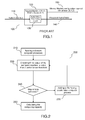
- Figure 1 displays an example of determination of available resources on a machine of the prior art.
- the prior art method consists in running a multimedia processing 130 on a target machine 120.
- the multimedia processing 130 takes multimedia data 110 as input, and outputs processed multimedia data 140.
- the execution of the multimedia processing 130 on the machine 120 allows the calculation of a minimal machine configuration 150 necessary to execute the processing 130.
- the calculation of the minimal machine configuration 150 can be performed by observing the minimum resources needed by the multimedia task 130 to run.
- the minimum resources comprise for example a minimum CPU, a minimum memory, a minimum bandwidth, etc...
- the minimum CPU resources to run the processing can be observed by observing the maximum CPU used by the processing 130 when run on the target machine.
- This method allows the determination of minimum resources necessary to run a multimedia processing. However, it is only applicable to a predefined, standard type of platform. Indeed, the execution of a processing is highly dependent of the type of machine. This method is thus not applicable to Virtual Machines. Indeed, the flexibility of the creation of virtual machines induces the permanent creation of new types of machines. For example, even if a Virtual Machine is defined by, amongst other resources, a nominal CPU and a nominal amount of memory, the type and behavior of machine will be different depending on the physical machine on which the virtual machine is running.
- the figure 2 displays a method according to the invention.
- the method 200 comprises running 210 on the computing machine a number of calibrated computer processes, each of the computer processes having a calibrated computing load, a calibrated computing load being defined by one or more of a CPU load, a memory load, or a bandwidth load, the calibrated computing load having a number of values.
- the method 200 is particularly suited for estimating a computing capacity of a Virtual Machine, but it may also be used for calculating a computing capacity of a physical machine or another type of computing capability, such as a Linux Container, wherein different OS instances run on different partitions of a physical machine.
- calibrated computer processes may, for example, be multimedia processes such as video encoding, video transcoding, audio encoding, DRM application, etc...
- the calibrated computing load is representative of the resources necessary to run a process in real time.
- multimedia processing and more specifically in video processing, the resources needed to perform a task are dependent on the task itself, but also on input data, on parameters to perform a task and the required result.
- the resources needed for encoding a video are dependent on the complexity of the video codec used (by means of example, encoding a video in H.265 is known to be more complex than in H.264), the parameters of encoding, but also on characteristics of the input video (i.e resolution, bit depth, brightness, type of scene%), and also on the level of quality to achieve. It is for example known that it requires less resources to encode a video using a poor quality encoding than an average or high quality of encoding. Indeed, a poor quality of video encoding can be achieved using very simple video coding decisions, while obtaining video with high quality encoding needs to be performed using costly decisions, for example complex estimation of movement or complex frame partitioning.
- a calibrated computer process can be defined at least by a type of multimedia task, and, when applicable, the input data on which the task is performed.
- the method 200 further comprises checking 220 if an output of the computing machine matches or is better than a performance threshold, the performance threshold being defined by one or more of a quality parameter of the output and a latency parameter between an input into the computing machine and an output from the computing machine.
- This step consists of analyzing the output of processes run at step 210.
- the analysis of the output may consist in calculating a quality metrics at the output of the processes running. For example, a PSNR (Peak Signal Noise Ratio), SSIM (Structural SIMilarity), MS-SSIM (Multi-Scale Structural SIMilarity), Delta, MSE (Mean Squared Error), or any other standard or proprietary metrics may be calculated for a video at the output of a video encoding process.
- PSNR Peak Signal Noise Ratio
- SSIM Structural SIMilarity
- MS-SSIM Multi-Scale Structural SIMilarity
- Delta MSE (Mean Squared Error)
- such metrics may be computed on the video as a whole, or a layer of the video, for example one of the R,G,B layer of the RGB colorspace, one of the Y,U,V layer of a YUV colorspace, or any layer or combination of layers of a type of colorspace.
- a calibrated computer process can be defined for example by a type of multimedia task, and one or more of an input data, and a threshold of quality of the result to be obtained.
- the quality of the result to obtain can be expressed for example using quality parameter (such as a PSNR (Peak Signal Noise Ratio), SSIM (Structural SIMilarity), MS-SSIM (Multi-Scale Structural SIMilarity), Delta, MSE (Mean Squared Error), or any other standard or proprietary metrics of a video).
- quality parameter such as a PSNR (Peak Signal Noise Ratio), SSIM (Structural SIMilarity), MS-SSIM (Multi-Scale Structural SIMilarity), Delta, MSE (Mean Squared Error), or any other standard or proprietary metrics of a video).
- the quality of the result may also be expressed as latency between the start and the completion of a calibrated computer process. For example, one criteria for the success of a video
- the step 220 may consist in checking if the output of this single process matches or is better than its performance threshold. For example, in the above example, it can be considered that the encoding of the video is successful if an output video with a PSNR equal or superior to 40 dB is obtained, in 5 seconds or less.
- checking the output of the computing machine may consist in checking if each process was successful.
- a calibrated computer processes to successfully achieve its result depends not only on the process itself and the machine on which it is executed, but also on the other processes running in parallel. Indeed, when several processes run in parallel on a machine, they share the resources of a machine. For example, a video encoding process which is able to achieve a video encoding at 40 dB in 5 seconds when running alone, may be forced, if a second process is running on the machine, to spare CPU resources, and lower the quality of encoding to encode the video, thus encoding the video at a PSNR lower than 40 dB.
- One of the principles of the invention lies in the possibility to run in parallel a variable number of calibrated computer processes having different computing loads, in order to verify the computing load of processes that can be run in parallel on the machine.
- the method comprises iteratively adding or removing 230 a calibrated computer process of a selected value in the number of values of a calibrated computer load until a stop criteria defined by a required level of precision is achieved 240.
- the step 230 consists in adding or removing a calibrated computer process, in order to run on the machine a number of processes having a total computing load as close as possible to the computing capacity of the machine.
- the step 240 consists in verifying if a stop criterion is achieved.
- the stop criterion is defined by a required level of precision on the computing load.
- the required level of precision may be representative of the precision with which the computing capacity needs to be known.
- a stop criterion may be achieved if, before adding a calibrated computer process having a computing load lower than the required level of precision, the output of the computer machine does not match the performance threshold, while it did not alter the addition of the calibrated computer process.
- a stop criterion may be achieved if, after the removal a calibrated computer process having a computing load lower than the required level of precision, the output of the computer machine matches the performance threshold, while it did not before the removal of the calibrated computer process.
- the method 200 further comprises a step 250 of calculating the computing capacity of the computing machine as the sum of the calibrated computing loads of the calibrated computer processes running on the computing machine when the stop criterion is achieved.
- computer processes are added in a decreasing order of computing loads, in order to progressively refine the precision of the calculation of the computing load of the computing machine.
- the method may for example start with adding or removing calibrated computer processes having a predefined computing load, then, adding or removing processes with a lower computing load, etc...
- adding or removing processes with a lower computing load is performed when a switch criterion is met.
- a switch criterion is met when n instances of a process run successfully in parallel, and, upon the addition of an n+1th instance, the instances of the process do not run successfully in parallel.
- the estimation of the computing capacity of the machine can be further refined by running in parallel n instances of the process, and iteratively adding or removing instances of a process having a lower computing load. Examples of addition and removal of processes are provided with reference to further figures.
- the computing load of a calibrated computer process is obtained by evaluating the number of instances of said calibrated computer process that can run in parallel on a reference computing machine having a known computing capacity, while verifying a desired output.
- Figures 3a, 3b , 3c and 3d displays four examples of iterative addition or removal of computer calibrated processes in a number of embodiments of the invention.
- Figure 3a displays a first example of iterative addition or removal of computer calibrated processes in a number of embodiments of the invention.
- the method 200 is used for iteratively adding instances of a computer calibrated process 310 in order to determine computing capacities 330 of a target machine.
- the computing capacities are labeled X, Y, Z and may represent for example the CPU, the amount of RAM and the bandwidth of the machine.
- the computer calibrated process 310 is, in this example, a multimedia process, for example an image or an audio process. It is applied to input data 311.
- the process is considered as having been successful if it processed the multimedia content into a processed output 313, said processed output having a level of quality equal or greater to a threshold, while having run with a latency equal or below a threshold latency 312.
- the seeked quality is noted “VQ" for "Video Quality” on the figure.
- VQ Video Quality
- the invention is applicable to any type of quality of any multimedia stream.
- four instances 320, 321, 322 and 323 of the process 310 are iteratively added to run in parallel on the target machine. After each instance of the process 310 has been added the instances of the process run in parallel for one or a plurality of iterations. The method then checks, at the output of the target machine, if the calibrated computing process was successful, i.e if it produced a processed multimedia at a quality on or above VQ 313, with a latency on or below T 312. If a plurality of iterations of each process is performed, the output of the process is considered as unsuccessful if at least one iteration of the process produced an unsuccessful result.
- the resources of the target machine are sufficient to successfully run the instances in parallel.
- the instances of the process 310 produce a result with a sufficient quality at a latency equal or below the latency T 312.
- the target machine has not anymore enough resources to run the four instances in parallel.
- at least one of the instances does not produce the desired result.
- the method 200 then calculates the resources X, Y, Z of the target machine as the sum of the resources x,y,z of the instances 3120a, 321, 322 respectively, i.e three times the resources x,y,z of the process 310 respectively.
- Figure 3b displays a second example of iterative addition or removal of computer calibrated processes in a number of embodiments of the invention.
- This second example relies on the addition and removal of instances of the process 310, and of instances of a second process 340.
- the process 340 has input data 341, a latency 342, and a threshold of quality for the output 343.
- the second process 342 has also calibrated computer loads x2, y2, z2, these calibrated computer loads being lower than the calibrated computer loads of the first process.
- the four instances 320, 321, 322, 323 of the process 310 are added, similarly to the example depicted on figure 3a .
- the four instances are not able to successfully execute in parallel.
- the calibrated computer loads x,y,z do not match the target level of precision for the computing capacity of the machine.
- the method thus meets a switch criterion, and successively adds instances 350b and 351 b of the second process 340, whose calibrated computer loads x2, y2, z2 are equal or below the target level of precision of the computing capacity of the machine.
- the execution of the processes is successful: the processed multimedia content matches the desired level of quality, and the latencies of the execution are lower than the latencies 312 and 342, respectively.
- the sum of the calibrated computer loads of the processes running is above the computing capacity of the machine: at least one of the instances of the processes running is not successful.
- the calibrated computing load can be further refined by adding and removing instances of processes having even lower computer calibrated loads.
- Figure 3c displays a third example of iterative addition or removal of computer calibrated processes in a number of embodiments of the invention.
- instances of the processes 310 and 340 are iteratively added and removed, starting from the fourth instances 320, 321, 322 and 323 of the process 310, and a switch criterion is met after the addition of the fourth instance 323 of the process 310.
- the computer loads x2, y2, z2 of the second process 340 are supposed to be half the computer loads x,y,z of the first process 310.
- Figure 3d displays a second example of iterative addition or removal of computer calibrated processes in a number of embodiments of the invention.
- the number of instances of the second process 340 are added or removed by groups of four instances, then two, then one.
- four instances 350d, 351d, 352d, 353d of the second process 340 are initially added, without exceeding the computing capacities of the machine.
- the correctness of the output of the process being verified four additional instances 354d, 355d, 356d, 357d are added.
- the output of at least one instance of a process does not match the expected result.
- two instances, 356d and 357d are removed.
- the result of the processes matches the thresholds of quality.
- a last instance 358d of the process 340 is added.
- the result of the processes matches the thresholds of quality.
- the invention is not restricted to the examples given above, that are provided as non limitative examples only.
- a number of different ways of adding and removing processes are possible. For example, three or more processes of different types may be added or removed, it is possible to add or remove instances of a plurality of different processes at the same time.
- Figure 4 displays a scheduler configured for dispatching a plurality of tasks amongst a plurality of virtual machines according to the invention.
- the scheduler displayed on figure 4 is provided by means of non-limitative example only. Notably, the example depicted in figure 4 is configured for dispatching tasks on Virtual Machines, while another scheduler according to the invention may dispatch tasks on physical machines.
- the scheduler 400 is configured for dispatching processes, for example the processes 410, 411, 412, amongst a plurality of Virtual Machines. For example, it may run the processes on the Virtual Machines 441, 442, 451, 452, 453, 461, 462, respectively running on the machines 440, 450 and 460.
- the scheduler 400 uses a method 200 according to the invention in order to estimate a computing capacity of the virtual machines 441, 442, 451, 452, 453, 461, 462. It may for example use the computer calibrated process 420, 421 and 422, which have been calibrated on the reference machine 430 in order to estimate the computing capacity of the virtual machines.
- the computer calibrated process may for example be retrieved from of a database, to which the scheduler has access, for example according to the computing loads of the process, or the type of task performed by the process.
- the scheduler runs the method 200 on each new Virtual Machine, in order to know permanently the computing capacity of each available machine.
- the scheduler 400 stores the computing capacity of each machine, and the sum of the computing loads of the processes running on it. For each new process to execute, the scheduler computes the corresponding computing load, and runs the process on one of the available virtual machines according to the computing load of the new process to execute, and the available computing capacity of each machine.
- the computing load of the new process to execute can for example be calculated by running a number of instances of the new process on the reference machine 430, until it is not able to execute successfully.
- Another European patent application filed by the same applicant the same day, also discloses a number of methods for dispatching processes amongst Virtual Machines.
Landscapes
- Engineering & Computer Science (AREA)
- Theoretical Computer Science (AREA)
- General Engineering & Computer Science (AREA)
- Physics & Mathematics (AREA)
- General Physics & Mathematics (AREA)
- Software Systems (AREA)
- Computer Hardware Design (AREA)
- Quality & Reliability (AREA)
- Compression Or Coding Systems Of Tv Signals (AREA)
- Debugging And Monitoring (AREA)
Priority Applications (2)
| Application Number | Priority Date | Filing Date | Title |
|---|---|---|---|
| EP15306385.4A EP3142012B1 (fr) | 2015-09-11 | 2015-09-11 | Procédé pour déterminer une capacité de calcul d'une structure physique ou d'une machine virtuelle |
| US15/261,921 US10133605B2 (en) | 2015-09-11 | 2016-09-10 | Determining a computing capacity of one of a physical or a virtual machine |
Applications Claiming Priority (1)
| Application Number | Priority Date | Filing Date | Title |
|---|---|---|---|
| EP15306385.4A EP3142012B1 (fr) | 2015-09-11 | 2015-09-11 | Procédé pour déterminer une capacité de calcul d'une structure physique ou d'une machine virtuelle |
Publications (2)
| Publication Number | Publication Date |
|---|---|
| EP3142012A1 true EP3142012A1 (fr) | 2017-03-15 |
| EP3142012B1 EP3142012B1 (fr) | 2018-10-24 |
Family
ID=54196914
Family Applications (1)
| Application Number | Title | Priority Date | Filing Date |
|---|---|---|---|
| EP15306385.4A Active EP3142012B1 (fr) | 2015-09-11 | 2015-09-11 | Procédé pour déterminer une capacité de calcul d'une structure physique ou d'une machine virtuelle |
Country Status (2)
| Country | Link |
|---|---|
| US (1) | US10133605B2 (fr) |
| EP (1) | EP3142012B1 (fr) |
Cited By (1)
| Publication number | Priority date | Publication date | Assignee | Title |
|---|---|---|---|---|
| EP4231155A1 (fr) * | 2022-02-21 | 2023-08-23 | Beijing Baidu Netcom Science Technology Co., Ltd. | Procédé et appareil de test de performance, dispositif électronique et support d'informations |
Families Citing this family (3)
| Publication number | Priority date | Publication date | Assignee | Title |
|---|---|---|---|---|
| CN108156212B (zh) * | 2017-06-29 | 2020-12-22 | 广东网金控股股份有限公司 | 一种基于用户感知的弹性伸缩方法及系统 |
| US11488621B1 (en) | 2021-04-23 | 2022-11-01 | Tencent America LLC | Estimation through multiple measurements |
| US12430178B2 (en) * | 2021-11-30 | 2025-09-30 | Dell Products L.P. | Time-bound task management in parallel processing environment |
Citations (6)
| Publication number | Priority date | Publication date | Assignee | Title |
|---|---|---|---|---|
| US5956662A (en) * | 1995-03-27 | 1999-09-21 | Siemens Nixdorf Informationssystem Aktiengesellschaft | Method for load measurement |
| US6434513B1 (en) * | 1998-11-25 | 2002-08-13 | Radview Software, Ltd. | Method of load testing web applications based on performance goal |
| US20060168288A1 (en) * | 2004-12-16 | 2006-07-27 | Michele Covell | Identifying failure of a streaming media server to satisfy quality-of-service criteria |
| US20090271152A1 (en) * | 2008-04-28 | 2009-10-29 | Alcatel | Load testing mechanism for server-based applications |
| US20100083248A1 (en) * | 2008-09-30 | 2010-04-01 | Wood Timothy W | Optimizing a prediction of resource usage of multiple applications in a virtual environment |
| US20130179144A1 (en) * | 2012-01-06 | 2013-07-11 | Frank Lu | Performance bottleneck detection in scalability testing |
Family Cites Families (7)
| Publication number | Priority date | Publication date | Assignee | Title |
|---|---|---|---|---|
| JP3898789B2 (ja) * | 1996-12-05 | 2007-03-28 | 富士通株式会社 | 周期プロセス負荷制御システムおよび周期プロセス負荷制御方法 |
| CN101156409B (zh) * | 2005-04-04 | 2013-01-23 | 艾利森电话股份有限公司 | 用于分布应用服务器上的负载的方法和设备 |
| US8397088B1 (en) * | 2009-07-21 | 2013-03-12 | The Research Foundation Of State University Of New York | Apparatus and method for efficient estimation of the energy dissipation of processor based systems |
| JP5417287B2 (ja) * | 2010-09-06 | 2014-02-12 | 株式会社日立製作所 | 計算機システム、及び、計算機システムの制御方法 |
| US20160239322A1 (en) * | 2013-03-04 | 2016-08-18 | Hitachi, Ltd. | Computer system and control method for computer system |
| US20150067019A1 (en) * | 2013-08-28 | 2015-03-05 | Soeren Balko | Method and system for using arbitrary computing devices for distributed data processing |
| US9575811B2 (en) * | 2015-02-03 | 2017-02-21 | Dell Products L.P. | Dynamically controlled distributed workload execution |
-
2015
- 2015-09-11 EP EP15306385.4A patent/EP3142012B1/fr active Active
-
2016
- 2016-09-10 US US15/261,921 patent/US10133605B2/en active Active
Patent Citations (6)
| Publication number | Priority date | Publication date | Assignee | Title |
|---|---|---|---|---|
| US5956662A (en) * | 1995-03-27 | 1999-09-21 | Siemens Nixdorf Informationssystem Aktiengesellschaft | Method for load measurement |
| US6434513B1 (en) * | 1998-11-25 | 2002-08-13 | Radview Software, Ltd. | Method of load testing web applications based on performance goal |
| US20060168288A1 (en) * | 2004-12-16 | 2006-07-27 | Michele Covell | Identifying failure of a streaming media server to satisfy quality-of-service criteria |
| US20090271152A1 (en) * | 2008-04-28 | 2009-10-29 | Alcatel | Load testing mechanism for server-based applications |
| US20100083248A1 (en) * | 2008-09-30 | 2010-04-01 | Wood Timothy W | Optimizing a prediction of resource usage of multiple applications in a virtual environment |
| US20130179144A1 (en) * | 2012-01-06 | 2013-07-11 | Frank Lu | Performance bottleneck detection in scalability testing |
Cited By (2)
| Publication number | Priority date | Publication date | Assignee | Title |
|---|---|---|---|---|
| EP4231155A1 (fr) * | 2022-02-21 | 2023-08-23 | Beijing Baidu Netcom Science Technology Co., Ltd. | Procédé et appareil de test de performance, dispositif électronique et support d'informations |
| US12436864B2 (en) | 2022-02-21 | 2025-10-07 | Beijing Baidu Netcom Science Technology Co., Ltd. | Performance testing method and apparatus, and storage medium |
Also Published As
| Publication number | Publication date |
|---|---|
| EP3142012B1 (fr) | 2018-10-24 |
| US20170075731A1 (en) | 2017-03-16 |
| US10133605B2 (en) | 2018-11-20 |
Similar Documents
| Publication | Publication Date | Title |
|---|---|---|
| US10110911B2 (en) | Parallel media encoding | |
| US9769234B2 (en) | Algorithmic transcoding | |
| CN108090470B (zh) | 一种人脸对齐方法及装置 | |
| US11153526B2 (en) | Detection of photosensitive triggers in video content | |
| EP3142012B1 (fr) | Procédé pour déterminer une capacité de calcul d'une structure physique ou d'une machine virtuelle | |
| EP3094090A1 (fr) | Systèmes, dispositifs et procédés de codage et de décodage vidéo | |
| US20210336634A1 (en) | Data processing apparatuses, methods, computer programs and computer-readable media | |
| US20170185455A1 (en) | Scheduler of computer processes for optimized offline video processing | |
| CN110557633A (zh) | 图像数据的压缩传输方法、系统和计算机可读存储介质 | |
| JP2026500919A (ja) | ビデオ符号化方法及び装置、電子機器、並びに記憶媒体 | |
| CN112488060A (zh) | 目标检测方法、装置、设备、介质和程序产品 | |
| US11223675B2 (en) | Hash data structure biasing | |
| EP4473473B1 (fr) | Cadriciel de traitement d'effets visuels | |
| CN119067231A (zh) | 分布式数据处理系统及方法 | |
| CN107103632A (zh) | 图像压缩方法及装置 | |
| US9537742B2 (en) | Automatic adjustment of application launch endpoints | |
| KR20190122479A (ko) | 3차원 데이터를 프로세싱하기 위한 방법 및 장치 | |
| CN105550352A (zh) | 一种基于图像的重复数据删除方法及装置 | |
| US11601650B2 (en) | Dynamic allocation of virtual and/or physical resources vis-a-vis virtual machines in video stream processing | |
| US20260120382A1 (en) | Digital Watermarking for a Rendering Workload in a Multi-Computing Infrastructure Environment | |
| CN109325432B (zh) | 一种三维对象的识别方法、设备及计算机可读储存介质 | |
| CN115150622B (zh) | 图像处理方法、装置、系统和计算机可读存储介质 | |
| CN113486936A (zh) | 输电线设备覆冰检测方法、装置、系统及存储介质 | |
| US20260120233A1 (en) | Resolution adjustments for a rendering workload in a multi-computing infrastructure environment | |
| CN113810695A (zh) | 视频编码方法、装置及计算机可读存储介质 |
Legal Events
| Date | Code | Title | Description |
|---|---|---|---|
| PUAI | Public reference made under article 153(3) epc to a published international application that has entered the european phase |
Free format text: ORIGINAL CODE: 0009012 |
|
| STAA | Information on the status of an ep patent application or granted ep patent |
Free format text: STATUS: THE APPLICATION HAS BEEN PUBLISHED |
|
| AK | Designated contracting states |
Kind code of ref document: A1 Designated state(s): AL AT BE BG CH CY CZ DE DK EE ES FI FR GB GR HR HU IE IS IT LI LT LU LV MC MK MT NL NO PL PT RO RS SE SI SK SM TR |
|
| AX | Request for extension of the european patent |
Extension state: BA ME |
|
| STAA | Information on the status of an ep patent application or granted ep patent |
Free format text: STATUS: REQUEST FOR EXAMINATION WAS MADE |
|
| 17P | Request for examination filed |
Effective date: 20170911 |
|
| RBV | Designated contracting states (corrected) |
Designated state(s): AL AT BE BG CH CY CZ DE DK EE ES FI FR GB GR HR HU IE IS IT LI LT LU LV MC MK MT NL NO PL PT RO RS SE SI SK SM TR |
|
| GRAP | Despatch of communication of intention to grant a patent |
Free format text: ORIGINAL CODE: EPIDOSNIGR1 |
|
| STAA | Information on the status of an ep patent application or granted ep patent |
Free format text: STATUS: GRANT OF PATENT IS INTENDED |
|
| INTG | Intention to grant announced |
Effective date: 20180426 |
|
| GRAS | Grant fee paid |
Free format text: ORIGINAL CODE: EPIDOSNIGR3 |
|
| GRAA | (expected) grant |
Free format text: ORIGINAL CODE: 0009210 |
|
| STAA | Information on the status of an ep patent application or granted ep patent |
Free format text: STATUS: THE PATENT HAS BEEN GRANTED |
|
| AK | Designated contracting states |
Kind code of ref document: B1 Designated state(s): AL AT BE BG CH CY CZ DE DK EE ES FI FR GB GR HR HU IE IS IT LI LT LU LV MC MK MT NL NO PL PT RO RS SE SI SK SM TR |
|
| REG | Reference to a national code |
Ref country code: CH Ref legal event code: EP |
|
| REG | Reference to a national code |
Ref country code: IE Ref legal event code: FG4D |
|
| REG | Reference to a national code |
Ref country code: AT Ref legal event code: REF Ref document number: 1057486 Country of ref document: AT Kind code of ref document: T Effective date: 20181115 |
|
| REG | Reference to a national code |
Ref country code: DE Ref legal event code: R096 Ref document number: 602015018634 Country of ref document: DE |
|
| REG | Reference to a national code |
Ref country code: NL Ref legal event code: MP Effective date: 20181024 |
|
| REG | Reference to a national code |
Ref country code: LT Ref legal event code: MG4D |
|
| REG | Reference to a national code |
Ref country code: AT Ref legal event code: MK05 Ref document number: 1057486 Country of ref document: AT Kind code of ref document: T Effective date: 20181024 |
|
| PG25 | Lapsed in a contracting state [announced via postgrant information from national office to epo] |
Ref country code: NL Free format text: LAPSE BECAUSE OF FAILURE TO SUBMIT A TRANSLATION OF THE DESCRIPTION OR TO PAY THE FEE WITHIN THE PRESCRIBED TIME-LIMIT Effective date: 20181024 |
|
| PG25 | Lapsed in a contracting state [announced via postgrant information from national office to epo] |
Ref country code: IS Free format text: LAPSE BECAUSE OF FAILURE TO SUBMIT A TRANSLATION OF THE DESCRIPTION OR TO PAY THE FEE WITHIN THE PRESCRIBED TIME-LIMIT Effective date: 20190224 Ref country code: FI Free format text: LAPSE BECAUSE OF FAILURE TO SUBMIT A TRANSLATION OF THE DESCRIPTION OR TO PAY THE FEE WITHIN THE PRESCRIBED TIME-LIMIT Effective date: 20181024 Ref country code: LV Free format text: LAPSE BECAUSE OF FAILURE TO SUBMIT A TRANSLATION OF THE DESCRIPTION OR TO PAY THE FEE WITHIN THE PRESCRIBED TIME-LIMIT Effective date: 20181024 Ref country code: AT Free format text: LAPSE BECAUSE OF FAILURE TO SUBMIT A TRANSLATION OF THE DESCRIPTION OR TO PAY THE FEE WITHIN THE PRESCRIBED TIME-LIMIT Effective date: 20181024 Ref country code: PL Free format text: LAPSE BECAUSE OF FAILURE TO SUBMIT A TRANSLATION OF THE DESCRIPTION OR TO PAY THE FEE WITHIN THE PRESCRIBED TIME-LIMIT Effective date: 20181024 Ref country code: HR Free format text: LAPSE BECAUSE OF FAILURE TO SUBMIT A TRANSLATION OF THE DESCRIPTION OR TO PAY THE FEE WITHIN THE PRESCRIBED TIME-LIMIT Effective date: 20181024 Ref country code: NO Free format text: LAPSE BECAUSE OF FAILURE TO SUBMIT A TRANSLATION OF THE DESCRIPTION OR TO PAY THE FEE WITHIN THE PRESCRIBED TIME-LIMIT Effective date: 20190124 Ref country code: BG Free format text: LAPSE BECAUSE OF FAILURE TO SUBMIT A TRANSLATION OF THE DESCRIPTION OR TO PAY THE FEE WITHIN THE PRESCRIBED TIME-LIMIT Effective date: 20190124 Ref country code: ES Free format text: LAPSE BECAUSE OF FAILURE TO SUBMIT A TRANSLATION OF THE DESCRIPTION OR TO PAY THE FEE WITHIN THE PRESCRIBED TIME-LIMIT Effective date: 20181024 Ref country code: LT Free format text: LAPSE BECAUSE OF FAILURE TO SUBMIT A TRANSLATION OF THE DESCRIPTION OR TO PAY THE FEE WITHIN THE PRESCRIBED TIME-LIMIT Effective date: 20181024 |
|
| PG25 | Lapsed in a contracting state [announced via postgrant information from national office to epo] |
Ref country code: PT Free format text: LAPSE BECAUSE OF FAILURE TO SUBMIT A TRANSLATION OF THE DESCRIPTION OR TO PAY THE FEE WITHIN THE PRESCRIBED TIME-LIMIT Effective date: 20190224 Ref country code: RS Free format text: LAPSE BECAUSE OF FAILURE TO SUBMIT A TRANSLATION OF THE DESCRIPTION OR TO PAY THE FEE WITHIN THE PRESCRIBED TIME-LIMIT Effective date: 20181024 Ref country code: GR Free format text: LAPSE BECAUSE OF FAILURE TO SUBMIT A TRANSLATION OF THE DESCRIPTION OR TO PAY THE FEE WITHIN THE PRESCRIBED TIME-LIMIT Effective date: 20190125 Ref country code: SE Free format text: LAPSE BECAUSE OF FAILURE TO SUBMIT A TRANSLATION OF THE DESCRIPTION OR TO PAY THE FEE WITHIN THE PRESCRIBED TIME-LIMIT Effective date: 20181024 Ref country code: AL Free format text: LAPSE BECAUSE OF FAILURE TO SUBMIT A TRANSLATION OF THE DESCRIPTION OR TO PAY THE FEE WITHIN THE PRESCRIBED TIME-LIMIT Effective date: 20181024 |
|
| REG | Reference to a national code |
Ref country code: DE Ref legal event code: R097 Ref document number: 602015018634 Country of ref document: DE |
|
| PG25 | Lapsed in a contracting state [announced via postgrant information from national office to epo] |
Ref country code: IT Free format text: LAPSE BECAUSE OF FAILURE TO SUBMIT A TRANSLATION OF THE DESCRIPTION OR TO PAY THE FEE WITHIN THE PRESCRIBED TIME-LIMIT Effective date: 20181024 Ref country code: CZ Free format text: LAPSE BECAUSE OF FAILURE TO SUBMIT A TRANSLATION OF THE DESCRIPTION OR TO PAY THE FEE WITHIN THE PRESCRIBED TIME-LIMIT Effective date: 20181024 Ref country code: DK Free format text: LAPSE BECAUSE OF FAILURE TO SUBMIT A TRANSLATION OF THE DESCRIPTION OR TO PAY THE FEE WITHIN THE PRESCRIBED TIME-LIMIT Effective date: 20181024 |
|
| PG25 | Lapsed in a contracting state [announced via postgrant information from national office to epo] |
Ref country code: EE Free format text: LAPSE BECAUSE OF FAILURE TO SUBMIT A TRANSLATION OF THE DESCRIPTION OR TO PAY THE FEE WITHIN THE PRESCRIBED TIME-LIMIT Effective date: 20181024 Ref country code: SM Free format text: LAPSE BECAUSE OF FAILURE TO SUBMIT A TRANSLATION OF THE DESCRIPTION OR TO PAY THE FEE WITHIN THE PRESCRIBED TIME-LIMIT Effective date: 20181024 Ref country code: RO Free format text: LAPSE BECAUSE OF FAILURE TO SUBMIT A TRANSLATION OF THE DESCRIPTION OR TO PAY THE FEE WITHIN THE PRESCRIBED TIME-LIMIT Effective date: 20181024 Ref country code: SK Free format text: LAPSE BECAUSE OF FAILURE TO SUBMIT A TRANSLATION OF THE DESCRIPTION OR TO PAY THE FEE WITHIN THE PRESCRIBED TIME-LIMIT Effective date: 20181024 |
|
| PLBE | No opposition filed within time limit |
Free format text: ORIGINAL CODE: 0009261 |
|
| STAA | Information on the status of an ep patent application or granted ep patent |
Free format text: STATUS: NO OPPOSITION FILED WITHIN TIME LIMIT |
|
| 26N | No opposition filed |
Effective date: 20190725 |
|
| PG25 | Lapsed in a contracting state [announced via postgrant information from national office to epo] |
Ref country code: SI Free format text: LAPSE BECAUSE OF FAILURE TO SUBMIT A TRANSLATION OF THE DESCRIPTION OR TO PAY THE FEE WITHIN THE PRESCRIBED TIME-LIMIT Effective date: 20181024 |
|
| PG25 | Lapsed in a contracting state [announced via postgrant information from national office to epo] |
Ref country code: TR Free format text: LAPSE BECAUSE OF FAILURE TO SUBMIT A TRANSLATION OF THE DESCRIPTION OR TO PAY THE FEE WITHIN THE PRESCRIBED TIME-LIMIT Effective date: 20181024 |
|
| PG25 | Lapsed in a contracting state [announced via postgrant information from national office to epo] |
Ref country code: MC Free format text: LAPSE BECAUSE OF FAILURE TO SUBMIT A TRANSLATION OF THE DESCRIPTION OR TO PAY THE FEE WITHIN THE PRESCRIBED TIME-LIMIT Effective date: 20181024 |
|
| REG | Reference to a national code |
Ref country code: CH Ref legal event code: PL |
|
| PG25 | Lapsed in a contracting state [announced via postgrant information from national office to epo] |
Ref country code: IE Free format text: LAPSE BECAUSE OF NON-PAYMENT OF DUE FEES Effective date: 20190911 Ref country code: LI Free format text: LAPSE BECAUSE OF NON-PAYMENT OF DUE FEES Effective date: 20190930 Ref country code: CH Free format text: LAPSE BECAUSE OF NON-PAYMENT OF DUE FEES Effective date: 20190930 Ref country code: LU Free format text: LAPSE BECAUSE OF NON-PAYMENT OF DUE FEES Effective date: 20190911 |
|
| REG | Reference to a national code |
Ref country code: BE Ref legal event code: MM Effective date: 20190930 |
|
| PG25 | Lapsed in a contracting state [announced via postgrant information from national office to epo] |
Ref country code: BE Free format text: LAPSE BECAUSE OF NON-PAYMENT OF DUE FEES Effective date: 20190930 |
|
| PG25 | Lapsed in a contracting state [announced via postgrant information from national office to epo] |
Ref country code: CY Free format text: LAPSE BECAUSE OF FAILURE TO SUBMIT A TRANSLATION OF THE DESCRIPTION OR TO PAY THE FEE WITHIN THE PRESCRIBED TIME-LIMIT Effective date: 20181024 |
|
| PG25 | Lapsed in a contracting state [announced via postgrant information from national office to epo] |
Ref country code: HU Free format text: LAPSE BECAUSE OF FAILURE TO SUBMIT A TRANSLATION OF THE DESCRIPTION OR TO PAY THE FEE WITHIN THE PRESCRIBED TIME-LIMIT; INVALID AB INITIO Effective date: 20150911 Ref country code: MT Free format text: LAPSE BECAUSE OF FAILURE TO SUBMIT A TRANSLATION OF THE DESCRIPTION OR TO PAY THE FEE WITHIN THE PRESCRIBED TIME-LIMIT Effective date: 20181024 |
|
| PG25 | Lapsed in a contracting state [announced via postgrant information from national office to epo] |
Ref country code: MK Free format text: LAPSE BECAUSE OF FAILURE TO SUBMIT A TRANSLATION OF THE DESCRIPTION OR TO PAY THE FEE WITHIN THE PRESCRIBED TIME-LIMIT Effective date: 20181024 |
|
| PGFP | Annual fee paid to national office [announced via postgrant information from national office to epo] |
Ref country code: DE Payment date: 20250808 Year of fee payment: 11 |
|
| PGFP | Annual fee paid to national office [announced via postgrant information from national office to epo] |
Ref country code: GB Payment date: 20250814 Year of fee payment: 11 |
|
| PGFP | Annual fee paid to national office [announced via postgrant information from national office to epo] |
Ref country code: FR Payment date: 20250808 Year of fee payment: 11 |