EP3142038B1 - Système d'authentification et procédé - Google Patents
Système d'authentification et procédé Download PDFInfo
- Publication number
- EP3142038B1 EP3142038B1 EP16153566.1A EP16153566A EP3142038B1 EP 3142038 B1 EP3142038 B1 EP 3142038B1 EP 16153566 A EP16153566 A EP 16153566A EP 3142038 B1 EP3142038 B1 EP 3142038B1
- Authority
- EP
- European Patent Office
- Prior art keywords
- letters
- letter
- intended
- pattern
- identified
- Prior art date
- Legal status (The legal status is an assumption and is not a legal conclusion. Google has not performed a legal analysis and makes no representation as to the accuracy of the status listed.)
- Active
Links
Images





Classifications
-
- G—PHYSICS
- G06—COMPUTING OR CALCULATING; COUNTING
- G06F—ELECTRIC DIGITAL DATA PROCESSING
- G06F21/00—Security arrangements for protecting computers, components thereof, programs or data against unauthorised activity
- G06F21/30—Authentication, i.e. establishing the identity or authorisation of security principals
- G06F21/31—User authentication
- G06F21/36—User authentication by graphic or iconic representation
-
- G—PHYSICS
- G06—COMPUTING OR CALCULATING; COUNTING
- G06F—ELECTRIC DIGITAL DATA PROCESSING
- G06F21/00—Security arrangements for protecting computers, components thereof, programs or data against unauthorised activity
- G06F21/70—Protecting specific internal or peripheral components, in which the protection of a component leads to protection of the entire computer
- G06F21/82—Protecting input, output or interconnection devices
- G06F21/83—Protecting input, output or interconnection devices input devices, e.g. keyboards, mice or controllers thereof
Definitions
- the embodiments herein generally relate to authentication systems, and more particularly, to authentication systems and methods for entry of letters or patterns and authenticating an authorized personnel based on the entry.
- Security enhancements are generally provided by way of authentication of users. Such authentication requires users to login by entering credentials such as username and/or a password for authorization of access to a computing system, and the like. Passwords are required to be chosen carefully so that it is hard for anybody to hack or crack the same. In order to prevent unauthorized access effectively, a password should preferably be a complex combination of alphanumeric characters. However, challenges remain in inputting the characters using keyboards. Keyboard logging or keystroke logging is a process of recording key entries of legitimate users without their knowledge.
- a prior art numbered US 5428349A discloses a password access method/algorithm effected by generating a pseudorandom array of each letter of the alphabet and the numerals 0 through 9 such that the password entry can be monitored without disclosing the letters or numerals contained in the password.
- the preferred arrangement is a square matrix of six rows and six columns of characters. The user enters the password by selecting either the row or column containing each letter of a memorized password.
- Another prior art numbered WO2010/053594 A1 discloses an electronic device and method for securely entering textual input into the device.
- An electronic device has a keypad area and a plurality of keys disposed within the keypad area, each key having a character associated therewith and the characters being arranged on the keypad in a particular order.
- the electronic device includes a keypad security application for changing the characters associated with the keys. When activated, the keypad security application functions by changing the characters associated with the keys following the selection of a character by a user for input into the electronic device.
- the keypad security application associates at least two characters with different keys such that the arrangement or order of the characters on the keypad is changed.
- an embodiment herein provides a processor implemented method.
- the method comprising: (a) providing a keyboard comprising a set of letters in a m x n format, wherein ' m ' represents a number of rows, and n represents a number of columns, wherein each row or column comprises a sub-set of the letters, (b) providing a set of input receiving identifiers, each input receiving identifier specific to at least one row or at least one column in the m x n format, (c) processing an input on at least one input receiving identifier from the set of input receiving identifiers, (d) identifying a first intended letter from a first sub-set of letters from at least one corresponding row or column based on the input received on the at least one input receiving identifier, (e) repeating the steps (c) and (d) until a last intended letter from a last sub-set of letters in said set of letters is identified to obtain a set of intended identified letters, (f) performing a
- the triggering of the at least one action based on the comparison comprises authenticating a user when each letter in the set of intended identified letters matches a corresponding letter in the pre-registered set of letters in a sequential manner (or matching is performed in a particular order of the pre-registered letters and the set of intended identified letters).
- identifying the first intended letter from the first sub-set of letters comprises one or more of (h) identifying at least one row or a column from the number of rows and the number of columns based on the input received on the input receiving identifier, (i) determining whether the first intended letter is present in the first sub-set of letters, (j) comparing a property of each letter from the first sub-set of letters with a corresponding letter in the pre-registered letters, wherein the property comprises at least one of a letter style, a letter size and a dimension, and (k) identifying a letter as the first intended letter from the first sub-set of letters from at least one corresponding row or column when the letter matches a corresponding letter from the pre-registered letters.
- the method further comprises (1) shuffling the set of letters in the m x n format each time an intended letter is identified.
- the set of letters are selected from one or more languages.
- the set of letters can comprise at least one of a character, a numeric, and a symbol, wherein the character is at least one of an upper case or a lower case.
- the processor implemented method described herein above further comprises (m) providing a pattern on a display unit, the pattern comprising one or more pattern identifiers, (n) processing an input on a corresponding pattern identifier from the one or more pattern identifiers, (o) identifying an intended pattern identifier from the one or more pattern identifiers in the pattern based on the input, (p) repeating the steps (n) and (o) until a last intended pattern identifier from the one or more pattern identifiers is identified to obtain an intended path taken to complete the pattern, (q) performing another comparison of the set of intended identified letters and the intended path taken to complete the pattern with the pre-registered set of letters and the pattern on the display unit in a sequential manner (or the user is authenticated based the matching in a particular order of the pre-registered letters and the set of intended identified letters), and (r) triggering at least one another action based on the another comparison.
- the at least one another action comprises authenticating a user when (i) each letter in the set of intended identified letters matches a corresponding letter in the pre-registered set of letters stored in the memory (or the user is authenticated based the matching in a particular order of the pre-registered letters and the set of intended identified letters), and (ii) the path matches the pattern in a sequential manner.
- a processor implemented system comprises a memory storing instructions, and a hardware processor coupled to the memory, wherein the hardware processor is configured by the instructions to (a) provide a keyboard comprising a set of letters in a m x n format, wherein ' m ' represents a number of rows, and n represents a number of columns, wherein each row or column comprises a sub-set of the letters, (b) provide a set of input receiving identifiers, each input receiving identifier specific to at least one row or at least one column in the m x n format, (c) process an input on at least one input receiving identifier from the set of input receiving identifiers, (d) identify a first intended letter from a first sub-set of letters from at least one corresponding row or column based on the input received on the at least one input receiving identifier, (e) repeat the steps (c) and (d) until a last intended letter from a last sub-set of letters is identified to obtain
- the at least one action comprises authenticating a user when each letter in the set of intended identified letters matches a corresponding letter in the pre-registered set of letters in a sequential manner (or matching is performed in a particular order of the pre-registered letters and the set of intended identified letters).
- the first intended letter is identified from the first sub-set of letters when the hardware processor is configured to perform one or more of (h) identify at least one row or a column from the number of rows and the number of columns based on the input received on the input receiving identifier, (i) determine whether the first intended letter is present in the first sub-set of letters, (j) compare a property of each letter from the first sub-set of letters with a corresponding letter in the pre-registered letters, wherein the property comprises at least one of a letter style, a letter size and a dimension, and (k) identify a letter as the first intended letter from the first sub-set of letters from at least one corresponding row or column when the letter matches a corresponding letter from the pre-registered letters.
- the hardware processor is further configured by the instructions to (1) shuffle the set of letters in the m x n format each time an intended letter is identified.
- the set of letters are selected from one or more languages, wherein the set of letters can comprise at least one of a character, a numeric, and a symbol; and the character is at least one of an upper case, or a lower case.
- the hardware processor is further configured by the instructions to (m) provide a pattern on a display unit, the pattern comprising one or more pattern identifiers, (n) process an input on a corresponding pattern identifier from the one or more pattern identifiers, (o) identify an intended pattern identifier from the one or more pattern identifiers in the pattern based on the input, (p) repeat the steps (n) and (o) until a last intended pattern identifier from the one or more pattern identifiers is identified to obtain an intended path taken to complete the pattern, (q) perform another comparison of the set of intended identified letters and the intended path taken to complete the pattern with the pre-registered set of letters and the pattern on the display unit, and (r) trigger at least one another action based on the another comparison.
- the at least one another action comprises authenticating a user when (i) each letter in the set of intended identified letters matches a corresponding letter in the pre-registered set of letters stored in the memory, and (ii) the path matches the pattern in a sequential manner (or the user is authenticated based the matching in a particular order of (i) the pre-registered letters and the set of intended identified letters, and (ii) the intended path and the pattern displayed on the display unit).
- one or more non-transitory machine readable information storage mediums comprising one or more instructions.
- the one or more instructions which when executed by one or more hardware processors causes (a) providing a keyboard comprising a set of letters in a m x n format, wherein ' m ' represents a number of rows, and n represents a number of columns, wherein each row or column comprises a sub-set of the letters, (b) providing a set of input receiving identifiers, each input receiving identifier specific to at least one row or at least one column in the m x n format, (c) processing an input on at least one input receiving identifier from the set of input receiving identifiers, (d) identifying a first intended letter from a first sub-set of letters from at least one corresponding row or column based on the input received on the at least one input receiving identifier, (e) repeating the steps (c) and (d) until a last intended letter from a last sub-set of letters is identified
- Identifying the first intended letter from the first sub-set of letters comprises (h) identifying at least one row or a column from the number of rows and the number of columns based on the input received on the input receiving identifier, (i) determining whether the first intended letter is present in the first sub-set of letters, (j) comparing a property of each letter from the first sub-set of letters with a corresponding letter in the pre-registered letters, wherein the property comprises at least one of a letter style, a letter size and a dimension, and (k) identifying a letter as the first intended letter from the first sub-set of letters from at least one corresponding row or column when the letter matches a corresponding letter from the pre-registered letters.
- the one or more instructions further causes the hardware processors to perform (1) shuffling the set of letters in the m x n format each time an intended letter is identified.
- the set of letters are selected from one or more languages.
- the set of letters comprises at least one of a character, a numeric, and a symbol.
- the character is at least one of an upper case, or a lower case.
- the one or more instructions further causes the hardware processors to perform (m) providing a pattern on a display unit, the pattern comprising one or more pattern identifiers, (n) processing an input on a corresponding pattern identifier from the one or more pattern identifiers, (o) identifying an intended pattern identifier from the one or more pattern identifiers in the pattern based on the input, (p) repeating the steps (n) and (o) until a last intended pattern identifier from the one or more pattern identifiers is identified to obtain an intended path taken to complete the pattern, (q) performing another comparison of the set of intended identified letters and the intended path taken to complete the pattern with the pre-registered set of letters and the pattern on the display unit, and (r) triggering at least one another action based on the another comparison.
- the at least one another action comprises authenticating a user when (i) each letter in the set of intended identified letters matches a corresponding letter in the pre-registered set of letters stored in the memory, and (ii) the path
- any block diagram herein represent conceptual views of illustrative systems embodying the principles of the present subject matter.
- any flow charts, flow diagrams, state transition diagrams, pseudo code, and the like represent various processes which may be substantially represented in computer readable medium and so executed by a computing device or processor, whether or not such computing device or processor is explicitly shown.
- FIGS. 1 through 6 where similar reference characters denote corresponding features consistently throughout the figures, there are shown preferred embodiments and these embodiments are described in the context of the following exemplary system and/or method.
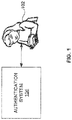
- FIG. 1 illustrates a user 102 interacting with an authentication system 104 according to an embodiment of the present disclosure.
- the authentication system 104 provides a keyboard that enables the user 102 to input one or more credentials in an effective manner.
- the authentication system 104 is configured to provide a user interface with a multidimensional and multilingual keyboard (e.g., a virtual keyboard, or a hardware keyboard).
- the keyboard comprises, but is not limited to, letters, patterns (or captcha) in one or more different languages.
- the authentication system 104 provides this keyboard to the user 102 in one or more m x n format (e.g., a m x n matrix format, where ' m ' and ' n ' range from 1, 2, 3, and so on), thus providing the user 102 a choice to select a username and/or a password in more than one language and pattern. Further, the authentication system 104 is configured to receive user input in the form of intended letters, patterns, or combinations thereof in one or more languages, and authenticate the user 102 based on a comparison between the set of intended letters identified and a pre-registered set of letters (e.g., a username or a password).
- a pre-registered set of letters e.g., a username or a password
- the pre-registered set of letters comprises at least one of a character, a numeral, and a symbol in one or more languages, and in one or more format (e.g., an upper case, or a lower case).
- the one or more languages comprise, but are not limited to, United States English, United Kingdom (UK) English, or Indian regional languages, for example, Kannada, Hindi, Marathi, Bengali, Oriya, Tamil, Telugu, Malayalam, and so on.
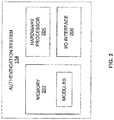
- FIG. 2 illustrates a block diagram of the authentication system 104 according to an embodiment of the present disclosure.
- the authentication system 104 comprises a memory 202, a hardware processor 204, and an input/output (I/O) interface 206.
- the memory 202 further includes one or more modules.
- the memory 202, the hardware processor 204, the input/output (I/O) interface 206, and/or the modules may be coupled by a system bus or a similar mechanism.
- the memory 202 may store instructions, any number of pieces of information, and data, used by a computer system, for example the authentication system 102 to implement the functions of the authentication system 104.
- the memory 202 may include for example, volatile memory and/or non-volatile memory. Examples of volatile memory may include, but are not limited to volatile random access memory (RAM).
- the non-volatile memory may additionally or alternatively comprise an electrically erasable programmable read only memory (EEPROM), flash memory, hard drive, or the like.
- EEPROM electrically erasable programmable read only memory
- Some examples of the volatile memory includes, but are not limited to, random access memory, dynamic random access memory, static random access memory, and the like.
- non-volatile memory includes, but are not limited to, hard disks, magnetic tapes, optical disks, programmable read only memory, erasable programmable read only memory, electrically erasable programmable read only memory, flash memory, and the like.
- the memory 202 may be configured to store information, data, applications, instructions or the like for enabling the authentication system 104 to carry out various functions in accordance with various example embodiments.
- the memory 202 may be configured to store instructions which when executed by the hardware processor 204 causes the authentication system to behave in a manner as described in various embodiments (e.g., identifying select customers/one or more users from a group of users for adjusting a credit limit to another credit limit for a succeeding month based on the information).
- the memory 202 stores information for example, information comprising at least one of letters, patterns (or captchas), and the pre-registered set of letters (or pre-registered password) and so on.
- the letters comprises at least one of a character, a numeral, a symbol, or a whitespace/blank space.
- the character is at least one of an upper case, or a lower case.
- the hardware processor 204 may be implemented as one or more microprocessors, microcomputers, microcontrollers, digital signal processors, central processing units, state machines, logic circuitries, and/or any devices that manipulate signals based on operational instructions. Further, the hardware processor 204 may comprise a multi-core architecture. Among other capabilities, the hardware processor 204 is configured to fetch and execute computer-readable instructions or modules stored in the memory 202. The hardware processor 204 may include circuitry implementing, among others, audio and logic functions associated with the communication.
- the hardware processor 204 may include, but are not limited to, one or more digital signal processors (DSPs), one or more microprocessor, one or more special-purpose computer chips, one or more field-programmable gate arrays (FPGAs), one or more application-specific integrated circuits (ASICs), one or more computer(s), various analog to digital converters, digital to analog converters, and/or other support circuits.
- DSPs digital signal processors
- microprocessor one or more special-purpose computer chips
- FPGAs field-programmable gate arrays
- ASICs application-specific integrated circuits
- computer(s) various analog to digital converters, digital to analog converters, and/or other support circuits.
- the hardware processor 204 thus may also include the functionality to encode messages and/or data or information.
- the hardware processor 204 may include, among other things, a clock, an arithmetic logic unit (ALU) and logic gates configured to support operation of the hardware processor 204. Further, the hardware processor 204 may include functionality to execute one or more software programs, which may be stored in the memory 202 or otherwise accessible to the hardware processor 204.
- ALU arithmetic logic unit
- the hardware processor 204 is configured by the instructions stored in the memory 202.
- the hardware processor 204 when configured by the instructions provides a keyboard (e.g., a virtual keyboard, or a convention hardware keyboard modified such that the keyboard comprises a set of letters in m x n format, ' m ' represents a number of rows, and ' n ' represents a number of columns, wherein each row or column comprises a sub-set of the letters.
- a first row comprises a first set of letters
- a second row comprises a second set of letters
- a third row comprises a third set of letters
- a fourth row comprises a fourth set of letters, thus forming a 4x4 matrix.
- the (virtual) keyboard may be provided on a display unit (not shown in FIG. 2 ).
- the display unit may be integrated within the authentication system 104, or externally connected to the authentication system 104.
- the hardware keyboard it may be connected to a system to receive inputs from the hardware keyboard.
- the hardware processor 204 provides a set of input receiving identifiers on a display unit.
- the keyboard may present the set of letters in the above m x n format, and a set of input receiving identifiers (e.g., a corresponding input button, or a corresponding hardware component). These buttons or hardware components are aligned or in parallel to the letters in the m x n format.
- Each input receiving identifier is specific to at least one row or a column in the m x n format.
- a first input receiving identifier is provided that is specific to the first row of a matrix comprising m x n format.
- a second input receiving identifier is provided that is specific to the second row of the same matrix, and so on.
- the same first input receiving identifier may be provided specific to a first column of the matrix comprising m x n format.
- the second input receiving identifier may be provided specific to a second column of the same matrix, and so on.
- the number of input receiving identifiers provided on the display unit varies and is based on the type of m x n matrix format displayed on the display unit. Similarly, the position of the input receiving identifiers is based on the type of m x n matrix displayed on the display unit. As described above, for example, for a 4x4 matrix, 4 input receiving identifiers are provided. These 4 input receiving identifiers may be positioned either vertically or horizontal with respect to the 4x4 matrix, such that they are aligned in parallel to the letters in each of the 4 rows or 4 columns.
- the input receiving identifiers may be represented by empty slots/fields (or denoted by a symbol) for example, a circle, a square, -, _, or any representative symbol (or the like) that enables the user 102 to provide one or more inputs on a respective input receiving identifier.
- one or more inputs may be processed.
- the one or more inputs may comprise an enter keystroke from keyboard, an input click on, or a selection of, a specific input receiving identifier from the set of input receiving identifiers.
- the one or more inputs may further comprise a mouse hover for selection of a particular input receiving identifier.
- a specific row or a specific column is identified based on the position of the selected input receiving identifier. For example, when an input on a first input receiving identifier is received, a corresponding row or column (e.g., a first row or a first column) is identified based on the position of the first input receiving identifier.
- This identified row or column comprises a sub-set of letters as described above. For example, when the first row is identified, the first row comprises a first of sub-set of letters.
- the authentication system 104 identifies a first intended letter from the first sub-set of letters from the first identified row based on the input received on the first input receiving identifier. This identification involves determination of whether the first intended letter is present in the first sub-set of letters. For example, the first intended letter is obtained (or determined) by comparing a property of each letter from the first sub-set of letters with a corresponding letter in the pre-registered letters.
- a letter style such as bold, italics, underline, colored, and so on
- a letter size such as large, medium, or small
- a dimension of each letter from the first sub-set of letters is compared with a letter style, a letter size and a dimension of a first letter in the pre-registered letters (e.g., the pre-registered password).
- the hardware processor 204 further performs a comparison between the set of intended identified letters with the pre-registered set of letters (e.g., the pre-registered password) stored in the memory 202, and triggers at least one action based on the comparison.
- the pre-registered set of letters e.g., the pre-registered password
- the at least one action comprises authenticating the user 102 when each letter in the set of intended identified letters matches a corresponding letter in the pre-registered set of letters (e.g., the pre-registered password).
- the authentication system 104 may shuffle the set of letters in the m x n format each time an intended letter is identified, and further display the set of letters in more than one language, thus making it difficult for a shoulder surfer to observe what letters are selected and identified from which language for authenticating the user 102 (or any authorized personnel), thereby resulting in enhanced security.
- the shuffling of letters may be performed in one or more form, a circular shuffling, a diagonal shuffling, and so on.
- the authentication system 104 may display a pattern on the display unit.
- the pattern comprises one or more pattern identifiers.
- the pattern is specific to the numeric 4.
- the numeric 4 may be displayed by way of a pattern to be completed using a set of pattern identifiers.
- the hardware processor 204 processes an input on a corresponding pattern identifier from the one or more pattern identifiers to identify an intended pattern identifier from a set of displayed pattern identifiers in the pattern.
- the steps of processing the input, and identifying an intended pattern identifier may be repeated until a last intended pattern identifier from the one or more pattern identifiers is identified to obtain an intended path taken to complete the pattern (e.g., numeric 4 presented as a pattern).
- the hardware processor 204 then performs another comparison of the set of intended identified letters and the intended path taken to complete the pattern with the pre-registered set of letters (e.g., the pre-registered password) and the pattern displayed on the display unit, and further trigger another action based on this comparison.
- This another action in this case comprises authenticating the user 102 when at least one of (i) each letter in the set of intended identified letters matches a corresponding letter in the pre-registered set of letters stored in the memory 202, and (ii) the path matches the pattern displayed on the display unit.
- the authentication system 104 may execute the modules comprising an input processing module that when executed by the hardware processor 204 processes inputs on the inputs receiving identifiers for obtaining the set of identified intended letters.
- the set of intended letters are identified using an intended letters identification module. For example, a first intended letter is identified by the intended letters identification module, when the intended letters identification module identifies at least one row or a column from the m x n matrix format, based on an input received on at least one input receiving identifier, determines whether the first intended letter is present in a first sub-set of letters.
- the intended letters identification module further performs comparison of a property of each letter from the first sub-set of letters with a corresponding letter in the pre-registered letters, and then identifies a letter as the first intended letter from the first sub-set of letters when the property of that letter matches the property of a corresponding first letter from the pre-registered letters.
- the authentication system 104 further comprises a comparison module that when executed by the hardware processor 204 performs a comparison between the set of identified intended letters with a pre-registered set of letters (e.g., the pre-registered password).
- the authentication system 104 comprises a shuffling module that when executed by the hardware processor 204 shuffles (in one or more languages) the set of letters in the m x n format, each time an intended letter is identified. Further, the authentication system 104 comprises a pattern identification module that when executed by the hardware processor 204 identifies a path taken by the user 102 to complete a pattern displayed on the display unit. The comparison module may further perform a comparison of the set of intended identified letters and the intended path taken to complete the pattern with the pre-registered set of letters and the pattern on the display unit.
- the authentication system 104 further comprises a triggering module that when executed by the hardware processor 204 triggers one or more actions, for example, authenticating a user based on the comparison.
- the user 102 is authenticated (e.g., using an authenticating module) when the set of intended identified letters matches with the pre-registered set of letters.
- the user 102 is authenticated (using the authenticating module) when the set of intended identified letters and the intended path taken to complete the pattern match with the pre-registered set of letters and the pattern on the display unit.
- the input processing module, the intended letters identification module identifies, the comparison module, the shuffling module, the pattern identification module, the triggering module, the authentication module are implemented as at least one of a logically self-contained part of a software program, a self-contained hardware component, and/or, a self-contained hardware component, with a logically self-contained part of a software program embedded into each of the hardware component that when executed perform the above method described herein, in one embodiment.
- the authentication system 104 may be implemented with the above described steps involving pre-determined time interval.
- one or more inputs can be received on corresponding input receiving identifiers within a specified time interval.
- a first input may be received on a first input receiving identifier within a first time interval (e.g., 30 seconds).
- Similar approach may be implemented by the authentication system 104 to complete the process of receiving inputs for identifying remaining intended letters (or intended pattern identifiers) with a specific time interval.
- the time interval for entering inputs may vary.
- a notification message may be displayed for example, "input incorrect", and then the user 102 may be prompted to provide a correct input within a specified time interval.
- the 102 user will be provided with an alert message when he/she makes an error while entering the initial characters of the password.
- the alert message may be displayed based on various attributes. These attributes are predicted by the authentication system 104, where the attributes may comprises, for example, but are not limited to, previous history of the user 102 in keying the password characters, learning the errors/mistakes which includes learning the pattern in which the user 102 is making a mistake in password entry. Other attributes include an age, gender and geography based learning of the user 102 in the password entry, provided such a profile of the user 102 is pre-stored in the memory 202.
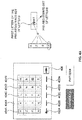
- FIG. 3A-3B illustrate a user interface view of a virtual keyboard comprising an exemplary set of letters arranged in a m x n format and displayed on a display unit by the authentication system 104 according to an embodiment of the present disclosure. More particularly, FIG. 3A illustrates the virtual keyboard with a set of input receiving identifiers, where the set of input receiving identifiers are positioned horizontally and aligned with the m x n matrix, where both m is '4' and n is '4', for example. As depicted in FIG.
- the virtual keyboard comprises a first input receiving identifier 302A, a second input receiving identifier 302B, a third input receiving identifier 302C, and a fourth input receiving identifier 302N (collectively known as a set of input receiving identifiers 302).
- Each of the input receiving identifiers are specific to a row or a column in the m x n matrix.
- the first input receiving identifier 302A is specific to a first column 304A that comprises a first sub-set of letters for example, A, z, d, and e.
- the second input receiving identifier 302B is specific to a second column 304B that comprises a second sub-set of letters for example, x, T, b, and q.
- the third input receiving identifier 302C is specific to a third column 304C that comprises a third sub-set of letters, for example, L, 7, f, and k.
- the fourth input receiving identifier 302N is specific to a fourth column 304N that comprises a fourth sub-set of letters, for example, W, w, &, and 1
- FIG. 3B illustrates the virtual keyboard with the set of input receiving identifiers, where the set of input receiving identifiers are positioned vertically and aligned with the m x n matrix.
- the virtual keyboard as depicted in FIG. 3A-3B comprises a navigation button 306 (e.g., an arrow symbol), that enables the user 102 to navigate to at least one of from English letters with small letters, pattern keyboard, or to any other language, etc. Repeating an input on the navigation button may revert the user interface to a default view.
- the virtual keyboard may comprise a back arrow button, that when receives an input, enables the authentication system 104 to display a previous (or last view).
- the mapping of input receiving identifiers is done for respective rows or columns.
- the authentication system 104 can also be implemented for any software/hardware keyboards (e.g., Bluetooth keyboard, wireless keyboard, or any Near Field Communication (NFC) keyboard, and so on) and/or hardware keyboards (e.g., such as modifying the conventional QWERTY or any similar hardware keyboard,).
- software/hardware keyboards e.g., Bluetooth keyboard, wireless keyboard, or any Near Field Communication (NFC) keyboard, and so on
- hardware keyboards e.g., such as modifying the conventional QWERTY or any similar hardware keyboard,).
- a second computing device e.g., a smart watch
- the first computing device e.g., a computer system
- the second computing device e.g., the smart watch
- the user 102 may provide credentials using the keyboard presented on the second computing device (e.g., the smart watch) without having to enter any letters on an actual input interface (e.g., a keyboard) of the first computing device, thereby providing an enhanced security.
- the conventional hardware and virtual keyboards may be modified such that the conventional keyboard comprises a set of letters arranged in m x n matrix format, and a set of corresponding input receiving identifiers, and pattern receiving identifiers, where each input receiving identifier is specific to a row or a column.
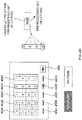
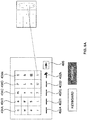
- FIG. 4A-4E illustrate exemplary views of entering letters and/or patterns into a field for authenticating the user 102 using the authentication system 104 according to an embodiment of the present disclosure.
- the pre-registered set of letters (or password) is Abcdl
- a set of letters in a 5x4 matrix format is provided on the display unit.
- One or more inputs are received, and intended letters are identified and compared with the pre-registered letter for triggering an action.
- the virtual keyboard is displayed on the display unit as depicted in FIG. 4A .
- a column e.g., a first column 404A is identified specific to the first input receiving identifier 402A.
- the letter A is present in the first column, the user 102 may provide an input on the first input receiving identifier.
- that column e.g., the first column 404A
- the authentication system 104 identifies the first sub-set of letters and performs comparison of the first sub-set of letters with the first letter of the pre-registered password Abcdl as depicted in FIG.
- the property of each letter from the first sub-set of letters is compared with the property of a first letter 'A' in the password.
- the first sub-set of letters are e, Z, d, and A, which are compared (or mapped to identify an actual intended letter 'A') with the first letter A in the actual password.
- the property (e.g., font style, size, and/or dimension) of A from the first sub-set of letter matches the property (e.g., font style, size, and/or dimension) of first letter A in the password.
- the authentication system 104 then identifies the first intended letter as A based on the property match, as the property of remaining letters (e.g., e, Z, and d) does not match the property of the first letter 'A' in the actual password.
- FIG. 4A depicts the intended letter identification for one letter
- a similar technique is implemented to follow and identify remaining intended letters/numerals of the password as depicted in FIG. 4B-4E .
- that column e.g., the second column 404B
- the authentication system 104 identifies a second sub-set of letters and performs comparison of the second sub-set of letters with a second letter of the pre-registered password Abcdl as depicted in FIG. 4B .
- the property of each letter from the second sub-set of letters is compared with the property of the second letter 'b' in the password.
- the second sub-set of letters are x, U, Y, and b, which are compared (or mapped to identify an actual intended letter 'b') with the second letter 'b' in the actual password as depicted in FIG. 4B .
- the property (e.g., font style, size, and/or dimension) of 'b' from the second sub-set of letter matches the property (e.g., font style, size, and/or dimension) of first letter 'b' in the password.
- the authentication system 104 identifies the second intended letter as 'b' based on the property match, as the property of remaining letters (e.g., x, U, and Y) does not match the property of the second letter 'b' in the actual password.
- the authentication system 104 identifies a third sub-set of letters and performs comparison of the third sub-set of letters with a third letter of the pre-registered password Abcdl as depicted in FIG. 4C .
- the property of each letter from the third sub-set of letters is compared with the property of the third letter 'c' in the password.
- the third sub-set of letters are 2, c, f, and K, which are compared with the third letter 'c' in the actual password.
- the property (e.g., font style, size, and/or dimension) of 'c' from the third sub-set of letter matches the property (e.g., font style, size, and/or dimension) of first letter 'c' in the password as depicted in FIG. 4C .
- the authentication system 104 then identifies the third intended letter as 'c' based on the property match, as the property of remaining letters (e.g., 2, f, and K) does not match the property of the third letter 'c' in the actual password.
- the authentication system 104 identifies a fourth sub-set of letters and performs comparison of the fourth sub-set of letters with a fourth letter of the pre-registered password Abcdl as depicted in FIG. 4D .
- the property of each letter from the fourth sub-set of letters is compared with the property of the fourth letter 'd' in the password.
- the fourth sub-set of letters are 5, S, g, and d, which are compared with the fourth letter 'd' in the actual password.
- the property (e.g., font style, size, and/or dimension) of the letter 'd' from the fourth sub-set of letter matches the property (e.g., font style, size, and/or dimension) of fourth letter 'd' in the password as depicted in FIG. 4D .
- the authentication system 104 then identifies the fourth intended letter as 'd' based on the property match, as the property of remaining letters (e.g., 5, S, and g) does not match the property of the fourth letter 'd' in the actual password.
- the authentication system 104 identifies a fifth sub-set of letters and performs comparison of the fifth sub-set of letters with the fifth letter of the pre-registered password Abcdl as depicted in FIG. 4E .
- the property of each letter from the fifth sub-set of letters is compared with the property of a fifth letter '1' (numeric one) in the password.
- the fifth sub-set of letters are E, &, @, and 1, which are compared with the fifth letter '1' in the actual password.
- the property (e.g., font style, size, and/or dimension) of '1' from the fifth sub-set of letter matches the property (e.g., font style, size, and/or dimension) of fourth letter '1' in the password in the depicted FIG. 4E .
- the authentication system 104 then identifies the fifth intended letter as '1' based on the property match, as the property of remaining letters (e.g., E, &, and @) does not match the property of the fifth letter '1' in the actual password.
- the letters in the m x n format may be shuffled, and/or at least a sub-set of the letters may or may not be repeated as when compared to the letters present in the m x n matrix format of FIGS. 4A through 4E .
- the user 102 is authenticated based the matching in a particular sequential order of (i) the pre-registered letters (Abcdl) and the set of intended identified letters (A, b, c, d, and 1).
- the inputs on the set of input receiving identifiers are received in a sequential order, the inputs may also be received in any order, provided, an intended letter is present in a particular row or column.
- the next letter 'b' may be present anywhere in the matrix. For example, if 'b' is present in a third column, then an input may be received on the third input receiving identifier 402C, instead of receiving an input on the second input receiving identifier.
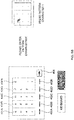
- FIG. 5A-5B illustrate exemplary views of entering letters and/or patterns into a field for authenticating the user 102 using the authentication system 104 according to an embodiment of the present disclosure.
- the pre-registered password comprises a numeral (e.g., 1 in the above FIG. 4A-4E )
- the alternative approach of identifying the numeral 1 is depicted in FIG. 5A .
- the authentication system 104 may follow the steps as indicated in FIG. 4E , or alternative provide a pattern specific to the numeral 1. For example, the pattern shall be visible to the user 102 similar to the way numeral 1 appears.
- the authentication system 104 may receive one or more inputs on one or more pattern identifiers to complete the pattern. As depicted in FIG. 5A , to enter '1', the user 102 may place the cursor in the manner mentioned in the FIG. 5A (right side pattern with an eclipse representation which is indicative of numeric one (1) by identifying the sequential order of the pattern identifiers from top to bottom).
- the authentication system 104 implements the steps described above for an entry of captcha (which may be part of the process for authenticating the user 102) as depicted in FIG. 5B .
- the keyboard dialogue box is activated when one or more inputs are received for letters as depicted in FIGS. 4A-4E .
- the pattern dialogue box is activated when one or more inputs are received for entry of pattern/captcha/characters.
- the entry of characters involves one or more steps to be followed by the user 102 based on instructions displayed on the display unit. Such instructions comprise, but are not limited to, please enter pattern drawn beside, and press pattern character 1. Based on the instructions, the inputs are received, for example, an input (arrow symbol on pattern character 1) as depicted in FIG. 5B .
- the authentication system 104 may provide the set of letters and corresponding set of input receiving identifiers, and set of input pattern identifiers in any format that is easily understood by the user 102.
- Other formats that may be provided could be based on what type of format that has been already displayed at the time of credentials generation (e.g., during the creation of username or password).
- the user 102 is authenticated based the matching in a particular sequential order of (i) the pre-registered letters (Abcdl) and the set of intended identified letters (A, followed by b, followed by c, followed by d, and followed by 1) and (ii) the intended path and the pattern (or captcha) displayed on the display unit.
- FIG. 6 is a flow diagram illustrating a processor implemented method of authenticating the user 102 using the authentication system 104 of FIG. 1 according to an embodiment of the present disclosure.
- a virtual keyboard comprising a set of letters in a m x n format is provided on the display unit.
- the set of letters are selected from one or more languages.
- Each row or column is the m x n matrix format comprises a sub-set of the letters.
- the set of letters comprises at least one of a character, a numeric, a symbol, and so on.
- the character is at least one of an upper case, or a lower case.
- a set of input receiving identifiers are provided on the display unit. Each input receiving identifier is specific to at least one row or at least one column in the m x n matrix format as depicted in FIGS. 4A-4E .
- step 606 an input is processed (or received) on at least one input receiving identifier from the set of input receiving identifiers.
- the at least one row or a column from the number of rows and the number of columns is identified based on the input received on the input receiving identifier, and it is further determined whether the first intended letter is present in the first sub-set of letters.
- step 608 a first intended letter from a first sub-set of letters from at least one corresponding row or column is identified based on the input received on the at least one input receiving identifier.
- a property of each letter from the first sub-set of letters is compared with a corresponding letter in the pre-registered letters, and a letter is identified as the first intended letter from the first sub-set of letters from at least one corresponding row or column when the letter matches a corresponding letter from the pre-registered letters.
- step 606 and 608 are repeated until a last intended letter from the set of letters is identified to obtain a set of intended identified letters.
- step 610 a comparison is performed between the set of intended identified letters with a pre-registered set of letters stored in the memory 202.
- step 612 at least one action is triggered based on the comparison. The at least one action comprises authenticating a user when each letter in the set of intended identified letters matches a corresponding letter in the pre-registered set of letters.
- a pattern may be provided on the display unit, where the pattern includes one or more pattern identifiers.
- An input is processed on a corresponding pattern identifier from the one or more pattern identifiers to identify an intended pattern identifier from the one or more pattern identifiers in the pattern based on the input.
- the above step of processing the input to identify a last intended pattern identifier from the one or more pattern identifiers is repeated to obtain an intended path taken to complete the pattern.
- the one or more pattern identifiers in the pattern each time a pattern identifier is identified.
- the method further comprises performing another comparison of (i) the set of intended identified letters and the intended path taken to complete the pattern with (ii) the pre-registered set of letters and the pattern displayed on the display unit, and triggering at least one another action based on the another comparison.
- the another action for example, includes authenticating a user when (i) each letter in the set of intended identified letters matches a corresponding letter in the pre-registered set of letters stored in the memory, and (ii) the path taken matches the pattern.
- the embodiments of the present disclosure provide the authentication system 104 that generates a multidimensional, multi lingual and shuffling keyboard.
- the authentication system 104 dynamically provides a matrix (or a m x n matrix format) of alpha-numeric and special characters, where the size of the matrix depends on the language, thereby resulting in prevention of shoulder surfing and key logging attacks which in turn will provide a higher grade of security.
- the authentication system 104 is configured to create a pattern which incorporates the captcha concept into the password (where the password may be encrypted).
- the authentication system 104 provides the matrix with letters in one or more languages, and a set of input receiving identifiers to obtain a set of identified intended letters for authenticating the user 102 by automatically identifying the set of intended letters from one or more sub-set of letters. Further unlike conventional systems where shuffling is limited to one language only, the authentication system 104 further shuffles letters in the matrix at each stage in one or more languages, for example, each time when an intended letter/or intended pattern is identified, thereby resulting a foolproof entry of letters/pattern (or captcha).
- the embodiments of the present disclosure and the authentication system 104 may be implemented in, for example, but are not limited to, electronic devices or appliances (e.g., television, setup boxes, and so on), computing systems (e.g., mobile communication devices, smart phones, smart watches, smart display devices, personal computers (PC), laptops, palmtops, tablet PCs, servers, and so on), doors and safety lockers in financial institutions, private and government organizations, schools, colleges, universities, shops (e.g., retail outlet, jewelry stores and so on), residences (e.g., safety lockers, treasury, doors), telephone booths, vending machines/apparatuses, dispensing apparatuses, website(s)/ webpage(s) login or authentication, and other locations/devices where a user is required to login (or feed security codes) into a system for authentication and authorization to access information (any data or any material that is treated as confidential, internal, restricted, private, personal, and so on).
- computing systems e.g., mobile communication devices, smart phones, smart watches
- the hardware device can be any kind of device which can be programmed including e.g. any kind of computer like a server or a personal computer, or the like, or any combination thereof.
- the device may also include means which could be e.g. hardware means like e.g. an application-specific integrated circuit (ASIC), a field-programmable gate array (FPGA), or a combination of hardware and software means, e.g.
- ASIC application-specific integrated circuit
- FPGA field-programmable gate array
- the means can include both hardware means and software means.
- the method embodiments described herein could be implemented in hardware and software.
- the device may also include software means.
- the embodiments may be implemented on different hardware devices, e.g. using a plurality of CPUs.
- the embodiments herein can comprise hardware and software elements.
- the embodiments that are implemented in software include but are not limited to, firmware, resident software, microcode, etc.
- the functions performed by various modules described herein may be implemented in other modules or combinations of other modules.
- a computer-usable or computer readable medium can be any apparatus that can comprise, store, communicate, propagate, or transport the program for use by or in connection with the instruction execution system, apparatus, or device.
- the medium can be an electronic, magnetic, optical, electromagnetic, infrared, or semiconductor system (or apparatus or device) or a propagation medium.
- Examples of a computer-readable medium include a semiconductor or solid state memory, magnetic tape, a removable computer diskette, a random access memory (RAM), a read-only memory (ROM), a rigid magnetic disk and an optical disk.
- Current examples of optical disks include compact disk-read only memory (CD-ROM), compact disk-read/write (CD-R/W) and DVD.
- a data processing system suitable for storing and/or executing program code will include at least one processor coupled directly or indirectly to memory elements through a system bus.
- the memory elements can include local memory employed during actual execution of the program code, bulk storage, and cache memories which provide temporary storage of at least some program code in order to reduce the number of times code must be retrieved from bulk storage during execution.
- I/O devices can be coupled to the system either directly or through intervening I/O controllers.
- Network adapters may also be coupled to the system to enable the data processing system to become coupled to other data processing systems or remote printers or storage devices through intervening private or public networks. Modems, cable modem and Ethernet cards are just a few of the currently available types of network adapters.
- a representative hardware environment for practicing the embodiments may include a hardware configuration of an information handling/computer system in accordance with the embodiments herein.
- the system herein comprises at least one processor or central processing unit (CPU).
- the CPUs are interconnected via system bus to various devices such as a random access memory (RAM), read-only memory (ROM), and an input/output (I/O) adapter.
- RAM random access memory
- ROM read-only memory
- I/O input/output
- the I/O adapter can connect to peripheral devices, such as disk units and tape drives, or other program storage devices that are readable by the system.
- the system can read the inventive instructions on the program storage devices and follow these instructions to execute the methodology of the embodiments herein.
- the system further includes a user interface adapter that connects a keyboard, mouse, speaker, microphone, and/or other user interface devices such as a touch screen device (not shown) to the bus to gather user input.
- a communication adapter connects the bus to a data processing network
- a display adapter connects the bus to a display device which may be embodied as an output device such as a monitor, printer, or transmitter, for example.
Landscapes
- Engineering & Computer Science (AREA)
- Theoretical Computer Science (AREA)
- Computer Security & Cryptography (AREA)
- Computer Hardware Design (AREA)
- Software Systems (AREA)
- Physics & Mathematics (AREA)
- General Engineering & Computer Science (AREA)
- General Physics & Mathematics (AREA)
- Input From Keyboards Or The Like (AREA)
Claims (15)
- Procédé mis en oeuvre par processeur, comprenant les étapes ci-dessous consistant à :(a) fournir un clavier comprenant un ensemble de lettres dans un format « m x n », dans lequel « m » représente un nombre de lignes, et « n » représente un nombre de colonnes, dans lequel chaque ligne ou colonne comprend un sous-ensemble des lettres ;(b) fournir un ensemble d'identificateurs de réception d'entrée, chaque identificateur de réception d'entrée étant spécifique à au moins une ligne ou au moins une colonne dans le format « m x n » ;(c) traiter une entrée sur au moins un identificateur de réception d'entrée parmi l'ensemble d'identificateurs de réception d'entrée ;(d) identifier une première lettre prévue parmi un premier sous-ensemble de lettres à partir d'au moins une ligne correspondante ou colonne correspondante, sur la base de l'entrée reçue sur ledit au moins un identificateur de réception d'entrée ;(e) répéter les étapes (c) et (d) jusqu'à ce qu'une dernière lettre prévue parmi un dernier sous-ensemble de l'ensemble de lettres soit identifiée, en vue d'obtenir un ensemble de lettres identifiées prévues ;(f) mettre en oeuvre une comparaison entre l'ensemble de lettres identifiées prévues et un ensemble préenregistré de lettres stockées dans une mémoire ; et(g) déclencher au moins une action sur la base de la comparaison,dans lequel l'étape d'identification de la première lettre prévue parmi le premier sous-ensemble de lettres comprend les étapes ci-dessous consistant à :(h) identifier au moins une ligne ou une colonne parmi le nombre de lignes et le nombre de colonnes sur la base de l'entrée reçue sur l'identificateur de réception d'entrée ; et(i) déterminer si la première lettre prévue est présente dans le premier sous-ensemble de lettres ;dans lequel l'étape d'identification d'au moins une ligne ou une colonne parmi le nombre de lignes et le nombre de colonnes comprend les étapes ci-dessous consistant à :(j) comparer une propriété de chaque lettre du premier sous-ensemble de lettres dans ladite au moins une ligne ou colonne à une lettre correspondante dans l'ensemble préenregistré de lettres, dans lequel la propriété comprend au moins l'un des éléments parmi un style de lettre, une taille de lettre et une dimension ; et(k) identifier une lettre comme étant la première lettre prévue du premier sous-ensemble de lettres à partir d'au moins une ligne correspondante ou colonne correspondante lorsque la lettre correspond à une lettre correspondante parmi les lettres préenregistrées.
- Procédé mis en oeuvre par processeur selon la revendication 1, dans lequel ledit ensemble de lettres est sélectionné parmi une ou plusieurs langues.
- Procédé mis en oeuvre par processeur selon la revendication 1, dans lequel ledit ensemble de lettres comprend au moins l'un parmi un caractère, un chiffre et un symbole.
- Procédé mis en oeuvre par processeur selon la revendication 1, dans lequel ladite étape de déclenchement de ladite au moins une action sur la base de ladite comparaison comprend l'étape consistant à authentifier un utilisateur lorsque chaque lettre dans ledit ensemble de lettres identifiées prévues correspond à une lettre correspondante dans ledit ensemble préenregistré de lettres.
- Procédé mis en oeuvre par processeur selon la revendication 2, comprenant en outre (1) l'étape consistant à mélanger ledit ensemble de lettres dans ledit format « m x n », dans ladite une ou lesdites plusieurs langues, à chaque fois qu'une lettre prévue est identifiée.
- Procédé mis en oeuvre par processeur selon la revendication 3, dans lequel ledit caractère correspond à au moins l'une parmi une majuscule ou une minuscule.
- Procédé mis en oeuvre par processeur selon la revendication 1, comprenant en outre les étapes ci-dessous consistant à :(m) fournir un motif sur une unité d'affichage, ledit motif comprenant un ou plusieurs identificateurs de motif ;(n) traiter une entrée sur un identificateur de motif correspondant parmi ledit un ou lesdites plusieurs identificateurs de motif ;(o) identifier un identificateur de motif prévu parmi ledit un ou lesdits plusieurs identificateurs de motif dans ledit motif, sur la base de ladite entrée ;(p) répéter les étapes (n) et (o) jusqu'à ce qu'un dernier identificateur de motif prévu parmi ledit un ou lesdits plusieurs identificateurs de motif soit identifié, en vue d'obtenir un chemin prévu pris pour compléter ledit motif ;(q) mettre en oeuvre une autre comparaison dudit ensemble de lettres identifiées prévues et dudit chemin prévu pour compléter ledit motif audit ensemble préenregistré de lettres et audit motif sur ladite unité d'affichage ; et(r) déclencher au moins une autre action sur la base de ladite autre comparaison.
- Procédé mis en oeuvre par processeur selon la revendication 7, dans lequel ladite étape de déclenchement de ladite au moins une autre action sur la base de ladite autre comparaison comprend l'étape consistant à authentifier un utilisateur lorsque (i) chaque lettre dans ledit ensemble de lettres identifiées prévues correspond à une lettre correspondante dans ledit ensemble préenregistré de lettres stockées dans ladite mémoire, et lorsque (ii) ledit chemin prévu correspond audit motif.
- Système comprenant :une mémoire stockant des instructions et un ensemble préenregistré de lettres ; etun processeur matériel couplé à la mémoire, dans lequel le processeur matériel est configuré par les instructions de manière à :(a) fournir un clavier comprenant un ensemble de lettres dans un format « m x n », dans lequel « m » représente un nombre de lignes, et « n » représente un nombre de colonnes, dans lequel chaque ligne ou colonne comprend un sous-ensemble des lettres ;(b) fournir un ensemble d'identificateurs de réception d'entrée, chaque identificateur de réception d'entrée étant spécifique à au moins une ligne ou au moins une colonne dans le format « m x n » ;(c) traiter une entrée sur au moins un identificateur de réception d'entrée parmi l'ensemble d'identificateurs de réception d'entrée ;(d) identifier une première lettre prévue parmi un premier sous-ensemble de lettres à partir d'au moins une ligne correspondante ou colonne correspondante, sur la base de l'entrée reçue sur ledit au moins un identificateur de réception d'entrée ;(e) répéter les étapes (c) et (d) jusqu'à ce qu'une dernière lettre prévue parmi un dernier sous-ensemble de l'ensemble de lettres soit identifiée, en vue d'obtenir un ensemble de lettres identifiées prévues ;(f) mettre en oeuvre une comparaison entre l'ensemble de lettres identifiées prévues et un ensemble préenregistré de lettres stockées dans une mémoire ; et(g) déclencher au moins une action sur la base de la comparaison,dans lequel le processeur matériel est configuré par les instructions pour identifier la première lettre prévue parmi un premier sous-ensemble de lettres à partir d'au moins une ligne correspondante ou colonne correspondante sur la base de l'entrée reçue sur ledit au moins un identificateur de réception d'entrée en mettant en oeuvre les étapes ci-dessous consistant à :(h) identifier au moins une ligne ou une colonne parmi le nombre de lignes et le nombre de colonnes sur la base de l'entrée reçue sur l'identificateur de réception d'entrée ; et(i) déterminer si la première lettre prévue est présente dans le premier sous-ensemble de lettres ;dans lequel le processeur matériel est configuré par les instructions pour identifier la première lettre prévue parmi un premier sous-ensemble de lettres à partir d'au moins une ligne correspondante ou colonne correspondante en mettant en oeuvre les étapes ci-dessous consistant à :(j) comparer une propriété de chaque lettre du premier sous-ensemble de lettres à une lettre correspondante dans l'ensemble préenregistré de lettres, dans lequel la propriété comprend au moins l'un des éléments parmi un style de lettre, une taille de lettre et une dimension ; et(k) identifier une lettre comme étant la première lettre prévue du premier sous-ensemble de lettres à partir d'au moins une ligne correspondante ou colonne correspondante lorsque la lettre correspond à une lettre correspondante parmi les lettres préenregistrées.
- Système selon la revendication 9, dans lequel ledit ensemble de lettres est sélectionné parmi une ou plusieurs langues.
- Système selon la revendication 9, dans lequel ledit ensemble de lettres comprend au moins l'un des éléments parmi un caractère, un chiffre et un symbole, et dans lequel ledit caractère correspond à au moins l'une parmi une majuscule ou une minuscule.
- Système selon la revendication 9, dans lequel le processeur matériel est en outre configuré par lesdites instructions de manière à authentifier un utilisateur sur la base de ladite au moins une action, lorsque chaque lettre dans ledit ensemble de lettres identifiées prévues correspond à une lettre correspondante dans ledit ensemble préenregistré de lettres.
- Système selon la revendication 10, dans lequel ledit processeur matériel est en outre configuré par lesdites instructions pour (1) mélanger ledit ensemble de lettres dans ledit format « m x n » dans ladite une ou plusieurs langues à chaque fois qu'une lettre prévue est identifiée.
- Système selon la revendication 9, dans lequel ledit processeur matériel est en outre configuré par lesdites instructions pour :(m) fournir un motif sur une unité d'affichage, ledit motif comprenant un ou plusieurs identificateurs de motif ;(n) traiter une entrée sur un identificateur de motif correspondant parmi ledit un ou lesdites plusieurs identificateurs de motif ;(o) identifier un identificateur de motif prévu parmi ledit un ou lesdits plusieurs identificateurs de motif dans ledit motif, sur la base de ladite entrée ;(p) répéter les étapes (n) et (o) jusqu'à ce qu'un dernier identificateur de motif prévu parmi ledit un ou lesdits plusieurs identificateurs de motif soit identifié, en vue d'obtenir un chemin prévu pris pour compléter ledit motif ;(q) mettre en oeuvre une autre comparaison dudit ensemble de lettres identifiées prévues et dudit chemin prévu pour compléter ledit motif audit ensemble préenregistré de lettres et audit motif sur ladite unité d'affichage ; et(r) déclencher au moins une autre action sur la base de ladite autre comparaison.
- Système selon la revendication 14, dans lequel ledit processeur matériel est en outre configuré par lesdites instructions pour authentifier un utilisateur lorsque (i) chaque lettre dans ledit ensemble de lettres identifiées prévues correspond à une lettre correspondante dans ledit ensemble préenregistré de lettres stockées dans ladite mémoire, et lorsque (ii) ledit chemin prévu correspond audit motif.
Applications Claiming Priority (1)
| Application Number | Priority Date | Filing Date | Title |
|---|---|---|---|
| IN3482MU2015 | 2015-09-10 |
Publications (2)
| Publication Number | Publication Date |
|---|---|
| EP3142038A1 EP3142038A1 (fr) | 2017-03-15 |
| EP3142038B1 true EP3142038B1 (fr) | 2019-01-23 |
Family
ID=55299291
Family Applications (1)
| Application Number | Title | Priority Date | Filing Date |
|---|---|---|---|
| EP16153566.1A Active EP3142038B1 (fr) | 2015-09-10 | 2016-02-01 | Système d'authentification et procédé |
Country Status (2)
| Country | Link |
|---|---|
| US (1) | US10552599B2 (fr) |
| EP (1) | EP3142038B1 (fr) |
Families Citing this family (2)
| Publication number | Priority date | Publication date | Assignee | Title |
|---|---|---|---|---|
| EP3663876A1 (fr) * | 2018-12-05 | 2020-06-10 | Hilti Aktiengesellschaft | Procédé de fonctionnement d'un système et système |
| US20250192832A1 (en) * | 2023-12-11 | 2025-06-12 | Viavi Solutions Inc. | Precoding and scheduling while minimizing age of incorrect information for multiple access systems |
Family Cites Families (25)
| Publication number | Priority date | Publication date | Assignee | Title |
|---|---|---|---|---|
| US5428349A (en) * | 1992-10-01 | 1995-06-27 | Baker; Daniel G. | Nondisclosing password entry system |
| US5748177A (en) * | 1995-06-07 | 1998-05-05 | Semantic Compaction Systems | Dynamic keyboard and method for dynamically redefining keys on a keyboard |
| US6388657B1 (en) * | 1997-12-31 | 2002-05-14 | Anthony James Francis Natoli | Virtual reality keyboard system and method |
| US6895514B1 (en) * | 1999-06-25 | 2005-05-17 | Lucent Technologies Inc. | Method and apparatus for achieving secure password access |
| US7581113B2 (en) * | 2001-02-14 | 2009-08-25 | 5th Fleet, L.L.C. | System and method for generating and authenticating a computer password |
| JP2003271966A (ja) * | 2002-03-19 | 2003-09-26 | Fujitsu Ltd | 手書き入力認証装置、手書き入力認証方法、および手書き入力認証プログラム |
| JP4306390B2 (ja) * | 2003-09-29 | 2009-07-29 | 日本電気株式会社 | パスワード認証装置、方法及びプログラム |
| US8036433B1 (en) * | 2004-04-01 | 2011-10-11 | Ricoh Co., Ltd. | Grid-based data input and authentication |
| JP4332803B2 (ja) * | 2005-11-02 | 2009-09-16 | コニカミノルタビジネステクノロジーズ株式会社 | 情報処理装置 |
| US8370929B1 (en) * | 2006-09-28 | 2013-02-05 | Whitehat Security, Inc. | Automatic response culling for web application security scan spidering process |
| US7992005B2 (en) | 2006-12-06 | 2011-08-02 | International Business Machines Corporation | Providing pattern based user password access |
| CA2574983A1 (fr) | 2007-01-05 | 2008-07-05 | Paul W. Simmons | Methode et appareil pour la configuration aleatoire de mots de passe |
| KR100923179B1 (ko) * | 2007-08-16 | 2009-10-22 | 재단법인서울대학교산학협력재단 | 행동패턴 분석에 기초한 계정 공유 탐지 방법 및 시스템 |
| US20100031200A1 (en) * | 2008-07-30 | 2010-02-04 | Arima Communications Corp. | Method of inputting a hand-drawn pattern password |
| US20100109920A1 (en) * | 2008-11-05 | 2010-05-06 | Michael Dennis Spradling | Security - input key shuffle |
| KR101133544B1 (ko) * | 2009-07-03 | 2012-04-05 | 한국인터넷진흥원 | 알파-뉴메릭 매트릭스를 이용한 패스워드 입력 시스템 및 방법 |
| JP5722547B2 (ja) * | 2010-03-19 | 2015-05-20 | 京セラ株式会社 | 携帯端末装置 |
| EP2842069B1 (fr) * | 2012-04-25 | 2019-12-25 | Southeast Solutions, Inc. | Système de saisie de code empêchant la fraude |
| US8863260B2 (en) | 2012-06-07 | 2014-10-14 | International Business Machines Corporation | Enhancing password protection |
| US20140026210A1 (en) * | 2012-07-23 | 2014-01-23 | Electronics And Telecommunications Research Institute | Method for authenticating mobile devices |
| US8955074B2 (en) * | 2012-10-23 | 2015-02-10 | Authernative, Inc. | Authentication method of enumerated pattern of field positions based challenge and enumerated pattern of field positions based response through interaction between two credentials in random partial digitized path recognition system |
| CN103051454A (zh) * | 2012-12-19 | 2013-04-17 | 天地融科技股份有限公司 | 电子设备及其密码验证方法 |
| CN104021323A (zh) * | 2013-02-28 | 2014-09-03 | 国际商业机器公司 | 用于口令验证的方法和装置 |
| US20150006385A1 (en) * | 2013-06-28 | 2015-01-01 | Tejas Arvindbhai Shah | Express transactions on a mobile device |
| US9684780B2 (en) * | 2013-11-25 | 2017-06-20 | Yingjie Liu | Dynamic interactive identity authentication method and system |
-
2016
- 2016-02-01 EP EP16153566.1A patent/EP3142038B1/fr active Active
- 2016-02-03 US US15/014,417 patent/US10552599B2/en active Active
Non-Patent Citations (1)
| Title |
|---|
| None * |
Also Published As
| Publication number | Publication date |
|---|---|
| EP3142038A1 (fr) | 2017-03-15 |
| US10552599B2 (en) | 2020-02-04 |
| US20170076083A1 (en) | 2017-03-16 |
Similar Documents
| Publication | Publication Date | Title |
|---|---|---|
| US9357391B1 (en) | Unlocking electronic devices with touchscreen input gestures | |
| US9064104B2 (en) | Graphical authentication | |
| US20140053254A1 (en) | Graphical authentication system and method for anti-shoulder surfing attack | |
| US9304655B2 (en) | Graphical user interface (GUI) that receives directional input to change face for receiving passcode | |
| US8661532B2 (en) | Method and apparatus for authenticating password | |
| US11042624B2 (en) | Wireless injection of passwords | |
| US20140098141A1 (en) | Method and Apparatus for Securing Input of Information via Software Keyboards | |
| US20160127134A1 (en) | User authentication system and method | |
| CN103996011A (zh) | 一种保护密码输入安全的方法和装置 | |
| US20120036573A1 (en) | Drag-and-Tag Authentication | |
| US20160012617A1 (en) | Apparatus and method for providing feedback on input data | |
| EP3142038B1 (fr) | Système d'authentification et procédé | |
| US20170154173A1 (en) | Array password authentication system and method thereof | |
| Zujevs | Authentication by graphical passwords method ‘hope’ | |
| CN106446660A (zh) | 提供验证码的方法、系统及终端设备 | |
| US10032015B2 (en) | Password input method based on a two-stage conversion and a system using thereof | |
| WO2016048236A1 (fr) | Système de mot de passe insensible aux fuites et procédé associé | |
| KR101969838B1 (ko) | 다이얼식 가상 보안 키패드 및 이를 이용한 인증 방법 및 장치 | |
| US10586037B1 (en) | Disambiguation of an alphanumeric security code to a user | |
| KR102305531B1 (ko) | 사용자 단말의 잠금 해제 방법, 장치 및 컴퓨터-판독가능 기록매체 | |
| KR101155532B1 (ko) | 비밀번호 처리방법과 상기 방법을 수행할 수 있는 시스템 | |
| US11449597B2 (en) | Transposed passwords | |
| KR101659809B1 (ko) | 사용자 인증 및 패스워드 입력장치와 그 방법 및 시스템 | |
| KR101432943B1 (ko) | 스마트폰에서 패스워드의 안전한 입력 방법 | |
| WO2022001707A1 (fr) | Procédé et système de réception d'une entrée sécurisée à l'aide d'un moyen d'entrée sécurisé |
Legal Events
| Date | Code | Title | Description |
|---|---|---|---|
| PUAI | Public reference made under article 153(3) epc to a published international application that has entered the european phase |
Free format text: ORIGINAL CODE: 0009012 |
|
| STAA | Information on the status of an ep patent application or granted ep patent |
Free format text: STATUS: THE APPLICATION HAS BEEN PUBLISHED |
|
| AK | Designated contracting states |
Kind code of ref document: A1 Designated state(s): AL AT BE BG CH CY CZ DE DK EE ES FI FR GB GR HR HU IE IS IT LI LT LU LV MC MK MT NL NO PL PT RO RS SE SI SK SM TR |
|
| AX | Request for extension of the european patent |
Extension state: BA ME |
|
| STAA | Information on the status of an ep patent application or granted ep patent |
Free format text: STATUS: REQUEST FOR EXAMINATION WAS MADE |
|
| 17P | Request for examination filed |
Effective date: 20170907 |
|
| RBV | Designated contracting states (corrected) |
Designated state(s): AL AT BE BG CH CY CZ DE DK EE ES FI FR GB GR HR HU IE IS IT LI LT LU LV MC MK MT NL NO PL PT RO RS SE SI SK SM TR |
|
| GRAP | Despatch of communication of intention to grant a patent |
Free format text: ORIGINAL CODE: EPIDOSNIGR1 |
|
| STAA | Information on the status of an ep patent application or granted ep patent |
Free format text: STATUS: GRANT OF PATENT IS INTENDED |
|
| RIC1 | Information provided on ipc code assigned before grant |
Ipc: G06F 21/83 20130101ALI20180713BHEP Ipc: G06F 21/36 20130101AFI20180713BHEP |
|
| INTG | Intention to grant announced |
Effective date: 20180731 |
|
| GRAS | Grant fee paid |
Free format text: ORIGINAL CODE: EPIDOSNIGR3 |
|
| GRAA | (expected) grant |
Free format text: ORIGINAL CODE: 0009210 |
|
| STAA | Information on the status of an ep patent application or granted ep patent |
Free format text: STATUS: THE PATENT HAS BEEN GRANTED |
|
| AK | Designated contracting states |
Kind code of ref document: B1 Designated state(s): AL AT BE BG CH CY CZ DE DK EE ES FI FR GB GR HR HU IE IS IT LI LT LU LV MC MK MT NL NO PL PT RO RS SE SI SK SM TR |
|
| REG | Reference to a national code |
Ref country code: GB Ref legal event code: FG4D |
|
| REG | Reference to a national code |
Ref country code: CH Ref legal event code: EP |
|
| REG | Reference to a national code |
Ref country code: AT Ref legal event code: REF Ref document number: 1092026 Country of ref document: AT Kind code of ref document: T Effective date: 20190215 |
|
| REG | Reference to a national code |
Ref country code: IE Ref legal event code: FG4D |
|
| REG | Reference to a national code |
Ref country code: DE Ref legal event code: R096 Ref document number: 602016009313 Country of ref document: DE |
|
| REG | Reference to a national code |
Ref country code: NL Ref legal event code: FP |
|
| PG25 | Lapsed in a contracting state [announced via postgrant information from national office to epo] |
Ref country code: PT Free format text: LAPSE BECAUSE OF FAILURE TO SUBMIT A TRANSLATION OF THE DESCRIPTION OR TO PAY THE FEE WITHIN THE PRESCRIBED TIME-LIMIT Effective date: 20190523 Ref country code: SE Free format text: LAPSE BECAUSE OF FAILURE TO SUBMIT A TRANSLATION OF THE DESCRIPTION OR TO PAY THE FEE WITHIN THE PRESCRIBED TIME-LIMIT Effective date: 20190123 Ref country code: FI Free format text: LAPSE BECAUSE OF FAILURE TO SUBMIT A TRANSLATION OF THE DESCRIPTION OR TO PAY THE FEE WITHIN THE PRESCRIBED TIME-LIMIT Effective date: 20190123 Ref country code: PL Free format text: LAPSE BECAUSE OF FAILURE TO SUBMIT A TRANSLATION OF THE DESCRIPTION OR TO PAY THE FEE WITHIN THE PRESCRIBED TIME-LIMIT Effective date: 20190123 Ref country code: NO Free format text: LAPSE BECAUSE OF FAILURE TO SUBMIT A TRANSLATION OF THE DESCRIPTION OR TO PAY THE FEE WITHIN THE PRESCRIBED TIME-LIMIT Effective date: 20190423 Ref country code: LT Free format text: LAPSE BECAUSE OF FAILURE TO SUBMIT A TRANSLATION OF THE DESCRIPTION OR TO PAY THE FEE WITHIN THE PRESCRIBED TIME-LIMIT Effective date: 20190123 Ref country code: ES Free format text: LAPSE BECAUSE OF FAILURE TO SUBMIT A TRANSLATION OF THE DESCRIPTION OR TO PAY THE FEE WITHIN THE PRESCRIBED TIME-LIMIT Effective date: 20190123 |
|
| REG | Reference to a national code |
Ref country code: AT Ref legal event code: MK05 Ref document number: 1092026 Country of ref document: AT Kind code of ref document: T Effective date: 20190123 |
|
| PG25 | Lapsed in a contracting state [announced via postgrant information from national office to epo] |
Ref country code: GR Free format text: LAPSE BECAUSE OF FAILURE TO SUBMIT A TRANSLATION OF THE DESCRIPTION OR TO PAY THE FEE WITHIN THE PRESCRIBED TIME-LIMIT Effective date: 20190424 Ref country code: IS Free format text: LAPSE BECAUSE OF FAILURE TO SUBMIT A TRANSLATION OF THE DESCRIPTION OR TO PAY THE FEE WITHIN THE PRESCRIBED TIME-LIMIT Effective date: 20190523 Ref country code: HR Free format text: LAPSE BECAUSE OF FAILURE TO SUBMIT A TRANSLATION OF THE DESCRIPTION OR TO PAY THE FEE WITHIN THE PRESCRIBED TIME-LIMIT Effective date: 20190123 Ref country code: LV Free format text: LAPSE BECAUSE OF FAILURE TO SUBMIT A TRANSLATION OF THE DESCRIPTION OR TO PAY THE FEE WITHIN THE PRESCRIBED TIME-LIMIT Effective date: 20190123 Ref country code: RS Free format text: LAPSE BECAUSE OF FAILURE TO SUBMIT A TRANSLATION OF THE DESCRIPTION OR TO PAY THE FEE WITHIN THE PRESCRIBED TIME-LIMIT Effective date: 20190123 Ref country code: BG Free format text: LAPSE BECAUSE OF FAILURE TO SUBMIT A TRANSLATION OF THE DESCRIPTION OR TO PAY THE FEE WITHIN THE PRESCRIBED TIME-LIMIT Effective date: 20190423 |
|
| REG | Reference to a national code |
Ref country code: CH Ref legal event code: PL |
|
| REG | Reference to a national code |
Ref country code: DE Ref legal event code: R097 Ref document number: 602016009313 Country of ref document: DE |
|
| PG25 | Lapsed in a contracting state [announced via postgrant information from national office to epo] |
Ref country code: SK Free format text: LAPSE BECAUSE OF FAILURE TO SUBMIT A TRANSLATION OF THE DESCRIPTION OR TO PAY THE FEE WITHIN THE PRESCRIBED TIME-LIMIT Effective date: 20190123 Ref country code: RO Free format text: LAPSE BECAUSE OF FAILURE TO SUBMIT A TRANSLATION OF THE DESCRIPTION OR TO PAY THE FEE WITHIN THE PRESCRIBED TIME-LIMIT Effective date: 20190123 Ref country code: LU Free format text: LAPSE BECAUSE OF NON-PAYMENT OF DUE FEES Effective date: 20190201 Ref country code: IT Free format text: LAPSE BECAUSE OF FAILURE TO SUBMIT A TRANSLATION OF THE DESCRIPTION OR TO PAY THE FEE WITHIN THE PRESCRIBED TIME-LIMIT Effective date: 20190123 Ref country code: EE Free format text: LAPSE BECAUSE OF FAILURE TO SUBMIT A TRANSLATION OF THE DESCRIPTION OR TO PAY THE FEE WITHIN THE PRESCRIBED TIME-LIMIT Effective date: 20190123 Ref country code: CZ Free format text: LAPSE BECAUSE OF FAILURE TO SUBMIT A TRANSLATION OF THE DESCRIPTION OR TO PAY THE FEE WITHIN THE PRESCRIBED TIME-LIMIT Effective date: 20190123 Ref country code: DK Free format text: LAPSE BECAUSE OF FAILURE TO SUBMIT A TRANSLATION OF THE DESCRIPTION OR TO PAY THE FEE WITHIN THE PRESCRIBED TIME-LIMIT Effective date: 20190123 Ref country code: AL Free format text: LAPSE BECAUSE OF FAILURE TO SUBMIT A TRANSLATION OF THE DESCRIPTION OR TO PAY THE FEE WITHIN THE PRESCRIBED TIME-LIMIT Effective date: 20190123 Ref country code: MC Free format text: LAPSE BECAUSE OF FAILURE TO SUBMIT A TRANSLATION OF THE DESCRIPTION OR TO PAY THE FEE WITHIN THE PRESCRIBED TIME-LIMIT Effective date: 20190123 |
|
| REG | Reference to a national code |
Ref country code: BE Ref legal event code: MM Effective date: 20190228 |
|
| REG | Reference to a national code |
Ref country code: IE Ref legal event code: MM4A |
|
| PG25 | Lapsed in a contracting state [announced via postgrant information from national office to epo] |
Ref country code: SM Free format text: LAPSE BECAUSE OF FAILURE TO SUBMIT A TRANSLATION OF THE DESCRIPTION OR TO PAY THE FEE WITHIN THE PRESCRIBED TIME-LIMIT Effective date: 20190123 |
|
| PLBE | No opposition filed within time limit |
Free format text: ORIGINAL CODE: 0009261 |
|
| STAA | Information on the status of an ep patent application or granted ep patent |
Free format text: STATUS: NO OPPOSITION FILED WITHIN TIME LIMIT |
|
| PG25 | Lapsed in a contracting state [announced via postgrant information from national office to epo] |
Ref country code: LI Free format text: LAPSE BECAUSE OF NON-PAYMENT OF DUE FEES Effective date: 20190228 Ref country code: CH Free format text: LAPSE BECAUSE OF NON-PAYMENT OF DUE FEES Effective date: 20190228 Ref country code: AT Free format text: LAPSE BECAUSE OF FAILURE TO SUBMIT A TRANSLATION OF THE DESCRIPTION OR TO PAY THE FEE WITHIN THE PRESCRIBED TIME-LIMIT Effective date: 20190123 |
|
| 26N | No opposition filed |
Effective date: 20191024 |
|
| PG25 | Lapsed in a contracting state [announced via postgrant information from national office to epo] |
Ref country code: IE Free format text: LAPSE BECAUSE OF NON-PAYMENT OF DUE FEES Effective date: 20190201 |
|
| PG25 | Lapsed in a contracting state [announced via postgrant information from national office to epo] |
Ref country code: BE Free format text: LAPSE BECAUSE OF NON-PAYMENT OF DUE FEES Effective date: 20190228 Ref country code: SI Free format text: LAPSE BECAUSE OF FAILURE TO SUBMIT A TRANSLATION OF THE DESCRIPTION OR TO PAY THE FEE WITHIN THE PRESCRIBED TIME-LIMIT Effective date: 20190123 |
|
| PG25 | Lapsed in a contracting state [announced via postgrant information from national office to epo] |
Ref country code: TR Free format text: LAPSE BECAUSE OF FAILURE TO SUBMIT A TRANSLATION OF THE DESCRIPTION OR TO PAY THE FEE WITHIN THE PRESCRIBED TIME-LIMIT Effective date: 20190123 |
|
| PG25 | Lapsed in a contracting state [announced via postgrant information from national office to epo] |
Ref country code: MT Free format text: LAPSE BECAUSE OF NON-PAYMENT OF DUE FEES Effective date: 20190201 |
|
| PG25 | Lapsed in a contracting state [announced via postgrant information from national office to epo] |
Ref country code: CY Free format text: LAPSE BECAUSE OF FAILURE TO SUBMIT A TRANSLATION OF THE DESCRIPTION OR TO PAY THE FEE WITHIN THE PRESCRIBED TIME-LIMIT Effective date: 20190123 |
|
| PG25 | Lapsed in a contracting state [announced via postgrant information from national office to epo] |
Ref country code: HU Free format text: LAPSE BECAUSE OF FAILURE TO SUBMIT A TRANSLATION OF THE DESCRIPTION OR TO PAY THE FEE WITHIN THE PRESCRIBED TIME-LIMIT; INVALID AB INITIO Effective date: 20160201 |
|
| PG25 | Lapsed in a contracting state [announced via postgrant information from national office to epo] |
Ref country code: MK Free format text: LAPSE BECAUSE OF FAILURE TO SUBMIT A TRANSLATION OF THE DESCRIPTION OR TO PAY THE FEE WITHIN THE PRESCRIBED TIME-LIMIT Effective date: 20190123 |
|
| P01 | Opt-out of the competence of the unified patent court (upc) registered |
Effective date: 20230526 |
|
| PGFP | Annual fee paid to national office [announced via postgrant information from national office to epo] |
Ref country code: DE Payment date: 20250226 Year of fee payment: 10 |
|
| PGFP | Annual fee paid to national office [announced via postgrant information from national office to epo] |
Ref country code: FR Payment date: 20250224 Year of fee payment: 10 |
|
| PGFP | Annual fee paid to national office [announced via postgrant information from national office to epo] |
Ref country code: GB Payment date: 20250218 Year of fee payment: 10 |
|
| PGFP | Annual fee paid to national office [announced via postgrant information from national office to epo] |
Ref country code: NL Payment date: 20260220 Year of fee payment: 11 |