EP3142093A1 - Systèmes d'aéronef et procédés d'affichage de liste de point de cheminement améliorée - Google Patents
Systèmes d'aéronef et procédés d'affichage de liste de point de cheminement améliorée Download PDFInfo
- Publication number
- EP3142093A1 EP3142093A1 EP16188218.8A EP16188218A EP3142093A1 EP 3142093 A1 EP3142093 A1 EP 3142093A1 EP 16188218 A EP16188218 A EP 16188218A EP 3142093 A1 EP3142093 A1 EP 3142093A1
- Authority
- EP
- European Patent Office
- Prior art keywords
- waypoints
- flight plan
- display
- symbology
- scrolling region
- Prior art date
- Legal status (The legal status is an assumption and is not a legal conclusion. Google has not performed a legal analysis and makes no representation as to the accuracy of the status listed.)
- Granted
Links
Images



Classifications
-
- B—PERFORMING OPERATIONS; TRANSPORTING
- B64—AIRCRAFT; AVIATION; COSMONAUTICS
- B64D—EQUIPMENT FOR FITTING IN OR TO AIRCRAFT; FLIGHT SUITS; PARACHUTES; ARRANGEMENT OR MOUNTING OF POWER PLANTS OR PROPULSION TRANSMISSIONS IN AIRCRAFT
- B64D43/00—Arrangements or adaptations of instruments
-
- G—PHYSICS
- G06—COMPUTING OR CALCULATING; COUNTING
- G06F—ELECTRIC DIGITAL DATA PROCESSING
- G06F3/00—Input arrangements for transferring data to be processed into a form capable of being handled by the computer; Output arrangements for transferring data from processing unit to output unit, e.g. interface arrangements
- G06F3/01—Input arrangements or combined input and output arrangements for interaction between user and computer
- G06F3/048—Interaction techniques based on graphical user interfaces [GUI]
- G06F3/0481—Interaction techniques based on graphical user interfaces [GUI] based on specific properties of the displayed interaction object or a metaphor-based environment, e.g. interaction with desktop elements like windows or icons, or assisted by a cursor's changing behaviour or appearance
- G06F3/0482—Interaction with lists of selectable items, e.g. menus
-
- G—PHYSICS
- G06—COMPUTING OR CALCULATING; COUNTING
- G06F—ELECTRIC DIGITAL DATA PROCESSING
- G06F3/00—Input arrangements for transferring data to be processed into a form capable of being handled by the computer; Output arrangements for transferring data from processing unit to output unit, e.g. interface arrangements
- G06F3/01—Input arrangements or combined input and output arrangements for interaction between user and computer
- G06F3/048—Interaction techniques based on graphical user interfaces [GUI]
- G06F3/0484—Interaction techniques based on graphical user interfaces [GUI] for the control of specific functions or operations, e.g. selecting or manipulating an object, an image or a displayed text element, setting a parameter value or selecting a range
- G06F3/04842—Selection of displayed objects or displayed text elements
-
- G—PHYSICS
- G06—COMPUTING OR CALCULATING; COUNTING
- G06F—ELECTRIC DIGITAL DATA PROCESSING
- G06F3/00—Input arrangements for transferring data to be processed into a form capable of being handled by the computer; Output arrangements for transferring data from processing unit to output unit, e.g. interface arrangements
- G06F3/01—Input arrangements or combined input and output arrangements for interaction between user and computer
- G06F3/048—Interaction techniques based on graphical user interfaces [GUI]
- G06F3/0484—Interaction techniques based on graphical user interfaces [GUI] for the control of specific functions or operations, e.g. selecting or manipulating an object, an image or a displayed text element, setting a parameter value or selecting a range
- G06F3/04847—Interaction techniques to control parameter settings, e.g. interaction with sliders or dials
-
- G—PHYSICS
- G06—COMPUTING OR CALCULATING; COUNTING
- G06F—ELECTRIC DIGITAL DATA PROCESSING
- G06F3/00—Input arrangements for transferring data to be processed into a form capable of being handled by the computer; Output arrangements for transferring data from processing unit to output unit, e.g. interface arrangements
- G06F3/01—Input arrangements or combined input and output arrangements for interaction between user and computer
- G06F3/048—Interaction techniques based on graphical user interfaces [GUI]
- G06F3/0484—Interaction techniques based on graphical user interfaces [GUI] for the control of specific functions or operations, e.g. selecting or manipulating an object, an image or a displayed text element, setting a parameter value or selecting a range
- G06F3/0485—Scrolling or panning
- G06F3/04855—Interaction with scrollbars
-
- G—PHYSICS
- G08—SIGNALLING
- G08G—TRAFFIC CONTROL SYSTEMS
- G08G5/00—Traffic control systems for aircraft
- G08G5/20—Arrangements for acquiring, generating, sharing or displaying traffic information
- G08G5/21—Arrangements for acquiring, generating, sharing or displaying traffic information located onboard the aircraft
-
- G—PHYSICS
- G08—SIGNALLING
- G08G—TRAFFIC CONTROL SYSTEMS
- G08G5/00—Traffic control systems for aircraft
- G08G5/30—Flight plan management
-
- G—PHYSICS
- G08—SIGNALLING
- G08G—TRAFFIC CONTROL SYSTEMS
- G08G5/00—Traffic control systems for aircraft
- G08G5/30—Flight plan management
- G08G5/32—Flight plan management for flight plan preparation
-
- G—PHYSICS
- G06—COMPUTING OR CALCULATING; COUNTING
- G06F—ELECTRIC DIGITAL DATA PROCESSING
- G06F2203/00—Indexing scheme relating to G06F3/00 - G06F3/048
- G06F2203/048—Indexing scheme relating to G06F3/048
- G06F2203/04806—Zoom, i.e. interaction techniques or interactors for controlling the zooming operation
Definitions
- the present invention generally relates to a visual display system for an aircraft, and more particularly, the present invention relates to a visual display system that produces an enhanced display of flight plan waypoints.
- Flight management systems are used on aircraft to integrate information from data sources and to perform, or assist a user in performing, functions related to, for example, navigation, flight planning, guidance and navigation, and performance management.
- Many aircraft have a visual display system, such as a multifunction control display unit (MCDU) or a cockpit display unit (CDU), coupled to the flight management system that displays a number of different screen pages in which the user can obtain information or perform functions.
- MCDU multifunction control display unit
- CDU cockpit display unit
- Such systems may be used to display a flight plan.
- a conventional display may be problematic in that, generally, it has a limited viewable area for a user to obtain a desired portion of a flight plan or other type of information. This can be an issue because flight plans can have hundreds of waypoints and require long sequential navigations to arrive at the desired portion of the flight plan, which may be time consuming and inefficient.
- an aircraft system configured to generate a flight plan with a plurality of waypoints.
- the aircraft system includes a processing unit coupled to the flight management and configured to receive the flight plan.
- the processing unit is further configured to generate display commands representing the flight plan as a list of the waypoints.
- the aircraft system further includes a display device coupled to the processing unit and configured to receive the display commands and render a first area with a portion of the list of waypoints and a scroll bar adjacent the first area.
- the scroll bar includes a scrolling region and a scroll indicator positioned within the scrolling region based on user input to modify the portion of the list displayed in the first area.
- the display device is further configured to render first symbology within the scrolling region that represents a first characteristic associated with at least one of the waypoints in the flight plan.
- a method for displaying a flight plan.
- the method includes generating the flight plan with a plurality of waypoints; identifying a first characteristic associated with at least one of the plurality of waypoints in the flight plan; generating, on a display device, a display having a first area with a portion of a list of the plurality of waypoints and a scroll bar adjacent the first area, the scroll bar including a scrolling region and a scroll indicator positioned within the scrolling region based on user input to modify the portion of the list displayed in the first area, and rendering first symbology within the scrolling region that represents the first characteristic.
- exemplary embodiments described herein include an aircraft system having an aircraft visual display system with a display device such as a multifunctional control display unit (MCDU) or cockpit display unit (CDU).
- MCDU multifunctional control display unit
- CDU cockpit display unit
- the system enables more efficient navigation of the flight plans on the display device.
- the system may render a display with a scroll bar having symbology representing characteristics of groups of waypoints or other aspects of the flight plan, such as flight phase, waypoint type, and/or time of arrival.
- FIG. 1 is a schematic representation of an aircraft system 100 with a visual display system 110 coupled to a flight management system 150 and one or more data sources 160, 162, 164.
- the components and subcomponents of system 100 may be coupled together in any suitable manner, such with as a data bus.
- the system 100 appears in FIG. 1 to be arranged as an integrated system, the system 100 is not so limited and can also include an arrangement whereby one or more aspects of the system 100 are separate components or subcomponents of another system located either onboard or external to the aircraft.
- the visual display system 110 includes a processing unit 120, a display device 130, and a user interface 140. Generally, the visual display system 110 displays information from the flight management system 150 via the display device 130 and enables interaction between a user (e.g., a pilot or other type of operator) and the flight management system 150, as described in greater detail below. Additional information about the operation will be provided below after a brief introduction of each component.
- a user e.g., a pilot or other type of operator
- the processing unit 120 may be a computer processor associated with flight planning and management functions, particularly the display and navigation of a list of waypoints, such as in a flight plan.
- the processing unit 120 functions to at least receive and/or retrieve aircraft flight management information (e.g., from the flight management system 150 and data sources 160, 162, 164).
- the processing unit 120 additionally calculates and generates display commands for displaying the flight management information.
- the processing unit 120 may function as a graphics display generator to generate display commands based on algorithms or other machine instructions stored in the processing unit 120 or in separate memory components.
- the processing unit 120 then sends the generated display commands to display device 130 for presentation to the user.
- the processing unit 120 may additionally receive and generate display commands based on inputs via the user interface 140.
- the processing unit 120 may be implemented or realized with a general purpose processor, a content addressable memory, a digital signal processor, an application specific integrated circuit, a field programmable gate array, suitable programmable logic device, discrete gate or transistor logic, processing core, discrete hardware components, or any combination thereof.
- the processing unit 120 includes processing logic that may be configured to carry out the functions, techniques, and processing tasks or methods associated with operation of the system 100.
- the processing unit 120 may further include any suitable type of memory or data storage, such as for example, RAM, ROM, EEPROM, flash memory, optical or magnetic storage devices, or any other medium that can be used to store and access desired information.
- the display device 130 is coupled to the processing unit 120 for rendering information to the user based on display commands.
- the display device 130 may be a multifunction monitor, unit, or any display suitable for displaying various symbols and information, such as a multifunction control display unit (MCDU), cockpit display device (CDU), primary flight display (PFD), and/or navigation display.
- MCDU multifunction control display unit
- CDU cockpit display device
- PFD primary flight display
- Any suitable type of display medium capable of visually presenting multi-colored or monochrome flight information for a pilot or other flight crew member can be provided, such as, for example, various types of CRT displays, LCDs, OLED displays, plasma displays, projection displays, HDDs, HUDs, and the like.
- the user interface 140 is coupled to the processing unit 120 to allow a user to interact with the display device 130 and/or other elements of the system 100.
- the user interface may be realized as a keypad, touchpad, keyboard, mouse, touch panel, joystick, knob, line select key or another suitable device adapted to receive input from a user.
- the user interface 140 is realized as audio input and output devices, such as a speaker, microphone, audio transducer, audio sensor, or the like.
- the user interface may be incorporated into the display device 130.
- the display device 130 and user interface 140 are integrated as an interactive MCDU with a display screen and a keyboard, touch-screen and/or other mechanisms for function, display, and/or cursor control.
- the flight management system 150 is coupled to the display system 110 and one or more data sources 160, 162, 164 and generally functions to support navigation, flight planning, and other aircraft control functions, as well as provides real-time data and/or information regarding the operational status of the aircraft.
- the flight management system 150 may include or otherwise access one or more of the following: a weather system, an air traffic management system, a radar system, a traffic avoidance system, an autopilot system, a flight control system, crew alerting systems, electronic checklist systems, an electronic flight bag, and/or other suitable avionics systems.
- the flight management system 150 may store and/or generate a flight plan for traveling between a current or initial destination and a final destination.
- the data sources 160, 162, 164 can include any suitable type of data source that may be used to construct or modify the flight plan, such as an avionics database 160, a navigation system 162, and a communications system 164, as examples.
- the avionics database 160 may store aeronautical information data, including, for example, flight plan data, data related to airways, navigational aids, navigational data, obstructions, taxi registration, Special Use Airspace, political boundaries, COM frequencies, approach information, geographical information and the like.
- the navigation system 162 is configured to provide real-time navigational data and/or information regarding operation of the aircraft.
- the communications system 164 is suitably configured to support communications between the aircraft and another aircraft or ground location (e.g., air traffic control) via a radio system or another suitable data link system.
- the display system 110 particularly functions to display a flight plan, including as examples, a selected or otherwise designated flight plan for subsequent execution, a flight plan selected for review, and/or a flight plan currently being executed by the aircraft.
- the flight management system 150 may store predefined flight plans, while in further embodiments, the flight plan may be uplinked via the communications system 164 and/or manually entered or created by the user via the user interface 140.
- a flight plan should be understood as a sequence of navigational reference points or waypoints that define a flight path or route for the aircraft.
- the navigational reference points may comprise navigational aids, such as VHF omnidirectional ranges (VORs), distance measuring equipment (DMEs), tactical air navigation aids (TACANs), and combinations thereof (e.g., VORTACs); landing and/or departure locations (e.g., airports, airstrips, runways, landing strips, heliports, helipads, and the like); geographical features; position fixes (e.g., initial approach fixes (IAFs) and/or final approach fixes (FAFs)); and other navigational reference points used in area navigation.
- VORs VHF omnidirectional ranges
- DMEs distance measuring equipment
- TACANs tactical air navigation aids
- VORTACs e.g., VORTACs
- landing and/or departure locations e.g., airports, airstrips, runways, landing strips, heli
- the terms "waypoints,” “landmarks,” and “navigational aids” may be considered interchangeable as specific terminology may vary between the aviation, maritime and motor vehicle communities.
- the flight plan is generally displayed as a textual list of waypoints in their order of proximity to the aircraft along a planned track. During flight, as the aircraft passes each successive waypoint, that waypoint may drop off the list and the remaining successive waypoints move up the list.
- the waypoints may be considered to have various types of characteristics, attributes, or properties (generally, "characteristics"). These characteristics may be a function of the waypoint itself or a function of the placement of the waypoint within the flight plan.
- a waypoint may be associated with a particular type of aircraft procedure (e.g., a turn or holding procedure) or be associated with a designated constraint, such as noise, altitude, or speed constraints.
- a waypoint may be associated with a specific segment of the flight plan (e.g., departure, enroute, STAR approach, missed approach, and/or alternate flight plan).
- a waypoint may be associated with a time attribute, such as the duration from a current position to the waypoint. Exemplary embodiments discussed herein are applicable to any type of waypoint characteristic. As described below, the system 100 generates a display on the display device 130 to provide information about these waypoint characteristics to the user.
- the flight management system 150 may associate these different characteristics (and associated symbology, discussed below) to waypoints of a flight plan based on various factors. For example, the flight management system 150 may determine some waypoint characteristics based on information from the navigation system 162 and/or avionics database 160 (e.g., identifying a waypoint as a runway or compulsory reporting point; identifying stored defined patterns associated with the waypoint, such as procedure turns, published holding patterns, etc.) or based on flight plan modifications (e.g., the crew and/or operator may insert a holding pattern at a specific waypoint as instructed by ground station).
- information from the navigation system 162 and/or avionics database 160 e.g., identifying a waypoint as a runway or compulsory reporting point; identifying stored defined patterns associated with the waypoint, such as procedure turns, published holding patterns, etc.
- flight plan modifications e.g., the crew and/or operator may insert a holding pattern at a specific waypoint as instructed by ground station.
- the flight management system 150 may evaluate and divide the entire flight plan to map the waypoints to specific flight phases (or segments), e.g., departure, enroute, arrival procedures, etc. For example the flight management system 150 can assign waypoints from origin to top of climb as departure waypoints; from top of climb to top of descent including any step climbs as en-route waypoints; and from top of descent to destination as arrival waypoints. Additionally some attributes or characteristics are determined by the way the flight plan is programmed into the flight management system 150, such as for example, waypoints entered on alternate flight plan pages as part of an alternate flight plan. As described in greater detail below, the display system 110 uses these different characteristics defined by the flight management system 150 to depict different symbology.
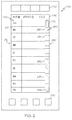
- FIG. 2 is a display 200 generated on the display device 130 by the system 100 of FIG. 1 in accordance with an exemplary embodiment.
- the display 200 includes a first area (or display area) 210 that includes information relating to navigation and control of the aircraft.
- the first area 210 is displaying the flight plan in the form of a list 220 with a chronological sequence of waypoints 222. Characteristics of the waypoints 222 and display of the list 220 will be discussed in greater detail below.
- the current screen page in the first area 210 can be changed or manipulated by pressing one or more mode or function keys 230.
- various functions may be enabled, e.g., entering flight plan data, performance data, and navigation data, as well as initiating functions such as printing the flight plan and aligning the inertial reference system.
- the display 200 may further include a multifunction keyboard and scratchpad area.
- the information displayed for each waypoint 222 generally includes the name or identifier of the waypoint (e.g., "KSAV"), the location and/or position of the waypoint relative to the aircraft, and other data of interest, such as the weather or temperature at the waypoint.
- KSAV the name or identifier of the waypoint
- the location and/or position of the waypoint relative to the aircraft and other data of interest, such as the weather or temperature at the waypoint.
- other data of interest such as the weather or temperature at the waypoint.
- the identifier for each waypoint 222 is displayed, while the additional information may be provided adjacent to the respective waypoint identifier.
- the first area 210 may only be capable of displaying a portion of the flight plan at a given time due to the length of the list 220.
- the list 220 may include hundreds of waypoints 222. In the view of FIG. 2 , ten (10) waypoints 222 are displayed. These ten waypoints 222, in this view, are the initial ten waypoints of the list 220, while dozens of waypoints are also in the list "below" the displayed waypoints.
- the display 200 further includes a scroll bar 250 generated adjacent the first area 210 that enables the user to navigate through the list 220 as desired.
- the scroll bar 250 includes a long rectangular area, referred to as a scrolling region 260 (also referred to as an elevator shaft or trough).
- the scroll bar 250 further includes a scroll indicator 270 (also referred to as a bar, thumb, puck, wiper, or knob) that may be moved within the scrolling region 260 by the user.
- the position of the scroll indicator 270 corresponds to the position of the list 220 displayed within the first area 210 at a given point in time, e.g., if the indicator 270 is located at the bottom of a vertically-oriented scrolling region 260, the first area 210 displays the lower portion of the list 220. As shown, the initial ten waypoints 222 are displayed, and the scroll indictor 270 is appropriately at the top of the scrolling region 260. Similarly, the height of the indicator 270 relative to the height of the scrolling region 260 is generally proportional to the length of the displayed portion relative to the total length of the list 220, although other configurations may be possible.
- a user may interact with the scroll bar 250 to determine which portion of the list 220 is displayed within the first area 210 at a given time. For example, and again referring to a vertically-oriented scrolling region 260, a user may drag the indicator 270 to a desired location to scroll the displayed portion of the list 220 upward or downward. A user may also adjust the indicator 270, and thus the displayed portion, by selecting or clicking above or below the indicator 270 within the scrolling region 260, using vertical arrows (not shown), and/or various keyboard commands (e.g., keyboard arrows or page up or down keys). As a result, the user may use the scroll bar 250 to navigate the list 220, for example, to find a particular waypoint of interest and/or to review portions of the flight plan, as necessary or desired.
- a user may use the scroll bar 250 to navigate the list 220, for example, to find a particular waypoint of interest and/or to review portions of the flight plan, as necessary or desired.
- the display 200 may further provide information about the one or more waypoints within the scrolling region 260.
- the information may correspond to the waypoint characteristics discussed below.
- the waypoint characteristics may be represented by any type of symbology, including symbols, text, color, or the like.
- waypoint characteristics corresponding to the respective flight plan segments (or phases) are provided in the form of cross-hatched symbology.
- the scrolling region 260 is subdivided into scrolling region portions 280-284, each of which correspond to one of the flight plan segments.
- the scrolling region 260 includes five (5) scrolling region portions 280-284 that correspond to these segments.
- the scrolling region portions 280-284 respectively correspond to a departure/SID segment 280, an enroute segment 281, a STAR/approach segment 282, a missed approach segment 283, and an alternate flight plan segment 284.
- Each of the waypoints 222 in the list 220 is within one of these segments, and thus, fall within one of the scrolling region portions 280-284.
- Adjacent scrolling region portions 280-284 are separated by a horizontal bar, and each portion 280-284 has different cross-hatching to more clearly distinguish the segments.
- the indicator 270 is positioned within region portion 280 corresponding to the departure/SID segment, thereby indicating that the currently displayed waypoints 222 are part of the departure/SID segment.
- the user may reposition the indicator 270 into the scrolling region portion 283.
- the first area 210 will reposition the list 220 to display the waypoints 222 associated with that portion of the scrolling region.
- the scroll bar 250 provides symbology that enables the user to scroll directly to the desired segment.
- the indicator 270 may be partially transparent such that the symbology underneath the indicator 270 may be viewed.
- the first area 210 may include a characteristic menu 240 that defines the type of information to display to the operator.
- the menu 240 may be omitted and the displayed information may be predetermined or preset.
- the characteristic menu 240 has selections for phase, attribute, and estimated time of arrival (ETA), and in the particular scenario of FIG. 2 , the phase characteristic has been selected, as described below.
- ETA estimated time of arrival
- FIG. 3 is a display 300 generated by the display device 130 of the visual display system 110 of FIG. 1 in accordance with another exemplary embodiment. With the exceptions discussed below, the display 300 generally corresponds to the display 200 of FIG. 2 . In FIG. 3 , only a portion of the display 300 is shown, particularly a first area (or display area) 310 and scroll bar 350, although other display features may be provided.
- the first area 310 displays the flight plan in the form of a list 320 with a chronological sequence of waypoints 322.
- the display 300 further includes a characteristic menu 340 that enables the operator to select the type of information to be displayed. In the scenario of FIG. 3 , the phase and attribute characteristics have been selected, as discussed below.
- the display 300 further includes a scroll bar 350 defined by a scrolling region 360 and scroll indicator 370.
- the scrolling region 360 is divided into scrolling region portions 380-384 that correspond to flight plan segments, such as the flight plan segments discussed above in FIG. 2 .
- the display 300 further incudes additional symbology 385-389 that represents one or more additional characteristics about the waypoints 322, e.g., as selected by the operator on the menu 340.
- the display 300 further includes characteristics corresponding to attributes of a particular waypoint 322 within the list 320.
- the symbology 385-389 may be overlaid with the symbology representing flight plan segments in scrolling region portions 380-384.
- symbol 385 represents the position of the active waypoint
- symbol 386 represents the position of a waypoint that is associated with a turn procedure
- symbol 387 represents the position of a waypoint that is associated with an altitude constraint
- symbol 388 represents the position of a waypoint that is associated with a runway
- symbol 389 represents the position of a waypoint that is associated with a holding pattern.
- Any suitable symbology may be used, although as shown in the depicted exemplary embodiment, the symbology may represent the nature of the respective characteristic (e.g., a bent arrow representing a turn and/or an elongated bar representing a runway).
- the scroll bar 350 provides symbology that enables the user to scroll directly to the waypoint of interest.
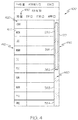
- FIG. 4 is a display 400 generated by the display device 130 of the visual display system 110 of FIG. 1 in accordance with another exemplary embodiment.
- the display 400 generally corresponds to the display 200 of FIG. 2 .
- FIG. 4 only a portion of the display 400 is shown, particularly a first area (or display area) 410 and scroll bar 450, although other display features may be provided.
- the first area 410 displays the flight plan in the form of a list 420 with a chronological sequence of waypoints 422.
- the display 400 further includes a scroll bar 450 defined by a scrolling region 460 and scroll indicator 470.
- interface symbology or menu 480 is provided for filtering the waypoints 422 within the list based on a particular characteristic.
- the menu 480 may include selection boxes for activating or deactivating the display of waypoints according to a particular characteristic.
- the interface symbology 480 corresponds to different flight segments, including a SID segment, an enroute (ENR) segment, a STAR segment, and an approach (APPR) segment. The user may select or deselect one or more of these boxes within the symbology 480 to display or "hide" the associated segments.
- the SID segment of the interface symbology 480 is selected, and as a result, only the waypoints 422 associated with the SID segment are displayed.
- the interface symbology 480 may be combined with one or more the types of symbology 280-284, 385-389 discussed above in FIGS. 2 and 3 .
- the operator is able to view only the selected segment or phase of flight, which enables a more detailed and/or efficient review of the waypoint characteristics.
- an operator may select the filter symbology 480 associated with the approach segment and then more readily view the designated symbology corresponding to the holding pattern that may be displayed for respective waypoint on the scroll bar 450.
- FIG. 5 is a display 500 generated by the display device 130 of the visual display system 110 of FIG. 1 in accordance with another exemplary embodiment.
- the display 500 generally corresponds to the display 200 of FIG. 2 .
- FIG. 5 only a portion of the display 500 is shown, particularly a first area (or display area) 510 and scroll bar 550, although other display features may be provided.
- the first area 510 displays the flight plan in the form of a list 520 with a chronological sequence of waypoints 522.
- the display 500 further includes a scroll bar 550 defined by a scrolling region 560 and scroll indicator 570.
- the display 500 further includes a characteristic menu 540 that enables the operator to select the type of information to be displayed.
- the phase and estimated time of arrival (ETA) characteristics have been selected, as discussed below.
- the phase characteristics of the waypoints 522 correspond to those discussed above in reference to FIG. 2 .
- additional information associated with the waypoints 522 is provided in the form of timing symbology 580.
- the display 500 may further provide an indication of the estimated (or actual) time of departure 582.
- the timing symbology 580 is arranged within the scrolling region 560 and represents the approximate time of arrival at the respective waypoints.
- the time of arrival may be represented in terms of minutes from the current time or minutes from the estimated time of departure.
- the timing symbology 580 may be in the form of numerical increments, which in the depicted embodiment are 10 minute increments for a total of three increments (e.g., 10 minutes, 20 minutes, and 30 minutes).
- the timing symbology 580 of "10" corresponds to the waypoints 522 within the list 520 that are approximately 10 minutes away, while the "20" and "30" correspond to the waypoints 522 that are approximately 20 and 30 minutes away, respectively.
- 10 minute increments are provided to avoid clutter and provide clarity for the timing symbology 580 within the scrolling region 560.
- the increments or timing resolution may be a function of the remaining duration.
- the increments may be greater, while the increments may become finer as the duration shortens, such as occurs when flying the flight plan.
- a user may navigate directly to a waypoint or group of waypoints at a desired duration.
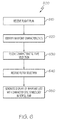
- FIG. 6 is a flowchart of a method 600 for generating and displaying an enhanced waypoint list.
- the method 600 may be implemented with the system 100 discussed above, and as such, FIG. 1 is referenced below in the discussion of FIG. 6 .
- the system 100 receives and/or generates a flight plan that includes a sequential list of waypoints.
- the system 100 may identify one or more types of characteristics associated with the waypoints, e.g., as determined by the flight management system 150 and/or stored in one of the data sources 160, 162, 164.
- step 630 the system 100 receives a user selection that identifies the type of characteristic for display; and in step 640, the system 100 receives a user selection that identifies a display filter.
- the user selections of steps 630, 640 may be provided via the user interface 140. In some embodiments, the user selections of one or both of steps 630, 640 may be omitted and/or predetermined.
- step 650 the display system 110 of the system 100 generates a display of the waypoint list, such as those discussed above in FIGS. 2-5 , in accordance wiith the user selections.
- the display generated in step 650 may include symbology representing the waypoint characteristics within the scroll bar region of the display.
- exemplary embodiments enable more efficient navigation within a flight plan on a display device, such as a textual list of waypoints on the MCDU. This permits the user to focus on the task of appropriately operating the aircraft instead of focusing on scrolling through the flight plan pages of the MCDU. As such, exemplary embodiments decrease flight crew heads-down time, ease pilot workload, and improve the efficiency with which pilots operate their aircraft. Exemplary embodiments expedite processing of flight plan information, reduce the amount of required user interaction, and efficiently display information about a desired waypoint or other flight plan element. It should be noted that the exemplary embodiments of FIGS. 2-5 are merely representative implementations and other implementations and/or symbology (including colors, fading, transparency, and the like) are possible
Landscapes
- Engineering & Computer Science (AREA)
- General Engineering & Computer Science (AREA)
- Theoretical Computer Science (AREA)
- Physics & Mathematics (AREA)
- General Physics & Mathematics (AREA)
- Aviation & Aerospace Engineering (AREA)
- Human Computer Interaction (AREA)
- Navigation (AREA)
- Traffic Control Systems (AREA)
Applications Claiming Priority (1)
| Application Number | Priority Date | Filing Date | Title |
|---|---|---|---|
| US14/853,554 US20170075556A1 (en) | 2015-09-14 | 2015-09-14 | Aircraft systems and methods for enhanced waypoint list display |
Publications (2)
| Publication Number | Publication Date |
|---|---|
| EP3142093A1 true EP3142093A1 (fr) | 2017-03-15 |
| EP3142093B1 EP3142093B1 (fr) | 2021-06-23 |
Family
ID=56939878
Family Applications (1)
| Application Number | Title | Priority Date | Filing Date |
|---|---|---|---|
| EP16188218.8A Active EP3142093B1 (fr) | 2015-09-14 | 2016-09-09 | Systèmes d'aéronef et procédés d'affichage de liste de point de cheminement améliorée |
Country Status (3)
| Country | Link |
|---|---|
| US (1) | US20170075556A1 (fr) |
| EP (1) | EP3142093B1 (fr) |
| CN (1) | CN106516133B (fr) |
Cited By (3)
| Publication number | Priority date | Publication date | Assignee | Title |
|---|---|---|---|---|
| CN108521788A (zh) * | 2017-11-07 | 2018-09-11 | 深圳市大疆创新科技有限公司 | 生成模拟航线的方法、模拟飞行的方法、设备及存储介质 |
| EP3667646A1 (fr) * | 2018-12-11 | 2020-06-17 | Honeywell International Inc. | Procédé et système pour signaler des rappels de tâches d'aéronef |
| EP4050587A1 (fr) * | 2021-02-25 | 2022-08-31 | Rockwell Collins, Inc. | Affichage de chronologie de gestion de vols et de tâches avec mise à l'échelle de temps absolu et relatif |
Families Citing this family (10)
| Publication number | Priority date | Publication date | Assignee | Title |
|---|---|---|---|---|
| US10311738B2 (en) * | 2017-05-08 | 2019-06-04 | Honeywell International Inc. | Display system and method for indicating a time-based requirement |
| CN107180108A (zh) * | 2017-06-12 | 2017-09-19 | 北京工业大学 | 一种机务飞行保障管理系统 |
| CN109658683B (zh) * | 2017-10-12 | 2022-06-10 | 北京嘀嘀无限科技发展有限公司 | 交通服务类型选择方法及装置 |
| US10876856B2 (en) * | 2018-01-10 | 2020-12-29 | Gulfstream Aerospace Corporation | Aircraft HUD with curved tapes and flight mode annunciation boxes |
| US10580308B2 (en) * | 2018-05-01 | 2020-03-03 | Honeywell International Inc. | Connected instrument procedure placekeeping system |
| FR3082304B1 (fr) * | 2018-06-12 | 2020-06-05 | Thales | Procede et dispositif electronique de gestion de l'affichage d'un plan de vol d'un aeronef, programme d'ordinateur et systeme electronique d'affichage associes |
| US11347463B2 (en) * | 2018-10-31 | 2022-05-31 | Honeywell International Inc. | Correlative display system with decluttered displays for aircraft |
| EP3862942A1 (fr) * | 2020-02-05 | 2021-08-11 | Thales | Dispositif électronique permettant de générer un rapport post-vol et procédé associé |
| US11530922B2 (en) * | 2020-02-20 | 2022-12-20 | Gulfstream Aerospace Corporation | Advanced flight guidance panel with display of future waypoints and constraints |
| US11940280B2 (en) * | 2020-12-09 | 2024-03-26 | Furuno Electric Co., Ltd. | Apparatus and method for navigation route planning |
Citations (1)
| Publication number | Priority date | Publication date | Assignee | Title |
|---|---|---|---|---|
| US8050860B2 (en) * | 2006-07-31 | 2011-11-01 | Airbus Operations Sas | Method and device for displaying a flight plan of an aircraft |
Family Cites Families (12)
| Publication number | Priority date | Publication date | Assignee | Title |
|---|---|---|---|---|
| JP2516287B2 (ja) * | 1990-05-31 | 1996-07-24 | インターナショナル・ビジネス・マシーンズ・コーポレイション | デ―タ表示方法及び装置 |
| US6154151A (en) * | 1998-06-16 | 2000-11-28 | Rockwell Collins, Inc. | Integrated vertical situation display for aircraft |
| US7765061B1 (en) * | 2006-05-18 | 2010-07-27 | Rockwell Collins, Inc. | Flight display system with enhanced temporal depiction of navigation information |
| US20100131886A1 (en) * | 2008-11-26 | 2010-05-27 | Honeywell International Inc. | Display system and method for generating enhanced scrollbar |
| US20110118908A1 (en) * | 2009-11-18 | 2011-05-19 | The Boeing Company | Methods and systems for management of airplane speed profile |
| US8977982B1 (en) * | 2010-05-28 | 2015-03-10 | A9.Com, Inc. | Techniques for navigating information |
| US9032319B1 (en) * | 2011-03-24 | 2015-05-12 | The Boeing Company | Methods, systems, and apparatus for handling of flight deck data |
| FR2973526B1 (fr) * | 2011-03-29 | 2013-04-26 | Airbus Operations Sas | Procede et dispositif de gestion automatique du profil vertical d'un plan de vol d'un aeronef. |
| US20140018980A1 (en) * | 2012-07-12 | 2014-01-16 | General Electric Company | Systems and methods for flight management |
| US9665263B2 (en) * | 2014-04-08 | 2017-05-30 | Citrix Systems, Inc. | Snap navigation of a scrollable list |
| US9459120B2 (en) * | 2014-05-19 | 2016-10-04 | Gulfstream Aerospace Corporation | Methods and systems for displaying flight information |
| FR3039643B1 (fr) * | 2015-07-31 | 2018-07-13 | Thales | Interface homme-machine pour la gestion du vol d'un aeronef |
-
2015
- 2015-09-14 US US14/853,554 patent/US20170075556A1/en not_active Abandoned
-
2016
- 2016-09-09 EP EP16188218.8A patent/EP3142093B1/fr active Active
- 2016-09-13 CN CN201610819857.5A patent/CN106516133B/zh active Active
Patent Citations (1)
| Publication number | Priority date | Publication date | Assignee | Title |
|---|---|---|---|---|
| US8050860B2 (en) * | 2006-07-31 | 2011-11-01 | Airbus Operations Sas | Method and device for displaying a flight plan of an aircraft |
Non-Patent Citations (1)
| Title |
|---|
| CHRIS NORSTROM: "Scrollbar of Contents", 4 May 2011 (2011-05-04), XP002766658, Retrieved from the Internet <URL:https://chrisnorstrom.com/2011/04/creation-scrollbar-of-contents-ui/> [retrieved on 20170202] * |
Cited By (4)
| Publication number | Priority date | Publication date | Assignee | Title |
|---|---|---|---|---|
| CN108521788A (zh) * | 2017-11-07 | 2018-09-11 | 深圳市大疆创新科技有限公司 | 生成模拟航线的方法、模拟飞行的方法、设备及存储介质 |
| EP3667646A1 (fr) * | 2018-12-11 | 2020-06-17 | Honeywell International Inc. | Procédé et système pour signaler des rappels de tâches d'aéronef |
| US10861341B2 (en) | 2018-12-11 | 2020-12-08 | Honeywell International Inc. | Method and system for prompting aircraft task reminders |
| EP4050587A1 (fr) * | 2021-02-25 | 2022-08-31 | Rockwell Collins, Inc. | Affichage de chronologie de gestion de vols et de tâches avec mise à l'échelle de temps absolu et relatif |
Also Published As
| Publication number | Publication date |
|---|---|
| CN106516133B (zh) | 2022-04-15 |
| US20170075556A1 (en) | 2017-03-16 |
| EP3142093B1 (fr) | 2021-06-23 |
| CN106516133A (zh) | 2017-03-22 |
Similar Documents
| Publication | Publication Date | Title |
|---|---|---|
| EP3142093B1 (fr) | Systèmes d'aéronef et procédés d'affichage de liste de point de cheminement améliorée | |
| CN104859862B (zh) | 用于整理飞机显示器的以飞行员为中心的系统和方法 | |
| EP2244240B1 (fr) | Procédés et systèmes pour afficher un profilé vertical pour une procédure d'avion avec une mise à l'échelle non uniforme | |
| US8756012B2 (en) | System and method for displaying performance based range and time scales on a navigation display | |
| US8099201B1 (en) | Vertical profile display with enhanced temporal depiction of navigation information | |
| US9702726B2 (en) | Enhanced instrument procedure visualization | |
| US20100106346A1 (en) | Method and system for managing flight plan data | |
| US20100148990A1 (en) | System and method for selectively displaying terminal procedure data | |
| EP2199747A2 (fr) | Procédés pour l'affichage d'informations de procédures d'avions | |
| WO2002025213A2 (fr) | Systeme destine a selectionner et afficher des procedures de navigation d'un systeme de gestion de vol | |
| US7961116B2 (en) | Apparatus and method of displaying an aircraft's position | |
| EP1959239A1 (fr) | Système et procédé d'affichage de zone cible | |
| EP3657131B1 (fr) | Système et procédé de présentation de liste de point de cheminement | |
| EP3023741B1 (fr) | Système et procédé d'affichage exocentrique de navigation intégrée | |
| EP2940674A1 (fr) | Système et procédé pour afficher des notes sensibles au contexte | |
| US20140222327A1 (en) | System and method for displaying terrain altitudes on an aircraft display | |
| US9448702B2 (en) | Methods and systems for selecting a displayed aircraft approach or departure | |
| US20250095497A1 (en) | Interactive visualization of predicted information along active flight path on navigation displays |
Legal Events
| Date | Code | Title | Description |
|---|---|---|---|
| PUAI | Public reference made under article 153(3) epc to a published international application that has entered the european phase |
Free format text: ORIGINAL CODE: 0009012 |
|
| STAA | Information on the status of an ep patent application or granted ep patent |
Free format text: STATUS: REQUEST FOR EXAMINATION WAS MADE |
|
| 17P | Request for examination filed |
Effective date: 20160909 |
|
| AK | Designated contracting states |
Kind code of ref document: A1 Designated state(s): AL AT BE BG CH CY CZ DE DK EE ES FI FR GB GR HR HU IE IS IT LI LT LU LV MC MK MT NL NO PL PT RO RS SE SI SK SM TR |
|
| AX | Request for extension of the european patent |
Extension state: BA ME |
|
| STAA | Information on the status of an ep patent application or granted ep patent |
Free format text: STATUS: EXAMINATION IS IN PROGRESS |
|
| 17Q | First examination report despatched |
Effective date: 20181206 |
|
| RAP1 | Party data changed (applicant data changed or rights of an application transferred) |
Owner name: HONEYWELL INTERNATIONAL INC. |
|
| GRAP | Despatch of communication of intention to grant a patent |
Free format text: ORIGINAL CODE: EPIDOSNIGR1 |
|
| STAA | Information on the status of an ep patent application or granted ep patent |
Free format text: STATUS: GRANT OF PATENT IS INTENDED |
|
| INTG | Intention to grant announced |
Effective date: 20210222 |
|
| RIN1 | Information on inventor provided before grant (corrected) |
Inventor name: KULKARNI, KAPIL VASANTRAO |
|
| GRAS | Grant fee paid |
Free format text: ORIGINAL CODE: EPIDOSNIGR3 |
|
| GRAA | (expected) grant |
Free format text: ORIGINAL CODE: 0009210 |
|
| STAA | Information on the status of an ep patent application or granted ep patent |
Free format text: STATUS: THE PATENT HAS BEEN GRANTED |
|
| AK | Designated contracting states |
Kind code of ref document: B1 Designated state(s): AL AT BE BG CH CY CZ DE DK EE ES FI FR GB GR HR HU IE IS IT LI LT LU LV MC MK MT NL NO PL PT RO RS SE SI SK SM TR |
|
| REG | Reference to a national code |
Ref country code: GB Ref legal event code: FG4D |
|
| REG | Reference to a national code |
Ref country code: CH Ref legal event code: EP |
|
| REG | Reference to a national code |
Ref country code: DE Ref legal event code: R096 Ref document number: 602016059596 Country of ref document: DE Ref country code: AT Ref legal event code: REF Ref document number: 1404982 Country of ref document: AT Kind code of ref document: T Effective date: 20210715 |
|
| REG | Reference to a national code |
Ref country code: IE Ref legal event code: FG4D |
|
| REG | Reference to a national code |
Ref country code: LT Ref legal event code: MG9D |
|
| PG25 | Lapsed in a contracting state [announced via postgrant information from national office to epo] |
Ref country code: FI Free format text: LAPSE BECAUSE OF FAILURE TO SUBMIT A TRANSLATION OF THE DESCRIPTION OR TO PAY THE FEE WITHIN THE PRESCRIBED TIME-LIMIT Effective date: 20210623 Ref country code: LT Free format text: LAPSE BECAUSE OF FAILURE TO SUBMIT A TRANSLATION OF THE DESCRIPTION OR TO PAY THE FEE WITHIN THE PRESCRIBED TIME-LIMIT Effective date: 20210623 Ref country code: HR Free format text: LAPSE BECAUSE OF FAILURE TO SUBMIT A TRANSLATION OF THE DESCRIPTION OR TO PAY THE FEE WITHIN THE PRESCRIBED TIME-LIMIT Effective date: 20210623 Ref country code: BG Free format text: LAPSE BECAUSE OF FAILURE TO SUBMIT A TRANSLATION OF THE DESCRIPTION OR TO PAY THE FEE WITHIN THE PRESCRIBED TIME-LIMIT Effective date: 20210923 |
|
| REG | Reference to a national code |
Ref country code: AT Ref legal event code: MK05 Ref document number: 1404982 Country of ref document: AT Kind code of ref document: T Effective date: 20210623 |
|
| PG25 | Lapsed in a contracting state [announced via postgrant information from national office to epo] |
Ref country code: NO Free format text: LAPSE BECAUSE OF FAILURE TO SUBMIT A TRANSLATION OF THE DESCRIPTION OR TO PAY THE FEE WITHIN THE PRESCRIBED TIME-LIMIT Effective date: 20210923 Ref country code: RS Free format text: LAPSE BECAUSE OF FAILURE TO SUBMIT A TRANSLATION OF THE DESCRIPTION OR TO PAY THE FEE WITHIN THE PRESCRIBED TIME-LIMIT Effective date: 20210623 Ref country code: SE Free format text: LAPSE BECAUSE OF FAILURE TO SUBMIT A TRANSLATION OF THE DESCRIPTION OR TO PAY THE FEE WITHIN THE PRESCRIBED TIME-LIMIT Effective date: 20210623 Ref country code: LV Free format text: LAPSE BECAUSE OF FAILURE TO SUBMIT A TRANSLATION OF THE DESCRIPTION OR TO PAY THE FEE WITHIN THE PRESCRIBED TIME-LIMIT Effective date: 20210623 Ref country code: GR Free format text: LAPSE BECAUSE OF FAILURE TO SUBMIT A TRANSLATION OF THE DESCRIPTION OR TO PAY THE FEE WITHIN THE PRESCRIBED TIME-LIMIT Effective date: 20210924 |
|
| PGFP | Annual fee paid to national office [announced via postgrant information from national office to epo] |
Ref country code: GB Payment date: 20210927 Year of fee payment: 6 |
|
| REG | Reference to a national code |
Ref country code: NL Ref legal event code: MP Effective date: 20210623 |
|
| PG25 | Lapsed in a contracting state [announced via postgrant information from national office to epo] |
Ref country code: EE Free format text: LAPSE BECAUSE OF FAILURE TO SUBMIT A TRANSLATION OF THE DESCRIPTION OR TO PAY THE FEE WITHIN THE PRESCRIBED TIME-LIMIT Effective date: 20210623 Ref country code: CZ Free format text: LAPSE BECAUSE OF FAILURE TO SUBMIT A TRANSLATION OF THE DESCRIPTION OR TO PAY THE FEE WITHIN THE PRESCRIBED TIME-LIMIT Effective date: 20210623 Ref country code: SM Free format text: LAPSE BECAUSE OF FAILURE TO SUBMIT A TRANSLATION OF THE DESCRIPTION OR TO PAY THE FEE WITHIN THE PRESCRIBED TIME-LIMIT Effective date: 20210623 Ref country code: SK Free format text: LAPSE BECAUSE OF FAILURE TO SUBMIT A TRANSLATION OF THE DESCRIPTION OR TO PAY THE FEE WITHIN THE PRESCRIBED TIME-LIMIT Effective date: 20210623 Ref country code: ES Free format text: LAPSE BECAUSE OF FAILURE TO SUBMIT A TRANSLATION OF THE DESCRIPTION OR TO PAY THE FEE WITHIN THE PRESCRIBED TIME-LIMIT Effective date: 20210623 Ref country code: PT Free format text: LAPSE BECAUSE OF FAILURE TO SUBMIT A TRANSLATION OF THE DESCRIPTION OR TO PAY THE FEE WITHIN THE PRESCRIBED TIME-LIMIT Effective date: 20211025 Ref country code: NL Free format text: LAPSE BECAUSE OF FAILURE TO SUBMIT A TRANSLATION OF THE DESCRIPTION OR TO PAY THE FEE WITHIN THE PRESCRIBED TIME-LIMIT Effective date: 20210623 Ref country code: RO Free format text: LAPSE BECAUSE OF FAILURE TO SUBMIT A TRANSLATION OF THE DESCRIPTION OR TO PAY THE FEE WITHIN THE PRESCRIBED TIME-LIMIT Effective date: 20210623 Ref country code: AT Free format text: LAPSE BECAUSE OF FAILURE TO SUBMIT A TRANSLATION OF THE DESCRIPTION OR TO PAY THE FEE WITHIN THE PRESCRIBED TIME-LIMIT Effective date: 20210623 |
|
| PG25 | Lapsed in a contracting state [announced via postgrant information from national office to epo] |
Ref country code: PL Free format text: LAPSE BECAUSE OF FAILURE TO SUBMIT A TRANSLATION OF THE DESCRIPTION OR TO PAY THE FEE WITHIN THE PRESCRIBED TIME-LIMIT Effective date: 20210623 |
|
| REG | Reference to a national code |
Ref country code: DE Ref legal event code: R097 Ref document number: 602016059596 Country of ref document: DE |
|
| PG25 | Lapsed in a contracting state [announced via postgrant information from national office to epo] |
Ref country code: DK Free format text: LAPSE BECAUSE OF FAILURE TO SUBMIT A TRANSLATION OF THE DESCRIPTION OR TO PAY THE FEE WITHIN THE PRESCRIBED TIME-LIMIT Effective date: 20210623 |
|
| PLBE | No opposition filed within time limit |
Free format text: ORIGINAL CODE: 0009261 |
|
| STAA | Information on the status of an ep patent application or granted ep patent |
Free format text: STATUS: NO OPPOSITION FILED WITHIN TIME LIMIT |
|
| REG | Reference to a national code |
Ref country code: CH Ref legal event code: PL |
|
| REG | Reference to a national code |
Ref country code: BE Ref legal event code: MM Effective date: 20210930 |
|
| 26N | No opposition filed |
Effective date: 20220324 |
|
| PG25 | Lapsed in a contracting state [announced via postgrant information from national office to epo] |
Ref country code: MC Free format text: LAPSE BECAUSE OF FAILURE TO SUBMIT A TRANSLATION OF THE DESCRIPTION OR TO PAY THE FEE WITHIN THE PRESCRIBED TIME-LIMIT Effective date: 20210623 Ref country code: AL Free format text: LAPSE BECAUSE OF FAILURE TO SUBMIT A TRANSLATION OF THE DESCRIPTION OR TO PAY THE FEE WITHIN THE PRESCRIBED TIME-LIMIT Effective date: 20210623 |
|
| PG25 | Lapsed in a contracting state [announced via postgrant information from national office to epo] |
Ref country code: LU Free format text: LAPSE BECAUSE OF NON-PAYMENT OF DUE FEES Effective date: 20210909 Ref country code: IT Free format text: LAPSE BECAUSE OF FAILURE TO SUBMIT A TRANSLATION OF THE DESCRIPTION OR TO PAY THE FEE WITHIN THE PRESCRIBED TIME-LIMIT Effective date: 20210623 Ref country code: IE Free format text: LAPSE BECAUSE OF NON-PAYMENT OF DUE FEES Effective date: 20210909 Ref country code: BE Free format text: LAPSE BECAUSE OF NON-PAYMENT OF DUE FEES Effective date: 20210930 |
|
| PG25 | Lapsed in a contracting state [announced via postgrant information from national office to epo] |
Ref country code: LI Free format text: LAPSE BECAUSE OF NON-PAYMENT OF DUE FEES Effective date: 20210930 Ref country code: CH Free format text: LAPSE BECAUSE OF NON-PAYMENT OF DUE FEES Effective date: 20210930 |
|
| GBPC | Gb: european patent ceased through non-payment of renewal fee |
Effective date: 20220909 |
|
| PG25 | Lapsed in a contracting state [announced via postgrant information from national office to epo] |
Ref country code: HU Free format text: LAPSE BECAUSE OF FAILURE TO SUBMIT A TRANSLATION OF THE DESCRIPTION OR TO PAY THE FEE WITHIN THE PRESCRIBED TIME-LIMIT; INVALID AB INITIO Effective date: 20160909 |
|
| PG25 | Lapsed in a contracting state [announced via postgrant information from national office to epo] |
Ref country code: CY Free format text: LAPSE BECAUSE OF FAILURE TO SUBMIT A TRANSLATION OF THE DESCRIPTION OR TO PAY THE FEE WITHIN THE PRESCRIBED TIME-LIMIT Effective date: 20210623 |
|
| P01 | Opt-out of the competence of the unified patent court (upc) registered |
Effective date: 20230525 |
|
| PG25 | Lapsed in a contracting state [announced via postgrant information from national office to epo] |
Ref country code: GB Free format text: LAPSE BECAUSE OF NON-PAYMENT OF DUE FEES Effective date: 20220909 |
|
| PG25 | Lapsed in a contracting state [announced via postgrant information from national office to epo] |
Ref country code: MK Free format text: LAPSE BECAUSE OF FAILURE TO SUBMIT A TRANSLATION OF THE DESCRIPTION OR TO PAY THE FEE WITHIN THE PRESCRIBED TIME-LIMIT Effective date: 20210623 |
|
| PG25 | Lapsed in a contracting state [announced via postgrant information from national office to epo] |
Ref country code: MT Free format text: LAPSE BECAUSE OF FAILURE TO SUBMIT A TRANSLATION OF THE DESCRIPTION OR TO PAY THE FEE WITHIN THE PRESCRIBED TIME-LIMIT Effective date: 20210623 |
|
| PGFP | Annual fee paid to national office [announced via postgrant information from national office to epo] |
Ref country code: DE Payment date: 20250926 Year of fee payment: 10 |
|
| PGFP | Annual fee paid to national office [announced via postgrant information from national office to epo] |
Ref country code: FR Payment date: 20250925 Year of fee payment: 10 |
|
| PG25 | Lapsed in a contracting state [announced via postgrant information from national office to epo] |
Ref country code: TR Free format text: LAPSE BECAUSE OF FAILURE TO SUBMIT A TRANSLATION OF THE DESCRIPTION OR TO PAY THE FEE WITHIN THE PRESCRIBED TIME-LIMIT Effective date: 20210623 |