EP3142189A1 - Procédé d'ajustement d'antenne fondé sur un condensateur variable, et appareil correspondant - Google Patents
Procédé d'ajustement d'antenne fondé sur un condensateur variable, et appareil correspondant Download PDFInfo
- Publication number
- EP3142189A1 EP3142189A1 EP14895204.7A EP14895204A EP3142189A1 EP 3142189 A1 EP3142189 A1 EP 3142189A1 EP 14895204 A EP14895204 A EP 14895204A EP 3142189 A1 EP3142189 A1 EP 3142189A1
- Authority
- EP
- European Patent Office
- Prior art keywords
- capacitance value
- signal strength
- variable capacitor
- threshold
- antenna
- Prior art date
- Legal status (The legal status is an assumption and is not a legal conclusion. Google has not performed a legal analysis and makes no representation as to the accuracy of the status listed.)
- Granted
Links
Images



Classifications
-
- H—ELECTRICITY
- H01—ELECTRIC ELEMENTS
- H01Q—ANTENNAS, i.e. RADIO AERIALS
- H01Q5/00—Arrangements for simultaneous operation of antennas on two or more different wavebands, e.g. dual-band or multi-band arrangements
- H01Q5/20—Arrangements for simultaneous operation of antennas on two or more different wavebands, e.g. dual-band or multi-band arrangements characterised by the operating wavebands
-
- H—ELECTRICITY
- H01—ELECTRIC ELEMENTS
- H01Q—ANTENNAS, i.e. RADIO AERIALS
- H01Q3/00—Arrangements for changing or varying the orientation or the shape of the directional pattern of the waves radiated from an antenna or antenna system
- H01Q3/22—Arrangements for changing or varying the orientation or the shape of the directional pattern of the waves radiated from an antenna or antenna system varying the orientation in accordance with variation of frequency of radiated wave
-
- H—ELECTRICITY
- H04—ELECTRIC COMMUNICATION TECHNIQUE
- H04B—TRANSMISSION
- H04B1/00—Details of transmission systems, not covered by a single one of groups H04B3/00 - H04B13/00; Details of transmission systems not characterised by the medium used for transmission
- H04B1/06—Receivers
- H04B1/16—Circuits
- H04B1/18—Input circuits, e.g. for coupling to an antenna or a transmission line
-
- H—ELECTRICITY
- H01—ELECTRIC ELEMENTS
- H01Q—ANTENNAS, i.e. RADIO AERIALS
- H01Q1/00—Details of, or arrangements associated with, antennas
- H01Q1/12—Supports; Mounting means
- H01Q1/22—Supports; Mounting means by structural association with other equipment or articles
- H01Q1/24—Supports; Mounting means by structural association with other equipment or articles with receiving set
- H01Q1/241—Supports; Mounting means by structural association with other equipment or articles with receiving set used in mobile communications, e.g. GSM
- H01Q1/242—Supports; Mounting means by structural association with other equipment or articles with receiving set used in mobile communications, e.g. GSM specially adapted for hand-held use
- H01Q1/243—Supports; Mounting means by structural association with other equipment or articles with receiving set used in mobile communications, e.g. GSM specially adapted for hand-held use with built-in antennas
-
- H—ELECTRICITY
- H01—ELECTRIC ELEMENTS
- H01Q—ANTENNAS, i.e. RADIO AERIALS
- H01Q5/00—Arrangements for simultaneous operation of antennas on two or more different wavebands, e.g. dual-band or multi-band arrangements
- H01Q5/20—Arrangements for simultaneous operation of antennas on two or more different wavebands, e.g. dual-band or multi-band arrangements characterised by the operating wavebands
- H01Q5/25—Ultra-wideband [UWB] systems, e.g. multiple resonance systems; Pulse systems
-
- H—ELECTRICITY
- H01—ELECTRIC ELEMENTS
- H01Q—ANTENNAS, i.e. RADIO AERIALS
- H01Q5/00—Arrangements for simultaneous operation of antennas on two or more different wavebands, e.g. dual-band or multi-band arrangements
- H01Q5/30—Arrangements for providing operation on different wavebands
- H01Q5/307—Individual or coupled radiating elements, each element being fed in an unspecified way
- H01Q5/314—Individual or coupled radiating elements, each element being fed in an unspecified way using frequency dependent circuits or components, e.g. trap circuits or capacitors
- H01Q5/321—Individual or coupled radiating elements, each element being fed in an unspecified way using frequency dependent circuits or components, e.g. trap circuits or capacitors within a radiating element or between connected radiating elements
-
- H—ELECTRICITY
- H04—ELECTRIC COMMUNICATION TECHNIQUE
- H04W—WIRELESS COMMUNICATION NETWORKS
- H04W72/00—Local resource management
- H04W72/04—Wireless resource allocation
- H04W72/044—Wireless resource allocation based on the type of the allocated resource
- H04W72/0453—Resources in frequency domain, e.g. a carrier in FDMA
-
- H—ELECTRICITY
- H04—ELECTRIC COMMUNICATION TECHNIQUE
- H04W—WIRELESS COMMUNICATION NETWORKS
- H04W76/00—Connection management
- H04W76/10—Connection setup
- H04W76/15—Setup of multiple wireless link connections
- H04W76/16—Involving different core network technologies, e.g. a packet-switched [PS] bearer in combination with a circuit-switched [CS] bearer
Definitions
- This application relates to the field of communications technologies, and in particular, to a variable capacitor-based antenna adjustment method and a related apparatus.
- GSM Global System for Mobile Communications
- TDMA Time Division Multiple Access
- CDMA Code Division Multiple Access
- LTE Long Term Evolution
- a variable capacitor is generally disposed in the antenna of the mobile terminal, where different capacitance values of the variable capacitor correspond to different working frequency bands of the antenna; and the working frequency band of the antenna can be adjusted by adjusting the capacitance value of the variable capacitor, so as to expand the working frequency band of the antenna, so that the variable capacitor is applicable to different communications systems and ensures communication quality.
- An existing adjustment method of an antenna having a variable capacitor is generally: setting a priority of a communications system of multiple communications systems supported by the antenna to a highest priority, determining a capacitance value corresponding to a working frequency band of the communications system with the highest priority, and adjusting a capacitance value of the variable capacitor in the antenna to the determined capacitance value, that is, adjusting a working frequency band of the antenna according to the working frequency band of the communications system with the highest priority.
- a capacitance value of a variable capacitor is adjusted to a capacitance value corresponding to a working frequency band of the GSM system. For example, when the working frequency band of the GSM system is GSM 850 MHz, the capacitance value is adjusted to a capacitance value corresponding to GSM 850 MHz regardless of a working frequency band of an LTE system, so as to ensure that communication quality of the GSM system implementing a voice service is the best, but communication quality of the LTE system implementing a data service is very poor.
- the adjustment method can only ensure communication quality of a system with a highest priority but cannot give consideration to communication quality of another system with a low priority that is supported by the antenna. Therefore, the adjustment method cannot be applicable to a scenario in which there is a particular requirement on the communication quality of the system with a low priority.
- Embodiments of this application provide a variable capacitor-based antenna adjustment method and a related apparatus, so as to resolve a problem that a common antenna adjustment method cannot give consideration to communication quality of multiple systems supported by an antenna and has limited application scenarios.
- the antenna adjustment method further includes: when the first signal strength does not meet the first release condition, adjusting the capacitance value of the variable capacitor to the first capacitance value.
- the antenna adjustment method further includes: when the first signal strength does not meet the first release condition, determining whether the first signal strength meets a first recycling condition; and when the first signal strength meets the first recycling condition, adjusting the capacitance value of the variable capacitor to the first capacitance value, where the first recycling condition includes: the first signal strength is less than a first recycling threshold, or the first signal strength is not greater than the first recycling threshold; and the first recycling threshold is less than the first threshold.
- the adjusting a capacitance value of the variable capacitor to a preset capacitance value includes: determining whether the first signal strength meets a second release condition; and when the first signal strength meets the second release condition, adjusting the capacitance value of the variable capacitor to the second capacitance value, where the second release condition includes: the first signal strength is greater than a second threshold, or the first signal strength is not less than the second threshold; and the second threshold is greater than the first threshold.
- the antenna adjustment method further includes:
- a variable capacitor-based antenna adjustment apparatus is provided, and is applied to an antenna having a variable capacitor, where the antenna having the variable capacitor supports at least two communications systems and the antenna adjustment apparatus includes:
- the antenna adjustment apparatus further includes: a second adjustment unit, configured to: when the first signal strength does not meet the first release condition, adjust the capacitance value of the variable capacitor to the first capacitance value.
- the antenna adjustment apparatus further includes: a first recycling determining unit, configured to: when the first signal strength does not meet the first release condition, determine whether the first signal strength meets a first recycling condition; and a third adjustment unit, configured to: when the first signal strength meets the first recycling condition, adjust the capacitance value of the variable capacitor to the first capacitance value, where the first recycling condition includes: the first signal strength is less than a first recycling threshold, or the first signal strength is not greater than the first recycling threshold; and the first recycling threshold is less than the first threshold.
- the first adjustment unit includes: a second release determining unit, configured to determine whether the first signal strength meets a second release condition; and a first adjustment subunit, configured to: when the first signal strength meets the second release condition, adjust the capacitance value of the variable capacitor to the second capacitance value, where the second release condition includes: the first signal strength is greater than a second threshold, or the first signal strength is not less than the second threshold; and the second threshold is greater than the first threshold.
- the first adjustment unit further includes:
- a wireless communications terminal includes an antenna having a variable capacitor and an antenna adjuster, where the antenna having the variable capacitor supports at least two communications systems;
- a first signal strength of a first communications system with a highest priority that is supported by an antenna having a variable capacitor is detected, and when the first signal strength is relatively strong to meet a first release condition, a capacitance value of the variable capacitor is adjusted to a preset capacitance value, where the preset capacitance value is closer to a second capacitance value corresponding to a working frequency band of a second communications system supported by the antenna, so that a working frequency band of the antenna having the variable capacitor is closer to the working frequency band of the second communications system, and therefore, communication quality of the second communications system is improved.
- the antenna adjustment method can not only preferentially meet the communication quality requirement on the first communications system with a relatively high priority, but also can improve, when a signal of the first communications system is very strong, the communication quality of the second communications system with a relatively low priority by adjusting the capacitance value of the variable capacitor, thereby achieving an objective of giving consideration to communication quality of multiple systems supported by the antenna having the variable capacitor.
- Embodiments of this application provide a variable capacitor-based antenna adjustment method and a related apparatus, so as to resolve a problem that a common antenna adjustment method cannot give consideration to communication quality of multiple systems supported by an antenna and has limited application scenarios.
- FIG. 1 is a schematic flowchart of a variable capacitor-based antenna adjustment method according to an embodiment of this application, where the antenna adjustment method is applied to an antenna having a variable capacitor, and the antenna having the variable capacitor supports at least two communications systems.
- an apparatus that performs the antenna adjustment method may be entirely or partially integrated into the antenna, or may be disposed in a wireless communications terminal independent of the antenna.
- variable capacitor-based antenna adjustment method includes the following steps:
- S12 Determine whether the first signal strength meets a first release condition.
- the first release condition may be: the first signal strength is greater than a first threshold, or the first signal strength is not less than the first threshold.
- the preset capacitance value is between the first capacitance value and a second capacitance value, or equal to the second capacitance value.
- the first capacitance value is a capacitance value corresponding to a working frequency band of the first communications system
- the second capacitance value is a capacitance value corresponding to a working frequency band of a second communications system supported by the antenna having the variable capacitor.
- the first communications system has a priority higher than that of the second communications system.
- a working frequency band of the antenna having the variable capacitor may be increased as a capacitance value of the variable capacitor is increased.
- the first capacitance value is less than the second capacitance value
- the preset capacitance value is greater than the first capacitance value
- the preset capacitance value is less than or equal to the second capacitance value.
- the working frequency band of the antenna having the variable capacitor may be decreased as the capacitance value of the variable capacitor is decreased.
- the first capacitance value is greater than the second capacitance value
- the preset capacitance value is less than the first capacitance value
- the preset capacitance value is greater than or equal to the second capacitance value.
- an antenna adjustment period T is set, and the antenna adjustment method is performed once within each antenna adjustment period T, to automatically and circularly perform the antenna adjustment method.
- a smaller T indicates more frequent adjustment of the working frequency band of the antenna, so that communication quality of each communications system can be better ensured.
- the antenna having the variable capacitor may be any one of the following:
- two communications systems supported by the antenna are a GSM 850 system and an LTE B38 system respectively, and it is assumed that the GSM850 system has a priority higher than that of the LTE B38 system, and a first threshold may be set to -85 dBm, that is, as long as a first signal strength of the GSM 850 system reaches -85 dBm, a communication quality requirement on the GSM 850 system can be met; therefore, when the first signal strength of the GSM 850 system is greater than -85 dBm, a capacitance value of a variable capacitor is adjusted to a preset capacitance value, for example, when the first signal strength of the GSM 850 system is -70 dBm, the capacitance value of the variable capacitor may be adjusted to a capacitance value corresponding to a working frequency band of a GSM 1800 system, so that a working frequency band of the antenna is closer to a working frequency band of
- the first signal strength of the GSM 850 system is reduced.
- An actual measurement result shows that, before the adjustment, that is, when the capacitance value of the variable capacitor is a capacitance value corresponding to a working frequency band of the GSM 850 system, the first signal strength is not attenuated, and the second signal strength is attenuated by 2 dB; and after the adjustment, that is, after the capacitance value of the variable capacitor is the capacitance value corresponding to the working frequency band of the GSM 1800 system, the first signal strength is attenuated by 13.5 dB, and the second signal strength is attenuated by only 0.5 dB, that is, after the adjustment, the second signal strength is increased by 1.5 dB, and communication quality of the LTE system is improved, and the first signal strength is attenuated by 13.5 dB and is changed to -83.5 dBm but is still higher than -85 dBm, so that the communications quality requirement on the GSM 850 system can still be met.
- the capacitance value of the variable capacitor is adjusted to the preset capacitance value, and because compared with the first capacitance value, the preset capacitance value is closer to the second capacitance value, after the adjustment, the working frequency band of the antenna having the variable capacitor is closer to the working frequency band of the second communications system, and therefore, a second signal strength of the second communications system is increased and communication quality is improved.
- the antenna adjustment method provided by this embodiment of this application is applied, so that not only the communication quality requirement on the first communications system with a relatively high priority is preferentially met, but also the communication quality of the second communications system with a relatively low priority is improved, when a signal of the first communications system is very strong, by adjusting the capacitance value of the variable capacitor, thereby achieving an objective of giving consideration to communication quality of multiple systems supported by the antenna having the variable capacitor.
- the capacitance value of the variable capacitor is adjusted to the first capacitance value.
- the capacitance value of the variable capacitor is set to the capacitance value corresponding to the working frequency band of the first communications system (that is, the first capacitance value), so that the communication quality requirement on the first communications system with a relatively high priority can be preferentially met.
- the foregoing embodiment can achieve the objective of giving consideration to the communication quality of the multiple systems supported by the antenna having the variable capacitor, and is applicable to a scenario in which a fluctuation of a signal strength is not great.
- an embodiment of this application provides another adjustment method of an antenna having a variable capacitor shown in FIG. 2 .
- the adjustment method of an antenna having a variable capacitor includes the following steps:
- step S22 Determine whether the first signal strength meets a first release condition, and if the first signal strength meets the first release condition, perform step S23; otherwise, perform step S24.
- the first release condition includes: the first signal strength is greater than a first threshold, or the first signal strength is not less than the first threshold.
- step S23 Adjust a capacitance value of the variable capacitor to a preset capacitance value, and go back to step S21.
- the preset capacitance value is between the first capacitance value and a second capacitance value, or equal to the second capacitance value.
- the first capacitance value is a capacitance value corresponding to a working frequency band of the first communications system
- the second capacitance value is a capacitance value corresponding to a working frequency band of a second communications system supported by the antenna having the variable capacitor.
- the first communications system has a priority higher than that of the second communications system.
- a working frequency band of the antenna having the variable capacitor may be increased as a capacitance value of the variable capacitor is increased.
- the first capacitance value is less than the second capacitance value
- the preset capacitance value is greater than the first capacitance value
- the preset capacitance value is less than or equal to the second capacitance value.
- the working frequency band of the antenna having the variable capacitor may be decreased as the capacitance value of the variable capacitor is decreased.
- the first capacitance value is greater than the second capacitance value
- the preset capacitance value is less than the first capacitance value
- the preset capacitance value is greater than or equal to the second capacitance value.
- step S24 Determine whether the first signal strength meets a first recycling condition, and if the first signal strength meets the first recycling condition, perform step S25; otherwise, go back to step S21.
- the first recycling condition includes: the first signal strength is less than a first recycling threshold, or the first signal strength is not greater than the first recycling threshold; and the first recycling threshold is less than the first threshold.
- the first recycling threshold may be set according to a communication quality requirement on the first communications system in an actual scenario, and generally, the first recycling threshold is not less than a minimum signal strength required by the communication quality requirement on the first communications system. For example, according to a communication quality requirement on the first communications system in a particular application scenario, when the first signal strength of the first communications system is less than -100 dBm, communication quality of the first communications system is affected.
- a value of the capacitance value of the variable capacitor must ensure that a signal of the first communications system is not attenuated or is still not less than -100 dBm after attenuation; and the first recycling threshold may be set to -90 dBm.
- the capacitance value is set to the first capacitance value, so that the working frequency band of the antenna is the same as the working frequency band of the first communications system, thereby preventing signal attenuation of the first communications system due to inconsistent working frequency bands of the antenna and the first communications system and ensuring the communication quality of the first communications system.
- step S25 Adjust the capacitance value of the variable capacitor to the first capacitance value, and go back to step S21.
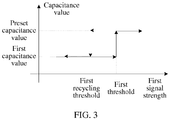
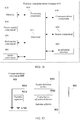
- FIG. 3 shows a variation relationship between the first signal strength and the capacitance value when the working frequency band of the antenna is increased as the capacitance value of the variable capacitor is increased.
- the capacitance value of the variable capacitor is adjusted to the preset capacitance value; when the first signal strength is less than the first recycling threshold (the first recycling condition is met), the capacitance value of the variable capacitor is adjusted to the first capacitance value; and when the first signal strength is between the first recycling threshold and the first threshold, the capacitance value of the variable capacitor remains unchanged and go back to step S21 to re-detect first signal strength, which specifically includes the following two cases: if a detected previous first signal strength is greater than the first threshold, and a corresponding capacitance value of the variable capacitor is the preset capacitance value, when a detected current first signal strength is decreased between the first recycling threshold and the first threshold, the variable capacitor is maintained at the preset capacitance value, and
- a difference between the first recycling threshold and the first threshold may be appropriately increased or decreased, and a smaller difference indicates a higher sensitivity of variation of the capacitance value with a signal strength and greater damage to the variable capacitor.
- the first threshold when a communication quality requirement on the second communications system with a relatively low priority is very low, in a case in which the first recycling threshold is fixed, the first threshold may be increased to try to ensure as far as possible that the signal strength of the first communications system is not attenuated; otherwise, if there is a particular requirement on the communication quality of the second communications system, the first threshold may be appropriately decreased; and when the communication quality requirement on the first communications system is very high, a relatively large first recycling threshold may be set in the case in which the first threshold is fixed.
- a first signal strength of a first communications system with a relatively high priority is detected, whether the first signal strength meets a first release condition and whether the first signal strength meets a first recycling condition are separately determined, and when the first signal strength is increased to meet the first release condition, a capacitance value of a variable capacitor is adjusted to a preset capacitance value, so that the first signal strength is attenuated and a second signal strength of a second communications system with a relatively low priority is increased; therefore, not only a communication quality requirement on the first communications system can be met, but also communication quality of the second communications system can be improved; the capacitance value of the variable capacitor is adjusted to a first capacitance value when and only when the first signal strength is attenuated to meet the first recycling condition, so that the first signal strength is increased to ensure communication quality of the first communications system; and when the first signal strength neither meets the first recycling condition nor meets the first release condition, the capacitance value of the variable capacitor remains unchanged
- This embodiment is applied, so that not only an objective of giving consideration to communication quality of multiple systems supported by an antenna having the variable capacitor is achieved, but also a quantity of times of adjustment of the variable capacitor can be reduced, thereby preventing a "ping-pong effect" of the capacitance value of the variable capacitor and reducing damage to the variable capacitor.
- FIG. 4 is a flowchart of still another variable capacitor-based antenna adjustment method according to an embodiment of this application, where the variable capacitor is disposed on the antenna and is used to adjust a working frequency band of the antenna, and the antenna supports at least two communications systems.
- FIG. 5 is a schematic diagram of a variation relationship between a first signal strength and a capacitance value of the variable capacitor in the antenna adjustment method shown in FIG. 4 when a working frequency band of the antenna is increased as the capacitance value of the variable capacitor is increased.
- the antenna adjustment method includes the following steps:
- step S32 Determine whether the first signal strength meets a first release condition, and if the first signal strength meets the first release condition, perform step S33; otherwise, perform step S37.
- the first release condition includes: the first signal strength is greater than a first threshold, or the first signal strength is not less than the first threshold.
- step S33 Determine whether the first signal strength meets a second release condition, and if the first signal strength meets the second release condition, perform step S34; otherwise, perform step S35.
- the second release condition includes: the first signal strength is greater than a second threshold, or the first signal strength is not less than the second threshold; and the second threshold is greater than the first threshold.
- step S34 Adjust a capacitance value of the variable capacitor to a second capacitance value, and go back to step S31.
- the second capacitance value is a capacitance value corresponding to a working frequency band of a second communications system supported by the antenna having the variable capacitor.
- the first communications system has a priority higher than that of the second communications system.
- step S35 Determine whether the first signal strength meets a second recycling condition, and if the first signal strength meets the second recycling condition, perform step S36; otherwise, go back to step S31.
- the second recycling condition includes: the first signal strength is less than a second recycling threshold, or the first signal strength is not greater than a second recycling threshold; and the second recycling threshold is between the first threshold and the second threshold.
- the second recycling threshold may be set to a minimum value of the first signal strength that makes the second communications system achieve best communication quality under the premise that a communication quality requirement on the first communications system is met.
- the first preset capacitance value is greater than a first capacitance value, and the first preset capacitance value is less than the second capacitance value; and the first capacitance value is a capacitance value corresponding to a working frequency band of the first communications system.
- step S37 Determine whether the first signal strength meets a first recycling condition, and if the first signal strength meets the first recycling condition, perform step S38; otherwise, go back to step S31.
- the first recycling condition includes: the first signal strength is less than a first recycling threshold, or the first signal strength is not greater than the first recycling threshold; and the first recycling threshold is less than the first threshold.
- the first recycling threshold may be set according to a communication quality requirement on the first communications system in an actual scenario, and generally, the first recycling threshold is not less than a minimum signal strength required by the communication quality requirement on the first communications system.
- the first threshold and the first recycling threshold are set, but also the second threshold and the second recycling threshold are set, and the capacitance value of the variable capacitor is adjusted according to a signal strength of the first communications system.
- the variation relationship between the first signal strength and the capacitance value may be classified into the following five cases:
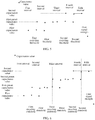
- Case 2 When the first signal strength is between the first threshold and the second recycling threshold, that is, located within a third interval (both the first release condition and the second recycling condition are met), it indicates that under the premise that the signal strength of the first communications system meets the communication quality requirement on the first communications system, a particular signal margin (that is, a difference between the first signal strength and the first threshold) exists, and the signal margin may be released to be used for the second communications system; therefore, in this embodiment, the capacitance value is adjusted to the preset capacitance value between the first capacitance value and the second capacitance value, so that a working frequency band of the antenna is between the working frequency band of the first communications system and the working frequency band of the second communications system, and the signal margin of the first communications system is released to enhance a signal of the second communications system, thereby improving the communication quality of the second communications system under the premise of not affecting the communication quality of the first communications system.
- a particular signal margin that is, a difference between the first signal strength and the first threshold
- Case 3 When the first signal strength is greater than the second threshold, that is, located within a fifth interval (the second release condition is met), it indicates that a signal of the first communications system is very strong, so that not only the communication quality requirement on the first communications system can be met, but also a very large signal margin exists; therefore, in this embodiment, the capacitance value is adjusted to the second capacitance value to enable the second communications system to achieve best communication quality; and in the other aspect, although the first signal strength attenuates, the signal margin of the first signal strength is very large before the adjustment, so that the attenuated first signal strength can also ensure the communication quality requirement on the first communications system.
- Case 4 When the first signal strength is between the first recycling threshold and the first threshold, that is, located within a second interval, the capacitance value remains unchanged, that is, if the first signal strength is increased to the second interval from the first interval, the capacitance value is maintained at the first capacitance value corresponding to the first interval, and if the first signal strength is attenuated to the second interval from the third interval, the capacitance value is maintained at the first preset capacitance value corresponding to the third interval.
- Case 5 When the first signal strength is between the second recycling threshold and the second threshold, that is, located within a fourth interval, the capacitance value remains unchanged, that is, if the first signal strength is increased to the fourth interval from the third interval, the capacitance value is maintained at the preset capacitance value corresponding to the third interval, and if the first signal strength is attenuated to the fourth interval from the fifth interval, the capacitance value is maintained at the second capacitance value corresponding to the fifth interval.
- the first recycling threshold, the first threshold, the second recycling threshold, and the second threshold are set to divide the signal strength into five intervals, and the first interval, the third interval, and the fifth interval respectively correspond to one capacitance value; the first signal strength of the first communications system with a relatively high priority is detected to determine an interval in which the first signal strength is located; and if the first signal strength is located within the first interval, or the third interval, or the fifth interval, the capacitance value of the variable capacitor is set to the capacitance value corresponding to the interval, and if the first signal strength is located within the second interval or the fourth interval, the capacitance value is not adjusted, so that not only an objective of giving consideration to communication quality of multiple systems supported by the antenna having the variable capacitor is achieved, but also a "ping-pong effect" of the capacitance value of the variable capacitor can be prevented, a quantity of times of adjustment of the variable capacitor is reduced, and damage to the variable capacitor is reduced.
- one or more thresholds may be further set between the foregoing first threshold and the foregoing second recycling threshold, and the foregoing third interval is divided into multiple subintervals, and corresponding preset capacitance values are set, so as to enable multiple communications systems of the antenna having the variable capacitor to achieve best integrated communication quality.
- An example in which the working frequency band of the antenna is increased as the capacitance value of the variable capacitor is increased is still used. Referring to FIG.
- a third recycling threshold and a third threshold may be set between the first threshold and the second recycling threshold, where the third recycling threshold is less than the third threshold; and when the first signal strength of the first communications system is less than the first recycling threshold, the capacitance value of the variable capacitor in the antenna is set to the first capacitance value corresponding to the working frequency band of the first communications system, when the first signal strength is between the first threshold and the third recycling threshold, the capacitance value of the variable capacitor is set to the first preset capacitance value, when the first signal strength is between the third threshold and the second recycling threshold, the capacitance value of the variable capacitor is set to a second preset capacitance value, when the first signal strength is greater than the second threshold, the capacitance value of the variable capacitor is set to the second capacitance value, and when the first signal strength is between the first recycling threshold and the first threshold, or between the third recycling threshold and the third threshold, or between the second recycling threshold and the second threshold, the capacitance value of the variable capacitor is not changed, where the first preset capacitance
- a specific value of each threshold is not limited, and in an actual application, a quantity of thresholds and a specific value of each threshold may be set according to a communication quality requirement on a communications system.
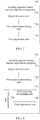
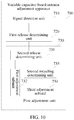
- an embodiment of this application further provides a variable capacitor-based antenna adjustment apparatus, where the variable capacitor-based antenna adjustment apparatus is applied to an antenna having a variable capacitor, and may be entirely or partially integrated into the antenna or may be disposed in a wireless communications terminal independent of the antenna, the antenna having the variable capacitor supports at least two communications systems, and as shown in FIG. 7 , the variable capacitor-based antenna adjustment apparatus 700 includes the following units:
- the preset capacitance value is between the first capacitance value and a second capacitance value, or equal to the second capacitance value, where the first capacitance value is a capacitance value corresponding to a working frequency band of the first communications system, and the second capacitance value is a capacitance value corresponding to a working frequency band of a second communications system supported by the antenna having the variable capacitor.
- variable capacitor-based antenna adjustment apparatus when a first signal strength meets a first release condition, a capacitance value of the variable capacitor is adjusted to a preset capacitance value, and because the preset capacitance value is closer to the second capacitance value, compared with an existing antenna adjustment method in which the capacitance value of the variable capacitor is always maintained at the first capacitance value, in this embodiment of this application, a working frequency band of the antenna having the variable capacitor is closer to a working frequency band of a second communications system, and therefore, communication quality of the second communications system is improved.
- the antenna adjustment apparatus 700 may further include:
- the antenna adjustment apparatus 700 may further include:
- the capacitance value of the variable capacitor is not adjusted, that is, if a detected previous first signal strength is greater than the first threshold, and a corresponding capacitance value of the variable capacitor is the preset capacitance value, when a detected current first signal strength is decreased between the first recycling threshold and the first threshold, the variable capacitor is maintained at the preset capacitance value, and if the detected previous first signal strength is less than the first recycling threshold, and a corresponding capacitance value is the first capacitance value, when the detected current first signal strength is increased between the first recycling threshold and the first threshold, the variable capacitor is maintained at the first capacitance value.
- the first adjustment unit 730 includes:
- the first adjustment unit 730 may further include:
- the first adjustment unit 730 may further include:
- the first recycling threshold, the first threshold, the second recycling threshold, and the second threshold are set to divide a signal strength into five intervals, and a first interval, a third interval, and a fifth interval respectively correspond to one capacitance value; the first signal strength of the first communications system with a relatively high priority is detected to determine an interval in which the first signal strength is located; and if the first signal strength is located within the first interval, or the third interval, or the fifth interval, the capacitance value of the variable capacitor is set to the capacitance value corresponding to the interval, and if the first signal strength is located within a second interval or a fourth interval, the capacitance value is not adjusted, so that not only an objective of giving consideration to communication quality of multiple systems supported by the antenna having the variable capacitor is achieved, but also a "ping-pong effect" of the capacitance value of the variable capacitor can be prevented, a quantity of times of adjustment of the variable capacitor is reduced, and damage to the variable capacitor is reduced.
- the apparatus is divided into units according to functions, which are separately described.
- the function of the units may be implemented in a same piece of or multiple pieces of software and/or hardware.
- an embodiment of this application further provides a wireless communications terminal.
- FIG. 11 is a structural block diagram of a wireless communications terminal 800 according to an embodiment of this application, where the wireless communications terminal 800 may be a mobile phone, a tablet device, a notebook computer, or the like.
- the wireless communications terminal 800 may include one or more of the following components: a processing component 810, a memory 820, a communications component 830, a power supply component 840, a sensor component 850, an input/output (I/O) interface 860, a multimedia component 870, and an audio component 880.
- the processing component 810 generally controls overall operations, such as operations associated with displaying, a phone call, data communication, an camera operation, and a recording operation, of the wireless communications terminal.
- the processing component 810 may include one or more processors 811 for executing a local or remote instruction.
- the processing component 810 may include one or more modules, so as to facilitate interaction between the processing component 810 and another component.
- the memory 820 is configured to store data of various types to support operations on the wireless communications terminal.
- the memory 820 may be implemented by a volatile or non-volatile storage device of any type or a combination thereof, for example, a static random access memory (SRAM), an electrically erasable programmable read-only memory (EEPROM), an erasable programmable read only memory (EPROM), a programmable read-only memory (PROM), a read-only memory (ROM), a magnetic memory, a flash memory, a magnetic disk, or an optical disc.
- SRAM static random access memory
- EEPROM electrically erasable programmable read-only memory
- EPROM erasable programmable read only memory
- PROM programmable read-only memory
- ROM read-only memory
- the power supply component 840 supplies power to components of the wireless communications terminal.
- the sensor component 850 includes one or more sensors, configured to provide status evaluation in each aspect for the wireless communications terminal.
- the input/output component 860 provides an interface between the processing component 810 and a peripheral interface module, where the peripheral interface module may be a keyboard, a click wheel, a button, or the like.
- the button may include, but is not limited to: a home button, a volume button, a start-up button, and a lock button.
- the multimedia component 870 includes a screen of an output interface provided between the wireless communications terminal and a user.
- the screen may include a liquid crystal display (LCD) and a touch panel (TP).
- the multimedia component 870 may further includes a front-facing camera and/or a rear-facing camera.
- the audio component 880 is configured to output/input an audio signal.
- the audio component 880 includes a microphone (MIC), a loudspeaker, and the like.
- the communications component 830 is configured to facilitate wired or wireless communication between the wireless communications terminal and another device.
- the wireless communications terminal may access a communications standard-based wireless network such as Wi-Fi, 2G or 3G, or a combination thereof.
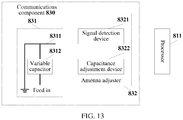
- the communications component 830 includes an antenna 831 having a variable capacitor and an antenna adjuster 832, and may further include at least one of a transmitter circuit and a receiver circuit (not shown in the figure).
- the antenna 831 having the variable capacitor includes an antenna element 8311 and a variable capacitor 8312, and the variable capacitor 8312 is connected between the antenna element 8311 and ground potential GND; and the antenna 831 having the variable capacitor supports at least two communications systems, where a first communications system has a highest priority, that is, a communication quality requirement on the first communications system is preferentially met.
- the antenna adjuster 832 is configured to adjust a capacitance value of the variable capacitor 8312, so as to adjust a working frequency of the antenna 831 having the variable capacitor.
- the antenna adjuster 832 includes a signal detection device 8321 and a capacitance adjustment device 8322.
- the signal detection device 8321 and the capacitance adjustment device 8322 are separately connected to a processor 811 of the processing component 810.
- the signal detection device 8321 is configured to detect a first signal strength of the first communications system that is received by the antenna 831 having the variable capacitor, and send the first signal strength to the processor 811.
- the processor 811 executes, according to a detection result (that is, the first signal strength) output by the signal detection device 8321, an instruction stored in the memory 820, generates a corresponding drive signaling, and sends the corresponding drive signaling to the capacitance adjustment device 8322.
- the capacitance adjustment device 8322 adjusts, according to the drive signaling, a capacitance value of the variable capacitor 8312, and implements the foregoing antenna adjustment method, so as to improve communication quality of another communications system under the premise that the communication quality requirement on the first communications system is met.
- the signal detection device 8321 includes a signal amplifier, an adjustable attenuator, a radio frequency transformer, and a power to voltage conversion circuit; and the working principle thereof is that: the signal amplifier amplifies a collected signal (for subsequent processing), the adjustable attenuator controls the amplified signal within a particular range, the signal after the attenuation is converted into a differential input signal by the radio frequency transformer, and the power to voltage conversion circuit converts the differential input signal into a corresponding direct current level and output the corresponding direct current level to the processor 811 (a linear relationship exists between the direct current level and a signal strength), and then the processor may convert the direct current level into a digital signal by using a built-in analog to digital conversion module to compare with each threshold.
- variable capacitor 8312 may be connected to a ground path of the element 8311, as shown in FIG. 12 , or may be connected to a feed end of the element 8311, as shown in FIG. 13 .
- the capacitance adjustment device 8322 may be a current drive circuit, a voltage drive circuit, or the like, and adjusts the capacitance value of the variable capacitor 8312 by outputting a drive signal corresponding to the capacitance value to the variable capacitor 8312, for example, the current drive circuit may output a current drive signal corresponding to the capacitance value to the variable capacitor 8312, and the voltage drive circuit may output a voltage drive signal corresponding to the capacitance value to the variable capacitor 8312.
Landscapes
- Engineering & Computer Science (AREA)
- Computer Networks & Wireless Communication (AREA)
- Signal Processing (AREA)
- Transceivers (AREA)
- Input Circuits Of Receivers And Coupling Of Receivers And Audio Equipment (AREA)
- Support Of Aerials (AREA)
- Details Of Aerials (AREA)
Applications Claiming Priority (1)
| Application Number | Priority Date | Filing Date | Title |
|---|---|---|---|
| PCT/CN2014/079931 WO2015192289A1 (fr) | 2014-06-16 | 2014-06-16 | Procédé d'ajustement d'antenne fondé sur un condensateur variable, et appareil correspondant |
Publications (3)
| Publication Number | Publication Date |
|---|---|
| EP3142189A1 true EP3142189A1 (fr) | 2017-03-15 |
| EP3142189A4 EP3142189A4 (fr) | 2017-05-17 |
| EP3142189B1 EP3142189B1 (fr) | 2018-09-19 |
Family
ID=54934649
Family Applications (1)
| Application Number | Title | Priority Date | Filing Date |
|---|---|---|---|
| EP14895204.7A Active EP3142189B1 (fr) | 2014-06-16 | 2014-06-16 | Procédé d'ajustement d'antenne fondé sur un condensateur variable, et appareil correspondant |
Country Status (6)
| Country | Link |
|---|---|
| US (1) | US10199727B2 (fr) |
| EP (1) | EP3142189B1 (fr) |
| JP (1) | JP6305570B2 (fr) |
| KR (1) | KR101835260B1 (fr) |
| CN (1) | CN105518936B (fr) |
| WO (1) | WO2015192289A1 (fr) |
Families Citing this family (4)
| Publication number | Priority date | Publication date | Assignee | Title |
|---|---|---|---|---|
| JP2018046353A (ja) * | 2016-09-13 | 2018-03-22 | ソニーセミコンダクタソリューションズ株式会社 | 通信装置、および通信システム |
| DK3503588T3 (da) | 2017-12-22 | 2023-04-03 | Gn Hearing As | Høreaggregat med digitalt justerbar antenne |
| JP6810768B2 (ja) * | 2019-06-05 | 2021-01-06 | レノボ・シンガポール・プライベート・リミテッド | 情報処理装置、制御方法およびプログラム |
| US12407101B2 (en) * | 2022-09-21 | 2025-09-02 | Qualcomm Incorporated | Antenna impedance detection and tuning |
Family Cites Families (18)
| Publication number | Priority date | Publication date | Assignee | Title |
|---|---|---|---|---|
| KR19990038835A (ko) | 1997-11-07 | 1999-06-05 | 윤종용 | 수신 전계 강도를 이용한 자동 이득 제어 회로 |
| JP2002076750A (ja) * | 2000-08-24 | 2002-03-15 | Murata Mfg Co Ltd | アンテナ装置およびそれを備えた無線機 |
| US6690251B2 (en) | 2001-04-11 | 2004-02-10 | Kyocera Wireless Corporation | Tunable ferro-electric filter |
| US6400336B1 (en) * | 2001-05-23 | 2002-06-04 | Sierra Wireless, Inc. | Tunable dual band antenna system |
| JP4060746B2 (ja) * | 2003-04-18 | 2008-03-12 | 株式会社ヨコオ | 可変同調型アンテナおよびそれを用いた携帯無線機 |
| WO2006019910A1 (fr) | 2004-07-26 | 2006-02-23 | Kyocera Wireless Corp. | Systeme d'antenne bidirectionnelle simultanee et son procede |
| EP2269267B1 (fr) * | 2008-04-28 | 2017-12-13 | Wispry, Inc. | Antenne duplexeur accordable et procédés associés |
| JP2011139202A (ja) * | 2009-12-28 | 2011-07-14 | Hitachi Cable Ltd | 受信装置 |
| JP5399567B2 (ja) | 2010-10-25 | 2014-01-29 | シャープ株式会社 | 無線通信装置、無線通信装置の制御方法、プログラム及び記憶媒体 |
| KR101353175B1 (ko) * | 2012-04-27 | 2014-01-20 | 삼성전기주식회사 | 가변 커패시터 모듈 |
| US20130328734A1 (en) | 2012-06-06 | 2013-12-12 | Samsung Electronics Co., Ltd. | Adaptive antenna impedance matching |
| CN102752007B (zh) * | 2012-06-28 | 2015-02-11 | 惠州Tcl移动通信有限公司 | 一种用于自动调节天线匹配的移动终端及其控制方法 |
| KR20140031046A (ko) | 2012-09-04 | 2014-03-12 | 엘지이노텍 주식회사 | 통신 단말기, 그의 안테나 장치 및 그의 동작 방법 |
| KR101393829B1 (ko) * | 2012-10-04 | 2014-05-12 | 엘지이노텍 주식회사 | 통신 단말기, 그의 안테나 장치 및 그의 동작 방법 |
| CN103779669A (zh) * | 2012-10-22 | 2014-05-07 | 联想(北京)有限公司 | 天线装置和用于控制天线装置的方法 |
| US9716307B2 (en) * | 2012-11-08 | 2017-07-25 | Htc Corporation | Mobile device and antenna structure |
| US8842047B2 (en) * | 2012-11-29 | 2014-09-23 | Htc Corporation | Portable communication device and adjustable antenna thereof |
| CN203250847U (zh) * | 2013-05-28 | 2013-10-23 | 深圳市中兴移动通信有限公司 | 一种可调天线和无线通信装置 |
-
2014
- 2014-06-16 US US15/318,624 patent/US10199727B2/en active Active
- 2014-06-16 EP EP14895204.7A patent/EP3142189B1/fr active Active
- 2014-06-16 KR KR1020167035784A patent/KR101835260B1/ko active Active
- 2014-06-16 JP JP2016570025A patent/JP6305570B2/ja active Active
- 2014-06-16 CN CN201480012019.6A patent/CN105518936B/zh active Active
- 2014-06-16 WO PCT/CN2014/079931 patent/WO2015192289A1/fr not_active Ceased
Non-Patent Citations (2)
| Title |
|---|
| No further relevant documents disclosed * |
| See also references of WO2015192289A1 * |
Also Published As
| Publication number | Publication date |
|---|---|
| KR101835260B1 (ko) | 2018-03-06 |
| JP2017525182A (ja) | 2017-08-31 |
| KR20170005867A (ko) | 2017-01-16 |
| WO2015192289A1 (fr) | 2015-12-23 |
| US20170125900A1 (en) | 2017-05-04 |
| EP3142189A4 (fr) | 2017-05-17 |
| US10199727B2 (en) | 2019-02-05 |
| JP6305570B2 (ja) | 2018-04-04 |
| CN105518936A (zh) | 2016-04-20 |
| EP3142189B1 (fr) | 2018-09-19 |
| CN105518936B (zh) | 2019-01-08 |
Similar Documents
| Publication | Publication Date | Title |
|---|---|---|
| US11368920B2 (en) | Method and apparatus for dynamically adjusting SAR value, mobile terminal, and computer storage medium | |
| KR102371004B1 (ko) | 오디오 신호 처리 방법 및 이를 지원하는 전자 장치 | |
| US8848932B2 (en) | Proximity sensing for user detection and automatic volume regulation with sensor interruption override | |
| KR101650331B1 (ko) | 복수 개의 안테나를 포함하는 단말기 및 그의 운용 방법 | |
| US20190227767A1 (en) | Volume Adjustment Method and Terminal | |
| US11646856B2 (en) | Timing configuration method and apparatus | |
| CN109496445B (zh) | 非连续接收配置方法及装置 | |
| KR102310798B1 (ko) | Pa 바이어스를 제어하는 장치 및 그 방법 | |
| CA2792074C (fr) | Detection de proximite servant a la detection d'un utilisateur et a la regulation automatique du volume avec dispositif d'interruption du detecteur | |
| US10199727B2 (en) | Variable capacitor-based antenna adjustment method and related apparatus | |
| CN104902097A (zh) | 移动终端参数的调节方法、装置及移动终端 | |
| US10805026B2 (en) | Narrowband signal detection | |
| US9398130B2 (en) | Mobile terminal and method for controlling answer mode of the mobile terminal and non-transitory computer-readable storage medium | |
| US20210392578A1 (en) | Timer adjustment method and device | |
| KR20210078965A (ko) | 전자 장치에서의 소손 방지 회로 및 이를 위한 방법 | |
| KR20180013099A (ko) | 무선 통신 성능을 개선하기 위한 방법 및 그 전자 장치 | |
| CN111757447B (zh) | 上行发射功率控制方法、装置、计算机设备和存储介质 | |
| CN104915122A (zh) | 应用快速启动方法及装置 | |
| US9509420B2 (en) | Electromagnetic radiation alerting system and method | |
| US20190373481A1 (en) | Method for communication in unlicensed band and apparatus for same | |
| CN108494436A (zh) | 设置mipi频率的方法及装置 | |
| KR20100081801A (ko) | 송신 전력 제어 방법 및 장치 | |
| US20150097627A1 (en) | Clock Generation System | |
| WO2023016062A1 (fr) | Circuit de commande d'antenne et procédé, dispositif terminal et support de stockage | |
| KR101785457B1 (ko) | 이동 단말기 및 그의 안테나 매칭 방법 |
Legal Events
| Date | Code | Title | Description |
|---|---|---|---|
| STAA | Information on the status of an ep patent application or granted ep patent |
Free format text: STATUS: THE INTERNATIONAL PUBLICATION HAS BEEN MADE |
|
| PUAI | Public reference made under article 153(3) epc to a published international application that has entered the european phase |
Free format text: ORIGINAL CODE: 0009012 |
|
| STAA | Information on the status of an ep patent application or granted ep patent |
Free format text: STATUS: REQUEST FOR EXAMINATION WAS MADE |
|
| 17P | Request for examination filed |
Effective date: 20161206 |
|
| AK | Designated contracting states |
Kind code of ref document: A1 Designated state(s): AL AT BE BG CH CY CZ DE DK EE ES FI FR GB GR HR HU IE IS IT LI LT LU LV MC MK MT NL NO PL PT RO RS SE SI SK SM TR |
|
| AX | Request for extension of the european patent |
Extension state: BA ME |
|
| REG | Reference to a national code |
Ref country code: DE Ref legal event code: R079 Ref document number: 602014032854 Country of ref document: DE Free format text: PREVIOUS MAIN CLASS: H01Q0005200000 Ipc: H04B0001180000 |
|
| A4 | Supplementary search report drawn up and despatched |
Effective date: 20170420 |
|
| RIC1 | Information provided on ipc code assigned before grant |
Ipc: H04B 1/18 20060101AFI20170412BHEP |
|
| DAX | Request for extension of the european patent (deleted) | ||
| RIN1 | Information on inventor provided before grant (corrected) |
Inventor name: LEE, CHIEN-MING Inventor name: XU, HAOWEI Inventor name: HUANG, JIANREN |
|
| GRAP | Despatch of communication of intention to grant a patent |
Free format text: ORIGINAL CODE: EPIDOSNIGR1 |
|
| STAA | Information on the status of an ep patent application or granted ep patent |
Free format text: STATUS: GRANT OF PATENT IS INTENDED |
|
| INTG | Intention to grant announced |
Effective date: 20180329 |
|
| GRAS | Grant fee paid |
Free format text: ORIGINAL CODE: EPIDOSNIGR3 |
|
| GRAA | (expected) grant |
Free format text: ORIGINAL CODE: 0009210 |
|
| STAA | Information on the status of an ep patent application or granted ep patent |
Free format text: STATUS: THE PATENT HAS BEEN GRANTED |
|
| AK | Designated contracting states |
Kind code of ref document: B1 Designated state(s): AL AT BE BG CH CY CZ DE DK EE ES FI FR GB GR HR HU IE IS IT LI LT LU LV MC MK MT NL NO PL PT RO RS SE SI SK SM TR |
|
| REG | Reference to a national code |
Ref country code: GB Ref legal event code: FG4D |
|
| REG | Reference to a national code |
Ref country code: CH Ref legal event code: EP |
|
| REG | Reference to a national code |
Ref country code: DE Ref legal event code: R096 Ref document number: 602014032854 Country of ref document: DE |
|
| REG | Reference to a national code |
Ref country code: AT Ref legal event code: REF Ref document number: 1044460 Country of ref document: AT Kind code of ref document: T Effective date: 20181015 |
|
| REG | Reference to a national code |
Ref country code: IE Ref legal event code: FG4D |
|
| REG | Reference to a national code |
Ref country code: NL Ref legal event code: FP |
|
| PG25 | Lapsed in a contracting state [announced via postgrant information from national office to epo] |
Ref country code: FI Free format text: LAPSE BECAUSE OF FAILURE TO SUBMIT A TRANSLATION OF THE DESCRIPTION OR TO PAY THE FEE WITHIN THE PRESCRIBED TIME-LIMIT Effective date: 20180919 Ref country code: GR Free format text: LAPSE BECAUSE OF FAILURE TO SUBMIT A TRANSLATION OF THE DESCRIPTION OR TO PAY THE FEE WITHIN THE PRESCRIBED TIME-LIMIT Effective date: 20181220 Ref country code: LT Free format text: LAPSE BECAUSE OF FAILURE TO SUBMIT A TRANSLATION OF THE DESCRIPTION OR TO PAY THE FEE WITHIN THE PRESCRIBED TIME-LIMIT Effective date: 20180919 Ref country code: SE Free format text: LAPSE BECAUSE OF FAILURE TO SUBMIT A TRANSLATION OF THE DESCRIPTION OR TO PAY THE FEE WITHIN THE PRESCRIBED TIME-LIMIT Effective date: 20180919 Ref country code: BG Free format text: LAPSE BECAUSE OF FAILURE TO SUBMIT A TRANSLATION OF THE DESCRIPTION OR TO PAY THE FEE WITHIN THE PRESCRIBED TIME-LIMIT Effective date: 20181219 Ref country code: RS Free format text: LAPSE BECAUSE OF FAILURE TO SUBMIT A TRANSLATION OF THE DESCRIPTION OR TO PAY THE FEE WITHIN THE PRESCRIBED TIME-LIMIT Effective date: 20180919 Ref country code: NO Free format text: LAPSE BECAUSE OF FAILURE TO SUBMIT A TRANSLATION OF THE DESCRIPTION OR TO PAY THE FEE WITHIN THE PRESCRIBED TIME-LIMIT Effective date: 20181219 |
|
| REG | Reference to a national code |
Ref country code: LT Ref legal event code: MG4D |
|
| PG25 | Lapsed in a contracting state [announced via postgrant information from national office to epo] |
Ref country code: LV Free format text: LAPSE BECAUSE OF FAILURE TO SUBMIT A TRANSLATION OF THE DESCRIPTION OR TO PAY THE FEE WITHIN THE PRESCRIBED TIME-LIMIT Effective date: 20180919 Ref country code: AL Free format text: LAPSE BECAUSE OF FAILURE TO SUBMIT A TRANSLATION OF THE DESCRIPTION OR TO PAY THE FEE WITHIN THE PRESCRIBED TIME-LIMIT Effective date: 20180919 Ref country code: HR Free format text: LAPSE BECAUSE OF FAILURE TO SUBMIT A TRANSLATION OF THE DESCRIPTION OR TO PAY THE FEE WITHIN THE PRESCRIBED TIME-LIMIT Effective date: 20180919 |
|
| REG | Reference to a national code |
Ref country code: AT Ref legal event code: MK05 Ref document number: 1044460 Country of ref document: AT Kind code of ref document: T Effective date: 20180919 |
|
| PG25 | Lapsed in a contracting state [announced via postgrant information from national office to epo] |
Ref country code: ES Free format text: LAPSE BECAUSE OF FAILURE TO SUBMIT A TRANSLATION OF THE DESCRIPTION OR TO PAY THE FEE WITHIN THE PRESCRIBED TIME-LIMIT Effective date: 20180919 Ref country code: IS Free format text: LAPSE BECAUSE OF FAILURE TO SUBMIT A TRANSLATION OF THE DESCRIPTION OR TO PAY THE FEE WITHIN THE PRESCRIBED TIME-LIMIT Effective date: 20190119 Ref country code: AT Free format text: LAPSE BECAUSE OF FAILURE TO SUBMIT A TRANSLATION OF THE DESCRIPTION OR TO PAY THE FEE WITHIN THE PRESCRIBED TIME-LIMIT Effective date: 20180919 Ref country code: EE Free format text: LAPSE BECAUSE OF FAILURE TO SUBMIT A TRANSLATION OF THE DESCRIPTION OR TO PAY THE FEE WITHIN THE PRESCRIBED TIME-LIMIT Effective date: 20180919 Ref country code: PL Free format text: LAPSE BECAUSE OF FAILURE TO SUBMIT A TRANSLATION OF THE DESCRIPTION OR TO PAY THE FEE WITHIN THE PRESCRIBED TIME-LIMIT Effective date: 20180919 Ref country code: IT Free format text: LAPSE BECAUSE OF FAILURE TO SUBMIT A TRANSLATION OF THE DESCRIPTION OR TO PAY THE FEE WITHIN THE PRESCRIBED TIME-LIMIT Effective date: 20180919 Ref country code: CZ Free format text: LAPSE BECAUSE OF FAILURE TO SUBMIT A TRANSLATION OF THE DESCRIPTION OR TO PAY THE FEE WITHIN THE PRESCRIBED TIME-LIMIT Effective date: 20180919 Ref country code: RO Free format text: LAPSE BECAUSE OF FAILURE TO SUBMIT A TRANSLATION OF THE DESCRIPTION OR TO PAY THE FEE WITHIN THE PRESCRIBED TIME-LIMIT Effective date: 20180919 |
|
| PG25 | Lapsed in a contracting state [announced via postgrant information from national office to epo] |
Ref country code: SM Free format text: LAPSE BECAUSE OF FAILURE TO SUBMIT A TRANSLATION OF THE DESCRIPTION OR TO PAY THE FEE WITHIN THE PRESCRIBED TIME-LIMIT Effective date: 20180919 Ref country code: PT Free format text: LAPSE BECAUSE OF FAILURE TO SUBMIT A TRANSLATION OF THE DESCRIPTION OR TO PAY THE FEE WITHIN THE PRESCRIBED TIME-LIMIT Effective date: 20190119 Ref country code: SK Free format text: LAPSE BECAUSE OF FAILURE TO SUBMIT A TRANSLATION OF THE DESCRIPTION OR TO PAY THE FEE WITHIN THE PRESCRIBED TIME-LIMIT Effective date: 20180919 |
|
| REG | Reference to a national code |
Ref country code: DE Ref legal event code: R097 Ref document number: 602014032854 Country of ref document: DE |
|
| PLBE | No opposition filed within time limit |
Free format text: ORIGINAL CODE: 0009261 |
|
| STAA | Information on the status of an ep patent application or granted ep patent |
Free format text: STATUS: NO OPPOSITION FILED WITHIN TIME LIMIT |
|
| PG25 | Lapsed in a contracting state [announced via postgrant information from national office to epo] |
Ref country code: DK Free format text: LAPSE BECAUSE OF FAILURE TO SUBMIT A TRANSLATION OF THE DESCRIPTION OR TO PAY THE FEE WITHIN THE PRESCRIBED TIME-LIMIT Effective date: 20180919 |
|
| 26N | No opposition filed |
Effective date: 20190620 |
|
| PG25 | Lapsed in a contracting state [announced via postgrant information from national office to epo] |
Ref country code: SI Free format text: LAPSE BECAUSE OF FAILURE TO SUBMIT A TRANSLATION OF THE DESCRIPTION OR TO PAY THE FEE WITHIN THE PRESCRIBED TIME-LIMIT Effective date: 20180919 |
|
| PG25 | Lapsed in a contracting state [announced via postgrant information from national office to epo] |
Ref country code: MC Free format text: LAPSE BECAUSE OF FAILURE TO SUBMIT A TRANSLATION OF THE DESCRIPTION OR TO PAY THE FEE WITHIN THE PRESCRIBED TIME-LIMIT Effective date: 20180919 |
|
| REG | Reference to a national code |
Ref country code: CH Ref legal event code: PL |
|
| REG | Reference to a national code |
Ref country code: BE Ref legal event code: MM Effective date: 20190630 |
|
| PG25 | Lapsed in a contracting state [announced via postgrant information from national office to epo] |
Ref country code: TR Free format text: LAPSE BECAUSE OF FAILURE TO SUBMIT A TRANSLATION OF THE DESCRIPTION OR TO PAY THE FEE WITHIN THE PRESCRIBED TIME-LIMIT Effective date: 20180919 |
|
| PG25 | Lapsed in a contracting state [announced via postgrant information from national office to epo] |
Ref country code: IE Free format text: LAPSE BECAUSE OF NON-PAYMENT OF DUE FEES Effective date: 20190616 |
|
| PG25 | Lapsed in a contracting state [announced via postgrant information from national office to epo] |
Ref country code: LI Free format text: LAPSE BECAUSE OF NON-PAYMENT OF DUE FEES Effective date: 20190630 Ref country code: BE Free format text: LAPSE BECAUSE OF NON-PAYMENT OF DUE FEES Effective date: 20190630 Ref country code: CH Free format text: LAPSE BECAUSE OF NON-PAYMENT OF DUE FEES Effective date: 20190630 Ref country code: LU Free format text: LAPSE BECAUSE OF NON-PAYMENT OF DUE FEES Effective date: 20190616 |
|
| PG25 | Lapsed in a contracting state [announced via postgrant information from national office to epo] |
Ref country code: CY Free format text: LAPSE BECAUSE OF FAILURE TO SUBMIT A TRANSLATION OF THE DESCRIPTION OR TO PAY THE FEE WITHIN THE PRESCRIBED TIME-LIMIT Effective date: 20180919 |
|
| PG25 | Lapsed in a contracting state [announced via postgrant information from national office to epo] |
Ref country code: MT Free format text: LAPSE BECAUSE OF FAILURE TO SUBMIT A TRANSLATION OF THE DESCRIPTION OR TO PAY THE FEE WITHIN THE PRESCRIBED TIME-LIMIT Effective date: 20180919 Ref country code: HU Free format text: LAPSE BECAUSE OF FAILURE TO SUBMIT A TRANSLATION OF THE DESCRIPTION OR TO PAY THE FEE WITHIN THE PRESCRIBED TIME-LIMIT; INVALID AB INITIO Effective date: 20140616 |
|
| PG25 | Lapsed in a contracting state [announced via postgrant information from national office to epo] |
Ref country code: MK Free format text: LAPSE BECAUSE OF FAILURE TO SUBMIT A TRANSLATION OF THE DESCRIPTION OR TO PAY THE FEE WITHIN THE PRESCRIBED TIME-LIMIT Effective date: 20180919 |
|
| P01 | Opt-out of the competence of the unified patent court (upc) registered |
Free format text: CASE NUMBER: UPC_APP_119323/2023 Effective date: 20230510 |
|
| PGFP | Annual fee paid to national office [announced via postgrant information from national office to epo] |
Ref country code: NL Payment date: 20250516 Year of fee payment: 12 |
|
| PGFP | Annual fee paid to national office [announced via postgrant information from national office to epo] |
Ref country code: DE Payment date: 20250429 Year of fee payment: 12 |
|
| PGFP | Annual fee paid to national office [announced via postgrant information from national office to epo] |
Ref country code: GB Payment date: 20250501 Year of fee payment: 12 |
|
| PGFP | Annual fee paid to national office [announced via postgrant information from national office to epo] |
Ref country code: FR Payment date: 20250508 Year of fee payment: 12 |