EP3142370A1 - Verfahren, vorrichtung und system zur verarbeitung von medienressourceninformationen - Google Patents
Verfahren, vorrichtung und system zur verarbeitung von medienressourceninformationen Download PDFInfo
- Publication number
- EP3142370A1 EP3142370A1 EP14891233.0A EP14891233A EP3142370A1 EP 3142370 A1 EP3142370 A1 EP 3142370A1 EP 14891233 A EP14891233 A EP 14891233A EP 3142370 A1 EP3142370 A1 EP 3142370A1
- Authority
- EP
- European Patent Office
- Prior art keywords
- type
- resource information
- media resource
- sequence
- channel
- Prior art date
- Legal status (The legal status is an assumption and is not a legal conclusion. Google has not performed a legal analysis and makes no representation as to the accuracy of the status listed.)
- Ceased
Links
Images





Classifications
-
- H—ELECTRICITY
- H04—ELECTRIC COMMUNICATION TECHNIQUE
- H04N—PICTORIAL COMMUNICATION, e.g. TELEVISION
- H04N21/00—Selective content distribution, e.g. interactive television or video on demand [VOD]
- H04N21/20—Servers specifically adapted for the distribution of content, e.g. VOD servers; Operations thereof
- H04N21/25—Management operations performed by the server for facilitating the content distribution or administrating data related to end-users or client devices, e.g. end-user or client device authentication, learning user preferences for recommending movies
- H04N21/258—Client or end-user data management, e.g. managing client capabilities, user preferences or demographics, processing of multiple end-users preferences to derive collaborative data
-
- H—ELECTRICITY
- H04—ELECTRIC COMMUNICATION TECHNIQUE
- H04N—PICTORIAL COMMUNICATION, e.g. TELEVISION
- H04N21/00—Selective content distribution, e.g. interactive television or video on demand [VOD]
- H04N21/40—Client devices specifically adapted for the reception of or interaction with content, e.g. set-top-box [STB]; Operations thereof
- H04N21/45—Management operations performed by the client for facilitating the reception of or the interaction with the content or administrating data related to the end-user or to the client device itself, e.g. learning user preferences for recommending movies, resolving scheduling conflicts
- H04N21/4508—Management of client data or end-user data
- H04N21/4532—Management of client data or end-user data involving end-user characteristics, e.g. viewer profile, preferences
-
- H—ELECTRICITY
- H04—ELECTRIC COMMUNICATION TECHNIQUE
- H04N—PICTORIAL COMMUNICATION, e.g. TELEVISION
- H04N21/00—Selective content distribution, e.g. interactive television or video on demand [VOD]
- H04N21/20—Servers specifically adapted for the distribution of content, e.g. VOD servers; Operations thereof
- H04N21/25—Management operations performed by the server for facilitating the content distribution or administrating data related to end-users or client devices, e.g. end-user or client device authentication, learning user preferences for recommending movies
- H04N21/262—Content or additional data distribution scheduling, e.g. sending additional data at off-peak times, updating software modules, calculating the carousel transmission frequency, delaying a video stream transmission, generating play-lists
Definitions
- the present invention relates to the field of image communication, and more particularly to a method, device and system for processing media resource information.
- Smart television terminals employing an operating system such as Android which includes a television set, a set-top box and the like, are becoming mainstream products pushed by manufactures and are rapidly popularized.
- An operating system such as Android
- a habit of a user is being guided from "watching" a television to "utilizing" a television by great capacities and diversities of television contents, the integration and interaction of television services and intelligentization and internetization of television terminals.
- an operating system such as Android
- a set of television programs is equivalent to a television channel in an analog TV.
- a list of television programs is a combination of a series of program events which are successive in time, the program event is a program content corresponding to a specific time period.
- a digital TV employs an electronic program guide (EPG) to describe a broadcast time of a program and program information, and navigates television programs and interacts with a user by the EPG.
- EPG electronic program guide
- a digital TV user has been accustomed to television programs pushed passively and selects a television program set by a television station by the EPG or by switching channels.
- massive video contents are mostly presented to users by video websites by a way of web or client applications. The program contents are independently provided, not to be connected together in time.
- it is difficult for a user when the user is faced with two types of different media resources--digital TVs and Internet videos, to change his viewing habits and operating manners, as there is no means for integrating the digital TVs with the Internet videos;
- a digital television channel which schedules programs towards general users and the current classification and recommendation manner of Internet videos lack individual characteristics for an individual user and also lack a personalized spreading manner, thus are contradicted with personalized viewing requirements of the user.
- An objective of the present invention is to schedule media resource information generated from a live program, a time shift program, an on-demand program of TVs and/or a live program, a time-shift program, an on-demand program of network television IPTVs and/or a network video into a program list and provide it to a user by a way of channels, so as to solve problems that there is no means for integrating the digital TVs with the Internet videos, it is difficult to rapidly obtain a program event which one desires to watch, individual characteristics for an individual user are lacked, a personalized spreading manner is also lacked, and there is a contradiction with personalized viewing requirements of the user.
- an embodiment of the present invention provides a method for processing media resource information generated from a live program, a time-shift program, an on-demand program of TVs and/or a live program, a time-shift program, an on-demand program of network television IPTVs and/or a network video, the method comprises:
- the server ranks the media resource information according to the media features and the user features, so as to generate a first sequence, specifically comprises:
- the media features comprise a type of the media resource information, the type comprises live-type media resource information, time shift-type media resource information and on demand-type media resource information;
- the server ranks the media resource information according to the media features and the user features, so as to generate a first sequence, specifically comprises:
- the server schedules the first sequence into time periods of idle channels according to preset priorities of time periods of channels, specifically comprises:
- the method further comprises: the server may generate one program list; or, the server decomposes said one program list into a plurality of program lists according to channel numbers.
- an embodiment of the present invention provides a device for processing media resource information generated from a live program, a time-shift program, an on-demand program of TVs and/or a live program, a time-shift program, an on-demand program of network television IPTVs and/or a network video
- the device comprises: a first acquiring unit, a second acquiring unit, a ranking unit, a scheduling unit, a receiving unit and a updating unit;
- the first acquiring unit is configured to acquire media resource information, wherein the media resource information comprises media features;
- the second acquiring unit is configured to acquire user viewing information of a client, wherein the user viewing information comprises user features;
- the ranking unit is configured to rank the media resource information according to the media features and the user features so as to generate a first sequence;
- the scheduling unit is configured to schedule the first sequence into time periods of idle channels according to preset priorities of channels and time periods so as to generate a program list, and send the program list to the client;
- the receiving unit is configured to receive an update request sent
- the ranking unit is specifically configured to:
- the media features comprise a type of the media resource information, the type comprises live-type media resource information, time shift-type media resource information and on demand-type media resource information;
- the ranking unit is specifically configured to: screen out the live-type media resource information from the media resource information, set a priority of the live-type media resource information according to user features, so as to generate a live-type first sequence; screen out the time shift-type media resource information from the media resource information, set a priority of the time shift-type media resource information according to user features, so as to generate a time shift-type first sequence; screen out the on demand-type media resource information from the media resource information, set a priority of the on demand-type media resource information according to user features, so as to generate an on demand-type first sequence; generate a first sequence according to the priorities of the live-type first sequence, the time shift-type first sequence and the on demand-type first sequence.
- the scheduling unit is specifically configured to:
- an embodiment of the present invention provides a system for processing media resource information, the system comprises the device and the client of the second aspect.
- the present invention acquires media resource information through a server, wherein the media resource information comprises media features; acquires user viewing information of a client, wherein the user viewing information comprises user features; ranks the media resource information according to the media features and the user features, so as to generate a first sequence; schedules the first sequence into time periods of idle channels according to preset priorities of channels and time periods so as to generate a program list, and sends the program list to the client; receives an update request sent by the client, wherein the update request comprises time baseline changes; updates the program list according to the time baseline changes, thereby solving the difficulties in the transition of user' viewing habits and operating manners, integrating the digital TVs with the Internet videos together and providing them to a user by a way of program lists.
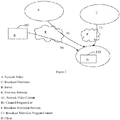
- Fig. 1 is a diagram of a scenario for playing and controlling a media resource according to an embodiment of the present invention. As shown in Fig. 1 , a server 110 and a client 120 are included in the scenario of playing and controlling a media resource.
- the client 120 is located within a home, and connected with the server 110 via a two-way network.
- the server 110 provides services to the client 120 via the two-way network.
- the client 120 watches media resources via the two-way network.
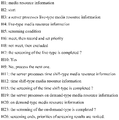
- Fig. 2 is a flow diagram of a method for processing media resource information according to embodiment one of the present invention.
- the executive body is the server.
- Step S210 the server acquires media resource information, wherein the media resource information comprises media features.
- the media resource information is generated from media resources, which may be a live program, a time-shift program or an on-demand program of TVs, or may also be a live program, a time-shift program or an on-demand program of Internet protocol televisions (IPTV), and may further be Internet resources such as network videos.
- the server acquires these media resource information through the prior art, such as by parsing data packets downloaded by a user and so on, and saves the acquired media resource information in a media resource information table.
- a generated media resource information table may be a table as shown in Table 1, wherein, the media resource information table comprises media features therein, which comprises a name, a type, a play source, a duration, a start and end time, an encoding, a rate and an event description of a media resource.
- the name may be a title of a movie or a television play
- the type may comprise a live, a time shift and an on demand
- the play source is used to locate the media resource information, such as a network identity (ID), a channel ID or a program ID of a live program for cable televisions, a content ID of an on-demand program for IPTVs, and the uniform/universal resource locator (URL) of a network video
- the event description may be a brief introduction of a movie or a brief introduction of a television play or the like.
- a possible expression form of the media resource information table is as follows: Name Type Play Source Duration Start and End Time Encoding Rate Event Description
- Step 220 the server acquires user viewing information of a client, wherein the user viewing information comprises user features; specifically, the user viewing information comprises user features which may comprise viewing regularity of a user, viewing preference and viewing rating (hit situation).
- the viewing regularity of a user may be a regularity that the user watches a particular program at a particular time, for example, the user watches the CCTV News at 19:00 every day, the Premier League games at night on weekends, and the like;
- the viewing preference may be a program which a user often watches, for example, the user often watches sports programs, variety shows and the like;
- the hit situation may be used to recommend programs, wherein the viewing rating may be obtained by a survey for viewing ratings or a statistics by Internet video websites.
- step S210 and step S220 may first acquire media resource information and then acquire user viewing information, or alternatively, the server may first acquire user viewing information and then acquires media resource information.
- the server may also simultaneously acquire media resource information and user viewing information.
- Step S230 the server ranks the media resource information according to the media features and the user features, so as to generate a first sequence.
- the type of media resource information comprises live-type media resource information, time shift-type media resource information and on-demand-type media resource information
- the server may preset the priorities of these three types of media resource information in a descending order as: the live type, the time shift type and the on-demand type.
- the server may also preset the priorities of user features, for example, may set the priorities of viewing regularity of a user, viewing preference and hit situation, and for example, the priorities of user features may be set in a descending order as: viewing regularity of a user, viewing preference and viewing rating.
- Step S230 comprises:
- step S301-step S303 can be changed.
- Step S240 the server schedules the first sequence into time periods of idle channels according to preset priorities of channels and time periods so as to generate a program list, and sends the program list to a client.
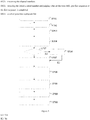
- Fig. 4 is a flow diagram of scheduling media resource information according to embodiment one of the present invention.
- the executive body in Fig. 4 is the server, and step S240 specifically comprises:
- said method further comprises that: said server may generate one program list; alternatively, said server decomposes said one program list into a plurality of program lists according to channel numbers.
- the above described steps S401-S422 are just one scheduling method, and the present invention is not limited to this method.
- the priorities of channels are ranked in an ascending order by channel numbers.
- the priorities of channels may also be ranked in a descending order by channel numbers.
- Step S250 the server receives an update request sent by the client, wherein the update request comprises time baseline changes.
- Step S260 the server updates the program list according to the time baseline changes.
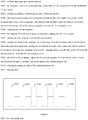
- Fig. 5 is a flow diagram of changing a time baseline of a client according to embodiment one of the present invention.
- the executive body in Fig. 5 is the server, and step S250 and step S260 specifically comprise:
- the server ranks the media resource information according to the media features and the user features so as to generate a first sequence, specifically comprises:
- the server dynamically adjusts the generated first sequence, so as to regenerate a program list.
- a program event is each program in the program list and presented in the form of tables, which may be a media resource information table as shown in Figure 1 .
- An embodiment of the present invention provides a method for processing media resource information, the server acquires media resource information, wherein the media resource information comprises media features; the server acquires user viewing information of a client, wherein the user viewing information comprises user features; the server ranks the media resource information according to the media features and the user features, so as to generate a first sequence; the server schedules the first sequence into time periods of idle channels according to preset priorities of channels and time periods so as to generate a program list, and sends the program list to the client; the server receives an update request sent by the client, wherein the update request comprises time baseline changes; the server updates the program list according to the time baseline changes and provides it to a user by a way of channels, thereby solving the difficulties in the transition of user' viewing habits and operating manners, integrating the digital TVs with the Internet videos together and meeting the requirements of user features.
- Fig. 6 is a schematic diagram of a device for processing media resource information according to embodiment two of the present invention. As shown in Fig. 6 , the present embodiment comprises: a first acquiring unit 610, a second acquiring unit 620, a ranking unit 630, a scheduling unit 640, a receiving unit 650 and an updating unit 660.
- Said first acquiring unit 610 is configured to acquire media resource information, wherein the media resource information comprises media features; said second acquiring unit 620 is configured to acquire user viewing information of a client, wherein the user viewing information comprises user features; said ranking unit 630 is configured to rank the media resource information according to the media features and the user features, so as to generate a first sequence; said scheduling unit 640 is configured to schedule the first sequence into time periods of idle channels according to preset priorities of channels and time periods so as to generate a program list, and send the program list to a client; said receiving unit 650 is configured to receive an update request sent by the client, wherein the update request comprises time baseline changes; said updating unit 660 is configured to update the program list according to the time baseline changes.
- said ranking unit 630 is specifically configured to:
- said media features comprise a type of said media resource information, said type comprises live-type media resource information, time shift-type media resource information and on demand-type media resource information; said ranking unit 630 is specifically configured to: screen out the live-type media resource information from the media resource information, set the priority of the live-type media resource information according to user features, so as to generate a live-type first sequence; screen out the time shift-type media resource information from the media resource information, set the priority of the time shift-type media resource information according to user features, so as to generate a time shift-type first sequence; screen out the on demand-type media resource information from the media resource information, set the priority of the on demand-type media resource information according to user features, so as to generate an on demand-type first sequence; generate a first sequence according to the priorities of the live-type first sequence, the time shift-type first sequence and the on demand-type first sequence.
- scheduling unit 640 is specifically configured to:
- an embodiment of the present invention may further comprise a decomposition unit configured to decompose one program list into a plurality of program lists according to channel numbers.
- an embodiment of the present invention provides a system for processing media resource information, said system comprises the device and the client as shown in Fig. 6 .
- a device for processing media resource information which comprises a first acquiring unit configured for acquiring media resource information, wherein the media resource information comprises media features; a second acquiring unit configured for acquiring user viewing information of a client, wherein the user viewing information comprises user features; a ranking unit configured for ranking the media resource information according to the media features and the user features, so as to generate a first sequence; a scheduling unit configured for scheduling the first sequence into time periods of idle channels according to preset priorities of channels and time periods so as to generate a program list, and sending the program list to the client; a receiving unit configured for receiving an update request sent by the client, wherein the update request comprises time baseline changes; and an updating unit configured for updating the program list according to the time baseline changes and providing it to a user by a way of channels, the difficulties in the transition of user' viewing habits and operating manners are solved, the digital TVs and the Internet videos are integrated together, meeting the requirement of user features.
Landscapes
- Engineering & Computer Science (AREA)
- Databases & Information Systems (AREA)
- Multimedia (AREA)
- Signal Processing (AREA)
- Computer Graphics (AREA)
- Two-Way Televisions, Distribution Of Moving Picture Or The Like (AREA)
- Information Transfer Between Computers (AREA)
Applications Claiming Priority (2)
| Application Number | Priority Date | Filing Date | Title |
|---|---|---|---|
| CN201410186871.7A CN103957435B (zh) | 2014-05-05 | 2014-05-05 | 媒体资源信息的处理方法、装置和系统 |
| PCT/CN2014/093465 WO2015169085A1 (zh) | 2014-05-05 | 2014-12-10 | 媒体资源信息的处理方法、装置和系统 |
Publications (2)
| Publication Number | Publication Date |
|---|---|
| EP3142370A1 true EP3142370A1 (de) | 2017-03-15 |
| EP3142370A4 EP3142370A4 (de) | 2017-04-26 |
Family
ID=51334643
Family Applications (1)
| Application Number | Title | Priority Date | Filing Date |
|---|---|---|---|
| EP14891233.0A Ceased EP3142370A4 (de) | 2014-05-05 | 2014-12-10 | Verfahren, vorrichtung und system zur verarbeitung von medienressourceninformationen |
Country Status (3)
| Country | Link |
|---|---|
| EP (1) | EP3142370A4 (de) |
| CN (1) | CN103957435B (de) |
| WO (1) | WO2015169085A1 (de) |
Cited By (1)
| Publication number | Priority date | Publication date | Assignee | Title |
|---|---|---|---|---|
| CN114885201A (zh) * | 2022-05-06 | 2022-08-09 | 林间 | 视频对比查看方法、装置、设备及存储介质 |
Families Citing this family (15)
| Publication number | Priority date | Publication date | Assignee | Title |
|---|---|---|---|---|
| CN103957435B (zh) * | 2014-05-05 | 2017-05-31 | 中国科学院声学研究所 | 媒体资源信息的处理方法、装置和系统 |
| CN104301760B (zh) * | 2014-11-10 | 2018-11-20 | 华勤通讯技术有限公司 | 电视节目推送方法 |
| CN104469435B (zh) * | 2014-12-22 | 2017-10-03 | 上海奉先电子科技有限公司 | 广告自动排档方法、服务器及广告播放方法、终端 |
| CN107431844A (zh) * | 2015-03-09 | 2017-12-01 | 瑞典爱立信有限公司 | 用于向内容呈现设备提供实况数据流的方法、系统和设备 |
| CN106358052A (zh) * | 2015-07-14 | 2017-01-25 | 无锡天脉聚源传媒科技有限公司 | 一种辅助提供电子节目菜单的方法和装置 |
| CN105898574A (zh) * | 2016-05-18 | 2016-08-24 | 青岛海信传媒网络技术有限公司 | 虚拟频道管理方法、装置及虚拟频道服务器 |
| WO2018069426A1 (en) * | 2016-10-12 | 2018-04-19 | Koninklijke Kpn N.V. | Enabling a media orchestration |
| CN106713955B (zh) * | 2016-12-22 | 2019-10-08 | 中央电视台 | 直播流播放的控制方法及装置 |
| CN108269132A (zh) * | 2018-02-11 | 2018-07-10 | 深圳市茁壮网络股份有限公司 | 一种媒资资源的定价方法及定价系统 |
| CN110312149B (zh) * | 2018-03-20 | 2021-08-17 | 国家广播电视总局广播电视规划院 | 一种用于收视数据处理的方法、装置及系统以及数据处理设备 |
| CN110471679B (zh) * | 2019-07-08 | 2024-04-02 | 中国平安人寿保险股份有限公司 | 客户端资源配置更新方法、装置及存储介质、服务器 |
| CN110602514B (zh) * | 2019-09-12 | 2022-04-01 | 腾讯科技(深圳)有限公司 | 一种直播频道的推荐方法、装置、电子设备及存储介质 |
| CN112423003A (zh) * | 2020-11-05 | 2021-02-26 | 深圳Tcl新技术有限公司 | 直播节目的播放方法及装置、智能冰箱、存储介质 |
| CN113489700B (zh) * | 2021-06-28 | 2023-05-09 | 聚好看科技股份有限公司 | 一种获取媒资数据的方法、服务器及终端设备 |
| CN118556234A (zh) * | 2022-06-20 | 2024-08-27 | 聚好看科技股份有限公司 | 显示设备以及频道处理方法 |
Family Cites Families (9)
| Publication number | Priority date | Publication date | Assignee | Title |
|---|---|---|---|---|
| US5758257A (en) * | 1994-11-29 | 1998-05-26 | Herz; Frederick | System and method for scheduling broadcast of and access to video programs and other data using customer profiles |
| CN101335855B (zh) * | 2008-07-25 | 2012-09-05 | 宝利微电子系统控股公司 | 统一电子节目单的制作方法 |
| KR20120003362A (ko) * | 2010-07-02 | 2012-01-10 | 아코지토(주) | 협력적 필터링 알고리즘 기반의 iptv 개인별 선호프로그램 추천시스템 |
| CN102421025A (zh) * | 2011-11-22 | 2012-04-18 | 康佳集团股份有限公司 | 一种基于节目内容属性的电视节目导航方法及系统 |
| CN103139615A (zh) * | 2011-11-29 | 2013-06-05 | 深圳市华为技术软件有限公司 | 一种电视节目编排的方法及设备 |
| CN103237264B (zh) * | 2013-04-12 | 2017-03-15 | 深圳创维-Rgb电子有限公司 | 网络视频播放方法及装置 |
| CN103596020B (zh) * | 2013-09-03 | 2017-06-20 | 百视通网络电视技术发展有限责任公司 | 电视节目的混合编排和播放方法及系统 |
| CN103747282A (zh) * | 2013-12-27 | 2014-04-23 | 乐视网信息技术(北京)股份有限公司 | 一种节目单编排方法和设备 |
| CN103957435B (zh) * | 2014-05-05 | 2017-05-31 | 中国科学院声学研究所 | 媒体资源信息的处理方法、装置和系统 |
-
2014
- 2014-05-05 CN CN201410186871.7A patent/CN103957435B/zh active Active
- 2014-12-10 WO PCT/CN2014/093465 patent/WO2015169085A1/zh not_active Ceased
- 2014-12-10 EP EP14891233.0A patent/EP3142370A4/de not_active Ceased
Cited By (2)
| Publication number | Priority date | Publication date | Assignee | Title |
|---|---|---|---|---|
| CN114885201A (zh) * | 2022-05-06 | 2022-08-09 | 林间 | 视频对比查看方法、装置、设备及存储介质 |
| CN114885201B (zh) * | 2022-05-06 | 2024-04-02 | 林间 | 视频对比查看方法、装置、设备及存储介质 |
Also Published As
| Publication number | Publication date |
|---|---|
| WO2015169085A1 (zh) | 2015-11-12 |
| CN103957435A (zh) | 2014-07-30 |
| EP3142370A4 (de) | 2017-04-26 |
| CN103957435B (zh) | 2017-05-31 |
Similar Documents
| Publication | Publication Date | Title |
|---|---|---|
| EP3142370A1 (de) | Verfahren, vorrichtung und system zur verarbeitung von medienressourceninformationen | |
| US8448206B2 (en) | Augmenting interactive television content utilizing a dynamic cloud activity guide | |
| US20110214154A1 (en) | Viewing control apparatus and system | |
| US9986299B2 (en) | Scheduled programming recommendation system | |
| US9143832B2 (en) | Customized content calendar | |
| EP2034640A1 (de) | Verfahren zur Planung von Inhaltselementen und Fernsehsystem mit unterstützter Inhaltsauswahl | |
| AU2023222886B2 (en) | Systems and methods for managing user subscriptions to content sources | |
| US20150312618A1 (en) | Systems and Methods for Generating a Full-Motion Video Mosaic Interface for Content Discovery with User-Configurable Filters | |
| KR101648861B1 (ko) | 서비스 서버의 채널 가입페이지를 제공 방법 | |
| US20140196090A1 (en) | Information processing apparatus, information processing method, and storage medium | |
| CN102780915A (zh) | 预约节目的方法、装置及系统 | |
| US10015432B1 (en) | Method and system to process television program summary | |
| EP1622371A1 (de) | Verfahren und vorrichtungen zur bereitstellung einer synchronisierten elektronischen programmführung | |
| KR101644956B1 (ko) | 시청 의지 판단에 대응하는 시청 패턴 분석 기반의 프로그램 시청 제안 방법 | |
| US10244276B2 (en) | System and method for allocating bandwidth in a network | |
| JP2007520135A (ja) | 個別放送サービス提供方法、通信システム、ユーザー装置、個別番組データコンテンツ | |
| JP5449005B2 (ja) | 番組表提供システム | |
| KR101527012B1 (ko) | 방송 데이터 처리방법 및 디지털 방송 수신기 | |
| KR101759394B1 (ko) | 방송관리 서버 및 그 영상컨텐츠 적응형 광고제공 제어방법, 사용자단말기 및 그 영상컨텐츠 적응형 광고제공방법 |
Legal Events
| Date | Code | Title | Description |
|---|---|---|---|
| PUAI | Public reference made under article 153(3) epc to a published international application that has entered the european phase |
Free format text: ORIGINAL CODE: 0009012 |
|
| 17P | Request for examination filed |
Effective date: 20161128 |
|
| AK | Designated contracting states |
Kind code of ref document: A1 Designated state(s): AL AT BE BG CH CY CZ DE DK EE ES FI FR GB GR HR HU IE IS IT LI LT LU LV MC MK MT NL NO PL PT RO RS SE SI SK SM TR |
|
| AX | Request for extension of the european patent |
Extension state: BA ME |
|
| A4 | Supplementary search report drawn up and despatched |
Effective date: 20170327 |
|
| RIC1 | Information provided on ipc code assigned before grant |
Ipc: H04N 21/45 20110101ALI20170321BHEP Ipc: H04N 21/258 20110101ALI20170321BHEP Ipc: H04N 21/262 20110101AFI20170321BHEP |
|
| DAX | Request for extension of the european patent (deleted) | ||
| 17Q | First examination report despatched |
Effective date: 20180108 |
|
| REG | Reference to a national code |
Ref country code: DE Ref legal event code: R003 |
|
| STAA | Information on the status of an ep patent application or granted ep patent |
Free format text: STATUS: THE APPLICATION HAS BEEN REFUSED |
|
| 18R | Application refused |
Effective date: 20181115 |