EP3142401B1 - Procédé, terminal et station de base pour génération de séquences - Google Patents
Procédé, terminal et station de base pour génération de séquences Download PDFInfo
- Publication number
- EP3142401B1 EP3142401B1 EP14892760.1A EP14892760A EP3142401B1 EP 3142401 B1 EP3142401 B1 EP 3142401B1 EP 14892760 A EP14892760 A EP 14892760A EP 3142401 B1 EP3142401 B1 EP 3142401B1
- Authority
- EP
- European Patent Office
- Prior art keywords
- sequence
- candidate
- frequency band
- terminal
- base station
- Prior art date
- Legal status (The legal status is an assumption and is not a legal conclusion. Google has not performed a legal analysis and makes no representation as to the accuracy of the status listed.)
- Active
Links
Images




Classifications
-
- H—ELECTRICITY
- H04—ELECTRIC COMMUNICATION TECHNIQUE
- H04L—TRANSMISSION OF DIGITAL INFORMATION, e.g. TELEGRAPHIC COMMUNICATION
- H04L27/00—Modulated-carrier systems
- H04L27/26—Systems using multi-frequency codes
- H04L27/2601—Multicarrier modulation systems
- H04L27/2602—Signal structure
- H04L27/261—Details of reference signals
- H04L27/2613—Structure of the reference signals
-
- H—ELECTRICITY
- H04—ELECTRIC COMMUNICATION TECHNIQUE
- H04L—TRANSMISSION OF DIGITAL INFORMATION, e.g. TELEGRAPHIC COMMUNICATION
- H04L27/00—Modulated-carrier systems
- H04L27/26—Systems using multi-frequency codes
- H04L27/2601—Multicarrier modulation systems
-
- H—ELECTRICITY
- H04—ELECTRIC COMMUNICATION TECHNIQUE
- H04L—TRANSMISSION OF DIGITAL INFORMATION, e.g. TELEGRAPHIC COMMUNICATION
- H04L5/00—Arrangements affording multiple use of the transmission path
- H04L5/003—Arrangements for allocating sub-channels of the transmission path
- H04L5/0048—Allocation of pilot signals, i.e. of signals known to the receiver
-
- H—ELECTRICITY
- H04—ELECTRIC COMMUNICATION TECHNIQUE
- H04W—WIRELESS COMMUNICATION NETWORKS
- H04W16/00—Network planning, e.g. coverage or traffic planning tools; Network deployment, e.g. resource partitioning or cells structures
- H04W16/02—Resource partitioning among network components, e.g. reuse partitioning
-
- H—ELECTRICITY
- H04—ELECTRIC COMMUNICATION TECHNIQUE
- H04W—WIRELESS COMMUNICATION NETWORKS
- H04W72/00—Local resource management
- H04W72/04—Wireless resource allocation
- H04W72/044—Wireless resource allocation based on the type of the allocated resource
- H04W72/0446—Resources in time domain, e.g. slots or frames
-
- H—ELECTRICITY
- H04—ELECTRIC COMMUNICATION TECHNIQUE
- H04W—WIRELESS COMMUNICATION NETWORKS
- H04W72/00—Local resource management
- H04W72/04—Wireless resource allocation
- H04W72/044—Wireless resource allocation based on the type of the allocated resource
- H04W72/0453—Resources in frequency domain, e.g. a carrier in FDMA
-
- H—ELECTRICITY
- H04—ELECTRIC COMMUNICATION TECHNIQUE
- H04W—WIRELESS COMMUNICATION NETWORKS
- H04W72/00—Local resource management
- H04W72/04—Wireless resource allocation
- H04W72/044—Wireless resource allocation based on the type of the allocated resource
- H04W72/0466—Wireless resource allocation based on the type of the allocated resource the resource being a scrambling code
-
- H—ELECTRICITY
- H04—ELECTRIC COMMUNICATION TECHNIQUE
- H04W—WIRELESS COMMUNICATION NETWORKS
- H04W88/00—Devices specially adapted for wireless communication networks, e.g. terminals, base stations or access point devices
- H04W88/08—Access point devices
Definitions
- the present invention relates to the communications field, and in particular, to a sequence generation method and a terminal and a base station for sequence generation.
- LTE Long Term Evolution, Long Term Evolution
- a sequence such as an RS (Reference Signal, reference signal) sequence or a scrambling code sequence is generated according to a maximum system bandwidth. For example, a sequence is generated according to a sequence length needed by 20 MHz. Then, a corresponding sequence is clipped out of the center of the sequence according to an actual system bandwidth, and the corresponding sequence is used as a sequence to be actually used.
- mapping from a sequence to a frequency domain is performed by extending from a center frequency to two sides.
- Sequences such as a scrambling code sequence and a pilot sequence are all generated in the manner of generating a pseudo-random sequence.
- WO 2009/032521A refers to a cellular communication system employing a plurality of bandwidths.
- the cellular communication system comprises a plurality of base stations each of which transmits a reference signal comprising a Generalised Chirp-Like, GCL, sequence.
- the length of the GCL sequence is dependent on the bandwidth employed by the base station.
- a sequence generator provides a first subset of GCL sequences for a first bandwidth selected from a set of possible GCL sequences for the first bandwidth in response to properties of a sub-sequence of GCL sequences.
- the sub-sequence has a length corresponding to a different bandwidth.
- Sequence processors select GCL sequences for base stations employing the first bandwidth from the first subset of GCL sequences.
- the invention exploits characteristics of GCL sequences to enable, facilitate or improve multiple bandwidth operation.
- EP 2 161 942A1 refers to a base station apparatus which communicates with a user apparatus which transmits an uplink signal using a single-carrier scheme.
- the base station includes a sequence-identifier determining unit which performs scheduling to allocate a frequency based on an uplink channel reception state of the user apparatus, and which determines a second sequence identifier for use by the user apparatus based on a first sequence identifier in a length of a reference signal sequence for transmitting in a maximum bandwidth in which the user apparatus can transmit, and a frequency bandwidth allocated to the user apparatus.
- the present invention provides a sequence generation method and a terminal and a base station for sequence generation, to reduce sequence generation complexity.
- the object of the present invention is achieved by the features of the appended independent claims.
- a sequence generation method performed by a terminal comprising:
- the step of obtaining the sequence number comprises:
- a sequence generation method performed by a base station comprising:
- the step of obtaining the sequence number comprises:
- a terminal for sequence generation is provided, wherein the terminal is configured to perform any of the methods of the first aspect or its implementation form.
- a base station for sequence generation is provided, wherein the base station is configured to perform any of the methods according to second aspect or its implementation forms.
- a terminal determines at least one first sequence according to at least one candidate sequence, where a length of the candidate sequence is less than a sequence length corresponding to a maximum available system bandwidth; and connects the at least one first sequence to generate a second sequence or directly uses the at least one first sequence as a second sequence, and receives a signal according to the second sequence, where the second sequence is at least one of a reference signal sequence or a scrambling code sequence. Therefore, sequence generation is more efficient and is less complex, and causes less energy consumption. Moreover, massive computation required when a sequence is generated according to the maximum system bandwidth in the prior art can be avoided, which can reduce computing resources.
- FIG. 3 is a schematic flowchart of a sequence generation method according to a first embodiment of the present invention. As shown in FIG. 3 , the sequence generation method includes:
- a terminal determines at least one first sequence according to at least one candidate sequence, where a length of the candidate sequence is less than a sequence length corresponding to a maximum available system bandwidth.
- the candidate sequence may be generated according to a predefined length or a length that is configured by a base station or selected by the terminal.
- the base station controls the length of the candidate sequence, which is used on, for example, a cellular network.
- the terminal selects a length
- the terminal controls the length of the candidate sequence, which is used in, for example, a direct connection between terminals.
- a length approximate to a length corresponding to an access bandwidth of the terminal and/or a bandwidth in which a network provides a service for the terminal may be selected as the length of the candidate sequence, or a length approximate to a length corresponding to a sub-bandwidth of an access bandwidth of the terminal and/or a bandwidth in which a network provides a service for the terminal may be selected as the length of the candidate sequence, that is, the length of the candidate sequence is approximate to a sequence length corresponding to a bandwidth used by the terminal.
- the length of the candidate sequence is less than or equal to a first length threshold.
- the first length threshold herein may be a sequence length corresponding to a total used bandwidth that is of a serving base station or a serving cell and that includes a bandwidth that serves the terminal.
- the terminal connects the at least one first sequence to generate a second sequence or directly uses the at least one first sequence as a second sequence, and receives a signal according to the second sequence, where the second sequence is at least one of a reference signal sequence or a scrambling code sequence.
- the terminal may connect the at least one first sequence to generate the second sequence or directly use the at least one first sequence as the second sequence in the following three cases: a) The terminal connects the at least one first sequence to obtain the second sequence. In this case, a length of the second sequence is greater than a length of the first sequence. b) The terminal selects a first sequence from the at least one first sequence, and directly uses the selected first sequence as the second sequence.
- the terminal selects a sequence from the candidate sequence and uses the sequence as the second sequence; or when a bandwidth used by the terminal is greater than a frequency band corresponding to the candidate sequence, the terminal connects the at least one first sequence to generate the second sequence. In this case, a length of the second sequence is greater than a length of the first sequence.
- the terminal connects the at least one first sequence to obtain the second sequence, the terminal connects the at least one first sequence according to a location order, to form the second sequence, and then maps the second sequence to a time-frequency resource.
- the terminal determines the at least one first sequence according to the at least one candidate sequence, where the length of the candidate sequence is less than the sequence length corresponding to the maximum available system bandwidth; and connects the at least one first sequence to generate the second sequence or directly uses the at least one first sequence as the second sequence, and receives a signal according to the second sequence, where the second sequence is at least one of a reference signal sequence or a scrambling code sequence. Therefore, on the basis that only several sequences or even a short sequence is generated, the terminal can generate, by means of connection, a sequence to be actually used or directly use the sequences or the short sequence as a sequence to be actually used.
- the terminal can effectively obtain, according to a bandwidth in which a network provides a service for the terminal, a sequence to be actually used, that is, a second sequence. Therefore, sequence generation is more efficient and is less complex, and causes less energy consumption. Moreover, massive computation required when a sequence is generated according to the maximum system bandwidth can be avoided, which can reduce computing resources.
- an eNB evolved Node B, evolved Node B
- a non-standard bandwidth or uses a high bandwidth such as 100 MHz
- a serving frequency band accessed by the terminal is only any part of a frequency band used by the eNB
- the terminal may know only an access bandwidth of the terminal and/or a service bandwidth in which a network provides a service for the terminal, and may not know a bandwidth used by the eNB, and in this case, according to the sequence generation manner in the prior art, sequence generation for the terminal is less efficient and is more complex, which wastes computing resources and causes more energy consumption.
- sequences are mapped to different frequency bands more flexibly, which can therefore flexibly adapt to various different manners of using a frequency band by the terminal and the base station.
- each first sequence of the at least one first sequence is a candidate sequence of the at least one candidate sequence or a sub-sequence of a candidate sequence of the at least one candidate sequence, and the sub-sequence is a part of the candidate sequence.
- the candidate sequence includes at least two candidate sequences, the two candidate sequences are different, or when the first sequence includes at least two first sequences, the at least two first sequences are different; and candidate sequences or sub-sequences separately corresponding to the at least two first sequences are the same or different.
- a first sequence is determined according to a candidate sequence. It is determined that the first sequence is the candidate sequence, for example, a second sequence 1. It is determined that the first sequence is the candidate sequence or the sub-sequence of the candidate sequence, for example, a second sequence 2, where when the first sequence is a sub-sequence of the candidate sequence, the first sequence is a part of the second sequence, and is at the head and/or tail and/or middle location of the second sequence. It is determined that the first sequence is a sub-sequence of the candidate sequence, for example, a second sequence 3.
- a first sequence is determined according to two candidate sequences A and B. It is determined that the first sequence is the candidate sequence A and/or the candidate sequence B, for example, a second sequence 1. It is determined that the first sequence is the candidate sequence A and/or the candidate sequence B and a sub-sequence of one or two candidate sequences A and/or candidate sequences B, where when the first sequence is a sub-sequence of a candidate sequence, the first sequence is a part of the second sequence, and is at the head and/or tail and/or middle location of the second sequence, for example, a second sequence 2. It is determined that the first sequence is a sub-sequence of the candidate sequence A and/or the candidate sequence B, for example, a second sequence 3.
- S10 includes:
- S100 The terminal obtains a sequence number, where the sequence number is used to generate an initialization status value of a sequence generator.
- the terminal may obtain the sequence number according to presetting or a configuration received from the base station or according to an identifier corresponding to the terminal.
- the terminal detects an access pilot of a frequency band that is used for access; and the terminal obtains, according to a detection result of the access pilot, the sequence number of at least one other frequency band except the frequency band that is used for access; or the terminal receives control signaling according to the access pilot, where the control signaling includes configuration information of a pilot sequence in at least one other frequency band except the frequency band that is used for access, and the terminal obtains, according to the configuration information of the pilot sequence, the sequence number of the at least one other frequency band except the frequency band that is used for access, where the configuration information of the pilot sequence includes the sequence number of the at least one other frequency band except the frequency band that is used for access.
- the terminal receives control signaling sent by the base station, where the control signaling includes information about at least one sequence number and/or information about a manner of forming the second sequence.
- the obtaining, according to a detection result of the access pilot, the sequence number of at least one other frequency band except the frequency band that is used for access includes: determining, by the terminal, the sequence number of the at least one other frequency band according to sequence configuration information that is of the at least one other frequency band and that is carried in the access pilot, and/or a sequence relationship or a frequency band location relationship between the frequency band that is used for access and the at least one other frequency band.
- the sequence relationship between the frequency band that is used for access and the at least one other frequency band may be predefined, for example, a sequence segment number of the frequency band that is used for access and a sequence segment number of a sequence of the at least one other frequency band are in a progressive increase relationship according to locations of sequence segments in the second sequence, for example, a progressive increase step is 1, 2, 3, or the like.
- the candidate sequence is generated according to a predefined length or a configured length or a length selected by the terminal.
- the length of the candidate sequence may be L, and a length of L is less than or equal to a first length threshold.
- the first length threshold may be a pilot sequence length corresponding to a system bandwidth of 20 MHz, 100 MHz or 1000 MHz.
- Lengths of different candidate sequences may be different, for example, a length of a candidate sequence A is 30, and a length of a candidate sequence B is 60.
- a sequence whose length is more approximate to or shorter than that corresponding to an access bandwidth of the terminal and/or a bandwidth in which a network provides a service for the terminal may be more flexibly selected to form a pilot sequence that can be seen by the terminal. Therefore, sequence generation is more efficient and is less complex, and causes less energy consumption. Moreover, massive computation required when a sequence is generated according to a maximum system bandwidth can be avoided, which can reduce computing resources.
- S101 Generate the at least one candidate sequence by using the sequence number.
- the terminal In S101, the terminal generates a corresponding quantity of candidate sequences according to the at least one sequence number; or the terminal generates one candidate sequence according to one sequence number, and generates another candidate sequence according to a relative location of the at least one candidate sequence that is generated according to the sequence number.
- a manner of generating a candidate sequence may be controlled by the base station, for example, selection of the foregoing two manners of generating a candidate sequence may be controlled by the base station.
- the second sequence is mapped to a frequency band in which the terminal receives a signal of the base station.
- the second sequence includes but is not limited to at least one of the following: a CRS (Cell-specific Reference Signal, cell-specific reference signal), a CSI-RS (Channel State Indication RS, channel state indication reference signal), a DL DM RS (Downlink Demodulation Reference Signal, downlink demodulation reference signal), a DRS (Demodulation Reference Signal, demodulation reference signal), a PRS (Positioning Reference Signal, positioning reference signal), an SRS (Sounding Reference Signal, sounding reference signal), or an MBSFN RS (Multimedia Broadcast Single Frequency Network Reference Signal, multimedia broadcast single frequency network reference signal).
- a CRS Cell-specific Reference Signal, cell-specific reference signal
- CSI-RS Channel State Indication RS, channel state indication reference signal
- DL DM RS Downlink Demodulation Reference Signal, downlink demodulation reference signal
- DRS Demodulation Reference Signal,
- Each candidate sequence is generated independently.
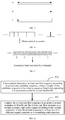
- a mapping manner of the candidate sequence in a transmission bandwidth may be shown in FIG. 7 .
- mapping may be performed in a manner of extending from the center of a transmission bandwidth to two sides of the transmission bandwidth, as shown by a in FIG. 7 ; or for each candidate sequence, mapping may be performed in a manner of extending from one edge of a transmission bandwidth to the other edge of the transmission bandwidth, which includes extending from the left edge to the right edge shown by b in FIG. 7 , or extending from the right edge to the left edge shown by c in FIG. 7 .
- the sequences may also be different.
- the terminal may generate a candidate sequence in the following cases:
- a frequency band corresponding to the at least one first sequence includes a direct current subcarrier.
- each first sequence is mapped to a corresponding frequency band, whether there is a direct current subcarrier in the corresponding frequency band, and a location of the direct current subcarrier are predefined or configured.
- a sequence element mapped to the direct current subcarrier is not transmitted, or no sequence element is mapped to the direct current subcarrier. Therefore, frequency bands that include direct current subcarriers may be flexibly configured, and the frequency bands including the direct current subcarriers may be used for access by the terminal.
- the sequence number is an absolute number or a relative number.
- the absolute number is an absolute frequency domain location number
- the relative number is a relative frequency domain location number.
- Each number of absolute frequency domain location numbers is in a one-to-one correspondence to a frequency band at an absolute location or an absolute frequency channel number, for example, an absolute frequency domain number may be equal to ⁇ F ⁇ f ⁇ % ⁇ N or ⁇ F ⁇ f ⁇ % ⁇ N , where ⁇ x ⁇ indicates rounding up, ⁇ x ⁇ indicates rounding down, and N is a positive integer.
- the relative frequency domain location number is a number obtained according to a location of the frequency band of the candidate sequence relative to a location of a first frequency band.
- the first frequency band is a frequency band in which the terminal accesses a system, and frequency bands on two sides of the first frequency band are separately obtained by performing division by using C MHz as a unit, for example, numbers -1, -2, -3, ... are separately obtained on the left side of the first frequency band according to a sequence, and numbers 1, 2, 3, ... are separately obtained on the right side of the first frequency band according to a sequence.
- Each sequence may be generated according to an independent initialization status value of a sequence generator.
- the initialization status value is determined according to the sequence number.
- parameters corresponding to the at least two first sequences are the same or different, and the parameters include at least one of sequence lengths, sequence numbers, or transmit power.
- a parameter of each first sequence is predefined or configured by the base station.
- a parameter of a first candidate sequence may be selected from at least two particular parameter values, or may be configured by using broadcast signaling, for example, by using an information element in a PBCH or an SIB (System information block, system information block) or another broadcast RRC signaling, or may be configured by using multicast signaling, for example, by using multicast DCI (Downlink Control Information, downlink control information)/DCI format 3/3A or another multicast RRC (Radio Resource Control, Radio Resource Control) signaling, or may be configured by using UE-specific (UE-specific) signaling, for example, by using a UE-specific PDCCH (Physical downlink control channel, physical downlink control channel), an ePDCCH (enhanced PDCCH, enhanced physical downlink control channel), or RRC signaling
- transmit power is constant in a time domain, a frequency domain, or a time-frequency domain, thereby obtaining gains of frequency domain ICIC (Inter-Cell Interference Coordination, inter-cell interference coordination), and reducing interference from the second sequence, that is, a pilot sequence, to a neighboring cell.
- ICIC Inter-Cell Interference Coordination, inter-cell interference coordination
- the terminal performs measurement according to a first sequence of the at least one first sequence, or the terminal performs measurement according to a sub-sequence of a first sequence of the at least one first sequence, for example, measures channel quality of a frequency band corresponding to the first sequence.
- the base station for measurement based on the first sequence, it is determined whether measurement may be performed based on more than one sequence segment. In this way, measurement may be flexibly performed by using different sequences, and moreover, an objective that different frequency bands corresponding to different sequences correspond to different measurement can be achieved.
- the terminal in the step of connecting the at least one first sequence to generate a second sequence, connects at least two first sequences to generate the second sequence.
- the terminal may determine at least one third sequence, where the third sequence is a predefined sequence or a sequence that is determined according to a preconfigured identifier; and connect the at least one first sequence and the at least one third sequence, to obtain the second sequence.
- the third sequence may be a sequence used for access.
- the preconfigured identifier may be a preconfigured sequence segment number or cell identifier.
- FIG. 10 is a schematic flowchart of a sequence generation method according to a third embodiment of the present invention.
- the sequence generation method includes: S20: Abase station determines at least one first sequence according to at least one candidate sequence, where a length of the candidate sequence is less than a sequence length corresponding to a maximum available system bandwidth.
- the candidate sequence may be generated according to a predefined length or a length that is selected by the base station or configured by a network control node.
- the base station controls the length of the candidate sequence, which is used on, for example, a cellular network.
- the network control node performs configuration, the network node controls the length of the candidate sequence, which is used on, for example, a wireless core network. If the length of the candidate sequence is preset by the base station, the base station further sends the preset length to a terminal.
- a length approximate to a length corresponding to an access bandwidth of the terminal and/or a bandwidth in which a network provides a service for the terminal may be selected as the length of the candidate sequence, or a length approximate to a length corresponding to a sub-bandwidth of an access bandwidth of the terminal and/or a bandwidth in which a network provides a service for the terminal may be selected as the length of the candidate sequence, that is, the length of the candidate sequence is less than a sequence length corresponding to a bandwidth used by the terminal.
- the length of the candidate sequence may also be less than a sequence length corresponding to a bandwidth used by the base station.
- the length of the candidate sequence is less than or equal to a first length threshold.
- the first length threshold may be a pilot sequence length corresponding to a system bandwidth of 20 MHz, 100 MHz or 1000 MHz. Lengths of different candidate sequences may be different, and in this way, a sequence whose length is more approximate to or shorter than that corresponding to an access bandwidth of the terminal and/or a bandwidth in which a network provides a service for the terminal may be selected to form a pilot sequence that can be seen by the base station.
- each first sequence of the at least one first sequence is a candidate sequence of the at least one candidate sequence or a sub-sequence of a candidate sequence of the at least one candidate sequence, and the sub-sequence is a part of the candidate sequence.
- the candidate sequence includes at least two candidate sequences
- the two candidate sequences are different, or when the first sequence includes at least two first sequences, the at least two first sequences are different; and candidate sequences or sub-sequences separately corresponding to the at least two first sequences are the same or different.
- S20 includes: S200: The base station obtains a sequence number, where the sequence number is used to generate an initialization status value of a sequence generator.
- the sequence number is obtained according to presetting or selection that is performed by the base station or according to an identifier corresponding to the base station.
- the base station may further send the preset sequence number to the terminal.
- the base station determines an access pilot of a frequency band that is used for access; and determines the sequence number of the at least one other frequency band according to a sequence relationship or a frequency band location relationship between the frequency band that is used for access and the at least one other frequency band.
- the sequence relationship between the frequency band that is used for access and the at least one other frequency band may be predefined, for example, a sequence segment number of the frequency band that is used for access and a sequence segment number of a sequence of the at least one other frequency band are in a progressive increase relationship according to frequency band locations, for example, a progressive increase step is 1, 2, 3, or the like.
- the base station may transmit, to the terminal, the access pilot that carries sequence configuration information of the at least one other frequency band, so that the terminal obtains the sequence configuration information of the at least one other frequency band according to information carried in the access pilot.
- the base station may indicate, to the terminal by using control signaling, configuration information of a pilot sequence in the at least one other frequency band except the frequency band that is used for access. Therefore, the base station may separately configure composition of a to-be-used sequence for terminals using different frequency bands, and separately send, in corresponding frequency bands, corresponding sequences; and in this case, sequences of different frequency bands may be unrelated, so that a sequence is used more flexibly.
- the terminal may be a legacy terminal, and in this case, a conventional sequence may be used in a frequency band corresponding to the legacy terminal, and the base station may provide a service for another terminal in another frequency band by using a sequence generated according to the present invention.
- the sequence number is an absolute number or a relative number.
- the absolute number is an absolute frequency domain location number
- the relative number is a relative frequency domain location number.
- Each number of absolute frequency domain location numbers is in a one-to-one correspondence to a frequency band at an absolute location or an absolute frequency channel number, for example, an absolute frequency domain number may be equal to ⁇ F ⁇ f ⁇ % ⁇ N or ⁇ F ⁇ f ⁇ % ⁇ N , where ⁇ x ⁇ indicates rounding up, ⁇ x ⁇ indicates rounding down, and N is a positive integer.
- the relative frequency domain location number is a number obtained according to a location of the frequency band of the candidate sequence relative to a location of a first frequency band.
- the first frequency band is a frequency band in which the terminal accesses a system, and frequency bands on two sides of the first frequency band are separately obtained by performing division by using C MHz as a unit, for example, numbers -1, -2, -3, ... are separately obtained on the left side of the first frequency band according to a sequence, and numbers 1, 2, 3, ... are separately obtained on the right side of the first frequency band according to a sequence.
- S201 Generate the at least one candidate sequence by using the sequence number.
- the base station In S201, the base station generates a corresponding quantity of candidate sequences according to the at least one sequence number; or the base station generates one candidate sequence according to one sequence number, and generates another candidate sequence according to a relative location of the at least one candidate sequence that is generated according to the sequence number.
- a manner of generating a candidate sequence may be controlled by the base station, for example, selection of the foregoing two manners of generating a candidate sequence may be controlled by the base station.
- each candidate sequence is generated independently.
- mapping may be performed in a manner of extending from the center of a transmission bandwidth to two sides of the transmission bandwidth; or for each candidate sequence, mapping may be performed in a manner of extending from one edge of a transmission bandwidth to the other edge of the transmission bandwidth, which includes extending from the left edge to the right edge, or extending from the right edge to the left edge.
- the sequences may also be different.
- a frequency band corresponding to the at least one first sequence includes a direct current subcarrier.
- each first sequence is mapped to a corresponding frequency band, whether there is a direct current subcarrier in the corresponding frequency band, and a location of the direct current subcarrier are predefined or configured by the base station for the terminal.
- a sequence element mapped to the direct current subcarrier is not transmitted, or no sequence element is mapped to the direct current subcarrier. Therefore, frequency bands that include direct current subcarriers may be flexibly configured, and the frequency bands including the direct current subcarriers may be used for access by the terminal.
- Each sequence may be generated according to an independent initialization status value of a sequence generator.
- the initialization status value is determined according to the sequence number.
- parameters corresponding to the at least two first sequences are the same or different, and the parameters include at least one of sequence lengths, sequence numbers, or transmit power.
- a parameter of each first sequence is predefined or configured by the base station.
- a parameter of a first candidate sequence may be selected from at least two particular parameter values, or may be configured by using broadcast signaling, or may be configured by using multicast signaling, or may be configured by using UE-specific (UE-specific) signaling.
- transmit power is constant in a time domain, a frequency domain, or a time-frequency domain, thereby obtaining gains of frequency domain ICIC, and reducing interference from the second sequence, that is, a pilot sequence, to a neighboring cell.
- the base station may further receive a measurement result of the terminal, where the measurement result is a result obtained by the terminal by performing measurement according to a first sequence of the at least one first sequence, or a result obtained by the terminal by performing measurement according to a sub-sequence of a first sequence of the at least one first sequence, for example, a result obtained by measuring channel quality of a frequency band corresponding to the first sequence.
- the terminal determines whether measurement may be performed based on more than one sequence segment. In this way, measurement may be flexibly performed by using different sequences, and moreover, an objective that different frequency bands corresponding to different sequences correspond to different measurement can be achieved.
- S21 Connect the at least one first sequence to generate a second sequence or directly use the at least one first sequence as a second sequence, and send a signal according to the second sequence, where the second sequence is at least one of a reference signal sequence or a scrambling code sequence.
- the second sequence includes but is not limited to at least one of the following: a CRS, a CSI-RS, a DL DM RS, a DRS, a PRS, an SRS, or an MBSFN RS.
- the base station may connect the at least one first sequence to generate the second sequence or directly use the at least one first sequence as the second sequence in the following three cases: a) The base station connects the at least one first sequence to obtain the second sequence, where in this case, a length of the second sequence is greater than a length of the first sequence; b) the base station selects a first sequence from the at least one first sequence, and directly uses the selected first sequence as the second sequence; and c) when a bandwidth used by the terminal is less than or equal to a frequency band corresponding to the candidate sequence, the base station selects a sequence from a candidate sequence and uses the sequence as the second sequence; or when a bandwidth used by the terminal is greater than a frequency band corresponding to the candidate sequence, the base station connects the at least one first sequence to generate the second sequence, where in this case, a length of the second sequence is greater than a length of the first sequence.
- the base station connects the at least one first sequence to obtain the second sequence
- the base station connects the at least one first sequence according to a location order, to form the second sequence, and then maps the second sequence to a time-frequency resource.
- the step of connecting the at least one first sequence to generate a second sequence includes: connecting, by the base station, at least two first sequences to generate the second sequence.
- the base station determines at least one third sequence, where the third sequence is a predefined sequence or a sequence that is determined according to a preconfigured identifier; and connects the at least one first sequence and the at least one third sequence, to obtain the second sequence.
- the third sequence may be a sequence used for access.
- the preconfigured identifier may be a preconfigured sequence segment number or cell identifier.
- both the base station and the terminal can generate, by means of connection, a sequence to be actually used or directly use the sequences or the short sequence as a sequence to be actually used, instead of generating a sequence according to a total used bandwidth or a maximum system bandwidth that is of a serving base station or a serving cell and that includes a bandwidth that serves the terminal. Therefore, sequence generation is more efficient and is less complex, and causes less energy consumption. Moreover, massive computation required when a sequence is generated according to the maximum system bandwidth can be avoided, which can reduce computing resources.
- the terminal may know only an access bandwidth of the terminal and/or a service bandwidth in which a network provides a service for the terminal, and may not know a bandwidth used by the eNB, and in this case, according to the sequence generation manner in the prior art, sequence generation for the terminal is less efficient and is more complex, which wastes computing resources and causes more energy consumption.
- sequences are mapped to different frequency bands more flexibly, which can therefore flexibly adapt to various different manners of using a frequency band by the terminal and the base station.
- FIG. 12 is a schematic structural diagram of a terminal for sequence generation according to a first embodiment of the present invention.
- the terminal 30 includes a first determining module 301 and a first generation module 302.
- the first determining module 301 is configured to determine at least one first sequence according to at least one candidate sequence, where a length of the candidate sequence is less than a sequence length corresponding to a maximum available system bandwidth.
- the first generation module 302 is connected to the first determining module 301, and is configured to connect the at least one first sequence to generate a second sequence or directly use the at least one first sequence as a second sequence, and receive a signal according to the second sequence, where the second sequence is at least one of a reference signal sequence or a scrambling code sequence.
- the second sequence includes but is not limited to at least one of the following: a CRS, a CSI-RS, a DL DM RS, a DRS, a PRS, an SRS, or an MBSFN RS.
- the second sequence is mapped to a frequency band in which the terminal receives a signal of the base station.
- each first sequence of the at least one first sequence is a candidate sequence of the at least one candidate sequence or a sub-sequence of a candidate sequence of the at least one candidate sequence, and the sub-sequence is a part of the candidate sequence.
- the candidate sequence includes at least two candidate sequences, the two candidate sequences are different, or when the first sequence includes at least two first sequences, the at least two first sequences are different; and candidate sequences or sub-sequences separately corresponding to the at least two first sequences are the same or different.
- the candidate sequence may be generated according to a predefined length or a length that is configured by a base station or selected by the terminal.
- the base station controls the length of the candidate sequence, which is used on, for example, a cellular network.
- the terminal selects a length
- the terminal controls the length of the candidate sequence, which is used in, for example, a direct connection between terminals.
- a length approximate to a length corresponding to an access bandwidth of the terminal and/or a bandwidth in which a network provides a service for the terminal may be selected as the length of the candidate sequence, or a length approximate to a length corresponding to a sub-bandwidth of an access bandwidth of the terminal and/or a bandwidth in which a network provides a service for the terminal may be selected as the length of the candidate sequence, that is, the length of the candidate sequence is less than a sequence length corresponding to a bandwidth used by the terminal.
- the length of the candidate sequence is less than or equal to a first length threshold.
- the first length threshold herein may be a sequence length corresponding to a total used bandwidth that is of a serving base station or a serving cell and that includes a bandwidth that serves the terminal.
- the first length threshold may be a pilot sequence length corresponding to a system bandwidth of 20 MHz, 100 MHz or 1000 MHz. Lengths of different candidate sequences may be different, and in this way, a sequence whose length is more approximate to or shorter than that corresponding to an access bandwidth of the terminal and/or a bandwidth in which a network provides a service for the terminal may be selected to form a pilot sequence that can be seen by the terminal.
- a frequency band corresponding to the at least one first sequence includes a direct current subcarrier.
- each first sequence is mapped to a corresponding frequency band, whether there is a direct current subcarrier in the corresponding frequency band, and a location of the direct current subcarrier are predefined or configured.
- a sequence element mapped to the direct current subcarrier is not transmitted, or no sequence element is mapped to the direct current subcarrier. Therefore, frequency bands that include direct current subcarriers may be flexibly configured, and the frequency bands including the direct current subcarriers may be used for access by the terminal.
- the first determining module 301 is further configured to obtain a sequence number, where the sequence number is used to generate an initialization status value of a sequence generator; and generate the at least one candidate sequence by using the sequence number.
- the first determining module 301 obtains the sequence number according to presetting or a configuration received from the base station or according to an identifier corresponding to the terminal.
- the first determining module 301 detects an access pilot of a frequency band that is used for access; and obtains, according to a detection result of the access pilot, the sequence number of at least one other frequency band except the frequency band that is used for access; or receives control signaling according to the access pilot, where the control signaling includes configuration information of a pilot sequence in at least one other frequency band except the frequency band that is used for access, and obtains, according to the configuration information of the pilot sequence, the sequence number of the at least one other frequency band except the frequency band that is used for access, where the configuration information of the pilot sequence includes the sequence number of the at least one other frequency band except the frequency band that is used for access; or the terminal receives control signaling sent by the base station, where the control signaling includes information about at least one sequence number and/or information about a manner of forming the second sequence.
- the obtaining, by the first determining module 301 according to a detection result of the access pilot, the sequence number of at least one other frequency band except the frequency band that is used for access includes: determining, by the first determining module 301, the sequence number of the at least one other frequency band according to sequence configuration information that is of the at least one other frequency band and that is carried in the access pilot, and/or a sequence relationship or a frequency band location relationship between the frequency band that is used for access and the at least one other frequency band.
- the sequence relationship between the frequency band that is used for access and the at least one other frequency band may be predefined, for example, a sequence segment number of the frequency band that is used for access and a sequence segment number of a sequence of the at least one other frequency band are in a progressive increase relationship according to locations of sequence segments in the second sequence, for example, a progressive increase step is 1, 2, 3, or the like.
- the first determining module 301 When the first determining module 301 generates the at least one candidate sequence by using the sequence number, the first determining module 301 generates a corresponding quantity of candidate sequences according to the at least one sequence number; or generates one candidate sequence according to one sequence number, and generates another candidate sequence according to a relative location of the at least one candidate sequence that is generated according to the sequence number.
- a manner of generating a candidate sequence may be controlled by the base station, for example, selection of the foregoing two manners of generating a candidate sequence may be controlled by the base station.
- the sequence number is an absolute number or a relative number.
- the absolute number is an absolute frequency domain location number, or the relative number is a relative frequency domain location number.
- Each number of absolute frequency domain location numbers is in a one-to-one correspondence to a frequency band at an absolute location or an absolute frequency channel number, for example, an absolute frequency domain number may be equal to ⁇ F ⁇ f ⁇ % ⁇ N or ⁇ F ⁇ f ⁇ % ⁇ N , where ⁇ x ⁇ indicates rounding up, ⁇ x ⁇ indicates rounding down, and N is a positive integer.
- the relative frequency domain location number is a number obtained according to a location of the frequency band of the candidate sequence relative to a location of a first frequency band.
- the first frequency band is a frequency band in which the terminal accesses a system, and frequency bands on two sides of the first frequency band are separately obtained by performing division by using C MHz as a unit, for example, numbers -1, -2, -3, ... are separately obtained on the left side of the first frequency band according to a sequence, and numbers 1, 2, 3, ... are separately obtained on the right side of the first frequency band according to a sequence.
- Each sequence may be generated according to an independent initialization status value of a sequence generator.
- the initialization status value is determined according to the sequence number.
- parameters corresponding to the at least two first sequences are the same or different, and the parameters include at least one of sequence lengths, sequence numbers, or transmit power.
- a parameter of each first sequence is predefined or configured by the base station for the terminal.
- a parameter of a first candidate sequence may be selected from at least two particular parameter values, or may be configured by using broadcast signaling, or may be configured by using multicast signaling, or may be configured by using UE-specific (UE-specific) signaling.
- transmit power is constant in a time domain, a frequency domain, or a time-frequency domain, thereby obtaining gains of frequency domain ICIC, and reducing interference from the second sequence, that is, a pilot sequence, to a neighboring cell.
- the first connection and generation module is further configured to connect at least two first sequences to generate the second sequence.
- the first connection and generation module is further configured to determine at least one third sequence, where the third sequence is a predefined sequence or a sequence that is determined according to a preconfigured identifier; and connect the at least one first sequence and the at least one third sequence, to obtain the second sequence.
- the third sequence may be a sequence used for access.
- the preconfigured identifier may be a preconfigured sequence segment number or cell identifier.
- the terminal 30 further includes a first measurement module 303, where the first measurement module 303 is configured to perform measurement according to a first sequence of the at least one first sequence, or perform measurement according to a sub-sequence of a first sequence of the at least one first sequence, for example, measure channel quality of a frequency band corresponding to the first sequence.
- the first measurement module 303 is configured to perform measurement according to a first sequence of the at least one first sequence, or perform measurement according to a sub-sequence of a first sequence of the at least one first sequence, for example, measure channel quality of a frequency band corresponding to the first sequence.
- the first determining module 301 determines at least one first sequence according to at least one candidate sequence, where a length of the candidate sequence is less than a sequence length corresponding to a maximum available system bandwidth; and the first generation module 302 connects the at least one first sequence to generate a second sequence or directly uses the at least one first sequence as a second sequence, and receives a signal according to the second sequence, where the second sequence is at least one of a reference signal sequence or a scrambling code sequence. Therefore, on the basis that only several sequences or even a short sequence is generated, the terminal can generate, by means of connection, a sequence to be actually used or directly use the sequences or the short sequence as a sequence to be actually used, that is, a second sequence. Therefore, sequence generation is more efficient and is less complex, and causes less energy consumption. Moreover, massive computation required when a sequence is generated according to a maximum system bandwidth in the prior art can be avoided, which can reduce computing resources.
- FIG. 13 is a schematic structural diagram of a base station for sequence generation according to a first embodiment of the present invention.
- the base station 31 includes a second determining module 311 and a second generation module 312.
- the second determining module 311 is configured to determine at least one first sequence according to at least one candidate sequence, where a length of the candidate sequence is less than a sequence length corresponding to a maximum available system bandwidth.
- the second generation module 312 is connected to the second determining module 311, and is configured to connect the at least one first sequence to generate a second sequence or directly use the at least one first sequence as a second sequence, and send a signal according to the second sequence, where the second sequence is at least one of a reference signal sequence or a scrambling code sequence.
- the second sequence includes but is not limited to at least one of the following: a CRS, a CSI-RS, a DL DM RS, a DRS, a PRS, an SRS, or an MBSFN RS.
- each first sequence of the at least one first sequence is a candidate sequence of the at least one candidate sequence or a sub-sequence of a candidate sequence of the at least one candidate sequence, and the sub-sequence is a part of the candidate sequence.
- the candidate sequence includes at least two candidate sequences, the two candidate sequences are different, or when the first sequence includes at least two first sequences, the at least two first sequences are different; and candidate sequences or sub-sequences separately corresponding to the at least two first sequences are the same or different.
- the candidate sequence may be generated according to a predefined length or a length that is selected by the base station or configured by a network control node.
- the base station controls the length of the candidate sequence, which is used on, for example, a cellular network.
- the network control node performs configuration, the network node controls the length of the candidate sequence, which is used on, for example, a wireless core network. If the length of the candidate sequence is preset, the second generation module 312 further sends the preset length to a terminal.
- a length approximate to a length corresponding to an access bandwidth of the terminal and/or a bandwidth in which a network provides a service for the terminal may be selected as the length of the candidate sequence, or a length approximate to a length corresponding to a sub-bandwidth of an access bandwidth of the terminal and/or a bandwidth in which a network provides a service for the terminal may be selected as the length of the candidate sequence, that is, the length of the candidate sequence is less than a sequence length corresponding to a bandwidth used by the terminal.
- the length of the candidate sequence may also be less than a sequence length corresponding to a bandwidth used by the base station.
- the length of the candidate sequence is less than or equal to a first length threshold.
- the first length threshold may be a pilot sequence length corresponding to a system bandwidth of 20 MHz, 100 MHz or 1000 MHz. Lengths of different candidate sequences may be different, and in this way, a sequence whose length is more approximate to or shorter than that corresponding to an access bandwidth of the terminal and/or a bandwidth in which a network provides a service for the terminal may be selected to form a pilot sequence that can be seen by the base station.
- a frequency band corresponding to the at least one first sequence includes a direct current subcarrier.
- each first sequence is mapped to a corresponding frequency band, whether there is a direct current subcarrier in the corresponding frequency band, and a location of the direct current subcarrier are predefined or configured by the base station for the terminal.
- a sequence element mapped to the direct current subcarrier is not transmitted, or no sequence element is mapped to the direct current subcarrier. Therefore, frequency bands that include direct current subcarriers may be flexibly configured, and the frequency bands including the direct current subcarriers may be used for access by the terminal.
- the second determining module 311 is further configured to obtain a sequence number, where the sequence number is used to generate an initialization status value of a sequence generator; and generate the at least one candidate sequence by using the sequence number.
- the second determining module 311 obtains the sequence number according to presetting or selection that is performed by the base station or according to an identifier corresponding to the base station, and sends the preset sequence number to the terminal.
- the second determining module 311 determines an access pilot of a frequency band that is used for access; and determines the sequence number of the at least one other frequency band according to a sequence relationship or a frequency band location relationship between the frequency band that is used for access and the at least one other frequency band.
- the sequence relationship between the frequency band that is used for access and the at least one other frequency band may be predefined, for example, a sequence segment number of the frequency band that is used for access and a sequence segment number of a sequence of the at least one other frequency band are in a progressive increase relationship according to frequency band locations, for example, a progressive increase step is 1, 2, 3, or the like.
- the base station 31 further includes a transmission module 313, connected to the second determining module 311, and configured to transmit, to the terminal, the access pilot that carries sequence configuration information of the at least one other frequency band, so that the terminal obtains the sequence configuration information of the at least one other frequency band according to information carried in the access pilot.
- the transmission module 313 is further configured to indicate, to the terminal by using control signaling, configuration information of a pilot sequence in the at least one other frequency band except the frequency band that is used for access.
- the base station may separately configure composition of a to-be-used sequence for terminals using different frequency bands, and separately send, in corresponding frequency bands, corresponding sequences; and in this case, sequences of different frequency bands may be unrelated, so that a sequence is used more flexibly.
- the terminal may be a legacy terminal, and in this case, a conventional sequence may be used in a frequency band corresponding to the legacy terminal, and the base station may provide a service for another terminal in another frequency band by using a sequence generated according to the present invention.
- the second determining module 311 When the second determining module 311 generates the at least one candidate sequence by using the sequence number, the second determining module 311 generates a corresponding quantity of candidate sequences according to the at least one sequence number. Alternatively, the second determining module 311 generates one candidate sequence according to one sequence number, and generates another candidate sequence according to a relative location of the at least one candidate sequence that is generated according to the sequence number.
- a manner of generating a candidate sequence may be controlled by the base station, for example, selection of the foregoing two manners of generating a candidate sequence may be controlled by the base station.
- Each candidate sequence is generated independently. For each candidate sequence, mapping may be performed in a manner of extending from the center of a transmission bandwidth to two sides of the transmission bandwidth; or for each candidate sequence, mapping may be performed in a manner of extending from one edge of a transmission bandwidth to the other edge of the transmission bandwidth, which includes extending from the left edge to the right edge, or extending from the right edge to the left edge.
- mapping may be performed in a manner of extending from the center of a transmission bandwidth to two sides of the transmission bandwidth; or for each candidate sequence, mapping may be performed in a manner of extending from one edge of a transmission bandwidth to the other edge of the transmission bandwidth, which includes extending from the left edge to the right edge, or extending from the right edge to the left edge.
- the sequence number is an absolute number or a relative number.
- the absolute number is an absolute frequency domain location number
- the relative number is a relative frequency domain location number.
- Each number of absolute frequency domain location numbers is in a one-to-one correspondence to a frequency band at an absolute location or an absolute frequency channel number, for example, an absolute frequency domain number may be equal to ⁇ F ⁇ f ⁇ % ⁇ N or ⁇ F ⁇ f ⁇ % ⁇ N , where ⁇ x ⁇ indicates rounding up, ⁇ x ⁇ indicates rounding down, and N is a positive integer.
- the relative frequency domain location number is a number obtained according to a location of the frequency band of the candidate sequence relative to a location of a first frequency band.
- the first frequency band is a frequency band in which the terminal accesses a system, and frequency bands on two sides of the first frequency band are separately obtained by performing division by using C MHz as a unit, for example, numbers -1, -2, -3, ... are separately obtained on the left side of the first frequency band according to a sequence, and numbers 1, 2, 3, ... are separately obtained on the right side of the first frequency band according to a sequence.
- Each sequence may be generated according to an independent initialization status value of a sequence generator.
- the initialization status value is determined according to the sequence number.
- parameters corresponding to the at least two first sequences are the same or different, and the parameters include at least one of sequence lengths, sequence numbers, or transmit power.
- a parameter of each first sequence is predefined or configured by the base station for the terminal.
- a parameter of a first candidate sequence may be selected from at least two particular parameter values, or may be configured by using broadcast signaling, or may be configured by using multicast signaling, or may be configured by using UE-specific (UE-specific) signaling.
- transmit power is constant in a time domain, a frequency domain, or a time-frequency domain, thereby obtaining gains of frequency domain ICIC, and reducing interference from the second sequence, that is, a pilot sequence, to a neighboring cell.
- the second determining module 312 may connect at least two first sequences to generate the second sequence.
- the second determining module 311 may determine at least one third sequence, where the third sequence is a predefined sequence or a sequence that is determined according to a preconfigured identifier; and connect the at least one first sequence and the at least one third sequence, to obtain the second sequence.
- the third sequence may be a sequence used for access.
- the preconfigured identifier may be a preconfigured sequence segment number or cell identifier.
- the base station 31 further includes a receiving module 314, configured to receive a measurement result of the terminal, where the measurement result is a result obtained by the terminal by performing measurement according to a first sequence of the at least one first sequence, or a result obtained by the terminal by performing measurement according to a sub-sequence of a first sequence of the at least one first sequence, for example, a result obtained by measuring channel quality of a frequency band corresponding to the first sequence.
- the terminal determines whether measurement may be performed based on more than one sequence segment. In this way, measurement may be flexibly performed by using different sequences, and moreover, an objective that different frequency bands corresponding to different sequences correspond to different measurement can be achieved.
- both the base station and the terminal can generate, by means of connection, a sequence to be actually used or directly use the sequences or the short sequence as a sequence to be actually used, instead of generating a sequence according to a total used bandwidth or a maximum system bandwidth that is of a serving base station or a serving cell and that includes a bandwidth that serves the terminal.
- the terminal may know only an access bandwidth of the terminal and/or a service bandwidth in which a network provides a service for the terminal, and may not know a bandwidth used by the eNB, and in this case, according to the sequence generation manner in the prior art, sequence generation for the terminal is less efficient and is more complex, which wastes computing resources and causes more energy consumption.
- sequences are mapped to different frequency bands more flexibly, which can therefore flexibly adapt to various different manners of using a frequency band by the terminal and the base station.
- FIG. 14 is a schematic structural diagram of a terminal for sequence generation according to a second embodiment of the present invention.
- the terminal 40 includes: a processor 401, a transceiver 402, a memory 403, and a data bus 404.
- the processor 401, the transceiver 402, and the memory 403 are interconnected by using the data bus 404, to communicate with each other.
- the processor 401 determines at least one first sequence according to at least one candidate sequence, where a length of the candidate sequence is less than a sequence length corresponding to a maximum available system bandwidth; and connects the at least one first sequence to generate a second sequence or directly uses the at least one first sequence as a second sequence, and receives a signal according to the second sequence, where the second sequence is at least one of a reference signal sequence or a scrambling code sequence.
- the second sequence includes but is not limited to at least one of the following: a CRS, a CSI-RS, a DL DM RS, a DRS, a PRS, an SRS, or an MBSFN RS.
- the second sequence is mapped to a frequency band in which the terminal receives a signal of the base station.
- each first sequence of the at least one first sequence is a candidate sequence of the at least one candidate sequence or a sub-sequence of a candidate sequence of the at least one candidate sequence, and the sub-sequence is a part of the candidate sequence.
- the candidate sequence includes at least two candidate sequences, the two candidate sequences are different, or when the first sequence includes at least two first sequences, the at least two first sequences are different; and candidate sequences or sub-sequences separately corresponding to the at least two first sequences are the same or different.
- the candidate sequence may be generated according to a predefined length or a length that is configured by a base station or selected by the terminal.
- the base station controls the length of the candidate sequence, which is used on, for example, a cellular network.
- the terminal selects a length
- the terminal controls the length of the candidate sequence, which is used in, for example, a direct connection between terminals.
- a length approximate to a length corresponding to an access bandwidth of the terminal and/or a bandwidth in which a network provides a service for the terminal may be selected as the length of the candidate sequence, or a length approximate to a length corresponding to a sub-bandwidth of an access bandwidth of the terminal and/or a bandwidth in which a network provides a service for the terminal may be selected as the length of the candidate sequence, that is, the length of the candidate sequence is less than a sequence length corresponding to a bandwidth used by the terminal.
- the length of the candidate sequence is less than or equal to a first length threshold.
- the first length threshold herein may be a sequence length corresponding to a total used bandwidth that is of a serving base station or a serving cell and that includes a bandwidth that serves the terminal.
- the first length threshold may be a pilot sequence length corresponding to a system bandwidth of 20 MHz, 100 MHz or 1000 MHz. Lengths of different candidate sequences may be different, and in this way, a sequence whose length is more approximate to or shorter than that corresponding to an access bandwidth of the terminal and/or a bandwidth in which a network provides a service for the terminal may be selected to form a pilot sequence that can be seen by the terminal.
- the transceiver 402 receives a first length threshold that is of the candidate sequence and that is configured by the base station side and sent by the base station side.
- the memory 403 stores the first length threshold of the candidate sequence.
- a frequency band corresponding to the at least one first sequence includes a direct current subcarrier.
- each first sequence is mapped to a corresponding frequency band, whether there is a direct current subcarrier in the corresponding frequency band, and a location of the direct current subcarrier are predefined or configured.
- a sequence element mapped to the direct current subcarrier is not transmitted, or no sequence element is mapped to the direct current subcarrier. Therefore, frequency bands that include direct current subcarriers may be flexibly configured, and the frequency bands including the direct current subcarriers may be used for access by the terminal.
- the processor 401 obtains a sequence number, where the sequence number is used to generate an initialization status value of a sequence generator; and generates the at least one candidate sequence by using the sequence number.
- the processor 401 obtains the sequence number according to presetting or a configuration received from the base station or according to an identifier corresponding to the terminal.
- the processor 401 When the processor 401 obtains the sequence number, the processor 401 detects an access pilot of a frequency band that is used for access; and obtains, according to a detection result of the access pilot, the sequence number of at least one other frequency band except the frequency band that is used for access; or receives control signaling according to the access pilot, where the control signaling includes configuration information of a pilot sequence in at least one other frequency band except the frequency band that is used for access, and obtains, according to the configuration information of the pilot sequence, the sequence number of the at least one other frequency band except the frequency band that is used for access, where the configuration information of the pilot sequence includes the sequence number of the at least one other frequency band except the frequency band that is used for access; or receives control signaling sent by the base station, where the control signaling includes information about at least one sequence number and/or information about a manner of forming the second sequence.
- the obtaining, by the processor 401 according to a detection result of the access pilot, the sequence number of at least one other frequency band except the frequency band that is used for access includes: determining, by the processor 401, the sequence number of the at least one other frequency band according to sequence configuration information that is of the at least one other frequency band and that is carried in the access pilot, and/or a sequence relationship or a frequency band location relationship between the frequency band that is used for access and the at least one other frequency band.
- the sequence relationship between the frequency band that is used for access and the at least one other frequency band may be predefined, for example, a sequence segment number of the frequency band that is used for access and a sequence segment number of a sequence of the at least one other frequency band are in a progressive increase relationship according to locations of sequence segments in the second sequence, for example, a progressive increase step is 1, 2, 3, or the like.
- the processor 401 When the processor 401 generates the at least one candidate sequence by using the sequence number, the processor 401 generates a corresponding quantity of candidate sequences according to the at least one sequence number; or generates one candidate sequence according to one sequence number, and generates another candidate sequence according to a relative location of the at least one candidate sequence that is generated according to the sequence number.
- a manner of generating a candidate sequence may be controlled by the base station, for example, selection of the foregoing two manners of generating a candidate sequence may be controlled by the base station.
- the sequence number is an absolute number or a relative number.
- the absolute number is an absolute frequency domain location number, or the relative number is a relative frequency domain location number.
- Each number of absolute frequency domain location numbers is in a one-to-one correspondence to a frequency band at an absolute location or an absolute frequency channel number, for example, an absolute frequency domain number may be equal to ⁇ F ⁇ f ⁇ % ⁇ N or ⁇ F ⁇ f ⁇ % ⁇ N , where ⁇ x ⁇ indicates rounding up, ⁇ x ⁇ indicates rounding down, and N is a positive integer.
- the relative frequency domain location number is a number obtained according to a location of the frequency band of the candidate sequence relative to a location of a first frequency band.
- the first frequency band is a frequency band in which the terminal accesses a system, and frequency bands on two sides of the first frequency band are separately obtained by performing division by using C MHz as a unit, for example, numbers -1, -2, -3, ... are separately obtained on the left side of the first frequency band according to a sequence, and numbers 1, 2, 3, ... are separately obtained on the right side of the first frequency band according to a sequence.
- Each sequence may be generated according to an independent initialization status value of a sequence generator.
- the initialization status value is determined according to the sequence number.
- parameters corresponding to the at least two first sequences are the same or different, and the parameters include at least one of sequence lengths, sequence numbers, or transmit power.
- a parameter of each first sequence is predefined or configured by the base station for the terminal.
- a parameter of a first candidate sequence may be selected from at least two particular parameter values, or may be configured by using broadcast signaling, or may be configured by using multicast signaling, or may be configured by using UE-specific (UE-specific) signaling.
- transmit power is constant in a time domain, a frequency domain, or a time-frequency domain, thereby obtaining gains of frequency domain ICIC, and reducing interference from the second sequence, that is, a pilot sequence, to a neighboring cell.
- the processor 401 may connect at least two first sequences to generate the second sequence.
- the processor 401 may further determine at least one third sequence, where the third sequence is a predefined sequence or a sequence that is determined according to a preconfigured identifier; and connect the at least one first sequence and the at least one third sequence, to obtain the second sequence.
- the third sequence may be a sequence used for access.
- the preconfigured identifier may be a preconfigured sequence segment number or cell identifier.
- the processor 401 further performs measurement according to a first sequence of the at least one first sequence, or performs measurement according to a sub-sequence of a first sequence of the at least one first sequence, for example, measures channel quality of a frequency band corresponding to the first sequence.
- a sub-sequence of a first sequence of the at least one first sequence for example, measures channel quality of a frequency band corresponding to the first sequence.
- the processor 401 determines at least one first sequence according to at least one candidate sequence, where a length of the candidate sequence is less than a sequence length corresponding to a maximum available system bandwidth; and connects the at least one first sequence to generate a second sequence or directly uses the at least one first sequence as a second sequence, and receives a signal according to the second sequence, where the second sequence is at least one of a reference signal sequence or a scrambling code sequence. Therefore, on the basis that only several sequences or even a short sequence is generated, the terminal can generate, by means of connection, a sequence to be actually used or directly use the sequences or the short sequence as a sequence to be actually used, that is, a second sequence. Therefore, sequence generation is more efficient and is less complex, and causes less energy consumption. Moreover, massive computation required when a sequence is generated according to a maximum system bandwidth in the prior art can be avoided, which can reduce computing resources.
- FIG. 15 is a schematic structural diagram of a base station for sequence generation according to a second embodiment of the present invention.
- the base station 41 includes: a processor 411, a transceiver 412, a memory 413, and a data bus 414.
- the processor 411, the transceiver 412, and the memory 413 are interconnected by using the data bus 414, to communicate with each other.
- the processor 411 determines at least one first sequence according to at least one candidate sequence, where a length of the candidate sequence is less than a sequence length corresponding to a maximum available system bandwidth; and connects the at least one first sequence to generate a second sequence or directly uses the at least one first sequence as a second sequence, and sends a signal according to the second sequence, where the second sequence is at least one of a reference signal sequence or a scrambling code sequence.
- the second sequence includes but is not limited to at least one of the following: a CRS, a CSI-RS, a DL DM RS, a DRS, a PRS, an SRS, or an MBSFN RS.
- each first sequence of the at least one first sequence is a candidate sequence of the at least one candidate sequence or a sub-sequence of a candidate sequence of the at least one candidate sequence, and the sub-sequence is a part of the candidate sequence.
- the candidate sequence includes at least two candidate sequences, the two candidate sequences are different, or when the first sequence includes at least two first sequences, the at least two first sequences are different; and candidate sequences or sub-sequences separately corresponding to the at least two first sequences are the same or different.
- the candidate sequence may be generated according to a predefined length or a length that is selected by the base station or configured by a network control node.
- the base station controls the length of the candidate sequence, which is used on, for example, a cellular network.
- the network control node performs configuration, the network node controls the length of the candidate sequence, which is used on, for example, a wireless core network. If the length of the candidate sequence is preset, the transceiver 412 further sends the preset length to a terminal.
- a length approximate to a length corresponding to an access bandwidth of the terminal and/or a bandwidth in which a network provides a service for the terminal may be selected as the length of the candidate sequence, or a length approximate to a length corresponding to a sub-bandwidth of an access bandwidth of the terminal and/or a bandwidth in which a network provides a service for the terminal may be selected as the length of the candidate sequence, that is, the length of the candidate sequence is less than a sequence length corresponding to a bandwidth used by the terminal.
- the length of the candidate sequence may also be less than a sequence length corresponding to a bandwidth used by the base station.
- the length of the candidate sequence is less than or equal to a first length threshold.
- the first length threshold may be a pilot sequence length corresponding to a system bandwidth of 20 MHz, 100 MHz or 1000 MHz.
- the memory 413 stores the first length threshold. Lengths of different candidate sequences may be different, and in this way, a sequence whose length is more approximate to or shorter than that corresponding to an access bandwidth of the terminal and/or a bandwidth in which a network provides a service for the terminal may be selected to form a pilot sequence that can be seen by the base station.
- a frequency band corresponding to the at least one first sequence includes a direct current subcarrier.
- each first sequence is mapped to a corresponding frequency band, whether there is a direct current subcarrier in the corresponding frequency band, and a location of the direct current subcarrier are predefined or configured by the base station for the terminal.
- a sequence element mapped to the direct current subcarrier is not transmitted, or no sequence element is mapped to the direct current subcarrier. Therefore, frequency bands that include direct current subcarriers may be flexibly configured, and the frequency bands including the direct current subcarriers may be used for access by the terminal.
- the processor 411 obtains a sequence number, where the sequence number is used to generate an initialization status value of a sequence generator; and generates the at least one candidate sequence by using the sequence number.
- the transceiver 412 may be configured to send the preset sequence number to the terminal.
- the processor 411 obtains the sequence number according to presetting or selection that is performed by the base station or according to an identifier corresponding to the base station, and sends the preset sequence number to the terminal.
- the processor 411 determines an access pilot of a frequency band that is used for access; and determines the sequence number of the at least one other frequency band according to a sequence relationship or a frequency band location relationship between the frequency band that is used for access and the at least one other frequency band.
- the sequence relationship between the frequency band that is used for access and the at least one other frequency band may be predefined, for example, a sequence segment number of the frequency band that is used for access and a sequence segment number of a sequence of the at least one other frequency band are in a progressive increase relationship according to frequency band locations, for example, a progressive increase step is 1, 2, 3, or the like.
- the transceiver 412 further transmits, to the terminal, the access pilot that carries sequence configuration information of the at least one other frequency band, so that the terminal obtains the sequence configuration information of the at least one other frequency band according to information carried in the access pilot.
- the transceiver 412 further indicates, to the terminal by using control signaling, configuration information of a pilot sequence in the at least one other frequency band except the frequency band that is used for access. Therefore, the base station may separately configure composition of a to-be-used sequence for terminals using different frequency bands, and separately send, in corresponding frequency bands, corresponding sequences; and in this case, sequences of different frequency bands may be unrelated, so that a sequence is used more flexibly.
- the terminal may be a legacy terminal, and in this case, a conventional sequence may be used in a frequency band corresponding to the legacy terminal, and the base station may provide a service for another terminal in another frequency band by using a sequence generated according to the present invention.
- the processor 411 When the processor 411 generates the at least one candidate sequence by using the sequence number, the processor 411 generates a corresponding quantity of candidate sequences according to the at least one sequence number. Alternatively, the processor 411 generates one candidate sequence according to one sequence number, and generates another candidate sequence according to a relative location of the at least one candidate sequence that is generated according to the sequence number.
- a manner of generating a candidate sequence may be controlled by the base station, for example, selection of the foregoing two manners of generating a candidate sequence may be controlled by the base station.
- Each candidate sequence is generated independently. For each candidate sequence, mapping may be performed in a manner of extending from the center of a transmission bandwidth to two sides of the transmission bandwidth; or for each candidate sequence, mapping may be performed in a manner of extending from one edge of a transmission bandwidth to the other edge of the transmission bandwidth, which includes extending from the left edge to the right edge, or extending from the right edge to the left edge.
- mapping may be performed in a manner of extending from the center of a transmission bandwidth to two sides of the transmission bandwidth; or for each candidate sequence, mapping may be performed in a manner of extending from one edge of a transmission bandwidth to the other edge of the transmission bandwidth, which includes extending from the left edge to the right edge, or extending from the right edge to the left edge.
- the sequence number is an absolute number or a relative number.
- the absolute number is an absolute frequency domain location number
- the relative number is a relative frequency domain location number.
- Each number of absolute frequency domain location numbers is in a one-to-one correspondence to a frequency band at an absolute location or an absolute frequency channel number, for example, an absolute frequency domain number may be equal to ⁇ F ⁇ f ⁇ % ⁇ N or ⁇ F ⁇ f ⁇ % ⁇ N , where ⁇ x ⁇ indicates rounding up, ⁇ x ⁇ indicates rounding down, and N is a positive integer.
- the relative frequency domain location number is a number obtained according to a location of the frequency band of the candidate sequence relative to a location of a first frequency band.
- the first frequency band is a frequency band in which the terminal accesses a system, and frequency bands on two sides of the first frequency band are separately obtained by performing division by using C MHz as a unit, for example, numbers -1, -2, -3, ... are separately obtained on the left side of the first frequency band according to a sequence, and numbers 1, 2, 3, ... are separately obtained on the right side of the first frequency band according to a sequence.
- Each sequence may be generated according to an independent initialization status value of a sequence generator.
- the initialization status value is determined according to the sequence number.
- parameters corresponding to the at least two first sequences are the same or different, and the parameters include at least one of sequence lengths, sequence numbers, or transmit power.
- a parameter of each first sequence is predefined or configured by the base station for the terminal.
- a parameter of a first candidate sequence may be selected from at least two particular parameter values, or may be configured by using broadcast signaling, or may be configured by using multicast signaling, or may be configured by using UE-specific (UE-specific) signaling.
- transmit power is constant in a time domain, a frequency domain, or a time-frequency domain, thereby obtaining gains of frequency domain ICIC, and reducing interference from the second sequence, that is, a pilot sequence, to a neighboring cell.
- the transceiver 412 further receives a measurement result of the terminal, where the measurement result is a result obtained by the terminal by performing measurement according to a first sequence of the at least one first sequence, or a result obtained by the terminal by performing measurement according to a sub-sequence of a first sequence of the at least one first sequence, for example, a result obtained by measuring channel quality corresponding to the first sequence.
- the terminal determines whether measurement may be performed based on more than one sequence segment. In this way, measurement may be flexibly performed by using different sequences, and moreover, an objective that different frequency bands corresponding to different sequences correspond to different measurement can be achieved.
- the processor 411 may connect at least two first sequences to generate the second sequence.
- the processor 411 may further determine at least one third sequence, where the third sequence is a predefined sequence or a sequence that is determined according to a preconfigured identifier; and connect the at least one first sequence and the at least one third sequence, to obtain the second sequence.
- the third sequence may be a sequence used for access.
- the preconfigured identifier may be a preconfigured sequence segment number or cell identifier.
- a terminal determines at least one first sequence according to at least one candidate sequence, where a length of the candidate sequence is less than a sequence length corresponding to a maximum available system bandwidth; and connects the at least one first sequence to generate a second sequence or directly uses the at least one first sequence as a second sequence, and receives a signal according to the second sequence, where the second sequence is at least one of a reference signal sequence or a scrambling code sequence. Therefore, on the basis that only several sequences or even a short sequence is generated, both the terminal and a base station can generate, by means of connection, a sequence to be actually used or directly use the sequences or the short sequence as a sequence to be actually used, that is, a second sequence. Therefore, sequence generation is more efficient and is less complex, and causes less energy consumption. Moreover, massive computation required when a sequence is generated according to a maximum system bandwidth in the prior art can be avoided, which can reduce computing resources.
- sequences are mapped to different frequency bands more flexibly, which can therefore flexibly adapt to various different manners of using a frequency band by the terminal and the base station.
- the second sequence is not limited to a reference signal sequence or a scrambling code sequence.
- a description is provided by using an example in which a sequence is mapped to a frequency domain, but the present invention may also be used in a scenario in which a sequence is mapped to a time domain or a time-frequency domain.
- a sequence is a downlink sequence, but a sequence may also be an uplink sequence, or may be a sequence transmitted between peer terminals.
- a sequence may be further processed, for example, scrambled before used.
Landscapes
- Engineering & Computer Science (AREA)
- Signal Processing (AREA)
- Computer Networks & Wireless Communication (AREA)
- Mobile Radio Communication Systems (AREA)
Claims (6)
- Procédé de génération de séquences exécuté par un terminal, le procédé comprenant : l'obtention d'un numéro de séquence


la génération d'au moins une séquence candidate (S101) par :la génération, selon une formule suivante, d'une valeur de statut d'initialisation qui est celle d'un générateur de séquence et qui correspond à l'au moins une séquence candidate :

 la génération de l'au moins une séquence candidate en fonction de la valeur de statut d'initialisation ;la détermination dans une première alternative d'au moins deux premières séquences en fonction de l'au moins une séquence candidate ou dans une seconde alternative, la détermination d'au moins une première séquence en fonction de l'au moins une séquence candidate, dans lequel une longueur de la séquence candidate est inférieure à une longueur de séquence correspondant à une bande passante de système disponible maximale (S10) ;dans la première alternative, la connexion d'au moins deux premières séquences des au moins deux premières séquences pour générer une seconde séquence ou dans la seconde alternative, l'utilisation directe de l'au moins une première séquence comme seconde séquence, et la réception d'un signal en fonction de la seconde séquence, dans lequel la seconde séquence est au moins l'une d'une séquence de signal de référence ou d'une séquence de code de brouillage (S11) ;dans lequel chaque première séquence est une séquence candidate de l'au moins une séquence candidate ou une sous-séquence d'une séquence candidate de l'au moins une séquence candidate, et la sous-séquence fait partie de la séquence candidate.
 - Procédé selon la revendication 1, dans lequel l'étape d'obtention du numéro de séquence comprend :la détection d'un pilote d'accès d'une bande de fréquences qui est utilisée pour l'accès ; etl'obtention en fonction d'un résultat de détection du pilote d'accès, du numéro de séquence d'au moins une autre bande de fréquences à l'exception de la bande de fréquences qui est utilisée pour l'accès ; ou la réception d'une signalisation de commande en fonction du pilote d'accès, dans lequel la signalisation de commande comprend des informations de configuration d'une séquence pilote dans au moins une autre bande de fréquences à l'exception de la bande de fréquences qui est utilisée pour l'accès, et l'obtention en fonction des informations de configuration de la séquence pilote, du numéro de séquence de l'au moins une autre bande de fréquences à l'exception de la bande de fréquences qui est utilisée pour l'accès ; oula réception d'une signalisation de commande envoyée par la station de base, dans lequel la signalisation de commande comprend des informations sur au moins un numéro de séquence et/ou des informations sur une manière de former la seconde séquence.
- Procédé de génération de séquences exécuté par une station de base, le procédé comprenant :
l'obtention d'un numéro de séquence
 la génération, selon une formule suivante, d'une valeur de statut d'initialisation qui est celle d'un générateur de séquence et qui correspond à l'au moins une séquence candidate :

 la génération de l'au moins une séquence candidate en fonction de la valeur de statut d'initialisation ;la détermination dans une première alternative d'au moins deux premières séquences en fonction de l'au moins une séquence candidate ou dans une seconde alternative, la détermination d'au moins une première séquence en fonction de l'au moins une séquence candidate, dans lequel une longueur de la séquence candidate est inférieure à une longueur de séquence correspondant à une bande passante de système disponible maximale (S20) ;dans la première alternative, la connexion d'au moins deux premières séquences des au moins deux premières séquences pour générer une seconde séquence ou dans la seconde alternative, l'utilisation directe de l'au moins une première séquence comme seconde séquence, et l'envoi d'un signal en fonction de la seconde séquence, dans lequel la seconde séquence est au moins l'une d'une séquence de signal de référence ou d'une séquence de code de brouillage (S21) ;dans lequel chaque première séquence est une séquence candidate de l'au moins une séquence candidate ou une sous-séquence d'une séquence candidate de l'au moins une séquence candidate, et la sous-séquence fait partie de la séquence candidate.
 - Procédé selon la revendication 3, dans lequel l'étape d'obtention du numéro de séquence comprend :la détermination d'un pilote d'accès d'une bande de fréquences qui est utilisée pour l'accès ; etla détermination du numéro de séquence de l'au moins une autre bande de fréquences en fonction d'une relation de séquences ou d'une relation de localisation de bande de fréquences entre la bande de fréquences qui est utilisée pour l'accès et l'au moins une autre bande de fréquences.
- Terminal de génération de séquences, le terminal étant configuré pour exécuter l'un quelconque des procédés selon les revendications 1 et 2.
- Station de base de génération de séquences, la station de base étant configurée pour exécuter l'un quelconque des procédés selon les revendications 3 et 4.
Applications Claiming Priority (1)
| Application Number | Priority Date | Filing Date | Title |
|---|---|---|---|
| PCT/CN2014/078246 WO2015176301A1 (fr) | 2014-05-23 | 2014-05-23 | Procédé, terminal et station de base pour génération de séquences |
Publications (3)
| Publication Number | Publication Date |
|---|---|
| EP3142401A1 EP3142401A1 (fr) | 2017-03-15 |
| EP3142401A4 EP3142401A4 (fr) | 2017-05-03 |
| EP3142401B1 true EP3142401B1 (fr) | 2019-05-01 |
Family
ID=54553252
Family Applications (1)
| Application Number | Title | Priority Date | Filing Date |
|---|---|---|---|
| EP14892760.1A Active EP3142401B1 (fr) | 2014-05-23 | 2014-05-23 | Procédé, terminal et station de base pour génération de séquences |
Country Status (7)
| Country | Link |
|---|---|
| US (1) | US10177889B2 (fr) |
| EP (1) | EP3142401B1 (fr) |
| JP (1) | JP6404951B2 (fr) |
| KR (1) | KR101876361B1 (fr) |
| CN (1) | CN106416343B (fr) |
| CA (1) | CA2949873A1 (fr) |
| WO (1) | WO2015176301A1 (fr) |
Families Citing this family (11)
| Publication number | Priority date | Publication date | Assignee | Title |
|---|---|---|---|---|
| US11304080B2 (en) * | 2015-01-21 | 2022-04-12 | Sony Corporation | Methods, base station, mobile node and relay node |
| CN107409007B (zh) * | 2015-03-03 | 2019-12-24 | 华为技术有限公司 | 用于调度终端设备的方法和网络设备 |
| CN106470096B (zh) * | 2015-08-14 | 2021-03-23 | 索尼公司 | 用于无线通信的基站侧和用户设备侧的装置及方法 |
| CN107547094B (zh) * | 2016-06-29 | 2023-08-22 | 华为技术有限公司 | 一种信号传输方法及装置 |
| EP3542486B1 (fr) * | 2016-11-16 | 2021-03-24 | Telefonaktiebolaget LM Ericsson (publ) | Écoute avant transmission pour signaux de référence dans des systèmes mimo |
| US20180367287A1 (en) * | 2017-06-16 | 2018-12-20 | Mediatek Inc. | Sounding Reference Signal And Channel State Information-Reference Signal Co-Design In Mobile Communications |
| CN108111285B (zh) * | 2017-11-17 | 2021-10-26 | 中兴通讯股份有限公司 | 一种传输参考信号的方法及装置 |
| CN110072286A (zh) * | 2018-01-23 | 2019-07-30 | 株式会社Ntt都科摩 | 用于生成参考信号序列的方法及相应的用户终端、基站 |
| CN111555848B (zh) * | 2019-02-11 | 2023-05-09 | 中国移动通信有限公司研究院 | 一种参考信号传输方法及通信设备 |
| CN112788641B (zh) * | 2019-11-07 | 2022-12-27 | 大唐联仪科技有限公司 | 一种功率控制组pcg序列位置检测方法和装置 |
| WO2022267847A1 (fr) * | 2021-06-21 | 2022-12-29 | 华为技术有限公司 | Procédé et appareil de transmission de séquence |
Family Cites Families (24)
| Publication number | Priority date | Publication date | Assignee | Title |
|---|---|---|---|---|
| FR2814877B1 (fr) | 2000-10-02 | 2003-01-03 | Mitsubishi Electric Inf Tech | Sequence d'estimation de canal et procede d'estimation d'un canal de transmission qui utilise une telle sequence d'estimation de canal |
| GB2394867B (en) * | 2002-11-01 | 2005-06-01 | Ipwireless Inc | Arrangement and method for sequence production in a spread spectrum communication system |
| CN101438523A (zh) | 2006-06-23 | 2009-05-20 | 松下电器产业株式会社 | 无线发送装置、无线接收装置以及导频生成方法 |
| US8320360B2 (en) * | 2006-11-06 | 2012-11-27 | Motorola Mobility Llc | Method and apparatus for fast cell search |
| CN104052566B (zh) * | 2007-01-05 | 2017-06-16 | 三星电子株式会社 | 单载波频分多址系统中发送和接收控制信息的方法和装置 |
| JP4935993B2 (ja) * | 2007-02-05 | 2012-05-23 | 日本電気株式会社 | 無線通信システムにおけるリファレンス信号生成方法および装置 |
| ATE498249T1 (de) * | 2007-03-07 | 2011-02-15 | Huawei Tech Co Ltd | Sequenzverteilung, verarbeitungsverfahren sowie entsprechende vorrichtung in einem kommunikationssystem |
| KR20080097327A (ko) * | 2007-05-01 | 2008-11-05 | 엘지전자 주식회사 | 시퀀스 세트 구성 방법 및 이를 이용한 임의접속 방법 |
| JP5041890B2 (ja) * | 2007-06-27 | 2012-10-03 | 株式会社エヌ・ティ・ティ・ドコモ | 基地局装置及びユーザ装置並びにリファレンスシグナル系列の割り当て方法 |
| EP2549668B1 (fr) * | 2007-08-08 | 2014-02-26 | Panasonic Corporation | Dispositif de communication radio et procédé de communication radio |
| JP5035892B2 (ja) * | 2007-08-13 | 2012-09-26 | 独立行政法人情報通信研究機構 | 無線端末、データ送信方法 |
| US7869532B2 (en) * | 2007-09-04 | 2011-01-11 | Motorola Mobility, Inc. | Cellular communication system and a method of operation therefor |
| CN101132383B (zh) * | 2007-09-26 | 2014-09-10 | 中兴通讯股份有限公司 | 伪随机序列的生成方法 |
| KR101520663B1 (ko) * | 2008-02-03 | 2015-05-15 | 엘지전자 주식회사 | 레거시 지원을 위한 프리엠블 전송 방법 |
| KR101685173B1 (ko) * | 2009-07-13 | 2016-12-12 | 주식회사 팬택 | 무선통신 시스템에서의 시퀀스 생성 방법 및 그 장치 |
| WO2011028079A2 (fr) | 2009-09-07 | 2011-03-10 | 엘지전자 주식회사 | Procédé et appareil de transmission/réception de signal de référence dans un système de communications sans fil |
| KR101781847B1 (ko) * | 2009-09-07 | 2017-09-26 | 엘지전자 주식회사 | 무선 통신 시스템에서 참조신호를 송수신하기 위한 방법 및 장치 |
| WO2012026366A1 (fr) | 2010-08-27 | 2012-03-01 | シャープ株式会社 | Appareil émetteur, appareil récepteur, système de communication, procédé d'émission, procédé de réception, procédé de communication, programme informatique et puce à semi-conducteurs |
| CN102437986B (zh) * | 2010-09-29 | 2016-06-22 | 中兴通讯股份有限公司 | 参考信号映射方法及装置 |
| CN102437987B (zh) | 2010-09-29 | 2015-09-16 | 中兴通讯股份有限公司 | 信道状态信息参考信号序列的生成和映射方法及装置 |
| CN102769592B (zh) * | 2011-05-04 | 2015-03-18 | 普天信息技术研究院有限公司 | 一种用于通信系统的上行参考信号的生成方法及装置 |
| JP5970061B2 (ja) | 2012-03-09 | 2016-08-17 | パナソニック インテレクチュアル プロパティ コーポレーション オブ アメリカPanasonic Intellectual Property Corporation of America | 端末装置、無線送信方法、基地局装置およびチャネル推定方法 |
| US8731124B2 (en) * | 2012-03-28 | 2014-05-20 | Telefonaktiebolaget Lm Ericsson (Publ) | Signaling of sequence generator initialization parameters for uplink reference signal generation |
| KR20130113557A (ko) * | 2012-04-06 | 2013-10-16 | 한국전자통신연구원 | 다중 채널 추정을 위한 프리앰블 전송 방법, 수신 방법 및 그 장치 |
-
2014
- 2014-05-23 JP JP2016569411A patent/JP6404951B2/ja active Active
- 2014-05-23 CA CA2949873A patent/CA2949873A1/fr not_active Abandoned
- 2014-05-23 EP EP14892760.1A patent/EP3142401B1/fr active Active
- 2014-05-23 KR KR1020167035989A patent/KR101876361B1/ko active Active
- 2014-05-23 CN CN201480079205.1A patent/CN106416343B/zh active Active
- 2014-05-23 WO PCT/CN2014/078246 patent/WO2015176301A1/fr not_active Ceased
-
2016
- 2016-11-23 US US15/360,815 patent/US10177889B2/en active Active
Non-Patent Citations (1)
| Title |
|---|
| None * |
Also Published As
| Publication number | Publication date |
|---|---|
| US20170078067A1 (en) | 2017-03-16 |
| JP2017522770A (ja) | 2017-08-10 |
| KR101876361B1 (ko) | 2018-07-09 |
| EP3142401A1 (fr) | 2017-03-15 |
| WO2015176301A1 (fr) | 2015-11-26 |
| EP3142401A4 (fr) | 2017-05-03 |
| US10177889B2 (en) | 2019-01-08 |
| KR20170008301A (ko) | 2017-01-23 |
| CN106416343A (zh) | 2017-02-15 |
| CA2949873A1 (fr) | 2015-11-26 |
| CN106416343B (zh) | 2020-04-28 |
| JP6404951B2 (ja) | 2018-10-17 |
Similar Documents
| Publication | Publication Date | Title |
|---|---|---|
| EP3142401B1 (fr) | Procédé, terminal et station de base pour génération de séquences | |
| EP3554155B1 (fr) | Procédé d'indication de ressources et équipement d'utilisateur | |
| RU2589733C2 (ru) | Способ обработки опорного сигнала демодуляции, базовая станция и оборудование пользователя | |
| EP3361805B1 (fr) | Procédé de traitement de canal de commande de liaison descendante physique amélioré, et équipement utilisateur | |
| CN109560904B (zh) | 一种传输方法、网络设备及移动通信终端 | |
| CN104067583B (zh) | 在无线网络中初始化参考信号生成 | |
| CN106376050B (zh) | 子载波间隔的设置/确定方法、装置、基站和终端 | |
| EP3151601B1 (fr) | Procédé d'émission d'informations, procédé de réception d'informations et appareil | |
| EP2536087B1 (fr) | Procédé permettant de générer un signal de référence, station de base et terminal | |
| CN108631969B (zh) | 一种指示信息的发送方法、接收方法、基站及终端 | |
| CN107949999B (zh) | 用于在通信网络中传送参考信号的方法和设备 | |
| EP3141049B1 (fr) | Procédé et appareil d'exécution de communication par un terminal de communication d2d | |
| EP3402275B1 (fr) | Dispositif d'utilisateur, station de base, procédé de réception de signal et procédé d'émission de signal | |
| US20200028726A1 (en) | Subcarrier spacing selection for synchronization signals | |
| WO2013025039A2 (fr) | Procédé et appareil d'émission-réception d'un signal de synchronisation dans un système de communication sans fil | |
| CN105164951A (zh) | 在无线通信系统中发送/接收用于终端之间的直接通信的同步信号的方法 | |
| CN106063355A (zh) | 一种传输消息的方法和装置 | |
| TW201804836A (zh) | 基於無線網絡的通信方法、終端設備和網絡設備 | |
| EP3229532A1 (fr) | Procédé d'attribution de puissance et dispositif de communication | |
| EP3553979A1 (fr) | Procédé de transmission de signal, procédé de réception et dispositif | |
| WO2016070675A1 (fr) | Procédé et dispositif d'envoi et de réception d'informations de liaison descendante | |
| WO2014008771A1 (fr) | Procédé, terminal et station de base pour envoyer et recevoir un signal de transmission | |
| CN104618985B (zh) | 设备发现信号的发送方法、装置、设备及系统 | |
| CN103391626B (zh) | E-pdcch的传输方法、时频资源确定方法及装置 | |
| EP3163948A1 (fr) | Procédé, équipement, dispositif et système pour envoyer un signal de détection de dispositif |
Legal Events
| Date | Code | Title | Description |
|---|---|---|---|
| STAA | Information on the status of an ep patent application or granted ep patent |
Free format text: STATUS: THE INTERNATIONAL PUBLICATION HAS BEEN MADE |
|
| PUAI | Public reference made under article 153(3) epc to a published international application that has entered the european phase |
Free format text: ORIGINAL CODE: 0009012 |
|
| STAA | Information on the status of an ep patent application or granted ep patent |
Free format text: STATUS: REQUEST FOR EXAMINATION WAS MADE |
|
| 17P | Request for examination filed |
Effective date: 20161205 |
|
| AK | Designated contracting states |
Kind code of ref document: A1 Designated state(s): AL AT BE BG CH CY CZ DE DK EE ES FI FR GB GR HR HU IE IS IT LI LT LU LV MC MK MT NL NO PL PT RO RS SE SI SK SM TR |
|
| AX | Request for extension of the european patent |
Extension state: BA ME |
|
| A4 | Supplementary search report drawn up and despatched |
Effective date: 20170330 |
|
| RIC1 | Information provided on ipc code assigned before grant |
Ipc: H04W 16/02 20090101AFI20170325BHEP |
|
| DAX | Request for extension of the european patent (deleted) | ||
| STAA | Information on the status of an ep patent application or granted ep patent |
Free format text: STATUS: EXAMINATION IS IN PROGRESS |
|
| 17Q | First examination report despatched |
Effective date: 20180226 |
|
| GRAP | Despatch of communication of intention to grant a patent |
Free format text: ORIGINAL CODE: EPIDOSNIGR1 |
|
| STAA | Information on the status of an ep patent application or granted ep patent |
Free format text: STATUS: GRANT OF PATENT IS INTENDED |
|
| INTG | Intention to grant announced |
Effective date: 20181114 |
|
| GRAS | Grant fee paid |
Free format text: ORIGINAL CODE: EPIDOSNIGR3 |
|
| GRAA | (expected) grant |
Free format text: ORIGINAL CODE: 0009210 |
|
| STAA | Information on the status of an ep patent application or granted ep patent |
Free format text: STATUS: THE PATENT HAS BEEN GRANTED |
|
| AK | Designated contracting states |
Kind code of ref document: B1 Designated state(s): AL AT BE BG CH CY CZ DE DK EE ES FI FR GB GR HR HU IE IS IT LI LT LU LV MC MK MT NL NO PL PT RO RS SE SI SK SM TR |
|
| REG | Reference to a national code |
Ref country code: GB Ref legal event code: FG4D |
|
| REG | Reference to a national code |
Ref country code: CH Ref legal event code: EP Ref country code: AT Ref legal event code: REF Ref document number: 1128573 Country of ref document: AT Kind code of ref document: T Effective date: 20190515 |
|
| REG | Reference to a national code |
Ref country code: DE Ref legal event code: R096 Ref document number: 602014046042 Country of ref document: DE |
|
| REG | Reference to a national code |
Ref country code: IE Ref legal event code: FG4D |
|
| REG | Reference to a national code |
Ref country code: NL Ref legal event code: MP Effective date: 20190501 |
|
| REG | Reference to a national code |
Ref country code: LT Ref legal event code: MG4D |
|
| PG25 | Lapsed in a contracting state [announced via postgrant information from national office to epo] |
Ref country code: PT Free format text: LAPSE BECAUSE OF FAILURE TO SUBMIT A TRANSLATION OF THE DESCRIPTION OR TO PAY THE FEE WITHIN THE PRESCRIBED TIME-LIMIT Effective date: 20190901 Ref country code: AL Free format text: LAPSE BECAUSE OF FAILURE TO SUBMIT A TRANSLATION OF THE DESCRIPTION OR TO PAY THE FEE WITHIN THE PRESCRIBED TIME-LIMIT Effective date: 20190501 Ref country code: ES Free format text: LAPSE BECAUSE OF FAILURE TO SUBMIT A TRANSLATION OF THE DESCRIPTION OR TO PAY THE FEE WITHIN THE PRESCRIBED TIME-LIMIT Effective date: 20190501 Ref country code: NL Free format text: LAPSE BECAUSE OF FAILURE TO SUBMIT A TRANSLATION OF THE DESCRIPTION OR TO PAY THE FEE WITHIN THE PRESCRIBED TIME-LIMIT Effective date: 20190501 Ref country code: FI Free format text: LAPSE BECAUSE OF FAILURE TO SUBMIT A TRANSLATION OF THE DESCRIPTION OR TO PAY THE FEE WITHIN THE PRESCRIBED TIME-LIMIT Effective date: 20190501 Ref country code: NO Free format text: LAPSE BECAUSE OF FAILURE TO SUBMIT A TRANSLATION OF THE DESCRIPTION OR TO PAY THE FEE WITHIN THE PRESCRIBED TIME-LIMIT Effective date: 20190801 Ref country code: LT Free format text: LAPSE BECAUSE OF FAILURE TO SUBMIT A TRANSLATION OF THE DESCRIPTION OR TO PAY THE FEE WITHIN THE PRESCRIBED TIME-LIMIT Effective date: 20190501 Ref country code: HR Free format text: LAPSE BECAUSE OF FAILURE TO SUBMIT A TRANSLATION OF THE DESCRIPTION OR TO PAY THE FEE WITHIN THE PRESCRIBED TIME-LIMIT Effective date: 20190501 Ref country code: SE Free format text: LAPSE BECAUSE OF FAILURE TO SUBMIT A TRANSLATION OF THE DESCRIPTION OR TO PAY THE FEE WITHIN THE PRESCRIBED TIME-LIMIT Effective date: 20190501 |
|
| PG25 | Lapsed in a contracting state [announced via postgrant information from national office to epo] |
Ref country code: GR Free format text: LAPSE BECAUSE OF FAILURE TO SUBMIT A TRANSLATION OF THE DESCRIPTION OR TO PAY THE FEE WITHIN THE PRESCRIBED TIME-LIMIT Effective date: 20190802 Ref country code: LV Free format text: LAPSE BECAUSE OF FAILURE TO SUBMIT A TRANSLATION OF THE DESCRIPTION OR TO PAY THE FEE WITHIN THE PRESCRIBED TIME-LIMIT Effective date: 20190501 Ref country code: BG Free format text: LAPSE BECAUSE OF FAILURE TO SUBMIT A TRANSLATION OF THE DESCRIPTION OR TO PAY THE FEE WITHIN THE PRESCRIBED TIME-LIMIT Effective date: 20190801 Ref country code: RS Free format text: LAPSE BECAUSE OF FAILURE TO SUBMIT A TRANSLATION OF THE DESCRIPTION OR TO PAY THE FEE WITHIN THE PRESCRIBED TIME-LIMIT Effective date: 20190501 |
|
| REG | Reference to a national code |
Ref country code: AT Ref legal event code: MK05 Ref document number: 1128573 Country of ref document: AT Kind code of ref document: T Effective date: 20190501 |
|
| REG | Reference to a national code |
Ref country code: CH Ref legal event code: PL |
|
| PG25 | Lapsed in a contracting state [announced via postgrant information from national office to epo] |
Ref country code: IS Free format text: LAPSE BECAUSE OF FAILURE TO SUBMIT A TRANSLATION OF THE DESCRIPTION OR TO PAY THE FEE WITHIN THE PRESCRIBED TIME-LIMIT Effective date: 20190901 |
|
| PG25 | Lapsed in a contracting state [announced via postgrant information from national office to epo] |
Ref country code: DK Free format text: LAPSE BECAUSE OF FAILURE TO SUBMIT A TRANSLATION OF THE DESCRIPTION OR TO PAY THE FEE WITHIN THE PRESCRIBED TIME-LIMIT Effective date: 20190501 Ref country code: MC Free format text: LAPSE BECAUSE OF FAILURE TO SUBMIT A TRANSLATION OF THE DESCRIPTION OR TO PAY THE FEE WITHIN THE PRESCRIBED TIME-LIMIT Effective date: 20190501 Ref country code: LI Free format text: LAPSE BECAUSE OF NON-PAYMENT OF DUE FEES Effective date: 20190531 Ref country code: CH Free format text: LAPSE BECAUSE OF NON-PAYMENT OF DUE FEES Effective date: 20190531 Ref country code: EE Free format text: LAPSE BECAUSE OF FAILURE TO SUBMIT A TRANSLATION OF THE DESCRIPTION OR TO PAY THE FEE WITHIN THE PRESCRIBED TIME-LIMIT Effective date: 20190501 Ref country code: AT Free format text: LAPSE BECAUSE OF FAILURE TO SUBMIT A TRANSLATION OF THE DESCRIPTION OR TO PAY THE FEE WITHIN THE PRESCRIBED TIME-LIMIT Effective date: 20190501 Ref country code: CZ Free format text: LAPSE BECAUSE OF FAILURE TO SUBMIT A TRANSLATION OF THE DESCRIPTION OR TO PAY THE FEE WITHIN THE PRESCRIBED TIME-LIMIT Effective date: 20190501 Ref country code: RO Free format text: LAPSE BECAUSE OF FAILURE TO SUBMIT A TRANSLATION OF THE DESCRIPTION OR TO PAY THE FEE WITHIN THE PRESCRIBED TIME-LIMIT Effective date: 20190501 Ref country code: SK Free format text: LAPSE BECAUSE OF FAILURE TO SUBMIT A TRANSLATION OF THE DESCRIPTION OR TO PAY THE FEE WITHIN THE PRESCRIBED TIME-LIMIT Effective date: 20190501 |
|
| REG | Reference to a national code |
Ref country code: DE Ref legal event code: R097 Ref document number: 602014046042 Country of ref document: DE |
|
| REG | Reference to a national code |
Ref country code: BE Ref legal event code: MM Effective date: 20190531 |
|
| PG25 | Lapsed in a contracting state [announced via postgrant information from national office to epo] |
Ref country code: SM Free format text: LAPSE BECAUSE OF FAILURE TO SUBMIT A TRANSLATION OF THE DESCRIPTION OR TO PAY THE FEE WITHIN THE PRESCRIBED TIME-LIMIT Effective date: 20190501 Ref country code: LU Free format text: LAPSE BECAUSE OF NON-PAYMENT OF DUE FEES Effective date: 20190523 Ref country code: IT Free format text: LAPSE BECAUSE OF FAILURE TO SUBMIT A TRANSLATION OF THE DESCRIPTION OR TO PAY THE FEE WITHIN THE PRESCRIBED TIME-LIMIT Effective date: 20190501 |
|
| PLBE | No opposition filed within time limit |
Free format text: ORIGINAL CODE: 0009261 |
|
| STAA | Information on the status of an ep patent application or granted ep patent |
Free format text: STATUS: NO OPPOSITION FILED WITHIN TIME LIMIT |
|
| PG25 | Lapsed in a contracting state [announced via postgrant information from national office to epo] |
Ref country code: TR Free format text: LAPSE BECAUSE OF FAILURE TO SUBMIT A TRANSLATION OF THE DESCRIPTION OR TO PAY THE FEE WITHIN THE PRESCRIBED TIME-LIMIT Effective date: 20190501 |
|
| 26N | No opposition filed |
Effective date: 20200204 |
|
| PG25 | Lapsed in a contracting state [announced via postgrant information from national office to epo] |
Ref country code: IE Free format text: LAPSE BECAUSE OF NON-PAYMENT OF DUE FEES Effective date: 20190523 Ref country code: PL Free format text: LAPSE BECAUSE OF FAILURE TO SUBMIT A TRANSLATION OF THE DESCRIPTION OR TO PAY THE FEE WITHIN THE PRESCRIBED TIME-LIMIT Effective date: 20190501 |
|
| PG25 | Lapsed in a contracting state [announced via postgrant information from national office to epo] |
Ref country code: BE Free format text: LAPSE BECAUSE OF NON-PAYMENT OF DUE FEES Effective date: 20190531 Ref country code: SI Free format text: LAPSE BECAUSE OF FAILURE TO SUBMIT A TRANSLATION OF THE DESCRIPTION OR TO PAY THE FEE WITHIN THE PRESCRIBED TIME-LIMIT Effective date: 20190501 |
|
| PG25 | Lapsed in a contracting state [announced via postgrant information from national office to epo] |
Ref country code: FR Free format text: LAPSE BECAUSE OF NON-PAYMENT OF DUE FEES Effective date: 20190701 |
|
| PG25 | Lapsed in a contracting state [announced via postgrant information from national office to epo] |
Ref country code: CY Free format text: LAPSE BECAUSE OF FAILURE TO SUBMIT A TRANSLATION OF THE DESCRIPTION OR TO PAY THE FEE WITHIN THE PRESCRIBED TIME-LIMIT Effective date: 20190501 |
|
| PG25 | Lapsed in a contracting state [announced via postgrant information from national office to epo] |
Ref country code: HU Free format text: LAPSE BECAUSE OF FAILURE TO SUBMIT A TRANSLATION OF THE DESCRIPTION OR TO PAY THE FEE WITHIN THE PRESCRIBED TIME-LIMIT; INVALID AB INITIO Effective date: 20140523 Ref country code: MT Free format text: LAPSE BECAUSE OF FAILURE TO SUBMIT A TRANSLATION OF THE DESCRIPTION OR TO PAY THE FEE WITHIN THE PRESCRIBED TIME-LIMIT Effective date: 20190501 |
|
| PG25 | Lapsed in a contracting state [announced via postgrant information from national office to epo] |
Ref country code: MK Free format text: LAPSE BECAUSE OF FAILURE TO SUBMIT A TRANSLATION OF THE DESCRIPTION OR TO PAY THE FEE WITHIN THE PRESCRIBED TIME-LIMIT Effective date: 20190501 |
|
| PGFP | Annual fee paid to national office [announced via postgrant information from national office to epo] |
Ref country code: DE Payment date: 20250402 Year of fee payment: 12 |
|
| PGFP | Annual fee paid to national office [announced via postgrant information from national office to epo] |
Ref country code: GB Payment date: 20250401 Year of fee payment: 12 |