EP3142436A1 - Dispositif d'utilisateur et procédé - Google Patents
Dispositif d'utilisateur et procédé Download PDFInfo
- Publication number
- EP3142436A1 EP3142436A1 EP15789115.1A EP15789115A EP3142436A1 EP 3142436 A1 EP3142436 A1 EP 3142436A1 EP 15789115 A EP15789115 A EP 15789115A EP 3142436 A1 EP3142436 A1 EP 3142436A1
- Authority
- EP
- European Patent Office
- Prior art keywords
- procedure
- base station
- timer
- user equipment
- management unit
- Prior art date
- Legal status (The legal status is an assumption and is not a legal conclusion. Google has not performed a legal analysis and makes no representation as to the accuracy of the status listed.)
- Withdrawn
Links
Images



Classifications
-
- H—ELECTRICITY
- H04—ELECTRIC COMMUNICATION TECHNIQUE
- H04W—WIRELESS COMMUNICATION NETWORKS
- H04W74/00—Wireless channel access
- H04W74/002—Transmission of channel access control information
- H04W74/004—Transmission of channel access control information in the uplink, i.e. towards network
-
- H—ELECTRICITY
- H04—ELECTRIC COMMUNICATION TECHNIQUE
- H04W—WIRELESS COMMUNICATION NETWORKS
- H04W36/00—Hand-off or reselection arrangements
- H04W36/34—Reselection control
- H04W36/36—Reselection control by user or terminal equipment
-
- H—ELECTRICITY
- H04—ELECTRIC COMMUNICATION TECHNIQUE
- H04W—WIRELESS COMMUNICATION NETWORKS
- H04W4/00—Services specially adapted for wireless communication networks; Facilities therefor
- H04W4/50—Service provisioning or reconfiguring
-
- H—ELECTRICITY
- H04—ELECTRIC COMMUNICATION TECHNIQUE
- H04W—WIRELESS COMMUNICATION NETWORKS
- H04W48/00—Access restriction; Network selection; Access point selection
- H04W48/20—Selecting an access point
-
- H—ELECTRICITY
- H04—ELECTRIC COMMUNICATION TECHNIQUE
- H04W—WIRELESS COMMUNICATION NETWORKS
- H04W74/00—Wireless channel access
- H04W74/002—Transmission of channel access control information
- H04W74/006—Transmission of channel access control information in the downlink, i.e. towards the terminal
-
- H—ELECTRICITY
- H04—ELECTRIC COMMUNICATION TECHNIQUE
- H04W—WIRELESS COMMUNICATION NETWORKS
- H04W74/00—Wireless channel access
- H04W74/08—Non-scheduled access, e.g. ALOHA
- H04W74/0833—Random access procedures, e.g. with 4-step access
-
- H—ELECTRICITY
- H04—ELECTRIC COMMUNICATION TECHNIQUE
- H04W—WIRELESS COMMUNICATION NETWORKS
- H04W76/00—Connection management
- H04W76/10—Connection setup
- H04W76/15—Setup of multiple wireless link connections
-
- H—ELECTRICITY
- H04—ELECTRIC COMMUNICATION TECHNIQUE
- H04W—WIRELESS COMMUNICATION NETWORKS
- H04W74/00—Wireless channel access
- H04W74/002—Transmission of channel access control information
-
- H—ELECTRICITY
- H04—ELECTRIC COMMUNICATION TECHNIQUE
- H04W—WIRELESS COMMUNICATION NETWORKS
- H04W74/00—Wireless channel access
- H04W74/08—Non-scheduled access, e.g. ALOHA
- H04W74/0833—Random access procedures, e.g. with 4-step access
- H04W74/0838—Random access procedures, e.g. with 4-step access using contention-free random access [CFRA]
-
- H—ELECTRICITY
- H04—ELECTRIC COMMUNICATION TECHNIQUE
- H04W—WIRELESS COMMUNICATION NETWORKS
- H04W76/00—Connection management
- H04W76/10—Connection setup
- H04W76/19—Connection re-establishment
Definitions
- the present invention relates to a radio communication system.
- LTE-Advanced Long Term Evolution
- CA carrier aggregation
- CC component carrier
- UE user equipment
- eNB evolved NodeB
- PCell primary cell
- SCell secondary cell
- the primary cell is similar to a serving cell in the LTE systems and serves as a cell to ensure connectivity between the user equipment and a network.
- the secondary cell is a cell configured for the user equipment additionally to the primary cell.
- Rel-10 In the carrier aggregation up to LTE Release 10 (Rel-10), as illustrated in the left side in FIG. 1 , it is defined that user equipment uses multiple component carriers served from a single base station to conduct simultaneous communication. Meanwhile, in Rel-12, the carrier aggregation in Rel-10 is further extended, and as illustrated in the right side in FIG. 1 , dual connectivity (DC) where the user equipment uses multiple component carriers served from multiple base stations to conduct the simultaneous communication is discussed. For example, if all component carriers cannot be accommodated in a single base station, it is considered that the dual connectivity can be effectively utilized to achieve a throughput nearly equal to that in Rel-10.
- DC dual connectivity
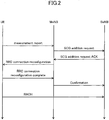
- a master base station adds a secondary cell or a secondary cell group served by a secondary base station (SeNB) to the user equipment.
- the master base station receives a measurement report indicative of an inter-frequency measurement result from the user equipment.
- the master base station transmits a SCG addition request to the secondary base station.
- the secondary base station Upon receiving the SCG addition request, the secondary base station returns a SCG addition request ACK including a configuration of the secondary base station.
- the master base station Upon receiving the SCG addition request ACK, the master base station transmits an RRC connection reconfiguration to the user equipment to additionally configure the secondary cell for the user equipment.
- the user equipment Upon receiving the RRC connection reconfiguration, the user equipment reconfigures the configuration in accordance with the received RRC connection reconfiguration and returns an RRC connection reconfiguration complete indicative of completion of the reconfiguration to the master base station.
- the master base station Upon receiving the RRC connection reconfiguration complete, the master base station transmits a confirmation to the secondary base station to indicate that the user equipment has been reconfigured.
- the user equipment upon receiving an RRC connection reconfiguration to indicate that a secondary cell should be additionally configured, the user equipment performs a random access (RA) procedure for the secondary base station to establishment uplink timing with the secondary base station.
- RA random access
- the user equipment returns an RRC connection reconfiguration complete to the master base station before completion of the RA procedure for the secondary base station. Accordingly, the master base station cannot confirm whether the user equipment has actually established connection to the secondary base station. In other words, the master base station cannot detect whether the RA procedure has been successful or unsuccessful. In this manner, if it cannot be detected whether the RA procedure has been successful or unsuccessful, the user equipment cannot transmit uplink data in a bearer configured for the secondary cell, which cannot improve throughput. Also from standpoint of a network, unnecessary configuration remains enabled, which cannot use network resources efficiently.
- an object of the present invention is to provide techniques for allowing the base station indicating reconfiguration to the user equipment to detect whether the RA procedure performed in response to the reconfiguration indication has been successful or unsuccessful.
- one aspect of the present invention relates to user equipment having a dual connectivity function to communicate with a master base station and a secondary base station simultaneously, comprising: a transmission and reception unit configured to transmit and receive radio signals to/from the master base station and the secondary base station; an RA processing unit configured to perform a random access (RA) procedure; and a timer management unit configured to activate a timer upon detecting an RA procedure activation event for triggering activation of the RA procedure for the secondary base station, wherein if the RA procedure performed in response to detection of the RA procedure activation event has not been completed before expiration of the timer, the timer management unit indicates to the triggering base station that the RA procedure has not been completed.
- RA random access
- Another aspect of the present invention relates to a method for performing a random access (RA) procedure in user equipment having a dual connectivity function to communicate with a master base station and a secondary base station simultaneously, comprising: detecting an RA procedure activation event to trigger activation of the RA procedure for the secondary base station; performing the RA procedure and activating a timer; and if the performed RA procedure has not been completed before expiration of the timer, indicating incompletion of the RA procedure to the triggering base station.
- RA random access
- the base station indicating reconfiguration to the user equipment can detect whether the RA procedure performed in response to the reconfiguration indication has been successful or unsuccessful.
- user equipment having a dual connectivity function to communicate with a master base station and a secondary base station simultaneously is disclosed.
- a random access (RA) procedure for the secondary base station such as additional configuration of a secondary cell is indicated
- the user equipment performs the RA procedure and activates a timer. If the RA procedure has not been completed before expiration of the timer, the user equipment indicates incompletion of the RA procedure to the master base station.
- RA random access
- the user equipment upon receiving an RRC connection reconfiguration from the master base station to indicate additional configuration of a secondary cell for the user equipment, the user equipment performs the RA procedure for the secondary base station and activates the timer. If the RA procedure has not been successful until expiration of the timer, the user equipment transmits a timer expiration indication to the master base station. Upon receiving the timer expiration indication, the master base station can detect that no connection has been established between the user equipment and the secondary base station and determine that dual connectivity communication using the secondary base station is unavailable.
- FIG. 4 is a schematic view for illustrating a radio communication system according to one embodiment of the present invention.
- a radio communication system 10 has user equipment 100 and base stations 200A, 200B.
- the radio communication system 10 supports dual connectivity where the user equipment 100 uses component carriers CC#1, CC#2 served from the multiple base stations 200A, 200B to conduct simultaneous communication, and as illustrated, the user equipment 100 uses a dual connectivity function to communicate with the master base station (MeNB) 200A and the secondary base station (SeNB) 200B.
- MeNB master base station
- SeNB secondary base station
- only the two base stations 200A, 200B are illustrated, but a large number of base stations 200 are generally disposed to cover a service area of the radio communication system 10.
- the user equipment 100 has the dual connectivity function to communicate with the multiple base stations 200A, 200B simultaneously.
- the user equipment 100 may be any appropriate information processing device with a radio communication function such as a smartphone, a mobile phone, a tablet and a mobile router.
- the user equipment 100 is arranged from a CPU (Central Processing Unit) such as a processor, a memory device such as a RAM (Random Access Memory) and a flash memory, a radio communication device for transmitting and receiving radio signals to/from the base stations 200A, 200B and so on.
- functions and operations of the user equipment 100 as stated below may be implemented by the CPU running data and programs stored in the memory device.
- the user equipment 100 is not limited to the above-stated hardware configuration and may be arranged from circuits for implementing one or more of operations as stated below.
- the base stations 200A, 200B (which may be collectively referred to as the base stations 200 hereinafter) establish a radio connection to the user equipment 100 to transmit downlink (DL) packets received from network devices, such as an upper station and a server, communicatively connected on a core network (not shown) to the user equipment 100 as well as transmit uplink (UL) packets received from the user equipment 100 to the network devices.
- the base station 200A serves as a master base station (MeNB) or a primary base station
- the base station 200B serves as a secondary base station (SeNB).
- the master base station 200A controls simultaneous communication between the user equipment 100 and the base stations 200A, 200B in accordance with the dual connectivity and controls communication with the upper core network (not shown).
- FIG. 5 is a block diagram for illustrating an arrangement of the user equipment according to one embodiment of the present invention.
- the user equipment 100 has a transmission and reception unit 110, a random access (RA) processing unit 120 and a timer management unit 130.
- RA random access
- the transmission and reception unit 110 transmits and receives radio signals to/from the master base station 200A and the secondary base station 200B. Specifically, the transmission and reception unit 110 transmits and receives various radio signals such as uplink/downlink control channels and/or uplink/downlink data channels to/from the master base station 200A and the secondary base station 200B. Also, if the dual connectivity is configured, the transmission and reception unit 110 can communicate with the master base station 200A and the secondary base station 200B simultaneously.
- the RA processing unit 120 performs a random access (RA) procedure.
- RA random access
- the RA processing unit 120 activates the RA procedure for the secondary base station 200B.
- the RA procedure activation event may be various indications such as additional configuration of a secondary cell, modification of a special secondary cell (primary secondary cell) for which a PUCCH (Physical Uplink Control Channel) is configured, modification of security of a secondary cell, switching on and off TTI (Transmission Timer Interval) bundling in a secondary cell (if supported) or the like, for example.
- PUCCH Physical Uplink Control Channel
- the RA processing unit 120 can perform the RA procedure in accordance with any of a contention type of RA procedure or a non-contention type of RA procedure.
- the contention type of RA procedure is the RA procedure autonomously activated by the user equipment 100
- the non-contention type of RA procedure is the RA procedure activated by indications from the base station 200.
- the RA processing unit 120 upon receiving an RRC connection reconfiguration from the master base station 200A to indicate additional configuration of a secondary cell, performs the RA procedure for the secondary base station 200B, reconfigures the user equipment 100 in accordance with the RRC connection reconfiguration and then returns an RRC connection reconfiguration complete to the master base station 200A. As stated above in conjunction with FIG. 3 , the RA processing unit 120 transmits the RRC connection reconfiguration complete to the master base station 200A without waiting for completion of the RA procedure.
- the timer management unit 130 activates a timer upon detecting an RA procedure activation event for triggering activation of the RA procedure for the secondary base station 200B. Then, if the RA procedure performed in response to detection of the RA procedure activation event has not been completed before expiration of the timer, the timer management unit 130 indicates to the triggering base station that the RA procedure has not been completed.
- the triggering base station 200 is typically the master base station 200A, but is not limited to it, and may be the primary secondary base station 200B to serve a primary secondary cell where a PUCCH is configured, for example.
- the timer management unit 130 stops and resets the timer.
- the timer management unit 130 may determine that the RA procedure has been completed. For example, if the RA procedure is the non-contention type of RA procedure, in response to reception of an RA response as message 2, the timer management unit 130 may determine that the RA procedure has been completed. Also, if the RA procedure is the contention type of RA procedure, in response to reception of a contention resolution as message 4, the timer management unit 130 may determine that the RA procedure has been completed.
- the timer management unit 130 may determine that the RA procedure has been completed.
- the PDCCH may be any PDCCH for a DL assignment (including new transmission and retransmission), an UL grant (including new transmission and retransmission), a DL assignment (targeted for only new transmission), an UL grant (targeted for only new transmission) and an aperiodic CQI/SRS request.
- the timer may be set to any appropriate period where it can be determined whether the RA procedure is successful or unsuccessful. For example, if the timer is set to a too short period compared to the period where it can be determined whether the RA procedure has been successful or unsuccessful, the timer would expire during execution of the RA procedure, and an incompletion indication of the RA procedure would be transmitted to the triggering base station 200 before determining whether the RA procedure has been successful or unsuccessful. On the other hand, if the timer is set to a too long period compared to the period where it can be determined whether the RA procedure has been successful or unsuccessful, the completion indication of the RA procedure would not be transmitted to the triggering base station 200 in spite of failure of the RA procedure, which may prevent network resources from being efficiently utilized.
- the period configured for the timer may be a predetermined period and be indicated from the triggering base station 200 such as the master base station 200A, for example.
- the RA procedure activation event is additional configuration of a secondary cell, and if the RA procedure has not been completed before expiration of the timer, the RA processing unit 120 may stop all uplink transmissions in a secondary cell. Specifically, the RA processing unit 120 may stop the uplink transmissions by indicating MAC (Medium Access Control) reset to the transmission and reception unit 110.
- MAC Medium Access Control
- the RA processing unit 120 may continue in retransmitting the PRACH during activation of the timer.
- the maximum number of retransmissions of the PRACH is predetermined, but even if the number of retransmissions of the PRACH exceeds the maximum number of retransmissions, the RA processing unit 120 may continue in transmitting the PRACH during activation of the timer.
- the RA processing unit 120 continues in transmitting an RA preamble to the secondary base station 200B, but if the RA processing unit 120 has failed to receive an RA response correspondingly, the RA processing unit 120 may continue in retransmitting the RA preamble during activation of the timer in spite of exceeding the maximum number of retransmissions.
- the timer management unit 130 may indicate to the triggering base station 200 in a MAC signal or an RRC signal that the RA procedure has not been completed. For example, if the RRC signal is used, the timer management unit 130 may indicate radio link failure (RLF) originating from expiration of the timer to the triggering base station 200.
- RLF radio link failure
- the timer management unit 130 may configure specific timers for the RA procedures performed for the respective cell groups. For example, upon receiving an indication to additionally configure cell groups X and Y simultaneously, the RA processing unit 120 may perform the RA procedures X and Y for the respective secondary base stations 200X and 200Y serving the cell groups X and Y and activate the timer X for the cell group X and the timer Y for the cell group Y. In this case, the timer management unit 130 manages the timers X and Y separately depending on execution statuses of the RA procedures X and Y for the secondary base stations 200X and 200Y.
- the timer management unit 130 stops and resets the timer X but continues in counting the timer Y. If the RA procedure Y has not been completed before expiration of the timer Y, the timer management unit 130 indicates the incompletion of the RA procedure Y to the master base station 200A.
- the timer management unit 130 may configure a common timer for the RA procedures performed for the respective cell groups, and if any of the performed RA procedures has not been completed before expiration of the common timer, the timer management unit 130 may indicate incompletion of the RA procedure to the triggering base station 200 together with an identifier of the not-completed cell group.
- the timer management unit 130 may activate the timer. Specifically, only if a timer configuration indication is detected together with the RA procedure activation event for the secondary base station 200B, the timer management unit 130 may activate the timer. In other words, even upon detection of the RA procedure activation event, the timer management unit 130 does not have to always activate the timer, and only if the timer configuration indication is received from the triggering base station 200, the timer management unit 130 may activate the timer. For example, the timer configuration may be indicated in a certain information element (IE) in an RRC.
- IE information element
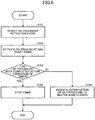
- FIG. 6 is a flowchart for illustrating a random access operation according to one embodiment of the present invention.
- the user equipment 100 detects an RA procedure activation event for triggering activation of the RA procedure for the secondary base station 200B.
- the RA procedure activation event may be various indications such as additional configuration of a secondary cell, modification of a special secondary cell where a PUCCH is configured (primary secondary cell), modification of security of a secondary cell, switching on and off TTI bundling in a secondary cell or the like.
- the additional configuration of a secondary cell may be indicated in an RRC connection reconfiguration, for example.
- the user equipment 100 performs the RA procedure and activates the timer. For example, if an RRC connection reconfiguration is received from the master base station 200A to indicate additional configuration of a secondary cell, the user equipment 100 performs the RA procedure for the secondary base station 200B, and after performing reconfiguration in accordance with the RRC connection reconfiguration, the user equipment 100 returns an RRC connection reconfiguration complete to the master base station 200A without waiting for completion of the RA procedure.
- the user equipment 100 determines whether the performed RA procedure has been completed before expiration of the timer. For example, in response to reception of an RA response, completion of a contention resolution or reception of an initial PDCCH, the user equipment 100 may determine that the RA procedure has been completed.
- the user equipment 100 stops and resets the timer at step S104. Subsequently, the user equipment 100 communicates with the secondary base station 200B, with which connection has been established, in dual connectivity.
- the user equipment indicates to the master base station 200A that the RA procedure has not been completed at step S105.
- the indication may be transmitted in a MAC signal or an RRC signal.
- the indication may be transmitted as radio link failure originating from expiration of the timer.
Landscapes
- Engineering & Computer Science (AREA)
- Computer Networks & Wireless Communication (AREA)
- Signal Processing (AREA)
- Computer Security & Cryptography (AREA)
- Mobile Radio Communication Systems (AREA)
Priority Applications (2)
| Application Number | Priority Date | Filing Date | Title |
|---|---|---|---|
| EP19189055.7A EP3595395B1 (fr) | 2014-05-09 | 2015-03-25 | Équipement d'utilisateur et procédé |
| DK19189055.7T DK3595395T3 (da) | 2014-05-09 | 2015-03-25 | Brugerudstyr og fremgangsmåde |
Applications Claiming Priority (2)
| Application Number | Priority Date | Filing Date | Title |
|---|---|---|---|
| JP2014098136A JP2015216502A (ja) | 2014-05-09 | 2014-05-09 | ユーザ装置及び方法 |
| PCT/JP2015/059068 WO2015170523A1 (fr) | 2014-05-09 | 2015-03-25 | Dispositif d'utilisateur et procédé |
Related Child Applications (1)
| Application Number | Title | Priority Date | Filing Date |
|---|---|---|---|
| EP19189055.7A Division EP3595395B1 (fr) | 2014-05-09 | 2015-03-25 | Équipement d'utilisateur et procédé |
Publications (2)
| Publication Number | Publication Date |
|---|---|
| EP3142436A1 true EP3142436A1 (fr) | 2017-03-15 |
| EP3142436A4 EP3142436A4 (fr) | 2017-05-10 |
Family
ID=54392377
Family Applications (2)
| Application Number | Title | Priority Date | Filing Date |
|---|---|---|---|
| EP15789115.1A Withdrawn EP3142436A4 (fr) | 2014-05-09 | 2015-03-25 | Dispositif d'utilisateur et procédé |
| EP19189055.7A Active EP3595395B1 (fr) | 2014-05-09 | 2015-03-25 | Équipement d'utilisateur et procédé |
Family Applications After (1)
| Application Number | Title | Priority Date | Filing Date |
|---|---|---|---|
| EP19189055.7A Active EP3595395B1 (fr) | 2014-05-09 | 2015-03-25 | Équipement d'utilisateur et procédé |
Country Status (8)
| Country | Link |
|---|---|
| US (2) | US10383149B2 (fr) |
| EP (2) | EP3142436A4 (fr) |
| JP (1) | JP2015216502A (fr) |
| CN (1) | CN106471856B (fr) |
| DK (1) | DK3595395T3 (fr) |
| HU (1) | HUE054052T2 (fr) |
| RU (1) | RU2664484C2 (fr) |
| WO (1) | WO2015170523A1 (fr) |
Families Citing this family (8)
| Publication number | Priority date | Publication date | Assignee | Title |
|---|---|---|---|---|
| US10201030B2 (en) * | 2016-10-28 | 2019-02-05 | Htc Corporation | Device and method of handling dual connectivity |
| EP3603156A1 (fr) * | 2017-03-23 | 2020-02-05 | INTEL Corporation | Systèmes, procédés et dispositifs de configuration de mesure par un noeud secondaire dans en-dc |
| WO2019066478A1 (fr) * | 2017-09-28 | 2019-04-04 | Samsung Electronics Co., Ltd. | Procédé et nœud de réseau permettant d'effectuer une transmission de données et des mesures sur de multiples parties de bande passante |
| KR102638708B1 (ko) | 2018-06-21 | 2024-02-21 | 삼성전자주식회사 | 무선 통신 시스템에서 데이터를 송수신하는 방법 및 장치 |
| CN112106403B (zh) * | 2018-09-27 | 2022-03-22 | Oppo广东移动通信有限公司 | 一种切换定时方法、终端设备及网络设备 |
| WO2020107429A1 (fr) | 2018-11-30 | 2020-06-04 | Oppo广东移动通信有限公司 | Procédé et dispositif d'accès aléatoire |
| WO2021026757A1 (fr) * | 2019-08-13 | 2021-02-18 | Qualcomm Incorporated | Réception défaillante d'une commande d'avance temporelle (ta) pour un équipement utilisateur (ue) connecté à une commande de ressources radio (rrc) dans une procédure d'accès aléatoire en deux étapes |
| US12543213B2 (en) | 2019-10-03 | 2026-02-03 | Telefonaktiebolaget Lm Ericsson (Publ) | Determination of PRACH occasions and PUSCH occasions for 2-step random access |
Family Cites Families (20)
| Publication number | Priority date | Publication date | Assignee | Title |
|---|---|---|---|---|
| US7197314B2 (en) * | 2002-12-05 | 2007-03-27 | Nokia Corporation | Communication system |
| EP2094053A1 (fr) * | 2008-02-25 | 2009-08-26 | Innovative Sonic Limited | Procédé et appareil pour améliorer la procédure d'accès par hasard pour le transfert |
| KR101122095B1 (ko) * | 2009-01-05 | 2012-03-19 | 엘지전자 주식회사 | 불필요한 재전송 방지를 위한 임의접속 기법 및 이를 위한 단말 |
| KR20110108536A (ko) * | 2010-03-29 | 2011-10-06 | 주식회사 팬택 | 다수의 요소 반송파를 운영하는 통신 시스템에서 랜덤 액세스 프리엠블 전송 방법 및 장치와, 그를 이용한 ta 전송방법 및 장치 |
| CN102378287B (zh) * | 2010-08-11 | 2014-12-10 | 电信科学技术研究院 | 一种主小区更换的小区配置方法及装置 |
| CN102740445B (zh) * | 2011-04-02 | 2015-04-08 | 上海贝尔股份有限公司 | 用于载波聚合场景下的切换方法 |
| US9949221B2 (en) * | 2011-07-27 | 2018-04-17 | Sharp Kabushiki Kaisha | Devices for multi-cell communications |
| US8989013B2 (en) * | 2011-07-29 | 2015-03-24 | Nec Corporation | Radio station, radio terminal, and synchronization timer control method in radio communication system |
| EP3937551A3 (fr) * | 2012-01-25 | 2022-02-09 | Comcast Cable Communications, LLC | Canal d'accès aléatoire dans des communications sans fil à porteuses multiples avec des groupes d'avance temporelle |
| JP5896761B2 (ja) * | 2012-01-30 | 2016-03-30 | 株式会社Nttドコモ | 移動局 |
| US20130258956A1 (en) * | 2012-04-01 | 2013-10-03 | Esmael Hejazi Dinan | Random Access Process in a Wireless Device |
| RU2603626C2 (ru) * | 2012-08-23 | 2016-11-27 | Интердиджитал Пэйтент Холдингз, Инк. | Работа с множеством планировщиков в беспроводной системе |
| CN104685801B (zh) | 2012-08-28 | 2018-11-02 | Lg电子株式会社 | 在应用载波聚合技术的无线通信系统中通过终端发送和接收信号的方法和装置 |
| JP6115188B2 (ja) | 2012-10-18 | 2017-04-19 | 三菱化学株式会社 | ポリエステルフィルム及びポリエステル樹脂組成物の製造方法 |
| US9585134B2 (en) * | 2013-12-13 | 2017-02-28 | Sharp Kabushiki Kaisha | Systems and methods for multi-connectivity operation |
| JP6081350B2 (ja) * | 2013-12-26 | 2017-02-15 | 株式会社Nttドコモ | ユーザ端末、無線基地局及び無線通信方法 |
| US9713044B2 (en) * | 2014-01-30 | 2017-07-18 | Sharp Kabushiki Kaisha | Systems and methods for dual-connectivity operation |
| EP3117683B1 (fr) * | 2014-03-11 | 2019-04-03 | LG Electronics Inc. | Procédé d'attribution d'identifiant temporaire à un terminal dans un processus d'accès aléatoire dans un système de communication sans fil et appareil correspondant |
| EP3544359B1 (fr) | 2014-05-09 | 2020-07-29 | Huawei Technologies Co., Ltd. | Équipement utilisateur, station de base, procédé d'accès à une station de base et procédé de surveillance de liaison radio |
| US10187907B2 (en) * | 2015-07-05 | 2019-01-22 | Ofinno Technologies, Llc | Preamble transmission in a wireless device |
-
2014
- 2014-05-09 JP JP2014098136A patent/JP2015216502A/ja active Pending
-
2015
- 2015-03-25 DK DK19189055.7T patent/DK3595395T3/da active
- 2015-03-25 EP EP15789115.1A patent/EP3142436A4/fr not_active Withdrawn
- 2015-03-25 WO PCT/JP2015/059068 patent/WO2015170523A1/fr not_active Ceased
- 2015-03-25 HU HUE19189055A patent/HUE054052T2/hu unknown
- 2015-03-25 EP EP19189055.7A patent/EP3595395B1/fr active Active
- 2015-03-25 CN CN201580025688.1A patent/CN106471856B/zh active Active
- 2015-03-25 RU RU2016146791A patent/RU2664484C2/ru active
- 2015-03-25 US US15/308,778 patent/US10383149B2/en active Active
-
2019
- 2019-06-21 US US16/448,101 patent/US20190306896A1/en not_active Abandoned
Also Published As
| Publication number | Publication date |
|---|---|
| EP3595395B1 (fr) | 2021-04-21 |
| EP3595395A1 (fr) | 2020-01-15 |
| JP2015216502A (ja) | 2015-12-03 |
| RU2016146791A3 (fr) | 2018-06-13 |
| RU2016146791A (ru) | 2018-06-13 |
| DK3595395T3 (da) | 2021-05-10 |
| CN106471856A (zh) | 2017-03-01 |
| US10383149B2 (en) | 2019-08-13 |
| EP3142436A4 (fr) | 2017-05-10 |
| RU2664484C2 (ru) | 2018-08-17 |
| US20170188392A1 (en) | 2017-06-29 |
| WO2015170523A1 (fr) | 2015-11-12 |
| HUE054052T2 (hu) | 2021-08-30 |
| CN106471856B (zh) | 2019-11-15 |
| US20190306896A1 (en) | 2019-10-03 |
Similar Documents
| Publication | Publication Date | Title |
|---|---|---|
| US12101672B2 (en) | Handover random access | |
| US12207178B2 (en) | Time window for radio link failure detection of an unlicensed cell | |
| US10383149B2 (en) | User equipment and method | |
| EP3442304B1 (fr) | Procédé de manipulation d'une liaison radio défaillante et dispositif de communication associé | |
| US20230318792A1 (en) | Wireless Resource Determination and Use | |
| US10194451B2 (en) | Channel detection notification method, apparatus and base station | |
| US9210624B2 (en) | Method and apparatus for change of primary cell during carrier aggregation | |
| EP3143809B1 (fr) | Gestion de cellules en association avec des groupes d'avance temporelle dans un système de communications sans fil | |
| EP3100546B1 (fr) | Mode de commutation de fonctionnement dans des communications d2d | |
| EP3190827A1 (fr) | Station de base et dispositif d'utilisateur | |
| US20160057800A1 (en) | Method and system for random access procedure and radio link failure in inter-enb carrier aggregation | |
| EP3448100B1 (fr) | Procédé de transmission d'informations de liaison montante, station de base, et équipement d'utilisateur | |
| US20180279372A1 (en) | User terminal, radio base station, radio communication system and radio communication method | |
| CN107466107B (zh) | 处理双连接的装置及方法 | |
| CN105101459A (zh) | 一种对无线链路失败的处理方法、终端及基站 | |
| JP2015216412A (ja) | ユーザ装置、基地局及び方法 | |
| CN109155990A (zh) | 一种计数方法及装置 | |
| JP2015226295A (ja) | ユーザ装置及び無線リンク障害通知方法 | |
| CN120660414A (zh) | 用于多发送和接收点的随机接入增强 | |
| WO2019192011A1 (fr) | Configuration de sauvegarde dans une procédure d'accès aléatoire |
Legal Events
| Date | Code | Title | Description |
|---|---|---|---|
| PUAI | Public reference made under article 153(3) epc to a published international application that has entered the european phase |
Free format text: ORIGINAL CODE: 0009012 |
|
| 17P | Request for examination filed |
Effective date: 20161116 |
|
| AK | Designated contracting states |
Kind code of ref document: A1 Designated state(s): AL AT BE BG CH CY CZ DE DK EE ES FI FR GB GR HR HU IE IS IT LI LT LU LV MC MK MT NL NO PL PT RO RS SE SI SK SM TR |
|
| AX | Request for extension of the european patent |
Extension state: BA ME |
|
| A4 | Supplementary search report drawn up and despatched |
Effective date: 20170412 |
|
| RIC1 | Information provided on ipc code assigned before grant |
Ipc: H04B 7/022 20170101ALI20170406BHEP Ipc: H04W 74/00 20090101AFI20170406BHEP Ipc: H04W 74/08 20090101ALN20170406BHEP |
|
| DAV | Request for validation of the european patent (deleted) | ||
| DAX | Request for extension of the european patent (deleted) | ||
| 17Q | First examination report despatched |
Effective date: 20180508 |
|
| GRAP | Despatch of communication of intention to grant a patent |
Free format text: ORIGINAL CODE: EPIDOSNIGR1 |
|
| RIC1 | Information provided on ipc code assigned before grant |
Ipc: H04B 7/022 20170101ALI20190307BHEP Ipc: H04W 74/08 20090101ALN20190307BHEP Ipc: H04W 74/00 20090101AFI20190307BHEP |
|
| INTG | Intention to grant announced |
Effective date: 20190327 |
|
| RIC1 | Information provided on ipc code assigned before grant |
Ipc: H04W 74/08 20090101ALN20190318BHEP Ipc: H04B 7/022 20170101ALI20190318BHEP Ipc: H04W 74/00 20090101AFI20190318BHEP |
|
| STAA | Information on the status of an ep patent application or granted ep patent |
Free format text: STATUS: THE APPLICATION IS DEEMED TO BE WITHDRAWN |
|
| 18D | Application deemed to be withdrawn |
Effective date: 20190807 |