EP3143255B1 - Reinigung und trennung von fluiden und ablagerungen von mineralienproben und entkernungssystemen - Google Patents
Reinigung und trennung von fluiden und ablagerungen von mineralienproben und entkernungssystemen Download PDFInfo
- Publication number
- EP3143255B1 EP3143255B1 EP15829400.9A EP15829400A EP3143255B1 EP 3143255 B1 EP3143255 B1 EP 3143255B1 EP 15829400 A EP15829400 A EP 15829400A EP 3143255 B1 EP3143255 B1 EP 3143255B1
- Authority
- EP
- European Patent Office
- Prior art keywords
- fluid
- heavy weight
- wellbore
- carrier chamber
- coring tool
- Prior art date
- Legal status (The legal status is an assumption and is not a legal conclusion. Google has not performed a legal analysis and makes no representation as to the accuracy of the status listed.)
- Active
Links
Images


Classifications
-
- E—FIXED CONSTRUCTIONS
- E21—EARTH OR ROCK DRILLING; MINING
- E21B—EARTH OR ROCK DRILLING; OBTAINING OIL, GAS, WATER, SOLUBLE OR MELTABLE MATERIALS OR A SLURRY OF MINERALS FROM WELLS
- E21B25/00—Apparatus for obtaining or removing undisturbed cores, e.g. core barrels or core extractors
- E21B25/10—Formed core retaining or severing means
-
- E—FIXED CONSTRUCTIONS
- E21—EARTH OR ROCK DRILLING; MINING
- E21B—EARTH OR ROCK DRILLING; OBTAINING OIL, GAS, WATER, SOLUBLE OR MELTABLE MATERIALS OR A SLURRY OF MINERALS FROM WELLS
- E21B49/00—Testing the nature of borehole walls; Formation testing; Methods or apparatus for obtaining samples of soil or well fluids, specially adapted to earth drilling or wells
- E21B49/02—Testing the nature of borehole walls; Formation testing; Methods or apparatus for obtaining samples of soil or well fluids, specially adapted to earth drilling or wells by mechanically taking samples of the soil
- E21B49/06—Testing the nature of borehole walls; Formation testing; Methods or apparatus for obtaining samples of soil or well fluids, specially adapted to earth drilling or wells by mechanically taking samples of the soil using side-wall drilling tools pressing or scrapers
-
- C—CHEMISTRY; METALLURGY
- C09—DYES; PAINTS; POLISHES; NATURAL RESINS; ADHESIVES; COMPOSITIONS NOT OTHERWISE PROVIDED FOR; APPLICATIONS OF MATERIALS NOT OTHERWISE PROVIDED FOR
- C09K—MATERIALS FOR MISCELLANEOUS APPLICATIONS, NOT PROVIDED FOR ELSEWHERE
- C09K8/00—Compositions for drilling of boreholes or wells; Compositions for treating boreholes or wells, e.g. for completion or for remedial operations
-
- E—FIXED CONSTRUCTIONS
- E21—EARTH OR ROCK DRILLING; MINING
- E21B—EARTH OR ROCK DRILLING; OBTAINING OIL, GAS, WATER, SOLUBLE OR MELTABLE MATERIALS OR A SLURRY OF MINERALS FROM WELLS
- E21B25/00—Apparatus for obtaining or removing undisturbed cores, e.g. core barrels or core extractors
- E21B25/02—Apparatus for obtaining or removing undisturbed cores, e.g. core barrels or core extractors the core receiver being insertable into, or removable from, the borehole without withdrawing the drilling pipe
-
- E—FIXED CONSTRUCTIONS
- E21—EARTH OR ROCK DRILLING; MINING
- E21B—EARTH OR ROCK DRILLING; OBTAINING OIL, GAS, WATER, SOLUBLE OR MELTABLE MATERIALS OR A SLURRY OF MINERALS FROM WELLS
- E21B25/00—Apparatus for obtaining or removing undisturbed cores, e.g. core barrels or core extractors
- E21B25/08—Coating, freezing, consolidating cores; Recovering uncontaminated cores or cores at formation pressure
-
- E—FIXED CONSTRUCTIONS
- E02—HYDRAULIC ENGINEERING; FOUNDATIONS; SOIL SHIFTING
- E02D—FOUNDATIONS; EXCAVATIONS; EMBANKMENTS; UNDERGROUND OR UNDERWATER STRUCTURES
- E02D2300/00—Materials
Definitions
- the present disclosure relates to the collection of core samples and, more particularly, to cleaning and separating fluid and debris from collected core samples and core systems.
- the core sample may be analyzed to asses, among other purposes, the reservoir storage capacity (porosity), the flow potential (permeability) of the rock material that makes up the formation, the chemical and mineral composition of the mineral deposits residing in the pores of the formation, and the irreducible water content of the rock material.
- the information gleaned from analysis of the sample is used to design and implement well completion; that is, to selectively produce certain economically attractive treatment intervals from among those accessible by the well.
- all intervals except those specifically targeted for production are isolated from the target interval, and the deposits within the targeted interval are selectively produced through the well.
- an annular cutter called a coring head is deployed on the end of a tool string.
- the coring head is operable to remove an annular volume of material to create a core, which may then be captured and placed in a collection tube and subsequently retrieved to surface for analysis.
- drilling fluid and debris within a wellbore e.g ., rock fragments from the wellbore wall
- This debris can contaminate the core sample, resulting in skewed testing results once received at the surface and analyzed. It also may cause the core collection chamber to become choked, which, among other things, may result in inability to obtain the requisite or maximum number of samples which may be recovered with a particular coring tool.
- the core sampling storage module includes a pressure housing to store a plurality of core samples, a core tube within the pressure housing, the core tube to store a plurality of core samples drilled from a downhole formation, a pressure housing cover that is configured to be selectively rotated to an open position or a closed position, an activation mechanism to receive a command, and based on the command, open or close the pressure housing cover, a push rod to selectively install a plug to cover the core tube, wherein when the plug is installed the pressure housing maintains a pressure.
- US 2001/0000393 A1 is further prior art. The invention is defined by the independent claims.
- the present disclosure relates to the collection of core samples and, more particularly, to cleaning and separating fluid and debris from collected core samples and core systems.
- Embodiments described herein discuss providing a clean environment for core sample collection, as well as providing a reliable way to seal and maintain downhole pressures in a core collection tube of a coring tool.
- Embodiments of the present disclosure may be applicable to horizontal, vertical, deviated, or otherwise nonlinear wellbores in any type of subterranean formation.
- Embodiments may be applicable to injection wells as well as production wells, including hydrocarbon wells.
- Embodiments may be implemented in which the coring tool is made suitable for testing, retrieval and sampling along sections of the formation.
- Embodiments may be implemented with various samplers that, for example, may be conveyed through flow passage in tubular string or conveyance, such as using a wireline, slickline, coiled tubing, downhole robot (tractor), or the like.
- the system described herein may be suited for use with the Hostile Rotary Sidewall Coring Tool (HRSCT-B) available from Halliburton Energy Services of Houston, Texas, for example.
- HRSCT-B Hostile Rotary Sidewall Coring Tool
- the method described herein may be used in one or more of wireline, measurement-while-drilling (MWD) and logging-while-drilling (LWD) operations.
- MWD measurement-while-drilling
- LWD logging-while-drilling
- compositions and methods are described herein in terms of “comprising” various components or steps, the compositions and methods can also “consist essentially of” or “consist of” the various components and steps. When “comprising” is used in a claim, it is open-ended.
- the term “substantially” means largely, but not necessarily wholly.
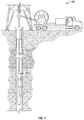
- FIG. 1 shows an example system 100 that may employ the principles of the present disclosure.
- a coring tool 110 is placed in a wellbore by a wireline 115.
- the coring tool 110 is placed in the wellbore by any conveyance, such as those discussed above (e.g., wired coil tubing) that is connectable to the surface.
- the coring tool 110 may be placed in the wellbore as part of a measurement while drilling (MWD) portion of a drill string or as part of a logging while drilling (LWD) portion of a drill string.
- the coring tool 110 may be coupled to drill pipe as part of a wired drill pipe system.
- FIG. 2 shows a side view of a coring tool 16, which may be substantially similar to the coring tool 110 of FIG. 1 , lowered to a depth of interest within the wellbore.
- the coring tool 16 includes a sidewall drilling tool 205 and a high pressure core module 210. Once the coring tool 110 reaches a region of interest, the sidewall drilling tool 205 may be configured to extend a stabilizing pad 215 to engage the wall of the wellbore and then rotate to face the wellbore wall for obtaining a sidewall core therefrom.
- FIGS. 3A-3C show an enlarged view of a core-drilling portion of the sidewall drilling tool 205.
- the core-drilling portion may include a coring bit 305 to be forced into a formation and collect a core sample.
- Certain example coring bits 305 include a finger in the coring head to retain a sample.
- the example core-drilling portion may include a bell crank 310 that allows the coring bit 305 to be rotated into position.
- the coring bit 305 may be rotated while it is moved into engagement with the wall of the wellbore.
- a core sample may be cut from the wellbore until the coring bit 305 has reached a maximum displacement into the wellbore wall.
- a sharp lateral translation of the coring bit 305 or the sidewall drilling tool 205 itself will break the core sample free from the wellbore wall.
- the sequence of FIGS. 3A-3C may be reversed as the coring bit 305 is retracted back into the sidewall drilling tool 205 and then rotated parallel to the sidewall drilling tool 205.
- the resulting core sample may be aligned with the high-pressure core module 210.
- the core sample may be pushed into the core receiver of the high-pressure core module 210 by, for example, a plunger 315.
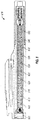
- FIG. 4 shows a partial cross-sectional view of an example high-pressure core module 210.
- the high-pressure core module 210 includes a high-pressure core tube assembly 405, which, in turn, includes a carrier chamber 415 to store one or a plurality of core samples.
- the carrier chamber 415 may be at least partially filled with a non-hydrocarbon and non-reactive heavy weight fluid, as discussed in detail below.
- the high-pressure core tube assembly 405 may further include a cover activation mechanism 410 used to open and close the opening to the carrier chamber 415.
- the high-pressure core module 210 may be a standalone assembly for use with an existing sidewall coring tool.
- the high-pressure core module 210 may be configured to store the sample core(s) after they are retrieved from the formation by a sidewall coring tool, such as the sidewall drilling tool 205.
- the sample cores are stored within the carrier chamber 415 of the high-pressure core module 210.
- the sidewall drilling coring tool 205 may be a hostile rotary sidewall coring tool (HRSCT).
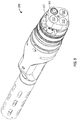
- FIG. 5 an example cover activation mechanism 410 is shown from outside the tool.
- the cover activation mechanism 410 may be actuated to place one of a cover 505 or the contents of one of chambers 510, 515, or 520 in front of the high-pressure core module 210.
- the chambers 510, 515, and 520 may include one or more of isolator plugs, packaging film, or other items for preserving core samples.
- the cover activation mechanism 410 rotates the cover to an open position, which allows a core sample to be deposited or otherwise inserted into the carrier chamber 415 of the high-pressure core module 210.
- a core sample is inserted into the carrier chamber 415, a portion of the non-hydrocarbon and non-reactive heavy weight fluid present within the carrier chamber 415 is displaced and otherwise squeezed around the core sample and out of the carrier chamber 415.
- the density of the non-hydrocarbon, non-reactive heavy weight fluid is designed to be greater than the density of the wellbore fluids, including any drilling fluid, flush fluid, and the like (collectively “wellbore fluids”) that may be present therein. Accordingly, any wellbore fluids that may be present within the wellbore may be separated from the core sample as it is inserted into the carrier chamber 415 due to the presence of the HWF. Moreover, displacing the HWF around the core sample may further prove advantageous in flushing away undesired wellbore debris that may be attached to the outer surface of the core sample(s). As a result, the fluid may further serve to clean the core samples as they are inserted into the carrier chamber 415
- the HWF is comprised of at least a non-hydrocarbon, non-reactive base fluid (or simply "base fluid" herein).
- the base fluid may be a brine comprising a salt and an aqueous fluid.
- the aqueous fluid may be fresh water, deionized water, spring water, mineral water, or any combination thereof.
- the aqueous fluid i.e. , water
- the aqueous fluid may be from any source, provided that it does not contain components that might adversely affect the characteristics and/or performance (e.g ., the density) of the HWF described herein.
- Suitable salts for forming the brine base fluid may include any salt capable of achieving the desired density and separation effects described herein. It is desirable that the salt selected achieves a base fluid that is compatible with the formation rock of the wellbore in which the core sample is being taken ( e.g ., that it is non-reactive therewith). For example, a base fluid that does not cause the core sample to swell or otherwise lose its integrity or react to form toxic gasses or other undesired reaction products is desirable. It may further be desirable that the salt selected achieves a base fluid that is resistant to causing corrosion of the coring tool, and/or that is acceptable in terms of health, safety, and the environment.
- the salt may be cesium bromate, cesium formate, calcium bromide, potassium formate, sodium bromide, potassium bromide, and any combination thereof, thereby forming a brine base fluid with the aqueous fluid previously discussed.
- the HWF has a density of about 2 pounds per gallon "ppg" (240 kg/m 3 ) greater than the density of a wellbore fluid to achieve the desired wellbore fluid separation and cleaning results described according to the embodiments herein.
- the density of the HWF is at least about 2 pounds per gallon (240 kg/m 3 ) greater than the density of the drilling fluid.
- the HWF has a density in the range of about 12 pounds per gallon (1438 kg/m 3 ) to about 22 pounds per gallon (2636 kg/m 3 ) (based on the typical density of drilling fluids), encompassing any value and subset therebetween.
- the HWF has a density in the range of about 12 ppg (1438 kg/m 3 ) to about 14.5 ppg (1737 kg/m 3 ), or about 14.5 ppg (1737 kg/m 3 ) to about 17 ppg (2037 kg/m 3 ), or about 17 ppg (2037 kg/m 3 ) to about 19.5 ppg (2337 kg/m 3 ), or about 19.5 ppg (2337 kg/m 3 ) to about 22 ppg (2636 kg/ m 3 ), encompassing any value or subset therebetween.
- the base fluid selected for forming the HWF is a brine cesium formate base fluid and the density is preferably about or exactly 19.2 ppg (2301 kg/m 3 ).
- the base fluid selected may be a brine calcium bromide base fluid and the density is preferably about or exactly 14.2 ppg (1702 kg/m 3 ).
- the salt including any of those listed above, for forming at least a portion of the HWF is in the range of about 25% to about 90% by weight of the aqueous fluid portion of the HWF, encompassing any value and subset therebetween.
- the salt may form at least a portion of the HWF in the range of about 25% to about 38%, or about 38% to about 51%, or about 51% to about 64%, or about 64% to about 77%, or about 77% to about 90%, encompassing any value and subset therebetween.
- the HWF may further be adjusted for viscosity to further enhance separation and removal of wellbore fluids from the carrier chamber 415 ( FIG. 4 ).
- the viscosity may desirably be in the range of about 1 centipoise (cP) to about 2500 cP (where 1 cP is 10 -3 Pa.s), encompassing any value and subset therebetween.
- the viscosity may be in the range of about 1 cP to about 5 cP, or about 5 cP to about 50 cP, or about 50 cP to about 500 cP, or about 500 cP to about 1000 cP, or about 1000 cP to about 1500 cP, or about 1500 cP to about 2000 cP, or about 2000 cP to about 2500 cP, encompassing any value and subset therebetween.
- Each of these values is critical to the embodiments of the present disclosure and may depend on a number of factors including, but not limited to, the wellbore fluid present in the wellbore, the components of the HWF selected, the desired density of the HWF, and the like, and any combination thereof.
- the viscosity may be adjusted by a viscosifier including a gelling agent, a gas in combination with a foaming agent, and any combination thereof.
- the gelling agent may be a naturally-occurring polymer, a synthetic polymer, and any combination thereof.
- suitable gelling agents may include, but are not limited to, polysaccharides, biopolymers, and/or derivatives thereof that contain one or more of these monosaccharide units: galactose, mannose, glucoside, glucose, xylose, arabinose, fructose, glucuronic acid, or pyranosyl sulfate.
- the gelling agent may be guar gums (e.g ., hydroxyethyl guar, hydroxypropyl guar, carboxymethyl guar, carboxymethylhydroxyethyl guar, and carboxymethylhydroxypropyl guar ("CMHPG")), cellulose derivatives (e.g ., hydroxyethyl cellulose, carboxyethylcellulose, carboxymethylcellulose, and carboxymethylhydroxyethylcellulose), xanthan, scleroglucan, succinoglycan, diutan, an acrylamide (e.g.
- dimethylaminoethyl methacrylamide dimethylaminopropyl methacrylamide, partially hydrolyzed polyacrylamide, and the like
- an acrylate e.g ., dimethylaminoethyl methacrylate, dimethylethyl acrylate, quaternized dimethylaminoethylacrylate, quaternized dimethylaminoethylmethacrylate, and the like
- Suitable gases for use as the viscosifier in the presence of a foaming agent may include, but are not limited to, nitrogen, carbon dioxide, air, helium, argon, and any combination thereof.
- the selection of the particular gas may depend on a number of factors including the type of formation being treated, any reactivity of the gas with the formation or a material forming the coring tool, the desired density of the HWF and any effect on the density that the gas may have, and the like, and any combination thereof.
- carbon dioxide gasses have greater density than nitrogen gasses.
- the foaming agent for use with the gas when both are used to increase the viscosity of the HWF may include, but is not limited to, cationic foaming agents, anionic foaming agents, amphoteric foaming agents, nonionic foaming agents, or any combination thereof.
- Non-limiting examples of suitable foaming agents may include, but are not limited to, surfactants like betaines, sulfated or sulfonated alkoxylates, alkyl quaternary amines, alkoxylated linear alcohols, alkyl sulfonates, alkyl aryl sulfonates, C10-C20 alkyldiphenyl ether sulfonates, polyethylene glycols, ethers of alkylated phenol, sodium dodecylsulfate, alpha olefin sulfonates such as sodium dodecane sulfonate, trimethyl hexadecyl ammonium bromide, and the like, any derivative thereof, or any combination thereof.
- surfactants like betaines, sulfated or sulfonated alkoxylates, alkyl quaternary amines, alkoxylated linear alcohols, alkyl sulfonates, alkyl
- the pH of the HWF may be desirably adjusted to achieve compatibility with the rock formation, to ensure non-reactivity with the rock formation and/or the coring tool, and the like. In some embodiments, accordingly it may be desirable to adjust the pH higher or lower.
- the desirable pH for the HWF described herein is in the range of about 6 to about 10, encompassing any value and subset therebetween.
- the pH may be about 6, about 7, about 8, about 9, or about 10, encompassing any value and subset therebetween.
- HWF HWF is expected to be non-reactive and each is critical to the embodiments of the present disclosure, depending on a number of factors including, but not limited to, the type of rock formation in which the core sample is being collected, any effect that the pH has on the density of the HWF, the selected base fluid for forming the HWF, and the like, and any combination thereof.
- the pH of the HWF may be adjusted using a pH adjusting agent, which may be an acidic or basic chemical or compound.
- suitable pH adjusting agents may include, but are not limited to, hydrochloric acid, sodium carbonate, sodium bicarbonate, sodium hydroxide, formic acid, magnesium oxide, sulfuric acid, and the like, and any combination thereof.
- the HWF of the present disclosure may further include an additive including, but not limited to, a weighting agent, an inert solid, an emulsifier, a dispersion aid, a corrosion inhibitor, a surfactant, a particulate, a breaker, a biocide, a scale inhibitor, a gas hydrate inhibitor, a friction reducer, a clay stabilizing agent, and any combination thereof.
- an additive including, but not limited to, a weighting agent, an inert solid, an emulsifier, a dispersion aid, a corrosion inhibitor, a surfactant, a particulate, a breaker, a biocide, a scale inhibitor, a gas hydrate inhibitor, a friction reducer, a clay stabilizing agent, and any combination thereof.
- the cover activation mechanism 410 rotates the cover back to the closed position.
- the push rod can install a plug 505 through the cover into the high-pressure carrier chamber 415.
- the plug 505 may maintain the pressure of the high-pressure carrier chamber 415, for example, while it is brought to the surface and transported to a laboratory for testing. Plugging the high-pressure carrier chamber 415 maintains the pressure of the core samples while the high-pressure core module 210 is brought to the surface. For example, the pressure within the high-pressure carrier chamber 415 may be maintained at or near in-situ pressure for the core samples.
- the carrier chamber 415 can be removed from the larger assembly and shipped to the lab for further evaluation and testing.
- Certain example implementations of the high-pressure core tube assembly 210 may maintain both the pressure and the temperature of a core sample.
- gases within the core sample may be kept in solution after the high-pressure carrier chamber 415 is brought to the surface.
- the bottom of the carrier chamber 415 may be fitted with a piston 420, which is compressed as core samples are loaded into the sample tube.
- the high-pressure core tube assembly 405 is secured on top and the piston 420 is energized to maintain an axial load on the core samples.
- the piston 420 is a traveling piston or a floating piston. In such an implementation, an axial load is maintained on the core samples as they are brought to the surface from the pressure maintained by the travel piston.
- FIG. 6 shows a partial cross-sectional side view of the high-pressure core tube assembly 205, where the carrier chamber 415 is filled with sampled cores 605-650 and a cap 505 has been fitted over carrier chamber 415.
- compositions and methods are described in terms of “comprising,” “containing,” or “including” various components or steps, the compositions and methods can also “consist essentially of” or “consist of” the various components and steps. All numbers and ranges disclosed above may vary by some amount. Whenever a numerical range with a lower limit and an upper limit is disclosed, any number and any included range falling within the range is specifically disclosed. In particular, every range of values (of the form, “from about a to about b,” or, equivalently, “from approximately a to b,” or, equivalently, “from approximately a-b”) disclosed herein is to be understood to set forth every number and range encompassed within the broader range of values.
- the phrase "at least one of” preceding a series of items, with the terms “and” or “or” to separate any of the items, modifies the list as a whole, rather than each member of the list ( i.e ., each item).
- the phrase "at least one of” allows a meaning that includes at least one of any one of the items, and/or at least one of any combination of the items, and/or at least one of each of the items.
- the phrases “at least one of A, B, and C” or “at least one of A, B, or C” each refer to only A, only B, or only C; any combination of A, B, and C; and/or at least one of each of A, B, and C.
Landscapes
- Life Sciences & Earth Sciences (AREA)
- Engineering & Computer Science (AREA)
- Geology (AREA)
- Mining & Mineral Resources (AREA)
- General Life Sciences & Earth Sciences (AREA)
- Environmental & Geological Engineering (AREA)
- Fluid Mechanics (AREA)
- Physics & Mathematics (AREA)
- Geochemistry & Mineralogy (AREA)
- Soil Sciences (AREA)
- Chemical & Material Sciences (AREA)
- Materials Engineering (AREA)
- Organic Chemistry (AREA)
- Sampling And Sample Adjustment (AREA)
Claims (13)
- Entkernungswerkzeug (110), umfassend:eine Kernrohrbaugruppe (405);eine Trägerkammer (415), die innerhalb der Kernrohrbaugruppe (405) definiert ist, um eine oder mehrere Kernproben zu lagern, die aus einer Untertageformation gebohrt sind, die ein Bohrloch aufweist, wobei das Bohrloch ein Bohrlochfluid darin aufweist, wobei das Bohrlochfluid eine Bohrlochfluiddichte aufweist;ein kohlenwasserstofffreies, nichtreaktives Schwergewichtsfluid, das innerhalb der Trägerkammer vorhanden ist, wobei das Schwergewichtsfluid eine Schwergewichtsfluiddichte von etwa 2 Pfund pro Gallone (240 kg/mg3) mehr als die Bohrlochfluiddichte aufweist;eine Druckgehäuseabdeckung (505), die selektiv zwischen (1) einer offenen Position, in der die eine oder die mehreren Kernproben in die Trägerkammer (415) eingeführt werden können, und (2) einer geschlossenen Position, in der die Trägerkammer (415) abgedichtet ist, drehbar ist; undeinen Abdeckungsaktivierungsmechanismus (410), der an die Kernrohrbaugruppe (405) gekoppelt und bedienbar ist, um die Druckgehäuseabdeckung (505) zwischen der geschlossenen Position und der offenen Position zu bewegen.
- Entkernungswerkzeug (110) nach Anspruch 1, wobei die Schwergewichtsfluiddichte im Bereich von 12 Pfund pro Gallone (1438 kg/m3) bis 22 Pfund pro Gallone (2636 kg/m3) liegt, und/oder
wobei das Schwergewichtsfluid ein wässriges Fluid und ein Salz umfasst. - Entkernungswerkzeug (110) nach Anspruch 1 oder 2, wobei das Schwergewichtsfluid ein wässriges Fluid und ein Salz umfasst, das aus der Gruppe ausgewählt ist, die aus Cäsiumbromat, Cäsiumformat, Calciumbromid, Kaliumformat, Natriumbromid, Kaliumbromid und einer beliebigen Kombination davon besteht, und/oder
wobei das Schwergewichtsfluid ein wässriges Fluid und ein Salz umfasst, das im Bereich von etwa 25 Gewichts-% bis etwa 90 Gewichts-% des wässrigen Fluids vorhanden ist. - Entkernungswerkzeug (110) nach Anspruch 1, 2 oder 3, wobei das Schwergewichtsfluid ferner ein Verdickungsmittel umfasst und das Schwergewichtsfluid eine Viskosität im Bereich von etwa 0,001 Pa·s (1 Centipoise) bis etwa 2,5 Pa·s (2500 Centipoise) aufweist.
- Entkernungswerkzeug (110) nach einem vorhergehenden Anspruch, wobei das Schwergewichtsfluid ferner ein pH-Anpassungsmittel umfasst und das Schwergewichtsfluid einen pH im Bereich von etwa 6 bis etwa 10 aufweist.
- Entkernungswerkzeug (110) nach einem vorhergehenden Anspruch, ferner umfassend einen Kolben (420) am Boden der Trägerkammer (415), um eine axiale Last an der einen oder den mehreren Kernproben in der Trägerkammer (415) zu halten.
- Verfahren, umfassend:Einführen eines Entkernungswerkzeugs (110) in ein Bohrloch, das ein Bohrlochfluid darin aufweist, wobei das Bohrlochfluid eine Bohrlochfluiddichte aufweist, und wobei das Entkernungswerkzeug (110) eine Kernrohrbaugruppe (405) beinhaltet, die eine Trägerkammer (415) definiert, wobei die Trägerkammer (415) darin ein kohlenwasserstofffreies, nichtreaktives Schwergewichtsfluid aufweist, das eine Schwergewichtsfluiddichte von etwa 2 Pfund pro Gallone (240 kg/mg3) mehr als die Bohrlochfluiddichte aufweist;Befördern des Entkernungswerkzeugs (110) zu einer gewünschten Stelle innerhalb des Bohrlochs;Schneiden von einer oder mehreren Kernproben aus einer Seitenwand des Bohrlochs an der gewünschten Stelle;Einführen der einen oder der mehreren Kernproben in die Trägerkammer (415);Verschieben von zumindest einem Teil des Schwergewichtsfluids aus der Trägerkammer (415), während die eine oder die mehreren Kernproben in die Trägerkammer (415) eingeführt werden;Verschließen der Kernrohrbaugruppe (405), um einen Druck darin zu halten; undZurückholen des Entkernungswerkzeugs (110) an die Oberfläche,wobei das Verschieben von zumindest einem Teil des Schwergewichtsfluids aus der Trägerkammer (415) das Wegspülen von Bohrlochablagerungen, die an einer Außenfläche der einen oder der mehreren Kernproben anhaften, mit dem Schwergewichtsfluid umfasst, während die eine oder die mehreren Kernproben in die Trägerkammer (415) eingeführt werden.
- Verfahren nach Anspruch 7, wobei das Verschieben von zumindest dem Teil des Schwergewichtsfluids aus der Trägerkammer (415) das Trennen der einen oder der mehreren Kernproben von dem Bohrlochfluid umfasst.
- Verfahren nach Anspruch 7 oder 8, wobei die Schwergewichtsfluiddichte im Bereich von 12 Pfund pro Gallone (1438 kg/m3) bis 22 Pfund pro Gallone (2636 kg/m3) liegt.
- Verfahren nach einem der Ansprüche 7 bis 9, wobei das Schwergewichtsfluid ein wässriges Fluid und ein Salz umfasst.
- Verfahren nach einem der Ansprüche 7 bis 10, wobei das Schwergewichtsfluid ein wässriges Fluid und ein Salz umfasst, das aus der Gruppe ausgewählt ist, die aus Cäsiumbromat, Cäsiumformat, Calciumbromid, Kaliumformat, Natriumbromid, Kaliumbromid und einer beliebigen Kombination davon besteht.
- Verfahren nach einem der Ansprüche 7 bis 11, wobei das Schwergewichtsfluid ein wässriges Fluid und ein Salz umfasst, das im Bereich von etwa 25 Gewichts-% bis etwa 90 Gewichts-% des wässrigen Fluids vorhanden ist, und/oder
wobei das Schwergewichtsfluid ferner ein Verdickungsmittel umfasst und das Schwergewichtsfluid eine Viskosität im Bereich von etwa 0,001 Pa·s (1 Centipoise) bis etwa 2500 Pa·s (2500 Centipoise) aufweist, und/oder
wobei das Schwergewichtsfluid ferner ein pH-Anpassungsmittel umfasst und das Schwergewichtsfluid einen pH im Bereich von etwa 6 bis etwa 10 aufweist. - System, umfassend:ein Bohrloch in einer unterirdischen Formation, wobei das Bohrloch ein Bohrlochfluid darin mit einer Bohrlochfluiddichte aufweist; undein Entkernungswerkzeug (110), das in dem Bohrloch an einer gewünschten Stelle angeordnet ist, wobei das Entkernungswerkzeug (110) das Entkernungswerkzeug nach einem der Ansprüche 1 bis 6 ist.
Applications Claiming Priority (2)
| Application Number | Priority Date | Filing Date | Title |
|---|---|---|---|
| US201462034319P | 2014-08-07 | 2014-08-07 | |
| PCT/US2015/042874 WO2016022383A1 (en) | 2014-08-07 | 2015-07-30 | Cleaning and separating fluid and debris from core samples and coring systems |
Publications (3)
| Publication Number | Publication Date |
|---|---|
| EP3143255A1 EP3143255A1 (de) | 2017-03-22 |
| EP3143255A4 EP3143255A4 (de) | 2018-01-24 |
| EP3143255B1 true EP3143255B1 (de) | 2020-06-17 |
Family
ID=55264358
Family Applications (1)
| Application Number | Title | Priority Date | Filing Date |
|---|---|---|---|
| EP15829400.9A Active EP3143255B1 (de) | 2014-08-07 | 2015-07-30 | Reinigung und trennung von fluiden und ablagerungen von mineralienproben und entkernungssystemen |
Country Status (6)
| Country | Link |
|---|---|
| US (1) | US9951574B2 (de) |
| EP (1) | EP3143255B1 (de) |
| BR (1) | BR112017000171B1 (de) |
| MX (1) | MX2017000396A (de) |
| SA (1) | SA517380660B1 (de) |
| WO (1) | WO2016022383A1 (de) |
Families Citing this family (8)
| Publication number | Priority date | Publication date | Assignee | Title |
|---|---|---|---|---|
| US9874063B2 (en) * | 2011-12-30 | 2018-01-23 | Halliburton Energy Services, Inc. | Apparatus and method for storing core samples at high pressure |
| EP3143255B1 (de) | 2014-08-07 | 2020-06-17 | Halliburton Energy Services, Inc. | Reinigung und trennung von fluiden und ablagerungen von mineralienproben und entkernungssystemen |
| WO2018056946A1 (en) | 2016-09-20 | 2018-03-29 | Halliburton Energy Services, Inc. | Pressurized nmr core analyzer |
| CN107120063B (zh) * | 2017-04-29 | 2023-03-31 | 吉林大学 | 极地冰层热水取芯钻进方法及装置 |
| US11613950B2 (en) | 2019-10-24 | 2023-03-28 | Halliburton Energy Services, Inc. | Core sampling and analysis using a sealed pressure vessel |
| EP4165281B1 (de) | 2020-06-16 | 2025-08-13 | ConocoPhillips Company | Hochdruckkernkammer und versuchsgefäss |
| US12385888B2 (en) | 2021-09-16 | 2025-08-12 | Conocophillips Company | Inert fluid assays for sealed core recovery |
| WO2025128619A1 (en) * | 2023-12-14 | 2025-06-19 | Schlumberger Technology Corporation | Sidewall coring tool for testing and estimating rock properties |
Family Cites Families (11)
| Publication number | Priority date | Publication date | Assignee | Title |
|---|---|---|---|---|
| US2264449A (en) * | 1939-04-12 | 1941-12-02 | Standard Oil Dev Co | Method and apparatus for coring |
| US4479557A (en) | 1983-07-13 | 1984-10-30 | Diamond Oil Well Drilling Co. | Method and apparatus for reducing field filter cake on sponge cores |
| US4502553A (en) | 1983-07-13 | 1985-03-05 | Diamond Oil Well Drilling | Sponge coring apparatus with reinforced sponge |
| US5360074A (en) | 1993-04-21 | 1994-11-01 | Baker Hughes, Incorporated | Method and composition for preserving core sample integrity using an encapsulating material |
| US5546798A (en) | 1995-05-12 | 1996-08-20 | Baker Hughes Incorporated | Method and composition for preserving core sample integrity using a water soluble encapsulating material |
| US6283228B2 (en) | 1997-01-08 | 2001-09-04 | Baker Hughes Incorporated | Method for preserving core sample integrity |
| GB0106195D0 (en) * | 2001-03-14 | 2001-05-02 | Corpro Systems Ltd | Apparatus and method |
| US7748265B2 (en) * | 2006-09-18 | 2010-07-06 | Schlumberger Technology Corporation | Obtaining and evaluating downhole samples with a coring tool |
| US9874063B2 (en) * | 2011-12-30 | 2018-01-23 | Halliburton Energy Services, Inc. | Apparatus and method for storing core samples at high pressure |
| US10060237B2 (en) * | 2013-11-22 | 2018-08-28 | Baker Hughes, A Ge Company, Llc | Methods of extracting hydrocarbons from a subterranean formation, and methods of treating a hydrocarbon material within a subterranean formation |
| EP3143255B1 (de) | 2014-08-07 | 2020-06-17 | Halliburton Energy Services, Inc. | Reinigung und trennung von fluiden und ablagerungen von mineralienproben und entkernungssystemen |
-
2015
- 2015-07-30 EP EP15829400.9A patent/EP3143255B1/de active Active
- 2015-07-30 BR BR112017000171-3A patent/BR112017000171B1/pt active IP Right Grant
- 2015-07-30 MX MX2017000396A patent/MX2017000396A/es unknown
- 2015-07-30 WO PCT/US2015/042874 patent/WO2016022383A1/en not_active Ceased
- 2015-07-30 US US14/899,065 patent/US9951574B2/en active Active
-
2017
- 2017-01-04 SA SA517380660A patent/SA517380660B1/ar unknown
Non-Patent Citations (1)
| Title |
|---|
| None * |
Also Published As
| Publication number | Publication date |
|---|---|
| MX2017000396A (es) | 2017-05-01 |
| BR112017000171B1 (pt) | 2022-04-12 |
| EP3143255A1 (de) | 2017-03-22 |
| EP3143255A4 (de) | 2018-01-24 |
| US9951574B2 (en) | 2018-04-24 |
| US20160376861A1 (en) | 2016-12-29 |
| WO2016022383A1 (en) | 2016-02-11 |
| BR112017000171A2 (pt) | 2018-01-16 |
| SA517380660B1 (ar) | 2022-04-07 |
Similar Documents
| Publication | Publication Date | Title |
|---|---|---|
| EP3143255B1 (de) | Reinigung und trennung von fluiden und ablagerungen von mineralienproben und entkernungssystemen | |
| US11473425B2 (en) | Surface logging wells using depth-tagging of cuttings | |
| US8397817B2 (en) | Methods for downhole sampling of tight formations | |
| CA2916368C (en) | Receiving and measuring expelled gas from a core sample | |
| US9512350B2 (en) | In-situ generation of acid for use in subterranean formation operations | |
| US11313225B2 (en) | Coring method and apparatus | |
| US20190390523A1 (en) | Methods Of Reconstituting Cores, Formation Cores With Actual Formation Materials For Lab Testing | |
| WO2020214167A1 (en) | Extrapolating laboratory data in order to make reservoir scale performance predictions | |
| US20160194928A1 (en) | Sponge Pressure Equalization System | |
| US10125596B2 (en) | Methods, apparatus and products for production of fluids from subterranean formations | |
| US20150176405A1 (en) | Packer Tool Including Multiple Ports For Selective Guarding And Sampling | |
| NO20250210A1 (en) | Systems and methods for recovering and protecting sidewall core samples in unconsolidated formations | |
| US10451531B2 (en) | Surfactant selection for downhole treatments | |
| RU2486337C1 (ru) | Способ определения продуктивности пласта в процессе бурения скважины | |
| Nugmanov et al. | Geomechanical properties of Bashkirian carbonates from Akanskoye deposit subject to lithogenetic type (Russian) | |
| WO2009155268A2 (en) | Positive sidewall core sample identification system | |
| Jackson | Rotary Sidewall coring advancements for deep water, Including a coring background overview | |
| US11391146B2 (en) | Coring while drilling | |
| WO2017135951A1 (en) | Food grade material as effective clay control agent | |
| Safrizal et al. | Success story of flow channel fracturing for weathered basement reservoir at Jabung Block | |
| Merey | Analysis of the Effect of Water Flux to a Gas Zone after Through Tubing Perforations on Gas Production by Numerical Simulations | |
| Jennings | Shale gas developments: enabled by technology | |
| Al-Hamad et al. | Cased Hole Pressure and Fluid Sampling for Production Optimization-A Case Study | |
| Rathmell et al. | Development and application of PDC core bits for downhole motor low-invasion coring in the Arab carbonates | |
| Radford et al. | CORING TECHNOLOGY: WHERE ARE WE AND WHAT LIES AHEAD? |
Legal Events
| Date | Code | Title | Description |
|---|---|---|---|
| STAA | Information on the status of an ep patent application or granted ep patent |
Free format text: STATUS: THE INTERNATIONAL PUBLICATION HAS BEEN MADE |
|
| PUAI | Public reference made under article 153(3) epc to a published international application that has entered the european phase |
Free format text: ORIGINAL CODE: 0009012 |
|
| STAA | Information on the status of an ep patent application or granted ep patent |
Free format text: STATUS: REQUEST FOR EXAMINATION WAS MADE |
|
| 17P | Request for examination filed |
Effective date: 20161216 |
|
| AK | Designated contracting states |
Kind code of ref document: A1 Designated state(s): AL AT BE BG CH CY CZ DE DK EE ES FI FR GB GR HR HU IE IS IT LI LT LU LV MC MK MT NL NO PL PT RO RS SE SI SK SM TR |
|
| AX | Request for extension of the european patent |
Extension state: BA ME |
|
| DAV | Request for validation of the european patent (deleted) | ||
| DAX | Request for extension of the european patent (deleted) | ||
| REG | Reference to a national code |
Ref country code: DE Ref legal event code: R079 Ref document number: 602015054497 Country of ref document: DE Free format text: PREVIOUS MAIN CLASS: E21B0049020000 Ipc: E21B0025080000 |
|
| A4 | Supplementary search report drawn up and despatched |
Effective date: 20180104 |
|
| RIC1 | Information provided on ipc code assigned before grant |
Ipc: E21B 49/06 20060101ALI20171221BHEP Ipc: E21B 25/08 20060101AFI20171221BHEP |
|
| STAA | Information on the status of an ep patent application or granted ep patent |
Free format text: STATUS: EXAMINATION IS IN PROGRESS |
|
| 17Q | First examination report despatched |
Effective date: 20190402 |
|
| GRAP | Despatch of communication of intention to grant a patent |
Free format text: ORIGINAL CODE: EPIDOSNIGR1 |
|
| STAA | Information on the status of an ep patent application or granted ep patent |
Free format text: STATUS: GRANT OF PATENT IS INTENDED |
|
| INTG | Intention to grant announced |
Effective date: 20200130 |
|
| GRAS | Grant fee paid |
Free format text: ORIGINAL CODE: EPIDOSNIGR3 |
|
| GRAA | (expected) grant |
Free format text: ORIGINAL CODE: 0009210 |
|
| STAA | Information on the status of an ep patent application or granted ep patent |
Free format text: STATUS: THE PATENT HAS BEEN GRANTED |
|
| AK | Designated contracting states |
Kind code of ref document: B1 Designated state(s): AL AT BE BG CH CY CZ DE DK EE ES FI FR GB GR HR HU IE IS IT LI LT LU LV MC MK MT NL NO PL PT RO RS SE SI SK SM TR |
|
| REG | Reference to a national code |
Ref country code: GB Ref legal event code: FG4D |
|
| REG | Reference to a national code |
Ref country code: CH Ref legal event code: EP |
|
| REG | Reference to a national code |
Ref country code: DE Ref legal event code: R096 Ref document number: 602015054497 Country of ref document: DE |
|
| REG | Reference to a national code |
Ref country code: IE Ref legal event code: FG4D |
|
| REG | Reference to a national code |
Ref country code: AT Ref legal event code: REF Ref document number: 1281501 Country of ref document: AT Kind code of ref document: T Effective date: 20200715 |
|
| REG | Reference to a national code |
Ref country code: NO Ref legal event code: T2 Effective date: 20200617 |
|
| PG25 | Lapsed in a contracting state [announced via postgrant information from national office to epo] |
Ref country code: SE Free format text: LAPSE BECAUSE OF FAILURE TO SUBMIT A TRANSLATION OF THE DESCRIPTION OR TO PAY THE FEE WITHIN THE PRESCRIBED TIME-LIMIT Effective date: 20200617 Ref country code: FI Free format text: LAPSE BECAUSE OF FAILURE TO SUBMIT A TRANSLATION OF THE DESCRIPTION OR TO PAY THE FEE WITHIN THE PRESCRIBED TIME-LIMIT Effective date: 20200617 Ref country code: GR Free format text: LAPSE BECAUSE OF FAILURE TO SUBMIT A TRANSLATION OF THE DESCRIPTION OR TO PAY THE FEE WITHIN THE PRESCRIBED TIME-LIMIT Effective date: 20200918 Ref country code: LT Free format text: LAPSE BECAUSE OF FAILURE TO SUBMIT A TRANSLATION OF THE DESCRIPTION OR TO PAY THE FEE WITHIN THE PRESCRIBED TIME-LIMIT Effective date: 20200617 |
|
| REG | Reference to a national code |
Ref country code: LT Ref legal event code: MG4D |
|
| REG | Reference to a national code |
Ref country code: NL Ref legal event code: MP Effective date: 20200617 |
|
| PG25 | Lapsed in a contracting state [announced via postgrant information from national office to epo] |
Ref country code: LV Free format text: LAPSE BECAUSE OF FAILURE TO SUBMIT A TRANSLATION OF THE DESCRIPTION OR TO PAY THE FEE WITHIN THE PRESCRIBED TIME-LIMIT Effective date: 20200617 Ref country code: RS Free format text: LAPSE BECAUSE OF FAILURE TO SUBMIT A TRANSLATION OF THE DESCRIPTION OR TO PAY THE FEE WITHIN THE PRESCRIBED TIME-LIMIT Effective date: 20200617 Ref country code: BG Free format text: LAPSE BECAUSE OF FAILURE TO SUBMIT A TRANSLATION OF THE DESCRIPTION OR TO PAY THE FEE WITHIN THE PRESCRIBED TIME-LIMIT Effective date: 20200917 Ref country code: HR Free format text: LAPSE BECAUSE OF FAILURE TO SUBMIT A TRANSLATION OF THE DESCRIPTION OR TO PAY THE FEE WITHIN THE PRESCRIBED TIME-LIMIT Effective date: 20200617 |
|
| REG | Reference to a national code |
Ref country code: AT Ref legal event code: MK05 Ref document number: 1281501 Country of ref document: AT Kind code of ref document: T Effective date: 20200617 |
|
| PG25 | Lapsed in a contracting state [announced via postgrant information from national office to epo] |
Ref country code: NL Free format text: LAPSE BECAUSE OF FAILURE TO SUBMIT A TRANSLATION OF THE DESCRIPTION OR TO PAY THE FEE WITHIN THE PRESCRIBED TIME-LIMIT Effective date: 20200617 Ref country code: AL Free format text: LAPSE BECAUSE OF FAILURE TO SUBMIT A TRANSLATION OF THE DESCRIPTION OR TO PAY THE FEE WITHIN THE PRESCRIBED TIME-LIMIT Effective date: 20200617 |
|
| PG25 | Lapsed in a contracting state [announced via postgrant information from national office to epo] |
Ref country code: CZ Free format text: LAPSE BECAUSE OF FAILURE TO SUBMIT A TRANSLATION OF THE DESCRIPTION OR TO PAY THE FEE WITHIN THE PRESCRIBED TIME-LIMIT Effective date: 20200617 Ref country code: RO Free format text: LAPSE BECAUSE OF FAILURE TO SUBMIT A TRANSLATION OF THE DESCRIPTION OR TO PAY THE FEE WITHIN THE PRESCRIBED TIME-LIMIT Effective date: 20200617 Ref country code: EE Free format text: LAPSE BECAUSE OF FAILURE TO SUBMIT A TRANSLATION OF THE DESCRIPTION OR TO PAY THE FEE WITHIN THE PRESCRIBED TIME-LIMIT Effective date: 20200617 Ref country code: SM Free format text: LAPSE BECAUSE OF FAILURE TO SUBMIT A TRANSLATION OF THE DESCRIPTION OR TO PAY THE FEE WITHIN THE PRESCRIBED TIME-LIMIT Effective date: 20200617 Ref country code: IT Free format text: LAPSE BECAUSE OF FAILURE TO SUBMIT A TRANSLATION OF THE DESCRIPTION OR TO PAY THE FEE WITHIN THE PRESCRIBED TIME-LIMIT Effective date: 20200617 Ref country code: AT Free format text: LAPSE BECAUSE OF FAILURE TO SUBMIT A TRANSLATION OF THE DESCRIPTION OR TO PAY THE FEE WITHIN THE PRESCRIBED TIME-LIMIT Effective date: 20200617 Ref country code: PT Free format text: LAPSE BECAUSE OF FAILURE TO SUBMIT A TRANSLATION OF THE DESCRIPTION OR TO PAY THE FEE WITHIN THE PRESCRIBED TIME-LIMIT Effective date: 20201019 Ref country code: ES Free format text: LAPSE BECAUSE OF FAILURE TO SUBMIT A TRANSLATION OF THE DESCRIPTION OR TO PAY THE FEE WITHIN THE PRESCRIBED TIME-LIMIT Effective date: 20200617 |
|
| REG | Reference to a national code |
Ref country code: DE Ref legal event code: R119 Ref document number: 602015054497 Country of ref document: DE |
|
| PG25 | Lapsed in a contracting state [announced via postgrant information from national office to epo] |
Ref country code: SK Free format text: LAPSE BECAUSE OF FAILURE TO SUBMIT A TRANSLATION OF THE DESCRIPTION OR TO PAY THE FEE WITHIN THE PRESCRIBED TIME-LIMIT Effective date: 20200617 Ref country code: PL Free format text: LAPSE BECAUSE OF FAILURE TO SUBMIT A TRANSLATION OF THE DESCRIPTION OR TO PAY THE FEE WITHIN THE PRESCRIBED TIME-LIMIT Effective date: 20200617 Ref country code: IS Free format text: LAPSE BECAUSE OF FAILURE TO SUBMIT A TRANSLATION OF THE DESCRIPTION OR TO PAY THE FEE WITHIN THE PRESCRIBED TIME-LIMIT Effective date: 20201017 |
|
| REG | Reference to a national code |
Ref country code: CH Ref legal event code: PL |
|
| PG25 | Lapsed in a contracting state [announced via postgrant information from national office to epo] |
Ref country code: MC Free format text: LAPSE BECAUSE OF FAILURE TO SUBMIT A TRANSLATION OF THE DESCRIPTION OR TO PAY THE FEE WITHIN THE PRESCRIBED TIME-LIMIT Effective date: 20200617 |
|
| PLBE | No opposition filed within time limit |
Free format text: ORIGINAL CODE: 0009261 |
|
| STAA | Information on the status of an ep patent application or granted ep patent |
Free format text: STATUS: NO OPPOSITION FILED WITHIN TIME LIMIT |
|
| REG | Reference to a national code |
Ref country code: BE Ref legal event code: MM Effective date: 20200731 |
|
| PG25 | Lapsed in a contracting state [announced via postgrant information from national office to epo] |
Ref country code: CH Free format text: LAPSE BECAUSE OF NON-PAYMENT OF DUE FEES Effective date: 20200731 Ref country code: DK Free format text: LAPSE BECAUSE OF FAILURE TO SUBMIT A TRANSLATION OF THE DESCRIPTION OR TO PAY THE FEE WITHIN THE PRESCRIBED TIME-LIMIT Effective date: 20200617 Ref country code: LI Free format text: LAPSE BECAUSE OF NON-PAYMENT OF DUE FEES Effective date: 20200731 Ref country code: LU Free format text: LAPSE BECAUSE OF NON-PAYMENT OF DUE FEES Effective date: 20200730 |
|
| 26N | No opposition filed |
Effective date: 20210318 |
|
| GBPC | Gb: european patent ceased through non-payment of renewal fee |
Effective date: 20200917 |
|
| PG25 | Lapsed in a contracting state [announced via postgrant information from national office to epo] |
Ref country code: DE Free format text: LAPSE BECAUSE OF NON-PAYMENT OF DUE FEES Effective date: 20210202 Ref country code: BE Free format text: LAPSE BECAUSE OF NON-PAYMENT OF DUE FEES Effective date: 20200731 Ref country code: SI Free format text: LAPSE BECAUSE OF FAILURE TO SUBMIT A TRANSLATION OF THE DESCRIPTION OR TO PAY THE FEE WITHIN THE PRESCRIBED TIME-LIMIT Effective date: 20200617 |
|
| PG25 | Lapsed in a contracting state [announced via postgrant information from national office to epo] |
Ref country code: FR Free format text: LAPSE BECAUSE OF NON-PAYMENT OF DUE FEES Effective date: 20200817 |
|
| PG25 | Lapsed in a contracting state [announced via postgrant information from national office to epo] |
Ref country code: IE Free format text: LAPSE BECAUSE OF NON-PAYMENT OF DUE FEES Effective date: 20200730 Ref country code: GB Free format text: LAPSE BECAUSE OF NON-PAYMENT OF DUE FEES Effective date: 20200917 |
|
| PG25 | Lapsed in a contracting state [announced via postgrant information from national office to epo] |
Ref country code: TR Free format text: LAPSE BECAUSE OF FAILURE TO SUBMIT A TRANSLATION OF THE DESCRIPTION OR TO PAY THE FEE WITHIN THE PRESCRIBED TIME-LIMIT Effective date: 20200617 Ref country code: MT Free format text: LAPSE BECAUSE OF FAILURE TO SUBMIT A TRANSLATION OF THE DESCRIPTION OR TO PAY THE FEE WITHIN THE PRESCRIBED TIME-LIMIT Effective date: 20200617 Ref country code: CY Free format text: LAPSE BECAUSE OF FAILURE TO SUBMIT A TRANSLATION OF THE DESCRIPTION OR TO PAY THE FEE WITHIN THE PRESCRIBED TIME-LIMIT Effective date: 20200617 |
|
| PG25 | Lapsed in a contracting state [announced via postgrant information from national office to epo] |
Ref country code: MK Free format text: LAPSE BECAUSE OF FAILURE TO SUBMIT A TRANSLATION OF THE DESCRIPTION OR TO PAY THE FEE WITHIN THE PRESCRIBED TIME-LIMIT Effective date: 20200617 |
|
| PGFP | Annual fee paid to national office [announced via postgrant information from national office to epo] |
Ref country code: NO Payment date: 20250623 Year of fee payment: 11 |