EP3143930A1 - Procédé pour le diagnostic du sous-type inflammatoire d'une maladie des voies respiratoires - Google Patents
Procédé pour le diagnostic du sous-type inflammatoire d'une maladie des voies respiratoires Download PDFInfo
- Publication number
- EP3143930A1 EP3143930A1 EP15185986.5A EP15185986A EP3143930A1 EP 3143930 A1 EP3143930 A1 EP 3143930A1 EP 15185986 A EP15185986 A EP 15185986A EP 3143930 A1 EP3143930 A1 EP 3143930A1
- Authority
- EP
- European Patent Office
- Prior art keywords
- airway inflammation
- vocs
- subject
- amount
- neutrophilic
- Prior art date
- Legal status (The legal status is an assumption and is not a legal conclusion. Google has not performed a legal analysis and makes no representation as to the accuracy of the status listed.)
- Withdrawn
Links
- 238000000034 method Methods 0.000 title claims abstract description 101
- 238000003745 diagnosis Methods 0.000 title claims description 25
- 230000002757 inflammatory effect Effects 0.000 title description 25
- 208000023504 respiratory system disease Diseases 0.000 title description 2
- 239000012855 volatile organic compound Substances 0.000 claims abstract description 219
- 208000037883 airway inflammation Diseases 0.000 claims abstract description 194
- 230000003448 neutrophilic effect Effects 0.000 claims abstract description 107
- 230000002327 eosinophilic effect Effects 0.000 claims abstract description 99
- 238000000338 in vitro Methods 0.000 claims abstract description 47
- 238000012544 monitoring process Methods 0.000 claims abstract description 42
- 208000006673 asthma Diseases 0.000 claims description 114
- BDERNNFJNOPAEC-UHFFFAOYSA-N propan-1-ol Chemical compound CCCO BDERNNFJNOPAEC-UHFFFAOYSA-N 0.000 claims description 57
- GYHFUZHODSMOHU-UHFFFAOYSA-N nonanal Chemical compound CCCCCCCCC=O GYHFUZHODSMOHU-UHFFFAOYSA-N 0.000 claims description 48
- 206010036790 Productive cough Diseases 0.000 claims description 41
- 208000024794 sputum Diseases 0.000 claims description 41
- 210000003802 sputum Anatomy 0.000 claims description 41
- PJLHTVIBELQURV-UHFFFAOYSA-N 1-pentadecene Chemical compound CCCCCCCCCCCCCC=C PJLHTVIBELQURV-UHFFFAOYSA-N 0.000 claims description 35
- 210000000440 neutrophil Anatomy 0.000 claims description 24
- 238000004393 prognosis Methods 0.000 claims description 24
- YGPVLXJHRFZYJJ-UHFFFAOYSA-N 3,7-dimethylnonane Chemical compound CCC(C)CCCC(C)CC YGPVLXJHRFZYJJ-UHFFFAOYSA-N 0.000 claims description 22
- QKTFNIWYLYTNIS-FNORWQNLSA-N (e)-tetradec-3-ene Chemical compound CCCCCCCCCC\C=C\CC QKTFNIWYLYTNIS-FNORWQNLSA-N 0.000 claims description 21
- 238000001514 detection method Methods 0.000 claims description 19
- 238000012545 processing Methods 0.000 claims description 18
- 238000005259 measurement Methods 0.000 claims description 14
- 210000004027 cell Anatomy 0.000 claims description 12
- 208000006545 Chronic Obstructive Pulmonary Disease Diseases 0.000 claims description 11
- 238000004817 gas chromatography Methods 0.000 claims description 10
- 206010014561 Emphysema Diseases 0.000 claims description 9
- OKTJSMMVPCPJKN-UHFFFAOYSA-N Carbon Chemical compound [C] OKTJSMMVPCPJKN-UHFFFAOYSA-N 0.000 claims description 6
- 206010011224 Cough Diseases 0.000 claims description 6
- 206010001052 Acute respiratory distress syndrome Diseases 0.000 claims description 5
- 201000003883 Cystic fibrosis Diseases 0.000 claims description 5
- 208000013616 Respiratory Distress Syndrome Diseases 0.000 claims description 5
- 201000000028 adult respiratory distress syndrome Diseases 0.000 claims description 5
- 206010006451 bronchitis Diseases 0.000 claims description 5
- 238000004949 mass spectrometry Methods 0.000 claims description 5
- 238000003380 quartz crystal microbalance Methods 0.000 claims description 5
- 206010062717 Increased upper airway secretion Diseases 0.000 claims description 4
- 201000002143 bronchus adenoma Diseases 0.000 claims description 4
- 239000002041 carbon nanotube Substances 0.000 claims description 4
- 229910021393 carbon nanotube Inorganic materials 0.000 claims description 4
- 239000002131 composite material Substances 0.000 claims description 4
- 201000003453 lung abscess Diseases 0.000 claims description 4
- 229910044991 metal oxide Inorganic materials 0.000 claims description 4
- 150000004706 metal oxides Chemical class 0.000 claims description 4
- 230000003287 optical effect Effects 0.000 claims description 4
- 208000026435 phlegm Diseases 0.000 claims description 4
- 229920000642 polymer Polymers 0.000 claims description 4
- 208000008128 pulmonary tuberculosis Diseases 0.000 claims description 4
- 239000000523 sample Substances 0.000 description 51
- 238000011282 treatment Methods 0.000 description 49
- VLKZOEOYAKHREP-UHFFFAOYSA-N n-Hexane Chemical compound CCCCCC VLKZOEOYAKHREP-UHFFFAOYSA-N 0.000 description 48
- QQZOPKMRPOGIEB-UHFFFAOYSA-N 2-Oxohexane Chemical compound CCCCC(C)=O QQZOPKMRPOGIEB-UHFFFAOYSA-N 0.000 description 34
- 150000001875 compounds Chemical class 0.000 description 23
- 210000003979 eosinophil Anatomy 0.000 description 20
- 239000003795 chemical substances by application Substances 0.000 description 17
- 208000037265 diseases, disorders, signs and symptoms Diseases 0.000 description 14
- 229940124630 bronchodilator Drugs 0.000 description 13
- 239000000168 bronchodilator agent Substances 0.000 description 13
- 201000010099 disease Diseases 0.000 description 13
- 239000003120 macrolide antibiotic agent Substances 0.000 description 13
- 206010061218 Inflammation Diseases 0.000 description 12
- 230000004054 inflammatory process Effects 0.000 description 12
- 229940041033 macrolides Drugs 0.000 description 12
- 229940100602 interleukin-5 Drugs 0.000 description 11
- 239000003246 corticosteroid Substances 0.000 description 10
- 229960001334 corticosteroids Drugs 0.000 description 10
- 238000004458 analytical method Methods 0.000 description 9
- 230000002590 anti-leukotriene effect Effects 0.000 description 8
- 238000003795 desorption Methods 0.000 description 8
- 229940125369 inhaled corticosteroids Drugs 0.000 description 8
- 238000013313 FeNO test Methods 0.000 description 6
- NDAUXUAQIAJITI-UHFFFAOYSA-N albuterol Chemical compound CC(C)(C)NCC(O)C1=CC=C(O)C(CO)=C1 NDAUXUAQIAJITI-UHFFFAOYSA-N 0.000 description 6
- 230000000694 effects Effects 0.000 description 6
- 230000006698 induction Effects 0.000 description 6
- 230000002829 reductive effect Effects 0.000 description 6
- 229960002052 salbutamol Drugs 0.000 description 6
- 239000000126 substance Substances 0.000 description 6
- 238000013145 classification model Methods 0.000 description 5
- 230000006870 function Effects 0.000 description 5
- 238000011084 recovery Methods 0.000 description 5
- 238000012360 testing method Methods 0.000 description 5
- DGEPZINOUXMMAS-UHFFFAOYSA-N (2,4-dimethylcyclohexyl)methanol Chemical compound CC1CCC(CO)C(C)C1 DGEPZINOUXMMAS-UHFFFAOYSA-N 0.000 description 4
- MWUXSHHQAYIFBG-UHFFFAOYSA-N Nitric oxide Chemical compound O=[N] MWUXSHHQAYIFBG-UHFFFAOYSA-N 0.000 description 4
- FAPWRFPIFSIZLT-UHFFFAOYSA-M Sodium chloride Chemical compound [Na+].[Cl-] FAPWRFPIFSIZLT-UHFFFAOYSA-M 0.000 description 4
- 230000004968 inflammatory condition Effects 0.000 description 4
- 239000006199 nebulizer Substances 0.000 description 4
- 229920002620 polyvinyl fluoride Polymers 0.000 description 4
- 238000007619 statistical method Methods 0.000 description 4
- 108010002616 Interleukin-5 Proteins 0.000 description 3
- 102000000743 Interleukin-5 Human genes 0.000 description 3
- 238000004422 calculation algorithm Methods 0.000 description 3
- 229960002626 clarithromycin Drugs 0.000 description 3
- AGOYDEPGAOXOCK-KCBOHYOISA-N clarithromycin Chemical compound O([C@@H]1[C@@H](C)C(=O)O[C@@H]([C@@]([C@H](O)[C@@H](C)C(=O)[C@H](C)C[C@](C)([C@H](O[C@H]2[C@@H]([C@H](C[C@@H](C)O2)N(C)C)O)[C@H]1C)OC)(C)O)CC)[C@H]1C[C@@](C)(OC)[C@@H](O)[C@H](C)O1 AGOYDEPGAOXOCK-KCBOHYOISA-N 0.000 description 3
- LOKCTEFSRHRXRJ-UHFFFAOYSA-I dipotassium trisodium dihydrogen phosphate hydrogen phosphate dichloride Chemical compound P(=O)(O)(O)[O-].[K+].P(=O)(O)([O-])[O-].[Na+].[Na+].[Cl-].[K+].[Cl-].[Na+] LOKCTEFSRHRXRJ-UHFFFAOYSA-I 0.000 description 3
- 238000002290 gas chromatography-mass spectrometry Methods 0.000 description 3
- 210000004969 inflammatory cell Anatomy 0.000 description 3
- 210000004072 lung Anatomy 0.000 description 3
- 239000011159 matrix material Substances 0.000 description 3
- NZWOPGCLSHLLPA-UHFFFAOYSA-N methacholine Chemical compound C[N+](C)(C)CC(C)OC(C)=O NZWOPGCLSHLLPA-UHFFFAOYSA-N 0.000 description 3
- 229960002329 methacholine Drugs 0.000 description 3
- 239000000203 mixture Substances 0.000 description 3
- 238000003909 pattern recognition Methods 0.000 description 3
- 239000012071 phase Substances 0.000 description 3
- 239000002953 phosphate buffered saline Substances 0.000 description 3
- 238000011002 quantification Methods 0.000 description 3
- 238000006722 reduction reaction Methods 0.000 description 3
- 230000000241 respiratory effect Effects 0.000 description 3
- 238000005070 sampling Methods 0.000 description 3
- 230000035945 sensitivity Effects 0.000 description 3
- 239000011780 sodium chloride Substances 0.000 description 3
- 239000000243 solution Substances 0.000 description 3
- 230000004083 survival effect Effects 0.000 description 3
- 238000002560 therapeutic procedure Methods 0.000 description 3
- 238000001269 time-of-flight mass spectrometry Methods 0.000 description 3
- IJGRMHOSHXDMSA-UHFFFAOYSA-N Atomic nitrogen Chemical compound N#N IJGRMHOSHXDMSA-UHFFFAOYSA-N 0.000 description 2
- 206010003645 Atopy Diseases 0.000 description 2
- 208000000059 Dyspnea Diseases 0.000 description 2
- 206010013975 Dyspnoeas Diseases 0.000 description 2
- NTYJJOPFIAHURM-UHFFFAOYSA-N Histamine Chemical compound NCCC1=CN=CN1 NTYJJOPFIAHURM-UHFFFAOYSA-N 0.000 description 2
- 102000010786 Interleukin-5 Receptors Human genes 0.000 description 2
- 108010038484 Interleukin-5 Receptors Proteins 0.000 description 2
- 238000000692 Student's t-test Methods 0.000 description 2
- 230000009471 action Effects 0.000 description 2
- 230000003110 anti-inflammatory effect Effects 0.000 description 2
- 238000013528 artificial neural network Methods 0.000 description 2
- 238000000065 atmospheric pressure chemical ionisation Methods 0.000 description 2
- 230000008901 benefit Effects 0.000 description 2
- 238000003965 capillary gas chromatography Methods 0.000 description 2
- 238000002405 diagnostic procedure Methods 0.000 description 2
- -1 dimethylsiloxane Chemical class 0.000 description 2
- 238000000375 direct analysis in real time Methods 0.000 description 2
- 229940079593 drug Drugs 0.000 description 2
- 239000003814 drug Substances 0.000 description 2
- 230000001747 exhibiting effect Effects 0.000 description 2
- 238000001457 gas chromatography time-of-flight mass spectrometry Methods 0.000 description 2
- 208000027866 inflammatory disease Diseases 0.000 description 2
- 238000002347 injection Methods 0.000 description 2
- 239000007924 injection Substances 0.000 description 2
- 150000002617 leukotrienes Chemical class 0.000 description 2
- 230000000670 limiting effect Effects 0.000 description 2
- 238000001840 matrix-assisted laser desorption--ionisation time-of-flight mass spectrometry Methods 0.000 description 2
- 229910052757 nitrogen Inorganic materials 0.000 description 2
- 230000036961 partial effect Effects 0.000 description 2
- 239000000546 pharmaceutical excipient Substances 0.000 description 2
- 238000000513 principal component analysis Methods 0.000 description 2
- 238000012628 principal component regression Methods 0.000 description 2
- 238000001184 proton transfer reaction mass spectrometry Methods 0.000 description 2
- 230000007115 recruitment Effects 0.000 description 2
- 230000009467 reduction Effects 0.000 description 2
- 230000004044 response Effects 0.000 description 2
- 238000000926 separation method Methods 0.000 description 2
- 238000002470 solid-phase micro-extraction Methods 0.000 description 2
- 238000001179 sorption measurement Methods 0.000 description 2
- 208000024891 symptom Diseases 0.000 description 2
- 230000001225 therapeutic effect Effects 0.000 description 2
- 210000001519 tissue Anatomy 0.000 description 2
- PYSICVOJSJMFKP-UHFFFAOYSA-N 3,5-dibromo-2-chloropyridine Chemical compound ClC1=NC=C(Br)C=C1Br PYSICVOJSJMFKP-UHFFFAOYSA-N 0.000 description 1
- YHVUVJYEERGYNU-UHFFFAOYSA-N 4',8-Di-Me ether-5,7,8-Trihydroxy-3-(4-hydroxybenzyl)-4-chromanone Natural products COC1(C)CC(O)OC(C)C1O YHVUVJYEERGYNU-UHFFFAOYSA-N 0.000 description 1
- VHRSUDSXCMQTMA-PJHHCJLFSA-N 6alpha-methylprednisolone Chemical compound C([C@@]12C)=CC(=O)C=C1[C@@H](C)C[C@@H]1[C@@H]2[C@@H](O)C[C@]2(C)[C@@](O)(C(=O)CO)CC[C@H]21 VHRSUDSXCMQTMA-PJHHCJLFSA-N 0.000 description 1
- 206010067484 Adverse reaction Diseases 0.000 description 1
- 102000009027 Albumins Human genes 0.000 description 1
- 108010088751 Albumins Proteins 0.000 description 1
- APKFDSVGJQXUKY-KKGHZKTASA-N Amphotericin-B Natural products O[C@H]1[C@@H](N)[C@H](O)[C@@H](C)O[C@H]1O[C@H]1C=CC=CC=CC=CC=CC=CC=C[C@H](C)[C@@H](O)[C@@H](C)[C@H](C)OC(=O)C[C@H](O)C[C@H](O)CC[C@@H](O)[C@H](O)C[C@H](O)C[C@](O)(C[C@H](O)[C@H]2C(O)=O)O[C@H]2C1 APKFDSVGJQXUKY-KKGHZKTASA-N 0.000 description 1
- 208000003174 Brain Neoplasms Diseases 0.000 description 1
- VOVIALXJUBGFJZ-KWVAZRHASA-N Budesonide Chemical compound C1CC2=CC(=O)C=C[C@]2(C)[C@@H]2[C@@H]1[C@@H]1C[C@H]3OC(CCC)O[C@@]3(C(=O)CO)[C@@]1(C)C[C@@H]2O VOVIALXJUBGFJZ-KWVAZRHASA-N 0.000 description 1
- JADPAQZDPAZWJE-UHFFFAOYSA-N C=CCCCCCCCCCCCCC.C=CCCCCCCCCCCCCC Chemical compound C=CCCCCCCCCCCCCC.C=CCCCCCCCCCCCCC JADPAQZDPAZWJE-UHFFFAOYSA-N 0.000 description 1
- 208000017667 Chronic Disease Diseases 0.000 description 1
- 108090000695 Cytokines Proteins 0.000 description 1
- 102000004127 Cytokines Human genes 0.000 description 1
- ZOYWWAGVGBSJDL-UHFFFAOYSA-N D-desosamine Natural products CC1CC(N(C)C)C(O)C(O)O1 ZOYWWAGVGBSJDL-UHFFFAOYSA-N 0.000 description 1
- 206010061818 Disease progression Diseases 0.000 description 1
- 102000004190 Enzymes Human genes 0.000 description 1
- 108090000790 Enzymes Proteins 0.000 description 1
- 102100023688 Eotaxin Human genes 0.000 description 1
- 101710139422 Eotaxin Proteins 0.000 description 1
- 241000282326 Felis catus Species 0.000 description 1
- 108090001007 Interleukin-8 Proteins 0.000 description 1
- 238000012313 Kruskal-Wallis test Methods 0.000 description 1
- 239000000867 Lipoxygenase Inhibitor Substances 0.000 description 1
- 206010024971 Lower respiratory tract infections Diseases 0.000 description 1
- 206010058467 Lung neoplasm malignant Diseases 0.000 description 1
- 241000124008 Mammalia Species 0.000 description 1
- UCHDWCPVSPXUMX-TZIWLTJVSA-N Montelukast Chemical compound CC(C)(O)C1=CC=CC=C1CC[C@H](C=1C=C(\C=C\C=2N=C3C=C(Cl)C=CC3=CC=2)C=CC=1)SCC1(CC(O)=O)CC1 UCHDWCPVSPXUMX-TZIWLTJVSA-N 0.000 description 1
- 101100328463 Mus musculus Cmya5 gene Proteins 0.000 description 1
- 241000009328 Perro Species 0.000 description 1
- 239000004743 Polypropylene Substances 0.000 description 1
- 206010060862 Prostate cancer Diseases 0.000 description 1
- 208000000236 Prostatic Neoplasms Diseases 0.000 description 1
- 241000238711 Pyroglyphidae Species 0.000 description 1
- 238000012952 Resampling Methods 0.000 description 1
- 208000002200 Respiratory Hypersensitivity Diseases 0.000 description 1
- 206010057190 Respiratory tract infections Diseases 0.000 description 1
- GIIZNNXWQWCKIB-UHFFFAOYSA-N Serevent Chemical compound C1=C(O)C(CO)=CC(C(O)CNCCCCCCOCCCCC=2C=CC=CC=2)=C1 GIIZNNXWQWCKIB-UHFFFAOYSA-N 0.000 description 1
- 208000032023 Signs and Symptoms Diseases 0.000 description 1
- VYPSYNLAJGMNEJ-UHFFFAOYSA-N Silicium dioxide Chemical compound O=[Si]=O VYPSYNLAJGMNEJ-UHFFFAOYSA-N 0.000 description 1
- XUIMIQQOPSSXEZ-UHFFFAOYSA-N Silicon Chemical compound [Si] XUIMIQQOPSSXEZ-UHFFFAOYSA-N 0.000 description 1
- QJJXYPPXXYFBGM-LFZNUXCKSA-N Tacrolimus Chemical compound C1C[C@@H](O)[C@H](OC)C[C@@H]1\C=C(/C)[C@@H]1[C@H](C)[C@@H](O)CC(=O)[C@H](CC=C)/C=C(C)/C[C@H](C)C[C@H](OC)[C@H]([C@H](C[C@H]2C)OC)O[C@@]2(O)C(=O)C(=O)N2CCCC[C@H]2C(=O)O1 QJJXYPPXXYFBGM-LFZNUXCKSA-N 0.000 description 1
- 206010046306 Upper respiratory tract infection Diseases 0.000 description 1
- 241000251539 Vertebrata <Metazoa> Species 0.000 description 1
- 230000004913 activation Effects 0.000 description 1
- 239000004480 active ingredient Substances 0.000 description 1
- 230000001154 acute effect Effects 0.000 description 1
- 230000006978 adaptation Effects 0.000 description 1
- 230000003044 adaptive effect Effects 0.000 description 1
- 210000004404 adrenal cortex Anatomy 0.000 description 1
- 230000006838 adverse reaction Effects 0.000 description 1
- 239000013567 aeroallergen Substances 0.000 description 1
- 230000010085 airway hyperresponsiveness Effects 0.000 description 1
- APKFDSVGJQXUKY-INPOYWNPSA-N amphotericin B Chemical compound O[C@H]1[C@@H](N)[C@H](O)[C@@H](C)O[C@H]1O[C@H]1/C=C/C=C/C=C/C=C/C=C/C=C/C=C/[C@H](C)[C@@H](O)[C@@H](C)[C@H](C)OC(=O)C[C@H](O)C[C@H](O)CC[C@@H](O)[C@H](O)C[C@H](O)C[C@](O)(C[C@H](O)[C@H]2C(O)=O)O[C@H]2C1 APKFDSVGJQXUKY-INPOYWNPSA-N 0.000 description 1
- 229960003942 amphotericin b Drugs 0.000 description 1
- 239000003242 anti bacterial agent Substances 0.000 description 1
- 230000000843 anti-fungal effect Effects 0.000 description 1
- 229940088710 antibiotic agent Drugs 0.000 description 1
- 229940065524 anticholinergics inhalants for obstructive airway diseases Drugs 0.000 description 1
- 229940121375 antifungal agent Drugs 0.000 description 1
- NBMKJKDGKREAPL-DVTGEIKXSA-N beclomethasone Chemical compound C1CC2=CC(=O)C=C[C@]2(C)[C@]2(Cl)[C@@H]1[C@@H]1C[C@H](C)[C@@](C(=O)CO)(O)[C@@]1(C)C[C@@H]2O NBMKJKDGKREAPL-DVTGEIKXSA-N 0.000 description 1
- 229940092705 beclomethasone Drugs 0.000 description 1
- 230000009286 beneficial effect Effects 0.000 description 1
- 229950000321 benralizumab Drugs 0.000 description 1
- 239000012472 biological sample Substances 0.000 description 1
- 235000010290 biphenyl Nutrition 0.000 description 1
- 239000004305 biphenyl Substances 0.000 description 1
- 125000006267 biphenyl group Chemical group 0.000 description 1
- 210000004369 blood Anatomy 0.000 description 1
- 239000008280 blood Substances 0.000 description 1
- 210000004204 blood vessel Anatomy 0.000 description 1
- 210000004556 brain Anatomy 0.000 description 1
- 210000000621 bronchi Anatomy 0.000 description 1
- 210000003123 bronchiole Anatomy 0.000 description 1
- 230000007883 bronchodilation Effects 0.000 description 1
- 229960004436 budesonide Drugs 0.000 description 1
- 238000004364 calculation method Methods 0.000 description 1
- 239000000969 carrier Substances 0.000 description 1
- 230000001413 cellular effect Effects 0.000 description 1
- 238000012512 characterization method Methods 0.000 description 1
- 239000000812 cholinergic antagonist Substances 0.000 description 1
- 238000004587 chromatography analysis Methods 0.000 description 1
- 230000001684 chronic effect Effects 0.000 description 1
- AJSDVNKVGFVAQU-BIIVOSGPSA-N cladinose Chemical compound O=CC[C@@](C)(OC)[C@@H](O)[C@H](C)O AJSDVNKVGFVAQU-BIIVOSGPSA-N 0.000 description 1
- 238000007621 cluster analysis Methods 0.000 description 1
- 239000012141 concentrate Substances 0.000 description 1
- 239000000356 contaminant Substances 0.000 description 1
- 238000012937 correction Methods 0.000 description 1
- 238000002790 cross-validation Methods 0.000 description 1
- 230000034994 death Effects 0.000 description 1
- 230000003247 decreasing effect Effects 0.000 description 1
- 150000008266 deoxy sugars Chemical class 0.000 description 1
- 230000001419 dependent effect Effects 0.000 description 1
- 239000002274 desiccant Substances 0.000 description 1
- 238000013461 design Methods 0.000 description 1
- VTJCSBJRQLZNHE-CSMHCCOUSA-N desosamine Chemical compound C[C@@H](O)C[C@H](N(C)C)[C@@H](O)C=O VTJCSBJRQLZNHE-CSMHCCOUSA-N 0.000 description 1
- 230000001627 detrimental effect Effects 0.000 description 1
- 230000005750 disease progression Effects 0.000 description 1
- 208000035475 disorder Diseases 0.000 description 1
- 238000009826 distribution Methods 0.000 description 1
- 238000000132 electrospray ionisation Methods 0.000 description 1
- 238000005516 engineering process Methods 0.000 description 1
- 239000002532 enzyme inhibitor Substances 0.000 description 1
- 210000002919 epithelial cell Anatomy 0.000 description 1
- 238000011156 evaluation Methods 0.000 description 1
- 230000005713 exacerbation Effects 0.000 description 1
- 238000002474 experimental method Methods 0.000 description 1
- 238000010265 fast atom bombardment Methods 0.000 description 1
- 238000001914 filtration Methods 0.000 description 1
- 239000007789 gas Substances 0.000 description 1
- 230000002068 genetic effect Effects 0.000 description 1
- 229940046528 grass pollen Drugs 0.000 description 1
- 238000010438 heat treatment Methods 0.000 description 1
- 239000001307 helium Substances 0.000 description 1
- 229910052734 helium Inorganic materials 0.000 description 1
- SWQJXJOGLNCZEY-UHFFFAOYSA-N helium atom Chemical compound [He] SWQJXJOGLNCZEY-UHFFFAOYSA-N 0.000 description 1
- JBAXWZGBNPCMNR-UHFFFAOYSA-N hexan-2-one Chemical compound CCCCC(C)=O.CCCCC(C)=O JBAXWZGBNPCMNR-UHFFFAOYSA-N 0.000 description 1
- JQOAQUXIUNVRQW-UHFFFAOYSA-N hexane Chemical compound CCCCCC.CCCCCC JQOAQUXIUNVRQW-UHFFFAOYSA-N 0.000 description 1
- 229960001340 histamine Drugs 0.000 description 1
- 210000003630 histaminocyte Anatomy 0.000 description 1
- 238000000265 homogenisation Methods 0.000 description 1
- 229940046533 house dust mites Drugs 0.000 description 1
- 239000002955 immunomodulating agent Substances 0.000 description 1
- 229940121354 immunomodulator Drugs 0.000 description 1
- 229960003444 immunosuppressant agent Drugs 0.000 description 1
- 239000003018 immunosuppressive agent Substances 0.000 description 1
- 239000000411 inducer Substances 0.000 description 1
- 239000011261 inert gas Substances 0.000 description 1
- 230000008595 infiltration Effects 0.000 description 1
- 238000001764 infiltration Methods 0.000 description 1
- 230000002401 inhibitory effect Effects 0.000 description 1
- 230000015788 innate immune response Effects 0.000 description 1
- 238000000951 ion mobility spectrometry-mass spectrometry Methods 0.000 description 1
- 238000001871 ion mobility spectroscopy Methods 0.000 description 1
- 239000003835 ketolide antibiotic agent Substances 0.000 description 1
- 150000002596 lactones Chemical group 0.000 description 1
- 229940065725 leukotriene receptor antagonists for obstructive airway diseases Drugs 0.000 description 1
- 239000003199 leukotriene receptor blocking agent Substances 0.000 description 1
- 238000012417 linear regression Methods 0.000 description 1
- 238000004895 liquid chromatography mass spectrometry Methods 0.000 description 1
- 238000001294 liquid chromatography-tandem mass spectrometry Methods 0.000 description 1
- 238000007477 logistic regression Methods 0.000 description 1
- 229940127212 long-acting beta 2 agonist Drugs 0.000 description 1
- 229940125386 long-acting bronchodilator Drugs 0.000 description 1
- 201000005202 lung cancer Diseases 0.000 description 1
- 238000013123 lung function test Methods 0.000 description 1
- 208000020816 lung neoplasm Diseases 0.000 description 1
- 210000004698 lymphocyte Anatomy 0.000 description 1
- 239000000463 material Substances 0.000 description 1
- 238000000691 measurement method Methods 0.000 description 1
- 230000007246 mechanism Effects 0.000 description 1
- 229960005108 mepolizumab Drugs 0.000 description 1
- 229960004584 methylprednisolone Drugs 0.000 description 1
- 239000002808 molecular sieve Substances 0.000 description 1
- 229960005127 montelukast Drugs 0.000 description 1
- 210000003097 mucus Anatomy 0.000 description 1
- 238000002663 nebulization Methods 0.000 description 1
- 230000031972 neutrophil apoptotic process Effects 0.000 description 1
- 230000001937 non-anti-biotic effect Effects 0.000 description 1
- AVHHVBVIOOAZHO-UHFFFAOYSA-N nonanal Chemical compound CCCCCCCCC=O.CCCCCCCCC=O AVHHVBVIOOAZHO-UHFFFAOYSA-N 0.000 description 1
- 230000003647 oxidation Effects 0.000 description 1
- 238000007254 oxidation reaction Methods 0.000 description 1
- 230000007170 pathology Effects 0.000 description 1
- 230000008447 perception Effects 0.000 description 1
- ZUOUZKKEUPVFJK-UHFFFAOYSA-N phenylbenzene Natural products C1=CC=CC=C1C1=CC=CC=C1 ZUOUZKKEUPVFJK-UHFFFAOYSA-N 0.000 description 1
- 239000004033 plastic Substances 0.000 description 1
- 229920003023 plastic Polymers 0.000 description 1
- 229920001155 polypropylene Polymers 0.000 description 1
- 238000010837 poor prognosis Methods 0.000 description 1
- 230000008569 process Effects 0.000 description 1
- 239000000047 product Substances 0.000 description 1
- USGIERNETOEMNR-UHFFFAOYSA-N propan-1-ol Chemical compound CCCO.CCCO USGIERNETOEMNR-UHFFFAOYSA-N 0.000 description 1
- 230000000069 prophylactic effect Effects 0.000 description 1
- 210000002307 prostate Anatomy 0.000 description 1
- 102000004169 proteins and genes Human genes 0.000 description 1
- 108090000623 proteins and genes Proteins 0.000 description 1
- 238000007637 random forest analysis Methods 0.000 description 1
- 238000012950 reanalysis Methods 0.000 description 1
- 239000013074 reference sample Substances 0.000 description 1
- 229960003254 reslizumab Drugs 0.000 description 1
- 229940020909 salbutamol and ipratropium bromide Drugs 0.000 description 1
- 210000003296 saliva Anatomy 0.000 description 1
- 229960004017 salmeterol Drugs 0.000 description 1
- 238000001004 secondary ion mass spectrometry Methods 0.000 description 1
- 229940127211 short-acting beta 2 agonist Drugs 0.000 description 1
- 239000000741 silica gel Substances 0.000 description 1
- 229910002027 silica gel Inorganic materials 0.000 description 1
- 229910052710 silicon Inorganic materials 0.000 description 1
- 239000010703 silicon Substances 0.000 description 1
- 230000000391 smoking effect Effects 0.000 description 1
- URGAHOPLAPQHLN-UHFFFAOYSA-N sodium aluminosilicate Chemical compound [Na+].[Al+3].[O-][Si]([O-])=O.[O-][Si]([O-])=O URGAHOPLAPQHLN-UHFFFAOYSA-N 0.000 description 1
- 239000002594 sorbent Substances 0.000 description 1
- 241000894007 species Species 0.000 description 1
- 238000013125 spirometry Methods 0.000 description 1
- 229910001220 stainless steel Inorganic materials 0.000 description 1
- 239000010935 stainless steel Substances 0.000 description 1
- 239000003270 steroid hormone Substances 0.000 description 1
- 239000006228 supernatant Substances 0.000 description 1
- 239000000829 suppository Substances 0.000 description 1
- 238000010897 surface acoustic wave method Methods 0.000 description 1
- 208000011580 syndromic disease Diseases 0.000 description 1
- 230000009885 systemic effect Effects 0.000 description 1
- 229960001967 tacrolimus Drugs 0.000 description 1
- QJJXYPPXXYFBGM-SHYZHZOCSA-N tacrolimus Natural products CO[C@H]1C[C@H](CC[C@@H]1O)C=C(C)[C@H]2OC(=O)[C@H]3CCCCN3C(=O)C(=O)[C@@]4(O)O[C@@H]([C@H](C[C@H]4C)OC)[C@@H](C[C@H](C)CC(=C[C@@H](CC=C)C(=O)C[C@H](O)[C@H]2C)C)OC QJJXYPPXXYFBGM-SHYZHZOCSA-N 0.000 description 1
- 239000008399 tap water Substances 0.000 description 1
- 235000020679 tap water Nutrition 0.000 description 1
- 238000002626 targeted therapy Methods 0.000 description 1
- 238000000176 thermal ionisation mass spectrometry Methods 0.000 description 1
- 210000000115 thoracic cavity Anatomy 0.000 description 1
- LERNTVKEWCAPOY-DZZGSBJMSA-N tiotropium Chemical compound O([C@H]1C[C@@H]2[N+]([C@H](C1)[C@@H]1[C@H]2O1)(C)C)C(=O)C(O)(C=1SC=CC=1)C1=CC=CS1 LERNTVKEWCAPOY-DZZGSBJMSA-N 0.000 description 1
- 229940110309 tiotropium Drugs 0.000 description 1
- 238000012549 training Methods 0.000 description 1
- 230000037317 transdermal delivery Effects 0.000 description 1
- 238000012546 transfer Methods 0.000 description 1
- 238000013055 trapped ion mobility spectrometry Methods 0.000 description 1
- 229940046536 tree pollen allergenic extract Drugs 0.000 description 1
- 201000008827 tuberculosis Diseases 0.000 description 1
- 238000010200 validation analysis Methods 0.000 description 1
Images




Classifications
-
- A—HUMAN NECESSITIES
- A61—MEDICAL OR VETERINARY SCIENCE; HYGIENE
- A61B—DIAGNOSIS; SURGERY; IDENTIFICATION
- A61B5/00—Measuring for diagnostic purposes; Identification of persons
- A61B5/08—Measuring devices for evaluating the respiratory organs
- A61B5/082—Evaluation by breath analysis, e.g. determination of the chemical composition of exhaled breath
-
- A—HUMAN NECESSITIES
- A61—MEDICAL OR VETERINARY SCIENCE; HYGIENE
- A61B—DIAGNOSIS; SURGERY; IDENTIFICATION
- A61B5/00—Measuring for diagnostic purposes; Identification of persons
- A61B5/08—Measuring devices for evaluating the respiratory organs
- A61B5/097—Devices for facilitating collection of breath or for directing breath into or through measuring devices
-
- G—PHYSICS
- G01—MEASURING; TESTING
- G01N—INVESTIGATING OR ANALYSING MATERIALS BY DETERMINING THEIR CHEMICAL OR PHYSICAL PROPERTIES
- G01N30/00—Investigating or analysing materials by separation into components using adsorption, absorption or similar phenomena or using ion-exchange, e.g. chromatography or field flow fractionation
- G01N30/02—Column chromatography
- G01N30/62—Detectors specially adapted therefor
- G01N30/72—Mass spectrometers
- G01N30/7206—Mass spectrometers interfaced to gas chromatograph
-
- G—PHYSICS
- G01—MEASURING; TESTING
- G01N—INVESTIGATING OR ANALYSING MATERIALS BY DETERMINING THEIR CHEMICAL OR PHYSICAL PROPERTIES
- G01N33/00—Investigating or analysing materials by specific methods not covered by groups G01N1/00 - G01N31/00
- G01N33/48—Biological material, e.g. blood, urine; Haemocytometers
- G01N33/483—Physical analysis of biological material
- G01N33/497—Physical analysis of biological material of gaseous biological material, e.g. breath
-
- G—PHYSICS
- G01—MEASURING; TESTING
- G01N—INVESTIGATING OR ANALYSING MATERIALS BY DETERMINING THEIR CHEMICAL OR PHYSICAL PROPERTIES
- G01N33/00—Investigating or analysing materials by specific methods not covered by groups G01N1/00 - G01N31/00
- G01N33/48—Biological material, e.g. blood, urine; Haemocytometers
- G01N33/483—Physical analysis of biological material
- G01N33/497—Physical analysis of biological material of gaseous biological material, e.g. breath
- G01N33/4975—Physical analysis of biological material of gaseous biological material, e.g. breath other than oxygen, carbon dioxide or alcohol, e.g. organic vapours
Definitions
- the present invention relates to in vitro methods of diagnosing, prognosing and/or monitoring neutrophilic or eosinophilic airway inflammation in a subject, comprising determining the amount of one or more volatile organic compounds (VOCs).
- the invention further relates to methods of discriminating between different subtypes of airway inflammation comprising determining the amount of one or more VOCs.
- Inflammatory airway diseases are typically of a chronic nature. They increase morbidity and may, ultimately, cause death. They include a range of diseases including, but not limited to, asthma, bronchitis, chronic obstructive pulmonary disease (COPD), cystic fibrosis, emphysema or acute respiratory distress syndrome.
- COPD chronic obstructive pulmonary disease
- COPD cystic fibrosis
- emphysema acute respiratory distress syndrome.
- asthma is a complex disease of the airways with many different underlying mechanisms. It is now considered as a syndrome containing several subtypes with similarities and differences caused by variable underlying etiologies.
- Induced sputum i.e. mucus that is coughed up from the lower airways
- differential cell count is currently one of the only available minimally invasive assessments of inflammatory subtypes in asthma.
- patients are classified in four inflammatory subtypes according to the result of their sputum cell count, i.e.
- eosinophilic subtype ⁇ 3% eosinophils in the sputum
- neutrophilic subtype ⁇ 76% neutrophils
- mixed granulocytic subtype ⁇ 3% eosinophils and ⁇ 76% neutrophils
- paucigranulocytic subtype ⁇ 3% eosinophils and ⁇ 76% neutrophils
- anti-IL5 treatment does not significantly improve an unselected population of severe asthmatics while it improves asthma control and reduced exacerbation in selected patients exhibiting eosinophilic subtype ( Castro et al, Am. J. Respir. Crit. Care Med. 184:1125-1132 ).
- eosinophilic airway inflammation most reliably predicts the response to anti-inflammatory treatment such as inhaled corticosteroids (ICS) ( Pavord at al, Lancet 353:2213-2214 ) and anti-IL5 ( Haldar et al, N.Engl.J.Med. 360:973-984 ).
- ICS inhaled corticosteroids
- Numerous studies showed that regular treatments with ICS sharply and quickly reduce the percentage of eosinophils contained in the sputum from asthmatics and repress the release of Th2 cytokines from lymphocytes and eotaxin from epithelial cells.
- ICS are particularly effective in combating Th2-driven inflammation featuring mast cell and eosinophilic airway infiltration.
- ICS have been shown to be powerful inducers of neutrophil survival due to an inhibitory effect on human neutrophil apoptosis and are thereby not recommended to treat neutrophilic asthma ( Meagher et al, J.Immunol. 156:4422-4428 ). On the other hand there is no evidence that ICS may improve short-term asthma control in the absence of uncontrolled eosinophilic inflammation as encountered in paucigranulocytic asthma ( Pavord at al, Lancet 353:2213-2214 ).
- Volatile organic compounds present in the exhaled breath were shown to be able to discriminate between various lung pathologies.
- VOCS Volatile organic compounds
- FENO Fractional exhaled nitric oxide
- FENO Fractional exhaled nitric oxide
- WO2012/059763 discloses a method of diagnosing COPD and asthma, as well as particular sub-groups thereof, by analyzing exhaled breath samples for VOCs.
- WO2012/059763 provides methods of diagnosing individuals with asthma that have elevated (> 40%) neutrophil levels or elevated (>2%) eosinophil levels.
- WO2012/059763 does not provide VOCS markers able to discriminate between several asthma subtypes in the same test.
- Airway inflammation such as asthma
- asthma is a complex disease with many inflammatory subtypes, which do not respond to the same therapies in the same way, both in terms of efficacy and adverse reactions.
- inhaled corticosteroids are efficient to treat eosinophilic asthma, but do not improve paucigranulocytic asthma, and have poor or even detrimental effects on neutrophilic asthma.
- neutrophilic asthma can be best targeted using macrolides such as clarithromycin. Determination of subtypes of airway inflammation in patients is therefore crucial for adapting the treatment to reach inflammation control with reduction of future risks.
- exhaled volatile organic compounds can be used as markers for diagnosis, prognosis and/or monitoring subtypes of airway inflammation, such as neutrophilic or eosinophilic airway inflammation.
- exhaled VOCs can be used for the discrimination between different subtypes of airway inflammation.
- the inventors collected VOCs from the exhaled breath of a large number of asthmatic patients (276 asthmatics, that were sampled with 3327 VOCs detected).
- Patient's asthma subtype was determined by counting inflammatory cells in patient's induced sputum. Then patients were classified as suffering from eosinophilic asthma ( ⁇ 3% eosinophils in the sputum), neutrophilic asthma ( ⁇ 76% neutrophils) and paucigranulocytic asthma ( ⁇ 3% eosinophils and ⁇ 76% neutrophils, i.e. normal levels of eosinophils and neutrophils).
- VOCs present in exhaled breath from these patients Gas chromatography and time-of-flight mass spectrometry was used to identify VOCs present in exhaled breath from these patients. Extended statistical analysis was performed to determine the best VOC or combination of VOCs to allow accurate diagnosis, prognosis, monitoring or discrimination of asthma subtype.
- VOCs volatile organic compounds
- 3-tetradecene (C14H28) and/or 1-pentadecene (C15H30) amounts are elevated in exhaled breath from patients suffering from neutrophilic airway inflammation compared to exhaled breath from patients suffering from paucigranulocytic inflammation.
- 3,7-dimethylnonane (C11 H24), nonanal (C9H18O) and/or 1-propanol (C3H8O) amounts are elevated in exhaled breath from patients suffering from neutrophilic airway inflammation compared to those suffering from eosinophilic airway inflammation.
- Paucigranulocytic and eosinophilic airway inflammation are characterized by normal levels of neutrophils in the airways, comparable to that in healthy subjects ( Louis et al.: Induced Sputum - Towards Normal Values. Non Invasive Assessment of airways inflammation in asthma and COPD.14th, tetrapoleos street, Athens, 115 27, Greece: Paschalidis Medical Publications; 2011: 113-123. ISBN 978-960-489-104-7 Chapter 7 ).
- 3-tetradecene C14H28
- 1-pentadecene C15H30
- 3,7-dimethylnonane C11H24
- nonanal C9H180
- 1-propanol C3H8O
- the invention also provides for an in vitro method of discriminating neutrophilic airway inflammation from paucigranulocytic airway inflammation in a subject, comprising the steps of:
- 3-tetradecene (C14H28) and 1-pentadecene (C15H30) can be advantageously used to discriminate neutrophilic airway inflammation from paucigranulocytic airway inflammation with a very good classification accuracy (AUC of 0,8459).
- AUC classification accuracy
- Each 3-tetradecene (C14H28) or 1-pentadecene (C15H30) also gave alone very good classification accuracy as exemplified in the example section.
- an in vitro method of discriminating neutrophilic airway inflammation from eosinophilic airway inflammation in a subject comprising the steps:
- the invention also provides for an in vitro method of diagnosing, prognosing and/or monitoring eosinophilic airway inflammation in a subject, comprising determining the amount of one or more volatile organic compounds (VOCS) selected from the group consisting of:
- VOCS volatile organic compounds
- 2-hexanone (C6H12O) and/or hexane (C6H14) amounts are reduced in exhaled breath from patients suffering from eosinophilic airway inflammation compared to exhaled breath from patients suffering from paucigranulocytic airway inflammation.
- Paucigranulocytic inflammation is characterized by normal levels of neutrophils in the airways, comparable to that of healthy subjects (Louis et al).
- 2-hexanone (C6H12O) and hexane (C6H14) can advantageously be used as markers for eosinophilic airway inflammation.
- the invention also provides for an in vitro method of discriminating eosinophilic airway inflammation from paucigranulocytic airway inflammation in a subject, comprising the steps:
- 2-hexanone (C6H12O) and hexane (C6H14) can advantageously be used to discriminate eosinophilic airway inflammation from paucigranulocytic airway inflammation with an excellent classification accuracy (AUC of 0,9945).
- AUC classification accuracy
- Each 2-hexanone (C6H12O) or hexane (C6H14) also gave alone very good classification accuracy as exemplified in the example section.
- the present invention advantageously enables an accurate, non-invasive and simple in vitro method of and device for diagnosing, prognosing and/or monitoring neutrophilic or eosinophilic inflammation.
- the present invention also enables, in the same method or with the same device, the discrimination between clinically relevant subtypes of airway inflammation, hence providing rapid guidance to the medical practitioner about the best-targeted therapy to apply.
- the invention hence provides the following aspects.
- the determination of what action is to be taken, e.g., by a clinician, in view of said diagnosis, prediction and/or prognosis is performed by a (the) computer.
- a (the) computer reports (i.e., generates an electronic report of) the action to be taken, preferably substantially in real time.
- a sample refers to one or more than one sample.
- an in vitro method of diagnosing, prognosing and/or monitoring neutrophilic or eosinophilic airway inflammation in a subject comprising determining the amount of one or more volatile organic compounds (VOCS).
- the method comprises diagnosing or prognosing neutrophilic or eosinophilic airway inflammation in a subject who is at risk of developing neutrophilic or eosinophilic airway inflammation, a subject who is suspected of having neutrophilic or eosinophilic airway inflammation, or a subject who was already diagnosed with airway inflammation using common diagnostic tests available in the art.
- the present invention further provides a method of monitoring neutrophilic or eosinophilic airway inflammation in a subject.
- monitoring generally refers to the monitoring of neutrophilic or eosinophilic airway inflammation progression or regression over time (e.g. between two or more sample of exhaled breath from a subject, taken at different time intervals), preferably following treatment. Also encompassed by this term is the evaluation of treatment efficacy using the methods of the present invention.
- diagnosis generally refer to the process or act of recognizing, deciding on or concluding on a disease or condition in a subject on the basis of symptoms and signs and/or from results of various diagnostic procedures (such as, for example, from knowing the presence, absence and/or amount of one or more VOCS characteristic of the diagnosed disease or condition).
- prognosing generally refer to anticipation on the progression of a disease or condition and the prospect (e.g., the probability, duration, and/or extent) of recovery.
- a good prognosis of the diseases or conditions may generally encompass anticipation of a satisfactory partial or complete recovery from the diseases or conditions, preferably within an acceptable time period.
- a good prognosis of such may more commonly encompass anticipation of not further worsening or aggravating of such, preferably within a given time period.
- a poor prognosis of the diseases or conditions may generally encompass anticipation of a substandard recovery and/or unsatisfactorily slow recovery, or to substantially no recovery or even further worsening of such.
- the present invention there are generally three subtypes of airway inflammation according to the type of inflammatory cells associated to, causing and/or underlying airway inflammation, referred to as neutrophilic, paucigranulocytic and eosinophilic airway inflammation.
- determination of the subtype of airway inflammation in a subject is carried out by counting inflammatory cells, for example using a heamocytometer, in induced sputum from said subject.
- sputum is meant the mucoid matter contained in or discharged from the nasal or buccal cavity of a subject, including saliva and discharges from the respiratory passages, including the lungs.
- Methods for sputum induction are known in the art, such as hypertonic saline inhalation.
- eosinophilic airway inflammation refers to the presence of eosinophils in the airways, preferably a sputum eosinophils count greater than or equal to 3% of the total white cells present in the sputum.
- Neosinophilic airway inflammation refers to the presence of neutrophils in the airways, preferably a sputum neutrophils count greater than or equal to 70%, more preferably greater than or equal to 76%, of the total white cells present in the sputum.
- Paucigranulocytic airway inflammation refers to normal levels of eosinophils and neutrophils in the airways, i.e.
- sputum eosinophils count lower than 3% and sputum neutrophils count lower than 76% of the total white cells present in the sputum.
- airway inflammation refers to any disease or disorder that causes inflammation of the airways, including, but not limited to, asthma, chronic obstructive pulmonary disease (COPD), cystic fibrosis, emphysema, bronchitis, acute respiratory distress syndrome, bronchial constriction, coughing, phlegm, bronchial adenoma, pulmonary tuberculosis, pulmonary emphysema and lung abscess, or combinations thereof.
- COPD chronic obstructive pulmonary disease
- cystic fibrosis emphysema
- bronchitis bronchitis
- acute respiratory distress syndrome bronchial constriction
- coughing phlegm
- bronchial adenoma pulmonary tuberculosis
- pulmonary emphysema and lung abscess or combinations thereof.
- the term "subject" can be any mammal.
- the subject is a human. More preferably the subject is a human suffering from airway inflammation, such as, but not limited to, asthma, chronic obstructive pulmonary disease, cystic fibrosis, emphysema, bronchitis, acute respiratory distress syndrome, bronchial constriction, coughing, phlegm, bronchial adenoma, pulmonary tuberculosis, pulmonary emphysema and lung abscess, or combination thereof. Even more preferred subject is a human suffering from asthma.
- airway inflammation such as, but not limited to, asthma, chronic obstructive pulmonary disease, cystic fibrosis, emphysema, bronchitis, acute respiratory distress syndrome, bronchial constriction, coughing, phlegm, bronchial adenoma, pulmonary tuberculosis, pulmonary emphysema and lung ab
- amount is used herein interchangeably and are generally well understood in the art.
- the terms as used herein may particularly refer to an absolute quantification of a VOC in a sample, or to a relative quantification of a VOC in a sample, i.e., relative to another value such as relative to a reference value as taught herein, or to a range of values indicating a base-line expression of the VOCS. These values or ranges can be obtained from a single subject or from a group of subjects.
- VOC volatile organic compounds
- VOCS volatile organic compounds
- a sample of exhaled breath may be obtained by collecting exhaled air from the subject, for example by requesting the subject to exhale air into a gas-sampling container, such as a bag, a bottle or any other suitable gas-sampling product.
- a gas-sampling container such as a bag, a bottle or any other suitable gas-sampling product.
- the gas-sampling container resists gas permeation both into and out of the bag and/or is chemically inert, thereby assuring sample integrity.
- Exhaled breath may also be collected using a breath collector apparatus.
- collection of a sample of exhaled breath is performed in a minimally invasive or a non-invasive manner.
- the determination of the amount of one or more VOCS in a sample of exhaled breath from a subject may be performed by the use of at least one technique including, but not limited to, Gas-Chromatography (GC), Gas-Chromatography-lined Mass Spectrometry (GC/MS), Liquid Chromatography-tandem mass spectrometry (LC/MS), Ion Mobility Spectrometry/Mass Spectrometry (IMS/MS), Proton Transfer Reaction Mass-Spectrometry (PTR-MS), Electronic Nose device, quartz crystal microbalance or chemically sensitive sensors.
- GC Gas-Chromatography
- GC/MS Gas-Chromatography-lined Mass Spectrometry
- LC/MS Liquid Chromatography-tandem mass spectrometry
- IMS/MS Ion Mobility Spectrometry/Mass Spectrometry
- PTR-MS Proton Transfer Reaction Mass-Spectrometry
- the amount of one or more VOCs in a sample of exhaled breath from a subject may be determined using thermal desorption-gas chromatography-time of flight-mass spectrometry (GC- tof -MS).
- breath of the subject is collected in an inert bag, then the content of the bag is transported under standardised conditions onto desorption tubes and VOCs are analyzed by thermally desorbing the content of the tube and then separated by capillary gas chromatography. Then volatile organic peaks are detected with MS and identified using for example a library, such as the National Institute of Standards and Technology (NIST) library (available at http://www.nist.gov/srd/nist1a.cfm).
- NIST National Institute of Standards and Technology
- Thermal desorption may be performed at the GC inlet at a temperature of, e.g., about 200-350°C.
- separation occurs when the sample mixture is introduced (injected) into a mobile phase.
- Gas chromatography typically uses an inert gas such as helium as the mobile phase.
- GC/MS allows for the separation, identification and/or quantification of individual components from a biological sample.
- MS methods which may be used with the present invention include, but are not limited to, electron ionization, electrospray ionization, glow discharge, field desorption (FD), fast atom bombardment (FAB), thermospray, desorption/ionization on silicon (DIOS), Direct Analysis in Real Time (DART), atmospheric pressure chemical ionization (APCI), secondary ion mass spectrometry (SIMS), spark ionization and thermal ionization (TIMS).
- Matrix assisted laser desorption ionization time-of-flight mass spectrometry MALDI-TOF-MS is an example of a mass spectroscopy method which may be used to determine one or more VOCs from a sample of exhaled breath from a subject.
- the in vitro methods further comprise the steps of:
- the reference value is the amount of the same one or more VOCS in exhaled breath from a healthy subject and/or a subject suffering from a different subtype of airway inflammation than the subtype of airway inflammation to be diagnosed, prognosed or monitored.
- said different subtype of airway inflammation is paucigranulocytic airway inflammation, well-known in the art to be characterized by normal levels of eosinophils and neutrophils in the sputum, and hence having the same or nearly the same inflammatory characteristics than healthy subjects ( Louis et al.: Induced Sputum - Towards Normal Values.
- the term "healthy subject” refers to a subject not affected by airway inflammation, and preferably with no reported history of airway inflammation.
- the term “deviation of the amount” refers either to elevated or reduced amounts of one or more VOCS of the invention in a sample of exhaled breath from a subject compared to a reference value.
- elevated amounts we mean that the amount of said one or more VOCS in a sample of exhaled breath from a subject is statistically higher than the reference value.
- reduced amounts we mean that the amount of said one or more VOCS in a sample of exhaled breath from a subject is statistically lower than the reference value.
- the amount may be considered to be statistically higher or lower if its value differs from a predetermined threshold value.
- This threshold value can, for example, be the median of the amount of VOCS determined in a sample of exhaled breath from a population of healthy subjects or subjects suffering from a different subtype of airway inflammation than the subtype of airway inflammation to be determined, prognosed or monitored, as shown in table 3.
- no deviation of the amount refers to similar or unchanged amounts of one or more VOCS of the invention in a sample of exhaled breath from a subject compared to a reference value.
- similar or unchanged level is meant that the difference of the amount of said one or more VOCS in a sample of exhaled breath from the subject compared to the reference value is not statistically significant.
- the reference value is obtained in samples of exhaled breath obtained from one or more subjects of the same species and the same sex and age group as the subject in which the subtype of airway inflammation is to be determined, prognosed or monitored.
- the reference value may be a previous value for the amount of one or more VOCS obtained in a sample of exhaled breath from a specific subject. This kind of reference value may be used if the method is to be used for monitoring the subtype of airway inflammation in a subject, e.g. over time, or to monitor the response of a subject to a particular treatment.
- the reference value is the average amount of the same one or more VOCS found in samples of exhaled breath from a population of subjects.
- said average expression level is determined once and then stored in a database for reference.
- the present invention also provides methods of treatment of eosinophilic or neutrophilic airway inflammation in a subject, which phrase includes subjects that would benefit from treatment of a given condition, such as eosinophilic or neutrophilic airway inflammation.
- a given condition such as eosinophilic or neutrophilic airway inflammation.
- Such subjects may include, without limitation, those that are or have been diagnosed with said condition, those prone to develop said condition and/or those in whom said condition is to be prevented.
- treatment encompasses both the therapeutic treatment of an already developed airway inflammation, such as neutrophilic or eosinophilic airway inflammation, as well as prophylactic or preventative measures, wherein the aim is to prevent or lessen the chances of incidence of airway inflammation.
- Beneficial or desired clinical results may include, without limitation, alleviation of one or more symptoms or one or more markers, such as, but not limited to, the VOCS according to the present invention, diminishment of extent of disease, stabilized (i.e., not worsening) state of disease, delay or slowing of disease progression, amelioration or palliation of the disease state, and the like.
- Treatment or “treating” can also mean prolonging survival as compared to expected survival if not receiving treatment.
- Useful treatments of neutrophilic airway inflammation include, with no limitation, macrolides, anti-leukotriene agents and/or bronchodilators or combinations thereof.
- Useful treatments of eosinophilic airway inflammation include, with no limitation, bronchodilators, corticosteroids and/or anti-interleukin 5 agents or combinations thereof.
- macrolides refers to group of drugs whose activity stems from the presence of a macrolide ring, i.e. a large macrocyclic lactone ring to which one or more deoxy sugars, usually cladinose and desosamine, may be attached.
- macrolides include, but are not limited to, antibiotics (such as clarithromycin or ketolides), non-antibiotics (such as immunosuppressants or immunomodulators, for example tacrolimus), or antifungal drugs (such as amphotericin B).
- anti-leukotriene agents refers to compounds which oppose the function of leukotriene.
- Non-limiting examples include leukotriene related enzyme inhibitors (such as 5-lipoxygenase inhibitors, like meclofenamate sodium) or leukotriene receptor antagonists (such as montelukast).
- bronchodilators refers to substances that dilate the bronchi and/or bronchioles, thereby decreasing resistance in the respiratory airway and increasing airflow to the lungs.
- bronchodilators include, but are not limited to, short-acting ⁇ 2-agonists (such as salbutamol), long-acting ⁇ 2-agonists (such as salmeterol) or anticholinergics (such as tiotropium).
- corticosteroids refers to a class of chemicals that includes the steroid hormones that are produced in the adrenal cortex of vertebrates or synthetic analogues thereof. Preferably corticosteroids are nebulized or inhaled in case or airway inflammation. Non-limiting examples of corticosteroids are methylprednisolone, beclomethasone or budesonide.
- anti-interleukin 5 agents refers to compounds which oppose the function of interleukin-5 (IL-5) or IL-5 receptor.
- Non-limiting examples include antibodies against IL-5 (such as mepolizumab or reslizumab) or against IL-5 receptor (such as benralizumab).
- the above treatments will be formulated for administration by manners known in the art acceptable for administration to a subject, preferably a human.
- the treatments can be administered directly into a tissue by injection or into a blood vessel supplying the tissue of interest.
- the treatments may also be administered "locoregionally", i.e., intravesically, intralesionally, and/or topically.
- the treatments may also be administered systemically by injection, inhalation, nebulization, suppository, transdermal delivery, etc.
- suitable carriers, excipients, and other agents may be incorporated with active ingredients to provide improved transfer, delivery, tolerance, and the like.
- the skilled person is well aware that precise nature of the carrier or excipient or other material will depend on the route of administration.
- the treatment may be orally administered, inhaled or injected.
- the reader is referred to international European Respiratory Society and American Thoracic Society guidelines ( Chung et al, Eur Respir J. 2014; 43(2): 343-73 ).
- One skilled in the art can also easily determine the appropriate dose, schedule, and method of administration for the treatment being used, in order to achieve the desired effect in the subject.
- the invention provides a device for use in the methods according to the invention, said device comprising detection means for one or more VOCS in a sample of exhaled breath from a subject.
- Non limiting examples of detection means are metal oxide resistive sensors, electrochemical sensors (e.g. through an oxidation/reduction reaction of the target VOCS on working electrodes), resistive/capacitive/frequency measurement of conducting or composite polymers, optical measurement using e.g. infra-red (e.g. LED or some other IR-source, light filter with a photodetector) or UV light, photo-ionization detectors, frequency measurement quartz crystal micro-balances/shear horizontal surface acoustic wave sensors, thermal measurement techniques using thermal conductivity sensors, bio-sensors (e.g. an enzyme or protein attached to a secondary transducer), holographic sensors or sensors comprising carbon nanotubes.
- infra-red e.g. LED or some other IR-source, light filter with a photodetector
- UV light e.g. UV light
- photo-ionization detectors e.g. frequency measurement quartz crystal micro-balances/shear horizontal surface acoustic wave
- the device further comprises a processing unit, said processing unit receiving and processing signals obtained from said detection means.
- the processing unit comprises a learning and pattern recognition analyzer, wherein the learning and pattern recognition analyzer receives detection means signals and analyses them by various pattern analysis algorithms to produce an output signal.
- the processing unit comprises a learning and pattern recognition analyzer, wherein the learning and pattern recognition analyzer receives detection means signals and analyses them by various pattern analysis algorithms to produce an output signal.
- Non limiting examples of learning and pattern recognition algorithms are artificial neural networks, such as multi-layer perception (MLP), generalized regression neural network (GRNN), fuzzy inference systems (FIS), self-organizing map (SOM), radial bias function (RBF), genetic algorithms (GAS), neuro-fuzzy systems (NFS), adaptive resonance theory (ART) and statistical methods such as principal component analysis (PCA), partial least squares (PLS), multiple linear regression (MLR), principal component regression (PCR), discriminant function analysis (DFA) including linear discriminant analysis (LDA), and cluster analysis including nearest neighbor.
- MLP multi-layer perception
- GRNN generalized regression neural network
- FIS self-organizing map
- RBF radial bias function
- GAS genetic algorithms
- NFS neuro-fuzzy systems
- ART adaptive resonance theory
- PCA principal component analysis
- PLS partial least squares
- MLR multiple linear regression
- PCR principal component regression
- DFA discriminant function analysis
- LDA linear discriminant analysis
- cluster analysis including nearest neighbor.
- said processing unit can compare the concentration of said one-or more VOCS to a known concentration of said one or more VOCS in a reference sample, in order to correlate the VOCS profile in the exhaled breath sample of the subject to a known diagnostic VOCS profile, e.g. according to the method of the invention as described herein.
- the device of the present invention further comprises a breath collector.
- the breath collector may further be used to increase detection means sensitivity either by concentrating the breath VOCS to be detected or by dehumidifying the subject's breath prior to analyzing. This allows for increased resolution in discriminating between different breath samples.
- Breath concentrators that are within the scope of the present invention include, but are not limited to, solid phase micro extraction (SPME), sorbent tubes or cryogenic condensates.
- SPME solid phase micro extraction
- sorbent tubes or cryogenic condensates.
- dehumidifiers include, but are not limited to, devices that draw moist air over cold refrigerated coils, silica gel, activated carbon or desiccant molecular sieves.
- Asthma was diagnosed based on symptoms of cough, breathlessness or dyspnea together with the demonstration of airflow variability. The latter was defined by airway hyper-responsiveness demonstrated by one or more of the following: increase in FEV 1 of ⁇ 12% and 200 ml following inhalation of 400 ⁇ g of salbutamol or inhaled concentration of methacholine provoking a 20% fall in FEV 1 of less than 16mg/ml. Methacholine challenges were performed according to a standardized methodology as previously described.
- Subjects were characterized as atopic if they had at least one positive specific IgE (> 0.35 KU/L; Phadia) for at least one common aeroallergens (cat, dog, house dust mites, grass pollen, tree pollen and a mixture of moulds). Quality of life was assessed using the self-administered Asthma Quality of Life Questionnaire (AQLQ) and asthma control by the Juniper ACQ. The report of the study was approved by the Ethics Committee of CHUndel (Belgium).
- Patients were classified in four asthma inflammatory subtypes according to the results of their sputum cell count. Patients were defined as eosinophilic ( ⁇ 3% eosinophils in the sputum), neutrophilic ( ⁇ 76% neutrophils), mixed granulocytic ( ⁇ 3% eosinophils and ⁇ 76% neutrophils) and paucigranulocytic asthma ( ⁇ 3% eosinophils and ⁇ 76% neutrophils).
- desorption tubes were placed inside the thermal desorption unit and quickly heated to 270°C in order to release all VOCs and transport the released VOCs onto the GC-capillary.
- the used desorption unit was highly suitable for repeated, quantitative and reproducible measurements. Ten percent of the sample was injected into the GC, the remaining 90% transported to another adsorption tube for storage and may be used for later reanalysis. Just before the sample enters the GC, it is trapped by a cold trap at 5 degrees Celsius in order to concentrate the sample.
- VOCs were separated by capillary gas chromatography (column: RTX-5ms, 30m x 0.25mm 5% diphenyl, 95% dimethylsiloxane, film thickness 1.0 ⁇ m, Thermo Electron Trace GC Ultra, Thermo Electron Corporation, Waltham, USA).
- the temperature of the chromatograph was programmed as follows: 40°C during 5 minutes, then raised with 10°C/min until a final maximum temperature of 270°C in the final step, this temperature was maintained for 5 min.
- Time-of-flight mass spectrometry was used to detect and identify components available in the samples. Electron ionisation mode was set at 70eV and the mass range m/z 35-350 was measured. Sample frequency of the mass spectrometer was set to 5Hz and analysis run time to 33 minutes.
- FE NO was measured by chemiluminescence using a nitric oxide monitor set at an exhalation flow rate of 50 ml/sec according to the ERS/ATS recommendations (NIOX, Aerocrine, Sweden). FE NO was measured prior to measurement lung function tests, salbutamol administration and induced sputum.
- Saline was inhaled through an ultrasonic nebulizer (Devilbiss 2000), the mean output of which was calculated to be 0.93 ml/min.
- the cup of the nebulizer was filled with 50 ml hypertonic/isotonic saline to which was added 1.75 ml salbutamol solution at 5 mg/ml.
- the dose of nebulized salbutamol was dependent on the duration of sputum induction and was calculated by multiplying the concentration of salbutamol in the cup of the nebulizer (169 mg/ml) by the output of the nebulizer (0.93 ml/min) and the duration of the induction.
- FEV1 was measured at 1, 3, 5, and 10 minutes after starting inhalation. Inhalation of saline was stopped after 10 minutes or when a fall in FEV1 of 20% from baseline had occurred. After performing spirometric measurements at 5 and 10 minutes the subjects were asked to rinse their mouth with tap water and to cough up sputum into a plastic container. For safety reasons, FEV1 was measured 10 and 20 minutes after the end of the induction in every patient. Subjects who still had a fall in FEV1 of .20% at this time received additional nebulized salbutamol and ipratropium bromide and were kept under observation until their FEV1 value had returned to within 5% of baseline.
- Samples were poured into a 50 ml polypropylene tube, weighed, and diluted with a threefold weight of a phosphate buffered saline (PBS) solution for homogenization. The samples were then rocked at room temperature for 20 minutes and centrifuged at 400 g for 10 minutes at 4°C. The supernatant was stored at -80°C until biochemical analyses for albumin and histamine.
- the cellular phase was dispersed in 1 ml PBS without Ca2+ and Mg2+ solution for total cell counts using a manual haemocytometer. The differential cell count was performed on cytospins stained with Diff-Quick by counting 500 cells under a light microscope.
- conditional Inference Forests To identify volatile organic compounds (VOCs) from the exhaled air able to discriminate between three asthma inflammatory subtypes (paucigranulocytic, eosinophilic and neutrophilic asthma), we used conditional Inference Forests ( CIFs ) to build an ensemble of conditional inference trees and to rank features based on the ability of components to predict asthma inflammatory subtype.
- CIFs conditional Inference Forests
- CIFs implemented in party and party-kit packages in R had been shown to provide a superior performance compared to traditional classification and regression trees (CART) including the widely used Random Forests by Breiman.
- CART classification and regression trees
- the aim of the CIFs in this study was to find the components with the strongest association to the inflammatory subtype in each of the three tested scenarios including eosinophilic/neutrophilic, eosinophilic/paucigranulocytic and neutrophilic/paucigranulocytic.
- the association of a particular compound to asthma inflammatory subtype via CIFs allowed identifying only compounds that are deemed to be associated to specific subtype, but did not provide enough information to form a robust classifier.
- the neutrophilic/paucigranulocytic subset contained 140 samples and 429 compounds
- the eosinophilic/paucigranulocytic subset contained 212 samples and 714 compounds.
- variable importance was calculated using the default settings of the varimp function.
- the importance of the variable/compound was measured via the standard decrease in MSE ("%IncMSE") measure.
- the statistical significance of the compounds identified across two asthma subgroups was calculated with the Student's t-test assuming different compound amounts variances in two groups.
- ROC and PR curves using the conditional inference forest that we generated for VOCs selection, to evaluate the classification performance of the selected VOCs in the prediction of asthma subtypes.
- the performance of the ROC (AUROC) must be higher than 0.50 to be significant.
- AUROC ROC
- Time-of-flight mass spectrometry was used to identify components (peaks) available in the samples.
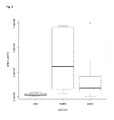
- VOC 337 was shown to be hexane while VOC 903 was identified as 2-hexanone. VOC 923 remained undetermined. A possible explanation could be that this compound is not in the NIST Library or that the initial compound structure has been modified during heating of the tube and is no longer recognizable.
- hexane (VOC 337) was 5x more abundant in paucigranulocytic as compared to eosinophilic subtypes ( Fig 2 , table 3). The same goes to discovery probability that was higher in paucigranulocytic group.
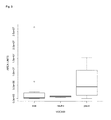
- the average area under the peak of 2-hexanone (VOC 903) was 15.5 times higher in paucigranulocytic as compared to eosinophilic group ( Fig 3 , table 3).
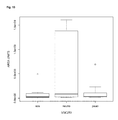
- VOC923 levels were 1.2 times higher in paucigranulocytic asthma than in eosinophilic asthma ( Fig 4 , table 3).
- VOC 2622 and VOC 2853 were volatile organic compounds able to distinguish asthmatics with increased neutrophil counts as compared to paucigranulocytic asthma ( Fig 5 ).
- VOC 2622 was 3-tetradecene and VOC 2853 was 1-pentadecene (C15H30).
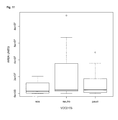
- 3-tetradecene was more abundant (8.8 times) in neutrophilic asthma than in paucigranulocytic subgroup ( Fig 6 , table 3).
- the probability of detecting 3-tetradecene in neutrophilic asthma was 0.32 versus 0.144 in paucigranulocytic asthma.
- 3-tetradecene is not only more abundant but also occurs more frequently in neutrophilic subgroup.
- 1-pentadecen was also present at higher average concentration (4.3 times) and at higher probability of detection in neutrophilic asthmatics as compared to paucigranulocytic ( Fig 7 , table 3).
- VOC 1913 was identified as 3,7-dimethylnonane in NIST library, while VOC 2105 and VOC 253 were found to be nonanal and 1-propanol, respectively.
- VOC 2105 and VOC 253 were found to be nonanal and 1-propanol, respectively.
- the best-ranked VOCs were 3,7-dimethylnonane and nonanal followed by 1-propanol.
- the levels of 3,7-dimethylnonane were on average higher in neutrophilic subtypes (4.6 times) ( Fig 9 , table 3).
- 1-propanol was 3.4 more abundant in neutrophilic subtype ( Fig 10 , table 3).
- the area under the peak is related to the concentration of the compounds in the exhaled air.
- nonanal is more probable to occur and is 1.5 times more abundant ( Fig 11 , table 3). We found the same trend for as 3,7-dimethylnonane ( Fig 9 , table 3) and 1-propanol ( Fig 10 , table 3).
- the 3-tetradecene achieved the highest performance amongst other VOCs with accuracy and precision reaching 72% and 70% values (Table 5).
- the provided estimates were obtained based on 10 cross-validation runs each containing 35% of available samples.
- Table 5 The binary classification performances based on individual VOCs.
- FDR false discovery rate.
- VOC ID Name classification sensitivity specificity FDR precision accuracy VOC1913 3,7-dimethylnonane eos vs neutro 1.000 0.122 0.281 0.719 0.730 VOC2105 nonanal eos vs neutro 0.955 0.120 0.272 0.728 0.715 VOC253 1-propanol eos vs neutro 0.966 0.086 0.277 0.723 0.712 VOC337 hexane eos vs pauci 1.000 0.059 0.420 0.580 0.591 VOC903 2-hexanone eos vs pauci 0.981 0.087 0.384 0.616 0.623 VOC923 unknown eos vs pauci 0.972 0.096 0.397 0.603 0.609 VOC2622 3-tetradecene pauci vs neutro 1.000 0.196 0.300 0.700 0.720 VOC2853 1-pentadecene pauci vs neutro 0.9
Landscapes
- Health & Medical Sciences (AREA)
- Life Sciences & Earth Sciences (AREA)
- Engineering & Computer Science (AREA)
- Physics & Mathematics (AREA)
- Molecular Biology (AREA)
- Biomedical Technology (AREA)
- General Health & Medical Sciences (AREA)
- Pathology (AREA)
- Chemical & Material Sciences (AREA)
- Biophysics (AREA)
- Surgery (AREA)
- Physiology (AREA)
- Heart & Thoracic Surgery (AREA)
- Animal Behavior & Ethology (AREA)
- Pulmonology (AREA)
- Public Health (AREA)
- Veterinary Medicine (AREA)
- Immunology (AREA)
- General Physics & Mathematics (AREA)
- Medical Informatics (AREA)
- Biochemistry (AREA)
- Analytical Chemistry (AREA)
- Medicinal Chemistry (AREA)
- Food Science & Technology (AREA)
- Urology & Nephrology (AREA)
- Hematology (AREA)
- Investigating Or Analysing Biological Materials (AREA)
Priority Applications (7)
| Application Number | Priority Date | Filing Date | Title |
|---|---|---|---|
| EP15185986.5A EP3143930A1 (fr) | 2015-09-21 | 2015-09-21 | Procédé pour le diagnostic du sous-type inflammatoire d'une maladie des voies respiratoires |
| US15/761,520 US11406280B2 (en) | 2015-09-21 | 2016-08-30 | Method for the diagnosis of airway disease inflammatory subtype |
| AU2016328384A AU2016328384B2 (en) | 2015-09-21 | 2016-08-30 | Method for the diagnosis of airway disease inflammatory subtype |
| EP16766237.8A EP3337398B1 (fr) | 2015-09-21 | 2016-08-30 | In vitro procédé et utilisation d'un appareil pour le diagnostic in vitro du type inflammatoire d'une maladie des voies respiratoires |
| PCT/EP2016/070346 WO2017050527A1 (fr) | 2015-09-21 | 2016-08-30 | Méthode pour le diagnostic de sous-type inflammatoire de maladie des voies respiratoires |
| EP21190200.2A EP3936045B1 (fr) | 2015-09-21 | 2016-08-30 | Procédé pour le diagnostic de sous-type inflammatoire d'une maladie des voies respiratoires |
| CA2997506A CA2997506C (fr) | 2015-09-21 | 2016-08-30 | Methode pour le diagnostic de sous-type inflammatoire de maladie des voies respiratoires |
Applications Claiming Priority (1)
| Application Number | Priority Date | Filing Date | Title |
|---|---|---|---|
| EP15185986.5A EP3143930A1 (fr) | 2015-09-21 | 2015-09-21 | Procédé pour le diagnostic du sous-type inflammatoire d'une maladie des voies respiratoires |
Publications (1)
| Publication Number | Publication Date |
|---|---|
| EP3143930A1 true EP3143930A1 (fr) | 2017-03-22 |
Family
ID=54238220
Family Applications (3)
| Application Number | Title | Priority Date | Filing Date |
|---|---|---|---|
| EP15185986.5A Withdrawn EP3143930A1 (fr) | 2015-09-21 | 2015-09-21 | Procédé pour le diagnostic du sous-type inflammatoire d'une maladie des voies respiratoires |
| EP21190200.2A Active EP3936045B1 (fr) | 2015-09-21 | 2016-08-30 | Procédé pour le diagnostic de sous-type inflammatoire d'une maladie des voies respiratoires |
| EP16766237.8A Active EP3337398B1 (fr) | 2015-09-21 | 2016-08-30 | In vitro procédé et utilisation d'un appareil pour le diagnostic in vitro du type inflammatoire d'une maladie des voies respiratoires |
Family Applications After (2)
| Application Number | Title | Priority Date | Filing Date |
|---|---|---|---|
| EP21190200.2A Active EP3936045B1 (fr) | 2015-09-21 | 2016-08-30 | Procédé pour le diagnostic de sous-type inflammatoire d'une maladie des voies respiratoires |
| EP16766237.8A Active EP3337398B1 (fr) | 2015-09-21 | 2016-08-30 | In vitro procédé et utilisation d'un appareil pour le diagnostic in vitro du type inflammatoire d'une maladie des voies respiratoires |
Country Status (5)
| Country | Link |
|---|---|
| US (1) | US11406280B2 (fr) |
| EP (3) | EP3143930A1 (fr) |
| AU (1) | AU2016328384B2 (fr) |
| CA (1) | CA2997506C (fr) |
| WO (1) | WO2017050527A1 (fr) |
Cited By (2)
| Publication number | Priority date | Publication date | Assignee | Title |
|---|---|---|---|---|
| IT202100002063A1 (it) * | 2021-02-01 | 2022-08-01 | Just Breathe S R L | Metodo di screening diagnostico di massa per persone a rischio di contrarre patologie oncologiche |
| US12310746B2 (en) | 2018-11-04 | 2025-05-27 | Scent Medical Technologies Ltd | Methods and system for associating between discharge of chemicals, and corresponding genetic, medical and/or pathological conditions |
Families Citing this family (7)
| Publication number | Priority date | Publication date | Assignee | Title |
|---|---|---|---|---|
| CN117883121A (zh) | 2019-08-26 | 2024-04-16 | 泽特奥科技公司 | 利用呼出气诊断结核病和其他疾病 |
| GB201914183D0 (en) | 2019-10-01 | 2019-11-13 | Owlstone Med Ltd | Biomarker |
| KR102630689B1 (ko) | 2020-04-03 | 2024-01-29 | 제테오 테크, 인코포레이티드 | 호기 및 에어로졸 분석을 이용한 호흡기 질환 진단 |
| US12364411B2 (en) | 2020-04-03 | 2025-07-22 | Zeteo Tech, Inc. | Diagnosis of respiratory diseases using analysis of exhaled breath and aerosols |
| EP4312749A4 (fr) | 2021-03-31 | 2025-07-09 | Zeteo Tech Inc | Diagnostic de maladies respiratoires par capture de particules de biomatériau en aérosol à l'aide de systèmes et de procédés à lit fixe |
| CN114324549B (zh) * | 2022-01-04 | 2024-01-12 | 深圳市步锐生物科技有限公司 | 基于呼出气质谱检测的肺结核风险评估方法及系统 |
| CN116759014B (zh) * | 2023-08-21 | 2023-11-03 | 启思半导体(杭州)有限责任公司 | 基于随机森林的气体种类及浓度预测方法、系统及装置 |
Citations (4)
| Publication number | Priority date | Publication date | Assignee | Title |
|---|---|---|---|---|
| US20100137733A1 (en) * | 2008-12-01 | 2010-06-03 | Tricorn Tech Corporation | Breath analysis systems and methods for asthma, tuberculosis and lung cancer diagnostics and disease management |
| EP2273265A1 (fr) * | 2009-07-06 | 2011-01-12 | Universiteit Maastricht | Procédé pour le diagnostic d'asthme par la détection de composés organiques volatiles dans l'air expiré |
| WO2012059763A1 (fr) | 2010-11-05 | 2012-05-10 | The University Of Manchester | Biomarqueurs |
| WO2014180974A1 (fr) * | 2013-05-09 | 2014-11-13 | Ramem, S.A. | Procédé de diagnostic de la narcolepsie à base de composés organiques volatils |
Family Cites Families (5)
| Publication number | Priority date | Publication date | Assignee | Title |
|---|---|---|---|---|
| EP2166355A1 (fr) * | 2008-09-17 | 2010-03-24 | Universiteit Maastricht | Procédé pour le diagnostic de bronchopneumopathie chronique obstructive par la détection de composés organiques volatils dans l'air expiré |
| EP2270496A1 (fr) * | 2009-06-26 | 2011-01-05 | Universiteit Maastricht | Procédé pour le diagnostic de mucoviscidose par la détection de composés organiques volatiles dans l'air expiré |
| US9204821B2 (en) * | 2012-05-09 | 2015-12-08 | Isense Medical Corp. | Method of and apparatus for detecting upper respiratory bacterial infection from exhaled mammalian breath and colorimetric sensor array cartridge |
| AU2014218091A1 (en) * | 2013-02-13 | 2015-09-03 | Lone DARKET | System for monitoring a state of disease |
| US9861297B2 (en) * | 2013-09-09 | 2018-01-09 | Riken | Gas analysis device and gas analysis method |
-
2015
- 2015-09-21 EP EP15185986.5A patent/EP3143930A1/fr not_active Withdrawn
-
2016
- 2016-08-30 US US15/761,520 patent/US11406280B2/en active Active
- 2016-08-30 EP EP21190200.2A patent/EP3936045B1/fr active Active
- 2016-08-30 WO PCT/EP2016/070346 patent/WO2017050527A1/fr not_active Ceased
- 2016-08-30 CA CA2997506A patent/CA2997506C/fr active Active
- 2016-08-30 AU AU2016328384A patent/AU2016328384B2/en active Active
- 2016-08-30 EP EP16766237.8A patent/EP3337398B1/fr active Active
Patent Citations (4)
| Publication number | Priority date | Publication date | Assignee | Title |
|---|---|---|---|---|
| US20100137733A1 (en) * | 2008-12-01 | 2010-06-03 | Tricorn Tech Corporation | Breath analysis systems and methods for asthma, tuberculosis and lung cancer diagnostics and disease management |
| EP2273265A1 (fr) * | 2009-07-06 | 2011-01-12 | Universiteit Maastricht | Procédé pour le diagnostic d'asthme par la détection de composés organiques volatiles dans l'air expiré |
| WO2012059763A1 (fr) | 2010-11-05 | 2012-05-10 | The University Of Manchester | Biomarqueurs |
| WO2014180974A1 (fr) * | 2013-05-09 | 2014-11-13 | Ramem, S.A. | Procédé de diagnostic de la narcolepsie à base de composés organiques volatils |
Non-Patent Citations (7)
| Title |
|---|
| CASTRO ET AL., AM. J. RESPIR. CRIT. CARE MED., vol. 184, pages 1125 - 1132 |
| CHUNG ET AL., EUR RESPIR J., vol. 43, no. 2, 2014, pages 343 - 73 |
| HALDAR ET AL., N.ENGI.J.MED., vol. 360, pages 973 - 984 |
| LOUIS ET AL.: "Non Invasive Assessment of airways inflammation in asthma and COPD", 2011, GREECE: PASCHALIDIS MEDICAL PUBLICATIONS, article "Induced Sputum - Towards Normal Values", pages: 113 - 123 |
| MEAGHER ET AL., J.IMMUNOL., vol. 156, pages 4422 - 4428 |
| PAVORD, LANCET, vol. 353, pages 2213 - 2214 |
| SIMPSON ET AL., AM.J.RESPIR.CRIT CARE MED., vol. 177, pages 148 - 155 |
Cited By (2)
| Publication number | Priority date | Publication date | Assignee | Title |
|---|---|---|---|---|
| US12310746B2 (en) | 2018-11-04 | 2025-05-27 | Scent Medical Technologies Ltd | Methods and system for associating between discharge of chemicals, and corresponding genetic, medical and/or pathological conditions |
| IT202100002063A1 (it) * | 2021-02-01 | 2022-08-01 | Just Breathe S R L | Metodo di screening diagnostico di massa per persone a rischio di contrarre patologie oncologiche |
Also Published As
| Publication number | Publication date |
|---|---|
| US20200345266A1 (en) | 2020-11-05 |
| EP3936045A1 (fr) | 2022-01-12 |
| AU2016328384B2 (en) | 2021-11-11 |
| CA2997506C (fr) | 2023-10-03 |
| WO2017050527A1 (fr) | 2017-03-30 |
| AU2016328384A1 (en) | 2018-03-29 |
| US11406280B2 (en) | 2022-08-09 |
| CA2997506A1 (fr) | 2017-03-30 |
| EP3936045B1 (fr) | 2024-04-17 |
| EP3337398B1 (fr) | 2021-09-29 |
| EP3337398A1 (fr) | 2018-06-27 |
Similar Documents
| Publication | Publication Date | Title |
|---|---|---|
| EP3936045B1 (fr) | Procédé pour le diagnostic de sous-type inflammatoire d'une maladie des voies respiratoires | |
| US12467910B2 (en) | Diagnosis of tuberculosis and other diseases using exhaled breath | |
| Pizzini et al. | Analysis of volatile organic compounds in the breath of patients with stable or acute exacerbation of chronic obstructive pulmonary disease | |
| Schleich et al. | Importance of concomitant local and systemic eosinophilia in uncontrolled asthma | |
| Singh et al. | Inhibition of the asthmatic allergen challenge response by the CRTH2 antagonist OC000459 | |
| Borrill et al. | Exhaled breath condensate biomarkers in COPD | |
| Brightling et al. | Comparison of airway immunopathology of eosinophilic bronchitis and asthma | |
| Fens et al. | External validation of exhaled breath profiling using an electronic nose in the discrimination of asthma with fixed airways obstruction and chronic obstructive pulmonary disease | |
| Basanta et al. | Exhaled volatile organic compounds for phenotyping chronic obstructive pulmonary disease: a cross-sectional study | |
| Bhowmik et al. | Effects of exacerbations and seasonality on exhaled nitric oxide in COPD | |
| Pavord et al. | Clinical applications of assessment of airway inflammation using induced sputum | |
| US20190167152A1 (en) | Method and apparatus for the diagnosis of pneumonia using exhaled breath metabolomics | |
| Quaedvlieg et al. | Association between asthma control and bronchial hyperresponsiveness and airways inflammation: a cross‐sectional study in daily practice | |
| Nagaraja et al. | Hydrogen peroxide in exhaled breath condensate: A clinical study | |
| Bjerregaard et al. | Clinical characteristics of eosinophilic asthma exacerbations | |
| Hou et al. | Nasal ventilation is an important factor in evaluating the diagnostic value of nasal nitric oxide in allergic rhinitis | |
| Murugan et al. | Biomarkers in asthma | |
| Wang et al. | Diagnostic value of fractional exhaled nitric oxide and small airway function in differentiating cough‐variant asthma from typical asthma | |
| Tanou et al. | Inflammatory and oxidative stress biomarkers in allergic rhinitis: the effect of smoking | |
| WO2012059763A1 (fr) | Biomarqueurs | |
| Dragonieri et al. | An electronic nose may sniff out amyotrophic lateral sclerosis | |
| Failla et al. | Intranasal steroid reduces exhaled bronchial cysteinyl leukotrienes in allergic patients | |
| US20220341911A1 (en) | Dodecane as exhaled biomarker for exercise-induced asthma in children | |
| Riise et al. | Subjects in a population study with high levels of FENO have associated eosinophil airway inflammation | |
| Jungraithmayr et al. | Inflammatory markers in exhaled breath condensate following lung resection for bronchial carcinoma |
Legal Events
| Date | Code | Title | Description |
|---|---|---|---|
| PUAI | Public reference made under article 153(3) epc to a published international application that has entered the european phase |
Free format text: ORIGINAL CODE: 0009012 |
|
| AK | Designated contracting states |
Kind code of ref document: A1 Designated state(s): AL AT BE BG CH CY CZ DE DK EE ES FI FR GB GR HR HU IE IS IT LI LT LU LV MC MK MT NL NO PL PT RO RS SE SI SK SM TR |
|
| AX | Request for extension of the european patent |
Extension state: BA ME |
|
| STAA | Information on the status of an ep patent application or granted ep patent |
Free format text: STATUS: THE APPLICATION IS DEEMED TO BE WITHDRAWN |
|
| 18D | Application deemed to be withdrawn |
Effective date: 20170923 |