EP3143967B1 - Stent - Google Patents
Stent Download PDFInfo
- Publication number
- EP3143967B1 EP3143967B1 EP16189117.1A EP16189117A EP3143967B1 EP 3143967 B1 EP3143967 B1 EP 3143967B1 EP 16189117 A EP16189117 A EP 16189117A EP 3143967 B1 EP3143967 B1 EP 3143967B1
- Authority
- EP
- European Patent Office
- Prior art keywords
- stent
- cylindrical shape
- linear
- link sections
- axial end
- Prior art date
- Legal status (The legal status is an assumption and is not a legal conclusion. Google has not performed a legal analysis and makes no representation as to the accuracy of the status listed.)
- Active
Links
- 238000000354 decomposition reaction Methods 0.000 claims description 70
- 239000000463 material Substances 0.000 claims description 56
- 229910052751 metal Inorganic materials 0.000 claims description 6
- 239000002184 metal Substances 0.000 claims description 6
- 238000000926 separation method Methods 0.000 claims description 6
- 230000004048 modification Effects 0.000 description 6
- 238000012986 modification Methods 0.000 description 6
- 230000001154 acute effect Effects 0.000 description 5
- 230000008859 change Effects 0.000 description 4
- 230000004044 response Effects 0.000 description 4
- 229920002988 biodegradable polymer Polymers 0.000 description 3
- 239000004621 biodegradable polymer Substances 0.000 description 3
- 210000004204 blood vessel Anatomy 0.000 description 3
- 230000001684 chronic effect Effects 0.000 description 3
- 239000000470 constituent Substances 0.000 description 3
- XEEYBQQBJWHFJM-UHFFFAOYSA-N Iron Chemical compound [Fe] XEEYBQQBJWHFJM-UHFFFAOYSA-N 0.000 description 2
- 230000015556 catabolic process Effects 0.000 description 2
- 238000006731 degradation reaction Methods 0.000 description 2
- 230000000694 effects Effects 0.000 description 2
- 101000691618 Homo sapiens Inactive phospholipase C-like protein 1 Proteins 0.000 description 1
- 102100026207 Inactive phospholipase C-like protein 1 Human genes 0.000 description 1
- FYYHWMGAXLPEAU-UHFFFAOYSA-N Magnesium Chemical compound [Mg] FYYHWMGAXLPEAU-UHFFFAOYSA-N 0.000 description 1
- HCHKCACWOHOZIP-UHFFFAOYSA-N Zinc Chemical compound [Zn] HCHKCACWOHOZIP-UHFFFAOYSA-N 0.000 description 1
- 229920006167 biodegradable resin Polymers 0.000 description 1
- 210000003238 esophagus Anatomy 0.000 description 1
- 238000003384 imaging method Methods 0.000 description 1
- 238000002608 intravascular ultrasound Methods 0.000 description 1
- 229910052742 iron Inorganic materials 0.000 description 1
- 229910052749 magnesium Inorganic materials 0.000 description 1
- 239000011777 magnesium Substances 0.000 description 1
- 230000005012 migration Effects 0.000 description 1
- 238000013508 migration Methods 0.000 description 1
- 239000000203 mixture Substances 0.000 description 1
- 230000003287 optical effect Effects 0.000 description 1
- 229920000848 poly(L-lactide-ε-caprolactone) Polymers 0.000 description 1
- 230000010349 pulsation Effects 0.000 description 1
- 238000011268 retreatment Methods 0.000 description 1
- 239000012266 salt solution Substances 0.000 description 1
- 210000003437 trachea Anatomy 0.000 description 1
- 238000002604 ultrasonography Methods 0.000 description 1
- 229910052725 zinc Inorganic materials 0.000 description 1
- 239000011701 zinc Substances 0.000 description 1
Images



Classifications
-
- A—HUMAN NECESSITIES
- A61—MEDICAL OR VETERINARY SCIENCE; HYGIENE
- A61F—FILTERS IMPLANTABLE INTO BLOOD VESSELS; PROSTHESES; DEVICES PROVIDING PATENCY TO, OR PREVENTING COLLAPSING OF, TUBULAR STRUCTURES OF THE BODY, e.g. STENTS; ORTHOPAEDIC, NURSING OR CONTRACEPTIVE DEVICES; FOMENTATION; TREATMENT OR PROTECTION OF EYES OR EARS; BANDAGES, DRESSINGS OR ABSORBENT PADS; FIRST-AID KITS
- A61F2/00—Filters implantable into blood vessels; Prostheses, i.e. artificial substitutes or replacements for parts of the body; Appliances for connecting them with the body; Devices providing patency to, or preventing collapsing of, tubular structures of the body, e.g. stents
- A61F2/82—Devices providing patency to, or preventing collapsing of, tubular structures of the body, e.g. stents
- A61F2/86—Stents in a form characterised by the wire-like elements; Stents in the form characterised by a net-like or mesh-like structure
- A61F2/90—Stents in a form characterised by the wire-like elements; Stents in the form characterised by a net-like or mesh-like structure characterised by a net-like or mesh-like structure
- A61F2/91—Stents in a form characterised by the wire-like elements; Stents in the form characterised by a net-like or mesh-like structure characterised by a net-like or mesh-like structure made from perforated sheets or tubes, e.g. perforated by laser cuts or etched holes
- A61F2/915—Stents in a form characterised by the wire-like elements; Stents in the form characterised by a net-like or mesh-like structure characterised by a net-like or mesh-like structure made from perforated sheets or tubes, e.g. perforated by laser cuts or etched holes with bands having a meander structure, adjacent bands being connected to each other
-
- A—HUMAN NECESSITIES
- A61—MEDICAL OR VETERINARY SCIENCE; HYGIENE
- A61F—FILTERS IMPLANTABLE INTO BLOOD VESSELS; PROSTHESES; DEVICES PROVIDING PATENCY TO, OR PREVENTING COLLAPSING OF, TUBULAR STRUCTURES OF THE BODY, e.g. STENTS; ORTHOPAEDIC, NURSING OR CONTRACEPTIVE DEVICES; FOMENTATION; TREATMENT OR PROTECTION OF EYES OR EARS; BANDAGES, DRESSINGS OR ABSORBENT PADS; FIRST-AID KITS
- A61F2/00—Filters implantable into blood vessels; Prostheses, i.e. artificial substitutes or replacements for parts of the body; Appliances for connecting them with the body; Devices providing patency to, or preventing collapsing of, tubular structures of the body, e.g. stents
- A61F2/82—Devices providing patency to, or preventing collapsing of, tubular structures of the body, e.g. stents
- A61F2/86—Stents in a form characterised by the wire-like elements; Stents in the form characterised by a net-like or mesh-like structure
- A61F2/90—Stents in a form characterised by the wire-like elements; Stents in the form characterised by a net-like or mesh-like structure characterised by a net-like or mesh-like structure
-
- A—HUMAN NECESSITIES
- A61—MEDICAL OR VETERINARY SCIENCE; HYGIENE
- A61F—FILTERS IMPLANTABLE INTO BLOOD VESSELS; PROSTHESES; DEVICES PROVIDING PATENCY TO, OR PREVENTING COLLAPSING OF, TUBULAR STRUCTURES OF THE BODY, e.g. STENTS; ORTHOPAEDIC, NURSING OR CONTRACEPTIVE DEVICES; FOMENTATION; TREATMENT OR PROTECTION OF EYES OR EARS; BANDAGES, DRESSINGS OR ABSORBENT PADS; FIRST-AID KITS
- A61F2/00—Filters implantable into blood vessels; Prostheses, i.e. artificial substitutes or replacements for parts of the body; Appliances for connecting them with the body; Devices providing patency to, or preventing collapsing of, tubular structures of the body, e.g. stents
- A61F2/02—Prostheses implantable into the body
- A61F2/04—Hollow or tubular parts of organs, e.g. bladders, tracheae, bronchi or bile ducts
-
- A—HUMAN NECESSITIES
- A61—MEDICAL OR VETERINARY SCIENCE; HYGIENE
- A61F—FILTERS IMPLANTABLE INTO BLOOD VESSELS; PROSTHESES; DEVICES PROVIDING PATENCY TO, OR PREVENTING COLLAPSING OF, TUBULAR STRUCTURES OF THE BODY, e.g. STENTS; ORTHOPAEDIC, NURSING OR CONTRACEPTIVE DEVICES; FOMENTATION; TREATMENT OR PROTECTION OF EYES OR EARS; BANDAGES, DRESSINGS OR ABSORBENT PADS; FIRST-AID KITS
- A61F2/00—Filters implantable into blood vessels; Prostheses, i.e. artificial substitutes or replacements for parts of the body; Appliances for connecting them with the body; Devices providing patency to, or preventing collapsing of, tubular structures of the body, e.g. stents
- A61F2/02—Prostheses implantable into the body
- A61F2/04—Hollow or tubular parts of organs, e.g. bladders, tracheae, bronchi or bile ducts
- A61F2002/044—Oesophagi or esophagi or gullets
-
- A—HUMAN NECESSITIES
- A61—MEDICAL OR VETERINARY SCIENCE; HYGIENE
- A61F—FILTERS IMPLANTABLE INTO BLOOD VESSELS; PROSTHESES; DEVICES PROVIDING PATENCY TO, OR PREVENTING COLLAPSING OF, TUBULAR STRUCTURES OF THE BODY, e.g. STENTS; ORTHOPAEDIC, NURSING OR CONTRACEPTIVE DEVICES; FOMENTATION; TREATMENT OR PROTECTION OF EYES OR EARS; BANDAGES, DRESSINGS OR ABSORBENT PADS; FIRST-AID KITS
- A61F2/00—Filters implantable into blood vessels; Prostheses, i.e. artificial substitutes or replacements for parts of the body; Appliances for connecting them with the body; Devices providing patency to, or preventing collapsing of, tubular structures of the body, e.g. stents
- A61F2/02—Prostheses implantable into the body
- A61F2/04—Hollow or tubular parts of organs, e.g. bladders, tracheae, bronchi or bile ducts
- A61F2002/046—Tracheae
-
- A—HUMAN NECESSITIES
- A61—MEDICAL OR VETERINARY SCIENCE; HYGIENE
- A61F—FILTERS IMPLANTABLE INTO BLOOD VESSELS; PROSTHESES; DEVICES PROVIDING PATENCY TO, OR PREVENTING COLLAPSING OF, TUBULAR STRUCTURES OF THE BODY, e.g. STENTS; ORTHOPAEDIC, NURSING OR CONTRACEPTIVE DEVICES; FOMENTATION; TREATMENT OR PROTECTION OF EYES OR EARS; BANDAGES, DRESSINGS OR ABSORBENT PADS; FIRST-AID KITS
- A61F2/00—Filters implantable into blood vessels; Prostheses, i.e. artificial substitutes or replacements for parts of the body; Appliances for connecting them with the body; Devices providing patency to, or preventing collapsing of, tubular structures of the body, e.g. stents
- A61F2/02—Prostheses implantable into the body
- A61F2/04—Hollow or tubular parts of organs, e.g. bladders, tracheae, bronchi or bile ducts
- A61F2002/047—Urethrae
-
- A—HUMAN NECESSITIES
- A61—MEDICAL OR VETERINARY SCIENCE; HYGIENE
- A61F—FILTERS IMPLANTABLE INTO BLOOD VESSELS; PROSTHESES; DEVICES PROVIDING PATENCY TO, OR PREVENTING COLLAPSING OF, TUBULAR STRUCTURES OF THE BODY, e.g. STENTS; ORTHOPAEDIC, NURSING OR CONTRACEPTIVE DEVICES; FOMENTATION; TREATMENT OR PROTECTION OF EYES OR EARS; BANDAGES, DRESSINGS OR ABSORBENT PADS; FIRST-AID KITS
- A61F2/00—Filters implantable into blood vessels; Prostheses, i.e. artificial substitutes or replacements for parts of the body; Appliances for connecting them with the body; Devices providing patency to, or preventing collapsing of, tubular structures of the body, e.g. stents
- A61F2/82—Devices providing patency to, or preventing collapsing of, tubular structures of the body, e.g. stents
- A61F2/86—Stents in a form characterised by the wire-like elements; Stents in the form characterised by a net-like or mesh-like structure
- A61F2/90—Stents in a form characterised by the wire-like elements; Stents in the form characterised by a net-like or mesh-like structure characterised by a net-like or mesh-like structure
- A61F2/91—Stents in a form characterised by the wire-like elements; Stents in the form characterised by a net-like or mesh-like structure characterised by a net-like or mesh-like structure made from perforated sheets or tubes, e.g. perforated by laser cuts or etched holes
- A61F2/915—Stents in a form characterised by the wire-like elements; Stents in the form characterised by a net-like or mesh-like structure characterised by a net-like or mesh-like structure made from perforated sheets or tubes, e.g. perforated by laser cuts or etched holes with bands having a meander structure, adjacent bands being connected to each other
- A61F2002/91516—Stents in a form characterised by the wire-like elements; Stents in the form characterised by a net-like or mesh-like structure characterised by a net-like or mesh-like structure made from perforated sheets or tubes, e.g. perforated by laser cuts or etched holes with bands having a meander structure, adjacent bands being connected to each other the meander having a change in frequency along the band
-
- A—HUMAN NECESSITIES
- A61—MEDICAL OR VETERINARY SCIENCE; HYGIENE
- A61F—FILTERS IMPLANTABLE INTO BLOOD VESSELS; PROSTHESES; DEVICES PROVIDING PATENCY TO, OR PREVENTING COLLAPSING OF, TUBULAR STRUCTURES OF THE BODY, e.g. STENTS; ORTHOPAEDIC, NURSING OR CONTRACEPTIVE DEVICES; FOMENTATION; TREATMENT OR PROTECTION OF EYES OR EARS; BANDAGES, DRESSINGS OR ABSORBENT PADS; FIRST-AID KITS
- A61F2/00—Filters implantable into blood vessels; Prostheses, i.e. artificial substitutes or replacements for parts of the body; Appliances for connecting them with the body; Devices providing patency to, or preventing collapsing of, tubular structures of the body, e.g. stents
- A61F2/82—Devices providing patency to, or preventing collapsing of, tubular structures of the body, e.g. stents
- A61F2/86—Stents in a form characterised by the wire-like elements; Stents in the form characterised by a net-like or mesh-like structure
- A61F2/90—Stents in a form characterised by the wire-like elements; Stents in the form characterised by a net-like or mesh-like structure characterised by a net-like or mesh-like structure
- A61F2/91—Stents in a form characterised by the wire-like elements; Stents in the form characterised by a net-like or mesh-like structure characterised by a net-like or mesh-like structure made from perforated sheets or tubes, e.g. perforated by laser cuts or etched holes
- A61F2/915—Stents in a form characterised by the wire-like elements; Stents in the form characterised by a net-like or mesh-like structure characterised by a net-like or mesh-like structure made from perforated sheets or tubes, e.g. perforated by laser cuts or etched holes with bands having a meander structure, adjacent bands being connected to each other
- A61F2002/91533—Stents in a form characterised by the wire-like elements; Stents in the form characterised by a net-like or mesh-like structure characterised by a net-like or mesh-like structure made from perforated sheets or tubes, e.g. perforated by laser cuts or etched holes with bands having a meander structure, adjacent bands being connected to each other characterised by the phase between adjacent bands
-
- A—HUMAN NECESSITIES
- A61—MEDICAL OR VETERINARY SCIENCE; HYGIENE
- A61F—FILTERS IMPLANTABLE INTO BLOOD VESSELS; PROSTHESES; DEVICES PROVIDING PATENCY TO, OR PREVENTING COLLAPSING OF, TUBULAR STRUCTURES OF THE BODY, e.g. STENTS; ORTHOPAEDIC, NURSING OR CONTRACEPTIVE DEVICES; FOMENTATION; TREATMENT OR PROTECTION OF EYES OR EARS; BANDAGES, DRESSINGS OR ABSORBENT PADS; FIRST-AID KITS
- A61F2/00—Filters implantable into blood vessels; Prostheses, i.e. artificial substitutes or replacements for parts of the body; Appliances for connecting them with the body; Devices providing patency to, or preventing collapsing of, tubular structures of the body, e.g. stents
- A61F2/82—Devices providing patency to, or preventing collapsing of, tubular structures of the body, e.g. stents
- A61F2/86—Stents in a form characterised by the wire-like elements; Stents in the form characterised by a net-like or mesh-like structure
- A61F2/90—Stents in a form characterised by the wire-like elements; Stents in the form characterised by a net-like or mesh-like structure characterised by a net-like or mesh-like structure
- A61F2/91—Stents in a form characterised by the wire-like elements; Stents in the form characterised by a net-like or mesh-like structure characterised by a net-like or mesh-like structure made from perforated sheets or tubes, e.g. perforated by laser cuts or etched holes
- A61F2/915—Stents in a form characterised by the wire-like elements; Stents in the form characterised by a net-like or mesh-like structure characterised by a net-like or mesh-like structure made from perforated sheets or tubes, e.g. perforated by laser cuts or etched holes with bands having a meander structure, adjacent bands being connected to each other
- A61F2002/9155—Adjacent bands being connected to each other
- A61F2002/91575—Adjacent bands being connected to each other connected peak to trough
-
- A—HUMAN NECESSITIES
- A61—MEDICAL OR VETERINARY SCIENCE; HYGIENE
- A61F—FILTERS IMPLANTABLE INTO BLOOD VESSELS; PROSTHESES; DEVICES PROVIDING PATENCY TO, OR PREVENTING COLLAPSING OF, TUBULAR STRUCTURES OF THE BODY, e.g. STENTS; ORTHOPAEDIC, NURSING OR CONTRACEPTIVE DEVICES; FOMENTATION; TREATMENT OR PROTECTION OF EYES OR EARS; BANDAGES, DRESSINGS OR ABSORBENT PADS; FIRST-AID KITS
- A61F2/00—Filters implantable into blood vessels; Prostheses, i.e. artificial substitutes or replacements for parts of the body; Appliances for connecting them with the body; Devices providing patency to, or preventing collapsing of, tubular structures of the body, e.g. stents
- A61F2/82—Devices providing patency to, or preventing collapsing of, tubular structures of the body, e.g. stents
- A61F2/86—Stents in a form characterised by the wire-like elements; Stents in the form characterised by a net-like or mesh-like structure
- A61F2/90—Stents in a form characterised by the wire-like elements; Stents in the form characterised by a net-like or mesh-like structure characterised by a net-like or mesh-like structure
- A61F2/91—Stents in a form characterised by the wire-like elements; Stents in the form characterised by a net-like or mesh-like structure characterised by a net-like or mesh-like structure made from perforated sheets or tubes, e.g. perforated by laser cuts or etched holes
- A61F2/915—Stents in a form characterised by the wire-like elements; Stents in the form characterised by a net-like or mesh-like structure characterised by a net-like or mesh-like structure made from perforated sheets or tubes, e.g. perforated by laser cuts or etched holes with bands having a meander structure, adjacent bands being connected to each other
- A61F2002/9155—Adjacent bands being connected to each other
- A61F2002/91583—Adjacent bands being connected to each other by a bridge, whereby at least one of its ends is connected along the length of a strut between two consecutive apices within a band
-
- A—HUMAN NECESSITIES
- A61—MEDICAL OR VETERINARY SCIENCE; HYGIENE
- A61F—FILTERS IMPLANTABLE INTO BLOOD VESSELS; PROSTHESES; DEVICES PROVIDING PATENCY TO, OR PREVENTING COLLAPSING OF, TUBULAR STRUCTURES OF THE BODY, e.g. STENTS; ORTHOPAEDIC, NURSING OR CONTRACEPTIVE DEVICES; FOMENTATION; TREATMENT OR PROTECTION OF EYES OR EARS; BANDAGES, DRESSINGS OR ABSORBENT PADS; FIRST-AID KITS
- A61F2210/00—Particular material properties of prostheses classified in groups A61F2/00 - A61F2/26 or A61F2/82 or A61F9/00 or A61F11/00 or subgroups thereof
- A61F2210/0004—Particular material properties of prostheses classified in groups A61F2/00 - A61F2/26 or A61F2/82 or A61F9/00 or A61F11/00 or subgroups thereof bioabsorbable
-
- A—HUMAN NECESSITIES
- A61—MEDICAL OR VETERINARY SCIENCE; HYGIENE
- A61F—FILTERS IMPLANTABLE INTO BLOOD VESSELS; PROSTHESES; DEVICES PROVIDING PATENCY TO, OR PREVENTING COLLAPSING OF, TUBULAR STRUCTURES OF THE BODY, e.g. STENTS; ORTHOPAEDIC, NURSING OR CONTRACEPTIVE DEVICES; FOMENTATION; TREATMENT OR PROTECTION OF EYES OR EARS; BANDAGES, DRESSINGS OR ABSORBENT PADS; FIRST-AID KITS
- A61F2250/00—Special features of prostheses classified in groups A61F2/00 - A61F2/26 or A61F2/82 or A61F9/00 or A61F11/00 or subgroups thereof
- A61F2250/0014—Special features of prostheses classified in groups A61F2/00 - A61F2/26 or A61F2/82 or A61F9/00 or A61F11/00 or subgroups thereof having different values of a given property or geometrical feature, e.g. mechanical property or material property, at different locations within the same prosthesis
- A61F2250/003—Special features of prostheses classified in groups A61F2/00 - A61F2/26 or A61F2/82 or A61F9/00 or A61F11/00 or subgroups thereof having different values of a given property or geometrical feature, e.g. mechanical property or material property, at different locations within the same prosthesis differing in adsorbability or resorbability, i.e. in adsorption or resorption time
- A61F2250/0031—Special features of prostheses classified in groups A61F2/00 - A61F2/26 or A61F2/82 or A61F9/00 or A61F11/00 or subgroups thereof having different values of a given property or geometrical feature, e.g. mechanical property or material property, at different locations within the same prosthesis differing in adsorbability or resorbability, i.e. in adsorption or resorption time made from both resorbable and non-resorbable prosthetic parts, e.g. adjacent parts
-
- A—HUMAN NECESSITIES
- A61—MEDICAL OR VETERINARY SCIENCE; HYGIENE
- A61F—FILTERS IMPLANTABLE INTO BLOOD VESSELS; PROSTHESES; DEVICES PROVIDING PATENCY TO, OR PREVENTING COLLAPSING OF, TUBULAR STRUCTURES OF THE BODY, e.g. STENTS; ORTHOPAEDIC, NURSING OR CONTRACEPTIVE DEVICES; FOMENTATION; TREATMENT OR PROTECTION OF EYES OR EARS; BANDAGES, DRESSINGS OR ABSORBENT PADS; FIRST-AID KITS
- A61F2250/00—Special features of prostheses classified in groups A61F2/00 - A61F2/26 or A61F2/82 or A61F9/00 or A61F11/00 or subgroups thereof
- A61F2250/0058—Additional features; Implant or prostheses properties not otherwise provided for
- A61F2250/0071—Additional features; Implant or prostheses properties not otherwise provided for breakable or frangible
Definitions
- the present invention generally relates to a stent.
- a stent is indwelled in a stenosed site or an occlusion site generated in a living body lumen such as a blood vessel in an expanded state in order to maintain a patency of the living body lumen, and is required to have a strength for holding the expanded state.
- the stent is also required to exhibit flexibility to follow a shape of the living body lumen and various efforts have been made to improve the flexibility.
- An example of a stent is disclosed in Japanese Application Publication No 2002-530146 .
- EP1958597 discloses a tubular supporting prosthesis that has two terminal regions relative to two longitudinal supporting prosthesis axis and a center region disposed between the two terminal regions, where every terminal region is provided with a mesh structure made of two structural rings, which are connected to each other by connecting members.
- the stent disclosed here exhibits mechanical properties that change in a multistage manner and is configured to effectively exhibit stent functions in response to a period after indwelling.
- a stent disclosed here includes a plurality of linear struts together forming an outer circumference of cylindrical shape with gaps between adjacent ones of the linear struts; a plurality of link sections each containing a biodegradable material and each connecting two adjacent ones of the linear struts to one another, the link sections being positioned in the gaps; and at least two of the link sections possessing different decomposition periods under identical conditions.
- a plurality of link sections having different decomposition periods are decomposed separately at time intervals, whereby the mechanical properties of the stent change at least twice, so that it is possible to effectively exhibit the functions of the stent in response to a period after the indwelling.
- a stent comprises: a plurality of wavy-shaped struts each extending in an annular form to define a tubular member possessing an outer circumferential surface and an axial extent.
- the wavy-shaped struts are spaced apart from one another along the axial extent of the tubular member so that gaps exist between axially adjacent ones of the wavy-shaped struts, and each of the wavy-shaped struts is made of non-biodegradable material.
- the stent also comprises a plurality of link sections, with each of the plurality of link sections being positioned in one of the gaps between the axially adjacent wavy-shaped struts and connecting the axially adjacent wavy-shaped struts to each other.
- Each of the plurality of link sections is made of biodegradable material and possesses a decomposition period in which the link section decomposes over time under identical conditions so that the axially adjacent wavy-shaped struts are no longer connected by the link section.
- the decomposition period of at least some of the link sections is different from the decomposition period of other link sections under the identical conditions.
- a stent 100 is a tubular member that includes struts 110 and 111 which are linear elements.
- the struts 110 and 111 form an outer circumference of a cylindrical shape with gaps in the cylindrical shape. That is, the struts together define a tubular member (tubular stent) with many through holes or gaps passing through wall of the tubular member.
- a material for forming the struts 110 and 111 is a non-biodegradable metal or a non-biodegradable resin that is not decomposed in a living body.
- the struts 110 are located on both ends of the cylindrical shape in an axial direction D1 of the cylindrically-shaped stent, and extend in a circumferential direction of the cylindrically-shaped stent so that each of the circumferentially extending struts 110 is configured to be turned back to define a wavy shape in order to form an endless annular shape.
- the struts 111 each extend helically around the axial direction D1 (around the central axis of the stent) and each strut 111 is configured to be turned back to define a wavy shape. All of the struts 111 are positioned axially between the strut 110 on one axial end of the cylindrical stent and the strut 110 on the other end of the cylindrical stent.
- the stent 100 in this illustrated embodiment includes a plurality of link sections 120, 130 and 140.
- the link sections 120 and 130 each connect the strut 111 to the axially adjacent strut 111 and are located in the gap between the axially adjacent struts 111, 111.
- Each pair of axially adjacent struts 111, 111 is connected by at least one of the link sections 120 and at least one of the link sections 130.
- the link sections 140 each connect the axial end-most strut 110 to the axially adjacent strut 111 and are located in the gap between the two struts 110, 111.
- the link sections 120 and the link sections 130 are alternately disposed in a direction D3 (helical direction) crossing (transverse to) a separation direction D2 in which the struts 111 are axially adjacent with the gap provided between axially adjacent struts 111, 111.
- each link section 120 includes first connection sections 112, second connection sections 113 and a biodegradable material 121.
- the first connection sections 112 and the second connection sections 113 are configured to be nested with and connected to one another, and the state of being nested with one another can prevent the link section 120 from being disconnected unexpectedly.
- the first connection sections 112 are formed by causing a part of one of the adjacent two struts 111 to partially protrude relative to immediately adjacent parts of the one strut 111
- the second connection sections 113 are formed by causing a part of the other of the adjacent two struts 111 to partially protrude relative to immediately adjacent parts of the other strut 111.
- the biodegradable material 121 covers the first connection sections 112 and the second connection sections 113. Furthermore, the biodegradable material 121 extends into or is present in gaps between the first connection sections 112 and the second connection sections 113. The biodegradable material 121 ties together (connects) the first connection sections 112 and the second connection sections 113.
- the biodegradable material 121 is a material that decomposes in a living body and is, for example, a biodegradable polymer such as PDLGA (Poly(DL-lactide-co-glycolide)) or a biodegradable metal such as magnesium.
- a biodegradable polymer such as PDLGA (Poly(DL-lactide-co-glycolide)) or a biodegradable metal such as magnesium.
- Each link section 130 includes a biodegradable material 131 different from the biodegradable material 121 in each of the link sections 120 and differs from each of the link sections 120 in this respect.
- the link section 130 is similar to the link section 120 in all other respects.
- the biodegradable material 131 has a decomposition period different from a decomposition period of the biodegradable material 121 under the same conditions (identical conditions). That is, the rate of decomposition of the biodegradable material 131 differs from the rate of decomposition of the biodegradable material 121 under the same conditions or identical conditions.
- the biodegradable material 131 is, for example, a biodegradable polymer such as PDLCL (Poly(DL-lactide-co- ⁇ -caprolactone)) or a biodegradable metal such as zinc.
- the biodegradable material 131 is similar to the biodegradable material 121 in a shape and the like other than the material.
- Each link section 140 includes a biodegradable material 141 different from the biodegradable materials 121, 131 in each link section 120, 130, and differs from each of the link sections 120, 130 in this respect.
- the link section 140 is similar to the link sections 120 and 130 in all other respects.
- the biodegradable material 141 has a decomposition period different from the decomposition periods of the biodegradable materials 121 and 131 under the same conditions or identical conditions. That is, the rate of decomposition of the biodegradable material 141 differs from the rate of decomposition of the biodegradable materials 121, 131 under the same conditions or identical conditions.
- the biodegradable material 141 is, for example, a biodegradable polymer such as PLCL (Poly(L-lactide-co- ⁇ -caprolactone)) or a biodegradable metal such as pure iron.
- the biodegradable material 141 is similar to the biodegradable materials 121 and 131 in terms of shape and the like other than the material.
- a decomposition period (T1) of the biodegradable material 121 is shorter than a decomposition period (T2) of the biodegradable material 131 and the decomposition period (T2) of the biodegradable material 131 is shorter than a decomposition period (T3) of the biodegradable material 141 (T1 ⁇ T2 ⁇ T3).
- the decomposition period (T1) of the biodegradable material 121 is about three days to one month
- the decomposition period (T2) of the biodegradable material 131 is about one to three months
- the decomposition period (T3) of the biodegradable material 141 is about one to 12 months.
- the decomposition period refers to a period for which a desired connection strength of each of the link sections 120, 130 and 140 cannot be maintained due to the decomposition of each of the biodegradable materials 121, 131 and 141, and each of the biodegradable materials 121, 131 and 141 may not disappear completely.
- the stent 100 is indwelled in a stenosed site or an occlusion site generated in a living body lumen, for example, a blood vessel, a biliary duct, a trachea, an esophagus or an urethral tube in a radially outwardly expanded state and secures the body lumen in a patency (i.e., maintains the blood vessel lumen in an open state).
- a stenosed site or an occlusion site generated in a living body lumen for example, a blood vessel, a biliary duct, a trachea, an esophagus or an urethral tube in a radially outwardly expanded state and secures the body lumen in a patency (i.e., maintains the blood vessel lumen in an open state).
- the stent 100 is high in strength and it is ensured that the stent 100 is kept in the widely expanded state immediately after being indwelled; therefore, a device, for example, a catheter for IVUS (intravascular ultrasonography), a catheter for OFDI (optical frequency domain imaging) which is applied to confirm the indwelled state, a balloon catheter for post-stenting or the like is easy to pass through the stent 100.
- a device for example, a catheter for IVUS (intravascular ultrasonography), a catheter for OFDI (optical frequency domain imaging) which is applied to confirm the indwelled state, a balloon catheter for post-stenting or the like is easy to pass through the stent 100.
- the stent 100 maintains a relatively high strength; therefore, even if any of those devices unintendedly contacts the stent 100 when passing through the stent 100, the risk of deformation of the stent 100 in the axial direction D1 can be suppressed.
- the link sections 120 can no longer maintain the predetermined strength and are disconnected (broken) due to the decomposition of the biodegradable materials 121.
- the flexibility of the stent 100 increases, so that the stent 100 is more easily deformable to follow the shape of the living body lumen.
- the link sections 130 and 140 each continue to tie or connect the struts 110 and the struts 111 to each other while also continuing to tie or connect the struts 111 to each other; therefore, it is possible to suppress the misalignment (migration) of the struts 110 and 111 due to the disconnection of the link sections 120 or the motion of the body lumen such as pulsation.
- the link sections 130 are disconnected or become broken due to the decomposition of the biodegradable materials 131, thereby further increasing the flexibility of the stent 100.
- the link sections 140 continue to connect the struts 110 and the axially adjacent struts 111.
- the link sections 140 are also disconnected or broken due to the decomposition of the biodegradable materials 141; therefore, the stent 100 exhibits particularly high flexibility and flexibly follows the shape of the living body lumen. As a result, the stent 100 is kept in the living body lumen while securing or keeping open the living body lumen in a minimally invasive manner for a long period.
- the mechanical properties of the stent 100 in the present embodiment change three times due to the decomposition of the respective link sections 120, 130 and 140 separately at spaced-apart time intervals; therefore, the stent 100 can effectively exhibit stent functions in response to the acute phase, the intermediate phase in which the endothelialization progresses and the chronic phase.
- the link sections 140 having the relatively longest decomposition period are provided on both axial ends of the stent 100 in the axial direction D1 and so the two axial ends of the stent 100 are suppressed from degradation in strength as compared with the other parts.
- parts prone to contact the other device are both axial ends of the stent 100 when the device passes through the stent 100; however, according to the present embodiment, the link sections 140 suppress both ends of the stent 100 from the degradation in strength as compared with the other parts of the stent and it is, therefore, possible to effectively prevent the deformation.
- the link sections 120 and the link sections 130 are alternately disposed in the direction D3 (helical direction) crossing the separation direction D2 of the struts 111, the link sections 130 remain even after the decomposition of the link sections 120 having the relatively short decomposition period and the connection between the struts 111 is partially maintained. Owing to this, the stent 100 can exhibit flexibility while maintaining an appropriate strength.
- the struts 111 helically extend around the axial direction D1 from one end to the other end in the axial direction D1; therefore, even when all the link sections 120, 130 and 140 are decomposed, the stent 100 is not broken apart or divided. Owing to this, the stent 100 can effectively function even after all the link sections 120, 130 and 140 are decomposed.
- link sections are not limited to those in the disclosed and illustrated embodiment.
- the link sections 120 and the link sections 130 are alternately disposed in the direction D3; however, the invention is not limited to this and can include an embodiment where the link sections 120 and the link sections 130 are alternately disposed, for example, in pairs so that two circumferentially arranged links 120 are followed by two circumferentially arranged links 130.
- the two link sections 120 are disposed side by side in the direction D3
- the two link sections 130 are disposed side by side adjacently to the link sections 120 in the direction D3 and, furthermore, the two link sections 120 are disposed side by side adjacently to the link sections 130 in the direction D3.
- the present invention is not limited to the embodiment where plural link sections different in decomposition period are alternately disposed in the direction D3, but also includes an embodiment in which plural link sections identical in decomposition period are disposed side by side in the direction D3.
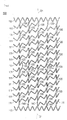
- a plural link sections 130 identical in decomposition period are disposed around the axial direction D1 of the stent 200 over an entire circumference of the stent in the direction D3.
- decomposing the link sections 130 causes the adjacent struts 111 to be disconnected at the same time; therefore, the stent 200 exhibits high flexibility.
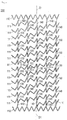
- the link sections 140 having the longest decomposition period are located on the both axial ends of the stent 100 in the axial direction D1 of the stent; however, the present invention is not limited to this and also encompasses a stent 300 in which the link sections 140 having the longest decomposition period or slowest decomposition rate are disposed only at one axial end of the stent as shown in FIG. 5 .
- configuring the stent so that the link sections having the relatively longest decomposition period (slowest decomposition rate) are connected to the struts at one of the two axial ends of the stent in the axial direction of the stent and the link sections having the shorter decomposition period (faster decomposition rate) than the decomposition period of the former link sections are connected to the struts in the other axial end portion of the stent enables the stent to improve the effect of suppressing the deformation on one axial end in the axial direction while improving the flexibility on the other axial end and to improve followability to the living body lumen.
- the disposition of the link sections may change along the axial direction D1 in such a way as to exhibit a gradation as in the case of the stent 300.
- the link sections 140 having the longest decomposition period may be disposed in portions other than the two axial ends in the axial direction D1.
- the stent 100 in the embodiment described above has three types of the link sections 120, 130 and 140 having the different decomposition periods; however, the number of types of link sections having different decomposition periods (different decomposition rates) may be two or may be four or more. Providing four or more types of the link sections enables more mechanical properties of the stent to be changed as compared with the abovementioned embodiment.
- each link section can be changed by changing the constituent component of the biodegradable material (composition of the biodegradable material or material forming the biodegradable material); however, the present invention is not limited to this.
- each link section contains the same constituent components or materials, and the decomposition period or decomposition rate may be changed by changing a weight-average molecular weights of the constituent components or materials.
- the link sections include a link section that does not include the first connection section 112 and the second connection section 113 in the abovementioned embodiment but is composed only of a biodegradable material.
- the stent may further have other link sections formed by a non-biodegradable metal in addition to the link sections each containing the biodegradable material. It is possible to improve the strength of the stent by having the other link section as stated above.
- the forms of the struts are not limited to those in the embodiments described above.
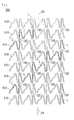
- a stent 500 shown in FIG. 7 does not include struts, such as the struts 111 in the abovementioned embodiment, extending helically around the axial direction D1.
- the struts 510 of the stent 500 are axially arranged in the axial direction D1 and extend in the circumferential direction while being turned back to define a wavy shape in order to form an endless annular shape similar to the struts 110 in the abovementioned embodiment.
- the stent 500 has a structure in which plural of the struts 510 are connected coaxially along the axial direction D1 by the link sections 120 and 130 similar to those in the abovementioned embodiments, and this structure includes a helical shape which is continuous without interruption from one axial end to the other axial end in the axial direction D1 while avoiding the link sections 120 having the relatively short decomposition period as indicated by a line L in FIG. 7 . That is, the sections identified as L are connected by the link sections 130 having the longer decomposition period, and the sections L together with the link sections 130 together define a helical shape that extends from one axial end to the opposite axial end.
- the struts 110 and 111 in the abovementioned embodiment are each formed by the non-biodegradable material; however, the material is not limited to this and the struts 110 and 111 may be formed by a biodegradable material having a longer decomposition period (slower decomposition rate) than those of the link sections 120, 130 and 140.
Landscapes
- Health & Medical Sciences (AREA)
- Engineering & Computer Science (AREA)
- Biomedical Technology (AREA)
- Heart & Thoracic Surgery (AREA)
- Life Sciences & Earth Sciences (AREA)
- Cardiology (AREA)
- Oral & Maxillofacial Surgery (AREA)
- Transplantation (AREA)
- Veterinary Medicine (AREA)
- Vascular Medicine (AREA)
- Public Health (AREA)
- Animal Behavior & Ethology (AREA)
- General Health & Medical Sciences (AREA)
- Optics & Photonics (AREA)
- Physics & Mathematics (AREA)
- Gastroenterology & Hepatology (AREA)
- Pulmonology (AREA)
- Media Introduction/Drainage Providing Device (AREA)
- Prostheses (AREA)
Claims (9)
- Stent (100, 200, 300, 400, 500), umfassend:eine Vielzahl von linearen Streben (110, 111, 511), die zusammen einen äußeren Umfang von zylindrischer Form mit Zwischenräumen zwischen den benachbarten der linearen Streben (110, 111, 511) bilden;eine Vielzahl von Verbindungsabschnitten (120, 130, 140), die jeweils ein biologisch abbaubares Material (121, 131, 141) enthalten und die jeweils zwei benachbarte der linearen Streben (110, 111, 511) miteinander verbinden, wobei die Verbindungsabschnitte (120, 130, 140) in den Zwischenräumen angeordnet sind; undmindestens drei der Verbindungsabschnitte unter identischen Bedingungen unterschiedliche Zersetzungszeiträume aufweisen, dadurch gekennzeichnet, dassdie mindestens drei Verbindungsabschnitte (120, 130, 140), die unter identischen Bedingungen unterschiedliche Zersetzungszeiträume aufweisen, umfassen:- eine Vielzahl von ersten Verbindungsabschnitten (120), die einen ersten Zersetzungszeitraum (T1) aufweisen,- eine Vielzahl von zweiten Verbindungsabschnitten (130), die einen zweiten Zersetzungszeitraum (T2) aufweisen, und- eine Vielzahl von dritten Verbindungsabschnitten (140), die einen dritten Zersetzungszeitraum aufweisen,wobei der erste Zersetzungszeitraum (T1) unter gleichen Bedingungen kleiner ist als der zweite Zersetzungszeitraum (T2), undder zweite Zersetzungszeitraum (T2) unter gleichen Bedingungen kleiner ist als der dritte Zersetzungszeitraum (T3).
- Stent (100, 200, 300, 400, 500) nach Anspruch 1, wobei die zylindrische Form entgegengesetzte axiale Enden in einer axialen Richtung (D1) der zylindrischen Form aufweist, wobei die linearen Streben eine axiale endständige lineare Strebe (110) an einem der axialen Enden der zylindrischen Form und eine andere axiale endständige lineare Strebe (110) an dem anderen axialen Ende der zylindrischen Form umfassen, wobei der erste Verbindungsabschnitt (120) die eine axiale endständige lineare Strebe mit der benachbarten linearen Strebe verbindet.
- Stent (100, 200, 300, 400, 500) nach Anspruch 1, wobei die zylindrische Form entgegengesetzte axiale Enden in einer axialen Richtung der zylindrischen Form aufweist, wobei die linearen Streben (110, 111, 511) eine axiale endständige lineare Strebe (110) an einem der axialen Enden der zylindrischen Form und eine andere axiale endständige lineare Strebe (110) an dem anderen axialen Ende der zylindrischen Form umfassen, wobei einer der ersten Verbindungsabschnitte (120) die eine axiale endständige lineare Strebe (110) mit der benachbarten linearen Strebe (111) verbindet, und der andere erste Verbindungsabschnitt (120) die andere axiale endständige lineare Strebe mit der benachbarten linearen Strebe (111) verbindet.
- Stent (100, 200, 300, 400, 500) nach Anspruch 1, wobei die linearen Streben (110, 111, 511) in einer Trennungsrichtung (D2) voneinander beabstandet sind, wobei die mindestens drei Verbindungsabschnitte (120, 130, 140), welche die unterschiedlichen Zersetzungszeiträume (T1, T2, T3) aufweisen, mindestens abwechselnd in einer Richtung (D3) angeordnet sind, welche die Trennungsrichtung kreuzt.
- Stent (100, 200, 300, 400, 500) nach Anspruch 1, wobei die linearen Streben (110, 111, 511) in einer Trennungsrichtung (D2) voneinander beabstandet sind und sich die zylindrische Form in einer axialen Richtung (D1) erstreckt, wobei eine Vielzahl der Verbindungsabschnitte, welche den gleichen Zersetzungszeitraum aufweisen, um die axiale Richtung (D1) der zylindrischen Form über einen gesamten Umfang der zylindrischen Form in einer Richtung (D3) angeordnet sind, welche die Trennungsrichtung (D2) kreuzt.
- Stent nach Anspruch 1, wobei die linearen Streben (110, 111, 511) derart miteinander verbunden sind, dass eine sich schraubenförmig erstreckende Strebe definiert ist, die sich schraubenförmig um die axiale Richtung der zylindrischen Form von einem axialen Ende zu einem gegenüberliegenden axialen Ende des Stents (110, 111, 511) erstreckt.
- Stent (100, 200, 300, 400, 500) nach Anspruch 1, wobei die zylindrische Form entgegengesetzte axiale Enden in der axialen Richtung (D1) der zylindrischen Form aufweist, wobei die Vielzahl von linearen Streben (110, 111, 511) koaxial in der axialen Richtung (D1) der zylindrischen Form verbunden ist, und eine Struktur definieren, die eine schraubenförmige Form aufweist, die ohne Unterbrechung von einem der axialen Enden zu dem anderen axialen Ende der zylindrischen Form in der axialen Richtung (D1) der zylindrischen Form durchgehend ist, wobei die Struktur, welche die schraubenförmige Form aufweist, die ohne Unterbrechung von dem einen axialen Ende zu dem anderen axialen Ende durchgehend ist, frei von den Verbindungsabschnitten (120) ist, welche den relativ kürzesten Zersetzungszeitraum aufweisen.
- Stent (100, 200, 300, 400, 500) nach Anspruch 1, der ferner zusätzlich zu den Verbindungsabschnitten (120, 130, 140), die jeweils das biologisch abbaubare Material enthalten, einen weiteren Verbindungsabschnitt aufweist, der aus einem nicht biologisch abbaubaren Metall gebildet ist.
- Stent (100, 200, 300, 400, 500) nach Anspruch 1, wobei die linearen Streben (110, 111, 511) eine axiale endständige lineare Strebe (111) an einem der axialen Enden der zylindrischen Form und eine andere axiale endständige lineare Strebe (111) an dem anderen axialen Ende der zylindrischen Form umfassen, wobei alle dritten Verbindungsabschnitte (140) die eine axiale endständige lineare Strebe mit der benachbarten linearen Strebe verbinden und die andere axiale endständige lineare Strebe mit der benachbarten linearen Strebe verbinden, sodass keine der dritten Verbindungsabschnitte (140) an anderer Stelle auf dem Stent (100) angeordnet sind.
Applications Claiming Priority (1)
| Application Number | Priority Date | Filing Date | Title |
|---|---|---|---|
| JP2015186039A JP6598152B2 (ja) | 2015-09-18 | 2015-09-18 | ステント |
Publications (2)
| Publication Number | Publication Date |
|---|---|
| EP3143967A1 EP3143967A1 (de) | 2017-03-22 |
| EP3143967B1 true EP3143967B1 (de) | 2021-11-03 |
Family
ID=56943377
Family Applications (1)
| Application Number | Title | Priority Date | Filing Date |
|---|---|---|---|
| EP16189117.1A Active EP3143967B1 (de) | 2015-09-18 | 2016-09-16 | Stent |
Country Status (4)
| Country | Link |
|---|---|
| US (1) | US20170079816A1 (de) |
| EP (1) | EP3143967B1 (de) |
| JP (1) | JP6598152B2 (de) |
| CN (1) | CN106551739A (de) |
Families Citing this family (2)
| Publication number | Priority date | Publication date | Assignee | Title |
|---|---|---|---|---|
| WO2014153162A1 (en) * | 2013-03-14 | 2014-09-25 | Palmaz Scientific, Inc. | Monolithic medical device, methods of making and using the same |
| CN116115286B (zh) * | 2022-03-14 | 2024-06-07 | 杭州亿科医疗科技有限公司 | 一种贴壁性好的血管支架 |
Family Cites Families (19)
| Publication number | Priority date | Publication date | Assignee | Title |
|---|---|---|---|---|
| JPH039746A (ja) * | 1989-03-27 | 1991-01-17 | Olympus Optical Co Ltd | 生体内留置型ステント |
| US8663311B2 (en) * | 1997-01-24 | 2014-03-04 | Celonova Stent, Inc. | Device comprising biodegradable bistable or multistable cells and methods of use |
| DE69942698D1 (de) | 1998-11-20 | 2010-09-30 | Boston Scient Ltd | Längsflexibler und expandierbarer Stent |
| US20070219642A1 (en) * | 1998-12-03 | 2007-09-20 | Jacob Richter | Hybrid stent having a fiber or wire backbone |
| US6258117B1 (en) * | 1999-04-15 | 2001-07-10 | Mayo Foundation For Medical Education And Research | Multi-section stent |
| US20050222671A1 (en) * | 2004-03-31 | 2005-10-06 | Schaeffer Darin G | Partially biodegradable stent |
| CA2857815C (en) * | 2005-12-30 | 2016-10-11 | C.R. Bard Inc. | Stent with bio-resorbable connector and methods |
| US7794776B1 (en) * | 2006-06-29 | 2010-09-14 | Abbott Cardiovascular Systems Inc. | Modification of polymer stents with radiation |
| EP3061791B1 (de) * | 2006-07-20 | 2019-01-16 | OrbusNeich Medical, Inc. | Bioresorbierbare polymerzusammensetzung für eine medizinische vorrichtung |
| JP4871692B2 (ja) * | 2006-09-29 | 2012-02-08 | テルモ株式会社 | 生体内留置用ステントおよび生体器官拡張器具 |
| EP2117476B1 (de) * | 2007-02-16 | 2014-01-22 | Universität Zürich | Rohrförmige stützprothese mit herzklappe insbesondere für aortenklappenersatz |
| EP1958597A1 (de) * | 2007-02-16 | 2008-08-20 | Universität Zürich | Rohrförmige Stützprothese mit Herzklappe insbesondere für Aortenklappenersatz |
| US8273404B2 (en) * | 2008-05-19 | 2012-09-25 | Cordis Corporation | Extraction of solvents from drug containing polymer reservoirs |
| KR101006972B1 (ko) * | 2009-02-19 | 2011-01-12 | 신경민 | 음식물 역류방지와 체내 분해가 가능한 스텐트 |
| US20100292776A1 (en) * | 2009-05-14 | 2010-11-18 | Boston Scientific Scimed, Inc. | Bioerodible Endoprosthesis |
| US20110066223A1 (en) * | 2009-09-14 | 2011-03-17 | Hossainy Syed F A | Bioabsorbable Stent With Time Dependent Structure And Properties |
| JP5661334B2 (ja) * | 2010-05-26 | 2015-01-28 | テルモ株式会社 | ステント |
| EP2774585B1 (de) * | 2011-11-02 | 2016-07-06 | Nipro Corporation | Stent |
| KR20160065091A (ko) * | 2013-09-27 | 2016-06-08 | 테루모 가부시키가이샤 | 스텐트 |
-
2015
- 2015-09-18 JP JP2015186039A patent/JP6598152B2/ja active Active
-
2016
- 2016-09-14 CN CN201610827309.7A patent/CN106551739A/zh active Pending
- 2016-09-16 US US15/268,019 patent/US20170079816A1/en not_active Abandoned
- 2016-09-16 EP EP16189117.1A patent/EP3143967B1/de active Active
Also Published As
| Publication number | Publication date |
|---|---|
| JP2017056157A (ja) | 2017-03-23 |
| CN106551739A (zh) | 2017-04-05 |
| JP6598152B2 (ja) | 2019-10-30 |
| US20170079816A1 (en) | 2017-03-23 |
| EP3143967A1 (de) | 2017-03-22 |
Similar Documents
| Publication | Publication Date | Title |
|---|---|---|
| US6761731B2 (en) | Balloon-stent interaction to help reduce foreshortening | |
| KR102471626B1 (ko) | 스텐트 보철 | |
| EP1374802B2 (de) | Stent mit flexiblen, diagonalen Verbindungselementen | |
| EP2508151A1 (de) | Biegbarer Stent mit röntgenopaken Markierungen in Ausnehmungen zwischen in Umfangsrichtung aneinandergrenzenden Streben | |
| EP3890662A1 (de) | Vorrichtung für anastomotischen bypass | |
| US20150080999A1 (en) | Self-expanding stent | |
| JP7267245B2 (ja) | ステント | |
| JP6892623B2 (ja) | ステント | |
| US10441446B2 (en) | Endoluminal prostheses including multiple helical wires | |
| US20250295506A1 (en) | Degradable bile and pancreatic duct stent | |
| JP7608536B2 (ja) | 非外傷性スペーサを備えたステント | |
| EP3544546A1 (de) | Bruchfester stent | |
| EP3143967A1 (de) | Stent | |
| EP3313329B1 (de) | Endoluminale prothesensysteme | |
| US9675479B2 (en) | Stent to be implanted within or around a hollow organ | |
| US8241347B2 (en) | Medical supporting implant, in particular stent | |
| JP2018161163A (ja) | ステント | |
| WO2008010636A1 (en) | Stent | |
| WO2017158985A1 (ja) | ステント | |
| EP3000444B1 (de) | Stent | |
| CA2458996A1 (en) | Longitudinally flexible stent | |
| JP4835113B2 (ja) | ステント | |
| US20170281374A1 (en) | Stent | |
| JP2023143792A (ja) | ステント | |
| WO2002051335A1 (en) | Implantable intravascular stent |
Legal Events
| Date | Code | Title | Description |
|---|---|---|---|
| PUAI | Public reference made under article 153(3) epc to a published international application that has entered the european phase |
Free format text: ORIGINAL CODE: 0009012 |
|
| STAA | Information on the status of an ep patent application or granted ep patent |
Free format text: STATUS: REQUEST FOR EXAMINATION WAS MADE |
|
| 17P | Request for examination filed |
Effective date: 20160916 |
|
| AK | Designated contracting states |
Kind code of ref document: A1 Designated state(s): AL AT BE BG CH CY CZ DE DK EE ES FI FR GB GR HR HU IE IS IT LI LT LU LV MC MK MT NL NO PL PT RO RS SE SI SK SM TR |
|
| AX | Request for extension of the european patent |
Extension state: BA ME |
|
| GRAP | Despatch of communication of intention to grant a patent |
Free format text: ORIGINAL CODE: EPIDOSNIGR1 |
|
| STAA | Information on the status of an ep patent application or granted ep patent |
Free format text: STATUS: GRANT OF PATENT IS INTENDED |
|
| INTG | Intention to grant announced |
Effective date: 20210531 |
|
| GRAS | Grant fee paid |
Free format text: ORIGINAL CODE: EPIDOSNIGR3 |
|
| GRAA | (expected) grant |
Free format text: ORIGINAL CODE: 0009210 |
|
| STAA | Information on the status of an ep patent application or granted ep patent |
Free format text: STATUS: THE PATENT HAS BEEN GRANTED |
|
| AK | Designated contracting states |
Kind code of ref document: B1 Designated state(s): AL AT BE BG CH CY CZ DE DK EE ES FI FR GB GR HR HU IE IS IT LI LT LU LV MC MK MT NL NO PL PT RO RS SE SI SK SM TR |
|
| REG | Reference to a national code |
Ref country code: GB Ref legal event code: FG4D |
|
| REG | Reference to a national code |
Ref country code: AT Ref legal event code: REF Ref document number: 1443322 Country of ref document: AT Kind code of ref document: T Effective date: 20211115 Ref country code: CH Ref legal event code: EP |
|
| REG | Reference to a national code |
Ref country code: IE Ref legal event code: FG4D |
|
| REG | Reference to a national code |
Ref country code: DE Ref legal event code: R096 Ref document number: 602016065663 Country of ref document: DE |
|
| REG | Reference to a national code |
Ref country code: LT Ref legal event code: MG9D |
|
| REG | Reference to a national code |
Ref country code: NL Ref legal event code: MP Effective date: 20211103 |
|
| REG | Reference to a national code |
Ref country code: AT Ref legal event code: MK05 Ref document number: 1443322 Country of ref document: AT Kind code of ref document: T Effective date: 20211103 |
|
| PG25 | Lapsed in a contracting state [announced via postgrant information from national office to epo] |
Ref country code: RS Free format text: LAPSE BECAUSE OF FAILURE TO SUBMIT A TRANSLATION OF THE DESCRIPTION OR TO PAY THE FEE WITHIN THE PRESCRIBED TIME-LIMIT Effective date: 20211103 Ref country code: LT Free format text: LAPSE BECAUSE OF FAILURE TO SUBMIT A TRANSLATION OF THE DESCRIPTION OR TO PAY THE FEE WITHIN THE PRESCRIBED TIME-LIMIT Effective date: 20211103 Ref country code: FI Free format text: LAPSE BECAUSE OF FAILURE TO SUBMIT A TRANSLATION OF THE DESCRIPTION OR TO PAY THE FEE WITHIN THE PRESCRIBED TIME-LIMIT Effective date: 20211103 Ref country code: BG Free format text: LAPSE BECAUSE OF FAILURE TO SUBMIT A TRANSLATION OF THE DESCRIPTION OR TO PAY THE FEE WITHIN THE PRESCRIBED TIME-LIMIT Effective date: 20220203 Ref country code: AT Free format text: LAPSE BECAUSE OF FAILURE TO SUBMIT A TRANSLATION OF THE DESCRIPTION OR TO PAY THE FEE WITHIN THE PRESCRIBED TIME-LIMIT Effective date: 20211103 |
|
| PG25 | Lapsed in a contracting state [announced via postgrant information from national office to epo] |
Ref country code: IS Free format text: LAPSE BECAUSE OF FAILURE TO SUBMIT A TRANSLATION OF THE DESCRIPTION OR TO PAY THE FEE WITHIN THE PRESCRIBED TIME-LIMIT Effective date: 20220303 Ref country code: SE Free format text: LAPSE BECAUSE OF FAILURE TO SUBMIT A TRANSLATION OF THE DESCRIPTION OR TO PAY THE FEE WITHIN THE PRESCRIBED TIME-LIMIT Effective date: 20211103 Ref country code: PT Free format text: LAPSE BECAUSE OF FAILURE TO SUBMIT A TRANSLATION OF THE DESCRIPTION OR TO PAY THE FEE WITHIN THE PRESCRIBED TIME-LIMIT Effective date: 20220303 Ref country code: PL Free format text: LAPSE BECAUSE OF FAILURE TO SUBMIT A TRANSLATION OF THE DESCRIPTION OR TO PAY THE FEE WITHIN THE PRESCRIBED TIME-LIMIT Effective date: 20211103 Ref country code: NO Free format text: LAPSE BECAUSE OF FAILURE TO SUBMIT A TRANSLATION OF THE DESCRIPTION OR TO PAY THE FEE WITHIN THE PRESCRIBED TIME-LIMIT Effective date: 20220203 Ref country code: NL Free format text: LAPSE BECAUSE OF FAILURE TO SUBMIT A TRANSLATION OF THE DESCRIPTION OR TO PAY THE FEE WITHIN THE PRESCRIBED TIME-LIMIT Effective date: 20211103 Ref country code: LV Free format text: LAPSE BECAUSE OF FAILURE TO SUBMIT A TRANSLATION OF THE DESCRIPTION OR TO PAY THE FEE WITHIN THE PRESCRIBED TIME-LIMIT Effective date: 20211103 Ref country code: HR Free format text: LAPSE BECAUSE OF FAILURE TO SUBMIT A TRANSLATION OF THE DESCRIPTION OR TO PAY THE FEE WITHIN THE PRESCRIBED TIME-LIMIT Effective date: 20211103 Ref country code: GR Free format text: LAPSE BECAUSE OF FAILURE TO SUBMIT A TRANSLATION OF THE DESCRIPTION OR TO PAY THE FEE WITHIN THE PRESCRIBED TIME-LIMIT Effective date: 20220204 Ref country code: ES Free format text: LAPSE BECAUSE OF FAILURE TO SUBMIT A TRANSLATION OF THE DESCRIPTION OR TO PAY THE FEE WITHIN THE PRESCRIBED TIME-LIMIT Effective date: 20211103 |
|
| PG25 | Lapsed in a contracting state [announced via postgrant information from national office to epo] |
Ref country code: SM Free format text: LAPSE BECAUSE OF FAILURE TO SUBMIT A TRANSLATION OF THE DESCRIPTION OR TO PAY THE FEE WITHIN THE PRESCRIBED TIME-LIMIT Effective date: 20211103 Ref country code: SK Free format text: LAPSE BECAUSE OF FAILURE TO SUBMIT A TRANSLATION OF THE DESCRIPTION OR TO PAY THE FEE WITHIN THE PRESCRIBED TIME-LIMIT Effective date: 20211103 Ref country code: RO Free format text: LAPSE BECAUSE OF FAILURE TO SUBMIT A TRANSLATION OF THE DESCRIPTION OR TO PAY THE FEE WITHIN THE PRESCRIBED TIME-LIMIT Effective date: 20211103 Ref country code: EE Free format text: LAPSE BECAUSE OF FAILURE TO SUBMIT A TRANSLATION OF THE DESCRIPTION OR TO PAY THE FEE WITHIN THE PRESCRIBED TIME-LIMIT Effective date: 20211103 Ref country code: DK Free format text: LAPSE BECAUSE OF FAILURE TO SUBMIT A TRANSLATION OF THE DESCRIPTION OR TO PAY THE FEE WITHIN THE PRESCRIBED TIME-LIMIT Effective date: 20211103 Ref country code: CZ Free format text: LAPSE BECAUSE OF FAILURE TO SUBMIT A TRANSLATION OF THE DESCRIPTION OR TO PAY THE FEE WITHIN THE PRESCRIBED TIME-LIMIT Effective date: 20211103 |
|
| REG | Reference to a national code |
Ref country code: DE Ref legal event code: R097 Ref document number: 602016065663 Country of ref document: DE |
|
| PLBE | No opposition filed within time limit |
Free format text: ORIGINAL CODE: 0009261 |
|
| STAA | Information on the status of an ep patent application or granted ep patent |
Free format text: STATUS: NO OPPOSITION FILED WITHIN TIME LIMIT |
|
| 26N | No opposition filed |
Effective date: 20220804 |
|
| PG25 | Lapsed in a contracting state [announced via postgrant information from national office to epo] |
Ref country code: AL Free format text: LAPSE BECAUSE OF FAILURE TO SUBMIT A TRANSLATION OF THE DESCRIPTION OR TO PAY THE FEE WITHIN THE PRESCRIBED TIME-LIMIT Effective date: 20211103 |
|
| PG25 | Lapsed in a contracting state [announced via postgrant information from national office to epo] |
Ref country code: SI Free format text: LAPSE BECAUSE OF FAILURE TO SUBMIT A TRANSLATION OF THE DESCRIPTION OR TO PAY THE FEE WITHIN THE PRESCRIBED TIME-LIMIT Effective date: 20211103 |
|
| PG25 | Lapsed in a contracting state [announced via postgrant information from national office to epo] |
Ref country code: MC Free format text: LAPSE BECAUSE OF FAILURE TO SUBMIT A TRANSLATION OF THE DESCRIPTION OR TO PAY THE FEE WITHIN THE PRESCRIBED TIME-LIMIT Effective date: 20211103 |
|
| REG | Reference to a national code |
Ref country code: CH Ref legal event code: PL |
|
| GBPC | Gb: european patent ceased through non-payment of renewal fee |
Effective date: 20220916 |
|
| REG | Reference to a national code |
Ref country code: BE Ref legal event code: MM Effective date: 20220930 |
|
| PG25 | Lapsed in a contracting state [announced via postgrant information from national office to epo] |
Ref country code: IT Free format text: LAPSE BECAUSE OF FAILURE TO SUBMIT A TRANSLATION OF THE DESCRIPTION OR TO PAY THE FEE WITHIN THE PRESCRIBED TIME-LIMIT Effective date: 20211103 |
|
| PG25 | Lapsed in a contracting state [announced via postgrant information from national office to epo] |
Ref country code: LU Free format text: LAPSE BECAUSE OF NON-PAYMENT OF DUE FEES Effective date: 20220916 |
|
| PG25 | Lapsed in a contracting state [announced via postgrant information from national office to epo] |
Ref country code: LI Free format text: LAPSE BECAUSE OF NON-PAYMENT OF DUE FEES Effective date: 20220930 Ref country code: IE Free format text: LAPSE BECAUSE OF NON-PAYMENT OF DUE FEES Effective date: 20220916 Ref country code: FR Free format text: LAPSE BECAUSE OF NON-PAYMENT OF DUE FEES Effective date: 20220930 Ref country code: CH Free format text: LAPSE BECAUSE OF NON-PAYMENT OF DUE FEES Effective date: 20220930 |
|
| PG25 | Lapsed in a contracting state [announced via postgrant information from national office to epo] |
Ref country code: BE Free format text: LAPSE BECAUSE OF NON-PAYMENT OF DUE FEES Effective date: 20220930 |
|
| PG25 | Lapsed in a contracting state [announced via postgrant information from national office to epo] |
Ref country code: GB Free format text: LAPSE BECAUSE OF NON-PAYMENT OF DUE FEES Effective date: 20220916 |
|
| PG25 | Lapsed in a contracting state [announced via postgrant information from national office to epo] |
Ref country code: HU Free format text: LAPSE BECAUSE OF FAILURE TO SUBMIT A TRANSLATION OF THE DESCRIPTION OR TO PAY THE FEE WITHIN THE PRESCRIBED TIME-LIMIT; INVALID AB INITIO Effective date: 20160916 |
|
| PG25 | Lapsed in a contracting state [announced via postgrant information from national office to epo] |
Ref country code: CY Free format text: LAPSE BECAUSE OF FAILURE TO SUBMIT A TRANSLATION OF THE DESCRIPTION OR TO PAY THE FEE WITHIN THE PRESCRIBED TIME-LIMIT Effective date: 20211103 |
|
| PG25 | Lapsed in a contracting state [announced via postgrant information from national office to epo] |
Ref country code: MK Free format text: LAPSE BECAUSE OF FAILURE TO SUBMIT A TRANSLATION OF THE DESCRIPTION OR TO PAY THE FEE WITHIN THE PRESCRIBED TIME-LIMIT Effective date: 20211103 |
|
| PG25 | Lapsed in a contracting state [announced via postgrant information from national office to epo] |
Ref country code: TR Free format text: LAPSE BECAUSE OF FAILURE TO SUBMIT A TRANSLATION OF THE DESCRIPTION OR TO PAY THE FEE WITHIN THE PRESCRIBED TIME-LIMIT Effective date: 20211103 |
|
| PG25 | Lapsed in a contracting state [announced via postgrant information from national office to epo] |
Ref country code: MT Free format text: LAPSE BECAUSE OF FAILURE TO SUBMIT A TRANSLATION OF THE DESCRIPTION OR TO PAY THE FEE WITHIN THE PRESCRIBED TIME-LIMIT Effective date: 20211103 |
|
| PGFP | Annual fee paid to national office [announced via postgrant information from national office to epo] |
Ref country code: DE Payment date: 20240730 Year of fee payment: 9 |