EP3144360A2 - Collages de matériaux de base induit par radiation ionisante - Google Patents
Collages de matériaux de base induit par radiation ionisante Download PDFInfo
- Publication number
- EP3144360A2 EP3144360A2 EP16194707.2A EP16194707A EP3144360A2 EP 3144360 A2 EP3144360 A2 EP 3144360A2 EP 16194707 A EP16194707 A EP 16194707A EP 3144360 A2 EP3144360 A2 EP 3144360A2
- Authority
- EP
- European Patent Office
- Prior art keywords
- reactive
- polymer composition
- reactive moieties
- polymer
- moieties
- Prior art date
- Legal status (The legal status is an assumption and is not a legal conclusion. Google has not performed a legal analysis and makes no representation as to the accuracy of the status listed.)
- Withdrawn
Links
- GJBRNHKUVLOCEB-UHFFFAOYSA-N CC(C)(C)OOC(c1ccccc1)=O Chemical compound CC(C)(C)OOC(c1ccccc1)=O GJBRNHKUVLOCEB-UHFFFAOYSA-N 0.000 description 1
- XMNIXWIUMCBBBL-UHFFFAOYSA-N CC(C)(c1ccccc1)OOC(C)(C)c1ccccc1 Chemical compound CC(C)(c1ccccc1)OOC(C)(C)c1ccccc1 XMNIXWIUMCBBBL-UHFFFAOYSA-N 0.000 description 1
Images



Classifications
-
- C—CHEMISTRY; METALLURGY
- C09—DYES; PAINTS; POLISHES; NATURAL RESINS; ADHESIVES; COMPOSITIONS NOT OTHERWISE PROVIDED FOR; APPLICATIONS OF MATERIALS NOT OTHERWISE PROVIDED FOR
- C09J—ADHESIVES; NON-MECHANICAL ASPECTS OF ADHESIVE PROCESSES IN GENERAL; ADHESIVE PROCESSES NOT PROVIDED FOR ELSEWHERE; USE OF MATERIALS AS ADHESIVES
- C09J5/00—Adhesive processes in general; Adhesive processes not provided for elsewhere, e.g. relating to primers
-
- B—PERFORMING OPERATIONS; TRANSPORTING
- B32—LAYERED PRODUCTS
- B32B—LAYERED PRODUCTS, i.e. PRODUCTS BUILT-UP OF STRATA OF FLAT OR NON-FLAT, e.g. CELLULAR OR HONEYCOMB, FORM
- B32B38/00—Ancillary operations in connection with laminating processes
- B32B38/0008—Electrical discharge treatment, e.g. corona, plasma treatment; wave energy or particle radiation
-
- B—PERFORMING OPERATIONS; TRANSPORTING
- B32—LAYERED PRODUCTS
- B32B—LAYERED PRODUCTS, i.e. PRODUCTS BUILT-UP OF STRATA OF FLAT OR NON-FLAT, e.g. CELLULAR OR HONEYCOMB, FORM
- B32B37/00—Methods or apparatus for laminating, e.g. by curing or by ultrasonic bonding
- B32B37/0046—Methods or apparatus for laminating, e.g. by curing or by ultrasonic bonding characterised by constructional aspects of the apparatus
-
- B—PERFORMING OPERATIONS; TRANSPORTING
- B32—LAYERED PRODUCTS
- B32B—LAYERED PRODUCTS, i.e. PRODUCTS BUILT-UP OF STRATA OF FLAT OR NON-FLAT, e.g. CELLULAR OR HONEYCOMB, FORM
- B32B37/00—Methods or apparatus for laminating, e.g. by curing or by ultrasonic bonding
- B32B37/12—Methods or apparatus for laminating, e.g. by curing or by ultrasonic bonding characterised by using adhesives
-
- C—CHEMISTRY; METALLURGY
- C09—DYES; PAINTS; POLISHES; NATURAL RESINS; ADHESIVES; COMPOSITIONS NOT OTHERWISE PROVIDED FOR; APPLICATIONS OF MATERIALS NOT OTHERWISE PROVIDED FOR
- C09J—ADHESIVES; NON-MECHANICAL ASPECTS OF ADHESIVE PROCESSES IN GENERAL; ADHESIVE PROCESSES NOT PROVIDED FOR ELSEWHERE; USE OF MATERIALS AS ADHESIVES
- C09J11/00—Features of adhesives not provided for in group C09J9/00, e.g. additives
- C09J11/02—Non-macromolecular additives
- C09J11/04—Non-macromolecular additives inorganic
-
- C—CHEMISTRY; METALLURGY
- C09—DYES; PAINTS; POLISHES; NATURAL RESINS; ADHESIVES; COMPOSITIONS NOT OTHERWISE PROVIDED FOR; APPLICATIONS OF MATERIALS NOT OTHERWISE PROVIDED FOR
- C09J—ADHESIVES; NON-MECHANICAL ASPECTS OF ADHESIVE PROCESSES IN GENERAL; ADHESIVE PROCESSES NOT PROVIDED FOR ELSEWHERE; USE OF MATERIALS AS ADHESIVES
- C09J133/00—Adhesives based on homopolymers or copolymers of compounds having one or more unsaturated aliphatic radicals, each having only one carbon-to-carbon double bond, and at least one being terminated by only one carboxyl radical, or of salts, anhydrides, esters, amides, imides, or nitriles thereof; Adhesives based on derivatives of such polymers
- C09J133/04—Homopolymers or copolymers of esters
- C09J133/06—Homopolymers or copolymers of esters of esters containing only carbon, hydrogen and oxygen, the oxygen atom being present only as part of the carboxyl radical
- C09J133/10—Homopolymers or copolymers of methacrylic acid esters
- C09J133/12—Homopolymers or copolymers of methyl methacrylate
-
- C—CHEMISTRY; METALLURGY
- C09—DYES; PAINTS; POLISHES; NATURAL RESINS; ADHESIVES; COMPOSITIONS NOT OTHERWISE PROVIDED FOR; APPLICATIONS OF MATERIALS NOT OTHERWISE PROVIDED FOR
- C09J—ADHESIVES; NON-MECHANICAL ASPECTS OF ADHESIVE PROCESSES IN GENERAL; ADHESIVE PROCESSES NOT PROVIDED FOR ELSEWHERE; USE OF MATERIALS AS ADHESIVES
- C09J5/00—Adhesive processes in general; Adhesive processes not provided for elsewhere, e.g. relating to primers
- C09J5/04—Adhesive processes in general; Adhesive processes not provided for elsewhere, e.g. relating to primers involving separate application of adhesive ingredients to the different surfaces to be joined
-
- B—PERFORMING OPERATIONS; TRANSPORTING
- B32—LAYERED PRODUCTS
- B32B—LAYERED PRODUCTS, i.e. PRODUCTS BUILT-UP OF STRATA OF FLAT OR NON-FLAT, e.g. CELLULAR OR HONEYCOMB, FORM
- B32B37/00—Methods or apparatus for laminating, e.g. by curing or by ultrasonic bonding
- B32B37/12—Methods or apparatus for laminating, e.g. by curing or by ultrasonic bonding characterised by using adhesives
- B32B2037/1253—Methods or apparatus for laminating, e.g. by curing or by ultrasonic bonding characterised by using adhesives curable adhesive
-
- B—PERFORMING OPERATIONS; TRANSPORTING
- B32—LAYERED PRODUCTS
- B32B—LAYERED PRODUCTS, i.e. PRODUCTS BUILT-UP OF STRATA OF FLAT OR NON-FLAT, e.g. CELLULAR OR HONEYCOMB, FORM
- B32B2310/00—Treatment by energy or chemical effects
- B32B2310/08—Treatment by energy or chemical effects by wave energy or particle radiation
- B32B2310/0875—Treatment by energy or chemical effects by wave energy or particle radiation using particle radiation
- B32B2310/0881—Treatment by energy or chemical effects by wave energy or particle radiation using particle radiation using ion-radiation, e.g. alpha-rays
-
- C—CHEMISTRY; METALLURGY
- C08—ORGANIC MACROMOLECULAR COMPOUNDS; THEIR PREPARATION OR CHEMICAL WORKING-UP; COMPOSITIONS BASED THEREON
- C08K—Use of inorganic or non-macromolecular organic substances as compounding ingredients
- C08K3/00—Use of inorganic substances as compounding ingredients
- C08K3/18—Oxygen-containing compounds, e.g. metal carbonyls
- C08K3/20—Oxides; Hydroxides
- C08K3/22—Oxides; Hydroxides of metals
- C08K2003/2244—Oxides; Hydroxides of metals of zirconium
-
- C—CHEMISTRY; METALLURGY
- C08—ORGANIC MACROMOLECULAR COMPOUNDS; THEIR PREPARATION OR CHEMICAL WORKING-UP; COMPOSITIONS BASED THEREON
- C08K—Use of inorganic or non-macromolecular organic substances as compounding ingredients
- C08K3/00—Use of inorganic substances as compounding ingredients
-
- C—CHEMISTRY; METALLURGY
- C08—ORGANIC MACROMOLECULAR COMPOUNDS; THEIR PREPARATION OR CHEMICAL WORKING-UP; COMPOSITIONS BASED THEREON
- C08K—Use of inorganic or non-macromolecular organic substances as compounding ingredients
- C08K3/00—Use of inorganic substances as compounding ingredients
- C08K3/18—Oxygen-containing compounds, e.g. metal carbonyls
- C08K3/20—Oxides; Hydroxides
- C08K3/22—Oxides; Hydroxides of metals
-
- C—CHEMISTRY; METALLURGY
- C09—DYES; PAINTS; POLISHES; NATURAL RESINS; ADHESIVES; COMPOSITIONS NOT OTHERWISE PROVIDED FOR; APPLICATIONS OF MATERIALS NOT OTHERWISE PROVIDED FOR
- C09J—ADHESIVES; NON-MECHANICAL ASPECTS OF ADHESIVE PROCESSES IN GENERAL; ADHESIVE PROCESSES NOT PROVIDED FOR ELSEWHERE; USE OF MATERIALS AS ADHESIVES
- C09J157/00—Adhesives based on unspecified polymers obtained by reactions only involving carbon-to-carbon unsaturated bonds
-
- C—CHEMISTRY; METALLURGY
- C09—DYES; PAINTS; POLISHES; NATURAL RESINS; ADHESIVES; COMPOSITIONS NOT OTHERWISE PROVIDED FOR; APPLICATIONS OF MATERIALS NOT OTHERWISE PROVIDED FOR
- C09J—ADHESIVES; NON-MECHANICAL ASPECTS OF ADHESIVE PROCESSES IN GENERAL; ADHESIVE PROCESSES NOT PROVIDED FOR ELSEWHERE; USE OF MATERIALS AS ADHESIVES
- C09J2301/00—Additional features of adhesives in the form of films or foils
- C09J2301/40—Additional features of adhesives in the form of films or foils characterized by the presence of essential components
- C09J2301/416—Additional features of adhesives in the form of films or foils characterized by the presence of essential components use of irradiation
-
- C—CHEMISTRY; METALLURGY
- C09—DYES; PAINTS; POLISHES; NATURAL RESINS; ADHESIVES; COMPOSITIONS NOT OTHERWISE PROVIDED FOR; APPLICATIONS OF MATERIALS NOT OTHERWISE PROVIDED FOR
- C09J—ADHESIVES; NON-MECHANICAL ASPECTS OF ADHESIVE PROCESSES IN GENERAL; ADHESIVE PROCESSES NOT PROVIDED FOR ELSEWHERE; USE OF MATERIALS AS ADHESIVES
- C09J2433/00—Presence of (meth)acrylic polymer
Definitions
- the present invention relates to the activation of suitably reactive chemistries across an interface after initiating a chemical reaction using a deeply penetrating form of ionizing energy including x-rays, gamma radiation, and e-beam.
- the present invention covers methods of use, to enable generation of a reactive species, such as radicals, cations, anions, etc, and subsequently bond formation across an interface, particularly polymers bonding, and more particularly to methods for using direct bond scission and reactive species generation of reactive chemistries under X-Ray, e-beam and UV radiation and thermal energy in applications where two objects become bonded across their interface in the absence of direct line of sight.
- Adhesives are well known and are used for a wide variety of applications. One particularly important application domain is in the field of manufacturing and assembly, where thermoset adhesives are used to bond one material to another material.
- Commercially available materials are formulated to meet various requirements, and in addition to the monomer(s) may contain particulate fillers such as metal, oxides, or dielectric powders, as well as various additives to control thermal conductivity, viscosity and other properties.
- the adhesive materials are typically dispensed as a thixotropic fluid in precise locations, and after all the parts are placed, the entire assembly is heated to a temperature necessary to polymerize the monomers or crosslink resins.
- the adhesion of two objects is done by adding the adhesive material at the interface of two objects to be bonded.
- the potential elimination of the addition of a third layer would be of great benefits.
- the tool used to dispense an adhesive is eliminated and the step required to cure the adhesive under heat is also rendered obsolete which saves overall cycle time.
- the assemblies used for various commercial products are relatively small. While electron beam can deliver a desirable source of radiation, the electron beam is not compact and is more applicable to large form factors (such is the case of a wide web process for example). X-Ray energy is delivered through a more compact set of equipment and can be integrated in various tools for more efficient tool utilization.
- one object of the present invention is to provide novel material chemistry which has the ability to form a reactive moiety, such as free radicals or ions, under X-Ray energy, alone or in combination with UV radiation and/or heat for further enhancement of reactive moiety formation.
- a reactive moiety such as free radicals or ions
- Another object of the present invention is to provide reactive chemistries and associated methods of use to bond two substrates across their interface under X-Ray, e-beam and UV radiation, wherein the reactive chemistries react by way of a mechanism including, but not limited to, chain scission, photo-initiation, and a combination of chain scission and photo-initiation in the absence of line-of-sight.
- a further object of the present invention is to provide methods for bonding two or more substrates together wherein the bond formation at the interface between two substrates is achieved without the requirement of thermal heating; although, thermal heating can be used in some cases to assist in the achievement of better bonding properties, as desired.
- a further object of the present invention is to provide an adhesive composition that may be cured at ambient temperature.
- Another object of the present invention is to provide a film composition containing a polymer that undergoes a reaction to form a reactive moiety thereon, such as chain scission, under X-Ray or e-beam radiation, and that contains one or more down-converting energy converters, such as a phosphor or scintillator material.
- the present invention relates to novel material chemistries which have the ability to form one or more reactive moieties, including but not limited to free radicals, cations, anions, carbenes, nitrenes, etc., under X-Ray or e-beam energy, alone or in combination with UV radiation and/or heat for further enhancement of reactive moiety formation, which upon the formation of such reactive moieties, can be used to effect bonding of two adjacent substrates.
- reactive moieties including but not limited to free radicals, cations, anions, carbenes, nitrenes, etc.
- the present invention provides a reactive polymer composition comprising:
- the present invention further provides a system for bonding, comprising:
- the present invention additionally provides a method for bonding, comprising:
- the present invention provides a method for bonding, comprising:
- the present invention reactive chemistries located across an interface between two substrates preferably are complimentary and reactive to one another.
- the reactive chemistries of the present invention can form the surface of one or both substrates, which upon activation using the high energy radiation, undergo reaction to form the one or more reactive moieties, preferably free radicals, which result in bonding one layer to the other across the interface.
- a compatibilizing intermediary layer can be used which reacts with each substrate surface independently, while using the intermediary layer to effect the bond between the layers.
- the substrate surfaces are coated with the reactive chemistry, which results in reactive moiety formation, and the creation of chemical bonds between components of the coating on the surface, and between the coatings on each surface.
- the application of X-ray radiation to the novel chemistry causes the formation and/or release of a catalyst at the bonding interface.
- the present invention relates to reactive chemistries and associated methods of use to bond two substrates across their interface under X-Ray, e-beam and UV radiation, wherein the reactive chemistries react by way of a mechanism including, but not limited to, radical formation (which can be by hydrogen or other atom or group abstraction, chain scission, or any other mechanism forming radicals), cation or anion formation, photo-initiation, and a combination of two or more of the above in the absence of line-of-sight.
- radical formation which can be by hydrogen or other atom or group abstraction, chain scission, or any other mechanism forming radicals
- cation or anion formation photo-initiation
- photo-initiation and a combination of two or more of the above in the absence of line-of-sight.
- the present invention methods are used for bonding two or more substrates together wherein the bond formation at the interface between two substrates is achieved without the requirement of UV activation or thermal heating.
- either or both of UV activation and thermal heating can be used in some cases to assist in the achievement of better bonding properties, as desired.
- substrate or “substrates” is used merely to refer to an object being acted upon in the present invention method, such that the bonding of two substrates causes at least one surface of a first substrate to bond to at least one surface of a second substrate. While the method is described with respect to bonding two substrates to one another, it is possible to use the present invention method to simultaneously, or sequentially, bond multiple substrates to one another, depending on the final structure desired.
- substrates are caused to form a bond either directly or indirectly under the application of X-Ray energy, e-beam or a combination of UV and X-Ray and e-beam energy.
- these sources of energy can operate interchangeably, depending on the chemistry used.
- the chemistries of the two substrates is modified and made to include the novel reactive chemistries at their interfaces.
- the novel reactive chemistries can be disposed at the interface of the two substrates by virtue of being interwoven (or blended) in the composition of the objects or can be applied as a surface modification or coating on the surface of the substrate to be bonded.
- the reactive chemistry may be blended in as a co-polymer.
- the substrates can be made of any material, including, but not limited to, polymers and plastics, glass, ceramics, metals, metal oxides, etc.
- a layer of the present invention chemistry is applied either to one or both substrate surfaces to be bonded, or as a separate layer in the interface formed between the two substrate surfaces to be bonded, followed by pressing the objects together and exposing the thus formed assembly to X-Ray energy.
- the layer of the present invention chemistry is preferably applied as a conformable coating or as a conformable film.
- the present invention reactive chemistries get activated by X-Ray energy and or the combination of X-Ray and UV radiation.
- the UV radiation at the interface of the two substrates in the present invention is generated through the down conversion of X-Ray energy into UV energy enabled by energy modulating agents, preferably in particle form.
- energy modulating agents preferably in particle form.
- Suitable energy modulation agents and particles are disclosed in U.S. Application Serial No. 12/764,184, filed April 21, 2010 ; U.S. Application Serial No. 12/763,404, filed April 20, 2010 ; U.S. Application Serial No. 12/843,188, filed July 26, 2010 ; U.S.
- the generation of the reactive moiety, and formation of the bonds between substrates is performed at ambient temperature. This is particularly important in the case where the two substrates to be bonded are made of materials having differing coefficients of thermal expansion.
- Another object of the present invention is to provide a film composition containing a polymer that undergoes reactive moiety formation under exposure to ionizing radiation, and that contains a down-converting energy modulation agent, preferably a phosphor or scintillator material.
- the reactive moieties of the present invention can be any reactive moiety that can be formed by reaction of the reactive composition with ionizing radiation, either by direct interaction with the ionizing radiation, or indirectly through energy conversion by an energy modulating agent to generate UV or another energy that generates the reactive moiety.
- the reactive moieties include, but are not limited to, free radicals, cations, anions, carbenes, nitrenes, etc. For ease of discussion, the following discussion is drawn to generation of free radicals. However, one of ordinary skill would understand that the same procedures can be used to generate the other forms of reactive moieties, which can then interact with compositions to form bonds, thus resulting in bonding of two substrates.
- Peroxides and more suitably organic peroxides are widely used commercially to initiate and create free-radical polymerization. Some peroxides are initiated by ionizing radiation and others are thermally activated. Examples of suitable peroxides of interest in the present invention include, but are not limited to:
- Active hydrogen containing compounds are able to counteract the peroxy radical which leads to further reaction.
- Oxygen inhibition can be circumvented using various techniques.
- Methacrylates contain such allylic hydrogen moities and are less susceptible than acrylates to oxygen inhibition.
- Another strategy for counteracting oxygen inhibition is by the inclusion of compounds having multiple active hydrogens. This can particularly be improved by increasing the functionality from di- to tri- and tetra- functionality. Tetra-functional alcohols provide monomers with six and eight functionalities.
- compositions of the present invention can be fine-tuned to include the appropriate concentration of these monomers along with systems with active hydrogen as well as photo and/or heat active peroxides.
- Iron, and more generally, catalytic transition metals result in the formation of hydroxyl radicals (HO•) superoxide generating systems.
- superoxide can reduce ADP-Fe(III) to ADP-Fe(II) and, this iron facilitates the apparent production of (HO•).
- Chelating agents in the proper proportions
- EDTA3 enhances the reactivity of iron toward O 2 •- while DETAPAC4 drastically slows the O 2 •- reaction with iron.
- the use of catalysts and chelating agents is beneficial to optimizing the desirable free radical generation that leads to the desirable reactions.
- catalysts can be added for increasing free radical formation.
- Suitable catalysts include, but are not limited to, manganese naphthenate, cobalt naphthenate, and vanadium pentoxide quaternary ammonium salt can be used.
- an initial UV activation can subsequently engender an exothermic reaction which in turn engender the activation of a thermal peroxide.
- Another simple method of minimizing oxygen inhibition is to carry out the reaction using an inert atmosphere. The flow of nitrogen and argon on the surface of the materials can be used to limit the oxygen exposure and minimize oxygen induced cure inhibition.
- polymer includes both homopolymers and copolymers, which collectively can be referred to as (co)polymers.
- Polymers are molecules with many repetitive units (monomers). The units can be the same (identical) in which case this would be a homopolymer.
- the polymer be made of dissimilar units (monomers) in which case the polymer would be a copolymer. Covalent bonding is prevalent but there are cases where ionic bonds and hydrogen bonding is present, depending on the particular monomers present.
- Examples of monomeric species include, but are not limited to, acrylates, methacrylates, olefins (such as ethylene, propylene, butylene and mixtures thereof), ethers, styrenes, fluoroolefins (such as fluoroethylenes, tetrafluoroethylenes, etc), esters, carbonates, urethanes, vinyl chlorides, vinyl chloride acetates, amides, imides, acetals, methylpentenes, sulfones, acrylics, styrene acrylics, acrylonitrile, etc.
- Examples of a co-polymer would include, for example, a polymer made from two or more of these species.
- the definition extends to more than two monomeric species including terpolymers, and a variety of side groups of different structures than the blended monomeric species.
- the term polymer is inclusive of any of these variations.
- the present invention composition contains a polymer, it is important that the polymer be able to generate a free radical species by any free radical generation mechanism available to the polymer, including, but not limited to, hydrogen, atom or group abstraction, chain scission, radical addition to unsaturation points in the polymer, etc.
- X-Ray susceptible polymer refers to a polymer chemistry that undergoes free radical formation, such as by atom/group abstraction, chain scission, or other mechanism, under X-Ray; and, as a result will have various characteristics (at least one) changing post exposure to the initiation energy.
- the molecular weight of the polymer can be reduced or a side group can be cleaved. Either one of these characteristics is desirable in the present invention.
- Extended exposure to the initiation energy could result in degradation and therefore there is a low threshold of energy (Lower dose for initiation) required to initiate the reaction and an upper energy dose which represents a damage threshold (upper dose control limit).
- an example of a "X-Ray susceptible polymer” can include, but is not limited to, aliphatic polymers.
- Aliphatic polymers can include alicyclic (no-aromatic rings), alkanes (single bonds), alkenes (unsaturated with double bonds), alkynes (triple bonds) of carbon and hydrogen atoms.
- One example of an aliphatic polymer would be polyethylene, or a polyethylene-polypropylene copolymer.
- Peroxides are widely used commercially to initiate and create free-radical initiation.
- the reactive free radical species generated then reacts with its environment to form chemical bonds.
- Such methods are used, for example, to graft maleic anhydride to polyolefins.
- chain scission can outpace competing reactions.
- chain scission and grafting are competitive reactions.
- chain scission outpaces grafting which curbs the achievable molecular weight of the grafted resin.
- Suitable polyolefins include, but are not limited to polyethylene (PE), polypropylene (PP) and ethyl vinyl acetate (EVA).
- PE polyethylene
- PP polypropylene
- EVA ethyl vinyl acetate
- Polyethylene is conventionally classified according to its density as Very Low Density Polyethylene (VLDPE), Low Density Polyethylene (LDPE), Linear Low Density Polyethylene (LLDPE), Medium Density Polyethylene (MDPE), and High Density Polyethylene (HDPE).
- VLDPE Very Low Density Polyethylene
- LDPE Low Density Polyethylene
- LLDPE Linear Low Density Polyethylene
- MDPE Medium Density Polyethylene
- HDPE High Density Polyethylene
- propylene polymers examples include propylene homopolymers and copolymers of propylene with ethylene or another unsaturated co-monomer. Copolymers also include terpolymers, tetrapolymers, etc. Typically, the units originating from propylene monomer comprise at least about 70 weight percent of the copolymer.
- the mechanical and chemical properties of these resins can be tailored to become suitable for the desired application.
- the resin type, the catalyst, molecular weight, molecular weight distribution (MWD), crystallinity, branching and density all play a role in the microstructure and the behavior of the resin and its performance in the end use application.
- the choice of these characteristics depending on end use is well within the skill of one of ordinary skill in the art.
- suitable compounds include, but are not limited to, organic peroxides, azo free-radical initiators, and bicumene.
- the free-radical inducing species is an organic peroxide.
- the organic peroxide can be added via direct injection or via blending with the chemistry of the polymer.
- the addition of the organic peroxide is in an amount sufficient to provide a concentration of free radicals sufficient for initiating reaction at enough sites to effect bonding, preferably from about 0.005 weight percent to about 20 weight percent, more preferably from about 0.25 weight percent to about 10 weight percent, most preferably from about 0.5 weight percent to about 5 weight percent.
- the present invention methods can optionally employ one or more co-grafting reagents in order to minimize (or curb) chain scission. For this reason reagents containing two or more terminal carbon-carbon double bonds or triple bonds can be combined with free -radical generation to mitigate the loss in melt viscosity of polypropylene by coupling of polymer chains.
- compositions can optionally further contain various conventional components that are suitable for the desired application. These can include, but are not limited to, the following agents: fillers, clays, fire retardant, scorch inhibitors, and blowing agents such as azodicarbonamide.
- a preferred method of generating free-radicals in the present invention include the use of X-rays, electron-beam and gamma radiation.
- the present invention can use either X-ray or e-beam both as a source of free radical generation instead of, or in addition to UV light.
- UV generation is performed via the use of energy modulation agents, preferably in the form of particles, that absorb X-ray and convert it to UV. These particles are disposed at the interface where bonding is targeted to take place.
- the UV light (regardless of its generation) can in turn engender additional free radical generation.
- an energy modulation agent is added to the chemistry where the energy modulation agent is combined with an organic peroxide and an organic vehicle.
- the energy modulation agent include, but are not limited to: BaFCl:Eu 2+ , BaSO 4 - :Eu 2+ , LaOBr:Tm 3+ , YTaO 4 , YTaO 4 :Nb (*),CaWO 4 , LaOBr:Tb 3+ , Y 2 O 2 S:Tb 3+ , ZnS:Ag, (Zn,Cd)S:Ag, Gd 2 O 2 S:Tb 3+ , La 2 O 2 S:Tb 3+ .
- a more comprehensive list is provided in the following table.
- the present inventors have also used visible phosphors that have the capability to generate radical oxygen species under X-Ray.
- the emission under X-Ray is shown in Fig. 1 .
- the various energy modulation agent (such as phosphor) particles can be preferably coated using poly(methyl)methacrylate (PMMA).
- PMMA poly(methyl)methacrylate
- the process was performed by first dissolving PMMA into acetone and then rolling the phosphors with the solution in a ball mill using 5mm zirconia as the grinding and mixing balls. The solution is then recovered and then dried. Upon acetone evaporation the particles were left with a surface coating of PMMA.
- the energy modulation agent can be incorporated directly into a polymer contained in the reactive chemistry of the present invention (either in the surface of the substrate, or in a coating applied to the substrate, or in an intermediary layer) by using the phosphor as a particulate filler, which is blended into the composition using any conventional mixing method.
- the energy modulation agent/phosphor be used with or without a coating, and when a ball mill is used, a number of powders can be individually coated (see Fig. 2 ).
- the thickness of the coating can be estimated from the following calculations:
- the PMMA coating can include some of the desirable organic peroxide chemistries. These chemistries can be added in liquid form and can be rolled in ajar in the ball mill in acetone. Upon drying the solvent, the PMMA coating is doped with the organic peroxide chemistry. As an example, dicumyl peroxide can be added at 1% by weight in the previous table.
- an aggregate of the phosphors can be coated with the PMMA resin (See Fig. 3 ).
- a aggregate of the plurality of different phosphors can be coated using PMMA, which may optionally contain a peroxide chemistry (see Fig. 4 ).
- the molecular weight of the PMMA can vary as needed to form a coating.
- the coating no longer forms a discontinuous phase where individual particles are coated; but, rather, the particles start to neck and to connect laterally which culminates in the formation of a film.
- the necking of particles enables the formation of a film.
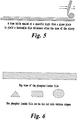
- the film can be preferably obtained by taking the slurry and using a drawing knife ( Fig. 5 ).
- the conformable film can be drawn using a 1 mil to 8 mil knife.
- a die cutter can punch a cut out from the phosphor loaded conformable film as shown in Fig. 6 .
- Various geometries can be formed in this manner.
- the conformable film that is phosphor loaded can accommodate stretching and maintaining its shape across complex interfaces (see Fig. 7 ).
- plasticizers in the mix prior to casting. About 2% to 5% by weight is a preferable range of such plasticizers. Plasticizers with boiling point temperatures above room temperature remain embedded in the film and make the film's surface sticky. This is desirable in case the film is to be used between two substrates to be adhered.
- suitable plasticizers include, but are not limited to, tripropylene glycol. The addition of a small amount of tripropylene glycol in the film (around 2% by weight of solids) and the placement of the film at the interface of two substrates allows a good material transport between the substrates and promotes bonding. Excessive tripropylene glycol would prohibit adhesion. H[OC 2 H 3 (CH 3 )] 3 OH Tripropylene glycol
Landscapes
- Chemical & Material Sciences (AREA)
- Organic Chemistry (AREA)
- Thermal Sciences (AREA)
- Physics & Mathematics (AREA)
- Engineering & Computer Science (AREA)
- Plasma & Fusion (AREA)
- Inorganic Chemistry (AREA)
- Adhesives Or Adhesive Processes (AREA)
- Chemical Kinetics & Catalysis (AREA)
- Health & Medical Sciences (AREA)
- Medicinal Chemistry (AREA)
- Polymers & Plastics (AREA)
- Addition Polymer Or Copolymer, Post-Treatments, Or Chemical Modifications (AREA)
Applications Claiming Priority (2)
| Application Number | Priority Date | Filing Date | Title |
|---|---|---|---|
| US201261735754P | 2012-12-11 | 2012-12-11 | |
| EP13863445.6A EP2917297B1 (fr) | 2012-12-11 | 2013-12-11 | Liaison de substrats induite par un rayonnement ionisant |
Related Parent Applications (2)
| Application Number | Title | Priority Date | Filing Date |
|---|---|---|---|
| EP13863445.6A Division EP2917297B1 (fr) | 2012-12-11 | 2013-12-11 | Liaison de substrats induite par un rayonnement ionisant |
| EP13863445.6A Division-Into EP2917297B1 (fr) | 2012-12-11 | 2013-12-11 | Liaison de substrats induite par un rayonnement ionisant |
Publications (2)
| Publication Number | Publication Date |
|---|---|
| EP3144360A2 true EP3144360A2 (fr) | 2017-03-22 |
| EP3144360A3 EP3144360A3 (fr) | 2017-08-16 |
Family
ID=50929570
Family Applications (2)
| Application Number | Title | Priority Date | Filing Date |
|---|---|---|---|
| EP13863445.6A Active EP2917297B1 (fr) | 2012-12-11 | 2013-12-11 | Liaison de substrats induite par un rayonnement ionisant |
| EP16194707.2A Withdrawn EP3144360A3 (fr) | 2012-12-11 | 2013-12-11 | Collages de matériaux de base induit par radiation ionisante |
Family Applications Before (1)
| Application Number | Title | Priority Date | Filing Date |
|---|---|---|---|
| EP13863445.6A Active EP2917297B1 (fr) | 2012-12-11 | 2013-12-11 | Liaison de substrats induite par un rayonnement ionisant |
Country Status (4)
| Country | Link |
|---|---|
| US (4) | US20140166202A1 (fr) |
| EP (2) | EP2917297B1 (fr) |
| ES (1) | ES2922305T3 (fr) |
| WO (1) | WO2014093484A1 (fr) |
Families Citing this family (4)
| Publication number | Priority date | Publication date | Assignee | Title |
|---|---|---|---|---|
| ES2922305T3 (es) * | 2012-12-11 | 2022-09-13 | Immunolight Llc | Unión de sustratos inducida por radiación ionizante |
| CA3003689C (fr) * | 2015-11-05 | 2023-10-10 | Tsk Laboratory Europe B.V. | Procede permettant de relier deux objets a l'aide d'une composition polymere, et systeme, pour une utilisation lors d'une procedure cosmetique |
| MA55220A (fr) | 2019-03-04 | 2022-01-12 | Immunolight Llc | Structures d'augmentation d'énergie destinées à être utilisées avec des émetteurs et des collecteurs d'énergie |
| US12133927B2 (en) | 2021-10-20 | 2024-11-05 | Goodrich Corporation | Hybrid power supply systems, methods, and devices for excimer lamps |
Citations (1)
| Publication number | Priority date | Publication date | Assignee | Title |
|---|---|---|---|---|
| US5948408A (en) | 1987-08-11 | 1999-09-07 | New York University | DNA encoding bactericidal/permeability-increasing proteins |
Family Cites Families (11)
| Publication number | Priority date | Publication date | Assignee | Title |
|---|---|---|---|---|
| US3708413A (en) * | 1970-06-23 | 1973-01-02 | Grace W R & Co | High energy curable liquid polyene-polythiol polymer composition |
| JPH06504628A (ja) * | 1990-12-20 | 1994-05-26 | エクソン・ケミカル・パテンツ・インク | リソグラフィー及び腐食防止コーティング用途向けのuv/eb硬化性ブチルコポリマー |
| GB2255781B (en) * | 1991-02-15 | 1995-01-18 | Reactive Ind Inc | Adhesive system |
| US5997682A (en) * | 1997-08-27 | 1999-12-07 | Science Research Laboratory | Phase-separated dual-cure elastomeric adhesive formulations and methods of using the same |
| EP1026218A1 (fr) * | 1999-02-05 | 2000-08-09 | Minnesota Mining And Manufacturing Company | Composition adhésive à base de polyester/polyépoxyde durcissable par UV |
| JP2001072938A (ja) * | 1999-09-06 | 2001-03-21 | Sekisui Chem Co Ltd | 光硬化型粘接着剤組成物およびシート |
| US7915319B2 (en) * | 2005-12-19 | 2011-03-29 | Henkel Corporation | Visible light curing systems, methods for reducing health risks to individuals exposed to systems designed to cure curable compositions by exposure to radiation, methods for bonding substrates and visible light curing compositions |
| US7744803B2 (en) * | 2006-08-02 | 2010-06-29 | Shawcor Ltd. | Photo-crosslinkable polyolefin compositions |
| JP4493643B2 (ja) * | 2006-12-06 | 2010-06-30 | 日東電工株式会社 | 再剥離型粘着剤組成物、及び粘着テープ又はシート |
| ES2880840T3 (es) * | 2010-05-06 | 2021-11-25 | Immunolight Llc | Composición de unión adhesiva y método de uso |
| ES2922305T3 (es) * | 2012-12-11 | 2022-09-13 | Immunolight Llc | Unión de sustratos inducida por radiación ionizante |
-
2013
- 2013-12-11 ES ES13863445T patent/ES2922305T3/es active Active
- 2013-12-11 WO PCT/US2013/074378 patent/WO2014093484A1/fr not_active Ceased
- 2013-12-11 US US14/103,084 patent/US20140166202A1/en not_active Abandoned
- 2013-12-11 EP EP13863445.6A patent/EP2917297B1/fr active Active
- 2013-12-11 EP EP16194707.2A patent/EP3144360A3/fr not_active Withdrawn
-
2015
- 2015-12-04 US US14/959,198 patent/US9701102B2/en active Active
-
2017
- 2017-03-21 US US15/464,913 patent/US9937695B2/en active Active
-
2018
- 2018-02-14 US US15/896,654 patent/US10974493B2/en active Active
Patent Citations (1)
| Publication number | Priority date | Publication date | Assignee | Title |
|---|---|---|---|---|
| US5948408A (en) | 1987-08-11 | 1999-09-07 | New York University | DNA encoding bactericidal/permeability-increasing proteins |
Non-Patent Citations (2)
| Title |
|---|
| ANONYMOUS: "Curing (chemistry) - Wikipedia, the free encyclopedia", 24 January 2019 (2019-01-24), pages 1 - 2, XP055825067, Retrieved from the Internet <URL:https://en.wikipedia.org/w/index.php?title=Curing_(chemistry)&oldid=879937212> [retrieved on 20210716] * |
| ANONYMOUS: "Graft polymer - Wikipedia, the free encyclopedia", 6 January 2021 (2021-01-06), pages 1 - 9, XP055861810, Retrieved from the Internet <URL:https://en.wikipedia.org/w/index.php?title=Graft_polymer&oldid=998733666> [retrieved on 20211116] * |
Also Published As
| Publication number | Publication date |
|---|---|
| EP2917297A4 (fr) | 2016-11-09 |
| WO2014093484A1 (fr) | 2014-06-19 |
| EP2917297B1 (fr) | 2022-04-13 |
| US20180170028A1 (en) | 2018-06-21 |
| US9701102B2 (en) | 2017-07-11 |
| US10974493B2 (en) | 2021-04-13 |
| US20140166202A1 (en) | 2014-06-19 |
| EP2917297A1 (fr) | 2015-09-16 |
| EP3144360A3 (fr) | 2017-08-16 |
| US20170190166A1 (en) | 2017-07-06 |
| ES2922305T3 (es) | 2022-09-13 |
| US20160159065A1 (en) | 2016-06-09 |
| US9937695B2 (en) | 2018-04-10 |
Similar Documents
| Publication | Publication Date | Title |
|---|---|---|
| US11345833B2 (en) | Adhesive bonding composition and method of use | |
| US11648750B2 (en) | Adhesive bonding composition and method of use | |
| JP6785387B2 (ja) | 接着剤物品並びに同物品を製造及び使用する方法 | |
| US9580631B2 (en) | Method of making package viscoelastic compositions by polymerizing ethylenically-unsaturated materials using ionizing radiation | |
| US10974493B2 (en) | Bonding of substrates induced by ionizing radiation | |
| US10410991B2 (en) | Adhesive bonding composition and method of use | |
| US9708514B2 (en) | Method of polymerizing ethylenically-unsaturated materials using ionizing radiation | |
| US10087343B2 (en) | Adhesive bonding composition and method of use | |
| US7144604B2 (en) | Method for cross-linking polyacrylates | |
| JP2010095722A (ja) | フォームテープ | |
| KR20120009547A (ko) | 수성 점착제 조성물, 그 제조 방법, 이를 포함하는 점착 시트 및 벽지 | |
| EP2716727A1 (fr) | Composition d'agent d'adhésif facilement retirable et ruban adhésif facilement retirable | |
| WO2020249435A1 (fr) | Procédé de liaison au moyen d'une masse adhésive structurelle durcissable | |
| JP4410982B2 (ja) | 狭い分子量分布を有するアクリルpsa | |
| KR20240105393A (ko) | 공중합체 및 상기 공중합체를 포함하는 핫 멜트 조성물 | |
| JPS61101584A (ja) | 感圧性接着テ−プ類の製造方法 | |
| JPWO2020105256A1 (ja) | 粘着剤組成物、粘着剤および粘着シート |
Legal Events
| Date | Code | Title | Description |
|---|---|---|---|
| PUAI | Public reference made under article 153(3) epc to a published international application that has entered the european phase |
Free format text: ORIGINAL CODE: 0009012 |
|
| STAA | Information on the status of an ep patent application or granted ep patent |
Free format text: STATUS: THE APPLICATION HAS BEEN PUBLISHED |
|
| AC | Divisional application: reference to earlier application |
Ref document number: 2917297 Country of ref document: EP Kind code of ref document: P |
|
| AK | Designated contracting states |
Kind code of ref document: A2 Designated state(s): AL AT BE BG CH CY CZ DE DK EE ES FI FR GB GR HR HU IE IS IT LI LT LU LV MC MK MT NL NO PL PT RO RS SE SI SK SM TR |
|
| RIC1 | Information provided on ipc code assigned before grant |
Ipc: C09J 5/00 20060101AFI20170503BHEP Ipc: C09J 133/12 20060101ALI20170503BHEP Ipc: C09J 163/00 20060101ALI20170503BHEP |
|
| PUAL | Search report despatched |
Free format text: ORIGINAL CODE: 0009013 |
|
| AK | Designated contracting states |
Kind code of ref document: A3 Designated state(s): AL AT BE BG CH CY CZ DE DK EE ES FI FR GB GR HR HU IE IS IT LI LT LU LV MC MK MT NL NO PL PT RO RS SE SI SK SM TR |
|
| RIC1 | Information provided on ipc code assigned before grant |
Ipc: C09J 133/12 20060101ALI20170710BHEP Ipc: C09J 163/00 20060101ALI20170710BHEP Ipc: C09J 5/00 20060101AFI20170710BHEP |
|
| STAA | Information on the status of an ep patent application or granted ep patent |
Free format text: STATUS: REQUEST FOR EXAMINATION WAS MADE |
|
| 17P | Request for examination filed |
Effective date: 20171009 |
|
| RBV | Designated contracting states (corrected) |
Designated state(s): AL AT BE BG CH CY CZ DE DK EE ES FI FR GB GR HR HU IE IS IT LI LT LU LV MC MK MT NL NO PL PT RO RS SE SI SK SM TR |
|
| STAA | Information on the status of an ep patent application or granted ep patent |
Free format text: STATUS: EXAMINATION IS IN PROGRESS |
|
| 17Q | First examination report despatched |
Effective date: 20210126 |
|
| STAA | Information on the status of an ep patent application or granted ep patent |
Free format text: STATUS: THE APPLICATION IS DEEMED TO BE WITHDRAWN |
|
| 18D | Application deemed to be withdrawn |
Effective date: 20220826 |